

The pH-Responsive PacC Transcription Factor of Aspergillus fumigatus Governs Epithelial Entry and Tissue Invasion during Pulmonary Aspergillosis
Open accessThe DOI matches its Crossref record; 88 of the 88 references it cites were found in a registry or an index.
Abstract
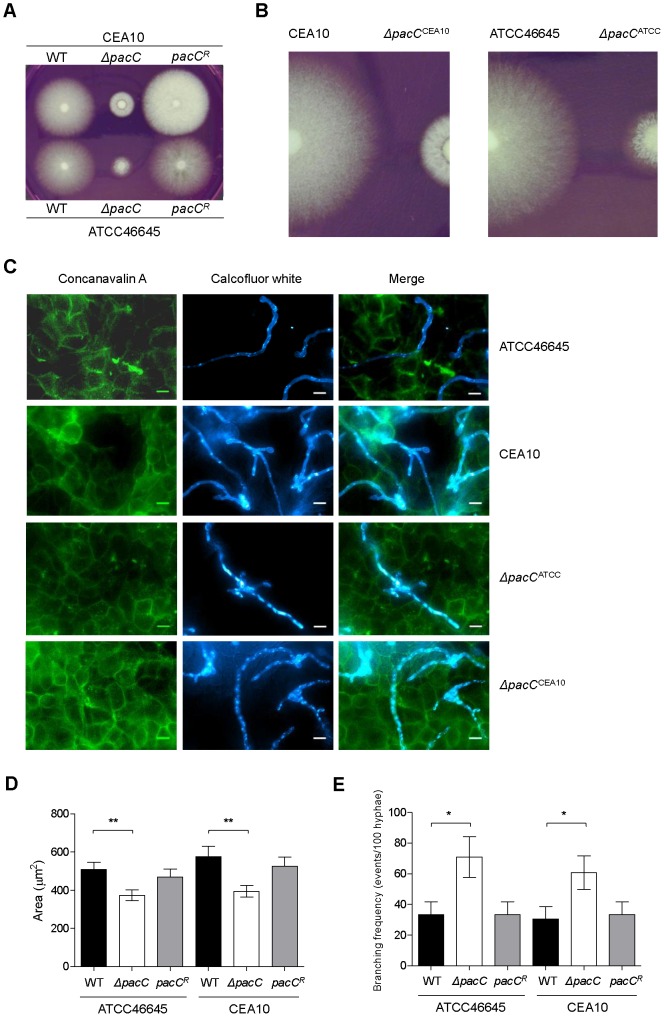
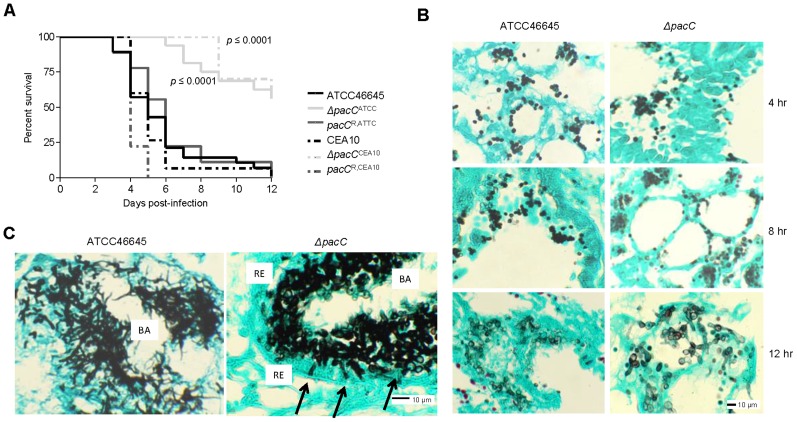
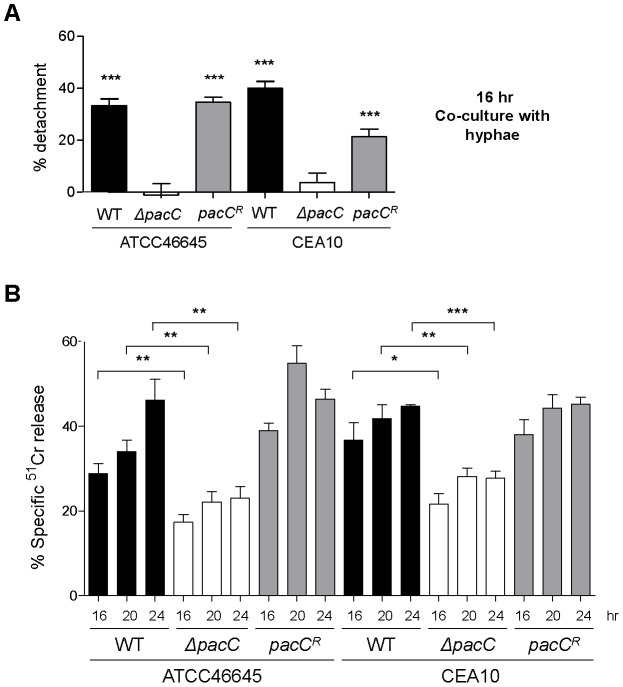
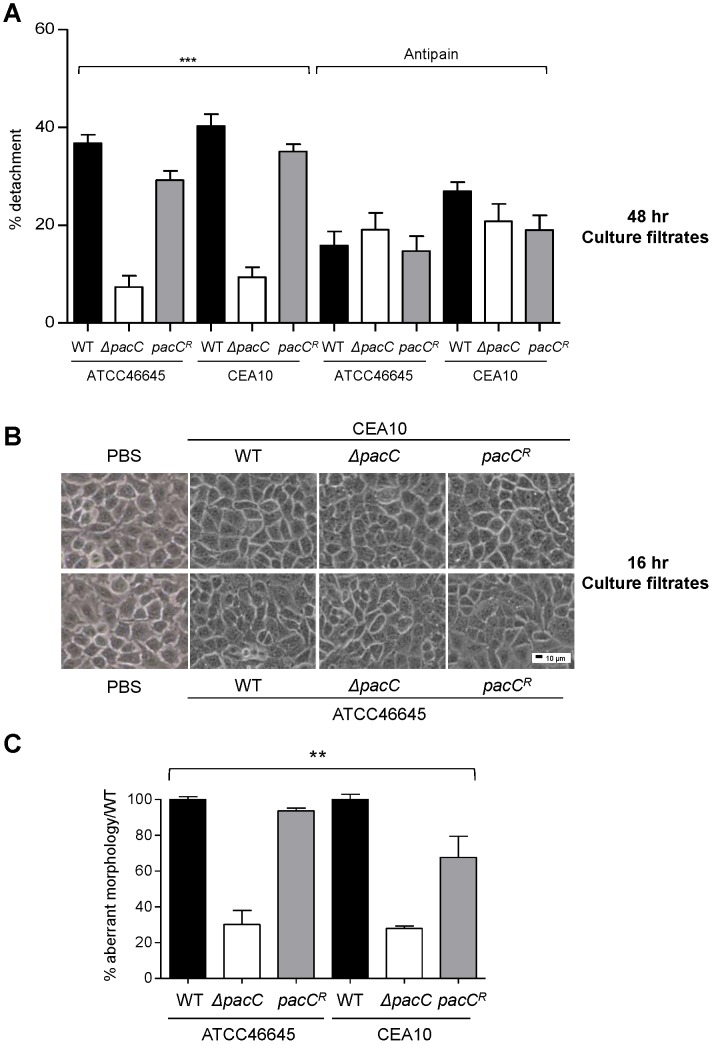
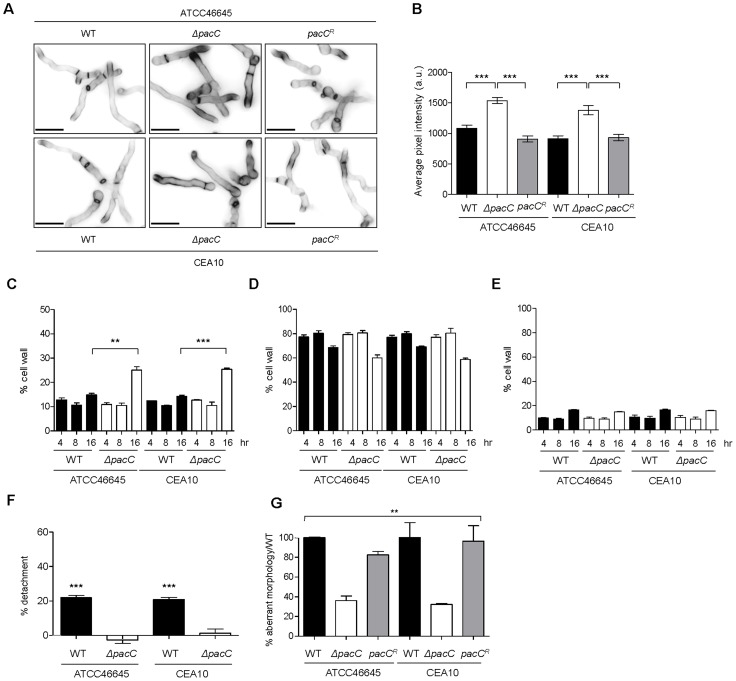
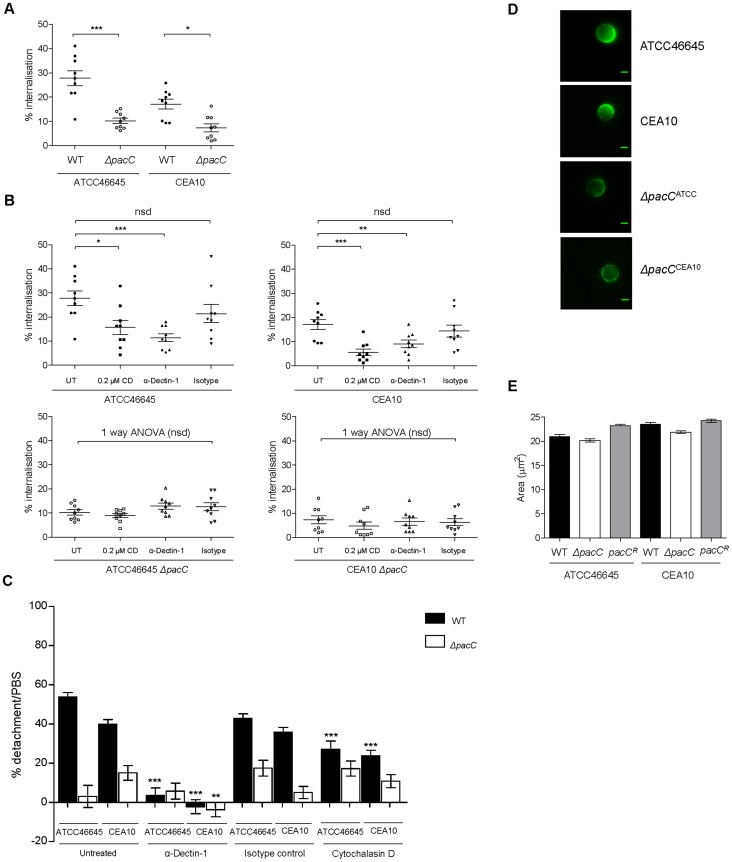
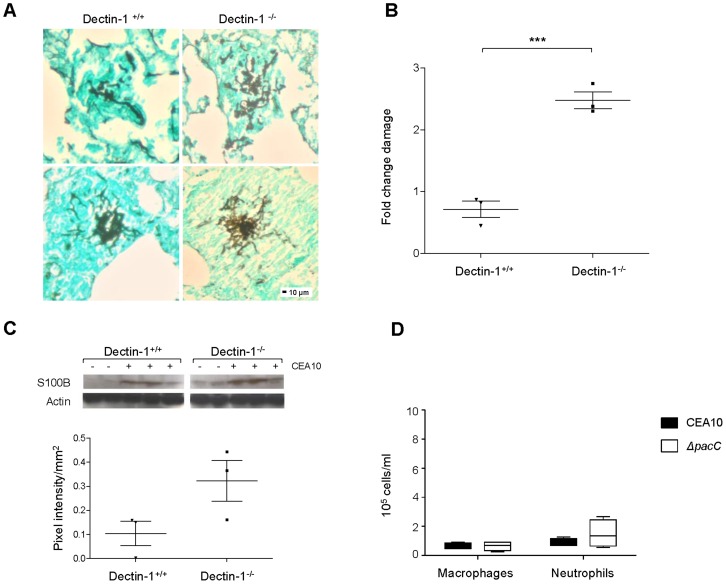
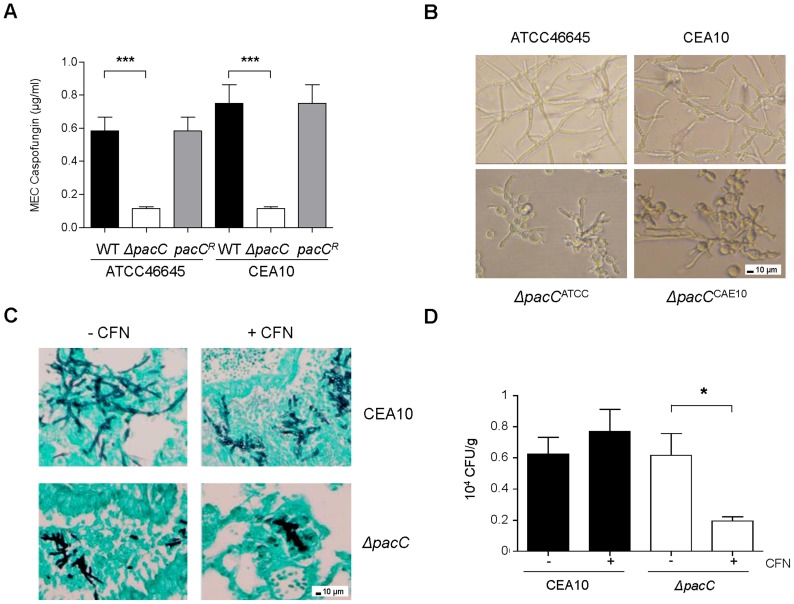
Destruction of the pulmonary epithelium is a major feature of lung diseases caused by the mould pathogen Aspergillus fumigatus. Although it is widely postulated that tissue invasion is governed by fungal proteases, A. fumigatus mutants lacking individual or multiple enzymes remain fully invasive, suggesting a concomitant requirement for other pathogenic activities during host invasion. In this study we discovered, and exploited, a novel, tissue non-invasive, phenotype in A. fumigatus mutants lacking the pH-responsive transcription factor PacC. Our study revealed a novel mode of epithelial entry, occurring in a cell wall-dependent manner prior to protease production, and via the Dectin-1 β-glucan receptor. ΔpacC mutants are defective in both contact-mediated epithelial entry and protease expression, and significantly attenuated for pathogenicity in leukopenic mice. We combined murine infection modelling, in vivo transcriptomics, and in vitro infections of human alveolar epithelia, to delineate two major, and sequentially acting, PacC-dependent processes impacting epithelial integrity in vitro and tissue invasion in the whole animal. We demonstrate that A. fumigatus spores and germlings are internalised by epithelial cells in a contact-, actin-, cell wall- and Dectin-1 dependent manner and ΔpacC mutants, which aberrantly remodel the cell wall during germinative growth, are unable to gain entry into epithelial cells, both in vitro and in vivo. We further show that PacC acts as a global transcriptional regulator of secreted molecules during growth in the leukopenic mammalian lung, and profile the full cohort of secreted gene products expressed during invasive infection. Our study reveals a combinatorial mode of tissue entry dependent upon sequential, and mechanistically distinct, perturbations of the pulmonary epithelium and demonstrates, for the first time a protective role for Dectin-1 blockade in epithelial defences. Infecting ΔpacC mutants are hypersensitive to cell wall-active antifungal agents highlighting the value of PacC signalling as a target for antifungal therapy.
Overview
The claims and statistics of this paper haven’t been checked yet.
Free: it reads the open-access text and checks the first 5 claims that cite a source we can check. Create a free account to check every claim.
Integrity signals
Registry
Cites
Statistics
Figures
Verification
Claims the paper makes
The claims and statistics of this paper haven’t been checked yet.
Free: it reads the open-access text and checks the first 5 claims that cite a source we can check. Create a free account to check every claim.
Claims other papers make about this one
Each is checked against this paper’s own text: does it say what the citing paper says it does?
The source backs part of the claim, not all of it — or backs it for a different population, condition or comparison.
In the citing paper
“Moreover, reduced epithelial cell wall damage due to defective protease secretion was observed with the pacC mutants (223).”
From Aspergillus fumigatus and Aspergillosis in 2019 (2019) · cites this paper as [223]
Experimental — accuracy not yet measuredIn the citing paper
“In this study, A. fumigatus conidia and germlings are internalized by epithelial cells in a Dectin-1-dependent manner”
From Aspergillus fumigatus and Aspergillosis in 2019 (2019) · cites this paper as [223]
In the citing paper
“A recent study with the A549 cell line and mice identified a novel role of the pH-responsive transcription factor (TF) PacC in Aspergillus pathogenicity, linked to epithelial cell penetration.”
From Aspergillus fumigatus and Aspergillosis in 2019 (2019) · cites this paper as [223]
In the citing paper
“and pacC mutants, which aberrantly remodel the cell wall during germinative growth, are able to enter efficiently into epithelial cells.”
From Aspergillus fumigatus and Aspergillosis in 2019 (2019) · cites this paper as [223]
In the citing paper
“However, PacC controls more than pH adaptation, since the pacC mutant has an altered cell wall associated with differences in susceptibility to cell wall drugs (223) (S. Raj, Z. Liu, M. Bromley, and J.-P. Latgé, unpublished data).”
From Aspergillus fumigatus and Aspergillosis in 2019 (2019) · cites this paper as [223]
1 more claim about this paper
Create a free account to see every claim other papers make about this one.
Self-check
Percentages, sums and reported differences re-computed from the paper’s own numbers.
The self-check needs the paper’s full text.
Citations
Cites
Bradford, M. M. (1976) · Analytical Biochemistry · doi:10.1016/0003-2697(76)90527-3 · Cited by 255,302 · cited 1×
“Protein concentrations were determined using the Bradford assay [74].”
MethodTowbin, H., Staehelin, T., & Gordon, J. (1979) · Proceedings of the National Academy of Sciences · doi:10.1073/pnas.76.9.4350 · Cited by 53,385
Raza, H., John, A., & Nemmar, A. (2013) · Cellular Physiology and Biochemistry · doi:10.1159/000350087 · Cited by 47,221
Systematic and integrative analysis of large gene lists using DAVID bioinformatics resources
Huang, D. W., Sherman, B. T., & Lempicki, R. A. (2009) · Nature Protocols · doi:10.1038/nprot.2008.211 · Cited by 35,890 · cited 1×
“gov/) [77,78].”
Huang, D. W., Sherman, B. T., & Lempicki, R. A. (2009) · Nucleic Acids Research · doi:10.1093/nar/gkn923 · Cited by 14,108 · cited 1×
“gov/) [77,78].”
Hidden Killers: Human Fungal Infections
Brown, G. D., Denning, D. W., Gow, N. A. R., Levitz, S. M., Netea, M. G., & White, T. C. (2012) · Science Translational Medicine · doi:10.1126/scitranslmed.3004404 · Cited by 4,284 · cited 2×
“Amongst the resultant diseases, invasive aspergillosis (IA) exerts the highest fatal toll, resulting globally in an estimated 200,000 deaths per annum [1].”
BackgroundAspergillus fumigatus and Aspergillosis
Latgé, J.-P. (1999) · Clinical Microbiology Reviews · doi:10.1128/cmr.12.2.310 · Cited by 2,307 · cited 1×
“fumigatus genome is predicted to encode more than 100 hydrolytic enzymes [55] some of which are assumed as crucial for liberation of proteinaceous nutrients from host tissues [56,57].”
BackgroundThe Genetics of Aspergillus nidulans
Pontecorvo, G., Roper, J. A., Chemmons, L. M., Macdonald, K. D., & Bufton, A. W. J. (1953) · Advances in Genetics · doi:10.1016/s0065-2660(08)60408-3 · Cited by 2,302 · cited 11×
“Aspergillus phenotypic analysis Dilutions of 103 conidia were inoculated onto ACM or supplemented AMM (as shown on Table S3) and incubated for 48 hr and 72 hr respectively.”
MethodInfluentialBrown, G. D., & Gordon, S. (2001) · Nature · doi:10.1038/35092620 · Cited by 1,579
Pappas, P. G., Alexander, B. D., Andes, D. R., Hadley, S., Kauffman, C. A., Freifeld, A., Anaissie, E. J., Brumble, L. M., Herwaldt, L., Ito, J., et al. (2010) · Clinical Infectious Diseases · doi:10.1086/651262 · Cited by 1,570 · cited 1×
“all invasive fungal infections in these cohorts and causes 58% and 34% mortality, respectively, at 12 weeks post-transplant [2–4].”
Background
Cited by
Aspergillus fumigatus and Aspergillosis in 2019
Latgé, J.-P., & Chamilos, G. (2019) · Clinical Microbiology Reviews · doi:10.1128/cmr.00140-18 · Cited by 1,400
Regulation and Role of Fungal Secondary Metabolites
Macheleidt, J., Mattern, D. J., Fischer, J., Netzker, T., Weber, J., Schroeckh, V., Valiante, V., & Brakhage, A. A. (2016) · Annual Review of Genetics · doi:10.1146/annurev-genet-120215-035203 · Cited by 433
Regulators of plant biomass degradation in ascomycetous fungi
Benocci, T., Aguilar-Pontes, M. V., Zhou, M., Seiboth, B., & de Vries, R. P. (2017) · Biotechnology for Biofuels · doi:10.1186/s13068-017-0841-x · Cited by 237
Latgé, J.-P., Beauvais, A., & Chamilos, G. (2017) · Annual Review of Microbiology · doi:10.1146/annurev-micro-030117-020406 · Cited by 207
Streptomyces exploration is triggered by fungal interactions and volatile signals
Jones, S. E., Ho, L., Rees, C. A., Hill, J. E., Nodwell, J. R., & Elliot, M. A. (2017) · eLife · doi:10.7554/elife.21738 · Cited by 189
“neoformans, and Aspergillus fumigatus (Bertuzzi et al., 2014; Davis et al., 2000; O’Meara et al., 2014).”
BackgroundEphA2 is an epithelial cell pattern recognition receptor for fungal β-glucans
Swidergall, M., Solis, N. V., Lionakis, M. S., & Filler, S. G. (2017) · Nature Microbiology · doi:10.1038/s41564-017-0059-5 · Cited by 167
“To determine cytokine and chemokine protein concentrations during OPC the homogenates were prepared as previously described 38 and measured using a multiplex bead array assay (R&D Systems).”
InfluentialSelf-citationPathogenesis of Respiratory Viral and Fungal Coinfections
Salazar, F., Bignell, E., Brown, G. D., Cook, P. C., & Warris, A. (2021) · Clinical Microbiology Reviews · doi:10.1128/cmr.00094-21 · Cited by 178
“cial for internalization of conidia (213).”
Self-citationInteractions of Aspergillus fumigatus Conidia with Airway Epithelial Cells: A Critical Review
Croft, C. A., Culibrk, L., Moore, M. M., & Tebbutt, S. J. (2016) · Frontiers in Microbiology · doi:10.3389/fmicb.2016.00472 · Cited by 142
“Exposure to conidia promoted the degradation of the active 17 kDa caspase-3 fragment, and thus prevented TNF-α induced apoptosis (Berkova et al., 2006; Amin et al., 2014).”
BackgroundResultInfluentialDectin-1/Syk signaling triggers neuroinflammation after ischemic stroke in mice
Ye, X., Qi, H., Ma, W.-J., Zhao, Q., Wang, W., Yin, H., Zhang, T., Wang, M., Zan, K., Yang, X.-X., et al. (2020) · Journal of Neuroinflammation · doi:10.1186/s12974-019-1693-z · Cited by 147
Molecular basis and regulation of pathogenicity and patulin biosynthesis in Penicillium expansum
Li, B., Chen, Y., Zhang, Z., Qin, G., Chen, T., & Tian, S. (2020) · Comprehensive Reviews in Food Science and Food Safety · doi:10.1111/1541-4337.12612 · Cited by 143
Barber, A. E., Sae-Ong, T., Kang, K., Seelbinder, B., Li, J., Walther, G., Panagiotou, G., & Kurzai, O. (2021) · Nature Microbiology · doi:10.1038/s41564-021-00993-x · Cited by 130
Pathogenicity and virulence of Aspergillus fumigatus
Earle, K., Valero, C., Conn, D. P., Vere, G., Cook, P. C., Bromley, M., Bowyer, P., & Gago, S. (2023) · Virulence · doi:10.1080/21505594.2023.2172264 · Cited by 132
“It has been described that A. fumigatus induces the expression of Dectin-1, a C-type lectin, in a TLR2-dependent manner, which can mediate the recognition of the fungal polysaccharide β-glucan [150,196,197].”
BackgroundStreptomyces Exploration: Competition, Volatile Communication and New Bacterial Behaviours
Jones, S. E., & Elliot, M. A. (2017) · Trends in Microbiology · doi:10.1016/j.tim.2017.02.001 · Cited by 133
“albicans [50] and Aspergillis fumigatus [51], a rise in pH promotes the switch from budding yeast to filamentous hyphal growth.”
BackgroundBrown, A. J. P., Cowen, L. E., Pietro, A. D., & Quinn, J. (2017) · Microbiology Spectrum · doi:10.1128/microbiolspec.funk-0048-2016 · Cited by 126
Spore Germination of Pathogenic Filamentous Fungi
Sephton-Clark, P., & Voelz, K. (2017) · Advances in applied microbiology · doi:10.1016/bs.aambs.2017.10.002 · Cited by 122
Zhang, Y., He, Y., Turrà, D., Zhou, S., Ayhan, D. H., DeIulio, G. A., Guo, L., Broz, K., Wiederhold, N. P., Coleman, J. J., et al. (2020) · Communications Biology · doi:10.1038/s42003-020-0770-2 · Cited by 119
Accessory Chromosomes in Fusarium oxysporum
He, Y., Yu, H., & Ma, L. (2020) · Phytopathology · doi:10.1094/phyto-03-20-0069-ia · Cited by 99
“…including regulation of meiotic and sporulation genes, secondary metabolism, female development, and virulence in plant- and animal-infecting fungi (Bertuzzi et al. 2014; Bignell et al. 2004; Chinnici et al. 2014; Keller et al. 1997; Luo et al. 2017; Merhej et al. 2011; Rascle et al. 2018; Su and…”
BackgroundOst, K. S., O’Meara, T. R., Huda, N., Esher, S. K., & Alspaugh, J. A. (2015) · PLOS Genetics · doi:10.1371/journal.pgen.1005159 · Cited by 84
“The rim90Δ rim91Δ rim92Δ (KS136) strain was created by first creating rim91Δ rim92Δ MATa KS117 and crossing it with the KS63 strain.”
BackgroundInfluentialThe pH regulator PacC: a host‐dependent virulence factor in Botrytis cinerea
Rascle, C., Dieryckx, C., Dupuy, J., Muszkieta, L., Souibgui, E., Droux, M., Bruel, C., Girard, V., & Poussereau, N. (2018) · Environmental Microbiology Reports · doi:10.1111/1758-2229.12663 · Cited by 90
On the lineage of Aspergillus fumigatus isolates in common laboratory use
Bertuzzi, M., van Rhijn, N., Krappmann, S., Bowyer, P., Bromley, M. J., & Bignell, E. M. (2021) · Medical Mycology · doi:10.1093/mmy/myaa075 · Cited by 84
Self-citationThe contribution of Aspergillus fumigatus stress responses to virulence and antifungal resistance
Brown, N. A., & Goldman, G. H. (2016) · The Journal of Microbiology · doi:10.1007/s12275-016-5510-4 · Cited by 86
Dietl, A.-M., Amich, J., Leal, S., Beckmann, N., Binder, U., Beilhack, A., Pearlman, E., & Haas, H. (2016) · Virulence · doi:10.1080/21505594.2016.1146848 · Cited by 77
“fumigatus lung infection of leukopenic mice.(25) Mutant virulence studies serve to identify virulence”
BackgroundSelf-citationHeung, L. J., Wiesner, D. L., Wang, K., Rivera, A., & Hohl, T. M. (2023) · Seminars in Immunology · doi:10.1016/j.smim.2023.101728 · Cited by 80
Voltersen, V., Blango, M. G., Herrmann, S., Schmidt, F., Heinekamp, T., Strassburger, M., Krüger, T., Bacher, P., Lother, J., Weiss, E., et al. (2018) · mBio · doi:10.1128/mbio.01557-18 · Cited by 71
Self-citationLectin Receptors Expressed on Myeloid Cells
Brown, G. D., & Crocker, P. R. (2016) · Microbiology Spectrum · doi:10.1128/microbiolspec.mchd-0036-2016 · Cited by 76
“There is also evidence for expression of this receptor on B-cells and subsets of Tcells, and it may be unregulated on epithelial cells during inflammation (151-154).”
BackgroundAnti-Aspergillus Activities of the Respiratory Epithelium in Health and Disease
Bertuzzi, M., Hayes, G., Icheoku, U., Van Rhijn, N., Denning, D., Osherov, N., & Bignell, E. (2018) · Journal of Fungi · doi:10.3390/jof4010008 · Cited by 64
“fumigatus conidia internalisation by A549 cells [8,9].”
BackgroundInfluentialSelf-citationMoreno-Velásquez, S. D., Seidel, C., Juvvadi, P. R., Steinbach, W. J., & Read, N. D. (2017) · Antimicrobial Agents and Chemotherapy · doi:10.1128/aac.00710-17 · Cited by 57
Self-citationAmich, J., Mokhtari, Z., Strobel, M., Vialetto, E., Sheta, D., Yu, Y., Hartweg, J., Kalleda, N., Jarick, K. J., Brede, C., et al. (2020) · mBio · doi:10.1128/mbio.02752-19 · Cited by 64
Martín, J. F., van den Berg, M. A., van Themaat, E. V. L., & Liras, P. (2019) · Biotechnology Advances · doi:10.1016/j.biotechadv.2019.04.014 · Cited by 55
PC945, a Novel Inhaled Antifungal Agent, for the Treatment of Respiratory Fungal Infections
Murray, A., Cass, L., Ito, K., Pagani, N., Armstrong-James, D. P. H., Dalal, P., Reed, A. K., & Strong, P. (2020) · Journal of Fungi · doi:10.3390/jof6040373 · Cited by 58
Self-citationvan Rhijn, N., Furukawa, T., Zhao, C., McCann, B. L., Bignell, E., & Bromley, M. (2020) · Fungal Genetics and Biology · doi:10.1016/j.fgb.2020.103479 · Cited by 47
“The well characterized pH-responsive transcription factor PacC was selected as a target for our study (Bertuzzi et al. 2014).”
BackgroundMethodSelf-citationIn vitroinfection models to study fungal–host interactions
Last, A., Maurer, M., Mosig, A. S., Gresnigt, M. S., & Hube, B. (2021) · FEMS Microbiology Reviews · doi:10.1093/femsre/fuab005 · Cited by 49
Patel, D., Gaikwad, S., Challagundla, N., Nivsarkar, M., & Agrawal-Rajput, R. (2017) · International Immunopharmacology · doi:10.1016/j.intimp.2017.11.026 · Cited by 47
“fumigatus internalization is promoted by β-glucan, while dectin-1 blockade was shown to prevent epithelial decay [38,39].”
BackgroundA possible role for fumagillin in cellular damage during host infection by Aspergillus fumigatus
Guruceaga, X., Ezpeleta, G., Mayayo, E., Sueiro-Olivares, M., Abad-Diaz-De-Cerio, A., Aguirre Urízar, J. M., Liu, H. G., Wiemann, P., Bok, J. W., Filler, S. G., et al. (2018) · Virulence · doi:10.1080/21505594.2018.1526528 · Cited by 44
Self-citationNew and Improved Techniques for the Study of Pathogenic Fungi
Cairns, T. C., Studholme, D. J., Talbot, N. J., & Haynes, K. (2015) · Trends in Microbiology · doi:10.1016/j.tim.2015.09.008 · Cited by 48
Self-citationMechanistic Basis of pH-Dependent 5-Flucytosine Resistance in Aspergillus fumigatus
Gsaller, F., Furukawa, T., Carr, P. D., Rash, B., Jöchl, C., Bertuzzi, M., Bignell, E. M., & Bromley, M. J. (2018) · Antimicrobial Agents and Chemotherapy · doi:10.1128/aac.02593-17 · Cited by 42
“Strain Reference Deletion mutants/Reconstitution wt, A1160P+ [49] ∆fcyB This study ∆pacC This study ∆hapC (22) ∆pacC∆fcyB This study ∆hapC∆fcyB This study ∆hapC∆cyp51A This study fcyBREC This study ATCC46645 ∆hapCATCC This study ∆pacCÀTCC (23) Tunable promoter strain fcyBXYL This study gfp-tagged hapC for ChIP analysi…”
BackgroundSelf-citationThe pathogenicity of Aspergillus fumigatus, drug resistance, and nanoparticle delivery
Szalewski, D. A., Hinrichs, V. S., Zinniel, D. K., & Barletta, R. G. (2018) · Canadian Journal of Microbiology · doi:10.1139/cjm-2017-0749 · Cited by 54
“A recent finding has implicated a pH-responsive transcription factor, PacC, as a positive regulator of both protease secretion and invasion of lung epithelial cells (Bertuzzi et al. 2014).”
BackgroundIntegrity under stress: Host membrane remodelling and damage by fungal pathogens
Westman, J., Hube, B., & Fairn, G. D. (2019) · Cellular Microbiology · doi:10.1111/cmi.13016 · Cited by 42
“The pH‐responsive transcription factor PacC is a critical regulator of pathogenicity, and PacC mutant strains fail to invade and damage lung epithelial cells (Bertuzzi et al., 2014).”
BackgroundLiu, Z., Raj, S., van Rhijn, N., Fraczek, M. G., Michel, J., Sismeiro, O., Legendre, R., Varet, H., Fontaine, T., Bromley, M., et al. (2021) · mBio · doi:10.1128/mbio.00863-21 · Cited by 46
Systematic Identification of Anti-Fungal Drug Targets by a Metabolic Network Approach
Kaltdorf, M., Srivastava, M., Gupta, S. K., Liang, C., Binder, J., Dietl, A., Meir, Z., Haas, H., Osherov, N., Krappmann, S., et al. (2016) · Frontiers in Molecular Biosciences · doi:10.3389/fmolb.2016.00022 · Cited by 51
“Moreover, we calculated the RhumPDB score (Toomey et al., 2009) and mapped the gene expression data (Bertuzzi et al., 2014) over the preliminary target list to prioritize the drug targets.”
MethodInfluentialSelf-citationRichard, N., Marti, L., Varrot, A., Guillot, L., Guitard, J., Hennequin, C., Imberty, A., Corvol, H., Chignard, M., & Balloy, V. (2018) · Scientific Reports · doi:10.1038/s41598-018-33902-0 · Cited by 44
Anticipatory Stress Responses and Immune Evasion in Fungal Pathogens
Pradhan, A., Ma, Q., de Assis, L. J., Leaves, I., Larcombe, D. E., Rondon, A. V. R., Nev, O. A., & Brown, A. J. P. (2020) · Trends in Microbiology · doi:10.1016/j.tim.2020.09.010 · Cited by 46
Molecular Biology of Atherosclerotic Ischemic Strokes
Tuttolomondo, A., Puleo, M. G., Velardo, M., Corpora, F., Daidone, M., & Pinto, A. V. (2020) · International Journal of Molecular Sciences · doi:10.3390/ijms21249372 · Cited by 47
Liu, H., Xu, W., Bruno, V. M., Phan, Q. T., Solis, N. V., Woolford, C. A., Ehrlich, R. L., Shetty, A. C., McCracken, C. L., Lin, J., et al. (2021) · PLoS Pathogens · doi:10.1371/journal.ppat.1009235 · Cited by 44
Self-citationPenetration of the Human Pulmonary Epithelium by Aspergillus fumigatus Hyphae
Fernandes, J., Hamidi, F., Leborgne, R., Beau, R., Castier, Y., Mordant, P., Boukkerou, A., Latgé, J. P., & Pretolani, M. (2018) · The Journal of Infectious Diseases · doi:10.1093/infdis/jiy298 · Cited by 41
Fungal resilience and host–pathogen interactions: Future perspectives and opportunities
Brown, A. J. P. (2022) · Parasite Immunology · doi:10.1111/pim.12946 · Cited by 46
Lou, Y., Han, Y., Yang, L., Wu, M., Zhang, J., Chéng, J., Wang, M., Jiāng, D., Chen, W., & Li, G. (2015) · Environmental Microbiology · doi:10.1111/1462-2920.13018 · Cited by 45
Mechanical force-induced morphology changes in a human fungal pathogen
Puerner, C., Kukhaleishvili, N., Thomson, D., Schaub, S., Noblin, X., Seminara, A., Bassilana, M., & Arkowitz, R. A. (2020) · BMC Biology · doi:10.1186/s12915-020-00833-0 · Cited by 35
Tashiro, M., Takazono, T., & Izumikawa, K. (2024) · Therapeutic Advances in Infectious Disease · doi:10.1177/20499361241253751 · Cited by 65
Seidel, C., Moreno-Velásquez, S. D., Ben-Ghazzi, N., Gago, S., Read, N. D., & Bowyer, P. (2020) · Frontiers in Microbiology · doi:10.3389/fmicb.2020.01955 · Cited by 40
Self-citationRNAseq analysis of Aspergillus fumigatus in blood reveals a just wait and see resting stage behavior
Irmer, H., Tarazona, S., Sasse, C., Olbermann, P., Loeffler, J., Krappmann, S., Conesa, A., & Braus, G. H. (2015) · BMC Genomics · doi:10.1186/s12864-015-1853-1 · Cited by 41
“Therefore only three approaches with material from infection models had been published so far [26–28].”
BackgroundAspergillus fumigatusvirulence through the lens of transcription factors: Table 1.
Bultman, K. M., Kowalski, C. H., & Cramer, R. A. (2016) · Medical Mycology · doi:10.1093/mmy/myw120 · Cited by 43
“…Amich et al. (2013) MtfA Afu6g02690 Conidiation, protease and gliotoxin production Smith and Calvo (2014) PacC Afu3g11970 Alkaline pH response Bertuzzi et al. (2014) Amich et al. (2010) Tilburn et al. (1995) RlmA Afu3g08520 Cell wall integrity Rocha et al. (2016) Valiante et al. (2016) RsmA…”
BackgroundPais, P., Costa, C., Cavalheiro, M., Romão, D., & Teixeira, M. C. (2016) · Frontiers in Cellular and Infection Microbiology · doi:10.3389/fcimb.2016.00131 · Cited by 37
Aspergillus fumigatus Acetate Utilization Impacts Virulence Traits and Pathogenicity
Ries, L. N. A., de Castro, P. A., Silva, L. P., Valero, C., dos Reis, T. F., Saborano, R., Duarte, I. F., Persinoti, G. F., Steenwyk, J. L., Rokas, A., et al. (2021) · mBio · doi:10.1128/mbio.01682-21 · Cited by 36
Nitrogen, Iron, and Zinc Acquisition: Key Nutrients to Aspergillus fumigatus Virulence
Perez‐Cuesta, U., Guruceaga, X., Cendon‐Sanchez, S., Pelegri‐Martinez, E., Hernando, F. L., Ramirez‐Garcia, A., Abad, A., & Rementería, A. (2021) · Journal of Fungi · doi:10.3390/jof7070518 · Cited by 36
dos Reis, T. F., Horta, M. A. C., Colabardini, A. C., Fernandes, C. M., Silva, L. P., Bastos, R. W., Fonseca, M. V. D. L., Wang, F., Martins, C., Rodrigues, M. L., et al. (2021) · mBio · doi:10.1128/mbio.01458-21 · Cited by 34
“2A and B), while DpacC (AFUA_3G11970) strain, which encodes PacC, a protein important for pH regulation (63), showed about 50% inhibition compared to the wild-type strain at 8mg/ml (Fig.”
BackgroundZhang, X., Jia, X., Tian, S., Zhang, C., Lu, Z., Chen, Y., Chen, F., Li, Z., Su, X., Han, X., et al. (2018) · Fungal Genetics and Biology · doi:10.1016/j.fgb.2018.09.003 · Cited by 31
Microbial uptake by the respiratory epithelium: outcomes for host and pathogen
Bertuzzi, M., Hayes, G., & Bignell, E. (2019) · FEMS Microbiology Reviews · doi:10.1093/femsre/fuy045 · Cited by 36
“2B) (Han et al. 2011; Bertuzzi et al. 2014) that drives spore uptake, in a host phospholipase (PLD1)-dependent manner, via fungal cell wall β-1,3-glucan exposed on the surface of swollen and germinated fungal spores (Han et al.”
BackgroundSelf-citationMills, K. A. M., Westermann, F., Espinosa, V., Rosiek, E., Desai, J. V., Aufiero, M. A., Guo, Y., Liu, F. L., Mitchell, K. A., Tuzlak, S., et al. (2025) · Science Immunology · doi:10.1126/sciimmunol.adr0547 · Cited by 34
Zhang, C., Chen, F., Liu, X., Han, X., Hu, Y., Su, X., Chen, Y., Sun, Y., & Han, L. (2019) · Frontiers in Microbiology · doi:10.3389/fmicb.2019.01345 · Cited by 29
Pinzan, C. F., Valero, C., de Castro, P. A., da Silva, J. L., Earle, K., Liu, H., Horta, M. A. C., Kniemeyer, O., Krüger, T., Pschibul, A., et al. (2024) · Nature Microbiology · doi:10.1038/s41564-024-01782-y · Cited by 32
“To evaluate the capacity of various strains to damage A549 epithelial cells, we used our standard 51 Cr release assay 57–59 .”
Self-citationKale, S. D., Ayubi, T., Chung, D., Tubau‐Juni, N., Leber, A. J., Dang, H. X., Karyala, S. V., Hontecillas, R., Lawrence, C. B., Cramer, R. A., et al. (2017) · Scientific Reports · doi:10.1038/s41598-017-17000-1 · Cited by 33
“Transcriptomics has also facilitated the identification of global gene expression changes associated with the pH-responsive transcription factor PacC during chemotherapeutic mouse model of IPA 28 .”
Ross, B. S., Lofgren, L. A., Ashare, A., Stajich, J., & Cramer, R. A. (2021) · mBio · doi:10.1128/mbio.02153-21 · Cited by 31
Growth of Aspergillus fumigatus in Biofilms in Comparison to Candida albicans
Subroto, E., van Neer, J., Valdes, I., & de Cock, H. (2022) · Journal of Fungi · doi:10.3390/jof8010048 · Cited by 29
It takes a village: Phagocytes play a central role in fungal immunity
Feldman, M. B., Vyas, J. M., & Mansour, M. K. (2018) · Seminars in Cell and Developmental Biology · doi:10.1016/j.semcdb.2018.04.008 · Cited by 28
Amich, J., & Bignell, E. (2016) · Current Opinion in Microbiology · doi:10.1016/j.mib.2016.06.003 · Cited by 26
“Although this assumption seems plausible, it has not been formally tested; indeed the requirement for protease secretion for fungal virulence, despite recently published insights [44,45], currently remains unclear.”
BackgroundSelf-citationIdentifying a novel connection between the fungal plasma membrane and pH‐sensing
Brown, H. E., Ost, K. S., Esher, S. K., Pianalto, K. M., Saelens, J. W., Guan, Z., & Alspaugh, J. A. (2018) · Molecular Microbiology · doi:10.1111/mmi.13998 · Cited by 26
“In another opportunistic fungal pathogen, Aspergillus fumigatus, the Rim101 ortholog (PacC) is required for effective infection in a murine model of aspergillosis, which is characterized by conidial germination and hyphal growth within the host bronchioles and surrounding lung tissue (Dagenais and Keller, 2009; Bertuz…”
Rowley, J. E., Namvar, S., Gago, S., Labram, B., Bowyer, P., Richardson, M. D., & Herrick, S. E. (2021) · Journal of Fungi · doi:10.3390/jof7060468 · Cited by 26
Aspergillus Endophthalmitis: Epidemiology, Pathobiology, and Current Treatments
Khambati, A., Wright, R. E., Das, S., Pasula, S., Sepúlveda, A., Hernandez, F., Kanwar, M., Chandrasekar, P. H., & Kumar, A. (2022) · Journal of Fungi · doi:10.3390/jof8070656 · Cited by 28
“been reported for its cellular heterogeneity, in terms of its virulence and ability to avoid host antifungal pathways, and hence requires further investigation for its possible role in drug resistance [43,46,48].”
BackgroundBenzene metabolism in rodents at doses relevant to human exposure from urban air.
Turteltaub, K. W., & Mani, C. (2003) · PubMed · Cited by 25
How to invade a susceptible host: cellular aspects of aspergillosis
Krappmann, S. (2016) · Current Opinion in Microbiology · doi:10.1016/j.mib.2016.10.002 · Cited by 27
Watkins, T. N., Liu, H., Chung, M. C., Hazen, T. H., Hotopp, J. C. D., Filler, S. G., & Bruno, V. M. (2018) · Microbial Genomics · doi:10.1099/mgen.0.000154 · Cited by 25
“Hallmarks of invasive aspergillosis (IA) include angioinvasion that leads to tissue thrombosis and tissue infarction [3].”
BackgroundSelf-citationOrtiz, S. C., Pennington, K., Thomson, D. D., & Bertuzzi, M. (2022) · Journal of Fungi · doi:10.3390/jof8030264 · Cited by 31
Self-citationKashyap, V. H., Mishra, A., Bordoloi, S., Varma, A. K., & Joshi, N. C. (2023) · Mycoses · doi:10.1111/myc.13619 · Cited by 24
Alarmin(g) the innate immune system to invasive fungal infections
Caffrey, A. K., & Obar, J. J. (2016) · Current Opinion in Microbiology · doi:10.1016/j.mib.2016.06.002 · Cited by 22
“fumigatus occurred in a biphashic manner in which the early cell death (<16h) was dependent on direct fungal-epithelial cell contact, whereas later cell death (>16h) was partially dependent on a secreted protease that is antipain sensitive [73].”
Bacterial Interactions with Aspergillus fumigatus in the Immunocompromised Lung
Margalit, A., Carolan, J. C., & Kavanagh, K. A. (2021) · Microorganisms · doi:10.3390/microorganisms9020435 · Cited by 22
“Additionally, it can adapt to the changing pH of the mammalian host by activating a set of pH-responsive genes regulated by the PacC transcription factor [11,12].”
BackgroundOkaa, U. J., Bertuzzi, M., Fortune‐Grant, R., Thomson, D. D., Moyes, D. L., Naglik, J. R., & Bignell, E. (2023) · Infection and Immunity · doi:10.1128/iai.00333-22 · Cited by 20
“products, all of which elicit host responses that can culminate in diverse disease pathologies (3).”
BackgroundResultInfluentialSelf-citationDeveloping novel antifungals: lessons from G protein-coupled receptors
Velazhahan, V., McCann, B. L., Bignell, E., & Tate, C. G. (2023) · Trends in Pharmacological Sciences · doi:10.1016/j.tips.2022.12.002 · Cited by 23
“fumigatus also exhibit increased sensitivity to antifungals [53]; moreover, PacC-mediated repression of the importer FcyB promotes insensitivity to the antifungal 5FC [26].”
BackgroundSelf-citationEpithelial uptake leads to fungal killing in vivo and is aberrant in COPD-derived epithelial cells
Bertuzzi, M., Howell, G. J., Thomson, D. D., Fortune‐Grant, R., Möslinger, A., Dancer, P., van Rhijn, N., Motsi, N., Du, X., Codling, A., et al. (2024) · iScience · doi:10.1016/j.isci.2024.109939 · Cited by 20
Self-citationPianalto, K. M., Ost, K. S., Brown, H. E., & Alspaugh, J. A. (2018) · Journal of Biological Chemistry · doi:10.1074/jbc.ra118.002741 · Cited by 20
Identification of Antifungal Targets Based on Computer Modeling
Bencúrová, E., Gupta, S. K., Sarukhanyan, E., & Dandekar, T. (2018) · Journal of Fungi · doi:10.3390/jof4030081 · Cited by 26
“Moreover, the RhumPDB score [101] can be calculated and the gene expression data can be mapped [102] over the preliminary target list to prioritize the drug targets.”
MethodFunctional convergence of gliP and aspf1 in Aspergillus fumigatus pathogenicity
Liu, H., Xu, W., Solis, N. V., Woolford, C. A., Mitchell, A. P., & Filler, S. G. (2018) · Virulence · doi:10.1080/21505594.2018.1482182 · Cited by 21
Self-citationClark, H. R., Powell, A. B., Simmons, K., Ayubi, T., & Kale, S. D. (2019) · mSphere · doi:10.1128/msphere.00663-18 · Cited by 21
“Subsequent internalization occurs through cofilin-1-, actin, and phospholipase D-dependent mechanisms (13–16).”
InfluentialEwald, J., Rivieccio, F., Radosa, L., Schuster, S., Brakhage, A. A., & Kaleta, C. (2021) · PLoS Computational Biology · doi:10.1371/journal.pcbi.1009645 · Cited by 19
A second component of the SltA-dependent cation tolerance pathway in Aspergillus nidulans
Mellado, L., Calcagno-Pizarelli, A. M., Lockington, R. A., Cortese, M. S., Kelly, J. M., Arst, H. N., & Espeso, E. A. (2015) · Fungal Genetics and Biology · doi:10.1016/j.fgb.2015.06.002 · Cited by 22
“In addition ambient pH influences fungal virulence in both animals and plants and the major genetic regulatory system for adaptation to ambient pH is crucial to pathogenicity, e.g., (Bertuzzi et al., 2014; Caracuel et al., 2003).”
BackgroundSelf-citationLi, J., Wu, R.-N., Wang, M., Borneman, J., Yang, J.-K., & Zhang, K.-Q. (2019) · Fungal Biology · doi:10.1016/j.funbio.2019.05.008 · Cited by 15
Lucena‐Agell, D., Hervás‐Aguilar, A., Múnera‐Huertas, T., Pougovkina, O., Rudnicka, J. D., Galindo, A., Tilburn, J., Arst, H. N., & Peñalva, M. A. (2016) · Molecular Microbiology · doi:10.1111/mmi.13438 · Cited by 18
“…2000), studies with ascomycetes as diverse as the Saccharomycotina Candida albicans (Nobile et al., 2008) and the Pezizomycotina A. nidulans (Bignell et al., 2005) and A. fumigatus (Bertuzzi et al., 2014) have uncovered its key involvement in the ability of these fungi to infect mammalian hosts.”
ResultBen-Ghazzi, N., Moreno-Velásquez, S. D., Seidel, C., Thomson, D. D., Denning, D. W., Read, N. D., Bowyer, P., & Gago, S. (2021) · Journal of Fungi · doi:10.3390/jof7060454 · Cited by 19
“fumigatus by airway epithelial cells increase on a time-dose dependent manner, and it is therefore likely that the time points described in this work are not optimum when using a smaller inoculum [19,21,27,28,32,70].”
BackgroundSelf-citationBussink, H., Bignell, E., Múnera‐Huertas, T., Lucena‐Agell, D., Scazzocchio, C., Espeso, E. A., Bertuzzi, M., Rudnicka, J. D., Negrete‐Urtasun, S., Peñas‐Parilla, M. M., et al. (2015) · Molecular Microbiology · doi:10.1111/mmi.13173 · Cited by 18
Self-citationInsights Into Histoplasma capsulatum Behavior on Zinc Deprivation
Assunção, L. D. P., Moraes, D., Soares, L. W., Bailão, M. G. S., de Siqueira, J. G., Baeza, L. C., Báo, S. N., Soares, C. M. D. A., & Bailão, A. M. (2020) · Frontiers in Cellular and Infection Microbiology · doi:10.3389/fcimb.2020.573097 · Cited by 15
“fumigatus, there are 18 genes related to zinc transport within the cell, of which two are transcription factors, ZafA (homologous to Zap1) and PacC, that, while not induced by zinc but rather pH, PacC influences expression of some of the remaining zinc transporters from the ZIP and CDF family (Moreno et al., 2007; Ami…”
BackgroundJia, X., Zhang, X., Hu, Y., Hu, M., Tian, S., Han, X., Sun, Y., & Han, L. (2017) · Current Genetics · doi:10.1007/s00294-017-0777-5 · Cited by 14
Research advances and public health strategies in China on WHO priority fungal pathogens
Wang, Y., Han, L., Gong, J., Liu, L., Miao, B., & Xu, J. (2025) · Mycology: An International Journal on Fungal Biology · doi:10.1080/21501203.2025.2561612 · Cited by 15
Virgílio, S., Cupertino, F. B., Bernardes, N. E., Freitas, F. Z., Takeda, A. A. S., Fontes, M. R. M., & Bertolini, M. C. (2016) · PLoS ONE · doi:10.1371/journal.pone.0161659 · Cited by 15
Loss, O., Bertuzzi, M., Yan, Y., Fedorova, N. D., McCann, B. L., Armstrong-James, D. P. H., Espeso, E. A., Read, N. D., Nierman, W. C., & Bignell, E. (2017) · Molecular Microbiology · doi:10.1111/mmi.13840 · Cited by 17
“…microenvironments during lung infection is demonstrable from comparative analysis of our previous transcriptomic studies of murine aspergillosis (Bertuzzi et al., 2014), and the datasets generated in this study wherein 53% (n 5 271) and 45% (n 5 72), respectively, of the alkaline- and…”
BackgroundSelf-citationAllert, S., Brunke, S., & Hube, B. (2016) · PLoS Pathogens · doi:10.1371/journal.ppat.1005471 · Cited by 16
“These include (1) niche-specific metabolism [3,5,10,12–14,16,19]; (2) acquisition of nutrients, in particular metals [3,6,11,15,20,24,25]; (3) oxidative stress responses [12,19,25]; (4) pH adaptation [6,11,17,21]; and (4) morphological transitions [6,7,12,15,24].”
BackgroundHost Sensing by Pathogenic Fungi
Sherrington, S. L., Kumwenda, P., Kousser, C., & Hall, R. A. (2017) · Advances in applied microbiology · doi:10.1016/bs.aambs.2017.10.004 · Cited by 14
Human intestinal epithelial cells can internalize luminal fungi via LC3-associated phagocytosis
Cohen‐Kedar, S., Barda, E. S., Rabinowitz, K. M., Keizer, D., Abu-Taha, H., Schwartz, S., Kaboub, K., Baram, L., Sadot, E., White, I. D., et al. (2023) · Frontiers in Immunology · doi:10.3389/fimmu.2023.1142492 · Cited by 12
“While there is scarce evidence for fungal phagocytosis by epithelial cells: Dectin-1 mediated phagocytosis of spores of Aspergillus fumigatus in airway epithelium (54), and zymosan internalization by chicken IECs (55) we present here the first evidence for LAP in primary human epithelial cells.”
Ge, L., Liu, J., Zheng, H., Mei, H., Liang, G., & Liu, W. (2021) · Mycoses · doi:10.1111/myc.13257 · Cited by 11
Zhou, X., Yang, G., Li, C., Yang, F., & Chang, X. (2022) · Frontiers in Microbiology · doi:10.3389/fmicb.2022.957857 · Cited by 11
“It is mainly caused by the key human pathogen Aspergillus fumigatus, a saprophytic filamentous fungus with widespread existence in the environment (Bertuzzi et al., 2014; Van De Veerdonk et al., 2017).”
BackgroundMalassezia responds to environmental pH signals through the conserved Rim/Pal pathway
Pianalto, K. M., Telzrow, C. L., Brown, H. E., Brooks, J. T., Granek, J. A., Gushiken, E., LeibundGut‐Landmann, S., Heitman, J., Ianiri, G., & Alspaugh, J. A. (2024) · mBio · doi:10.1128/mbio.02060-24 · Cited by 14
Metadata
- Authors
- Bertuzzi, M., Schrettl, M., Alcazar-Fuoli, L., Cairns, T. C., Muñoz, A., Walker, L. A., Herbst, S., Safari, M., Cheverton, A. M., Chen, D., Liu, H., Saijo, S., Fedorova, N. D., Armstrong-James, D., Munro, C. A., Read, N. D., Filler, S. G., Espeso, E. A., Nierman, W. C., Haas, H., & Bignell, E. M.
- Affiliations
- University of Manchester (GB)
- Innsbruck Medical University (AT)
- University of Exeter (GB)
- University of Aberdeen (GB)
- Imperial College London (GB)
- National Institutes of Health (US)
- University of California, Los Angeles (US)
- Chiba University (JP)
- Consejo Superior de Investigaciones Científicas (ES)
- Corresponding author
- Bignell, Elaine M.
- ORCID
- Venue
- PLoS Pathogens
- Publisher
- Public Library of Science (PLoS)
- Published
- 2014-10-16
- Volume
- 10
- Issue
- 10
- Pages
- e1004413
- ISSN
- 1553-7366 (ISSN-L)
- 1553-7374
- PMC
- PMC4199764
- OpenAlex
- W2057948698
- Cited by
- 158
- References
- 88
- Citations by year
- 2026: 7 · 2025: 10 · 2024: 13 · 2023: 13 · 2022: 8 · 2021: 20 · 2020: 16 · 2019: 9 · 2018: 21 · 2017: 16 · 2016: 16 · 2015: 8
- FWCI
- 9.29
- Type
- journal article
- Language
- en
- Update notices
- Open access
- gold
- doi.org
- Licence
- public-domain
- Locations
- PLoS Pathogens (publishedVersion, public-domain)
- Europe PMC (PubMed Central) (publishedVersion, public-domain)
- PubMed Central (publishedVersion, public-domain)
- PubMed (publishedVersion)
- Aberdeen University Research Archive (Aberdeen University) (submittedVersion)
- DIGITAL.CSIC (Spanish National Research Council (CSIC)) (submittedVersion, cc-by)
- LA Referencia (Red Federada de Repositorios Institucionales de Publicaciones Científicas) (submittedVersion, cc-by-nc-sa)
- DOAJ (DOAJ: Directory of Open Access Journals) (submittedVersion, cc-by-sa)
- eScholarship (California Digital Library) (submittedVersion)
- Figshare (submittedVersion, cc-by)
- Research Explorer (The University of Manchester) (submittedVersion, other-oa)
- Spiral (Imperial College London) (submittedVersion)
- Funders
- Wellcome Trust (WT093596MA)
- Imperial College London
- University of Aberdeen
- Austrian Science Fund
- National Institutes of Health
- Medical Research Council (G0501164, MR/L000822/1)
- Biotechnology and Biological Sciences Research Council (BB/G009619/1)
- Japan Society for the Promotion of Science (26293094)
- National Institute of Allergy and Infectious Diseases (R01AI073829)
- Topics
- Health Sciences › Medicine › Infectious Diseases › Antifungal resistance and susceptibility
- Life Sciences › Biochemistry, Genetics and Molecular Biology › Molecular Biology › Fungal and yeast genetics research
- Health Sciences › Medicine › Infectious Diseases › Fungal Infections and Studies
- Keywords
- Aspergillus fumigatus, PacC transcription factor, pulmonary aspergillosis, tissue invasion, Dectin-1, beta-glucan receptor, cell wall, fungal proteases, antifungal drug targets, fungal pathogenesis
- MeSH terms
- Animals, Aspergillus fumigatus, Epithelial Cells, Fungal Proteins, Hydrogen-Ion Concentration, Transcription Factors, Mice, Pulmonary Aspergillosis
About these checks
Registry, retraction, Cites and statistics results are computed, not judged, with one exception: a printed reference that no index lists is read once by a model before it counts as a citation error. Claims are extracted by a model and kept only when their quote appears verbatim in the text; each cited source is then checked, with a model’s help, for whether it says what the claim relies on. Those verdicts can be wrong — read the claim’s quote and the cited source before relying on one.
Statistics and arithmetic are recomputed, not judged.
Confidence bands are shown only for fields calibrated on our annotated test set. None is calibrated yet, so no band is shown.
What counts as a claim ›How we measure confidence ›How we check this ›
Are you an author, or do you see a problem with this page? Request a review
Data sources
Bibliographic data: Semantic Scholar, OpenAlex, Crossref.
Contains information from the Semantic Scholar Academic Graph Datasets, made available under the ODC Attribution License (ODC-BY 1.0).
Semantic Scholar’s data is described in: Kinney, R., et al. (2023). The Semantic Scholar Open Data Platform. arXiv:2301.10140.
