

Compartment-Specific and Sequential Role of MyD88 and CARD9 in Chemokine Induction and Innate Defense during Respiratory Fungal Infection
Open accessThe DOI matches its Crossref record; 77 of the 77 references it cites were found in a registry or an index.
Abstract
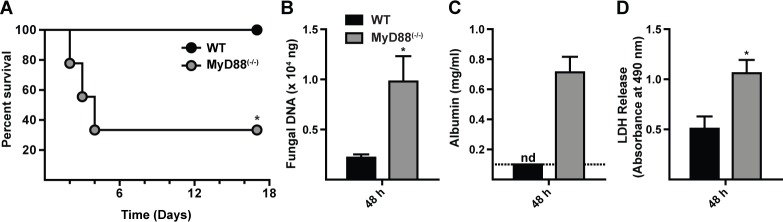
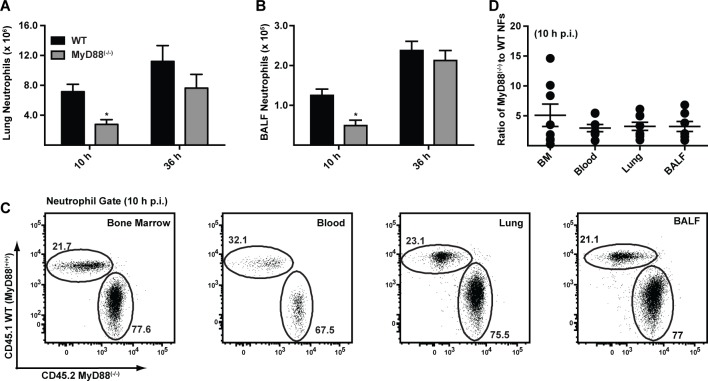
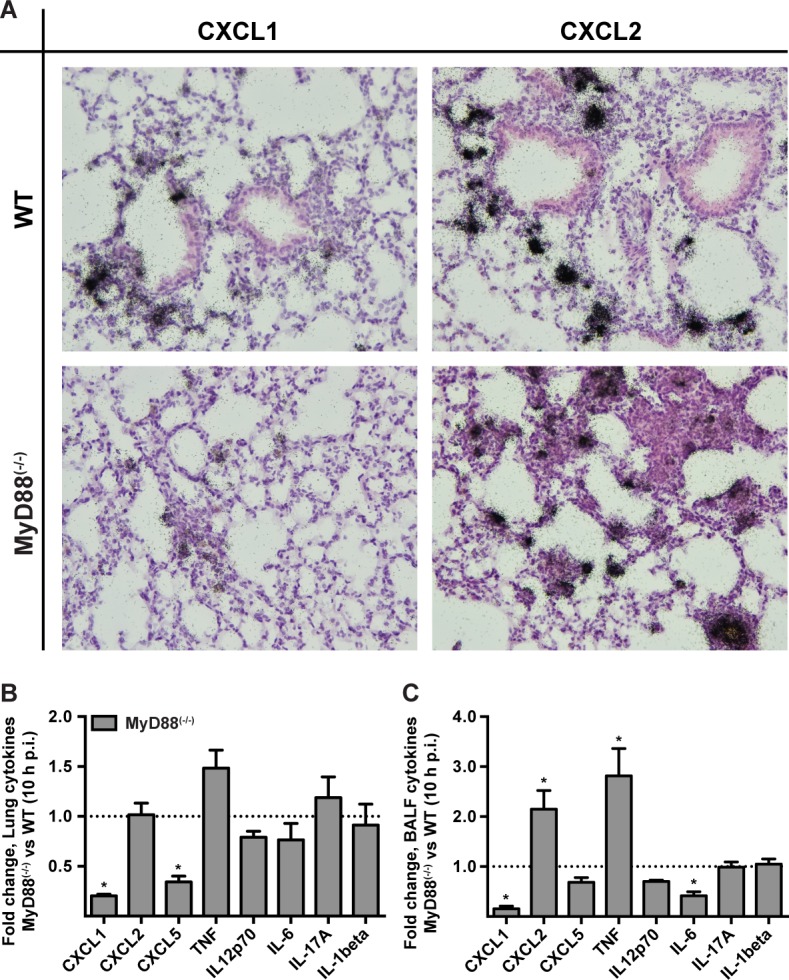
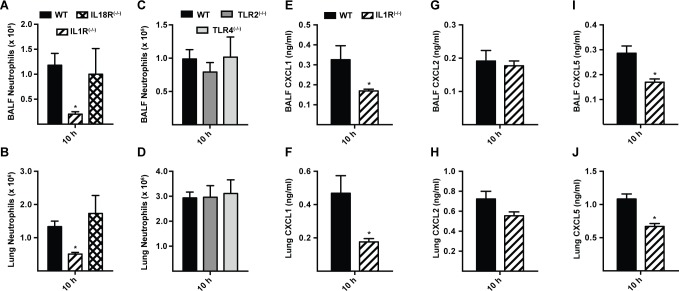
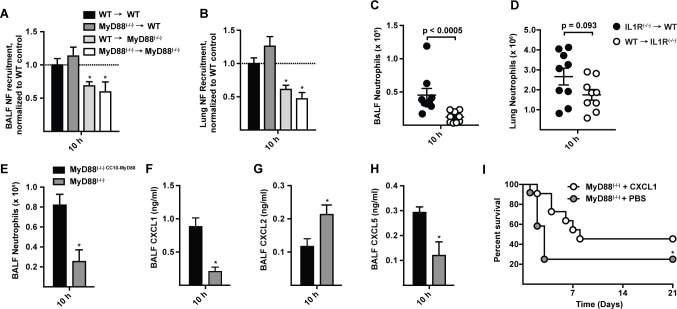
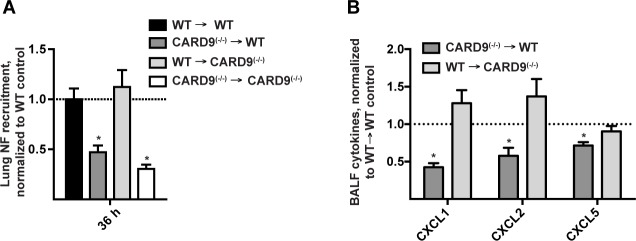
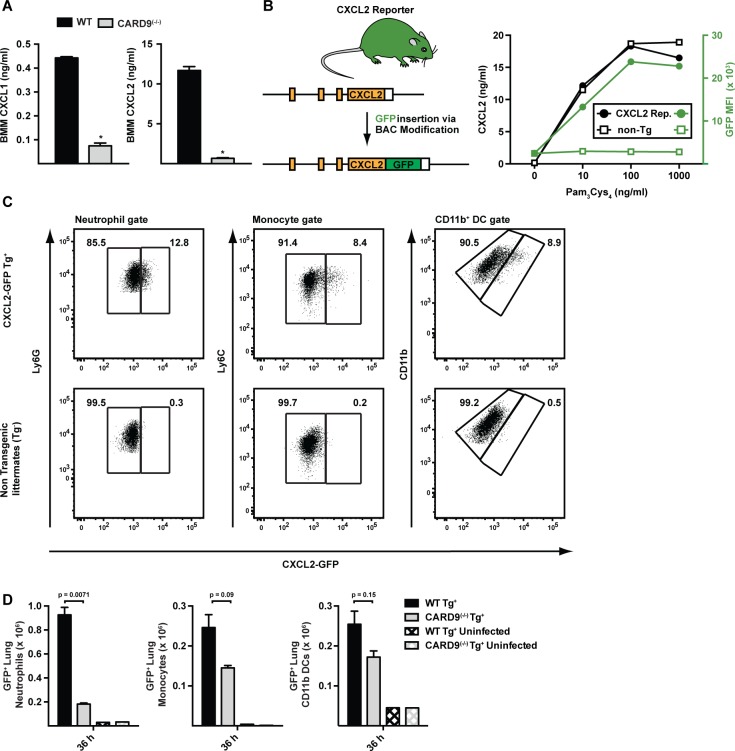
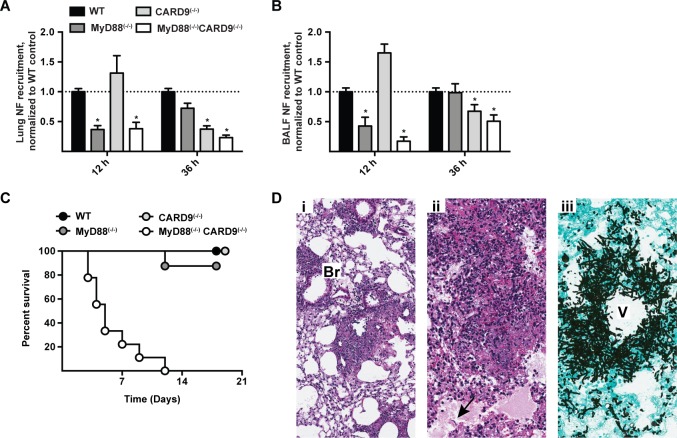
Aspergillus fumigatus forms ubiquitous airborne conidia that humans inhale on a daily basis. Although respiratory fungal infection activates the adaptor proteins CARD9 and MyD88 via C-type lectin, Toll-like, and interleukin-1 family receptor signals, defining the temporal and spatial pattern of MyD88- and CARD9-coupled signals in immune activation and fungal clearance has been difficult to achieve. Herein, we demonstrate that MyD88 and CARD9 act in two discrete phases and in two cellular compartments to direct chemokine- and neutrophil-dependent host defense. The first phase depends on MyD88 signaling because genetic deletion of MyD88 leads to delayed induction of the neutrophil chemokines CXCL1 and CXCL5, delayed neutrophil lung trafficking, and fatal pulmonary damage at the onset of respiratory fungal infection. MyD88 expression in lung epithelial cells restores rapid chemokine induction and neutrophil recruitment via interleukin-1 receptor signaling. Exogenous CXCL1 administration reverses murine mortality in MyD88-deficient mice. The second phase depends predominately on CARD9 signaling because genetic deletion of CARD9 in radiosensitive hematopoietic cells interrupts CXCL1 and CXCL2 production and lung neutrophil recruitment beyond the initial MyD88-dependent phase. Using a CXCL2 reporter mouse, we show that lung-infiltrating neutrophils represent the major cellular source of CXCL2 during CARD9-dependent recruitment. Although neutrophil-intrinsic MyD88 and CARD9 function are dispensable for neutrophil conidial uptake and killing in the lung, global deletion of both adaptor proteins triggers rapidly progressive invasive disease when mice are challenged with an inoculum that is sub-lethal for single adapter protein knockout mice. Our findings demonstrate that distinct signal transduction pathways in the respiratory epithelium and hematopoietic compartment partially overlap to ensure optimal chemokine induction, neutrophil recruitment, and fungal clearance within the respiratory tract.
Overview
The claims and statistics of this paper haven’t been checked yet.
Free: it reads the open-access text and checks the first 5 claims that cite a source we can check. Create a free account to check every claim.
Integrity signals
Registry
Cites
Statistics
Figures
Verification
Claims the paper makes
The claims and statistics of this paper haven’t been checked yet.
Free: it reads the open-access text and checks the first 5 claims that cite a source we can check. Create a free account to check every claim.
Claims other papers make about this one
Each is checked against this paper’s own text: does it say what the citing paper says it does?
The source backs part of the claim, not all of it — or backs it for a different population, condition or comparison.
In the citing paper
“A critical role of IL-1α/IL-1R1/MyD88 signaling activation in lung-resident cells and ECs was associated with protective immunity against Aspergillus via early Cxcl1/Cxcl2-dependent neutrophil recruitment (191, 195).”
From Aspergillus fumigatus and Aspergillosis in 2019 (2019) · cites this paper as [191]
Experimental — accuracy not yet measuredThe cited source says what the claim attributes to it.
In the citing paper
“Significant advances have been made in elucidating the main innate immune players and effector pathways for efficient control of Aspergillus infection in mouse models with the use of transgenic mice (189–202).”
From Aspergillus fumigatus and Aspergillosis in 2019 (2019) · cites this paper as [191]
Self-check
Percentages, sums and reported differences re-computed from the paper’s own numbers.
The self-check needs the paper’s full text.
Citations
Cites
Janeway, C. A., & Medzhitov, R. (2002) · Annual Review of Immunology · doi:10.1146/annurev.immunol.20.083001.084359 · Cited by 8,394
Neutrophil recruitment and function in health and inflammation
Kolaczkowska, E., & Kubes, P. (2013) · Nature Reviews Immunology · doi:10.1038/nri3399 · Cited by 5,472 · cited 1×
“Other chemoattractants implicated in neutrophil chemotaxis include CCL3, CCL6, and CCL9 (via CCR1), platelet-activating factor (via 2 receptors), and CXCL12 (via CXCR4) [40].”
BackgroundHidden Killers: Human Fungal Infections
Brown, G. D., Denning, D. W., Gow, N. A. R., Levitz, S. M., Netea, M. G., & White, T. C. (2012) · Science Translational Medicine · doi:10.1126/scitranslmed.3004404 · Cited by 4,284 · cited 1×
“Aspergillus fumigatus is a leading cause of infectious morbidity and mortality in patients with hematologic malignancies, allogeneic stem cell transplant recipients and in patients receiving immune suppressive therapies [1,2].”
BackgroundAspergillus fumigatus and Aspergillosis
Latgé, J.-P. (1999) · Clinical Microbiology Reviews · doi:10.1128/cmr.12.2.310 · Cited by 2,307 · cited 1×
“Due to their small size (*2–3 μm diameter), conidia can bypass mucociliary clearance and reach terminal airways [3,4].”
BackgroundThe interleukin-1 family: back to the future
Garlanda, C., Dinarello, C. A., & Mantovani, A. (2013) · Immunity · doi:10.1016/j.immuni.2013.11.010 · Cited by 1,945 · cited 3×
“MyD88 acts as a transducer not only for IL-1R-mediated signals, but also for other IL-1R family members [48].”
BackgroundInfluentialRIP3, an Energy Metabolism Regulator That Switches TNF-Induced Cell Death from Apoptosis to Necrosis
Zhang, D.-W., Shao, J., Lin, J., Zhang, N., Lu, B.-J., Lin, S.-C., Dong, M.-Q., & Han, J. (2009) · Science · doi:10.1126/science.1172308 · Cited by 1,931 · cited 1×
“Since respiratory fungal infection induces hypoxic tissue environments in the lung [50], receptor-interacting protein kinase 3 (RIP3)-dependent induction of necroptotic cell death [51] by inhaled conidia may provide a stimulus for IL-1α release.”
BackgroundRomani, L. (2011) · Nature Reviews Immunology · doi:10.1038/nri2939 · Cited by 1,793
Collaborative Induction of Inflammatory Responses by Dectin-1 and Toll-like Receptor 2
Gantner, B. N., Simmons, R. M., Canavera, S. J., Akira, S., & Underhill, D. M. (2003) · The Journal of Experimental Medicine · doi:10.1084/jem.20021787 · Cited by 1,643
Brown, G. D., & Gordon, S. (2001) · Nature · doi:10.1038/35092620 · Cited by 1,579
Pyogenic Bacterial Infections in Humans with MyD88 Deficiency
von Bernuth, H., Picard, C., Jin, Z., Pankla, R., Xiao, H., Ku, C.-L., Chrabieh, M., Mustapha, I. B., Ghandil, P., Camcioglu, Y., et al. (2008) · Science · doi:10.1126/science.1158298 · Cited by 1,287 · cited 1×
“Children that lack MyD88 signaling develop pyogenic infections, primarily due to Streptococcus pneumonia [60], and individuals with CARD9 deficiency develop mucocutaneous and disseminated candidiasis and dermatophytosis [38,61,62].”
Background
Cited by
Aspergillus fumigatus and Aspergillosis in 2019
Latgé, J.-P., & Chamilos, G. (2019) · Clinical Microbiology Reviews · doi:10.1128/cmr.00140-18 · Cited by 1,400
The microbiome and inflammatory bowel disease
Glassner, K. L., Abraham, B. P., & Quigley, E. M. M. (2020) · Journal of Allergy and Clinical Immunology · doi:10.1016/j.jaci.2019.11.003 · Cited by 837
Fungal dysbiosis: immunity and interactions at mucosal barriers
Iliev, I. D., & Leonardi, I. (2017) · Nature Reviews Immunology · doi:10.1038/nri.2017.55 · Cited by 393
Immune responses to human fungal pathogens and therapeutic prospects
Lionakis, M. S., Drummond, R. A., & Hohl, T. M. (2023) · Nature Reviews Immunology · doi:10.1038/s41577-022-00826-w · Cited by 379
Self-citationCellular and functional heterogeneity of the airway epithelium
Davis, J. D., & Wypych, T. P. (2021) · Mucosal Immunology · doi:10.1038/s41385-020-00370-7 · Cited by 300
Metadata
- Authors
- Jhingran, A., Kasahara, S., Shepardson, K. M., Junecko, B. A. F., Heung, L. J., Kumasaka, D. K., Knoblaugh, S. E., Lin, X., Kazmierczak, B. I., Reinhart, T. A., Cramer, R. A., & Hohl, T. M.
- Affiliations
- Memorial Sloan Kettering Cancer Center (US)
- Dartmouth College (US)
- University of Pittsburgh (US)
- Fred Hutch Cancer Center (US)
- The University of Texas MD Anderson Cancer Center (US)
- Yale University (US)
- Corresponding author
- Hohl, Tobias M.
- ORCID
- Venue
- PLOS Pathogens
- Publisher
- Public Library of Science (PLoS)
- Published
- 2015-01-26
- Volume
- 11
- Issue
- 1
- Pages
- e1004589
- ISSN
- 1553-7366 (ISSN-L)
- 1553-7374
- PMC
- PMC4306481
- OpenAlex
- W2035046966
- Cited by
- 108
- References
- 77
- Citations by year
- 2026: 5 · 2025: 8 · 2024: 6 · 2023: 7 · 2022: 5 · 2021: 11 · 2020: 12 · 2019: 5 · 2018: 15 · 2017: 18 · 2016: 9 · 2015: 7
- FWCI
- 8.05
- Type
- journal article
- Language
- en
- Open access
- gold
- doi.org
- Licence
- Locations
- PLoS Pathogens (publishedVersion, cc-by)
- Europe PMC (PubMed Central) (publishedVersion, cc-by)
- PubMed Central (publishedVersion, cc-by)
- PubMed (publishedVersion)
- D-Scholarship@Pitt (University of Pittsburgh) (acceptedVersion)
- DOAJ (DOAJ: Directory of Open Access Journals) (submittedVersion, cc-by-sa)
- Figshare (submittedVersion, cc-by)
- Funders
- Burroughs Wellcome Fund
- Fred Hutchinson Cancer Research Center
- Memorial Sloan-Kettering Cancer Center
- Montana State University
- National Institutes of Health (NIH-R01, AI081825)
- National Cancer Institute (P30CA015704)
- National Institute of General Medical Sciences (P30GM106394, P30GM103415)
- National Institute of Allergy and Infectious Diseases (R01 AI81838, R21AI105617, R01AI081825, R01AI093808, R56AI050848, R01AI081838, R37AI093808)
- Topics
- Life Sciences › Immunology and Microbiology › Immunology › Immune Response and Inflammation
- Health Sciences › Medicine › Infectious Diseases › Antifungal resistance and susceptibility
- Health Sciences › Medicine › Oncology › Chemokine receptors and signaling
- Keywords
- MyD88, CARD9, Aspergillus fumigatus, respiratory fungal infection, chemokine induction, CXCL1, CXCL2, CXCL5, neutrophil recruitment, lung epithelial cells, hematopoietic cells, interleukin-1 receptor signaling, C-type lectin receptor signaling, Toll-like receptor signaling, invasive aspergillosis, innate immunity
- MeSH terms
- Animals, Aspergillus fumigatus, Humans, Immunity, Innate, Lung, Neutrophils, Signal Transduction, Receptors, Interleukin-1, Mice, Knockout, Chemokines, Neutrophil Infiltration, Mice, CARD Signaling Adaptor Proteins, Myeloid Differentiation Factor 88, Pulmonary Aspergillosis
About these checks
Registry, retraction, Cites and statistics results are computed, not judged, with one exception: a printed reference that no index lists is read once by a model before it counts as a citation error. Claims are extracted by a model and kept only when their quote appears verbatim in the text; each cited source is then checked, with a model’s help, for whether it says what the claim relies on. Those verdicts can be wrong — read the claim’s quote and the cited source before relying on one.
Statistics and arithmetic are recomputed, not judged.
Confidence bands are shown only for fields calibrated on our annotated test set. None is calibrated yet, so no band is shown.
What counts as a claim ›How we measure confidence ›How we check this ›
Are you an author, or do you see a problem with this page? Request a review
Data sources
Bibliographic data: Semantic Scholar, OpenAlex, Crossref.
Contains information from the Semantic Scholar Academic Graph Datasets, made available under the ODC Attribution License (ODC-BY 1.0).
Semantic Scholar’s data is described in: Kinney, R., et al. (2023). The Semantic Scholar Open Data Platform. arXiv:2301.10140.
