

Compartment-Specific and Sequential Role of MyD88 and CARD9 in Chemokine Induction and Innate Defense during Respiratory Fungal Infection
Open accessThe DOI matches its Crossref record; 77 of the 77 references it cites were found in a registry or an index.
Abstract
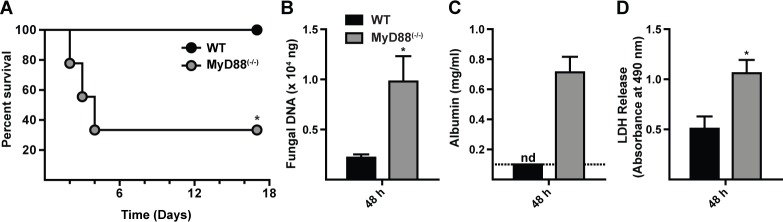
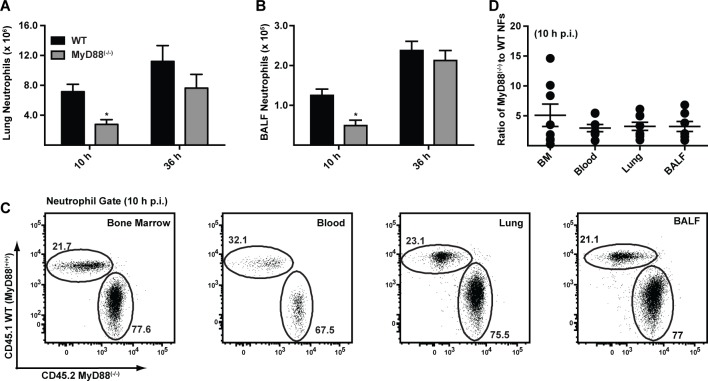
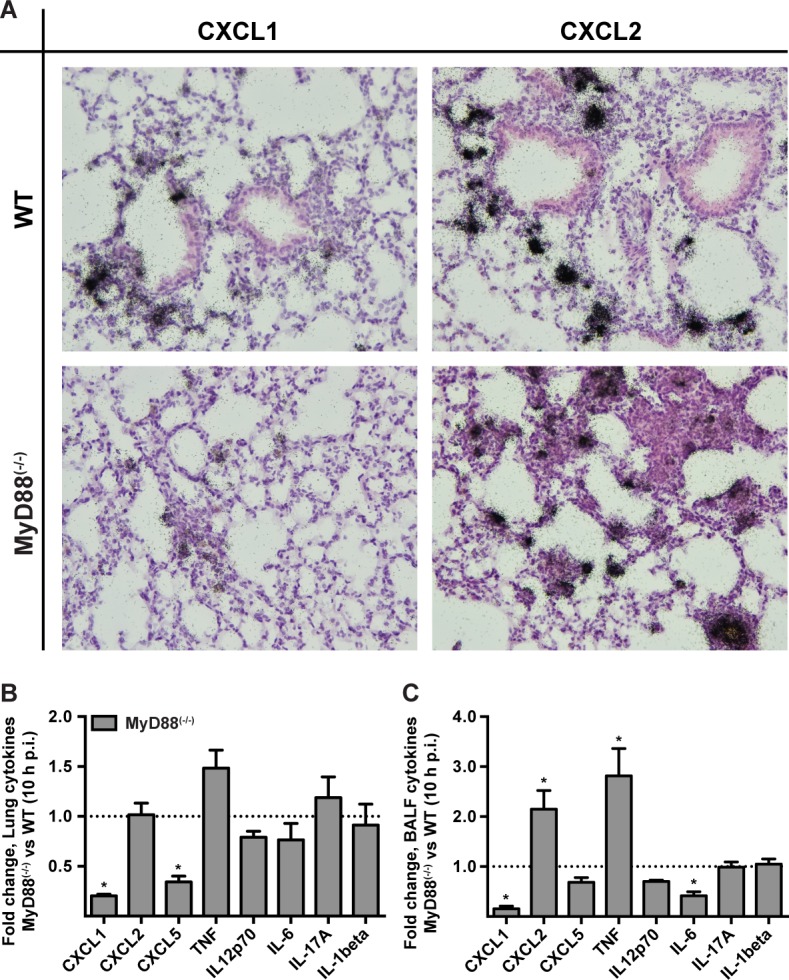
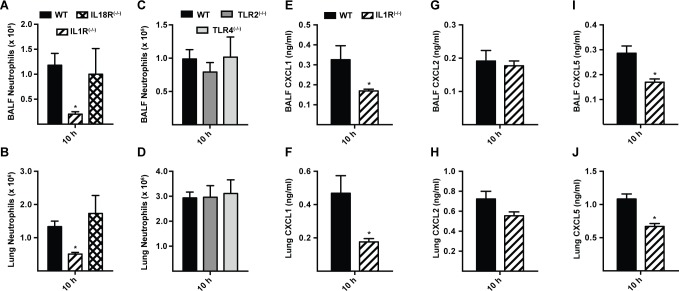
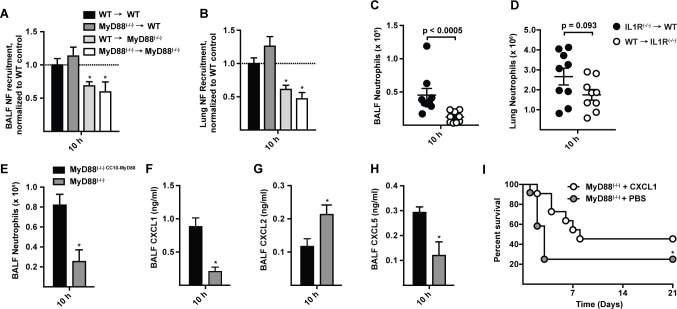
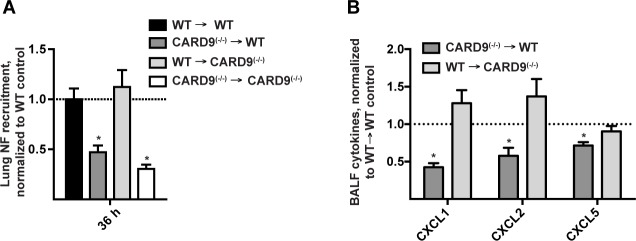
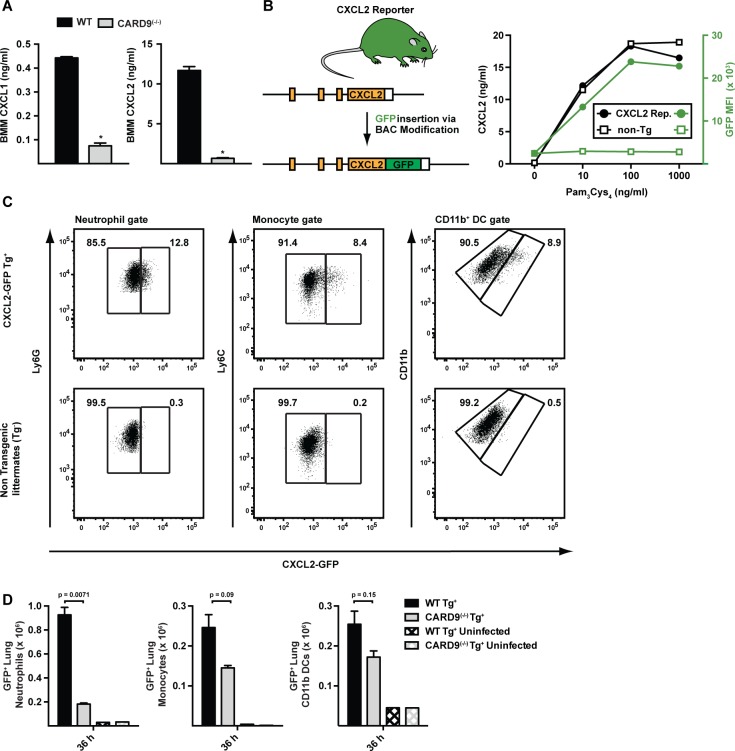
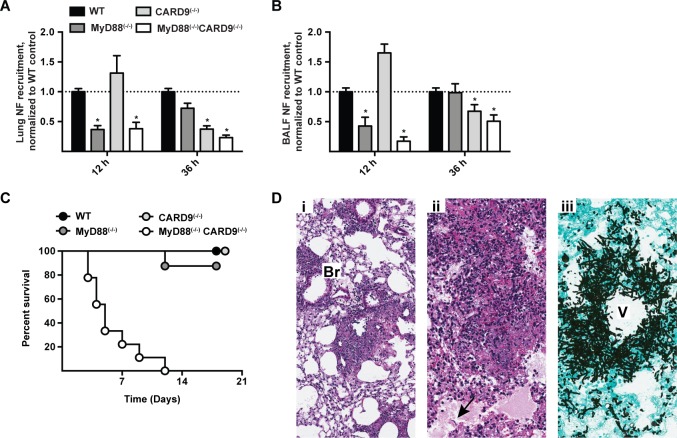
Aspergillus fumigatus forms ubiquitous airborne conidia that humans inhale on a daily basis. Although respiratory fungal infection activates the adaptor proteins CARD9 and MyD88 via C-type lectin, Toll-like, and interleukin-1 family receptor signals, defining the temporal and spatial pattern of MyD88- and CARD9-coupled signals in immune activation and fungal clearance has been difficult to achieve. Herein, we demonstrate that MyD88 and CARD9 act in two discrete phases and in two cellular compartments to direct chemokine- and neutrophil-dependent host defense. The first phase depends on MyD88 signaling because genetic deletion of MyD88 leads to delayed induction of the neutrophil chemokines CXCL1 and CXCL5, delayed neutrophil lung trafficking, and fatal pulmonary damage at the onset of respiratory fungal infection. MyD88 expression in lung epithelial cells restores rapid chemokine induction and neutrophil recruitment via interleukin-1 receptor signaling. Exogenous CXCL1 administration reverses murine mortality in MyD88-deficient mice. The second phase depends predominately on CARD9 signaling because genetic deletion of CARD9 in radiosensitive hematopoietic cells interrupts CXCL1 and CXCL2 production and lung neutrophil recruitment beyond the initial MyD88-dependent phase. Using a CXCL2 reporter mouse, we show that lung-infiltrating neutrophils represent the major cellular source of CXCL2 during CARD9-dependent recruitment. Although neutrophil-intrinsic MyD88 and CARD9 function are dispensable for neutrophil conidial uptake and killing in the lung, global deletion of both adaptor proteins triggers rapidly progressive invasive disease when mice are challenged with an inoculum that is sub-lethal for single adapter protein knockout mice. Our findings demonstrate that distinct signal transduction pathways in the respiratory epithelium and hematopoietic compartment partially overlap to ensure optimal chemokine induction, neutrophil recruitment, and fungal clearance within the respiratory tract.
Overview
The claims and statistics of this paper haven’t been checked yet.
Free: it reads the open-access text and checks the first 5 claims that cite a source we can check. Create a free account to check every claim.
Integrity signals
Registry
Cites
Statistics
Figures
Verification
Claims the paper makes
The claims and statistics of this paper haven’t been checked yet.
Free: it reads the open-access text and checks the first 5 claims that cite a source we can check. Create a free account to check every claim.
Claims other papers make about this one
Each is checked against this paper’s own text: does it say what the citing paper says it does?
The source backs part of the claim, not all of it — or backs it for a different population, condition or comparison.
In the citing paper
“A critical role of IL-1α/IL-1R1/MyD88 signaling activation in lung-resident cells and ECs was associated with protective immunity against Aspergillus via early Cxcl1/Cxcl2-dependent neutrophil recruitment (191, 195).”
From Aspergillus fumigatus and Aspergillosis in 2019 (2019) · cites this paper as [191]
Experimental — accuracy not yet measuredThe cited source says what the claim attributes to it.
In the citing paper
“Significant advances have been made in elucidating the main innate immune players and effector pathways for efficient control of Aspergillus infection in mouse models with the use of transgenic mice (189–202).”
From Aspergillus fumigatus and Aspergillosis in 2019 (2019) · cites this paper as [191]
Self-check
Percentages, sums and reported differences re-computed from the paper’s own numbers.
The self-check needs the paper’s full text.
Citations
Cites
Janeway, C. A., & Medzhitov, R. (2002) · Annual Review of Immunology · doi:10.1146/annurev.immunol.20.083001.084359 · Cited by 8,394
Neutrophil recruitment and function in health and inflammation
Kolaczkowska, E., & Kubes, P. (2013) · Nature Reviews Immunology · doi:10.1038/nri3399 · Cited by 5,472 · cited 1×
“Other chemoattractants implicated in neutrophil chemotaxis include CCL3, CCL6, and CCL9 (via CCR1), platelet-activating factor (via 2 receptors), and CXCL12 (via CXCR4) [40].”
BackgroundHidden Killers: Human Fungal Infections
Brown, G. D., Denning, D. W., Gow, N. A. R., Levitz, S. M., Netea, M. G., & White, T. C. (2012) · Science Translational Medicine · doi:10.1126/scitranslmed.3004404 · Cited by 4,284 · cited 1×
“Aspergillus fumigatus is a leading cause of infectious morbidity and mortality in patients with hematologic malignancies, allogeneic stem cell transplant recipients and in patients receiving immune suppressive therapies [1,2].”
BackgroundAspergillus fumigatus and Aspergillosis
Latgé, J.-P. (1999) · Clinical Microbiology Reviews · doi:10.1128/cmr.12.2.310 · Cited by 2,307 · cited 1×
“Due to their small size (*2–3 μm diameter), conidia can bypass mucociliary clearance and reach terminal airways [3,4].”
BackgroundThe interleukin-1 family: back to the future
Garlanda, C., Dinarello, C. A., & Mantovani, A. (2013) · Immunity · doi:10.1016/j.immuni.2013.11.010 · Cited by 1,945 · cited 3×
“MyD88 acts as a transducer not only for IL-1R-mediated signals, but also for other IL-1R family members [48].”
BackgroundInfluentialRIP3, an Energy Metabolism Regulator That Switches TNF-Induced Cell Death from Apoptosis to Necrosis
Zhang, D.-W., Shao, J., Lin, J., Zhang, N., Lu, B.-J., Lin, S.-C., Dong, M.-Q., & Han, J. (2009) · Science · doi:10.1126/science.1172308 · Cited by 1,931 · cited 1×
“Since respiratory fungal infection induces hypoxic tissue environments in the lung [50], receptor-interacting protein kinase 3 (RIP3)-dependent induction of necroptotic cell death [51] by inhaled conidia may provide a stimulus for IL-1α release.”
BackgroundRomani, L. (2011) · Nature Reviews Immunology · doi:10.1038/nri2939 · Cited by 1,793
Collaborative Induction of Inflammatory Responses by Dectin-1 and Toll-like Receptor 2
Gantner, B. N., Simmons, R. M., Canavera, S. J., Akira, S., & Underhill, D. M. (2003) · The Journal of Experimental Medicine · doi:10.1084/jem.20021787 · Cited by 1,643
Brown, G. D., & Gordon, S. (2001) · Nature · doi:10.1038/35092620 · Cited by 1,579
Pyogenic Bacterial Infections in Humans with MyD88 Deficiency
von Bernuth, H., Picard, C., Jin, Z., Pankla, R., Xiao, H., Ku, C.-L., Chrabieh, M., Mustapha, I. B., Ghandil, P., Camcioglu, Y., et al. (2008) · Science · doi:10.1126/science.1158298 · Cited by 1,287 · cited 1×
“Children that lack MyD88 signaling develop pyogenic infections, primarily due to Streptococcus pneumonia [60], and individuals with CARD9 deficiency develop mucocutaneous and disseminated candidiasis and dermatophytosis [38,61,62].”
Background
Cited by
Aspergillus fumigatus and Aspergillosis in 2019
Latgé, J.-P., & Chamilos, G. (2019) · Clinical Microbiology Reviews · doi:10.1128/cmr.00140-18 · Cited by 1,400
The microbiome and inflammatory bowel disease
Glassner, K. L., Abraham, B. P., & Quigley, E. M. M. (2020) · Journal of Allergy and Clinical Immunology · doi:10.1016/j.jaci.2019.11.003 · Cited by 837
Fungal dysbiosis: immunity and interactions at mucosal barriers
Iliev, I. D., & Leonardi, I. (2017) · Nature Reviews Immunology · doi:10.1038/nri.2017.55 · Cited by 393
Immune responses to human fungal pathogens and therapeutic prospects
Lionakis, M. S., Drummond, R. A., & Hohl, T. M. (2023) · Nature Reviews Immunology · doi:10.1038/s41577-022-00826-w · Cited by 379
Self-citationCellular and functional heterogeneity of the airway epithelium
Davis, J. D., & Wypych, T. P. (2021) · Mucosal Immunology · doi:10.1038/s41385-020-00370-7 · Cited by 300
Understanding Society Scientific Group, Wain, L. V., Geisinger-Regeneron DiscovEHR Collaboration, Shrine, N., Artigas, M. S., Erzurumluoglu, A. M., Noyvert, B., Bossini-Castillo, L., Obeidat, M., Henry, A. P., et al. (2017) · Nature Genetics · doi:10.1038/ng.3787 · Cited by 288
Host Control of Fungal Infections: Lessons from Basic Studies and Human Cohorts
Lionakis, M. S., & Levitz, S. M. (2018) · Annual Review of Immunology · doi:10.1146/annurev-immunol-042617-053318 · Cited by 209
Latgé, J.-P., Beauvais, A., & Chamilos, G. (2017) · Annual Review of Microbiology · doi:10.1146/annurev-micro-030117-020406 · Cited by 207
Drummond, R. A., Collar, A. L., Swamydas, M., Rodriguez, C. A., Lim, J. K., Mendez, L. M., Fink, D. L., Hsu, A. P., Zhai, B., Karauzum, H., et al. (2015) · PLOS Pathogens · doi:10.1371/journal.ppat.1005293 · Cited by 201
“later stages of the infection a 40% decrease in neutrophil accumulation was observed, which was due to decreased CXC chemokine production by Card9 hematopoietic cells [38, 42].”
BackgroundMethodInfluentialSelf-citationCARD–BCL-10–MALT1 signalling in protective and pathological immunity
Ruland, J., & Hartjes, L. (2019) · Nature Reviews Immunology · doi:10.1038/s41577-018-0087-2 · Cited by 196
Corvilain, E., Casanova, J.-L., & Puel, A. (2018) · Journal of Clinical Immunology · doi:10.1007/s10875-018-0539-2 · Cited by 169
Extrapulmonary Aspergillus infection in patients with CARD9 deficiency
Rieber, N., Gazendam, R. P., Freeman, A. F., Hsu, A. P., Collar, A. L., Sugui, J. A., Drummond, R. A., Rongkavilit, C., Hoffman, K., Henderson, C., et al. (2016) · JCI Insight · doi:10.1172/jci.insight.89890 · Cited by 171
“Because aspergillosis in nonneutropenic mice and humans is accompanied by robust neutrophilic tissue accumulation (28, 30, 31), the lack of tissue neutrophil infiltration”
BackgroundResultInfluentialPathogenesis of Respiratory Viral and Fungal Coinfections
Salazar, F., Bignell, E., Brown, G. D., Cook, P. C., & Warris, A. (2021) · Clinical Microbiology Reviews · doi:10.1128/cmr.00094-21 · Cited by 178
Human CARD9: A Critical Molecule of Fungal Immune Surveillance
Drummond, R. A., Franco, L. M., & Lionakis, M. S. (2018) · Frontiers in Immunology · doi:10.3389/fimmu.2018.01836 · Cited by 149
“fumigatus in mice (14), and we recently reported CARD9-deficient patients who developed extrapulmonary A.”
Lionakis, M. S., Iliev, I. D., & Hohl, T. M. (2017) · JCI Insight · doi:10.1172/jci.insight.93156 · Cited by 153
Self-citationGazendam, R. P., van de Geer, A., Roos, D., van den Berg, T. K., & Kuijpers, T. W. (2016) · Immunological Reviews · doi:10.1111/imr.12454 · Cited by 144
Clark, H. L., Jhingran, A., Sun, Y., Vareechon, C., de Jesus Carrion, S., Skaar, E. P., Chazin, W. J., Calera, J. A., Hohl, T. M., & Pearlman, E. (2016) · The Journal of Immunology · doi:10.4049/jimmunol.1502037 · Cited by 149
“1E, 1F), which are essential for neutrophil chemotaxis in pulmonary and cornea infection models (5, 21).”
BackgroundSelf-citationDrummond, R. A., & Lionakis, M. S. (2016) · Frontiers in Cellular and Infection Microbiology · doi:10.3389/fcimb.2016.00039 · Cited by 129
“We showed that this defect is specific to the CNS, since CXC-chemokine production and neutrophil recruitment were affected in a significantly lesser extent in the kidney of infected Card9−/− mice, similar to recent findings using C. tropicalis (Whibley et al., 2015).”
BackgroundInfluentialThe role of neutrophils in host defense against invasive fungal infections
Desai, J. V., & Lionakis, M. S. (2018) · Current Clinical Microbiology Reports · doi:10.1007/s40588-018-0098-6 · Cited by 131
Immune Interactions with Pathogenic and Commensal Fungi: A Two-Way Street
Underhill, D. M., & Pearlman, E. (2015) · Immunity · doi:10.1016/j.immuni.2015.10.023 · Cited by 130
“Genetic variations in Toll-like receptors (TLRs) that are clearly linked to susceptibility to fungal infections have been difficult to identify in otherwise healthy individuals.”
BackgroundInfluentialPathogenicity and virulence of Aspergillus fumigatus
Earle, K., Valero, C., Conn, D. P., Vere, G., Cook, P. C., Bromley, M., Bowyer, P., & Gago, S. (2023) · Virulence · doi:10.1080/21505594.2023.2172264 · Cited by 132
“Using in vivo models of disease, Jhingran et al. [216] demonstrated that protective anti-Aspergillus responses depend on the coordinated action of the lung epithelium and haematopoietic cells.”
BackgroundMethodRegulation of C-Type Lectin Receptor-Mediated Antifungal Immunity
Tang, J., Lin, G., Langdon, W. Y., Tao, L., & Zhang, J. (2018) · Frontiers in Immunology · doi:10.3389/fimmu.2018.00123 · Cited by 125
Microbial volatile communication in human organotypic lung models
Barkal, L. J., Procknow, C. L., Álvarez-García, Y. R., Niu, M., Jiménez‐Torres, J. A., Brockman‐Schneider, R. A., Gern, J. E., Denlinger, L. C., Theberge, A. B., Keller, N. P., et al. (2017) · Nature Communications · doi:10.1038/s41467-017-01985-4 · Cited by 123
Macrophages inhibit Aspergillus fumigatus germination and neutrophil-mediated fungal killing
Rosowski, E. E., Raffa, N., Knox, B. P., Golenberg, N., Keller, N. P., & Huttenlocher, A. (2018) · PLoS Pathogens · doi:10.1371/journal.ppat.1007229 · Cited by 118
Fungal infections: Immune defense, immunotherapies and vaccines
Loh, J. T., & Lam, K. (2023) · Advanced Drug Delivery Reviews · doi:10.1016/j.addr.2023.114775 · Cited by 111
The impact of lung microbiota dysbiosis on inflammation
Yang, D., Xing, Y., Song, X., & Qian, Y. (2019) · Immunology · doi:10.1111/imm.13139 · Cited by 109
Fisher, C. E., Hohl, T. M., Fan, W., Storer, B. E., Levine, D. M., Zhao, L. P., Martin, P. J., Warren, E. H., Boeckh, M., & Hansen, J. A. (2017) · Blood · doi:10.1182/blood-2016-10-743294 · Cited by 87
Self-citationGuerra, E. S., Lee, C. K., Specht, C. A., Yadav, B., Huang, H., Akalin, A., Huh, J. R., Mueller, C., & Levitz, S. M. (2017) · PLOS Pathogens · doi:10.1371/journal.ppat.1006175 · Cited by 88
“Fluorescent Aspergillus Reporter (FLARE) conidia FLARE conidia were created as described [26,65].”
MethodGuo, Y., Kasahara, S., Jhingran, A., Tosini, N. L., Zhai, B., Aufiero, M. A., Mills, K. A. M., Gjonbalaj, M., Espinosa, V., Rivera, A., et al. (2020) · Cell Host & Microbe · doi:10.1016/j.chom.2020.05.002 · Cited by 92
Self-citationFirst Line of Defense: Innate Cell-Mediated Control of Pulmonary Aspergillosis
Espinosa, V., & Rivera, A. (2016) · Frontiers in Microbiology · doi:10.3389/fmicb.2016.00272 · Cited by 77
“Recent studies further suggest that MyD88 signaling in defense against IA is crucially active on lung epithelial cells and is required for optimal production of neutrophil-recruiting chemokines (Jhingran et al., 2015).”
BackgroundMolecular and physiological roles of the adaptor protein CARD9 in immunity
Zhong, X., Chen, B., Yang, L., & Yang, Z. (2018) · Cell Death and Disease · doi:10.1038/s41419-017-0084-6 · Cited by 85
Heung, L. J., Wiesner, D. L., Wang, K., Rivera, A., & Hohl, T. M. (2023) · Seminars in Immunology · doi:10.1016/j.smim.2023.101728 · Cited by 80
Self-citationKasahara, S., Jhingran, A., Dhingra, S., Salem, A., Cramer, R. A., & Hohl, T. M. (2016) · Journal of Infectious Diseases · doi:10.1093/infdis/jiw054 · Cited by 71
Self-citationLung Epithelial Cells Coordinate Innate Lymphocytes and Immunity against Pulmonary Fungal Infection
Hernández-Santos, N., Wiesner, D. L., Fites, J. S., McDermott, A. J., Warner, T., Wüthrich, M., & Klein, B. S. (2018) · Cell Host & Microbe · doi:10.1016/j.chom.2018.02.011 · Cited by 71
“These perceptions notwithstanding, MyD88 signaling in epithelium is known to regulate early recruitment of neutrophils into the lung in murine aspergillosis (Jhingran et al., 2015) and NFκB signaling in LEC promote adaptive immunity to P. carinii infection (Perez-Nazario et al., 2013).”
BackgroundInfluentialMonocyte-mediated defense against bacteria, fungi, and parasites
Lauvau, G. S., Loke, P., & Hohl, T. M. (2015) · Seminars in Immunology · doi:10.1016/j.smim.2016.03.014 · Cited by 78
Self-citationFunctional heterogeneity of alveolar macrophage population based on expression of CXCL2
Xu-Vanpala, S., Deerhake, M. E., Wheaton, J. D., Parker, M. E., Juvvadi, P. R., MacIver, N. J., Ciofani, M., & Shinohara, M. L. (2020) · Science Immunology · doi:10.1126/sciimmunol.aba7350 · Cited by 70
Interleukin 1α Is Critical for Resistance against Highly Virulent Aspergillus fumigatus Isolates
Caffrey-Carr, A. K., Kowalski, C. H., Beattie, S. R., Blaseg, N. A., Upshaw, C. R., Thammahong, A., Lust, H. E., Tang, Y., Hohl, T. M., Cramer, R. A., et al. (2017) · Infection and Immunity · doi:10.1128/iai.00661-17 · Cited by 65
“fumigatus challenge, IL-1RI- and MyD88-dependent signals are necessary for optimal leukocyte recruitment and antifungal effector functions to prevent the development of fungal growth and disease (22, 35, 36).”
BackgroundResultSelf-citationAspergillus fumigatus biology, immunopathogenicity and drug resistance
van de Veerdonk, F. L., Carvalho, A., Wauters, J., Chamilos, G., & Verweij, P. E. (2025) · Nature Reviews Microbiology · doi:10.1038/s41579-025-01180-z · Cited by 70
“Moreover, epithelial damage also leads to impaired mucociliary clearance and decreased epithelial production of chemokines and pro-inflammatory mediators, increasing the susceptibility to a higher burden of A. fumigatus spores in the lower respiratory tract 53 .”
Tissue-Resident Macrophages in Fungal Infections
Xu, S., & Shinohara, M. L. (2017) · Frontiers in Immunology · doi:10.3389/fimmu.2017.01798 · Cited by 57
“fumigatus infection was reported to be epithelial cells, rather than AMs (68).”
BackgroundMenacing Mold: Recent Advances in Aspergillus Pathogenesis and Host Defense
Tischler, B. Y., & Hohl, T. M. (2019) · Journal of Molecular Biology · doi:10.1016/j.jmb.2019.03.027 · Cited by 60
“However, outside the lung, a gross absence of neutrophil recruitment has been reported in case of abdominal aspergillosis, suggesting that neutrophil recruitment depends heavily on CARD9 signaling at extrapulmonary sites [21], similar to findings reported for neutrophil chemotaxis to the Candida-infected central nervo…”
BackgroundSelf-citationGut microbiota and inflammatory bowel disease: The current status and perspectives
Zheng, L., & Wen, X. (2021) · World Journal of Clinical Cases · doi:10.12998/wjcc.v9.i2.321 · Cited by 56
Desoubeaux, G., & Cray, C. (2017) · Frontiers in Microbiology · doi:10.3389/fmicb.2017.00841 · Cited by 55
“For instance, BALB/c mice are a well-known general multipurpose model allowing studying for infectious diseases, while C57BL/6 strain represents permissive background for maximal expression of most mutations, like those in genes coding for cytokines, toll-like receptors (TLRs), Dectin-1 or other receptors/proteins ass…”
BackgroundWhibley, N., Jaycox, J. R., Reid, D. M., Garg, A. V., Taylor, J. A., Clancy, C. J., Nguyen, M. H., Biswas, P. S., McGeachy, M. J., Brown, G. D., et al. (2015) · The Journal of Immunology · doi:10.4049/jimmunol.1500870 · Cited by 54
“This finding contrasts with a report documenting a requirement for CARD9 in neutrophil recruitment during A. fumigatus infection, which was associated with reduced expression of CXCL1, CXCL2, and CXCL5 (55).”
BackgroundInfluentialHelper T‐cell responses and pulmonary fungal infections
McDermott, A. J., & Klein, B. S. (2018) · Immunology · doi:10.1111/imm.12953 · Cited by 54
Lung epithelium: barrier immunity to inhaled fungi and driver of fungal-associated allergic asthma
Wiesner, D. L., & Klein, B. S. (2017) · Current Opinion in Microbiology · doi:10.1016/j.mib.2017.10.007 · Cited by 45
Gresnigt, M. S., Rekiki, A., Rasid, O., Savers, A., Jouvion, G., Dannaoui, E., Parlato, M., Fitting, C., Brock, M., Cavaillon, J.-M., et al. (2016) · Scientific Reports · doi:10.1038/srep26490 · Cited by 41
BTK drives neutrophil activation for sterilizing antifungal immunity
Desai, J. V., Zarakas, M. A., Wishart, A. L., Roschewski, M. J., Aufiero, M. A., Donkó, Á., Wigerblad, G., Shlezinger, N., Plate, M., James, M. R., et al. (2024) · Journal of Clinical Investigation · doi:10.1172/jci176142 · Cited by 42
Self-citationImmune responses to invasive aspergillosis: new understanding and therapeutic opportunities
Hohl, T. M. (2017) · Current Opinion in Infectious Diseases · doi:10.1097/qco.0000000000000381 · Cited by 35
Self-citationHost-Derived Leukotriene B4 Is Critical for Resistance against Invasive Pulmonary Aspergillosis
Caffrey-Carr, A. K., Hilmer, K. M., Kowalski, C. H., Shepardson, K. M., Temple, R. M., Cramer, R. A., & Obar, J. J. (2018) · Frontiers in Immunology · doi:10.3389/fimmu.2017.01984 · Cited by 39
“Proc Natl Acad Sci U S A (2014) 111(9):3526–31.”
BackgroundInfluentialSelf-citationCo-recognition of β-glucan and chitin and programming of adaptive immunity to Aspergillus fumigatus
Amarsaikhan, N., & Templeton, S. P. (2015) · Frontiers in Microbiology · doi:10.3389/fmicb.2015.00344 · Cited by 37
“…cell wall modulation Introduction Aspergillus fumigatus is an opportunistic fungal pathogen abundant in indoor and outdoor environments, causing fungal infection in immune suppressed individuals and exacerbating chronic pulmonary conditions (Hohl and Feldmesser, 2007; Kwon-Chung and Sugui, 2013).”
BackgroundAcute inflammatory response in the skin of gilthead seabream (Sparus aurata) caused by carrageenin
Campos‐Sánchez, J. C., Mayor-Lafuente, J., González‐Silvera, D., Guardiola, F. A., & Esteban, M. Á. (2021) · Fish & Shellfish Immunology · doi:10.1016/j.fsi.2021.10.009 · Cited by 36
“…linked to TLRs that participate in the signal transduction pathway to NF-κ B. Alternatively, since MyD88 was activated in mouse lung epithelial cells for the purpose of inducing neutrophil recruitment through chemokine production, it could play an alternative role outside the TLR pathway [57,58].”
Organ-specific mechanisms linking innate and adaptive antifungal immunity
Drummond, R. A., & Lionakis, M. S. (2018) · Seminars in Cell and Developmental Biology · doi:10.1016/j.semcdb.2018.01.008 · Cited by 37
“fumigatus pulmonary challenge, which is critical for inducing protective neutrophil recruitment and fungal clearance [92] (Figure 4A).”
BackgroundWang, X., Caffrey-Carr, A. K., Liu, K.-W., Espinosa, V., Croteau, W., Dhingra, S., Rivera, A., Cramer, R. A., & Obar, J. J. (2020) · The Journal of Immunology · doi:10.4049/jimmunol.2000802 · Cited by 35
Self-citationIt’s all in your head: antifungal immunity in the brain
Snarr, B. D., Drummond, R. A., & Lionakis, M. S. (2020) · Current Opinion in Microbiology · doi:10.1016/j.mib.2020.07.011 · Cited by 36
PKC-δ activation in neutrophils promotes fungal clearance
Li, X., Culleré, X., Nishi, H., Saggu, G., Durand, E., Mansour, M. K., Tam, J. M., Song, X.-Y., Lin, X., Vyas, J. M., et al. (2016) · Journal of Leukocyte Biology · doi:10.1189/jlb.4a0915-405r · Cited by 34
“Given these differential roles for Card9, we anticipate that the invasive candidiasis observed in patients with Card9 deficiency [49] may be the result of a primary defect in immune cell–generated chemokines that promote neutrophil recruitment and activation as reported [50], rather than an intrinsic defect in neutrop…”
BackgroundSelf-citationMills, K. A. M., Westermann, F., Espinosa, V., Rosiek, E., Desai, J. V., Aufiero, M. A., Guo, Y., Liu, F. L., Mitchell, K. A., Tuzlak, S., et al. (2025) · Science Immunology · doi:10.1126/sciimmunol.adr0547 · Cited by 34
Self-citationPaving the way for predictive diagnostics and personalized treatment of invasive aspergillosis
Coelho, A., Rodrigues, F. J. S., Campos, A. N., de Lacerda, J. F., Carvalho, A., & Cunha, C. (2015) · Frontiers in Microbiology · doi:10.3389/fmicb.2015.00411 · Cited by 32
“…distinct signal transduction pathways through the PRR adapters myeloid differentiation primary response 88 (MyD88) and caspase-associated recruitment domain 9 (CARD9) in the respiratory epithelium and hematopoietic compartment in response to infection was recently reported (Jhingran et al., 2015).”
BackgroundMendelian diseases of dysregulated canonical NF-κB signaling: From immunodeficiency to inflammation
Schnappauf, O., & Aksentijevich, I. A. (2020) · Journal of Leukocyte Biology · doi:10.1002/jlb.2mr0520-166r · Cited by 33
Physiological and Pathological Functions of CARD9 Signaling in the Innate Immune System
Vornholz, L., & Ruland, J. (2020) · Current topics in microbiology and immunology · doi:10.1007/82_2020_211 · Cited by 34
Aspergillus fumigatus Cell Wall Promotes Apical Airway Epithelial Recruitment of Human Neutrophils
Feldman, M. B., Dutko, R. A., Wood, M. A., Ward, R., Leung, H. M., Snow, R. F., Flor, D. J. D. L., Yonker, L. M., Reedy, J. L., Tearney, G. J., et al. (2019) · Infection and Immunity · doi:10.1128/iai.00813-19 · Cited by 29
“Epithelial IL-1 –interleukin-1 receptor (IL-1R) signaling was shown to be critical for neutrophil recruitment in a murine pulmonary model of IA (49).”
BackgroundA young girl with severe cerebral fungal infection due to card 9 deficiency
Çetinkaya, P. G., Cağdaş, D. N., Karaatmaca, B., Göçmen, R., Söylemezoğlu, F., Bainter, W., Chou, J. S., Chatila, T. A., & Tezcan, İ. (2018) · Clinical Immunology · doi:10.1016/j.clim.2018.01.002 · Cited by 28
Borriello, F., Zanoni, I., & Granucci, F. (2020) · European Journal of Immunology · doi:10.1002/eji.201848054 · Cited by 28
Aspergillus Endophthalmitis: Epidemiology, Pathobiology, and Current Treatments
Khambati, A., Wright, R. E., Das, S., Pasula, S., Sepúlveda, A., Hernandez, F., Kanwar, M., Chandrasekar, P. H., & Kumar, A. (2022) · Journal of Fungi · doi:10.3390/jof8070656 · Cited by 28
“[71] and activation of the MyD88 pathway, which is necessary for the neutrophil-mediated”
BackgroundTischler, B. Y., Tosini, N. L., Cramer, R. A., & Hohl, T. M. (2020) · PLoS Pathogens · doi:10.1371/journal.ppat.1008544 · Cited by 26
Self-citationCandidiasis of the Central Nervous System in Neonates and Children With Primary Immunodeficiencies
Drummond, R. A., & Lionakis, M. S. (2018) · Current Fungal Infection Reports · doi:10.1007/s12281-018-0316-y · Cited by 23
Ortiz, S. C., Pennington, K., Thomson, D. D., & Bertuzzi, M. (2022) · Journal of Fungi · doi:10.3390/jof8030264 · Cited by 31
Bai, W., Wang, Q., Deng, Z., Li, T., Xiao, H. Q., & Wu, Z. (2020) · Cell Communication and Signaling · doi:10.1186/s12964-020-00532-x · Cited by 23
Alarmin(g) the innate immune system to invasive fungal infections
Caffrey, A. K., & Obar, J. J. (2016) · Current Opinion in Microbiology · doi:10.1016/j.mib.2016.06.002 · Cited by 22
Obar, J. J., & Shepardson, K. M. (2023) · PLoS Pathogens · doi:10.1371/journal.ppat.1011334 · Cited by 23
“This is likely true for secondary fungal infections as lung epithelial cells play an important role in protection to Aspergillus infections through induction of chemokines that lead to efficient recruitment of these cells [19].”
BackgroundSelf-citationElalouf, A., Elalouf, H., & Rosenfeld, A. (2023) · Frontiers in Immunology · doi:10.3389/fimmu.2023.1292625 · Cited by 24
Liu, Z., & Xu, W. (2022) · Frontiers in Cellular and Infection Microbiology · doi:10.3389/fcimb.2022.890511 · Cited by 20
“…Macrophage TLR4-MyD88/TRIF/NFkB— IL-6,TNF-a,MIP-2,CXCL1/KC, IL-1b Neutrophil recruitment, killing of AB, lung injury De Filippo et al., 2008; Jhingran et al., 2015; Diep et al., 2018; Marion et al., 2019; Pires and Parker, 2019 OmpA/ TonB Airway epithelium LL-37 Neutrophil recruitment,…”
BackgroundThe Known Unknowns of the Immune Response to Coccidioides
Ward, R., Thompson, G. R., Villani, A., Li, B., Mansour, M. K., Wüthrich, M., Tam, J. M., Klein, B. S., & Vyas, J. M. (2021) · Journal of Fungi · doi:10.3390/jof7050377 · Cited by 20
“Although resident alveolar macrophages and DCs play a role in initial host responses, it is increasingly evident that airway epithelial cells are essential in coordination of immune cell recruitment in the presence of inhaled pathogens in immunocompetent individuals [69].”
BackgroundEwald, J., Rivieccio, F., Radosa, L., Schuster, S., Brakhage, A. A., & Kaleta, C. (2021) · PLoS Computational Biology · doi:10.1371/journal.pcbi.1009645 · Cited by 19
A critical role for CARD9 in pneumocystis pneumonia host defence
Kottom, T. J., Nandakumar, V., Hebrink, D. M., Carmona, E. M., & LIMPER, A. H. (2020) · Cellular Microbiology · doi:10.1111/cmi.13235 · Cited by 18
“Besides microbial-specific innate immune effects, other reasons potentially exist for the varying outcomes of CARD9 deficiency that may stem from requirements found in differing specific anatomical site of infection, that mediate specific modes of immune protection (Jhingran et al., 2015).”
BackgroundResultInfluentialHighlights on two decades with microbiota and inflammatory bowel disease from etiology to therapy
Hussein, I. H., Dosh, L., Qassab, M. A., Jurjus, R. A., Masri, J. E., Nader, C. A., Rappa, F., Leone, A., & Jurjus, A. R. (2023) · Transplant Immunology · doi:10.1016/j.trim.2023.101835 · Cited by 19
Yoo, D., Paracatu, L. C., Xu, E., Lin, X., & Dinauer, M. C. (2021) · The Journal of Immunology · doi:10.4049/jimmunol.2001298 · Cited by 18
Self-citationBen-Ghazzi, N., Moreno-Velásquez, S. D., Seidel, C., Thomson, D. D., Denning, D. W., Read, N. D., Bowyer, P., & Gago, S. (2021) · Journal of Fungi · doi:10.3390/jof7060454 · Cited by 19
Obar, J. J., Hohl, T. M., & Cramer, R. A. (2016) · Cytokine · doi:10.1016/j.cyto.2016.05.015 · Cited by 18
“A. fumigatus germination exposes Dectin-2 ligands on germlings and hyphae, activating cytokine responses in cultured murine bone marrow DCs [56] and in human plasmacytoid DCs in vitro [72].”
BackgroundInfluentialSelf-citationViriyakosol, S., Walls, L., Okamoto, S., Raz, E., Williams, D. L., & Fierer, J. (2018) · Infection and Immunity · doi:10.1128/iai.00028-18 · Cited by 15
“fumigatus infection (49), which may be critical in neutropenic animals.”
BackgroundZebrafish use conserved CLR and TLR signaling pathways to respond to fungal PAMPs in zymosan
Glass, E., Robinson, S. L., & Rosowski, E. E. (2024) · Developmental & Comparative Immunology · doi:10.1016/j.dci.2024.105286 · Cited by 13
Lorenzini, J. L., Fites, J. S., Nett, J. E., & Klein, B. S. (2017) · Cellular Microbiology · doi:10.1111/cmi.12741 · Cited by 14
“In pulmonary aspergillosis, mCXCL‐1 recruits neutrophils into the lung to limit fungal burden (Jhingran et al., 2015).”
InfluentialSun, L., Wan, Z., Li, R., & Yu, J. (2019) · Experimental Dermatology · doi:10.1111/exd.14020 · Cited by 12
Innate immunity of the lungs in homeostasis and disease
Norris, P. A. A., & Kubes, P. (2025) · Mucosal Immunology · doi:10.1016/j.mucimm.2025.04.001 · Cited by 14
Epithelial responses to fungal pathogens
Mills, K. A. M., Aufiero, M. A., & Hohl, T. M. (2024) · Current Opinion in Microbiology · doi:10.1016/j.mib.2024.102508 · Cited by 11
Self-citationThey shall not grow mold: Soldiers of innate and adaptive immunity to fungi
Woodring, T. S., Deepe, G. S., Levitz, S. M., Wüthrich, M., & Klein, B. S. (2022) · Seminars in Immunology · doi:10.1016/j.smim.2022.101673 · Cited by 10
Antifungal immunity: advances in PRR recognition, adaptive responses, and immune-based therapies
Zhou, J., Lu, X., He, R., Du, Y., Zeng, B., Feng, L., Yi, M., Wang, Y., & Wang, C. (2025) · Science China Life Sciences · doi:10.1007/s11427-024-2835-y · Cited by 10
“Studies have demonstrated that mice lacking the Card9 gene are highly susceptible to various fungi, including C . albicans , A . fumigatus , and C . neoformans (Gross et al., 2006; Jhingran et al., 2015; Wu et al., 2016; Yamamoto et al., 2014).”
Role of CARD9 in Cell- and Organ-Specific Immune Responses in Various Infections
Lee, J. S., & Kim, C. (2024) · International Journal of Molecular Sciences · doi:10.3390/ijms25052598 · Cited by 7
“These results are consistent with results from studies on CARD9-deficient mice, wherein a decrease in cytokine (IL-1 β , IL-6, IL-22, TNF-α , and IFN-γ ) and chemokine (CXCL1, CXCL2, and CXCL5) levels was observed except for IL-17A levels, which were found to be normal [21–23].”
BackgroundResultHain, S., & Drummond, R. A. (2021) · Elsevier eBooks · doi:10.1016/b978-0-12-818731-9.00102-6 · Cited by 8
Invasive Fungal Infections as a Complication of New Therapies
Pechacek, J., & Lionakis, M. S. (2025) · Annual Review of Medicine · doi:10.1146/annurev-med-050124-122000 · Cited by 7
Could the Lung Be a Gateway for Amphotericin B to Attack the Army of Fungi?
Patricio, B. F. D. C., Pereira, J. O. D. S. L., Sarcinelli, M. A., de Moraes, B. P. T., Rocha, H. V. A., & Gonçalves-de-Albuquerque, C. F. (2022) · Pharmaceutics · doi:10.3390/pharmaceutics14122707 · Cited by 5
Altmeier, S., & LeibundGut‐Landmann, S. (2017) · Springer eBooks · doi:10.1007/978-3-319-50842-9_2 · Cited by 5
Immunomodulatory functions of fungal melanins in respiratory infections
Basham, K. J., Ward, R., Vyas, J. M., & Jensen, K. N. (2025) · mBio · doi:10.1128/mbio.02141-25 · Cited by 4
Guo, Y., Aufiero, M. A., Mills, K. A. M., Grassmann, S. A., Kim, H., Gjonbalaj, M., Zumbo, P., Billips, A., Mar, K. B., Yu, Y., et al. (2025) · Journal of Clinical Investigation · doi:10.1172/jci190107 · Cited by 3
Self-citationChronic mucocutaneous candidiasis and invasive fungal infection susceptibility
Abers, M. S., & Lionakis, M. S. (2020) · Elsevier eBooks · doi:10.1016/b978-0-12-816768-7.00044-2 · Cited by 3
Guirao-Abad, J. P., Kasprovic, D. A., Seo, D., Ozdemir, M., Shearer, S. M., Wen, B.-Y., Bowden, J. J., Grisham, C., Wang, Y., Tranter, M., et al. (2026) · Nature Communications · doi:10.1038/s41467-026-71027-5 · Cited by 4
Dutta, O., Masso-Silva, J. A., Wang, K., & Rivera, A. (2017) · Current Pharmacology Reports · doi:10.1007/s40495-017-0111-4 · Cited by 2
“Defects in either molecule caused delayed or interrupted the expression of neutrophil chemokines CXCL1 and CXCL5, leading to insufficient neutrophil recruitment to the lung, resulting in fatality [56].”
BackgroundFungal Bioreporters to Monitor Outcomes of Aspergillus: Host–Cell Interactions
Shlezinger, N., Fites, J. S., Klein, B. S., & Hohl, T. M. (2021) · Methods in molecular biology · doi:10.1007/978-1-0716-1182-1_8 · Cited by 3
Self-citationWójtowicz, A., Lamoth, F., & Bochud, P. (2017) · Springer eBooks · doi:10.1007/978-3-319-50842-9_6 · Cited by 1
Chronic Granulomatous Disease and Aspergillosis
Grimm, M. J., & Segal, B. H. (2017) · Springer eBooks · doi:10.1007/978-3-319-50842-9_4 · Cited by 2
Extracellular Proteins and Their Roles in Aspergillus fumigatus Pathogenesis
Jia, L., & Brakhage, A. A. (2024) · The mycota · doi:10.1007/978-3-031-64853-3_4 · Cited by 1
Metadata
- Authors
- Jhingran, A., Kasahara, S., Shepardson, K. M., Junecko, B. A. F., Heung, L. J., Kumasaka, D. K., Knoblaugh, S. E., Lin, X., Kazmierczak, B. I., Reinhart, T. A., Cramer, R. A., & Hohl, T. M.
- Affiliations
- Memorial Sloan Kettering Cancer Center (US)
- Dartmouth College (US)
- University of Pittsburgh (US)
- Fred Hutch Cancer Center (US)
- The University of Texas MD Anderson Cancer Center (US)
- Yale University (US)
- Corresponding author
- Hohl, Tobias M.
- ORCID
- Venue
- PLOS Pathogens
- Publisher
- Public Library of Science (PLoS)
- Published
- 2015-01-26
- Volume
- 11
- Issue
- 1
- Pages
- e1004589
- ISSN
- 1553-7366 (ISSN-L)
- 1553-7374
- PMC
- PMC4306481
- OpenAlex
- W2035046966
- Cited by
- 108
- References
- 77
- Citations by year
- 2026: 5 · 2025: 8 · 2024: 6 · 2023: 7 · 2022: 5 · 2021: 11 · 2020: 12 · 2019: 5 · 2018: 15 · 2017: 18 · 2016: 9 · 2015: 7
- FWCI
- 8.05
- Type
- journal article
- Language
- en
- Open access
- gold
- doi.org
- Licence
- Locations
- PLoS Pathogens (publishedVersion, cc-by)
- Europe PMC (PubMed Central) (publishedVersion, cc-by)
- PubMed Central (publishedVersion, cc-by)
- PubMed (publishedVersion)
- D-Scholarship@Pitt (University of Pittsburgh) (acceptedVersion)
- DOAJ (DOAJ: Directory of Open Access Journals) (submittedVersion, cc-by-sa)
- Figshare (submittedVersion, cc-by)
- Funders
- Burroughs Wellcome Fund
- Fred Hutchinson Cancer Research Center
- Memorial Sloan-Kettering Cancer Center
- Montana State University
- National Institutes of Health (NIH-R01, AI081825)
- National Cancer Institute (P30CA015704)
- National Institute of General Medical Sciences (P30GM106394, P30GM103415)
- National Institute of Allergy and Infectious Diseases (R01 AI81838, R21AI105617, R01AI081825, R01AI093808, R56AI050848, R01AI081838, R37AI093808)
- Topics
- Life Sciences › Immunology and Microbiology › Immunology › Immune Response and Inflammation
- Health Sciences › Medicine › Infectious Diseases › Antifungal resistance and susceptibility
- Health Sciences › Medicine › Oncology › Chemokine receptors and signaling
- Keywords
- MyD88, CARD9, Aspergillus fumigatus, respiratory fungal infection, chemokine induction, CXCL1, CXCL2, CXCL5, neutrophil recruitment, lung epithelial cells, hematopoietic cells, interleukin-1 receptor signaling, C-type lectin receptor signaling, Toll-like receptor signaling, invasive aspergillosis, innate immunity
- MeSH terms
- Animals, Aspergillus fumigatus, Humans, Immunity, Innate, Lung, Neutrophils, Signal Transduction, Receptors, Interleukin-1, Mice, Knockout, Chemokines, Neutrophil Infiltration, Mice, CARD Signaling Adaptor Proteins, Myeloid Differentiation Factor 88, Pulmonary Aspergillosis
About these checks
Registry, retraction, Cites and statistics results are computed, not judged, with one exception: a printed reference that no index lists is read once by a model before it counts as a citation error. Claims are extracted by a model and kept only when their quote appears verbatim in the text; each cited source is then checked, with a model’s help, for whether it says what the claim relies on. Those verdicts can be wrong — read the claim’s quote and the cited source before relying on one.
Statistics and arithmetic are recomputed, not judged.
Confidence bands are shown only for fields calibrated on our annotated test set. None is calibrated yet, so no band is shown.
What counts as a claim ›How we measure confidence ›How we check this ›
Are you an author, or do you see a problem with this page? Request a review
Data sources
Bibliographic data: Semantic Scholar, OpenAlex, Crossref.
Contains information from the Semantic Scholar Academic Graph Datasets, made available under the ODC Attribution License (ODC-BY 1.0).
Semantic Scholar’s data is described in: Kinney, R., et al. (2023). The Semantic Scholar Open Data Platform. arXiv:2301.10140.
