

Compartment-Specific and Sequential Role of MyD88 and CARD9 in Chemokine Induction and Innate Defense during Respiratory Fungal Infection
Open accessThe DOI matches its Crossref record; 77 of the 77 references it cites were found in a registry or an index.
Abstract
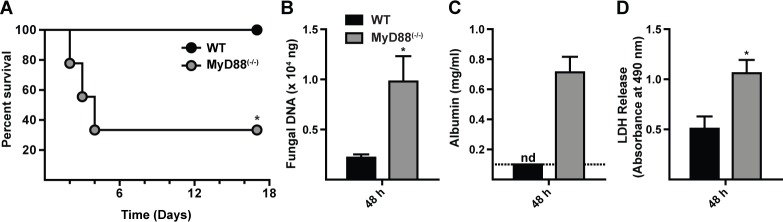
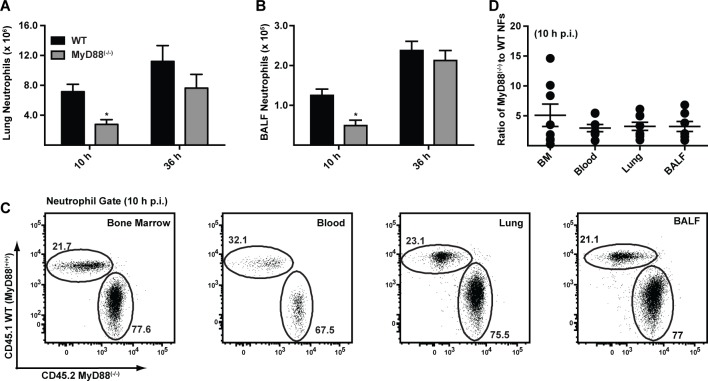
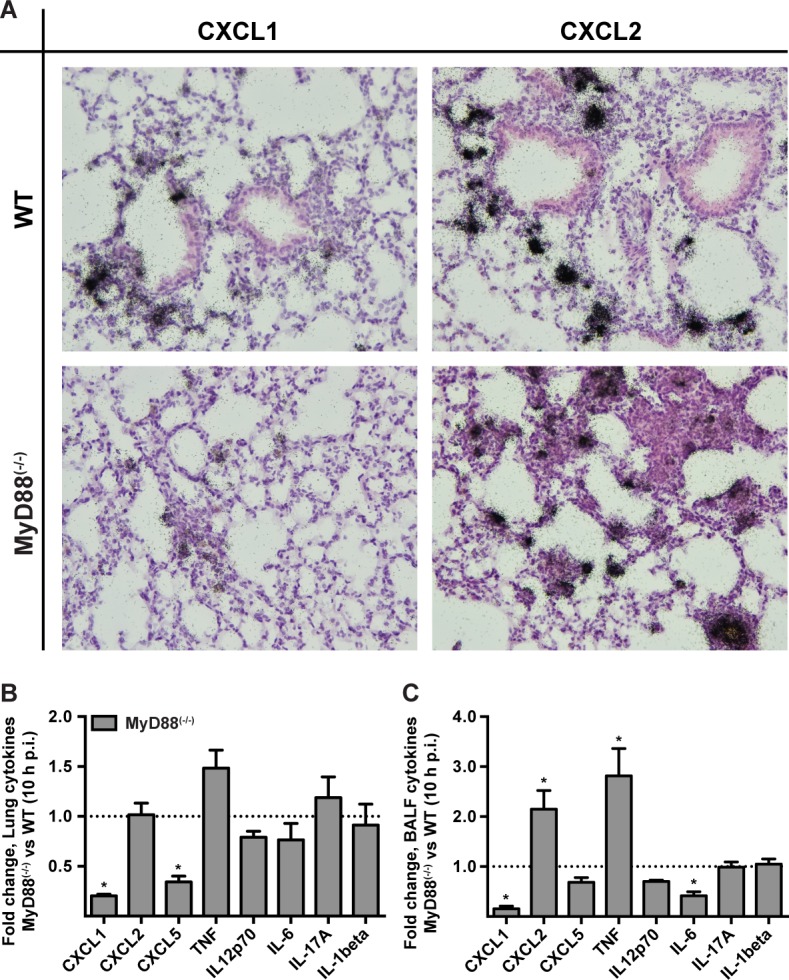
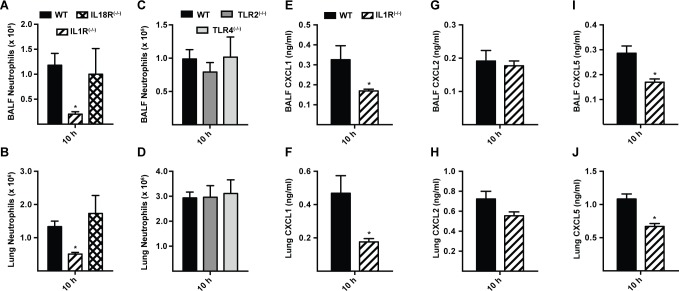
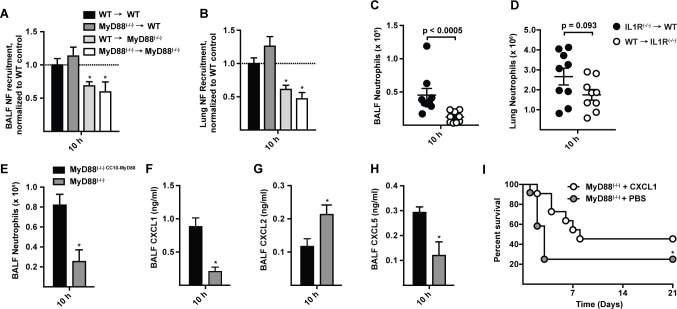
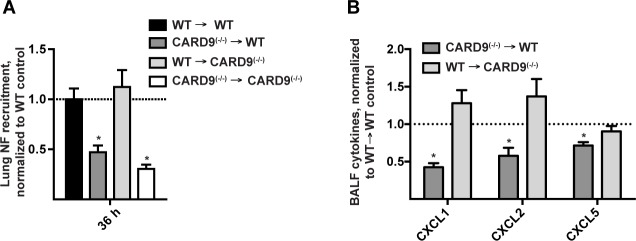
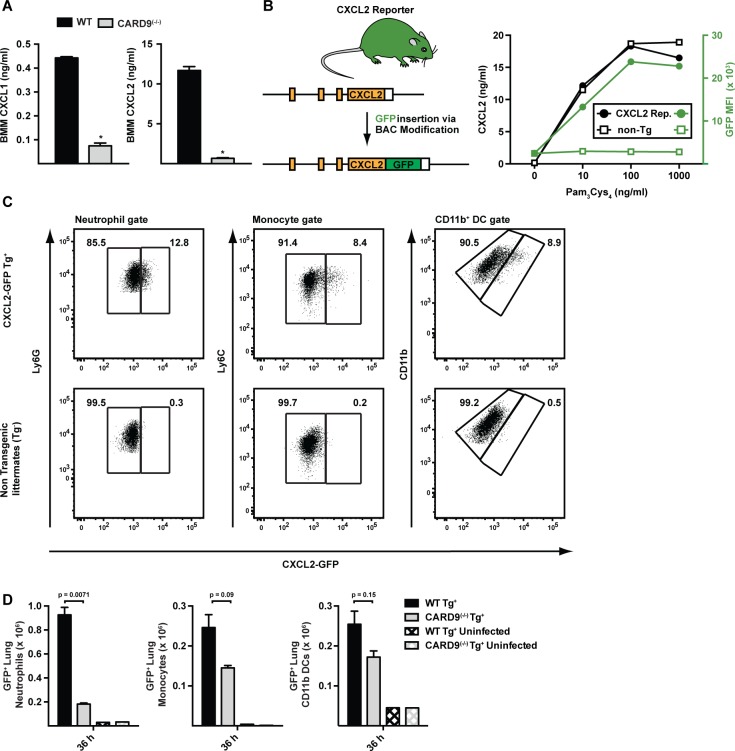
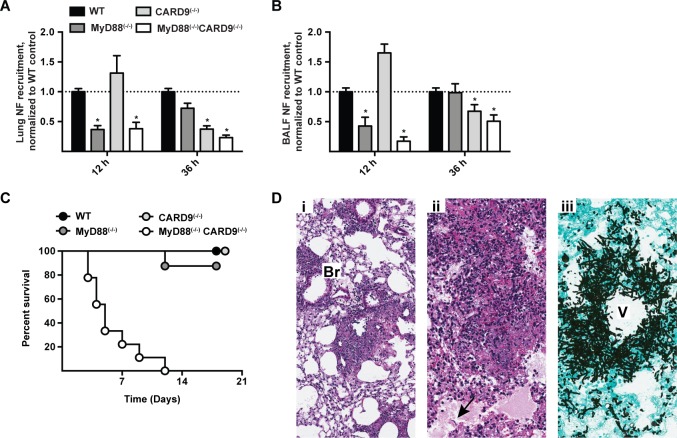
Aspergillus fumigatus forms ubiquitous airborne conidia that humans inhale on a daily basis. Although respiratory fungal infection activates the adaptor proteins CARD9 and MyD88 via C-type lectin, Toll-like, and interleukin-1 family receptor signals, defining the temporal and spatial pattern of MyD88- and CARD9-coupled signals in immune activation and fungal clearance has been difficult to achieve. Herein, we demonstrate that MyD88 and CARD9 act in two discrete phases and in two cellular compartments to direct chemokine- and neutrophil-dependent host defense. The first phase depends on MyD88 signaling because genetic deletion of MyD88 leads to delayed induction of the neutrophil chemokines CXCL1 and CXCL5, delayed neutrophil lung trafficking, and fatal pulmonary damage at the onset of respiratory fungal infection. MyD88 expression in lung epithelial cells restores rapid chemokine induction and neutrophil recruitment via interleukin-1 receptor signaling. Exogenous CXCL1 administration reverses murine mortality in MyD88-deficient mice. The second phase depends predominately on CARD9 signaling because genetic deletion of CARD9 in radiosensitive hematopoietic cells interrupts CXCL1 and CXCL2 production and lung neutrophil recruitment beyond the initial MyD88-dependent phase. Using a CXCL2 reporter mouse, we show that lung-infiltrating neutrophils represent the major cellular source of CXCL2 during CARD9-dependent recruitment. Although neutrophil-intrinsic MyD88 and CARD9 function are dispensable for neutrophil conidial uptake and killing in the lung, global deletion of both adaptor proteins triggers rapidly progressive invasive disease when mice are challenged with an inoculum that is sub-lethal for single adapter protein knockout mice. Our findings demonstrate that distinct signal transduction pathways in the respiratory epithelium and hematopoietic compartment partially overlap to ensure optimal chemokine induction, neutrophil recruitment, and fungal clearance within the respiratory tract.
Overview
The claims and statistics of this paper haven’t been checked yet.
Free: it reads the open-access text and checks the first 5 claims that cite a source we can check. Create a free account to check every claim.
Integrity signals
Registry
Cites
Statistics
Figures
Verification
Claims the paper makes
The claims and statistics of this paper haven’t been checked yet.
Free: it reads the open-access text and checks the first 5 claims that cite a source we can check. Create a free account to check every claim.
Claims other papers make about this one
Each is checked against this paper’s own text: does it say what the citing paper says it does?
The source backs part of the claim, not all of it — or backs it for a different population, condition or comparison.
In the citing paper
“A critical role of IL-1α/IL-1R1/MyD88 signaling activation in lung-resident cells and ECs was associated with protective immunity against Aspergillus via early Cxcl1/Cxcl2-dependent neutrophil recruitment (191, 195).”
From Aspergillus fumigatus and Aspergillosis in 2019 (2019) · cites this paper as [191]
Experimental — accuracy not yet measuredThe cited source says what the claim attributes to it.
In the citing paper
“Significant advances have been made in elucidating the main innate immune players and effector pathways for efficient control of Aspergillus infection in mouse models with the use of transgenic mice (189–202).”
From Aspergillus fumigatus and Aspergillosis in 2019 (2019) · cites this paper as [191]
Self-check
Percentages, sums and reported differences re-computed from the paper’s own numbers.
The self-check needs the paper’s full text.
Citations
Cites
Janeway, C. A., & Medzhitov, R. (2002) · Annual Review of Immunology · doi:10.1146/annurev.immunol.20.083001.084359 · Cited by 8,394
Neutrophil recruitment and function in health and inflammation
Kolaczkowska, E., & Kubes, P. (2013) · Nature Reviews Immunology · doi:10.1038/nri3399 · Cited by 5,472 · cited 1×
“Other chemoattractants implicated in neutrophil chemotaxis include CCL3, CCL6, and CCL9 (via CCR1), platelet-activating factor (via 2 receptors), and CXCL12 (via CXCR4) [40].”
BackgroundHidden Killers: Human Fungal Infections
Brown, G. D., Denning, D. W., Gow, N. A. R., Levitz, S. M., Netea, M. G., & White, T. C. (2012) · Science Translational Medicine · doi:10.1126/scitranslmed.3004404 · Cited by 4,284 · cited 1×
“Aspergillus fumigatus is a leading cause of infectious morbidity and mortality in patients with hematologic malignancies, allogeneic stem cell transplant recipients and in patients receiving immune suppressive therapies [1,2].”
BackgroundAspergillus fumigatus and Aspergillosis
Latgé, J.-P. (1999) · Clinical Microbiology Reviews · doi:10.1128/cmr.12.2.310 · Cited by 2,307 · cited 1×
“Due to their small size (*2–3 μm diameter), conidia can bypass mucociliary clearance and reach terminal airways [3,4].”
BackgroundThe interleukin-1 family: back to the future
Garlanda, C., Dinarello, C. A., & Mantovani, A. (2013) · Immunity · doi:10.1016/j.immuni.2013.11.010 · Cited by 1,945 · cited 3×
“MyD88 acts as a transducer not only for IL-1R-mediated signals, but also for other IL-1R family members [48].”
BackgroundInfluentialRIP3, an Energy Metabolism Regulator That Switches TNF-Induced Cell Death from Apoptosis to Necrosis
Zhang, D.-W., Shao, J., Lin, J., Zhang, N., Lu, B.-J., Lin, S.-C., Dong, M.-Q., & Han, J. (2009) · Science · doi:10.1126/science.1172308 · Cited by 1,931 · cited 1×
“Since respiratory fungal infection induces hypoxic tissue environments in the lung [50], receptor-interacting protein kinase 3 (RIP3)-dependent induction of necroptotic cell death [51] by inhaled conidia may provide a stimulus for IL-1α release.”
BackgroundRomani, L. (2011) · Nature Reviews Immunology · doi:10.1038/nri2939 · Cited by 1,793
Collaborative Induction of Inflammatory Responses by Dectin-1 and Toll-like Receptor 2
Gantner, B. N., Simmons, R. M., Canavera, S. J., Akira, S., & Underhill, D. M. (2003) · The Journal of Experimental Medicine · doi:10.1084/jem.20021787 · Cited by 1,643
Brown, G. D., & Gordon, S. (2001) · Nature · doi:10.1038/35092620 · Cited by 1,579
Pyogenic Bacterial Infections in Humans with MyD88 Deficiency
von Bernuth, H., Picard, C., Jin, Z., Pankla, R., Xiao, H., Ku, C.-L., Chrabieh, M., Mustapha, I. B., Ghandil, P., Camcioglu, Y., et al. (2008) · Science · doi:10.1126/science.1158298 · Cited by 1,287 · cited 1×
“Children that lack MyD88 signaling develop pyogenic infections, primarily due to Streptococcus pneumonia [60], and individuals with CARD9 deficiency develop mucocutaneous and disseminated candidiasis and dermatophytosis [38,61,62].”
BackgroundRogers, N. C., Slack, E. C., Edwards, A. D., Nolte, M. A., Schulz, O., Schweighoffer, E., Williams, D. L., Gordon, S., Tybulewicz, V. L., Brown, G. D., et al. (2005) · Immunity · doi:10.1016/j.immuni.2005.03.004 · Cited by 895
Card9 controls a non-TLR signalling pathway for innate anti-fungal immunity
Gross, O., Gewies, A., Finger, K., Schäfer, M., Sparwasser, T., Peschel, C., Förster, I., & Ruland, J. (2006) · Nature · doi:10.1038/nature04926 · Cited by 853 · cited 1×
“B cell lymphoma/leukemia 10) and MALT1 (mucosa associated lymphoid tissue lymphoma translocation protein 1) and activates NF-κB-dependent transcription, for example of the tnf and il1β genes [20,23].”
BackgroundSyk kinase signalling couples to the Nlrp3 inflammasome for anti-fungal host defence
Gross, O., Poeck, H., Bscheider, M., Dostert, C., Hannesschläger, N., Endres, S., Hartmann, G., Tardivel, A., Schweighoffer, E., Tybulewicz, V., et al. (2009) · Nature · doi:10.1038/nature07965 · Cited by 819
A Homozygous CARD9 Mutation in a Family with Susceptibility to Fungal Infections
Glocker, E.-O., Hennigs, A., Nabavi, M., Schäffer, A. A., Woellner, C., Salzer, U., Pfeifer, D., Veelken, H., Warnatz, K., Tahami, F., et al. (2009) · New England Journal of Medicine · doi:10.1056/nejmoa0810719 · Cited by 800 · cited 1×
“Children that lack MyD88 signaling develop pyogenic infections, primarily due to Streptococcus pneumonia [60], and individuals with CARD9 deficiency develop mucocutaneous and disseminated candidiasis and dermatophytosis [38,61,62].”
BackgroundSaijo, S., Ikeda, S., Yamabe, K., Kakuta, S., Ishigame, H., Akitsu, A., Fujikado, N., Kusaka, T., Kubo, S., Chung, S.-H., et al. (2010) · Immunity · doi:10.1016/j.immuni.2010.05.001 · Cited by 733 · cited 1×
“CLEC4N/CLEC4D) [18,19] recognize fungal β-glucan and α-mannan respectively, and transduce signals via spleen tyrosine kinase (Syk), protein kinase C-δ, and caspase recruitment domain-containing protein 9 (CARD9) [20–22].”
BackgroundSegal, B. H. (2009) · New England Journal of Medicine · doi:10.1056/nejmra0808853 · Cited by 661
Schaffner, A., Douglas, H., & Braude, A. (1982) · Journal of Clinical Investigation · doi:10.1172/jci110489 · Cited by 615
Gringhuis, S. I., Kaptein, T. M., Wevers, B. A., Theelen, B., van der Vlist, M., Boekhout, T., & Geijtenbeek, T. B. H. (2012) · Nature Immunology · doi:10.1038/ni.2222 · Cited by 613 · cited 2×
“In response to fungal stimuli, Dectin-1/Syk/CARD9 signaling is associated with activation of canonical NLRP3/ASC/caspase-1 inflammasomes [13,24] and of non-canonical ASC/caspase8-containing inflammasomes [25]; both mediate the conversion of pro-IL-1β to biologically active IL-1β.”
BackgroundThe pathobiology of Aspergillus fumigatus
Latgé, J.-P. (2001) · Trends in Microbiology · doi:10.1016/s0966-842x(01)02104-7 · Cited by 546 · cited 1×
“Due to their small size (*2–3 μm diameter), conidia can bypass mucociliary clearance and reach terminal airways [3,4].”
BackgroundThe Beta-Glucan Receptor Dectin-1 Recognizes Specific Morphologies of Aspergillus fumigatus
Steele, C., Rapaka, R. R., Metz, A., Pop, S. M., Williams, D. L., Gordon, S., Kolls, J. K., & Brown, G. D. (2005) · PLoS Pathogens · doi:10.1371/journal.ppat.0010042 · Cited by 509 · cited 1×
“Although TLR2- and TLR4-deficient macrophages and dendritic cells show defects in the production of CXCR2 ligands in vitro [10,11,30], the relative contribution of TLR-MyD88 versus IL1R-MyD88 signaling in neutrophil recruitment and in protective innate immunity in the lung following respiratory A.”
BackgroundToll-like receptor 4 polymorphisms and aspergillosis in stem-cell transplantation
Bochud, P.-Y., Chien, J. W., Marr, K. A., Leisenring, W. M., Upton, A., Janer, M., Rodrigues, S. D., Li, S., Hansen, J. A., Zhao, L. P., et al. (2008) · New England Journal of Medicine · doi:10.1056/nejmoa0802629 · Cited by 453
Aspergillus fumigatus Triggers Inflammatory Responses by Stage-Specific β-Glucan Display
Hohl, T. M., Van Epps, H. L., Rivera, A., Morgan, L. A., Chen, P. L., Feldmesser, M., & Pamer, E. G. (2005) · PLoS Pathogens · doi:10.1371/journal.ppat.0010030 · Cited by 428
Self-citationThe adaptor protein CARD9 is required for innate immune responses to intracellular pathogens
Hsu, Y.-M. S., Zhang, Y., You, Y., Wang, D., Li, H., Duramad, O., Qin, X.-F., Dong, C., & Lin, X. (2007) · Nature Immunology · doi:10.1038/ni1426 · Cited by 422 · cited 1×
“009088, Jackson Laboratories) and CARD9 [69] were crossed to generate MyD88CARD9 mice.”
BackgroundSelf-citationWang, L., Fuster, M., Sriramarao, P., & Esko, J. D. (2005) · Nature Immunology · doi:10.1038/ni1233 · Cited by 413 · cited 1×
“In addition, the relative access of individual ELR chemokines to glycosaminoglycans during fungal challenge is likely to play a key role in forming gradients and directing neutrophil trafficking into the lung [58,59].”
BackgroundRequisite Role for the Dectin-1 β-Glucan Receptor in Pulmonary Defense against Aspergillus fumigatus
Werner, J. L., Metz, A. E., Horn, D., Schoeb, T. R., Hewitt, M. M., Schwiebert, L. M., Faro-Trindade, I., Brown, G. D., & Steele, C. (2009) · The Journal of Immunology · doi:10.4049/jimmunol.0804250 · Cited by 412 · cited 4×
“, respectively [14,23], time points that lie outside the MyD88-dependent period.”
BackgroundResultInfluentialDeep Dermatophytosis and Inherited CARD9 Deficiency
Lanternier, F., Pathan, S., Vincent, Q. B., Liu, L., Cypowyj, S., Prando, C., Migaud, M., Taibi, L., Ammar-Khodja, A., Boudghene Stambouli, O., et al. (2013) · New England Journal of Medicine · doi:10.1056/nejmoa1208487 · Cited by 400 · cited 1×
“Children that lack MyD88 signaling develop pyogenic infections, primarily due to Streptococcus pneumonia [60], and individuals with CARD9 deficiency develop mucocutaneous and disseminated candidiasis and dermatophytosis [38,61,62].”
BackgroundHara, H., Ishihara, C., Takeuchi, A., Imanishi, T., Xue, L., Morris, S. W., Inui, M., Takai, T., Shibuya, A., Saijo, S., et al. (2007) · Nature Immunology · doi:10.1038/ni1466 · Cited by 351 · cited 1×
“One possible scenario is that CARD9- and MyD88-dependent signals act within the same cellular compartment and in the same time frame for optimal chemokine induction, as has been demonstrated for Dectin-1/CARD9 and TLR2/MyD88-dependent macrophage TNF and IL-12 release in response to the model fungal particle zymosan [2…”
BackgroundMiller, L. S., O'Connell, R. M., Gutierrez, M. A., Pietras, E. M., Shahangian, A., Gross, C. E., Thirumala, A., Cheung, A. L., Cheng, G., & Modlin, R. L. (2006) · Immunity · doi:10.1016/j.immuni.2005.11.011 · Cited by 348
Zhu, L.-L., Zhao, X.-Q., Jiang, C., You, Y., Chen, X.-P., Jiang, Y.-Y., Jia, X.-M., & Lin, X. (2013) · Immunity · doi:10.1016/j.immuni.2013.05.017 · Cited by 338 · cited 1×
“CLEC4N/CLEC4D) [18,19] recognize fungal β-glucan and α-mannan respectively, and transduce signals via spleen tyrosine kinase (Syk), protein kinase C-δ, and caspase recruitment domain-containing protein 9 (CARD9) [20–22].”
BackgroundSelf-citationInflammatory Monocytes Facilitate Adaptive CD4 T Cell Responses during Respiratory Fungal Infection
Hohl, T. M., Rivera, A., Lipuma, L., Gallegos, A., Shi, C., Mack, M., & Pamer, E. G. (2009) · Cell Host & Microbe · doi:10.1016/j.chom.2009.10.007 · Cited by 337 · cited 2×
“The BAC modification procedures were performed as described in [71,72] and the modified BAC was analyzed by DNA sequencing and Southern blotting to verify GFP integration at the CXCL2 locus.”
MethodSelf-citationGersuk, G. M., Underhill, D. M., Zhu, L., & Marr, K. A. (2006) · The Journal of Immunology · doi:10.4049/jimmunol.176.6.3717 · Cited by 334
Miller, L. S., Pietras, E. M., Uricchio, L. H., Hirano, K., Rao, S., Lin, H., O’Connell, R. M., Iwakura, Y., Cheung, A. L., Cheng, G., et al. (2007) · The Journal of Immunology · doi:10.4049/jimmunol.179.10.6933 · Cited by 325 · cited 1×
“Additionally, in a cutaneous Staphylococcus aureus infection model, IL1R-MyD88 signaling mediates neutrophil recruitment in a TLR-independent manner [44,45].”
BackgroundSaïd-Sadier, N., Padilla, E., Langsley, G., & Ojcius, D. M. (2010) · PLoS ONE · doi:10.1371/journal.pone.0010008 · Cited by 303 · cited 4×
“In response to fungal stimuli, Dectin-1/Syk/CARD9 signaling is associated with activation of canonical NLRP3/ASC/caspase-1 inflammasomes [13,24] and of non-canonical ASC/caspase8-containing inflammasomes [25]; both mediate the conversion of pro-IL-1β to biologically active IL-1β.”
BackgroundInfluentialToll-like Receptor (TLR) Signaling in Response toAspergillus fumigatus
Mambula, S. S., Sau, K., Henneke, P., Golenbock, D. T., & Levitz, S. M. (2002) · Journal of Biological Chemistry · doi:10.1074/jbc.m201683200 · Cited by 298
Strasser, D., Neumann, K., Bergmann, H., Marakalala, M. J., Guler, R., Rojowska, A., Hopfner, K.-P., Brombacher, F., Urlaub, H., Baier, G., et al. (2012) · Immunity · doi:10.1016/j.immuni.2011.11.015 · Cited by 289
Cunha, C., Di Ianni, M., Bozza, S., Giovannini, G., Zagarella, S., Zelante, T., D'Angelo, C., Pierini, A., Pitzurra, L., Falzetti, F., et al. (2010) · Blood · doi:10.1182/blood-2010-04-279307 · Cited by 286
Netea, M. G., Warris, A., Van der Meer, J. W. M., Fenton, M. J., Verver‐Janssen, T. J. G., Jacobs, L. E. H., Andresen, T., Verweij, P. E., & Kullberg, B. J. (2003) · The Journal of Infectious Diseases · doi:10.1086/376456 · Cited by 284 · cited 1×
“Although TLR2- and TLR4-deficient macrophages and dendritic cells show defects in the production of CXCR2 ligands in vitro [10,11,30], the relative contribution of TLR-MyD88 versus IL1R-MyD88 signaling in neutrophil recruitment and in protective innate immunity in the lung following respiratory A.”
BackgroundInvasive fungal infection and impaired neutrophil killing in human CARD9 deficiency
Drewniak, A., Gazendam, R. P., Tool, A. T. J., van Houdt, M., Jansen, M. H., van Hamme, J. L., van Leeuwen, E. M. M., Roos, D., Scalais, E., de Beaufort, C., et al. (2013) · Blood · doi:10.1182/blood-2012-08-450551 · Cited by 277 · cited 1×
“Children that lack MyD88 signaling develop pyogenic infections, primarily due to Streptococcus pneumonia [60], and individuals with CARD9 deficiency develop mucocutaneous and disseminated candidiasis and dermatophytosis [38,61,62].”
BackgroundTLRs Govern Neutrophil Activity in Aspergillosis
Bellocchio, S., Moretti, S., Perruccio, K., Fallarino, F., Bozza, S., Montagnoli, C., Mosci, P., Lipford, G. B., Pitzurra, L., & Romani, L. (2004) · The Journal of Immunology · doi:10.4049/jimmunol.173.12.7406 · Cited by 242 · cited 1×
“Conidial swelling, the first step in fungal germination to filamentous hyphae, leads to stage-specific exposure of ligands that activate C-type lectin receptor (CLR) [10–12], NOD-like receptor (NLR) [13], Toll-like-receptor (TLR), and interleukin-1-receptor (IL-1R) signaling in vitro and in vivo [14,15].”
BackgroundMehrad, B., Strieter, R. M., Moore, T. A., Tsai, W. C., Lira, S. A., & Standiford, T. J. (1999) · The Journal of Immunology · doi:10.4049/jimmunol.163.11.6086 · Cited by 233 · cited 2×
“Administration of anti-CXCR2 antibodies exacerbates mortality [8] and genetic deficiency in CXCR2 leads to delayed neutrophil recruitment following A.”
BackgroundGong, S., Yang, X. W., Li, C., & Heintz, N. (2002) · Genome Research · doi:10.1101/gr.476202 · Cited by 220 · cited 1×
“CXCL2 reporter mice were generated by bacterial artificial chromosome (BAC)-mediated transgenesis using the recombineering strategy developed by Heintz and colleagues [70].”
MethodMassena, S., Christoffersson, G., Hjertström, E., Zcharia, E., Vlodavsky, I., Ausmees, N., Rolny, C., Li, J.-P., & Phillipson, M. (2010) · Blood · doi:10.1182/blood-2010-01-266072 · Cited by 219 · cited 1×
“In addition, the relative access of individual ELR chemokines to glycosaminoglycans during fungal challenge is likely to play a key role in forming gradients and directing neutrophil trafficking into the lung [58,59].”
BackgroundGrahl, N., Puttikamonkul, S., Macdonald, J. M., Gamcsik, M. P., Ngo, L. Y., Hohl, T. M., & Cramer, R. A. (2011) · PLoS Pathogens · doi:10.1371/journal.ppat.1002145 · Cited by 217 · cited 1×
“Since respiratory fungal infection induces hypoxic tissue environments in the lung [50], receptor-interacting protein kinase 3 (RIP3)-dependent induction of necroptotic cell death [51] by inhaled conidia may provide a stimulus for IL-1α release.”
BackgroundSelf-citationMircescu, M. M., Lipuma, L., van Rooijen, N., Pamer, E. G., & Hohl, T. M. (2009) · The Journal of Infectious Diseases · doi:10.1086/600380 · Cited by 216
Self-citationBonnett, C. R., Cornish, E. J., Harmsen, A. G., & Burritt, J. B. (2006) · Infection and Immunity · doi:10.1128/iai.00909-06 · Cited by 174 · cited 13×
“In mice, antibody-mediated blockade [8] or genetic deficiency of the chemokine receptor CXCR2 [7] results in delayed neutrophil airway recruitment and the development of invasive aspergillosis (IA).”
BackgroundInfluentialVonk, A. G., Netea, M. G., van Krieken, J. H., Iwakura, Y., van der Meer, J. W. M., & Kullberg, B. J. (2006) · The Journal of Infectious Diseases · doi:10.1086/503363 · Cited by 162
Rider, P., Carmi, Y., Voronov, E., & Apte, R. N. (2013) · Seminars in Immunology · doi:10.1016/j.smim.2013.10.005 · Cited by 155
Release of Interleukin-1α or Interleukin-1β Depends on Mechanism of Cell Death
England, H., Summersgill, H. R., Edye, M. E., Rothwell, N. J., & Brough, D. (2014) · Journal of Biological Chemistry · doi:10.1074/jbc.m114.557561 · Cited by 152
cis-acting elements that confer lung epithelial cell expression of the CC10 gene.
Stripp, B. R., Sawaya, P. L., Luse, D. S., Wikenheiser, K. A., Wert, S. E., Huffman, J. A., Lattier, D. L., Singh, G., Katyal, S. L., & Whitsett, J. A. (1992) · Journal of Biological Chemistry · doi:10.1016/s0021-9258(18)42098-4 · Cited by 142 · cited 1×
“To examine the contribution of lung epithelial cells to chemokine induction and neutrophil recruitment, we analyzed MyD88 mice that express MyD88 under control of the club cell 10 kDa protein (CC10) promoter, restricting MyD88 expression to lung epithelial cells [33,37].”
BackgroundGresnigt, M. S., Bozza, S., Becker, K. L., Joosten, L. A. B., Abdollahi-Roodsaz, S., van der Berg, W. B., Dinarello, C. A., Netea, M. G., Fontaine, T., De Luca, A., et al. (2014) · PLoS Pathogens · doi:10.1371/journal.ppat.1003936 · Cited by 142 · cited 1×
“fumigatus induces the synthesis of IL-1 receptor antagonist (IL-1RA) and the transcription of IL-36γ and IL-36 receptor antagonist in human peripheral blood mononuclear cells [56,57].”
BackgroundDectin-1 and DC-SIGN Polymorphisms Associated with Invasive Pulmonary Aspergillosis Infection
Sainz, J., Lupiáñez, C. B., Segura-Catena, J., Vazquez, L., Ríos, R., Oyonarte, S., Hemminki, K., Försti, A., & Jurado, M. (2012) · PLoS ONE · doi:10.1371/journal.pone.0032273 · Cited by 140
IL-1α Signaling Initiates the Inflammatory Response to Virulent Legionella pneumophila In Vivo
Barry, K. C., Fontana, M. F., Portman, J. L., Dugan, A. S., & Vance, R. E. (2013) · The Journal of Immunology · doi:10.4049/jimmunol.1300100 · Cited by 129 · cited 2×
“This view is further supported by neutrophil recruitment studies in the lung following challenge with common bacterial agents of pneumonia including Legionella pneumophila [32,34], Pseudomonas aeruginosa [33], and Streptococcus pneumonia [43].”
BackgroundCXCL1 Regulates Pulmonary Host Defense to Klebsiella Infection via CXCL2, CXCL5, NF-κB, and MAPKs
Cai, S., Batra, S., Lira, S. A., Kolls, J. K., & Jeyaseelan, S. (2010) · The Journal of Immunology · doi:10.4049/jimmunol.0903843 · Cited by 128 · cited 1×
“Jeyaseelan and colleagues reported that CXCL1 regulates expression of CXCL2 and CXCL5 during murine Klebsiella pneumoniae pneumonia [41].”
BackgroundJhingran, A., Mar, K. B., Kumasaka, D. K., Knoblaugh, S. E., Ngo, L. Y., Segal, B. H., Iwakura, Y., Lowell, C. A., Hamerman, J. A., Lin, X., et al. (2012) · Cell Reports · doi:10.1016/j.celrep.2012.10.026 · Cited by 123 · cited 9×
“B cell lymphoma/leukemia 10) and MALT1 (mucosa associated lymphoid tissue lymphoma translocation protein 1) and activates NF-κB-dependent transcription, for example of the tnf and il1β genes [20,23].”
BackgroundMethodResultInfluentialSelf-citationMarriott, H. M., Gascoyne, K. A., Gowda, R., Geary, I., Nicklin, M. J. H., Iannelli, F., Pozzi, G., Mitchell, T. J., Whyte, M. K. B., Sabroe, I., et al. (2011) · Infection and Immunity · doi:10.1128/iai.05697-11 · Cited by 119
Selective Expansion of the Monocytic Lineage Directed by Bacterial Infection
Serbina, N. V., Hohl, T. M., Cherny, M., & Pamer, E. G. (2009) · The Journal of Immunology · doi:10.4049/jimmunol.0900612 · Cited by 116 · cited 1×
“The BAC modification procedures were performed as described in [71,72] and the modified BAC was analyzed by DNA sequencing and Southern blotting to verify GFP integration at the CXCL2 locus.”
MethodSelf-citationThe IL‐36 receptor pathway regulates Aspergillus fumigatus‐induced Th1 and Th17 responses
Gresnigt, M. S., Rösler, B., Jacobs, C. W. M., Becker, K. L., Joosten, L. A. B., van der Meer, J. W. M., Netea, M. G., Dinarello, C. A., & van de Veerdonk, F. L. (2013) · European Journal of Immunology · doi:10.1002/eji.201242711 · Cited by 108 · cited 1×
“fumigatus induces the synthesis of IL-1 receptor antagonist (IL-1RA) and the transcription of IL-36γ and IL-36 receptor antagonist in human peripheral blood mononuclear cells [56,57].”
BackgroundBalloy, V., Sallenave, J.-M., Wu, Y., Touqui, L., Latgé, J.-P., Si-Tahar, M., & Chignard, M. (2008) · Journal of Biological Chemistry · doi:10.1074/jbc.m803149200 · Cited by 102 · cited 2×
“A previous study on inflammatory responses to conidia in immortalized lung cell lines (BEAS-2B) implicated phosphatidylinositol-3-kinase, p38 MAP kinase, and ERK1/2 signaling pathways in the induction of interleukin-8 (IL-8) [42], a human equivalent of murine CXCL1.”
BackgroundHuR is required for IL-17-induced Act1-mediated CXCL1 and CXCL5 mRNA stabilization
Herjan, T., Yao, P., Qian, W., Li, X., Liu, C., Bulek, K., Sun, D., Yang, W.-P., Zhu, J., He, A., et al. (2013) · The Journal of Immunology · doi:10.4049/jimmunol.1203315 · Cited by 95 · cited 1×
“Because CXCL1 mRNA stability is regulated in part by inflammatory stimuli [36], we carried out in situmRNA hybridization on lung sections of 3 × 10(7) Af293 or PBS administered MyD88 and WTmice, with gene-specific riboprobes for cxcl1 and cxcl2.”
MethodVolling, K., Thywissen, A., Brakhage, A. A., & Saluz, H. P. (2011) · Cellular Microbiology · doi:10.1111/j.1462-5822.2011.01605.x · Cited by 87
Sainz, J., Pérez, E., Gómez-Lopera, S., & Jurado, M. (2008) · Journal of Clinical Immunology · doi:10.1007/s10875-008-9197-0 · Cited by 84 · cited 1×
“In the context of allogeneic hematopoietic cell transplantation (HCT), genetic variations in the IL-1 gene cluster are associated with susceptibility to IA, though these data must be interpreted cautiously since an independent validation of this cohort has not been reported [64].”
BackgroundReinhart, T. A., Fallert, B. A., Pfeifer, M. E., Sanghavi, S., Capuano, S., Rajakumar, P. A., Murphey‐Corb, M., Day, R., Fuller, C. L., & Schaefer, T. M. (2002) · Blood · doi:10.1182/blood.v99.9.3119 · Cited by 83 · cited 1×
“In situ hybridization with (35)S-UTP-labeled riboprobes (antisense or control sense) was performed as described previously [75] with 0.”
MethodSelf-citationShepardson, K. M., Jhingran, A., Caffrey, A., Obar, J. J., Suratt, B. T., Berwin, B. L., Hohl, T. M., & Cramer, R. A. (2014) · PLoS Pathogens · doi:10.1371/journal.ppat.1004378 · Cited by 79 · cited 1×
“fumigatus infection activates the transcription factor hypoxia-inducible factor-1α (HIF1α) in myeloid cells and this process is linked to defective IL-1α and CXCL1 induction, impaired neutrophil recruitment, and murine susceptibility to IA [47].”
BackgroundSelf-citationJia, T., Leiner, I., Dorothee, G., Brandl, K., & Pamer, E. G. (2009) · The Journal of Immunology · doi:10.4049/jimmunol.0900460 · Cited by 78
MyD88 Signaling Contributes to Early Pulmonary Responses to Aspergillus fumigatus
Bretz, C., Gersuk, G., Knoblaugh, S., Chaudhary, N., Randolph-Habecker, J., Hackman, R. C., Staab, J., & Marr, K. A. (2008) · Infection and Immunity · doi:10.1128/iai.00927-07 · Cited by 78 · cited 3×
“in S1 Text) consistent with a prior study [29].”
BackgroundResultSelf-citationMijares, L. A., Wangdi, T., Sokol, C., Homer, R., Medzhitov, R., & Kazmierczak, B. I. (2011) · The Journal of Immunology · doi:10.4049/jimmunol.1003687 · Cited by 76 · cited 4×
“In addition, expression of MyD88 under control of the well-characterized CC10 promoter [33] is sufficient to rescue CXCL1 and CXCL5 induction and neutrophil recruitment.”
BackgroundMethodInfluentialSelf-citationTransient Lung-Specific Expression of the Chemokine KC Improves Outcome in Invasive Aspergillosis
Mehrad, B., Wiekowski, M., Morrison, B. E., Chen, S.-C., Coronel, E. C., Manfra, D. J., & Lira, S. A. (2002) · American Journal of Respiratory and Critical Care Medicine · doi:10.1164/rccm.200204-367oc · Cited by 71
Batra, S., Cai, S., Balamayooran, G., & Jeyaseelan, S. (2012) · The Journal of Immunology · doi:10.4049/jimmunol.1101985 · Cited by 67 · cited 1×
“Thus, it is possible that rCXCL1 administration enhances neutrophil recruitment by replenishing endogenous CXCL1 or by compensating for MyD88-dependent deficits in other chemoattractants that may act in series or parallel [39].”
BackgroundHuman Genetic Susceptibility to Invasive Aspergillosis
Cunha, C., Aversa, F., Romani, L., & Carvalho, A. (2013) · PLoS Pathogens · doi:10.1371/journal.ppat.1003434 · Cited by 64
Berkova, N., Lair-Fulleringer, S., Féménia, F., Huet, D., Wagner, M.-C., Gorna, K., Tournier, F., Ibrahim-Granet, O., Guillot, J., Chermette, R., et al. (2006) · International Immunology · doi:10.1093/intimm/dxh356 · Cited by 61
Li, H., Barker, B. M., Grahl, N., Puttikamonkul, S., Bell, J. D., Craven, K. D., & Cramer, R. A. (2011) · Eukaryotic Cell · doi:10.1128/ec.00288-10 · Cited by 55 · cited 1×
“RT-PCR was performed as described previously [73].”
Self-citationNonhematopoietic Cells Are Key Players in Innate Control of Bacterial Airway Infection
LeibundGut‐Landmann, S., Trautwein-Weidner, K., Hilbi, H., & Oxenius, A. (2011) · The Journal of Immunology · doi:10.4049/jimmunol.1003565 · Cited by 49 · cited 1×
“This view is further supported by neutrophil recruitment studies in the lung following challenge with common bacterial agents of pneumonia including Legionella pneumophila [32,34], Pseudomonas aeruginosa [33], and Streptococcus pneumonia [43].”
BackgroundCornish, E. J., Hurtgen, B. J., McInnerney, K., Burritt, N. L., Taylor, R. M., Jarvis, J. N., Wang, S. Y., & Burritt, J. B. (2008) · The Journal of Immunology · doi:10.4049/jimmunol.180.10.6854 · Cited by 48 · cited 1×
“fumigatus challenge, alveolar macrophages transcribe Il1α and Il1β genes [46], and bioactive IL-1α and IL-1β is detectable in the lungs at 6 hours p.”
BackgroundFallert, B. A., & Reinhart, T. A. (2002) · Journal of Virological Methods · doi:10.1016/s0166-0934(01)00378-0 · Cited by 45 · cited 1×
“Paraffin embedded lung sections were pretreated as described [74], following deparaffinization in xylenes and rinsing in ethanol.”
MethodSelf-citationImmunogenetics of invasive aspergillosis
Lamoth, F., Rubino, I., & Bochud, P. (2010) · Medical Mycology · doi:10.3109/13693786.2010.516408 · Cited by 24
Apoptosis inhibition of alveolar macrophages upon interaction with conidia ofAspergillus fumigatus
Volling, K., Brakhage, A. A., & Saluz, H. P. (2007) · FEMS Microbiology Letters · doi:10.1111/j.1574-6968.2007.00883.x · Cited by 16
Release of IL-1alpha or IL-1beta depends on mechanism of cell death
England, H., Summersgill, H. R., Edye, M. E., Rothwell, N. J., & Brough, D. (2014) · Journal of Biological Chemistry · Cited by 3
Cited by
Aspergillus fumigatus and Aspergillosis in 2019
Latgé, J.-P., & Chamilos, G. (2019) · Clinical Microbiology Reviews · doi:10.1128/cmr.00140-18 · Cited by 1,400
The microbiome and inflammatory bowel disease
Glassner, K. L., Abraham, B. P., & Quigley, E. M. M. (2020) · Journal of Allergy and Clinical Immunology · doi:10.1016/j.jaci.2019.11.003 · Cited by 837
Fungal dysbiosis: immunity and interactions at mucosal barriers
Iliev, I. D., & Leonardi, I. (2017) · Nature Reviews Immunology · doi:10.1038/nri.2017.55 · Cited by 393
Immune responses to human fungal pathogens and therapeutic prospects
Lionakis, M. S., Drummond, R. A., & Hohl, T. M. (2023) · Nature Reviews Immunology · doi:10.1038/s41577-022-00826-w · Cited by 379
Self-citationCellular and functional heterogeneity of the airway epithelium
Davis, J. D., & Wypych, T. P. (2021) · Mucosal Immunology · doi:10.1038/s41385-020-00370-7 · Cited by 300
Metadata
- Authors
- Jhingran, A., Kasahara, S., Shepardson, K. M., Junecko, B. A. F., Heung, L. J., Kumasaka, D. K., Knoblaugh, S. E., Lin, X., Kazmierczak, B. I., Reinhart, T. A., Cramer, R. A., & Hohl, T. M.
- Affiliations
- Memorial Sloan Kettering Cancer Center (US)
- Dartmouth College (US)
- University of Pittsburgh (US)
- Fred Hutch Cancer Center (US)
- The University of Texas MD Anderson Cancer Center (US)
- Yale University (US)
- Corresponding author
- Hohl, Tobias M.
- ORCID
- Venue
- PLOS Pathogens
- Publisher
- Public Library of Science (PLoS)
- Published
- 2015-01-26
- Volume
- 11
- Issue
- 1
- Pages
- e1004589
- ISSN
- 1553-7366 (ISSN-L)
- 1553-7374
- PMC
- PMC4306481
- OpenAlex
- W2035046966
- Cited by
- 108
- References
- 77
- Citations by year
- 2026: 5 · 2025: 8 · 2024: 6 · 2023: 7 · 2022: 5 · 2021: 11 · 2020: 12 · 2019: 5 · 2018: 15 · 2017: 18 · 2016: 9 · 2015: 7
- FWCI
- 8.05
- Type
- journal article
- Language
- en
- Open access
- gold
- doi.org
- Licence
- Locations
- PLoS Pathogens (publishedVersion, cc-by)
- Europe PMC (PubMed Central) (publishedVersion, cc-by)
- PubMed Central (publishedVersion, cc-by)
- PubMed (publishedVersion)
- D-Scholarship@Pitt (University of Pittsburgh) (acceptedVersion)
- DOAJ (DOAJ: Directory of Open Access Journals) (submittedVersion, cc-by-sa)
- Figshare (submittedVersion, cc-by)
- Funders
- Burroughs Wellcome Fund
- Fred Hutchinson Cancer Research Center
- Memorial Sloan-Kettering Cancer Center
- Montana State University
- National Institutes of Health (NIH-R01, AI081825)
- National Cancer Institute (P30CA015704)
- National Institute of General Medical Sciences (P30GM106394, P30GM103415)
- National Institute of Allergy and Infectious Diseases (R01 AI81838, R21AI105617, R01AI081825, R01AI093808, R56AI050848, R01AI081838, R37AI093808)
- Topics
- Life Sciences › Immunology and Microbiology › Immunology › Immune Response and Inflammation
- Health Sciences › Medicine › Infectious Diseases › Antifungal resistance and susceptibility
- Health Sciences › Medicine › Oncology › Chemokine receptors and signaling
- Keywords
- MyD88, CARD9, Aspergillus fumigatus, respiratory fungal infection, chemokine induction, CXCL1, CXCL2, CXCL5, neutrophil recruitment, lung epithelial cells, hematopoietic cells, interleukin-1 receptor signaling, C-type lectin receptor signaling, Toll-like receptor signaling, invasive aspergillosis, innate immunity
- MeSH terms
- Animals, Aspergillus fumigatus, Humans, Immunity, Innate, Lung, Neutrophils, Signal Transduction, Receptors, Interleukin-1, Mice, Knockout, Chemokines, Neutrophil Infiltration, Mice, CARD Signaling Adaptor Proteins, Myeloid Differentiation Factor 88, Pulmonary Aspergillosis
About these checks
Registry, retraction, Cites and statistics results are computed, not judged, with one exception: a printed reference that no index lists is read once by a model before it counts as a citation error. Claims are extracted by a model and kept only when their quote appears verbatim in the text; each cited source is then checked, with a model’s help, for whether it says what the claim relies on. Those verdicts can be wrong — read the claim’s quote and the cited source before relying on one.
Statistics and arithmetic are recomputed, not judged.
Confidence bands are shown only for fields calibrated on our annotated test set. None is calibrated yet, so no band is shown.
What counts as a claim ›How we measure confidence ›How we check this ›
Are you an author, or do you see a problem with this page? Request a review
Data sources
Bibliographic data: Semantic Scholar, OpenAlex, Crossref.
Contains information from the Semantic Scholar Academic Graph Datasets, made available under the ODC Attribution License (ODC-BY 1.0).
Semantic Scholar’s data is described in: Kinney, R., et al. (2023). The Semantic Scholar Open Data Platform. arXiv:2301.10140.
