

The DOI matches its Crossref record; 6 of the 6 references it cites were found in a registry or an index.
Analysis of Multiple HPV E6 PDZ Interactions Defines Type-Specific PDZ Fingerprints That Predict Oncogenic Potential
Overview
The claims and statistics of this paper haven’t been checked yet.
Run the check — free, no account needed. It reads the open-access text and checks the sources it cites.
Integrity signals
Registry
Cites
Statistics
Figures
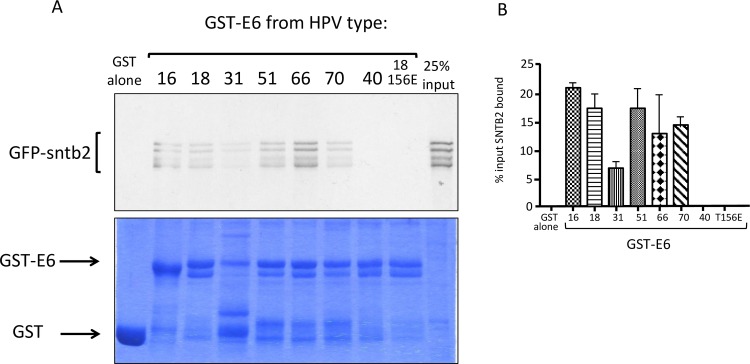
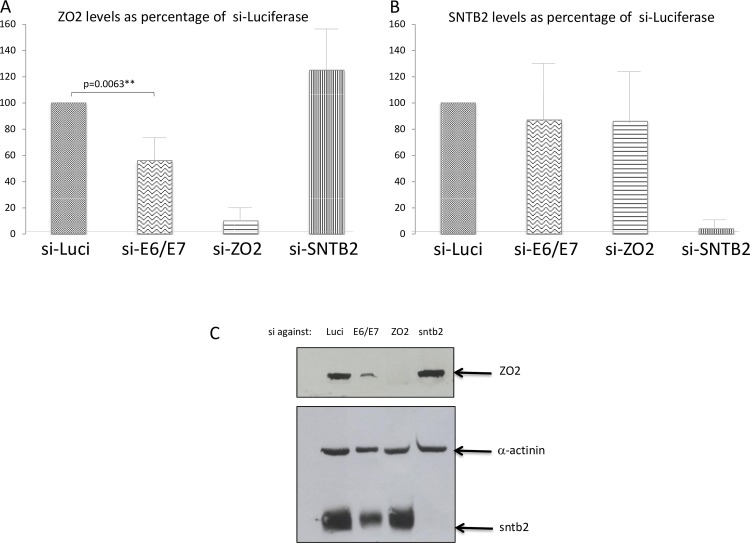
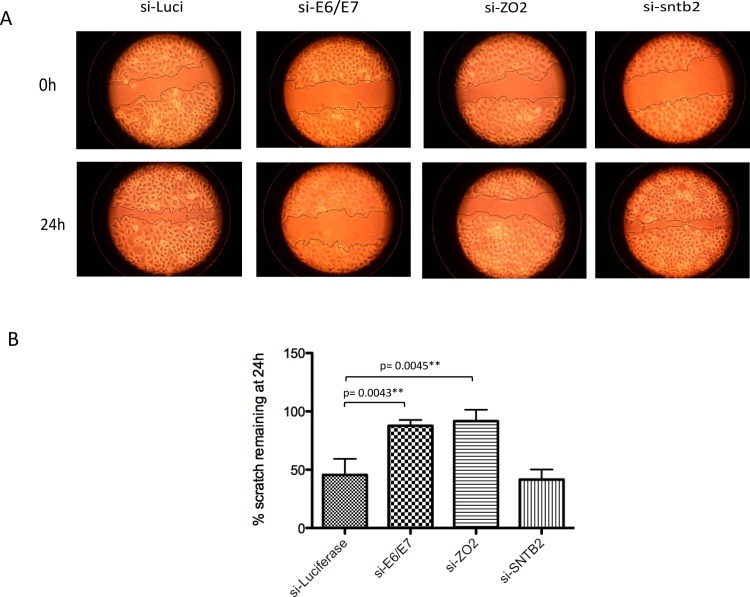
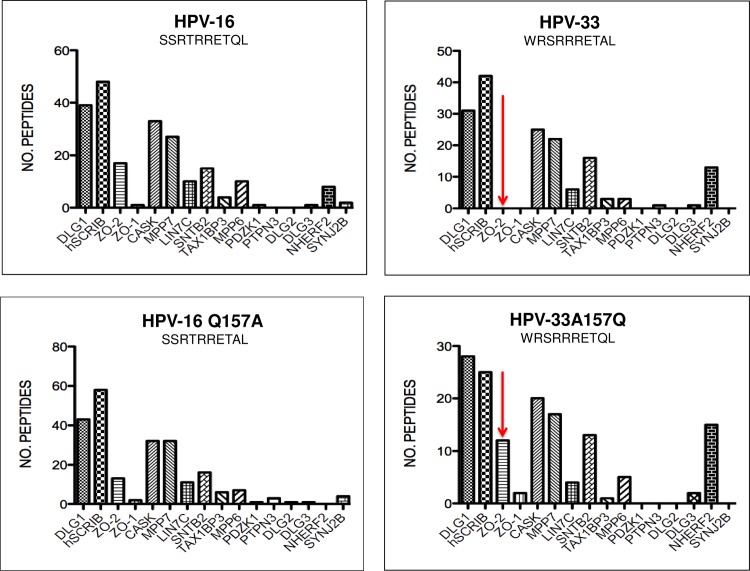
Verification
Claims the paper makes
The claims and statistics of this paper haven’t been checked yet.
Run the check — free, no account needed. It reads the open-access text and checks the sources it cites.
Claims other papers make about this one
Each is checked against this paper’s own text: does it say what the citing paper says it does?
In the citing paper
“The complete crystal structure of E6, including the N-terminal and C-terminal halves, has been resolved, and a structure-functional analysis of E6 further suggests its plasticity in interacting with a wide range of cellular substrates [40,41,42,43]”
From The Not-So-Good, the Bad and the Ugly: HPV E5, E6 and E7 Oncoproteins in the Orchestration of Carcinogenesis (2021) · cites this paper as [43]
In the citing paper
“the extent of promiscuity of the E6 PBM in interacting with several PDZ proteins has been shown to have strong correlation with the degree of carcinogenicity of the HPV type in cervical cancer [43]”
From The Not-So-Good, the Bad and the Ugly: HPV E5, E6 and E7 Oncoproteins in the Orchestration of Carcinogenesis (2021) · cites this paper as [43]
Self-check
Percentages, sums and reported differences re-computed from the paper’s own numbers.
The self-check needs the paper’s full text.
Citations
Cites
Normal keratinization in a spontaneously immortalized aneuploid human keratinocyte cell line.
Boukamp, P., Petrussevska, R. T., Breitkreutz, D., Hornung, J., Markham, A., & Fusenig, N. E. (1988) · The Journal of cell biology · doi:10.1083/jcb.106.3.761 · Cited by 4,170
A review of human carcinogens—Part B: biological agents
Bouvard, V., Baan, R., Straif, K., Grosse, Y., Secretan, B., Ghissassi, F. E., Benbrahim-Tallaa, L., Guha, N., Freeman, C., Galichet, L., et al. (2009) · The Lancet Oncology · doi:10.1016/s1470-2045(09)70096-8 · Cited by 2,935
A Specificity Map for the PDZ Domain Family
Tonikian, R., Zhang, Y., Sazinsky, S. L., Currell, B., Yeh, J.-H., Reva, B., Held, H. A., Appleton, B. A., Evangelista, M., Wu, Y., et al. (2008) · PLoS Biology · doi:10.1371/journal.pbio.0060239 · Cited by 476
Zhan, L., Rosenberg, A., Bergami, K. C., Yu, M., Xuan, Z., Jaffe, A. B., Allred, C., & Muthuswamy, S. K. (2008) · Cell · doi:10.1016/j.cell.2008.09.045 · Cited by 436
Interaction between RasV12 and scribbled clones induces tumour growth and invasion
Wu, M., Pastor-Pareja, J. C., & Xu, T. (2010) · Nature · doi:10.1038/nature08702 · Cited by 388
Feigin, M. E., Akshinthala, S. D., Araki, K., Rosenberg, A. Z., Muthuswamy, L. B., Martin, B., Lehmann, B. D., Berman, H. K., Pietenpol, J. A., Cardiff, R. D., et al. (2014) · Cancer Research · doi:10.1158/0008-5472.can-13-3415 · Cited by 135
Research works printed but not linked: 39
- IARC monographs on the evaluation of carcinogenic risks to humans. Volume 100(B): Biological agents. 2012. WHO Press, ISBN13 9789283213192
- M Thomas, 2008, Human papillomaviruses, cervical cancer and cell polarity, Oncogene, 27, 7018, 10.1038/onc.2008.351 · DOI · Paper page
- K Münger, 1989, Complex formation of human papillomavirus E7 proteins with the retinoblastoma tumor suppressor gene product, EMBO J, 8, 4099, 10.1002/j.1460-2075.1989.tb08594.x · DOI · Paper page
- SN Boyer, 1996, E7 protein of human papilloma virus-16 induces degradation of retinoblastoma protein through the ubiquitin-proteasome pathway, Cancer Res, 56, 4620
- M Scheffner, 1990, The E6 oncoprotein encoded by human papillomavirus types 16 and 18 promotes the degradation of p53, Cell, 63, 1129, 10.1016/0092-8674(90)90409-8 · DOI · Paper page
- M Thomas, 1998, Inhibition of Bak-induced apoptosis by HPV-18 E6, Oncogene, 17, 2943, 10.1038/sj.onc.1202223 · DOI · Paper page
- M Thomas, 1999, Human papillomavirus (HPV) E6 interactions with Bak are conserved amongst E6 proteins from high and low risk HPV types, J Gen Virol, 80, 1513, 10.1099/0022-1317-80-6-1513 · DOI · Paper page
- ML Nguyen, 2003, The PDZ ligand domain of the human papillomavirus type 16 E6 protein is required for E6's induction of epithelial hyperplasia in vivo, J Virol, 77, 6957, 10.1128/JVI.77.12.6957-6964.2003 · DOI
- C Lee, 2004, Role of the PDZ domain-binding motif of the oncoprotein E6 in the pathogenesis of human papillomavirus type 31, J Virol, 78, 12366, 10.1128/JVI.78.22.12366-12377.2004 · DOI · Paper page
- L Nicolaides, 2011, Stabilization of HPV16 E6 protein by PDZ proteins, and potential implications for genome maintenance, Virology, 414, 137, 10.1016/j.virol.2011.03.017 · DOI · Paper page
- CP Delury, 2013, The role of protein kinase A regulation of the E6 PDZ-binding domain during the differentiation-dependent life cycle of human papillomavirus type 18, J Virol, 87, 9463, 10.1128/JVI.01234-13 · DOI
- N Brimer, 2014, Papillomavirus E6 PDZ interactions can be replaced by repression of p53 to promote episomal human papillomavirus genome maintenance, J Virol, 88, 3027, 10.1128/JVI.02360-13 · DOI
- T Kiyono, 1997, Binding of high-risk human papillomavirus E6 oncoproteins to the human homologue of the Drosophila discs large tumor suppressor protein, Proc Natl Acad Sci U S A, 94, 11612, 10.1073/pnas.94.21.11612 · DOI · Paper page
- RA Watson, 2003, Activity of the human papillomavirus E6 PDZ-binding motif correlates with an enhanced morphological transformation of immortalized human keratinocytes, J Cell Sci, 116, 4925, 10.1242/jcs.00809 · DOI
- A Shai, 2010, E6-associated protein is required for human papillomavirus type 16 E6 to cause cervical cancer in mice, Cancer Res, 70, 5064, 10.1158/0008-5472.CAN-09-3307 · DOI
- VK Subbaiah, 2011, PDZ domains: the building blocks regulating tumorigenesis, Biochem J, 439, 195, 10.1042/BJ20110903 · DOI · Paper page
- R Javier, 2008, Cell polarity proteins: common targets for tumorigenic human viruses, Oncogene, 27, 7031, 10.1038/onc.2008.352 · DOI · Paper page
- D Pim, 2012, Human papillomaviruses and the specificity of PDZ domain targeting, FEBS J, 279, 3530, 10.1111/j.1742-4658.2012.08709.x · DOI · Paper page
- Y Zhang, 2007, Structures of a human papillomavirus (HPV) E6 polypeptide bound to MAGUK proteins: mechanisms of targeting tumor suppressors by a high-risk HPV oncoprotein, J Virol, 81, 3618, 10.1128/JVI.02044-06 · DOI
- E Belotti, 2013, The human PDZome: a gateway to PSD95-Disc large-zonula occludens (PDZ)-mediated functions, Mol Cell Proteomics, 12, 2587, 10.1074/mcp.O112.021022 · DOI
- R Vincentelli, 2015, Quantifying domain-ligand affinities and specificities by high-throughput holdup assay, Nat Methods, 12, 787, 10.1038/nmeth.3438 · DOI
- M Thomas, 2008, Analysis of specificity determinants in the interactions of different HPV E6 proteins with their PDZ domain-containing substrates, Virology, 376, 371, 10.1016/j.virol.2008.03.021 · DOI
- K Luck, 2012, The emerging contribution of sequence context to the specificity of protein interactions mediated by PDZ domains, FEBS Lett, 586, 2648, 10.1016/j.febslet.2012.03.056 · DOI
- K Van Doorslaer, 2015, Degradation of human PDZ-proteins by human alphapapillomaviruses represents an evolutionary adaptation to a novel cellular niche, PLoS Pathog, 11, e1004980, 10.1371/journal.ppat.1004980 · DOI
- S Fournane, 2011, Surface plasmon resonance analysis of the binding of high-risk mucosal HPV E6 oncoproteins to the PDZ1 domain of the tight junction protein MAGI-1, J Mol Recognit, 24, 511, 10.1002/jmr.1056 · DOI
- SS Lee, 1997, Binding of human virus oncoproteins to hDlg/SAP97, a mammalian homolog of the Drosophila discs large tumor suppressor protein, Proc Natl Acad Sci U S A, 94, 6670, 10.1073/pnas.94.13.6670 · DOI · Paper page
- D Gardiol, 1999, Oncogenic human papillomavirus E6 proteins target the discs large tumour suppressor for proteasome-mediated degradation, Oncogene, 18, 5487, 10.1038/sj.onc.1202920 · DOI · Paper page
- S Nakagawa, 2000, Human scribble (Vartul) is targeted for ubiquitin-mediated degradation by the high-risk papillomavirus E6 proteins and the E6AP ubiquitin-protein ligase, Mol Cell Biol, 20, 8244, 10.1128/MCB.20.21.8244-8253.2000 · DOI · Paper page
- M Thomas, 2005, The hScrib/Dlg apico-basal control complex is differentially targeted by HPV-16 and HPV-18 E6 proteins, Oncogene, 24, 6222, 10.1038/sj.onc.1208757 · DOI · Paper page
- J Hernández-Monge, 2013, Papillomavirus E6 oncoprotein up-regulates occludin and ZO-2 expression in ovariectomized mice epidermis, Exp Cell Res, 319, 2588, 10.1016/j.yexcr.2013.07.028 · DOI
- G Halec, 2014, Pathogenic role of the eight probably/possibly carcinogenic HPV types 26, 53, 66, 67, 68, 70, 73 and 82 in cervical cancer, J Pathol, 234, 441, 10.1002/path.4405 · DOI
- P Massimi, 2012, Differential regulation of cell-cell contact, invasion and anoikis by hScrib and hDlg in keratinocytes, PLoS One
- LC Young, 2013, An MRAS, SHOC2, and SCRIB complex coordinates ERK pathway activation with polarity and tumorigenic growth, Mol Cell, 52, 679, 10.1016/j.molcel.2013.10.004 · DOI
- IA Elsum, 2014, Scrib heterozygosity predisposes to lung cancer and cooperates with KRas hyperactivation to accelerate lung cancer progression in vivo, Oncogene, 33, 5523, 10.1038/onc.2013.498 · DOI · Paper page
- C Kranjec, 2016, The high-risk HPV E6 target scribble (hScrib) is required for HPV E6 expression in cervical tumour-derived cell lines, Papillomavirus Res, 2, 70, 10.1016/j.pvr.2016.04.001 · DOI
- M Wigler, 1979, Transformation of mammalian cells with genes from procaryotes and eucaryotes, Cell, 16, 777, 10.1016/0092-8674(79)90093-X · DOI
- ER Flores, 1999, Establishment of the human papillomavirus type 16 (HPV-16) life cycle in an immortalized human foreskin keratinocyte cell line, Virology, 262, 344, 10.1006/viro.1999.9868 · DOI
- BL Allen-Hoffmann, 2000, Normal growth and differentiation in a spontaneously immortalised near-diploid human keratinocyte cell line, NIKS, J Invest Dermatol, 114, 444, 10.1046/j.1523-1747.2000.00869.x · DOI
- V Tomaić, 2009, Human and primate tumour viruses use PDZ binding as an evolutionarily conserved mechanism of targeting cell polarity regulators, Oncogene, 28, 1, 10.1038/onc.2008.365 · DOI
Cited by
Basukala, O., & Banks, L. (2021) · Viruses · doi:10.3390/v13101892 · Cited by 137
Self-citationThe Scribble family in cancer: twentieth anniversary
Santoni, M.-J., Kashyap, R., Camoin, L., & Borg, J.-P. (2020) · Oncogene · doi:10.1038/s41388-020-01478-7 · Cited by 62
Crystal structure of the human Scribble PDZ 1 domain bound to the PDZ ‐binding motif of APC
How, J. Y., Caria, S., Humbert, P. O., & Kvansakul, M. (2019) · FEBS Letters · doi:10.1002/1873-3468.13329 · Cited by 19
Metadata
- Authors
- Thomas, M., Myers, M. P., Massimi, P., Guarnaccia, C., & Banks, L.
- Venue
- PLOS Pathogens
- Publisher
- Public Library of Science (PLoS)
- Published
- 2016-08-02
- Volume
- 12
- Issue
- 8
- Pages
- e1005766
- ISSN
- 1553-7374
- PMC
- PMC4970744
- Cited by
- 72
- References
- 6
- Language
- en
About these checks
Registry, retraction, Cites and statistics results are computed, not judged, with one exception: a printed reference that no index lists is read once by a model before it counts as a citation error. Claims are extracted by a model and kept only when their quote appears verbatim in the text; each cited source is then checked, with a model’s help, for whether it says what the claim relies on. Those verdicts can be wrong — read the claim’s quote and the cited source before relying on one.
Statistics and arithmetic are recomputed, not judged.
Confidence bands are shown only for fields calibrated on our annotated test set. None is calibrated yet, so no band is shown.
What counts as a claim ›How we measure confidence ›How we check this ›
Are you an author, or do you see a problem with this page? Request a review
