

Schistosome infection promotes osteoclast-mediated bone loss
Open accessThe DOI matches its Crossref record; 46 of the 46 references it cites were found in a registry or an index.
Abstract
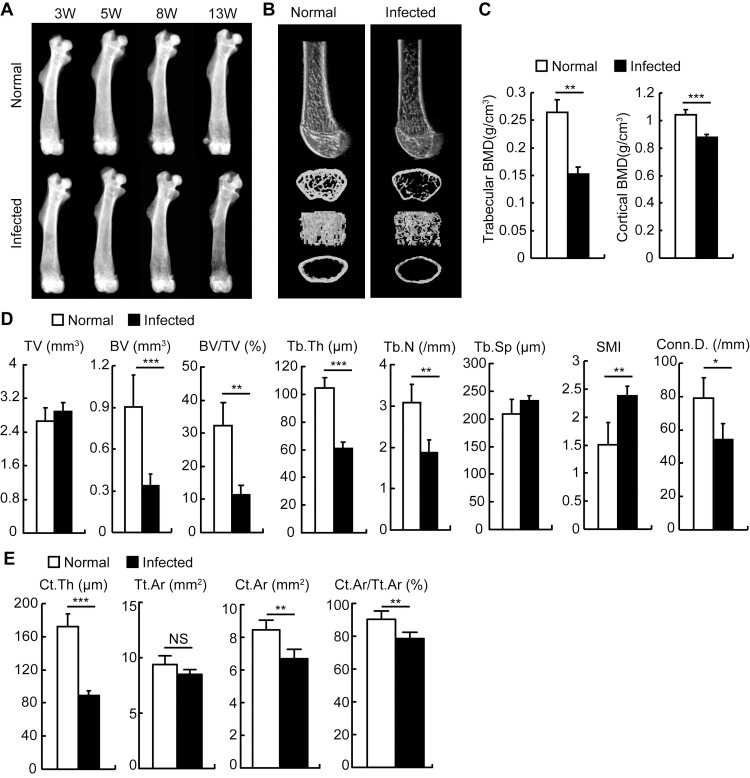
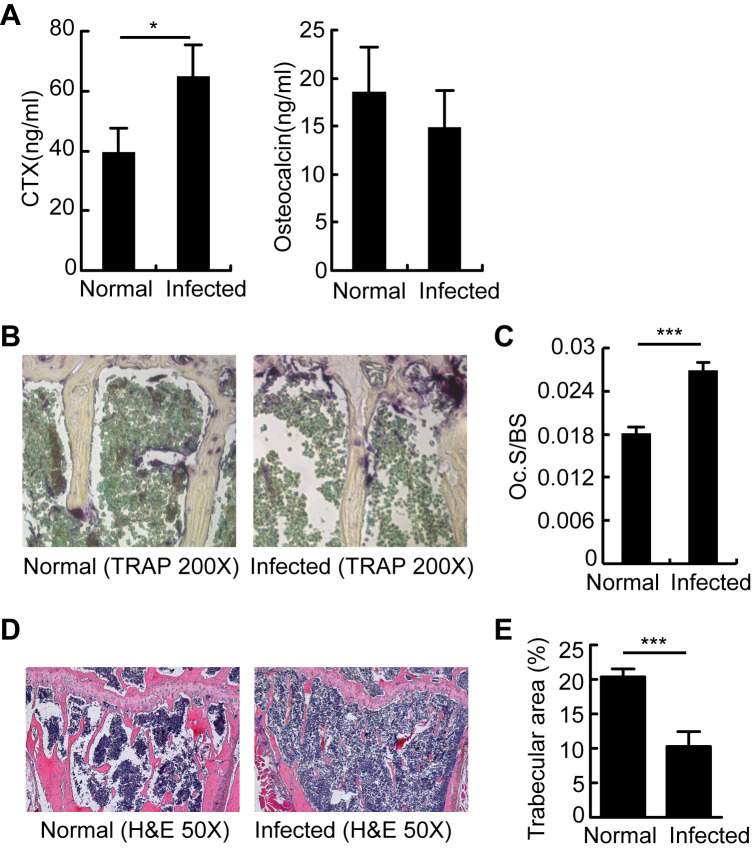
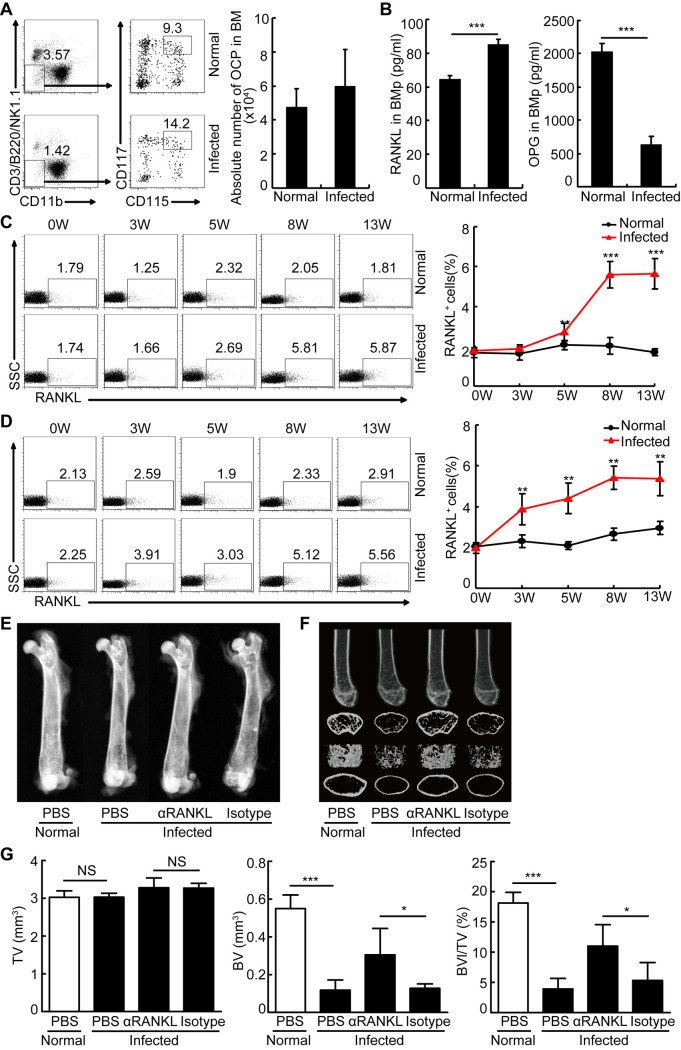
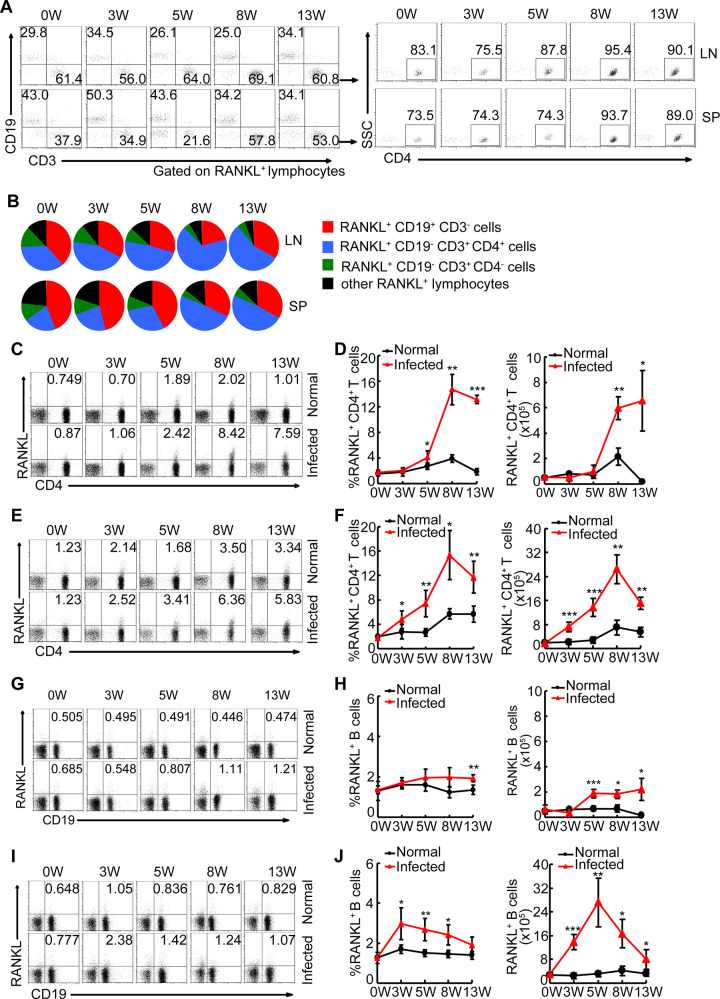
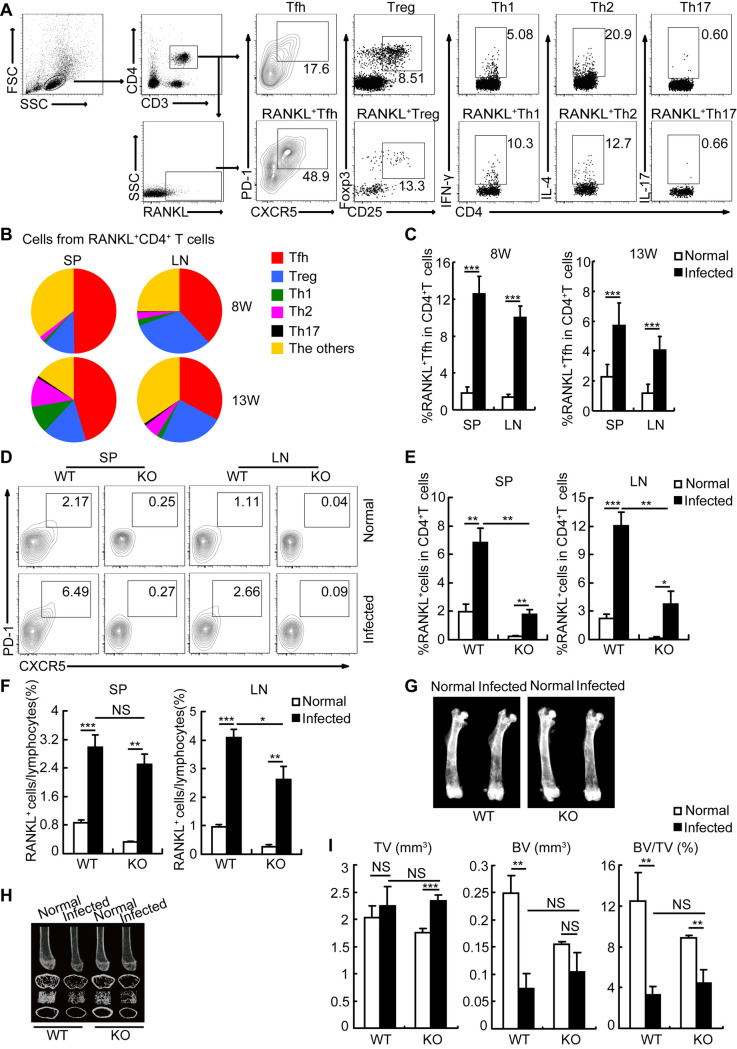
Infection with schistosome results in immunological changes that might influence the skeletal system by inducing immunological states affecting bone metabolism. We investigated the relationships between chronic schistosome infection and bone metabolism by using a mouse model of chronic schistosomiasis, affecting millions of humans worldwide. Results showed that schistosome infection resulted in aberrant osteoclast-mediated bone loss, which was accompanied with an increased level of receptor activator of nuclear factor-κB (NF-κB) Ligand (RANKL) and decreased level of osteoprotegerin (OPG). The blockade of RANKL by the anti-RANKL antibody could prevent bone loss in the context of schistosome infection. Meanwhile, both B cells and CD4+ T cells, particularly follicular helper T (Tfh) cell subset, were the important cellular sources of RANKL during schistosome infection. These results highlight the risk of bone loss in schistosome-infected patients and the potential benefit of coupling bone therapy with anti-schistosome treatment.
Overview
The claims and statistics of this paper haven’t been checked yet.
Free: it reads the open-access text and checks the first 5 claims that cite a source we can check. Create a free account to check every claim.
Integrity signals
Registry
Cites
Statistics
Figures
Verification
Claims the paper makes
The claims and statistics of this paper haven’t been checked yet.
Free: it reads the open-access text and checks the first 5 claims that cite a source we can check. Create a free account to check every claim.
Claims other papers make about this one
Each is checked against this paper’s own text: does it say what the citing paper says it does?
The cited source says what the claim attributes to it.
In the citing paper
“In addition, significant bone loss in mice during the chronic phase of infection has been reported to occur 11–13 weeks postinfection [192].”
From Emerging role of liver-bone axis in osteoporosis (2024) · cites this paper as [192]
In the citing paper
“Wei Li [192] demonstrated that the increase in RANKL produced by Tfh cells was correlated with host osteoclast-mediated bone loss in the context of schistosome infection.”
From Emerging role of liver-bone axis in osteoporosis (2024) · cites this paper as [192]
In the citing paper
“Indeed, the incidence of osteoporosis in schistosomiasis patients was considerably greater than that in healthy controls in nonendemic areas.”
From Emerging role of liver-bone axis in osteoporosis (2024) · cites this paper as [192]
In the citing paper
“Unexpectedly, schistosomiasis infection also leads to reduced bone mass.”
From Emerging role of liver-bone axis in osteoporosis (2024) · cites this paper as [192]
Self-check
Percentages, sums and reported differences re-computed from the paper’s own numbers.
The self-check needs the paper’s full text.
Citations
Cites
Guidelines for assessment of bone microstructure in rodents using micro–computed tomography
Bouxsein, M. L., Boyd, S. K., Christiansen, B. A., Guldberg, R. E., Jepsen, K. J., & Müller, R. (2010) · Journal of Bone and Mineral Research · doi:10.1002/jbmr.141 · Cited by 4,433 · cited 1×
“According to the published guidelines for the assessment of bone microstructure in rodents using μCT [43], the following indices were calculated with the software which includes trabecular mineral density (BMD), tissue volume (TV), bone volume (BV), bone volume fraction (BV/TV), trabecular thickness (Tb.”
MethodBone Resorption by Osteoclasts
Teitelbaum, S. L. (2000) · Science · doi:10.1126/science.289.5484.1504 · Cited by 3,962 · cited 1×
“The differentiation of OC precursors into OCs is under the influence of the key osteoclastogenic cytokine receptor activator of nuclear factor-κB ligand (RANKL), which is moderated by osteoprotegerin (OPG), a RANKL’s physiological decoy receptor [16].”
BackgroundDifferentiation of Effector CD4 T Cell Populations
Zhu, J., Yamane, H., & Paul, W. E. (2010) · Annual Review of Immunology · doi:10.1146/annurev-immunol-030409-101212 · Cited by 3,452 · cited 1×
“Based on the phenotype, cytokine profiles, and functionality, CD4 T cells are divided into distinctive subsets including type 1 helper T (Th1) cells, Th2 cells, Th17 cells, follicular helper T (Tfh) cells, and regulatory T (Treg) cells [42].”
BackgroundSelf-citationGryseels, B., Polman, K., Clerinx, J., & Kestens, L. (2006) · The Lancet · doi:10.1016/s0140-6736(06)69440-3 · Cited by 2,084 · cited 2×
“Thus, these results suggest that patients with schistosomiasis, affecting more than 200 million people worldwide [1,2], might potentially benefit from coupling bone therapy with anti-schistosome treatment.”
BackgroundOsteoimmunology: shared mechanisms and crosstalk between the immune and bone systems
Takayanagi, H. (2007) · Nature Reviews Immunology · doi:10.1038/nri2062 · Cited by 1,878 · cited 2×
“by the immune system [20,21,25], it will be of interest to examine the role of schistosomeinduced immune responses in bone metabolism in the host.”
BackgroundEvidence for osteocyte regulation of bone homeostasis through RANKL expression
Nakashima, T., Hayashi, M., Fukunaga, T., Kurata, K., Oh-hora, M., Feng, J. Q., Bonewald, L. F., Kodama, T., Wutz, A., Wagner, E. F., et al. (2011) · Nature Medicine · doi:10.1038/nm.2452 · Cited by 1,778 · cited 1×
“In homeostatic conditions, osteocytes are major sources of RANKL production, contributing to bone remodeling as demonstrated by previous reports [36].”
Sato, K., Suematsu, A., Okamoto, K., Yamaguchi, A., Morishita, Y., Kadono, Y., Tanaka, S., Kodama, T., Akira, S., Iwakura, Y., et al. (2006) · The Journal of Experimental Medicine · doi:10.1084/jem.20061775 · Cited by 1,554 · cited 2×
“Accumulating evidence showed that IL-17 produced by Th17 cells has a role in promoting osteocytes to secrete RANKL [40].”
BackgroundFeng, X., & McDonald, J. M. (2011) · Annual Review of Pathology: Mechanisms of Disease · doi:10.1146/annurev-pathol-011110-130203 · Cited by 1,272 · cited 1×
“Bone homeostasis is maintained by the dynamic balance between osteoclastic bone resorption and osteoblastic bone formation [33].”
BackgroundThe immunobiology of schistosomiasis
Pearce, E. J., & MacDonald, A. S. (2002) · Nature Reviews Immunology · doi:10.1038/nri843 · Cited by 1,148 · cited 5×
“Schistosomes are parasitic trematodes living in the inferior mesenteric veins that induce marked B cell and CD4 T cell responses in the peripheral lymphoid tissues such as the spleen and MLN [4].”
BackgroundInfluentialMcManus, D. P., Dunne, D. W., Sacko, M., Utzinger, J., Vennervald, B. J., & Zhou, X.-N. (2018) · Nature Reviews Disease Primers · doi:10.1038/s41572-018-0013-8 · Cited by 1,145
Cited by
The Rising Era of “Immunoporosis”: Role of Immune System in the Pathophysiology of Osteoporosis
Srivastava, R. K., & Sapra, L. (2022) · Journal of Inflammation Research · doi:10.2147/jir.s351918 · Cited by 117
“Surprisingly, in parasitic infections, TFH was found to be the source of RANKL cytokine that further enhance bone loss in parasite-infected patients.(115) ERα is a receptor for female sexual estrogen hormone that inhibits the TFH response by suppressing the expression of Bcl-6 and IL-21 cytokine, thereby inhibiting au…”
BackgroundThe Road to Elimination: Current State of Schistosomiasis Research and Progress Towards the End Game
Ogongo, P., Nyakundi, R. K., Chege, G. K., & Ochola, L. B. (2022) · Frontiers in Immunology · doi:10.3389/fimmu.2022.846108 · Cited by 87
Okamoto, K., & Takayanagi, H. (2023) · Bone · doi:10.1016/j.bone.2023.116675 · Cited by 42
Emerging role of liver-bone axis in osteoporosis
Gao, H., Peng, X., Li, N., Gou, L., Xu, T., Wang, Y., Qin, J., Liang, H., Ma, P., Li, S., et al. (2024) · Journal of Orthopaedic Translation · doi:10.1016/j.jot.2024.07.008 · Cited by 36
“In addition, significant bone loss in mice during the chronic phase of infection has been reported to occur 11 – 13 weeks postinfection [192].”
BackgroundMonteiro, A. C., Garcia, D. D., Rocher, B. D., Fontão, A. P. G. A., Nogueira, L. P., Fidalgo, G., Colaço, M. V., & Bonomo, A. C. (2023) · Bone · doi:10.1016/j.bone.2023.116932 · Cited by 18
Wu, J., Xiao, J., Bai, M., Shi, C., Xin, Y., Zhao, W., Gao, X., Yin, M., & Zhao, J. (2023) · Infection and Immunity · doi:10.1128/iai.00029-23 · Cited by 16
Toxoplasma gondii infection as a risk factor for osteoporosis: a case–control study
Zhu, K., Liu, K., Huang, J., Weng, X., Chen, Q., Gao, T., Chen, K., Jing, C., Wang, J., & Yang, G. (2022) · Parasites & Vectors · doi:10.1186/s13071-022-05257-z · Cited by 11
“Interestingly, it has been found that schistosome infection promotes osteoclast-mediated bone loss in mice [16].”
BackgroundImpact of T helper cells on bone metabolism in systemic lupus erythematosus
Chen, F., Wu, Y., Ren, G., & Wen, S.-B. (2023) · Human Immunology · doi:10.1016/j.humimm.2023.04.003 · Cited by 11
The histone methyltransferase ASH1L protects against bone loss by inhibiting osteoclastogenesis
Zhao, X., Lin, S., Ren, H., Sun, S., Zheng, L., Chen, L., & Wang, Z. (2024) · Cell Death and Differentiation · doi:10.1038/s41418-024-01274-w · Cited by 10
“…zeste, and Trithorax (SET) domain is necessary for the H3K4 methyltransferase activity of ASH1L [9], we overexpressed ASH1L or ASH1L Δ SET that is depleted of the SET domain in ASH1L-de fi cient BMMs to investigate whether the enrichment of ASH1L on the Stac2 promoter is dependent on the SET domain.”
Schistosomiasis Chemotherapy, Chemoprevention, and Vaccines: History, Progress, and Priorities
Alibrahim, A. O. E., Elkholy, W. A., El‐Derbawy, M. M., Zahran, N. F., Alexiou, A. T., Papadakis, M., & Batiha, G. E. (2024) · Immunity Inflammation and Disease · doi:10.1002/iid3.70054 · Cited by 5
Zhong, C., Xu, H., Chen, J., Cai, W., Zhou, J., & Peng, H. (2024) · Biomedicines · doi:10.3390/biomedicines12122817 · Cited by 5
“However, high doses of GC severely inhibit osteoblast function, leading to an imbalance in this homeostasis [47].”
The influence of parasitic infection (Eimeria spp.) on bone and cartilage tissue in an animal model
Tomczyk‐Warunek, A., Muszyński, S., Tomaszewska, E., Dobrowolski, P., Arczewska-Włosek, A., Świątkiewicz, S., & Józefiak, D. (2025) · Scientific Reports · doi:10.1038/s41598-025-22579-x · Cited by 3
“Li et al. (2021) further demonstrated that changes in trabecular bone could be linked to higher osteoclast activity, indicated by elevated CTx (C-terminal telopeptide) in infected animals, while OC levels remained unchanged 5 .”
InfluentialLu, J.-L., Zhang, X., Dong, P., Mei, C., Yang, Y., Yu, C., & Song, L.-J. (2024) · Current Issues in Molecular Biology · doi:10.3390/cimb46110707 · Cited by 3
“Schistosome infection leads to abnormal bone loss mediated by osteoclasts, and further studies have confirmed that Tfh cell subsets may cause bone loss by releasing soluble RANKL [42].”
Misdiagnosis of Hepatosplenic Schistosomiasis as Hepatic Tuberculosis: A Case Report
Albano, J. E., & Ma-alat, R. B. B. (2023) · Cureus · doi:10.7759/cureus.35169 · Cited by 2
“Looking back, the patient’s polyarthritis could also be attributed to schistosomal infection as osteoclast-mediated bone loss is a known immunological consequence [12].”
BackgroundTang, L., He, S., Ma, B., Tang, Z., Zhan, T., Xiao, S., Wang, J., Zhao, J., Xu, J., & Shi, Y. (2025) · Immunity Inflammation and Disease · doi:10.1002/iid3.70292 · Cited by 2
“Experimental infection with Schistosoma japonicum , S. mansoni , Ascaris suum , or Hymenolepis diminuta , or the use of their protein products, has been shown to inhibit collagen ‐ induced arthritis in mice [21 – 25].”
Qi, B., Li, C., Cai, X., Xu, Y., Guo, M., Tang, Z., Bo, P., & Pu, L. (2022) · Research Square · doi:10.21203/rs.3.rs-2001640/v1 · Cited by 1
Qi, B., Li, C., Cai, X., Xu, Y., Guo, M., Tang, Z., Bo, P., & Pu, L. (2022) · Research Square · doi:10.21203/rs.3.rs-2001640/v2
Cheng, X., Liu, J., Guan, Y., Jing, B., Zhao, J., & Cao, Y. (2025) · Frontiers in Immunology · doi:10.3389/fimmu.2025.1629276
“However, Tfh may be involved in bone metabolism disorders caused by immune-related diseases such as rheumatoid arthritis (60), systemic lupus erythematosus (61), and schistosomiasis (62).”
Zhu, K., Liu, K., Huang, J., Weng, X., Chen, Q., Gao, T., Chen, K., Jing, C., Wang, J., & Yang, G. (2022) · Figshare · doi:10.6084/m9.figshare.19670221
Zhu, K., Liu, K., Huang, J., Weng, X., Chen, Q., Gao, T., Chen, K., Jing, C., Wang, J., & Yang, G. (2022) · Figshare · doi:10.6084/m9.figshare.19670224
Calcium silicate in drug delivery
Gaikwad, V. L., Dhake, P. R., & Mahalinge, V. S. (2025) · Elsevier eBooks · doi:10.1016/b978-0-323-95366-5.00016-7
Regulation of bone immunity by metal ions: a review of mechanisms and application progress
Dong, Y., Qi, Z., Yang, H., Chen, X. R., Huang, Y., Qin, L., Tan, J., & Yi, W. (2026) · Frontiers in Immunology · doi:10.3389/fimmu.2026.1889301
“Additionally, T follicular helper (Tfh) cells, by supporting B cell responses, indirectly participate in the humoral immune regulation within the bone microenvironment (26).”
Self-citation
Metadata
- Authors
- Li, W., Wei, C., Xu, L., Yu, B., Chen, Y., Lu, D., Zhang, L., Song, X., Dong, L., Zhou, S., Xu, Z., Zhu, J., Chen, X., & Su, C.
- Affiliations
- State Key Laboratory of Reproductive Medicine (CN)
- Corresponding author
- Chen, Xiaojun
- Su, Chuan
- Venue
- PLoS Pathogens
- Publisher
- Public Library of Science (PLoS)
- Published
- 2021-03-18
- Volume
- 17
- Issue
- 3
- Pages
- e1009462
- ISSN
- 1553-7366 (ISSN-L)
- 1553-7374
- PMC
- PMC8009420
- OpenAlex
- W3138000858
- Cited by
- 22
- References
- 46
- Citations by year
- 2026: 1 · 2025: 4 · 2024: 5 · 2023: 5 · 2022: 7
- FWCI
- 1.33
- Type
- journal article
- Language
- en
- Update notices
- new_version (2021-03-30)
- Open access
- gold
- doi.org
- Licence
- Locations
- PLoS Pathogens (publishedVersion, cc-by)
- PubMed Central (publishedVersion, cc-by)
- PubMed (publishedVersion)
- DOAJ (DOAJ: Directory of Open Access Journals) (submittedVersion, cc-by-sa)
- Funders
- National Key R&D Program of China (2018YFA0507302)
- National Natural Science Foundation of China (81871675, 81430052, 81871676)
- Natural Science Foundation of Jiangsu Province (BK20190082)
- Nanjing Medical University (NMUB2018323)
- Topics
- Life Sciences › Biochemistry, Genetics and Molecular Biology › Molecular Biology › Bone Metabolism and Diseases
- Life Sciences › Immunology and Microbiology › Parasitology › Parasites and Host Interactions
- Health Sciences › Medicine › Orthopedics and Sports Medicine › Bone health and osteoporosis research
- Keywords
- schistosomiasis, schistosome infection, bone metabolism, RANKL, osteoprotegerin, anti-RANKL antibody, T follicular helper cells, B cells, CD4+ T cells
- MeSH terms
- T Follicular Helper Cells, Animals, B-Lymphocytes, Bone Resorption, Schistosoma japonicum, Schistosomiasis japonica, Mice, RANK Ligand
About these checks
Registry, retraction, Cites and statistics results are computed, not judged, with one exception: a printed reference that no index lists is read once by a model before it counts as a citation error. Claims are extracted by a model and kept only when their quote appears verbatim in the text; each cited source is then checked, with a model’s help, for whether it says what the claim relies on. Those verdicts can be wrong — read the claim’s quote and the cited source before relying on one.
Statistics and arithmetic are recomputed, not judged.
Confidence bands are shown only for fields calibrated on our annotated test set. None is calibrated yet, so no band is shown.
What counts as a claim ›How we measure confidence ›How we check this ›
Are you an author, or do you see a problem with this page? Request a review
Data sources
Bibliographic data: Semantic Scholar, OpenAlex, Crossref.
Contains information from the Semantic Scholar Academic Graph Datasets, made available under the ODC Attribution License (ODC-BY 1.0).
Semantic Scholar’s data is described in: Kinney, R., et al. (2023). The Semantic Scholar Open Data Platform. arXiv:2301.10140.
