

Schistosome infection promotes osteoclast-mediated bone loss
Open accessThe DOI matches its Crossref record; 46 of the 46 references it cites were found in a registry or an index.
Abstract
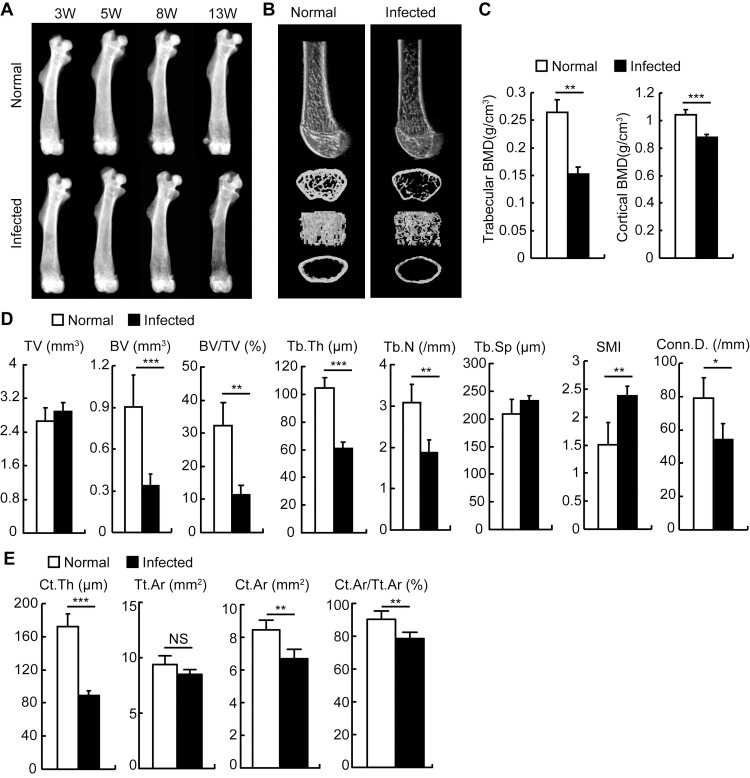
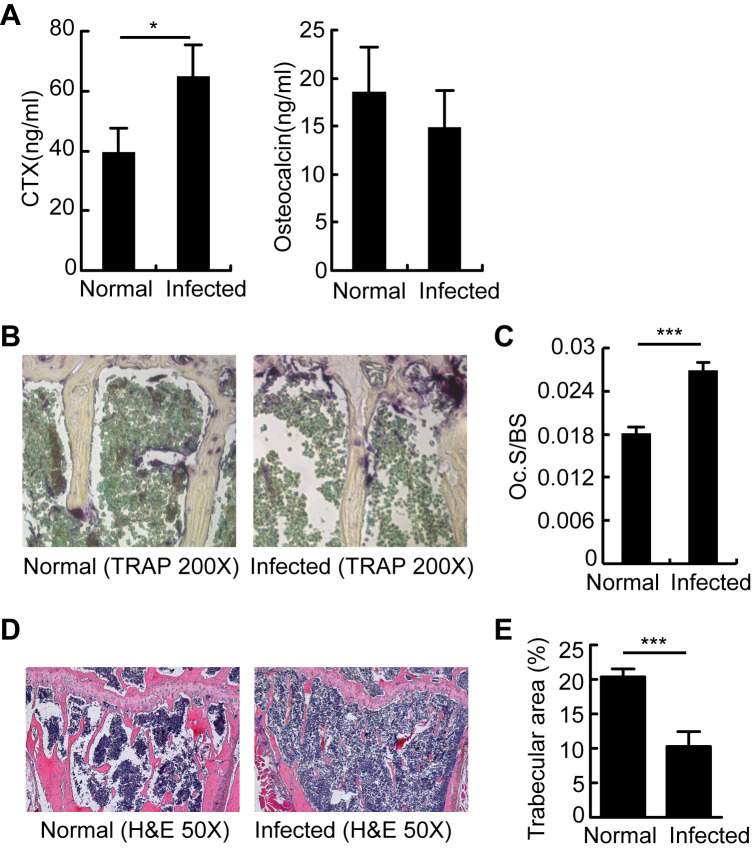
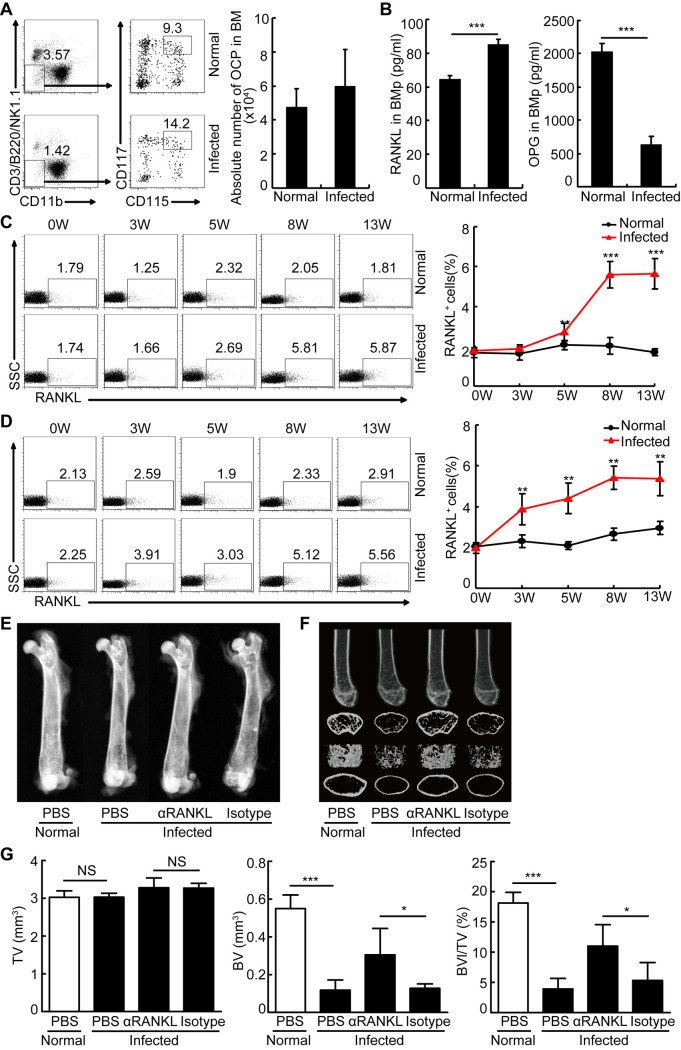
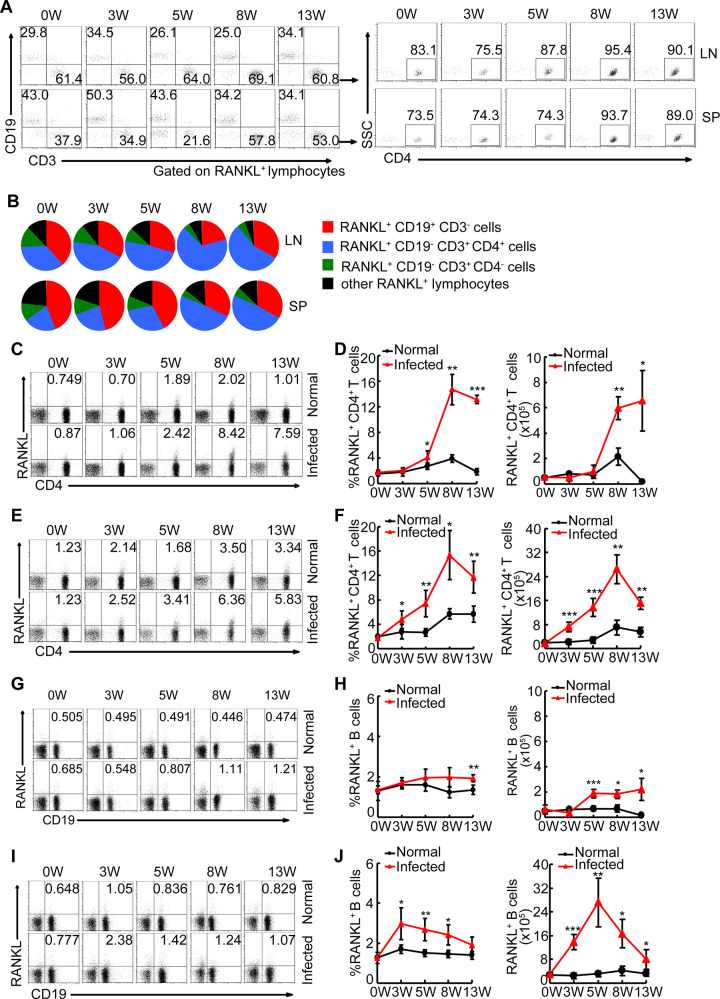
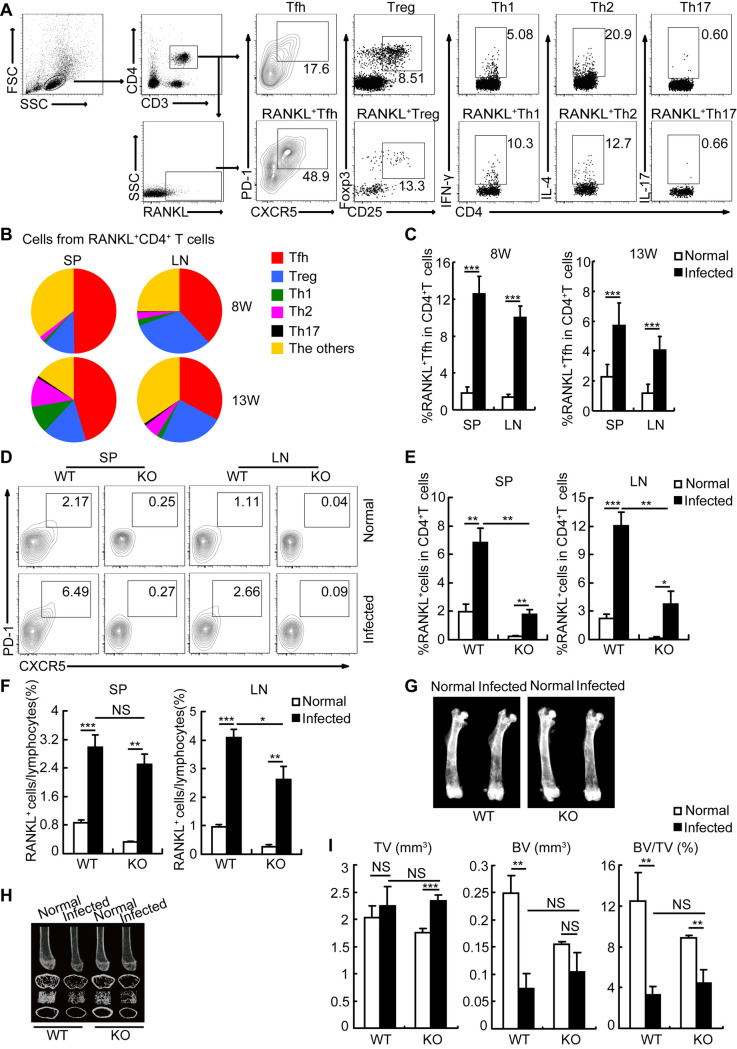
Infection with schistosome results in immunological changes that might influence the skeletal system by inducing immunological states affecting bone metabolism. We investigated the relationships between chronic schistosome infection and bone metabolism by using a mouse model of chronic schistosomiasis, affecting millions of humans worldwide. Results showed that schistosome infection resulted in aberrant osteoclast-mediated bone loss, which was accompanied with an increased level of receptor activator of nuclear factor-κB (NF-κB) Ligand (RANKL) and decreased level of osteoprotegerin (OPG). The blockade of RANKL by the anti-RANKL antibody could prevent bone loss in the context of schistosome infection. Meanwhile, both B cells and CD4+ T cells, particularly follicular helper T (Tfh) cell subset, were the important cellular sources of RANKL during schistosome infection. These results highlight the risk of bone loss in schistosome-infected patients and the potential benefit of coupling bone therapy with anti-schistosome treatment.
Overview
The claims and statistics of this paper haven’t been checked yet.
Free: it reads the open-access text and checks the first 5 claims that cite a source we can check. Create a free account to check every claim.
Integrity signals
Registry
Cites
Statistics
Figures
Verification
Claims the paper makes
The claims and statistics of this paper haven’t been checked yet.
Free: it reads the open-access text and checks the first 5 claims that cite a source we can check. Create a free account to check every claim.
Claims other papers make about this one
Each is checked against this paper’s own text: does it say what the citing paper says it does?
The cited source says what the claim attributes to it.
In the citing paper
“In addition, significant bone loss in mice during the chronic phase of infection has been reported to occur 11–13 weeks postinfection [192].”
From Emerging role of liver-bone axis in osteoporosis (2024) · cites this paper as [192]
In the citing paper
“Wei Li [192] demonstrated that the increase in RANKL produced by Tfh cells was correlated with host osteoclast-mediated bone loss in the context of schistosome infection.”
From Emerging role of liver-bone axis in osteoporosis (2024) · cites this paper as [192]
In the citing paper
“Indeed, the incidence of osteoporosis in schistosomiasis patients was considerably greater than that in healthy controls in nonendemic areas.”
From Emerging role of liver-bone axis in osteoporosis (2024) · cites this paper as [192]
In the citing paper
“Unexpectedly, schistosomiasis infection also leads to reduced bone mass.”
From Emerging role of liver-bone axis in osteoporosis (2024) · cites this paper as [192]
Self-check
Percentages, sums and reported differences re-computed from the paper’s own numbers.
The self-check needs the paper’s full text.
Citations
Cites
Guidelines for assessment of bone microstructure in rodents using micro–computed tomography
Bouxsein, M. L., Boyd, S. K., Christiansen, B. A., Guldberg, R. E., Jepsen, K. J., & Müller, R. (2010) · Journal of Bone and Mineral Research · doi:10.1002/jbmr.141 · Cited by 4,433 · cited 1×
“According to the published guidelines for the assessment of bone microstructure in rodents using μCT [43], the following indices were calculated with the software which includes trabecular mineral density (BMD), tissue volume (TV), bone volume (BV), bone volume fraction (BV/TV), trabecular thickness (Tb.”
MethodBone Resorption by Osteoclasts
Teitelbaum, S. L. (2000) · Science · doi:10.1126/science.289.5484.1504 · Cited by 3,962 · cited 1×
“The differentiation of OC precursors into OCs is under the influence of the key osteoclastogenic cytokine receptor activator of nuclear factor-κB ligand (RANKL), which is moderated by osteoprotegerin (OPG), a RANKL’s physiological decoy receptor [16].”
BackgroundDifferentiation of Effector CD4 T Cell Populations
Zhu, J., Yamane, H., & Paul, W. E. (2010) · Annual Review of Immunology · doi:10.1146/annurev-immunol-030409-101212 · Cited by 3,452 · cited 1×
“Based on the phenotype, cytokine profiles, and functionality, CD4 T cells are divided into distinctive subsets including type 1 helper T (Th1) cells, Th2 cells, Th17 cells, follicular helper T (Tfh) cells, and regulatory T (Treg) cells [42].”
BackgroundSelf-citationGryseels, B., Polman, K., Clerinx, J., & Kestens, L. (2006) · The Lancet · doi:10.1016/s0140-6736(06)69440-3 · Cited by 2,084 · cited 2×
“Thus, these results suggest that patients with schistosomiasis, affecting more than 200 million people worldwide [1,2], might potentially benefit from coupling bone therapy with anti-schistosome treatment.”
BackgroundOsteoimmunology: shared mechanisms and crosstalk between the immune and bone systems
Takayanagi, H. (2007) · Nature Reviews Immunology · doi:10.1038/nri2062 · Cited by 1,878 · cited 2×
“by the immune system [20,21,25], it will be of interest to examine the role of schistosomeinduced immune responses in bone metabolism in the host.”
BackgroundEvidence for osteocyte regulation of bone homeostasis through RANKL expression
Nakashima, T., Hayashi, M., Fukunaga, T., Kurata, K., Oh-hora, M., Feng, J. Q., Bonewald, L. F., Kodama, T., Wutz, A., Wagner, E. F., et al. (2011) · Nature Medicine · doi:10.1038/nm.2452 · Cited by 1,778 · cited 1×
“In homeostatic conditions, osteocytes are major sources of RANKL production, contributing to bone remodeling as demonstrated by previous reports [36].”
Sato, K., Suematsu, A., Okamoto, K., Yamaguchi, A., Morishita, Y., Kadono, Y., Tanaka, S., Kodama, T., Akira, S., Iwakura, Y., et al. (2006) · The Journal of Experimental Medicine · doi:10.1084/jem.20061775 · Cited by 1,554 · cited 2×
“Accumulating evidence showed that IL-17 produced by Th17 cells has a role in promoting osteocytes to secrete RANKL [40].”
BackgroundFeng, X., & McDonald, J. M. (2011) · Annual Review of Pathology: Mechanisms of Disease · doi:10.1146/annurev-pathol-011110-130203 · Cited by 1,272 · cited 1×
“Bone homeostasis is maintained by the dynamic balance between osteoclastic bone resorption and osteoblastic bone formation [33].”
BackgroundThe immunobiology of schistosomiasis
Pearce, E. J., & MacDonald, A. S. (2002) · Nature Reviews Immunology · doi:10.1038/nri843 · Cited by 1,148 · cited 5×
“Schistosomes are parasitic trematodes living in the inferior mesenteric veins that induce marked B cell and CD4 T cell responses in the peripheral lymphoid tissues such as the spleen and MLN [4].”
BackgroundInfluentialMcManus, D. P., Dunne, D. W., Sacko, M., Utzinger, J., Vennervald, B. J., & Zhou, X.-N. (2018) · Nature Reviews Disease Primers · doi:10.1038/s41572-018-0013-8 · Cited by 1,145
Choi, Y. S., Kageyama, R., Eto, D., Escobar, T. C., Johnston, R. J., Monticelli, L., Lao, C., & Crotty, S. (2011) · Immunity · doi:10.1016/j.immuni.2011.03.023 · Cited by 958 · cited 1×
“Next, we used ICOSL knockout (KO) mice as Tfh cell deficiency model (Fig 5D) [23,24] to address the exact contribution of Tfh cells in the induction of bone loss in S.”
MethodCytokine-secreting follicular T cells shape the antibody repertoire
Reinhardt, R. L., Liang, H.-E., & Locksley, R. M. (2009) · Nature Immunology · doi:10.1038/ni.1715 · Cited by 806 · cited 1×
“Next, we used ICOSL knockout (KO) mice as Tfh cell deficiency model (Fig 5D) [23,24] to address the exact contribution of Tfh cells in the induction of bone loss in S.”
MethodProtective immune mechanisms in helminth infection
Anthony, R. M., Rutitzky, L. I., Urban, J. F., Stadecker, M. J., & Gause, W. C. (2007) · Nature Reviews Immunology · doi:10.1038/nri2199 · Cited by 779
Osteoimmunology: evolving concepts in bone–immune interactions in health and disease
Tsukasaki, M., & Takayanagi, H. (2019) · Nature Reviews Immunology · doi:10.1038/s41577-019-0178-8 · Cited by 771 · cited 3×
“Bone is a dynamic tissue that is constantly remodeled by bone-resorbing osteoclasts (OCs) and boneforming osteoblasts (OBs) in a tightly regulated process [15].”
BackgroundInflammation and Bone Loss in Periodontal Disease
Cochran, D. L. (2008) · Journal of Periodontology · doi:10.1902/jop.2008.080233 · Cited by 732 · cited 1×
“In fact, an increase in the ratio of RANKL to OPG accelerates the rate of osteoclastic bone resorption in various infectious diseases such as HIV infection and bacterial infection-induced periodontitis [17,18].”
BackgroundOSTEOIMMUNOLOGY: Interplay Between the Immune System and Bone Metabolism
Walsh, M. C., Kim, N., Kadono, Y., Rho, J., Lee, S. Y., Lorenzo, J., & Choi, Y. (2006) · Annual Review of Immunology · doi:10.1146/annurev.immunol.24.021605.090646 · Cited by 724 · cited 3×
“by the immune system [20,21,25], it will be of interest to examine the role of schistosomeinduced immune responses in bone metabolism in the host.”
BackgroundRegulatory mechanisms of osteoblast and osteoclast differentiation
Katagiri, T., & Takahashi, N. (2002) · Oral Diseases · doi:10.1034/j.1601-0825.2002.01829.x · Cited by 596 · cited 1×
“Bone is a dynamic tissue that is constantly remodeled by bone-resorbing osteoclasts (OCs) and boneforming osteoblasts (OBs) in a tightly regulated process [15].”
BackgroundKawai, T., Matsuyama, T., Hosokawa, Y., Makihira, S., Seki, M., Karimbux, N. Y., Goncalves, R. B., Valverde, P., Dibart, S., Li, Y.-P., et al. (2006) · The American Journal of Pathology · doi:10.2353/ajpath.2006.060180 · Cited by 565 · cited 2×
“Both B cells and CD4 T cells contribute to the increased level of RANKL during schistosome infection Given that CD4 T cells and B cells are viewed as the predominant cellular sources of RANKL in some inflammatory conditions [18,19], we evaluated the distribution of RANKL cells in Data are representative of three indep…”
BackgroundOsteoimmunology: The conceptual framework unifying the immune and skeletal systems
Okamoto, K., Nakashima, T., Shinohara, M., Negishi-Koga, T., Komatsu, N., Terashima, A., Sawa, S., Nitta, T., & Takayanagi, H. (2017) · Physiological Reviews · doi:10.1152/physrev.00036.2016 · Cited by 534 · cited 1×
“However, in pathological conditions such as rheumatoid arthritis and HIV infection, other cells including T cells and B cells are likely to be major contributors to increased pathogenic RANKL production [37,38].”
BackgroundLi, Y., Toraldo, G., Li, A., Yang, X., Zhang, H., Qian, W.-P., & Weitzmann, M. N. (2007) · Blood · doi:10.1182/blood-2006-07-037994 · Cited by 520
Triant, V. A., Brown, T. T., Lee, H., & Grinspoon, S. K. (2008) · The Journal of Clinical Endocrinology & Metabolism · doi:10.1210/jc.2008-0828 · Cited by 490
Prevention of type II collagen-induced arthritis by in vivo treatment with anti-L3T4.
Ranges, G. E., Sriram, S., & Cooper, S. M. (1985) · The Journal of experimental medicine · doi:10.1084/jem.162.3.1105 · Cited by 365
Inflammation and the reciprocal production of granulocytes and lymphocytes in bone marrow
Ueda, Y., Kondo, M., & Kelsoe, G. (2005) · The Journal of Experimental Medicine · doi:10.1084/jem.20041419 · Cited by 345 · cited 1×
“BM plasma (BMp) was prepared as described previously with some modifications [44].”
MethodCOOKE, A., TONKS, P., JONES, F. M., O'SHEA, H., HUTCHINGS, P., FULFORD, A. J. C., & DUNNE (1999) · Parasite Immunology · doi:10.1046/j.1365-3024.1999.00213.x · Cited by 315
Inflammation and Uncoupling as Mechanisms of Periodontal Bone Loss
Graves, D. T., Li, J., & Cochran, D. L. (2011) · Journal of Dental Research · doi:10.1177/0022034510385236 · Cited by 290
La Flamme, A. C., Ruddenklau, K., & Bäckström, B. T. (2003) · Infection and Immunity · doi:10.1128/iai.71.9.4996-5004.2003 · Cited by 265
A worm's eye view of the immune system: consequences for evolution of human autoimmune disease
Dunne, D. W., & Cooke, A. (2005) · Nature Reviews Immunology · doi:10.1038/nri1601 · Cited by 245
Regulation of pathogenesis and immunity in helminth infections
Maizels, R. M., Pearce, E. J., Artis, D., Yazdanbakhsh, M., & Wynn, T. A. (2009) · Journal of Experimental Medicine · doi:10.1084/jem.20091903 · Cited by 242
The Schistosoma Granuloma: Friend or Foe?
Hams, E., Aviello, G., & Fallon, P. G. (2013) · Frontiers in Immunology · doi:10.3389/fimmu.2013.00089 · Cited by 233
New developments in osteoimmunology
Takayanagi, H. (2012) · Nature Reviews Rheumatology · doi:10.1038/nrrheum.2012.167 · Cited by 228 · cited 1×
“by the immune system [20,21,25], it will be of interest to examine the role of schistosomeinduced immune responses in bone metabolism in the host.”
BackgroundIdentification of Multiple Osteoclast Precursor Populations in Murine Bone Marrow
Jacquin, C., Gran, D. E., Lee, S. K., Lorenzo, J. A., & Aguila, H. L. (2006) · Journal of Bone and Mineral Research · doi:10.1359/jbmr.051007 · Cited by 189 · cited 1×
“1CD11bCD115CD117 cells) [22] in bone marrow (BM) of normal and infected mice.”
BackgroundAlterations in the immuno-skeletal interface drive bone destruction in HIV-1 transgenic rats
Vikulina, T., Fan, X., Yamaguchi, M., Roser-Page, S., Zayzafoon, M., Guidot, D. M., Ofotokun, I., & Weitzmann, M. N. (2010) · Proceedings of the National Academy of Sciences · doi:10.1073/pnas.1003020107 · Cited by 145 · cited 3×
“Both B cells and CD4 T cells contribute to the increased level of RANKL during schistosome infection Given that CD4 T cells and B cells are viewed as the predominant cellular sources of RANKL in some inflammatory conditions [18,19], we evaluated the distribution of RANKL cells in Data are representative of three indep…”
BackgroundTitanji, K., Vunnava, A., Sheth, A. N., Delille, C., Lennox, J. L., Sanford, S. E., Foster, A., Knezevic, A., Easley, K. A., Weitzmann, M. N., et al. (2014) · PLoS Pathogens · doi:10.1371/journal.ppat.1004497 · Cited by 132 · cited 1×
“However, in pathological conditions such as rheumatoid arthritis and HIV infection, other cells including T cells and B cells are likely to be major contributors to increased pathogenic RANKL production [37,38].”
BackgroundMarriott, I. (2004) · Immunologic Research · doi:10.1385/ir:30:3:291 · Cited by 104
Role of RANKL in bone diseases
Anandarajah, A. (2009) · Trends in Endocrinology and Metabolism · doi:10.1016/j.tem.2008.10.007 · Cited by 84 · cited 3×
“Bone is a dynamic tissue that is constantly remodeled by bone-resorbing osteoclasts (OCs) and boneforming osteoblasts (OBs) in a tightly regulated process [15].”
BackgroundThe Differentiation of CD4+ T-Helper Cell Subsets in the Context of Helminth Parasite Infection
Bouchery, T., Kyle, R., Ronchese, F., & Le Gros, G. (2014) · Frontiers in Immunology · doi:10.3389/fimmu.2014.00487 · Cited by 73
Song, X., Shen, J., Wen, H., Zhong, Z., Luo, Q., Chu, D., Qi, Y., Xu, Y., & Wei, W. (2011) · PLoS ONE · doi:10.1371/journal.pone.0023453 · Cited by 70 · cited 2×
“Although some papers showed that S. japonicum or its products suppressed bone resorption in the context of collagen-induced arthritis (CIA), actual schistosome infection exacerbated the severity of arthritis when established CIA mice were infected with schistosome [30–32].”
BackgroundSelf-citationLaBeaud, A. D., Nayakwadi Singer, M., McKibben, M., Mungai, P., Muchiri, E. M., McKibben, E., Gildengorin, G., Sutherland, L. J., King, C. H., King, C. L., et al. (2015) · PLOS Neglected Tropical Diseases · doi:10.1371/journal.pntd.0003721 · Cited by 63 · cited 1×
“For instance, physical growth impairment in children is linked to parasitic infectious diseases, regardless of nutritional status [5,6].”
BackgroundDelay in skeletal maturity in Malawian children
Lewis, C. P., Lavy, C., & Harrison, W. J. (2002) · Journal of Bone and Joint Surgery - British Volume · doi:10.1302/0301-620x.84b5.12642 · Cited by 59 · cited 1×
“For instance, physical growth impairment in children is linked to parasitic infectious diseases, regardless of nutritional status [5,6].”
BackgroundFollicular Helper T Cells Promote Liver Pathology in Mice during Schistosoma japonicum Infection
Chen, X., Yang, X., Li, Y., Zhu, J., Zhou, S., Xu, Z., He, L., Xue, X., Zhang, W., Dong, X., et al. (2014) · PLoS Pathogens · doi:10.1371/journal.ppat.1004097 · Cited by 53
Self-citationPlasmodium products persist in the bone marrow and promote chronic bone loss
Lee, M. S. J., Maruyama, K., Fujita, Y., Konishi, A., Lelliott, P. M., Itagaki, S., Horii, T., Lin, J., Khan, S. M., Kuroda, E., et al. (2017) · Science Immunology · doi:10.1126/sciimmunol.aam8093 · Cited by 50
Wang, X., Li, L., Wang, J., Dong, L., Shu, Y., Liang, Y., Shi, L., Xu, C., Zhou, Y., Wang, Y., et al. (2016) · Journal of Cellular and Molecular Medicine · doi:10.1111/jcmm.12991 · Cited by 42
Self-citationSchistosoma japonicum cystatin attenuates murine collagen-induced arthritis
Liu, F., Cheng, W., Pappoe, F., Hu, X., Wen, H., Luo, Q., Wang, S., Deng, F., Xie, Y., Xu, Y., et al. (2016) · Parasitology Research · doi:10.1007/s00436-016-5140-0 · Cited by 39
ZHOU, H., OHTSUKA, R., HE, Y., YUAN, L., YAMAUCHI, T., & SLEIGH, A. C. (2005) · The American Journal of Tropical Medicine and Hygiene · doi:10.4269/ajtmh.2005.72.534 · Cited by 36 · cited 2×
“In particular, the possible relationship between growth stunting and schistosome infection in humans suggests that schistosome infection may has a negative effect on bone homeostasis [7].”
BackgroundPlasmodium products persist in the bone marrow and promote chronic bone loss
Lee, M. S. J., Maruyama, K., Fujita, Y., Konishi, A., Lelliott, P. M., Itagaki, S., Horii, T., Lin, J. W., Khan, S. M., Kuroda, E., et al. (2017) · OUKA (Osaka University Knowledge Archive) (Osaka University) · Cited by 6
[Bone density of calcaneus of 2769 healthy persons in Zhejiang province].
Liu, W., Xu, C., Zhu, Z.-Q., Wang, W., Han, S., Zu, S.-Y., & Zhu, G. (2006) · PubMed · Cited by 3
Cited by
The Rising Era of “Immunoporosis”: Role of Immune System in the Pathophysiology of Osteoporosis
Srivastava, R. K., & Sapra, L. (2022) · Journal of Inflammation Research · doi:10.2147/jir.s351918 · Cited by 117
“Surprisingly, in parasitic infections, TFH was found to be the source of RANKL cytokine that further enhance bone loss in parasite-infected patients.(115) ERα is a receptor for female sexual estrogen hormone that inhibits the TFH response by suppressing the expression of Bcl-6 and IL-21 cytokine, thereby inhibiting au…”
BackgroundThe Road to Elimination: Current State of Schistosomiasis Research and Progress Towards the End Game
Ogongo, P., Nyakundi, R. K., Chege, G. K., & Ochola, L. B. (2022) · Frontiers in Immunology · doi:10.3389/fimmu.2022.846108 · Cited by 87
Okamoto, K., & Takayanagi, H. (2023) · Bone · doi:10.1016/j.bone.2023.116675 · Cited by 42
Emerging role of liver-bone axis in osteoporosis
Gao, H., Peng, X., Li, N., Gou, L., Xu, T., Wang, Y., Qin, J., Liang, H., Ma, P., Li, S., et al. (2024) · Journal of Orthopaedic Translation · doi:10.1016/j.jot.2024.07.008 · Cited by 36
“In addition, significant bone loss in mice during the chronic phase of infection has been reported to occur 11 – 13 weeks postinfection [192].”
BackgroundMonteiro, A. C., Garcia, D. D., Rocher, B. D., Fontão, A. P. G. A., Nogueira, L. P., Fidalgo, G., Colaço, M. V., & Bonomo, A. C. (2023) · Bone · doi:10.1016/j.bone.2023.116932 · Cited by 18
Metadata
- Authors
- Li, W., Wei, C., Xu, L., Yu, B., Chen, Y., Lu, D., Zhang, L., Song, X., Dong, L., Zhou, S., Xu, Z., Zhu, J., Chen, X., & Su, C.
- Affiliations
- State Key Laboratory of Reproductive Medicine (CN)
- Corresponding author
- Chen, Xiaojun
- Su, Chuan
- Venue
- PLoS Pathogens
- Publisher
- Public Library of Science (PLoS)
- Published
- 2021-03-18
- Volume
- 17
- Issue
- 3
- Pages
- e1009462
- ISSN
- 1553-7366 (ISSN-L)
- 1553-7374
- PMC
- PMC8009420
- OpenAlex
- W3138000858
- Cited by
- 22
- References
- 46
- Citations by year
- 2026: 1 · 2025: 4 · 2024: 5 · 2023: 5 · 2022: 7
- FWCI
- 1.33
- Type
- journal article
- Language
- en
- Update notices
- new_version (2021-03-30)
- Open access
- gold
- doi.org
- Licence
- Locations
- PLoS Pathogens (publishedVersion, cc-by)
- PubMed Central (publishedVersion, cc-by)
- PubMed (publishedVersion)
- DOAJ (DOAJ: Directory of Open Access Journals) (submittedVersion, cc-by-sa)
- Funders
- National Key R&D Program of China (2018YFA0507302)
- National Natural Science Foundation of China (81871675, 81430052, 81871676)
- Natural Science Foundation of Jiangsu Province (BK20190082)
- Nanjing Medical University (NMUB2018323)
- Topics
- Life Sciences › Biochemistry, Genetics and Molecular Biology › Molecular Biology › Bone Metabolism and Diseases
- Life Sciences › Immunology and Microbiology › Parasitology › Parasites and Host Interactions
- Health Sciences › Medicine › Orthopedics and Sports Medicine › Bone health and osteoporosis research
- Keywords
- schistosomiasis, schistosome infection, bone metabolism, RANKL, osteoprotegerin, anti-RANKL antibody, T follicular helper cells, B cells, CD4+ T cells
- MeSH terms
- T Follicular Helper Cells, Animals, B-Lymphocytes, Bone Resorption, Schistosoma japonicum, Schistosomiasis japonica, Mice, RANK Ligand
About these checks
Registry, retraction, Cites and statistics results are computed, not judged, with one exception: a printed reference that no index lists is read once by a model before it counts as a citation error. Claims are extracted by a model and kept only when their quote appears verbatim in the text; each cited source is then checked, with a model’s help, for whether it says what the claim relies on. Those verdicts can be wrong — read the claim’s quote and the cited source before relying on one.
Statistics and arithmetic are recomputed, not judged.
Confidence bands are shown only for fields calibrated on our annotated test set. None is calibrated yet, so no band is shown.
What counts as a claim ›How we measure confidence ›How we check this ›
Are you an author, or do you see a problem with this page? Request a review
Data sources
Bibliographic data: Semantic Scholar, OpenAlex, Crossref.
Contains information from the Semantic Scholar Academic Graph Datasets, made available under the ODC Attribution License (ODC-BY 1.0).
Semantic Scholar’s data is described in: Kinney, R., et al. (2023). The Semantic Scholar Open Data Platform. arXiv:2301.10140.
