

The public health issue of antibiotic residues in food and feed: Causes, consequences, and potential solutions
Open accessThe DOI matches its Crossref record; 89 of the 89 references it cites were found in a registry or an index.
Abstract
Antibiotics are among the essential veterinary medicine compounds associated with animal feed and food animal production. The use of antibiotics for the treatment of bacterial infections is almost unavoidable, with less need to demonstrate their importance. Although banned as a growth factor for a few years, their use in animals can add residues in foodstuffs, presenting several environmental, technological, animal health, and consumer health risks. With regard to human health risks, antibiotic residues induce and accelerate antibiotic resistance development, promote the transfer of antibiotic-resistant bacteria to humans, cause allergies (penicillin), and induce other severe pathologies, such as cancers (sulfamethazine, oxytetracycline, and furazolidone), anaphylactic shock, nephropathy (gentamicin), bone marrow toxicity, mutagenic effects, and reproductive disorders (chloramphenicol). Antibiotic resistance, which has excessively increased over the years, is one of the adverse consequences of this phenomenon, constituting a severe public health issue, thus requiring the regulation of antibiotics in all areas, including animal breeding. This review discusses the common use of antibiotics in agriculture and antibiotic residues in food/feed. In-depth, we discussed the detection techniques of antibiotic residues, potential consequences on the environment and animal health, the technological transformation processes and impacts on consumer health, and recommendations to mitigate this situation.
Overview
The claims and statistics of this paper haven’t been checked yet.
Free: it reads the open-access text and checks the first 5 claims that cite a source we can check. Create a free account to check every claim.
Integrity signals
Registry
Cites
Statistics
Figures
Verification
Claims the paper makes
The claims and statistics of this paper haven’t been checked yet.
Free: it reads the open-access text and checks the first 5 claims that cite a source we can check. Create a free account to check every claim.
Claims other papers make about this one
Each is checked against this paper’s own text: does it say what the citing paper says it does?
The check wasn’t confident either way, so it gives no verdict — never disputed.
In the citing paper
“A few studies that did not use organic solvents applied sol vents that have been shown to be either toxic or nonbiodegradable, such as a surfactant (sodium dodecyl sulfate) (56) and ionic liquid (1-hexyl-3-methylimidazo lium hexafluorophosphate) (33,37).”
From Evaluating the green credentials and performance of deep eutectic solvents in the extraction of antibiotics and mycotoxins in foods (2024) · cites this paper as [33]
Experimental — accuracy not yet measured
Self-check
Percentages, sums and reported differences re-computed from the paper’s own numbers.
The self-check needs the paper’s full text.
Citations
Cites
Global trends in antimicrobial use in food animals
Van Boeckel, T. P., Brower, C., Gilbert, M., Grenfell, B. T., Levin, S. A., Robinson, T. P., Teillant, A., & Laxminarayan, R. (2015) · Proceedings of the National Academy of Sciences · doi:10.1073/pnas.1503141112 · Cited by 3,973 · cited 3×
“Others are used as growth promoters for improved feed conversion efficiency, carcass quality, and economic production [4].”
BackgroundInfluentialManyi-Loh, C., Mamphweli, S., Meyer, E., & Okoh, A. (2018) · Molecules · doi:10.3390/molecules23040795 · Cited by 1,808
Phillips, I. (2003) · Journal of Antimicrobial Chemotherapy · doi:10.1093/jac/dkg483 · Cited by 1,100 · cited 1×
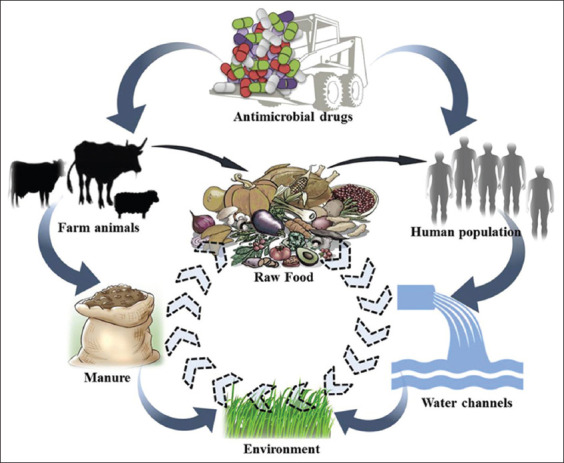
“On the contrary, direct interaction occurs when the residues accumulated in water and soil through manure (containing antibiotic residues from animals) or human excretions (containing residues of antibiotics) are found in food (especially in vegetables by watering or contamination with animal feces) [51].”
BackgroundChee‐Sanford, J. C., Mackie, R. I., Koike, S., Krapac, I. G., Lin, Y., Yannarell, A. C., Maxwell, S., & Aminov, R. I. (2009) · Journal of Environmental Quality · doi:10.2134/jeq2008.0128 · Cited by 830 · cited 1×
“Most definitely, it is estimated that approximately 75% of antibiotics are not absorbed by animals but are excreted as waste [74].”
BackgroundResidues of veterinary antibiotics in manures from feedlot livestock in eight provinces of China
Zhao, L., Dong, Y. H., & Wang, H. (2010) · Science of The Total Environment · doi:10.1016/j.scitotenv.2009.11.014 · Cited by 800 · cited 2×
“Although the latter is unlikely to occur compared with the former, several studies have reported significant amounts of antibiotic residues in manure in soils, concluding that these residues can end up in plant foods [52-56].”
BackgroundResultImportance of antibiotic residues in animal food
Bacanlı, M., & Başaran, N. (2019) · Food and Chemical Toxicology · doi:10.1016/j.fct.2019.01.033 · Cited by 611 · cited 11×
“Confirmatory methods are essentially chromatographic methods (mainly liquid chromatography) coupled to mass spectrometry or ultraviolet (UV) [1].”
BackgroundMethodInfluentialDetermination of Antibiotic Residues in Manure, Soil, and Surface Waters
Christian, T., Schneider, R. J., Färber, H. A., Skutlarek, D., Meyer, M. T., & Goldbach, H. E. (2003) · Acta hydrochimica et hydrobiologica · doi:10.1002/aheh.200390014 · Cited by 537 · cited 2×
“Although the latter is unlikely to occur compared with the former, several studies have reported significant amounts of antibiotic residues in manure in soils, concluding that these residues can end up in plant foods [52-56].”
BackgroundResultFood safety impacts of antimicrobial use and their residues in aquaculture
Okocha, R. C., Olatoye, I. O., & Adedeji, O. B. (2018) · Public Health Reviews · doi:10.1186/s40985-018-0099-2 · Cited by 513 · cited 2×
“Meanwhile, although this situation seems to be under control in the European Union countries and other developed countries [68], the problem of antibiotic residues remains topical with unprecedented danger in developing countries due to the lack of control mechanisms despite the existing legislation.”
BackgroundStevens, D. L., Ma, Y., Salmi, D. B., McIndoo, E., Wallace, R. J., & Bryant, A. E. (2007) · The Journal of Infectious Diseases · doi:10.1086/510396 · Cited by 452 · cited 1×
“It has been established that the exposure of bacteria to low doses of antibiotics is likely to lead to bacterial adaptation, making them more resistant and more virulent [90-94].”
BackgroundFast screening methods to detect antibiotic residues in food samples
Cháfer-Pericás, C., Maquieira, Á., & Puchades, R. (2010) · TrAC Trends in Analytical Chemistry · doi:10.1016/j.trac.2010.06.004 · Cited by 380
Research works printed but not linked: 4
- Pavlov, A., Lashev, L., Vachin, I. and Rusev, V. (2008) Residues of antimicrobial drugs in chicken meat and offals. Trakia J. Sci., 6(1): 23-25.
- Mahatmi, H., da Costa, M. and Puja, I.K. (2019) Residues of antibiotic in chicken meat imported from Brasil and United States of America through quarantine stations in Dili, Timor Laste. IOSR J. Agric. Vet. Sci., 12(6): 39-43.
- Cheong, C.K., Hajeb, P., Jinap, S. and Ismail-Fitry, M.R. (2010) Sulfonamides determination in chicken meat prod- ucts from Malaysia. Int. Food Res. J., 17(4 ): 885-892.
- Kyuchukova, R. (2020) Antibiotic residues and human health hazard-review. Bulg. J. Agric. Sci., 26(3): 664-668.
Cited by
Items 201–300 of 324
Aldorri, S., Jawad, H. A. K., Gehad, A. O. H., Almsarrhad, I. A., Ghashan, F. A., Hussein, K. A., & Mohammed, A.-M. H. (2026) · PERIÓDICO TCHÊ QUÍMICA · doi:10.52571/ptq.v23.n52.2026_06_sind_pgs_61_80.pdf · Cited by 1
Zhang, H., Sun, H., Mao, X., Zhang, X., Shi, M., Wang, Y., & Li, K. (2026) · Analytica Chimica Acta · doi:10.1016/j.aca.2026.345503 · Cited by 1
Alquhaidan, M., Elkhair, N. M., Kitade, Y., & Kandeel, M. (2026) · Bangladesh Journal of Multidisciplinary Scientific Research · doi:10.46281/bjmsr.v11i2.2859 · Cited by 1
Biocontrol for Shrimp Disease: Comprehensive Review and a Bacterial Disease Biocontrol Practice
He, X., He, J., Liu, M., Xu, M., Jiang, J., Liao, M., Wu, C., Han, P., Zhang, L., 翁少萍, et al. (2026) · Reviews in Aquaculture · doi:10.1111/raq.70160 · Cited by 1
Red Meat in Human Evolution, Health, and Disease: From A Blessing to A Curse?
Jaco, J., Banda, K., Varki, A. P., & Gagneux, P. (2026) · The Quarterly Review of Biology · doi:10.1086/741185 · Cited by 2
Arbello, D. D. R., Felice, A. G., Soares, S. D. C., Nora, F. M. D., Zen, F. L., & Richards, N. S. P. D. S. (2026) · Food Bioscience · doi:10.1016/j.fbio.2026.109053 · Cited by 1
Pachura, N., Lewandowska, K., Burek, A., Szumny, A., Tabiś, A., Banaszkiewicz, S., Bania, J., & Kupczyński, R. (2026) · Molecules · doi:10.3390/molecules31101769 · Cited by 1
Cai, Z., Zhang, X., Lang, Y., Gong, Q., Li, Q., Ni, J., Zhang, B., Shentu, X., & Yu, X. (2026) · Food Chemistry · doi:10.1016/j.foodchem.2026.149713 · Cited by 1
Hurtaud‐Pessel, D., Couëdor, P., Hawari, K. E., & Verdon, E. (2026) · Journal of Chromatography A · doi:10.1016/j.chroma.2026.467411 · Cited by 1
Nazim, T., Smułka, A., Ossowski, T., & Cegłowski, M. (2026) · Scientific Reports · doi:10.1038/s41598-026-56249-3 · Cited by 1
Antibiotics: From the golden age of miracle drugs to the post-antibiotic era and beyond
Hou, L., Liu, C., Zhang, W., He, J., Zou, H., Wang, Y., Fang, Z., & Xie, M. (2026) · Journal of Hazardous Materials Advances · doi:10.1016/j.hazadv.2026.101453 · Cited by 1
Seojono, D., Soetriono, S., Zahrosa, D. B., Maharani, A. D., Amam, A., & Anggriawan, R. (2026) · Open Veterinary Journal · doi:10.5455/ovj.2026.v16.i8.66 · Cited by 1
Amount, sources, and methods of identifying tetracycline in eggs: A systematic review
Mohamadi, B., Akbari, N., Miri, P., Shokri, S., Bekheir, S. A., & Sadighara, P. (2026) · Measurement Food · doi:10.1016/j.meafoo.2026.100317 · Cited by 1
Yu, Z., Ding, Q.-W., Hao, Q., Yao, Y., Ran, C., Yang, Y.-L., Zhang, Z., & Zhou, Z.-G. (2026) · Journal of Nutrition · doi:10.1016/j.tjnut.2026.101841 · Cited by 1
Antimicrobial Residues and Food of Animal Origin
(2023) · International Journal of Agriculture and Biosciences · doi:10.47278/book.oht/2023.34 · Cited by 1
Assessing Health Risks Associated with Antibiotic Residues in Armenian Honey
Pipoyan, D., Chirkova, V., & Beglaryan, M. (2023) · AgriScience and Technology · doi:10.52276/25792822-2023.2-198 · Cited by 1
Madera, K. S., Durango, L. G. C., Martínez, O. I., da Silva, M. F. D. G. F., Fernandes, J. B., & Forim, M. R. (2024) · Journal of the Brazilian Chemical Society · doi:10.21577/0103-5053.20230183 · Cited by 2
Kaur, J., & Bhalla, A. (2024) · Elsevier eBooks · doi:10.1016/b978-0-443-16164-3.00014-5 · Cited by 1
Using of immunochromatographic analysis to determine antibiotics in milk
Jangulova, A. N., Akanova, Z. Z., & Bulashev, A. K. (2024) · HERALD OF SCIENCE OF S SEIFULLIN KAZAKH AGRO TECHNICAL RESEARCH UNIVERSITY Veterinary sciences · doi:10.51452/kazatuvc.2024.2(006).1713 · Cited by 1
Rezidue antibiotika u neciljanoj hrani za životinje - razvoj osjetljive LC-MS/MS metodologije
Varenina, I., Bilandžić, N., Kos, B., Varga, I., Sedak, M., Kolanović, B. S., Čalopek, B., & Đokić, M. (2024) · Veterinarska stanica · doi:10.46419/vs.56.2.10 · Cited by 1
Determination of antibiotic residues in pork meat from Northeast Mexico by UPLC-MS
Paz-González, A. D., Martínez-Vázquez, A. V., Ortíz-Pérez, E., Ramírez-Martínez, C., Lara-Ramirez, E. E., Juárez-Rendón, K. J., Bocanegra‐García, V., Vázquez, K., & Rivera, G. (2024) · CyTA - Journal of Food · doi:10.1080/19476337.2024.2413950 · Cited by 2
“…induce bacterial resistance and can cause effects such as carcinogenicity, teratogenicity, allergies, mutations, bone marrow toxicity, or reproductive disorders in animals and humans (Arsène et al., 2022; Ghimpețeanu et al., 2022; Kyuchukova, 2020; Penagos-Tabares et al., 2023; Rana et al., 2019).”
Surveillance of Drug Residue Profiles in Gallus gallus domesticus (Silkie Chickens) in Taiwan
Ke, C., Chen, J., & Lin, C. (2024) · Animals · doi:10.3390/ani14233529 · Cited by 1
“The residues of these drugs can remain in poultry meat, leading to potential health risks for consumers, including allergic reactions and the development of antimicrobial resistance [4,5].”
Hawas, M. R., & Al-Samarai, F. R. (2025) · IRAQI JOURNAL OF AGRICULTURAL SCIENCES · doi:10.36103/a5sj0x64 · Cited by 1
Hansen, T. V. A., & Nielsen, J. N. (2025) · Preventive Veterinary Medicine · doi:10.1016/j.prevetmed.2025.106602 · Cited by 1
Negi, A., Yadav, B. G., Aakanksha, A., Kuo, C.-W., Hazam, P. K., Lin, W., Teh, O.-K., & Chen, J. (2025) · Innovative Food Science & Emerging Technologies · doi:10.1016/j.ifset.2025.104107 · Cited by 1
Javid, T., Sania, Pervaiz, A., Assiri, M. A., Khan, Z. A., & Shahzad, S. A. (2025) · Spectrochimica Acta Part A Molecular and Biomolecular Spectroscopy · doi:10.1016/j.saa.2025.126633 · Cited by 1
Ong, M. T. Y. M., Santos, C. C., & Soriano, A. P. (2025) · ARSHI Veterinary Letters · doi:10.29244/avl.9.2.31-32 · Cited by 1
Mi, K., Enomoto, H., Baynes, R. E., & Lin, Z. (2026) · Toxicological Sciences · doi:10.1093/toxsci/kfag042 · Cited by 1
Antimicrobial Residues in Foods
Menkem, E. Z. (2023) · Elsevier eBooks · doi:10.1016/b978-0-12-822521-9.00195-7
Lazuardi, M., Hestianah, E. P., & Restiadi, T. I. (2023) · Veterinary World · doi:10.14202/vetworld.2023.1252-1259
“A total of 5 g of carcass samples using the preparation technique described above basically uses a method that has been developed to test for tetracycline residues in chicken carcasses [5, 16, 23, 24].”
MethodAraya, A. V., Estrada-König, S., Chaves, A., Rivera-Castillo, J., Chaverri, F., Gutiérrez-Espeleta, G., & Blanco‐Peña, K. (2023) · Biocenosis · doi:10.22458/rb.v34i1.4823
Colorimetric detection of norfloxacin and ceftazidime by modified materials
Hongtanee, L. (2022) · Chula Digiverse · doi:10.58837/chula.the.2022.72
Lazuardi, M., Selvaraja, M., Jasmine, K., & Lim, V. (2023) · F1000Research · doi:10.12688/f1000research.133489.1
Karim, N., & Al‐Asadi, M. H. (2023) · University of Thi-Qar Journal of agricultural research · doi:10.54174/utjagr.v12i2.278
Lazuardi, M., Selvaraja, M., Jasmine, K., & Lim, V. (2023) · F1000Research · doi:10.12688/f1000research.133489.3
Lazuardi, M., Selvaraja, M., Jasmine, K., & Lim, V. (2023) · F1000Research · doi:10.12688/f1000research.133489.4
Bucuresti, U. S. H., Belous, M., Mihaiu, M., Cluj-Napoca, U., Dan, S. D., Cluj-Napoca, U., Tăbăran, A., & Cluj-Napoca, U. (2023) · Lucrări Ştiinţifice - Medicină Veterinară, Universitatea de Ştiinţe Agricole şi Medicină Veterinară "Ion Ionescu de la Brad" Iaşi · doi:10.61900/spjvs.2023.02.06
Lazuardi, M., Selvaraja, M., Jasmine, K., & Lim, V. (2024) · F1000Research · doi:10.12688/f1000research.133489.5
Kabdullina, Z., Konuspayeva, G. S., Utemuratova, D., Akhmetsadykov, N., & Amutova, F. (2024) · BIO Web of Conferences · doi:10.1051/bioconf/202410002016
“In order to prevent unwanted exposure, it should be lower or equal to the Maximum Residue Limit (MRL), which is a legal unit for the maximum accepted quantity of veterinary drugs in food products [3].”
BackgroundAntibiotics Used in Food Animals: A review
Al_Ward, M. A., Hussein, M. A., Hassan, W. A., Jawad, A. A., Hamid, D. M., Shaher, R. F., Jaafar, M. R., & Safir, N. H. (2024) · Al-Salam Journal for Medical Science · doi:10.55145/ajbms.2024.03.02.02
“Harmful Impact of Antibiotic Residues in Food [30]. β-lactams are recognized as antibiotics with lower toxicity.”
BackgroundNesterenko, I. S., Hendrickson, O. D., Smirnova, N. I., Eremin, S. A., & Sotnikov, D. V. (2023) · Прикладная биохимия и микробиология · doi:10.31857/s0555109923010051
Determination of Polypeptide Antibiotics in Milk by Simple LLE Technique and LC–MS/MS Analysis
Perin, M. (2024) · Methods and protocols in food science · doi:10.1007/978-1-0716-3806-4_10
Lazuardi, M., Selvaraja, M., Jasmine, K., & Lim, V. (2024) · F1000Research · doi:10.12688/f1000research.133489.6
Nanozyme-based detection of toxins, foodborne pathogens, antibiotics, and pesticides in food samples
Gelen, S. S., Mengulluoglu, U., Koru, Z. E., Kilic, N. M., & Odaci, D. (2024) · Elsevier eBooks · doi:10.1016/b978-0-443-13788-4.00008-x
Nanozymes based detection of antibiotics in water sources
Zeybekler, S. E. (2024) · Elsevier eBooks · doi:10.1016/b978-0-443-13788-4.00018-2
The Potential of Essential Oils as Antiviral, Antioxidant and Immunomodulatory Agent
(2024) · International Journal of Veterinary Science · doi:10.47278/book.cam/2024.291
Nguyen, T. X. Q., Cao, H., La, D. D., & Dang, T. D. (2024) · Engineering and Technology For Sustainable Development · doi:10.51316/jst.177.etsd.2024.34.4.6
“One of the changeable causes is the consumption of foods containing antibiotic residue exceeding the allowable level [2].”
BackgroundAbdulkhuder, K. A., & AL-Yassari, A. K. S. (2024) · Journal of Animal Health and Production · doi:10.17582/journal.jahp/2024/12.s1.40.44
Valdes, C. E. M., Urquilla-Ortiz, L. N., & Castillo‐Domínguez, A. (2024) · Tropical Aquaculture · doi:10.19136/ta.a2n1.5735
Hidden Threats: Antibiotic Residues in Animal-Based Foods and the Risk of Antimicrobial Resistance
Morad, S. A. F. (2024) · SVU- International Journal of Veterinary Sciences · doi:10.21608/svu.2024.400579
Fernández, L. Á. (2024) · Buleria (Universidad de León) · doi:10.18002/10612/23677
Gil‐Ramírez, A., & Romero, C. D. (2025) · Elsevier eBooks · doi:10.1016/b978-0-443-13959-8.00001-6
Residue and Human Risk: A Reassessment of Aminoglycoside Residues in Edible Tissues
Tanin, F. A. (2025) · Journal of Natural Science Review · doi:10.62810/jnsr.v3i1.187
“The presence of these residues can lead to various issues in humans (Arsène et al., 2022).”
Al-Hussany, A. N., & Kadhim, M. J. (2025) · Sarhad Journal of Agriculture · doi:10.17582/journal.sja/2025/41.2.817.825 · Cited by 2
Microbial pathogens, toxins, and heavy metals and its impact on consumer health
Anjaria, P. A., Asediya, V., Nayak, J. B., Chaudhary, J. H., & Brahmbhatt, M. N. (2025) · Elsevier eBooks · doi:10.1016/b978-0-443-24820-7.00005-5
Dakhil, M. Y., & Kadhim, M. J. (2025) · Sarhad Journal of Agriculture · doi:10.17582/journal.sja/2025/41.2.860.866
Canine olfactory detection of florfenicol residues in goat milk: a pilot study
Clapham, M. O., McElroy, D., Mercer, M. A., Kass, P. H., & Tell, L. A. (2025) · Frontiers in Veterinary Science · doi:10.3389/fvets.2025.1579933
Yanestria, S. M., Tyasningsih, W., Effendi, M. H., Khairullah, A. R., & Ugbo, E. N. (2025) · Asian Journal of Dairy and Food Research · doi:10.18805/ajdfr.drf-473 · Cited by 1
Zhang, L., Guo, M., Ma, X., Wang, W. J., Ma, W., Liu, Y., Wei, J., & Su, Z. (2025) · Foods · doi:10.3390/foods14162850
“Antibiotics are also the primary means of treating Salmonella infections in animals [7,8].”
A Study of some quality indicators and effect of freezing on antibiotic residue in chicken meat
(2025) · Egyptian Journal of Animal Health · doi:10.21608/ejah.2025.448563
Toxicologia na cadeia de produção industrial e seus impactos no setor de alimentos.
(2025) · Synapse Editora eBooks · doi:10.63951/synapse978-65-88890-55-4
Pereira, A., Amaral, F., Coppo, M. J. C., Bailey, K. E., Ting, S., Gilkerson, J. R., Browning, G. F., Jong, J. B. D. C., & Toribio, J.-A. L. M. L. (2025) · Frontiers in Cellular and Infection Microbiology · doi:10.3389/fcimb.2025.1569037
Guan, M., Zhang, T.-N., Lu, C., Zhou, J.-X., Yang, R.-W., Dong, X.-M., Zhang, C., Wang, Q., Zhao, W., Zhang, Y., et al. (2025) · Veterinary Sciences · doi:10.3390/vetsci12100978
Tamzil, M. H., Depamede, S. N., & Septian, I. G. N. (2025) · Journal of Animal Health and Production · doi:10.17582/journal.jahp/2025/13.4.1209.1215
Soil as a source and sink for antimicrobial resistance
Solaiman, Z., Bolan, S., Sharma, S., Mukherjee, S., Mathew, S., Thakur, R., Bhargava, P. C., Hou, R., Singh, E., Chaurasia, D., et al. (2025) · Advances in agronomy · doi:10.1016/bs.agron.2025.10.004
Fu, S., Li, J., You, J., Liu, S., Dong, Q., Fu, Y., Luo, R., Sun, Y., Tian, X., Liu, W., et al. (2024) · Figshare · doi:10.6084/m9.figshare.26755081
Fu, S., Li, J., You, J., Liu, S., Dong, Q., Fu, Y., Luo, R., Sun, Y., Tian, X., Liu, W., et al. (2024) · Figshare · doi:10.6084/m9.figshare.26401825
Fu, S., Li, J., You, J., Liu, S., Dong, Q., Fu, Y., Luo, R., Sun, Y., Tian, X., Liu, W., et al. (2024) · Figshare · doi:10.6084/m9.figshare.26755078
Fu, S., Li, J., You, J., Liu, S., Dong, Q., Fu, Y., Luo, R., Sun, Y., Tian, X., Liu, W., et al. (2024) · Figshare · doi:10.6084/m9.figshare.26755075
Fu, S., Li, J., You, J., Liu, S., Dong, Q., Fu, Y., Luo, R., Sun, Y., Tian, X., Liu, W., et al. (2024) · Figshare · doi:10.6084/m9.figshare.26402009
Bedi, M. (2023) · D-Scholarship@Pitt (University of Pittsburgh)
Étude des contaminants du lait de chamelle et du lait de vache consommés en Algérie.
Jedidi, I. (2025) · University of Biskra Theses Repository (University of Biskra)
Bhatt, S., Lishikumar, S., & Chatterjee, S. (2025) · Elsevier eBooks · doi:10.1016/b978-0-443-27622-4.00015-8
Diagnóstico laboratorial em medicina veterinária e perfil de resistência aos antimicrobianos
Martins, C. M. A. (2025) · Portuguese National Funding Agency for Science, Research and Technology (RCAAP Project by FCT)
The presence of antibiotics in food and the consequences for human health
Nicz, D., Mysłek, G., Lis, K., & Kasperczyk, J. (2025) · Annales Academiae Medicae Silesiensis · doi:10.18794/aams/209990 · Cited by 2
“Cephalosporin residues – structurally related to penicillins – may provoke a wide range of adverse effects, from mild eruptions and desquamation to severe conditions such as thrombocytopenia, toxic epidermal necrolysis, and Stevens-Johnson syndrome [8].”
InfluentialPaul, M., & Sanka, P. M. (2025) · Open Journal of Animal Sciences · doi:10.4236/ojas.2026.161006
Kaba, S., Koko, K. B., Zannou-Tchoko, V. J., Konan, B. A., & Datté, J. Y. (2026) · BULGARIAN JOURNAL OF VETERINARY MEDICINE · doi:10.15547/bjvm.2024-0105
Alava-Hidalgo, C. J., & Mejía, R. R. V. (2025) · Revista de Ciencias Agropecuarias ALLPA · doi:10.56124/allpa.v8i16.0132
Tayseer, A.-R., & Ibtisam, E. M. E. (2026) · Archives of Nutrition and Food Science · doi:10.46439/nutrition.3.008
Yan, J., HUANG, J., Peng, S., Man, M., Sun, D., Ping, L. I. U., Lingxin, C. H. E. N., Li, J., & Fan, H. (2026) · Chinese Journal of Chromatography · doi:10.3724/sp.j.1123.2025.06034
Imklin, N., Thanantong, N., Sajapitak, S., & Nasanit, R. (2025) · PHAGE · doi:10.1177/26416549251406398
Zhang, R., Peng, H.-L., Zhang, W., Li, R., Cui, H.-J., & Li, J. (2026) · Veterinary Research Communications · doi:10.1007/s11259-026-11118-2
“Such residues pose public health concerns by promoting antimicrobial resistance, facilitating the spread of resistant bacteria, and inducing adverse effects such as allergies and organ toxicity (Arsène et al. 2022).”
Ye, B., Kang, W., Fu, Q., Qiu, W., Yu, Q., Roduan, M. R. M., Noor, W. S. A. W. M., & Sairi, F. (2026) · BMC Microbiology · doi:10.1186/s12866-026-04894-z
“With the implementation of antibiotic-restriction policies, there is an urgent need for safer and more environmentally sustainable strategies to control Salmonella infections [7].”
Mugabe, N. A., Kussaga, J. B., & Issa-Zacharia, A. (2026) · Frontiers in Animal Science · doi:10.3389/fanim.2026.1746534
Yusha'u, I., Muhammed-Sadiq, H., Jibril, M. A., Ibrahim, A., Kun, H. U., Yahaya, A., Ukamaka, I. A., Zaruwa, M. Z., Nweze, C. C., & Agi, M. A. (2026) · African Journal of Agricultural Science and Food Research · doi:10.62154/ajasfr.2026.022.01011
Chuwatthanakhajorn, S., Wedley, A. L., Watts, A., Slater, R., Green, K., Probert, C. S., Wiriyarat, W., Wigley, P., & Campbell, B. J. (2026) · Probiotics and Antimicrobial Proteins · doi:10.1007/s12602-026-10980-5
Campos, D. R. A., & Ramirez, A. M. C. (2026) · Universidad Peruana Cayetano Heredia Institutional Repository
Chandio, I. G., Baig, J. A., Solangi, I. B., Shaikh, H. I., Khan, L. U., Hussain, S., Perveen, S., Algathami, F. K., & Raza, N. (2026) · RSC Advances · doi:10.1039/d6ra00424e
“9 Therefore, simultaneous monitoring of bene cial biomolecules and hazardous pharmaceutical residues in both environmental and food matrices is crucial for integrated public health protection.”
Rohmatika, A. U., & Ramadhani, F. H. (2026) · Journal of Diverse Medical Research Medicosphere · doi:10.33005/jdiversemedres.v3i3.323
Prevalence of antibiotic residues in red meat across Mogadishu, Somalia
Hersi, M. A., Ahmed, A. B., Mohamed, M. K., Mohamed, A. Y., Mohamed, F. A., Abdullahi, A. R., Abdullahi, A. M., Muhumed, M. H., Osman, S. M., Abdi, A. H., et al. (2026) · BMC Veterinary Research · doi:10.1186/s12917-026-05547-z
Bhatta, N., Rijal, S., Sapkota, R. C., Bastola, S., Joshi, P. R., & Gompo, T. R. (2026) · Veterinary Medicine International · doi:10.1155/vmi/4928582
“Antibiotic residues in food products pose several health risks, even when below MRLs. Chronic exposure has been linked to allergic reactions, disruption of gut microbiota, and increased risk of AMR, which compromises the efectiveness of critical drugs in human medicine [16, 38, 43, 44].”
Shevchenko, P., Бермухаметов, Ж., Gabitova, A. R., Dossova, А., Байменов, Б., Yskak, A., Yermoldina, G., Tomaruk, O., & Rychshanova, R. (2026) · Foods · doi:10.3390/foods15112042
Zhang, Y., Tan, N.-X., Ge, X., Cao, J.-F., Hu, Y., & Chen, J. K. (2026) · Animals · doi:10.3390/ani16121774
“Secondly, this misuse has led to the presence of antibiotic residues in aquatic animal products, posing potential risks to human health [64,65].”
Root uptake and translocation of 14C-sulfadiazine in leaf lettuce
Marizza, T., Pimpinato, R. F., Martins, L. S., de Moraes, N. G., Bordignon, L., & Mendes, K. F. (2026) · Chemosphere · doi:10.1016/j.chemosphere.2026.145007
Mwalusito, K. C., George, J., & Kimera, S. I. (2026) · East African Journal of Science Technology and Innovation · doi:10.37425/d3f2yf11
Metadata
- Authors
- Arsène, M. M. J., Davares, A. K. L., Viktorovna, P. I., Andreevna, S. L., Sarra, S., Khelifi, I., & Sergueïevna, D. M.
- Affiliations
- Peoples' Friendship University of Russia (RU)
- Department of Microbiology and Virology, Institute of Medicine, RUDN University, Moscow, Russia.
- Corresponding author
- Arsène, Mbarga Manga Joseph
- ORCID
- Venue
- Veterinary World
- Publisher
- Veterinary World
- Published
- 2022-03-23
- Volume
- 15
- Issue
- 3
- Pages
- 662-671
- ISSN
- 0972-8988 (ISSN-L)
- 2231-0916
- PMC
- PMC9047141
- OpenAlex
- W4225312570
- Cited by
- 274
- References
- 89
- Citations by year
- 2026: 51 · 2025: 85 · 2024: 84 · 2023: 42 · 2022: 12
- FWCI
- 3.15
- Type
- journal article
- Language
- en
- Open access
- gold
- doi.org
- Licence
- cc-by
- creativecommons.org/licenses/by/4.0/ (vor)
- creativecommons.org/licenses/by/4.0/ (am)
- creativecommons.org/licenses/by/4.0/ (tdm)
- Locations
- Veterinary World (publishedVersion, cc-by)
- PubMed Central (publishedVersion, cc-by)
- PubMed (publishedVersion)
- DOAJ (DOAJ: Directory of Open Access Journals) (submittedVersion, cc-by-sa)
- Funders
- RUDN University
- Topics
- Health Sciences › Medicine › Infectious Diseases › Antibiotic Use and Resistance
- Life Sciences › Agricultural and Biological Sciences › Food Science › Agricultural safety and regulations
- Physical Sciences › Environmental Science › Pollution › Pharmaceutical and Antibiotic Environmental Impacts
- Keywords
- antibiotic residues, food and feed contamination, antibiotic resistance, veterinary antibiotics, growth promoters, consumer health risk, environmental impact, animal health, public health, antibiotic regulation, food safety
About these checks
Registry, retraction, Cites and statistics results are computed, not judged, with one exception: a printed reference that no index lists is read once by a model before it counts as a citation error. Claims are extracted by a model and kept only when their quote appears verbatim in the text; each cited source is then checked, with a model’s help, for whether it says what the claim relies on. Those verdicts can be wrong — read the claim’s quote and the cited source before relying on one.
Statistics and arithmetic are recomputed, not judged.
Confidence bands are shown only for fields calibrated on our annotated test set. None is calibrated yet, so no band is shown.
What counts as a claim ›How we measure confidence ›How we check this ›
Are you an author, or do you see a problem with this page? Request a review
Data sources
Bibliographic data: Semantic Scholar, OpenAlex, Crossref.
Contains information from the Semantic Scholar Academic Graph Datasets, made available under the ODC Attribution License (ODC-BY 1.0).
Semantic Scholar’s data is described in: Kinney, R., et al. (2023). The Semantic Scholar Open Data Platform. arXiv:2301.10140.
