

The public health issue of antibiotic residues in food and feed: Causes, consequences, and potential solutions
Open accessThe DOI matches its Crossref record; 89 of the 89 references it cites were found in a registry or an index.
Abstract
Antibiotics are among the essential veterinary medicine compounds associated with animal feed and food animal production. The use of antibiotics for the treatment of bacterial infections is almost unavoidable, with less need to demonstrate their importance. Although banned as a growth factor for a few years, their use in animals can add residues in foodstuffs, presenting several environmental, technological, animal health, and consumer health risks. With regard to human health risks, antibiotic residues induce and accelerate antibiotic resistance development, promote the transfer of antibiotic-resistant bacteria to humans, cause allergies (penicillin), and induce other severe pathologies, such as cancers (sulfamethazine, oxytetracycline, and furazolidone), anaphylactic shock, nephropathy (gentamicin), bone marrow toxicity, mutagenic effects, and reproductive disorders (chloramphenicol). Antibiotic resistance, which has excessively increased over the years, is one of the adverse consequences of this phenomenon, constituting a severe public health issue, thus requiring the regulation of antibiotics in all areas, including animal breeding. This review discusses the common use of antibiotics in agriculture and antibiotic residues in food/feed. In-depth, we discussed the detection techniques of antibiotic residues, potential consequences on the environment and animal health, the technological transformation processes and impacts on consumer health, and recommendations to mitigate this situation.
Overview
The claims and statistics of this paper haven’t been checked yet.
Free: it reads the open-access text and checks the first 5 claims that cite a source we can check. Create a free account to check every claim.
Integrity signals
Registry
Cites
Statistics
Figures
Verification
Claims the paper makes
The claims and statistics of this paper haven’t been checked yet.
Free: it reads the open-access text and checks the first 5 claims that cite a source we can check. Create a free account to check every claim.
Claims other papers make about this one
Each is checked against this paper’s own text: does it say what the citing paper says it does?
The check wasn’t confident either way, so it gives no verdict — never disputed.
In the citing paper
“A few studies that did not use organic solvents applied sol vents that have been shown to be either toxic or nonbiodegradable, such as a surfactant (sodium dodecyl sulfate) (56) and ionic liquid (1-hexyl-3-methylimidazo lium hexafluorophosphate) (33,37).”
From Evaluating the green credentials and performance of deep eutectic solvents in the extraction of antibiotics and mycotoxins in foods (2024) · cites this paper as [33]
Experimental — accuracy not yet measured
Self-check
Percentages, sums and reported differences re-computed from the paper’s own numbers.
The self-check needs the paper’s full text.
Citations
Cites
Global trends in antimicrobial use in food animals
Van Boeckel, T. P., Brower, C., Gilbert, M., Grenfell, B. T., Levin, S. A., Robinson, T. P., Teillant, A., & Laxminarayan, R. (2015) · Proceedings of the National Academy of Sciences · doi:10.1073/pnas.1503141112 · Cited by 3,973 · cited 3×
“Others are used as growth promoters for improved feed conversion efficiency, carcass quality, and economic production [4].”
BackgroundInfluentialManyi-Loh, C., Mamphweli, S., Meyer, E., & Okoh, A. (2018) · Molecules · doi:10.3390/molecules23040795 · Cited by 1,808
Phillips, I. (2003) · Journal of Antimicrobial Chemotherapy · doi:10.1093/jac/dkg483 · Cited by 1,100 · cited 1×
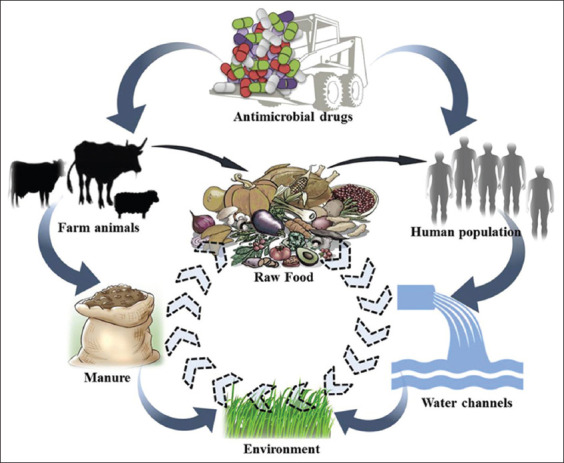
“On the contrary, direct interaction occurs when the residues accumulated in water and soil through manure (containing antibiotic residues from animals) or human excretions (containing residues of antibiotics) are found in food (especially in vegetables by watering or contamination with animal feces) [51].”
BackgroundChee‐Sanford, J. C., Mackie, R. I., Koike, S., Krapac, I. G., Lin, Y., Yannarell, A. C., Maxwell, S., & Aminov, R. I. (2009) · Journal of Environmental Quality · doi:10.2134/jeq2008.0128 · Cited by 830 · cited 1×
“Most definitely, it is estimated that approximately 75% of antibiotics are not absorbed by animals but are excreted as waste [74].”
BackgroundResidues of veterinary antibiotics in manures from feedlot livestock in eight provinces of China
Zhao, L., Dong, Y. H., & Wang, H. (2010) · Science of The Total Environment · doi:10.1016/j.scitotenv.2009.11.014 · Cited by 800 · cited 2×
“Although the latter is unlikely to occur compared with the former, several studies have reported significant amounts of antibiotic residues in manure in soils, concluding that these residues can end up in plant foods [52-56].”
BackgroundResultImportance of antibiotic residues in animal food
Bacanlı, M., & Başaran, N. (2019) · Food and Chemical Toxicology · doi:10.1016/j.fct.2019.01.033 · Cited by 611 · cited 11×
“Confirmatory methods are essentially chromatographic methods (mainly liquid chromatography) coupled to mass spectrometry or ultraviolet (UV) [1].”
BackgroundMethodInfluentialDetermination of Antibiotic Residues in Manure, Soil, and Surface Waters
Christian, T., Schneider, R. J., Färber, H. A., Skutlarek, D., Meyer, M. T., & Goldbach, H. E. (2003) · Acta hydrochimica et hydrobiologica · doi:10.1002/aheh.200390014 · Cited by 537 · cited 2×
“Although the latter is unlikely to occur compared with the former, several studies have reported significant amounts of antibiotic residues in manure in soils, concluding that these residues can end up in plant foods [52-56].”
BackgroundResultFood safety impacts of antimicrobial use and their residues in aquaculture
Okocha, R. C., Olatoye, I. O., & Adedeji, O. B. (2018) · Public Health Reviews · doi:10.1186/s40985-018-0099-2 · Cited by 513 · cited 2×
“Meanwhile, although this situation seems to be under control in the European Union countries and other developed countries [68], the problem of antibiotic residues remains topical with unprecedented danger in developing countries due to the lack of control mechanisms despite the existing legislation.”
BackgroundStevens, D. L., Ma, Y., Salmi, D. B., McIndoo, E., Wallace, R. J., & Bryant, A. E. (2007) · The Journal of Infectious Diseases · doi:10.1086/510396 · Cited by 452 · cited 1×
“It has been established that the exposure of bacteria to low doses of antibiotics is likely to lead to bacterial adaptation, making them more resistant and more virulent [90-94].”
BackgroundFast screening methods to detect antibiotic residues in food samples
Cháfer-Pericás, C., Maquieira, Á., & Puchades, R. (2010) · TrAC Trends in Analytical Chemistry · doi:10.1016/j.trac.2010.06.004 · Cited by 380
Research works printed but not linked: 4
- Pavlov, A., Lashev, L., Vachin, I. and Rusev, V. (2008) Residues of antimicrobial drugs in chicken meat and offals. Trakia J. Sci., 6(1): 23-25.
- Mahatmi, H., da Costa, M. and Puja, I.K. (2019) Residues of antibiotic in chicken meat imported from Brasil and United States of America through quarantine stations in Dili, Timor Laste. IOSR J. Agric. Vet. Sci., 12(6): 39-43.
- Cheong, C.K., Hajeb, P., Jinap, S. and Ismail-Fitry, M.R. (2010) Sulfonamides determination in chicken meat prod- ucts from Malaysia. Int. Food Res. J., 17(4 ): 885-892.
- Kyuchukova, R. (2020) Antibiotic residues and human health hazard-review. Bulg. J. Agric. Sci., 26(3): 664-668.
Cited by
Items 301–324 of 324
مروری بر اساسات تداوی با انتی بیوتیک در حیوانات
سادات, س. ش. (2026) · Journal of Natural Sciences – Kabul University · doi:10.62810/jns.v9i1.550
Si, R., Zhao, H., Pan, S., Tan, Y., & Liu, M. (2026) · Food Policy · doi:10.1016/j.foodpol.2026.103139
The microbiological safety of animal-derived food from organic farms
Edo, G. I., Nwadiolu, R., Orogu, J. O., Periyasami, K., Iwanegbe, I., Oghroro, E. E. A., Owheruo, J. O., Akpoghelie, P. O., Yousif, E., Jikah, A. N., et al. (2026) · Ecological Frontiers · doi:10.3724/j.ecofro-20260112
Benefits of Lactic Acid Bacteria as Alternatives to Antibiotic Growth Factors in Animal Feeding
Ali, Z. A. (2026) · University of Thi-Qar Journal of agricultural research · doi:10.54174/utjagr.9898
Antibiotic Residues in Chicken Products in Africa: A Systematic Review and Meta-Analysis (2000–2025)
Kallu, S. A., Tafere, B. A., Mekonnen, T. S., Molla, M. G., Eshetu, D. M., Yewodiaw, T. K., Wubaye, A. M., Shitu, B. F., Delie, A. M., Haimanot, A. B., et al. (2026) · Journal of Food Protection · doi:10.1016/j.jfp.2026.100859
Вострикова, Н. Л., Khvostov, D. V., Александрович, У. Д., Zakharova, V. A., Ivanov, A. A., & Zherdev, A. V. (2026) · Theory and practice of meat processing · doi:10.21323/2414-438x-2026-11-2-135-145
Application of next-generation sequencing (NGS) for disease diagnosis in the beehive
Mayer, J. (2026) · Frontiers in Bee Science · doi:10.3389/frbee.2026.1862765
Arsène, M. M. J., Carime, B. Z., Kezimana, P., Khelifi, I., Davares, A. K. L., Vasilyeva, E., Павловна, С. Н., Molchanova, M., Zhabo, N., Avdonina, M., et al. (2026) · Veterinary World · doi:10.14202/vetworld.2026.2991-3007
Self-citationAnh, N. T., Le, V. P., Nguyen, T. H., & Varga, C. (2026) · Veterinary Medicine and Science · doi:10.1002/vms3.71109
Kara, H., Çelebi, Ç., Alkaç, Z. K., Şahin, M., Akat, E. M., Korkak, F. A., Şengül, S. A., Bırdane, Y. O., Atık, O., Hişmioğulları, Ş. E., et al. (2026) · Akademisyen Kitabevi eBooks · doi:10.37609/akya.4264
Mohebbi, A., & Fattahi, N. (2026) · Food Additives & Contaminants Part A · doi:10.1080/19440049.2026.2681201
“Two of the most important concerns about the residue of antibiotics in foodstuffs are creating bacterial resistance or inducing hypersensitivity to antibiotics (Arsène et al. 2022; Gianni et al. 2023).”
Marini, C., Lipani, F., Sabia, C., Nicotra, M., Iseppi, R., Biscontini, G., Cerquetella, M., Meschiari, M., Gregorio, G. D., Alagawany, M. M., et al. (2026) · Veterinary Medicine International · doi:10.1155/vmi/4081691
Wang, Y., Hu, Z., Duan, R., Bao, S., Yang, Z., Shi, J., Han, B., Xi, L., Liu, J., Pan, P., et al. (2026) · Analytical Methods · doi:10.1039/d6ay01382a
Seo, Y., Kim, Y., Kim, J., & Choe, N. (2026) · Journal of Preventive Veterinary Medicine · doi:10.13041/jpvm.2026.50.2.101
Alfaifi, S., Alotaibi, N., Alhumaidan, O. A., Alsufyani, A. T., Otto, S. J. G., & Mukhtar, L. E. (2026) · Research Square · doi:10.21203/rs.3.rs-10508679/v1
Okamoto, M., Azechi, C., MATSUSHITA, T., & Kawashima, A. (2026) · Food Hygiene and Safety Science (Shokuhin Eiseigaku Zasshi) · doi:10.3358/shokueishi.67.141
Prebiotics in Prevention of Salmonella shedding in Layer Hens
Alajaji, A. I., & Almuzaini, A. M. (2026) · Kafkas Universitesi Veteriner Fakultesi Dergisi · doi:10.9775/kvfd.2026.37418
“Moreover, infected feed materials are found to be the possible causes of infection [46] .”
Cherkasova, V. V., & Ивановна, К. О. (2026) · The Bulletin of Contemporary Clinical Medicine · doi:10.20969/vskm.2026.19(4).140-148
Grigore, D.-M., & Pogurschi, E. N. (2026) · IntechOpen eBooks · doi:10.5772/intechopen.1017698
Sobre las implicaciones ecológicas y sociales de la resistencia bacteriana a los antimicrobianos
Peña, Y. P., Castillo, V. L., & Vara, J. A. C. (2023) · Revista Cubana de Alimentación y Nutrición
Benefits of tannin added to concentrate diets fed to ruminants and monogastric livestock
Caradus, J. R. (2026) · Frontiers in Animal Science · doi:10.3389/fanim.2026.1905042
Mai, C. Q., Huong, V. T., Thuc, D. H., Tuyên, N. V., Thuan, T. H., Ngo, X.-D., Hoang, V.-T., & Le, A.-T. (2026) · Spectrochimica Acta Part A Molecular and Biomolecular Spectroscopy · doi:10.1016/j.saa.2026.129032
Antimicrobial Activity and In Silico ADME Properties of Tyrosol and Their Derivatives Compounds
Padilla, K. R. M., da Conceição, R. P. V., Siqueira, J. E. D. S., de Oliveira, L. C., Pinheiro, M., Marinho, P. S. B., & Marinho, A. M. D. R. (2026) · ChemistrySelect · doi:10.1002/slct.75002
Antibiotic residues in poultry‐derived foods and associated human health risks: a systematic review
Alves, A. C. N., Guimarães, C. C., Nóbrega, T. C., & de Oliveira, A. T. (2026) · Journal of the Science of Food and Agriculture · doi:10.1002/jsfa.71218
Metadata
- Authors
- Arsène, M. M. J., Davares, A. K. L., Viktorovna, P. I., Andreevna, S. L., Sarra, S., Khelifi, I., & Sergueïevna, D. M.
- Affiliations
- Peoples' Friendship University of Russia (RU)
- Department of Microbiology and Virology, Institute of Medicine, RUDN University, Moscow, Russia.
- Corresponding author
- Arsène, Mbarga Manga Joseph
- ORCID
- Venue
- Veterinary World
- Publisher
- Veterinary World
- Published
- 2022-03-23
- Volume
- 15
- Issue
- 3
- Pages
- 662-671
- ISSN
- 0972-8988 (ISSN-L)
- 2231-0916
- PMC
- PMC9047141
- OpenAlex
- W4225312570
- Cited by
- 274
- References
- 89
- Citations by year
- 2026: 51 · 2025: 85 · 2024: 84 · 2023: 42 · 2022: 12
- FWCI
- 3.15
- Type
- journal article
- Language
- en
- Open access
- gold
- doi.org
- Licence
- cc-by
- creativecommons.org/licenses/by/4.0/ (vor)
- creativecommons.org/licenses/by/4.0/ (am)
- creativecommons.org/licenses/by/4.0/ (tdm)
- Locations
- Veterinary World (publishedVersion, cc-by)
- PubMed Central (publishedVersion, cc-by)
- PubMed (publishedVersion)
- DOAJ (DOAJ: Directory of Open Access Journals) (submittedVersion, cc-by-sa)
- Funders
- RUDN University
- Topics
- Health Sciences › Medicine › Infectious Diseases › Antibiotic Use and Resistance
- Life Sciences › Agricultural and Biological Sciences › Food Science › Agricultural safety and regulations
- Physical Sciences › Environmental Science › Pollution › Pharmaceutical and Antibiotic Environmental Impacts
- Keywords
- antibiotic residues, food and feed contamination, antibiotic resistance, veterinary antibiotics, growth promoters, consumer health risk, environmental impact, animal health, public health, antibiotic regulation, food safety
About these checks
Registry, retraction, Cites and statistics results are computed, not judged, with one exception: a printed reference that no index lists is read once by a model before it counts as a citation error. Claims are extracted by a model and kept only when their quote appears verbatim in the text; each cited source is then checked, with a model’s help, for whether it says what the claim relies on. Those verdicts can be wrong — read the claim’s quote and the cited source before relying on one.
Statistics and arithmetic are recomputed, not judged.
Confidence bands are shown only for fields calibrated on our annotated test set. None is calibrated yet, so no band is shown.
What counts as a claim ›How we measure confidence ›How we check this ›
Are you an author, or do you see a problem with this page? Request a review
Data sources
Bibliographic data: Semantic Scholar, OpenAlex, Crossref.
Contains information from the Semantic Scholar Academic Graph Datasets, made available under the ODC Attribution License (ODC-BY 1.0).
Semantic Scholar’s data is described in: Kinney, R., et al. (2023). The Semantic Scholar Open Data Platform. arXiv:2301.10140.
