

The DOI matches its Crossref record; 38 of the 38 references it cites were found in a registry or an index.
The Effect of Lateral Septum Corticotropin-Releasing Factor Receptor 2 Activation on Anxiety Is Modulated by Stress
Open accessAbstract
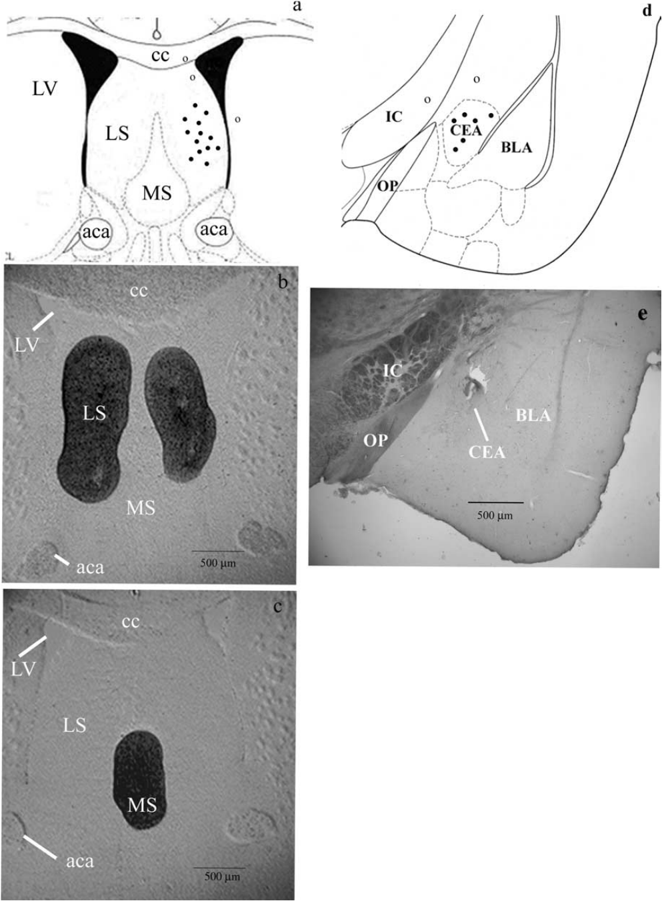
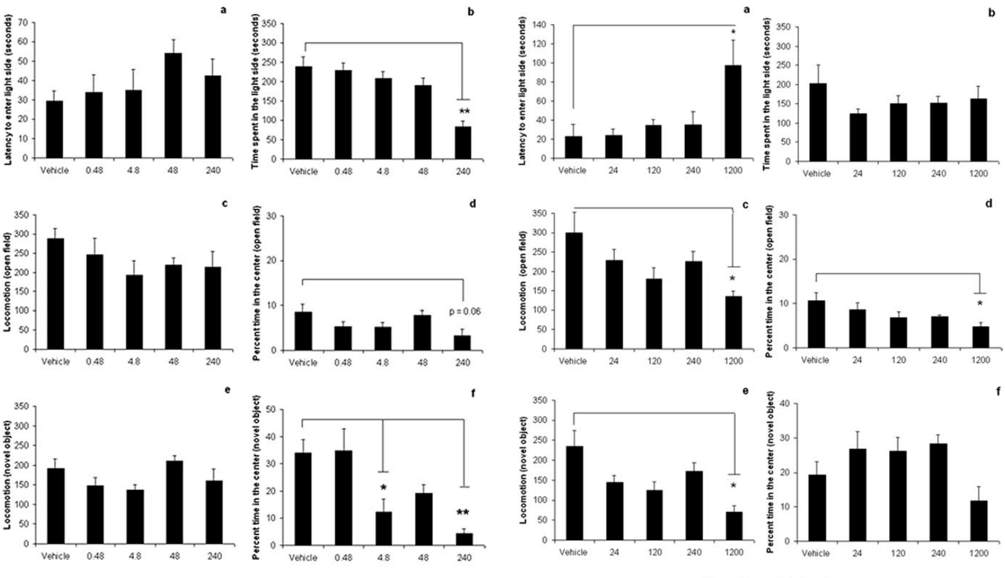
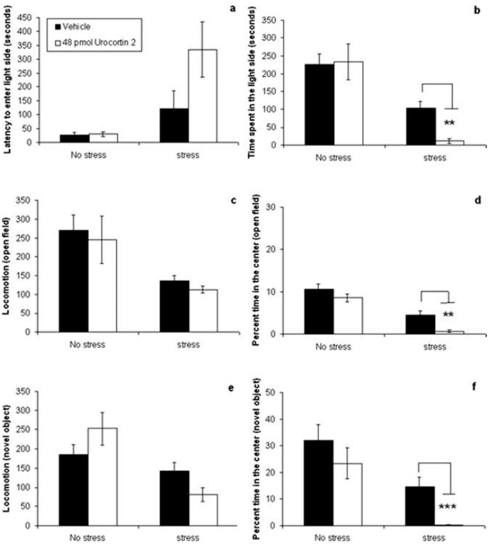
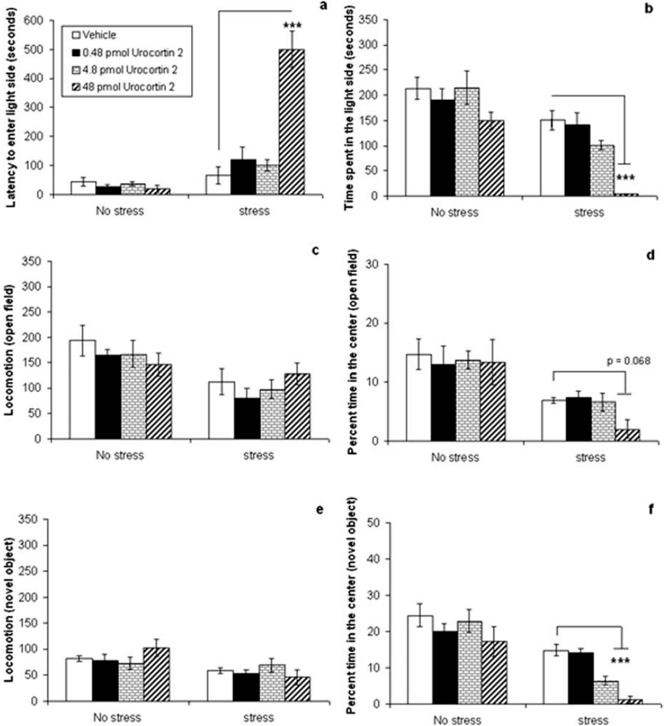
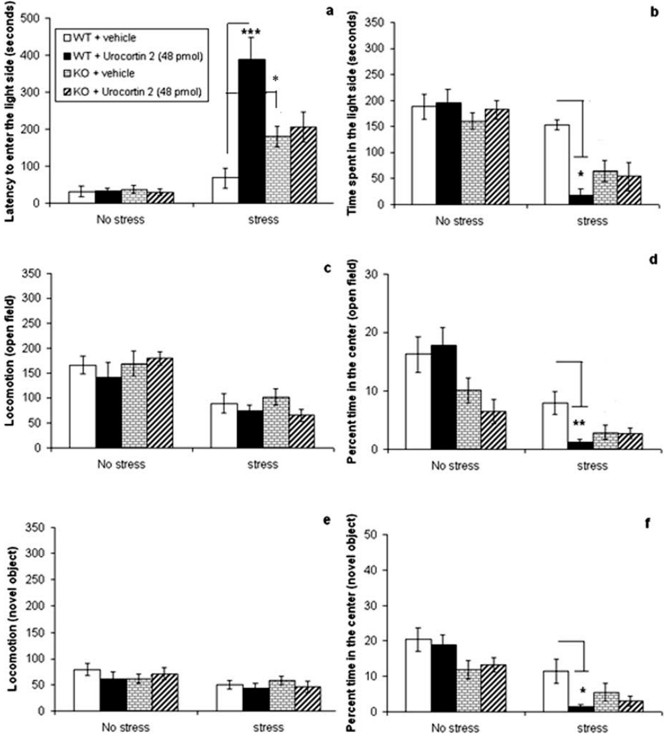
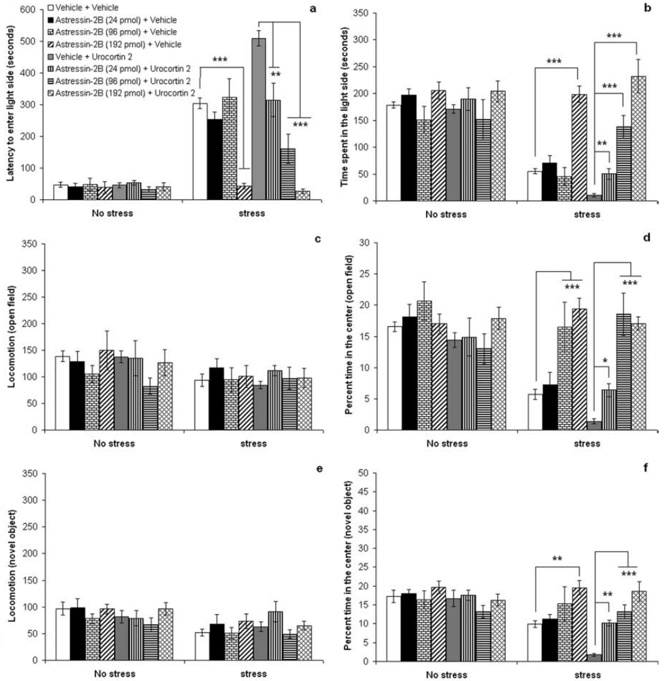
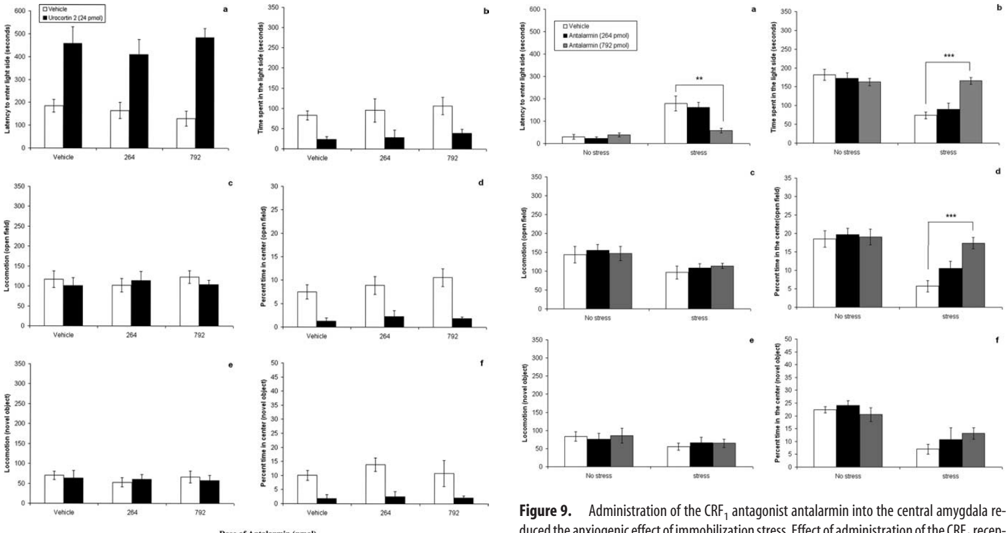
Corticotropin-releasing factor (CRF), a 41 amino acid peptide, mediates endocrine, autonomic, and behavioral responses to stress. Whereas the CRF 1 receptor appears to contribute to anxiety associated with stress, the role of the CRF 2 receptor remains unclear and may depend on drug dose, brain location, or testing environment. Results involving treatments with selective CRF 2 receptor agonists or antagonists and the behavior of CRF 2 receptor knock-out mice suggest both anxiogenic and anxiolytic effects of CRF 2 receptor activation. The present study tested the hypothesis that the effect of CRF 2 receptor activation on anxiety depends on the stress level of the animal. The selective CRF 2 receptor agonist urocortin 2 was infused into the lateral septum of mice under low- or high-stress (30 min of immobilization) testing conditions, and then behavior in the light–dark box, open-field, and novel-object tests was assessed. In the low-stress environment, 240 pmol of septal urocortin 2 increased anxiety, but lower doses (0.48, 4.8, and 48 pmol) did not have consistent effects. However, in the high-stress condition, 48 pmol of septal urocortin 2 significantly increased anxiety compared with control in wild-type but not CRF 2 receptor knock-out mice in the light–dark box. Septal administration of the relatively selective CRF 2 antagonist astressin-2B, but not the CRF 1- selective antagonist antalarmin, blocked the anxiogenic effects of urocortin 2. Urocortin 2 infusion into the medial septum or lateral ventricle did not affect anxiety measures. These results indicate that the effect of septal CRF 2 receptor activation on anxiety is dependent on stress level.
Overview
The claims and statistics of this paper haven’t been checked yet.
Run the check — free, no account needed. It reads the open-access text and checks the sources it cites.
Integrity signals
Registry
Cites
Statistics
Figures
Verification
Claims the paper makes
The claims and statistics of this paper haven’t been checked yet.
Run the check — free, no account needed. It reads the open-access text and checks the sources it cites.
Claims other papers make about this one
Each is checked against this paper’s own text: does it say what the citing paper says it does?
The source backs part of the claim, not all of it — or backs it for a different population, condition or comparison.
In the citing paper
“these tests were chosen as pharmacological experiments showed them to be sensitive to modulation of LS Crfr2+ neuronal function (Henry et al., 2006).”
From Control of Stress-Induced Persistent Anxiety by an Extra-Amygdala Septohypothalamic Circuit (2014) · cites this paper as Henry et al., 2006
Experimental — accuracy not yet measuredThe cited source says what the claim attributes to it.
In the citing paper
“For example, LS injections of agonists of the type 2 corticotropin-releasing factor receptor (Crfr2) have resulted in increased anxiety (Radulovic et al., 1999; Bakshi et al., 2002; Henry et al., 2006).”
From Control of Stress-Induced Persistent Anxiety by an Extra-Amygdala Septohypothalamic Circuit (2014) · cites this paper as Henry et al., 2006
In the citing paper
“Corticotropin releasing factor receptor (CRFR) activation in the lateral septum increases anxiety-related phenotypes96 by way of activation of CRFR type 2–expressing GABAergic projection neurons residing there97.”
From Resolving the neural circuits of anxiety (2015) · cites this paper as [96]
In the citing paper
“Anxiogenic cell populations in the LS were, therefore, inferred to act by providing local inhibition on such anxiolytic output (Henry et al., 2006).”
From Control of Stress-Induced Persistent Anxiety by an Extra-Amygdala Septohypothalamic Circuit (2014) · cites this paper as Henry et al., 2006
Self-check
Percentages, sums and reported differences re-computed from the paper’s own numbers.
The self-check needs the paper’s full text.
Citations
Cites
The Mouse Brain in Stereotaxic Coordinates
Paxinos, G. (2001) · Cited by 12,859
Vale, W., Spiess, J., Rivier, C., & Rivier, J. (1981) · Science · doi:10.1126/science.6267699 · Cited by 3,965
Self-citationVale, W., Spiess, J., RIVIER, C. L., & Rivier, J. (1982) · Obstetrical & Gynecological Survey · doi:10.1097/00006254-198205000-00013 · Cited by 3,904
Self-citationDunn, A. J., & Berridge, C. W. (1990) · Brain Research Reviews · doi:10.1016/0165-0173(90)90012-d · Cited by 1,352
CRF and CRF receptors: role in stress responsivity and other behaviors
Bale, T. L., & Vale, W. W. (2004) · Annual Review of Pharmacology and Toxicology · doi:10.1146/annurev.pharmtox.44.101802.121410 · Cited by 1,270
Self-citationSmith, G. W., Aubry, J.-M., Dellu, F., Contarino, A., Bilezikjian, L. M., Gold, L. H., Chen, R., Marchuk, Y., Hauser, C., Bentley, C. A., et al. (1998) · Neuron · doi:10.1016/s0896-6273(00)80491-2 · Cited by 892
Self-citationBale, T. L., Contarino, A., Smith, G. W., Chan, R. K. W., Gold, L. H., Sawchenko, P. E., Koob, G. F., Vale, W. W., & Lee, K. (2000) · Nature Genetics · doi:10.1038/74263 · Cited by 850
Self-citationCoste, S. C., Kesterson, R. A., Heldwein, K. A., Stevens, S. L., Heard, A. D., Hollis, J. H., Murray, S., Hill, J. K., Pantely, G. A., Hohimer, A. R., et al. (2000) · Nature Genetics · doi:10.1038/74255 · Cited by 588
Regulation of affect by the lateral septum: implications for neuropsychiatry
Sheehan, T. P., Chambers, R. A., & Russell, D. S. (2004) · Brain Research Reviews · doi:10.1016/j.brainresrev.2004.04.009 · Cited by 514
Deletion of Crhr2 reveals an anxiolytic role for corticotropin-releasing hormone receptor-2
Kishimoto, T., Radulović, J., Radulović, M., Lin, C. R., Schrick, C., Hooshmand, F., Hermanson, O., Rosenfeld, M. G., & Spiess, J. (2000) · Nature Genetics · doi:10.1038/74271 · Cited by 502
Research works printed but not linked: 1
- 10.1210/en.141.1.256 · DOI
Cited by
Sorted by citations
Resolving the neural circuits of anxiety
Calhoon, G. G., & Tye, K. M. (2015) · Nature Neuroscience · doi:10.1038/nn.4101 · Cited by 766
The Dysphoric Component of Stress Is Encoded by Activation of the Dynorphin κ-Opioid System
Land, B. B., Bruchas, M. R., Lemos, J. C., Xu, M., Melief, E. J., & Chavkin, C. (2008) · The Journal of Neuroscience · doi:10.1523/jneurosci.4458-07.2008 · Cited by 601
The CRF system, stress, depression and anxiety—insights from human genetic studies
Binder, E. B., & Nemeroff, C. B. (2010) · Molecular Psychiatry · doi:10.1038/mp.2009.141 · Cited by 379
Role of neuropeptides in anxiety, stress, and depression: From animals to humans
Kormos, V., & Gaszner, B. (2013) · Neuropeptides · doi:10.1016/j.npep.2013.10.014 · Cited by 333
Control of Stress-Induced Persistent Anxiety by an Extra-Amygdala Septohypothalamic Circuit
Anthony, T. E., Dee, N., Bernard, A., Lerchner, W., Heintz, N., & Anderson, D. J. (2014) · Cell · doi:10.1016/j.cell.2013.12.040 · Cited by 310
Region-specific roles of the corticotropin-releasing factor–urocortin system in stress
Henckens, M. J. A. G., Deussing, J. M., & Chen, A. (2016) · Nature reviews. Neuroscience · doi:10.1038/nrn.2016.94 · Cited by 248
Orexin, stress, and anxiety/panic states
Johnson, P. L., Molosh, A. I., Fitz, S. D., Truitt, W. A., & Shekhar, A. (2012) · Progress in brain research · doi:10.1016/b978-0-444-59489-1.00009-4 · Cited by 227
Role of CRF Receptor Signaling in Stress Vulnerability, Anxiety, and Depression
Hauger, R. L., Risbrough, V., Oakley, R. H., Olivares‐Reyes, J. A., & Dautzenberg, F. M. (2009) · Annals of the New York Academy of Sciences · doi:10.1111/j.1749-6632.2009.05011.x · Cited by 217
Behavioral effects of neuropeptides in rodent models of depression and anxiety
Rotzinger, S., Lovejoy, D. A., & Tan, L. A. (2010) · Peptides · doi:10.1016/j.peptides.2009.12.015 · Cited by 211
Donner, N. C., & Handa, R. J. (2009) · Neuroscience · doi:10.1016/j.neuroscience.2009.06.046 · Cited by 202
Moussaieff, A., Rimmerman, N., Bregman, T., Straiker, A. J., Felder, C. C., Shoham, S., Kashman, Y., Huang, S. M., Lee, H., Shohami, E., et al. (2008) · The FASEB Journal · doi:10.1096/fj.07-101865 · Cited by 182
The CRF Family of Neuropeptides and their Receptors - Mediators of the Central Stress Response
Dedic, N., Chen, A., & Deussing, J. M. (2017) · Current Molecular Pharmacology · doi:10.2174/1874467210666170302104053 · Cited by 187
Synaptic physiology of central CRH system
Gallagher, J. P., Orozco-Cabal, L. F., Liu, J., & Shinnick‐Gallagher, P. (2008) · European Journal of Pharmacology · doi:10.1016/j.ejphar.2007.11.075 · Cited by 177
Don’t stress about CRF: assessing the translational failures of CRF1antagonists
Spierling, S. R., & Zorrilla, E. P. (2017) · Psychopharmacology · doi:10.1007/s00213-017-4556-2 · Cited by 170
Smith, C. M., Shen, P., Banerjee, A., Bonaventure, P., Ma, S., Bathgate, R. A. D., Sutton, S. W., & Gundlach, A. L. (2010) · The Journal of Comparative Neurology · doi:10.1002/cne.22442 · Cited by 156
Bruijnzeel, A. W., Prado, M., & Isaac, S. K. (2009) · Biological Psychiatry · doi:10.1016/j.biopsych.2009.01.010 · Cited by 132
Zohar, I., & Weinstock, M. (2011) · Journal of Neuroendocrinology · doi:10.1111/j.1365-2826.2011.02117.x · Cited by 109
Bangasser, D. A. (2013) · Biology of Sex Differences · doi:10.1186/2042-6410-4-2 · Cited by 110
Stress-Related Neuropeptides and Addictive Behaviors: Beyond the Usual Suspects
Schank, J. R., Ryabinin, A. E., Giardino, W. J., Ciccocioppo, R., & Heilig, M. A. (2012) · Neuron · doi:10.1016/j.neuron.2012.09.026 · Cited by 106
Bravo, J. A., Dinan, T. G., & Cryan, J. F. (2010) · The International Journal of Neuropsychopharmacology · doi:10.1017/s1461145710000994 · Cited by 106
Blacktop, J. M., Seubert, C., Baker, D. L., Ferda, N., Lee, G., Graf, E. N., & Mantsch, J. R. (2011) · Journal of Neuroscience · doi:10.1523/jneurosci.1393-11.2011 · Cited by 102
Lukkes, J. L., Vuong, S. M., Scholl, J. L., Oliver, H. A., & Forster, G. L. (2009) · Journal of Neuroscience · doi:10.1523/jneurosci.0854-09.2009 · Cited by 96
A triple urocortin knockout mouse model reveals an essential role for urocortins in stress recovery
Neufeld-Cohen, A., Tsoory, M., Evans, A. K., Getselter, D., Gil, S., Lowry, C. A., Vale, W., & Chen, A. (2010) · Proceedings of the National Academy of Sciences · doi:10.1073/pnas.1013761107 · Cited by 96
Self-citationNeurocircuitry for modeling drug effects
Noori, H. R., Spanagel, R., & Hansson, A. C. (2012) · Addiction Biology · doi:10.1111/j.1369-1600.2012.00485.x · Cited by 94
Boyson, C. O., Holly, E. N., Shimamoto, A., Albrechet‐Souza, L., Weiner, L. A., DeBold, J. F., & Miczek, K. A. (2014) · Journal of Neuroscience · doi:10.1523/jneurosci.3942-13.2014 · Cited by 91
Engin, E., & Treit, D. (2008) · Progress in Neuro-Psychopharmacology and Biological Psychiatry · doi:10.1016/j.pnpbp.2008.03.020 · Cited by 90
Bakshi, V. P., Newman, S. M., Smith‐Roe, S. L., Jochman, K. A., & Kalin, N. H. (2007) · Journal of Neuroscience · doi:10.1523/jneurosci.3044-06.2007 · Cited by 86
Wacker, D. W., Wingfield, J., Davis, J. E., & Meddle, S. L. (2010) · The Journal of comparative neurology · doi:10.1002/cne.22426 · Cited by 78
Zhao, Y., Valdez, G. R., Fekete, É. M., Rivier, J., Vale, W. W., Rice, K. C., Weiss, F., & Zorrilla, E. P. (2007) · Journal of Pharmacology and Experimental Therapeutics · doi:10.1124/jpet.107.123208 · Cited by 83
Self-citationHolly, E. N., Boyson, C. O., Montagud‐Romero, S., Stein, D. J., Gobrogge, K. L., DeBold, J. F., & Miczek, K. A. (2016) · Journal of Neuroscience · doi:10.1523/jneurosci.2232-15.2016 · Cited by 73
Fekete, É. M., Zhao, Y., Li, C., Sabino, V., Vale, W. W., & Zorrilla, E. P. (2009) · Neuroscience · doi:10.1016/j.neuroscience.2009.03.078 · Cited by 70
Self-citationAuthement, M. E., Langlois, L. D., Shepard, R. D., Browne, C. A., Lucki, I., Kassis, H., & Nugent, F. S. (2018) · Science Signaling · doi:10.1126/scisignal.aan6480 · Cited by 69
Pan, Y., Hong, Y., Zhang, Q., & Kong, L. (2012) · Psychoneuroendocrinology · doi:10.1016/j.psyneuen.2012.05.007 · Cited by 70
Adamec, R. E., Fougere, J. D., & Risbrough, V. B. (2009) · The International Journal of Neuropsychopharmacology · doi:10.1017/s1461145709990496 · Cited by 69
Lloyd, R. B., & Nemeroff, C. B. (2011) · Current Topics in Medicinal Chemistry · doi:10.2174/1568026611109060609 · Cited by 67
D'Anna‐Hernandez, K., & Gammie, S. C. (2009) · Behavioral Neuroscience · doi:10.1037/a0014987 · Cited by 64
Neufeld-Cohen, A., Evans, A. K., Getselter, D., Spyroglou, A., Hill, A., Gil, S., Tsoory, M., Beuschlein, F., Lowry, C. A., Vale, W., et al. (2009) · Molecular Psychiatry · doi:10.1038/mp.2009.115 · Cited by 57
Self-citationDifferential activation of CRF receptor subtypes removes stress‐induced memory deficit and anxiety
Todorovic, C., Radulović, J., Jahn, O., Radulović, M., Sherrin, T., Hippel, C., & Spiess, J. (2007) · European Journal of Neuroscience · doi:10.1111/j.1460-9568.2007.05592.x · Cited by 55
Sukhareva, E. V. (2021) · Vavilov Journal of Genetics and Breeding · doi:10.18699/vj21.025 · Cited by 55
Ryabinin, A. E., Yoneyama, N., Tanchuck, M. A., Mark, G. P., & Finn, D. A. (2007) · Neuroscience · doi:10.1016/j.neuroscience.2007.11.014 · Cited by 54
Wittmann, G., Füzesi, T., Liposits, Z., Lechan, R. M., & Fekete, C. (2009) · The Journal of Comparative Neurology · doi:10.1002/cne.22180 · Cited by 53
Workman, J. L., Fonken, L. K., Gusfa, J., Kassouf, K. M., & Nelson, R. J. (2011) · Pharmacology Biochemistry and Behavior · doi:10.1016/j.pbb.2011.07.008 · Cited by 54
GABAA receptor signaling in the lateral septum regulates maternal aggression in mice.
Lee, G., & Gammie, S. C. (2009) · Behavioral Neuroscience · doi:10.1037/a0017535 · Cited by 53
Enhanced pelvic responses to stressors in female CRF-overexpressing mice.
Million, M., Wang, L.-X., Stenzel-Poore, M., Coste, S., Yuan, P.-Q., Lamy, C., Rivier, J., Buffington, T., & Taché, Y. (2007) · American Journal of Physiology. Regulatory Integrative and Comparative Physiology · doi:10.1152/ajpregu.00626.2006 · Cited by 56
Bledsoe, A. C., Oliver, K. M., Scholl, J. L., & Forster, G. L. (2011) · Brain Research Bulletin · doi:10.1016/j.brainresbull.2011.03.003 · Cited by 51
Lemos, J. C., Zhang, G., Walsh, T., Kirby, L. G., Akanwa, A. C., Brooks‐Kayal, A. R., & Beck, S. G. (2010) · Neuropsychopharmacology · doi:10.1038/npp.2010.200 · Cited by 53
Robbins, M. T., & Ness, T. J. (2008) · Journal of Pain · doi:10.1016/j.jpain.2008.05.006 · Cited by 50
Gammie, S. C., Seasholtz, A. F., & Stevenson, S. A. (2008) · Neuroscience · doi:10.1016/j.neuroscience.2008.09.026 · Cited by 50
CRF1 and CRF2 Receptors are Required for Potentiated Startle to Contextual but not Discrete Cues
Risbrough, V. B., Geyer, M. A., Hauger, R. L., Coste, S., Stenzel-Poore, M., Wurst, W., & Holsboer, F. (2009) · Neuropsychopharmacology · doi:10.1038/npp.2008.205 · Cited by 49
Recent advances in anxiety disorders: Focus on animal models and pathological mechanisms
Zhao, H., Zhou, M., Liu, Y., Jiang, J., & Wang, Y. (2023) · Animal Models and Experimental Medicine · doi:10.1002/ame2.12360 · Cited by 50
Relations between mechanisms of CNS arousal and mechanisms of stress
Pfaff, D. W., Martin, E. M., & Ribeiro, A. C. D. M. (2007) · Stress · doi:10.1080/10253890701638030 · Cited by 47
Orozco-Cabal, L. F., Liu, J., Pollandt, S., Schmidt, K., Shinnick‐Gallagher, P., & Gallagher, J. P. (2008) · Journal of Neuroscience · doi:10.1523/jneurosci.2666-07.2008 · Cited by 46
Vinzant, N. J., Scholl, J. L., Wu, C.-M., Kindle, T., Koodali, R. T., & Forster, G. L. (2017) · Frontiers in Neuroscience · doi:10.3389/fnins.2017.00608 · Cited by 46
Ohmura, Y., Izumi, T., Yamaguchi, T., Tsutsui‐Kimura, I., Yoshida, T., & Yoshioka, M. (2010) · Neuropsychopharmacology · doi:10.1038/npp.2009.229 · Cited by 46
The Corticotropin Releasing Factor Receptor 1 in Alcohol Use Disorder: Still a Valid Drug Target?
Pomrenze, M. B., Fetterly, T. L., Winder, D. G., & Messing, R. O. (2017) · Alcoholism Clinical and Experimental Research · doi:10.1111/acer.13507 · Cited by 46
Disruption of the CRF2 Receptor Pathway Decreases the Somatic Expression of Opiate Withdrawal
Papaleo, F., Ghozland, S. G., Ingallinesi, M., Roberts, A. J., Koob, G. F., & Contarino, A. (2008) · Neuropsychopharmacology · doi:10.1038/npp.2008.8 · Cited by 46
A Microglia Sublineage Protects from Sex-Linked Anxiety Symptoms and Obsessive Compulsion
Tränkner, D., Boulet, A. M., Peden, E. M., Focht, R. J., Deren, D. A. V., & Capecchi, M. R. (2019) · Cell Reports · doi:10.1016/j.celrep.2019.09.045 · Cited by 43
Neufeld-Cohen, A., Kelly, P. A. T., Paul, E. D., Carter, R. N., Skinner, E. M., Olverman, H. J., Vaughan, J. M., Issler, O., Kuperman, Y., Lowry, C. A., et al. (2012) · Biological Psychiatry · doi:10.1016/j.biopsych.2012.05.005 · Cited by 41
Self-citationPohorecky, L. A. (2008) · Physiology & Behavior · doi:10.1016/j.physbeh.2008.02.010 · Cited by 39
Giardino, W. J., Cocking, D. L., Kaur, S., Cunningham, C. L., & Ryabinin, A. E. (2011) · PLoS ONE · doi:10.1371/journal.pone.0026997 · Cited by 39
Cordero, M. I., Just, N., Poirier, G. L., & Sandi, C. (2016) · European Neuropsychopharmacology · doi:10.1016/j.euroneuro.2015.11.017 · Cited by 38
Russell, A. L., Handa, R. J., & Wu, T. J. (2018) · Neuroscience · doi:10.1016/j.neuroscience.2018.09.014 · Cited by 38
Malta, M. B., Martins, J., Novaes, L. S., dos Santos, N. B., Sita, L. V., Camarini, R., Scavone, C., Bittencourt, J. C., & Munhoz, C. D. (2021) · Molecular Neurobiology · doi:10.1007/s12035-021-02470-2 · Cited by 37
Guo, S.-S., Gong, Y., Zhang, T., Su, X.-Y., Wu, Y., Yan, Y.-X., Cao, Y., Song, X.-L., Xie, J.-C., Wu, D., et al. (2024) · Science Advances · doi:10.1126/sciadv.adn6272 · Cited by 36
Martin, J., & Timofeeva, E. (2010) · American Journal of Physiology-Regulatory, Integrative and Comparative Physiology · doi:10.1152/ajpregu.00371.2009 · Cited by 35
Teleocortin: A Novel Member of the CRH Family in Teleost Fish
Hosono, K., Kikuchi, Y., Miyanishi, H., Hiraki‐Kajiyama, T., Takeuchi, A., Nakasone, K., Maehiro, S., & Okubo, K. (2015) · Endocrinology · doi:10.1210/en.2015-1042 · Cited by 36
Alsiö, J., Roman, E., Olszewski, P. K., Jonsson, P., Fredriksson, R., Levine, A. S., Meyerson, B. J., Hulting, A., Lindblom, J., & Schiöth, H. B. (2008) · Genes Brain & Behavior · doi:10.1111/j.1601-183x.2008.00464.x · Cited by 38
Horii‐Hayashi, N., Nomoto, K., Endo, N., Yamanaka, A., Kikusui, T., & Nishi, M. (2020) · iScience · doi:10.1016/j.isci.2020.101908 · Cited by 35
Pentkowski, N. S., Litvin, Y., Blanchard, D. C., Vasconcellos, A., King, L. B., & Blanchard, R. J. (2009) · Hormones and Behavior · doi:10.1016/j.yhbeh.2009.02.007 · Cited by 34
Gao, Y., & Rodríguez, L. V. (2022) · Frontiers in Physiology · doi:10.3389/fphys.2022.818993 · Cited by 35
Issler, O., Carter, R. N., Paul, E. D., Kelly, P. A., Olverman, H. J., Neufeld-Cohen, A., Kuperman, Y., Lowry, C. A., Seckl, J. R., Chen, A., et al. (2014) · Biology of Mood & Anxiety Disorders · doi:10.1186/2045-5380-4-1 · Cited by 32
Corticotropin-releasing factor receptor densities vary with photoperiod and sociality
Beery, A. K., Vahaba, D. M., & Grunberg, D. (2014) · Hormones and Behavior · doi:10.1016/j.yhbeh.2014.08.014 · Cited by 30
Kiba, T. (2006) · Digestion · doi:10.1159/000100512 · Cited by 31
Domin, H., & Śmiałowska, M. (2024) · Neuroscience & Biobehavioral Reviews · doi:10.1016/j.neubiorev.2024.105748 · Cited by 31
Urocortin 2 modulates aspects of social behaviour in mice
Breu, J., Touma, C., Hölter, S. M., Knapman, A., Wurst, W., & Deussing, J. M. (2012) · Behavioural Brain Research · doi:10.1016/j.bbr.2012.05.031 · Cited by 30
Central CRF system perturbation in an Alzheimer's disease knockin mouse model
Guo, Q., Zheng, H., & Justice, N. J. (2012) · Neurobiology of Aging · doi:10.1016/j.neurobiolaging.2012.01.002 · Cited by 31
Effects of Xiaoyaosan on Stress‐Induced Anxiety‐Like Behavior in Rats: Involvement of CRF1 Receptor
Jiang, Y.-M., Li, X.-J., Meng, Z.-Z., Liu, Y., Zhao, H., Li, N., Yan, Z., Ma, Q., Zhang, H., & Chen, J. (2016) · Evidence-based Complementary and Alternative Medicine · doi:10.1155/2016/1238426 · Cited by 30
Lee, G., & Gammie, S. C. (2010) · Behavioural Brain Research · doi:10.1016/j.bbr.2010.05.001 · Cited by 29
Weera, M. M., Agoglia, A. E., Douglass, E. A., Jiang, Z., Rajamanickam, S., Shackett, R. S., Herman, M. A., Justice, N. J., & Gilpin, N. W. (2022) · eLife · doi:10.7554/elife.67822 · Cited by 28
Glubb, D. M., McHugh, P., Deng, X., Joyce, P. R., & Kennedy, M. A. (2009) · The Pharmacogenomics Journal · doi:10.1038/tpj.2009.33 · Cited by 29
A circuit of COCH neurons encodes social-stress-induced anxiety via MTF1 activation of Cacna1h
Jing, W., Zhang, T., Liu, J., Huang, X., Yu, Q., Yu, H., Zhang, Q., Li, H., Deng, M., Zhu, L., et al. (2021) · Cell Reports · doi:10.1016/j.celrep.2021.110177 · Cited by 25
Altered Dopamine Signaling in Naturally Occurring Maternal Neglect
Gammie, S. C., Edelmann, M. N., Mandel‐Brehm, C., D'Anna‐Hernandez, K., Auger, A. P., & Stevenson, S. A. (2008) · PLoS ONE · doi:10.1371/journal.pone.0001974 · Cited by 27
The role of the lateral septum in neuropsychiatric disease
Patel, H. (2022) · Journal of Neuroscience Research · doi:10.1002/jnr.25052 · Cited by 28
Lateral septum modulates cortical state to tune responsivity to threat stimuli
Hashimoto, M., Brito, S. I., Venner, A., Pasqualini, A. L., Yang, T. L., Allen, D. F., Stankowicz, S. J., Fuller, P. M., & Anthony, T. E. (2022) · Cell Reports · doi:10.1016/j.celrep.2022.111521 · Cited by 23
Minireview: CRF and Wylie Vale: A Story of 41 Amino Acids and a Texan with Grit
Bale, T. L., & Chen, A. (2012) · Endocrinology · doi:10.1210/en.2012-1273 · Cited by 23
Anxiolytic-Like Effects of Antisauvagine-30 in Mice Are Not Mediated by CRF2 Receptors
Zorrilla, E. P., Roberts, A. J., Rivier, J., & Koob, G. F. (2013) · PLoS ONE · doi:10.1371/journal.pone.0063942 · Cited by 22
Wang, H., Spiess, J., Wong, P. T. ‐., & Zhu, Y. Z. (2011) · Pharmacology Biochemistry and Behavior · doi:10.1016/j.pbb.2011.01.022 · Cited by 21
Coen, C. W., Κalamatianos, T., Oosthuizen, M. K., Poorun, R., Faulkes, C. G., & Bennett, N. C. (2015) · The Journal of Comparative Neurology · doi:10.1002/cne.23796 · Cited by 21
Scholl, J. L., Vuong, S. M., & Forster, G. L. (2010) · European Journal of Pharmacology · doi:10.1016/j.ejphar.2010.07.008 · Cited by 20
Li, H., Sung, H. H., & Lau, C. G. (2022) · Pharmaceutics · doi:10.3390/pharmaceutics14102253 · Cited by 18
The localization of brain sites of anxiogenic-like effects of urocortin-2
Skórzewska, A., Bidziński, A., Lehner, M., Turzyńska, D., Sobolewska, A., Wisłowska-Stanek, A., Maciejak, P., Szyndler, J., & Płaźnik, A. (2010) · Neuropeptides · doi:10.1016/j.npep.2010.11.003 · Cited by 19
Role of medial hypothalamic orexin system in panic, phobia and hypertension
de Abreu, A. R. R., Molosh, A. I., Johnson, P. L., & Shekhar, A. (2018) · Brain Research · doi:10.1016/j.brainres.2018.09.010 · Cited by 20
Effects of dorsal periaqueductal gray CRF1- and CRF2-receptor stimulation in animal models of panic
Sergio, T. D. O., Spiacci, A., & Zangrossi, H. (2014) · Psychoneuroendocrinology · doi:10.1016/j.psyneuen.2014.07.026 · Cited by 18
Skórzewska, A., Lehner, M., Hamed, A., Wisłowska-Stanek, A., Turzyńska, D., Sobolewska, A., & Płaźnik, A. (2011) · Behavioural Brain Research · doi:10.1016/j.bbr.2011.02.036 · Cited by 17
Chohan, T. W., Nguyen, A. P., Todd, S. M., Bennett, M. R., Callaghan, P. D., & Arnold, J. C. (2014) · Frontiers in Behavioral Neuroscience · doi:10.3389/fnbeh.2014.00298 · Cited by 17
Linsambarth, S., Moraga‐Amaro, R., Quintana-Donoso, D., Rojas, S., & Stehberg, J. (2017) · InTech eBooks · doi:10.5772/intechopen.68618 · Cited by 17
Belo-Silva, A. E., Silva, N. K. D. G. T., Marianno, P., Costa, G. D. A., da Rovare, V. P., Bailey, A., Munhoz, C. D., Novaes, L. S., & Camarini, R. (2024) · Hormones and Behavior · doi:10.1016/j.yhbeh.2024.105538 · Cited by 15
Coen, C. W., Bennett, N. C., Holmes, M. M., & Faulkes, C. G. (2021) · Advances in experimental medicine and biology · doi:10.1007/978-3-030-65943-1_3 · Cited by 16
Alves, S. W. E., Portela, N. C., Silva, M. S. C. F., Céspedes, I. C., Bittencourt, J. C., & Viana, M. D. B. (2016) · Behavioural Brain Research · doi:10.1016/j.bbr.2016.03.013 · Cited by 14
Neuropeptide Regulation of Stress-Induced Behavior
Sztainberg, Y., & Chen, A. (2012) · Elsevier eBooks · doi:10.1016/b978-0-12-375097-6.10015-0 · Cited by 12
Metadata
- Authors
- Henry, B., Vale, W., & Markou, A.
- Affiliations
- Scripps Research Institute (US)
- Salk Institute for Biological Studies (US)
- Corresponding author
- Markou, Athina
- ORCID
- Vale, Wylie
- Venue
- The Journal of Neuroscience
- Publisher
- Society for Neuroscience
- Published
- 2006-09-06
- Volume
- 26
- Issue
- 36
- Pages
- 9142-9152
- ISSN
- 0270-6474 (ISSN-L)
- 1529-2401
- PMC
- PMC6674509
- OpenAlex
- W1996743601
- Cited by
- 147
- References
- 38
- Citations by year
- 2026: 5 · 2025: 3 · 2024: 7 · 2023: 2 · 2022: 5 · 2021: 8 · 2020: 2 · 2019: 2 · 2018: 3 · 2017: 8 · 2016: 7 · 2015: 5 · 2014: 11 · 2013: 3 · 2012: 10
- FWCI
- 5.57
- Type
- journal article
- Language
- en
- Open access
- hybrid
- doi.org
- Licence
- Locations
- Journal of Neuroscience (publishedVersion, cc-by-nc-sa)
- PubMed Central (publishedVersion)
- PubMed (publishedVersion)
- Funders
- National Institutes of Health
- National Institute of Mental Health (U01 MH 69062, R01MH62527, U01MH069062, R01MH062527)
- National Institute of Diabetes and Digestive and Kidney Diseases (DK 26741, P01DK026741)
- Topics
- Life Sciences › Neuroscience › Cellular and Molecular Neuroscience › Neuropeptides and Animal Physiology
- Life Sciences › Neuroscience › Behavioral Neuroscience › Stress Responses and Cortisol
- Life Sciences › Neuroscience › Cellular and Molecular Neuroscience › Neurotransmitter Receptor Influence on Behavior
- Keywords
- corticotropin-releasing factor, CRF2 receptor, urocortin 2, antalarmin, lateral septum, anxiety, stress levels, restraint stress, CRF1 receptor, medial septum, dose dependence
- MeSH terms
- CRF Receptor, Type 1, Animals, Anxiety, Corticotropin-Releasing Hormone, Dose-Response Relationship, Drug, Injections, Intraventricular, Male, Mice, Inbred ICR, Stress, Psychological, Receptors, Corticotropin-Releasing Hormone, Mice, Knockout, Septum of Brain, Mice, Urocortins
About these checks
Registry, retraction, Cites and statistics results are computed, not judged, with one exception: a printed reference that no index lists is read once by a model before it counts as a citation error. Claims are extracted by a model and kept only when their quote appears verbatim in the text; each cited source is then checked, with a model’s help, for whether it says what the claim relies on. Those verdicts can be wrong — read the claim’s quote and the cited source before relying on one.
Statistics and arithmetic are recomputed, not judged.
Confidence bands are shown only for fields calibrated on our annotated test set. None is calibrated yet, so no band is shown.
What counts as a claim ›How we measure confidence ›How we check this ›
Are you an author, or do you see a problem with this page? Request a review
