

The DOI matches its Crossref record; 82 of the 82 references it cites were found in a registry or an index.
Long‐term expanding human airway organoids for disease modeling
Open accessPublished version of a preprint
Abstract
Abstract Organoids are self-organizing 3D structures grown from stem cells that recapitulate essential aspects of organ structure and function. Here we describe a method to establish long-term-expanding human airway organoids from broncho-alveolar biopsies or lavage material. The pseudostratified airway organoid epithelium consists of basal cells, functional multi-ciliated cells, mucus-producing goblet cells, and CC10-secreting club cells. Airway organoids derived from cystic fibrosis (CF) patients allow assessment of CFTR function in an organoid swelling assay. Organoid culture conditions also allow gene editing as well as the derivation of various types of lung cancer organoids. Respiratory syncytial virus (RSV) infection recapitulated central disease features and dramatically increases organoid cell motility, found to be driven by the non-structural viral NS2 protein. We conclude that human airway organoids represent versatile models for the in vitro study of hereditary, malignant, and infectious pulmonary disease.
Overview
The claims and statistics of this paper haven’t been checked yet.
Run the check — free, no account needed. It reads the open-access text and checks the sources it cites.
Integrity signals
Registry
Cites
Statistics
Figures
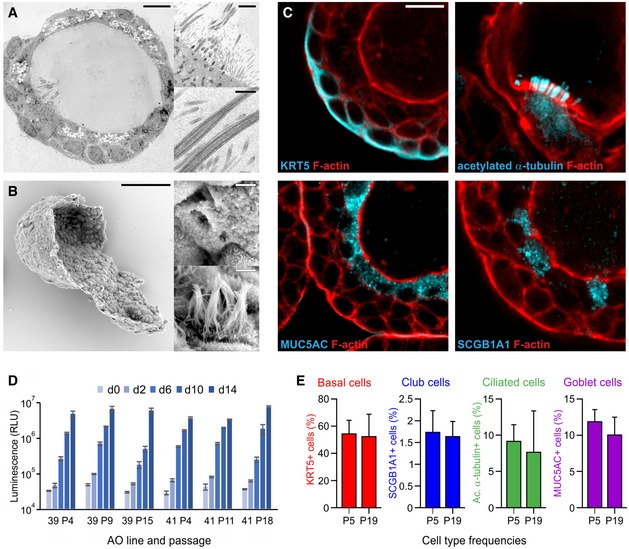
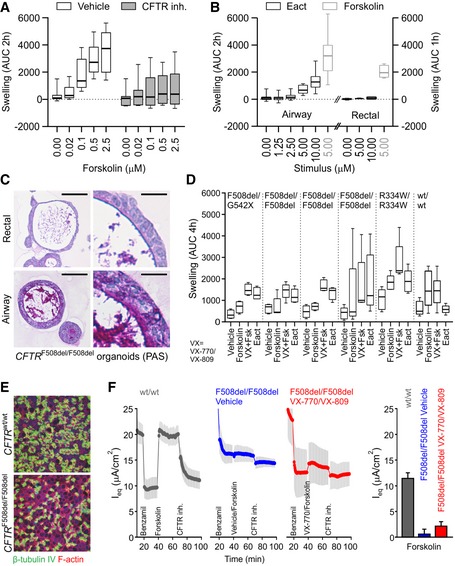
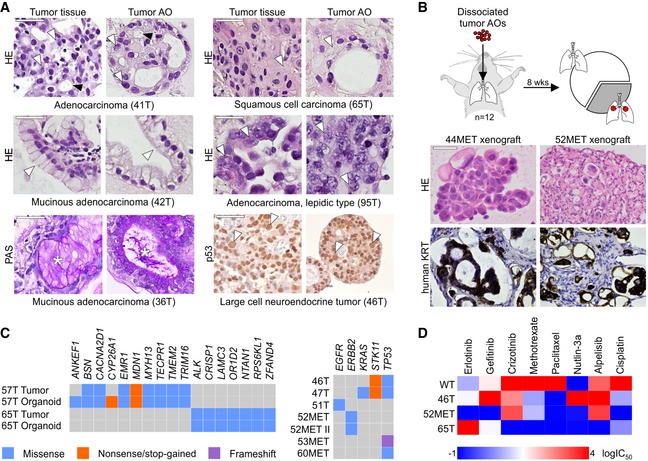
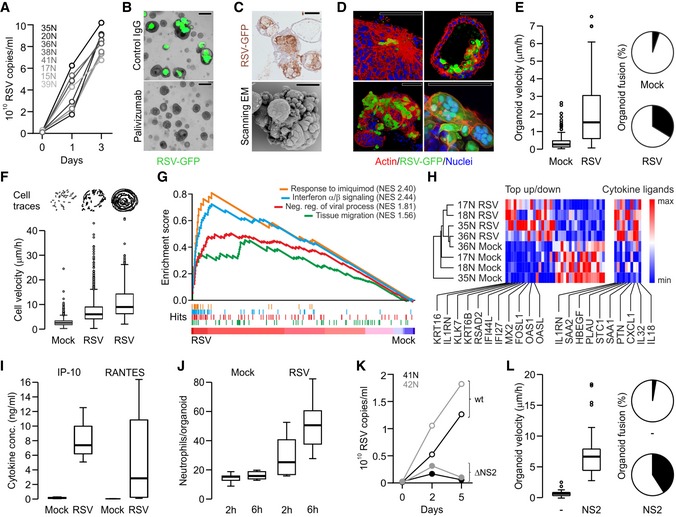
Verification
Claims the paper makes
The claims and statistics of this paper haven’t been checked yet.
Run the check — free, no account needed. It reads the open-access text and checks the sources it cites.
Claims other papers make about this one
Each is checked against this paper’s own text: does it say what the citing paper says it does?
The check wasn’t confident either way, so it gives no verdict — never disputed.
In the citing paper
“Infection of murine gastric organoids by H. pylori showed increased cytosolic β-catenin levels induced by bacterially originated CagA, which led to increased proliferation in infected organoids179.”
From Organoids (2022) · cites this paper as [179]
Experimental — accuracy not yet measured
Self-check
Percentages, sums and reported differences re-computed from the paper’s own numbers.
The self-check needs the paper’s full text.
Citations
Cites
Fast and accurate short read alignment with Burrows-Wheeler transform
Li, H., & Durbin, R. (2009) · Bioinformatics · doi:10.1093/bioinformatics/btp324 · Cited by 58,607
Subramanian, A., Tamayo, P., Mootha, V. K., Mukherjee, S., Ebert, B. L., Gillette, M. A., Paulovich, A., Pomeroy, S. L., Golub, T. R., Lander, E. S., et al. (2005) · Proceedings of the National Academy of Sciences · doi:10.1073/pnas.0506580102 · Cited by 53,625
A framework for variation discovery and genotyping using next-generation DNA sequencing data
DePristo, M. A., Banks, E., Poplin, R. E., Garimella, K. V., Maguire, J., Hartl, C., Philippakis, A., del Angel, G., Rivas, M. A., Hanna, M., et al. (2011) · Nature Genetics · doi:10.1038/ng.806 · Cited by 11,508
Mootha, V. K., Lindgren, C. M., Eriksson, K.-F., Subramanian, A., Sihag, S., Lehar, J., Puigserver, P., Carlsson, E., Ridderstråle, M., Laurila, E., et al. (2003) · Nature Genetics · doi:10.1038/ng1180 · Cited by 10,197
Analysis of protein-coding genetic variation in 60,706 humans
Exome Aggregation Consortium, Lek, M., Karczewski, K. J., Minikel, E. V., Samocha, K. E., Banks, E., Fennell, T., O’Donnell-Luria, A. H., Ware, J. S., Hill, A. J., et al. (2016) · Nature · doi:10.1038/nature19057 · Cited by 9,587
dbSNP: the NCBI database of genetic variation
Sherry, S. T. (2001) · Nucleic Acids Research · doi:10.1093/nar/29.1.308 · Cited by 7,502
In Vivo Activation of the p53 Pathway by Small-Molecule Antagonists of MDM2
Vassilev, L. T., Vu, B. T., Graves, B., Carvajal, D., Podlaski, F., Filipovic, Z., Kong, N., Kammlott, U., Lukacs, C., Klein, C., et al. (2004) · Science · doi:10.1126/science.1092472 · Cited by 4,661
Webb, A. K. (2006) · Cited by 4,369
Sato, T., Stange, D. E., Ferrante, M., Vries, R. G. J., van Es, J. H., van den Brink, S., van Houdt, W. J., Pronk, A., van Gorp, J., Siersema, P. D., et al. (2011) · Gastroenterology · doi:10.1053/j.gastro.2011.07.050 · Cited by 3,753
Self-citationOrganoid Models and Applications in Biomedical Research
Xinaris, C., Brizi, V., & Remuzzi, G. (2015) · The Nephron journals/Nephron journals · doi:10.1159/000433566 · Cited by 3,519
Cited by
Sorted by citations
Human organoids: model systems for human biology and medicine
Kim, J., Koo, B.-K., & Knoblich, J. A. (2020) · Nature Reviews Molecular Cell Biology · doi:10.1038/s41580-020-0259-3 · Cited by 2,187
SARS-CoV-2 productively infects human gut enterocytes
Lamers, M. M., Beumer, J., van der Vaart, J., Knoops, K., Puschhof, J., Breugem, T. I., Ravelli, R. B. G., Paul van Schayck, J., Mykytyn, A. Z., Duimel, H. Q., et al. (2020) · Science · doi:10.1126/science.abc1669 · Cited by 1,573
Self-citationHofer, M., & Lutolf, M. P. (2021) · Nature Reviews Materials · doi:10.1038/s41578-021-00279-y · Cited by 1,184
Altered TMPRSS2 usage by SARS-CoV-2 Omicron impacts infectivity and fusogenicity
Meng, B., Abdullahi, A., Ferreira, I. A. T. M., Goonawardane, N., Saito, A., Kimura, I., Yamasoba, D., Gerber, P. P., Fatihi, S., Rathore, S., et al. (2022) · Nature · doi:10.1038/s41586-022-04474-x · Cited by 1,146
Dijkstra, K. K., Cattaneo, C. M., Weeber, F., Chalabi, M., van de Haar, J., Fanchi, L. F., Slagter, M., van der Velden, D. L., Kaing, S., Kelderman, S., et al. (2018) · Cell · doi:10.1016/j.cell.2018.07.009 · Cited by 1,135
“To select for tumor organoids, we applied the MDM-2 inhibitor Nutlin-3a to selectively grow out p53 mutant cells of this sample, resulting in a pure tumor organoid population (Sachs et al., 2018).”
InfluentialSelf-citation
Metadata
- Authors
- Sachs, N., Papaspyropoulos, A., Zomer‐van Ommen, D. D., Heo, I., Böttinger, L., Klay, D., Weeber, F., Huelsz‐Prince, G., Iakobachvili, N., Amatngalim, G. D., de Ligt, J., van Hoeck, A., Proost, N., Viveen, M. C., Lyubimova, A., Teeven, L., Derakhshan, S., Korving, J., Begthel, H., Dekkers, J. F., Kumawat, K., Ramos, E., van Oosterhout, M. F., Offerhaus, G. J., Wiener, D. J., Olimpio, E. P., Dijkstra, K. K., Smit, E. F., van der Linden, M., Jaksani, S., van de Ven, M., Jonkers, J., Rios, A. C., Voest, E. E., van Moorsel, C. H., van der Ent, C. K., Cuppen, E., van Oudenaarden, A., Coenjaerts, F. E., Meyaard, L., Bont, L. J., Peters, P. J., Tans, S. J., van Zon, J. S., Boj, S. F., Vries, R. G., Beekman, J. M., & Clevers, H.
- Affiliations
- University Medical Center Utrecht (NL)
- St. Antonius Ziekenhuis (NL)
- The Netherlands Cancer Institute (NL)
- Institute for Atomic and Molecular Physics (NL)
- Maastricht University (NL)
- Hubrecht Institute for Developmental Biology and Stem Cell Research (NL)
- Princess Máxima Center (NL)
- Royal Netherlands Academy of Arts and Sciences (NL)
- Corresponding author
- Clevers, Hans
- ORCID
- Sachs, Norman
- Papaspyropoulos, Angelos
- Klay, Dymph
- Weeber, Fleur
- Iakobachvili, Nino
- Amatngalim, Gimano D
- de Ligt, Joep
- van Hoeck, Arne
- Proost, Natalie
- Begthel, Harry
- Ramos, Emilio
- Offerhaus, G Johan
- Wiener, Dominique J
- Dijkstra, Krijn K
- Smit, Egbert F
- Jonkers, Jos
- Rios, Anne C
- Voest, Emile E
- Cuppen, Edwin
- Coenjaerts, Frank E
- Meyaard, Linde
- Bont, Louis J
- Peters, Peter J
- Tans, Sander J
- Boj, Sylvia F
- Vries, Robert G
- Beekman, Jeffrey M
- Clevers, Hans
- Venue
- The EMBO Journal
- Published
- 2019-01-14
- Volume
- 38
- Issue
- 4
- ISSN
- 0261-4189 (ISSN-L)
- 1460-2075
- PMC
- PMC6376275
- OpenAlex
- W2799736418
- Cited by
- 1,082
- References
- 82
- Citations by year
- 2026: 126 · 2025: 178 · 2024: 137 · 2023: 159 · 2022: 157 · 2021: 182 · 2020: 104 · 2019: 30
- FWCI
- 86.42
- Type
- journal article
- Language
- en
- Open access
- hybrid
- doi.org
- Licence
- Locations
- The EMBO Journal (publishedVersion, cc-by-nc-nd)
- bioRxiv (Cold Spring Harbor Laboratory) (acceptedVersion, cc-by-nc-nd)
- Europe PMC (PubMed Central) (publishedVersion, other-oa)
- PubMed Central (publishedVersion, cc-by-nc-nd)
- PubMed (publishedVersion)
- Research Publications (Maastricht University) (publishedVersion, cc-by-nc-nd)
- KNAW research portal (Royal Academy of Art and Sciences (KNAW)) (publishedVersion, other-oa)
- KNAW Research Portal (The Royal Netherlands Academy of Arts and Sciences) (publishedVersion, other-oa)
- AMOLF Institutional Repository (AMOLF) (submittedVersion, other-oa)
- Data Archiving and Networked Services (DANS) (submittedVersion, cc-by-nc-nd)
- Utrecht University Repository (Utrecht University) (submittedVersion, other-oa)
- Research Publications (Maastricht University) (submittedVersion, cc-by-nc-nd)
- Utrecht University Repository (Utrecht University) (submittedVersion, cc-by-nc-nd)
- Funders
- ZonMw (114021012, 40‐00812‐98‐14103, 91615182)
- Human Frontier Science Program (CDA00076/2014‐C)
- Prof. Dr. Jaap Swieringa Foundation (stAH‐CvM‐HI‐HC)
- Dutch Cystic Fibrosis Society (HIT‐CF)
- SU2C (SU2C‐AACR‐DT‐12‐14)
- KWF Kankerbestrijding (2014‐7006)
- Nederlandse Organisatie voor Wetenschappelijk Onderzoek (680‐47‐529, 834.11.002)
- Topics
- Health Sciences › Medicine › Pulmonary and Respiratory Medicine › Cystic Fibrosis Research Advances
- Health Sciences › Medicine › Pulmonary and Respiratory Medicine › Neonatal Respiratory Health Research
- Health Sciences › Medicine › Surgery › Tissue Engineering and Regenerative Medicine
- Keywords
- airway organoids, cystic fibrosis, CFTR function, lung cancer, metastasis, respiratory syncytial virus, NS2 protein, neutrophil recruitment, disease modeling, Clara cells, ciliated cells
- MeSH terms
- Animals, Carcinoma, Non-Small-Cell Lung, Cells, Cultured, Cystic Fibrosis, Disease Models, Animal, Drug Screening Assays, Antitumor, Epithelial Cells, Female, Humans, Lung Neoplasms, Male, Organ Culture Techniques, Organoids, Respiratory Syncytial Viruses, Respiratory System, Mice, SCID, Mice, Inbred NOD, Respiratory Syncytial Virus Infections, Cystic Fibrosis Transmembrane Conductance Regulator, Xenograft Model Antitumor Assays, Mice
About these checks
Registry, retraction, Cites and statistics results are computed, not judged, with one exception: a printed reference that no index lists is read once by a model before it counts as a citation error. Claims are extracted by a model and kept only when their quote appears verbatim in the text; each cited source is then checked, with a model’s help, for whether it says what the claim relies on. Those verdicts can be wrong — read the claim’s quote and the cited source before relying on one.
Statistics and arithmetic are recomputed, not judged.
Confidence bands are shown only for fields calibrated on our annotated test set. None is calibrated yet, so no band is shown.
What counts as a claim ›How we measure confidence ›How we check this ›
Are you an author, or do you see a problem with this page? Request a review
