

Hypoxia and loss of PHD2 inactivate stromal fibroblasts to decrease tumour stiffness and metastasis
Open accessThe DOI matches its Crossref record; 64 of the 66 references it cites were found in a registry or an index.
Abstract
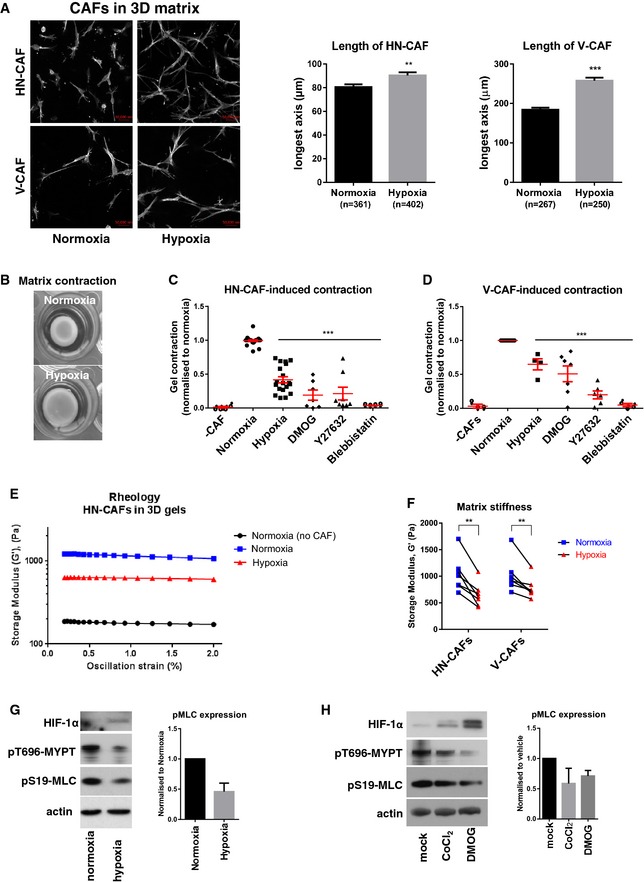
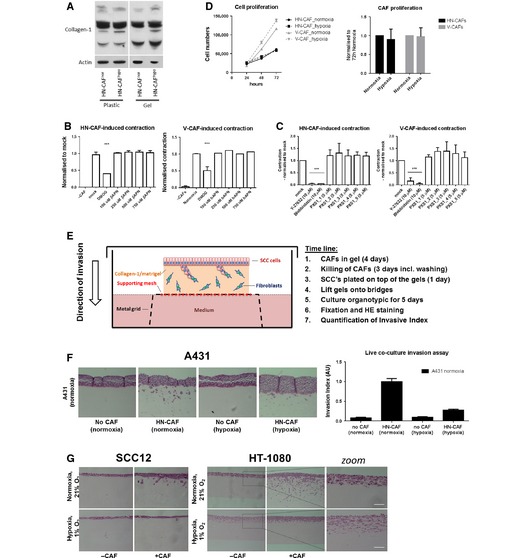
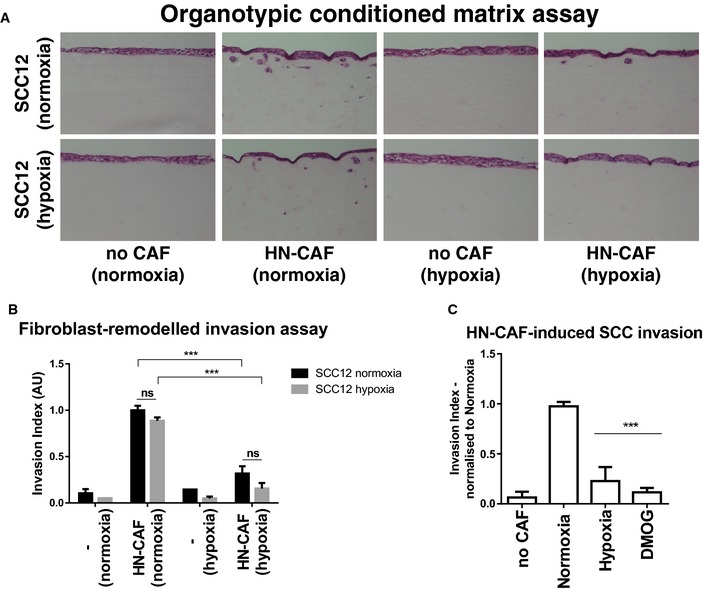
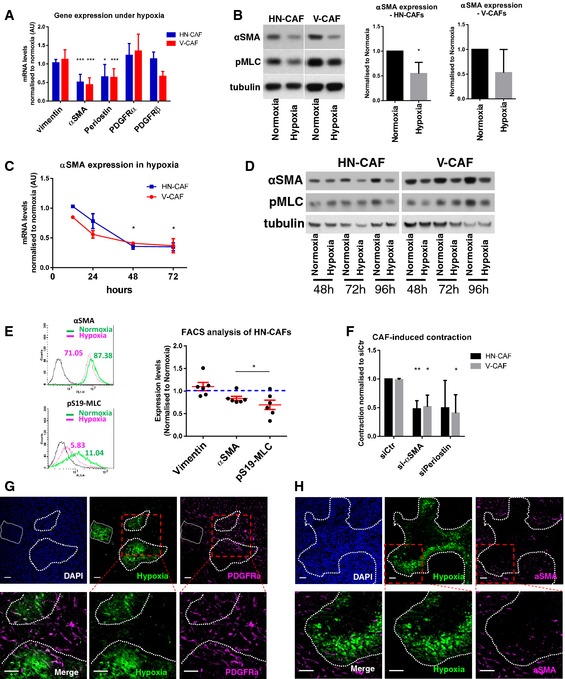
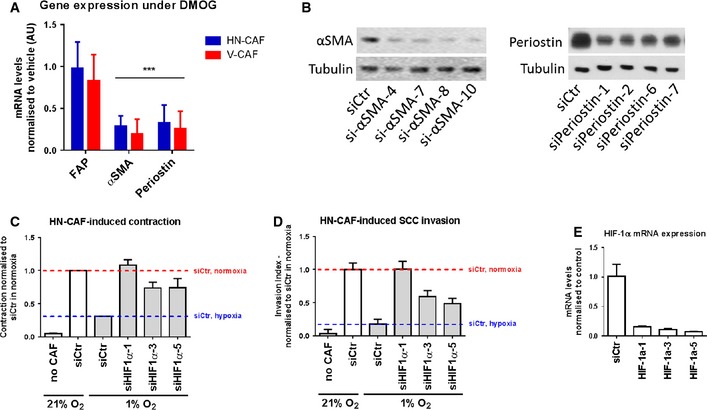
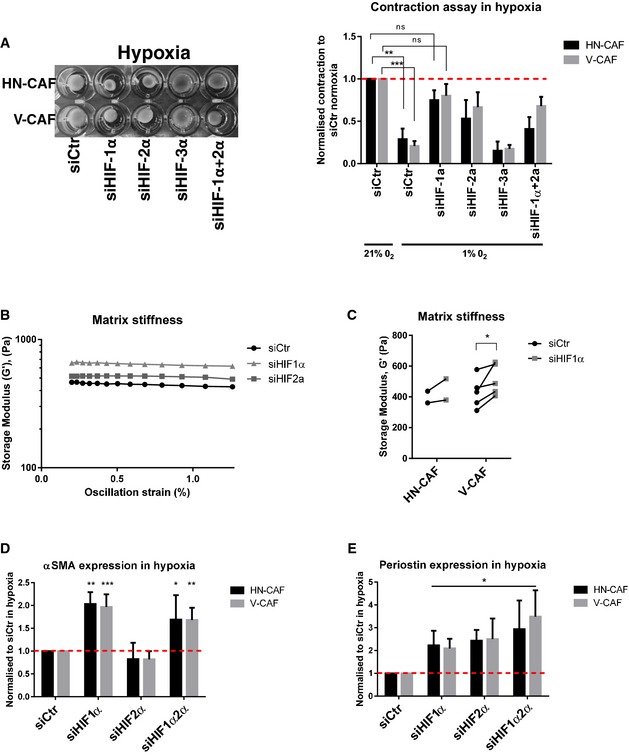
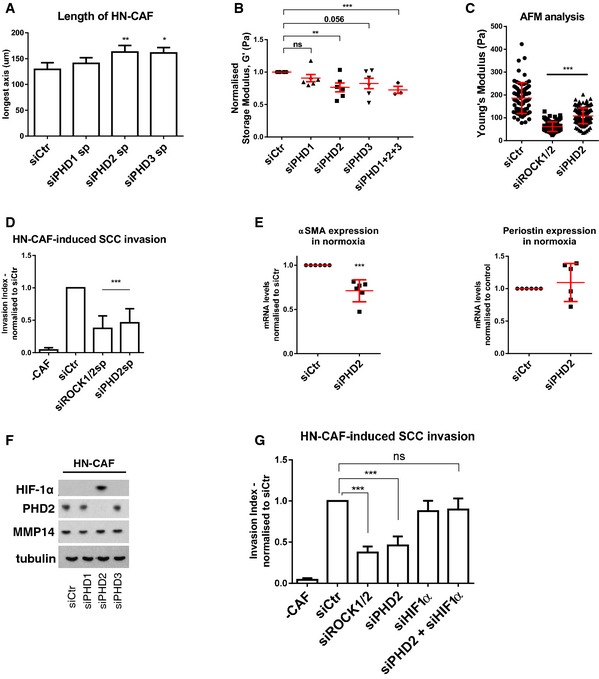
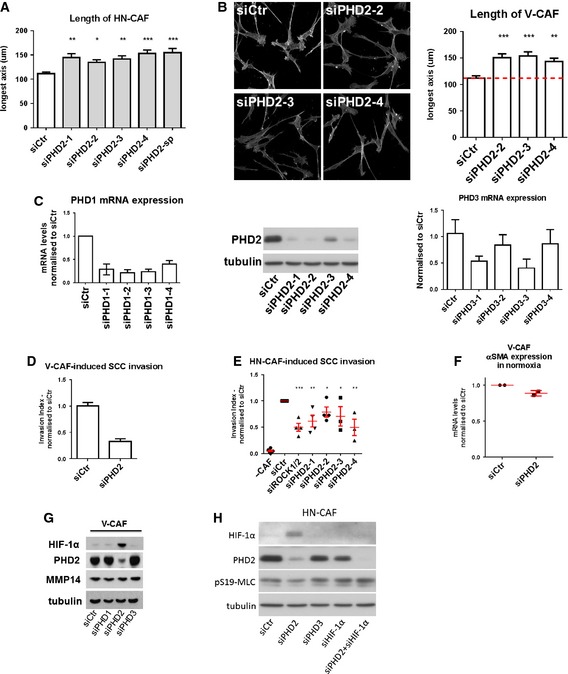
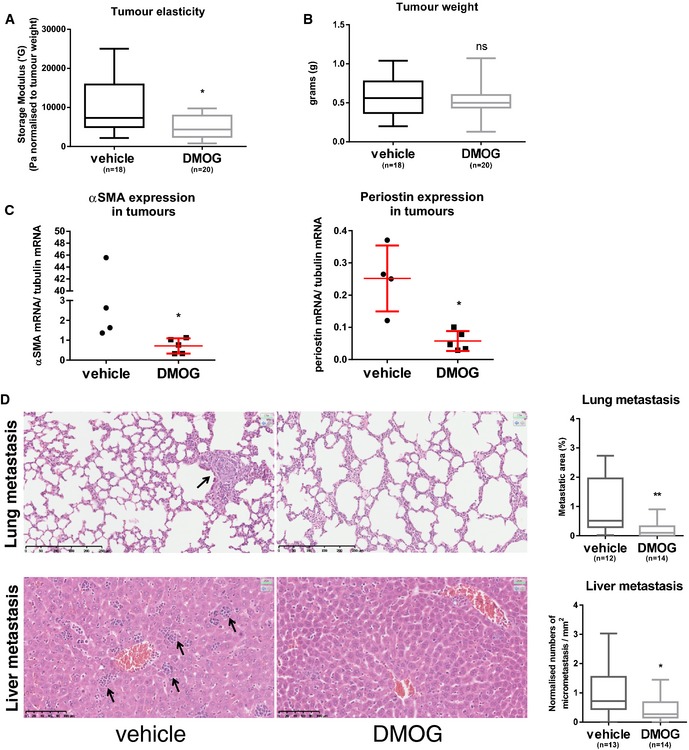
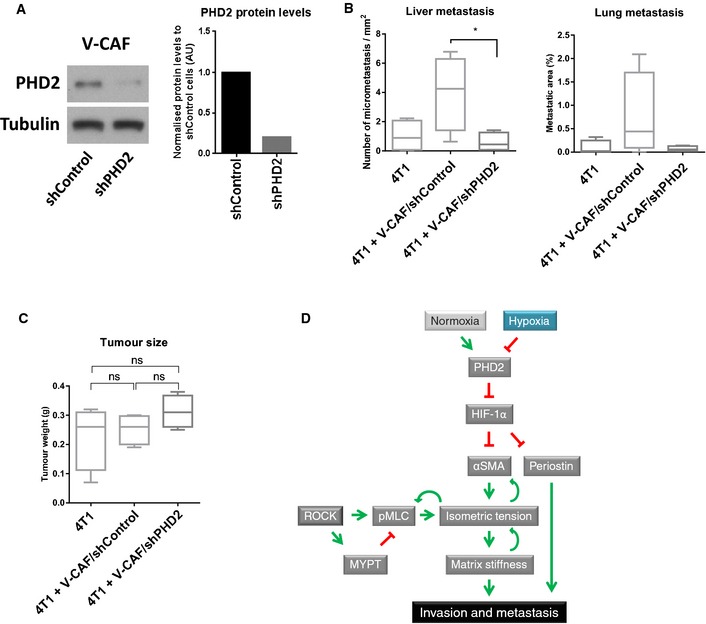
Cancer-associated fibroblasts (CAFs) interact with tumour cells and promote growth and metastasis. Here, we show that CAF activation is reversible: chronic hypoxia deactivates CAFs, resulting in the loss of contractile force, reduced remodelling of the surrounding extracellular matrix and, ultimately, impaired CAF-mediated cancer cell invasion. Hypoxia inhibits prolyl hydroxylase domain protein 2 (PHD2), leading to hypoxia-inducible factor (HIF)-1α stabilisation, reduced expression of αSMA and periostin, and reduced myosin II activity. Loss of PHD2 in CAFs phenocopies the effects of hypoxia, which can be prevented by simultaneous depletion of HIF-1α. Treatment with the PHD inhibitor DMOG in an orthotopic breast cancer model significantly decreases spontaneous metastases to the lungs and liver, associated with decreased tumour stiffness and fibroblast activation. PHD2 depletion in CAFs co-injected with tumour cells similarly prevents CAF-induced metastasis to lungs and liver. Our data argue that reversion of CAFs towards a less active state is possible and could have important clinical implications.
Overview
The claims and statistics of this paper haven’t been checked yet.
Free: it reads the open-access text and checks the first 5 claims that cite a source we can check. Create a free account to check every claim.
Integrity signals
Registry
Cites
Statistics
Figures
Verification
Claims the paper makes
The claims and statistics of this paper haven’t been checked yet.
Free: it reads the open-access text and checks the first 5 claims that cite a source we can check. Create a free account to check every claim.
Claims other papers make about this one
Each is checked against this paper’s own text: does it say what the citing paper says it does?
The cited source says what the claim attributes to it.
In the citing paper
“In addition to promoting local invasion, CAFs are able to boost metastasis in experimental models, and this correlated with their ability to remodel the ECM91–93.”
From A framework for advancing our understanding of cancer-associated fibroblasts (2020) · cites this paper as [92]
Self-check
Percentages, sums and reported differences re-computed from the paper’s own numbers.
The self-check needs the paper’s full text.
Citations
Cites
2 retracted
Lysyl oxidase is essential for hypoxia-induced metastasis
Erler, J. T., Bennewith, K. L., Nicolau, M., Dornhöfer, N., Kong, C., Le, Q.-T., Chi, J.-T. A., Jeffrey, S. S., & Giaccia, A. J. (2006) · Nature · doi:10.1038/nature04695 · Cited by 1,309
Self-citationRetractedGilkes, D. M., Bajpai, S., Chaturvedi, P., Wirtz, D., & Semenza, G. L. (2013) · Journal of Biological Chemistry · doi:10.1074/jbc.m112.442939 · Cited by 467
RetractedMolecular Mechanisms of Stress-Responsive Changes in Collagen and Elastin Networks in Skin
Aziz, J., Shezali, H., Radzi, Z., Yahya, N. A., Abu Kassim, N. H., Czernuszka, J., & Rahman, M. T. (2016) · Skin Pharmacology and Physiology · doi:10.1159/000447017 · Cited by 7,323
Hypoxia — a key regulatory factor in tumour growth
Harris, A. L. (2002) · Nature Reviews Cancer · doi:10.1038/nrc704 · Cited by 5,177 · cited 1×
“Hypoxia is associated with metastasis and poor prognosis [10]; however, while all solid tumours over several millimetres contain regions of hypoxia, most tumour cells are actually non-migratory.”
Accessories to the Crime: Functions of Cells Recruited to the Tumor Microenvironment
Hanahan, D., & Coussens, L. M. (2012) · Cancer Cell · doi:10.1016/j.ccr.2012.02.022 · Cited by 4,632 · cited 1×
“The tumour microenvironment plays an important role in the development and spread of cancer [1].”
Matrix Crosslinking Forces Tumor Progression by Enhancing Integrin Signaling
Levental, K. R., Yu, H., Kass, L., Lakins, J. N., Egeblad, M., Erler, J. T., Fong, S. F. T., Csiszar, K., Giaccia, A., Weninger, W., et al. (2009) · Cell · doi:10.1016/j.cell.2009.10.027 · Cited by 4,101 · cited 6×
“Collagen stiffening can be caused by increased covalent cross-linking by enzymes of the lysyl oxidase (LOX) family [7,20 – 22].”
InfluentialSelf-citationOrimo, A., Gupta, P. B., Sgroi, D. C., Arenzana-Seisdedos, F., Delaunay, T., Naeem, R., Carey, V. J., Richardson, A. L., & Weinberg, R. A. (2005) · Cell · doi:10.1016/j.cell.2005.02.034 · Cited by 3,759
Epstein, A. C. R., Gleadle, J. M., McNeill, L. A., Hewitson, K. S., O'Rourke, J., Mole, D. R., Mukherji, M., Metzen, E., Wilson, M. I., Dhanda, A., et al. (2001) · Cell · doi:10.1016/s0092-8674(01)00507-4 · Cited by 3,333
Stromal fibroblasts in cancer initiation and progression
Bhowmick, N. A., Neilson, E. G., & Moses, H. L. (2004) · Nature · doi:10.1038/nature03096 · Cited by 2,302 · cited 1×
“One of the most abundant cell types of the tumour microenvironment is cancer-associated fibroblasts (CAFs) [2].”
Hypoxia in cancer: significance and impact on clinical outcome
Vaupel, P., & Mayer, A. (2007) · Cancer and Metastasis Reviews · doi:10.1007/s10555-007-9055-1 · Cited by 2,240 · cited 1×
“Hypoxia is another key feature of the tumour microenvironment [9].”
Cited by
Items 101–173 of 173
Li, L., Ji, J., Ren, H. J., Gao, L., Li, X., Li, N., Zhang, S., Tang, K., Li, Z., Ren, W., et al. (2026) · The Innovation · doi:10.1016/j.xinn.2026.101307 · Cited by 23
“472 For example, decreasing tumor stiffness using lipid nanoparticles to deliver small interfering RNAs (siRNAs) targeting FAK and the CRISPR system can enhance drug delivery.”
Relative Stiffness Measurements of Tumour Tissues by Shear Rheology
Madsen, C. D., & Cox, T. R. (2017) · BIO-PROTOCOL · doi:10.21769/bioprotoc.2265 · Cited by 22
Self-citationKim, M., Lee, T. H., Lee, J. S., Lim, D., & Lee, P. C.-W. (2020) · Pharmaceuticals · doi:10.3390/ph13090208 · Cited by 22
Ameer, S. F., Sharif, E., & Ibrahim, W. N. (2026) · Expert Reviews in Molecular Medicine · doi:10.1017/erm.2026.10044 · Cited by 21
Role of autophagy in cancer-associated fibroblast activation, signaling and metabolic reprograming
Sari, D., Gözüaçık, D., & Akkoç, Y. (2024) · Frontiers in Cell and Developmental Biology · doi:10.3389/fcell.2023.1274682 · Cited by 21
Mechanisms of breast cancer metastasis: the role of extracellular matrix
Chen, R., Zhang, R., Ke, F., Guo, X., Zeng, F., & Liu, Q. (2024) · Molecular and Cellular Biochemistry · doi:10.1007/s11010-024-05175-x · Cited by 21
Romano, V., Ruocco, M. R., Carotenuto, P., Barbato, A., Venuta, A., Acampora, V., Lella, S. D., Vigliar, E., Iaccarino, A., Troncone, G., et al. (2022) · International Journal of Molecular Sciences · doi:10.3390/ijms23126875 · Cited by 20
Isolation of Fibroblast-Activation Protein-Specific Cancer-Associated Fibroblasts
Huang, Y., Zhou, S., Huang, Y., Zheng, D., Mao, Q., He, J., Wang, Y., Xue, D., Lü, X., Yang, N., et al. (2017) · BioMed Research International · doi:10.1155/2017/4825108 · Cited by 19
New Directions in the Study and Treatment of Metastatic Cancer
Yoo, B., Fuchs, B. C., & Medarova, Z. O. (2018) · Frontiers in Oncology · doi:10.3389/fonc.2018.00258 · Cited by 18
Novel CAF-identifiers via transcriptomic and protein level analysis in HNSC patients
Dwivedi, N., Shukla, N., Prathima, K. M., Das, M., & Dhar, S. K. (2023) · Scientific Reports · doi:10.1038/s41598-023-40908-w · Cited by 17
Relative Stiffness Measurements of Cell-embedded Hydrogels by Shear Rheology in vitro
Cox, T. R., & Madsen, C. D. (2017) · BIO-PROTOCOL · doi:10.21769/bioprotoc.2101 · Cited by 17
Self-citationInoue, C., Tamatsuki, D., Miki, Y., Saito, R., Okada, Y., & Sasano, H. (2019) · Archiv für Pathologische Anatomie und Physiologie und für Klinische Medicin · doi:10.1007/s00428-019-02587-9 · Cited by 17
Ma, M., Hua, S., Li, G., Wang, S., Cheng, X. Y., He, S., Wu, P., & Chen, X. (2017) · Oncotarget · doi:10.18632/oncotarget.14677 · Cited by 16
“HIF hydroxylases were recently recognized as important players in cancer biology by interfering with angiogenesis and metastasis, such as in prostate cancer [25], breast cancer [26], colorectal cancer (CRC) [27], and renal cell carcinoma [28].”
Chitty, J. L., Skhinas, J. N., Filipe, E. C., Wang, S., Cupello, C. R., Grant, R. D., Yam, M., Papanicolaou, M., Major, G. S., Zaratzian, A., et al. (2019) · Cancer Reports · doi:10.1002/cnr2.1209 · Cited by 15
Self-citationInhibition of firefly luciferase activity by a HIF prolyl hydroxylase inhibitor
Günter, J., Wenger, R. H., & Scholz, C. C. (2020) · Journal of Photochemistry and Photobiology B Biology · doi:10.1016/j.jphotobiol.2020.111980 · Cited by 14
Mokhles, F., Moosavi, M. A., Gutiérrez-Uzquiza, Á., Velasco, G., Li, M., & Cordani, M. (2026) · Cancer Letters · doi:10.1016/j.canlet.2026.218246 · Cited by 12
Park, S., Ji, M.-J., Ham, I., Shin, Y., Lee, S., Lee, C. H., Kim, E., Hur, H., Park, H.-M., & Kim, J.-Y. (2022) · Journal of Cancer Research and Clinical Oncology · doi:10.1007/s00432-022-04361-y · Cited by 12
Vennin, C., Herrmann, D., Lucas, M. C., & Timpson, P. (2016) · F1000Research · doi:10.12688/f1000research.8090.1 · Cited by 12
A Novel PHD2/VHL-mediated Regulation of YAP1 Contributes to VEGF Expression and Angiogenesis
Bora-Singhal, N., Saha, B., Mohankumar, D., Padmanabhan, J., Coppola, D., & Chellappan, S. (2022) · Cancer Research Communications · doi:10.1158/2767-9764.crc-21-0084 · Cited by 11
Wei, T., Song, J., Liang, K., Li, L., Mo, X., Huang, Z., Chen, G., Mao, N., & Yang, J. (2021) · Journal of Cancer Research and Clinical Oncology · doi:10.1007/s00432-020-03489-z · Cited by 12
Pharmacological inhibition of Mint3 attenuates tumour growth, metastasis, and endotoxic shock
Sakamoto, T., Fukui, Y., Kondoh, Y., Honda, K., Shimizu, T., Hara, T., Hayashi, T., Saitoh, Y., Murakami, Y., Inoue, J., et al. (2021) · Communications Biology · doi:10.1038/s42003-021-02701-1 · Cited by 11
Quiles, C. G., Fahy, S., Bartak, M., Abalos, J. G., Powell, E., Lodhi, T., Reed, R., Reeves, K. J., Baker, A. R., James, N. D., et al. (2025) · Frontiers in Oncology · doi:10.3389/fonc.2025.1616943 · Cited by 10
Packirisamy, S., André, O., Fan, Z., Nordenfelt, P., & Swaminathan, V. (2026) · Advanced Science · doi:10.1002/advs.202517631 · Cited by 11
CAF-Associated Genes in Breast Cancer for Novel Therapeutic Strategies
Naito, K., Sangai, T., & Yamashita, K. (2024) · Biomedicines · doi:10.3390/biomedicines12091964 · Cited by 10
Engineered Models of Metastasis with Application to Study Cancer Biomechanics
Chen, M. B., Kamm, R. D., & Moeendarbary, E. (2018) · Advances in experimental medicine and biology · doi:10.1007/978-3-319-95294-9_10 · Cited by 8
Self-citationNestin and CD34 expression in colorectal cancer predicts improved overall survival
Tampakis, A., Weixler, B., Rast, S., Tampaki, E.-C., Cremonesi, E., Kancherla, V., Tosti, N., Kettelhack, C., Ng, C. K. Y., Delko, T., et al. (2021) · Acta Oncologica · doi:10.1080/0284186x.2021.1891280 · Cited by 8
Spanò, D. P., Bonelli, S., Calligaris, M., Carreca, A. P., Carcione, C., Zito, G., Nicosia, A., Rizzo, S., & Scilabra, S. D. (2022) · Proteomes · doi:10.3390/proteomes10030025 · Cited by 8
Cancer-associated fibroblasts in neoadjuvant setting for solid cancers
Gu, Y., Chen, Q., Yin, H., Zeng, M., Gao, S., & Wang, X. (2023) · Critical Reviews in Oncology/Hematology · doi:10.1016/j.critrevonc.2023.104226 · Cited by 8
Yang, A., Pan, C., Gu, C., Luo, B., Gao, F., Hou, Y., & Shi, Y. (2026) · Journal of Gastroenterology · doi:10.1007/s00535-026-02346-z · Cited by 7
Khouzam, R. A., Salman, S., Thiery, J., Zaarour, R. F., Vela, V., Limani, P., Janji, B., & Chouaïb, S. (2026) · International Journal of Molecular Sciences · doi:10.3390/ijms27093873 · Cited by 7
“For instance, studies using head and neck and vulval CAFs in 3D culture showed that hypoxia-induced HIF-1 α stabilization (by inhibiting PHD2) led to the reversal of CAF activation [57].”
Buruş, A., Özcan, M., Canpınar, H., Bozdemir, Ö., Zeybek, N. D., & Bayazıt, Y. (2025) · Naunyn-Schmiedeberg s Archives of Pharmacology · doi:10.1007/s00210-025-03929-y · Cited by 7
Mao, C., Liu, X., & Guo, S. (2024) · Reproductive BioMedicine Online · doi:10.1016/j.rbmo.2024.104406 · Cited by 6
Guo, M., Sun, Y., Wang, X., Wang, Z., Yuan, X., Chen, X., Yuan, X., & Wang, L. (2024) · International Journal of Molecular Sciences · doi:10.3390/ijms251910486 · Cited by 6
History of hypoxia exposure aids future cell invasion according to cell type and collagen density
de Almeida, J. A. A., Avila, D., Longmore, G. D., & Pathak, A. (2025) · Molecular Biology of the Cell · doi:10.1091/mbc.e24-12-0580 · Cited by 5
Cigliano, A., Strain, A. J., & Cadamuro, M. (2023) · Hepatoma Research · doi:10.20517/2394-5079.2023.09 · Cited by 5
Comito, G., Segura, C. P., Sobierajska, K., Ippolito, L., Taddei, M. L., Giannoni, E., & Chiarugi, P. (2014) · European Journal of Cancer · doi:10.1016/s0959-8049(14)50278-x · Cited by 5
Kuninty, P. R., Bojmar, L., Sandström, P., Storm, G., & Prakash, J. (2015) · European Journal of Cancer · doi:10.1016/s0959-8049(16)30048-x · Cited by 4
Quiles, C. G., Gonzalez, A. J., Foussat, A., Olympitis, A., Lodhi, T., Smith, V., Reardon, M., Shabbir, R., Lunj, S., Reeves, K. J., et al. (2025) · bioRxiv (Cold Spring Harbor Laboratory) · doi:10.1101/2025.04.04.647191 · Cited by 4
Modeling CAF-tumor interactions to overcome therapy resistance
Gubała, J., Benamran, D. A., Tsantoulis, P. K., Mieville, V., Valério, M., & Nowak-Sliwinska, P. M. (2026) · Journal of Experimental & Clinical Cancer Research · doi:10.1186/s13046-025-03633-y · Cited by 3
Zu, P., & Yu, Z. (2026) · Frontiers in Cell and Developmental Biology · doi:10.3389/fcell.2026.1761070 · Cited by 3
Han, K. H., Kim, A., & Kim, D. (2022) · International Journal of Molecular Sciences · doi:10.3390/ijms23095134 · Cited by 3
EGLN1 (PHD2) role in tumor microenvironment: insights for therapeutic targeting
Verna, G., Fantini, V., Grieco, A., Ciarrocchi, A., & Sancisi, V. (2025) · Experimental & Molecular Medicine · doi:10.1038/s12276-025-01602-1 · Cited by 2
The role of cancer-associated fibroblasts in various cancer drug resistance
Dang, F., Na, J., Xiao, L., Tian, X., Shao, J., Zhong, L., & Zhao, Y. (2026) · Cancer Letters · doi:10.1016/j.canlet.2026.218584 · Cited by 2
He, C., Xie, M., Zhang, Z., Cao, B., Luo, H., Zhu, G., Lu, S., & Li, L. (2024) · Malignancy Spectrum · doi:10.1002/msp2.44 · Cited by 2
Zhang, D., Fu, R., Sun, G., Yan, J., & Yang, X. (2025) · Current Cancer Drug Targets · doi:10.2174/0115680096362252250527060004 · Cited by 1
Chen, X., Huang, C., Liao, Y., & Chen, X. (2025) · Discover Oncology · doi:10.1007/s12672-025-03331-3 · Cited by 1
Tejchman, A. (2017) · theses.fr (ABES) · doi:10.70675/c66cab0bz93c1z4199za2fdz0cbfb889d2c3 · Cited by 1
Kay, E. J. (2020) · Enlighten: Theses (The University of Glasgow) · doi:10.5525/gla.thesis.79034 · Cited by 1
Domínguez-García, S., Rodríguez, J., Juliá, M., Coursier, D., Perez-Lopez, C., Carnicero, P., Villar, A. V., von Kriegsheim, A., & Calvo, F. (2025) · bioRxiv (Cold Spring Harbor Laboratory) · doi:10.1101/2025.04.04.647210 · Cited by 1
Filopodia and stromal extracellular matrix as regulators of cancer cell invasion and growth
Kaukonen, R. (2016) · UTUPub (University of Turku)
Bogaerts, E. (2017) · Ghent University Academic Bibliography (Ghent University)
THE ROLE OF INTEGRINS IN THE ACTIVATION OF FIBROBLASTS FROM SKIN, LUNG AND BREAST TISSUE
Khan, Z. A. (2017) · Queen Mary Research Online (Queen Mary University of London)
Role of matrix stiffness in the resistance of squamous cell carcinoma cells to anticancer therapies
Kužet, S.-E. (2019) · theses.fr (ABES) · doi:10.70675/9e4a869fz06fdz4efbz8853zfcd3e85c03e4
Cao, H. (2021) · DR-NTU (Nanyang Technological University) · doi:10.32657/10356/148935
Hendawi, N. (2021) · White Rose eTheses Online (University of Leeds, The University of Sheffield, University of York)
Gieniec, K. A. (2020) · Adelaide Research & Scholarship (AR&S) (University of Adelaide)
[Na,K-ATPase in kidneys of rats with hereditary hypertension induced by stress].
Lopina, O. D., Kotlovaĭ, A. A., Камерницкий, А. В., Pavlova‐Grishina, N. S., Markel', A. L., & Болдырев, А. А. (1991) · PubMed
Timpson, P. (2020) · Faculty Opinions – Post-Publication Peer Review of the Biomedical Literature · doi:10.3410/f.737260944.793580089
Reeb, T., Dunnwald, M., DeMali, K. A., Klingelhutz, A. J., Tootle, T. L., & Russo, A. F. (2020) · doi:10.17077/etd.005317
Targeting oxygenases could be a viable anti-metastatic approach in cancer therapy
Shi, P., Xu, J., & Cui, H. (2025) · International Journal of Biological Macromolecules · doi:10.1016/j.ijbiomac.2025.143375
Jing, S., Zhou, S., Cui, J., Wang, Y., Cao, H., Zhang, L., & Liu, X. (2025) · Discover Oncology · doi:10.1007/s12672-025-03943-9
Vennin, C. (2017) · UNSWorks (University of New South Wales, Sydney, Australia) · doi:10.26190/unsworks/19887
Tocci, A., Valenti, L., Porciello, N., Palermo, B., Carlo, A. D., Modugno, F. D., & Nisticò, P. (2025) · Methods in cell biology · doi:10.1016/bs.mcb.2025.11.002
Sohlh2 inhibited the angiogenesis of hepatocellular carcinoma through the HIF-1α/VEGFA pathway
Liu, Q., Zhang, Y., Wu, Y., Chen, S., & Wang, J. (2026) · Translational Oncology · doi:10.1016/j.tranon.2026.102718
“20 mg/kg [24] LW6 and 60 mg/kg [25] CoCl 2 were into injected i.p. into the mice every three days.”
Wong, J. X. N., Leong, K. H., Chan, M. C., & Kong, K. W. (2026) · Molecular Biology · doi:10.1134/s002689332560388x
“These shifts may modulate the invasive potential of tumour cells in a cell type-and context-dependent manner, thereby influencing tumour progression [7].”
Hypoxia signaling in osteoblast lineage cells promotes Systemic breast cancer growth and metastasis
Devignes, C.-S. (2017) · theses.fr (ABES) · doi:10.70675/b1e1422cza48ez40ccza335z2c9347b585b2
Campbell, M., Winiarska, H., Zhu, X., Masternak, M. M., Kuźnar-Kamińska, B., & Zhang, W. (2026) · SSRN Electronic Journal · doi:10.2139/ssrn.7093832
The bright side of the stroma: the tumor-suppressive roles of cancer-associated fibroblasts
Chastel, T., Schmitt, L.-M., Augenstein, C. L., Tomasini, R., & Turtoï, A. (2026) · Molecular Cancer · doi:10.1186/s12943-026-02769-5
Wu, X., Zhang, B., Shen, Y., Chen, Y., Trojanowicz, B., Sunami, Y., & Kleeff, J. (2026) · Journal of Translational Medicine · doi:10.1186/s12967-026-09137-3
Metadata
- Authors
- Madsen, C. D., Pedersen, J. T., Venning, F. A., Singh, L. B., Moeendarbary, E., Charras, G., Cox, T. R., Sahai, E., & Erler, J. T.
- Affiliations
- University of Copenhagen (DK)
- Massachusetts Institute of Technology (US)
- London Centre for Nanotechnology (GB)
- The Francis Crick Institute (GB)
- Corresponding author
- Madsen, Chris D
- Sahai, Erik
- Erler, Janine T
- ORCID
- Venue
- The EMBO Reports
- Published
- 2015-08-31
- Volume
- 16
- Issue
- 10
- Pages
- 1394-1408
- ISSN
- 1469-221X (ISSN-L)
- 1469-3178
- PMC
- PMC4662858
- OpenAlex
- W1940485834
- Cited by
- 157
- References
- 66
- Citations by year
- 2026: 10 · 2025: 11 · 2024: 18 · 2023: 18 · 2022: 15 · 2021: 15 · 2020: 16 · 2019: 15 · 2018: 12 · 2017: 13 · 2016: 10 · 2015: 2
- FWCI
- 5.39
- Type
- journal article
- Language
- en
- Open access
- hybrid
- doi.org
- Licence
- other-oa
- creativecommons.org/licenses/by/4.0/ (tdm)
- creativecommons.org/licenses/by/4.0/ (vor)
- Locations
- EMBO Reports (publishedVersion, other-oa)
- PubMed Central (publishedVersion, cc-by)
- PubMed (publishedVersion)
- DSpace@MIT (Massachusetts Institute of Technology) (submittedVersion, cc-by-nc)
- UCL Discovery (University College London) (submittedVersion)
- Figshare (submittedVersion, cc-by)
- Lund University Publications (Lund University) (submittedVersion)
- Research at the University of Copenhagen (University of Copenhagen) (submittedVersion)
- Funders
- FEBS long‐term Fellowship
- Wellcome Trust‐MIT Postdoctoral Fellowship
- Cancer Research, UK (CRUK_A5317)
- Francis Crick Institute
- Novo Nordisk Foundation, Denmark
- Hallas Møller Stipend
- Danish Cancer Society (R117‐A7294‐B2731)
- Danish Council for Independent Research YDUN (1084181001)
- Innovation Fund Denmark (1311‐00010B)
- Topics
- Health Sciences › Medicine › Oncology › Cancer Cells and Metastasis
- Life Sciences › Biochemistry, Genetics and Molecular Biology › Cancer Research › Cancer, Hypoxia, and Metabolism
- Life Sciences › Biochemistry, Genetics and Molecular Biology › Molecular Biology › TGF-β signaling in diseases
- Keywords
- cancer-associated fibroblasts, hypoxia, PHD2, HIF-1α, tumor stiffness, metastasis, extracellular matrix remodeling, myosin II, alpha-smooth muscle actin, periostin, dimethyloxalylglycine, breast cancer, tumor microenvironment
- MeSH terms
- Amino Acids, Dicarboxylic, Animals, Breast, Cell Movement, Female, Fibroblasts, Humans, Mammary Neoplasms, Experimental, Neoplasm Invasiveness, Neoplasm Metastasis, Organ Culture Techniques, Tumor Cells, Cultured, Cell Hypoxia, Cell Adhesion Molecules, Stromal Cells, Myosin Type II, Mice, Hypoxia-Inducible Factor 1, alpha Subunit, Hypoxia-Inducible Factor-Proline Dioxygenases
About these checks
Registry, retraction, Cites and statistics results are computed, not judged, with one exception: a printed reference that no index lists is read once by a model before it counts as a citation error. Claims are extracted by a model and kept only when their quote appears verbatim in the text; each cited source is then checked, with a model’s help, for whether it says what the claim relies on. Those verdicts can be wrong — read the claim’s quote and the cited source before relying on one.
Statistics and arithmetic are recomputed, not judged.
Confidence bands are shown only for fields calibrated on our annotated test set. None is calibrated yet, so no band is shown.
What counts as a claim ›How we measure confidence ›How we check this ›
Are you an author, or do you see a problem with this page? Request a review
Data sources
Bibliographic data: Semantic Scholar, OpenAlex, Crossref.
Contains information from the Semantic Scholar Academic Graph Datasets, made available under the ODC Attribution License (ODC-BY 1.0).
Semantic Scholar’s data is described in: Kinney, R., et al. (2023). The Semantic Scholar Open Data Platform. arXiv:2301.10140.
