

Hypoxia and loss of PHD2 inactivate stromal fibroblasts to decrease tumour stiffness and metastasis
Open accessThe DOI matches its Crossref record; 64 of the 66 references it cites were found in a registry or an index.
Abstract
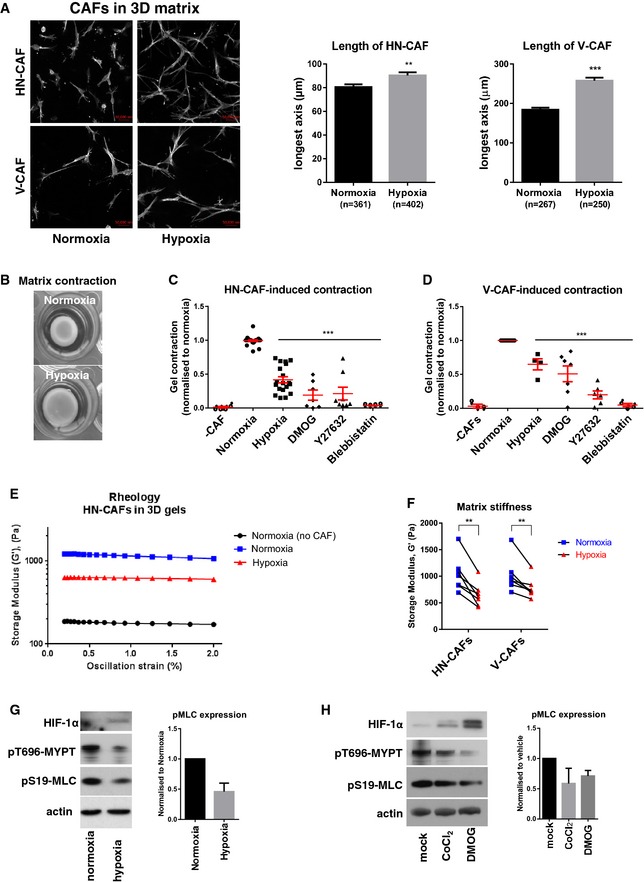
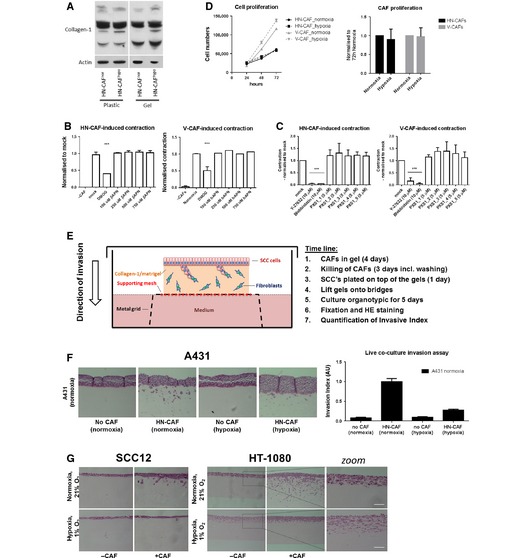
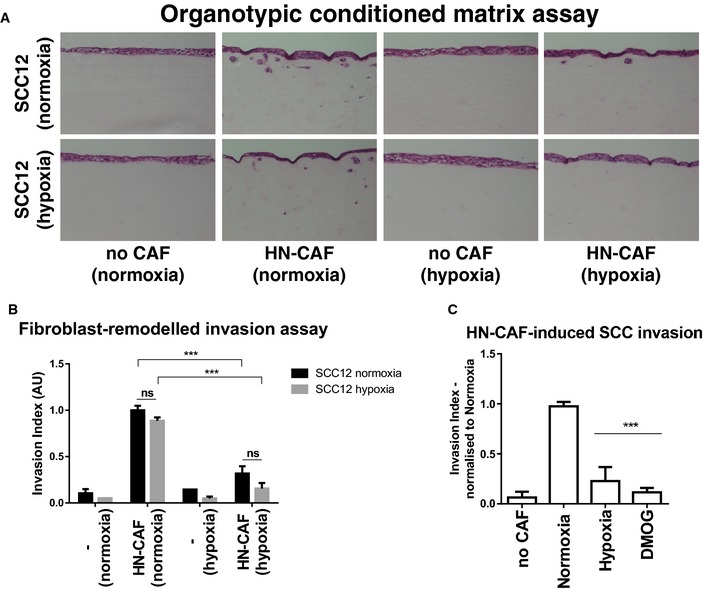
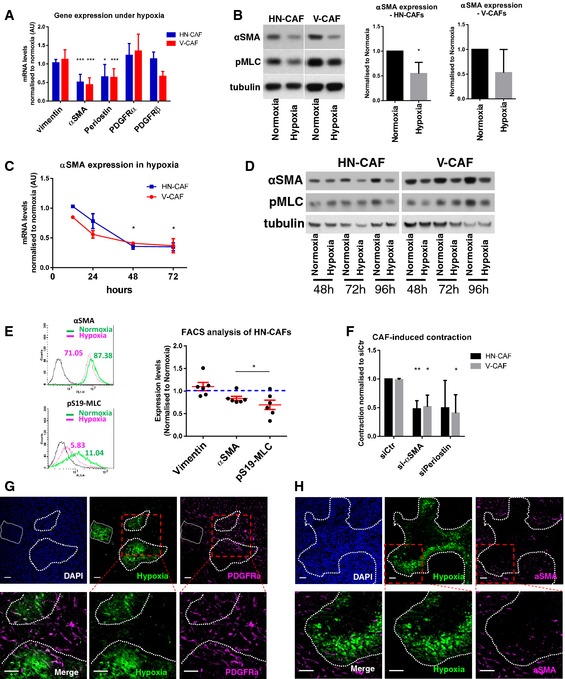
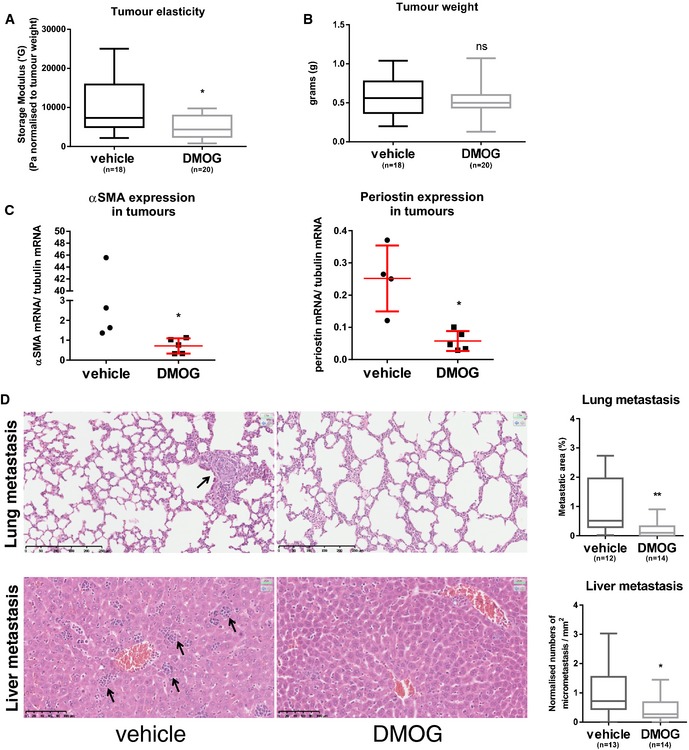
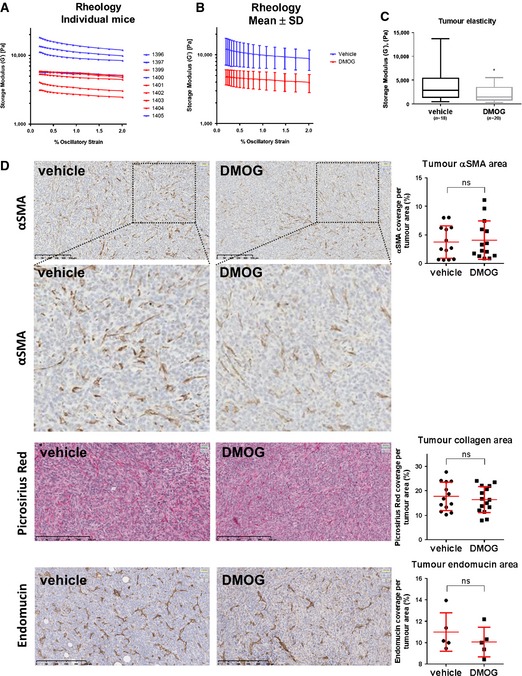
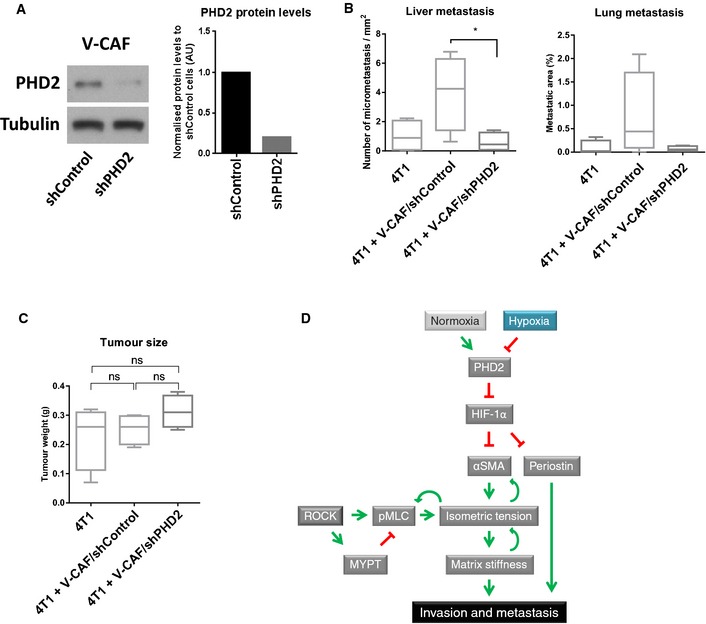
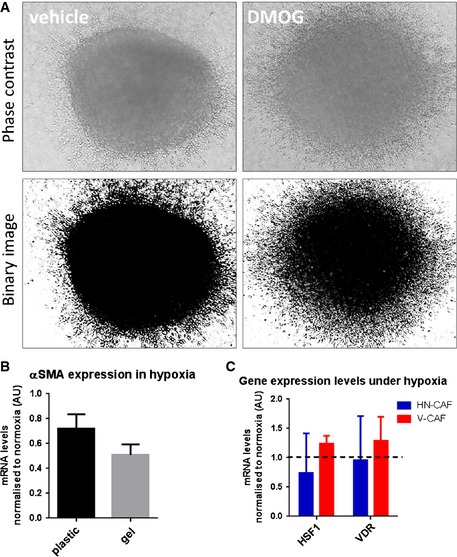
Cancer-associated fibroblasts (CAFs) interact with tumour cells and promote growth and metastasis. Here, we show that CAF activation is reversible: chronic hypoxia deactivates CAFs, resulting in the loss of contractile force, reduced remodelling of the surrounding extracellular matrix and, ultimately, impaired CAF-mediated cancer cell invasion. Hypoxia inhibits prolyl hydroxylase domain protein 2 (PHD2), leading to hypoxia-inducible factor (HIF)-1α stabilisation, reduced expression of αSMA and periostin, and reduced myosin II activity. Loss of PHD2 in CAFs phenocopies the effects of hypoxia, which can be prevented by simultaneous depletion of HIF-1α. Treatment with the PHD inhibitor DMOG in an orthotopic breast cancer model significantly decreases spontaneous metastases to the lungs and liver, associated with decreased tumour stiffness and fibroblast activation. PHD2 depletion in CAFs co-injected with tumour cells similarly prevents CAF-induced metastasis to lungs and liver. Our data argue that reversion of CAFs towards a less active state is possible and could have important clinical implications.
Overview
The claims and statistics of this paper haven’t been checked yet.
Free: it reads the open-access text and checks the first 5 claims that cite a source we can check. Create a free account to check every claim.
Integrity signals
Registry
Cites
Statistics
Figures
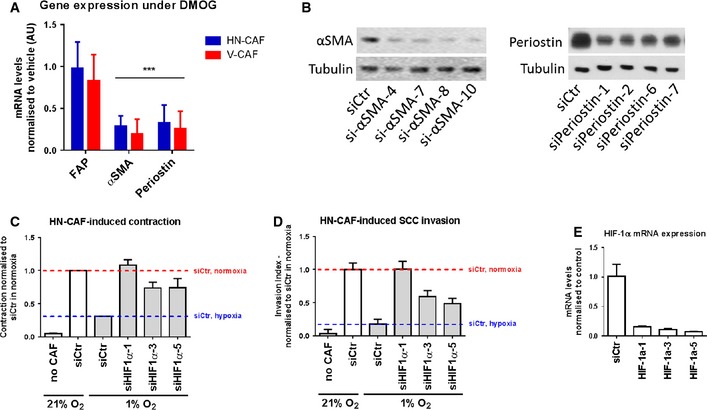
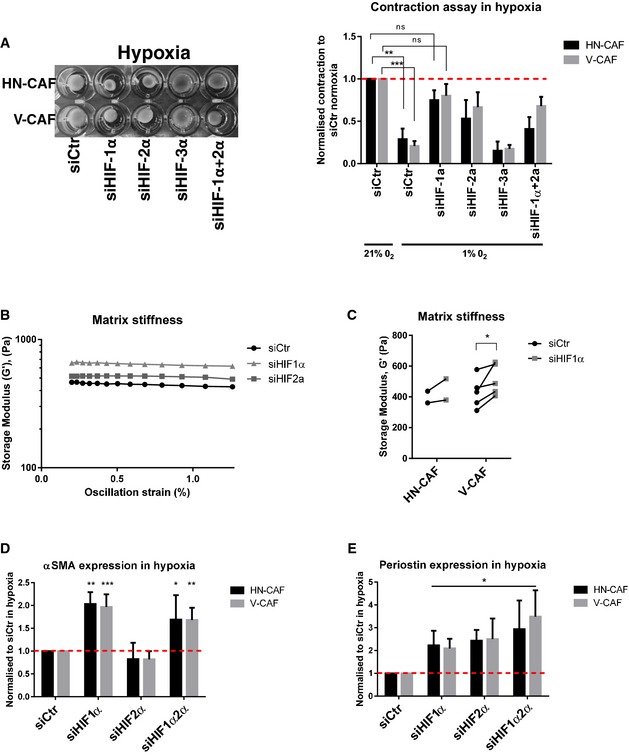
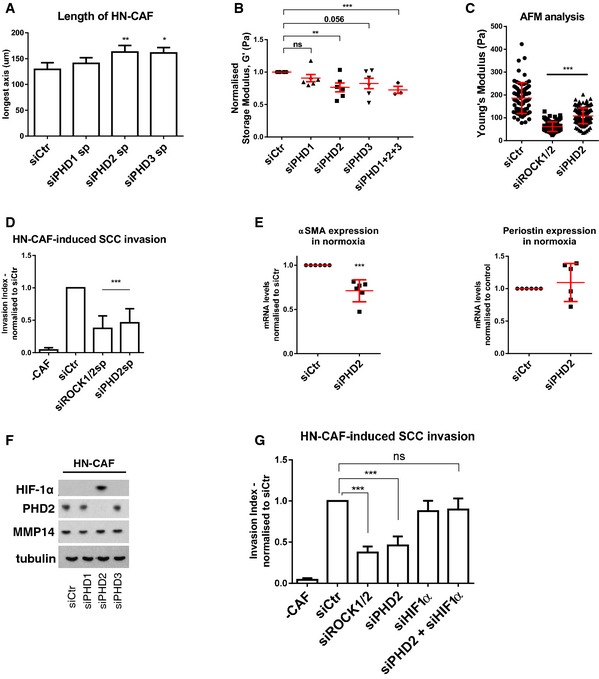
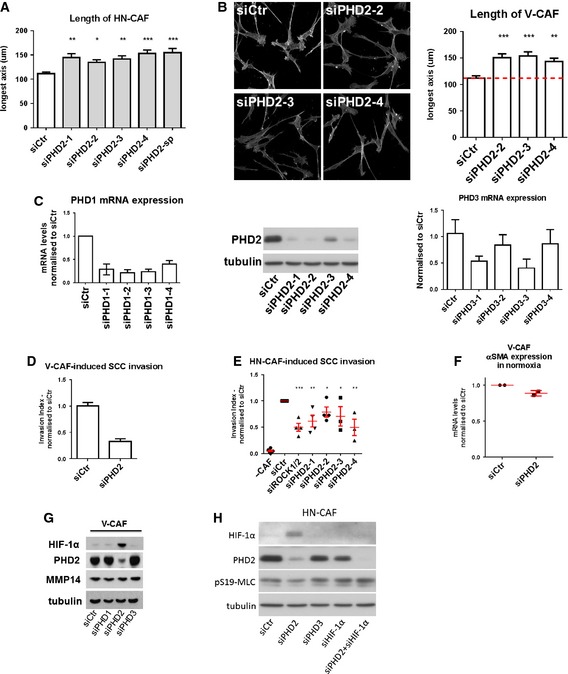
Verification
Claims the paper makes
The claims and statistics of this paper haven’t been checked yet.
Free: it reads the open-access text and checks the first 5 claims that cite a source we can check. Create a free account to check every claim.
Claims other papers make about this one
Each is checked against this paper’s own text: does it say what the citing paper says it does?
The cited source says what the claim attributes to it.
In the citing paper
“In addition to promoting local invasion, CAFs are able to boost metastasis in experimental models, and this correlated with their ability to remodel the ECM91–93.”
From A framework for advancing our understanding of cancer-associated fibroblasts (2020) · cites this paper as [92]
Self-check
Percentages, sums and reported differences re-computed from the paper’s own numbers.
The self-check needs the paper’s full text.
Citations
Cites
2 retracted
Lysyl oxidase is essential for hypoxia-induced metastasis
Erler, J. T., Bennewith, K. L., Nicolau, M., Dornhöfer, N., Kong, C., Le, Q.-T., Chi, J.-T. A., Jeffrey, S. S., & Giaccia, A. J. (2006) · Nature · doi:10.1038/nature04695 · Cited by 1,309
Self-citationRetractedGilkes, D. M., Bajpai, S., Chaturvedi, P., Wirtz, D., & Semenza, G. L. (2013) · Journal of Biological Chemistry · doi:10.1074/jbc.m112.442939 · Cited by 467
RetractedMolecular Mechanisms of Stress-Responsive Changes in Collagen and Elastin Networks in Skin
Aziz, J., Shezali, H., Radzi, Z., Yahya, N. A., Abu Kassim, N. H., Czernuszka, J., & Rahman, M. T. (2016) · Skin Pharmacology and Physiology · doi:10.1159/000447017 · Cited by 7,323
Hypoxia — a key regulatory factor in tumour growth
Harris, A. L. (2002) · Nature Reviews Cancer · doi:10.1038/nrc704 · Cited by 5,177 · cited 1×
“Hypoxia is associated with metastasis and poor prognosis [10]; however, while all solid tumours over several millimetres contain regions of hypoxia, most tumour cells are actually non-migratory.”
Accessories to the Crime: Functions of Cells Recruited to the Tumor Microenvironment
Hanahan, D., & Coussens, L. M. (2012) · Cancer Cell · doi:10.1016/j.ccr.2012.02.022 · Cited by 4,632 · cited 1×
“The tumour microenvironment plays an important role in the development and spread of cancer [1].”
Matrix Crosslinking Forces Tumor Progression by Enhancing Integrin Signaling
Levental, K. R., Yu, H., Kass, L., Lakins, J. N., Egeblad, M., Erler, J. T., Fong, S. F. T., Csiszar, K., Giaccia, A., Weninger, W., et al. (2009) · Cell · doi:10.1016/j.cell.2009.10.027 · Cited by 4,101 · cited 6×
“Collagen stiffening can be caused by increased covalent cross-linking by enzymes of the lysyl oxidase (LOX) family [7,20 – 22].”
InfluentialSelf-citationOrimo, A., Gupta, P. B., Sgroi, D. C., Arenzana-Seisdedos, F., Delaunay, T., Naeem, R., Carey, V. J., Richardson, A. L., & Weinberg, R. A. (2005) · Cell · doi:10.1016/j.cell.2005.02.034 · Cited by 3,759
Epstein, A. C. R., Gleadle, J. M., McNeill, L. A., Hewitson, K. S., O'Rourke, J., Mole, D. R., Mukherji, M., Metzen, E., Wilson, M. I., Dhanda, A., et al. (2001) · Cell · doi:10.1016/s0092-8674(01)00507-4 · Cited by 3,333
Stromal fibroblasts in cancer initiation and progression
Bhowmick, N. A., Neilson, E. G., & Moses, H. L. (2004) · Nature · doi:10.1038/nature03096 · Cited by 2,302 · cited 1×
“One of the most abundant cell types of the tumour microenvironment is cancer-associated fibroblasts (CAFs) [2].”
Hypoxia in cancer: significance and impact on clinical outcome
Vaupel, P., & Mayer, A. (2007) · Cancer and Metastasis Reviews · doi:10.1007/s10555-007-9055-1 · Cited by 2,240 · cited 1×
“Hypoxia is another key feature of the tumour microenvironment [9].”
Cited by
The biology and function of fibroblasts in cancer
Kalluri, R. (2016) · Nature Reviews Cancer · doi:10.1038/nrc.2016.73 · Cited by 4,366
A framework for advancing our understanding of cancer-associated fibroblasts
Sahai, E., Astsaturov, I., Cukierman, E., DeNardo, D. G., Egeblad, M., Evans, R. M., Fearon, D., Greten, F. R., Hingorani, S. R., Hunter, T., et al. (2020) · Nature Reviews Cancer · doi:10.1038/s41568-019-0238-1 · Cited by 3,863
Self-citationDiversity and biology of cancer-associated fibroblasts
Biffi, G., & Tuveson, D. A. (2021) · Physiological Reviews · doi:10.1152/physrev.00048.2019 · Cited by 1,265
The hypoxic tumour microenvironment
Petrova, V., Annicchiarico-Petruzzelli, M., Melino, G., & Amelio, I. (2018) · Oncogenesis · doi:10.1038/s41389-017-0011-9 · Cited by 1,019
Yuan, Z., Li, Y., Zhang, S., Wang, X., Dou, H., Yu, X., Zhang, Z., Yang, S., & Xiao, M. (2023) · Molecular Cancer · doi:10.1186/s12943-023-01744-8 · Cited by 977
In search of definitions: Cancer‐associated fibroblasts and their markers
Nurmik, M., Ullmann, P., Rodriguez, F., Haan, S., & Letellier, E. (2020) · International Journal of Cancer · doi:10.1002/ijc.32193 · Cited by 739
Fibroblasts in cancer: Unity in heterogeneity
Chhabra, Y., & Weeraratna, A. T. (2023) · Cell · doi:10.1016/j.cell.2023.03.016 · Cited by 474
The ever-expanding role of HIF in tumour and stromal biology
LaGory, E. L., & Giaccia, A. J. (2016) · Nature Cell Biology · doi:10.1038/ncb3330 · Cited by 430
Mechanisms and impact of altered tumour mechanics
Mohammadi, H., & Sahai, E. (2018) · Nature Cell Biology · doi:10.1038/s41556-018-0131-2 · Cited by 336
Self-citationAdvances in PET imaging of cancer
Schwenck, J., Sonanini, D., Cotton, J. M., Rammensee, H.-G., la Fougère, C., Zender, L., & Pichler, B. J. (2023) · Nature Reviews Cancer · doi:10.1038/s41568-023-00576-4 · Cited by 312
Becker, L. M., O’Connell, J. T., Vo, A. P., Cain, M. P., Tampe, D., Bizarro, L., Sugimoto, H., McGow, A. K., Asara, J. M., Lovisa, S., et al. (2020) · Cell Reports · doi:10.1016/j.celrep.2020.107701 · Cited by 291
Fibroblast activation in cancer: when seed fertilizes soil
Kuzet, S.-E., & Gaggioli, C. (2016) · Cell and Tissue Research · doi:10.1007/s00441-016-2467-x · Cited by 290
“On the contrary and rather surprisingly, Erler and coworkers provided evidence that prolonged hypoxia can eventually lead to the deactivation of CAFs and reduced ECM remodeling (Madsen et al. 2015).”
InfluentialVennin, C., Mélénec, P., Rouet, R., Nobis, M., Cazet, A. S., Murphy, K. J., Herrmann, D., Reed, D. A., Lucas, M. C., Warren, S. C., et al. (2019) · Nature Communications · doi:10.1038/s41467-019-10968-6 · Cited by 268
Self-citationCancer Associated Fibroblasts: The Architects of Stroma Remodeling
Santi, A., Kugeratski, F. G., & Zanivan, S. (2018) · PROTEOMICS · doi:10.1002/pmic.201700167 · Cited by 244
Wullkopf, L., West, A.-K. V., Leijnse, N., Cox, T. R., Madsen, C. D., Oddershede, L. B., & Erler, J. T. (2018) · Molecular Biology of the Cell · doi:10.1091/mbc.e18-05-0319 · Cited by 242
Self-citationCancer-associated fibroblasts—heroes or villains?
Gieniec, K. A., Butler, L. M., Worthley, D. L., & Woods, S. L. (2019) · British Journal of Cancer · doi:10.1038/s41416-019-0509-3 · Cited by 213
Matrix Stiffness Contributes to Cancer Progression by Regulating Transcription Factors
Ishihara, S., & Haga, H. (2022) · Cancers · doi:10.3390/cancers14041049 · Cited by 195
Cancer-associated fibroblasts: The chief architect in the tumor microenvironment
Sarkar, M., Nguyen, T., Gundre, E., Ogunlusi, O., El-Sobky, M. H., Giri, B., & Sarkar, T. R. (2023) · Frontiers in Cell and Developmental Biology · doi:10.3389/fcell.2023.1089068 · Cited by 165
Bigos, K. J. A., Quiles, C. G., Lunj, S., Smith, D. J., Krause, M., Troost, E. G. C., West, C., Hoskin, P., & Choudhury, A. (2024) · Frontiers in Oncology · doi:10.3389/fonc.2024.1331355 · Cited by 166
Crosstalk between Notch, HIF-1α and GPER in Breast Cancer EMT
De Francesco, E. M., Maggiolini, M., & Musti, A. M. (2018) · International Journal of Molecular Sciences · doi:10.3390/ijms19072011 · Cited by 142
Cancer associated fibroblasts: is the force the path to the dark side?
Barbazán, J., & Matic Vignjevic, D. (2019) · Current Opinion in Cell Biology · doi:10.1016/j.ceb.2018.09.002 · Cited by 160
Sugahara, M., Tanaka, T., & Nangaku, M. (2017) · Kidney International · doi:10.1016/j.kint.2017.02.035 · Cited by 158
Hypoxia inducible factor (HIF) in the tumor microenvironment: friend or foe?
Huang, Y., Lin, D., & Taniguchi, C. M. (2017) · Science China Life Sciences · doi:10.1007/s11427-017-9178-y · Cited by 142
Schwörer, S., Cimino, F. V., Ros, M., Tsanov, K. M., Ng, C., Lowe, S. W., Carmona‐Fontaine, C., & Thompson, C. B. (2023) · Cancer Research · doi:10.1158/0008-5472.can-22-2316 · Cited by 160
Sormendi, S., & Wielockx, B. (2018) · Frontiers in Immunology · doi:10.3389/fimmu.2018.00040 · Cited by 141
Jena, B. C., Sarkar, S., Rout, L., & Mandal, M. (2021) · Cancer Letters · doi:10.1016/j.canlet.2021.08.002 · Cited by 150
Xin, Y., Li, K., Huang, M. L., Liang, C., Siemann, D. W., Wu, L., Tan, Y., & Tang, X. (2023) · Oncogene · doi:10.1038/s41388-023-02844-x · Cited by 149
Extracellular matrix remodeling in the tumor immunity
Du, W., Xia, X., Hu, F., & Yu, J. (2024) · Frontiers in Immunology · doi:10.3389/fimmu.2023.1340634 · Cited by 135
Kugeratski, F. G., Atkinson, S. J., Neilson, L. J., Lilla, S., Knight, J. R. P., Serneels, J., Juin, A., Ismail, S., Bryant, D. M., Markert, E. K., et al. (2019) · Science Signaling · doi:10.1126/scisignal.aan8247 · Cited by 125
“Furthermore, decreasing PHD2 levels in CAFs reduces their activated phenotype and their pro-metastatic activity in a 4T1 breast cancer orthotopic model (18).”
Tension Creates an Endoreplication Wavefront that Leads Regeneration of Epicardial Tissue
Cao, J., Wang, J., Jackman, C. P., Cox, A. H., Trembley, M. A., Balowski, J. J., Cox, B. D., De Simone, A., Dickson, A. L., Di Talia, S., et al. (2017) · Developmental Cell · doi:10.1016/j.devcel.2017.08.024 · Cited by 130
The Complexity of Translating Anti-angiogenesis Therapy from Basic Science to the Clinic
Ye, W. (2016) · Developmental Cell · doi:10.1016/j.devcel.2016.03.015 · Cited by 129
Cancer Metabolism Drives a Stromal Regenerative Response
Schwörer, S., Vardhana, S. A., & Thompson, C. B. (2019) · Cell Metabolism · doi:10.1016/j.cmet.2019.01.015 · Cited by 123
D’Arcangelo, E., Wu, N. C., Cadavid, J. L., & McGuigan, A. P. (2020) · British Journal of Cancer · doi:10.1038/s41416-019-0705-1 · Cited by 126
Nielsen, S. R., Strøbech, J. E., Horton, E. R., Jackstadt, R., Laitala, A., Bravo, M. C., Maltese, G., Jensen, A. R. D., Reuten, R., Rafaeva, M., et al. (2021) · Nature Communications · doi:10.1038/s41467-021-23731-7 · Cited by 125
Self-citationCancer-Associated Fibroblasts in the Hypoxic Tumor Microenvironment
Kim, I., Choi, S., Yoo, S., Lee, M., & Kim, I. (2022) · Cancers · doi:10.3390/cancers14143321 · Cited by 118
Hypoxia-inducible factor in breast cancer: role and target for breast cancer treatment
Zhi, S., Chen, C., Huang, H., Zhang, Z., Zeng, F., & Zhang, S. (2024) · Frontiers in Immunology · doi:10.3389/fimmu.2024.1370800 · Cited by 105
Cancer-associated fibroblasts mediate cancer progression and remodel the tumouroid stroma
Pape, J., Magdeldin, T., Stamati, K., Nyga, A., Loizidou, M., Emberton, M., & Cheema, U. (2020) · British Journal of Cancer · doi:10.1038/s41416-020-0973-9 · Cited by 96
Kuninty, P. R., Bojmar, L., Tjomsland, V., Larsson, M., Storm, G., Östman, A., Sandström, P., & Prakash, J. (2016) · Oncotarget · doi:10.18632/oncotarget.7651 · Cited by 96
Ortiz-Otero, N., Clinch, A. B., Hope, J., Wang, W., Reinhart-King, C. A., & King, M. R. (2020) · Oncotarget · doi:10.18632/oncotarget.27510 · Cited by 87
The Endosteal Niche in Breast Cancer Bone Metastasis
Haider, M., Smit, D. J., & Taipaleenmäki, H. (2020) · Frontiers in Oncology · doi:10.3389/fonc.2020.00335 · Cited by 90
Cancer-associated fibroblasts, tumor and radiotherapy: interactions in the tumor micro-environment
Raaijmakers, K., Adema, G. J., Bussink, J., & Ansems, M. (2024) · Journal of Experimental & Clinical Cancer Research · doi:10.1186/s13046-024-03251-0 · Cited by 88
PHD2: from hypoxia regulation to disease progression
Wielockx, B., & Meneses, A. (2016) · Hypoxia · doi:10.2147/hp.s53576 · Cited by 83
“These cells promote tumor survival and cancer cell dissemination through the secretion of growth factors and protumor chemokines, as well as MMPs. 89 Madsen et al 109 observed that prolonged exposure to hypoxia deactivates CAFs, which consequently led to reduced remodeling and stiffening of the surrounding extracellul…”
The fibrotic and immune microenvironments as targetable drivers of metastasis
Boulter, L., Bullock, E., Mabruk, Z., & Brunton, V. G. (2020) · British Journal of Cancer · doi:10.1038/s41416-020-01172-1 · Cited by 82
Jena, B. C., Das, C. K., Bharadwaj, D., & Mandal, M. (2020) · Biochimica et Biophysica Acta (BBA) - Reviews on Cancer · doi:10.1016/j.bbcan.2020.188416 · Cited by 80
Hypoxia as a Modulator of Inflammation and Immune Response in Cancer
Castillo‐Rodríguez, R. A., Trejo‐Solís, C., Cabrera‐Cano, A., Gómez‐Manzo, S., & Dávila‐Borja, V. M. (2022) · Cancers · doi:10.3390/cancers14092291 · Cited by 81
Piwócka, O., Piotrowski, I., Suchorska, W. M., & Kulcenty, K. I. (2024) · Frontiers in Molecular Biosciences · doi:10.3389/fmolb.2024.1343523 · Cited by 80
Wang, S., Englund, E., Kjellman, P., Li, Z., Ahnlide, J. K., Rodriguez-Cupello, C., Saggioro, M., Kanzaki, R., Pietras, K., Lindgren, D., et al. (2021) · Nature Cell Biology · doi:10.1038/s41556-021-00702-0 · Cited by 69
Self-citationRetractedMetabolic control of collagen synthesis
Guillard, J., & Schwörer, S. (2024) · Matrix Biology · doi:10.1016/j.matbio.2024.07.003 · Cited by 69
Hypoxia, a key factor in the immune microenvironment
Hu, J., Li, X., Yang, L., & Li, H. (2022) · Biomedicine & Pharmacotherapy · doi:10.1016/j.biopha.2022.113068 · Cited by 68
Whom to blame for metastasis, the epithelial–mesenchymal transition or the tumor microenvironment?
Pietilä, M., Ivaska, J., & Mani, S. A. (2016) · Cancer Letters · doi:10.1016/j.canlet.2015.12.033 · Cited by 68
Kadel, D., Zhang, Y., Sun, H.-R., Zhao, Y., Dong, Q.-Z., & Qin, L.-X. (2019) · Cell Biology and Toxicology · doi:10.1007/s10565-019-09461-z · Cited by 63
Comito, G., Segura, C. P., Taddei, M. L., Lanciotti, M., Serni, S., Morandi, A., Chiarugi, P., & Giannoni, E. (2016) · Oncotarget · doi:10.18632/oncotarget.9497 · Cited by 64
Wu, T., Xiong, S., Chen, M., Tam, B. T., Chen, W., Dong, K., Ma, Z., Wang, Z., & Ouyang, G. (2023) · Matrix Biology · doi:10.1016/j.matbio.2023.05.006 · Cited by 65
The multifaceted role of EGLN family prolyl hydroxylases in cancer: going beyond HIF regulation
Strocchi, S., Reggiani, F., Gobbi, G., Ciarrocchi, A., & Sancisi, V. (2022) · Oncogene · doi:10.1038/s41388-022-02378-8 · Cited by 61
Fandrey, J., Schödel, J., Eckardt, K., Katschinski, D. M., & Wenger, R. H. (2019) · Pflügers Archiv - European Journal of Physiology · doi:10.1007/s00424-019-02334-8 · Cited by 60
Khouzam, R. A., Janji, B., Thiery, J., Zaarour, R. F., Chamseddine, A. N., Mayr, H., Savagner, P., Kiéda, C., Gad, S., Buart, S., et al. (2023) · Seminars in Cancer Biology · doi:10.1016/j.semcancer.2023.11.008 · Cited by 58
Cancer-Associated Fibroblast Functions as a Road-Block in Cancer Therapy
De, P. K., Aske, J. C., & Dey, N. (2021) · Cancers · doi:10.3390/cancers13205246 · Cited by 57
Hypoxic Signalling in Tumour Stroma
Laitala, A., & Erler, J. T. (2018) · Frontiers in Oncology · doi:10.3389/fonc.2018.00189 · Cited by 58
Self-citationTargeting ROCK activity to disrupt and prime pancreatic cancer for chemotherapy
Vennin, C., Rath, N., Pajic, M., Olson, M. F., & Timpson, P. (2017) · Small GTPases · doi:10.1080/21541248.2017.1345712 · Cited by 56
Feng, J., Zhang, Y., She, X., Sun, Y., Fan, L., Ren, X., Fu, H., Liu, C., Li, P., Zhao, C., et al. (2018) · Oncogene · doi:10.1038/s41388-018-0423-9 · Cited by 54
Proinvasive extracellular matrix remodeling for tumor progression
Kaushik, N., Kim, S., Suh, Y., & Lee, S. (2018) · Archives of Pharmacal Research · doi:10.1007/s12272-018-1097-0 · Cited by 53
Ou, Z., ZHU, L. B., Chen, X., Liu, T., Cheng, G., Liu, R., Zhang, S., Tan, W., Lin, D., & Wu, C. H. (2024) · Cancer Research · doi:10.1158/0008-5472.can-24-1185 · Cited by 51
HIF-1 stabilization exerts anticancer effects in breast cancer cells in vitro and in vivo
Kachamakova‐Trojanowska, N., Podkalicka, P., Bogacz, T., Barwacz, S. A., Józkowicz, A., Dulak, J., & Łoboda, A. (2020) · Biochemical Pharmacology · doi:10.1016/j.bcp.2020.113922 · Cited by 51
Tumor biology and multidisciplinary strategies of oligometastasis in gastrointestinal cancers
Zhao, Y., Li, J., Li, D., Wang, Z., Zhao, J., Wu, X., Sun, Q., Lin, P. P., Plum, P. S., Damanakis, A. I., et al. (2019) · Seminars in Cancer Biology · doi:10.1016/j.semcancer.2019.08.026 · Cited by 50
A Quick Guide to CAF Subtypes in Pancreatic Cancer
Brichkina, A. I., Polo, P., Sharma, S. D., Visestamkul, N., & Lauth, M. (2023) · Cancers · doi:10.3390/cancers15092614 · Cited by 48
The potential role and trend of HIF‑1α in intervertebral disc degeneration: Friend or foe? (Review)
Li, Y., Liu, S., Pan, D., Xu, B., Xing, X., Zhou, H., Zhang, B., Zhou, S., Ning, G., & Feng, S. (2021) · Molecular Medicine Reports · doi:10.3892/mmr.2021.11878 · Cited by 48
Liu, Q., Palmgren, V. A. C., Danen, E. H. J., & Dévédec, S. E. L. (2022) · Molecular Biology Reports · doi:10.1007/s11033-022-07802-6 · Cited by 48
Toward Normalization of the Tumor Microenvironment for Cancer Therapy
Zheng, J., & Gao, P. (2019) · Integrative Cancer Therapies · doi:10.1177/1534735419862352 · Cited by 47
The Interplay between T Cells and Cancer: The Basis of Immunotherapy
Chen, C., Liu, X., Chang, C., Wang, H. Y., & Wang, R. (2023) · Genes · doi:10.3390/genes14051008 · Cited by 46
Recent advances in tumor microenvironment associated therapeutic strategies and evaluation models
Haider, T., Sandha, K. K., Soni, V., & Gupta, P. N. (2020) · Materials Science and Engineering C · doi:10.1016/j.msec.2020.111229 · Cited by 45
Yang, Y. Q., Fan, Q., Huang, J., Wu, Y., Lin, H., & Zhang, Q. (2021) · Journal of Oncology · doi:10.1155/2021/9915312 · Cited by 44
The Asparagine Hydroxylase FIH: A Unique Oxygen Sensor
Volkova, Y. L., Pickel, C., Jucht, A. E., Wenger, R. H., & Scholz, C. C. (2022) · Antioxidants and Redox Signaling · doi:10.1089/ars.2022.0003 · Cited by 44
Zhang, T., Lv, Q., & Jin, W. (2024) · Biochimica et Biophysica Acta (BBA) - Reviews on Cancer · doi:10.1016/j.bbcan.2024.189137 · Cited by 44
Hypoxia induces stress fiber formation in adipocytes in the early stage of obesity
Anvari, G., & Bellas, E. (2021) · Scientific Reports · doi:10.1038/s41598-021-00335-1 · Cited by 43
Cancer-associated fibroblasts: heterogeneity, tumorigenicity and therapeutic targets
Lv, K., & He, T. (2024) · Molecular Biomedicine · doi:10.1186/s43556-024-00233-8 · Cited by 42
Context-dependent intravital imaging of therapeutic response using intramolecular FRET biosensors
Conway, J. R. W., Warren, S. C., & Timpson, P. (2017) · Methods · doi:10.1016/j.ymeth.2017.04.014 · Cited by 42
Perspectives on Hypoxia Signaling in Tumor Stroma
Zhang, Y., Coleman, M., & Brekken, R. A. (2021) · Cancers · doi:10.3390/cancers13123070 · Cited by 39
Cao, H., Cheng, H. S., Wang, J. K., Tan, N. S., & Tay, C. Y. (2021) · Acta Biomaterialia · doi:10.1016/j.actbio.2021.03.037 · Cited by 39
Tajaldini, M., Poorkhani, A., Amiriani, T., Amiriani, A., Javid, H., Aref, P., Ahmadi, F., Sadani, S., & Khori, V. (2023) · European Journal of Pharmacology · doi:10.1016/j.ejphar.2023.175991 · Cited by 40
Henríquez, J. A., Sleeman, J. P., & Garvalov, B. K. (2018) · Clinical & Experimental Metastasis · doi:10.1007/s10585-018-9930-x · Cited by 39
Conway, J. R. W., Vennin, C., Cazet, A., Herrmann, D., Murphy, K. J., Warren, S. C., Wullkopf, L., Boulghourjian, A., Zaratzian, A., Silva, A. M. D., et al. (2017) · Scientific Reports · doi:10.1038/s41598-017-17177-5 · Cited by 34
Self-citationStress responses in stromal cells and tumor homeostasis
Vitale, I., Manic, G., Galassi, C., & Galluzzi, L. (2019) · Pharmacology & Therapeutics · doi:10.1016/j.pharmthera.2019.04.004 · Cited by 34
Mechanobiology of Colorectal Cancer
Brás, M. M., Sousa, S. R., Carneiro, F., Radmacher, M., & Granja, P. L. (2022) · Cancers · doi:10.3390/cancers14081945 · Cited by 33
Cancer‐associated fibroblasts: Is it a key to an intricate lock of tumorigenesis?
Aden, D., Zaheer, S., Ahluwalia, H., & Ranga, S. (2023) · Cell Biology International · doi:10.1002/cbin.12004 · Cited by 33
Zubal, M., Výmolová, B., Matrasová, I., Výmola, P., Vepřková, J., Syrůček, M., Tomáš, R., Vaníčková, Z., Krepela, E., Konečná, D., et al. (2023) · Pathology · doi:10.1016/j.pathol.2023.05.003 · Cited by 33
The plasticity of cancer-associated fibroblasts
Xia, Z., & Wever, O. D. (2025) · Trends in cancer · doi:10.1016/j.trecan.2025.04.012 · Cited by 32
HIF hydroxylase inhibitors decrease cellular oxygen consumption depending on their selectivity
Sulser, P., Pickel, C., Günter, J., Leissing, T. M., Crean, D., Schofield, C. J., Wenger, R. H., & Scholz, C. C. (2019) · The FASEB Journal · doi:10.1096/fj.201902240r · Cited by 32
Mechanobiology in oncology: basic concepts and clinical prospects
Chen, M. B., Javanmardi, Y., Shahreza, S., Serwinski, B., Aref, A. R., Djordjevic, B., & Moeendarbary, E. (2023) · Frontiers in Cell and Developmental Biology · doi:10.3389/fcell.2023.1239749 · Cited by 31
Self-citationHypoxia suppresses myofibroblast differentiation by changing RhoA activity
Leinhos, L., Peters, J., Krull, S., Helbig, L., Vogler, M., Levay, M., van Belle, G. J., Ridley, A. J., Lutz, S., Katschinski, D. M., et al. (2019) · Journal of Cell Science · doi:10.1242/jcs.223230 · Cited by 30
Labrousse-Arias, D., Martínez-Ruiz, A., & Calzada, M. J. (2017) · Antioxidants and Redox Signaling · doi:10.1089/ars.2017.7275 · Cited by 30
Lalitha, S., Basu, B., Suresh, S., Meera, V., Riya, P. A., Parvathy, S., Das, A. V., Sivakumar, K. C., Sathi, S. N., & James, J. (2020) · Scientific Reports · doi:10.1038/s41598-020-72828-4 · Cited by 30
Musa, M., & Ali, A. (2020) · Future Oncology · doi:10.2217/fon-2020-0384 · Cited by 28
Pathophysiological Integration of Metabolic Reprogramming in Breast Cancer
Corchado‐Cobos, R., García‐Sancha, N., Mendiburu‐Eliçabe, M., Gómez-Vecino, A., Jiménez‐Navas, A., Pérez‐Baena, M. J., Holgado-Madruga, M., Mao, J., Cañueto, J., Castillo‐Lluva, S., et al. (2022) · Cancers · doi:10.3390/cancers14020322 · Cited by 28
DDIT4 promotes malignancy of head and neck squamous cell carcinoma
Zhang, Z., Zhu, H., Zhao, C., Liu, D., Luo, J., Ying, Y., & Zhong, Y. (2022) · Molecular Carcinogenesis · doi:10.1002/mc.23489 · Cited by 27
Kanzaki, R., Reid, S., Bolívar, P., Sjölund, J., Staaf, J., Larsson, S., Shintani, Y., & Pietras, K. (2024) · International Journal of Cancer · doi:10.1002/ijc.35174 · Cited by 27
Nanoparticles for Targeting Intratumoral Hypoxia: Exploiting a Potential Weakness of Glioblastoma
Aldea, M. D., Florian, I. A., Kacsó, G., Craciun, L., Boca, S., Şoriţău, O., & Florian, I. Ş. (2016) · Pharmaceutical Research · doi:10.1007/s11095-016-1947-8 · Cited by 27
The roles and signaling pathways of prolyl-4-hydroxylase 2 in the tumor microenvironment
Li, A., Zhang, Y., Wang, Z., Dong, H., Fu, N., & Han, X. (2019) · Chemico-Biological Interactions · doi:10.1016/j.cbi.2019.02.019 · Cited by 26
The liver metastatic niche: modelling the extracellular matrix in metastasis
Drew, J., & Machesky, L. M. (2021) · Disease Models & Mechanisms · doi:10.1242/dmm.048801 · Cited by 25
Byrnes, J. R., Weeks, A. M., Shifrut, E., Carnevale, J. C., Kirkemo, L. L., Ashworth, A., Marson, A., & Wells, J. A. (2022) · Molecular & Cellular Proteomics · doi:10.1016/j.mcpro.2022.100217 · Cited by 25
CAFs vs. TECs: when blood feuds fuel cancer progression, dissemination and therapeutic resistance
Coursier, D., & Calvo, F. (2024) · Cellular Oncology · doi:10.1007/s13402-024-00931-z · Cited by 25
Metadata
- Authors
- Madsen, C. D., Pedersen, J. T., Venning, F. A., Singh, L. B., Moeendarbary, E., Charras, G., Cox, T. R., Sahai, E., & Erler, J. T.
- Affiliations
- University of Copenhagen (DK)
- Massachusetts Institute of Technology (US)
- London Centre for Nanotechnology (GB)
- The Francis Crick Institute (GB)
- Corresponding author
- Madsen, Chris D
- Sahai, Erik
- Erler, Janine T
- ORCID
- Venue
- The EMBO Reports
- Published
- 2015-08-31
- Volume
- 16
- Issue
- 10
- Pages
- 1394-1408
- ISSN
- 1469-221X (ISSN-L)
- 1469-3178
- PMC
- PMC4662858
- OpenAlex
- W1940485834
- Cited by
- 157
- References
- 66
- Citations by year
- 2026: 10 · 2025: 11 · 2024: 18 · 2023: 18 · 2022: 15 · 2021: 15 · 2020: 16 · 2019: 15 · 2018: 12 · 2017: 13 · 2016: 10 · 2015: 2
- FWCI
- 5.39
- Type
- journal article
- Language
- en
- Open access
- hybrid
- doi.org
- Licence
- other-oa
- creativecommons.org/licenses/by/4.0/ (tdm)
- creativecommons.org/licenses/by/4.0/ (vor)
- Locations
- EMBO Reports (publishedVersion, other-oa)
- PubMed Central (publishedVersion, cc-by)
- PubMed (publishedVersion)
- DSpace@MIT (Massachusetts Institute of Technology) (submittedVersion, cc-by-nc)
- UCL Discovery (University College London) (submittedVersion)
- Figshare (submittedVersion, cc-by)
- Lund University Publications (Lund University) (submittedVersion)
- Research at the University of Copenhagen (University of Copenhagen) (submittedVersion)
- Funders
- FEBS long‐term Fellowship
- Wellcome Trust‐MIT Postdoctoral Fellowship
- Cancer Research, UK (CRUK_A5317)
- Francis Crick Institute
- Novo Nordisk Foundation, Denmark
- Hallas Møller Stipend
- Danish Cancer Society (R117‐A7294‐B2731)
- Danish Council for Independent Research YDUN (1084181001)
- Innovation Fund Denmark (1311‐00010B)
- Topics
- Health Sciences › Medicine › Oncology › Cancer Cells and Metastasis
- Life Sciences › Biochemistry, Genetics and Molecular Biology › Cancer Research › Cancer, Hypoxia, and Metabolism
- Life Sciences › Biochemistry, Genetics and Molecular Biology › Molecular Biology › TGF-β signaling in diseases
- Keywords
- cancer-associated fibroblasts, hypoxia, PHD2, HIF-1α, tumor stiffness, metastasis, extracellular matrix remodeling, myosin II, alpha-smooth muscle actin, periostin, dimethyloxalylglycine, breast cancer, tumor microenvironment
- MeSH terms
- Amino Acids, Dicarboxylic, Animals, Breast, Cell Movement, Female, Fibroblasts, Humans, Mammary Neoplasms, Experimental, Neoplasm Invasiveness, Neoplasm Metastasis, Organ Culture Techniques, Tumor Cells, Cultured, Cell Hypoxia, Cell Adhesion Molecules, Stromal Cells, Myosin Type II, Mice, Hypoxia-Inducible Factor 1, alpha Subunit, Hypoxia-Inducible Factor-Proline Dioxygenases
About these checks
Registry, retraction, Cites and statistics results are computed, not judged, with one exception: a printed reference that no index lists is read once by a model before it counts as a citation error. Claims are extracted by a model and kept only when their quote appears verbatim in the text; each cited source is then checked, with a model’s help, for whether it says what the claim relies on. Those verdicts can be wrong — read the claim’s quote and the cited source before relying on one.
Statistics and arithmetic are recomputed, not judged.
Confidence bands are shown only for fields calibrated on our annotated test set. None is calibrated yet, so no band is shown.
What counts as a claim ›How we measure confidence ›How we check this ›
Are you an author, or do you see a problem with this page? Request a review
Data sources
Bibliographic data: Semantic Scholar, OpenAlex, Crossref.
Contains information from the Semantic Scholar Academic Graph Datasets, made available under the ODC Attribution License (ODC-BY 1.0).
Semantic Scholar’s data is described in: Kinney, R., et al. (2023). The Semantic Scholar Open Data Platform. arXiv:2301.10140.
