

Hypoxia and loss of PHD2 inactivate stromal fibroblasts to decrease tumour stiffness and metastasis
Open accessThe DOI matches its Crossref record; 64 of the 66 references it cites were found in a registry or an index.
Abstract
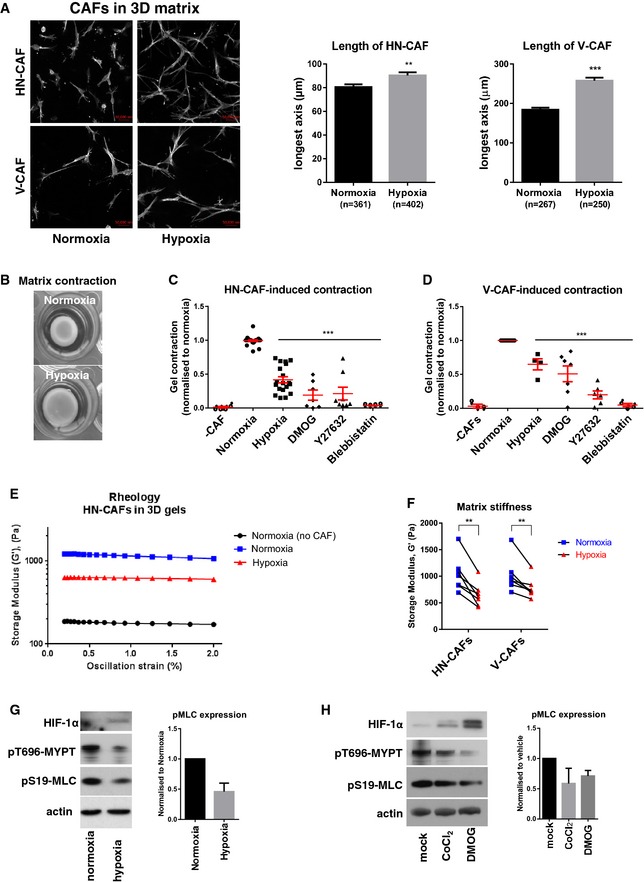
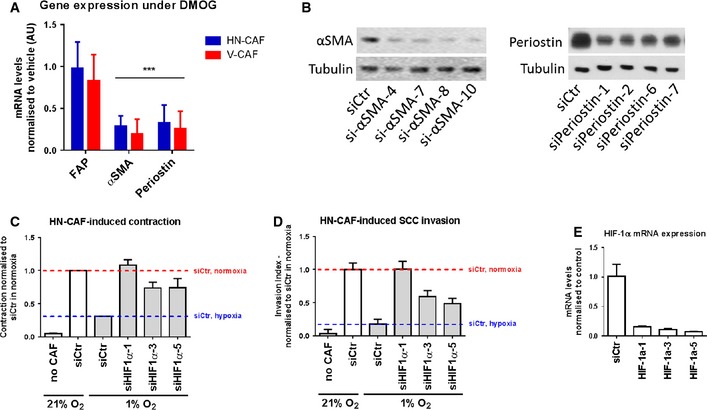
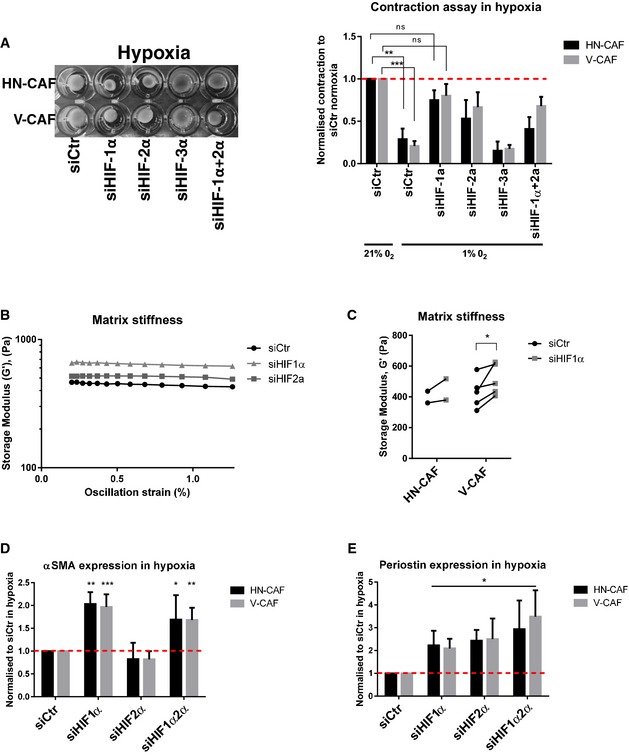
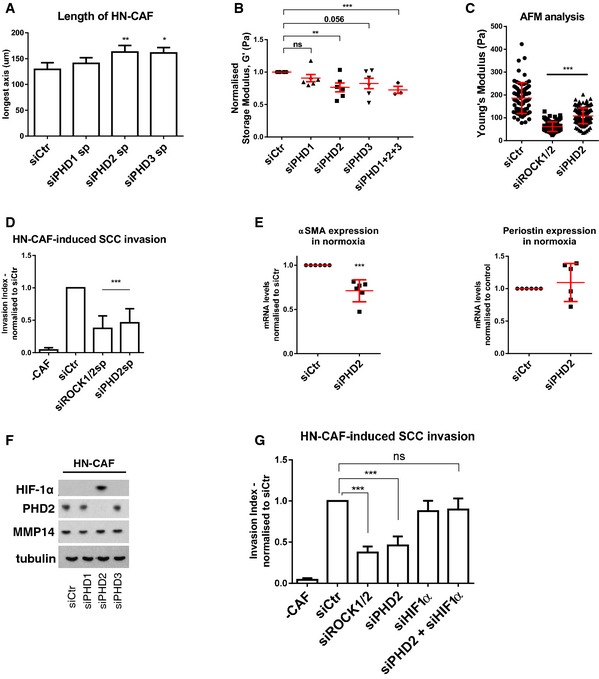
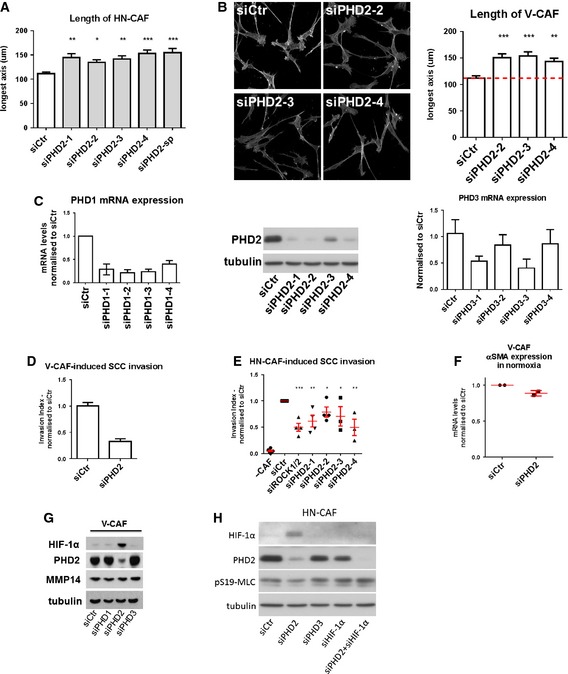
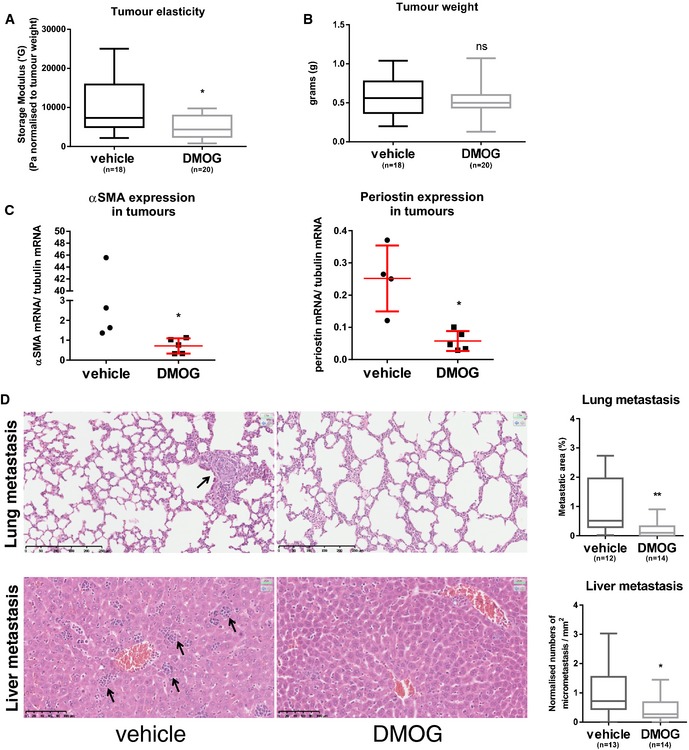
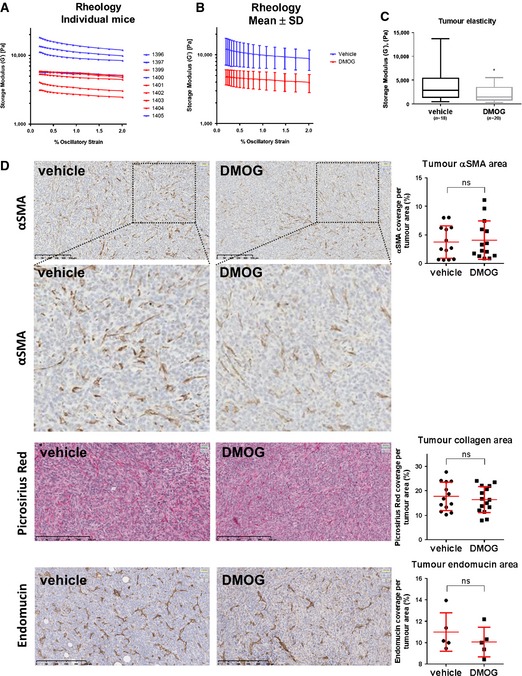
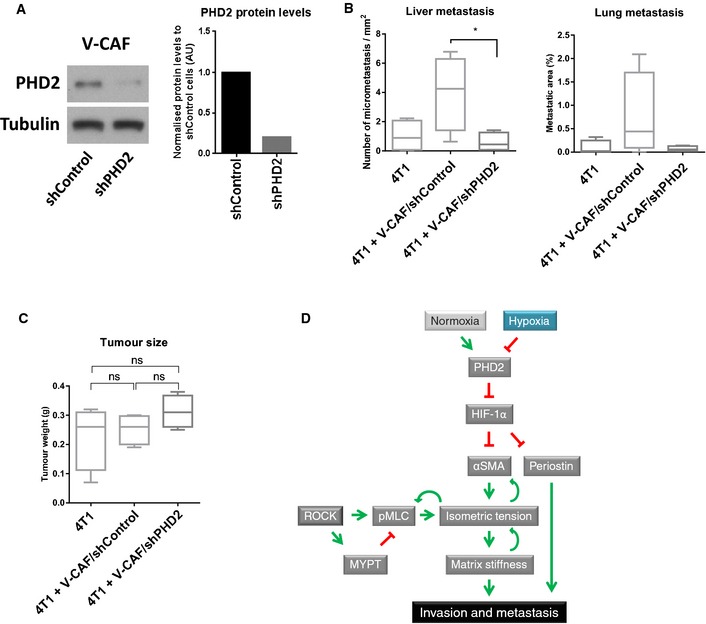
Cancer-associated fibroblasts (CAFs) interact with tumour cells and promote growth and metastasis. Here, we show that CAF activation is reversible: chronic hypoxia deactivates CAFs, resulting in the loss of contractile force, reduced remodelling of the surrounding extracellular matrix and, ultimately, impaired CAF-mediated cancer cell invasion. Hypoxia inhibits prolyl hydroxylase domain protein 2 (PHD2), leading to hypoxia-inducible factor (HIF)-1α stabilisation, reduced expression of αSMA and periostin, and reduced myosin II activity. Loss of PHD2 in CAFs phenocopies the effects of hypoxia, which can be prevented by simultaneous depletion of HIF-1α. Treatment with the PHD inhibitor DMOG in an orthotopic breast cancer model significantly decreases spontaneous metastases to the lungs and liver, associated with decreased tumour stiffness and fibroblast activation. PHD2 depletion in CAFs co-injected with tumour cells similarly prevents CAF-induced metastasis to lungs and liver. Our data argue that reversion of CAFs towards a less active state is possible and could have important clinical implications.
Overview
The claims and statistics of this paper haven’t been checked yet.
Free: it reads the open-access text and checks the first 5 claims that cite a source we can check. Create a free account to check every claim.
Integrity signals
Registry
Cites
Statistics
Figures
Verification
Claims the paper makes
The claims and statistics of this paper haven’t been checked yet.
Free: it reads the open-access text and checks the first 5 claims that cite a source we can check. Create a free account to check every claim.
Claims other papers make about this one
Each is checked against this paper’s own text: does it say what the citing paper says it does?
The cited source says what the claim attributes to it.
In the citing paper
“In addition to promoting local invasion, CAFs are able to boost metastasis in experimental models, and this correlated with their ability to remodel the ECM91–93.”
From A framework for advancing our understanding of cancer-associated fibroblasts (2020) · cites this paper as [92]
Self-check
Percentages, sums and reported differences re-computed from the paper’s own numbers.
The self-check needs the paper’s full text.
Citations
Cites
2 retracted
Lysyl oxidase is essential for hypoxia-induced metastasis
Erler, J. T., Bennewith, K. L., Nicolau, M., Dornhöfer, N., Kong, C., Le, Q.-T., Chi, J.-T. A., Jeffrey, S. S., & Giaccia, A. J. (2006) · Nature · doi:10.1038/nature04695 · Cited by 1,309
Self-citationRetractedGilkes, D. M., Bajpai, S., Chaturvedi, P., Wirtz, D., & Semenza, G. L. (2013) · Journal of Biological Chemistry · doi:10.1074/jbc.m112.442939 · Cited by 467
RetractedMolecular Mechanisms of Stress-Responsive Changes in Collagen and Elastin Networks in Skin
Aziz, J., Shezali, H., Radzi, Z., Yahya, N. A., Abu Kassim, N. H., Czernuszka, J., & Rahman, M. T. (2016) · Skin Pharmacology and Physiology · doi:10.1159/000447017 · Cited by 7,323
Hypoxia — a key regulatory factor in tumour growth
Harris, A. L. (2002) · Nature Reviews Cancer · doi:10.1038/nrc704 · Cited by 5,177 · cited 1×
“Hypoxia is associated with metastasis and poor prognosis [10]; however, while all solid tumours over several millimetres contain regions of hypoxia, most tumour cells are actually non-migratory.”
Accessories to the Crime: Functions of Cells Recruited to the Tumor Microenvironment
Hanahan, D., & Coussens, L. M. (2012) · Cancer Cell · doi:10.1016/j.ccr.2012.02.022 · Cited by 4,632 · cited 1×
“The tumour microenvironment plays an important role in the development and spread of cancer [1].”
Matrix Crosslinking Forces Tumor Progression by Enhancing Integrin Signaling
Levental, K. R., Yu, H., Kass, L., Lakins, J. N., Egeblad, M., Erler, J. T., Fong, S. F. T., Csiszar, K., Giaccia, A., Weninger, W., et al. (2009) · Cell · doi:10.1016/j.cell.2009.10.027 · Cited by 4,101 · cited 6×
“Collagen stiffening can be caused by increased covalent cross-linking by enzymes of the lysyl oxidase (LOX) family [7,20 – 22].”
InfluentialSelf-citationOrimo, A., Gupta, P. B., Sgroi, D. C., Arenzana-Seisdedos, F., Delaunay, T., Naeem, R., Carey, V. J., Richardson, A. L., & Weinberg, R. A. (2005) · Cell · doi:10.1016/j.cell.2005.02.034 · Cited by 3,759
Epstein, A. C. R., Gleadle, J. M., McNeill, L. A., Hewitson, K. S., O'Rourke, J., Mole, D. R., Mukherji, M., Metzen, E., Wilson, M. I., Dhanda, A., et al. (2001) · Cell · doi:10.1016/s0092-8674(01)00507-4 · Cited by 3,333
Stromal fibroblasts in cancer initiation and progression
Bhowmick, N. A., Neilson, E. G., & Moses, H. L. (2004) · Nature · doi:10.1038/nature03096 · Cited by 2,302 · cited 1×
“One of the most abundant cell types of the tumour microenvironment is cancer-associated fibroblasts (CAFs) [2].”
Hypoxia in cancer: significance and impact on clinical outcome
Vaupel, P., & Mayer, A. (2007) · Cancer and Metastasis Reviews · doi:10.1007/s10555-007-9055-1 · Cited by 2,240 · cited 1×
“Hypoxia is another key feature of the tumour microenvironment [9].”
Gaggioli, C., Hooper, S., Hidalgo-Carcedo, C., Grosse, R., Marshall, J. F., Harrington, K., & Sahai, E. (2007) · Nature Cell Biology · doi:10.1038/ncb1658 · Cited by 1,589 · cited 8×
“Upon CAF-mediated SCC invasion, the fibroblasts generate tracks through the matrix, which enable the SCCs to collectively invade [6].”
InfluentialSelf-citationErez, N., Truitt, M., Olson, P., & Hanahan, D. (2010) · Cancer Cell · doi:10.1016/j.ccr.2009.12.041 · Cited by 1,515
Calvo, F., Ege, N., Grande-Garcia, A., Hooper, S., Jenkins, R. P., Chaudhry, S. I., Harrington, K., Williamson, P., Moeendarbary, E., Charras, G., et al. (2013) · Nature Cell Biology · doi:10.1038/ncb2756 · Cited by 1,478
Self-citationInteractions between cancer stem cells and their niche govern metastatic colonization
Malanchi, I., Santamaria-Martínez, A., Susanto, E., Peng, H., Lehr, H.-A., Delaloye, J.-F., & Huelsken, J. (2012) · Nature · doi:10.1038/nature10694 · Cited by 1,339 · cited 1×
“The data also agree with data demonstrating the importance of fibroblast-produced periostin in spontaneous lung metastasis in the MMTV-PyMT mouse model [50].”
Alpha-Smooth Muscle Actin Expression Upregulates Fibroblast Contractile Activity
Hinz, B., Celetta, G., Tomasek, J. J., Gabbiani, G., & Chaponnier, C. (2001) · Molecular Biology of the Cell · doi:10.1091/mbc.12.9.2730 · Cited by 1,288 · cited 1×
“In addition to being a common marker of activated fibroblasts, aSMA can enhance the mechanical strength of contractile actin bundles and can be sufficient to enhance fibroblastic contractile force [29].”
Erler, J. T., Bennewith, K. L., Cox, T. R., Lang, G., Bird, D., Koong, A., Le, Q.-T., & Giaccia, A. J. (2009) · Cancer Cell · doi:10.1016/j.ccr.2008.11.012 · Cited by 1,231 · cited 1×
“Collagen stiffening can be caused by increased covalent cross-linking by enzymes of the lysyl oxidase (LOX) family [7,20 – 22].”
Self-citationSherman, M. H., Yu, R. T., Engle, D. D., Ding, N., Atkins, A. R., Tiriac, H., Collisson, E. A., Connor, F., Van Dyke, T., Kozlov, S., et al. (2014) · Cell · doi:10.1016/j.cell.2014.08.007 · Cited by 1,158 · cited 1×
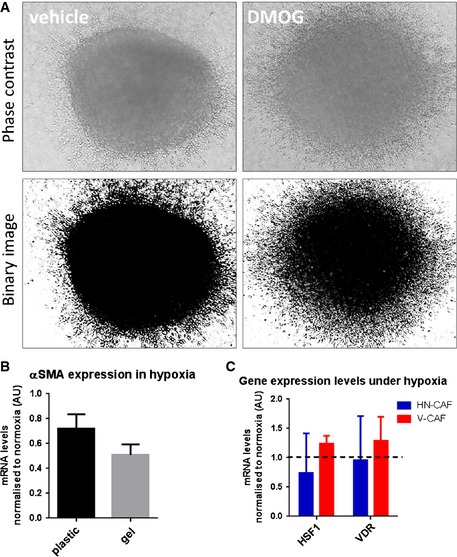
“Heat-shock factor 1 (HSF1) and vitamin D receptor (VDR) have also been implicated CAF biology [39,40]; however, we did not observe any significant changes in HSF1 and VDR expression under hypoxia (Fig EV5C).”
Appelhoff, R. J., Tian, Y.-M., Raval, R. R., Turley, H., Harris, A. L., Pugh, C. W., Ratcliffe, P. J., & Gleadle, J. M. (2004) · Journal of Biological Chemistry · doi:10.1074/jbc.m406026200 · Cited by 1,108 · cited 1×
“Indeed, the minor effects of PHD3 and HIF-2a (Figs 4 and 5) may contribute to the deactivation of CAFs [37,38].”
Mazzone, M., Dettori, D., Leite de Oliveira, R., Loges, S., Schmidt, T., Jonckx, B., Tian, Y.-M., Lanahan, A. A., Pollard, P., Ruiz de Almodovar, C., et al. (2009) · Cell · doi:10.1016/j.cell.2009.01.020 · Cited by 812 · cited 4×
“Indeed, loss of PHD2 in myeloid and T cells inhibits tumour growth [19], while heterozygous loss of PHD2 in endothelial cells inhibits tumour metastasis through the upregulation of HIF-2a [18].”
InfluentialCancer associated fibroblasts: the dark side of the coin.
Cirri, P., & Chiarugi, P. (2011) · Europe PMC (PubMed Central) · Cited by 654
Doedens, A. L., Stockmann, C., Rubinstein, M. P., Liao, D., Zhang, N., DeNardo, D. G., Coussens, L. M., Karin, M., Goldrath, A. W., & Johnson, R. S. (2010) · Cancer Research · doi:10.1158/0008-5472.can-10-1439 · Cited by 652
Methylation determines fibroblast activation and fibrogenesis in the kidney
Bechtel, W., McGoohan, S., Zeisberg, E. M., Müller, G. A., Kalbacher, H., Salant, D. J., Müller, C. A., Kalluri, R., & Zeisberg, M. (2010) · Nature Medicine · doi:10.1038/nm.2135 · Cited by 639 · cited 1×
“The origin of and molecular events driving the genesis of CAFs are areas of intense research, and it is assumed that CAFs maintain their activated phenotype presumably through acquisitions of genetic and/or epigenetic alterations in these cells [25 – 28].”
Loeffler, M. (2006) · Journal of Clinical Investigation · doi:10.1172/jci26532 · Cited by 633 · cited 1×
“Given that previous studies have successful eradicated subpopulations of CAFs and consequently improved the lifespan of tumour-bearing mice [48,49], we speculated whether deactivation of CAFs, by means of PHD inhibition, would have beneficial effects on tumour progression.”
LOX-Mediated Collagen Crosslinking Is Responsible for Fibrosis-Enhanced Metastasis
Cox, T. R., Bird, D., Baker, A.-M., Barker, H. E., Ho, M. W.-Y., Lang, G., & Erler, J. T. (2013) · Cancer Research · doi:10.1158/0008-5472.can-12-2233 · Cited by 571 · cited 1×
“Indeed, the ability of fibroblasts to remodel collagen I has been shown to mediate malignant transformation [7] and metastatic outgrowth in breast cancer [5,8].”
Self-citationSamuel, M. S., Lopez, J. I., McGhee, E. J., Croft, D. R., Strachan, D., Timpson, P., Munro, J., Schröder, E., Zhou, J., Brunton, V. G., et al. (2011) · Cancer Cell · doi:10.1016/j.ccr.2011.05.008 · Cited by 541
Tang, N., Wang, L., Esko, J., Giordano, F. J., Huang, Y., Gerber, H.-P., Ferrara, N., & Johnson, R. S. (2004) · Cancer Cell · doi:10.1016/j.ccr.2004.09.026 · Cited by 540
Distinct epigenetic changes in the stromal cells of breast cancers
Hu, M., Yao, J., Cai, L., Bachman, K. E., van den Brûle, F., Velculescu, V., & Polyak, K. (2005) · Nature Genetics · doi:10.1038/ng1596 · Cited by 520 · cited 1×
“The origin of and molecular events driving the genesis of CAFs are areas of intense research, and it is assumed that CAFs maintain their activated phenotype presumably through acquisitions of genetic and/or epigenetic alterations in these cells [25 – 28].”
Hypoxia-inducible factor 1 is a master regulator of breast cancer metastatic niche formation
Wong, C. C.-L., Gilkes, D. M., Zhang, H., Chen, J., Wei, H., Chaturvedi, P., Fraley, S. I., Wong, C.-M., Khoo, U.-S., Ng, I. O.-L., et al. (2011) · Proceedings of the National Academy of Sciences · doi:10.1073/pnas.1113483108 · Cited by 437 · cited 1×
“Collagen stiffening can be caused by increased covalent cross-linking by enzymes of the lysyl oxidase (LOX) family [7,20 – 22].”
Regulation of Angiogenesis by Oxygen and Metabolism
Fraisl, P., Mazzone, M., Schmidt, T., & Carmeliet, P. (2009) · Developmental Cell · doi:10.1016/j.devcel.2009.01.003 · Cited by 413 · cited 1×
“This subsequently drives an adaptive response inducing angiogenesis and metabolic reprogramming [13].”
The Reprogramming of Tumor Stroma by HSF1 Is a Potent Enabler of Malignancy
Scherz-Shouval, R., Santagata, S., Mendillo, M. L., Sholl, L. M., Ben-Aharon, I., Beck, A. H., Dias-Santagata, D., Koeva, M., Stemmer, S. M., Whitesell, L., et al. (2014) · Cell · doi:10.1016/j.cell.2014.05.045 · Cited by 386 · cited 1×
“Heat-shock factor 1 (HSF1) and vitamin D receptor (VDR) have also been implicated CAF biology [39,40]; however, we did not observe any significant changes in HSF1 and VDR expression under hypoxia (Fig EV5C).”
Extracellular matrix signatures of human mammary carcinoma identify novel metastasis promoters
Naba, A., Clauser, K. R., Lamar, J. M., Carr, S. A., & Hynes, R. O. (2014) · eLife · doi:10.7554/elife.01308 · Cited by 377 · cited 1×
“Several lines of evidence support targeting PHD2 in cancer [55 – 58], although some discrepancies have been observed [59].”
Liao, D., Corle, C., Seagroves, T. N., & Johnson, R. S. (2007) · Cancer Research · doi:10.1158/0008-5472.can-06-2701 · Cited by 339
Inhibition of oxygen sensors as a therapeutic strategy for ischaemic and inflammatory disease
Fraisl, P., Aragonés, J., & Carmeliet, P. (2009) · Nature Reviews Drug Discovery · doi:10.1038/nrd2761 · Cited by 326 · cited 1×
“Inhibition of oxygen sensors, that is the PHD molecules, has potential as a therapeutic for anaemia, ischaemic and inflammatory diseases [51,52].”
Smooth‐muscle differentiation in stromal cells of malignant and non‐malignant breast tissues
Sappino, A. ‐., Skalli, O., Jackson, B., Schürch, W., & Gabbiani, G. (1988) · International Journal of Cancer · doi:10.1002/ijc.2910410512 · Cited by 325 · cited 1×
“We chose to focus on breast cancer, as this type of cancer contains very high levels (~80%) of aSMA-positive fibroblasts [33].”
Hypoxia-Dependent Modification of Collagen Networks Promotes Sarcoma Metastasis
Eisinger-Mathason, T. S. K., Zhang, M., Qiu, Q., Skuli, N., Nakazawa, M. S., Karakasheva, T., Mucaj, V., Shay, J. E. S., Stangenberg, L., Sadri, N., et al. (2013) · Cancer Discovery · doi:10.1158/2159-8290.cd-13-0118 · Cited by 277 · cited 1×
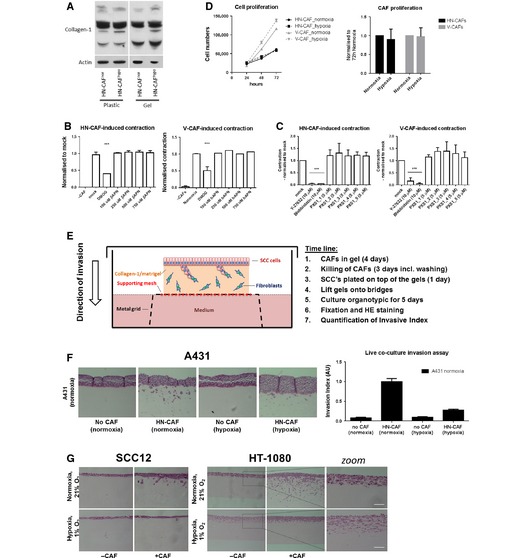
“However, we did not observe changes in collagen oligomerisation status under hypoxic conditions — as assessed by immunoblotting analysis of non-denatured proteins separated in Tris – acetate gels (Fig EV1A) [23].”
Chan, D. A., Kawahara, T. L. A., Sutphin, P. D., Chang, H. Y., Chi, J.-T., & Giaccia, A. J. (2009) · Cancer Cell · doi:10.1016/j.ccr.2009.04.010 · Cited by 220 · cited 1×
“Several lines of evidence support targeting PHD2 in cancer [55–58], although some discrepancies have been observed [59].”
Ammirante, M., Shalapour, S., Kang, Y., Jamieson, C. A. M., & Karin, M. (2014) · Proceedings of the National Academy of Sciences · doi:10.1073/pnas.1416498111 · Cited by 206 · cited 1×
“Given that previous studies have successful eradicated subpopulations of CAFs and consequently improved the lifespan of tumour-bearing mice [48,49], we speculated whether deactivation of CAFs, by means of PHD inhibition, would have beneficial effects on tumour progression.”
Pickup, M. W., Laklai, H., Acerbi, I., Owens, P., Gorska, A. E., Chytil, A., Aakre, M., Weaver, V. M., & Moses, H. L. (2013) · Cancer Research · doi:10.1158/0008-5472.can-13-0012 · Cited by 187
STRIPAK components determine mode of cancer cell migration and metastasis
Madsen, C. D., Hooper, S., Tozluoglu, M., Bruckbauer, A., Fletcher, G., Erler, J. T., Bates, P. A., Thompson, B., & Sahai, E. (2015) · Nature Cell Biology · doi:10.1038/ncb3083 · Cited by 176 · cited 1×
“Human SCC12, A431 and HT-1080 and mouse 4T1 cells were cultured as previously described [6,41,60].”
Self-citationMacroscopic Stiffness of Breast Tumors Predicts Metastasis
Fenner, J., Stacer, A. C., Winterroth, F., Johnson, T. D., Luker, K. E., & Luker, G. D. (2014) · Scientific Reports · doi:10.1038/srep05512 · Cited by 160 · cited 1×
“In addition, these findings support the relationship between primary tumour stiffness and development of distant metastases observed in other mouse models [35,36].”
Emerging novel functions of the oxygen-sensing prolyl hydroxylase domain enzymes
Wong, B. W., Kuchnio, A., Brüning, U., & Carmeliet, P. (2012) · Trends in Biochemical Sciences · doi:10.1016/j.tibs.2012.10.004 · Cited by 157 · cited 1×
“When oxygen tension drops, PHDs become less active, leading to the stabilisation of HIF proteins [12].”
Taniguchi, C. M., Finger, E. C., Krieg, A. J., Wu, C., Diep, A. N., LaGory, E. L., Wei, K., McGinnis, L. M., Yuan, J., Kuo, C. J., et al. (2013) · Nature Medicine · doi:10.1038/nm.3294 · Cited by 149 · cited 1×
“Indeed, the minor effects of PHD3 and HIF-2a (Figs 4 and 5) may contribute to the deactivation of CAFs [37,38].”
Periostin modulates myofibroblast differentiation during full-thickness cutaneous wound repair
Elliott, C. G., Wang, J., Guo, X., Xu, S.-W., Eastwood, M., Guan, J., Leask, A., Conway, S. J., & Hamilton, D. W. (2012) · Journal of Cell Science · doi:10.1242/jcs.087841 · Cited by 147 · cited 2×
“Periostin has been shown to induce myofibroblast differentiation and activation during wound repair [30].”
Global Hypomethylation of Genomic DNA in Cancer-Associated Myofibroblasts
Jiang, L., Gonda, T. A., Gamble, M. V., Salas, M., Seshan, V., Tu, S., Twaddell, W. S., Hegyi, P., Lazar, G., Steele, I., et al. (2008) · Cancer Research · doi:10.1158/0008-5472.can-08-1319 · Cited by 143
Gene-Targeting of Phd2 Improves Tumor Response to Chemotherapy and Prevents Side-Toxicity
de Oliveira, R. L., Deschoemaeker, S., Henze, A., Debackere, K., Finisguerra, V., Takeda, Y., Roncal, C., Dettori, D., Tack, E., Jönsson, Y., et al. (2012) · Cancer Cell · doi:10.1016/j.ccr.2012.06.028 · Cited by 133
PHD Inhibition Mitigates and Protects Against Radiation-Induced Gastrointestinal Toxicity via HIF2
Taniguchi, C. M., Miao, Y. R., Diep, A. N., Wu, C., Rankin, E. B., Atwood, T. F., Xing, L., & Giaccia, A. J. (2014) · Science Translational Medicine · doi:10.1126/scitranslmed.3008523 · Cited by 132 · cited 1×
“However, only recently has interest grown in targeting of PHD molecules in cancer [18,53,54].”
Ontsuka, K., Kotobuki, Y., Shiraishi, H., Serada, S., Ohta, S., Tanemura, A., Yang, L., Fujimoto, M., Arima, K., Suzuki, S., et al. (2012) · Experimental Dermatology · doi:10.1111/j.1600-0625.2012.01454.x · Cited by 125
Tumor-Secreted LOXL2 Activates Fibroblasts through FAK Signaling
Barker, H. E., Bird, D., Lang, G., & Erler, J. T. (2013) · Molecular Cancer Research · doi:10.1158/1541-7786.mcr-13-0033-t · Cited by 119 · cited 2×
“We took advantage of the 4T1 breast cancer mouse model, as these primary tumours also contain high numbers of aSMA-positive CAFs [34].”
Self-citationThe role of promoter hypermethylation in fibroblast activation and fibrogenesis
Zeisberg, E. M., & Zeisberg, M. (2013) · The Journal of Pathology · doi:10.1002/path.4120 · Cited by 110
Yang, L., Serada, S., Fujimoto, M., Terao, M., Kotobuki, Y., Kitaba, S., Matsui, S., Kudo, A., Naka, T., Murota, H., et al. (2012) · PLoS ONE · doi:10.1371/journal.pone.0041994 · Cited by 106
Hypoxia Impairs Skin Myofibroblast Differentiation and Function
Modarressi, A., Pietramaggiori, G., Godbout, C., Vigato, E., Pittet, B., & Hinz, B. (2010) · Journal of Investigative Dermatology · doi:10.1038/jid.2010.224 · Cited by 102 · cited 2×
“These data are consistent with the observation that low oxygen tension can reduce fibroblast function during wound healing [46].”
Hooper, S., Gaggioli, C., & Sahai, E. (2010) · British Journal of Cancer · doi:10.1038/sj.bjc.6605469 · Cited by 80 · cited 12×
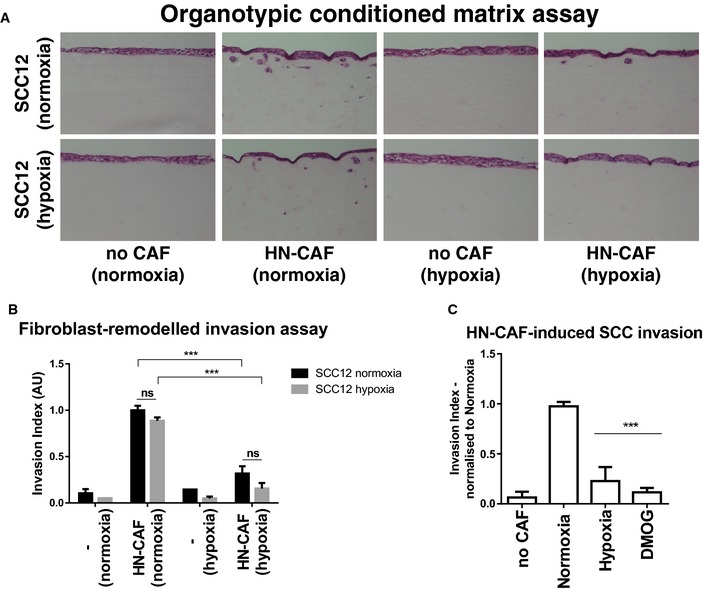
“H&E-stained sections of SCC 12 cells cultured in the organotypic system in the absence or presence of HN-CAFs, and under normoxic and hypoxic conditions.”
InfluentialSelf-citationSharon, Y., Alon, L., Glanz, S., Servais, C., & Erez, N. (2013) · Journal of Visualized Experiments · doi:10.3791/4425 · Cited by 75 · cited 1×
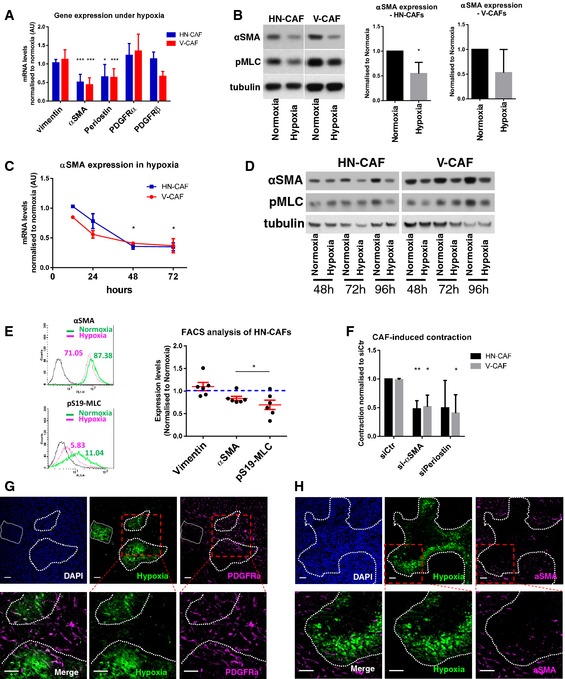
“While a SMA stains the activated pool of fibroblasts, PDGFR a stains a broader spectrum of fibroblasts, including 85% of mammary fibroblasts [31], and its expression is not affected by hypoxia (Fig 3A).”
HIF prolyl hydroxylase inhibitors for anemia
Muchnik, E., & Kaplan, J. (2011) · Expert Opinion on Investigational Drugs · doi:10.1517/13543784.2011.566861 · Cited by 75 · cited 1×
“Inhibition of oxygen sensors, that is the PHD molecules, has potential as a therapeutic for anaemia, ischaemic and inflammatory diseases [51,52].”
Neonatal Periostin Knockout Mice Are Protected from Hyperoxia-Induced Alveolar Simplication
Bozyk, P. D., Bentley, J. K., Popova, A. P., Anyanwu, A. C., Linn, M. J., Goldsmith, A. M., Pryhuber, G., Moore, B. B., & Hershenson, M. B. (2012) · PLoS ONE · doi:10.1371/journal.pone.0031336 · Cited by 74 · cited 1×
“Indeed, periostin knockout mice are protected from hyperoxia-induced alveolarisation and interstitial fibrosis due to the loss of aSMA-positive myofibroblasts within the lung tissue [42].”
Ameln, A. K., Muschter, A., Mamlouk, S., Kalucka, J. M., Prade, I., Franke, K., Rezaei, M., Poitz, D. M., Breier, G., & Wielockx, B. (2011) · Cancer Research · doi:10.1158/0008-5472.can-10-3838 · Cited by 71
Loss of Fibroblast HIF-1α Accelerates Tumorigenesis
Kim, J.-W., Evans, C., Weidemann, A., Takeda, N., Lee, Y. S., Stockmann, C., Branco-Price, C., Brandberg, F., Leone, G., Ostrowski, M. C., et al. (2012) · Cancer Research · doi:10.1158/0008-5472.can-12-0534 · Cited by 57
Johansen, J. L., Sager, T. N., Lotharius, J., Witten, L., Mørk, A., Egebjerg, J., & Thirstrup, K. (2010) · Journal of Neurochemistry · doi:10.1111/j.1471-4159.2010.06917.x · Cited by 52 · cited 1×
“Generation and validation of the pHsH1-scramble-CMVEGFP (shControl) and pHsH1-shHPH2-CMV-EGFP (shPHD2) constructs have already been performed [61].”
Loss of prolyl hydroxylase‐2 in myeloid cells and T‐lymphocytes impairs tumor development
Mamlouk, S., Kalucka, J. M., Singh, R. P., Franke, K., Muschter, A., Langer, A., Jakob, C., Gassmann, M., Baretton, G. B., & Wielockx, B. (2013) · International Journal of Cancer · doi:10.1002/ijc.28409 · Cited by 38
Wottawa, M., Leisering, P., von Ahlen, M., Schnelle, M., Vogel, S., Malz, C. R., Bordoli, M. R., Camenisch, G., Hesse, A., Napp, J., et al. (2012) · International Journal of Cancer · doi:10.1002/ijc.27982 · Cited by 31
Periostin downregulation is an early marker of inhibited neonatal murine lung alveolar septation
Ahlfeld, S. K., Gao, Y., Wang, J., Horgusluoglu, E., Bolanis, E., Clapp, D. W., & Conway, S. J. (2013) · Birth Defects Research Part A Clinical and Molecular Teratology · doi:10.1002/bdra.23149 · Cited by 25
Ameln, A. K., Muschter, A., Heimesaat, M. M., Breier, G., & Wielockx, B. (2012) · Cancer Biology & Therapy · doi:10.4161/cbt.13.4.18830 · Cited by 22
Abstract 5336: Targeting glioma growth and invasiveness by microRNA-1.
Godlewski, J. A., Bronisz, A., Wang, Y., & Chiocca, E. A. (2013) · Cancer Research · doi:10.1158/1538-7445.am2013-5336 · Cited by 22
Abstract 3187: Ex vivo characterization of CTCs isolated using the FMSA device
Cheng, H., Gallant, J., Harouaka, R. A., Zheng, S., & El‐Deiry, W. S. (2012) · Cancer Research · doi:10.1158/1538-7445.am2012-3187 · Cited by 6
Cited by
The biology and function of fibroblasts in cancer
Kalluri, R. (2016) · Nature Reviews Cancer · doi:10.1038/nrc.2016.73 · Cited by 4,366
A framework for advancing our understanding of cancer-associated fibroblasts
Sahai, E., Astsaturov, I., Cukierman, E., DeNardo, D. G., Egeblad, M., Evans, R. M., Fearon, D., Greten, F. R., Hingorani, S. R., Hunter, T., et al. (2020) · Nature Reviews Cancer · doi:10.1038/s41568-019-0238-1 · Cited by 3,863
Self-citationDiversity and biology of cancer-associated fibroblasts
Biffi, G., & Tuveson, D. A. (2021) · Physiological Reviews · doi:10.1152/physrev.00048.2019 · Cited by 1,265
The hypoxic tumour microenvironment
Petrova, V., Annicchiarico-Petruzzelli, M., Melino, G., & Amelio, I. (2018) · Oncogenesis · doi:10.1038/s41389-017-0011-9 · Cited by 1,019
Yuan, Z., Li, Y., Zhang, S., Wang, X., Dou, H., Yu, X., Zhang, Z., Yang, S., & Xiao, M. (2023) · Molecular Cancer · doi:10.1186/s12943-023-01744-8 · Cited by 977
Metadata
- Authors
- Madsen, C. D., Pedersen, J. T., Venning, F. A., Singh, L. B., Moeendarbary, E., Charras, G., Cox, T. R., Sahai, E., & Erler, J. T.
- Affiliations
- University of Copenhagen (DK)
- Massachusetts Institute of Technology (US)
- London Centre for Nanotechnology (GB)
- The Francis Crick Institute (GB)
- Corresponding author
- Madsen, Chris D
- Sahai, Erik
- Erler, Janine T
- ORCID
- Venue
- The EMBO Reports
- Published
- 2015-08-31
- Volume
- 16
- Issue
- 10
- Pages
- 1394-1408
- ISSN
- 1469-221X (ISSN-L)
- 1469-3178
- PMC
- PMC4662858
- OpenAlex
- W1940485834
- Cited by
- 157
- References
- 66
- Citations by year
- 2026: 10 · 2025: 11 · 2024: 18 · 2023: 18 · 2022: 15 · 2021: 15 · 2020: 16 · 2019: 15 · 2018: 12 · 2017: 13 · 2016: 10 · 2015: 2
- FWCI
- 5.39
- Type
- journal article
- Language
- en
- Open access
- hybrid
- doi.org
- Licence
- other-oa
- creativecommons.org/licenses/by/4.0/ (tdm)
- creativecommons.org/licenses/by/4.0/ (vor)
- Locations
- EMBO Reports (publishedVersion, other-oa)
- PubMed Central (publishedVersion, cc-by)
- PubMed (publishedVersion)
- DSpace@MIT (Massachusetts Institute of Technology) (submittedVersion, cc-by-nc)
- UCL Discovery (University College London) (submittedVersion)
- Figshare (submittedVersion, cc-by)
- Lund University Publications (Lund University) (submittedVersion)
- Research at the University of Copenhagen (University of Copenhagen) (submittedVersion)
- Funders
- FEBS long‐term Fellowship
- Wellcome Trust‐MIT Postdoctoral Fellowship
- Cancer Research, UK (CRUK_A5317)
- Francis Crick Institute
- Novo Nordisk Foundation, Denmark
- Hallas Møller Stipend
- Danish Cancer Society (R117‐A7294‐B2731)
- Danish Council for Independent Research YDUN (1084181001)
- Innovation Fund Denmark (1311‐00010B)
- Topics
- Health Sciences › Medicine › Oncology › Cancer Cells and Metastasis
- Life Sciences › Biochemistry, Genetics and Molecular Biology › Cancer Research › Cancer, Hypoxia, and Metabolism
- Life Sciences › Biochemistry, Genetics and Molecular Biology › Molecular Biology › TGF-β signaling in diseases
- Keywords
- cancer-associated fibroblasts, hypoxia, PHD2, HIF-1α, tumor stiffness, metastasis, extracellular matrix remodeling, myosin II, alpha-smooth muscle actin, periostin, dimethyloxalylglycine, breast cancer, tumor microenvironment
- MeSH terms
- Amino Acids, Dicarboxylic, Animals, Breast, Cell Movement, Female, Fibroblasts, Humans, Mammary Neoplasms, Experimental, Neoplasm Invasiveness, Neoplasm Metastasis, Organ Culture Techniques, Tumor Cells, Cultured, Cell Hypoxia, Cell Adhesion Molecules, Stromal Cells, Myosin Type II, Mice, Hypoxia-Inducible Factor 1, alpha Subunit, Hypoxia-Inducible Factor-Proline Dioxygenases
About these checks
Registry, retraction, Cites and statistics results are computed, not judged, with one exception: a printed reference that no index lists is read once by a model before it counts as a citation error. Claims are extracted by a model and kept only when their quote appears verbatim in the text; each cited source is then checked, with a model’s help, for whether it says what the claim relies on. Those verdicts can be wrong — read the claim’s quote and the cited source before relying on one.
Statistics and arithmetic are recomputed, not judged.
Confidence bands are shown only for fields calibrated on our annotated test set. None is calibrated yet, so no band is shown.
What counts as a claim ›How we measure confidence ›How we check this ›
Are you an author, or do you see a problem with this page? Request a review
Data sources
Bibliographic data: Semantic Scholar, OpenAlex, Crossref.
Contains information from the Semantic Scholar Academic Graph Datasets, made available under the ODC Attribution License (ODC-BY 1.0).
Semantic Scholar’s data is described in: Kinney, R., et al. (2023). The Semantic Scholar Open Data Platform. arXiv:2301.10140.
