

The DOI matches its Crossref record; 66 of the 67 references it cites were found in a registry or an index.
Pharmacological reversal of synaptic and network pathology in human MECP2‐KO neurons and cortical organoids
Open accessAbstract
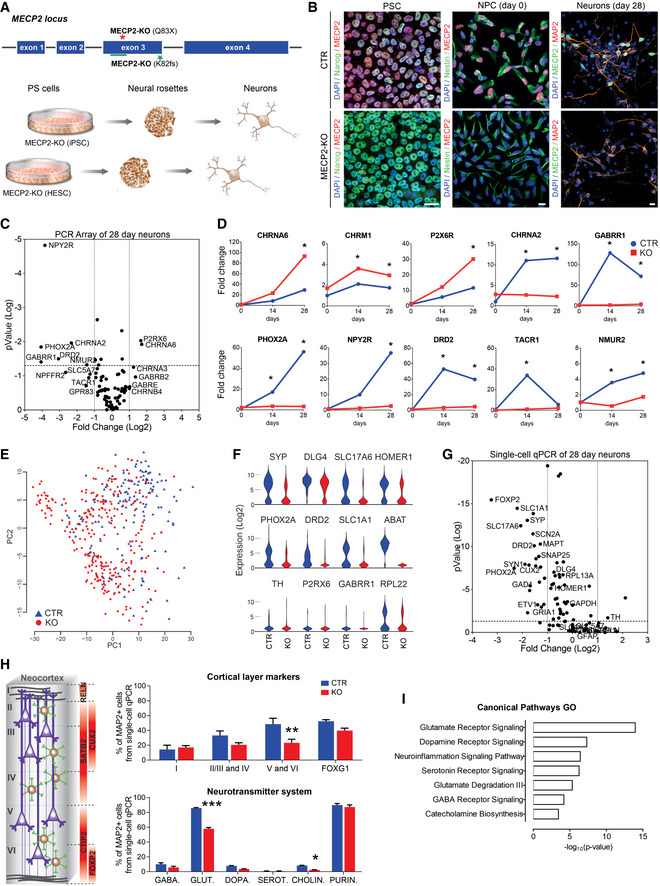
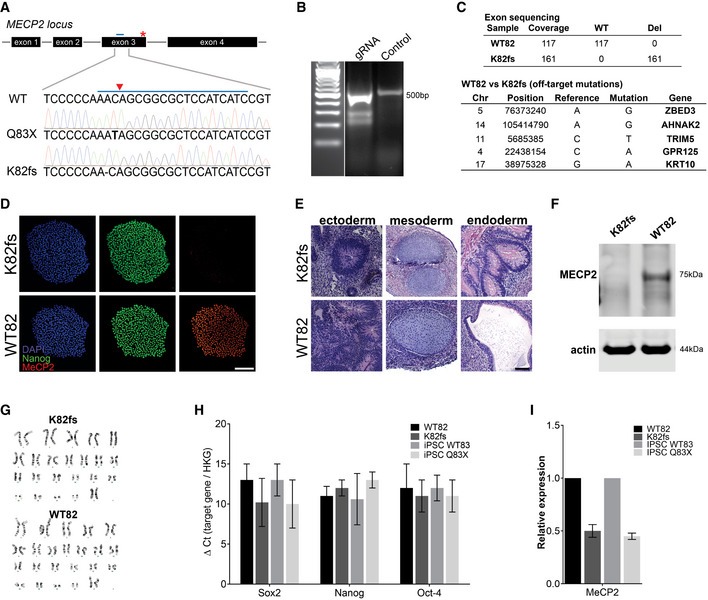
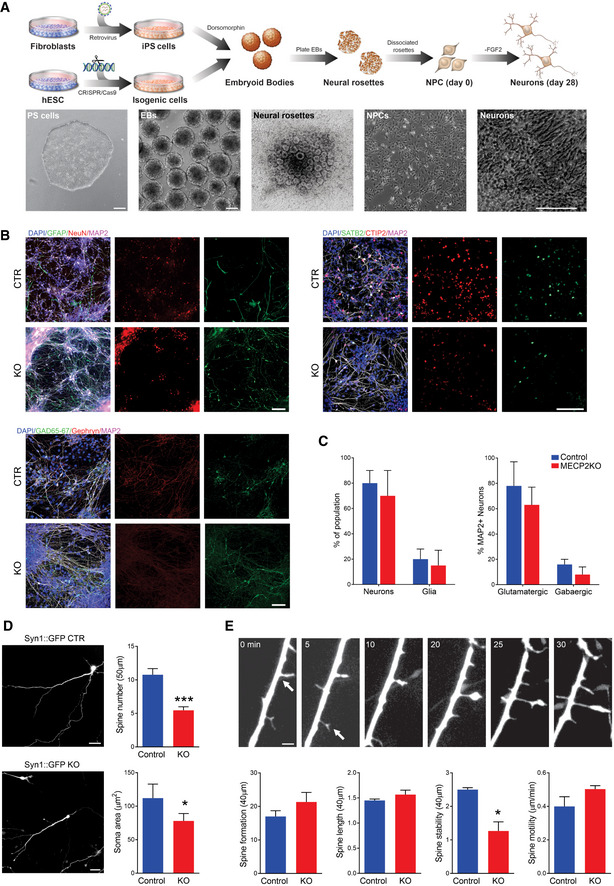
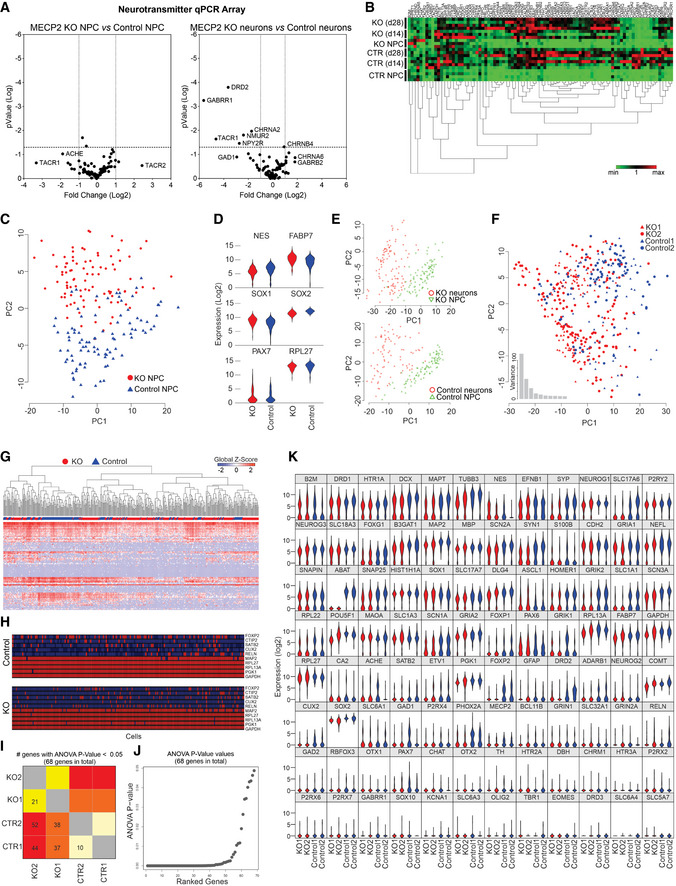
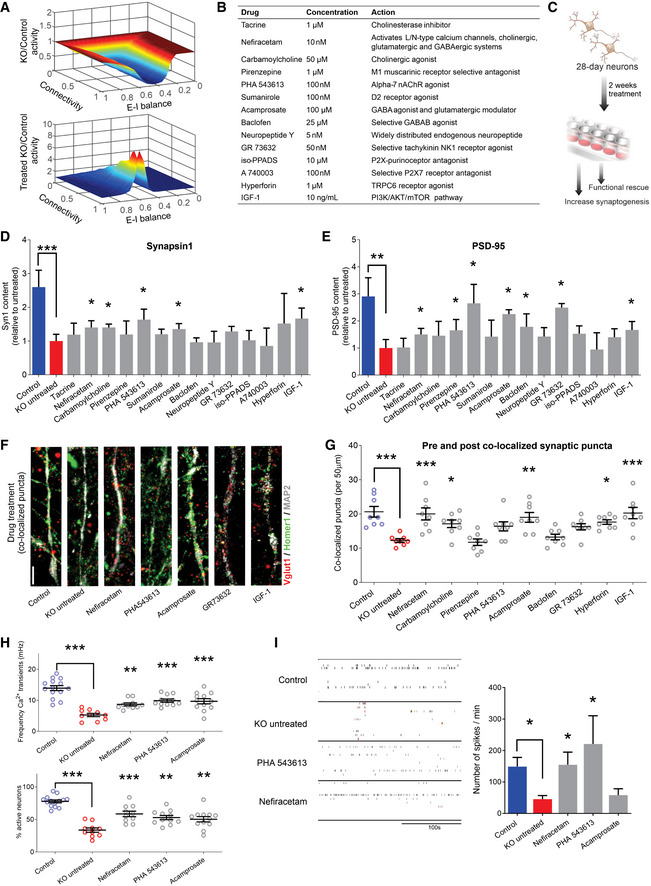
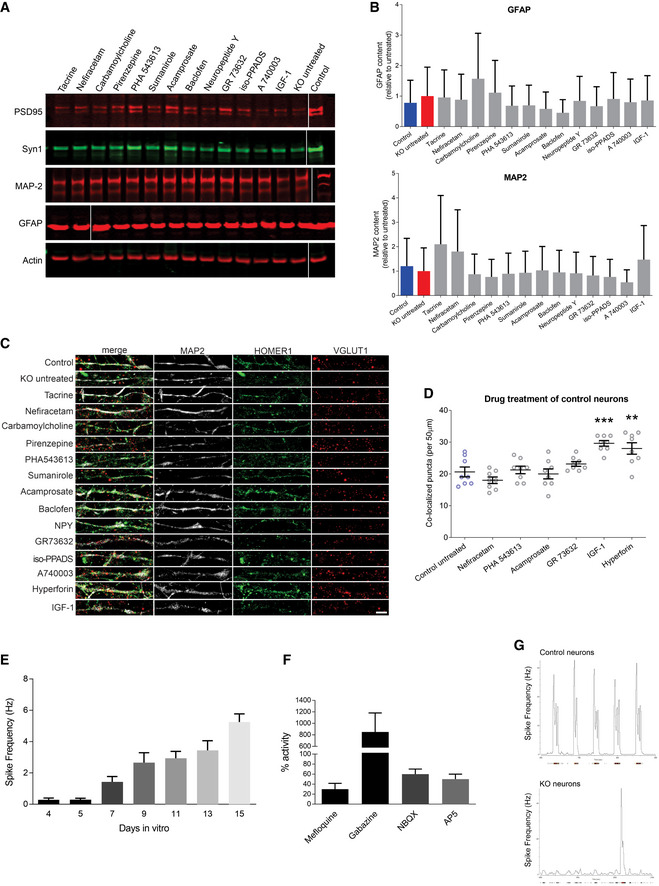
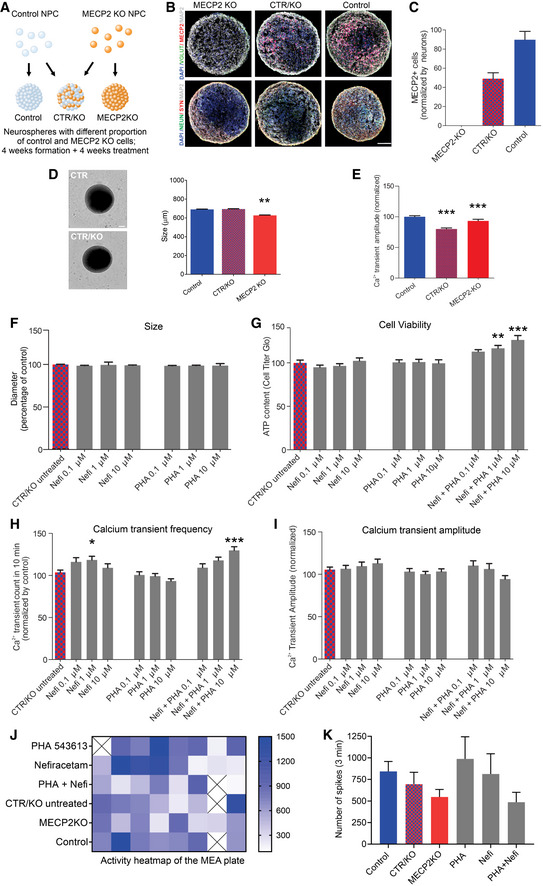
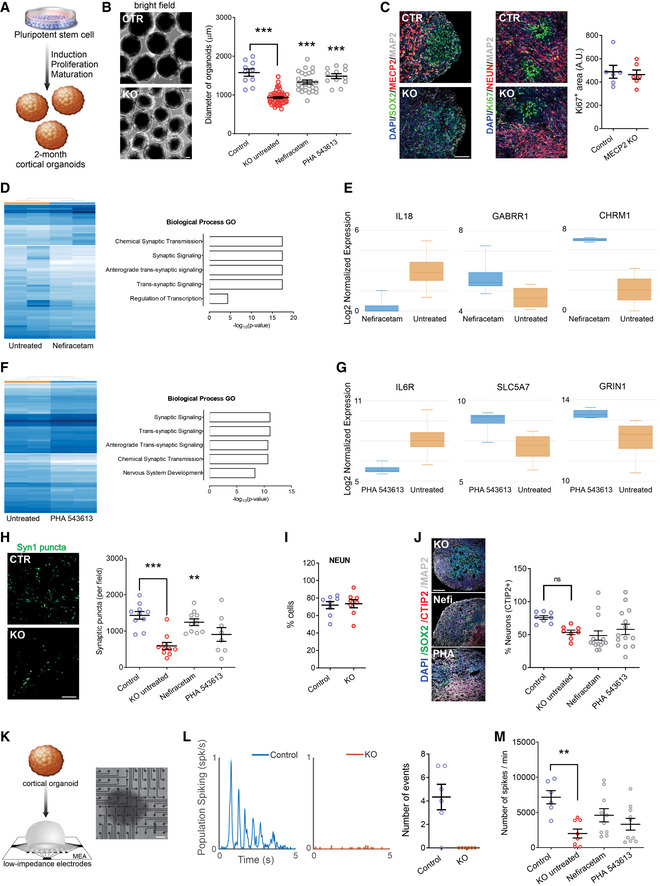
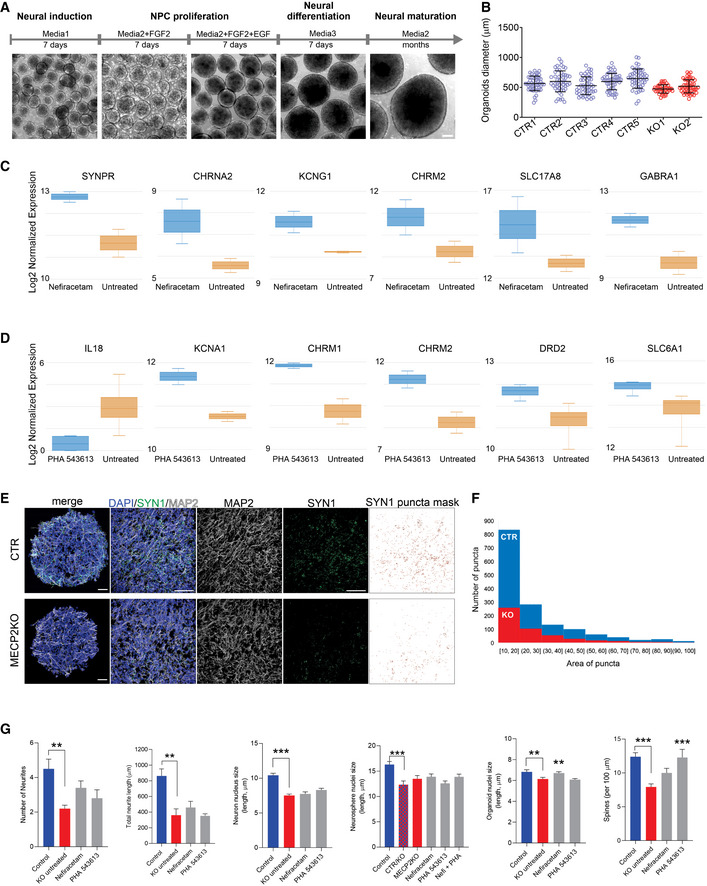
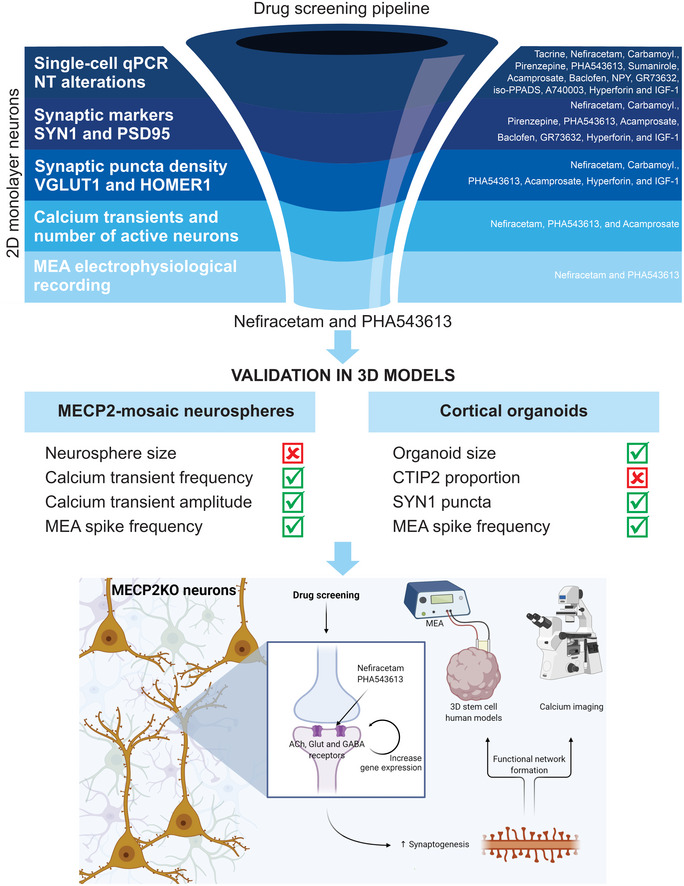
Duplication or deficiency of the X‐linked MECP2 gene reliably produces profound neurodevelopmental impairment. MECP2 mutations are almost universally responsible for Rett syndrome (RTT), and particular mutations and cellular mosaicism of MECP2 may underlie the spectrum of RTT symptomatic severity. No clinically approved treatments for RTT are currently available, but human pluripotent stem cell technology offers a platform to identify neuropathology and test candidate therapeutics. Using a strategic series of increasingly complex human stem cell‐derived technologies, including human neurons, MECP2 ‐mosaic neurospheres to model RTT female brain mosaicism, and cortical organoids, we identified synaptic dysregulation downstream from knockout of MECP2 and screened select pharmacological compounds for their ability to treat this dysfunction. Two lead compounds, Nefiracetam and PHA 543613, specifically reversed MECP2‐ knockout cytologic neuropathology. The capacity of these compounds to reverse neuropathologic phenotypes and networks in human models supports clinical studies for neurodevelopmental disorders in which MeCP2 deficiency is the predominant etiology.
Overview
The claims and statistics of this paper haven’t been checked yet.
Run the check — free, no account needed. It reads the open-access text and checks the sources it cites.
Integrity signals
Registry
Cites
Statistics
Figures
Verification
Claims the paper makes
The claims and statistics of this paper haven’t been checked yet.
Run the check — free, no account needed. It reads the open-access text and checks the sources it cites.
Claims other papers make about this one
Each is checked against this paper’s own text: does it say what the citing paper says it does?
The check wasn’t confident either way, so it gives no verdict — never disputed.
In the citing paper
“whereas Nefiracetam has a broader effect, targeting both L- and N-type calcium channels.”
From CYFIP1 governs the development of cortical axons by modulating calcium availability (2025) · cites this paper as [74]
Experimental — accuracy not yet measured
Self-check
Percentages, sums and reported differences re-computed from the paper’s own numbers.
The self-check needs the paper’s full text.
Citations
Cites
Cytoscape: A software Environment for integrated models of biomolecular interaction networks
Shannon, P., Markiel, A., Ozier, O., Baliga, N. S., Wang, J. T., Ramage, D., Amin, N., Schwikowski, B., & Ideker, T. (2003) · Genome Research · doi:10.1101/gr.1239303 · Cited by 51,888
Shrestha, S., & Offer, S. M. (2016) · Medical Epigenetics · doi:10.1159/000444713 · Cited by 8,951
Rett syndrome is caused by mutations in X-linked MECP2, encoding methyl-CpG-binding protein 2
Amir, R. E., Van den Veyver, I. B., Wan, M., Tran, C. Q., Francke, U., & Zoghbi, H. Y. (1999) · Nature Genetics · doi:10.1038/13810 · Cited by 4,990
Chaos in Neuronal Networks with Balanced Excitatory and Inhibitory Activity
van Vreeswijk, C., & Sompolinsky, H. (1996) · Science · doi:10.1126/science.274.5293.1724 · Cited by 1,843
MeCP2, a Key Contributor to Neurological Disease, Activates and Represses Transcription
Chahrour, M., Jung, S. Y., Shaw, C., Zhou, X., Wong, S. T. C., Qin, J., & Zoghbi, H. Y. (2008) · Science · doi:10.1126/science.1153252 · Cited by 1,823
WebGestalt: an integrated system for exploring gene sets in various biological contexts
Zhang, B., Kirov, S. A., & Snoddy, J. R. (2005) · Nucleic Acids Research · doi:10.1093/nar/gki475 · Cited by 1,809
Conserved cell types with divergent features in human versus mouse cortex
Hodge, R. D., Bakken, T. E., Miller, J. A., Smith, K. A., Barkan, E. R., Graybuck, L. T., Close, J. L., Long, B., Johansen, N., Penn, O., et al. (2019) · Nature · doi:10.1038/s41586-019-1506-7 · Cited by 1,775 · cited 1×
“Notably, the most different systems are glutamatergic, serotoninergic, and cholinergic (Hodge et al, 2019; Sjostedt et al, 2020).”
BackgroundAcetylcholine as a Neuromodulator: Cholinergic Signaling Shapes Nervous System Function and Behavior
Picciotto, M. R., Higley, M. J., & Mineur, Y. S. (2012) · Neuron · doi:10.1016/j.neuron.2012.08.036 · Cited by 1,404
Marchetto, M. C. N., Carromeu, C., Acab, A., Yu, D., Yeo, G. W., Mu, Y., Chen, G., Gage, F. H., & Muotri, A. R. (2010) · Cell · doi:10.1016/j.cell.2010.10.016 · Cited by 1,329
Self-citationSomatic coding mutations in human induced pluripotent stem cells
Gore, A., Li, Z., Fung, H.-L., Young, J. E., Agarwal, S., Antosiewicz-Bourget, J., Canto, I., Giorgetti, A., Israel, M. A., Kiskinis, E., et al. (2011) · Nature · doi:10.1038/nature09805 · Cited by 1,273
Cited by
Sorted by citations
Human cerebral organoids — a new tool for clinical neurology research
Eichmüller, O. L., & Knoblich, J. A. (2022) · Nature Reviews Neurology · doi:10.1038/s41582-022-00723-9 · Cited by 319
Uzquiano, A., Kedaigle, A. J., Pigoni, M., Paulsen, B. D. S., Adiconis, X., Kim, K., Faits, T., Nagaraja, S., Antón-Bolaños, N., Gerhardinger, C., et al. (2022) · Cell · doi:10.1016/j.cell.2022.09.010 · Cited by 257
New epilepsy therapies in development
Klein, P., Kaminski, R. M., Koepp, M. J., & Löscher, W. (2024) · Nature Reviews Drug Discovery · doi:10.1038/s41573-024-00981-w · Cited by 166
Modelling human brain development and disease with organoids
Birtele, M., Lancaster, M. A., & Quadrato, G. (2024) · Nature Reviews Molecular Cell Biology · doi:10.1038/s41580-024-00804-1 · Cited by 177
McCready, F. P., Gordillo-Sampedro, S., Pradeepan, K. S., Martínez-Trujillo, J., & Ellis, J. (2022) · Biology · doi:10.3390/biology11020316 · Cited by 61
Metadata
- Authors
- Trujillo, C. A., Adams, J. W., Negraes, P. D., Carromeu, C., Tejwani, L., Acab, A., Tsuda, B., Thomas, C. A., Sodhi, N., Fichter, K. M., Romero, S., Zanella, F., Sejnowski, T. J., Ulrich, H., & Muotri, A. R.
- Affiliations
- University of California San Diego (US)
- Salk Institute for Biological Studies (US)
- Universidade de São Paulo (BR)
- Corresponding author
- Trujillo, Cleber A
- Muotri, Alysson R
- ORCID
- Venue
- EMBO Molecular Medicine
- Published
- 2020-12-08
- Volume
- 13
- Issue
- 1
- Pages
- e12523-e12523
- ISSN
- 1757-4676 (ISSN-L)
- 1757-4684
- PMC
- PMC7799367
- OpenAlex
- W3110698055
- Cited by
- 101
- References
- 67
- Citations by year
- 2026: 6 · 2025: 27 · 2024: 13 · 2023: 16 · 2022: 23 · 2021: 14 · 2020: 2
- FWCI
- 8.21
- Type
- journal article
- Language
- en
- Open access
- gold
- doi.org
- Locations
- EMBO Molecular Medicine (publishedVersion, cc-by)
- PubMed Central (publishedVersion, cc-by)
- PubMed (publishedVersion)
- eScholarship (California Digital Library) (submittedVersion, cc-by)
- DOAJ (DOAJ: Directory of Open Access Journals) (submittedVersion, cc-by-sa)
- eScholarship (California Digital Library) (submittedVersion)
- Funders
- HHS | NIH | National Institute of Mental Health (R01MH094753, R01MH103134, P01 NICHD033113)
- California Institute for Regenerative Medicine (TR2‐01814, TR4‐06747)
- HHS | National Institutes of Health (1‐DP2‐OD006495‐01, U19MH107367)
- HHS | NIH | National Institute of General Medical Sciences (5T32GM007198)
- UCSD Center for Academic Research and Training in Anthropogeny
- Brain & Behavior Research Foundation (NARSAD Independent Investigator Grant)
- HHS | NIH | National Institute on Alcohol Abuse and Alcoholism (K01AA026911)
- Loulou Foundation
- Sao Paulo Research Foundation (2018/07366‐4)
- Topics
- Life Sciences › Biochemistry, Genetics and Molecular Biology › Genetics › Genetics and Neurodevelopmental Disorders
- Life Sciences › Neuroscience › Cellular and Molecular Neuroscience › Neuroscience and Neuropharmacology Research
- Life Sciences › Neuroscience › Developmental Neuroscience › Neurogenesis and neuroplasticity mechanisms
- Keywords
- MeCP2, Rett syndrome, cortical organoids, synaptic dysfunction, neurodevelopmental disorders, nefiracetam, drug screening, X-linked disorders
- MeSH terms
- Female, Humans, Neurons, Organoids, Phenotype, Pyrrolidinones, Quinuclidines, Rett Syndrome, Bridged Bicyclo Compounds, Heterocyclic, Methyl-CpG-Binding Protein 2, Gene Knockout Techniques
About these checks
Registry, retraction, Cites and statistics results are computed, not judged, with one exception: a printed reference that no index lists is read once by a model before it counts as a citation error. Claims are extracted by a model and kept only when their quote appears verbatim in the text; each cited source is then checked, with a model’s help, for whether it says what the claim relies on. Those verdicts can be wrong — read the claim’s quote and the cited source before relying on one.
Statistics and arithmetic are recomputed, not judged.
Confidence bands are shown only for fields calibrated on our annotated test set. None is calibrated yet, so no band is shown.
What counts as a claim ›How we measure confidence ›How we check this ›
Are you an author, or do you see a problem with this page? Request a review
