

Mental Health–Related Emergency Department Visits Among Children Aged <18 Years During the COVID-19 Pandemic — United States, January 1–October 17, 2020
Open accessThe DOI matches its Crossref record; 8 of the 9 references it cites were found in a registry or an index; 5 of the 11 sources its claims cite were checked for support.
Abstract
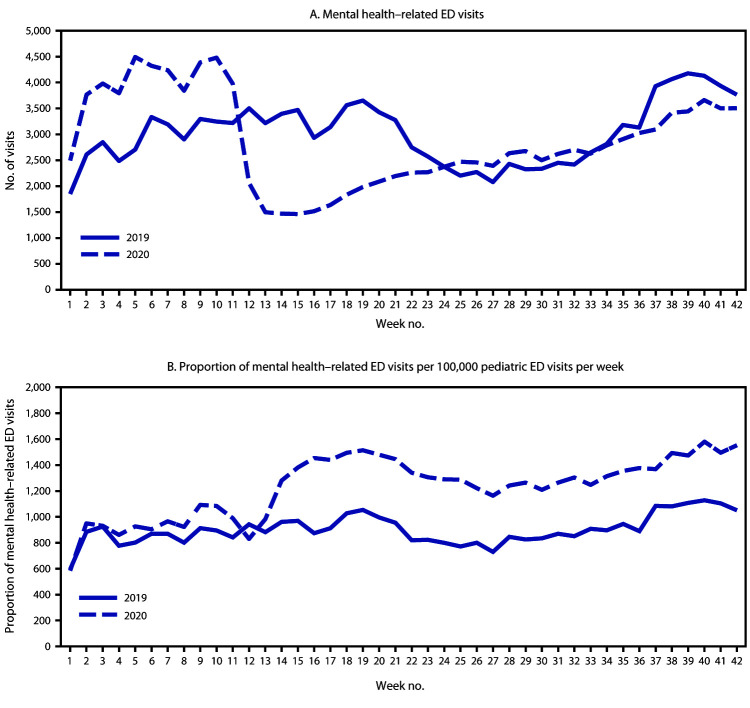
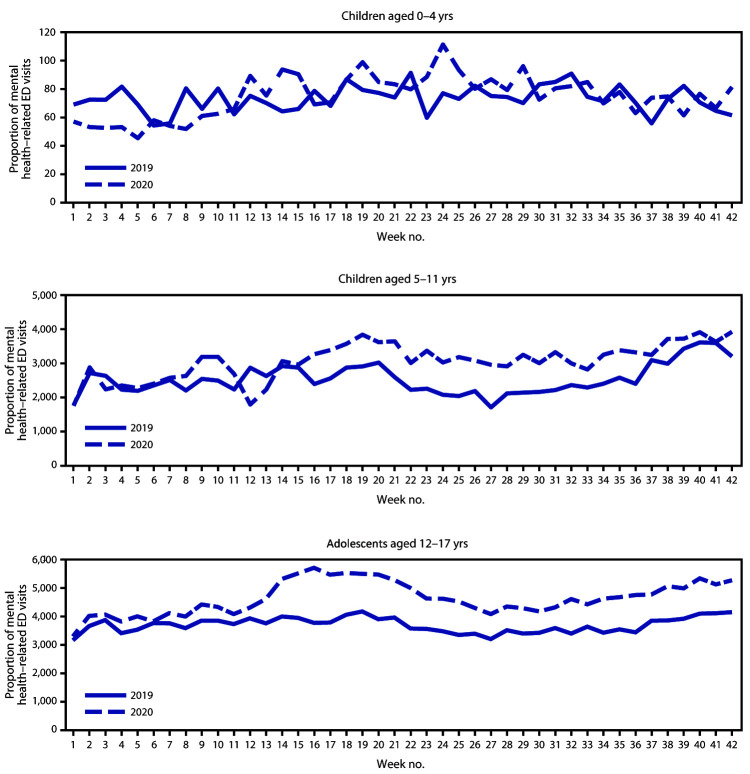
Published reports suggest that the coronavirus disease 2019 (COVID-19) pandemic has had a negative effect on children's mental health (1,2). Emergency departments (EDs) are often the first point of care for children experiencing mental health emergencies, particularly when other services are inaccessible or unavailable (3). During March 29-April 25, 2020, when widespread shelter-in-place orders were in effect, ED visits for persons of all ages declined 42% compared with the same period in 2019; during this time, ED visits for injury and non-COVID-19-related diagnoses decreased, while ED visits for psychosocial factors increased (4). To assess changes in mental health-related ED visits among U.S. children aged <18 years, data from CDC's National Syndromic Surveillance Program (NSSP) from January 1 through October 17, 2020, were compared with those collected during the same period in 2019. During weeks 1-11 (January 1-March 15, 2020), the average reported number of children's mental health-related ED visits overall was higher in 2020 than in 2019, whereas the proportion of children's mental health-related visits was similar. Beginning in week 12 (March 16) the number of mental health-related ED visits among children decreased 43% concurrent with the widespread implementation of COVID-19 mitigation measures; simultaneously, the proportion of mental health-related ED visits increased sharply beginning in mid-March 2020 (week 12) and continued into October (week 42) with increases of 24% among children aged 5-11 years and 31% among adolescents aged 12-17 years, compared with the same period in 2019. The increased proportion of children's mental health-related ED visits during March-October 2020 might be artefactually inflated as a consequence of the substantial decrease in overall ED visits during the same period and variation in the number of EDs reporting to NSSP. However, these findings provide initial insight into children's mental health in the context of the COVID-19 pandemic and highlight the importance of continued monitoring of children's mental health throughout the pandemic, ensuring access to care during public health crises, and improving healthy coping strategies and resiliency among children and families.
Overview
CoChat Summary
TL;DR
During the COVID-19 pandemic, children’s mental health–related ED visits fell in number but rose as a proportion of all pediatric ED visits, with increases among school-age children and adolescents through October 2020. The report uses CDC NSSP syndromic surveillance data and is descriptive, so the proportional increases may be inflated by the concurrent drop in overall pediatric ED visits.
Key findings
- During weeks 1–11 (January 1–March 14, 2020), the average reported number of children’s mental health–related ED visits was higher in 2020 than in 2019, while the proportion was similar (1,162 vs 1,044 per 100,000).
- Beginning in week 12 (March 16), mental health–related ED visits among children decreased 43%; during weeks 12–42, average weekly total pediatric ED visits were 43% lower in 2020 (149,055) than in 2019 (262,714), while the average proportion of mental health–related ED visits was approximately 44% higher (1,673 vs 1,161 per 100,000).
- During weeks 12–42, the proportion of mental health–related visits increased approximately 24% among children aged 5–11 years and 31% among adolescents aged 12–17 years compared with 2019; the highest weekly proportions were 1,177 per 100,000 for ages 5–11 in October (week 42) and 4,758 per 100,000 for ages 12–17 in April (week 16).
- The proportion increased 66%, from 1,094 per 100,000 during April 14–21, 2019 to 1,820 per 100,000 during April 12–18, 2020; females had higher proportions than males, with similar increasing patterns in 2020.
Methods
- CDC analyzed NSSP ED visit data from a subset of hospitals in 47 states representing approximately 73% of U.S. ED visits. Mental health–related ED visits among children aged <18 years were a composite variable from NSSP’s mental health syndrome query for conditions likely to result in ED visits during and after disaster events (e.g., stress, anxiety, acute posttraumatic stress disorder, and panic).
- Weekly numbers and proportions per 100,000 pediatric ED visits were computed overall and stratified by age group (0–4, 5–11, and 12–17 years) and sex, then compared descriptively with corresponding weekly numbers and proportions for 2019. Comparisons covered calendar weeks 1–11 and 12–42; analyses were descriptive and statistical comparisons were not performed.
Limitations
- Stated: proportions should be interpreted cautiously because of variations affecting denominators; mental health–related ED visits were a small percentage of all pediatric ED visits (1.1% in 2019 and 1.4% in 2020), and NSSP ED participation can vary over time.
- Stated: NSSP data are not nationally representative and may not be generalizable beyond participating EDs; usable race and ethnicity information was not available. Data are subject to under- and overestimation from reporting and coding variation; ED visits represent unique events, not individual persons; the syndrome definition may not capture all mental health–related ED visits and likely underestimates actual mental health visits because many occur outside EDs.
- Evident/paper-stated: analyses are descriptive with no statistical comparisons, and the paper notes the increased proportion might be artefactually inflated by the substantial decrease in overall ED visits and variation in the number of EDs reporting to NSSP.
Model-written summary. Check it against the paper before relying on it.
Integrity signals
Registry
Cites
Statistics
Figures
Verification
Claims the paper makes
5 Valid · 0 Not valid · 5 Not checked · 25 Own results and interpretations
The cited sources support only part of this claim — read each source’s verdict below.
In the paper
“The majority of EDs lack adequate capacity to treat pediatric mental health concerns (6)”
§ Mental Health–Related Emergency Department Visits Among Children Aged <18 Years During the COVID-19 Pandemic — United States, January 1–October 17, 2020 > Discussion
What the sources say
- Partly supportedcites [6] Cree, 2019, Characteristics associated with presence of pediatric mental health care policies in emergency departments., Pediatr Emerg Care sourceExperimental — accuracy not yet measured
The Results report that only 46.2% of surveyed US EDs had a policy for children with social and mental health concerns. The Discussion says this *could indicate* a lack of capacity for triage and crisis intervention; it does not establish that a majority lack adequate capacity to treat these concerns. (LLM, conf=0.85)
plain- Asserted: passes — The authors put it forward as true.
- Checkable: passes — It can be checked against evidence.
- Load-bearing: unclear — It is unclear whether the paper’s conclusions depend on it.
- Based: passes — The paper gives a reason why it holds.
- Partly supported
Every source the paper cites for this claim was checked and supports it.
In the paper
“the magnitude of the increase should be interpreted carefully because it might also reflect the large decrease in the number and proportion of other types of ED visits (e.g., asthma, otitis media, and musculoskeletal injuries) (4) and variation in the number of EDs reporting to NSSP.”
§ Mental Health–Related Emergency Department Visits Among Children Aged <18 Years During the COVID-19 Pandemic — United States, January 1–October 17, 2020 > Discussion
What the sources say
- Supportedcites [4] Hartnett, 2020, Impact of the COVID-19 pandemic on emergency department visits—United States, January 1, 2019–May 30, 2020., MMWR Morb Mortal Wkly Rep source
The results and table (page not supplied) report declines in the number and relative prevalence of ED visits for asthma, otitis media, and musculoskeletal conditions. The Discussion (page not supplied) also notes that the number of hospitals reporting to NSSP changed over time. The caution about interpreting children's mental-health visit proportions is the citing authors' framing, rather than a finding attributed to this source. (LLM, conf=0.90)
hedgedstates a possible cause- Asserted: passes — The authors put it forward as true.
- Checkable: passes — It can be checked against evidence.
- Load-bearing: passes — The paper’s conclusions depend on it.
- Based: passes — The paper gives a reason why it holds.
- Supported
The cited sources support only part of this claim — read each source’s verdict below.
In the paper
“During March 29–April 25, 2020, when widespread shelter-in-place orders were in effect, ED visits for persons of all ages declined 42% compared with the same period in 2019”
What the sources say
- Partly supportedcites [4] Hartnett, 2020, Impact of the COVID-19 pandemic on emergency department visits—United States, January 1, 2019–May 30, 2020., MMWR Morb Mortal Wkly Rep sourceExperimental — accuracy not yet measured
The paper’s opening summary reports that ED visits from March 29–April 25, 2020 were 42% lower than in the comparable 2019 period; its results say visits declined in every age group. Our copy does not state that widespread shelter-in-place orders were in effect during those dates. (LLM, conf=0.88)
plainstates an association- Asserted: passes — The authors put it forward as true.
- Checkable: passes — It can be checked against evidence.
- Load-bearing: unclear — It is unclear whether the paper’s conclusions depend on it.
- Based: passes — The paper gives a reason why it holds.
- Partly supported
A result the paper reports from its own data — it cites no other source for it, so there is none to check. The quote shows it is in the paper.
In the paper
“During weeks 1–11 (January 1–March 15, 2020), the average reported number of children’s mental health–related ED visits overall was higher in 2020 than in 2019”
- Also stated in: § Mental Health–Related Emergency Department Visits Among Children Aged <18 Years During the COVID-19 Pandemic — United States, January 1–October 17, 2020 · plain
“Although the average reported number of children’s mental health–related ED visits overall was 25% higher during weeks 1–11 in 2020 (342,740) than during the corresponding period in 2019 (274,736)”
plain- Asserted: passes — The authors put it forward as true.
- Checkable: passes — It can be checked against evidence.
- Load-bearing: unclear — It is unclear whether the paper’s conclusions depend on it.
- Based: passes — The paper gives a reason why it holds.
- Rests on an assumption not shown here.
- Also stated in: § Mental Health–Related Emergency Department Visits Among Children Aged <18 Years During the COVID-19 Pandemic — United States, January 1–October 17, 2020 · plain
A result the paper reports from its own data — it cites no other source for it, so there is none to check. The quote shows it is in the paper.
In the paper
“Adolescents aged 12–17 years accounted for the largest proportion of children’s mental health–related ED visits during 2019 and 2020”
- Also stated in: § Discussion · plain
“Adolescents aged 12–17 years accounted for the highest proportion of mental health–related ED visits in both 2019 and 2020, followed by children aged 5–11 years.”
plain- Asserted: passes — The authors put it forward as true.
- Checkable: passes — It can be checked against evidence.
- Load-bearing: unclear — It is unclear whether the paper’s conclusions depend on it.
- Based: passes — The paper gives a reason why it holds.
- Rests on an assumption not shown here.
- Also stated in: § Discussion · plain
14 more claims
Create a free account to see all 35 claims and every source verdict.
- Probably not a substantial claim. 10
- It may state two separate claims as one. 8
Claims other papers make about this one
Each is checked against this paper’s own text: does it say what the citing paper says it does?
The source backs part of the claim, not all of it — or backs it for a different population, condition or comparison.
In the citing paper
“The current trends in the number and proportion of MHC-related ED visits, along with previous research ( 1 , 2 , 4 -8 ), indicate that the mental health effects of the pandemic might be particularly high among adolescent girls.”
From Pediatric Emergency Department Visits Associated with Mental Health Conditions Before and During the COVID-19 Pandemic — United States, January 2019–January 2022 (2022) · cites this paper as [2]
Experimental — accuracy not yet measuredThe source backs part of the claim, not all of it — or backs it for a different population, condition or comparison.
In the citing paper
“Compared with the rate in 2019, a 31% increase in the proportion of mental health–related emergency department (ED) visits occurred among adolescents aged 12–17 years in 2020 (1).”
From Emergency Department Visits for Suspected Suicide Attempts Among Persons Aged 12–25 Years Before and During the COVID-19 Pandemic — United States, January 2019–May 2021 (2021) · cites this paper as [1]
Experimental — accuracy not yet measuredThe cited source says what the claim attributes to it.
In the citing paper
“During March-October 2020, among all emergency department (ED) visits, the proportion of mental health-related visits increased by 24% among U.S. children aged 5-11 years and 31% among adolescents aged 12-17 years, compared with 2019 ( 2 ).”
The cited source says what the claim attributes to it.
In the citing paper
“Declines in MHC-related visits during 2020 align with previous research ( 2 ), and with reported declines in overall volume of pediatric ED visits during the pandemic ( 8 ).”
The cited source says what the claim attributes to it.
In the citing paper
“However, the findings from this study suggest more severe distress among young females than has been identified in previous reports during the pandemic (1,2), reinforcing the need for increased attention to, and prevention for, this population.”
1 more claim about this paper
Create a free account to see every claim other papers make about this one.
Self-check
Percentages, sums and reported differences re-computed from the paper’s own numbers.
Each contradiction between two passages listed here was confirmed by an independent check.
Rated minor: it would not touch a result — a value no result rests on, a p-value that stays on the same side of the significance level, or a conflict that is clerical, resolved elsewhere in the paper, or outside its own findings.
In the paper
§ Mental Health–Related Emergency Department Visits Among Children Aged <18 Years During the COVID-19 Pandemic — United States, January 1–October 17, 2020
“Although the average reported number of children’s mental health–related ED visits overall was 25% higher during weeks 1–11 in 2020 (342,740) than during the corresponding period in 2019 (274,736)”
§ Mental Health–Related Emergency Department Visits Among Children Aged <18 Years During the COVID-19 Pandemic — United States, January 1–October 17, 2020
“| Average weekly total ED visits | 274,736 | 118,926 | 83,924 | 71,886 | 342,740 | 143,789 | 107,049 | 91,902 | | Average weekly mental health–related ED visits | 2,876 | 82 | 594 | 2,200 | 3,974 | 80 | 821 | 3,073 |”
Rated minor: it would not touch a result — a value no result rests on, a p-value that stays on the same side of the significance level, or a conflict that is clerical, resolved elsewhere in the paper, or outside its own findings.
In the paper
§ Mental Health–Related Emergency Department Visits Among Children Aged <18 Years During the COVID-19 Pandemic — United States, January 1–October 17, 2020
“During weeks 1–11 (January 1–March 15, 2020)”
§ Mental Health–Related Emergency Department Visits Among Children Aged <18 Years During the COVID-19 Pandemic — United States, January 1–October 17, 2020
“¶ Weeks 1–11 in 2019 correspond to December 30, 2018–March 16, 2019; weeks 1–11 in 2020 correspond to December 29, 2019–March 14, 2020.”
Rated minor: it would not touch a result — a value no result rests on, a p-value that stays on the same side of the significance level, or a conflict that is clerical, resolved elsewhere in the paper, or outside its own findings.
In the paper
§ Mental Health–Related Emergency Department Visits Among Children Aged <18 Years During the COVID-19 Pandemic — United States, January 1–October 17, 2020
“| Average weekly total ED visits | 265,863 | 110,002 | 81,133 | 74,728 | 199,782 | 78,742 | 59,660 | 61,380 | | Average weekly mental health–related ED visits | 3,025 | 80 | 625 | 2,320 | 2,872 | 54 | 522 | 2,296 | | Mental health–related ED visits per 100,000 visits | 1,130 | 73 | 762 | 3,084 | 1,539 | 75 | 919 | 3,863 |”
§ Mental Health–Related Emergency Department Visits Among Children Aged <18 Years During the COVID-19 Pandemic — United States, January 1–October 17, 2020
“* Average proportion of ED visits for children’s mental health = (average number of ED visits for children’s mental health/average total number of ED visits for the same age or sex population [e.g., children aged 18 years]) x 100,000.”
Citations
Cites
Mental health effects of school closures during COVID-19
Lee, J. (2020) · The Lancet Child & Adolescent Health · doi:10.1016/s2352-4642(20)30109-7 · Cited by 1,882 · cited 1×
“Published reports suggest that the coronavirus disease 2019 (COVID-19) pandemic has had a negative effect on children’s mental health (1,2).”
BackgroundWell-being of parents and children during the COVID-19 pandemic: A national survey
Patrick, S. W., Henkhaus, L. E., Zickafoose, J. S., Lovell, K., Halvorson, A., Loch, S., Letterie, M., & Davis, M. M. (2020) · Pediatrics · doi:10.1542/peds.2020-016824 · Cited by 1,200 · cited 2×
“The increase in the proportion of ED visits for children’s mental health concerns might reflect increased pandemic-related stress and unintended consequences of mitigation measures, which reduced or modified access to children’s mental health services (2), and could result in increased reliance on ED services for both…”
BackgroundCoronavirus disease 2019 (COVID-19) and mental health for children and adolescents
Golberstein, E., Wen, H., & Miller, B. F. (2020) · JAMA Pediatrics · doi:10.1001/jamapediatrics.2020.1456 · Cited by 1,140
Hartnett, K. P., Kite-Powell, A., DeVies, J., Coletta, M. A., Boehmer, T. K., Adjemian, J., Gundlapalli, A. V., & Practice, N. S. S. P. C. O. (2020) · MMWR Morbidity and Mortality Weekly Report · doi:10.15585/mmwr.mm6923e1 · Cited by 1,139 · cited 6×
“During March 29–April 25, 2020, when widespread shelter-in-place orders were in effect, ED visits for persons of all ages declined 42% compared with the same period in 2019; during this time, ED visits for injury and non-COVID-19–related diagnoses decreased, while ED visits for psychosocial factors increased (4).”
BackgroundMethodResultInfluentialPediatric and Adolescent Mental Health Emergencies in the Emergency Medical Services System
Dolan, M. A., Fein, J. A., & the Committee on Pediatric Emergency Medicine (2011) · Pediatrics · doi:10.1542/peds.2011-0522 · Cited by 235 · cited 3×
“Ensuring availability of and access to developmentally appropriate mental health services for children outside the in-person ED setting will be important as communities adjust mitigation strategies (3).”
BackgroundPreventing suicide : a technical package of policies, programs, and practice
National Center for Injury Prevention and Control (U.S.). Division of Violence Prevention., Stone, D., Holland, K., National Center for Injury Prevention and Control (U.S.). Division of Violence Prevention., Holland, B., Crosby, A., Davis, S., & Wilkins, N. (2017) · doi:10.15620/cdc.44275 · Cited by 214 · cited 1×
“CDC supports efforts to promote the emotional wellbeing of children and families and provides developmentally appropriate resources for families to reduce stressors that might contribute to children’s mental health–related ED visits†† (9).”
BackgroundSelf-citationGurwitch, R. H., Salem, H., Nelson, M. M., & Comer, J. S. (2020) · Psychological Trauma: Theory, Research, Practice, and Policy · doi:10.1037/tra0000863 · Cited by 93 · cited 2×
“Implementation of technology-based, remote mental health services and prevention activities to enhance healthy coping and resilience in children might effectively support their well-being throughout response and recovery periods (5,7).”
BackgroundCree, R. A., So, M., Franks, J., Richards, R., Leeb, R., Hashikawa, A., Krug, S., Ludwig, L., & Olson, L. M. (2021) · Pediatric Emergency Care · doi:10.1097/pec.0000000000001920 · Cited by 26 · cited 1×
“The majority of EDs lack adequate capacity to treat pediatric mental health concerns (6), potentially increasing demand on systems already stressed by the COVID-19 pandemic.”
BackgroundSelf-citation
Cited by
Mental Health Surveillance Among Children — United States, 2013–2019
Bitsko, R. H., Claussen, A. H., Lichstein, J., Black, L. I., Jones, S. E., Danielson, M. L., Hoenig, J. M., Davis Jack, S. P., Brody, D. J., Gyawali, S., et al. (2022) · MMWR Supplements · doi:10.15585/mmwr.su7102a1 · Cited by 1,723
Self-citationReview: Mental health impacts of the COVID‐19 pandemic on children and youth – a systematic review
Samji, H., Wu, J., Ladak, A., Vossen, C., Stewart, E., Dove, N., Long, D., & Snell, G. (2022) · Child and Adolescent Mental Health · doi:10.1111/camh.12501 · Cited by 953
Yard, E., Radhakrishnan, L., Ballesteros, M. F., Sheppard, M., Gates, A., Stein, Z., Hartnett, K., Kite-Powell, A., Rodgers, L., Adjemian, J., et al. (2021) · MMWR. Morbidity and Mortality Weekly Report · doi:10.15585/mmwr.mm7024e1 · Cited by 617
Self-citationUnderlying Medical Conditions Associated With Severe COVID-19 Illness Among Children
Kompaniyets, L., Agathis, N. T., Nelson, J. M., Preston, L. E., Ko, J. Y., Belay, B., Pennington, A. F., Danielson, M. L., DeSisto, C. L., Chevinsky, J. R., et al. (2021) · JAMA Network Open · doi:10.1001/jamanetworkopen.2021.11182 · Cited by 401
National Trends in Mental Health–Related Emergency Department Visits Among Youth, 2011-2020
Bommersbach, T. J., McKean, A. J., Olfson, M., & Rhee, T. G. (2023) · JAMA · doi:10.1001/jama.2023.4809 · Cited by 328
Avoid Zoom Fatigue, Be Present and Learn
Peper, E., Wilson, V., Martin, M., Rosegard, E., & Harvey, R. (2021) · NeuroRegulation · doi:10.15540/nr.8.1.47 · Cited by 213
McNicholas, F., Kelleher, I., Hedderman, E., Lynch, F., Healy, E., Thornton, T., Barry, E., Kelly, L., McDonald, J., Holmes, K., et al. (2021) · BJPsych Open · doi:10.1192/bjo.2021.48 · Cited by 208
Disparities in Pediatric Mental and Behavioral Health Conditions
Hoffmann, J. A., Alegría, M., Alvarez, K., Anosike, A., Shah, P. P., Simon, K. M., & Lee, L. K. (2022) · Pediatrics · doi:10.1542/peds.2022-058227 · Cited by 187
Mental Health Effects of the COVID-19 Pandemic on Children and Adolescents
Meade, J. (2021) · Pediatric Clinics of North America · doi:10.1016/j.pcl.2021.05.003 · Cited by 175
“Additionally, the authors raised the possibility that these increases are related to the public’s difficulties accessing mental health services in the community.(20)”
US Pediatric Emergency Department Visits for Mental Health Conditions During the COVID-19 Pandemic
Krass, P., Dalton, E., Doupnik, S. K., & Esposito, J. (2021) · JAMA Network Open · doi:10.1001/jamanetworkopen.2021.8533 · Cited by 174
Radhakrishnan, L., Leeb, R. T., Bitsko, R. H., Carey, K., Gates, A., Holland, K. M., Hartnett, K. P., Kite-Powell, A., DeVies, J., Smith, A. R., et al. (2022) · MMWR. Morbidity and Mortality Weekly Report · doi:10.15585/mmwr.mm7108e2 · Cited by 169
“children aged 5–11 years and 31% among adolescents aged 12–17 years, compared with 2019 (2).”
BackgroundResultSelf-citationZolopa, C., Burack, J. A., O’Connor, R. M., Corran, C., Lai, J., Bomfim, E. D. O., DeGrace, S., Dumont, J., Larney, S., & Wendt, D. C. (2022) · Adolescent Research Review · doi:10.1007/s40894-022-00185-6 · Cited by 181
Nicol, G., Wang, R., Graham, S., Dodd, S., & Garbutt, J. (2022) · JMIR Formative Research · doi:10.2196/40242 · Cited by 123
Ridout, K. K., Alavi, M., Ridout, S. J., Koshy, M. T., Awsare, S., Harris, B., Vinson, D. R., Weisner, C. M., Sterling, S., & Iturralde, E. (2021) · JAMA Psychiatry · doi:10.1001/jamapsychiatry.2021.2457 · Cited by 111
The impact of COVID-19 on child and adolescent mental health and treatment considerations
Chavira, D. A., Ponting, C., & Ramos, G. (2022) · Behaviour Research and Therapy · doi:10.1016/j.brat.2022.104169 · Cited by 134
Miao, R., Liu, C., Zhang, J., & Jin, H. (2023) · Journal of Affective Disorders · doi:10.1016/j.jad.2023.08.070 · Cited by 124
Chadi, N., Piano, C. S.-D., Osmanlliu, E., Gravel, J., & Drouin, O. (2021) · Journal of Adolescent Health · doi:10.1016/j.jadohealth.2021.07.036 · Cited by 115
The impact of COVID-19 on the mental health of Canadian children and youth
Vaillancourt, T., Szatmári, P., Georgiades, K., & Krygsman, A. (2021) · FACETS · doi:10.1139/facets-2021-0078 · Cited by 137
Caregiver Perceptions of Children’s Psychological Well-being During the COVID-19 Pandemic
Raviv, T., Warren, C. M., Washburn, J. J., Kanaley, M. K., Eihentale, L., Goldenthal, H., Russo, J. M., Martin, C. P., Lombard, L. S., Tully, J., et al. (2021) · JAMA Network Open · doi:10.1001/jamanetworkopen.2021.11103 · Cited by 105
National Assessment of Pediatric Readiness of US Emergency Departments During the COVID-19 Pandemic
Remick, K., Hewes, H. A., Ely, M., Schmuhl, P., Crady, R. C., Cook, L. J., Ludwig, L., & Gausche‐Hill, M. (2023) · JAMA Network Open · doi:10.1001/jamanetworkopen.2023.21707 · Cited by 98
Pediatric Mental Health Presentations and Boarding: First Year of the COVID-19 Pandemic
Ibeziako, P., Kaufman, K., Scheer, K. N., & Sideridis, G. (2022) · Hospital Pediatrics · doi:10.1542/hpeds.2022-006555 · Cited by 91
Larivière‐Bastien, D., Aubuchon, O., Blondin, A., Dupont, D., Libenstein, J., Séguin, F., Tremblay, A., Zarglayoun, H., Herba, C. M., & Beauchamp, M. H. (2022) · Child Care Health and Development · doi:10.1111/cch.12998 · Cited by 125
“…causing an increase in depression, anxiety and stress in the general population (Brooks et al., 2020; Hawryluck et al., 2004; Jiao et al., 2020; Leeb et al., 2020; Liu et al., 2012; Loades et al., 2020; Luo et al., 2020; Mazza et al., 2020; Rajkumar, 2020; Vindegaard & Benros, 2020; Wang et…”
BackgroundThe Mental Health Impacts of COVID-19 on PK–12 Students: A Systematic Review of Emerging Literature
Naff, D., Williams, S. E., Furman, J., & Yeung, M. (2022) · AERA Open · doi:10.1177/23328584221084722 · Cited by 106
“Leeb et al. (2020) found that youth aged 12 to 17 years had the highest prevalence of mental health–related emergency department visits during the pandemic.”
BackgroundStudents Attending School Remotely Suffer Socially, Emotionally, and Academically
Duckworth, A. L., Kautz, T., Defnet, A., Satlof‐Bedrick, E., Talamas, S. N., Lira, B., & Steinberg, L. D. (2021) · Educational Researcher · doi:10.3102/0013189x211031551 · Cited by 95
“…proportion of emergency room visits for mental health–related issues by 12- to 17-year-olds increased by 31% compared with this same period in 2019 (Leeb et al., 2020), likely due to increases in anxiety, compulsive internet use, and social isolation, as well as diminished access to school-based…”
BackgroundFinkelstein, Y., Maguire, B. R., Zemek, R. L., Osmanlliu, E., Kam, A. J., Dixon, A., Desai, N. M., Sawyer, S., Emsley, J. G., LYNCH, T. P., et al. (2021) · Pediatric Emergency Care · doi:10.1097/pec.0000000000002484 · Cited by 92
“In fact, a report from the Centers for Disease Control’s National Syndromic Surveillance Program documented a similar decline from midMarch through earlyApril, whichwas followed by a steady increase through October 2020.(40) Overall though, from mid-March through October 2020, although average weekly reported total ED…”
BackgroundTrends in Pediatric Primary Care Visits During the Coronavirus Disease of 2019 Pandemic
Schweiberger, K. A., Patel, S. Y., Mehrotra, A., & Ray, K. N. (2021) · Academic Pediatrics · doi:10.1016/j.acap.2021.04.031 · Cited by 82
The COVID-19 Pandemic Disrupted Both School Bullying and Cyberbullying
Bacher-Hicks, A., Goodman, J., Green, J. G., & Holt, M. K. (2022) · American Economic Review Insights · doi:10.1257/aeri.20210456 · Cited by 120
Penna, A. L., de Aquino, C. M., Pinheiro, M. S. N., do Nascimento, R. L. F., Farías-Antúnez, S., Araújo, D. A. B. S., Mita, C., Machado, M. M. T., & Castro, M. C. (2023) · BMC Public Health · doi:10.1186/s12889-023-15003-4 · Cited by 112
“Most studies have either assessed worsened mental health states, such as the significantly higher prevalence of anxiety and depression symptoms [43, 100, 100, 174, 189, 195, 217] or changes in children’s behavioural patterns or developmental markers.”
BackgroundJone, P.-N., John, A., Oster, M. E., Allen, K., Tremoulet, A. H., Saarel, E. V., Lambert, L. M., Miyamoto, S. D., & de Ferranti, S. D. (2022) · Circulation · doi:10.1161/cir.0000000000001064 · Cited by 92
Social and Relational Health Risks and Common Mental Health Problems Among US Children
Bethell, C. D., Garner, A. S., Gombojav, N., Blackwell, C. K., Heller, L., & Mendelson, T. (2021) · Child and Adolescent Psychiatric Clinics of North America · doi:10.1016/j.chc.2021.08.001 · Cited by 74
Rico, A., Brener, N. D., Thornton, J. E., Mpofu, J. J., Harris, W. A., Roberts, A., Kilmer, G., Chyen, D., Whittle, L., Leon‐Nguyen, M., et al. (2022) · MMWR Supplements · doi:10.15585/mmwr.su7103a1 · Cited by 72
Alves, J. M., Yunker, A. G., DeFendis, A., Xiang, A. H., & Page, K. A. (2021) · Pediatric Obesity · doi:10.1111/ijpo.12786 · Cited by 89
“While little is known about the impact of the pandemic on the mental health of children, school-aged children in China reported experiencing depressive symptoms during their nationwide lockdown,(3) and in the United States, the proportion of mental healthrelated emergency department visits increased 24% for children a…”
BackgroundPatients, Families, and Communities COVID-19 Impact Assessment: Lessons Learned and Compelling Needs
Families, U. S. A., Isasi, F., Naylor, M. D., Skorton, D. J., Grabowski, D. C., Hernandez, S., & Rice, V. M. (2021) · NAM Perspectives · doi:10.31478/202111c · Cited by 99
Czeisler, M. É., Howard, M. E., & Rajaratnam, S. M. W. (2021) · American Journal of Health Promotion · doi:10.1177/0890117120983982b · Cited by 72
Sounding the Alarm for Children’s Mental Health During the COVID-19 Pandemic
Benton, T. D., Njoroge, W., & Ng, W. Y. K. (2022) · Archives of Pediatrics and Adolescent Medicine · doi:10.1001/jamapediatrics.2021.6295 · Cited by 71
The Coronavirus Impact Scale: Construction, Validation, and Comparisons in Diverse Clinical Samples
Stoddard, J., Reynolds, E. K., Paris, R., Haller, S. P., Johnson, S. B., Zik, J. B., Elliotte, E., Maru, M., Jaffe, A., Mallidi, A., et al. (2023) · JAACAP Open · doi:10.1016/j.jaacop.2023.03.003 · Cited by 94
White, A. L., Liburd, L. C., & Coronado, F. (2021) · Preventing Chronic Disease · doi:10.5888/pcd18.210084 · Cited by 66
Weist, M. D., Splett, J. W., Halliday, C. A., Gage, N. A., Seaman, M. A., Perkins, K. A., Perales, K., Miller, E., Collins, D., & DiStefano, C. (2022) · Journal of School Psychology · doi:10.1016/j.jsp.2022.08.002 · Cited by 69
Crowding in the Emergency Department: Challenges and Best Practices for the Care of Children
Gross, T., Lane, N., Timm, N. L., Conners, G. P., Hoffmann, J. A., Hsu, B. S.-H., Lee, L. K., Marín, J. R., Mazor, S. S., Paul, R. I., et al. (2023) · PEDIATRICS · doi:10.1542/peds.2022-060972 · Cited by 80
Mental Health Emergency Department Visits by Children Before and During the COVID-19 Pandemic
Shankar, L. G., Habich, M., Rosenman, M. B., Arzu, J. L., Lales, G., & Hoffmann, J. A. (2022) · Academic Pediatrics · doi:10.1016/j.acap.2022.05.022 · Cited by 62
“Importantly, national CDC surveillance data did not provide information about the race and ethnicity or socioeconomic status of children visiting the ED for mental health reasons.(5) As both the medical and economic consequences of COVID-19 have been disproportionately felt by communities of color, and by those with l…”
Yunus, W. M. A. W. M., Kauhanen, L., Sourander, A., Brown, J. S. L., Peltonen, K., Mishina, K. E., Lempinen, L., Bastola, K., Gilbert, S., & Gyllenberg, D. (2022) · Child and Adolescent Psychiatry and Mental Health · doi:10.1186/s13034-022-00452-3 · Cited by 70
Shiels, M. S., Almeida, J. S., García‐Closas, M., Albert, P. S., Freedman, N. D., & de González, A. B. (2020) · Annals of Internal Medicine · doi:10.7326/m20-7385 · Cited by 53
Cassell, K., Zipfel, C. M., Bansal, S., & Weinberger, D. M. (2022) · Nature Communications · doi:10.1038/s41467-022-33686-y · Cited by 57
Patterns in the Pandemic Decline of Public School Enrollment
Dee, T. S., & Murphy, M. (2021) · Educational Researcher · doi:10.3102/0013189x211034481 · Cited by 68
“…providing insights into the consequences of these substantial changes for a range of outcomes that include student achievement (Kuhfeld et al., 2020), the social and emotional well-being of students (Leeb, 2020), teacher morale (Diliberti & Kaufman, 2020), and parental stress (Davis et al., 2021).”
BackgroundYouth Well-being During the COVID-19 Pandemic
Blackwell, C. K., Mansolf, M. A., Sherlock, P., Ganiban, J. M., Hofheimer, J. A., Barone, C., Bekelman, T. A., Blair, C., Cella, D. F., Collazo, S., et al. (2022) · PEDIATRICS · doi:10.1542/peds.2021-054754 · Cited by 51
Longitudinal impact of COVID-19 pandemic on mental health of children in the ABCD study cohort
Hamatani, S., Hiraoka, D., Makita, K., Tomoda, A., & Mizuno, Y. (2022) · Scientific Reports · doi:10.1038/s41598-022-22694-z · Cited by 55
Li, B., Ng, K., Tong, X., Zhou, X., Ye, J., & Yu, J. J. (2023) · Child and Adolescent Psychiatry and Mental Health · doi:10.1186/s13034-023-00629-4 · Cited by 69
Purtle, J., Nelson, K. L., Horwitz, S. M., McKay, M. M., & Hoagwood, K. (2021) · Implementation Science · doi:10.1186/s13012-021-01081-8 · Cited by 45
Brent, D. A., Horowitz, L. M., Grupp‐Phelan, J., Bridge, J. A., Gibbons, R. D., Chernick, L. S., Rea, M. M., Cwik, M. F., Shenoi, R., Fein, J. A., et al. (2023) · JAMA Network Open · doi:10.1001/jamanetworkopen.2022.55986 · Cited by 73
Prescription Drug Dispensing to US Children During the COVID-19 Pandemic
Chua, K., Volerman, A., & Conti, R. M. (2021) · PEDIATRICS · doi:10.1542/peds.2021-049972 · Cited by 49
Ferrari, M., Sabetti, J., McIlwaine, S. V., Fazeli, S., Sadati, S. M. H., Shah, J. L., Archie, S., Boydell, K., Lal, S., Henderson, J. L., et al. (2022) · Frontiers in Digital Health · doi:10.3389/fdgth.2022.814248 · Cited by 65
Emergency Department Visits and Hospitalizations for Eating Disorders During the COVID-19 Pandemic
Milliren, C. E., Richmond, T. K., & Hudgins, J. D. (2022) · PEDIATRICS · doi:10.1542/peds.2022-058198 · Cited by 55
Roberts, M., Jones, J., Garcia, L. M., & Techau, A. (2021) · Journal of Child and Adolescent Psychiatric Nursing · doi:10.1111/jcap.12354 · Cited by 48
Addressing the Clinical Impact of COVID-19 on Pediatric Mental Health
Bartek, N., Peck, J. L., Garzon, D. L., & VanCleve, S. (2021) · Journal of Pediatric Health Care · doi:10.1016/j.pedhc.2021.03.006 · Cited by 52
“In the United States, pediatric visits for mental health issues increased 31% from April 2020 to October 2020 (Leeb et al., 2020).”
The Impact of COVID-19 on Anxiety Disorders in Youth
Fortuna, L. R., Brown, I. C., Woods, G. G., & Porche, M. V. M. (2023) · Child and Adolescent Psychiatric Clinics of North America · doi:10.1016/j.chc.2023.02.002 · Cited by 40
“Even before the pandemic, there were already escalating rates of inpatient visits for suicide, suicidal ideation, and self-injury for children aged 1 to 17 years old, and just in the first 10 months of 2020, there was a 151% increase in these concerns for children aged 10 to 14.(2) There has been a 61% increase in the…”
Nijman, R., Honeyford, K., Farrugia, R., Rose, K., Bognár, Z., Buonsenso, D., Dalt, L. D., De, T., Maconochie, I. K., Parri, N., et al. (2022) · PLoS Medicine · doi:10.1371/journal.pmed.1003974 · Cited by 42
Smitherman, L. C., Golden, W. C., & Walton, J. R. (2021) · Pediatric Clinics of North America · doi:10.1016/j.pcl.2021.05.013 · Cited by 41
The effects of COVID-19 on poisonings in the paediatric emergency department
Zhang, E. W. J., Davis, A. L., Finkelstein, Y., & Rosenfield, D. (2022) · Paediatrics & Child Health · doi:10.1093/pch/pxab100 · Cited by 38
“Furthermore, several studies show that the pandemic and social isolation restrictions led to an increase prevalence of anxiety, depression, and suicidal ideation due to loneliness and/or stress (13,14,15,16).”
BackgroundAmill‐Rosario, A., Lee, H., Zhang, C., & dosReis, S. (2022) · Journal of Child and Adolescent Psychopharmacology · doi:10.1089/cap.2022.0037 · Cited by 40
“(Leeb et al, 2020; Zima et al, 2022).”
Schaadhardt, A., Fu, Y., Pratt, C. G., & Pratt, W. (2023) · CHI Conference on Human Factors in Computing Systems · doi:10.1145/3544548.3581559 · Cited by 53
The Impact of the COVID-19 Pandemic on Psychiatric Emergency Service Volume and Hospital Admissions
Simpson, S. A., Loh, R. M., Cabrera, M., Cahn, M., Gross, A., Hadley, A., & Lawrence, R. E. (2021) · Journal of the Academy of Consultation-Liaison Psychiatry · doi:10.1016/j.jaclp.2021.05.005 · Cited by 37
“Later Centers for Disease Control and Prevention reports noted that the proportion of ED visits for behavioral health reasons increased by 24% for children aged 5–11 years and 31% for children aged 12–17 years from 2019 to 2020.(8) Several single-site studies outside of the United States have observed an increasing nu…”
BackgroundCarison, A., Babl, F. E., & O'Donnell, S. M. (2022) · Emergency Medicine Australasia · doi:10.1111/1742-6723.13901 · Cited by 39
Novins, D. K., Stoddard, J., Althoff, R. R., Charach, A., Cortese, S., Cullen, K. R., Frazier, J. A., Glatt, S. J., Henderson, S. W., Herringa, R. J., et al. (2021) · Journal of the American Academy of Child & Adolescent Psychiatry · doi:10.1016/j.jaac.2021.03.005 · Cited by 34
Edwards, D. J., Carrier, J., Csontos, J. K., Evans, N., Elliott, M. B., Gillen, E., Hannigan, B., Lane, R., & Williams, L. (2023) · Child and Adolescent Mental Health · doi:10.1111/camh.12639 · Cited by 48
Associations between screen time and internalizing disorder diagnoses among 9- to 10-year-olds
Roberston, L., Twenge, J. M., Joiner, T. E., & Cummins, K. M. (2022) · Journal of Affective Disorders · doi:10.1016/j.jad.2022.05.071 · Cited by 44
The Impact of SARS-CoV-2 Infection on Youth Mental Health: A Narrative Review
Brasso, C., Bellino, S., Blua, C., Bozzatello, P., & Rocca, P. (2022) · Biomedicines · doi:10.3390/biomedicines10040772 · Cited by 40
Feuer, V., Mooneyham, G. C., Malas, N., Aggarwal, A., Behere, A. P., Brahmbhatt, K., Burns, B. S., Carubia, B. A., Fabbro, A. D., Dell, M. L., et al. (2023) · Journal of the Academy of Consultation-Liaison Psychiatry · doi:10.1016/j.jaclp.2023.06.003 · Cited by 38
Increased prevalence and severity of psychiatric illness in hospitalized youth during COVID-19
Leith, T. B., Brieger, K., Malas, N., McCaffery, H., Monroe, K. K., Kullgren, K. A., & Rappaport, L. G. (2022) · Clinical Child Psychology and Psychiatry · doi:10.1177/13591045221076889 · Cited by 33
Supporting youth mental health during the COVID‐19 pandemic
Hoffmann, J. A., & Duffy, S. J. (2021) · Academic Emergency Medicine · doi:10.1111/acem.14398 · Cited by 31
Weitzman, C. C., Guevara, J. P., Curtin, M. J., Macias, M. M., Pediatrics, A. S. O. D. A. B., Poon, J. A., Smith, P. J. J., Augustyn, M. C., Liu, Y. H., Spinks-Franklin, A. I. A., et al. (2025) · PEDIATRICS · doi:10.1542/peds.2025-073172 · Cited by 44
Rothe, E. M., Fortuna, L. R., Tobón, A. L., Postlethwaite, A., Sanchez-Lacay, J. A., & Anglero‐Diaz, Y. (2021) · Journal of the American Academy of Child & Adolescent Psychiatry · doi:10.1016/j.jaac.2021.02.013 · Cited by 28
“Disproportionate rates of death combined with escalating anxiety and depression have resulted in increased mental health needs and acuity among Latinx children.(6)”
Passing the Test: A Model-Based Analysis of Safe School-Reopening Strategies
Bilinski, A., Salomon, J. A., Giardina, J., Ciaranello, A. L., & Fitzpatrick, M. C. (2021) · Annals of Internal Medicine · doi:10.7326/m21-0600 · Cited by 38
Injury-Related Emergency Department Visits During the COVID-19 Pandemic
Law, R., Wolkin, A. F., Patel, N., Alic, A., Yuan, K., Ahmed, K., Idaikkadar, N., & Haileyesus, T. (2022) · American Journal of Preventive Medicine · doi:10.1016/j.amepre.2022.01.018 · Cited by 34
Child Opportunity Index and Changes in Pediatric Acute Care Utilization in the COVID-19 Pandemic
Fritz, C. Q., Fleegler, E. W., Souza, H. G. D., Richardson, T., Kaiser, S. V., Sills, M. R., Cooper, J. N., Parikh, K., Puls, H. T., DeLaroche, A. M., et al. (2022) · PEDIATRICS · doi:10.1542/peds.2021-053706 · Cited by 30
Simulating the role of knowledge brokers in policy making in state agencies: An agent‐based model
Combs, T., Nelson, K. L., Luke, D. A., McGuire, F. H., Cruden, G., Henson, R. M., Adams, D. R., Hoagwood, K., & Purtle, J. (2022) · Health Services Research · doi:10.1111/1475-6773.13916 · Cited by 28
Zima, B. T., Edgcomb, J. B., Rodean, J., Cochran, S. D., Harle, C. A., Pathak, J., Tseng, C., & Bussing, R. (2022) · Psychiatric Services · doi:10.1176/appi.ps.202100582 · Cited by 31
The COVID-19 Pandemic and Youth Suicide: 2020–2021
Schnitzer, P. G., Dykstra, H. K., & Collier, A. (2023) · PEDIATRICS · doi:10.1542/peds.2022-058716 · Cited by 32
Crisis response among essential workers and their children during the COVID-19 pandemic
Sugg, M. M., Runkle, J. D., Andersen, L. M., Weiser, J., & Michael, K. D. (2021) · Preventive Medicine · doi:10.1016/j.ypmed.2021.106852 · Cited by 34
Penner, F., Rajesh, A., Kinney, K. L., Mabus, K. L., Barajas, K. G., McKenna, K. R., & Lim, C. S. (2022) · Psychiatry Research · doi:10.1016/j.psychres.2022.114442 · Cited by 28
Healthcare quality during pediatric mental health boarding: A qualitative analysis
McCarty, E. J., Nagarajan, M. K., Halloran, S. R., Brady, R. E., House, S. A., & Leyenaar, J. K. (2022) · Journal of Hospital Medicine · doi:10.1002/jhm.12906 · Cited by 33
Miguel, C. P. V., Dasgupta-Tsinikas, S., Lamb, G. S., Olarte, L., & Santos, R. P. (2022) · Journal of the Pediatric Infectious Diseases Society · doi:10.1093/jpids/piac099 · Cited by 29
“These outcomes include rates of prematurity,[21, 22] congenital syphilis,[23, 24] long-term breastfeeding,[25, 26] incomplete routine childhood vaccination coverage,[27, 28] diabetic ketoacidosis,[29, 30] food insecurity,[31, 32] inability to engage in virtual learning,[33] adherence to treatment for chronic condition…”
BackgroundMolnar, D. S., Thai, S., Blackburn, M., Zinga, D., Flett, G. L., & Hewitt, P. L. (2022) · Child Development · doi:10.1111/cdev.13855 · Cited by 38
Who Is Caring for Health Care Workers’ Families Amid COVID-19?
Robinson, L. J., Engelson, B. J., & Hayes, S. N. (2021) · Academic Medicine · doi:10.1097/acm.0000000000004022 · Cited by 32
Doron, S., Ingalls, R. R., Beauchamp, A. S., Boehm, J. S., Boucher, H. W., Chow, L. H., Corridan, L., Goehringer, K., Golenbock, D. T., Larsen, L., et al. (2021) · Cell Reports Medicine · doi:10.1016/j.xcrm.2021.100452 · Cited by 30
Beaudry, G. M., Drouin, O., Gravel, J., Smyrnova, A., Bender, A., Orri, M., Geoffroy, M., & Chadi, N. (2022) · Annals of General Psychiatry · doi:10.1186/s12991-022-00398-y · Cited by 35
Bradshaw, C. P., Kush, J. M., Braun, S. S., & Kohler, E. A. (2023) · School Psychology Review · doi:10.1080/2372966x.2022.2158367 · Cited by 35
“…timely given recent reports highlighting the increasing rates of mental, behavioral, and academic/work-related concerns and problems both educators and students have been experiencing since the start of the pandemic (Hamilton & Gross, 2021; Hopeful Futures Campaign, 2022; Leeb et al., 2020).”
BackgroundMethodConsidering COVID-19 through the Lens of Hazard and Disaster Research
Ritchie, L. A., & Gill, D. A. (2021) · Social Sciences · doi:10.3390/socsci10070248 · Cited by 27
Listernick, Z. I., & Badawy, S. M. (2021) · Pediatric Health Medicine and Therapeutics · doi:10.2147/phmt.s315887 · Cited by 30
“that mental health related visits in 2020 increased by 24% in ages 5–11 and 31% in ages 12–17 when compared to 2019 data.(15) Another US study showed that, while pediatric ED visits decreased, visits for mental health conditions increased from 4% to 5.”
BackgroundLlorca-Bofí, V., Adrados-Pérez, M., Sánchez-Cazalilla, M., Torterolo, G., Arenas‐Pijoan, L., Buil-Reiné, E., Nicolau-Subires, E., Albert-Porcar, C., Ibarra-Pertusa, L., Puigdevall-Ruestes, M., et al. (2022) · Revista de Psiquiatría y Salud Mental · doi:10.1016/j.rpsm.2022.03.003 · Cited by 30
Li, M., Hua, Y., Liao, Y., Zhou, L., Li, X., Wang, L., & Yang, J. (2022) · Journal of Medical Internet Research · doi:10.2196/39676 · Cited by 24
Ball, W., Black, C., Gordon, S., Ostrovska, B., Paranjothy, S., Rasalam, A. D., Ritchie, D., Rowlands, H., Rzewuska, M., Thompson, E., et al. (2023) · BMC Psychiatry · doi:10.1186/s12888-022-04438-5 · Cited by 38
Nagpal, M. N., & Radliff, K. M. (2023) · Child & Youth Care Forum · doi:10.1007/s10566-023-09783-4 · Cited by 35
“Since 2020, among children in the age range of 12 to 17 years, the proportion of mental health–related Emergency Development (ED) visits increased by 31% compared to the proportion in 2019 (Leeb et al., 2020).”
Berge, J. M., Hazzard, V. M., Larson, N., Hahn, S. L., Emery, R. L., & Neumark‐Sztainer, D. (2021) · Preventive Medicine Reports · doi:10.1016/j.pmedr.2021.101575 · Cited by 29
Bortoletto, R., Gennaro, G. D., Antolini, G., Mondini, F., Passarella, L., Rizzo, V., Silvestri, M., Darra, F., Zoccante, L., & Colizzi, M. (2022) · Psychiatry Research Communications · doi:10.1016/j.psycom.2022.100023 · Cited by 24
Gurwitch, R. H., & Warner-Metzger, C. M. (2022) · International Journal of Environmental Research and Public Health · doi:10.3390/ijerph19106089 · Cited by 29
The impact of COVID-19 on adolescent psychiatric inpatient admissions
Reece, L., & Sams, D. P. (2021) · Clinical Child Psychology and Psychiatry · doi:10.1177/13591045211030666 · Cited by 27
“Similar findings have been reported in the United Kingdom, United States, Portugal, and Italy (Abbas et al., 2020; Clerici et al., 2020; Gonçalves-Pinho et al., 2020; Leeb et al., 2020).”
BackgroundMethodResultInfluentialBeam Me Out: Review of Emergency Department Telepsychiatry and Lessons Learned During COVID-19
Natafgi, N., Childers, C., Pollak, A., Blackwell, S., Hardeman, S., Cooner, S., Bank, R., Ratliff, B., Gooch, V., Rogers, K., et al. (2021) · Current Psychiatry Reports · doi:10.1007/s11920-021-01282-4 · Cited by 24
Development of Quality Measures for Pediatric Agitation Management in the Emergency Department
Hoffmann, J. A., Johnson, J. K., Pergjika, A., Alpern, E. R., & Corboy, J. B. (2022) · Journal for Healthcare Quality · doi:10.1097/jhq.0000000000000339 · Cited by 24
“children visit the emergency department (ED) for mental health concerns annually.(1) Of children seen in the ED for a mental health condition, 3–4% require pharmacologic restraint and 5–10% require physical restraint to manage acute agitation.”
BackgroundPediatric Mental Health Emergencies During 5 COVID-19 Waves in New York City
Levine, D. A., Oh, P. S., Nash, K. A., Simmons, W., Grinspan, Z. M., Abramson, E. L., Platt, S. L., & Green, C. M. (2023) · PEDIATRICS · doi:10.1542/peds.2022-060553 · Cited by 26
Ramgopal, S., Pelletier, J. H., Rakkar, J., & Horvat, C. M. (2021) · The American Journal of Emergency Medicine · doi:10.1016/j.ajem.2021.05.047 · Cited by 24
Metadata
- Authors
- Leeb, R. T., Bitsko, R. H., Radhakrishnan, L., Martinez, P., Njai, R., & Holland, K. M.
- Affiliations
- Centers for Disease Control and Prevention (US)
- Corresponding author
- Leeb, Rebecca T.
- Venue
- MMWR. Morbidity and Mortality Weekly Report
- Published
- 2020-11-13
- Volume
- 69
- Issue
- 45
- Pages
- 1675-1680
- ISSN
- 0149-2195 (ISSN-L)
- 1545-861X
- PMC
- PMC7660659
- OpenAlex
- W3104941285
- Cited by
- 557
- References
- 9
- Citations by year
- 2026: 36 · 2025: 48 · 2024: 79 · 2023: 113 · 2022: 156 · 2021: 121 · 2020: 4
- FWCI
- 36.61
- Type
- journal article
- Language
- en
- Open access
- diamond
- doi.org
- Locations
- MMWR Morbidity and Mortality Weekly Report (publishedVersion)
- PubMed Central (publishedVersion, cc-by)
- PubMed (publishedVersion)
- Funders
- Centers for Disease Control and Prevention
- Topics
- Social Sciences › Psychology › Clinical Psychology › COVID-19 and Mental Health
- Health Sciences › Medicine › Oncology › COVID-19 and healthcare impacts
- Social Sciences › Psychology › Clinical Psychology › Child and Adolescent Psychosocial and Emotional Development
- Keywords
- child mental health, emergency department visits, COVID-19 pandemic, adolescents, psychosocial factors, shelter-in-place orders, COVID-19 mitigation measures, access to mental health care, syndromic surveillance, United States, New York City
- MeSH terms
- COVID-19, Adolescent, Mental Disorders, Child, Child, Preschool, Emergency Service, Hospital, Female, Humans, Male, Pneumonia, Viral, United States, Coronavirus Infections, Pandemics
About these checks
Registry, retraction, Cites and statistics results are computed, not judged, with one exception: a printed reference that no index lists is read once by a model before it counts as a citation error. Claims are extracted by a model and kept only when their quote appears verbatim in the text; each cited source is then checked, with a model’s help, for whether it says what the claim relies on. Those verdicts can be wrong — read the claim’s quote and the cited source before relying on one.
The claim verdicts this report counts are experimental: their accuracy is not yet measured.
A language model drew the claims from the paper on 2026-10-10, under version 3 of the claim definition (model deepseek-v4.1-flash, prompt extract-v3).
A second model labelled each claim on 2026-10-10 (model jev-1.13-20260917, definition revision gold-guideline-v0.2).
Cited sources are checked with a language model’s help (gpt-6-sol).
Statistics and arithmetic are recomputed, not judged.
Confidence bands are shown only for fields calibrated on our annotated test set. None is calibrated yet, so no band is shown.
What counts as a claim ›How we measure confidence ›How we check this ›
Are you an author, or do you see a problem with this page? Request a review
Data sources
Bibliographic data: Semantic Scholar, OpenAlex, Crossref.
Contains information from the Semantic Scholar Academic Graph Datasets, made available under the ODC Attribution License (ODC-BY 1.0).
Semantic Scholar’s data is described in: Kinney, R., et al. (2023). The Semantic Scholar Open Data Platform. arXiv:2301.10140.
