

Mental Health–Related Emergency Department Visits Among Children Aged <18 Years During the COVID-19 Pandemic — United States, January 1–October 17, 2020
Open accessThe DOI matches its Crossref record; 8 of the 9 references it cites were found in a registry or an index; 5 of the 11 sources its claims cite were checked for support.
Abstract
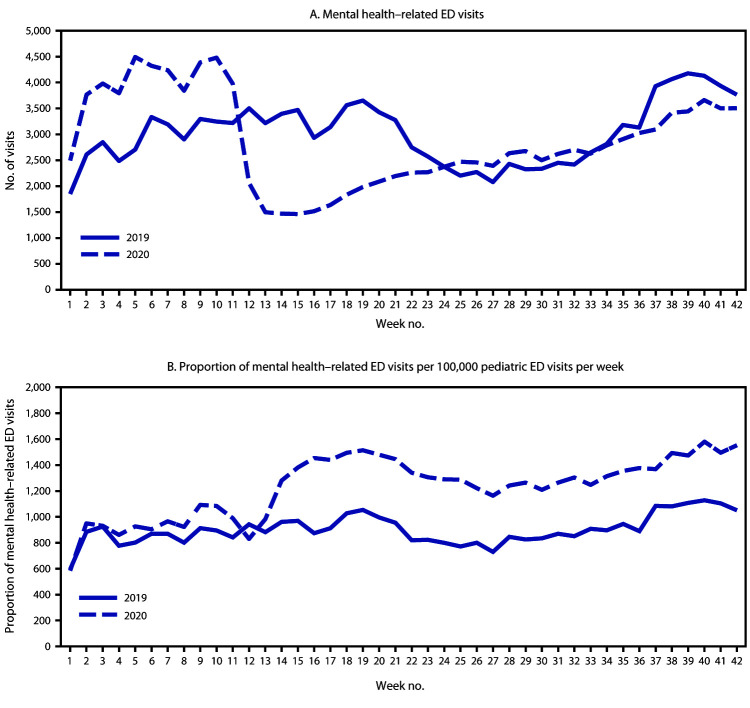
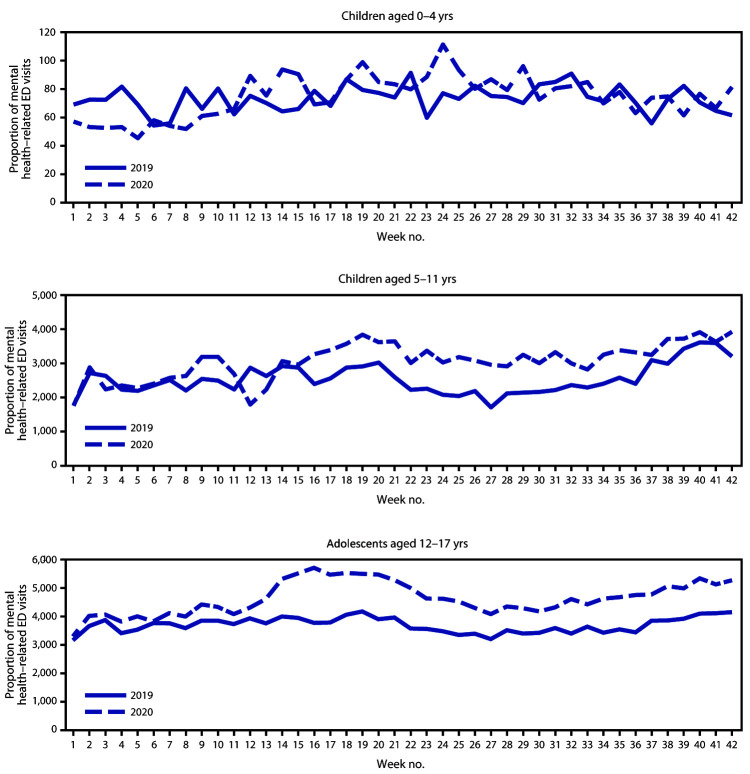
Published reports suggest that the coronavirus disease 2019 (COVID-19) pandemic has had a negative effect on children's mental health (1,2). Emergency departments (EDs) are often the first point of care for children experiencing mental health emergencies, particularly when other services are inaccessible or unavailable (3). During March 29-April 25, 2020, when widespread shelter-in-place orders were in effect, ED visits for persons of all ages declined 42% compared with the same period in 2019; during this time, ED visits for injury and non-COVID-19-related diagnoses decreased, while ED visits for psychosocial factors increased (4). To assess changes in mental health-related ED visits among U.S. children aged <18 years, data from CDC's National Syndromic Surveillance Program (NSSP) from January 1 through October 17, 2020, were compared with those collected during the same period in 2019. During weeks 1-11 (January 1-March 15, 2020), the average reported number of children's mental health-related ED visits overall was higher in 2020 than in 2019, whereas the proportion of children's mental health-related visits was similar. Beginning in week 12 (March 16) the number of mental health-related ED visits among children decreased 43% concurrent with the widespread implementation of COVID-19 mitigation measures; simultaneously, the proportion of mental health-related ED visits increased sharply beginning in mid-March 2020 (week 12) and continued into October (week 42) with increases of 24% among children aged 5-11 years and 31% among adolescents aged 12-17 years, compared with the same period in 2019. The increased proportion of children's mental health-related ED visits during March-October 2020 might be artefactually inflated as a consequence of the substantial decrease in overall ED visits during the same period and variation in the number of EDs reporting to NSSP. However, these findings provide initial insight into children's mental health in the context of the COVID-19 pandemic and highlight the importance of continued monitoring of children's mental health throughout the pandemic, ensuring access to care during public health crises, and improving healthy coping strategies and resiliency among children and families.
Overview
CoChat Summary
TL;DR
During the COVID-19 pandemic, children’s mental health–related ED visits fell in number but rose as a proportion of all pediatric ED visits, with increases among school-age children and adolescents through October 2020. The report uses CDC NSSP syndromic surveillance data and is descriptive, so the proportional increases may be inflated by the concurrent drop in overall pediatric ED visits.
Key findings
- During weeks 1–11 (January 1–March 14, 2020), the average reported number of children’s mental health–related ED visits was higher in 2020 than in 2019, while the proportion was similar (1,162 vs 1,044 per 100,000).
- Beginning in week 12 (March 16), mental health–related ED visits among children decreased 43%; during weeks 12–42, average weekly total pediatric ED visits were 43% lower in 2020 (149,055) than in 2019 (262,714), while the average proportion of mental health–related ED visits was approximately 44% higher (1,673 vs 1,161 per 100,000).
- During weeks 12–42, the proportion of mental health–related visits increased approximately 24% among children aged 5–11 years and 31% among adolescents aged 12–17 years compared with 2019; the highest weekly proportions were 1,177 per 100,000 for ages 5–11 in October (week 42) and 4,758 per 100,000 for ages 12–17 in April (week 16).
- The proportion increased 66%, from 1,094 per 100,000 during April 14–21, 2019 to 1,820 per 100,000 during April 12–18, 2020; females had higher proportions than males, with similar increasing patterns in 2020.
Methods
- CDC analyzed NSSP ED visit data from a subset of hospitals in 47 states representing approximately 73% of U.S. ED visits. Mental health–related ED visits among children aged <18 years were a composite variable from NSSP’s mental health syndrome query for conditions likely to result in ED visits during and after disaster events (e.g., stress, anxiety, acute posttraumatic stress disorder, and panic).
- Weekly numbers and proportions per 100,000 pediatric ED visits were computed overall and stratified by age group (0–4, 5–11, and 12–17 years) and sex, then compared descriptively with corresponding weekly numbers and proportions for 2019. Comparisons covered calendar weeks 1–11 and 12–42; analyses were descriptive and statistical comparisons were not performed.
Limitations
- Stated: proportions should be interpreted cautiously because of variations affecting denominators; mental health–related ED visits were a small percentage of all pediatric ED visits (1.1% in 2019 and 1.4% in 2020), and NSSP ED participation can vary over time.
- Stated: NSSP data are not nationally representative and may not be generalizable beyond participating EDs; usable race and ethnicity information was not available. Data are subject to under- and overestimation from reporting and coding variation; ED visits represent unique events, not individual persons; the syndrome definition may not capture all mental health–related ED visits and likely underestimates actual mental health visits because many occur outside EDs.
- Evident/paper-stated: analyses are descriptive with no statistical comparisons, and the paper notes the increased proportion might be artefactually inflated by the substantial decrease in overall ED visits and variation in the number of EDs reporting to NSSP.
Model-written summary. Check it against the paper before relying on it.
Integrity signals
Registry
Cites
Statistics
Figures
Verification
Claims the paper makes
5 Valid · 0 Not valid · 5 Not checked · 25 Own results and interpretations
The cited sources support only part of this claim — read each source’s verdict below.
In the paper
“The majority of EDs lack adequate capacity to treat pediatric mental health concerns (6)”
§ Mental Health–Related Emergency Department Visits Among Children Aged <18 Years During the COVID-19 Pandemic — United States, January 1–October 17, 2020 > Discussion
What the sources say
- Partly supportedcites [6] Cree, 2019, Characteristics associated with presence of pediatric mental health care policies in emergency departments., Pediatr Emerg Care sourceExperimental — accuracy not yet measured
The Results report that only 46.2% of surveyed US EDs had a policy for children with social and mental health concerns. The Discussion says this *could indicate* a lack of capacity for triage and crisis intervention; it does not establish that a majority lack adequate capacity to treat these concerns. (LLM, conf=0.85)
plain- Asserted: passes — The authors put it forward as true.
- Checkable: passes — It can be checked against evidence.
- Load-bearing: unclear — It is unclear whether the paper’s conclusions depend on it.
- Based: passes — The paper gives a reason why it holds.
- Partly supported
Every source the paper cites for this claim was checked and supports it.
In the paper
“the magnitude of the increase should be interpreted carefully because it might also reflect the large decrease in the number and proportion of other types of ED visits (e.g., asthma, otitis media, and musculoskeletal injuries) (4) and variation in the number of EDs reporting to NSSP.”
§ Mental Health–Related Emergency Department Visits Among Children Aged <18 Years During the COVID-19 Pandemic — United States, January 1–October 17, 2020 > Discussion
What the sources say
- Supportedcites [4] Hartnett, 2020, Impact of the COVID-19 pandemic on emergency department visits—United States, January 1, 2019–May 30, 2020., MMWR Morb Mortal Wkly Rep source
The results and table (page not supplied) report declines in the number and relative prevalence of ED visits for asthma, otitis media, and musculoskeletal conditions. The Discussion (page not supplied) also notes that the number of hospitals reporting to NSSP changed over time. The caution about interpreting children's mental-health visit proportions is the citing authors' framing, rather than a finding attributed to this source. (LLM, conf=0.90)
hedgedstates a possible cause- Asserted: passes — The authors put it forward as true.
- Checkable: passes — It can be checked against evidence.
- Load-bearing: passes — The paper’s conclusions depend on it.
- Based: passes — The paper gives a reason why it holds.
- Supported
The cited sources support only part of this claim — read each source’s verdict below.
In the paper
“During March 29–April 25, 2020, when widespread shelter-in-place orders were in effect, ED visits for persons of all ages declined 42% compared with the same period in 2019”
What the sources say
- Partly supportedcites [4] Hartnett, 2020, Impact of the COVID-19 pandemic on emergency department visits—United States, January 1, 2019–May 30, 2020., MMWR Morb Mortal Wkly Rep sourceExperimental — accuracy not yet measured
The paper’s opening summary reports that ED visits from March 29–April 25, 2020 were 42% lower than in the comparable 2019 period; its results say visits declined in every age group. Our copy does not state that widespread shelter-in-place orders were in effect during those dates. (LLM, conf=0.88)
plainstates an association- Asserted: passes — The authors put it forward as true.
- Checkable: passes — It can be checked against evidence.
- Load-bearing: unclear — It is unclear whether the paper’s conclusions depend on it.
- Based: passes — The paper gives a reason why it holds.
- Partly supported
A result the paper reports from its own data — it cites no other source for it, so there is none to check. The quote shows it is in the paper.
In the paper
“During weeks 1–11 (January 1–March 15, 2020), the average reported number of children’s mental health–related ED visits overall was higher in 2020 than in 2019”
- Also stated in: § Mental Health–Related Emergency Department Visits Among Children Aged <18 Years During the COVID-19 Pandemic — United States, January 1–October 17, 2020 · plain
“Although the average reported number of children’s mental health–related ED visits overall was 25% higher during weeks 1–11 in 2020 (342,740) than during the corresponding period in 2019 (274,736)”
plain- Asserted: passes — The authors put it forward as true.
- Checkable: passes — It can be checked against evidence.
- Load-bearing: unclear — It is unclear whether the paper’s conclusions depend on it.
- Based: passes — The paper gives a reason why it holds.
- Rests on an assumption not shown here.
- Also stated in: § Mental Health–Related Emergency Department Visits Among Children Aged <18 Years During the COVID-19 Pandemic — United States, January 1–October 17, 2020 · plain
A result the paper reports from its own data — it cites no other source for it, so there is none to check. The quote shows it is in the paper.
In the paper
“Adolescents aged 12–17 years accounted for the largest proportion of children’s mental health–related ED visits during 2019 and 2020”
- Also stated in: § Discussion · plain
“Adolescents aged 12–17 years accounted for the highest proportion of mental health–related ED visits in both 2019 and 2020, followed by children aged 5–11 years.”
plain- Asserted: passes — The authors put it forward as true.
- Checkable: passes — It can be checked against evidence.
- Load-bearing: unclear — It is unclear whether the paper’s conclusions depend on it.
- Based: passes — The paper gives a reason why it holds.
- Rests on an assumption not shown here.
- Also stated in: § Discussion · plain
14 more claims
Create a free account to see all 35 claims and every source verdict.
- Probably not a substantial claim. 10
- It may state two separate claims as one. 8
Claims other papers make about this one
Each is checked against this paper’s own text: does it say what the citing paper says it does?
The source backs part of the claim, not all of it — or backs it for a different population, condition or comparison.
In the citing paper
“The current trends in the number and proportion of MHC-related ED visits, along with previous research ( 1 , 2 , 4 -8 ), indicate that the mental health effects of the pandemic might be particularly high among adolescent girls.”
From Pediatric Emergency Department Visits Associated with Mental Health Conditions Before and During the COVID-19 Pandemic — United States, January 2019–January 2022 (2022) · cites this paper as [2]
Experimental — accuracy not yet measuredThe source backs part of the claim, not all of it — or backs it for a different population, condition or comparison.
In the citing paper
“Compared with the rate in 2019, a 31% increase in the proportion of mental health–related emergency department (ED) visits occurred among adolescents aged 12–17 years in 2020 (1).”
From Emergency Department Visits for Suspected Suicide Attempts Among Persons Aged 12–25 Years Before and During the COVID-19 Pandemic — United States, January 2019–May 2021 (2021) · cites this paper as [1]
Experimental — accuracy not yet measuredThe cited source says what the claim attributes to it.
In the citing paper
“During March-October 2020, among all emergency department (ED) visits, the proportion of mental health-related visits increased by 24% among U.S. children aged 5-11 years and 31% among adolescents aged 12-17 years, compared with 2019 ( 2 ).”
The cited source says what the claim attributes to it.
In the citing paper
“Declines in MHC-related visits during 2020 align with previous research ( 2 ), and with reported declines in overall volume of pediatric ED visits during the pandemic ( 8 ).”
The cited source says what the claim attributes to it.
In the citing paper
“However, the findings from this study suggest more severe distress among young females than has been identified in previous reports during the pandemic (1,2), reinforcing the need for increased attention to, and prevention for, this population.”
1 more claim about this paper
Create a free account to see every claim other papers make about this one.
Self-check
Percentages, sums and reported differences re-computed from the paper’s own numbers.
Each contradiction between two passages listed here was confirmed by an independent check.
Rated minor: it would not touch a result — a value no result rests on, a p-value that stays on the same side of the significance level, or a conflict that is clerical, resolved elsewhere in the paper, or outside its own findings.
In the paper
§ Mental Health–Related Emergency Department Visits Among Children Aged <18 Years During the COVID-19 Pandemic — United States, January 1–October 17, 2020
“Although the average reported number of children’s mental health–related ED visits overall was 25% higher during weeks 1–11 in 2020 (342,740) than during the corresponding period in 2019 (274,736)”
§ Mental Health–Related Emergency Department Visits Among Children Aged <18 Years During the COVID-19 Pandemic — United States, January 1–October 17, 2020
“| Average weekly total ED visits | 274,736 | 118,926 | 83,924 | 71,886 | 342,740 | 143,789 | 107,049 | 91,902 | | Average weekly mental health–related ED visits | 2,876 | 82 | 594 | 2,200 | 3,974 | 80 | 821 | 3,073 |”
Rated minor: it would not touch a result — a value no result rests on, a p-value that stays on the same side of the significance level, or a conflict that is clerical, resolved elsewhere in the paper, or outside its own findings.
In the paper
§ Mental Health–Related Emergency Department Visits Among Children Aged <18 Years During the COVID-19 Pandemic — United States, January 1–October 17, 2020
“During weeks 1–11 (January 1–March 15, 2020)”
§ Mental Health–Related Emergency Department Visits Among Children Aged <18 Years During the COVID-19 Pandemic — United States, January 1–October 17, 2020
“¶ Weeks 1–11 in 2019 correspond to December 30, 2018–March 16, 2019; weeks 1–11 in 2020 correspond to December 29, 2019–March 14, 2020.”
Rated minor: it would not touch a result — a value no result rests on, a p-value that stays on the same side of the significance level, or a conflict that is clerical, resolved elsewhere in the paper, or outside its own findings.
In the paper
§ Mental Health–Related Emergency Department Visits Among Children Aged <18 Years During the COVID-19 Pandemic — United States, January 1–October 17, 2020
“| Average weekly total ED visits | 265,863 | 110,002 | 81,133 | 74,728 | 199,782 | 78,742 | 59,660 | 61,380 | | Average weekly mental health–related ED visits | 3,025 | 80 | 625 | 2,320 | 2,872 | 54 | 522 | 2,296 | | Mental health–related ED visits per 100,000 visits | 1,130 | 73 | 762 | 3,084 | 1,539 | 75 | 919 | 3,863 |”
§ Mental Health–Related Emergency Department Visits Among Children Aged <18 Years During the COVID-19 Pandemic — United States, January 1–October 17, 2020
“* Average proportion of ED visits for children’s mental health = (average number of ED visits for children’s mental health/average total number of ED visits for the same age or sex population [e.g., children aged 18 years]) x 100,000.”
Citations
Cites
Mental health effects of school closures during COVID-19
Lee, J. (2020) · The Lancet Child & Adolescent Health · doi:10.1016/s2352-4642(20)30109-7 · Cited by 1,882 · cited 1×
“Published reports suggest that the coronavirus disease 2019 (COVID-19) pandemic has had a negative effect on children’s mental health (1,2).”
BackgroundWell-being of parents and children during the COVID-19 pandemic: A national survey
Patrick, S. W., Henkhaus, L. E., Zickafoose, J. S., Lovell, K., Halvorson, A., Loch, S., Letterie, M., & Davis, M. M. (2020) · Pediatrics · doi:10.1542/peds.2020-016824 · Cited by 1,200 · cited 2×
“The increase in the proportion of ED visits for children’s mental health concerns might reflect increased pandemic-related stress and unintended consequences of mitigation measures, which reduced or modified access to children’s mental health services (2), and could result in increased reliance on ED services for both…”
BackgroundCoronavirus disease 2019 (COVID-19) and mental health for children and adolescents
Golberstein, E., Wen, H., & Miller, B. F. (2020) · JAMA Pediatrics · doi:10.1001/jamapediatrics.2020.1456 · Cited by 1,140
Hartnett, K. P., Kite-Powell, A., DeVies, J., Coletta, M. A., Boehmer, T. K., Adjemian, J., Gundlapalli, A. V., & Practice, N. S. S. P. C. O. (2020) · MMWR Morbidity and Mortality Weekly Report · doi:10.15585/mmwr.mm6923e1 · Cited by 1,139 · cited 6×
“During March 29–April 25, 2020, when widespread shelter-in-place orders were in effect, ED visits for persons of all ages declined 42% compared with the same period in 2019; during this time, ED visits for injury and non-COVID-19–related diagnoses decreased, while ED visits for psychosocial factors increased (4).”
BackgroundMethodResultInfluentialPediatric and Adolescent Mental Health Emergencies in the Emergency Medical Services System
Dolan, M. A., Fein, J. A., & the Committee on Pediatric Emergency Medicine (2011) · Pediatrics · doi:10.1542/peds.2011-0522 · Cited by 235 · cited 3×
“Ensuring availability of and access to developmentally appropriate mental health services for children outside the in-person ED setting will be important as communities adjust mitigation strategies (3).”
BackgroundPreventing suicide : a technical package of policies, programs, and practice
National Center for Injury Prevention and Control (U.S.). Division of Violence Prevention., Stone, D., Holland, K., National Center for Injury Prevention and Control (U.S.). Division of Violence Prevention., Holland, B., Crosby, A., Davis, S., & Wilkins, N. (2017) · doi:10.15620/cdc.44275 · Cited by 214 · cited 1×
“CDC supports efforts to promote the emotional wellbeing of children and families and provides developmentally appropriate resources for families to reduce stressors that might contribute to children’s mental health–related ED visits†† (9).”
BackgroundSelf-citationGurwitch, R. H., Salem, H., Nelson, M. M., & Comer, J. S. (2020) · Psychological Trauma: Theory, Research, Practice, and Policy · doi:10.1037/tra0000863 · Cited by 93 · cited 2×
“Implementation of technology-based, remote mental health services and prevention activities to enhance healthy coping and resilience in children might effectively support their well-being throughout response and recovery periods (5,7).”
BackgroundCree, R. A., So, M., Franks, J., Richards, R., Leeb, R., Hashikawa, A., Krug, S., Ludwig, L., & Olson, L. M. (2021) · Pediatric Emergency Care · doi:10.1097/pec.0000000000001920 · Cited by 26 · cited 1×
“The majority of EDs lack adequate capacity to treat pediatric mental health concerns (6), potentially increasing demand on systems already stressed by the COVID-19 pandemic.”
BackgroundSelf-citation
Cited by
Items 101–200 of 541
Health Equity, Schooling Hesitancy, and the Social Determinants of Learning
Levinson, M., Geller, A. C., & Allen, J. G. (2021) · The Lancet Regional Health - Americas · doi:10.1016/j.lana.2021.100032 · Cited by 23
Purtle, J., Nelson, K. L., Horwitz, S. M., Palinkas, L. A., McKay, M. M., & Hoagwood, K. E. (2022) · Psychiatric Services · doi:10.1176/appi.ps.202100176 · Cited by 23
Increased severity of mental health symptoms among adolescent inpatients during COVID-19
Millner, A. J., Zuromski, K. L., Joyce, V. W., Kelly, F., Richards, C., Buonopane, R. J., & Nash, C. C. (2022) · General Hospital Psychiatry · doi:10.1016/j.genhosppsych.2022.04.004 · Cited by 29
Poonai, N., Freedman, S. B., Newton, A. S., Sawyer, S., Gaucher, N. O., Ali, S., Wright, B. J., Miller, M. R., Mater, A., Fitzpatrick, E. A., et al. (2023) · Canadian Medical Association Journal · doi:10.1503/cmaj.220507 · Cited by 26
Fricchione, M. J., Seo, J. Y., & Arwady, M. A. (2020) · Journal of Public Health Management and Practice · doi:10.1097/phh.0000000000001334 · Cited by 20
Woolf, S. H. (2025) · PEDIATRICS · doi:10.1542/peds.2025-070849 · Cited by 38
Gansner, M., Nisenson, M., Lin, V., Pong, S., Torous, J., & Carson, N. (2022) · JMIR Mental Health · doi:10.2196/33114 · Cited by 22
Using readiness to understand implementation challenges in school mental health research
Splett, J. W., Perales, K., Miller, E., Hartley, S. N., Wandersman, A., Halliday, C. A., & Weist, M. D. (2022) · Journal of Community Psychology · doi:10.1002/jcop.22818 · Cited by 28
“This may be exacerbated during times of major disruption, such as the coronavirus disease 2019 pandemic, with ever ‐ changing circumstances for school and mental health professionals, and escalating risk for youths ’ mental health and wellbeing (Leeb et al., 2020; Pier et al., 2021).”
BackgroundCutler, G. J., Bergmann, K. R., Doupnik, S. K., Hoffmann, J. A., Neuman, M. I., Rodean, J., Zagel, A. L., & Zima, B. T. (2022) · Academic Pediatrics · doi:10.1016/j.acap.2022.03.015 · Cited by 24
Sevecke, K., Wenter, A., Schickl, M., Kranz, M., Krstic, N., & Fuchs, M. (2022) · Neuropsychiatrie · doi:10.1007/s40211-022-00423-2 · Cited by 22
Digital media-related precursors to psychiatric hospitalization among youth.
Nesi, J., Burke, T. A., Caltabiano, A., Spirito, A., & Wolff, J. C. (2022) · Journal of Affective Disorders · doi:10.1016/j.jad.2022.05.013 · Cited by 21
Puga, A., Moreira, M. M., Sanromán, M. Á., Pazos, M. M., & Delerue-Matos, C. M. (2024) · The Science of The Total Environment · doi:10.1016/j.scitotenv.2024.175993 · Cited by 28
Telehealth and Beyond: Promoting the Mental Well-Being of Children and Adolescents During COVID
Damian, A. J., Stinchfield, K., & Kearney, R. T. (2022) · Frontiers in Pediatrics · doi:10.3389/fped.2022.793167 · Cited by 27
Ball, A., Hadland, S. E., Rodean, J., Hall, M., Mendoza, J. A., & Ahrens, K. R. (2024) · Journal of Adolescent Health · doi:10.1016/j.jadohealth.2024.02.016 · Cited by 22
Adolescent Health in the Post-Pandemic Era
Close, J. S., Arshad, S. H., Soffer, S. L., Lewis, J., & Benton, T. D. (2024) · Pediatric Clinics of North America · doi:10.1016/j.pcl.2024.04.002 · Cited by 26
Bilinski, A., Ciaranello, A. L., Fitzpatrick, M. C., Giardina, J., Shah, M., Salomon, J. A., & Kendall, E. A. (2022) · Archives of Pediatrics and Adolescent Medicine · doi:10.1001/jamapediatrics.2022.1326 · Cited by 31
The pivotal role of mental health in child and adolescent development
Suppiej, A., Longo, I., & Pettoello‐Mantovani, M. (2025) · Global Pediatrics · doi:10.1016/j.gpeds.2025.100277 · Cited by 43
Guen, C. G., Cohen, R., Rozenberg, J., Launay, E., Lévy-Bruhl, D., & Delacourt, C. (2021) · Archives de Pédiatrie · doi:10.1016/j.arcped.2021.02.001 · Cited by 17
DiGiovanni, M. J., Weller, I., & Martin, A. (2021) · Child and Adolescent Psychiatry and Mental Health · doi:10.1186/s13034-021-00382-6 · Cited by 20
“The increased mental health consequences for children and adolescents are already manifesting changes in mental healthcare usage: despite fluctuations in children’s mental health-related emergency department (ED) usage, the proportion of all ED visits for children’s mental health–related concerns increased and remaine…”
BackgroundA comparison of anxiety levels before and during the COVID-19 pandemic
Voss, C., Shorter, P., Weatrowski, G., Mueller, J., & Turner, K. (2022) · Psychological Reports · doi:10.1177/00332941221093250 · Cited by 28
“%) and depression was four times greater (24.3% vs. 6.5%; Czeisler et al., 2020), and between March 2020 to October 2020, emergency room visits for adolescents ’ mental health emergencies increased 31% compared to 2019 (Leeb et al., 2020).”
BackgroundInfluentialAdolescent Loneliness during the COVID-19 Pandemic: The Role of Pre-Pandemic Risk Factors
Thakur, H., Stutts, M. S., Choi, J. W., Temple, J. R., & Cohen, J. R. (2022) · Child Indicators Research · doi:10.1007/s12187-022-09984-8 · Cited by 24
Mindfulness supports emotional resilience in children during the COVID-19 pandemic
Treves, I. N., Li, C. E., Wang, K. L., Ozernov-Palchik, O., Olson, H. A., & Gabrieli, J. D. E. (2023) · PLoS ONE · doi:10.1371/journal.pone.0278501 · Cited by 19
Zipursky, A. R., Olson, K. L., Bode, L., Geva, A., Jones, J. R., Mandl, K. D., & McMurry, A. (2023) · PLoS ONE · doi:10.1371/journal.pone.0286035 · Cited by 20
“This has resulted in an increase in emergency department (ED) visits [7, 9] further straining EDs in the United States [10].”
BackgroundDecline In New Starts Of Psychotropic Medications During The COVID-19 Pandemic
Nason, I., Stein, D. T., Frank, R. G., & Stein, M. B. (2021) · Health Affairs · doi:10.1377/hlthaff.2021.00028 · Cited by 24
Data Divide—Disentangling the Role of the COVID-19 Pandemic on Child Mental Health and Well-being
Korczak, D. J., Madigan, S., & Vaillancourt, T. (2022) · JAMA Pediatrics · doi:10.1001/jamapediatrics.2022.0791 · Cited by 19
Tedja, A. M., Shanmugam, M. S., Stathis, S. S., & Middeldorp, C. M. (2022) · Child and Adolescent Mental Health · doi:10.1111/camh.12593 · Cited by 21
“After this initial decline, numbers of referrals to child and adolescent mental health services in Dublin and emergency department (ED) presentations for mental health problems in the United States showed a consistent increase from September 2020 (Leeb et al., 2020; McNicholas et al., 2021).”
BackgroundHasson, R. E., Beemer, L. R., Eisman, A. B., & Friday, P. J. (2023) · Kinesiology Review · doi:10.1123/kr.2022-0041 · Cited by 22
Liang, N., Becker, T. D., & Rice, T. (2021) · Clinical Child Psychology and Psychiatry · doi:10.1177/13591045211061802 · Cited by 22
“Though paediatric emergency department visits for mental health emergencies declined in the early stages of the COVID-19 pandemic, they have subsequently steadily risen (Davico et al., 2021; Leeb et al., 2020; Ougrin et al., 2021).”
BackgroundMental health profiles of autistic children and youth during the COVID-19 pandemic
Charalampopoulou, Μ., Choi, E. J., Korczak, D. J., Cost, K. T., Crosbie, J., Birken, C. S., Charach, A., Monga, S., Kelley, E. A., Nicolson, R., et al. (2022) · Paediatrics & Child Health · doi:10.1093/pch/pxab111 · Cited by 18
Messiah, S. E., Xie, L., Mathew, M. S., Shaikh, S., Veeraswamy, A., Rabi, A., Francis, J., Lozano, A., Ronquillo, C., Sanchez, V., et al. (2022) · International Journal of Environmental Research and Public Health · doi:10.3390/ijerph192013382 · Cited by 23
Covid-19: Keeping schools as safe as possible
Fontanet, A. L., Grant, R., Greve‐Isdahl, M., & Sridhar, D. (2021) · BMJ · doi:10.1136/bmj.n524 · Cited by 15
Werling, A. M., Walitza, S., Eliez, S., & Drechsler, R. (2022) · Journal of Neural Transmission · doi:10.1007/s00702-022-02512-6 · Cited by 21
Pediatric mental health emergency department visits from 2017 to 2022: A multicenter study
Hoffmann, J. A., Carter, C. P., Olsen, C. S., Ashby, D. W., Bouvay, K. L., Duffy, S. J., Chamberlain, J. M., Chaudhary, S. S., Glomb, N. W., Grupp‐Phelan, J., et al. (2024) · Academic Emergency Medicine · doi:10.1111/acem.14910 · Cited by 20
Crandal, B. R., Aguinaldo, L. D., Carter, C., Billman, G. F., Sanderson, K., & Kuelbs, C. L. (2021) · The Journal of Pediatrics · doi:10.1016/j.jpeds.2021.10.031 · Cited by 24
The impact of COVID-19 on the patterns of emergency department visits among pediatric patients
Kim, S., Ro, Y. S., Ko, S., Kim, T., Pak, Y.-S., Han, S.-H., & Moon, S. (2022) · The American Journal of Emergency Medicine · doi:10.1016/j.ajem.2022.02.009 · Cited by 17
Childs, T. M., Brown, E. L., Brown, N., Iachini, A. L., Phillippo, K. L., Galib, L., Parker, A. K., & Fujimoto, K. (2022) · Journal of School Health · doi:10.1111/josh.13186 · Cited by 20
“Wellness services and supports were defined by the research team as any discussion of teachers’: (1) request for help, (2) lack of confidence in student wellness supports, (3) quality of wellness professionals’ work, (4) support of teachers’ work, (5) professional guidance on wellness services, (6) mention of training…”
BackgroundHiscock, H., Chu, W., O’Reilly, G. M., Freed, G. L., White, M., Danchin, M. H., & Craig, S. S. (2022) · Australian Health Review · doi:10.1071/ah22015 · Cited by 17
Prevalence and treatment of autism spectrum disorder in the United States, 2016–2022
Li, C., & He, W. (2024) · Autism Research · doi:10.1002/aur.3228 · Cited by 17
“…on the prevalence of ASD, children with ASD might have reduced access to healthcare services for their treatments due to the pandemic, which could worsen ASD symptoms, increased emergency department visit, and suicidal behavior (Ammerman et al., 2021; Leeb et al., 2020; Pellicano & Stears, 2020).”
Preventing COVID-19 Transmission in Education Settings
Kaiser, S. V., Watson, A., Doğan, B. E., Karmur, A., Warren, K., Wang, P., Sosa, M. C., Olarte, A., Dorsey, S., Su, M., et al. (2021) · PEDIATRICS · doi:10.1542/peds.2021-051438 · Cited by 17
Sullivan, E., Geierstanger, S. P., & Soleimanpour, S. (2021) · Journal of Pediatric Health Care · doi:10.1016/j.pedhc.2021.11.003 · Cited by 18
“…an estimated 44% fewer outpatient mental health services, 44% fewer cognitive development screenings (Centers for Medicare & Medicaid Services, 2020) and substantial declines in reported numbers of children’s mental health-related emergency department visits (Leeb et al., 2020; Leff et al., 2021).”
Krause, K. H., Mpofu, J. J., Underwood, J. M., & Ethier, K. A. (2022) · Journal of Adolescent Health · doi:10.1016/j.jadohealth.2022.02.001 · Cited by 17
Purtle, J., Nelson, K. L., Lengnick‐Hall, R., Horwitz, S. M., Palinkas, L. A., McKay, M. M., & Hoagwood, K. (2022) · Health Services Research · doi:10.1111/1475-6773.13955 · Cited by 16
Sheikhan, N. Y., Hawke, L. D., Ma, C., Courtney, D., Szatmári, P., Cleverley, K., Voineskos, A. N., Cheung, A., & Henderson, J. L. (2022) · The Canadian Journal of Psychiatry · doi:10.1177/07067437221097906 · Cited by 18
“24 A similar trend of increasing youth mental health-related emergency department visits has been observed in Canada.”
Parental COVID-19 Vaccine Hesitancy in Diverse Communities: A National Survey
Maurice, A. D. S., Block, R., Sánchez, G. R., & Szilagyi, P. G. (2022) · Academic Pediatrics · doi:10.1016/j.acap.2022.06.016 · Cited by 15
School‐Based Health Center Utilization During COVID ‐19 Pandemic‐Related School Closures
Gallardo, M., Zepeda, A., Biely, C., Jackson, N., Puffer, M., Anton, P., & Dudovitz, R. (2022) · Journal of School Health · doi:10.1111/josh.13226 · Cited by 17
Bluth, K., Lathren, C., Park, J., Lynch, C., Curry, J., Harris‐Britt, A., & Gaylord, S. (2024) · Journal of Adolescence · doi:10.1002/jad.12277 · Cited by 15
Electronic health records identify timely trends in childhood mental health conditions
Elia, J., PAJER, K. A., Prasad, R., Pumariega, A. J., Maltenfort, M., Utidjian, L., Shenkman, E. A., Kelleher, K. J., Rao, S., Margolis, P. A., et al. (2023) · Child and Adolescent Psychiatry and Mental Health · doi:10.1186/s13034-023-00650-7 · Cited by 18
“…an abrupt decrease in rates for most MH categories for both sexes and race and ethnic groups in the first few months of 2020, coinciding with the beginning of the pandemic quar-antine that limited in-person visits, even in EDs from mid-March through mid-April, followed by subsequent increases [61].”
BackgroundParenting & Children’s Psychological Adjustment During the COVID-19 Pandemic
Gregus, S. J., Rodríguez, J. H., Faith, M. A., & Failes, E. R. (2021) · School Psychology Review · doi:10.1080/2372966x.2021.1880873 · Cited by 21
Influence of epidemics and pandemics on paediatric ED use: a systematic review
Roland, D., Gardiner, A., Razzaq, D., Rose, K., Bressan, S., Honeyford, K., Buonsenso, D., Dalt, L. D., De, T., Farrugia, R., et al. (2022) · Archives of Disease in Childhood · doi:10.1136/archdischild-2022-324108 · Cited by 14
Verlenden, J., Kaczkowski, W., Li, J., Hertz, M. F., Anderson, K. N., Bacon, S., & Dittus, P. (2022) · Journal of Child & Adolescent Trauma · doi:10.1007/s40653-022-00502-0 · Cited by 18
“…to the potential negative impact of pandemic-related stress on adolescent mental health (Hertz et al., 2021; Jones et al., 2022; Krause et al., 2022; Leeb et al., 2020) with disruptions in schooling and family situations precipitating rapid accumulation of stress events for many adolescents.”
BackgroundRamadan, M. M., Fallatah, A., Batwa, Y. F., Saifaddin, Z., Mirza, M. S., Al-Dabbagh, M. A., & Alhusseini, N. K. (2021) · BMC Psychiatry · doi:10.1186/s12888-022-03988-y · Cited by 16
“In the early phase of the pandemic, the Center for Diseases Control and Prevention (CDC) using the National Syndromic Surveillance Program (NSSP) data, observed that females had a higher proportion of mental problems ED visits than males [25].”
Methodde Jorna, C., Liber, M., Khalifi, S. E., et al. (2022) · Archives de Pédiatrie · doi:10.1016/j.arcped.2022.08.003 · Cited by 14
“This has also been reported in other studies [12,14] and raises the question of whether these indicators will remain high as the COVID-19 pandemic persists [27].”
Becker, T. D., Leong, A. W., Shanker, P., Martin, D., Staudenmaier, P. J., Lynch, S., & Rice, T. (2024) · Child Psychiatry & Human Development · doi:10.1007/s10578-024-01670-w · Cited by 15
Trends of prescription psychotropic medication exposures in pediatric patients, 2009–2018
Hunter, K., Poel, K., Pennington, S., Bindseil, I., Banerji, S., Leonard, J. E., & Wang, G. S. (2021) · Clinical Toxicology · doi:10.1080/15563650.2021.1946556 · Cited by 14
“Unfortunately, these increasing rates of mental health diagnosis have only been exacerbated by recent events related to the COVID-19 pandemic [9].”
BackgroundImpact of COVID-19 on Pediatric Mental and Behavioral Health Visits to the Emergency Department
Bolt, J., Patel, F., Stone, L., Pandian, D., Manuel, M. M., & Gaines, N. (2022) · Pediatric Emergency Care · doi:10.1097/pec.0000000000002794 · Cited by 17
“We found significant increases in proportions of MBH visits for teenagers aged from 15 to 17 years as well as for female patients in 2020, consistent with other studies.(17,18,20,22) This may be partially”
ResultMarin, D., Gennaro, G. D., Baracetti, M., Zanetti, R., Balestrieri, M., Cogo, P. E., & Colizzi, M. (2023) · Psychiatry Research Communications · doi:10.1016/j.psycom.2023.100119 · Cited by 15
“When comparing overall pediatric emergency rates with mental health emergency rates specifically, while the former rates have been confirmed to be reduced, in proportion the latter have increased (Coates et al., 2021; Leeb et al., 2020).”
Child Abuse in Times of Crises: Lessons Learned
Agrawal, N., & Kelley, M. (2020) · Clinical Pediatric Emergency Medicine · doi:10.1016/j.cpem.2020.100801 · Cited by 14
Penna, A. L., de Aquino, C. M., Pinheiro, M. S. N., et al. (2022) · Research Square · doi:10.21203/rs.3.rs-1787279/v1 · Cited by 14
Newman, K. L., Sayal, K. S., Ewart, C., Lang, A. R., Bhardwaj, A., Dubicka, B., Marshall, T., & Thomson, L. (2024) · SSM - Mental Health · doi:10.1016/j.ssmmh.2024.100343 · Cited by 17
Paediatric intensive care challenges caused by indirect effects of the COVID-19 pandemic
Kanthimathinathan, H. K., Pollak, U., & Shekerdemian, L. S. (2021) · Intensive Care Medicine · doi:10.1007/s00134-021-06400-7 · Cited by 12
Ferro, V., Averna, R., Murciano, M., Raucci, U., Cristaldi, S., Musolino, A. M., Pontillo, M., Vecchia, N. D., Labonia, M., Pisani, M., et al. (2023) · Children · doi:10.3390/children10030578 · Cited by 17
Eco-Capabilities: Arts-in-Nature for Supporting Nature Visibilisation and Wellbeing in Children
Walshe, N., Perry, J., & Moula, Z. (2023) · Sustainability · doi:10.3390/su151612290 · Cited by 19
COVID-19 in Children—Not Just Little Adults
Schuster, J. E., & Maurice, A. D. S. (2021) · JAMA Network Open · doi:10.1001/jamanetworkopen.2021.11441 · Cited by 13
COVID-19 and School Psychology: Contemporary Research Advancing Practice, Science, and Policy
Song, S. Y., Wang, C., Espelage, D. L., Fenning, P., & Jimerson, S. R. (2021) · School Psychology Review · doi:10.1080/2372966x.2021.1975489 · Cited by 14
“A recent report indicated a 31% increase in the proportion of mental health related ED (emergency department) visits among U.S. adolescents (ages 12–17; Leeb et al., 2020).”
BackgroundDoron, S., Ingalls, R. R., Beauchamp, A. S., et al. (2021) · medRxiv · doi:10.1101/2021.03.20.21253976 · Cited by 13
McLeigh, J. D., Malthaner, L., Winebrenner, C. T., & Stone, K. E. (2022) · Child Care Health and Development · doi:10.1111/cch.13000 · Cited by 15
Telepsychiatry Use Before and During the COVID-19 Pandemic Among Children Enrolled in Medicaid
Ali, M. M., West, K. D., Bagalman, E., & Sherry, T. B. (2022) · Psychiatric Services · doi:10.1176/appi.ps.20220378 · Cited by 13
Stancil, S. L., Tumberger, J., & Strawn, J. R. (2021) · Clinical and Translational Science · doi:10.1111/cts.13216 · Cited by 13
“This mini- review describes how we might qualify pharmacodynamic biomarkers in child and adolescent psychiatry to (1) aid in drug development and repurposing and (2) to improve the therapeutic landscape.”
BackgroundThe kids are alright: adolescents’ experiences during COVID-19 disruption
Lopatovska, I., Garg, R., Turpin, O., Yoon, J. H., Vroom, L., & Brown, D. (2022) · Information and Learning Sciences · doi:10.1108/ils-11-2021-0096 · Cited by 15
COVID-19 and students' mental health: foreign studies
Ermolova, T. V., Litvinov, A. V., Savitskaya, N. V., & Krukovskaya, O. A. (2021) · Journal of Modern Foreign Psychology · doi:10.17759/jmfp.2021100108 · Cited by 13
Passing the Test: A model-based analysis of safe school-reopening strategies
Bilinski, A., Salomon, J., Giardina, J., et al. (2021) · medRxiv · doi:10.1101/2021.01.27.21250388 · Cited by 3
Bilinski, A., Ciaranello, A., Fitzpatrick, M., et al. (2021) · medRxiv · doi:10.1101/2021.05.12.21257131 · Cited by 10
Xie, M., Wodzinski, M., Gajaria, A., Battaglia, M., & Rotem, A. (2022) · Child and Adolescent Mental Health · doi:10.1111/camh.12565 · Cited by 12
Using the Whole School, Whole Community, Whole Child Model to Support Mental Health in Schools
Lever, N. A., Orenstein, S., Jaspers, L. H., Bohnenkamp, J. H., Chung, J., & Hager, E. R. (2023) · Journal of School Health · doi:10.1111/josh.13322 · Cited by 17
State of the Evidence for Use of Psychotropic Medications in School-Age Youth
Shahidullah, J. D., Roberts, H. J., Parkhurst, J. T., Ballard, R., Mautone, J. A., & Carlson, J. S. (2023) · Children · doi:10.3390/children10091454 · Cited by 16
Health equity in pediatrics: Current concepts for the care of children in the 21st century (Dis Mon)
Dickson, C. A., Ergun-Longmire, B., Greydanus, D. E., Eke, R., Giedeman, B., Nickson, N. M., Hoang, L.-N., Adabanya, U., Payares, D. V. P., Chahin, S. S., et al. (2023) · Disease-a-Month · doi:10.1016/j.disamonth.2023.101631 · Cited by 18
The Declaration of the National Emergency in Child and Adolescent Mental Health: It Takes a Village
Benton, T. D., BEERS, L. S., Carlson, G., & Ng, W. Y. K. (2024) · Child and Adolescent Psychiatric Clinics of North America · doi:10.1016/j.chc.2024.03.001 · Cited by 13
Advances in the prevalence and treatment of depression for adolescents: a review
Yin, C., Xu, M., & Zong, Z. (2025) · Frontiers in Pharmacology · doi:10.3389/fphar.2025.1574574 · Cited by 17
Adolescent Girls and Alcohol Use: Increasing Concern During the COVID-19 Pandemic
Smith, T. S., Bryant, P. H., & Fogger, S. A. (2021) · Journal of Addictions Nursing · doi:10.1097/jan.0000000000000388 · Cited by 13
“One study found mental-health-related emergency department visits increased 31% for adolescents aged 12–17 years compared with the same period in 2019 (Leeb et al., 2020).”
BackgroundHutcherson, K., Kennard, B. D., Michaels, M. M., & Miles, J. J. (2021) · Evidence-Based Practice in Child and Adolescent Mental Health · doi:10.1080/23794925.2021.1975516 · Cited by 13
“(Leeb et al., 2020).”
Adolescent Total and Mental Health–Related Emergency Department Visits During the COVID-19 Pandemic
Villas‐Boas, S. B., Kaplan, S. M., White, J. S., & Hsia, R. Y.-J. (2023) · JAMA Network Open · doi:10.1001/jamanetworkopen.2023.36463 · Cited by 11
Adolescents and opioid-related outcomes amidst the COVID-19 pandemic
Romero, R. A., & Young, S. D. (2021) · Journal of Addictive Diseases · doi:10.1080/10550887.2021.1916420 · Cited by 10
Safe Schools, Thriving Students
DePaoli, J., & McCombs, J. S. (2023) · doi:10.54300/701.445 · Cited by 20
Garbutt, J. M., Dodd, S., Rook, S., Ericson, L., Sterkel, R., & Plax, K. L. (2022) · BMJ Paediatrics Open · doi:10.1136/bmjpo-2022-001497 · Cited by 11
Pediatric Primary Care Provider Perspectives on Universal Suicide Screening
Plax, K. L., Leshem, E., Dodd, S., Wang, R., Rook, S., Ericson, L., & Solsrud, A. (2024) · Journal of Primary Care & Community Health · doi:10.1177/21501319241271321 · Cited by 12
Lent, A., Dunn, A. L., Eldawy, N., Jhumkhawala, V., Rao, M., Sohmer, J., & Sacca, L. (2024) · Pediatric Reports · doi:10.3390/pediatric16040084 · Cited by 15
Improving Follow-Up for Adolescents With Depression in Primary Care
Garbutt, J. M., Dodd, S., Rook, S., Graham, S. S., Wang, R., Sterkel, R., & Plax, K. L. (2022) · PEDIATRICS · doi:10.1542/peds.2021-051107 · Cited by 10
Meyers, N., Maletz, B., Berger‐Jenkins, E., Lane, M. M., Shindle, E., Costich, M. A., Caddle, S., Kostacos, C., Paskin, G., Pethe, K., et al. (2022) · MedEdPORTAL · doi:10.15766/mep_2374-8265.11270 · Cited by 10
Jamison, J., Egger, D., Vazquez, C. E., McBride, M. J., Pauling, S., Hess, K. E., Calzada, E. J., & Bearman, S. K. (2023) · Journal of Child and Family Studies · doi:10.1007/s10826-023-02545-9 · Cited by 12
“…of COVID-19 within and outside the United States indicate that, compared to pre-pandemic estimates, children and adolescents selfreport higher levels of depression and anxiety (Demaray et al., 2021; Duan et al., 2020) and have more mental health related emergency room visits (Leeb et al., 2020).”
BackgroundCOVID-19 and Adolescent Outpatient Mental Health Service Utilization
Burrell, T. D., Sheu, Y.-S., Kim, S., Mohadikar, K. N., Ortiz, N., Jonas, C., & Horberg, M. A. (2023) · Academic Pediatrics · doi:10.1016/j.acap.2023.05.016 · Cited by 12
“national surveys demonstrate a decline in preventive medical visits during the COVID-19 era while emergency services for MH crises rose.(11,12) Other studies have shown that, despite an initial decrease at the beginning of the pandemic, rates of MH service utilization among adolescents recovered as providers shifted t…”
The Impact of Montelukast’s Black Box Warning on Pediatric Mental Health Adverse Event Reports
Abdelkader, S., Hendrix-Dicken, A., & Condren, M. E. (2023) · The Journal of Pediatric Pharmacology and Therapeutics · doi:10.5863/1551-6776-28.8.704 · Cited by 10
Lyon, A. R., Cook, C. R., Larson, M. F., Hugh, M. L., Dopp, A. R., Hamlin, C., Reinke, P. H., Bose, M., Law, A., Goosey, R., et al. (2024) · Implementation Science · doi:10.1186/s13012-023-01330-y · Cited by 9
Mental health-related visits in a pediatric emergency department during the COVID-19 pandemic
Fernandez, A., Gindt, M., Babe, P., & Askenazy-Gittard, F. (2021) · International Journal of Emergency Medicine · doi:10.1186/s12245-021-00387-0 · Cited by 10
Lopez‐Perry, C., & Whitson, L. (2022) · Journal of Counselor Leadership and Advocacy · doi:10.1080/2326716x.2022.2085214 · Cited by 10
“In 2020, there was a 20% increase in emergency room visits for mental health reasons in children and more than a 30% increase in visits for adolescents (Leeb et al., 2020).”
BackgroundRyan, G. W., Goulding, M., Borg, A., Minkah, P. A., Hermann, S., Fisher, L., Rosal, M. C., & Lemon, S. C. (2022) · Preventive Medicine Reports · doi:10.1016/j.pmedr.2022.101966 · Cited by 15
Sommerhalder, M. S., Schulman, J., Grados, M. A., Parrish, C., Praglowski, N., Ostrander, R. S., Garofano, J. S., Seivert, N. P., & Reynolds, E. K. (2021) · Evidence-Based Practice in Child and Adolescent Mental Health · doi:10.1080/23794925.2021.1970051 · Cited by 10
Lin, M., Kim, J., Sheldrick, R. C., Bair‐Merritt, M. H., Durham, M. P., Feinberg, E., & Cole, M. B. (2022) · The Journal of Pediatrics · doi:10.1016/j.jpeds.2022.03.011 · Cited by 8
Impact of the COVID-19 Pandemic on Children and Adolescents Presenting With a Psychiatric Emergency
Erjavac, B. W., Rolin, A. I., Gondy, K., Cranford, J. A., Shobassy, A., Biermann, B., Rogers, A. J., & Hong, V. (2022) · Clinical Pediatrics · doi:10.1177/00099228221120288 · Cited by 8
COVID-19 lockdown, genetic ADHD susceptibility, and mental health in 10- year-old children
Hernández‐Lorca, M., Sevelsted, A., Jepsen, J. R. M., Pedersen, C. T., Rosenberg, J. B., Mohammadzadeh, P., Rasmussen, M. A., Sørensen, M. E., Bilenberg, N., Glenthoj, B. Y., et al. (2023) · Psychiatry Research · doi:10.1016/j.psychres.2023.115481 · Cited by 12
High-Risk Medicolegal Conditions in Pediatric Emergency Medicine
Weinstock, M. B., & Jolliff, H. A. (2021) · Emergency Medicine Clinics of North America · doi:10.1016/j.emc.2021.04.001 · Cited by 9
Metadata
- Authors
- Leeb, R. T., Bitsko, R. H., Radhakrishnan, L., Martinez, P., Njai, R., & Holland, K. M.
- Affiliations
- Centers for Disease Control and Prevention (US)
- Corresponding author
- Leeb, Rebecca T.
- Venue
- MMWR. Morbidity and Mortality Weekly Report
- Published
- 2020-11-13
- Volume
- 69
- Issue
- 45
- Pages
- 1675-1680
- ISSN
- 0149-2195 (ISSN-L)
- 1545-861X
- PMC
- PMC7660659
- OpenAlex
- W3104941285
- Cited by
- 557
- References
- 9
- Citations by year
- 2026: 36 · 2025: 48 · 2024: 79 · 2023: 113 · 2022: 156 · 2021: 121 · 2020: 4
- FWCI
- 36.61
- Type
- journal article
- Language
- en
- Open access
- diamond
- doi.org
- Locations
- MMWR Morbidity and Mortality Weekly Report (publishedVersion)
- PubMed Central (publishedVersion, cc-by)
- PubMed (publishedVersion)
- Funders
- Centers for Disease Control and Prevention
- Topics
- Social Sciences › Psychology › Clinical Psychology › COVID-19 and Mental Health
- Health Sciences › Medicine › Oncology › COVID-19 and healthcare impacts
- Social Sciences › Psychology › Clinical Psychology › Child and Adolescent Psychosocial and Emotional Development
- Keywords
- child mental health, emergency department visits, COVID-19 pandemic, adolescents, psychosocial factors, shelter-in-place orders, COVID-19 mitigation measures, access to mental health care, syndromic surveillance, United States, New York City
- MeSH terms
- COVID-19, Adolescent, Mental Disorders, Child, Child, Preschool, Emergency Service, Hospital, Female, Humans, Male, Pneumonia, Viral, United States, Coronavirus Infections, Pandemics
About these checks
Registry, retraction, Cites and statistics results are computed, not judged, with one exception: a printed reference that no index lists is read once by a model before it counts as a citation error. Claims are extracted by a model and kept only when their quote appears verbatim in the text; each cited source is then checked, with a model’s help, for whether it says what the claim relies on. Those verdicts can be wrong — read the claim’s quote and the cited source before relying on one.
The claim verdicts this report counts are experimental: their accuracy is not yet measured.
A language model drew the claims from the paper on 2026-10-10, under version 3 of the claim definition (model deepseek-v4.1-flash, prompt extract-v3).
A second model labelled each claim on 2026-10-10 (model jev-1.13-20260917, definition revision gold-guideline-v0.2).
Cited sources are checked with a language model’s help (gpt-6-sol).
Statistics and arithmetic are recomputed, not judged.
Confidence bands are shown only for fields calibrated on our annotated test set. None is calibrated yet, so no band is shown.
What counts as a claim ›How we measure confidence ›How we check this ›
Are you an author, or do you see a problem with this page? Request a review
Data sources
Bibliographic data: Semantic Scholar, OpenAlex, Crossref.
Contains information from the Semantic Scholar Academic Graph Datasets, made available under the ODC Attribution License (ODC-BY 1.0).
Semantic Scholar’s data is described in: Kinney, R., et al. (2023). The Semantic Scholar Open Data Platform. arXiv:2301.10140.
