

Mental Health–Related Emergency Department Visits Among Children Aged <18 Years During the COVID-19 Pandemic — United States, January 1–October 17, 2020
Open accessThe DOI matches its Crossref record; 8 of the 9 references it cites were found in a registry or an index; 5 of the 11 sources its claims cite were checked for support.
Abstract
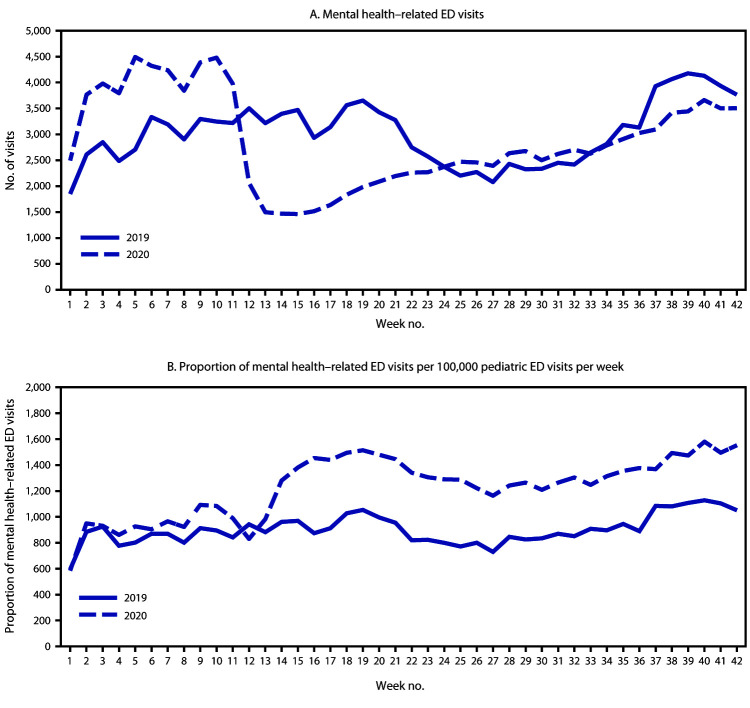
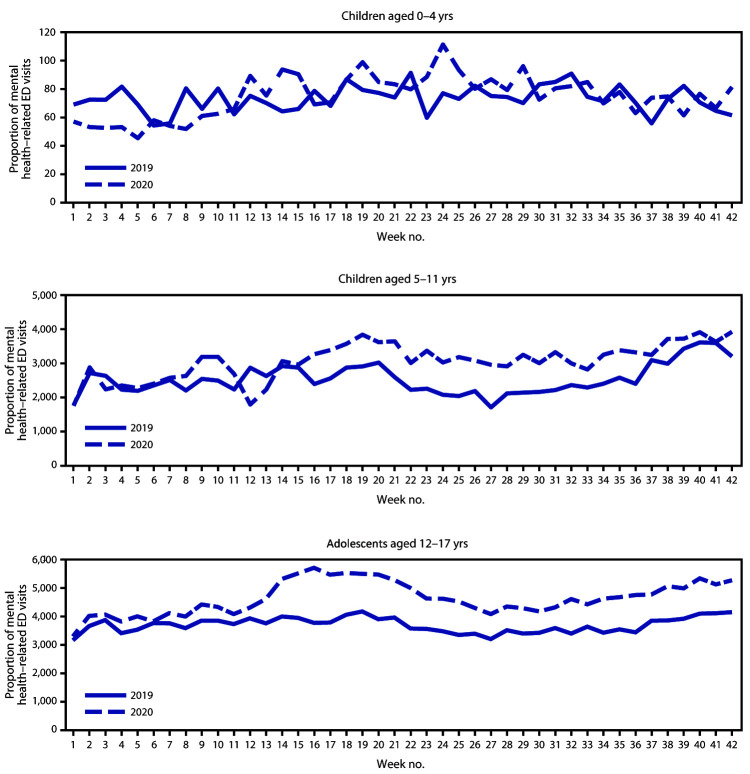
Published reports suggest that the coronavirus disease 2019 (COVID-19) pandemic has had a negative effect on children's mental health (1,2). Emergency departments (EDs) are often the first point of care for children experiencing mental health emergencies, particularly when other services are inaccessible or unavailable (3). During March 29-April 25, 2020, when widespread shelter-in-place orders were in effect, ED visits for persons of all ages declined 42% compared with the same period in 2019; during this time, ED visits for injury and non-COVID-19-related diagnoses decreased, while ED visits for psychosocial factors increased (4). To assess changes in mental health-related ED visits among U.S. children aged <18 years, data from CDC's National Syndromic Surveillance Program (NSSP) from January 1 through October 17, 2020, were compared with those collected during the same period in 2019. During weeks 1-11 (January 1-March 15, 2020), the average reported number of children's mental health-related ED visits overall was higher in 2020 than in 2019, whereas the proportion of children's mental health-related visits was similar. Beginning in week 12 (March 16) the number of mental health-related ED visits among children decreased 43% concurrent with the widespread implementation of COVID-19 mitigation measures; simultaneously, the proportion of mental health-related ED visits increased sharply beginning in mid-March 2020 (week 12) and continued into October (week 42) with increases of 24% among children aged 5-11 years and 31% among adolescents aged 12-17 years, compared with the same period in 2019. The increased proportion of children's mental health-related ED visits during March-October 2020 might be artefactually inflated as a consequence of the substantial decrease in overall ED visits during the same period and variation in the number of EDs reporting to NSSP. However, these findings provide initial insight into children's mental health in the context of the COVID-19 pandemic and highlight the importance of continued monitoring of children's mental health throughout the pandemic, ensuring access to care during public health crises, and improving healthy coping strategies and resiliency among children and families.
Overview
CoChat Summary
TL;DR
During the COVID-19 pandemic, children’s mental health–related ED visits fell in number but rose as a proportion of all pediatric ED visits, with increases among school-age children and adolescents through October 2020. The report uses CDC NSSP syndromic surveillance data and is descriptive, so the proportional increases may be inflated by the concurrent drop in overall pediatric ED visits.
Key findings
- During weeks 1–11 (January 1–March 14, 2020), the average reported number of children’s mental health–related ED visits was higher in 2020 than in 2019, while the proportion was similar (1,162 vs 1,044 per 100,000).
- Beginning in week 12 (March 16), mental health–related ED visits among children decreased 43%; during weeks 12–42, average weekly total pediatric ED visits were 43% lower in 2020 (149,055) than in 2019 (262,714), while the average proportion of mental health–related ED visits was approximately 44% higher (1,673 vs 1,161 per 100,000).
- During weeks 12–42, the proportion of mental health–related visits increased approximately 24% among children aged 5–11 years and 31% among adolescents aged 12–17 years compared with 2019; the highest weekly proportions were 1,177 per 100,000 for ages 5–11 in October (week 42) and 4,758 per 100,000 for ages 12–17 in April (week 16).
- The proportion increased 66%, from 1,094 per 100,000 during April 14–21, 2019 to 1,820 per 100,000 during April 12–18, 2020; females had higher proportions than males, with similar increasing patterns in 2020.
Methods
- CDC analyzed NSSP ED visit data from a subset of hospitals in 47 states representing approximately 73% of U.S. ED visits. Mental health–related ED visits among children aged <18 years were a composite variable from NSSP’s mental health syndrome query for conditions likely to result in ED visits during and after disaster events (e.g., stress, anxiety, acute posttraumatic stress disorder, and panic).
- Weekly numbers and proportions per 100,000 pediatric ED visits were computed overall and stratified by age group (0–4, 5–11, and 12–17 years) and sex, then compared descriptively with corresponding weekly numbers and proportions for 2019. Comparisons covered calendar weeks 1–11 and 12–42; analyses were descriptive and statistical comparisons were not performed.
Limitations
- Stated: proportions should be interpreted cautiously because of variations affecting denominators; mental health–related ED visits were a small percentage of all pediatric ED visits (1.1% in 2019 and 1.4% in 2020), and NSSP ED participation can vary over time.
- Stated: NSSP data are not nationally representative and may not be generalizable beyond participating EDs; usable race and ethnicity information was not available. Data are subject to under- and overestimation from reporting and coding variation; ED visits represent unique events, not individual persons; the syndrome definition may not capture all mental health–related ED visits and likely underestimates actual mental health visits because many occur outside EDs.
- Evident/paper-stated: analyses are descriptive with no statistical comparisons, and the paper notes the increased proportion might be artefactually inflated by the substantial decrease in overall ED visits and variation in the number of EDs reporting to NSSP.
Model-written summary. Check it against the paper before relying on it.
Integrity signals
Registry
Cites
Statistics
Figures
Verification
Claims the paper makes
5 Valid · 0 Not valid · 5 Not checked · 25 Own results and interpretations
The cited sources support only part of this claim — read each source’s verdict below.
In the paper
“The majority of EDs lack adequate capacity to treat pediatric mental health concerns (6)”
§ Mental Health–Related Emergency Department Visits Among Children Aged <18 Years During the COVID-19 Pandemic — United States, January 1–October 17, 2020 > Discussion
What the sources say
- Partly supportedcites [6] Cree, 2019, Characteristics associated with presence of pediatric mental health care policies in emergency departments., Pediatr Emerg Care sourceExperimental — accuracy not yet measured
The Results report that only 46.2% of surveyed US EDs had a policy for children with social and mental health concerns. The Discussion says this *could indicate* a lack of capacity for triage and crisis intervention; it does not establish that a majority lack adequate capacity to treat these concerns. (LLM, conf=0.85)
plain- Asserted: passes — The authors put it forward as true.
- Checkable: passes — It can be checked against evidence.
- Load-bearing: unclear — It is unclear whether the paper’s conclusions depend on it.
- Based: passes — The paper gives a reason why it holds.
- Partly supported
Every source the paper cites for this claim was checked and supports it.
In the paper
“the magnitude of the increase should be interpreted carefully because it might also reflect the large decrease in the number and proportion of other types of ED visits (e.g., asthma, otitis media, and musculoskeletal injuries) (4) and variation in the number of EDs reporting to NSSP.”
§ Mental Health–Related Emergency Department Visits Among Children Aged <18 Years During the COVID-19 Pandemic — United States, January 1–October 17, 2020 > Discussion
What the sources say
- Supportedcites [4] Hartnett, 2020, Impact of the COVID-19 pandemic on emergency department visits—United States, January 1, 2019–May 30, 2020., MMWR Morb Mortal Wkly Rep source
The results and table (page not supplied) report declines in the number and relative prevalence of ED visits for asthma, otitis media, and musculoskeletal conditions. The Discussion (page not supplied) also notes that the number of hospitals reporting to NSSP changed over time. The caution about interpreting children's mental-health visit proportions is the citing authors' framing, rather than a finding attributed to this source. (LLM, conf=0.90)
hedgedstates a possible cause- Asserted: passes — The authors put it forward as true.
- Checkable: passes — It can be checked against evidence.
- Load-bearing: passes — The paper’s conclusions depend on it.
- Based: passes — The paper gives a reason why it holds.
- Supported
The cited sources support only part of this claim — read each source’s verdict below.
In the paper
“During March 29–April 25, 2020, when widespread shelter-in-place orders were in effect, ED visits for persons of all ages declined 42% compared with the same period in 2019”
What the sources say
- Partly supportedcites [4] Hartnett, 2020, Impact of the COVID-19 pandemic on emergency department visits—United States, January 1, 2019–May 30, 2020., MMWR Morb Mortal Wkly Rep sourceExperimental — accuracy not yet measured
The paper’s opening summary reports that ED visits from March 29–April 25, 2020 were 42% lower than in the comparable 2019 period; its results say visits declined in every age group. Our copy does not state that widespread shelter-in-place orders were in effect during those dates. (LLM, conf=0.88)
plainstates an association- Asserted: passes — The authors put it forward as true.
- Checkable: passes — It can be checked against evidence.
- Load-bearing: unclear — It is unclear whether the paper’s conclusions depend on it.
- Based: passes — The paper gives a reason why it holds.
- Partly supported
A result the paper reports from its own data — it cites no other source for it, so there is none to check. The quote shows it is in the paper.
In the paper
“During weeks 1–11 (January 1–March 15, 2020), the average reported number of children’s mental health–related ED visits overall was higher in 2020 than in 2019”
- Also stated in: § Mental Health–Related Emergency Department Visits Among Children Aged <18 Years During the COVID-19 Pandemic — United States, January 1–October 17, 2020 · plain
“Although the average reported number of children’s mental health–related ED visits overall was 25% higher during weeks 1–11 in 2020 (342,740) than during the corresponding period in 2019 (274,736)”
plain- Asserted: passes — The authors put it forward as true.
- Checkable: passes — It can be checked against evidence.
- Load-bearing: unclear — It is unclear whether the paper’s conclusions depend on it.
- Based: passes — The paper gives a reason why it holds.
- Rests on an assumption not shown here.
- Also stated in: § Mental Health–Related Emergency Department Visits Among Children Aged <18 Years During the COVID-19 Pandemic — United States, January 1–October 17, 2020 · plain
A result the paper reports from its own data — it cites no other source for it, so there is none to check. The quote shows it is in the paper.
In the paper
“Adolescents aged 12–17 years accounted for the largest proportion of children’s mental health–related ED visits during 2019 and 2020”
- Also stated in: § Discussion · plain
“Adolescents aged 12–17 years accounted for the highest proportion of mental health–related ED visits in both 2019 and 2020, followed by children aged 5–11 years.”
plain- Asserted: passes — The authors put it forward as true.
- Checkable: passes — It can be checked against evidence.
- Load-bearing: unclear — It is unclear whether the paper’s conclusions depend on it.
- Based: passes — The paper gives a reason why it holds.
- Rests on an assumption not shown here.
- Also stated in: § Discussion · plain
14 more claims
Create a free account to see all 35 claims and every source verdict.
- Probably not a substantial claim. 10
- It may state two separate claims as one. 8
Claims other papers make about this one
Each is checked against this paper’s own text: does it say what the citing paper says it does?
The source backs part of the claim, not all of it — or backs it for a different population, condition or comparison.
In the citing paper
“The current trends in the number and proportion of MHC-related ED visits, along with previous research ( 1 , 2 , 4 -8 ), indicate that the mental health effects of the pandemic might be particularly high among adolescent girls.”
From Pediatric Emergency Department Visits Associated with Mental Health Conditions Before and During the COVID-19 Pandemic — United States, January 2019–January 2022 (2022) · cites this paper as [2]
Experimental — accuracy not yet measuredThe source backs part of the claim, not all of it — or backs it for a different population, condition or comparison.
In the citing paper
“Compared with the rate in 2019, a 31% increase in the proportion of mental health–related emergency department (ED) visits occurred among adolescents aged 12–17 years in 2020 (1).”
From Emergency Department Visits for Suspected Suicide Attempts Among Persons Aged 12–25 Years Before and During the COVID-19 Pandemic — United States, January 2019–May 2021 (2021) · cites this paper as [1]
Experimental — accuracy not yet measuredThe cited source says what the claim attributes to it.
In the citing paper
“During March-October 2020, among all emergency department (ED) visits, the proportion of mental health-related visits increased by 24% among U.S. children aged 5-11 years and 31% among adolescents aged 12-17 years, compared with 2019 ( 2 ).”
The cited source says what the claim attributes to it.
In the citing paper
“Declines in MHC-related visits during 2020 align with previous research ( 2 ), and with reported declines in overall volume of pediatric ED visits during the pandemic ( 8 ).”
The cited source says what the claim attributes to it.
In the citing paper
“However, the findings from this study suggest more severe distress among young females than has been identified in previous reports during the pandemic (1,2), reinforcing the need for increased attention to, and prevention for, this population.”
1 more claim about this paper
Create a free account to see every claim other papers make about this one.
Self-check
Percentages, sums and reported differences re-computed from the paper’s own numbers.
Each contradiction between two passages listed here was confirmed by an independent check.
Rated minor: it would not touch a result — a value no result rests on, a p-value that stays on the same side of the significance level, or a conflict that is clerical, resolved elsewhere in the paper, or outside its own findings.
In the paper
§ Mental Health–Related Emergency Department Visits Among Children Aged <18 Years During the COVID-19 Pandemic — United States, January 1–October 17, 2020
“Although the average reported number of children’s mental health–related ED visits overall was 25% higher during weeks 1–11 in 2020 (342,740) than during the corresponding period in 2019 (274,736)”
§ Mental Health–Related Emergency Department Visits Among Children Aged <18 Years During the COVID-19 Pandemic — United States, January 1–October 17, 2020
“| Average weekly total ED visits | 274,736 | 118,926 | 83,924 | 71,886 | 342,740 | 143,789 | 107,049 | 91,902 | | Average weekly mental health–related ED visits | 2,876 | 82 | 594 | 2,200 | 3,974 | 80 | 821 | 3,073 |”
Rated minor: it would not touch a result — a value no result rests on, a p-value that stays on the same side of the significance level, or a conflict that is clerical, resolved elsewhere in the paper, or outside its own findings.
In the paper
§ Mental Health–Related Emergency Department Visits Among Children Aged <18 Years During the COVID-19 Pandemic — United States, January 1–October 17, 2020
“During weeks 1–11 (January 1–March 15, 2020)”
§ Mental Health–Related Emergency Department Visits Among Children Aged <18 Years During the COVID-19 Pandemic — United States, January 1–October 17, 2020
“¶ Weeks 1–11 in 2019 correspond to December 30, 2018–March 16, 2019; weeks 1–11 in 2020 correspond to December 29, 2019–March 14, 2020.”
Rated minor: it would not touch a result — a value no result rests on, a p-value that stays on the same side of the significance level, or a conflict that is clerical, resolved elsewhere in the paper, or outside its own findings.
In the paper
§ Mental Health–Related Emergency Department Visits Among Children Aged <18 Years During the COVID-19 Pandemic — United States, January 1–October 17, 2020
“| Average weekly total ED visits | 265,863 | 110,002 | 81,133 | 74,728 | 199,782 | 78,742 | 59,660 | 61,380 | | Average weekly mental health–related ED visits | 3,025 | 80 | 625 | 2,320 | 2,872 | 54 | 522 | 2,296 | | Mental health–related ED visits per 100,000 visits | 1,130 | 73 | 762 | 3,084 | 1,539 | 75 | 919 | 3,863 |”
§ Mental Health–Related Emergency Department Visits Among Children Aged <18 Years During the COVID-19 Pandemic — United States, January 1–October 17, 2020
“* Average proportion of ED visits for children’s mental health = (average number of ED visits for children’s mental health/average total number of ED visits for the same age or sex population [e.g., children aged 18 years]) x 100,000.”
Citations
Cites
Mental health effects of school closures during COVID-19
Lee, J. (2020) · The Lancet Child & Adolescent Health · doi:10.1016/s2352-4642(20)30109-7 · Cited by 1,882 · cited 1×
“Published reports suggest that the coronavirus disease 2019 (COVID-19) pandemic has had a negative effect on children’s mental health (1,2).”
BackgroundWell-being of parents and children during the COVID-19 pandemic: A national survey
Patrick, S. W., Henkhaus, L. E., Zickafoose, J. S., Lovell, K., Halvorson, A., Loch, S., Letterie, M., & Davis, M. M. (2020) · Pediatrics · doi:10.1542/peds.2020-016824 · Cited by 1,200 · cited 2×
“The increase in the proportion of ED visits for children’s mental health concerns might reflect increased pandemic-related stress and unintended consequences of mitigation measures, which reduced or modified access to children’s mental health services (2), and could result in increased reliance on ED services for both…”
BackgroundCoronavirus disease 2019 (COVID-19) and mental health for children and adolescents
Golberstein, E., Wen, H., & Miller, B. F. (2020) · JAMA Pediatrics · doi:10.1001/jamapediatrics.2020.1456 · Cited by 1,140
Hartnett, K. P., Kite-Powell, A., DeVies, J., Coletta, M. A., Boehmer, T. K., Adjemian, J., Gundlapalli, A. V., & Practice, N. S. S. P. C. O. (2020) · MMWR Morbidity and Mortality Weekly Report · doi:10.15585/mmwr.mm6923e1 · Cited by 1,139 · cited 6×
“During March 29–April 25, 2020, when widespread shelter-in-place orders were in effect, ED visits for persons of all ages declined 42% compared with the same period in 2019; during this time, ED visits for injury and non-COVID-19–related diagnoses decreased, while ED visits for psychosocial factors increased (4).”
BackgroundMethodResultInfluentialPediatric and Adolescent Mental Health Emergencies in the Emergency Medical Services System
Dolan, M. A., Fein, J. A., & the Committee on Pediatric Emergency Medicine (2011) · Pediatrics · doi:10.1542/peds.2011-0522 · Cited by 235 · cited 3×
“Ensuring availability of and access to developmentally appropriate mental health services for children outside the in-person ED setting will be important as communities adjust mitigation strategies (3).”
BackgroundPreventing suicide : a technical package of policies, programs, and practice
National Center for Injury Prevention and Control (U.S.). Division of Violence Prevention., Stone, D., Holland, K., National Center for Injury Prevention and Control (U.S.). Division of Violence Prevention., Holland, B., Crosby, A., Davis, S., & Wilkins, N. (2017) · doi:10.15620/cdc.44275 · Cited by 214 · cited 1×
“CDC supports efforts to promote the emotional wellbeing of children and families and provides developmentally appropriate resources for families to reduce stressors that might contribute to children’s mental health–related ED visits†† (9).”
BackgroundSelf-citationGurwitch, R. H., Salem, H., Nelson, M. M., & Comer, J. S. (2020) · Psychological Trauma: Theory, Research, Practice, and Policy · doi:10.1037/tra0000863 · Cited by 93 · cited 2×
“Implementation of technology-based, remote mental health services and prevention activities to enhance healthy coping and resilience in children might effectively support their well-being throughout response and recovery periods (5,7).”
BackgroundCree, R. A., So, M., Franks, J., Richards, R., Leeb, R., Hashikawa, A., Krug, S., Ludwig, L., & Olson, L. M. (2021) · Pediatric Emergency Care · doi:10.1097/pec.0000000000001920 · Cited by 26 · cited 1×
“The majority of EDs lack adequate capacity to treat pediatric mental health concerns (6), potentially increasing demand on systems already stressed by the COVID-19 pandemic.”
BackgroundSelf-citation
Cited by
Items 401–500 of 541
Climate anxiety among adolescents in a pediatric emergency department
Assaf, R. R., Shelton, S. K., Morphew, T. L., Clayton, S., & Wu, J. (2025) · Environmental Research Health · doi:10.1088/2752-5309/ae09d2 · Cited by 2
Winer, J. P., Davis, S. H., Kingkade, L., Elliott, K. E., Yohannes, S., & Kessler, J. (2025) · Psychology in the Schools · doi:10.1002/pits.70109 · Cited by 1
Lodi, E., Gasparini, P. A., Brusini, A., Poli, M., Savino, G., & Modena, M. G. (2025) · International Journal of Pediatrics · doi:10.1155/ijpe/1339516 · Cited by 3
“According to a study by the Centers for Disease Control and Prevention [37], there was a 24% and 31% increase in emergency department visits for mental health 6 International Journal of Pediatrics issues among children aged 5 – 11 and 12 – 17, respectively, during the pandemic compared to the…”
Reinke, W. M., Herman, K. C., Thompson, A. M., Shaoli, S. S., & Bhuiyan, P. (2026) · Journal of School Psychology · doi:10.1016/j.jsp.2025.101545 · Cited by 4
The Experiences of Rural School Counselors During Mental Health Referrals
Becnel, A. T., Fergel, H., & Griffard, M. R. (2026) · Journal of Child and Adolescent Counseling · doi:10.1080/23727810.2025.2586443 · Cited by 3
Gansner, M., Nikam, P., Wang, W., Levy, S., & Schuman‐Olivier, Z. (2026) · JAACAP Open · doi:10.1016/j.jaacop.2026.03.001 · Cited by 2
Healthcare staff evaluation of an emergency department mental health room: a virtual reality study
Goulart, F. D. M., Joseph, A., Jiang, Y., Ardekani, M. S., & Bhanu, A. C. (2026) · Building Research & Information · doi:10.1080/09613218.2026.2648058 · Cited by 2
“…in the United States and in the UK over the last 20 years and are characterized by significant variability in patient volumes, acuity, and diagnoses, requiring providers to continually adapt to diverse patient needs (Cutler et al., 2019; Leeb et al., 2020; Royal College of Psychiatrists, 2024).”
Trends in Youth Mental Health Among Patients in Family Medicine Practices: 2017–2023
Lowenstein, C., Kamdar, N. S., & Rehkopf, D. H. (2026) · PEDIATRICS · doi:10.1542/peds.2025-072305 · Cited by 4
Debriefing During a Mental Health Crisis
Galligan, M. M., DeBrocco, D., & Friedlaender, E. Y. (2021) · Journal of Hospital Medicine · doi:10.12788/jhm.3628 · Cited by 1
“uses a facilitative guide to (1) review the patient’s history; (2) identify potential triggers for the event; (3) reflect on areas of strength and weakness in unit response; (4) identify systems issues impacting the patient or the unit response; and (5) generate a strategy to prevent reoccurrence.”
MethodFolie à Deux in the Setting of COVID-19 Quarantine
Nuñez, M. B., Rodriguez, E., DeLuca, M., Chirimunj, K., & Dhingra, M. (2022) · Case Reports in Psychiatry · doi:10.1155/2022/2046436 · Cited by 4
Newlove‐Delgado, T., Mathews, F., Cross, L., Wooding, E. L., & Ford, T. J. (2022) · Elsevier eBooks · doi:10.1016/b978-0-323-91709-4.00007-x · Cited by 1
Legislative remedies to mitigate the national emergency in pediatric mental health
Shah, S. I., Shah, S. I., Patel, M. S., Raphael, J. L., Keller, D., Chamberlain, L. J., Devaskar, S. U., Cheng, T. L., Javier, J. R., & Lee, L. K. (2022) · Pediatric Research · doi:10.1038/s41390-022-02326-y · Cited by 1
“Emergency room use for mental health services during the pandemic surged by 24% and 31% in children and adolescents, respectively.(11) These factors are overburdening a US health care system already insufficient to meet even prepandemic pediatric menthal health care needs, when the percentages of children receiving ou…”
BackgroundMacyko, S. J. (2022) · Journal of Pediatric Health Care · doi:10.1016/j.pedhc.2022.12.001 · Cited by 4
“Beginning in April 2020, the proportion of mental health −related visits in pediatric emergency departments increased significantly for children and adolescents (Leeb et al., 2020).”
Worrell, M. C., Malone, S. M., Dawson, P., Fritz, S. A., Thomas, E. S., Peeler, B., Rains, C. M., Tinker, S. C., Neatherlin, J. C., Barrios, L. C., et al. (2023) · PLoS ONE · doi:10.1371/journal.pone.0275404 · Cited by 2
Expert Team in Your Back Pocket: Recommendations From a Pediatric Mental Health Access Program
Harris, K. R., Gonzalez, A., Vuong, N., Singh, N., Brown, R., & Micaldi, S. C. (2023) · Clinical Pediatrics · doi:10.1177/00099228231154122 · Cited by 1
Building School-Based Capacity to Support Parenting: Challenges and Lessons Learned
Mason, S. M., Lind, A., Sherwood, N. E., & Sugrue, E. P. (2023) · School Mental Health · doi:10.1007/s12310-023-09593-y · Cited by 2
Key Issues in the First Year of Transition for a Large Medicaid-Funded Children’s Service
Hutchison, S. L., Taylor, R. M., Herschell, A. D., et al. (2023) · Community Mental Health Journal · doi:10.1007/s10597-023-01201-2 · Cited by 1
“…mental health instead of case management to address the need for emergent health care services during the pandemic (Ibeziako et al., 2022; Leeb et al., 2020) and higher health care needs of youth resulting from stress of the pandemic restrictions and decreased social support during…”
Gerber, A. S., Keluskar, J. L., & Lerner, M. D. (2023) · Journal of Clinical Child & Adolescent Psychology · doi:10.1080/15374416.2023.2272933 · Cited by 3
“Further, mental health related emergency room visits increased for children and adolescents in the United States during March and April of 2020 compared to the previous year (Leeb et al., 2021).”
Changes in real-world dispensing of ADHD stimulants in youth from 2019 to 2021 in California
Patel, A., Chavan, R. S., Rakovski, C. S., Beuttler, R., & Yang, S. (2024) · Frontiers in Public Health · doi:10.3389/fpubh.2024.1302144 · Cited by 2
Siciliano, R. E., McGonigle, T., Benningfield, M. M., Vandekar, S., Owens, M. V., Felts, B., Anderson, A. S., Cole, D. A., & Bettis, A. H. (2024) · Evidence-Based Practice in Child and Adolescent Mental Health · doi:10.1080/23794925.2024.2358494 · Cited by 2
“An increasing number of adolescents in the United States are presenting to emergency departments in a mental health crisis (Plemmons et al., 2018), particularly in recent years after the COVID-19 pandemic (Ibeziako et al., 2022; Leeb et al., 2020; Yard et al., 2021).”
Emergency Department Boarding, Diversion Programs, and Other Novel Interventions
Twohy, E., & Sommerhalder, M. S. (2024) · Issues in clinical child psychology · doi:10.1007/978-3-031-62749-1_22 · Cited by 3
Chokroverty, L. (2024) · Pediatrics in Review · doi:10.1542/pir.2022-005688 · Cited by 2
Garnett, B. R., Moore, M., Kervick, C. T., Vogel, K., Bedinger, L., & Smith, L. C. (2024) · Contemporary Justice Review · doi:10.1080/10282580.2024.2446447 · Cited by 1
“Pointed examples include, emergency room visits for mental health issues increased by 31% for 12–17-year-olds between April and October of 2020, compared to the same time frame in 2019 (Leeb et al., 2020).”
Khazanchi, R., Brewster, R., Tolliver, D. G., Heard‐Garris, N., Vasan, A., Winkelman, T. N. A., & Hadland, S. E. (2025) · Journal of Adolescent Health · doi:10.1016/j.jadohealth.2025.02.001 · Cited by 1
Delawalla, M. L. M., Rhew, I. C., Jenness, J. L., McCauley, E., Lyon, A. R., & Stoep, A. V. (2025) · Journal of Child and Family Studies · doi:10.1007/s10826-025-03018-x · Cited by 2
“The need for emotional support among children and adolescents has been ampli fi ed by the COVID 19-pandemic (Jones et al., 2022; Leeb et al., 2020; McGuine et al., 2021), and thus an increased number of students may have emotional health needs that exceed what teachers alone can provide.”
Changes in psychiatric admissions in the first year of COVID-19 in Ontario, Canada
Betini, G. S., Yu, D., Pérez, E. L., Sareen, J., Perlman, C. M., & Hirdes, J. P. (2025) · International Journal of Mental Health Systems · doi:10.1186/s13033-025-00674-w · Cited by 1
“While many studies have shown significant decreases in the number emergency department visits for mental health problems and/ or psychiatry admissions around the world [9, 11–26], some showed no change [27–31] or even an increase in visits and/or admissions [32–35].”
Community mitigation of COVID-19: Health communications and varied community reactions
Meleo-Erwin, Z. C., & Basch, C. H. (2021) · Journal of Prevention & Intervention in the Community · doi:10.1080/10852352.2021.1908212 · Cited by 1
“Adverse mental health outcomes have soared (Xiong et al., 2020) particularly amongst vulnerable and marginalized communities (Czeisler et al., 2020), and children (Leeb et al., 2020).”
BackgroundPreserving Margins to Promote Missions: COVID‐19's Toll on US Children's Hospitals
Galligan, M. M., Goldstein, L. H., Washington, N., et al. (2021) · Journal of Hospital Medicine · doi:10.12788/jhm.3588 · Cited by 1
COVID-19 Impact on Pediatric Health: A survey of families in Wayne County, MI
Raheja, R., Pitman‐Hunt, C., Haidar, S. R., Gjorgjevska, S., & Leja, J. (2021) · Global Pediatric Health · doi:10.1177/2333794x211026190 · Cited by 1
Equity and Social Justice Concerns in Mental Health Risk during the Pandemic
Shaligram, D., Okpaku, S. O., & Sorel, E. (2021) · The Canadian Journal of Psychiatry · doi:10.1177/07067437211027979 · Cited by 1
da Cruz, E. P. F., Gomes, G. R. R., & Filho, E. T. A. (2021) · Research Society and Development · doi:10.33448/rsd-v10i12.20436 · Cited by 4
BETZ, C. L. (2022) · Journal of Pediatric Nursing · doi:10.1016/j.pedn.2022.01.001 · Cited by 1
The impact of COVID-19 on adolescents’ mental health
Malik (2022) · Current Psychiatry · doi:10.12788/cp.0275 · Cited by 1
COVID-19 and children's behavioral health: An overview
Pajek, J. A., Mancini, K. J., & Murray, M. S. (2023) · Current problems in pediatric and adolescent health care · doi:10.1016/j.cppeds.2023.101491 · Cited by 3
Ferwana, I., & Varshney, L. R. (2021) · medRxiv · doi:10.1101/2021.05.26.21257598 · Cited by 1
“There was a decline by half of usual visits for depression patients during March and April 2020 until they resumed and elevated by June and July 2020 [41, 32, 22, 28].”
BackgroundHolloway, W. B., & Mikel, S. (2022) · Research Square · doi:10.21203/rs.3.rs-2129900/v1 · Cited by 1
Nijman, R., Honeyford, K., Farrugia, R., et al. (2022) · medRxiv · doi:10.1101/2022.03.25.22272926 · Cited by 1
Hamatani, S. (2022) · Research Square · doi:10.21203/rs.3.rs-1503720/v1
Beaudry, G. M., Drouin, O., Gravel, J., Smyrnova, A., Bender, A., Orri, M., Geoffroy, M., & Chadi, N. (2022) · medRxiv · doi:10.1101/2022.04.18.22273970 · Cited by 1
Ball, W., Black, C., Gordon, S., et al. (2022) · medRxiv · doi:10.1101/2022.06.14.22276082 · Cited by 1
Zipursky, A. R., Olson, K. L., Bode, L., et al. (2023) · medRxiv · doi:10.1101/2023.05.08.23289659 · Cited by 1
Lawrence‐Sidebottom, D., Huffman, L. G., Beam, A. B., et al. (2023) · doi:10.2196/preprints.54816 · Cited by 1
Book Review—At Our Best: Building Youth–Adult Partnerships in Out-of-School Time Settings
Ross, L. (2021) · Journal of Youth Development · doi:10.5195/jyd.2021.1092
van Helmond, J. L., Fitts, B., & Chauhan, J. (2021) · Journal of Pediatric Intensive Care · doi:10.1055/s-0041-1727249
Pescatore, R. M., Carr, D., Gaeta, C. M., Alois, C., Haberstroh, S., Massett, K., Weiss, M., Covey, A., Kleinschmidt, K., Walker, R. D., et al. (2021) · Delaware Journal of Public Health · doi:10.32481/djph.2021.03.015
Pitts, S., & Forman, S. F. (2021) · Current Opinion in Pediatrics · doi:10.1097/mop.0000000000001028
Multidisciplinary intervention highly effective in decreasing restraint use in paediatric acute care
Bowen, F., & Chinnis, S. (2021) · Evidence-Based Nursing · doi:10.1136/ebnurs-2021-103467
Horvat, C. M., Pelletier, J. H., & Ramgopal, S. (2021) · The Lancet Regional Health - Western Pacific · doi:10.1016/j.lanwpc.2021.100324
Gansner, M., Nisenson, M., Lin, V., et al. (2021) · doi:10.2196/preprints.33114
Colonialism, COVID-19, and Education
Blume, A. W. (2022) · International and cultural psychology/International and cultural psychology series · doi:10.1007/978-3-030-92825-4_5
Seventeen-Year-Old Female With History of Depression Presented With Mania and Enuresis
Tunc, E. M., Otten, C. E., Kodish, I. M., Kim, S., Kochar, A., Novotny, E. J., & Yoshida, H. (2022) · PEDIATRICS · doi:10.1542/peds.2021-051176
DÖNMEZ, H., & Arslan, F. T. (2022) · Turkish Journal of Family Medicine & Primary Care · doi:10.21763/tjfmpc.992142 · Cited by 1
Prescriptions of Psychotropic Medications by Providers Treating Children of Military Service Members
Kucera, A., Koehlmoos, T. P., Grunwald, L., Banaag, A. L., Schvey, N. A., Quinlan, J. D., & Tanofsky‐Kraff, M. (2022) · Military Medicine · doi:10.1093/milmed/usac048
Pediatric Critical Illness in Wisconsin during the Epoch of COVID-19 in 2020Preprint
Godsey, C., Gabor, R., Oelstrom, M. J., Hagen, S. A., Peterson, J., Taylor, J., & Mikhailov, T. (2022) · Research Square · doi:10.21203/rs.3.rs-1419908/v1
Children’s Mental Health is Important for All Psychiatrists to Address
Yule, A. M., & Kurtz, B. P. (2022) · FOCUS The Journal of Lifelong Learning in Psychiatry · doi:10.1176/appi.focus.20220041
Photoperiod is Associated with Mental HealthPreprint
Sadish, D. (2022) · SSRN Electronic Journal · doi:10.2139/ssrn.4050897
Photoperiod Is Associated with Mental HealthPreprint
Sadish, D. (2022) · SSRN Electronic Journal · doi:10.2139/ssrn.4049224
Les effets de la COVID-19 sur les intoxications à l’urgence pédiatrique
Zhang, E. W. J., Davis, A. L., Finkelstein, Y., & Rosenfield, D. (2022) · Paediatrics & Child Health · doi:10.1093/pch/pxab108
Black, D. L. (2021) · doi:10.1002/9781119709244.ch10
The role of advocacy in improving access to care for children with mental illness
Sojka, P. (2022) · The Brown University Child and Adolescent Behavior Letter · doi:10.1002/cbl.30645
A Clarion Call: COVID-19 and the Pediatric Behavioral Health Inpatient Crisis
Frush, B. W. (2022) · Southern Medical Journal · doi:10.14423/smj.0000000000001421
Grodberg, D., Bridgewater, J., Loo, T. M., et al. (2022) · doi:10.2196/preprints.37285
Worrell, M. C., Malone, S. M., Dawson, P., et al. (2022) · medRxiv · doi:10.1101/2022.09.19.22280101
The psychological impact of the COVID-19 pandemic
Bufka, L. F., & Marzalik, J. S. (2022) · Elsevier eBooks · doi:10.1016/b978-0-323-91497-0.00178-8
Impacts of COVID-19 on Children and Adolescent Well-Being
Rodriguez-Hernandez, Y., & Burke, R. V. (2023) · Emerald Group Publishing Limited eBooks · doi:10.1108/978-1-80262-115-020231004 · Cited by 2
Alden, K. G., & Landy, K. (2023) · Evidence-Based Practice · doi:10.1097/ebp.0000000000001802
Impact of COVID-19 on the Pediatric Population
Lee, J. Y., Townsend, J. A., & Ihle, E. C. (2021) · Journal of the California Dental Association · doi:10.1080/19424396.2021.12222764
Mindfulness and its Application for Mind–Body Challenges in Children and Adolescents
Choudhury, A., Clare, C., Koduri, S., & Saxena, K. (2023) · Springer eBooks · doi:10.1007/978-3-031-18377-5_32
Lessons Learned from the COVID-19 Global Pandemic
Hoq, R., & Reliford, A. O. (2023) · Springer eBooks · doi:10.1007/978-3-031-24804-7_12
Pumariega, A. J., Kastrup, M. C., & Murthy, R. S. (2023) · doi:10.1093/med/9780197521359.003.0037
Pediatric Digital Health Entrepreneurship
Taraman, S., Salomon, C., & Yiu, A. J. (2023) · Health informatics · doi:10.1007/978-3-031-33902-8_15
Inter-hospital Variation in COVID-19 Era Pediatric Hospitalizations by Age Group and Diagnosis
Murosko, D. C., Passarella, M. A., Handley, S. C., et al. (2023) · Hospital Pediatrics · doi:10.1542/hpeds.2023-007287
Kung, T. L., Kung, S., Kung, J. L., Michet, J., & Lapid, M. I. (2021) · Journal of Emerging Investigators · doi:10.59720/21-078
Benefield, H. C., Bettencourt, A. F., Lee, M., & Vidal, C. (2023) · School Mental Health · doi:10.1007/s12310-023-09614-w
Elizabeth Stein, M., Halverson, J. L., & Manderscheid, R. (2023) · American Public Health Association eBooks · doi:10.2105/9780875533377ch19
Haselgruber, A., Weindl, D., Sandra, S., Rusinek, M., Maletzky, A., Singer, V., Zajec, K., & Noske, J. (2023) · Psychotherapie Forum · doi:10.1007/s00729-023-00236-w
“Jugendliche (13–17 Jahre) wurden häufiger aufgrund von suizidalen Gedanken oder Handlungen in Notaufnahmen vorstellig (Leeb 2020; Madigan et”
Frankland, M., & Biddle, C. (2023) · Theory & Practice in Rural Education · doi:10.3776/tpre.2023.v13n2p1-28 · Cited by 1
Viviani, T., Morin, D., & Greenfield, B. J. (2023) · Advances in Neurodevelopmental Disorders · doi:10.1007/s41252-023-00384-9 · Cited by 1
“The emergency room (ER) often serves as the first point of care for children with mental health emergencies in need of crisis intervention (Leeb et al., 2020; Schlichting et al., 2017).”
Sen, M. S., Chawla, N., Deep, R., & Chadda, R. K. (2024) · Indian Journal of Psychiatry · doi:10.4103/indianjpsychiatry.indianjpsychiatry_569_23
Shtayermman, O., & Zhang, Y. (2024) · Elsevier eBooks · doi:10.1016/b978-0-323-96023-6.00101-9
The Impact of COVID-19 on Women: Highlighting Vulnerabilities and Opportunities
Lowder, K., Shapiro, D. N., & Richards, M. (2022) · JAACAP Connect · doi:10.62414/001c.92242
Douet, V., Chebli, M., Pisella, L. I., & Staccini, P. (2024) · Medical Research Archives · doi:10.18103/mra.v12i3.5286
“Several US national studies showed an increase up to 60% in the MH – related pediatric ED visits 24 – 26 with a raise in the proportion of pediatric ED visits for MH concerns associated with the COVID-19 pandemic 6,27 – 29 .”
BackgroundReducing (Behavioral) Restraint Use Through Simulation at the Bedside
Miller, O., Treseler, J., & Pignataro, S. (2024) · Journal for Nurses in Professional Development · doi:10.1097/nnd.0000000000001046
Donovan, A. L., Punko, D., Bird, S., Ivkovic, A., & Prager, L. M. (2024) · Elsevier eBooks · doi:10.1016/b978-0-443-11844-9.00083-7
Multidisciplinary Perspectives on Youth Climate Distress
Haase, E., & Hudson, K. (2024) · Cambridge University Press eBooks · doi:10.1017/9781009252904.011
Pediatricians’ Perspectives: Youth Climate Distress in the Pediatric Setting
Ahdoot, S. (2024) · Cambridge University Press eBooks · doi:10.1017/9781009252904.014 · Cited by 1
Social distancing behavior and mental health in US adolescents during the COVID-19 pandemic
Wang, M., Scanlon, C. L., Lee, A. S., & Henderson, A. C. (2024) · Elsevier eBooks · doi:10.1016/b978-0-323-95648-2.00047-2
Psychosocial Stressors and Mental Health Concerns
Colvin, M. K., Reesman, J. L., & Glen, T. (2024) · Oxford University Press eBooks · doi:10.1093/9780197762660.003.0008
Mbu, P. T., White, D. T., Simmons, S., Gordon-Achebe, K., Praylow, T., & Kodish, I. M. (2024) · Child and Adolescent Psychiatric Clinics of North America · doi:10.1016/j.chc.2024.07.002
Helito, A. C., Fonseca, R. L. A., de Siqueira, A. H. D., Ferrer, C. M., de Faria, G. R., Morais, I. R., Júnior, J. C. A., Breziniscki, M. D. P., & Morinaga, C. V. (2024) · Clinics · doi:10.1016/j.clinsp.2024.100502
The impact of life events on child and adolescent psychiatry consultations
Gül, M. K., Güneş, S., Özdemir, E., & Özmen, S. (2024) · Çukurova medical journal (Online)/Çukurova medical journal · doi:10.17826/cumj.1432763
Assessment of Children and Adolescents’ Admissions to Pediatric Psychiatric Emergency Department
Ocakoğlu, B. K., Alkaş, G. E., Erata, M. C., Ocakoğlu, F. T., Oral, E. Y., & Karaçetin, G. (2024) · Psychiatry · doi:10.1080/00332747.2024.2405955 · Cited by 1
Huo, S., Ro, A. E., Du, S., Young, A., & Bruckner, T. A. (2024) · BMC Psychiatry · doi:10.1186/s12888-024-06225-w
Disparities in school based mental health service use among US adolescents in 2021
Smith, R. A., Ali, M. M., & Novak, P. J. (2024) · General Hospital Psychiatry · doi:10.1016/j.genhosppsych.2024.12.017
Optimizing Masks and Random Screening Test Usage within K-12 Schools
Zhang, Y., Mayorga, M. E., Ivy, J. S., & Swann, J. (2025) · MDM Policy & Practice · doi:10.1177/23814683241312225
(2000) · Time to knit · doi:10.1016/j.ccol.2021.12.007
(2000) · Time to knit · doi:10.1016/j.ccol.2021.12.006
Families’ Engagement and Perception of Social-Emotional/Behavioral Services in Schools
Bender, S. L., Hendricker, E. N., & Ouye, J. (2025) · Contemporary School Psychology · doi:10.1007/s40688-025-00536-9
“…of anxiety and depression in children and adolescents are found to be 28% and 23%, respectively (Theberath et al., 2022), and mental health related emergency visits have increased by 24% for children ages 5 to 11 and 31% for adolescents ages 12 to 17 in 2020 compared to 2019 (Leeb et al., 2020).”
Metadata
- Authors
- Leeb, R. T., Bitsko, R. H., Radhakrishnan, L., Martinez, P., Njai, R., & Holland, K. M.
- Affiliations
- Centers for Disease Control and Prevention (US)
- Corresponding author
- Leeb, Rebecca T.
- Venue
- MMWR. Morbidity and Mortality Weekly Report
- Published
- 2020-11-13
- Volume
- 69
- Issue
- 45
- Pages
- 1675-1680
- ISSN
- 0149-2195 (ISSN-L)
- 1545-861X
- PMC
- PMC7660659
- OpenAlex
- W3104941285
- Cited by
- 557
- References
- 9
- Citations by year
- 2026: 36 · 2025: 48 · 2024: 79 · 2023: 113 · 2022: 156 · 2021: 121 · 2020: 4
- FWCI
- 36.61
- Type
- journal article
- Language
- en
- Open access
- diamond
- doi.org
- Locations
- MMWR Morbidity and Mortality Weekly Report (publishedVersion)
- PubMed Central (publishedVersion, cc-by)
- PubMed (publishedVersion)
- Funders
- Centers for Disease Control and Prevention
- Topics
- Social Sciences › Psychology › Clinical Psychology › COVID-19 and Mental Health
- Health Sciences › Medicine › Oncology › COVID-19 and healthcare impacts
- Social Sciences › Psychology › Clinical Psychology › Child and Adolescent Psychosocial and Emotional Development
- Keywords
- child mental health, emergency department visits, COVID-19 pandemic, adolescents, psychosocial factors, shelter-in-place orders, COVID-19 mitigation measures, access to mental health care, syndromic surveillance, United States, New York City
- MeSH terms
- COVID-19, Adolescent, Mental Disorders, Child, Child, Preschool, Emergency Service, Hospital, Female, Humans, Male, Pneumonia, Viral, United States, Coronavirus Infections, Pandemics
About these checks
Registry, retraction, Cites and statistics results are computed, not judged, with one exception: a printed reference that no index lists is read once by a model before it counts as a citation error. Claims are extracted by a model and kept only when their quote appears verbatim in the text; each cited source is then checked, with a model’s help, for whether it says what the claim relies on. Those verdicts can be wrong — read the claim’s quote and the cited source before relying on one.
The claim verdicts this report counts are experimental: their accuracy is not yet measured.
A language model drew the claims from the paper on 2026-10-10, under version 3 of the claim definition (model deepseek-v4.1-flash, prompt extract-v3).
A second model labelled each claim on 2026-10-10 (model jev-1.13-20260917, definition revision gold-guideline-v0.2).
Cited sources are checked with a language model’s help (gpt-6-sol).
Statistics and arithmetic are recomputed, not judged.
Confidence bands are shown only for fields calibrated on our annotated test set. None is calibrated yet, so no band is shown.
What counts as a claim ›How we measure confidence ›How we check this ›
Are you an author, or do you see a problem with this page? Request a review
Data sources
Bibliographic data: Semantic Scholar, OpenAlex, Crossref.
Contains information from the Semantic Scholar Academic Graph Datasets, made available under the ODC Attribution License (ODC-BY 1.0).
Semantic Scholar’s data is described in: Kinney, R., et al. (2023). The Semantic Scholar Open Data Platform. arXiv:2301.10140.
