

Prevalence and Characteristics of Autism Spectrum Disorder Among Children Aged 8 Years — Autism and Developmental Disabilities Monitoring Network, 11 Sites, United States, 2012
Open accessThe DOI matches its Crossref record; 40 of the 41 references it cites were found in a registry or an index; none of the 21 sources its claims cite is checked for support yet.
Abstract
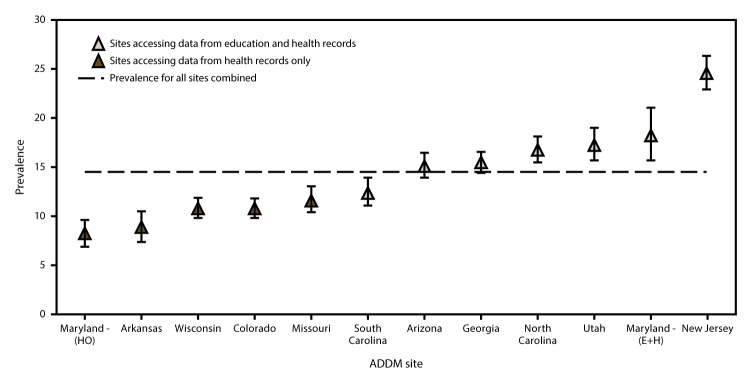
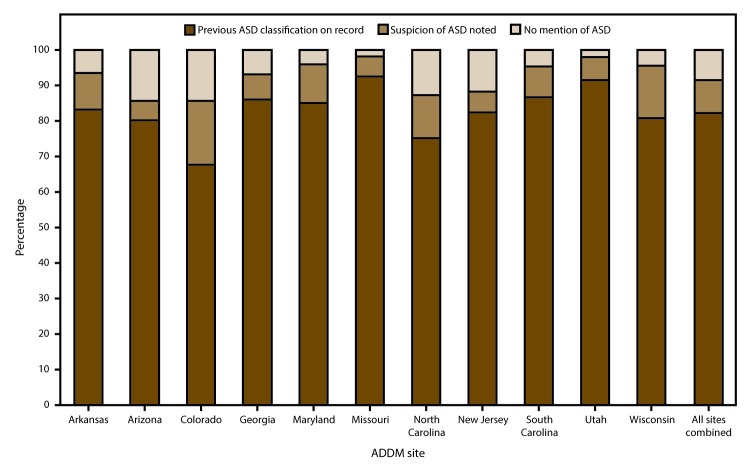
Autism spectrum disorder (ASD).2012.The Autism and Developmental Disabilities Monitoring (ADDM) Network is an active surveillance system that provides estimates of the prevalence and characteristics of ASD among children aged 8 years whose parents or guardians reside in 11 ADDM Network sites in the United States (Arkansas, Arizona, Colorado, Georgia, Maryland, Missouri, New Jersey, North Carolina, South Carolina, Utah, and Wisconsin). Surveillance to determine ASD case status is conducted in two phases. The first phase consists of screening and abstracting comprehensive evaluations performed by professional service providers in the community. Data sources identified for record review are categorized as either 1) education source type, including developmental evaluations to determine eligibility for special education services or 2) health care source type, including diagnostic and developmental evaluations. The second phase involves the review of all abstracted evaluations by trained clinicians to determine ASD surveillance case status. A child meets the surveillance case definition for ASD if one or more comprehensive evaluations of that child completed by a qualified professional describes behaviors that are consistent with the Diagnostic and Statistical Manual of Mental Disorders, Fourth Edition, Text Revision diagnostic criteria for any of the following conditions: autistic disorder, pervasive developmental disorder-not otherwise specified (including atypical autism), or Asperger disorder. This report provides ASD prevalence estimates for children aged 8 years living in catchment areas of the ADDM Network sites in 2012, overall and stratified by sex, race/ethnicity, and the type of source records (education and health records versus health records only). In addition, this report describes the proportion of children with ASD with a score consistent with intellectual disability on a standardized intellectual ability test, the age at which the earliest known comprehensive evaluation was performed, the proportion of children with a previous ASD diagnosis, the specific type of ASD diagnosis, and any special education eligibility classification.For 2012, the combined estimated prevalence of ASD among the 11 ADDM Network sites was 14.5 per 1,000 (one in 69) children aged 8 years. Estimated prevalence was significantly higher among boys aged 8 years (23.4 per 1,000) than among girls aged 8 years (5.2 per 1,000). Estimated ASD prevalence was significantly higher among non-Hispanic white children aged 8 years (15.3 per 1,000) compared with non-Hispanic black children (13.1 per 1,000), and Hispanic (10.2 per 1,000) children aged 8 years. Estimated prevalence varied widely among the 11 ADDM Network sites, ranging from 8.2 per 1,000 children aged 8 years (in the area of the Maryland site where only health care records were reviewed) to 24.6 per 1,000 children aged 8 years (in New Jersey, where both education and health care records were reviewed). Estimated prevalence was higher in surveillance sites where education records and health records were reviewed compared with sites where health records only were reviewed (17.1 per 1,000 and 10.4 per 1,000 children aged 8 years, respectively; p<0.05). Among children identified with ASD by the ADDM Network, 82% had a previous ASD diagnosis or educational classification; this did not vary by sex or between non-Hispanic white and non-Hispanic black children. A lower percentage of Hispanic children (78%) had a previous ASD diagnosis or classification compared with non-Hispanic white children (82%) and with non-Hispanic black children (84%). The median age at earliest known comprehensive evaluation was 40 months, and 43% of children had received an earliest known comprehensive evaluation by age 36 months. The percentage of children with an earliest known comprehensive evaluation by age 36 months was similar for boys and girls, but was higher for non-Hispanic white children (45%) compared with non-Hispanic black children (40%) and Hispanic children (39%).Overall estimated ASD prevalence was 14.5 per 1,000 children aged 8 years in the ADDM Network sites in 2012. The higher estimated prevalence among sites that reviewed both education and health records suggests the role of special education systems in providing comprehensive evaluations and services to children with developmental disabilities. Disparities by race/ethnicity in estimated ASD prevalence, particularly for Hispanic children, as well as disparities in the age of earliest comprehensive evaluation and presence of a previous ASD diagnosis or classification, suggest that access to treatment and services might be lacking or delayed for some children.The ADDM Network will continue to monitor the prevalence and characteristics of ASD among children aged 8 years living in selected sites across the United States. Recommendations from the ADDM Network include enhancing strategies to 1) lower the age of first evaluation of ASD by
Overview
CoChat Summary
TL;DR
In 2012, the ADDM Network estimated ASD prevalence among children aged 8 years across 11 U.S. sites at 14.5 per 1,000 (one in 69), with wide variation by site and higher estimates where both education and health records were reviewed. Prevalence was higher among boys and non-Hispanic white children, and although 87% had a developmental concern by age 36 months, only 43% had an earliest known comprehensive evaluation by that age.
Key findings
- Combined ASD prevalence was 14.5 per 1,000 (one in 69) among 346,978 children aged 8 years; site estimates ranged from 8.2 per 1,000 (Maryland, health records only) to 24.6 per 1,000 (New Jersey). Sites reviewing education and health records had higher prevalence than health-records-only sites (17.1 vs. 10.4 per 1,000; PR: 1.6; 95% CI: 1.5–1.7; p<0.001).
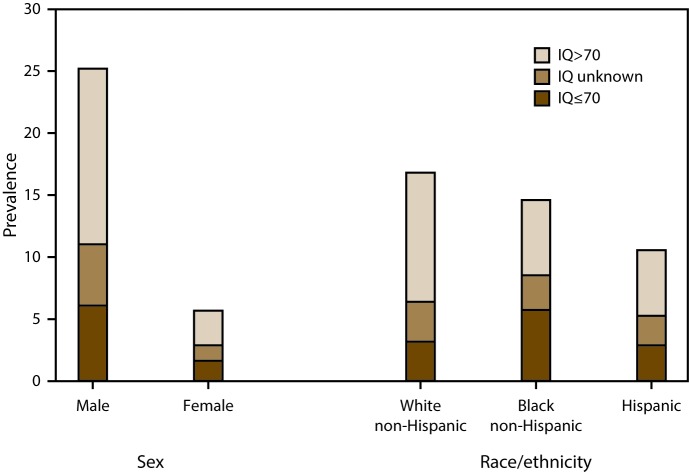
- Prevalence was 23.4 per 1,000 among boys and 5.2 per 1,000 among girls (male-to-female PR: 4.5; 95% CI: 4.2–4.8). By race/ethnicity, prevalence was 15.3 per 1,000 for non-Hispanic white children, 13.1 for non-Hispanic black children, 11.4 for Asian/Pacific Islander children, and 10.2 for Hispanic children.
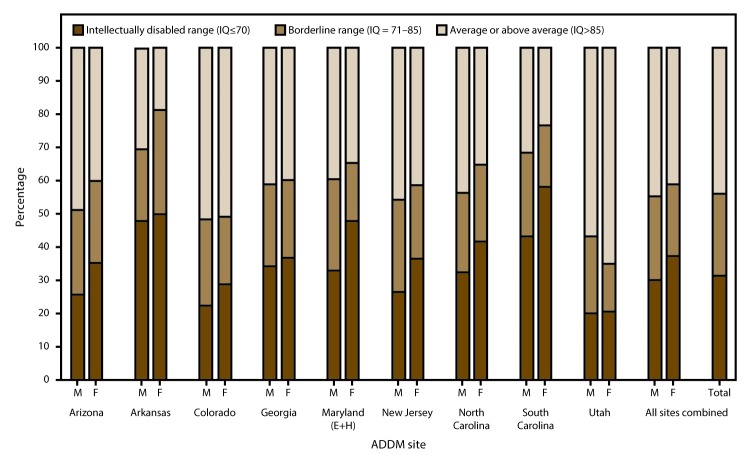
- Among children identified with ASD, 82% had a previous ASD diagnosis or educational classification; the median age at earliest known comprehensive evaluation was 40 months, and 43% had an earliest known comprehensive evaluation by age 36 months. Among 3,353 children with intellectual ability data, 31.4% were in the intellectual disability range (IQ ≤70), 24.6% borderline (IQ 71–85), and 44.1% average or above average (IQ >85).
- In eight sites with comparable surveillance areas in 2010 and 2012, combined ASD prevalence was 15.1 and 15.2 per 1,000, respectively (p>0.05), but Wisconsin increased by 17%, New Jersey by 11%, and Missouri decreased by 18%.
Methods
- Active, multisite, records-based surveillance in 11 ADDM Network sites among children born in 2004 and aged 8 years in 2012. Surveillance used two phases: screening/abstraction of education and health records, then clinician review of composite records against a DSM-IV-TR-based ASD surveillance case definition.
- Data sources included education records and/or health care records; six sites reviewed education records in all or most of the surveillance area, Maryland and Colorado reviewed education records in part of the area, and Arkansas, Missouri, and Wisconsin reviewed health records only. Denominators came from NCHS bridged-race population estimates; analyses used Poisson-based confidence intervals, Pearson chi-square tests, prevalence ratios, and median tests.
- Quality assurance included 10% random record checks and clinician interrater reliability monitoring; final agreement for ASD case status was 90.4% (κ = 0.8). A missing-records evaluation estimated that prevalence might have increased by 0.1% to 3.3% if missing records had been available, but reported estimates were not adjusted for this.
Limitations
- Stated: findings were limited to information available in source records; intellectual ability data were incomplete and may not be generalizable; varying source record types and lack of education records at some sites may have underestimated prevalence; private-school and home-school records generally were unavailable; surveillance areas were not selected to be representative of U.S. children aged 8 years.
- Stated: county-level population counts by sex and race/ethnicity were unavailable by single year of age in nondecennial years, so NCHS estimates were used and may have error; age-at-first-evaluation analyses were restricted to children linked to in-state birth certificates, which may not fully eliminate bias from moves; race/ethnicity categories were broad, and Hispanic household language could not be distinguished.
- Evident from the text: no clinical examinations were performed by ADDM staff, case status relied on record review rather than direct assessment, and the reported prevalence estimates do not reflect the missing-records adjustment.
Model-written summary. Check it against the paper before relying on it.
Integrity signals
Registry
Cites
Statistics
Figures
Verification
Claims the paper makes
0 Valid · 0 Not valid · 12 Not checked · 130 Own results and interpretations
A result the paper reports from its own data — it cites no other source for it, so there is none to check. The quote shows it is in the paper.
In the paper
“with access to both education and health care sources had higher estimated ASD prevalence compared with the five areas (Arkansas, Colorado, Maryland [health records only reviewed], Missouri, and Wisconsin) with limited or no access to education records (17.1 and 10.4 per 1,000 children aged 8 years, respectively; PR: 1.6; 95% CI: 1.5–1.7; p<0.001) (Figure 1).”
§ Prevalence and Characteristics of Autism Spectrum Disorder Among Children Aged 8 Years — Autism and Developmental Disabilities Monitoring Network, 11 Sites, United States, 2012 > Results > Overall ASD Prevalence Estimates
plainstates an association- Asserted: passes — The authors put it forward as true.
- Checkable: passes — It can be checked against evidence.
- Load-bearing: passes — The paper’s conclusions depend on it.
- Based: passes — The paper gives a reason why it holds.
A result the paper reports from its own data — it cites no other source for it, so there is none to check. The quote shows it is in the paper.
In the paper
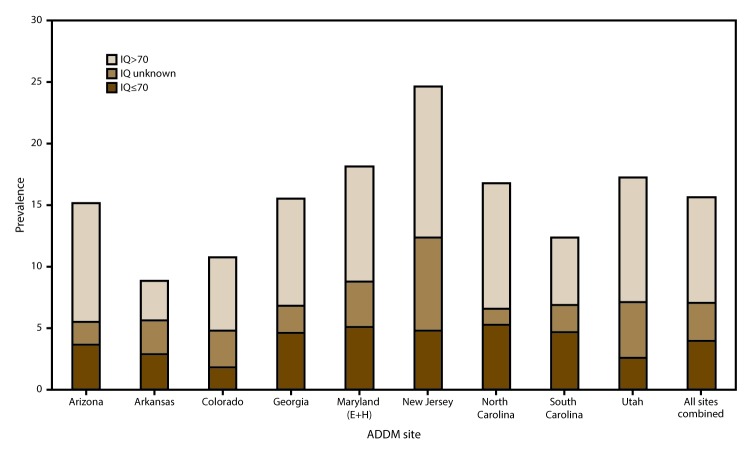
“The estimated prevalence of ASD without intellectual disability was 8.6 per 1,000”
- Also stated in: § Discussion · hedged
“The estimated prevalence of ASD without intellectual disability was 8.6 per 1,000 overall”
§ Prevalence and Characteristics of Autism Spectrum Disorder Among Children Aged 8 Years — Autism and Developmental Disabilities Monitoring Network, 11 Sites, United States, 2012 > Results > Intellectual Ability
hedgedn = 3,353- Asserted: passes — The authors put it forward as true.
- Checkable: passes — It can be checked against evidence.
- Load-bearing: unclear — It is unclear whether the paper’s conclusions depend on it.
- Based: passes — The paper gives a reason why it holds.
- Also stated in: § Discussion · hedged
A result the paper reports from its own data — it cites no other source for it, so there is none to check. The quote shows it is in the paper.
In the paper
“the percentage was significantly higher for non-Hispanic black children (91%) and for Hispanic children (90%) compared with non-Hispanic white children (86%; p<0.05).”
§ Prevalence and Characteristics of Autism Spectrum Disorder Among Children Aged 8 Years — Autism and Developmental Disabilities Monitoring Network, 11 Sites, United States, 2012 > Results > Early Developmental Concerns and Earliest Comprehensive Evaluation
plainstates an association- Asserted: passes — The authors put it forward as true.
- Checkable: passes — It can be checked against evidence.
- Load-bearing: unclear — It is unclear whether the paper’s conclusions depend on it.
- Based: passes — The paper gives a reason why it holds.
A result the paper reports from its own data — it cites no other source for it, so there is none to check. The quote shows it is in the paper.
In the paper
“43% of children had received an earliest known comprehensive evaluation by age 36 months.”
§ Prevalence and Characteristics of Autism Spectrum Disorder Among Children Aged 8 Years — Autism and Developmental Disabilities Monitoring Network, 11 Sites, United States, 2012 > Abstract > Results
plain- Asserted: passes — The authors put it forward as true.
- Checkable: passes — It can be checked against evidence.
- Load-bearing: unclear — It is unclear whether the paper’s conclusions depend on it.
- Based: passes — The paper gives a reason why it holds.
A result the paper reports from its own data — it cites no other source for it, so there is none to check. The quote shows it is in the paper.
In the paper
“A lower percentage of Hispanic children (78%) had a previous ASD diagnosis or classification compared with non-Hispanic white children (82%) and with non-Hispanic black children (84%).”
§ Prevalence and Characteristics of Autism Spectrum Disorder Among Children Aged 8 Years — Autism and Developmental Disabilities Monitoring Network, 11 Sites, United States, 2012 > Abstract > Results
plainstates an association- Asserted: passes — The authors put it forward as true.
- Checkable: passes — It can be checked against evidence.
- Load-bearing: unclear — It is unclear whether the paper’s conclusions depend on it.
- Based: passes — The paper gives a reason why it holds.
104 more claims
Create a free account to see all 142 claims and to verify the 21 references still open.
- It may state two separate claims as one. 22
- Probably not a substantial claim. 16
Self-check
Percentages, sums and reported differences re-computed from the paper’s own numbers.
Each contradiction between two passages listed here was confirmed by an independent check.
Rated minor: it would not touch a result — a value no result rests on, a p-value that stays on the same side of the significance level, or a conflict that is clerical, resolved elsewhere in the paper, or outside its own findings.
In the paper
§ Prevalence and Characteristics of Autism Spectrum Disorder Among Children Aged 8 Years — Autism and Developmental Disabilities Monitoring Network, 11 Sites, United States, 2012 > Results > Intellectual Ability
“range: 68% [Arkansas] to 92% [in North Carolina]”
§ Prevalence and Characteristics of Autism Spectrum Disorder Among Children Aged 8 Years — Autism and Developmental Disabilities Monitoring Network, 11 Sites, United States, 2012 > Results > Intellectual Ability
“*Includes sites having information on intellectual ability available for ≥70% of children who met the ASD case definition (N = 3,353, excluding unknown IQ).”
Rated minor: it would not touch a result — a value no result rests on, a p-value that stays on the same side of the significance level, or a conflict that is clerical, resolved elsewhere in the paper, or outside its own findings.
In the paper
“A total of 48,304 records for 38,038 children aged 8 years were reviewed from education and health care sources. Among these, the source records of 9,629 (19%) children met the criteria for abstraction”
§ Prevalence and Characteristics of Autism Spectrum Disorder Among Children Aged 8 Years — Autism and Developmental Disabilities Monitoring Network, 11 Sites, United States, 2012 > Results > Record Review
Reported 19 · recomputed 25.31416
Citations
Cites
Diagnostic and Statistical Manual of Mental Disorders
American Psychiatric Association (2013) · doi:10.1176/appi.books.9780890425596 · Cited by 116,369
Baio, J., Wiggins, L., Christensen, D. L., Maenner, M. J., Daniels, J., Warren, Z., Kurzius-Spencer, M., Zahorodny, W., Robinson, C., Rosenberg, et al. (2018) · MMWR. Surveillance Summaries · doi:10.15585/mmwr.ss6706a1 · Cited by 6,078
Self-citationDawson, G., Rogers, S., Munson, J., Smith, M., Winter, J., Greenson, J., Donaldson, A., & Varley, J. (2010) · Pediatrics · doi:10.1542/peds.2009-0958 · Cited by 2,835
Identification and Evaluation of Children With Autism Spectrum Disorders
Johnson, C. P., Myers, S. M., & and the Council on Children With Disabilities (2007) · Pediatrics · doi:10.1542/peds.2007-2361 · Cited by 2,011
Trends in the prevalence of developmental disabilities in US children, 1997-2008
Boyle, C. A., Boulet, S., Schieve, L. A., Cohen, R. A., Blumberg, S. J., Yeargin-Allsopp, M., Visser, S., & Kogan, M. D. (2011) · Pediatrics · doi:10.1542/peds.2010-2989 · Cited by 1,732
Self-citationPrevalence of Autism in a US Metropolitan Area
Yeargin-Allsopp, M., Rice, C., Karapurkar, T., Doernberg, N., Boyle, C., & Murphy, C. (2003) · JAMA · doi:10.1001/jama.289.1.49 · Cited by 1,248
Self-citationPrevalence of Parent-Reported Diagnosis of Autism Spectrum Disorder Among Children in the US, 2007
Kogan, M. D., Blumberg, S. J., Schieve, L. A., Boyle, C. A., Perrin, J. M., Ghandour, R. M., Singh, G. K., Strickland, B. B., Trevathan, E., & van Dyck, P. C. (2009) · Pediatrics · doi:10.1542/peds.2009-1522 · Cited by 892
Cited by
Items 301–400 of 583
Kwon, S. J., Hong, K., Choi, S., Hong, J. S., Kim, J. W., Kim, J. W., Lee, H., Jang, H. B., & Yum, K. (2021) · Metabolic Brain Disease · doi:10.1007/s11011-021-00877-3 · Cited by 9
Oliveira, S. E. S., Arantes, A., & Mota, V. F. (2021) · Simpósio Brasileiro de Jogos e Entretenimento Digital (SBGames) · doi:10.5753/sbgames_estendido.2021.19688 · Cited by 7
Obaigwa, E., & Cloete, L. G. (2019) · Open Journal of Pediatrics and Child Health · doi:10.17352/ojpch.000018 · Cited by 6
Harmony, C., & Woodard, C. R. (2020) · Advances in Neurodevelopmental Disorders · doi:10.1007/s41252-020-00148-9 · Cited by 8
Azimigarosi, S., Arjmandnia, A., Ezhei, A. M., & Asgari, M. (2020) · Quarterly Journal of Child Mental Health · doi:10.29252/jcmh.6.4.5 · Cited by 7
Communicative intentions in autism spectrum disorder
Schütz, M., Ciaramidaro, A., Martinelli, A., Öller, R., Hartmann, D., Hein, G., Iotzov, V., Colle, L., Becchio, C., Walter, H., et al. (2020) · Research in Autism · doi:10.1016/j.rasd.2020.101666 · Cited by 8
Assessment of children in the autistic spectrum disorder that carry the Thr92Ala-DIO2 polymorphism
Marcondes, A. A. E., Gomez, T. G. B., Ravache, T. T., Batistuzzo, A., Lorena, F. B., Paula, C. S., Lowenthal, R., Bianco, A. C., & Ribeiro, M. O. (2021) · Journal of Endocrinological Investigation · doi:10.1007/s40618-020-01497-x · Cited by 7
Classification of autistic children using polar-based lagged state-space indices of EEG signals
Ghoreishi, N., Goshvarpour, A., Molkabad, S. Z., Khorshidi, N., & Baratzade, S. (2021) · Signal Image and Video Processing · doi:10.1007/s11760-021-01928-z · Cited by 8
Lee, L., Ho, H.-J., & Bhargavi, V. (2022) · Pegem Journal of Education and Instruction · doi:10.47750/pegegog.12.01.07 · Cited by 6
Self-citationLi, Z., Liao, Y., Zhou, Q. S., Qu, Q., Sheng, M., Lv, L., Yang, J., Shi, Y., & Shi, X. (2022) · Advances in Neurodevelopmental Disorders · doi:10.1007/s41252-022-00266-6 · Cited by 7
Cellular therapy for autism spectrum disorder: a step forward to the optimal treatments
Siniscalco, D., & Antonucci, N. (2019) · Annals of Translational Medicine · doi:10.21037/atm.2019.05.12 · Cited by 6
Sharda, M., Tuerk, C., Chowdhury, R., Jamey, K., Foster, N. E. V., Custo-Blanch, M., Tan, M., Nadig, A., & Hyde, K. L. (2018) · PsyArXiv (OSF Preprints) · doi:10.31234/osf.io/2xnmv · Cited by 7
Kargarandehkordi, A., & Washington, P. Y. (2023) · medRxiv · doi:10.1101/2023.04.28.23289168 · Cited by 10
“Autism spectrum disorder (ASD) affects almost 1 in 44 people in America [ 90 ] and it is the fastest-growing developmental disorder in the United States [ 91 , 92 ].”
Autism spectrum disorder: evaluation of community-based screening program
Sezerol, M. A., & Davun, S. (2024) · TURKISH JOURNAL OF MEDICAL SCIENCES · doi:10.55730/1300-0144.5822 · Cited by 6
“In another study, the male/female ratio of ASD was reported as 4.5:1 [20].”
InfluentialFarzanegan, F., Shadmehri, S. A., Shooshtari, Z., Hamidi, A. R., & Shahri, A. (2024) · BMC Oral Health · doi:10.1186/s12903-024-04524-y · Cited by 5
“The literature suggests a higher prevalence of malocclusion in children with special health care needs, compared to healthy individuals [15–22].”
Alampi, J. D., Lanphear, B. P., MacFarlane, A. J., Braun, J. M., Oulhote, Y., Ashley‐Martin, J., Arbuckle, T. E., Chen, A., Muckle, G., & McCandless, L. C. (2025) · Environmental Epidemiology · doi:10.1097/ee9.0000000000000402 · Cited by 6
Alteraciones motoras en pacientes pediátricos con trastorno del espectro autista
Lopez-Espejo, M. A., Núñez, A. C., Moscoso, O. C., & Escobar, R. G. (2022) · Andes pediatrica · doi:10.32641/andespediatr.v93i1.3455 · Cited by 13
Emergent literacy skills and autism: A scoping review of intervention programs
Rimmer, C., Dahary, H., & Quintin, E. (2022) · Research in Autism · doi:10.1016/j.rasd.2022.102004 · Cited by 7
Champagne, E. R., & MacDonald, S. E. (2021) · The Arts in Psychotherapy · doi:10.1016/j.aip.2021.101875 · Cited by 5
Reder, M., & Brzezewska, K. (2022) · Health Psychology Report · doi:10.5114/hpr/151836 · Cited by 6
“Some researchers report a long delay between noticing alarming signals and making a diagnosis (Christensen et al., 2018; Crane et al., 2016; Gray & Tonge, 2001).”
Chihuri, S., Blanchard, A., DiGuiseppi, C. G., & Li, G. (2024) · Journal of Autism and Developmental Disorders · doi:10.1007/s10803-023-06091-7 · Cited by 5
Basic Management Strategies by Life Cycle for Treatment of the Persons With Autism Spectrum Disorder
Son, J.-W., & Nam, S.-H. (2024) · Journal of korean Academy of Child and Adolescent Psychiatry · doi:10.5765/jkacap.230011 · Cited by 9
“Nearly 50% of the individuals with ASD develop cognitive abilities within the normal scope [34]; thus, they can go to college when they become adults, but it is not easy to have a successful college life.”
Reede, D. H. H., Tancredi, D. J., & Schmidt, R. J. (2024) · Research in Autism · doi:10.1016/j.rasd.2024.102364 · Cited by 5
Russell, M., Baldwin, C. M., McClain, D. B., Matthews, N. L., Smith, C. J., & Quan, S. F. (2017) · Journal of Clinical Sleep Medicine · doi:10.5664/jcsm.6400 · Cited by 7
The Genetic and Epigenetic Basis Involved in the Pathophysiology of ASD: Therapeutic Implications
Carrascosa-Romero, M. C., & de Cabo, C. (2017) · InTech eBooks · doi:10.5772/66854 · Cited by 6
Gül, S. O., Vuran, S., Gönen, A., Uslucan, G., & KAYHAN, H. C. (2018) · Hacettepe University Journal of Education · doi:10.16986/huje.2018040666 · Cited by 5
Lodder, A., Papadopoulos, C., & Randhawa, G. (2019) · European Journal of Mental Health · doi:10.5708/ejmh.14.2019.1.4 · Cited by 8
Video Modeling Use in Work Occupations for People With Autism: A Systematic Review
Le, T., Rodrigues, B., & Hess, L. G. (2021) · American Journal of Occupational Therapy · doi:10.5014/ajot.2021.041921 · Cited by 6
Healthcare Issues in Children with Developmental Disabilities (Autism)
Eta, E. V. A. (2022) · Pediatrics and Neonatal Nursing - Open Journal · doi:10.17140/pnnoj-8-134 · Cited by 7
Jacokes, Z., Jack, A., Sullivan, C. A. W., Aylward, E., Bookheimer, S. Y., Dapretto, M., Bernier, R., Geschwind, D. H., Sukhodolsky, D. G., McPartland, J. C., et al. (2022) · Frontiers in Neuroscience · doi:10.3389/fnins.2022.1040085 · Cited by 12
Zhang, C., Wang, F., Liu, Z., Guo, P., Liang, H., Tian, W., Yang, L., Shi, Y., Zou, M., & Wu, L. (2023) · New Journal of Chemistry · doi:10.1039/d3nj00575e · Cited by 4
Coelho-Medeiros, M. E., Bronstein, J., Aedo, K., Pereira, J. A., Arraño, V., Pérez, C. A., Valenzuela, P. M., Moore, R., Garrido, I., & Bedregal, P. (2017) · Revista chilena de pediatría · doi:10.4067/s0370-41062017000600822 · Cited by 5
The Ketogenic Diet as a Potential Therapy in Down syndrome
Kaneko, K. N. (2018) · Journal of Pediatrics and Pediatric Medicine · doi:10.29245/2578-2940/2018/2.1121 · Cited by 5
Autism in Aotearoa: Is the RAADS-14 a Valid Tool for a New Zealand Population?
Kember, S., & Williams, M. N. (2020) · European Journal of Psychological Assessment · doi:10.1027/1015-5759/a000598 · Cited by 8
Towards Automatic Engagement Recognition of Autistic Children in a Machine Learning Approach
Tan, Z., Zhou, A., Hei, X., Gao, Y., & Zhang, C. (2019) · IEEE International Conference on Teaching, Assessment, and Learning for Engineering · doi:10.1109/tale48000.2019.9225935 · Cited by 6
Autismo associado à epilepsia: relato de caso
da Rocha, C. C., Gondim, C. B., Gomes, T. A., dos Santos, L. C. M. M., & Silva, I. D. A. C. E. (2019) · Revista Eletrônica Acervo Saúde · doi:10.25248/reas.e337.2019 · Cited by 5
Pollak, R. M., Murphy, M. M., Epstein, M. P., Zwick, M. E., Klaiman, C., Saulnier, C. A., the Emory 3q29 Project, & Mulle, J. G. (2018) · bioRxiv (Cold Spring Harbor Laboratory) · doi:10.1101/386243 · Cited by 5
Anderson, M. P., Quinton, R., Kelly, K., Falzon, A., Halladay, A., Schumann, C. M., Hof, P. R., Tamminga, C. A., Hare, C. K., & Amaral, D. G. (2021) · Archives of Pathology & Laboratory Medicine · doi:10.5858/arpa.2020-0164-ra · Cited by 4
Trends Over Time in the Prevalence of Autism by Adaptive and Intellectual Functioning Levels
Furnier, S. M., Gangnon, R. E., & Durkin, M. S. (2025) · Autism Research · doi:10.1002/aur.70167 · Cited by 4
“…in line with previous research suggesting that much of the rise in autism prevalence has been among those without significant cognitive impairment Christensen et al. 2018; Baio et al. 2018; Maenner et al. 2020; Croen et al. 2002; Van Naarden Braun et al. 2015; Thomas et al. 2017; Kogan et al.…”
InfluentialSelf-citationAmini, F., Wah, Y. K., Soh, S. C., Al-Hadeethi, A., Amini, R., & Ng, E. S. C. (2021) · Advances in Autism · doi:10.1108/aia-08-2020-0047 · Cited by 6
Taheri, F., Joushi, S., Mohammadipoor‐Ghasemabad, L., Rad, I., Esmaeilpour, K., & Sheibani, V. (2024) · Birth Defects Research · doi:10.1002/bdr2.2300 · Cited by 6
“In this context, music therapy emerges as a promising avenue for treating ASD, as evidenced by our previous study indicating improvements in social deficits and learning memory impairments in VPA-exposed adolescent rats (Taheri, Joushi, et al., 2023).”
InfluentialKucharczyk, S., Whitby, P. J. S., & Mrla, T. K. (2019) · Education and Training in Autism and Developmental Disabilities · doi:10.1177/215416471905400108 · Cited by 4
O PROCESSO DE APRENDIZAGEM DO ALUNO COM TEA / THE STUDENT LEARNING PROCESS WITH TEA
Silva, F. B., & Boncoski, I. F. M. (2020) · Brazilian Journal of Development · doi:10.34117/bjdv6n9-168 · Cited by 4
Gaikwad, L., & Lagala, S. (2020) · International Journal of Contemporary Pediatrics · doi:10.18203/2349-3291.ijcp20205438 · Cited by 4
Tayyar-Iravanlou, F., Soltani, M., Rahnemaei, F. A., Abdi, F., & Ilkhani, M. (2021) · Iranian journal of child neurology. · doi:10.22037/ijcn.v15i2.25539 · Cited by 10
Zeglam, A. M., & Al-Ogab, M. F. (2022) · Iberoamerican Journal of Medicine · doi:10.53986/ibjm.2022.0007 · Cited by 5
A natural history study of medical cannabis consumption in pediatric autism in the United States
DiLiberto, M. A., Zuppa, A. F., Cornetta, A. R., Faig, W. G., Scully, T., Bennett, A., Thomas, M. G., Ward, E., Barr, S. M., & Yerys, B. E. (2022) · Research in Autism · doi:10.1016/j.rasd.2022.101994 · Cited by 8
Vlachová, Z. (2022) · Voices A World Forum for Music Therapy · doi:10.15845/voices.v22i2.3191 · Cited by 5
ESTRATÉGIAS NUTRICIONAIS NO TRANSTORNO DO ESPECTRO AUTISTA
Senna, L. A. O., Cruz, M. C., Franco, Y. R., Matos, Y. C., & Almeida, L. M. R. (2021) · Revista Brasileira de Saúde Funcional · doi:10.25194/rebrasf.v9i3.1487 · Cited by 9
Modifying the social responsiveness scale for adaptive administration
Kaat, A. J., Croen, L., Constantino, J. N., Newshaffer, C. J., & Lyall, K. (2023) · Quality of Life Research · doi:10.1007/s11136-023-03397-y · Cited by 5
Self-citationLinks between musical beat perception and phonological skills for autistic children
Rimmer, C., Dahary, H., & Quintin, E. (2023) · Child Neuropsychology · doi:10.1080/09297049.2023.2202902 · Cited by 10
“Epidemiological studies indicate that intellectual disability and autism covary at rates of approximately 30% (Christensen et al., 2018), and for this reason, investigating the association between beat perception, which is a fundamental element in the rhythmic structure hierarchy, and phonological…”
Analysis of potential biomarkers and immune infiltration in autism based on bioinformatics analysis
Cao, W., Luo, C., Fan, Z., Lei, M., Cheng, X., Shi, Z., Mao, F., Xu, Q., Fu, Z., & Zhang, Q. (2023) · Medicine · doi:10.1097/md.0000000000033340 · Cited by 4
Wallace, K., Franzsen, D., & Potterton, J. L. (2016) · South African Journal of Occupational Therapy · doi:10.17159/2310-3833/2016/v46n2a5 · Cited by 4
Autism as Representative of Disability
Aloisio, D., & Huron, R. F. (2020) · Pediatric Clinics of North America · doi:10.1016/j.pcl.2019.12.008 · Cited by 7
Burgin, X. D., Laarhoven, T. R. V., Blood, E., & DeSpain, S. N. (2020) · Journal of Vocational Rehabilitation · doi:10.3233/jvr-201074 · Cited by 5
“…for Disease Control recently estimated that the prevalence rate of children with Autism Spectrum Disorder (ASD) in the United States is approximately 1 in 59 (Baio et al., 2018), which is an increase of 15 percent from the 2016 prevalence estimates of 1 in 68 children (Christensen et al., 2016).”
Sanchez-Martin, I., Kukreja, B., Henderson, P., Lin, Q., DiMartino, D., Bagan, V., Park, J., Kalish, B. T., & Cheadle, L. (2026) · Science Advances · doi:10.1126/sciadv.aeg0779 · Cited by 3
Theory of Mind Among Swedish Children with ASD, Down Syndrome and Typically Developing Group
Shojaeian, N., Li, Z., Kaurav, R. P. S., & Salem, A. A. M. S. (2022) · Journal of Autism and Developmental Disorders · doi:10.1007/s10803-021-05366-1 · Cited by 8
Aslam, Z., Ghani, M., Kausar, S., Maqbool, S., Mukhtar, F., & Qama, M. (2022) · Pakistan Journal of Medical and Health Sciences · doi:10.53350/pjmhs2022161246 · Cited by 5
Prenatal organochlorine pollutant exposure and risk of schizophrenia in a national birth cohort
Cheslack‐Postava, K., Rantakokko, P., Surcel, H., Hinkka‐Yli‐Salomäki, S., Laitinen, J., Upadhyaya, S., McKeague, I. W., Sourander, A., & Brown, A. S. (2023) · NeuroToxicology · doi:10.1016/j.neuro.2023.05.010 · Cited by 3
Jang, Y., Choi, H., Yoo, S., Park, H., & Park, B. (2024) · Behavioral and Brain Functions · doi:10.1186/s12993-024-00228-z · Cited by 6
“Individuals with autism show deficits in sensory processing and social communication skills [1, 2].”
Keller‐Margulis, M. A., Mire, S. S., Garro, E. S. L., Jellinek, E. R., Lozano, I., Hut, A., Luu, M.-L., Izuno‐Garcia, A. K., Erps, K. H., Landry, L. N., et al. (2024) · Psychology in the Schools · doi:10.1002/pits.23154 · Cited by 6
Related Disorders (Intellectual, Attention, and Language Disorders) and ASD
Dieckhaus, M. F. S., Thomas, R. P., Frisch, M., Moreno, M. P., Suh, J., & FEIN, D. A. (2024) · Autism and child psychopathology series · doi:10.1007/978-3-031-64499-3_4 · Cited by 4
Zhu, C., Li, H., Zhang, L., Liu, Y., Zhang, Y., Huang, B., & Li, W. (2025) · Frontiers in Neurology · doi:10.3389/fneur.2025.1590185 · Cited by 4
Longitudinal multi-omics analysis of umbilical cord blood and childhood serum in Autism
Noone, A., Dowling, K. G., O’Boyle, D., Carter, M., Golubeva, A. V., Scaife, C., Bech, B. H., Henriksen, T. B., Gallagher, L., Mooney, C., et al. (2025) · Molecular Psychiatry · doi:10.1038/s41380-025-03157-z · Cited by 7
“Equally, a substantial difference in Autism prevalence between genders (1/42 males; 1/189 females), suggests mediation by unknown biological factors [3, 17].”
Wu, X., Shan, L., Wang, T., & Jin, F. (2018) · Chinese Science Bulletin (Chinese Version) · doi:10.1360/n972017-01186 · Cited by 3
Community-based Screening and Referrals for Autism
Brewer, L. (2019) · Journal of Occupational Therapy Schools & Early Intervention · doi:10.1080/19411243.2019.1700472 · Cited by 3
Physician Assistant Students' Competency to Identify and Diagnose Autism Spectrum Disorder
Rizzolo, D., Smith, N. E., McCall, T. C., Roberts, A., & Porta, K. (2020) · The Journal of Physician Assistant Education · doi:10.1097/jpa.0000000000000305 · Cited by 4
Ghoreishi, N., Molkabad, S. Z., Baratzade, S., Goshvarpoor, A., & Bajestani, G. S. (2021) · The Neuroscience Journal of Shefaye Khatam · doi:10.52547/shefa.9.2.10 · Cited by 3
Patients with Sickle Cell Disease and Autism Spectrum Disorder
McNeely, S. R., Unguru, Y., Yang, E., Fixler, J., Cannon, A. D., Menon, D. U., & Lance, E. I. (2021) · Advances in Neurodevelopmental Disorders · doi:10.1007/s41252-021-00218-6 · Cited by 3
Gunathilake, Y. A. G. U. T., Fasliya, R. F., Premarathne, R. D. A. R., Kalhara, D., Karunasena, A., & Bandara, P. S. (2021) · International Conference on Engineering and Emerging Technologies (ICEET) · doi:10.1109/iceet53442.2021.9659728 · Cited by 3
Mohammadi, F., Cheraghi, F., Khazaei, S., Seyedi, M., Rezaei, M., & Mirzaie, F. (2023) · Iranian Rehabilitation Journal · doi:10.32598/irj.20.4.1734.1 · Cited by 3
Kim, B. W., Kim, Y. C., Son, J. J., Song, D., Lee, I. J., Han, J. H., Kim, D. H., Yoo, H. J., & Kim, J. (2023) · International Conference on Information Technology for Social Good (GoodIT) · doi:10.1145/3582515.3609574 · Cited by 3
Chung, U., & Kim, J.-H. (2024) · Journal of korean Academy of Child and Adolescent Psychiatry · doi:10.5765/jkacap.230006 · Cited by 7
“According to recent studies, more children with ASD have IQs higher than 70 than before because applying the “spec-trum” to the diagnostic name included a large number of cognitively normally developing children [10].”
Lawson, R. J., Lipovsek, N. J., Brown, S. P., Jena, A. K., Osko, J. J., & Ransdell, J. L. (2024) · Frontiers in Behavioral Neuroscience · doi:10.3389/fnbeh.2024.1474066 · Cited by 5
Vasyagina, N. N., Grigoryan, E. N., & Kazayeva, E. A. (2018) · National Psychological Journal · doi:10.11621/npj.2018.0210 · Cited by 2
THU0507 ASSOCIATION BETWEEN JUVENILE IDIOPATHIC ARTHRITIS AND AUTISM
Beesley, R. P. (2020) · Annals of the Rheumatic Diseases · doi:10.1136/annrheumdis-2020-eular.876 · Cited by 3
Liu, J., Amat, M., Song, R., & Kong, X. (2018) · Pediatric Dimensions · doi:10.15761/pd.1000174 · Cited by 3
Aging of persons with neurodevelopmental disabilities
Anker, L. A., Chick, C. F., & Hallmayer, J. F. (2020) · Elsevier eBooks · doi:10.1016/b978-0-12-800136-3.00017-x · Cited by 6
Excess of RALGAPB de novo variants in neurodevelopmental disorders
Shah, A. A., Zhang, G., Li, K., Liu, C., Kanhar, A. A., Wang, M., Quan, Y., Wu, H., Shen, L., Khan, R., et al. (2020) · European Journal of Medical Genetics · doi:10.1016/j.ejmg.2020.104041 · Cited by 4
Alcívar, N. I. S., Paltan, L. C. H., Palacios, L. R. L., Paillacho, J., & Paillacho, D. (2021) · Communications in computer and information science · doi:10.1007/978-3-030-71503-8_13 · Cited by 4
Ali, N. H., & Arbab, A. H. (2021) · ACTA Pharmaceutica Sciencia · doi:10.23893/1307-2080.aps.05917 · Cited by 3
Extract image markers of autism using hierarchical feature selection technique
Ali, M. T., Shalaby, A. M., Mahmoud, A. H., Ghazal, M. A., Yousaf, J., Alhalabi, M. T., Barnes, G. N., Suri, J. S., & El-Baz, A. S. (2021) · Elsevier eBooks · doi:10.1016/b978-0-12-822822-7.00016-8 · Cited by 3
Autism Spectrum Disorder (ASD): From Molecular Mechanism to Novel Therapeutic Approach
Friedman, H. (2022) · IntechOpen eBooks · doi:10.5772/intechopen.100537 · Cited by 4
Chen, K., Yang, H., Lin, Y., Yu, Y., & Lai, S. (2022) · American Journal of Occupational Therapy · doi:10.5014/ajot.2022.042556 · Cited by 5
Saadatzi, M. N. (2016) · ThinkIR: The University of Louisville's Institutional Repository (University of Louisville) · doi:10.18297/etd/2570 · Cited by 3
Parental Skills, Assortative Mating, and the Incidence of Autism Spectrum Disorder
Daysal, N. M., Elder, T. E., Hellerstein, J. K., Imberman, S. A., & Orsini, C. (2021) · National Bureau of Economic Research · doi:10.3386/w28652 · Cited by 4
Jurors' Perceptions of Child Witnesses with Autism Spectrum Disorder
DiSciullo, V. A. (2018) · The Research Repository @ WVU (West Virginia University) · doi:10.33915/etd.5499 · Cited by 2
Gidziela, A., Ahmadzadeh, Y. I., Michelini, G., Allegrini, A. G., Agnew-Blais, J., Lau, L. Y., Duret, M., Procopio, F., Daly, E., Ronald, A., et al. (2022) · doi:10.1101/2022.02.17.22271089 · Cited by 2
Griffith, M. M., Stanek, J. R., Lemanek, K. L., Walden, J., Nahata, L., & Creary, S. E. (2025) · Pediatric Blood & Cancer · doi:10.1002/pbc.31725 · Cited by 2
Zorzi, S., Tambato, V. M., & Berteotti, L. (2025) · Disability and Rehabilitation Assistive Technology · doi:10.1080/17483107.2025.2547319 · Cited by 3
Designing for Children with Sensory Processing Disorders
Manfredi, L. R., & Kelceoglu, B. (2020) · ASEE Annual Conference & Exposition · doi:10.18260/1-2--30281 · Cited by 2
“Results In a six-week design project, five groups each designed products that were intended to improve the lives of children with ASD exhibiting sensory processing deficits.”
InfluentialAdult Women on the High-Functioning Autism Spectrum
Pearlman-Avnion, S., & Shlain, R. (2019) · Autism and child psychopathology series · doi:10.1007/978-3-030-28833-4_5 · Cited by 3
Metgud, D., & Paulose, S. (2019) · Indian Journal of Physical Therapy and Research · doi:10.4103/ijptr.ijptr_3_19 · Cited by 2
Pharmacologic management of autism spectrum disorder: A review of 7 studies
Kothadia, R. J., Krause, M., & Saeed, S. A. (2021) · Current Psychiatry · doi:10.12788/cp.0078 · Cited by 2
Faraji, S., Najafabadi, M. G., Zandi, H. G., & Parent-Nichols, J. (2022) · Russian Open Medical Journal · doi:10.15275/rusomj.2022.0112 · Cited by 42
Behrouzmanesh, P., Naderi, F., Bakhtiarpour, S., & Hafezi, F. (2023) · Scientific Journal of Rehabilitation Medicine · doi:10.32598/sjrm.12.4.14 · Cited by 5
Nordin, M. N., Huey, L. W., Kaur, H., & Abbas, M. S. (2024) · International Journal of Academic Research in Business and Social Sciences · doi:10.6007/ijarbss/v14-i3/21042 · Cited by 2
Benefícios da fisioterapia no desenvolvimento motor da criança com transtorno do espectro autista
Barbosa, M. M., & Raimundo, R. J. D. S. (2024) · Revista JRG de Estudos Acadêmicos · doi:10.55892/jrg.v7i14.1128 · Cited by 2
Alkhatib, A. R., Nuseir, K. Q., Abdo, N. M., Alshare, Q., & Altawalbeh, O. (2024) · Jordan Journal of Pharmaceutical Sciences · doi:10.35516/jjps.v17i2.1974 · Cited by 2
“Males are more affected than females, with a long-standing ratio of 4 males to 1 female [11], although recent reports suggest this ratio is now 3 males to 1 female [12].”
Benjamin, L. R., Krantz, M. L., Fenning, R. M., & Neece, C. L. (2024) · Journal of Child and Family Studies · doi:10.1007/s10826-024-02908-w · Cited by 2
“…children are typically diagnosed with autism an average of 2.5 years later than their non-Latino peers, and often present with higher autism symptom levels and/or co-occurring intellectual disability by the time of diagnosis (Christensen et al., 2018; Gallin et al., 2024; Hickey et al., 2021).”
Influential
Metadata
- Authors
- Christensen, D. L., Braun, K. V. N., Baio, J., Bilder, D., Charles, J., Constantino, J. N., Daniels, J., Durkin, M. S., Fitzgerald, R. T., Kurzius-Spencer, M., Lee, L.-C., Pettygrove, S., Robinson, C., Schulz, E., Wells, C., Wingate, M. S., Zahorodny, W., & Yeargin-Allsopp, M.
- Affiliations
- National Center on Birth Defects and Developmental Disabilities (US)
- University of Utah (US)
- Medical University of South Carolina (US)
- Washington University in St. Louis (US)
- University of North Carolina at Chapel Hill (US)
- University of Wisconsin–Madison (US)
- University of Arizona, Tucson
- Johns Hopkins University (US)
- University of Arizona (US)
- University of Colorado Denver (US)
- University of Arkansas for Medical Sciences (US)
- Colorado Department of Public Health and Environment (US)
- University of Alabama at Birmingham (US)
- Rutgers, The State University of New Jersey (US)
- Division of Congenital and Developmental Disorders, National Center on Birth Defects and Developmental Disabilities, CDC
- Corresponding author
- Christensen, Deborah L.
- ORCID
- Venue
- MMWR. Surveillance Summaries
- Published
- 2018-11-16
- Volume
- 65
- Issue
- 13
- Pages
- 1-23
- ISSN
- 1545-8636 (ISSN-L)
- 1546-0738
- PMC
- PMC6237390
- OpenAlex
- W4244767238
- Semantic Scholar
- 19b75e3fb7706a6a87e1b30bb1ff85b46adbfb58
- Cited by
- 587
- References
- 41
- Citations by year
- 2026: 11 · 2025: 28 · 2024: 61 · 2023: 68 · 2022: 90 · 2021: 116 · 2020: 107 · 2019: 63 · 2018: 25
- FWCI
- 45.92
- Type
- journal article
- Language
- en
- Status
- Retracted
- Update notices
- retraction (2018-11-16)
- Open access
- green
- europepmc.org
- Licence
- cc-by
- Locations
- MMWR Surveillance Summaries (publishedVersion)
- Europe PMC (PubMed Central) (publishedVersion, cc-by)
- Funders
- University of Wisconsin-Madison
- Colorado Department of Public Health and Environment
- Johns Hopkins University
- University of Arkansas for Medical Sciences
- University of South Carolina
- University of South Florida
- Centers for Disease Control and Prevention
- University of North Carolina at Chapel Hill
- National Institute of Environmental Health Sciences (P30ES010126)
- National Center on Birth Defects and Developmental Disabilities
- Eunice Kennedy Shriver National Institute of Child Health and Human Development (U54HD087011)
- Topics
- Life Sciences › Neuroscience › Cognitive Neuroscience › Autism Spectrum Disorder Research
- Health Sciences › Medicine › Psychiatry and Mental health › Child Nutrition and Feeding Issues
- Social Sciences › Psychology › Clinical Psychology › Family and Disability Support Research
- Keywords
- autism spectrum disorder, prevalence, sex differences, racial and ethnic disparities, intellectual disability, special education eligibility, pervasive developmental disorders, Asperger syndrome
About these checks
Registry, retraction, Cites and statistics results are computed, not judged, with one exception: a printed reference that no index lists is read once by a model before it counts as a citation error. Claims are extracted by a model and kept only when their quote appears verbatim in the text; each cited source is then checked, with a model’s help, for whether it says what the claim relies on. Those verdicts can be wrong — read the claim’s quote and the cited source before relying on one.
A language model drew the claims from the paper on 2026-10-07, under version 3 of the claim definition (model deepseek-v4.1-flash, prompt extract-v3).
A second model labelled each claim on 2026-10-07 (model jev-1.13-20260917, definition revision gold-guideline-v0.2).
Statistics and arithmetic are recomputed, not judged.
Confidence bands are shown only for fields calibrated on our annotated test set. None is calibrated yet, so no band is shown.
What counts as a claim ›How we measure confidence ›How we check this ›
Are you an author, or do you see a problem with this page? Request a review
Data sources
Bibliographic data: Semantic Scholar, OpenAlex, Crossref.
Contains information from the Semantic Scholar Academic Graph Datasets, made available under the ODC Attribution License (ODC-BY 1.0).
Semantic Scholar’s data is described in: Kinney, R., et al. (2023). The Semantic Scholar Open Data Platform. arXiv:2301.10140.
