

Prevalence and Characteristics of Autism Spectrum Disorder Among Children Aged 8 Years — Autism and Developmental Disabilities Monitoring Network, 11 Sites, United States, 2012
Open accessThe DOI matches its Crossref record; 40 of the 41 references it cites were found in a registry or an index; none of the 21 sources its claims cite is checked for support yet.
Abstract
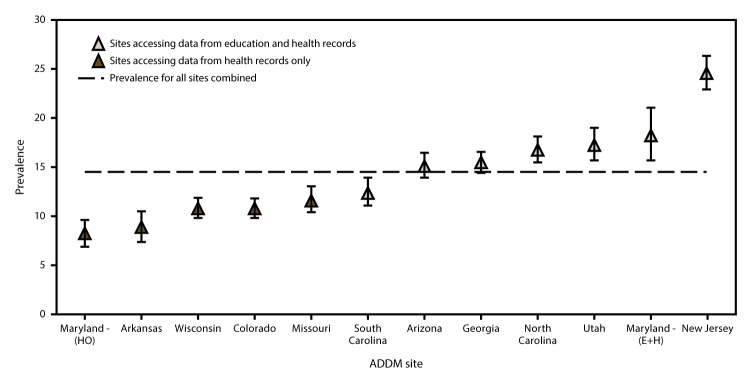
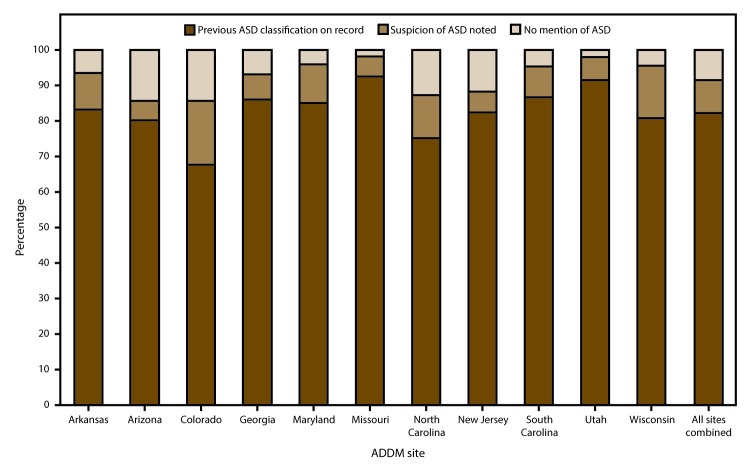
Autism spectrum disorder (ASD).2012.The Autism and Developmental Disabilities Monitoring (ADDM) Network is an active surveillance system that provides estimates of the prevalence and characteristics of ASD among children aged 8 years whose parents or guardians reside in 11 ADDM Network sites in the United States (Arkansas, Arizona, Colorado, Georgia, Maryland, Missouri, New Jersey, North Carolina, South Carolina, Utah, and Wisconsin). Surveillance to determine ASD case status is conducted in two phases. The first phase consists of screening and abstracting comprehensive evaluations performed by professional service providers in the community. Data sources identified for record review are categorized as either 1) education source type, including developmental evaluations to determine eligibility for special education services or 2) health care source type, including diagnostic and developmental evaluations. The second phase involves the review of all abstracted evaluations by trained clinicians to determine ASD surveillance case status. A child meets the surveillance case definition for ASD if one or more comprehensive evaluations of that child completed by a qualified professional describes behaviors that are consistent with the Diagnostic and Statistical Manual of Mental Disorders, Fourth Edition, Text Revision diagnostic criteria for any of the following conditions: autistic disorder, pervasive developmental disorder-not otherwise specified (including atypical autism), or Asperger disorder. This report provides ASD prevalence estimates for children aged 8 years living in catchment areas of the ADDM Network sites in 2012, overall and stratified by sex, race/ethnicity, and the type of source records (education and health records versus health records only). In addition, this report describes the proportion of children with ASD with a score consistent with intellectual disability on a standardized intellectual ability test, the age at which the earliest known comprehensive evaluation was performed, the proportion of children with a previous ASD diagnosis, the specific type of ASD diagnosis, and any special education eligibility classification.For 2012, the combined estimated prevalence of ASD among the 11 ADDM Network sites was 14.5 per 1,000 (one in 69) children aged 8 years. Estimated prevalence was significantly higher among boys aged 8 years (23.4 per 1,000) than among girls aged 8 years (5.2 per 1,000). Estimated ASD prevalence was significantly higher among non-Hispanic white children aged 8 years (15.3 per 1,000) compared with non-Hispanic black children (13.1 per 1,000), and Hispanic (10.2 per 1,000) children aged 8 years. Estimated prevalence varied widely among the 11 ADDM Network sites, ranging from 8.2 per 1,000 children aged 8 years (in the area of the Maryland site where only health care records were reviewed) to 24.6 per 1,000 children aged 8 years (in New Jersey, where both education and health care records were reviewed). Estimated prevalence was higher in surveillance sites where education records and health records were reviewed compared with sites where health records only were reviewed (17.1 per 1,000 and 10.4 per 1,000 children aged 8 years, respectively; p<0.05). Among children identified with ASD by the ADDM Network, 82% had a previous ASD diagnosis or educational classification; this did not vary by sex or between non-Hispanic white and non-Hispanic black children. A lower percentage of Hispanic children (78%) had a previous ASD diagnosis or classification compared with non-Hispanic white children (82%) and with non-Hispanic black children (84%). The median age at earliest known comprehensive evaluation was 40 months, and 43% of children had received an earliest known comprehensive evaluation by age 36 months. The percentage of children with an earliest known comprehensive evaluation by age 36 months was similar for boys and girls, but was higher for non-Hispanic white children (45%) compared with non-Hispanic black children (40%) and Hispanic children (39%).Overall estimated ASD prevalence was 14.5 per 1,000 children aged 8 years in the ADDM Network sites in 2012. The higher estimated prevalence among sites that reviewed both education and health records suggests the role of special education systems in providing comprehensive evaluations and services to children with developmental disabilities. Disparities by race/ethnicity in estimated ASD prevalence, particularly for Hispanic children, as well as disparities in the age of earliest comprehensive evaluation and presence of a previous ASD diagnosis or classification, suggest that access to treatment and services might be lacking or delayed for some children.The ADDM Network will continue to monitor the prevalence and characteristics of ASD among children aged 8 years living in selected sites across the United States. Recommendations from the ADDM Network include enhancing strategies to 1) lower the age of first evaluation of ASD by
Overview
CoChat Summary
TL;DR
In 2012, the ADDM Network estimated ASD prevalence among children aged 8 years across 11 U.S. sites at 14.5 per 1,000 (one in 69), with wide variation by site and higher estimates where both education and health records were reviewed. Prevalence was higher among boys and non-Hispanic white children, and although 87% had a developmental concern by age 36 months, only 43% had an earliest known comprehensive evaluation by that age.
Key findings
- Combined ASD prevalence was 14.5 per 1,000 (one in 69) among 346,978 children aged 8 years; site estimates ranged from 8.2 per 1,000 (Maryland, health records only) to 24.6 per 1,000 (New Jersey). Sites reviewing education and health records had higher prevalence than health-records-only sites (17.1 vs. 10.4 per 1,000; PR: 1.6; 95% CI: 1.5–1.7; p<0.001).
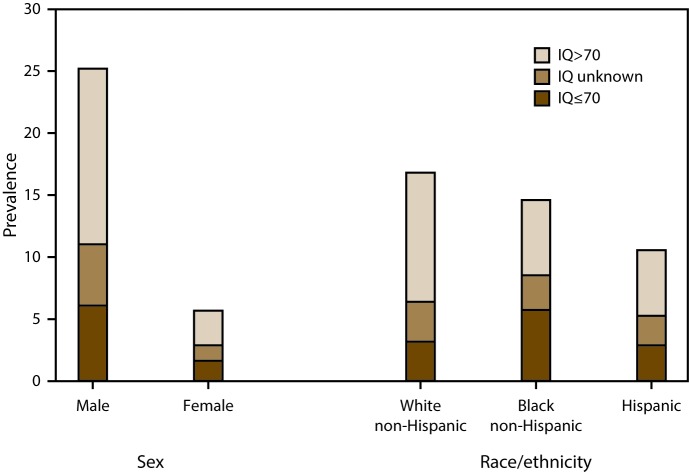
- Prevalence was 23.4 per 1,000 among boys and 5.2 per 1,000 among girls (male-to-female PR: 4.5; 95% CI: 4.2–4.8). By race/ethnicity, prevalence was 15.3 per 1,000 for non-Hispanic white children, 13.1 for non-Hispanic black children, 11.4 for Asian/Pacific Islander children, and 10.2 for Hispanic children.
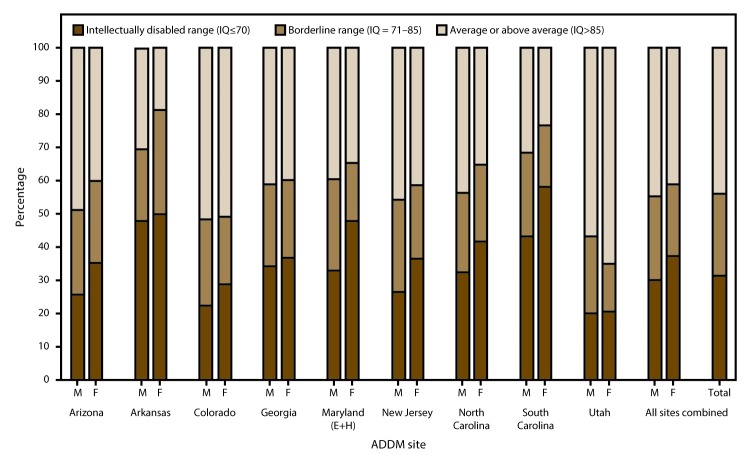
- Among children identified with ASD, 82% had a previous ASD diagnosis or educational classification; the median age at earliest known comprehensive evaluation was 40 months, and 43% had an earliest known comprehensive evaluation by age 36 months. Among 3,353 children with intellectual ability data, 31.4% were in the intellectual disability range (IQ ≤70), 24.6% borderline (IQ 71–85), and 44.1% average or above average (IQ >85).
- In eight sites with comparable surveillance areas in 2010 and 2012, combined ASD prevalence was 15.1 and 15.2 per 1,000, respectively (p>0.05), but Wisconsin increased by 17%, New Jersey by 11%, and Missouri decreased by 18%.
Methods
- Active, multisite, records-based surveillance in 11 ADDM Network sites among children born in 2004 and aged 8 years in 2012. Surveillance used two phases: screening/abstraction of education and health records, then clinician review of composite records against a DSM-IV-TR-based ASD surveillance case definition.
- Data sources included education records and/or health care records; six sites reviewed education records in all or most of the surveillance area, Maryland and Colorado reviewed education records in part of the area, and Arkansas, Missouri, and Wisconsin reviewed health records only. Denominators came from NCHS bridged-race population estimates; analyses used Poisson-based confidence intervals, Pearson chi-square tests, prevalence ratios, and median tests.
- Quality assurance included 10% random record checks and clinician interrater reliability monitoring; final agreement for ASD case status was 90.4% (κ = 0.8). A missing-records evaluation estimated that prevalence might have increased by 0.1% to 3.3% if missing records had been available, but reported estimates were not adjusted for this.
Limitations
- Stated: findings were limited to information available in source records; intellectual ability data were incomplete and may not be generalizable; varying source record types and lack of education records at some sites may have underestimated prevalence; private-school and home-school records generally were unavailable; surveillance areas were not selected to be representative of U.S. children aged 8 years.
- Stated: county-level population counts by sex and race/ethnicity were unavailable by single year of age in nondecennial years, so NCHS estimates were used and may have error; age-at-first-evaluation analyses were restricted to children linked to in-state birth certificates, which may not fully eliminate bias from moves; race/ethnicity categories were broad, and Hispanic household language could not be distinguished.
- Evident from the text: no clinical examinations were performed by ADDM staff, case status relied on record review rather than direct assessment, and the reported prevalence estimates do not reflect the missing-records adjustment.
Model-written summary. Check it against the paper before relying on it.
Integrity signals
Registry
Cites
Statistics
Figures
Verification
Claims the paper makes
0 Valid · 0 Not valid · 12 Not checked · 130 Own results and interpretations
A result the paper reports from its own data — it cites no other source for it, so there is none to check. The quote shows it is in the paper.
In the paper
“with access to both education and health care sources had higher estimated ASD prevalence compared with the five areas (Arkansas, Colorado, Maryland [health records only reviewed], Missouri, and Wisconsin) with limited or no access to education records (17.1 and 10.4 per 1,000 children aged 8 years, respectively; PR: 1.6; 95% CI: 1.5–1.7; p<0.001) (Figure 1).”
§ Prevalence and Characteristics of Autism Spectrum Disorder Among Children Aged 8 Years — Autism and Developmental Disabilities Monitoring Network, 11 Sites, United States, 2012 > Results > Overall ASD Prevalence Estimates
plainstates an association- Asserted: passes — The authors put it forward as true.
- Checkable: passes — It can be checked against evidence.
- Load-bearing: passes — The paper’s conclusions depend on it.
- Based: passes — The paper gives a reason why it holds.
A result the paper reports from its own data — it cites no other source for it, so there is none to check. The quote shows it is in the paper.
In the paper
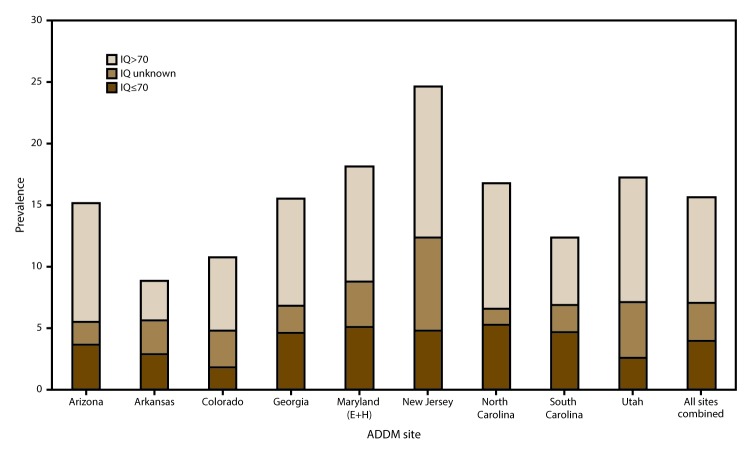
“The estimated prevalence of ASD without intellectual disability was 8.6 per 1,000”
- Also stated in: § Discussion · hedged
“The estimated prevalence of ASD without intellectual disability was 8.6 per 1,000 overall”
§ Prevalence and Characteristics of Autism Spectrum Disorder Among Children Aged 8 Years — Autism and Developmental Disabilities Monitoring Network, 11 Sites, United States, 2012 > Results > Intellectual Ability
hedgedn = 3,353- Asserted: passes — The authors put it forward as true.
- Checkable: passes — It can be checked against evidence.
- Load-bearing: unclear — It is unclear whether the paper’s conclusions depend on it.
- Based: passes — The paper gives a reason why it holds.
- Also stated in: § Discussion · hedged
A result the paper reports from its own data — it cites no other source for it, so there is none to check. The quote shows it is in the paper.
In the paper
“the percentage was significantly higher for non-Hispanic black children (91%) and for Hispanic children (90%) compared with non-Hispanic white children (86%; p<0.05).”
§ Prevalence and Characteristics of Autism Spectrum Disorder Among Children Aged 8 Years — Autism and Developmental Disabilities Monitoring Network, 11 Sites, United States, 2012 > Results > Early Developmental Concerns and Earliest Comprehensive Evaluation
plainstates an association- Asserted: passes — The authors put it forward as true.
- Checkable: passes — It can be checked against evidence.
- Load-bearing: unclear — It is unclear whether the paper’s conclusions depend on it.
- Based: passes — The paper gives a reason why it holds.
A result the paper reports from its own data — it cites no other source for it, so there is none to check. The quote shows it is in the paper.
In the paper
“43% of children had received an earliest known comprehensive evaluation by age 36 months.”
§ Prevalence and Characteristics of Autism Spectrum Disorder Among Children Aged 8 Years — Autism and Developmental Disabilities Monitoring Network, 11 Sites, United States, 2012 > Abstract > Results
plain- Asserted: passes — The authors put it forward as true.
- Checkable: passes — It can be checked against evidence.
- Load-bearing: unclear — It is unclear whether the paper’s conclusions depend on it.
- Based: passes — The paper gives a reason why it holds.
A result the paper reports from its own data — it cites no other source for it, so there is none to check. The quote shows it is in the paper.
In the paper
“A lower percentage of Hispanic children (78%) had a previous ASD diagnosis or classification compared with non-Hispanic white children (82%) and with non-Hispanic black children (84%).”
§ Prevalence and Characteristics of Autism Spectrum Disorder Among Children Aged 8 Years — Autism and Developmental Disabilities Monitoring Network, 11 Sites, United States, 2012 > Abstract > Results
plainstates an association- Asserted: passes — The authors put it forward as true.
- Checkable: passes — It can be checked against evidence.
- Load-bearing: unclear — It is unclear whether the paper’s conclusions depend on it.
- Based: passes — The paper gives a reason why it holds.
104 more claims
Create a free account to see all 142 claims and to verify the 21 references still open.
- It may state two separate claims as one. 22
- Probably not a substantial claim. 16
Self-check
Percentages, sums and reported differences re-computed from the paper’s own numbers.
Each contradiction between two passages listed here was confirmed by an independent check.
Rated minor: it would not touch a result — a value no result rests on, a p-value that stays on the same side of the significance level, or a conflict that is clerical, resolved elsewhere in the paper, or outside its own findings.
In the paper
§ Prevalence and Characteristics of Autism Spectrum Disorder Among Children Aged 8 Years — Autism and Developmental Disabilities Monitoring Network, 11 Sites, United States, 2012 > Results > Intellectual Ability
“range: 68% [Arkansas] to 92% [in North Carolina]”
§ Prevalence and Characteristics of Autism Spectrum Disorder Among Children Aged 8 Years — Autism and Developmental Disabilities Monitoring Network, 11 Sites, United States, 2012 > Results > Intellectual Ability
“*Includes sites having information on intellectual ability available for ≥70% of children who met the ASD case definition (N = 3,353, excluding unknown IQ).”
Rated minor: it would not touch a result — a value no result rests on, a p-value that stays on the same side of the significance level, or a conflict that is clerical, resolved elsewhere in the paper, or outside its own findings.
In the paper
“A total of 48,304 records for 38,038 children aged 8 years were reviewed from education and health care sources. Among these, the source records of 9,629 (19%) children met the criteria for abstraction”
§ Prevalence and Characteristics of Autism Spectrum Disorder Among Children Aged 8 Years — Autism and Developmental Disabilities Monitoring Network, 11 Sites, United States, 2012 > Results > Record Review
Reported 19 · recomputed 25.31416
Citations
Cites
Diagnostic and Statistical Manual of Mental Disorders
American Psychiatric Association (2013) · doi:10.1176/appi.books.9780890425596 · Cited by 116,369
Baio, J., Wiggins, L., Christensen, D. L., Maenner, M. J., Daniels, J., Warren, Z., Kurzius-Spencer, M., Zahorodny, W., Robinson, C., Rosenberg, et al. (2018) · MMWR. Surveillance Summaries · doi:10.15585/mmwr.ss6706a1 · Cited by 6,078
Self-citationDawson, G., Rogers, S., Munson, J., Smith, M., Winter, J., Greenson, J., Donaldson, A., & Varley, J. (2010) · Pediatrics · doi:10.1542/peds.2009-0958 · Cited by 2,835
Identification and Evaluation of Children With Autism Spectrum Disorders
Johnson, C. P., Myers, S. M., & and the Council on Children With Disabilities (2007) · Pediatrics · doi:10.1542/peds.2007-2361 · Cited by 2,011
Trends in the prevalence of developmental disabilities in US children, 1997-2008
Boyle, C. A., Boulet, S., Schieve, L. A., Cohen, R. A., Blumberg, S. J., Yeargin-Allsopp, M., Visser, S., & Kogan, M. D. (2011) · Pediatrics · doi:10.1542/peds.2010-2989 · Cited by 1,732
Self-citationPrevalence of Autism in a US Metropolitan Area
Yeargin-Allsopp, M., Rice, C., Karapurkar, T., Doernberg, N., Boyle, C., & Murphy, C. (2003) · JAMA · doi:10.1001/jama.289.1.49 · Cited by 1,248
Self-citationPrevalence of Parent-Reported Diagnosis of Autism Spectrum Disorder Among Children in the US, 2007
Kogan, M. D., Blumberg, S. J., Schieve, L. A., Boyle, C. A., Perrin, J. M., Ghandour, R. M., Singh, G. K., Strickland, B. B., Trevathan, E., & van Dyck, P. C. (2009) · Pediatrics · doi:10.1542/peds.2009-1522 · Cited by 892
Cited by
Items 401–500 of 583
“I Know How to Get Around Your ‘No’”: A Follow-Up of the FACES Psychoeducational Intervention
Pearson, J. N., Outlaw, J. K., Stewart-Ginsburg, J. H., & Martin, D. L. M. (2024) · Intellectual and developmental disabilities · doi:10.1352/1934-9556-62.5.406 · Cited by 3
Da resistência à inclusão: desafios e potenciais das aulas de natação para crianças com autismo
Assunçào, A. G. A., de Carvalho, C. O., Moreira, M. A. P., de Oliveira, R. M., dos Santos, Z. F., & Moreira, L. D. F. (2024) · OBSERVATÓRIO DE LA ECONOMÍA LATINOAMERICANA · doi:10.55905/oelv22n12-075 · Cited by 2
Yılmaz, A., & Mirze, F. (2020) · Journal of Education and Learning · doi:10.5539/jel.v9n1p110 · Cited by 2
Filho, A. D. L. N., & Pizo, G. A. I. (2018) · Revista Interdisciplinar de Pesquisa em Engenharia · doi:10.26512/ripe.v4i1.13446 · Cited by 3
Bellini, E. (2020) · Premio Tesi dottorato/Premio Tesi di dottorato · doi:10.36253/978-88-6453-987-4 · Cited by 3
Ribeiro, S. R. D. O., Martins, P. H. D. S., Nery, I. R. R., Sales, I. D. S., Borges, A. M. D. P., Fernandes, L. A., & Lage, G. M. (2021) · REVISTA DA ASSOCIAÇÃO BRASILEIRA DE ATIVIDADE MOTORA ADAPTADA · doi:10.36311/2674-8681.2021.v22n1.p143-162 · Cited by 2
Self, T. L., Batchelor, D., & Parham, D. F. (2021) · International Journal for Cross-Disciplinary Subjects in Education · doi:10.20533/ijcdse.2042.6364.2021.0537 · Cited by 2
Special Needs Insurance: More Stability for a Growing Family's Budget
Morel, D. (2021) · Journal of Insurance Medicine · doi:10.17849/insm-49-s1-1-31.1 · Cited by 2
MacInnis, A. G. (2021) · PLoS ONE · doi:10.1371/journal.pone.0260738 · Cited by 3
Türk, N., & Gökçen, C. (2022) · Çocuk ve Gençlik Ruh Sağlığı Dergisi / Turkish Journal of Child and Adolescent Mental Health · doi:10.4274/tjcamh.galenos.2021.07269 · Cited by 4
Lirola, F. V. (2022) · Revista CENTRA de Ciencias Sociales · doi:10.54790/rccs.10 · Cited by 4
Identification of Gestational Risk Factors for daASD Using Hybrid Deep Learning Approach
Bokka, Y., Mohan, R. N. V. J., & Naik, M. C. (2023) · SN Computer Science · doi:10.1007/s42979-022-01635-7 · Cited by 3
Adrien, J. (2022) · Global Journal of Intellectual & Developmental Disabilities · doi:10.19080/gjidd.2022.10.555783 · Cited by 1
Medicinal Applications of Cannabidiol from the Genus Cannabis L.
Bag, D., Tabassum, A., Arora, N., Verma, P. K., & Sawant, S. D. (2020) · Springer eBooks · doi:10.1007/978-981-15-5917-4_10 · Cited by 2
Colombo-Dougovito, A. M. (2017) · doi:10.18130/v3hw66 · Cited by 2
CTCF barrier breaking by ZFP661 promotes protocadherin diversity in mammalian brainsPreprint
Jin, J., Ralls, S., Wu, E., Wolf, G., Sun, M., Springer, D., Cosby, R. L., Senft, A. D., & Macfarlan, T. S. (2023) · bioRxiv (Cold Spring Harbor Laboratory) · doi:10.1101/2023.05.08.539838 · Cited by 2
Navigating Neurogenetics for Child and Adolescent Psychiatry Practice
Hauptman, A. J., Salpekar, J. A., Cohen, J. S., & Asato, M. R. (2024) · Journal of the American Academy of Child & Adolescent Psychiatry · doi:10.1016/j.jaac.2023.09.555 · Cited by 2
ATİPİK OTİZMLİ ÇOCUKLARIN ALICI VE İFADE EDİCİ DİL BECERİLERİNİN İNCELENMESİ
GÜNDÜZ, S. Ü. S. K. A. M., AL, S. K., & Gündüz, M. (2020) · The Journal of Social Sciences · doi:10.29228/sobider.41789 · Cited by 1
Cultural Humility, a Path to Equity
Wright, P. I., & Murphy, J. (2022) · Autism and child psychopathology series · doi:10.1007/978-3-030-98507-3_12 · Cited by 2
Interventions for Family Members
Machalicek, W., Erturk, B., Gulgatch, L., Wei, Q., Alvarez, K., & Joseph, S. S. (2022) · Autism and child psychopathology series · doi:10.1007/978-3-030-88538-0_61 · Cited by 2
Costa, L. S., Charchat‐Fichman, H., Fernandes, C. S., da Cruz, L. V. M., Silva, F. M. B. N., & Dias, G. M. (2023) · Jornal Brasileiro de Psiquiatria · doi:10.1590/0047-2085000000432 · Cited by 1
Hu, W., Jiang, G., Han, J., & Li, X. (2024) · World Congress on Medical Physics and Biomedical Engineering, September 7 - 12, 2009, Munich, Germany · doi:10.1007/978-3-031-51455-5_11 · Cited by 1
Reede, D. H. H., Tancredi, D. J., & Schmidt, R. J. (2024) · Research in Autism · doi:10.1016/j.rasd.2024.102393 · Cited by 2
Corticosteroids and the Pharmacological Management of Autism—An Integrative Review
de Jesus, L. A. G., Piuvezam, G., Pimenta, I. D. S. F., & de Melo, E. B. (2024) · Scientia Pharmaceutica · doi:10.3390/scipharm92040061 · Cited by 1
Evaluating Sex Differences in Language Abilities Within Down Syndrome and Autism Spectrum Disorder
Udhnani, M. D., & Lee, N. (2025) · Intellectual and developmental disabilities · doi:10.1352/1934-9556-63.1.29 · Cited by 3
FATORES ASSOCIADOS AO EXCESSO DE PESO EM CRIANÇAS COM TRANSTORNO DO ESPECTRO AUTISTA
da Silva, R. B., Santos, J. S., da Silva, D. A. V., Souza, C. D. S., & de Oliveira, A. C. M. (2024) · Arquivos Catarinenses de Medicina · doi:10.63845/ped1js73 · Cited by 1
Lan, W., Zhong, J., Li, Y., Shen, Y., Gong, J., Zou, Z., & Hou, X. (2026) · Brain Behavior & Immunity - Health · doi:10.1016/j.bbih.2026.101208 · Cited by 2
“According to the latest report from the Autism and Developmental Disabilities Monitoring Network (ADDM Network), the prevalence of ASD in Western countries is as high as 1 in 44 individuals (Christensen et al., 2018).”
Colombi, C. (2017) · Medical Research Archives · doi:10.18103/mra.v5i7.1271 · Cited by 1
غنيم, و. م. م. (2021) · المجلة التربوية لکلية التربية بسوهاج · doi:10.21608/edusohag.2021.187334 · Cited by 1
[Anatomy of the external saphenous vein].
Payen, B. (1985) · PubMed · Cited by 6
Iyama-Kurtycz, T. (2019) · Springer eBooks · doi:10.1007/978-3-030-26531-1_18 · Cited by 1
International Organizations' Aid for Educational Transformation and Inclusive Development
Rajagopal, K., & Mahajan, V. (2022) · Practice, progress, and proficiency in sustainability · doi:10.4018/978-1-6684-2448-3.ch012 · Cited by 1
Eta, E. V. A. (2022) · Pediatrics and Neonatal Nursing - Open Journal · doi:10.17140/pnnoj-8-136 · Cited by 2
The cognitive profile in Slovak children with autism spectrum disorders
Celušáková, H., Polónyiov, K., & Ostatníková, D. (2021) · Journal of Systems and Integrative Neuroscience · doi:10.15761/jsin.1000242 · Cited by 1
Updates in Management of Autism Spectrum Disorder: A Review
Fadl, A. A., Nafadi, K. K., & Jastaniah, S. Z. (2022) · Journal of Pharmaceutical Research International · doi:10.9734/jpri/2022/v34i587260 · Cited by 1
ASDCLAIMS: Twitter Dataset of Claims on Autism Spectrum Disorder
Kim, M. Y., Kim, J., Kim, B. W., Johnson, K., & Kim, J. (2022) · IEEE International Conference on Big Data (BigData) · doi:10.1109/bigdata55660.2022.10020265 · Cited by 2
“Autism spectrum disorder (ASD) is a pervasive disorder identified once in about every 44 eight-year-old children [1].”
Horan, M. R., Latendresse, S. J., & Limbers, C. A. (2023) · Journal of Autism and Developmental Disorders · doi:10.1007/s10803-023-05997-6 · Cited by 4
“These interventions are becoming more essential as the prevalence rates of childhood autism diagnoses continue to rise (Baio et al., 2018 ; Christensen et al., 2018 ; McDon - ald & Paul, 2010).”
Khusheim, S. M. (2023) · مجلة التربية الخاصة والتأهيل · doi:10.21608/sero.2023.311280 · Cited by 1
Phospholipase C and glutamate excitotoxicity as etiological mechanism in neurological disorders
El-Ansary, A. K., Bacha, A. G. B., & Hassan, S. A. (2023) · Elsevier eBooks · doi:10.1016/b978-0-443-21800-2.00007-5 · Cited by 2
Varlas, V. N. (2023) · FARMACIA · doi:10.31925/farmacia.2023.6.1 · Cited by 3
Taddei, M., Cuesta, P., Annunziata, S., Bulgheroni, S., Esposito, S., Visani, E., Granvillano, A., Dotta, S., Sebastiano, D. R., Panzica, F., et al. (2024) · Neurological Sciences · doi:10.1007/s10072-024-07528-2 · Cited by 1
“The study was performed according to the Declaration of Helsinki and was approved by the Ethics Committee of Fondazione IRCCS Istituto Neurologico Carlo Besta.”
Autism spectrum disorderand technological interventions
Bikkani, S. (2024) · Elsevier eBooks · doi:10.1016/b978-0-443-18529-8.00071-8 · Cited by 1
Parents’ Acceptance of Children with Autism Spectrum Disorder (ASD) in Pontianak City
Simangunsong, G. H. M., Fitrianingrum, I., & Pratiwi, S. E. (2023) · Jurnal Sains Psikologi · doi:10.17977/um023v12i12023p28-38 · Cited by 1
Roizen, N., Friedman, S., Vanderbilt, D. L., Cacia, J., Fussell, J. J., Hansen, R. L., Hofer, J., Sideridis, G. D., Stein, R. E. K., & Barbaresi, W. J. (2025) · Journal of Autism and Developmental Disorders · doi:10.1007/s10803-025-06777-0 · Cited by 2
Li, X., Huang, W., Tan, R., Xu, C., Chen, X., Zhang, Q., Li, S., Liu, Y., Qiu, H., Bi, C., et al. (2025) · Current Neuropharmacology · doi:10.2174/011570159x332833241222191422 · Cited by 2
Predicting seizure episodes and high-risk events in autism through adverse behavioral patterns
Kiarashi, Y., Lantz, J. F., Reyna, M. A., Anderson, C., Rad, A. B., Foster, J., Villavicencio, T., Hamlin, T., & Clifford, G. D. (2025) · Physiological Measurement · doi:10.1088/1361-6579/adcafd · Cited by 2
“The prevalence of ASD continues to rise, affecting one in 36 children in the United States (Christensen et al 2018).”
STUDY OF SOME PERINATAL AND NEONATAL RISK FACTORS FOR AUTISM.
Ramadan, I.-E., EL-Sharkawy, A.-R., Abed, N., & EL-Gayed., E. (2016) · International Journal of Advanced Research · doi:10.21474/ijar01/2066 · Cited by 1
Pharmacobiological Treatments in Autism Spectrum Disorders
(2017) · International Journal of Current Research and Review · doi:10.7324/ijcrr.2017.9188 · Cited by 1
STOIA, D., Vintilă, M., & Minulescu, M. (2019) · Social Research Reports · doi:10.33788/srr11.1.4 · Cited by 1
Selection of Young Animal Models of Autism over Adult: Benefits and Limitations
Paudel, R., & Singh, S. (2021) · Integrative Psychological and Behavioral Science · doi:10.1007/s12124-020-09595-4 · Cited by 1
Human Gut Microbiome Metabolism and Autism Spectrum Disorder
Noguera, M. (2020) · Journal of Agriculture & Life Sciences · doi:10.30845/jals.v7n2a3 · Cited by 1
Investigation of Special Education Teachers Concern Levels Regarding Their Children
Karabulut, A. (2021) · lnternational Electronic Journal of Elementary Education · doi:10.26822/iejee.2021.210 · Cited by 3
Development of Informative System of Autism Spectrum Disorders Registry in Iran: A Brief Report
Jenabi, E., Rezaei, M., Seyedi, M., Bashirian, S., Zareian, S., & Khazaei, S. (2022) · Zahedan Journal of Research in Medical Sciences · doi:10.5812/zjrms-114139 · Cited by 1
Atchison, A., Pinto, G., Woodward, A., Stevens, E., Dixon, D. R., & Linstead, E. J. (2022) · International Conference on Machine Learning and Applications · doi:10.1109/icmla55696.2022.00263 · Cited by 2
“In 2018, the Centers for Disease Control and Prevention (CDC) announced that 1 in 44 8-year-old children was diagnosed with Autism Spectrum Disorder (ASD), while in 2012, it was 1 in 69 [1].”
Ramos, T. C. (2017) · Digital Library of Theses and Dissertations (Universidade de São Paulo) · doi:10.11606/d.45.2017.tde-19052017-074720 · Cited by 5
West, D. E. (2018) · Dominican Scholar (Dominican University of California) · doi:10.33015/dominican.edu/2018.edu.05 · Cited by 5
Sánchez, S. M. S. (2018) · Digital Library of Theses and Dissertations (Universidade de São Paulo) · doi:10.11606/d.41.2018.tde-03042018-130249 · Cited by 1
Praxia da criança com transtorno do espectro autista: um estudo comparativo
Bernal, M. P. (2019) · Digital Library of Theses and Dissertations (Universidade de São Paulo) · doi:10.11606/t.47.2019.tde-15012019-155902 · Cited by 4
Prenatal and Perinatal Factors Associated with Pediatric Autism Spectrum Disorder in East ChinaPreprint
Li, Y., Han, L., Ding, N., Zhang, Z., Lin, Y., & Ke, X. (2021) · Research Square · doi:10.21203/rs.3.rs-1105841/v1 · Cited by 2
Mosquera, M. L., Zubizarreta, S. C.-P., Tubío-Fungueiriño, M., Navarro, M. A., Hull, L., Álvarez, A. C., Gándara-Gafo, B., & Fernández‐Prieto, M. (2022) · Research Square · doi:10.21203/rs.3.rs-2048328/v1 · Cited by 1
Satterstrom, F. K., Jodeiry, K., Mahjani, B., Hatem, G., Park, S. J., Klei, L., Fu, J. M., Wigdor, E. M., Betancur, C., Daly, M. J., et al. (2026) · medRxiv · doi:10.64898/2026.05.04.26352380 · Cited by 2
“Autism spectrum disorder (ASD) is more commonly diagnosed in males than females, with estimates of differential diagnosis near 3:1 or 4:1 [1–4].”
Autism spectrum disorder and related neurodevelopmental disorders.
Tassé, M. J. (2016) · Journal of Psychology and Cognition · doi:10.35841/psychology-cognition.1.1.9-10
Shaker-Naeeni, H., & Chowdhury, U. (2018) · Journal of Childhood & Developmental Disorders · doi:10.4172/2472-1786.100064 · Cited by 1
Muñoz, R., Becerra, C., Noël, R., Camblor, M., Barcelos, T., Kreisel, S., & Villarroel, R. H. (2018) · CLEI electronic journal · doi:10.19153/cleiej.21.1.8
“The prevalence of ASD in recent years reports a frequency close to 1.4% of the worldwide population, with similar sampling estimates in children and adults [6].”
InfluentialCoal ash exposure and behavioral impairments among children in Louisville, Kentucky.
Odoh, C. (2018) · ThinkIR: The University of Louisville's Institutional Repository (University of Louisville) · doi:10.18297/etd/3046
Revers, M. C. (2019) · Digital Library of Theses and Dissertations (Universidade de São Paulo) · doi:10.11606/d.5.2019.tde-11122019-112343 · Cited by 2
Alexeeva, E. I., Krekhova, E. A., Dvoryakovskaya, T. M., Isaeva, K. B., Чомахидзе, А. М., Chistyakova, Е. G., Lomakina, O. L., Denisova, R. V., Mamutova, A. V., Fetisova, A. N., et al. (2020) · Annals of the Rheumatic Diseases · doi:10.1136/annrheumdis-2020-eular.5706
Rollón-Ugalde, V. (2019) · Gredos (University of Salamanca) · doi:10.14201/gredos.143528
Ging-Jehli, N. R., Manda, D., Hollway, J. A., Hurt, E. A., Moone, S., & Arnold, L. E. (2020) · Journal of Developmental and Physical Disabilities · doi:10.1007/s10882-020-09776-4
“Official prevalence of autism spectrum disorder (ASD) has gone from 0.1% to over 1% from 1970 to 2018 (Christensen et al. 2018).”
InfluentialPlay development in children with Autism Spectrum Disorder in a natural environment
Krebs, G. (2020) · Digital Repository Service (Northeastern University) · doi:10.17760/d20356161
Mitochondrial DNA Variants in Autism Spectrum Disorder: A Systematic ReviewPreprint
Liao, X., & Li, Y. (2020) · Research Square · doi:10.21203/rs.3.rs-131427/v1
Utilisation and outcomes of treatment in Autism Spectrum Disorder
Houghton, R. (2021) · Research Publications (Maastricht University) · doi:10.26481/dis.20210304rh
CORRELATION BETWEEN FAMILY CENTERED APPROACH AND MENTAL HEALTH OF PARENTS IN DOMICILIARY THERAPY
Ali, S. A. (2021) · Pakistan Journal of Rehabilitation · doi:10.36283/pjr.zu.10.1/011
Li, F., Li, T., Lin, J. L., Jian, J., Zhang, Q., Zhang, Y., Liu, X., Ji, Y., Wang, X., & Li, Q. (2021) · Research Square · doi:10.21203/rs.3.rs-54088/v2
Mechanism of Autism Spectrum Disorder and The Involvement of microRNA
Mansur, F. A. F., Raman, N. F. A., Rahman, H. A., & Manzor, N. F. M. (2021) · Malaysian Journal of Science Health & Technology · doi:10.33102/mjosht.v6i.120 · Cited by 1
Alcohol, cannabis, and brain development
Breit, K. R. (2021) · Elsevier eBooks · doi:10.1016/b978-0-12-817988-8.00017-8
Araque, E. V., Rengifo, J., & Becerra-Hernández, L. V. (2020) · Universitas Médica · doi:10.11144/javeriana.umed61-4.fmrp · Cited by 4
Montrenes, J. J. (2021) · Louisiana State University · doi:10.31390/gradschool_theses.5336
A Highly Accurate Ensemble Classifier for the Molecular Diagnosis of ASD at Ages 1 to 4 YearsPreprint
Bao, B., Gazestani, V., Xiao, Y., Kim, R., Chiang, A. W. T., Nalabolu, S. R., Pierce, K., Robasky, K., Lewis, N. E., & Courchesne, E. (2021) · medRxiv · doi:10.1101/2021.07.08.21260225
Heinrichs, B., Liu, B., Zhang, J., Meents, J., Le, K. H. T., Hautvast, P. A. I., Zhu, X., Li, N., Liu, Y., Rothermel, M., et al. (2020) · Research Square · doi:10.21203/rs.3.rs-86011/v1
A Scoping Review of Excessive Prenatal Ultrasonography as a Potential Risk Factor for Autism
Moammar, H., Desch, L. W., & Sulayman, R. (2021) · American Journal of Pediatrics · doi:10.11648/j.ajp.20210704.12
فعالیة برنامج ارشادی فی خفض أعراض الاکتئاب والاحتراق النفسی لدى أمهات الأطفال ذوی اضطراب طیف التوحد
عیسى, م. م. ع., & الثبيتي, ش. ش. (2021) · مجلة البحث العلمى فى التربية · doi:10.21608/jsre.2021.79443.1328
business plan complexe de football indoor
Maxime, E. (2011) · Publications Docs-en-stock.com
Experiências de jogos de mesa por pessoas autistas
Fernandes, F. E. D. O., Martins, L. B., & Lima, R. A. S. C. (2021) · doi:10.5151/isspppgdesign-13
السبيعي, م. م., & غريب, ر. م. (2022) · مجلة العلوم التربوية و النفسية · doi:10.26389/ajsrp.l120821
Lima, D. D. O. C., Gosling, M., Pereira, F. C. M., & Lima, D. D. O. C. (2022) · Anais ... Congresso Internacional do Conhecimento e Inovação · doi:10.48090/ciki.v1i1.1224
Anais do I Congresso Internacional Interdisciplinar da Uningá: Resumos Expandidos
(2023) · Editora UNINGÁ eBooks · doi:10.46311/978-65-80328-02-4
CAMINHOS VIRTUAIS E AUTISMO: ACESSO AOS SERVIÇOS DE SAÚDE NA PERSPECTIVA DA ANÁLISE DE REDES SOCIAIS
Rossi, L. P., Lovisi, G. M., Lima, L. A., & Mello, M. G. D. S. (2021) · Editora Científica Digital eBooks · doi:10.37885/210906281 · Cited by 1
Juergensen, K. (2018) · ThinkIR: The University of Louisville's Institutional Repository (University of Louisville) · doi:10.18297/etd/2998 · Cited by 1
Jenabi, E., Rezaei, M., Bashirian, S., Seyedi, M., Zareian, S., Khazaei, S., Khazaei, S., & Razjouyan, K. (2019) · doi:10.2196/preprints.15123
(2020) · مجلة دراسات الطفولة · doi:10.21608/jsc.2020.145490
Developmental Functioning of Infants and Toddlers with Autism and Down Syndrome
Tevis, C. M. (2021) · Louisiana State University · doi:10.31390/gradschool_theses.5480
Heinrichs, B., Liu, B., Zhang, J., Meents, J., Le, K. H. T., Hautvast, P. A. I., Zhu, X., Li, N., Liu, Y., Rothermel, M., et al. (2020) · doi:10.21203/rs.3.rs-77513/v1
Predictive Analysis for daASD Using Population Based Incremental Learning
Bokka, Y., Mohan, R. N. V. J., & Naik, M. C. (2022) · Journal of Engineering Science and Technology Review · doi:10.25103/jestr.153.18
ASPECTOS NUTRICIONAIS NA PREMATURIDADE
Korkes, H. A., Pimentel, C., & Fernandes, I. (2022) · doi:10.22533/at.ed.81822100824
VITALIDADE FETAL NA PREMATURIDADE
Rodrigues, T. C. G. F., Coutinho, C. M., & Cavalli, R. D. C. (2022) · doi:10.22533/at.ed.81822100813
PREMATURIDADE E TRIAGEM NEONATAL
Fonseca, A. A., Micheletti, C., & Fonseca, J. H. R. (2022) · doi:10.22533/at.ed.81822100825
ASPECTOS NEUROLÓGICOS E ORTOPÉDICOS NO DESENVOLVIMENTO DO PREMATURO
dos Santos, M. L. L., & Abreu, F. P. (2022) · doi:10.22533/at.ed.81822100819
O PAPEL DAS ORGANIZAÇÕES NÃO GOVERNAMENTAIS (ONGS) NO CONTEXTO DA PREMATURIDADE
Hennemann, A. C., neris, D. S., & Suguitani, D. (2022) · doi:10.22533/at.ed.81822100823
CUSTOS DA ASSISTÊNCIA A PREMATURIDADE
de Mello, F. B., & Goulart, A. L. (2022) · doi:10.22533/at.ed.81822100826
Metadata
- Authors
- Christensen, D. L., Braun, K. V. N., Baio, J., Bilder, D., Charles, J., Constantino, J. N., Daniels, J., Durkin, M. S., Fitzgerald, R. T., Kurzius-Spencer, M., Lee, L.-C., Pettygrove, S., Robinson, C., Schulz, E., Wells, C., Wingate, M. S., Zahorodny, W., & Yeargin-Allsopp, M.
- Affiliations
- National Center on Birth Defects and Developmental Disabilities (US)
- University of Utah (US)
- Medical University of South Carolina (US)
- Washington University in St. Louis (US)
- University of North Carolina at Chapel Hill (US)
- University of Wisconsin–Madison (US)
- University of Arizona, Tucson
- Johns Hopkins University (US)
- University of Arizona (US)
- University of Colorado Denver (US)
- University of Arkansas for Medical Sciences (US)
- Colorado Department of Public Health and Environment (US)
- University of Alabama at Birmingham (US)
- Rutgers, The State University of New Jersey (US)
- Division of Congenital and Developmental Disorders, National Center on Birth Defects and Developmental Disabilities, CDC
- Corresponding author
- Christensen, Deborah L.
- ORCID
- Venue
- MMWR. Surveillance Summaries
- Published
- 2018-11-16
- Volume
- 65
- Issue
- 13
- Pages
- 1-23
- ISSN
- 1545-8636 (ISSN-L)
- 1546-0738
- PMC
- PMC6237390
- OpenAlex
- W4244767238
- Semantic Scholar
- 19b75e3fb7706a6a87e1b30bb1ff85b46adbfb58
- Cited by
- 587
- References
- 41
- Citations by year
- 2026: 11 · 2025: 28 · 2024: 61 · 2023: 68 · 2022: 90 · 2021: 116 · 2020: 107 · 2019: 63 · 2018: 25
- FWCI
- 45.92
- Type
- journal article
- Language
- en
- Status
- Retracted
- Update notices
- retraction (2018-11-16)
- Open access
- green
- europepmc.org
- Licence
- cc-by
- Locations
- MMWR Surveillance Summaries (publishedVersion)
- Europe PMC (PubMed Central) (publishedVersion, cc-by)
- Funders
- University of Wisconsin-Madison
- Colorado Department of Public Health and Environment
- Johns Hopkins University
- University of Arkansas for Medical Sciences
- University of South Carolina
- University of South Florida
- Centers for Disease Control and Prevention
- University of North Carolina at Chapel Hill
- National Institute of Environmental Health Sciences (P30ES010126)
- National Center on Birth Defects and Developmental Disabilities
- Eunice Kennedy Shriver National Institute of Child Health and Human Development (U54HD087011)
- Topics
- Life Sciences › Neuroscience › Cognitive Neuroscience › Autism Spectrum Disorder Research
- Health Sciences › Medicine › Psychiatry and Mental health › Child Nutrition and Feeding Issues
- Social Sciences › Psychology › Clinical Psychology › Family and Disability Support Research
- Keywords
- autism spectrum disorder, prevalence, sex differences, racial and ethnic disparities, intellectual disability, special education eligibility, pervasive developmental disorders, Asperger syndrome
About these checks
Registry, retraction, Cites and statistics results are computed, not judged, with one exception: a printed reference that no index lists is read once by a model before it counts as a citation error. Claims are extracted by a model and kept only when their quote appears verbatim in the text; each cited source is then checked, with a model’s help, for whether it says what the claim relies on. Those verdicts can be wrong — read the claim’s quote and the cited source before relying on one.
A language model drew the claims from the paper on 2026-10-07, under version 3 of the claim definition (model deepseek-v4.1-flash, prompt extract-v3).
A second model labelled each claim on 2026-10-07 (model jev-1.13-20260917, definition revision gold-guideline-v0.2).
Statistics and arithmetic are recomputed, not judged.
Confidence bands are shown only for fields calibrated on our annotated test set. None is calibrated yet, so no band is shown.
What counts as a claim ›How we measure confidence ›How we check this ›
Are you an author, or do you see a problem with this page? Request a review
Data sources
Bibliographic data: Semantic Scholar, OpenAlex, Crossref.
Contains information from the Semantic Scholar Academic Graph Datasets, made available under the ODC Attribution License (ODC-BY 1.0).
Semantic Scholar’s data is described in: Kinney, R., et al. (2023). The Semantic Scholar Open Data Platform. arXiv:2301.10140.
