

Prevalence and Characteristics of Autism Spectrum Disorder Among Children Aged 8 Years — Autism and Developmental Disabilities Monitoring Network, 11 Sites, United States, 2012
Open accessThe DOI matches its Crossref record; 40 of the 41 references it cites were found in a registry or an index; none of the 21 sources its claims cite is checked for support yet.
Abstract
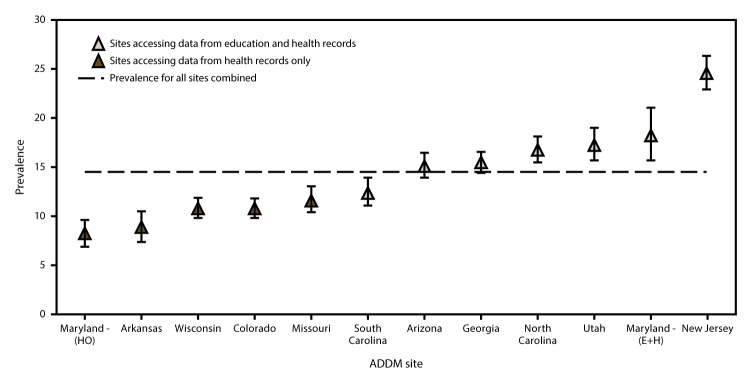
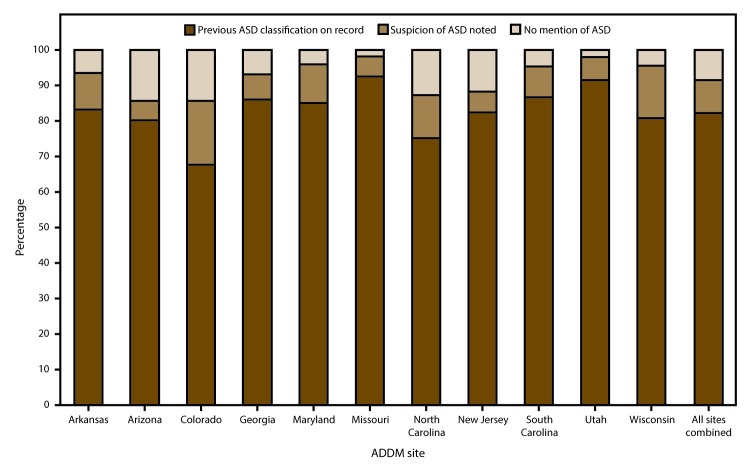
Autism spectrum disorder (ASD).2012.The Autism and Developmental Disabilities Monitoring (ADDM) Network is an active surveillance system that provides estimates of the prevalence and characteristics of ASD among children aged 8 years whose parents or guardians reside in 11 ADDM Network sites in the United States (Arkansas, Arizona, Colorado, Georgia, Maryland, Missouri, New Jersey, North Carolina, South Carolina, Utah, and Wisconsin). Surveillance to determine ASD case status is conducted in two phases. The first phase consists of screening and abstracting comprehensive evaluations performed by professional service providers in the community. Data sources identified for record review are categorized as either 1) education source type, including developmental evaluations to determine eligibility for special education services or 2) health care source type, including diagnostic and developmental evaluations. The second phase involves the review of all abstracted evaluations by trained clinicians to determine ASD surveillance case status. A child meets the surveillance case definition for ASD if one or more comprehensive evaluations of that child completed by a qualified professional describes behaviors that are consistent with the Diagnostic and Statistical Manual of Mental Disorders, Fourth Edition, Text Revision diagnostic criteria for any of the following conditions: autistic disorder, pervasive developmental disorder-not otherwise specified (including atypical autism), or Asperger disorder. This report provides ASD prevalence estimates for children aged 8 years living in catchment areas of the ADDM Network sites in 2012, overall and stratified by sex, race/ethnicity, and the type of source records (education and health records versus health records only). In addition, this report describes the proportion of children with ASD with a score consistent with intellectual disability on a standardized intellectual ability test, the age at which the earliest known comprehensive evaluation was performed, the proportion of children with a previous ASD diagnosis, the specific type of ASD diagnosis, and any special education eligibility classification.For 2012, the combined estimated prevalence of ASD among the 11 ADDM Network sites was 14.5 per 1,000 (one in 69) children aged 8 years. Estimated prevalence was significantly higher among boys aged 8 years (23.4 per 1,000) than among girls aged 8 years (5.2 per 1,000). Estimated ASD prevalence was significantly higher among non-Hispanic white children aged 8 years (15.3 per 1,000) compared with non-Hispanic black children (13.1 per 1,000), and Hispanic (10.2 per 1,000) children aged 8 years. Estimated prevalence varied widely among the 11 ADDM Network sites, ranging from 8.2 per 1,000 children aged 8 years (in the area of the Maryland site where only health care records were reviewed) to 24.6 per 1,000 children aged 8 years (in New Jersey, where both education and health care records were reviewed). Estimated prevalence was higher in surveillance sites where education records and health records were reviewed compared with sites where health records only were reviewed (17.1 per 1,000 and 10.4 per 1,000 children aged 8 years, respectively; p<0.05). Among children identified with ASD by the ADDM Network, 82% had a previous ASD diagnosis or educational classification; this did not vary by sex or between non-Hispanic white and non-Hispanic black children. A lower percentage of Hispanic children (78%) had a previous ASD diagnosis or classification compared with non-Hispanic white children (82%) and with non-Hispanic black children (84%). The median age at earliest known comprehensive evaluation was 40 months, and 43% of children had received an earliest known comprehensive evaluation by age 36 months. The percentage of children with an earliest known comprehensive evaluation by age 36 months was similar for boys and girls, but was higher for non-Hispanic white children (45%) compared with non-Hispanic black children (40%) and Hispanic children (39%).Overall estimated ASD prevalence was 14.5 per 1,000 children aged 8 years in the ADDM Network sites in 2012. The higher estimated prevalence among sites that reviewed both education and health records suggests the role of special education systems in providing comprehensive evaluations and services to children with developmental disabilities. Disparities by race/ethnicity in estimated ASD prevalence, particularly for Hispanic children, as well as disparities in the age of earliest comprehensive evaluation and presence of a previous ASD diagnosis or classification, suggest that access to treatment and services might be lacking or delayed for some children.The ADDM Network will continue to monitor the prevalence and characteristics of ASD among children aged 8 years living in selected sites across the United States. Recommendations from the ADDM Network include enhancing strategies to 1) lower the age of first evaluation of ASD by
Overview
CoChat Summary
TL;DR
In 2012, the ADDM Network estimated ASD prevalence among children aged 8 years across 11 U.S. sites at 14.5 per 1,000 (one in 69), with wide variation by site and higher estimates where both education and health records were reviewed. Prevalence was higher among boys and non-Hispanic white children, and although 87% had a developmental concern by age 36 months, only 43% had an earliest known comprehensive evaluation by that age.
Key findings
- Combined ASD prevalence was 14.5 per 1,000 (one in 69) among 346,978 children aged 8 years; site estimates ranged from 8.2 per 1,000 (Maryland, health records only) to 24.6 per 1,000 (New Jersey). Sites reviewing education and health records had higher prevalence than health-records-only sites (17.1 vs. 10.4 per 1,000; PR: 1.6; 95% CI: 1.5–1.7; p<0.001).
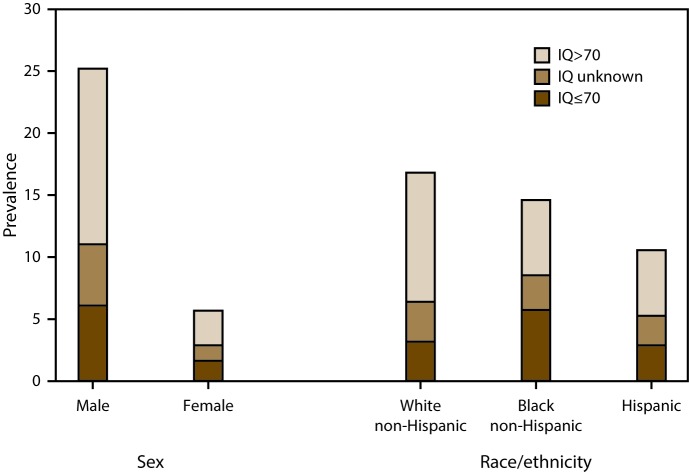
- Prevalence was 23.4 per 1,000 among boys and 5.2 per 1,000 among girls (male-to-female PR: 4.5; 95% CI: 4.2–4.8). By race/ethnicity, prevalence was 15.3 per 1,000 for non-Hispanic white children, 13.1 for non-Hispanic black children, 11.4 for Asian/Pacific Islander children, and 10.2 for Hispanic children.
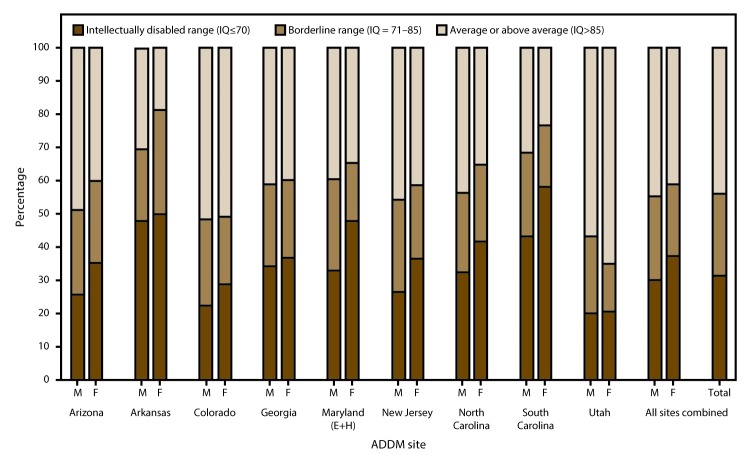
- Among children identified with ASD, 82% had a previous ASD diagnosis or educational classification; the median age at earliest known comprehensive evaluation was 40 months, and 43% had an earliest known comprehensive evaluation by age 36 months. Among 3,353 children with intellectual ability data, 31.4% were in the intellectual disability range (IQ ≤70), 24.6% borderline (IQ 71–85), and 44.1% average or above average (IQ >85).
- In eight sites with comparable surveillance areas in 2010 and 2012, combined ASD prevalence was 15.1 and 15.2 per 1,000, respectively (p>0.05), but Wisconsin increased by 17%, New Jersey by 11%, and Missouri decreased by 18%.
Methods
- Active, multisite, records-based surveillance in 11 ADDM Network sites among children born in 2004 and aged 8 years in 2012. Surveillance used two phases: screening/abstraction of education and health records, then clinician review of composite records against a DSM-IV-TR-based ASD surveillance case definition.
- Data sources included education records and/or health care records; six sites reviewed education records in all or most of the surveillance area, Maryland and Colorado reviewed education records in part of the area, and Arkansas, Missouri, and Wisconsin reviewed health records only. Denominators came from NCHS bridged-race population estimates; analyses used Poisson-based confidence intervals, Pearson chi-square tests, prevalence ratios, and median tests.
- Quality assurance included 10% random record checks and clinician interrater reliability monitoring; final agreement for ASD case status was 90.4% (κ = 0.8). A missing-records evaluation estimated that prevalence might have increased by 0.1% to 3.3% if missing records had been available, but reported estimates were not adjusted for this.
Limitations
- Stated: findings were limited to information available in source records; intellectual ability data were incomplete and may not be generalizable; varying source record types and lack of education records at some sites may have underestimated prevalence; private-school and home-school records generally were unavailable; surveillance areas were not selected to be representative of U.S. children aged 8 years.
- Stated: county-level population counts by sex and race/ethnicity were unavailable by single year of age in nondecennial years, so NCHS estimates were used and may have error; age-at-first-evaluation analyses were restricted to children linked to in-state birth certificates, which may not fully eliminate bias from moves; race/ethnicity categories were broad, and Hispanic household language could not be distinguished.
- Evident from the text: no clinical examinations were performed by ADDM staff, case status relied on record review rather than direct assessment, and the reported prevalence estimates do not reflect the missing-records adjustment.
Model-written summary. Check it against the paper before relying on it.
Integrity signals
Registry
Cites
Statistics
Figures
Verification
Claims the paper makes
0 Valid · 0 Not valid · 12 Not checked · 130 Own results and interpretations
A result the paper reports from its own data — it cites no other source for it, so there is none to check. The quote shows it is in the paper.
In the paper
“with access to both education and health care sources had higher estimated ASD prevalence compared with the five areas (Arkansas, Colorado, Maryland [health records only reviewed], Missouri, and Wisconsin) with limited or no access to education records (17.1 and 10.4 per 1,000 children aged 8 years, respectively; PR: 1.6; 95% CI: 1.5–1.7; p<0.001) (Figure 1).”
§ Prevalence and Characteristics of Autism Spectrum Disorder Among Children Aged 8 Years — Autism and Developmental Disabilities Monitoring Network, 11 Sites, United States, 2012 > Results > Overall ASD Prevalence Estimates
plainstates an association- Asserted: passes — The authors put it forward as true.
- Checkable: passes — It can be checked against evidence.
- Load-bearing: passes — The paper’s conclusions depend on it.
- Based: passes — The paper gives a reason why it holds.
A result the paper reports from its own data — it cites no other source for it, so there is none to check. The quote shows it is in the paper.
In the paper
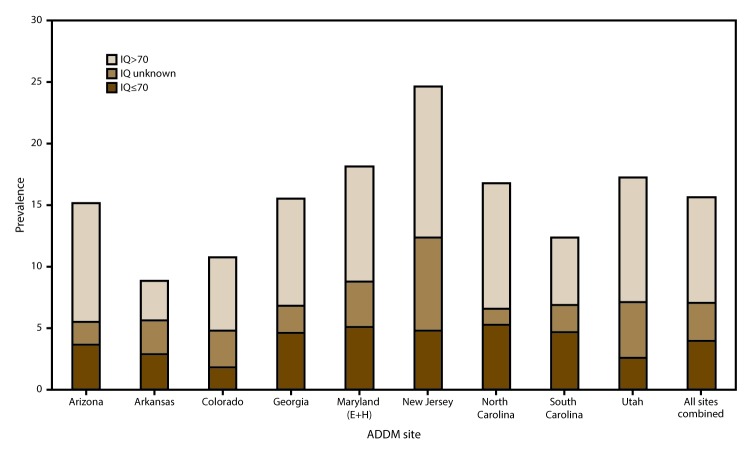
“The estimated prevalence of ASD without intellectual disability was 8.6 per 1,000”
- Also stated in: § Discussion · hedged
“The estimated prevalence of ASD without intellectual disability was 8.6 per 1,000 overall”
§ Prevalence and Characteristics of Autism Spectrum Disorder Among Children Aged 8 Years — Autism and Developmental Disabilities Monitoring Network, 11 Sites, United States, 2012 > Results > Intellectual Ability
hedgedn = 3,353- Asserted: passes — The authors put it forward as true.
- Checkable: passes — It can be checked against evidence.
- Load-bearing: unclear — It is unclear whether the paper’s conclusions depend on it.
- Based: passes — The paper gives a reason why it holds.
- Also stated in: § Discussion · hedged
A result the paper reports from its own data — it cites no other source for it, so there is none to check. The quote shows it is in the paper.
In the paper
“the percentage was significantly higher for non-Hispanic black children (91%) and for Hispanic children (90%) compared with non-Hispanic white children (86%; p<0.05).”
§ Prevalence and Characteristics of Autism Spectrum Disorder Among Children Aged 8 Years — Autism and Developmental Disabilities Monitoring Network, 11 Sites, United States, 2012 > Results > Early Developmental Concerns and Earliest Comprehensive Evaluation
plainstates an association- Asserted: passes — The authors put it forward as true.
- Checkable: passes — It can be checked against evidence.
- Load-bearing: unclear — It is unclear whether the paper’s conclusions depend on it.
- Based: passes — The paper gives a reason why it holds.
A result the paper reports from its own data — it cites no other source for it, so there is none to check. The quote shows it is in the paper.
In the paper
“43% of children had received an earliest known comprehensive evaluation by age 36 months.”
§ Prevalence and Characteristics of Autism Spectrum Disorder Among Children Aged 8 Years — Autism and Developmental Disabilities Monitoring Network, 11 Sites, United States, 2012 > Abstract > Results
plain- Asserted: passes — The authors put it forward as true.
- Checkable: passes — It can be checked against evidence.
- Load-bearing: unclear — It is unclear whether the paper’s conclusions depend on it.
- Based: passes — The paper gives a reason why it holds.
A result the paper reports from its own data — it cites no other source for it, so there is none to check. The quote shows it is in the paper.
In the paper
“A lower percentage of Hispanic children (78%) had a previous ASD diagnosis or classification compared with non-Hispanic white children (82%) and with non-Hispanic black children (84%).”
§ Prevalence and Characteristics of Autism Spectrum Disorder Among Children Aged 8 Years — Autism and Developmental Disabilities Monitoring Network, 11 Sites, United States, 2012 > Abstract > Results
plainstates an association- Asserted: passes — The authors put it forward as true.
- Checkable: passes — It can be checked against evidence.
- Load-bearing: unclear — It is unclear whether the paper’s conclusions depend on it.
- Based: passes — The paper gives a reason why it holds.
104 more claims
Create a free account to see all 142 claims and to verify the 21 references still open.
- It may state two separate claims as one. 22
- Probably not a substantial claim. 16
Self-check
Percentages, sums and reported differences re-computed from the paper’s own numbers.
Each contradiction between two passages listed here was confirmed by an independent check.
Rated minor: it would not touch a result — a value no result rests on, a p-value that stays on the same side of the significance level, or a conflict that is clerical, resolved elsewhere in the paper, or outside its own findings.
In the paper
§ Prevalence and Characteristics of Autism Spectrum Disorder Among Children Aged 8 Years — Autism and Developmental Disabilities Monitoring Network, 11 Sites, United States, 2012 > Results > Intellectual Ability
“range: 68% [Arkansas] to 92% [in North Carolina]”
§ Prevalence and Characteristics of Autism Spectrum Disorder Among Children Aged 8 Years — Autism and Developmental Disabilities Monitoring Network, 11 Sites, United States, 2012 > Results > Intellectual Ability
“*Includes sites having information on intellectual ability available for ≥70% of children who met the ASD case definition (N = 3,353, excluding unknown IQ).”
Rated minor: it would not touch a result — a value no result rests on, a p-value that stays on the same side of the significance level, or a conflict that is clerical, resolved elsewhere in the paper, or outside its own findings.
In the paper
“A total of 48,304 records for 38,038 children aged 8 years were reviewed from education and health care sources. Among these, the source records of 9,629 (19%) children met the criteria for abstraction”
§ Prevalence and Characteristics of Autism Spectrum Disorder Among Children Aged 8 Years — Autism and Developmental Disabilities Monitoring Network, 11 Sites, United States, 2012 > Results > Record Review
Reported 19 · recomputed 25.31416
Citations
Cites
Diagnostic and Statistical Manual of Mental Disorders
American Psychiatric Association (2013) · doi:10.1176/appi.books.9780890425596 · Cited by 116,369
Baio, J., Wiggins, L., Christensen, D. L., Maenner, M. J., Daniels, J., Warren, Z., Kurzius-Spencer, M., Zahorodny, W., Robinson, C., Rosenberg, et al. (2018) · MMWR. Surveillance Summaries · doi:10.15585/mmwr.ss6706a1 · Cited by 6,078
Self-citationDawson, G., Rogers, S., Munson, J., Smith, M., Winter, J., Greenson, J., Donaldson, A., & Varley, J. (2010) · Pediatrics · doi:10.1542/peds.2009-0958 · Cited by 2,835
Identification and Evaluation of Children With Autism Spectrum Disorders
Johnson, C. P., Myers, S. M., & and the Council on Children With Disabilities (2007) · Pediatrics · doi:10.1542/peds.2007-2361 · Cited by 2,011
Trends in the prevalence of developmental disabilities in US children, 1997-2008
Boyle, C. A., Boulet, S., Schieve, L. A., Cohen, R. A., Blumberg, S. J., Yeargin-Allsopp, M., Visser, S., & Kogan, M. D. (2011) · Pediatrics · doi:10.1542/peds.2010-2989 · Cited by 1,732
Self-citationPrevalence of Autism in a US Metropolitan Area
Yeargin-Allsopp, M., Rice, C., Karapurkar, T., Doernberg, N., Boyle, C., & Murphy, C. (2003) · JAMA · doi:10.1001/jama.289.1.49 · Cited by 1,248
Self-citationPrevalence of Parent-Reported Diagnosis of Autism Spectrum Disorder Among Children in the US, 2007
Kogan, M. D., Blumberg, S. J., Schieve, L. A., Boyle, C. A., Perrin, J. M., Ghandour, R. M., Singh, G. K., Strickland, B. B., Trevathan, E., & van Dyck, P. C. (2009) · Pediatrics · doi:10.1542/peds.2009-1522 · Cited by 892
Cited by
Items 101–200 of 583
Kayarian, F. B., Jannati, A., Rotenberg, A., & Santarnecchi, E. (2020) · Autism Research · doi:10.1002/aur.2312 · Cited by 40
“The report urged research initiatives to respond to this growing health issue and described the need in particular to address the biological substrates leading to ASD’s core symptoms [Christensen et al., 2018].”
InfluentialAithal, S., Moula, Z., Karkou, V., Karaminis, T. N., Powell, J., & Makris, S. (2021) · Frontiers in Psychology · doi:10.3389/fpsyg.2021.719673 · Cited by 52
de Mattos, B. D. S., Soares, M. S. P., Spohr, L., Pedra, N. S., Teixeira, F. C., de Souza, A. Á., Stefanello, F. M., Baldissarelli, J., Gamaro, G. D., & Spanevello, R. M. (2020) · International Journal of Developmental Neuroscience · doi:10.1002/jdn.10025 · Cited by 40
When the mask comes off: Mothers’ experiences of parenting a daughter with autism spectrum condition
Anderson, J., Marley, C., Gillespie‐Smith, K., Carter, L., & Macmahon, K. (2020) · Autism · doi:10.1177/1362361320913668 · Cited by 48
“Email: james.anderson7@nhs.net occur along a continuum from mild to severe and be accompanied by intellectual disability or superior intelligence (Christensen et al., 2018).”
Ismail, N. A. S., Ramli, N. S., Hamzaid, N. H., & Hassan, N. I. (2020) · Nutrients · doi:10.3390/nu12092530 · Cited by 57
Shi, Z., Groechel, T. R., Jain, S., Chima, K., Rudovic, O. O., & Matarić, M. J. (2022) · ACM Transactions on Human-Robot Interaction · doi:10.1145/3526111 · Cited by 51
Iles, A. N. (2021) · Primary Care Clinics in Office Practice · doi:10.1016/j.pop.2021.04.003 · Cited by 46
Ochoa‐Lubinoff, C., Makol, B. A., & Dillon, E. F. (2023) · Neurologic Clinics · doi:10.1016/j.ncl.2022.10.006 · Cited by 75
A comparison of machine learning algorithms for the surveillance of autism spectrum disorder
Lee, S., Maenner, M. J., & Heilig, C. M. (2019) · PLoS ONE · doi:10.1371/journal.pone.0222907 · Cited by 40
Dai, Y. G., Thomas, R. P., Brennan, L., Helt, M. S., Barton, M. L., Dumont-Mathieu, T. M., & FEIN, D. A. (2021) · Journal of Autism and Developmental Disorders · doi:10.1007/s10803-020-04863-z · Cited by 42
The Link Between Autism and Sex-Related Neuroanatomy, and Associated Cognition and Gene Expression
Floris, D. L., Peng, H., Warrier, V., Lombardo, M. V., Pretzsch, C. M., Moreau, C. A., Tsompanidis, A., Gong, W., Mennes, M., Llera, A., et al. (2022) · American Journal of Psychiatry · doi:10.1176/appi.ajp.20220194 · Cited by 38
Li, C., Belter, M., Liu, J., & Lukosch, H. K. (2023) · Electronics · doi:10.3390/electronics12112497 · Cited by 49
Carta, A., Fucà, E., Guerrera, S., Napoli, E., Valeri, G., & Vicari, S. (2020) · Frontiers in Psychology · doi:10.3389/fpsyg.2020.00861 · Cited by 40
Social Cognition in Autism and Schizophrenia Spectrum Disorders: The Same but Different?
Boada, L., Lahera, G., Pina‐Camacho, L., Merchán‐Naranjo, J., Díaz‐Caneja, C. M., Bellón, J. M., Ruiz-Vargas, J. M., & Parellada, M. (2020) · Journal of Autism and Developmental Disorders · doi:10.1007/s10803-020-04408-4 · Cited by 41
Early trajectories of motor skills in infant siblings of children with autism spectrum disorder
Patterson, J. W., Armstrong, V. L., Duku, E., Richard, A., Franchini, M., Brian, J. A., Zwaigenbaum, L., Bryson, S. E., Sacrey, L.-A. R., Roncadin, C., et al. (2021) · Autism Research · doi:10.1002/aur.2641 · Cited by 40
Diagnostisering av autismespekterforstyrrelser hos barn i Norge
Surén, P., Havdahl, A., Øyen, A., Schjølberg, S., Reichborn‐Kjennerud, T., Magnus, P. M., Bakken, I. J., & Stoltenberg, C. (2019) · Tidsskrift for Den norske legeforening · doi:10.4045/tidsskr.18.0960 · Cited by 46
Delineating the autistic phenotype in children with neurofibromatosis type 1
Chisholm, A. K., Haebich, K. M., Pride, N. A., Walsh, K. S., Lami, F., Ure, A., Maloof, T., Brignell, A., Rouel, M., Granader, Y., et al. (2022) · Molecular Autism · doi:10.1186/s13229-021-00481-3 · Cited by 40
Rigobello, C., Klein, R. M., Debiasi, J. D., Ursini, L. G., Michelin, A. P., Matsumoto, A. K., Barbosa, D. S., & Moreira, E. G. (2021) · Behavioural Brain Research · doi:10.1016/j.bbr.2021.113294 · Cited by 37
Fuzzy Data Mining for Autism Classification of Children
Al‐diabat, M. (2018) · International Journal of Advanced Computer Science and Applications · doi:10.14569/ijacsa.2018.090702 · Cited by 35
Lamsal, R., & Ungar, W. J. (2019) · Disability and Rehabilitation · doi:10.1080/09638288.2019.1615563 · Cited by 48
Caniato, M., Zaniboni, L., Marzi, A., & Gasparella, A. (2022) · Energy Reports · doi:10.1016/j.egyr.2022.01.011 · Cited by 37
Hu, W., Jiang, G., Han, J., Li, X., & Xie, P. (2023) · IEEE Transactions on Neural Systems and Rehabilitation Engineering · doi:10.1109/tnsre.2023.3347134 · Cited by 38
Benedetto, L., Cucinotta, F., Maggio, R., Germanò, E., Raco, R. D., Alquino, A., Impallomeni, C., Siracusano, R., Vetri, L., Roccella, M., et al. (2021) · Brain Sciences · doi:10.3390/brainsci11010037 · Cited by 37
Graa, O., & Rekik, I. (2019) · Journal of Neuroscience Methods · doi:10.1016/j.jneumeth.2019.108344 · Cited by 30
Stem Cell-Derived Exosomes in Autism Spectrum Disorder
Alessio, N., Brigida, A. L., Peluso, G., Antonucci, N., Galderisi, U., & Siniscalco, D. (2020) · International Journal of Environmental Research and Public Health · doi:10.3390/ijerph17030944 · Cited by 33
Al-Obaidi, A., Elmezayen, A. D., & Yelekçi, K. (2020) · Journal of Biomolecular Structure and Dynamics · doi:10.1080/07391102.2020.1774417 · Cited by 32
Experimental Models to Study Autism Spectrum Disorders: hiPSCs, Rodents and Zebrafish
Pensado‐López, A., Veiga-Rúa, S., Carracedo, Á., Allegue, C., & Sanchez, L. E. (2020) · Genes · doi:10.3390/genes11111376 · Cited by 36
Fu, S.-C., Lee, C., & Wang, H. (2021) · International Journal of Environmental Research and Public Health · doi:10.3390/ijerph18020667 · Cited by 36
Biomarkers Obtained by Transcranial Magnetic Stimulation in Neurodevelopmental Disorders
Jannati, A., Ryan, M. A., Kaye, H. L., Tsuboyama, M., & Rotenberg, A. (2021) · Journal of Clinical Neurophysiology · doi:10.1097/wnp.0000000000000784 · Cited by 36
Problematic eating behaviours of autistic women—A scoping review
Schröder, S. S., Danner, U. N., Spek, A. A., & Elburg, A. A. V. (2022) · European Eating Disorders Review · doi:10.1002/erv.2932 · Cited by 33
“A suggested 1.4%–1.7% of the general population are autistic (Baron‐Cohen et al., 2009; Brugha et al., 2011; Christensen et al., 2018; Fombonne, 2010; Russell et al., 2014).”
InfluentialBridging the gap: associations between gut microbiota and psychiatric disorders
Ahmed, G. K., Ramadan, H. K., Elbeh, K., & Haridy, N. A. (2024) · Middle East Current Psychiatry · doi:10.1186/s43045-024-00395-9 · Cited by 38
“ASD is a neurodevelopmental disorder that is hazardous and is characterized by gastrointestinal symptoms [82].”
The Acquisition of Person Knowledge
Anzellotti, S., & Young, L. (2019) · Annual Review of Psychology · doi:10.1146/annurev-psych-010419-050844 · Cited by 32
Asif, M., Martiniano, H., Marques, A. R., Santos, J. X., Vilela, J. E. R., Rasga, C., Oliveira, G., Couto, F. M., & Vicente, A. M. (2020) · Translational Psychiatry · doi:10.1038/s41398-020-0721-1 · Cited by 33
Kim, J. H., Yan, Q. J., Uppal, K., Cui, X., Ling, C., Walker, D. I., Heck, J. E., Ehrenstein, O. S. V., Jones, D. P., & Ritz, B. R. (2021) · Environmental Research · doi:10.1016/j.envres.2021.110823 · Cited by 28
Autism Spectrum Disorder and Prenatal or Early Life Exposure to Pesticides: A Short Review
Miani, A., Imbriani, G., Filippis, G. D., Giorgi, D. D., Peccarisi, L., Colangelo, M., Pulimeno, M., Castellone, M. D., Nicolardi, G., Logroscino, G., et al. (2021) · International Journal of Environmental Research and Public Health · doi:10.3390/ijerph182010991 · Cited by 37
Straub, L., Huybrechts, K. F., Mogun, H., & Bateman, B. T. (2021) · JAMA Network Open · doi:10.1001/jamanetworkopen.2021.40458 · Cited by 29
From ‘Refrigerator Mothers’ to Empowered Advocates: The Evolution of the Autism Parent
Cleary, M. L., West, S., & McLean, L. (2022) · Issues in Mental Health Nursing · doi:10.1080/01612840.2022.2115594 · Cited by 39
“…study from 1966 found a prevalence of only 4.5 cases per 10,000 children (Cook & Willmerdinger, 2015), rising in 2000 with an overall prevalence per 1000 children ranging from 4.5 to 9.9 (Centers for Disease Control and Prevention, 2007) and 1 in 69 in 2012 (Christensen et al., 2018).”
InfluentialSleep problems in autism: Sex differences in the school‐age population
Estes, A. M., MUNSON, J. A., John, T. S., Finlayson, R., Pandey, J., Gottlieb, B., Herrington, J. D., & Schultz, R. T. (2022) · Autism Research · doi:10.1002/aur.2848 · Cited by 35
Cage, E., Botha, M., McDevitt, L., King, K. N., Biscoe, L., Tucker, K., & Pearson, A. (2024) · Autism · doi:10.1177/13623613231220418 · Cited by 36
“…inequalities often mean girls and women fail to be recognised as early as white cisgender males, confounding the oft-cited figure of a 4:1 male ratio (Christensen et al., 2018; Van Wijngaarden-Cremers et al., 2014), which can be further compounded by racial inequality (Jarquin et al., 2011).”
Kozlowski, K. F., Lopata, C. J., Donnelly, J. P., Thomeer, M. L., Rodgers, J. D., & Seymour, C. M. (2020) · Research Quarterly for Exercise and Sport · doi:10.1080/02701367.2020.1726272 · Cited by 33
“ARTICLE HISTORY Received 19 June 2019 Accepted 31 January 2020 KEYWORDS ASD; pediatric; fitness; physical activity The prevalence of autism spectrum disorder (ASD) has increased dramatically and is currently estimated at 1 in 68 children (Christensen et al., 2018).”
Hidden curriculum in a special education context: the case of individuals with autism
Sulaimani, M. F., & Gut, D. M. (2019) · Journal of Educational Research and Practice · doi:10.5590/jerap.2019.09.1.03 · Cited by 26
“According to the Centers for Disease Control and Prevention (2016; see also Christensen et al., 2016), one in 68 or 1.47% of children is diagnosed with ASD in the United States, with one in 42 boys and one in 189 girls being diagnosed.”
InfluentialPrevalence of Autism/ASD Among Preschool and School-age Children in Norway
Özerk, K. Z., & Cardinal, D. N. (2020) · Contemporary School Psychology · doi:10.1007/s40688-020-00302-z · Cited by 34
Changes in the development of subcortical structures in autism spectrum disorder
Zuo, C., Wang, D., Tao, F., & Wang, Y. (2019) · Neuroreport · doi:10.1097/wnr.0000000000001300 · Cited by 29
Culturally Sensitive Behavior Intervention Materials: a Tutorial for Practicing Behavior Analysts
Martinez, S., & Mahoney, A. (2022) · Behavior Analysis in Practice · doi:10.1007/s40617-022-00703-x · Cited by 32
Alban, A. Q., Alhaddad, A. Y., Al-Ali, A. K., So, W., Connor, O., Ayesh, M., Qidwai, U. A., & Cabibihan, J. (2023) · Robotics · doi:10.3390/robotics12020055 · Cited by 32
Neonatal jaundice in association with autism spectrum disorder and developmental disorder
Cordero, C., Schieve, L. A., Croen, L., Engel, S. M., Siega‐Riz, A. M., Herring, A. H., Vladutiu, C. J., Seashore, C. J., & Daniels, J. L. (2019) · Journal of Perinatology · doi:10.1038/s41372-019-0452-4 · Cited by 27
Self-citationYong, Z., Dou, Y., Gao, Y., Xu, X., Xiao, Y., Zhu, H., Li, S., & Yuan, B. (2021) · Translational Pediatrics · doi:10.21037/tp-21-54 · Cited by 33
“Other while, boys are at a higher risk of autism according to CDC, reporting that ASD is about 4.5 times more common among boys, which is considered to be due to a gene abnormality in the sex chromosome (7).”
InfluentialYoo, S. M., Kim, K., Kang, S., Kim, H. J., Yun, J., & Lee, J. Y. (2022) · Journal of Korean Medical Science · doi:10.3346/jkms.2022.37.e1 · Cited by 34
Functional Brain Networks in Preschool Children With Autism Spectrum Disorders
Qin, B., Wang, L., Cai, J., Li, T., & Zhang, Y. (2022) · Frontiers in Psychiatry · doi:10.3389/fpsyt.2022.896388 · Cited by 26
Autism spectrum disorder research: knowledge mapping of progress and focus between 2011 and 2022
Jiang, M., Lu, T., Yang, K., Li, X., Zhao, L., Zhang, D., Li, J., & Wang, L. (2023) · Frontiers in Psychiatry · doi:10.3389/fpsyt.2023.1096769 · Cited by 33
Oya, M., Matsuoka, K., Kubota, M., Fujino, J., Tei, S., Takahata, K., Tagai, K., Yamamoto, Y., Shimada, H., Seki, C., et al. (2023) · Scientific Reports · doi:10.1038/s41598-023-38306-3 · Cited by 33
Social deficits following embryonic ethanol exposure arise in post‐larval zebrafish
Fernandes, Y., Rampersad, M., Jones, E. M., & Eberhart, J. K. (2018) · Addiction Biology · doi:10.1111/adb.12649 · Cited by 24
Endocrine insights into the pathophysiology of autism spectrum disorder
Wilson, H. A., Creighton, C., Scharfman, H., Choleris, E., & MacLusky, N. J. (2021) · The Neuroscientist · doi:10.1177/1073858420952046 · Cited by 23
Diagnosis of Autism Spectrum Disorder Through Eye Movement Tracking Using Deep Learning
Mumenin, N., Islam, M. F., Chowdhury, M. R. Z., & Yousuf, M. A. (2023) · Studies in autonomic, data-driven and industrial computing · doi:10.1007/978-981-19-7528-8_20 · Cited by 23
Enhancing early autism prediction based on electronic records using clinical narratives
Chen, J., Engelhard, M., Henao, R., Berchuck, S. I., Eichner, B., Perrin, E. M., Sapiro, G., & Dawson, G. (2023) · Journal of Biomedical Informatics · doi:10.1016/j.jbi.2023.104390 · Cited by 28
Language-assisted deep learning for autistic behaviors recognition
Deng, A., Yang, T., Chen, C., Chen, Q., Neely, L. C., & Oyama, S. (2023) · Smart Health · doi:10.1016/j.smhl.2023.100444 · Cited by 34
An Exploratory Study of a Dimensional Assessment of the Diagnostic Criteria for Autism
Brosnan, M. (2020) · Journal of Autism and Developmental Disorders · doi:10.1007/s10803-020-04474-8 · Cited by 29
Age‐related parietal GABA alterations in children with autism spectrum disorder
DeMayo, M. M., Harris, A. D., Song, Y. J. C., Pokorski, I., Thapa, R., Patel, S., Ambarchi, Z., Thomas, E. E., Hickie, I. B., & Guastella, A. J. (2021) · Autism Research · doi:10.1002/aur.2487 · Cited by 28
“Sex distribution differences within this population are to be expected, given that ASD is diagnosed in males more than females at about a 4.5 to 1 ratio (Christensen et al., 2018), and females are often diagnosed later than their male counterparts (Russell et al., 2011).”
InfluentialJannati, A., Ryan, M. A., Block, G., Kayarian, F. B., Oberman, L. M., Rotenberg, A., & Pascual‐Leone, Á. (2021) · Clinical Neurophysiology · doi:10.1016/j.clinph.2021.03.021 · Cited by 24
James, D. M., Davidson, E. A., Yanes, J. A., Moshiree, B., & Dallman, J. E. (2021) · Frontiers in Cell and Developmental Biology · doi:10.3389/fcell.2021.662916 · Cited by 26
Hickey, E. J., Stransky, M., Kuhn, J., Rosenberg, J. E., Cabral, H. J., Weitzman, C., Broder-Fingert, S., & Feinberg, E. (2021) · Autism · doi:10.1177/13623613211001611 · Cited by 22
Autistic Adult Health and Professional Perceptions of It: Evidence From the ASDEU Project
Micai, M., Ciaramella, A., Salvitti, T., Fulceri, F., Fatta, L. M., Poustka, L., Diehm, R., Iskrov, G. G., Stefanov, R. S., Guillon, Q., et al. (2021) · Frontiers in Psychiatry · doi:10.3389/fpsyt.2021.614102 · Cited by 29
Assessing and Promoting Independence in Young Adults with Autism Spectrum Disorder
Cheak‐Zamora, N., Tait, A., & Coleman, A. (2021) · Journal of Developmental & Behavioral Pediatrics · doi:10.1097/dbp.0000000000001021 · Cited by 24
Duarte-Silva, E. P., Oriá, A. C., Mendonça, I. P., de Melo, M. G., de Paiva, I. H. R., Maes, M. H. J., Joca, S. R. L., & Peixoto, C. A. (2022) · Neuroscience & Biobehavioral Reviews · doi:10.1016/j.neubiorev.2022.104582 · Cited by 22
Nishimura, T., Takei, N., & Tsuchiya, K. J. (2019) · Epidemiology · doi:10.1097/ede.0000000000000996 · Cited by 26
on behalf of the ISACA guideline working group, D’Alò, G. L., Crescenzo, F. D., Amato, L., Cruciani, F., Davoli, M., Fulceri, F., Minozzi, S., Mitrova, Z., Morgano, G. P., et al. (2020) · BMC Psychiatry · doi:10.1186/s12888-020-02956-8 · Cited by 22
Cai, S., Wang, X., Yang, F., Chen, D., & Huang, L. (2021) · Autism Research · doi:10.1002/aur.2464 · Cited by 21
“…development is an essential task, especially in autism spectrum disorder (ASD), which represents a powerful challenge for psychiatry and neuroscience researchers due to its substantial heterogeneity, complexity, lifelong nature, and high prevalence [Baxter et al., 2015; Christensen et al., 2018].”
Brown, M. J., Marsh, L., & McCann, E. (2021) · Journal of Clinical Nursing · doi:10.1111/jocn.15781 · Cited by 33
GÖLBAŞI, H., Demirel, Y., Karaca, S. N., Çiçek, A. U., & Sarı, S. A. (2021) · Çukurova medical journal (Online)/Çukurova medical journal · doi:10.17826/cumj.904937 · Cited by 27
Association of GABRG3, GABRB3, HTR2A gene variants with autism spectrum disorder
Coskunpinar, E. M., Tur, S., Cevher Binici, N., & Yazan Songür, C. (2023) · Gene · doi:10.1016/j.gene.2023.147399 · Cited by 21
Quality of Life among Compound Caregivers and Noncompound Caregivers of Adults with Autism
Marsack‐Topolewski, C. N. (2020) · Journal of Gerontological Social Work · doi:10.1080/01634372.2020.1765063 · Cited by 26
Nowell, K. P., Christopher, K., & Sohl, K. (2020) · Children s Health Care · doi:10.1080/02739615.2020.1771564 · Cited by 24
Joyce, E. E., Chavarro, J. E., Rando, J., Song, A., Croen, L., Fallin, M. D., Hertz‐Picciotto, I., Schmidt, R. J., Volk, H. E., Newschaffer, C. J., et al. (2022) · Autism Research · doi:10.1002/aur.2698 · Cited by 23
Wang, W., & Fu, P. (2023) · Microorganisms · doi:10.3390/microorganisms11020291 · Cited by 24
Inheritance of HLA-Cw7 Associated With Autism Spectrum Disorder (ASD)
Harville, T., Rhodes-Clark, B. S., Bennuri, S. C., Delhey, L. M., Slattery, J. M., Tippett, M., Wynne, R. A., Rose, S., Kahler, S. G., & Frye, R. E. (2019) · Frontiers in Psychiatry · doi:10.3389/fpsyt.2019.00612 · Cited by 21
Burrows, E. L., Koyama, L., May, C., Hill‐Yardin, E. L., & Hannan, A. J. (2020) · Pharmacology Biochemistry and Behavior · doi:10.1016/j.pbb.2020.172955 · Cited by 22
Ahmed, M., Hussain, S., Pirzado, F. A., Gárate-Escamilla, A. K., Amaya, I., Ochoa‐Ruiz, G., & Ortíz-Bayliss, J. C. (2025) · Applied Sciences · doi:10.3390/app15148056 · Cited by 35
Anthony, N., & Campbell, E. (2020) · Advances in Neurodevelopmental Disorders · doi:10.1007/s41252-020-00171-w · Cited by 26
Lee, L., & Liu, Y.-S. (2021) · International Journal of Environmental Research and Public Health · doi:10.3390/ijerph181910064 · Cited by 19
Self-citationEmergency Visits for Autistic Children and Children With ADHD
Schott, W., Tao, S., & Shea, L. (2022) · PEDIATRICS · doi:10.1542/peds.2020-049437v · Cited by 24
Haebich, K. M., Pride, N. A., Walsh, K. S., Chisholm, A. K., Rouel, M., Maier, A., Anderson, V. A., Barton, B., Silk, T. J., Korgaonkar, M. S., et al. (2019) · BMJ Open · doi:10.1136/bmjopen-2019-030601 · Cited by 24
Maenner, M. J., Graves, S. J., Peacock, G., Honein, M. A., Boyle, C. A., & Dietz, P. M. (2021) · American Journal of Epidemiology · doi:10.1093/aje/kwab106 · Cited by 18
Xie, X., Lei, X., Xiao, C.-Y., Li, Y., & Lei, X. (2022) · Frontiers in Psychiatry · doi:10.3389/fpsyt.2022.982696 · Cited by 24
Hanif, M. K., Ashraf, N., Sarwar, M. U., Adinew, D. M., & Yaqoob, R. (2022) · Complexity · doi:10.1155/2022/8134018 · Cited by 19
“In the United States, most children are not diagnosed with ASD until they reach four years [8].”
Targeting Shank3 deficiency and paresthesia in autism spectrum disorder: A brief review
Huang, M., Qi, Q., & Xu, T. (2023) · Frontiers in Molecular Neuroscience · doi:10.3389/fnmol.2023.1128974 · Cited by 24
Garcia, J. M., Leahy, N. A., Rivera, P. M., Brazendale, K., & Rice, D. J. (2019) · Disability and health journal · doi:10.1016/j.dhjo.2019.100885 · Cited by 21
Bene, K., & Lapina, A. (2020) · Review Journal of Autism and Developmental Disorders · doi:10.1007/s40489-020-00212-z · Cited by 26
Grimm, R. P., Solari, E. J., McIntyre, N. S., Zajic, M. C., & Mundy, P. C. (2017) · Autism Research · doi:10.1002/aur.1914 · Cited by 22
An intelligent multimodal framework for identifying children with autism spectrum disorder
Chen, J., Liao, M., Wang, G., & Chen, C. (2020) · International Journal of Applied Mathematics and Computer Science · doi:10.34768/amcs-2020-0032 · Cited by 22
“In America, 1 in 59 children is diagnosed with ASD according to the Autism and Developmental Disabilities Monitoring (ADDM) Network (Christensen et al ., 2016).”
Wieckowski, A. T., de Marchena, A. B., Algur, Y., Williams, L. N., Fernandes, S. J., Thomas, R. P., McClure, L. A., Dufek, S., FEIN, D. A., Adamson, L. B., et al. (2021) · Autism Research · doi:10.1002/aur.2536 · Cited by 22
“However, the average age of ASD diagnoses in the United States is above 4 years (Christensen et al., 2018), and data indicate a significant lag between initial parent concerns and an eventual ASD diagnosis (Crane et al., 2016).”
Beck, K. B., Northrup, J. B., Breitenfeldt, K. E., Porton, S., Day, T. N., MacKenzie, K. T., Conner, C. M., & Mazefsky, C. A. (2021) · Autism · doi:10.1177/13623613211061936 · Cited by 21
“…that between 30% and 40% of autistic individuals have co-occurring intellectual disability (ASD-ID), with great variability in verbal capacity (Christensen et al., 2018; Van Naarden Braun et al., 2015), yet there are virtually no psychosocial treatment options available for this population.”
Cheong, P., Tsai, J.-M., Wu, Y., Lu, L., Chiu, Y.-L., Shen, Y., Li, Y., Tsao, C.-H., Wang, Y., Chang, F.-M., et al. (2022) · Research in Developmental Disabilities · doi:10.1016/j.ridd.2021.104158 · Cited by 18
Endophenotype trait domains for advancing gene discovery in autism spectrum disorder
Mosconi, M. W., Stevens, C. J., Unruh, K. E., Shafer, R. L., & Elison, J. T. (2023) · Journal of Neurodevelopmental Disorders · doi:10.1186/s11689-023-09511-y · Cited by 16
“…of ASD and findings that ASD recurrence among siblings (13–20% [70, 71]) is considerably higher than base rates in the general population (1–2% [72]), analysis of infant siblings of previously diagnosed children provides important power for identifying both diagnostic predictors and traits…”
How 25(OH)D Levels during Pregnancy Affect Prevalence of Autism in Children: Systematic Review
Uçar, N., Grant, W. B., Peraita‐Costa, I., & Morales‐Suárez‐Varela, M. (2020) · Nutrients · doi:10.3390/nu12082311 · Cited by 19
CE: Autism Spectrum Disorder: The Nurse's Role
Dunlap, J. J., & Filipek, P. A. (2020) · AJN American Journal of Nursing · doi:10.1097/01.naj.0000721236.69639.e3 · Cited by 29
Etyemez, S., Esler, A., Kini, A., Tsai, P., DiRienzo, M., Maenner, M. J., & Lee, L. (2022) · Autism Research · doi:10.1002/aur.2831 · Cited by 25
“Furthermore, the presence of ID with neurobehavioral conditions in ASD complicates the diagnosis as well as the treatment time and course (Close et al., 2012; Rieske et al., 2015; Wu et al., 2016).”
Self-citationChen, M., Huang, C.-F., Lin, Y.-S., Chiu, Y., Gau, S. S., & Wu, Y.-Y. (2023) · Research in Autism · doi:10.1016/j.rasd.2023.102184 · Cited by 18
Liu, N., Liu, H.-Q., Zheng, J., Zhu, M., Wu, L., Pan, H., & He, X. (2023) · The Journal of Microbiology · doi:10.1007/s12275-023-00069-x · Cited by 16
“RDP Classifier was used to classify after OTU sequences were aligned on the silva_132_97_16S. fna database (Cole et al., 2014).”
Itahashi, T., Yamashita, A., Takahara, Y., Yahata, N., Aoki, Y. Y., Fujino, J., Yoshihara, Y., Nakamura, M., Aoki, R., Okimura, T., et al. (2024) · Molecular Psychiatry · doi:10.1038/s41380-024-02759-3 · Cited by 23
“According to the Centers for Disease Control and Prevention, 31% of individuals with ASD have intellectual disability, whereas 23% of those with ASD fall within the borderline range (i.e., 70 full-scale IQ ≤ 85) [86].”
Alampi, J. D., Lanphear, B. P., MacFarlane, A. J., Oulhote, Y., Braun, J. M., Muckle, G., Arbuckle, T. E., Ashley‐Martin, J., Hu, J. M. Y., Chen, A., et al. (2024) · Environmental Health Perspectives · doi:10.1289/ehp14479 · Cited by 19
Metadata
- Authors
- Christensen, D. L., Braun, K. V. N., Baio, J., Bilder, D., Charles, J., Constantino, J. N., Daniels, J., Durkin, M. S., Fitzgerald, R. T., Kurzius-Spencer, M., Lee, L.-C., Pettygrove, S., Robinson, C., Schulz, E., Wells, C., Wingate, M. S., Zahorodny, W., & Yeargin-Allsopp, M.
- Affiliations
- National Center on Birth Defects and Developmental Disabilities (US)
- University of Utah (US)
- Medical University of South Carolina (US)
- Washington University in St. Louis (US)
- University of North Carolina at Chapel Hill (US)
- University of Wisconsin–Madison (US)
- University of Arizona, Tucson
- Johns Hopkins University (US)
- University of Arizona (US)
- University of Colorado Denver (US)
- University of Arkansas for Medical Sciences (US)
- Colorado Department of Public Health and Environment (US)
- University of Alabama at Birmingham (US)
- Rutgers, The State University of New Jersey (US)
- Division of Congenital and Developmental Disorders, National Center on Birth Defects and Developmental Disabilities, CDC
- Corresponding author
- Christensen, Deborah L.
- ORCID
- Venue
- MMWR. Surveillance Summaries
- Published
- 2018-11-16
- Volume
- 65
- Issue
- 13
- Pages
- 1-23
- ISSN
- 1545-8636 (ISSN-L)
- 1546-0738
- PMC
- PMC6237390
- OpenAlex
- W4244767238
- Semantic Scholar
- 19b75e3fb7706a6a87e1b30bb1ff85b46adbfb58
- Cited by
- 587
- References
- 41
- Citations by year
- 2026: 11 · 2025: 28 · 2024: 61 · 2023: 68 · 2022: 90 · 2021: 116 · 2020: 107 · 2019: 63 · 2018: 25
- FWCI
- 45.92
- Type
- journal article
- Language
- en
- Status
- Retracted
- Update notices
- retraction (2018-11-16)
- Open access
- green
- europepmc.org
- Licence
- cc-by
- Locations
- MMWR Surveillance Summaries (publishedVersion)
- Europe PMC (PubMed Central) (publishedVersion, cc-by)
- Funders
- University of Wisconsin-Madison
- Colorado Department of Public Health and Environment
- Johns Hopkins University
- University of Arkansas for Medical Sciences
- University of South Carolina
- University of South Florida
- Centers for Disease Control and Prevention
- University of North Carolina at Chapel Hill
- National Institute of Environmental Health Sciences (P30ES010126)
- National Center on Birth Defects and Developmental Disabilities
- Eunice Kennedy Shriver National Institute of Child Health and Human Development (U54HD087011)
- Topics
- Life Sciences › Neuroscience › Cognitive Neuroscience › Autism Spectrum Disorder Research
- Health Sciences › Medicine › Psychiatry and Mental health › Child Nutrition and Feeding Issues
- Social Sciences › Psychology › Clinical Psychology › Family and Disability Support Research
- Keywords
- autism spectrum disorder, prevalence, sex differences, racial and ethnic disparities, intellectual disability, special education eligibility, pervasive developmental disorders, Asperger syndrome
About these checks
Registry, retraction, Cites and statistics results are computed, not judged, with one exception: a printed reference that no index lists is read once by a model before it counts as a citation error. Claims are extracted by a model and kept only when their quote appears verbatim in the text; each cited source is then checked, with a model’s help, for whether it says what the claim relies on. Those verdicts can be wrong — read the claim’s quote and the cited source before relying on one.
A language model drew the claims from the paper on 2026-10-07, under version 3 of the claim definition (model deepseek-v4.1-flash, prompt extract-v3).
A second model labelled each claim on 2026-10-07 (model jev-1.13-20260917, definition revision gold-guideline-v0.2).
Statistics and arithmetic are recomputed, not judged.
Confidence bands are shown only for fields calibrated on our annotated test set. None is calibrated yet, so no band is shown.
What counts as a claim ›How we measure confidence ›How we check this ›
Are you an author, or do you see a problem with this page? Request a review
Data sources
Bibliographic data: Semantic Scholar, OpenAlex, Crossref.
Contains information from the Semantic Scholar Academic Graph Datasets, made available under the ODC Attribution License (ODC-BY 1.0).
Semantic Scholar’s data is described in: Kinney, R., et al. (2023). The Semantic Scholar Open Data Platform. arXiv:2301.10140.
