

The DOI matches its Crossref record; 22 of the 22 references it cites were found in a registry or an index; 2 of the 41 sources its claims cite were checked for support.
Early Identification of Autism Spectrum Disorder Among Children Aged 4 Years — Autism and Developmental Disabilities Monitoring Network, 11 Sites, United States, 2018
Open accessAbstract
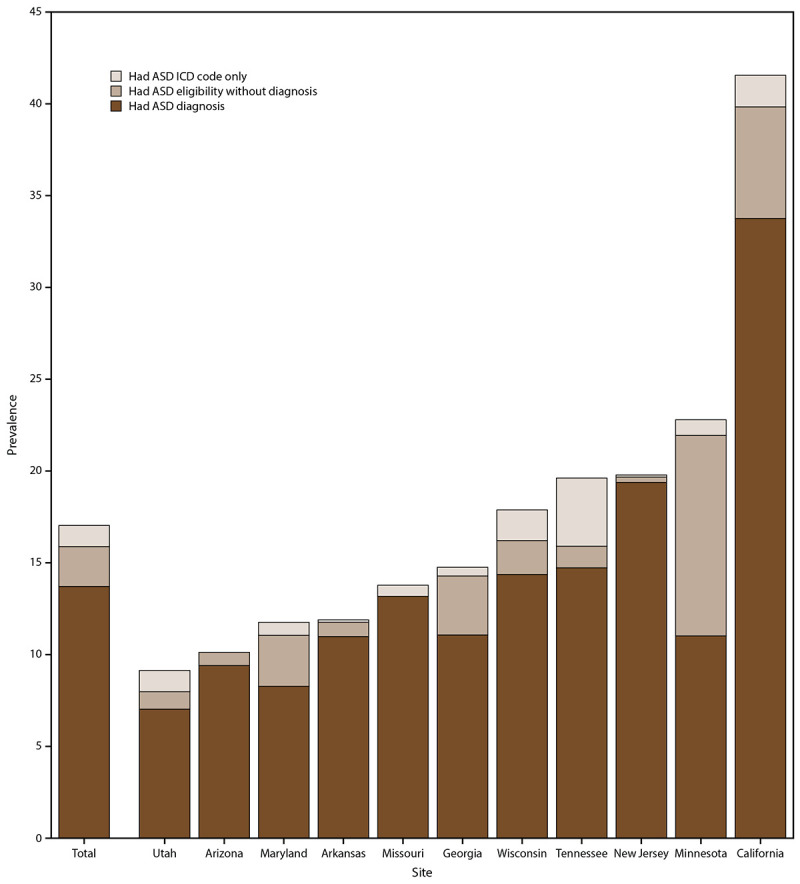
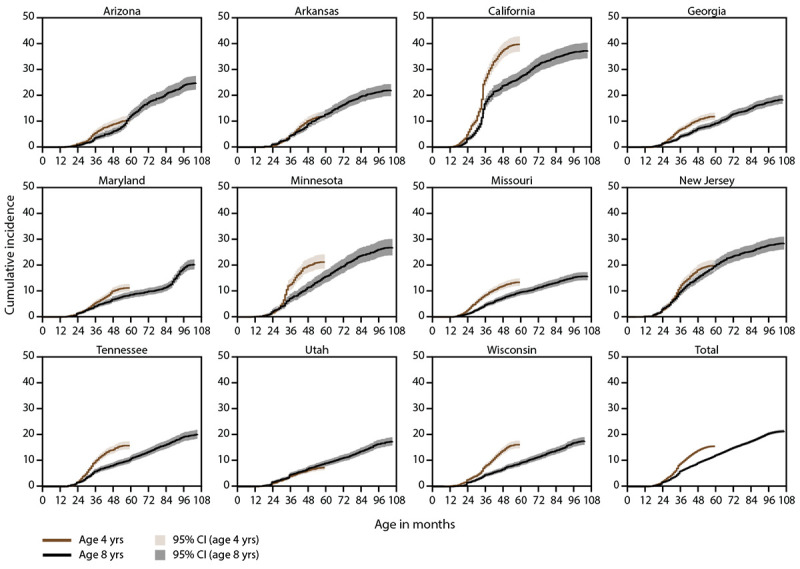
PROBLEM/CONDITION: Autism spectrum disorder (ASD). PERIOD COVERED: 2018. DESCRIPTION OF SYSTEM: The Autism and Developmental Disabilities Monitoring Network is an active surveillance program that estimates ASD prevalence and monitors timing of ASD identification among children aged 4 and 8 years. This report focuses on children aged 4 years in 2018, who were born in 2014 and had a parent or guardian who lived in the surveillance area in one of 11 sites (Arizona, Arkansas, California, Georgia, Maryland, Minnesota, Missouri, New Jersey, Tennessee, Utah, and Wisconsin) at any time during 2018. Children were classified as having ASD if they ever received 1) an ASD diagnostic statement (diagnosis) in an evaluation, 2) a special education classification of ASD (eligibility), or 3) an ASD International Classification of Diseases (ICD) code. Suspected ASD also was tracked among children aged 4 years. Children who did not meet the case definition for ASD were classified as having suspected ASD if their records contained a qualified professional's statement indicating a suspicion of ASD. RESULTS: For 2018, the overall ASD prevalence was 17.0 per 1,000 (one in 59) children aged 4 years. Prevalence varied from 9.1 per 1,000 in Utah to 41.6 per 1,000 in California. At every site, prevalence was higher among boys than girls, with an overall male-to-female prevalence ratio of 3.4. Prevalence of ASD among children aged 4 years was lower among non-Hispanic White (White) children (12.9 per 1,000) than among non-Hispanic Black (Black) children (16.6 per 1,000), Hispanic children (21.1 per 1,000), and Asian/Pacific Islander (A/PI) children (22.7 per 1,000). Among children aged 4 years with ASD and information on intellectual ability, 52% met the surveillance case definition of co-occurring intellectual disability (intelligence quotient ≤70 or an examiner's statement of intellectual disability documented in an evaluation). Of children aged 4 years with ASD, 72% had a first evaluation at age ≤36 months. Stratified by census-tract-level median household income (MHI) tertile, a lower percentage of children with ASD and intellectual disability was evaluated by age 36 months in the low MHI tertile (72%) than in the high MHI tertile (84%). Cumulative incidence of ASD diagnosis or eligibility received by age 48 months was 1.5 times as high among children aged 4 years (13.6 per 1,000 children born in 2014) as among those aged 8 years (8.9 per 1,000 children born in 2010). Across MHI tertiles, higher cumulative incidence of ASD diagnosis or eligibility received by age 48 months was associated with lower MHI. Suspected ASD prevalence was 2.6 per 1,000 children aged 4 years, meaning for every six children with ASD, one child had suspected ASD. The combined prevalence of ASD and suspected ASD (19.7 per 1,000 children aged 4 years) was lower than ASD prevalence among children aged 8 years (23.0 per 1,000 children aged 8 years). INTERPRETATION: Groups with historically lower prevalence of ASD (non-White and lower MHI) had higher prevalence and cumulative incidence of ASD among children aged 4 years in 2018, suggesting progress in identification among these groups. However, a lower percentage of children with ASD and intellectual disability in the low MHI tertile were evaluated by age 36 months than in the high MHI group, indicating disparity in timely evaluation. Children aged 4 years had a higher cumulative incidence of diagnosis or eligibility by age 48 months compared with children aged 8 years, indicating improvement in early identification of ASD. The overall prevalence for children aged 4 years was less than children aged 8 years, even when prevalence of children suspected of having ASD by age 4 years is included. This finding suggests that many children identified after age 4 years do not have suspected ASD documented by age 48 months. PUBLIC HEALTH ACTION: Children born in 2014 were more likely to be identified with ASD by age 48 months than children born in 2010, indicating increased early identification. However, ASD identification among children aged 4 years varied by site, suggesting opportunities to examine developmental screening and diagnostic practices that promote earlier identification. Children aged 4 years also were more likely to have co-occurring intellectual disability than children aged 8 years, suggesting that improvement in the early identification and evaluation of developmental concerns outside of cognitive impairments is still needed. Improving early identification of ASD could lead to earlier receipt of evidence-based interventions and potentially improve developmental outcomes.
Overview
AI snapshot
Written from the paper’s full text.
TL;DR
For 2018 ADDM Network surveillance, ASD prevalence among children aged 4 years across 11 sites was 17.0 per 1,000 (1 in 59), ranging from 9.1 per 1,000 in Utah to 41.6 per 1,000 in California. Early identification improved compared with children born in 2010, but timely evaluation disparities persisted for children with ASD and intellectual disability in the low median household income tertile.
Key findings
- Overall ASD prevalence was 17.0 per 1,000 children aged 4 years; male-to-female prevalence ratio was 3.4 (25.9 vs. 7.7 per 1,000). By race/ethnicity, prevalence was 12.9 per 1,000 among White children, 16.6 among Black children, 21.1 among Hispanic children, 22.7 among Asian/Pacific Islander children, and 11.5 among American Indian/Alaska Native children.
- Among children with ASD and available intellectual ability information, 51.6% had co-occurring intellectual disability; 72% had their earliest recorded evaluation by age 36 months. Among children with ASD and intellectual disability, 72% in the low MHI tertile were evaluated by age 36 months versus 84% in the high MHI tertile.
- Cumulative incidence of ASD diagnosis or eligibility by age 48 months was 13.6 per 1,000 for children born in 2014 versus 8.9 per 1,000 for children born in 2010, a 1.5 times higher incidence in the younger cohort. Suspected ASD prevalence was 2.6 per 1,000, and combined ASD plus suspected ASD prevalence was 19.7 per 1,000, still lower than ASD prevalence among children aged 8 years (23.0 per 1,000).
- Cumulative incidence by age 48 months was 13.8, 12.8, and 11.7 per 1,000 among low, middle, and high MHI tertiles, respectively, indicating higher ASD identification with lower MHI.
Methods
- Active population-based surveillance in 11 ADDM Network sites (Arizona, Arkansas, California, Georgia, Maryland, Minnesota, Missouri, New Jersey, Tennessee, Utah, and Wisconsin) among children aged 4 years in 2018, born in 2014, with a parent or guardian living in the surveillance area at least one day during 2018; total denominator was 220,394 and 3,754 children met the ASD case definition.
- Children met the ASD case definition if they ever received an ASD diagnostic statement, special education classification of ASD, or ASD ICD-9 code 299.00–299.99 or ICD-10 F84 code; suspected ASD was classified when records contained a qualified professional’s statement indicating suspicion of ASD without meeting the ASD case definition. Records were linked to health, education, birth certificate, and census-tract median household income data.
- Prevalence was calculated per 1,000 with Wilson 95% CIs; prevalence ratios compared sex and race/ethnicity groups; cumulative incidence by month of age compared children aged 4 years with children aged 8 years; risk ratios and Cochran-Armitage tests assessed differences and trends across MHI tertiles; analyses used R version 4.0.3.
Limitations
- Stated in the paper: surveillance area populations are subsets of state populations and not necessarily generalizable to entire states or the United States; sample size, demographics, and practices/policies vary among sites; differences in sites or study areas complicate comparisons over time; data completeness varied across sites; and the surveillance case definition of intellectual disability is not the same as a clinical diagnosis, with IQ measurements potentially unstable and younger children possibly not receiving an intellectual disability diagnosis.
- Evident from the text: the 2018 ASD case definition no longer required clinician review of records, which could affect prevalence estimates and comparisons, including possibly contributing to higher prevalence among Black and Hispanic children.
- Evident from the text: the ADDM Network collected data about children evaluated for and identified with ASD but not about screening and referrals, limiting interpretation of barriers to timely and equitable identification.
Model-written summary. Check it against the paper before relying on it.
Integrity signals
Registry
Cites
Statistics
Figures
Verification
Claims the paper makes
64 Own result · 23 Not checked yet · 13 Own method · 11 Own interpretation · 1 Partly supported · accuracy not yet measured
A result the paper reports from its own data — it cites no other source for it, so there is none to check. The quote shows it is in the paper.
In the paper
“The overall prevalence of children without an ASD diagnosis, eligibility, or ICD code but who were suspected by a qualified professional of having ASD was 2.6 per 1,000 children aged 4 years (range: 0.4 per 1,000 in California to 4.9 per 1,000 in Arizona) (Table 7) (Supplementary Figure 4, https://stacks.cdc.gov/view/cdc/111177).”
§ Early Identification of Autism Spectrum Disorder Among Children Aged 4 Years — Autism and Developmental Disabilities Monitoring Network, 11 Sites, United States, 2018 > Results > Prevalence and Characteristics of Children Aged 4 Years with Suspected ASD
plain- Asserted: passes — The authors put it forward as true.
- Checkable: passes — It can be checked against evidence.
- Load-bearing: unclear — It is unclear whether the paper’s conclusions depend on it.
- Based: passes — The paper gives a reason why it holds.
A result the paper reports from its own data — it cites no other source for it, so there is none to check. The quote shows it is in the paper.
In the paper
“An overall association of higher ASD identification by age 48 months with lower MHI was observed.”
- Also stated in: § Conclusion · plain
“ASD prevalence among children aged 4 years was higher among Black, Hispanic, and A/PI children than among White children, and higher cumulative incidence of ASD diagnosis or eligibility by age 48 months was associated with lower census-tract–level MHI.”
§ Early Identification of Autism Spectrum Disorder Among Children Aged 4 Years — Autism and Developmental Disabilities Monitoring Network, 11 Sites, United States, 2018 > Results > Prevalence and Characteristics of Children Aged 4 Years with ASD
plaincorrelational- Asserted: passes — The authors put it forward as true.
- Checkable: passes — It can be checked against evidence.
- Load-bearing: passes — The paper’s conclusions depend on it.
- Based: passes — The paper gives a reason why it holds.
- Also stated in: § Conclusion · plain
A result the paper reports from its own data — it cites no other source for it, so there is none to check. The quote shows it is in the paper.
In the paper
“The percentage of children with co-occurring intellectual disability was not different between boys (51%) and girls (53%) with ASD (Table 4).”
§ Early Identification of Autism Spectrum Disorder Among Children Aged 4 Years — Autism and Developmental Disabilities Monitoring Network, 11 Sites, United States, 2018 > Results > Prevalence and Characteristics of Children Aged 4 Years with ASD
plain- Asserted: passes — The authors put it forward as true.
- Checkable: passes — It can be checked against evidence.
- Load-bearing: unclear — It is unclear whether the paper’s conclusions depend on it.
- Based: passes — The paper gives a reason why it holds.
A result the paper reports from its own data — it cites no other source for it, so there is none to check. The quote shows it is in the paper.
In the paper
“Of children aged 4 years with ASD, 72% had a first evaluation at age ≤36 months.”
§ Early Identification of Autism Spectrum Disorder Among Children Aged 4 Years — Autism and Developmental Disabilities Monitoring Network, 11 Sites, United States, 2018 > Abstract > Results
plain- Asserted: passes — The authors put it forward as true.
- Checkable: passes — It can be checked against evidence.
- Load-bearing: passes — The paper’s conclusions depend on it.
- Based: passes — The paper gives a reason why it holds.
A result the paper reports from its own data — it cites no other source for it, so there is none to check. The quote shows it is in the paper.
In the paper
“Trends were not observed among the other five sites.”
§ Early Identification of Autism Spectrum Disorder Among Children Aged 4 Years — Autism and Developmental Disabilities Monitoring Network, 11 Sites, United States, 2018 > Results > Prevalence and Characteristics of Children Aged 4 Years with ASD
plain- Asserted: passes — The authors put it forward as true.
- Checkable: passes — It can be checked against evidence.
- Load-bearing: unclear — It is unclear whether the paper’s conclusions depend on it.
- Based: passes — The paper gives a reason why it holds.
A result the paper reports from its own data — it cites no other source for it, so there is none to check. The quote shows it is in the paper.
In the paper
“Prevalence of ASD among children aged 4 years was lower among non-Hispanic White (White) children (12.9 per 1,000) than among non-Hispanic Black (Black) children (16.6 per 1,000), Hispanic children (21.1 per 1,000), and Asian/Pacific Islander (A/PI) children (22.7 per 1,000).”
- Also stated in: § Prevalence and Characteristics of Children Aged 4 Years with ASD · plain
“Overall, prevalence was lower among White children than among Black children (prevalence ratio: 0.8), Hispanic children (prevalence ratio: 0.6), and A/PI children (prevalence ratio: 0.6) (Table 3).”
§ Early Identification of Autism Spectrum Disorder Among Children Aged 4 Years — Autism and Developmental Disabilities Monitoring Network, 11 Sites, United States, 2018 > Abstract > Results
plaincorrelational- Asserted: passes — The authors put it forward as true.
- Checkable: passes — It can be checked against evidence.
- Load-bearing: unclear — It is unclear whether the paper’s conclusions depend on it.
- Based: passes — The paper gives a reason why it holds.
- Also stated in: § Prevalence and Characteristics of Children Aged 4 Years with ASD · plain
A result the paper reports from its own data — it cites no other source for it, so there is none to check. The quote shows it is in the paper.
In the paper
“The percentage of children with earliest recorded evaluation by age 36 months was similar for children classified as having intellectual disability (78%) or not (80%) but was lower among children with unknown intellectual disability case status (63%).”
§ Early Identification of Autism Spectrum Disorder Among Children Aged 4 Years — Autism and Developmental Disabilities Monitoring Network, 11 Sites, United States, 2018 > Results > Prevalence and Characteristics of Children Aged 4 Years with ASD
plain- Asserted: passes — The authors put it forward as true.
- Checkable: passes — It can be checked against evidence.
- Load-bearing: unclear — It is unclear whether the paper’s conclusions depend on it.
- Based: passes — The paper gives a reason why it holds.
A result the paper reports from its own data — it cites no other source for it, so there is none to check. The quote shows it is in the paper.
In the paper
“Cumulative incidence by age 48 months was higher with higher MHI in one site (Missouri).”
§ Early Identification of Autism Spectrum Disorder Among Children Aged 4 Years — Autism and Developmental Disabilities Monitoring Network, 11 Sites, United States, 2018 > Results > Prevalence and Characteristics of Children Aged 4 Years with ASD
plaincorrelational- Asserted: passes — The authors put it forward as true.
- Checkable: passes — It can be checked against evidence.
- Load-bearing: unclear — It is unclear whether the paper’s conclusions depend on it.
- Based: passes — The paper gives a reason why it holds.
A result the paper reports from its own data — it cites no other source for it, so there is none to check. The quote shows it is in the paper.
In the paper
“Across MHI tertiles, higher cumulative incidence of ASD diagnosis or eligibility received by age 48 months was associated with lower MHI.”
§ Early Identification of Autism Spectrum Disorder Among Children Aged 4 Years — Autism and Developmental Disabilities Monitoring Network, 11 Sites, United States, 2018 > Abstract > Results
plaincorrelational- Asserted: passes — The authors put it forward as true.
- Checkable: passes — It can be checked against evidence.
- Load-bearing: passes — The paper’s conclusions depend on it.
- Based: passes — The paper gives a reason why it holds.
A result the paper reports from its own data — it cites no other source for it, so there is none to check. The quote shows it is in the paper.
In the paper
“Across sites, six children met the ASD case definition for every child meeting the suspected case definition.”
§ Early Identification of Autism Spectrum Disorder Among Children Aged 4 Years — Autism and Developmental Disabilities Monitoring Network, 11 Sites, United States, 2018 > Results > Prevalence and Characteristics of Children Aged 4 Years with Suspected ASD
plaincorrelationaln = 6- Asserted: passes — The authors put it forward as true.
- Checkable: passes — It can be checked against evidence.
- Load-bearing: unclear — It is unclear whether the paper’s conclusions depend on it.
- Based: passes — The paper gives a reason why it holds.
- It may state two separate claims as one. 21
- Probably not a substantial claim. 17
The cited sources support only part of this claim — read each source’s verdict below.
In the paper
“Surveillance among children aged 4 years in 2016 (8) indicated similar prevalence among children of different racial and ethnic groups, consistent with trends among children aged 8 years (9).”
§ Early Identification of Autism Spectrum Disorder Among Children Aged 4 Years — Autism and Developmental Disabilities Monitoring Network, 11 Sites, United States, 2018 > Introduction
What the sources say
- Partly supportedcites [8] Shaw, 2020, Early identification of autism spectrum disorder among children aged 4 years—Early Autism and Developmental Disabilities Monitoring Network, six sites, United States, 2016., MMWR Surveill Summ sourceExperimental — accuracy not yet measured
The Results report similar ASD prevalence among white and black children aged 4 years in 2016, and the Discussion says the same pattern held among children aged 8 years. But Table 2 shows significantly higher overall prevalence among Hispanic children aged 4 years than among either white or black children, so similarity across racial and ethnic groups is too broad. (LLM, conf=0.90)
- Partly supportedcites [9] Maenner, 2020, Prevalence of autism spectrum disorder among children aged 8 years—Autism and Developmental Disabilities Monitoring Network, 11 sites, United States, 2016., MMWR Surveill Summ sourceExperimental — accuracy not yet measured
The ASD Prevalence section reports similar 2016 prevalence among 8-year-old white, Black, and Asian/Pacific Islander children. It also reports lower prevalence among Hispanic children than among white or Black children, so the cited 8-year-old data do not support similarity across all racial and ethnic groups. This source does not provide the separately cited 4-year-old finding. (LLM, conf=0.87)
hedged- Asserted: passes — The authors put it forward as true.
- Checkable: passes — It can be checked against evidence.
- Load-bearing: unclear — It is unclear whether the paper’s conclusions depend on it.
- Based: passes — The paper gives a reason why it holds.
It may state two separate claims as one.
- Partly supported
A result the paper reports from its own data — it cites no other source for it, so there is none to check. The quote shows it is in the paper.
In the paper
“Suspected ASD prevalence was 2.6 per 1,000 children aged 4 years, meaning for every six children with ASD, one child had suspected ASD.”
§ Early Identification of Autism Spectrum Disorder Among Children Aged 4 Years — Autism and Developmental Disabilities Monitoring Network, 11 Sites, United States, 2018 > Abstract > Results
plainn = 1,000- Asserted: passes — The authors put it forward as true.
- Checkable: passes — It can be checked against evidence.
- Load-bearing: passes — The paper’s conclusions depend on it.
- Based: passes — The paper gives a reason why it holds.
It may state two separate claims as one.
A result the paper reports from its own data — it cites no other source for it, so there is none to check. The quote shows it is in the paper.
In the paper
“Evaluation by age 36 months was similar by sex and by racial and ethnic groups.”
§ Early Identification of Autism Spectrum Disorder Among Children Aged 4 Years — Autism and Developmental Disabilities Monitoring Network, 11 Sites, United States, 2018 > Results > Prevalence and Characteristics of Children Aged 4 Years with ASD
plain- Asserted: passes — The authors put it forward as true.
- Checkable: passes — It can be checked against evidence.
- Load-bearing: unclear — It is unclear whether the paper’s conclusions depend on it.
- Based: passes — The paper gives a reason why it holds.
It may state two separate claims as one.
A result the paper reports from its own data — it cites no other source for it, so there is none to check. The quote shows it is in the paper.
In the paper
“Co-occurring intellectual disability was associated with lower MHI; 41% of those in the high MHI tertile group had intellectual disability compared with 60% of those in the low MHI tertile group.”
§ Early Identification of Autism Spectrum Disorder Among Children Aged 4 Years — Autism and Developmental Disabilities Monitoring Network, 11 Sites, United States, 2018 > Results > Prevalence and Characteristics of Children Aged 4 Years with ASD
plaincorrelationaln = 3,534- Asserted: passes — The authors put it forward as true.
- Checkable: passes — It can be checked against evidence.
- Load-bearing: unclear — It is unclear whether the paper’s conclusions depend on it.
- Based: passes — The paper gives a reason why it holds.
It may state two separate claims as one.
A result the paper reports from its own data — it cites no other source for it, so there is none to check. The quote shows it is in the paper.
In the paper
“At age 48 months, overall cumulative incidence was 13.6 per 1,000 children born in 2014 and 8.9 per 1,000 children born in 2010, meaning ASD diagnosis or eligibility was 1.5 times as high in the group born in 2014 (Supplementary Table 5, https://stacks.cdc.gov/view/cdc/111177).”
§ Early Identification of Autism Spectrum Disorder Among Children Aged 4 Years — Autism and Developmental Disabilities Monitoring Network, 11 Sites, United States, 2018 > Results > Prevalence and Characteristics of Children Aged 4 Years with ASD
plain- Asserted: passes — The authors put it forward as true.
- Checkable: passes — It can be checked against evidence.
- Load-bearing: passes — The paper’s conclusions depend on it.
- Based: passes — The paper gives a reason why it holds.
It may state two separate claims as one.
A result the paper reports from its own data — it cites no other source for it, so there is none to check. The quote shows it is in the paper.
In the paper
“Prevalence of ASD was higher than prevalence of suspected ASD, although the magnitude varied across sites.”
§ Early Identification of Autism Spectrum Disorder Among Children Aged 4 Years — Autism and Developmental Disabilities Monitoring Network, 11 Sites, United States, 2018 > Discussion
plain- Asserted: passes — The authors put it forward as true.
- Checkable: passes — It can be checked against evidence.
- Load-bearing: passes — The paper’s conclusions depend on it.
- Based: passes — The paper gives a reason why it holds.
It may state two separate claims as one.
A result the paper reports from its own data — it cites no other source for it, so there is none to check. The quote shows it is in the paper.
In the paper
“Differences were observed by race and ethnicity, with more White children (50%) and fewer A/PI children (5%) in the suspected ASD group than in the ASD group (43% White; 9% A/PI) (Table 8).”
§ Early Identification of Autism Spectrum Disorder Among Children Aged 4 Years — Autism and Developmental Disabilities Monitoring Network, 11 Sites, United States, 2018 > Results > Prevalence and Characteristics of Children Aged 4 Years with Suspected ASD
plaincorrelational- Asserted: passes — The authors put it forward as true.
- Checkable: passes — It can be checked against evidence.
- Load-bearing: unclear — It is unclear whether the paper’s conclusions depend on it.
- Based: passes — The paper gives a reason why it holds.
It may state two separate claims as one.
None of the sources cited for this claim have been checked yet.
In the paper
“In surveillance year 2018, ASD prevalence among Black children was higher than among White children at five of 11 sites and overall, the opposite of the pattern before surveillance year 2016 among children aged 8 years (9,17).”
§ Early Identification of Autism Spectrum Disorder Among Children Aged 4 Years — Autism and Developmental Disabilities Monitoring Network, 11 Sites, United States, 2018 > Discussion
What the sources say
- Not checked yetcites [9] Maenner, 2020, Prevalence of autism spectrum disorder among children aged 8 years—Autism and Developmental Disabilities Monitoring Network, 11 sites, United States, 2016., MMWR Surveill Summ source
- Not checked yetcites [17] Baio, 2018, Prevalence of autism spectrum disorder among children aged 8 years—Autism and Developmental Disabilities Monitoring Network, 11 sites, United States, 2014., MMWR Surveill Summ source
plaincorrelational- Asserted: passes — The authors put it forward as true.
- Checkable: passes — It can be checked against evidence.
- Load-bearing: passes — The paper’s conclusions depend on it.
- Based: passes — The paper gives a reason why it holds.
It may state two separate claims as one.
None of the sources cited for this claim have been checked yet.
In the paper
“Early routine screening for ASD and other developmental concerns is recommended by the American Academy of Pediatrics (1) because early evaluation, diagnosis, and evidence-based interventions could enhance short-term and long-term developmental outcomes for young children with ASD (2–6).”
§ Early Identification of Autism Spectrum Disorder Among Children Aged 4 Years — Autism and Developmental Disabilities Monitoring Network, 11 Sites, United States, 2018 > Introduction
What the sources say
- Not checked yetcites [2] Reichow, 2018, Early intensive behavioral intervention (EIBI) for young children with autism spectrum disorders (ASD)., Cochrane Database Syst Rev source
- Not checked yetcites [3] Rogers, 2012, Effects of a brief Early Start Denver Model (ESDM)-based parent intervention on toddlers at risk for autism spectrum disorders: a randomized controlled trial., J Am Acad Child Adolesc Psychiatry source
- Not checked yetcites [4] Dawson, 2010, Randomized, controlled trial of an intervention for toddlers with autism: the Early Start Denver Model., Pediatrics source
- Not checked yetcites [5] D’Elia, 2014, A longitudinal study of the teacch program in different settings: the potential benefits of low intensity intervention in preschool children with autism spectrum disorder., J Autism Dev Disord source
- Not checked yetcites [6] Anderson, 2014, Predicting young adult outcome among more and less cognitively able individuals with autism spectrum disorders., J Child Psychol Psychiatry source
hedgedconditional- Asserted: passes — The authors put it forward as true.
- Checkable: fails — It may be too vague to check against evidence.
- Load-bearing: passes — The paper’s conclusions depend on it.
- Based: passes — The paper gives a reason why it holds.
Probably not a substantial claim. It may be too vague to check against evidence.
What the paper did — it cites no source for this, so there is none to check. The quote shows it is in the paper.
In the paper
“Census-tract information to link to MHI was available for 94% of children aged 4 years; others met residency requirements on the basis of school attendance or receipt of services that required living in the surveillance area during 2018.”
§ Early Identification of Autism Spectrum Disorder Among Children Aged 4 Years — Autism and Developmental Disabilities Monitoring Network, 11 Sites, United States, 2018 > Methods > Additional Data Sources and Variable Definitions
plain- Asserted: passes — The authors put it forward as true.
- Checkable: passes — It can be checked against evidence.
- Load-bearing: fails — The paper’s conclusions may not depend on it.
- Based: passes — The paper gives a reason why it holds.
Probably not a substantial claim. The paper’s conclusions may not depend on it.
In the paper
“Because of the potential to improve outcomes, increasing the proportion of all children who receive a developmental screening by age 36 months and the proportion of children with ASD who receive special services by age 48 months are included as Healthy People 2030 goals (7).”
§ Early Identification of Autism Spectrum Disorder Among Children Aged 4 Years — Autism and Developmental Disabilities Monitoring Network, 11 Sites, United States, 2018 > Introduction
What the sources say
- Not checked yetcites [7] US Department of Health and Human Services, Office of Disease Prevention and Health Promotion. Healthy People 2030 ASD goals. https://health.gov/healthypeople/custom-list?ids=31387+31386
plain- Asserted: passes — The authors put it forward as true.
- Checkable: passes — It can be checked against evidence.
- Load-bearing: fails — The paper’s conclusions may not depend on it.
- Based: passes — The paper gives a reason why it holds.
Probably not a substantial claim. The paper’s conclusions may not depend on it. It may state two separate claims as one.
What the paper did — it cites no source for this, so there is none to check. The quote shows it is in the paper.
In the paper
“All sites had access to health records, and nine of 11 sites had access to education records covering their surveillance area (Wisconsin had partial access, and Missouri had none).”
§ Early Identification of Autism Spectrum Disorder Among Children Aged 4 Years — Autism and Developmental Disabilities Monitoring Network, 11 Sites, United States, 2018 > Methods > Case Ascertainment and Surveillance Case Definition
plain- Asserted: passes — The authors put it forward as true.
- Checkable: passes — It can be checked against evidence.
- Load-bearing: fails — The paper’s conclusions may not depend on it.
- Based: passes — The paper gives a reason why it holds.
Probably not a substantial claim. The paper’s conclusions may not depend on it. It may state two separate claims as one.
A conclusion the paper draws from its own results — it cites no other source for it, so there is none to check. The quote shows it is in the paper.
In the paper
“Improving early identification of ASD could lead to earlier receipt of evidence-based interventions and potentially improve developmental outcomes.”
§ Early Identification of Autism Spectrum Disorder Among Children Aged 4 Years — Autism and Developmental Disabilities Monitoring Network, 11 Sites, United States, 2018 > Abstract > Public Health Action
hedgedconditional- Asserted: passes — The authors put it forward as true.
- Checkable: fails — It may be too vague to check against evidence.
- Load-bearing: passes — The paper’s conclusions depend on it.
- Based: fails — The paper may give no reason why it holds.
Probably not a substantial claim. It may be too vague to check against evidence. The paper may give no reason why it holds. It may state two separate claims as one.
What the paper did — it cites no source for this, so there is none to check. The quote shows it is in the paper.
In the paper
“All sites functioned as public health authorities under the Health Insurance Portability and Accountability Act of 1996 Privacy Rule and met applicable local institutional review board, privacy, and confidentiality requirements under 45 CFR 46.”
§ Early Identification of Autism Spectrum Disorder Among Children Aged 4 Years — Autism and Developmental Disabilities Monitoring Network, 11 Sites, United States, 2018 > Methods > Surveillance Sites and Procedures
plain- Asserted: passes — The authors put it forward as true.
- Checkable: passes — It can be checked against evidence.
- Load-bearing: fails — The paper’s conclusions may not depend on it.
- Based: passes — The paper gives a reason why it holds.
Probably not a substantial claim. The paper’s conclusions may not depend on it. It may state two separate claims as one.
In the paper
“Early routine screening for ASD and other developmental concerns is recommended by the American Academy of Pediatrics (1) because early evaluation, diagnosis, and evidence-based interventions could enhance short-term and long-term developmental outcomes for young children with ASD (2–6).”
§ Early Identification of Autism Spectrum Disorder Among Children Aged 4 Years — Autism and Developmental Disabilities Monitoring Network, 11 Sites, United States, 2018 > Introduction
What the sources say
- Not checked yetcites [1] Hyman, 2020, Identification, evaluation, and management of children with autism spectrum disorder., Pediatrics source
plain- Asserted: passes — The authors put it forward as true.
- Checkable: passes — It can be checked against evidence.
- Load-bearing: passes — The paper’s conclusions depend on it.
- Based: passes — The paper gives a reason why it holds.
Probably not a substantial claim.
A conclusion the paper draws from its own results — it cites no other source for it, so there is none to check. The quote shows it is in the paper.
In the paper
“Children aged 4 years had a higher cumulative incidence of diagnosis or eligibility by age 48 months compared with children aged 8 years, indicating improvement in early identification of ASD.”
- Also stated in: § Public Health Action · hedged
“Children born in 2014 were more likely to be identified with ASD by age 48 months than children born in 2010, indicating increased early identification.”
§ Early Identification of Autism Spectrum Disorder Among Children Aged 4 Years — Autism and Developmental Disabilities Monitoring Network, 11 Sites, United States, 2018 > Abstract > Interpretation
hedgeddirect- Asserted: passes — The authors put it forward as true.
- Checkable: passes — It can be checked against evidence.
- Load-bearing: passes — The paper’s conclusions depend on it.
- Based: passes — The paper gives a reason why it holds.
It may state two separate claims as one.
- Also stated in: § Public Health Action · hedged
What the paper did — it cites no source for this, so there is none to check. The quote shows it is in the paper.
In the paper
“No children aged 4 years were lacking sex information; 245 children were of other (including multiracial) or unknown race and were excluded from analyses stratified by race and ethnicity.”
§ Early Identification of Autism Spectrum Disorder Among Children Aged 4 Years — Autism and Developmental Disabilities Monitoring Network, 11 Sites, United States, 2018 > Methods > Analytic Methods
plainn = 245- Asserted: passes — The authors put it forward as true.
- Checkable: passes — It can be checked against evidence.
- Load-bearing: fails — The paper’s conclusions may not depend on it.
- Based: passes — The paper gives a reason why it holds.
Probably not a substantial claim. The paper’s conclusions may not depend on it. It may state two separate claims as one.
In the paper
“In addition, ASD identification measured by cumulative incidence of diagnosis by age 48 months was higher among children aged 4 years (born in 2012) compared with children aged 8 years (born in 2008), suggesting increased early identification of ASD among the younger cohort (8).”
§ Early Identification of Autism Spectrum Disorder Among Children Aged 4 Years — Autism and Developmental Disabilities Monitoring Network, 11 Sites, United States, 2018 > Introduction
What the sources say
- Not checked yetcites [8] Shaw, 2020, Early identification of autism spectrum disorder among children aged 4 years—Early Autism and Developmental Disabilities Monitoring Network, six sites, United States, 2016., MMWR Surveill Summ source
hedgedcorrelational- Asserted: passes — The authors put it forward as true.
- Checkable: passes — It can be checked against evidence.
- Load-bearing: passes — The paper’s conclusions depend on it.
- Based: passes — The paper gives a reason why it holds.
It may state two separate claims as one.
What the paper did — it cites no source for this, so there is none to check. The quote shows it is in the paper.
In the paper
“First, surveillance area populations are subsets of state populations and not necessarily generalizable to the entire state or United States.”
§ Early Identification of Autism Spectrum Disorder Among Children Aged 4 Years — Autism and Developmental Disabilities Monitoring Network, 11 Sites, United States, 2018 > Limitations
hedged- Asserted: passes — The authors put it forward as true.
- Checkable: passes — It can be checked against evidence.
- Load-bearing: fails — The paper’s conclusions may not depend on it.
- Based: passes — The paper gives a reason why it holds.
Probably not a substantial claim. The paper’s conclusions may not depend on it. It may state two separate claims as one.
In the paper
“Comparisons with previous reports among children aged 4 years were limited by small numbers among non-White groups in surveillance year 2010 and a lack of aggregate estimates for surveillance years 2012 and 2014 (13).”
§ Early Identification of Autism Spectrum Disorder Among Children Aged 4 Years — Autism and Developmental Disabilities Monitoring Network, 11 Sites, United States, 2018 > Discussion
What the sources say
- Not checked yetcites [13] Christensen, 2019, Prevalence and characteristics of autism spectrum disorder among children aged 4 years—Early Autism and Developmental Disabilities Monitoring Network, seven sites, United States, 2010, 2012, and 2014., MMWR Surveill Summ source
plain- Asserted: passes — The authors put it forward as true.
- Checkable: passes — It can be checked against evidence.
- Load-bearing: unclear — It is unclear whether the paper’s conclusions depend on it.
- Based: passes — The paper gives a reason why it holds.
It may state two separate claims as one.
What the paper did — it cites no source for this, so there is none to check. The quote shows it is in the paper.
In the paper
“Finally, the surveillance case definition of intellectual disability is not the same as a clinical diagnosis of intellectual disability; IQ measurements might lack stability and children might not receive a diagnosis of intellectual disability at younger ages.”
§ Early Identification of Autism Spectrum Disorder Among Children Aged 4 Years — Autism and Developmental Disabilities Monitoring Network, 11 Sites, United States, 2018 > Limitations
plain- Asserted: passes — The authors put it forward as true.
- Checkable: passes — It can be checked against evidence.
- Load-bearing: fails — The paper’s conclusions may not depend on it.
- Based: passes — The paper gives a reason why it holds.
Probably not a substantial claim. The paper’s conclusions may not depend on it.
In the paper
“An association of higher ASD prevalence and higher SES has been reported previously in ADDM Network data from surveillance years 2002–2010 (19).”
§ Early Identification of Autism Spectrum Disorder Among Children Aged 4 Years — Autism and Developmental Disabilities Monitoring Network, 11 Sites, United States, 2018 > Discussion
What the sources say
- Not checked yetcites [19] Durkin, 2017, Autism spectrum disorder among US children (2002–2010): socioeconomic, racial, and ethnic disparities., Am J Public Health source
plaincorrelational- Asserted: passes — The authors put it forward as true.
- Checkable: passes — It can be checked against evidence.
- Load-bearing: fails — The paper’s conclusions may not depend on it.
- Based: passes — The paper gives a reason why it holds.
Probably not a substantial claim. The paper’s conclusions may not depend on it.
What the paper did — it cites no source for this, so there is none to check. The quote shows it is in the paper.
In the paper
“Second, sample size, demographics, and practices and policies vary among sites and could contribute to variability in findings.”
§ Early Identification of Autism Spectrum Disorder Among Children Aged 4 Years — Autism and Developmental Disabilities Monitoring Network, 11 Sites, United States, 2018 > Limitations
hedgedconditional- Asserted: passes — The authors put it forward as true.
- Checkable: passes — It can be checked against evidence.
- Load-bearing: fails — The paper’s conclusions may not depend on it.
- Based: passes — The paper gives a reason why it holds.
Probably not a substantial claim. The paper’s conclusions may not depend on it. It may state two separate claims as one.
What the paper did — it cites no source for this, so there is none to check. The quote shows it is in the paper.
In the paper
“Third, differences in sites or study areas complicate comparisons over time.”
§ Early Identification of Autism Spectrum Disorder Among Children Aged 4 Years — Autism and Developmental Disabilities Monitoring Network, 11 Sites, United States, 2018 > Limitations
plaindirect- Asserted: passes — The authors put it forward as true.
- Checkable: passes — It can be checked against evidence.
- Load-bearing: fails — The paper’s conclusions may not depend on it.
- Based: passes — The paper gives a reason why it holds.
Probably not a substantial claim. The paper’s conclusions may not depend on it.
What the paper did — it cites no source for this, so there is none to check. The quote shows it is in the paper.
In the paper
“One way this limitation has been addressed is by assessing ASD identification among children aged 4 years and children aged 8 years in a single area in a single year so that these groups are directly comparable.”
§ Early Identification of Autism Spectrum Disorder Among Children Aged 4 Years — Autism and Developmental Disabilities Monitoring Network, 11 Sites, United States, 2018 > Limitations
plaindirect- Asserted: passes — The authors put it forward as true.
- Checkable: passes — It can be checked against evidence.
- Load-bearing: fails — The paper’s conclusions may not depend on it.
- Based: passes — The paper gives a reason why it holds.
Probably not a substantial claim. The paper’s conclusions may not depend on it.
What the paper did — it cites no source for this, so there is none to check. The quote shows it is in the paper.
In the paper
“Fourth, data completeness varied across sites (either because of lack of data sharing agreements, pandemic-related disruption, or incomplete information), which could result in incomplete or biased ascertainment of ASD or other characteristics such as intellectual disability.”
§ Early Identification of Autism Spectrum Disorder Among Children Aged 4 Years — Autism and Developmental Disabilities Monitoring Network, 11 Sites, United States, 2018 > Limitations
hedgedconditional- Asserted: passes — The authors put it forward as true.
- Checkable: passes — It can be checked against evidence.
- Load-bearing: unclear — It is unclear whether the paper’s conclusions depend on it.
- Based: passes — The paper gives a reason why it holds.
It may state two separate claims as one.
What the paper did — it cites no source for this, so there is none to check. The quote shows it is in the paper.
In the paper
“The population of AI/AN children was small relative to other groups and thus could not be further stratified for comparisons.”
§ Early Identification of Autism Spectrum Disorder Among Children Aged 4 Years — Autism and Developmental Disabilities Monitoring Network, 11 Sites, United States, 2018 > Discussion
plaindirect- Asserted: passes — The authors put it forward as true.
- Checkable: passes — It can be checked against evidence.
- Load-bearing: unclear — It is unclear whether the paper’s conclusions depend on it.
- Based: passes — The paper gives a reason why it holds.
It may state two separate claims as one.
In the paper
“For example, the “Get SET Early” program has trained hundreds of pediatricians to developmentally screen children at well-baby examinations and refer them for evaluation when indicated (16).”
§ Early Identification of Autism Spectrum Disorder Among Children Aged 4 Years — Autism and Developmental Disabilities Monitoring Network, 11 Sites, United States, 2018 > Discussion
What the sources say
- Not checked yetcites [16] Pierce, 2021, Get SET Early to identify and treatment refer autism spectrum disorder at 1 year and discover factors that influence early diagnosis., J Pediatr source
plain- Asserted: passes — The authors put it forward as true.
- Checkable: passes — It can be checked against evidence.
- Load-bearing: fails — The paper’s conclusions may not depend on it.
- Based: passes — The paper gives a reason why it holds.
Probably not a substantial claim. The paper’s conclusions may not depend on it.
In the paper
“One of the site’s data sources was a state-funded regional center that serves persons with developmental disabilities and their families, including providing evaluations and service coordination (15).”
§ Early Identification of Autism Spectrum Disorder Among Children Aged 4 Years — Autism and Developmental Disabilities Monitoring Network, 11 Sites, United States, 2018 > Discussion
What the sources say
- Not checked yetcites [15] California Department of Developmental Services [Internet]. Sacramento, CA: California Department of Developmental Services; 2020. https://www.dds.ca.gov/
plain- Asserted: passes — The authors put it forward as true.
- Checkable: passes — It can be checked against evidence.
- Load-bearing: fails — The paper’s conclusions may not depend on it.
- Based: passes — The paper gives a reason why it holds.
Probably not a substantial claim. The paper’s conclusions may not depend on it.
What the paper did — it cites no source for this, so there is none to check. The quote shows it is in the paper.
In the paper
“Finally, the surveillance case definition of intellectual disability is not the same as a clinical diagnosis of intellectual disability; IQ measurements might lack stability and children might not receive a diagnosis of intellectual disability at younger ages.”
§ Early Identification of Autism Spectrum Disorder Among Children Aged 4 Years — Autism and Developmental Disabilities Monitoring Network, 11 Sites, United States, 2018 > Limitations
hedged- Asserted: passes — The authors put it forward as true.
- Checkable: passes — It can be checked against evidence.
- Load-bearing: fails — The paper’s conclusions may not depend on it.
- Based: passes — The paper gives a reason why it holds.
Probably not a substantial claim. The paper’s conclusions may not depend on it. It may state two separate claims as one.
The paper relies on this without support.
Non-White and lower median household income groups have historically had lower ASD prevalence.
“Groups with historically lower prevalence of ASD (non-White and lower MHI) had higher prevalence and cumulative incidence of ASD among children aged 4 years in 2018, suggesting progress in identification among these groups.”
Claims other papers make about this one
Each is checked against this paper’s own text: does it say what the citing paper says it does?
In the citing paper
“Although prevalence has been lower among children aged 4 years than aged 8 years in each reporting year, comparing cumulative incidence of identification by age 48 months has consistently indicated higher rates of ASD identification in younger cohorts (i.e., children born more recently) (9–11).”
In the citing paper
“California has had the highest prevalence among children aged 4 years and 8 years since joining the ADDM Network in 2018 (6,10,11,13)”
In the citing paper
“Surveillance was conducted using the same methods as in 2018 (7,10).”
In the citing paper
“Prevalence in 2020 among children aged 4 years was 24.3% higher among boys and 34.5% higher among girls than prevalence in 2018 (7), but the male-to-female ratios were similar between years.”
In the citing paper
“Prevalence of suspected ASD increased from 2018 at five sites (Arizona, Arkansas, Maryland, New Jersey, and Utah) and was similar between years at other sites (7)”
In the citing paper
“ASD is beginning to be identified more in lower-SES groups than previously (7,11); however, barriers to services still exist for lower-SES families of children with ASD (e.g., transportation, childcare, and job accommodations) (18–26).”
Citations
Cites
Diagnostic and Statistical Manual of Mental Disorders
American Psychiatric Association (2013) · doi:10.1176/appi.books.9780890425596 · Cited by 116,369
Baio, J., Wiggins, L., Christensen, D. L., Maenner, M. J., Daniels, J., Warren, Z., Kurzius-Spencer, M., Zahorodny, W., Robinson, C., Rosenberg, et al. (2018) · MMWR. Surveillance Summaries · doi:10.15585/mmwr.ss6706a1 · Cited by 6,078
Self-citationMaenner, M. J., Shaw, K. A., Baio, J., EdS1, Washington, A., Patrick, M., DiRienzo, M., Christensen, D. L., Wiggins, L. D., Pettygrove, S., et al. (2020) · MMWR. Surveillance Summaries · doi:10.15585/mmwr.ss6904a1 · Cited by 3,780 · cited 5×
“In surveillance year 2018, ASD prevalence among Black children was higher than among White children at five of 11 sites and overall, the opposite of the pattern before surveillance year 2016 among children aged 8 years (9,17).”
BackgroundResultInfluentialSelf-citationDawson, G., Rogers, S., Munson, J., Smith, M., Winter, J., Greenson, J., Donaldson, A., & Varley, J. (2010) · Pediatrics · doi:10.1542/peds.2009-0958 · Cited by 2,835
Maenner, M. J., Shaw, K. A., Bakian, A. V., Bilder, D. A., Durkin, M. S., Esler, A., Furnier, S. M., Hallas, L., Hall-Lande, J., Hudson, A., et al. (2021) · MMWR. Surveillance Summaries · doi:10.15585/mmwr.ss7011a1 · Cited by 1,818 · cited 23×
“Comparisons were made with the group of children aged 8 years for the same 11 sites (11).”
BackgroundMethodResultInfluentialSelf-citationIdentification, Evaluation, and Management of Children With Autism Spectrum Disorder
Hyman, S. L., Levy, S. E., Myers, S. M., COUNCIL ON CHILDREN WITH DISABILITIES, S. O. D. A. B. P., Kuo, D. Z., Apkon, S., Davidson, L. F., Ellerbeck, K. A., Foster, J. E. A., Noritz, G. H., et al. (2020) · Pediatrics · doi:10.1542/peds.2019-3447 · Cited by 1,798
Rogers, S. J., Estes, A., Lord, C., Vismara, L., Winter, J., Fitzpatrick, A., Guo, M., & Dawson, G. (2012) · Journal of the American Academy of Child & Adolescent Psychiatry · doi:10.1016/j.jaac.2012.08.003 · Cited by 713
Reichow, B., Barton, E. E., Boyd, B. A., & Hume, K. (2012) · Cochrane Database of Systematic Reviews · doi:10.1002/14651858.cd009260.pub2 · Cited by 577
Anderson, D. K., Liang, J. W., & Lord, C. (2014) · Journal of Child Psychology and Psychiatry · doi:10.1111/jcpp.12178 · Cited by 401
Reichow, B., Hume, K., Barton, E. E., & Boyd, B. A. (2018) · Cochrane Database of Systematic Reviews · doi:10.1002/14651858.cd009260.pub3 · Cited by 350
Cited by
Sorted by citations
Maenner, M. J., Warren, Z., Williams, A. R., Amoakohene, E., Bakian, A. V., Bilder, D. A., Durkin, M. S., Fitzgerald, R. T., Furnier, S. M., Hughes, M. M., et al. (2023) · MMWR. Surveillance Summaries · doi:10.15585/mmwr.ss7202a1 · Cited by 2,706
Self-citationMaenner, M. J., Shaw, K. A., Bakian, A. V., Bilder, D. A., Durkin, M. S., Esler, A., Furnier, S. M., Hallas, L., Hall-Lande, J., Hudson, A., et al. (2021) · MMWR. Surveillance Summaries · doi:10.15585/mmwr.ss7011a1 · Cited by 1,818
Self-citationShaw, K. A., Williams, S., Patrick, M. E., Valencia-Prado, M., Durkin, M. S., Howerton, E. M., Ladd-Acosta, C. M., Pas, E. T., Bakian, A. V., Bartholomew, P., et al. (2025) · MMWR. Surveillance Summaries · doi:10.15585/mmwr.ss7402a1 · Cited by 867
Self-citationFu, J. M., Satterstrom, F. K., Peng, M., Brand, H., Collins, R. L., Dong, S., Wamsley, B., Klei, L., Wang, L., Hao, S. P., et al. (2022) · Nature Genetics · doi:10.1038/s41588-022-01104-0 · Cited by 640
The global prevalence of autism spectrum disorder: A three-level meta-analysis
Talantseva, O. I., Romanova, R. S., Shurdova, E. M., Dolgorukova, T. A., Sologub, P. S., Titova, O. S., Kleeva, D. F., & Grigorenko, E. L. (2023) · Frontiers in Psychiatry · doi:10.3389/fpsyt.2023.1071181 · Cited by 318
Neuroinflammation and Oxidative Stress in the Pathogenesis of Autism Spectrum Disorder
Usui, N., Kobayashi, H., & Shimada, S. (2023) · International Journal of Molecular Sciences · doi:10.3390/ijms24065487 · Cited by 278
Shaw, K. A., Bilder, D. A., McArthur, D., Williams, A. R., Amoakohene, E., Bakian, A. V., Durkin, M. S., Fitzgerald, R. T., Furnier, S. M., Hughes, M. M., et al. (2023) · MMWR. Surveillance Summaries · doi:10.15585/mmwr.ss7201a1 · Cited by 223
Self-citationAutism Diagnosis Among US Children and Adults, 2011-2022
Grosvenor, L. P., Croen, L., Lynch, F. L., Marafino, B. J., Maye, M. P., Penfold, R. B., Simon, G. E., & Ames, J. (2024) · JAMA Network Open · doi:10.1001/jamanetworkopen.2024.42218 · Cited by 143
Megerian, J. T., Dey, S., Melmed, R. D., Coury, D. L., Lerner, M., Nicholls, C. J., Sohl, K., Rouhbakhsh, R., Narasimhan, A., Romain, J. E., et al. (2022) · npj Digital Medicine · doi:10.1038/s41746-022-00598-6 · Cited by 119
Zhao, J., Zhang, X., Lu, Y., Wu, X., Fujun, Z., Yang, S., Wang, L., Wu, X., & Fei, F. (2022) · Frontiers in Public Health · doi:10.3389/fpubh.2022.1029392 · Cited by 150
Hung, L. Y., & Margolis, K. G. (2024) · Nature Reviews Gastroenterology & Hepatology · doi:10.1038/s41575-023-00857-1 · Cited by 96
Xu, X., Sun, B., & Zhao, C. (2023) · Neurobiology of Disease · doi:10.1016/j.nbd.2023.106314 · Cited by 72
Pham, A. V., & Charles, L. C. (2023) · Current Psychiatry Reports · doi:10.1007/s11920-023-01417-9 · Cited by 69
Burrows, C. A., Grzadzinski, R., Donovan, K., Stallworthy, I. C., Rutsohn, J., John, T. S., Marrus, N. M., Parish‐Morris, J., MacIntyre, L., Hampton, J., et al. (2022) · Biological Psychiatry · doi:10.1016/j.biopsych.2022.05.027 · Cited by 62
Gut microbiome and serum amino acid metabolome alterations in autism spectrum disorder
Chang, X., Zhang, Y., Chen, X., Li, S., Mei, H., Xiao, H., Ma, X., Liu, Z., & Li, R. (2024) · Scientific Reports · doi:10.1038/s41598-024-54717-2 · Cited by 46
Quality of life in parents of autistic children: A transcultural perspective
Eapen, V., Karlov, L., John, J. R., Beneytez, C., Grimes, P. Z., Kang, Y. Q., Mardare, I., Mincă, D. G., Voicu, L., Malek, K. A., et al. (2023) · Frontiers in Psychology · doi:10.3389/fpsyg.2023.1022094 · Cited by 34
Gan, H., Su, Y., Zhang, L., Huang, G., Lai, C., Lv, Y. H., & Li, Y. (2023) · Frontiers in Pediatrics · doi:10.3389/fped.2023.1120728 · Cited by 45
Singla, R., Mishra, A., & Cao, R. (2022) · Translational Psychiatry · doi:10.1038/s41398-022-02120-8 · Cited by 35
Su, W.-C., Culotta, M. L., Tsuzuki, D., & Bhat, A. N. (2022) · Scientific Reports · doi:10.1038/s41598-022-08689-w · Cited by 35
Otero, A. M., Connolly, M. G., Gonzalez-Ricon, R., Wang, S. S., Allen, J. M., & Antonson, A. M. (2024) · Molecular Psychiatry · doi:10.1038/s41380-024-02648-9 · Cited by 33
Prevalence of autism spectrum disorder in a large pediatric primary care network
Wallis, K. E., Adebajo, T., Bennett, A. E., Drye, M., Gerdes, M., Miller, J. S., & Guthrie, W. (2023) · Autism · doi:10.1177/13623613221147396 · Cited by 30
Bjørklund, G., Mkhitaryan, M., Sahakyan, E., Fereshetyan, K., Meguid, N. A., Hemimi, M., Nashaat, N. H., & Yenkoyan, K. B. (2024) · Molecular Neurobiology · doi:10.1007/s12035-024-03941-y · Cited by 27
Megari, K., Frantzezou, C. K., Polyzopoulou, Z. A., & Tzouni, S. K. (2024) · International Journal of Developmental Neuroscience · doi:10.1002/jdn.10356 · Cited by 31
Yuan, B., Wang, M., Wu, X., Cheng, P., Zhang, R., Zhang, R., Yu, S., Zhang, J., Du, Y., Wang, X., et al. (2023) · Neuroscience Bulletin · doi:10.1007/s12264-023-01037-6 · Cited by 28
Bidirectional genetic overlap between autism spectrum disorder and cognitive traits
Hope, S., Shadrin, A. A., Lin, A., Bahrami, S., Rødevand, L. N., Frei, O., Hübenette, S. J., Cheng, W., Hindley, G., Nag, H. E., et al. (2023) · Translational Psychiatry · doi:10.1038/s41398-023-02563-7 · Cited by 28
da Silva, A. C. F., Barbosa, T. D. S., & Gavião, M. B. D. (2023) · International Journal of Environmental Research and Public Health · doi:10.3390/ijerph20021151 · Cited by 25
Metabolomic analysis of maternal mid-gestation plasma and cord blood in autism spectrum disorders
Che, X., Roy, A., Bresnahan, M. A., Mjaaland, S., Reichborn‐Kjennerud, T., Magnus, P. M., Stoltenberg, C., Shang, Y., Zhang, K., Susser, E., et al. (2023) · Molecular Psychiatry · doi:10.1038/s41380-023-02051-w · Cited by 26
Alteration of peripheral cortisol and autism spectrum disorder: A meta-analysis
Gao, J., Zou, J., Yang, L., Zhao, J., Wang, L. Y., Liu, T., & Fan, X. (2022) · Frontiers in Psychiatry · doi:10.3389/fpsyt.2022.928188 · Cited by 23
Mahmood, M. A., Jamel, L., Alturki, N. M., & Tawfeek, M. A. (2025) · Scientific Reports · doi:10.1038/s41598-025-96014-6 · Cited by 29
RetractedSalgado, N. D. M., Pantoja, J. C., Viana, R. P. F., & Pereira, R. G. V. (2022) · Research Society and Development · doi:10.33448/rsd-v11i13.35748 · Cited by 76
Why do we need sex‐balanced studies of autism?
Nordahl, C. W. (2023) · Autism Research · doi:10.1002/aur.2971 · Cited by 23
Hughes, M. M., Shaw, K. A., Patrick, M., DiRienzo, M., Bakian, A. V., Bilder, D. A., Durkin, M. S., Hudson, A., Spivey, M. H., DaWalt, L. S., et al. (2023) · Journal of Adolescent Health · doi:10.1016/j.jadohealth.2022.12.010 · Cited by 20
Self-citationKlaiman, C., White, S. P., Richardson, S. S., McQueen, E., Walum, H., Aoki, C., Smith, C. J., Minjarez, M., Bernier, R., Pedapati, E. V., et al. (2022) · Journal of Autism and Developmental Disorders · doi:10.1007/s10803-022-05812-8 · Cited by 19
Waite, D., & Burd, L. (2023) · Advances in Drug and Alcohol Research · doi:10.3389/adar.2023.10877 · Cited by 18
Consanguinity as a Risk Factor for Autism
Alshaban, F. A. W., Aldosari, M., Ghazal, I., Al‐Shammari, H., Elhag, S. F., Thompson, I. R., Bruder, J., Shaath, H., Al‐Faraj, F., Tolefat, M., et al. (2023) · Journal of Autism and Developmental Disorders · doi:10.1007/s10803-023-06137-w · Cited by 18
Pediatric Bipolar Disorder: Challenges in Diagnosis and Treatment
Wozniak, J. R., O’Connor, H., Iorini, M., & Ambrose, A. J. H. (2024) · Pediatric Drugs · doi:10.1007/s40272-024-00669-z · Cited by 22
Is tuberous sclerosis complex-associated autism a preventable and treatable disorder?
Curatolo, P., Scheper, M., Gialloreti, L. E., Specchio, N., & Aronica, E. (2023) · World Journal of Pediatrics · doi:10.1007/s12519-023-00762-2 · Cited by 18
Taddei, M., Bulgheroni, S., Toffalini, E., Pantaleoni, C., & Lanfranchi, S. (2023) · Autism Research · doi:10.1002/aur.2953 · Cited by 17
García-Zambrano, S., Orozco-Barrios, L. G., & Jacobs, E. (2022) · Research in Autism · doi:10.1016/j.rasd.2022.102045 · Cited by 17
Autism spectrum disorder in the fragile X premutation state: possible mechanisms and implications
Aishworiya, R., Protic, D. D., & Hagerman, R. J. (2022) · Journal of Neurology · doi:10.1007/s00415-022-11209-5 · Cited by 15
Chen, W., Liu, X., Huang, Z., Guo, C., Feng, F., Zhang, Y., Gao, Y., Zheng, K., Huang, J., Yu, J., et al. (2023) · Frontiers in Psychiatry · doi:10.3389/fpsyt.2023.1211684 · Cited by 14
Eldeeb, S. Y., Ludwig, N. N., Wieckowski, A. T., Dieckhaus, M. F. S., Algur, Y., Ryan, V., Dufek, S., Stahmer, A. C., & Robins, D. L. (2023) · Autism · doi:10.1177/13623613231154728 · Cited by 15
Li, Q., Shi, Y., Li, X. O., Yang, Y., Zhang, X., Xu, L., Ma, Z., Lu, T., Xu, R., Fan, L., et al. (2022) · International Journal of Molecular Sciences · doi:10.3390/ijms232315290 · Cited by 13
Din, Q. M. U., & Jayanthy, A. K. (2022) · Biomedical Engineering Applications Basis and Communications · doi:10.4015/s1016237222500466 · Cited by 13
Prevalence of Autism Spectrum Disorder in the United States is Stable in the COVID-19 Era
Wang, X., Weng, X., Pan, N., Li, X., Lin, L., & Jin, J. (2023) · Journal of Autism and Developmental Disorders · doi:10.1007/s10803-023-05915-w · Cited by 13
Genomic Strategies for Understanding the Pathophysiology of Autism Spectrum Disorder
Doi, M., Li, M., Usui, N., & Shimada, S. (2022) · Frontiers in Molecular Neuroscience · doi:10.3389/fnmol.2022.930941 · Cited by 13
MicroRNA and MicroRNA-Target Variants Associated with Autism Spectrum Disorder and Related Disorders
Wong, A. D., Zhou, A., Cao, X., Mahaganapathy, V., Azaro, M. A., Gwin, C., Wilson, S., Buyske, S. G., Bartlett, C. W., Flax, J. F., et al. (2022) · Genes · doi:10.3390/genes13081329 · Cited by 14
Moro, J. D. S., Rodrigues, T. D., Kammer, P. V., de Camargo, A. R., & Bolan, M. (2022) · Journal of Autism and Developmental Disorders · doi:10.1007/s10803-022-05820-8 · Cited by 12
Autistic Women’s Experiences of the Perinatal Period: A Systematic Mixed Methods Review
Westgate, V., Sewell, O., Caramaschi, D., & O’Mahen, H. (2024) · Review Journal of Autism and Developmental Disorders · doi:10.1007/s40489-024-00461-2 · Cited by 19
Sesay, M. M., McCracken, C., Stewart, C. C., Simon, G. E., Penfold, R. B., Ahmedani, B. K., Rossom, R. C., Lu, C. Y., Beck, A. L., Coleman, K. J., et al. (2024) · Autism · doi:10.1177/13623613231220687 · Cited by 11
Patti, M. A., Croen, L., Dickerson, A. S., Joseph, R. M., Ames, J., Ladd‐Acosta, C., Ozonoff, S. J., Schmidt, R. J., Volk, H. E., Hipwell, A. E., et al. (2024) · Autism Research · doi:10.1002/aur.3147 · Cited by 11
Self-citationLanguage Skill Differences Further Distinguish Social Sub-types in Children with Autism
Zhao, W., Li, Q., Zhang, X., Song, X., Zhu, S., Shou, X., Meng, F., Xu, X., Zhang, R., & Kendrick, K. M. (2022) · Journal of Autism and Developmental Disorders · doi:10.1007/s10803-022-05759-w · Cited by 11
He, C., Zhou, H., Chen, L., & Liu, Z. (2024) · Molecular Neurobiology · doi:10.1007/s12035-024-04309-y · Cited by 10
Pettinato, F., Valle, M. S., Cioni, M., Cirnigliaro, L., Rizzo, R., Barone, R., Bosco, G., & Casabona, A. (2024) · Journal of NeuroEngineering and Rehabilitation · doi:10.1186/s12984-024-01520-9 · Cited by 9
Xie, K., Sun, Y., Li, X., Yang, S., Wang, M., Zhang, Y., Wang, Q., Wu, K., Kong, D., Guo, T., et al. (2024) · European Archives of Psychiatry and Clinical Neuroscience · doi:10.1007/s00406-024-01922-9 · Cited by 9
Hu, C., Wang, Y., Li, C., Mei, L., Zhou, B., Li, D., Li, H., Xu, Q., & Xu, X. (2023) · Frontiers in Genetics · doi:10.3389/fgene.2023.1083779 · Cited by 9
Hao, X., Ma, M., Tao, J., Cao, J., Qin, J., Liu, F., Zhang, D., & Ming, D. (2025) · IEEE Journal of Biomedical and Health Informatics · doi:10.1109/jbhi.2025.3544302 · Cited by 8
Wang, Y., Zhijia, L., Ye, Y., Li, Y., Wei, R., Gan, K., Qian, Y., Xu, L., Kong, Y., Guan, L., et al. (2025) · Scientific Reports · doi:10.1038/s41598-025-93631-z · Cited by 8
Smythe, L., Asan, L., Nicholson, T. R., Happe, F. G. E., & Edwards, M. J. (2025) · Journal of Neurology · doi:10.1007/s00415-025-13385-6 · Cited by 12
Purushotham, S. S., Reddy, N. M. N., D’Souza, M. N., Choudhury, N. R., Ganguly, A., Gopalakrishna, N., Muddashetty, R. S., & Clement, J. P. (2022) · Experimental Brain Research · doi:10.1007/s00221-022-06448-x · Cited by 8
Statewide county-level autism spectrum disorder prevalence estimates—seven U.S. states, 2018
Shaw, K. A., Williams, S., Hughes, M. M., Warren, Z. E., Bakian, A. V., Durkin, M. S., Esler, A., Hall‐Lande, J., Salinas, A., Vehorn, A. C., et al. (2023) · Annals of Epidemiology · doi:10.1016/j.annepidem.2023.01.010 · Cited by 8
Self-citationScreening Success in the Age of Autism
Lipkin, P. H. (2023) · Archives of Pediatrics and Adolescent Medicine · doi:10.1001/jamapediatrics.2022.5972 · Cited by 8
SSMDA: Semi-supervised multi-source domain adaptive autism prediction model using neuroimaging
Mengi, M., & Malhotra, D. (2024) · Biomedical Signal Processing and Control · doi:10.1016/j.bspc.2024.106337 · Cited by 7
Patrick, M., Williams, A. R., Shaw, K. A., Durkin, M. S., Hall‐Lande, J., Vehorn, A. C., & Hughes, M. M. (2025) · Annals of Epidemiology · doi:10.1016/j.annepidem.2025.02.014 · Cited by 7
Self-citationHuang, Z., Wei, A., Yuan, H., Huang, S., Chen, X., Han, Y., & Li, X. (2025) · BMC Pediatrics · doi:10.1186/s12887-025-05922-z · Cited by 7
Stankovic, I., Smit, P., Cross, J., Rai, A., Wolujewicz, P., Greening, D. W., & Colak, D. (2025) · Translational Psychiatry · doi:10.1038/s41398-025-03607-w · Cited by 8
Moody, C. T., Schiltz, H. K., Ratto, A. B., Gulsrud, A. C., & Laugeson, E. A. (2022) · International review of research in developmental disabilities · doi:10.1016/bs.irrdd.2022.05.007 · Cited by 7
Assessment Tools for Autism Spectrum Disorder (ASD) Developed in India: A Scoping Review
Sreelakshmi, A. C. A., Patil, R., Veena, K. D., Aroor, S., Rajashekhar, B., & Dhyani, V. S. (2025) · Review Journal of Autism and Developmental Disorders · doi:10.1007/s40489-025-00495-0 · Cited by 9
Kim, A. J. H., Zisman, C. R., & Holingue, C. (2022) · Current topics in behavioral neurosciences · doi:10.1007/7854_2022_371 · Cited by 7
Zheng, R., Huang, S., Feng, P., Liu, S., Jiang, M., Li, H., Zheng, P., Mi, Y., & Li, E. (2025) · Frontiers in Microbiology · doi:10.3389/fmicb.2025.1557174 · Cited by 6
Lopez, K. (2024) · Healthcare · doi:10.3390/healthcare12232381 · Cited by 7
Mohamed, F. R. R., Irfan, M., Raja, A., Sattar, M. A., Matairi, A. A., Firdous, R. M., Sharma, A., Alghanem, J., Kalou, A., Abdalgader, Y. H. H., et al. (2025) · Research in Autism · doi:10.1016/j.reia.2025.202579 · Cited by 5
Access to services for autistic people across Europe
Ikhsan, S. N. B. M., Holt, R., Man, J., Parsons, T. A., Schalbroeck, R., Ruigrok, A. N. V., Baranger, A., Allison, C. L., Doherty, M., den Bosch, K. V., et al. (2025) · Molecular Autism · doi:10.1186/s13229-025-00664-2 · Cited by 5
Lu, Y., Zhang, L., Wu, X., Fei, F.-R., & Han, H. (2022) · Disease Markers · doi:10.1155/2022/3372217 · Cited by 5
Xiao, Q., Xu, H., Chu, Z., Feng, Q., & Zhang, Y. (2023) · IEEE Transactions on Biomedical Engineering · doi:10.1109/tbme.2023.3294223 · Cited by 5
Chihuri, S., Blanchard, A., DiGuiseppi, C. G., & Li, G. (2024) · Journal of Autism and Developmental Disorders · doi:10.1007/s10803-023-06091-7 · Cited by 5
Richards, J. E., Guy, M. W., Hogan, A. L., & Roberts, J. E. (2023) · Autism Research · doi:10.1002/aur.3045 · Cited by 7
Burkett, K., Brown, C. L., Pickler, R. H., Stanton‐Chapman, T. L., Sharps, P. W., Jacquez, F., Smith, T. C., Holland, A., Heeman, A., & Froehlich, T. E. (2024) · Journal of Developmental & Behavioral Pediatrics · doi:10.1097/dbp.0000000000001327 · Cited by 5
Guo, D., Yang, X., Gao, M., Chen, X., Tang, Y., Shen, L., Li, K., & Shi, L. (2022) · Cellular and Molecular Neurobiology · doi:10.1007/s10571-022-01233-4 · Cited by 6
PASS neurocognitive assessment of children with autism spectrum disorder
Otero, T. M., & Naglieri, J. A. (2022) · Psychology in the Schools · doi:10.1002/pits.22798 · Cited by 6
Morrier, M. J., Schwartz, A. J., Rice, C. E., Platner, A. K., Ousley, O., Kassem, S., Krishnan, A. V., Lord, C., Smith, C. J., & Oberleitner, R. (2023) · Journal of Autism and Developmental Disorders · doi:10.1007/s10803-023-06116-1 · Cited by 5
Russell, L., Tinker, S. C., Shaw, K. A., Maenner, M. J., DiRienzo, M., Kirby, A. V., Howerton, E. M., Vanegas, S. B., & Lopez, M. L. C. (2026) · Journal of Autism and Developmental Disorders · doi:10.1007/s10803-026-07292-6 · Cited by 4
Self-citationPredictive Analysis of Parent Activation and Autism
McGrew, J. H., Yu, Y., Ruble, L. A., & Murray, D. S. (2023) · Journal of Autism and Developmental Disorders · doi:10.1007/s10803-023-05985-w · Cited by 6
Criss, S. D., Kakulamarri, S., Xu, R. F., Fajardo, M., Keeney, T., Tolchin, D. W., & May, C. J. (2023) · Children · doi:10.3390/children10050906 · Cited by 4
Kazantzidou, P., Αντωνοπούλου, Κ., Costarelli, V., & Papanikolaou, G. (2023) · International Journal of Developmental Disabilities · doi:10.1080/20473869.2023.2215012 · Cited by 5
Taheri, F., Joushi, S., Mohammadipoor‐Ghasemabad, L., Rad, I., Esmaeilpour, K., & Sheibani, V. (2024) · Birth Defects Research · doi:10.1002/bdr2.2300 · Cited by 4
Specific Phobia, Fear, and the Autism Spectrum in Children and Adolescents: Adapting OST for ASD
Davis, T. E., & Brennan, J. (2024) · Clinical Child and Family Psychology Review · doi:10.1007/s10567-024-00475-6 · Cited by 4
Wieckowski, A. T., Liz, G. P., de Marchena, A. B., FEIN, D. A., Barton, M. L., Vivanti, G., & Robins, D. L. (2024) · Autism · doi:10.1177/13623613241252312 · Cited by 4
Wei, F., Chen, T., Huang, Y., Yang, Y., Cheng, X., & Yang, L. (2024) · Journal of Molecular Neuroscience · doi:10.1007/s12031-024-02243-1 · Cited by 4
Tooth brushing behavior and oral health care of people with early childhood autism in Germany
Kraus, H., Schulte, A. G., Fricke, O., & Schmidt, P. (2025) · Clinical Oral Investigations · doi:10.1007/s00784-025-06194-8 · Cited by 4
Grammatical comprehension in language and communication disorders
Garrido, D., López, J. M., Fresneda, D., Mendoza, E., García‐Retamero, R., & Carballo, G. (2023) · Clinical Linguistics & Phonetics · doi:10.1080/02699206.2023.2237647 · Cited by 3
Altered monocyte subpopulations and their association with autism spectrum disorder risk in children
Li, W., Zhang, L., Xu, Y., Li, H., Li, B., Sun, S., Zhang, X., Duan, G., Chen, Y., Zhang, J., et al. (2025) · Brain Behavior and Immunity · doi:10.1016/j.bbi.2025.02.028 · Cited by 4
Madhavilatha, I., & Krishna, K. H. (2025) · International Conference on Intelligent and Innovative Technologies in Computing, Electrical and Electronics (IITCEE) · doi:10.1109/iitcee64140.2025.10915458 · Cited by 3
Rea, C. J., Lesch, K., Hernández, B., Sprecher, E., Hauptman, M., Epee-Bounya, A., Wilson, K., & Shah, S. N. (2025) · Journal of Developmental & Behavioral Pediatrics · doi:10.1097/dbp.0000000000001399 · Cited by 3
Zhang, J., Han, Y., Li, W., Zhang, Q., Chen, D., & Bao, C. (2025) · Journal of Affective Disorders · doi:10.1016/j.jad.2025.120453 · Cited by 3
A deep learning model for diagnosing autism using brain time series
Wang, X., Pei, C., He, J., & Xu, J. (2025) · Neuroscience · doi:10.1016/j.neuroscience.2025.08.001 · Cited by 3
Feng, J., Bai, M.-S., Dong, H.-Y., Yang, X., Liu, Y.-M., Ma, H., Mohamed, Z. A., Shan, L., & Jia, F. (2025) · Pediatric Research · doi:10.1038/s41390-025-04375-5 · Cited by 3
Longitudinal multi-omics analysis of umbilical cord blood and childhood serum in Autism
Noone, A., Dowling, K. G., O’Boyle, D., Carter, M., Golubeva, A. V., Scaife, C., Bech, B. H., Henriksen, T. B., Gallagher, L., Mooney, C., et al. (2025) · Molecular Psychiatry · doi:10.1038/s41380-025-03157-z · Cited by 3
Familiarity of evidence based practices in Chinese caregivers of autistic children
Bak, M. Y. S., Reilly, A. M., Yang, Y., Abas, H., Pan, Q., & Hugh, M. L. (2022) · International Journal of Developmental Disabilities · doi:10.1080/20473869.2022.2142374 · Cited by 4
Quinn, M., & Porter, S. (2023) · The Journal for Nurse Practitioners · doi:10.1016/j.nurpra.2023.104578 · Cited by 3
Metadata
- Authors
- Shaw, K. A., Maenner, M. J., Bakian, A. V., Bilder, D. A., Durkin, M. S., Furnier, S. M., Hughes, M. M., Patrick, M., Pierce, K., Salinas, A., Shenouda, J., Vehorn, A., Warren, Z., Zahorodny, W., Constantino, J. N., DiRienzo, M., Esler, A., Fitzgerald, R. T., Grzybowski, A., Hudson, A., Spivey, M. H., Ali, A., Andrews, J. G., Baroud, T., Gutierrez, J., Hallas, L., Hall-Lande, J., Hewitt, A., Lee, L.-C., Lopez, M., Mancilla, K. C., McArthur, D., Pettygrove, S., Poynter, J. N., Schwenk, Y. D., Washington, A., Williams, S., & Cogswell, M. E.
- Affiliations
- Centers for Disease Control and Prevention (US)
- University of Utah (US)
- University of Wisconsin–Madison (US)
- University of California San Diego (US)
- Rutgers New Jersey Medical School (US)
- Vanderbilt University Medical Center (US)
- Washington University in St. Louis (US)
- University of Minnesota (US)
- University of Arkansas for Medical Sciences (US)
- Johns Hopkins University (US)
- University of Arizona (US)
- Corresponding author
- Shaw, Kelly A.
- ORCID
- Maenner, Matthew J.
- Bakian, Amanda V.
- Bilder, Deborah A.
- Durkin, Maureen S.
- Furnier, Sarah M.
- Hughes, Michelle M.
- Patrick, Mary
- Pierce, Karen
- Shenouda, Josephine
- Warren, Zachary
- Zahorodny, Walter
- Constantino, John N.
- DiRienzo, Monica
- Esler, Amy
- Fitzgerald, Robert T.
- Ali, Akilah
- Andrews, Jennifer G.
- Lee, Li-Ching
- Lopez, Maya
- McArthur, Dedria
- Pettygrove, Sydney
- Poynter, Jenny N.
- Washington, Anita
- Cogswell, Mary E.
- Venue
- MMWR. Surveillance Summaries
- Published
- 2021-12-03
- Volume
- 70
- Issue
- 10
- Pages
- 1-14
- ISSN
- 1545-8636 (ISSN-L)
- 1546-0738
- PMC
- PMC8639027
- OpenAlex
- W3216090687
- Semantic Scholar
- df608850c56451ca698c05b395e62b4fce952bd2
- Cited by
- 165
- References
- 22
- Citations by year
- 2026: 7 · 2025: 50 · 2024: 31 · 2023: 48 · 2022: 28 · 2021: 1
- FWCI
- 14.20
- Type
- journal article
- Language
- en
- Open access
- diamond
- doi.org
- Licence
- public-domain
- Locations
- MMWR Surveillance Summaries (publishedVersion, public-domain)
- PubMed Central (publishedVersion, public-domain)
- PubMed (publishedVersion)
- Funders
- Eunice Kennedy Shriver National Institute of Child Health and Human Development (P50HD103537)
- Topics
- Life Sciences › Neuroscience › Cognitive Neuroscience › Autism Spectrum Disorder Research
- Health Sciences › Medicine › Psychiatry and Mental health › Child Nutrition and Feeding Issues
- Social Sciences › Psychology › Clinical Psychology › Family and Disability Support Research
- Keywords
- autism spectrum disorder, autism prevalence, early detection, racial and ethnic disparities, sex differences, household income, special education eligibility, intellectual disability
- MeSH terms
- Autism Spectrum Disorder, Child, Preschool, Female, Humans, Male, Population Surveillance, United States, Early Diagnosis, Epidemiological Monitoring
About these checks
Registry, retraction, Cites and statistics results are computed, not judged, with one exception: a printed reference that no index lists is read once by a model before it counts as a citation error. Claims are extracted by a model and kept only when their quote appears verbatim in the text; each cited source is then checked, with a model’s help, for whether it says what the claim relies on. Those verdicts can be wrong — read the claim’s quote and the cited source before relying on one.
A language model drew the claims from the paper on 2026-10-06, under version 3 of the claim definition (model deepseek-v4.1-flash, prompt extract-v3).
A second model labelled each claim on 2026-10-06 (model jev-1.13-20260917, definition revision gold-guideline-v0.2).
Cited sources are checked with a language model’s help (gpt-6-sol).
Statistics and arithmetic are recomputed, not judged.
Confidence bands are shown only for fields calibrated on our annotated test set. None is calibrated yet, so no band is shown.
What counts as a claim ›How we measure confidence ›How we check this ›
Are you an author, or do you see a problem with this page? Request a review
