

The DOI matches its Crossref record; 30 of the 31 references it cites were found in a registry or an index; 1 of the 21 sources its claims cite were checked for support.
Prevalence and Early Identification of Autism Spectrum Disorder Among Children Aged 4 and 8 Years — Autism and Developmental Disabilities Monitoring Network, 16 Sites, United States, 2022
Open accessAbstract
Problem/Condition: Autism spectrum disorder (ASD). Period Covered: 2022. Description of System: The Autism and Developmental Disabilities Monitoring Network is an active surveillance program that estimates prevalence and characteristics of ASD and monitors timing of ASD identification among children aged 4 and 8 years. In 2022, a total of 16 sites (located in Arizona, Arkansas, California, Georgia, Indiana, Maryland, Minnesota, Missouri, New Jersey, Pennsylvania, Puerto Rico, Tennessee, Texas [two sites: Austin and Laredo], Utah, and Wisconsin) conducted surveillance for ASD among children aged 4 and 8 years and suspected ASD among children aged 4 years. Surveillance included children who lived in the surveillance area at any time during 2022. Children were classified as having ASD if they ever received 1) an ASD diagnostic statement in a comprehensive developmental evaluation, 2) autism special education eligibility, or 3) an ASD International Classification of Diseases, Ninth Revision (ICD-9) code in the 299 range or International Classification of Diseases, Tenth Revision (ICD-10) code of F84.0, F84.3, F84.5, F84.8, or F84.9. Children aged 4 years were classified as having suspected ASD if they did not meet the case definition for ASD but had an evaluator's suspicion of ASD documented in a comprehensive developmental evaluation. Results: Among children aged 8 years in 2022, ASD prevalence was 32.2 per 1,000 children (one in 31) across the 16 sites, ranging from 9.7 in Texas (Laredo) to 53.1 in California. The overall observed prevalence estimate was similar to estimates calculated using Bayesian hierarchical and random effects models. ASD was 3.4 times as prevalent among boys (49.2) than girls (14.3). Overall, ASD prevalence was lower among non-Hispanic White (White) children (27.7) than among Asian or Pacific Islander (A/PI) (38.2), American Indian or Alaska Native (AI/AN) (37.5), non-Hispanic Black or African American (Black) (36.6), Hispanic or Latino (Hispanic) (33.0), and multiracial children (31.9). No association was observed between ASD prevalence and neighborhood median household income (MHI) at 11 sites; higher ASD prevalence was associated with lower neighborhood MHI at five sites.Record abstraction was completed for 15 of the 16 sites for 8,613 children aged 8 years who met the ASD case definition. Of these 8,613 children, 68.4% had a documented diagnostic statement of ASD, 67.3% had a documented autism special education eligibility, and 68.9% had a documented ASD ICD-9 or ICD-10 code. All three elements of the ASD case definition were present for 34.6% of children aged 8 years with ASD.Among 5,292 (61.4% of 8,613) children aged 8 years with ASD with information on cognitive ability, 39.6% were classified as having an intellectual disability. Intellectual disability was present among 52.8% of Black, 50.0% of AI/AN, 43.9% of A/PI, 38.8% of Hispanic, 32.7% of White, and 31.2% of multiracial children with ASD. The median age of earliest known ASD diagnosis was 47 months and ranged from 36 months in California to 69.5 months in Texas (Laredo).Cumulative incidence of ASD diagnosis or eligibility by age 48 months was higher among children born in 2018 (aged 4 years in 2022) than children born in 2014 (aged 8 years in 2022) at 13 of the 15 sites that were able to abstract records. Overall cumulative incidence of ASD diagnosis or eligibility by age 48 months was 1.7 times as high among those born in 2018 compared with those born in 2014 and ranged from 1.4 times as high in Arizona and Georgia to 3.1 times as high in Puerto Rico. Among children aged 4 years, for every 10 children meeting the case definition of ASD, one child met the definition of suspected ASD.Children with ASD who were born in 2018 had more evaluations and identification during ages 0-4 years than children with ASD who were born in 2014 during the 0-4 years age window, with an interruption in the pattern in early 2020 coinciding with onset of the COVID-19 pandemic.Overall, 66.5% of children aged 8 years with ASD had a documented autism test. Use of autism tests varied widely across sites: 24.7% (New Jersey) to 93.5% (Puerto Rico) of children aged 8 years with ASD had a documented autism test in their records. The most common tests documented for children aged 8 years were the Autism Diagnostic Observation Schedule, Autism Spectrum Rating Scales, Childhood Autism Rating Scale, Gilliam Autism Rating Scale, and Social Responsiveness Scale. Interpretation: Prevalence of ASD among children aged 8 years was higher in 2022 than previous years. ASD prevalence was higher among A/PI, Black, and Hispanic children aged 8 years than White children aged 8 years, continuing a pattern first observed in 2020. A/PI, Black, and Hispanic children aged 8 years with ASD were also more likely than White or multiracial children with ASD to have a co-occurring intellectual disability. Identification by age 48 months was higher among children born in 2018 com
Overview
AI snapshot
Written from the paper’s full text.
TL;DR
In 2022, ASD prevalence among children aged 8 years across 16 ADDM Network sites was 32.2 per 1,000 (one in 31), with wide site variation and higher prevalence among several racial and ethnic groups than White children. Early identification by age 48 months was 1.7 times as high among children born in 2018 compared with those born in 2014.
Key findings
- Among children aged 8 years, ASD prevalence was 32.2 per 1,000, ranging from 9.7 in Texas (Laredo) to 53.1 in California; prevalence was 49.2 per 1,000 among boys and 14.3 among girls (male-to-female ratio 3.4).
- Prevalence was lower among White children (27.7) than A/PI (38.2), AI/AN (37.5), Black (36.6), Hispanic (33.0), and multiracial children (31.9).
- Among 5,292 children aged 8 years with ASD and cognitive data, 39.6% had intellectual disability (IQ ≤70); median age of earliest known ASD diagnosis was 47 months.
- Cumulative incidence of ASD diagnosis or eligibility by age 48 months was 1.7 times as high among children born in 2018 (22.6 per 1,000) compared with children born in 2014 (13.1 per 1,000); suspected ASD among children aged 4 years was 3.1 per 1,000, or one suspected case for every 10 children meeting ASD case definition.
Methods
- Active surveillance in 16 sites in 2022 among children aged 4 and 8 years, using health and education records; ASD case definition required an ASD diagnostic statement, autism special education eligibility, or qualifying ICD-9/ICD-10 code, with suspected ASD defined for children aged 4 years.
- Record abstraction was completed for 15 sites for 8,613 children aged 8 years who met the ASD case definition; analyses included prevalence by sex, race and ethnicity, neighborhood median household income, and social vulnerability index.
- Prevalence was calculated per 1,000 children, with Bayesian hierarchical and random-effects models also used for overall estimates; cumulative incidence by age 48 months and monthly evaluation/identification patterns were compared between birth cohorts.
Limitations
- The paper states that ADDM surveillance populations are not nationally representative, overall estimates do not capture full community variability, and data quality depends on availability and completeness of records, which vary by site and source.
- The paper also states that sources reviewed generally do not include private schools or primary care providers, and that the surveillance definition of intellectual disability is not the same as a clinical diagnosis; IQ in young children may lack stability and adaptive behavior assessments are often absent.
- Evident from the text: Indiana was excluded from record-abstraction analyses because ASD diagnostic statement data were unavailable, and several site-specific estimates were suppressed because relative standard error was ≥30%.
Model-written summary. Check it against the paper before relying on it.
Integrity signals
Registry
Cites
Statistics
Figures
Verification
Claims the paper makes
93 Own result · 12 Not checked yet · 7 Own method · 7 Own interpretation · 2 No basis given · 1 Supported
Every source the paper cites for this claim was checked and supports it.
In the paper
“In 2020, higher ASD prevalence was observed for the first time among historically underserved groups including non-Hispanic Black and Hispanic children, and an association between ASD prevalence and SES (measured by median household income [MHI] tertile) was not present in the majority of sites (6).”
§ Prevalence and Early Identification of Autism Spectrum Disorder Among Children Aged 4 and 8 Years — Autism and Developmental Disabilities Monitoring Network, 16 Sites, United States, 2022 > Introduction
What the sources say
- Supportedcites [6] Maenner, 2023, Prevalence and characteristics of autism spectrum disorder among children aged 8 years—Autism and Developmental Disabilities Monitoring Network, 11 sites, United States, 2020., MMWR Surveill Summ source
The Discussion (page unavailable) says 2020 was the first year the ADDM Network reported lower ASD prevalence among White children aged 8 years than among other groups; the Results specifically show higher prevalence among Black and Hispanic children. The Results’ Figure 1 and Methods (pages unavailable) use median household income tertiles for SES and show no statistically significant prevalence trend in 8 of 11 sites. This supports the citing sentence’s site-level SES statement, though it does not establish that no association exists. (LLM, conf=0.92)
plaincorrelational- Asserted: passes — The authors put it forward as true.
- Checkable: passes — It can be checked against evidence.
- Load-bearing: unclear — It is unclear whether the paper’s conclusions depend on it.
- Based: passes — The paper gives a reason why it holds.
- Supported
A result the paper reports from its own data — it cites no other source for it, so there is none to check. The quote shows it is in the paper.
In the paper
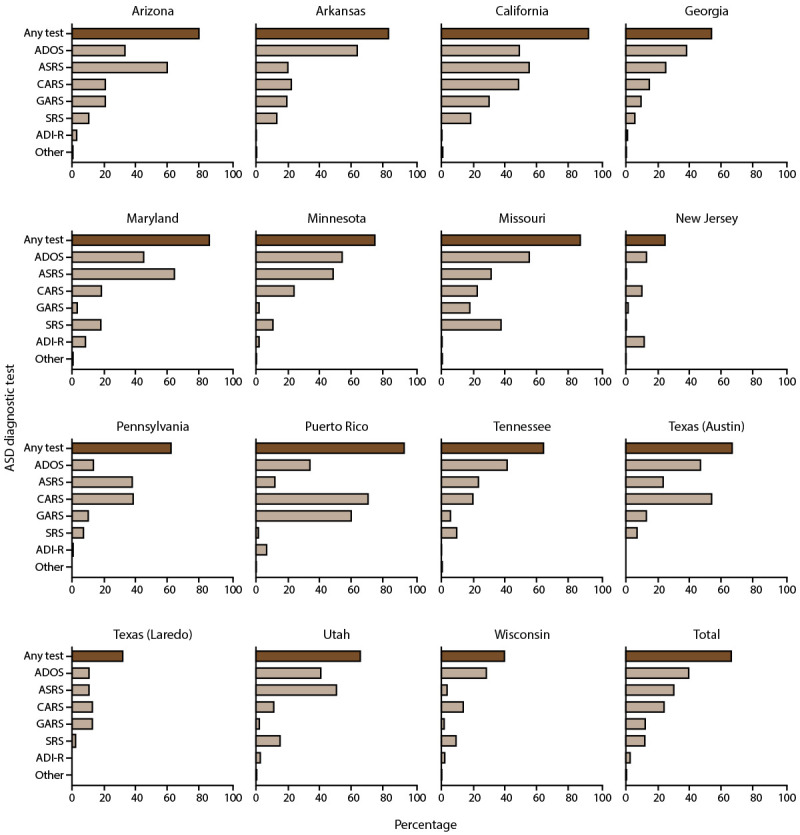
“The most common tests documented for children aged 8 years were the Autism Diagnostic Observation Schedule, Autism Spectrum Rating Scales, Childhood Autism Rating Scale, Gilliam Autism Rating Scale, and Social Responsiveness Scale.”
§ Prevalence and Early Identification of Autism Spectrum Disorder Among Children Aged 4 and 8 Years — Autism and Developmental Disabilities Monitoring Network, 16 Sites, United States, 2022 > Abstract > Results
plain- Asserted: passes — The authors put it forward as true.
- Checkable: passes — It can be checked against evidence.
- Load-bearing: unclear — It is unclear whether the paper’s conclusions depend on it.
- Based: passes — The paper gives a reason why it holds.
- Rests on an assumption: The surveillance ASD case definition accurately identifies children with ASD in the surveillance population.
A result the paper reports from its own data — it cites no other source for it, so there is none to check. The quote shows it is in the paper.
In the paper
“ASD prevalence was higher among A/PI, Black, and Hispanic children aged 8 years than White children aged 8 years, continuing a pattern first observed in 2020.”
§ Prevalence and Early Identification of Autism Spectrum Disorder Among Children Aged 4 and 8 Years — Autism and Developmental Disabilities Monitoring Network, 16 Sites, United States, 2022 > Abstract > Interpretation
plaincorrelational- Asserted: passes — The authors put it forward as true.
- Checkable: passes — It can be checked against evidence.
- Load-bearing: passes — The paper’s conclusions depend on it.
- Based: passes — The paper gives a reason why it holds.
- Rests on an assumption: The surveillance ASD case definition accurately identifies children with ASD in the surveillance population.
A result the paper reports from its own data — it cites no other source for it, so there is none to check. The quote shows it is in the paper.
In the paper
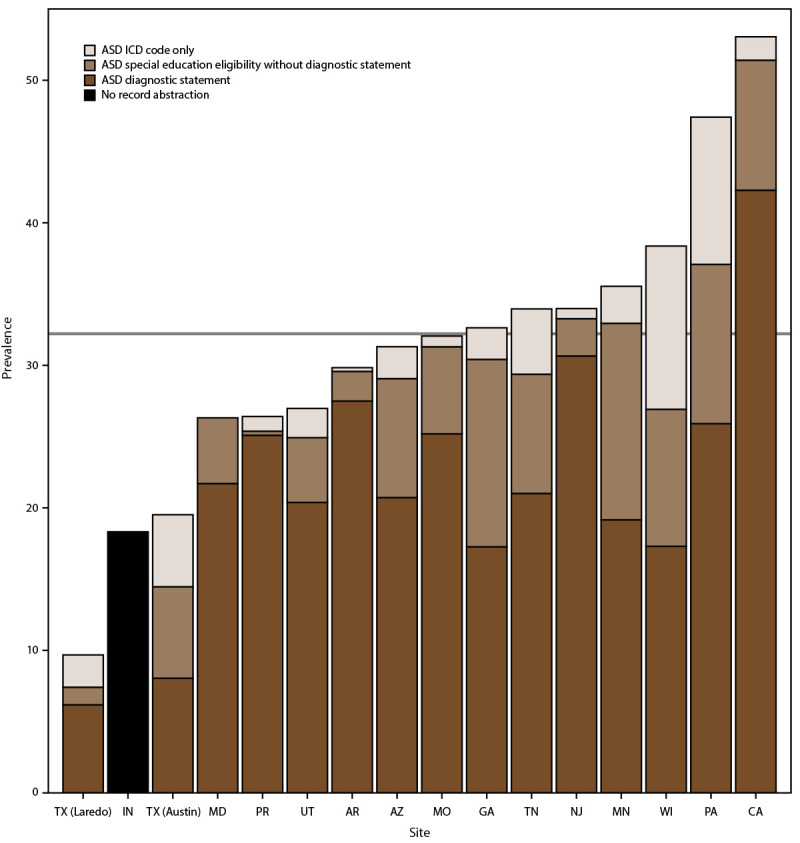
“Among children aged 8 years in 2022, ASD prevalence was 32.2 per 1,000 children (one in 31) across the 16 sites, ranging from 9.7 in Texas (Laredo) to 53.1 in California.”
- Also stated in: § ASD Prevalence Among Children Aged 8 Years · plain
“The overall observed ASD prevalence was 32.2 per 1,000 (one in 31) children aged 8 years and ranged from 9.7 in Texas (Laredo) to 53.1 in California (Table 1).”
§ Prevalence and Early Identification of Autism Spectrum Disorder Among Children Aged 4 and 8 Years — Autism and Developmental Disabilities Monitoring Network, 16 Sites, United States, 2022 > Abstract > Results
plainn = 8,613- Asserted: passes — The authors put it forward as true.
- Checkable: passes — It can be checked against evidence.
- Load-bearing: passes — The paper’s conclusions depend on it.
- Based: passes — The paper gives a reason why it holds.
- Rests on an assumption: The surveillance ASD case definition accurately identifies children with ASD in the surveillance population.
- Rests on an assumption: Children with ASD who are not captured by the available health and education records are negligible or do not substantially bias prevalence estimates.
- Also stated in: § ASD Prevalence Among Children Aged 8 Years · plain
A result the paper reports from its own data — it cites no other source for it, so there is none to check. The quote shows it is in the paper.
In the paper
“Overall, ASD prevalence was lower among non-Hispanic White (White) children (27.7) than among Asian or Pacific Islander (A/PI) (38.2), American Indian or Alaska Native (AI/AN) (37.5), non-Hispanic Black or African American (Black) (36.6), Hispanic or Latino (Hispanic) (33.0), and multiracial children (31.9).”
§ Prevalence and Early Identification of Autism Spectrum Disorder Among Children Aged 4 and 8 Years — Autism and Developmental Disabilities Monitoring Network, 16 Sites, United States, 2022 > Abstract > Results
plaincorrelationaln = 8,613- Asserted: passes — The authors put it forward as true.
- Checkable: passes — It can be checked against evidence.
- Load-bearing: unclear — It is unclear whether the paper’s conclusions depend on it.
- Based: passes — The paper gives a reason why it holds.
- Rests on an assumption: The surveillance ASD case definition accurately identifies children with ASD in the surveillance population.
A result the paper reports from its own data — it cites no other source for it, so there is none to check. The quote shows it is in the paper.
In the paper
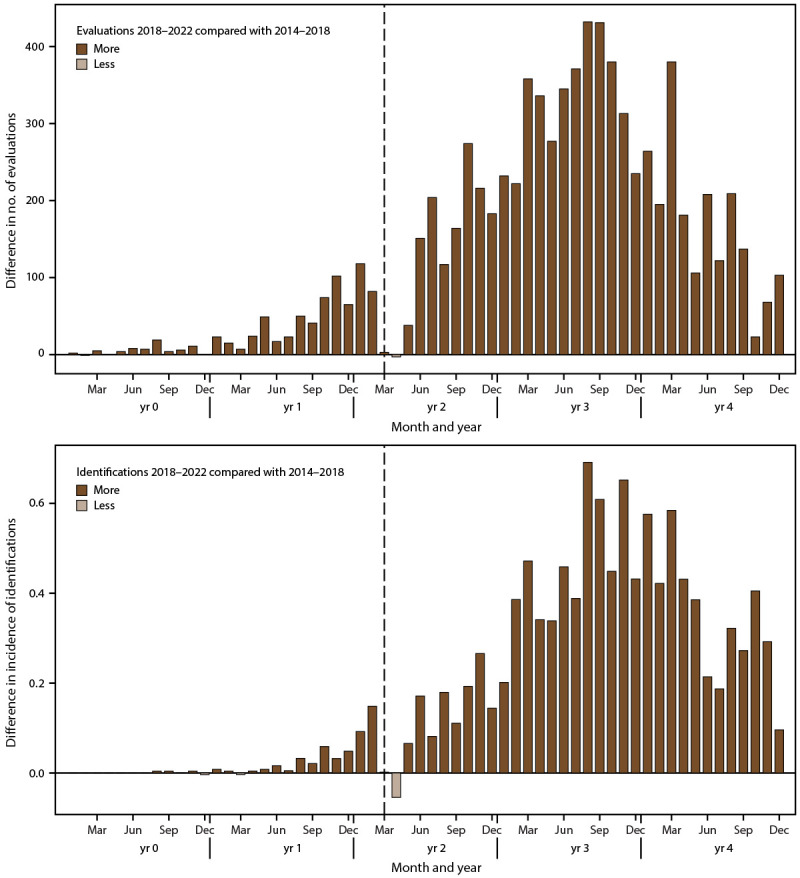
“Children with ASD who were born in 2018 had more evaluations and identification during ages 0–4 years than children with ASD who were born in 2014 during the 0–4 years age window, with an interruption in the pattern in early 2020 coinciding with onset of the COVID-19 pandemic.”
§ Prevalence and Early Identification of Autism Spectrum Disorder Among Children Aged 4 and 8 Years — Autism and Developmental Disabilities Monitoring Network, 16 Sites, United States, 2022 > Abstract > Results
plaincorrelational- Asserted: passes — The authors put it forward as true.
- Checkable: passes — It can be checked against evidence.
- Load-bearing: passes — The paper’s conclusions depend on it.
- Based: passes — The paper gives a reason why it holds.
- Rests on an assumption: The surveillance ASD case definition accurately identifies children with ASD in the surveillance population.
A result the paper reports from its own data — it cites no other source for it, so there is none to check. The quote shows it is in the paper.
In the paper
“ASD was 3.4 times as prevalent among boys (49.2) than girls (14.3).”
§ Prevalence and Early Identification of Autism Spectrum Disorder Among Children Aged 4 and 8 Years — Autism and Developmental Disabilities Monitoring Network, 16 Sites, United States, 2022 > Abstract > Results
plaincorrelationaln = 8,613- Asserted: passes — The authors put it forward as true.
- Checkable: passes — It can be checked against evidence.
- Load-bearing: unclear — It is unclear whether the paper’s conclusions depend on it.
- Based: passes — The paper gives a reason why it holds.
- Rests on an assumption: The surveillance ASD case definition accurately identifies children with ASD in the surveillance population.
A result the paper reports from its own data — it cites no other source for it, so there is none to check. The quote shows it is in the paper.
In the paper
“Among 5,292 (61.4% of 8,613) children aged 8 years with ASD with information on cognitive ability, 39.6% were classified as having an intellectual disability.”
§ Prevalence and Early Identification of Autism Spectrum Disorder Among Children Aged 4 and 8 Years — Autism and Developmental Disabilities Monitoring Network, 16 Sites, United States, 2022 > Abstract > Results
plainn = 5,292- Asserted: passes — The authors put it forward as true.
- Checkable: passes — It can be checked against evidence.
- Load-bearing: unclear — It is unclear whether the paper’s conclusions depend on it.
- Based: passes — The paper gives a reason why it holds.
- Rests on an assumption: The surveillance ASD case definition accurately identifies children with ASD in the surveillance population.
A result the paper reports from its own data — it cites no other source for it, so there is none to check. The quote shows it is in the paper.
In the paper
“Children with ASD who were born in 2018 had more evaluations and identification during ages 0–4 years than children with ASD who were born in 2014 during the 0–4 years age window, with an interruption in the pattern in early 2020 coinciding with onset of the COVID-19 pandemic.”
§ Prevalence and Early Identification of Autism Spectrum Disorder Among Children Aged 4 and 8 Years — Autism and Developmental Disabilities Monitoring Network, 16 Sites, United States, 2022 > Abstract > Results
plaincorrelational- Asserted: passes — The authors put it forward as true.
- Checkable: passes — It can be checked against evidence.
- Load-bearing: unclear — It is unclear whether the paper’s conclusions depend on it.
- Based: passes — The paper gives a reason why it holds.
- Rests on an assumption: The surveillance ASD case definition accurately identifies children with ASD in the surveillance population.
A result the paper reports from its own data — it cites no other source for it, so there is none to check. The quote shows it is in the paper.
In the paper
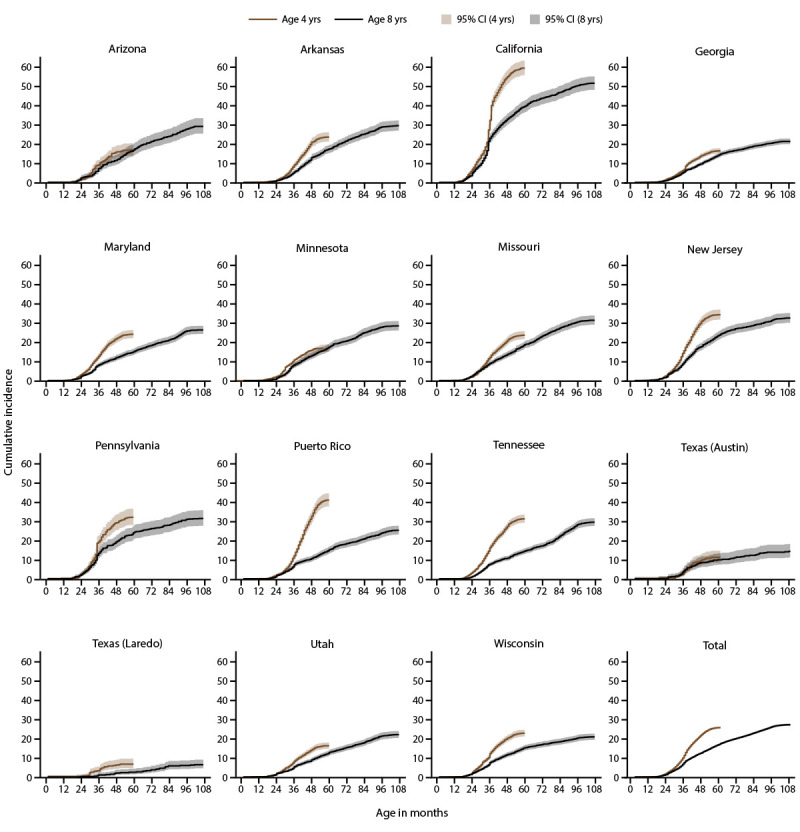
“Overall cumulative incidence of ASD diagnosis or eligibility by age 48 months was 1.7 times as high among those born in 2018 compared with those born in 2014 and ranged from 1.4 times as high in Arizona and Georgia to 3.1 times as high in Puerto Rico.”
§ Prevalence and Early Identification of Autism Spectrum Disorder Among Children Aged 4 and 8 Years — Autism and Developmental Disabilities Monitoring Network, 16 Sites, United States, 2022 > Abstract > Results
plaincorrelational- Asserted: passes — The authors put it forward as true.
- Checkable: passes — It can be checked against evidence.
- Load-bearing: passes — The paper’s conclusions depend on it.
- Based: passes — The paper gives a reason why it holds.
- Rests on an assumption: The surveillance ASD case definition accurately identifies children with ASD in the surveillance population.
- It may state two separate claims as one. 25
- Probably not a substantial claim. 13
A result the paper reports from its own data — it cites no other source for it, so there is none to check. The quote shows it is in the paper.
In the paper
“Intellectual disability was present among 52.8% of Black, 50.0% of AI/AN, 43.9% of A/PI, 38.8% of Hispanic, 32.7% of White, and 31.2% of multiracial children with ASD.”
§ Prevalence and Early Identification of Autism Spectrum Disorder Among Children Aged 4 and 8 Years — Autism and Developmental Disabilities Monitoring Network, 16 Sites, United States, 2022 > Abstract > Results
plaincorrelational- Asserted: passes — The authors put it forward as true.
- Checkable: passes — It can be checked against evidence.
- Load-bearing: unclear — It is unclear whether the paper’s conclusions depend on it.
- Based: passes — The paper gives a reason why it holds.
It may state two separate claims as one.
- Rests on an assumption: The surveillance ASD case definition accurately identifies children with ASD in the surveillance population.
A result the paper reports from its own data — it cites no other source for it, so there is none to check. The quote shows it is in the paper.
In the paper
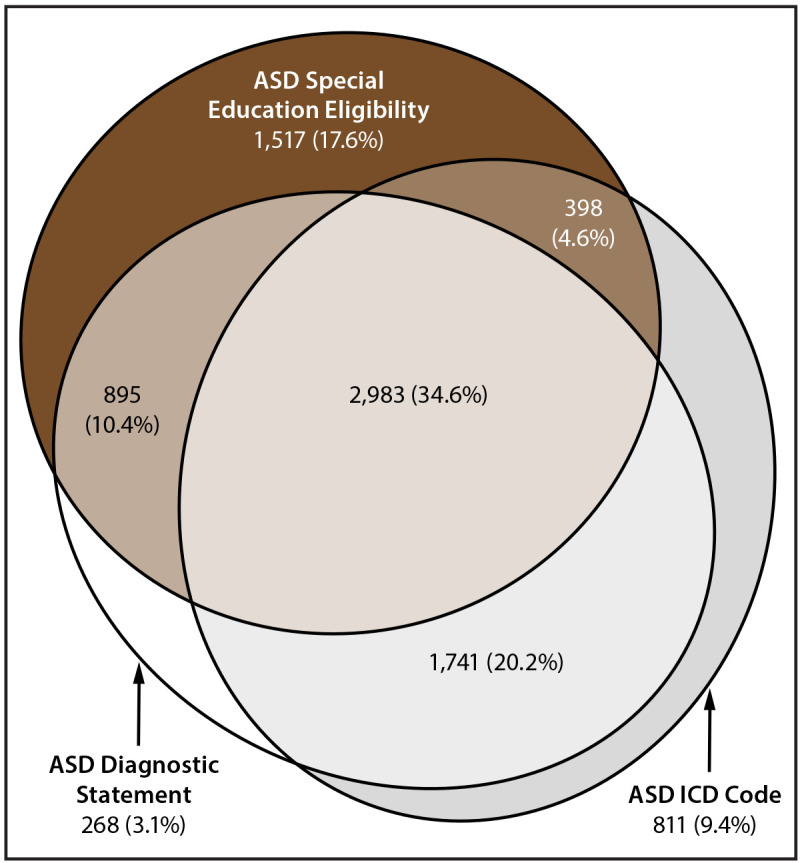
“Of these 8,613 children, 68.4% had a documented diagnostic statement of ASD, 67.3% had a documented autism special education eligibility, and 68.9% had a documented ASD ICD-9 or ICD-10 code.”
§ Prevalence and Early Identification of Autism Spectrum Disorder Among Children Aged 4 and 8 Years — Autism and Developmental Disabilities Monitoring Network, 16 Sites, United States, 2022 > Abstract > Results
plainn = 8,613- Asserted: passes — The authors put it forward as true.
- Checkable: passes — It can be checked against evidence.
- Load-bearing: passes — The paper’s conclusions depend on it.
- Based: passes — The paper gives a reason why it holds.
It may state two separate claims as one.
- Rests on an assumption: The surveillance ASD case definition accurately identifies children with ASD in the surveillance population.
A result the paper reports from its own data — it cites no other source for it, so there is none to check. The quote shows it is in the paper.
In the paper
“Variability was also observed in where children were identified (i.e., in a health or education setting), the frequency of cognitive and IQ testing, the proportion of children with IQ ≤70, and the use of ASD diagnostic tests.”
§ Prevalence and Early Identification of Autism Spectrum Disorder Among Children Aged 4 and 8 Years — Autism and Developmental Disabilities Monitoring Network, 16 Sites, United States, 2022 > Discussion
plain- Asserted: passes — The authors put it forward as true.
- Checkable: passes — It can be checked against evidence.
- Load-bearing: passes — The paper’s conclusions depend on it.
- Based: passes — The paper gives a reason why it holds.
It may state two separate claims as one.
A result the paper reports from its own data — it cites no other source for it, so there is none to check. The quote shows it is in the paper.
In the paper
“Prevalence of suspected ASD was 3.1 per 1,000 children aged 4 years, which translated to one child suspected of having ASD for every 10 children identified with ASD among children aged 4 years”
§ Prevalence and Early Identification of Autism Spectrum Disorder Among Children Aged 4 and 8 Years — Autism and Developmental Disabilities Monitoring Network, 16 Sites, United States, 2022 > Results > Early ASD Identification Among Children Aged 4 and 8 Years
plain- Asserted: passes — The authors put it forward as true.
- Checkable: passes — It can be checked against evidence.
- Load-bearing: unclear — It is unclear whether the paper’s conclusions depend on it.
- Based: passes — The paper gives a reason why it holds.
It may state two separate claims as one.
A result the paper reports from its own data — it cites no other source for it, so there is none to check. The quote shows it is in the paper.
In the paper
“The most common autism test documented among children aged 4 years with ASD was the CARS (38.0%), followed by the ADOS (31.7%), ASRS (21.1%), TELE-ASD-PEDS (8.7%), SRS (8.1%), GARS (6.2%), and ADI-R (3.8%).”
§ Prevalence and Early Identification of Autism Spectrum Disorder Among Children Aged 4 and 8 Years — Autism and Developmental Disabilities Monitoring Network, 16 Sites, United States, 2022 > Results > ASD Testing Among Children Aged 4 and 8 Years
plain- Asserted: passes — The authors put it forward as true.
- Checkable: passes — It can be checked against evidence.
- Load-bearing: unclear — It is unclear whether the paper’s conclusions depend on it.
- Based: passes — The paper gives a reason why it holds.
It may state two separate claims as one.
A result the paper reports from its own data — it cites no other source for it, so there is none to check. The quote shows it is in the paper.
In the paper
“The pattern of more evaluations and ASD identification among children born in 2018 resumed by June 2020 (Figure 5) and varied by site”
§ Prevalence and Early Identification of Autism Spectrum Disorder Among Children Aged 4 and 8 Years — Autism and Developmental Disabilities Monitoring Network, 16 Sites, United States, 2022 > Results > Evaluation and Identification After COVID-19 Pandemic Onset
plaincorrelational- Asserted: passes — The authors put it forward as true.
- Checkable: passes — It can be checked against evidence.
- Load-bearing: unclear — It is unclear whether the paper’s conclusions depend on it.
- Based: passes — The paper gives a reason why it holds.
It may state two separate claims as one.
A result the paper reports from its own data — it cites no other source for it, so there is none to check. The quote shows it is in the paper.
In the paper
“The Georgia site was the only site that met the threshold for statistical precision for AI/AN prevalence; the site-specific prevalence per 1,000 was 204.5 (111.5–345.0).”
§ Prevalence and Early Identification of Autism Spectrum Disorder Among Children Aged 4 and 8 Years — Autism and Developmental Disabilities Monitoring Network, 16 Sites, United States, 2022 > Results > ASD Prevalence Among Children Aged 8 Years
plain- Asserted: passes — The authors put it forward as true.
- Checkable: passes — It can be checked against evidence.
- Load-bearing: unclear — It is unclear whether the paper’s conclusions depend on it.
- Based: passes — The paper gives a reason why it holds.
It may state two separate claims as one.
A result the paper reports from its own data — it cites no other source for it, so there is none to check. The quote shows it is in the paper.
In the paper
“Significant differences for Pearson chi-square tests for proportion of Black children with IQ ≤70 among children with ASD versus A/PI, Hispanic, multiracial, or White (each comparison p<0.001); A/PI children with IQ ≤70 among children with ASD versus multiracial or White (each comparison p<0.001); Hispanic children with IQ ≤70 among children with ASD versus multiracial (p = 0.02) or White children”
§ Prevalence and Early Identification of Autism Spectrum Disorder Among Children Aged 4 and 8 Years — Autism and Developmental Disabilities Monitoring Network, 16 Sites, United States, 2022 > Results > Cognitive Ability Among Children with ASD Aged 8 Years
plaincorrelationaln = 8,613 ·- Asserted: passes — The authors put it forward as true.
- Checkable: passes — It can be checked against evidence.
- Load-bearing: unclear — It is unclear whether the paper’s conclusions depend on it.
- Based: passes — The paper gives a reason why it holds.
It may state two separate claims as one.
A result the paper reports from its own data — it cites no other source for it, so there is none to check. The quote shows it is in the paper.
In the paper
“| Total | 49.2 (48.1–50.3) | 14.3 (13.7–15.0) | 3.4 (3.3–3.6)** |”
§ Prevalence and Early Identification of Autism Spectrum Disorder Among Children Aged 4 and 8 Years — Autism and Developmental Disabilities Monitoring Network, 16 Sites, United States, 2022 > Results > ASD Prevalence Among Children Aged 8 Years
plain- Asserted: passes — The authors put it forward as true.
- Checkable: passes — It can be checked against evidence.
- Load-bearing: passes — The paper’s conclusions depend on it.
- Based: passes — The paper gives a reason why it holds.
It may state two separate claims as one.
A result the paper reports from its own data — it cites no other source for it, so there is none to check. The quote shows it is in the paper.
In the paper
“Similar percentages of girls and boys with ASD had data on cognitive ability (61.0 and 61.7%, respectively).”
§ Prevalence and Early Identification of Autism Spectrum Disorder Among Children Aged 4 and 8 Years — Autism and Developmental Disabilities Monitoring Network, 16 Sites, United States, 2022 > Results > Cognitive Ability Among Children with ASD Aged 8 Years
plain- Asserted: passes — The authors put it forward as true.
- Checkable: passes — It can be checked against evidence.
- Load-bearing: fails — The paper’s conclusions may not depend on it.
- Based: passes — The paper gives a reason why it holds.
Probably not a substantial claim. The paper’s conclusions may not depend on it.
A result the paper reports from its own data — it cites no other source for it, so there is none to check. The quote shows it is in the paper.
In the paper
“This pattern was consistent at most (13 of 16) sites, ranging from 1.4 times as high in Arizona and Georgia to 3.1 times as high in Puerto Rico.”
§ Prevalence and Early Identification of Autism Spectrum Disorder Among Children Aged 4 and 8 Years — Autism and Developmental Disabilities Monitoring Network, 16 Sites, United States, 2022 > Results > Early ASD Identification Among Children Aged 4 and 8 Years
plaincorrelational- Asserted: passes — The authors put it forward as true.
- Checkable: passes — It can be checked against evidence.
- Load-bearing: unclear — It is unclear whether the paper’s conclusions depend on it.
- Based: passes — The paper gives a reason why it holds.
It may state two separate claims as one.
A result the paper reports from its own data — it cites no other source for it, so there is none to check. The quote shows it is in the paper.
In the paper
“the top five eligibility categories were autism (77.7% of children); speech or language impairment (24.7%); health, physical, or other disability (7.9%); developmental delay (6.9%); and intellectual disability (3.6%).”
§ Prevalence and Early Identification of Autism Spectrum Disorder Among Children Aged 4 and 8 Years — Autism and Developmental Disabilities Monitoring Network, 16 Sites, United States, 2022 > Results > Presence of ASD Diagnostic Statements, Special Education Eligibility, and ICD Codes Among Children Aged 8 Years
plain- Asserted: passes — The authors put it forward as true.
- Checkable: passes — It can be checked against evidence.
- Load-bearing: unclear — It is unclear whether the paper’s conclusions depend on it.
- Based: passes — The paper gives a reason why it holds.
It may state two separate claims as one.
A result the paper reports from its own data — it cites no other source for it, so there is none to check. The quote shows it is in the paper.
In the paper
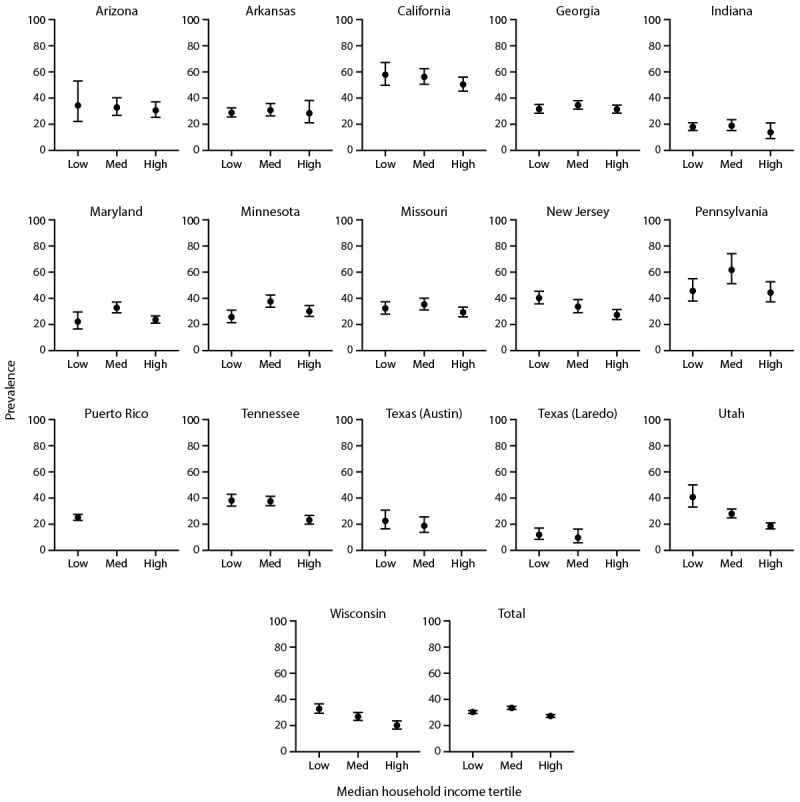
“lower neighborhood MHI was associated with higher ASD prevalence for five sites (New Jersey, Tennessee, Texas [Laredo], Utah, and Wisconsin) and overall (although the overall trend was not monotonic)”
§ Prevalence and Early Identification of Autism Spectrum Disorder Among Children Aged 4 and 8 Years — Autism and Developmental Disabilities Monitoring Network, 16 Sites, United States, 2022 > Results > ASD Prevalence Among Children Aged 8 Years
plaincorrelational- Asserted: passes — The authors put it forward as true.
- Checkable: passes — It can be checked against evidence.
- Load-bearing: unclear — It is unclear whether the paper’s conclusions depend on it.
- Based: passes — The paper gives a reason why it holds.
It may state two separate claims as one.
A result the paper reports from its own data — it cites no other source for it, so there is none to check. The quote shows it is in the paper.
In the paper
“ASD prevalence per 1,000 children aged 4 years in the 16 sites combined was 29.3, which was 0.9 times the overall prevalence among children aged 8 years in 2022”
§ Prevalence and Early Identification of Autism Spectrum Disorder Among Children Aged 4 and 8 Years — Autism and Developmental Disabilities Monitoring Network, 16 Sites, United States, 2022 > Results > Early ASD Identification Among Children Aged 4 and 8 Years
plain- Asserted: passes — The authors put it forward as true.
- Checkable: passes — It can be checked against evidence.
- Load-bearing: unclear — It is unclear whether the paper’s conclusions depend on it.
- Based: passes — The paper gives a reason why it holds.
It may state two separate claims as one.
A result the paper reports from its own data — it cites no other source for it, so there is none to check. The quote shows it is in the paper.
In the paper
“The median age of most recent cognitive test was 67 months overall and varied by site (range = 45 months in Texas [Austin] to 85 months in Puerto Rico)”
§ Prevalence and Early Identification of Autism Spectrum Disorder Among Children Aged 4 and 8 Years — Autism and Developmental Disabilities Monitoring Network, 16 Sites, United States, 2022 > Results > Cognitive Ability Among Children with ASD Aged 8 Years
plain- Asserted: passes — The authors put it forward as true.
- Checkable: passes — It can be checked against evidence.
- Load-bearing: unclear — It is unclear whether the paper’s conclusions depend on it.
- Based: passes — The paper gives a reason why it holds.
It may state two separate claims as one.
A result the paper reports from its own data — it cites no other source for it, so there is none to check. The quote shows it is in the paper.
In the paper
“higher social vulnerability was observed with higher ASD prevalence at five sites (Maryland, New Jersey, Tennessee, Utah, and Wisconsin) and overall (although overall, Maryland and Tennessee trends were not monotonic)”
§ Prevalence and Early Identification of Autism Spectrum Disorder Among Children Aged 4 and 8 Years — Autism and Developmental Disabilities Monitoring Network, 16 Sites, United States, 2022 > Results > ASD Prevalence Among Children Aged 8 Years
plaincorrelational- Asserted: passes — The authors put it forward as true.
- Checkable: passes — It can be checked against evidence.
- Load-bearing: unclear — It is unclear whether the paper’s conclusions depend on it.
- Based: passes — The paper gives a reason why it holds.
It may state two separate claims as one.
A result the paper reports from its own data — it cites no other source for it, so there is none to check. The quote shows it is in the paper.
In the paper
“AI/AN-to-White ratios were significant for Georgia (8.5 [95% CI = 4.7–15.5]) and overall (1.4 [95% CI = 1.0–1.9]).”
§ Prevalence and Early Identification of Autism Spectrum Disorder Among Children Aged 4 and 8 Years — Autism and Developmental Disabilities Monitoring Network, 16 Sites, United States, 2022 > Results > ASD Prevalence Among Children Aged 8 Years
plaincorrelational- Asserted: passes — The authors put it forward as true.
- Checkable: passes — It can be checked against evidence.
- Load-bearing: unclear — It is unclear whether the paper’s conclusions depend on it.
- Based: passes — The paper gives a reason why it holds.
It may state two separate claims as one.
A result the paper reports from its own data — it cites no other source for it, so there is none to check. The quote shows it is in the paper.
In the paper
“Among the 11 sites, prevalence was higher in 2022 than in 2020 at nine (from 14.0% to 36.7% higher) and overall (22.2% higher [absolute difference of 6.1 more children with ASD per 1,000 children aged 8 years]).”
§ Prevalence and Early Identification of Autism Spectrum Disorder Among Children Aged 4 and 8 Years — Autism and Developmental Disabilities Monitoring Network, 16 Sites, United States, 2022 > Results > ASD Prevalence Among Children Aged 8 Years
plain- Asserted: passes — The authors put it forward as true.
- Checkable: passes — It can be checked against evidence.
- Load-bearing: passes — The paper’s conclusions depend on it.
- Based: passes — The paper gives a reason why it holds.
It may state two separate claims as one.
- Rests on an assumption: The surveillance ASD case definition accurately identifies children with ASD in the surveillance population.
- Rests on an assumption: Children with ASD who are not captured by the available health and education records are negligible or do not substantially bias prevalence estimates.
The paper states this without a source or data behind it here, so there is nothing to check it against. The quote shows it is in the paper.
In the paper
“Puerto Rico was the site with second-highest prevalence among children aged 4 years, but prevalence among children aged 8 years in Puerto Rico was below the ADDM Network average.”
§ Prevalence and Early Identification of Autism Spectrum Disorder Among Children Aged 4 and 8 Years — Autism and Developmental Disabilities Monitoring Network, 16 Sites, United States, 2022 > Discussion
plain- Asserted: passes — The authors put it forward as true.
- Checkable: passes — It can be checked against evidence.
- Load-bearing: unclear — It is unclear whether the paper’s conclusions depend on it.
- Based: passes — The paper gives a reason why it holds.
It may state two separate claims as one.
None of the sources cited for this claim have been checked yet.
In the paper
“the American Academy of Pediatrics recommends that pediatric care providers screen all children for ASD at ages 18 and 24 months (2,3).”
§ Prevalence and Early Identification of Autism Spectrum Disorder Among Children Aged 4 and 8 Years — Autism and Developmental Disabilities Monitoring Network, 16 Sites, United States, 2022 > Introduction
What the sources say
- Not checked yetcites [2] Hyman, 2020, Identification, evaluation, and management of children with autism spectrum disorder., Pediatrics source
- Not checked yetcites [3] Lipkin, 2020, Promoting optimal development: identifying infants and young children with developmental disorders through developmental surveillance and screening., Pediatrics source
plain- Asserted: passes — The authors put it forward as true.
- Checkable: passes — It can be checked against evidence.
- Load-bearing: fails — The paper’s conclusions may not depend on it.
- Based: passes — The paper gives a reason why it holds.
Probably not a substantial claim. The paper’s conclusions may not depend on it.
In the paper
“Before 2016, the highest ASD prevalence was observed among White children and in children from neighborhoods with higher socioeconomic status (SES) (7).”
§ Prevalence and Early Identification of Autism Spectrum Disorder Among Children Aged 4 and 8 Years — Autism and Developmental Disabilities Monitoring Network, 16 Sites, United States, 2022 > Introduction
What the sources say
- Not checked yetcites [7] Durkin, 2017, Autism spectrum disorder among US children (2002–2010): socioeconomic, racial, and ethnic disparities., Am J Public Health source
plaincorrelational- Asserted: passes — The authors put it forward as true.
- Checkable: passes — It can be checked against evidence.
- Load-bearing: unclear — It is unclear whether the paper’s conclusions depend on it.
- Based: passes — The paper gives a reason why it holds.
It may state two separate claims as one.
None of the sources cited for this claim have been checked yet.
In the paper
“Although prevalence has been lower among children aged 4 years than aged 8 years in each reporting year, comparing cumulative incidence of identification by age 48 months has consistently indicated higher rates of ASD identification in younger cohorts (i.e., children born more recently) (9–11).”
§ Prevalence and Early Identification of Autism Spectrum Disorder Among Children Aged 4 and 8 Years — Autism and Developmental Disabilities Monitoring Network, 16 Sites, United States, 2022 > Introduction
What the sources say
- Not checked yetcites [9] Shaw, 2020, Early identification of autism spectrum disorder among children aged 4 years—Early Autism and Developmental Disabilities Monitoring Network, six sites, United States, 2016., MMWR Surveill Summ source
- Not checked yetcites [10] Shaw, 2021, Early identification of autism spectrum disorder among children aged 4 years—Autism and Developmental Disabilities Monitoring Network, 11 sites, United States, 2018., MMWR Surveill Summ source
- Not checked yetcites [11] Shaw, 2023, Early identification of autism spectrum disorder among children aged 4 years—Autism and Developmental Disabilities Monitoring Network, 11 sites, United States, 2020., MMWR Surveill Summ source
hedgedcorrelational- Asserted: passes — The authors put it forward as true.
- Checkable: passes — It can be checked against evidence.
- Load-bearing: unclear — It is unclear whether the paper’s conclusions depend on it.
- Based: passes — The paper gives a reason why it holds.
It may state two separate claims as one.
In the paper
“A report that presented data collected in 2020 found interruptions to early identification during the onset of the COVID-19 pandemic (11).”
§ Prevalence and Early Identification of Autism Spectrum Disorder Among Children Aged 4 and 8 Years — Autism and Developmental Disabilities Monitoring Network, 16 Sites, United States, 2022 > Introduction
What the sources say
- Not checked yetcites [11] Shaw, 2023, Early identification of autism spectrum disorder among children aged 4 years—Autism and Developmental Disabilities Monitoring Network, 11 sites, United States, 2020., MMWR Surveill Summ source
plaindirect- Asserted: passes — The authors put it forward as true.
- Checkable: passes — It can be checked against evidence.
- Load-bearing: fails — The paper’s conclusions may not depend on it.
- Based: passes — The paper gives a reason why it holds.
Probably not a substantial claim. The paper’s conclusions may not depend on it.
What the paper did — it cites no source for this, so there is none to check. The quote shows it is in the paper.
In the paper
“Record abstraction was completed for 15 of the 16 sites for 8,613 children aged 8 years who met the ASD case definition.”
§ Prevalence and Early Identification of Autism Spectrum Disorder Among Children Aged 4 and 8 Years — Autism and Developmental Disabilities Monitoring Network, 16 Sites, United States, 2022 > Abstract > Results
plainn = 8,613- Asserted: passes — The authors put it forward as true.
- Checkable: passes — It can be checked against evidence.
- Load-bearing: fails — The paper’s conclusions may not depend on it.
- Based: passes — The paper gives a reason why it holds.
Probably not a substantial claim. The paper’s conclusions may not depend on it.
In the paper
“Early identification of ASD can help children receive services and supports they might need for their development and to improve long-term outcomes (4).”
§ Prevalence and Early Identification of Autism Spectrum Disorder Among Children Aged 4 and 8 Years — Autism and Developmental Disabilities Monitoring Network, 16 Sites, United States, 2022 > Introduction
What the sources say
- Not checked yetcites [4] Zwaigenbaum, 2015, Early intervention for children with autism spectrum disorder under 3 years of age: recommendations for practice and research., Pediatrics source
hedgedconditional- Asserted: passes — The authors put it forward as true.
- Checkable: fails — It may be too vague to check against evidence.
- Load-bearing: fails — The paper’s conclusions may not depend on it.
- Based: passes — The paper gives a reason why it holds.
Probably not a substantial claim. It may be too vague to check against evidence. The paper’s conclusions may not depend on it.
What the paper did — it cites no source for this, so there is none to check. The quote shows it is in the paper.
In the paper
“A Bayesian hierarchical modelling approach and random-effects restricted maximum likelihood method were also used to calculate overall prevalence and measures of uncertainty (95% Bayesian credible intervals and 95% CIs, respectively) among children aged 8 years to better account for the wide range in prevalence across sites; full details are available (Supplementary Methods 2, https://stacks.cdc.”
§ Prevalence and Early Identification of Autism Spectrum Disorder Among Children Aged 4 and 8 Years — Autism and Developmental Disabilities Monitoring Network, 16 Sites, United States, 2022 > Methods > Analytic Methods
plain- Asserted: passes — The authors put it forward as true.
- Checkable: passes — It can be checked against evidence.
- Load-bearing: passes — The paper’s conclusions depend on it.
- Based: passes — The paper gives a reason why it holds.
Probably not a substantial claim.
The paper states this without a source or data behind it here, so there is nothing to check it against. The quote shows it is in the paper.
In the paper
“and has a local initiative (the Get SET Early model).”
§ Prevalence and Early Identification of Autism Spectrum Disorder Among Children Aged 4 and 8 Years — Autism and Developmental Disabilities Monitoring Network, 16 Sites, United States, 2022 > Discussion
plain- Asserted: passes — The authors put it forward as true.
- Checkable: passes — It can be checked against evidence.
- Load-bearing: passes — The paper’s conclusions depend on it.
- Based: passes — The paper gives a reason why it holds.
Probably not a substantial claim.
What the paper did — it cites no source for this, so there is none to check. The quote shows it is in the paper.
In the paper
“Thirteen sites had data agreements in place with education sources covering 100% of their study areas; three sites had agreements with education data sources covering <100% (Georgia [97.3%], Missouri [68.0%], and Texas [Laredo] [99.7%]).”
§ Prevalence and Early Identification of Autism Spectrum Disorder Among Children Aged 4 and 8 Years — Autism and Developmental Disabilities Monitoring Network, 16 Sites, United States, 2022 > Methods > Case Ascertainment and Surveillance Case Definition
plain- Asserted: passes — The authors put it forward as true.
- Checkable: passes — It can be checked against evidence.
- Load-bearing: fails — The paper’s conclusions may not depend on it.
- Based: passes — The paper gives a reason why it holds.
Probably not a substantial claim. The paper’s conclusions may not depend on it. It may state two separate claims as one.
What the paper did — it cites no source for this, so there is none to check. The quote shows it is in the paper.
In the paper
“Because Indiana did not have data available from record abstraction, Indiana is included in analyses of prevalence (by demographic characteristics, MHI, and SVI) but excluded from other analyses that required data from record abstraction (e.g., co-occurring intellectual disability or presence of evaluation or diagnosis or age at evaluation or diagnosis).”
§ Prevalence and Early Identification of Autism Spectrum Disorder Among Children Aged 4 and 8 Years — Autism and Developmental Disabilities Monitoring Network, 16 Sites, United States, 2022 > Methods > Analytic Methods
plain- Asserted: passes — The authors put it forward as true.
- Checkable: passes — It can be checked against evidence.
- Load-bearing: unclear — It is unclear whether the paper’s conclusions depend on it.
- Based: passes — The paper gives a reason why it holds.
It may state two separate claims as one.
In the paper
“In addition, California has regional centers throughout the state that provide evaluations and service coordination for persons with disabilities and their families (https://www.dds.ca.gov).”
§ Prevalence and Early Identification of Autism Spectrum Disorder Among Children Aged 4 and 8 Years — Autism and Developmental Disabilities Monitoring Network, 16 Sites, United States, 2022 > Discussion
What the sources say
- Not checked yetcites https://www.dds.ca.gov
plain- Asserted: passes — The authors put it forward as true.
- Checkable: passes — It can be checked against evidence.
- Load-bearing: fails — The paper’s conclusions may not depend on it.
- Based: passes — The paper gives a reason why it holds.
Probably not a substantial claim. The paper’s conclusions may not depend on it.
A conclusion the paper draws from its own results — it cites no other source for it, so there is none to check. The quote shows it is in the paper.
In the paper
“Variability in identification practices could affect receipt of services and suggests opportunities to implement successful identification strategies to ensure children in all communities receive the diagnostic and care services they need.”
§ Prevalence and Early Identification of Autism Spectrum Disorder Among Children Aged 4 and 8 Years — Autism and Developmental Disabilities Monitoring Network, 16 Sites, United States, 2022 > Discussion
hedgedconditional- Asserted: passes — The authors put it forward as true.
- Checkable: fails — It may be too vague to check against evidence.
- Load-bearing: passes — The paper’s conclusions depend on it.
- Based: passes — The paper gives a reason why it holds.
Probably not a substantial claim. It may be too vague to check against evidence. It may state two separate claims as one.
What the paper did — it cites no source for this, so there is none to check. The quote shows it is in the paper.
In the paper
“Prevalence estimates with a relative standard error ≥30% were suppressed because of limited statistical precision.”
§ Prevalence and Early Identification of Autism Spectrum Disorder Among Children Aged 4 and 8 Years — Autism and Developmental Disabilities Monitoring Network, 16 Sites, United States, 2022 > Methods > Analytic Methods
plain- Asserted: passes — The authors put it forward as true.
- Checkable: passes — It can be checked against evidence.
- Load-bearing: fails — The paper’s conclusions may not depend on it.
- Based: passes — The paper gives a reason why it holds.
Probably not a substantial claim. The paper’s conclusions may not depend on it.
What the paper did — it cites no source for this, so there is none to check. The quote shows it is in the paper.
In the paper
“All sites participating in 2022 had access to health and education records (Table 1).”
§ Prevalence and Early Identification of Autism Spectrum Disorder Among Children Aged 4 and 8 Years — Autism and Developmental Disabilities Monitoring Network, 16 Sites, United States, 2022 > Methods > Case Ascertainment and Surveillance Case Definition
plain- Asserted: passes — The authors put it forward as true.
- Checkable: passes — It can be checked against evidence.
- Load-bearing: fails — The paper’s conclusions may not depend on it.
- Based: passes — The paper gives a reason why it holds.
Probably not a substantial claim. The paper’s conclusions may not depend on it.
In the paper
“As part of the initiative, hundreds of local pediatricians have been trained to screen and refer children for assessment as early as possible, which could result in higher identification of ASD, especially at early ages (17).”
§ Prevalence and Early Identification of Autism Spectrum Disorder Among Children Aged 4 and 8 Years — Autism and Developmental Disabilities Monitoring Network, 16 Sites, United States, 2022 > Discussion
What the sources say
- Not checked yetcites [17] Pierce, 2021, Get SET Early to identify and treatment refer autism spectrum disorder at 1 year and discover factors that influence early diagnosis., J Pediatr source
hedgedconditional- Asserted: passes — The authors put it forward as true.
- Checkable: passes — It can be checked against evidence.
- Load-bearing: passes — The paper’s conclusions depend on it.
- Based: passes — The paper gives a reason why it holds.
It may state two separate claims as one.
A conclusion the paper draws from its own results — it cites no other source for it, so there is none to check. The quote shows it is in the paper.
In the paper
“Another reason for differences in prevalence could be whether children have insurance coverage or meet eligibility criteria for access to early intervention services.”
§ Prevalence and Early Identification of Autism Spectrum Disorder Among Children Aged 4 and 8 Years — Autism and Developmental Disabilities Monitoring Network, 16 Sites, United States, 2022 > Discussion
hedgedconditional- Asserted: passes — The authors put it forward as true.
- Checkable: passes — It can be checked against evidence.
- Load-bearing: fails — The paper’s conclusions may not depend on it.
- Based: passes — The paper gives a reason why it holds.
Probably not a substantial claim. The paper’s conclusions may not depend on it.
In the paper
“Pennsylvania, the site with second highest prevalence among children aged 8 years, has state Medicaid policy that includes children with physical, developmental, mental health, or intellectual disabilities regardless of parents’ income (18).”
§ Prevalence and Early Identification of Autism Spectrum Disorder Among Children Aged 4 and 8 Years — Autism and Developmental Disabilities Monitoring Network, 16 Sites, United States, 2022 > Discussion
What the sources say
- Not checked yetcites [18] Commonwealth of Pennsylvania, Department of Human Services. Medicaid for children with special needs. Harrisburg, PA: Commonwealth of Pennsylvania, Department of Human Services; 2024. https://www.pa.gov/agencies/dhs/resources/medicaid/medicaid-children-special-needs-ph95.html
plain- Asserted: passes — The authors put it forward as true.
- Checkable: passes — It can be checked against evidence.
- Load-bearing: passes — The paper’s conclusions depend on it.
- Based: passes — The paper gives a reason why it holds.
It may state two separate claims as one.
The paper relies on this without support.
The surveillance ASD case definition accurately identifies children with ASD in the surveillance population.
“children aged 8 years (born in 2014) or aged 4 years (born in 2018) met the surveillance ASD case definition if they lived in the surveillance area at any time in 2022 and they received 1) an ASD diagnostic statement in a comprehensive developmental evaluation, 2) autism special education eligibility, or 3) an ASD ICD-9 code in the 299 range or ICD-10 code of F84.0, F84.3, F84.5, F84.8, or F84.9.”
The paper relies on this without support.
Children with ASD who are not captured by the available health and education records are negligible or do not substantially bias prevalence estimates.
“All sites participating in 2022 had access to health and education records (Table 1).”
The authors state this as an assumption.
The methodology assumes that all Puerto Rico residents are Hispanic.
“This methodology assumes that all Puerto Rico residents are Hispanic.”
The paper relies on this without support.
Research has not demonstrated that living in certain communities puts children at greater risk for developing ASD.
“Research has not demonstrated that living in certain communities puts children at greater risk for developing ASD.”
Self-check
Percentages, sums and reported differences re-computed from the paper’s own numbers.
Each contradiction between two passages listed here was confirmed by an independent check.
Rated minor: it would not touch a result — a value no result rests on, a p-value that stays on the same side of the significance level, or a conflict that is clerical, resolved elsewhere in the paper, or outside its own findings.
In the paper
§ Prevalence and Early Identification of Autism Spectrum Disorder Among Children Aged 4 and 8 Years — Autism and Developmental Disabilities Monitoring Network, 16 Sites, United States, 2022 > Discussion
“In 2022, across the 13 sites with higher cumulative incidence of identification by age 48 months among children aged 4 years (born in 2018) compared with children aged 8 years (born in 2014), identification was 40%–300% higher in the younger group.”
§ Prevalence and Early Identification of Autism Spectrum Disorder Among Children Aged 4 and 8 Years — Autism and Developmental Disabilities Monitoring Network, 16 Sites, United States, 2022 > Results > Early ASD Identification Among Children Aged 4 and 8 Years
“This pattern was consistent at most (13 of 16) sites, ranging from 1.4 times as high in Arizona and Georgia to 3.1 times as high in Puerto Rico.”
Rated minor: it would not touch a result — a value no result rests on, a p-value that stays on the same side of the significance level, or a conflict that is clerical, resolved elsewhere in the paper, or outside its own findings.
In the paper
§ Prevalence and Early Identification of Autism Spectrum Disorder Among Children Aged 4 and 8 Years — Autism and Developmental Disabilities Monitoring Network, 16 Sites, United States, 2022 > Abstract > Results
“All three elements of the ASD case definition were present for 34.6% of children aged 8 years with ASD.”
§ Prevalence and Early Identification of Autism Spectrum Disorder Among Children Aged 4 and 8 Years — Autism and Developmental Disabilities Monitoring Network, 16 Sites, United States, 2022 > Results > Presence of ASD Diagnostic Statements, Special Education Eligibility, and ICD Codes Among Children Aged 8 Years
“A majority (69.9%) of children with ASD had at least two of the three types of ASD identification documented in their records and 34.7% had all three types (Figure 3).”
Citations
Cites
Diagnostic and Statistical Manual of Mental Disorders
American Psychiatric Association (2022) · doi:10.1176/appi.books.9780890425787 · Cited by 23,476
Maenner, M. J., Warren, Z., Williams, A. R., Amoakohene, E., Bakian, A. V., Bilder, D. A., Durkin, M. S., Fitzgerald, R. T., Furnier, S. M., Hughes, M. M., et al. (2023) · MMWR. Surveillance Summaries · doi:10.15585/mmwr.ss7202a1 · Cited by 2,706
Self-citationMaenner, M. J., Shaw, K. A., Bakian, A. V., Bilder, D. A., Durkin, M. S., Esler, A., Furnier, S. M., Hallas, L., Hall-Lande, J., Hudson, A., et al. (2021) · MMWR. Surveillance Summaries · doi:10.15585/mmwr.ss7011a1 · Cited by 1,818 · cited 4×
“For example, California has had the highest prevalence among children aged 4 years and 8 years since joining the ADDM Network in 2018 ( 6 , 10,11,13 ) and has a local initiative (the Get SET Early model).”
InfluentialSelf-citationIdentification, Evaluation, and Management of Children With Autism Spectrum Disorder
Hyman, S. L., Levy, S. E., Myers, S. M., COUNCIL ON CHILDREN WITH DISABILITIES, S. O. D. A. B. P., Kuo, D. Z., Apkon, S., Davidson, L. F., Ellerbeck, K. A., Foster, J. E. A., Noritz, G. H., et al. (2020) · Pediatrics · doi:10.1542/peds.2019-3447 · Cited by 1,798
Zwaigenbaum, L., Bauman, M. L., Choueiri, R., Kasari, C., Carter, A., Granpeesheh, D., Mailloux, Z., Smith Roley, S., Wagner, S., Fein, D., et al. (2015) · Pediatrics · doi:10.1542/peds.2014-3667e · Cited by 856
Self-citationLipkin, P. H., Macias, M. M., COUNCIL ON CHILDREN WITH DISABILITIES, S. O. D. A. B. P., Norwood, K. W., Brei, T. J., Davidson, L. F., Davis, B. E., Ellerbeck, K. A., Houtrow, A. J., Hyman, S. L., et al. (2020) · Pediatrics · doi:10.1542/peds.2019-3449 · Cited by 676
Christensen, D., Bilder, D. A., Zahorodny, W. M., Pettygrove, S. D., Durkin, M. S., Fitzgerald, R. T., Rice, C. E., Kurzius‐Spencer, M., Baio, J., & Yeargin‐Allsopp, M. (2015) · Journal of Developmental & Behavioral Pediatrics · doi:10.1097/dbp.0000000000000235 · Cited by 412
Self-citationDurkin, M. S., Maenner, M. J., Baio, J., Christensen, D., Daniels, J., Fitzgerald, R., Imm, P., Lee, L.-C., Schieve, L. A., Van Naarden Braun, K., et al. (2017) · American Journal of Public Health · doi:10.2105/ajph.2017.304032 · Cited by 347
Self-citationPierce, K., Gazestani, V. H., Bacon, E., Barnes, C. C., Cha, D., Nalabolu, S., Lopez, L., Moore, A., Pence-Stophaeros, S., & Courchesne, E. (2019) · JAMA Pediatrics · doi:10.1001/jamapediatrics.2019.0624 · Cited by 333
Self-citationShaw, K. A., Maenner, M. J., Baio, J., EdS1, Washington, A., Christensen, D. L., Wiggins, L. D., Pettygrove, S., Andrews, J. G., White, T., et al. (2020) · MMWR. Surveillance Summaries · doi:10.15585/mmwr.ss6903a1 · Cited by 286
Self-citation
Research works printed but not linked: 1
- Institute of Medicine (US) Committee on Understanding Premature Birth and Assuring Healthy Outcomes. Behrman RE, Butler AS, eds. Sociodemographic and community factors contributing to preterm birth [Chapter 4]. In: Preterm birth: causes, consequences, and prevention. Washington, DC: National Academies Press (US); 2007:124–47.
Cited by
Sorted by citations
Items 101–200 of 862
Edwards, C., Love, A. M. A., Cai, R. Y., Constable, P. A., Love, D. C., Parmar, K. R., Gowen, E., & Gibbs, V. (2025) · Ophthalmic and Physiological Optics · doi:10.1111/opo.70029 · Cited by 2
The Make America Healthy Again Strategy Report
Lurie, P. G., & Gostin, L. O. (2025) · JAMA · doi:10.1001/jama.2025.20093 · Cited by 2
Kenney, C. K., Sreckovic, M. A., & Schultz, T. R. (2025) · Psychology in the Schools · doi:10.1002/pits.70117 · Cited by 2
“Currently, 1 in 31 children 8 years of age in the United States has ASD (Shaw et al. 2025).”
Pereira, G. R., Moniz, A. L. D. A., Lima, H. C. D. P., Henrique, R. D. N. S., Alves, G. H. V. S., Madeira, L. F., & Júnior, S. D. S. H. (2025) · Frontiers in Education · doi:10.3389/feduc.2025.1654608 · Cited by 2
Diamandis, N., van den Anker, J. N., & Denisova, K. (2025) · Translational Psychiatry · doi:10.1038/s41398-025-03655-2 · Cited by 3
Targeting exercise triggered irisin for therapeutic intervention of autism-associated social anxiety
Tatode, A., Gupta, T., Qutub, M., Umekar, M. J., Taksande, B. G., & Premchandani, T. (2025) · Journal of Psychiatric Research · doi:10.1016/j.jpsychires.2025.11.027 · Cited by 2
Facilitating Physical Activity Participation Among Autistic Children and Youth: A Scoping Review
Michaud, M., & Harvey, W. J. (2025) · Journal of Autism and Developmental Disorders · doi:10.1007/s10803-025-07141-y · Cited by 2
Peltekidi, A., Jotautis, V., Tzitiridou‐Chatzopoulou, M., Georgakopoulou, V., Sousamli, A. E., Diamanti, A., Vivilaki, V. G., Orovou, E., & Sarantaki, A. (2025) · Journal of Clinical Medicine · doi:10.3390/jcm14238584 · Cited by 2
“Importantly, the early identification of ASD by 48 months of age showed improvement for children born in 2018 relative to those born in 2014 [2].”
Alshammeri, M., Ahmad, Z., Humayun, M., & Alamri, M. Z. (2025) · Diagnostics · doi:10.3390/diagnostics15243241 · Cited by 2
“According to the Centers for Disease Control and Prevention (CDC, 2022), in regions with advanced screening systems such as the U.S., the prevalence is 1 in 31 children, which has been continuously rising over the last two decades [4].”
Li, J., Yang, X., Qiu, S., Yang, Y., Zhao, N., Hu, J., Barakova, E. I., & Han, T. (2025) · International Journal of Human-Computer Interaction · doi:10.1080/10447318.2025.2597509 · Cited by 2
“Furthermore, autism is more commonly identified in boys than girls, which often yields male-skewed samples even with balanced outreach (Shaw, 2025).”
Süt, E., Ayaslan, Z., Çetin, S., Kaya, T. T., Gundogan, N., Halaç, E., & Çıray, R. O. (2025) · Journal of Autism and Developmental Disorders · doi:10.1007/s10803-025-07192-1 · Cited by 2
Samelson, D., Pfingston, B., & Sneed, L. (2026) · Journal of Autism and Developmental Disorders · doi:10.1007/s10803-025-07203-1 · Cited by 2
Song, S., Wei, Q., Tu, Y., Zhou, S., Zhou, J., Tao, J., Chen, Y., Zhou, H., & You, M. (2026) · Environmental Pollution · doi:10.1016/j.envpol.2026.127670 · Cited by 2
Mental and Physical Health Conditions Among Sexually Diverse and Gender-Diverse Autistic Adults
Holmes, L. G., Qian, Y., Ames, J., Caplan, R., Fraser, C., Gassner, D. L., Onaiwu, M. G., Hunter, M., van der Miesen, A. I. R., Nebeker, L., et al. (2026) · LGBT Health · doi:10.1177/23258292251414440 · Cited by 2
Shaw, K. A., McArthur, D., Bilder, D. A., Hughes, M. M., Rose, C. E., Bakian, A. V., Durkin, M. S., Fitzgerald, R. T., Howerton, E. M., Ladd-Acosta, C. M., et al. (2026) · Archives of Pediatrics and Adolescent Medicine · doi:10.1001/jamapediatrics.2025.6120 · Cited by 4
Self-citationRubinshtein, D., Zamstein, O., Wainstock, T., & Sheiner, E. (2026) · Frontiers in Clinical Diabetes and Healthcare · doi:10.3389/fcdhc.2026.1754571 · Cited by 2
El-Ansary, A. K., AL-Ayadhi, L. Y., Dewedar, A., Bhat, R. S., Saad, R., & Bjørklund, G. (2026) · BioMetals · doi:10.1007/s10534-026-00791-0 · Cited by 2
“The estimated prevalence of ASD has risen significantly in recent decades and currently affects approximately 1 in 31 children in the United States (Shaw et al. 2025).”
dos Santos, J. C. C., dos Santos, L. S., & Gonçalves, C. L. (2026) · Autism · doi:10.1177/13623613261428537 · Cited by 2
Kirikae, H., Kimura, K., Fu, J., Sun, Z., Wang, H., SHIBUYA, H., Kasahara, Y., Miyazaki, H., Yamamoto, Y., Sakai, M., et al. (2026) · Brain Behavior and Immunity · doi:10.1016/j.bbi.2026.106534 · Cited by 2
Starr, A., Qu, X., Hong, X., Safi, S., & Wang, X. (2026) · Journal of Autism and Developmental Disorders · doi:10.1007/s10803-026-07245-z · Cited by 2
Contingent Vocal Imitation Increases Vocalizations of Children With Autism Spectrum Disorder
Crysdale, C., Peláez, M., Mastrogiacomo, L., Harper, J. M., & Weiss, M. J. (2026) · Behavioral Interventions · doi:10.1002/bin.70083 · Cited by 2
The Prevalence of Autistic College Students in the United States
Cox, B. E., Stockwell, K. M., Kepple, C. R., & Francis, C. B. (2026) · Autism in Adulthood · doi:10.1177/25739581251405705 · Cited by 4
John, J. R., Chua, A., & Eapen, V. (2026) · Autism · doi:10.1177/13623613261427131 · Cited by 2
“It is estimated to impact approximately 28.3 million individuals worldwide with prevalence rates ranging from 1% to as high as 3.2% (Barbaro et al., 2022; Li et al., 2022; Shaw, 2025; Talantseva et al., 2023; Zeidan et al., 2022).”
InfluentialMonoallelic and biallelic KDM5A variants identified in patients with autism spectrum disorder
Hayek, L. E., Gogate, A., Chen, W.-C., Kaur, K. J., Zaki, M. S., Wachter, M. D., Schil, K. V., Dublin-Ryan, L., Zamani, M., Bartos, M. N., et al. (2026) · Human Genetics and Genomics Advances · doi:10.1016/j.xhgg.2026.100594 · Cited by 2
“22 In addition to phenotypic heterogeneity, ASD is marked by extreme ge-netic heterogeneity.”
Tazinaffo, L. S., Wolf, B. B., & Sposito, A. M. P. (2026) · Occupational Therapy International · doi:10.1155/oti/5556699 · Cited by 5
“Sensory processing abnormalities are highly prevalent in this population [2, 3], with a reported incidence as high as 96% [4], and are recognized as an important diagnostic criterion [5, 6].”
Kim, H., Dakopolos, A., Harvey, D. J., Surgent, O. J., Heath, B. E., Amaral, D., Rogers, S., Solomon, M., Nordahl, C. W., & Andrews, D. S. (2026) · Autism Research · doi:10.1002/aur.70239 · Cited by 2
“Autism spectrum disorder (ASD or autism) is a neurodevelopmental condition with a prevalence of around 2%–3% (APA 2022; Shaw et al. 2025).”
A prevalence study of Autism Spectrum Disorder in Russia
Talantseva, O. I., Romanova, R. S., Kuznetsova, J. E., Manasevich, V. A., Lind, K. V., Ivashchenko, M. A., Benoit, J. S., & Grigorenko, E. L. (2026) · Frontiers in Psychiatry · doi:10.3389/fpsyt.2026.1790306 · Cited by 2
Morgan, P. L., & Hu, E. H. (2026) · Autism · doi:10.1177/13623613261434432 · Cited by 2
“…for students who are Black or Hispanic and those being raised by parents with low levels of resources than for White students or those being raised by parents with high levels of resources (Nevison & Zahorodny, 2019; O’Sharkey et al., 2025; Roman-Urrestarazu et al., 2021; Shaw et al., 2025).”
Gargus, M., Poyhia, L., Errico, J. P., Rogers, M. K. N., & Tremblay, M. (2026) · Frontiers in Neuroscience · doi:10.3389/fnins.2026.1827714 · Cited by 2
Social Behavior Forecasts Moment‐to‐Moment Changes in RSA in Infants With Autism
Yurkovic‐Harding, J., Narayanan, V., & Bradshaw, J. L. (2026) · Developmental Science · doi:10.1111/desc.70196 · Cited by 2
Oxytocin and autism – A precision medicine framework to unpack mechanisms and evidence
Boulton, K., & Guastella, A. J. (2026) · Neuroscience & Biobehavioral Reviews · doi:10.1016/j.neubiorev.2026.106746 · Cited by 2
Jing, W., Zheng, M., Yang, X., He, B., Zhang, X., & Cui, W. (2026) · Ecotoxicology and Environmental Safety · doi:10.1016/j.ecoenv.2026.120278 · Cited by 3
Chunhong, P. E. N. G., He, J., Xu, K., Wu, X., Wang, D., & Zhang, L. M. (2026) · Research in Developmental Disabilities · doi:10.1016/j.ridd.2026.105335 · Cited by 2
Flood, M. (2026) · Applied Psychology · doi:10.1111/apps.70116 · Cited by 3
Fetal exposure to persistent organic pollutants and childhood autism risk
Petrick, L. M., Dassanayake, P. S., Gennings, C., Guan, H., Akintunde, B., Martinez, M., Regmi, P., Hertz‐Picciotto, I., Arora, M., & Bennett, D. H. (2026) · Environmental Research · doi:10.1016/j.envres.2026.125179 · Cited by 3
Duffy, A., Fremuth, L. E., Doceti, M., Thomas, J., Buswell, C., Lawani, O., Lukens, J. R., & Eyo, U. B. (2026) · Cell Reports · doi:10.1016/j.celrep.2026.117709 · Cited by 4
Vaccine Hesitancy in Autism Spectrum Disorder: A Systematic Review With Meta-Analyses
Gülle, B. T., Doğruyol, A. R., & Ören, M. M. (2026) · Journal of Autism and Developmental Disorders · doi:10.1007/s10803-026-07456-4 · Cited by 2
Profound Autism Prevalence and Assessment Practices in a Population-Based Study
Shaw, K. A., Russell, L., DiRienzo, M., Patrick, M., Valencia‐Prado, M., Bilder, D. A., Esler, A., Pierce, K., Vanegas, S. B., Washington, A., et al. (2026) · Journal of the American Academy of Child & Adolescent Psychiatry · doi:10.1016/j.jaac.2026.09.019 · Cited by 2
Self-citationAutistic adults, financial risk preference, and economic outcomes
Galizzi, M., Hillier, A. J., & Schena, D. A. (2025) · Journal of Behavioral and Experimental Finance · doi:10.1016/j.jbef.2025.101065 · Cited by 2
Positive Autism Screening in Children Born Preterm
Perez, N. L. O., Rios, P., Wang, S. F., Marchman, V. A., Aishworiya, R., & Feldman, H. M. (2025) · Journal of Autism and Developmental Disorders · doi:10.1007/s10803-025-06906-9 · Cited by 2
de Matos, M. B., Vendrametto, V., Molaschi, F., Graziano, F., Vacchetti, M., Svevi, B., Vitiello, B., Marcotulli, D., Delia, G., Fioretto, F., et al. (2025) · Children · doi:10.3390/children12070847 · Cited by 2
“Its prevalence has steadily increased over recent years), with a current incidence of approximately 1 in 31 school-age children in the USA [2] and 1 in 75 in Italy [3].”
de Diego‐Otero, Y., Bodoque-García, A., Quintero-Navarro, C., Medina, R. C., & Salgado-Cacho, J. M. (2025) · Psychiatry International · doi:10.3390/psychiatryint6030107 · Cited by 3
“Recent published data about the prevalence of ASD indicated 1.70 and 1.85% in U.S children aged 4 and 8 years, respectively, while prevalence in Europe ranged between 0.38 and 1.55% [21].”
InfluentialFrye, R. E., Hill, Z. R., Rose, S., McCullough, S. S., Porter-Gill, P. A., & Gill, P. S. (2025) · Genes · doi:10.3390/genes16091065 · Cited by 3
“ASD affects one in 31 children in the United States (US) and with boys being effected four times more than girls [2].”
Qu, X., Li, M., Augustyn, M. C., Pearson, C., Vernon, H. J., Wang, G., Hong, X., Wang, X., & Volk, H. E. (2025) · Journal of the American Academy of Child & Adolescent Psychiatry · doi:10.1016/j.jaac.2025.10.002 · Cited by 2
The role of neuropsychological assessment in the investigation of neurodevelopmental disorders
da Costa, D. I., de Souza, R. V., & Fiamoncini, T. C. (2025) · Jornal de Pediatria · doi:10.1016/j.jped.2025.101470 · Cited by 2
Caregiver perceptions of online peer mentoring for youth with learning differences
Mercier, A., Paquette, B., Hoeft, F., & Richter, C. G. (2026) · Scientific Reports · doi:10.1038/s41598-026-44538-w · Cited by 3
Jones, D. R., Yarger, H. A., & Redcay, E. (2025) · Journal of the American Academy of Child & Adolescent Psychiatry · doi:10.1016/j.jaac.2025.06.010 · Cited by 2
The relationship between dietary patterns and the autistic trait in school-age children
Zhou, S., Guo, Z., Yu, H., Wu, Y., Huang, W., Zhang, Z., & Liang, J. (2025) · Research in Autism · doi:10.1016/j.reia.2025.202633 · Cited by 1
A proposed algorithm for early autism screening in Polish primary care settings – a pilot study
Domarecki, P., Plata‐Nazar, K., & Nazar, W. (2025) · BMC Family Practice · doi:10.1186/s12875-025-02914-x · Cited by 1
Abda, H., & Murry, F. R. (2025) · Journal of Autism and Developmental Disorders · doi:10.1007/s10803-025-06945-2 · Cited by 1
Heart rate defined sustained attention relates to visual attention in autism and fragile X syndrome
Wall, C. A., Smith, K., Shic, F., Kelleher, B., Hogan, A. L., Will, E., & Roberts, J. E. (2025) · Scientific Reports · doi:10.1038/s41598-025-09537-3 · Cited by 1
Lieb, R., Kalb, L. G., Reetzke, R., Ludwig, N. N., Love, C. E., Ng, R., Wexler, D., Gornik, A. E., Holingue, C., & Hong, J. S. (2025) · Autism · doi:10.1177/13623613251355231 · Cited by 1
Nguyen, T. Q., Nguyen, T. K. C., Ha, L. T., & Ngo, T. D. (2025) · Disability and Rehabilitation Assistive Technology · doi:10.1080/17483107.2025.2531236 · Cited by 2
Use of COACH for Autism Screening in Speech and Language Pathology Evaluations; Preliminary Outcomes
Davis, A. L., Chu, S., Scott, L., & Mohiuddin, S. S. (2025) · Journal of Autism and Developmental Disorders · doi:10.1007/s10803-025-06992-9 · Cited by 1
Duncan, A. W., & Tadevich, L. (2025) · Research in Autism · doi:10.1016/j.reia.2025.202660 · Cited by 1
“Current prevalence estimates indicate that over 60 % of autistic individuals do not have a co-occurring intellectual disability (ID; Shaw et al., 2025).”
Exercise as Medicine across the Autism Spectrum: A Conceptualized Framework
Geslak, D. S., Boudreaux, R. T., & Boudreaux, B. D. (2025) · Current Sports Medicine Reports · doi:10.1249/jsr.0000000000001273 · Cited by 1
Autism Spectrum Disorder in the Educational Context: A Detailed Case Report
Tomljenovic, V. (2025) · Cureus · doi:10.7759/cureus.88149 · Cited by 1
“The study by Shaw et al. [2] found that in 2022, the prevalence of autism spectrum disorder (ASD) among eight-year-old children was 32.2 cases per 1,000 (roughly 1 in 31 children) with a male-to-female ratio of 4.5:1.”
InfluentialRethinking Face‐to‐Face Interaction: Lessons from Studies of “Autistic Sociality”
Johannessen, L. E. F. (2025) · Symbolic Interaction · doi:10.1002/symb.70017 · Cited by 1
Athalye‐Jape, G., Pillar, S., Saminathan, S., Wu, K., Sherrard, S., Dudman, E., & Sharp, M. (2025) · Children · doi:10.3390/children12091130 · Cited by 1
“This aligns with the existing literature that 7–8% of preterm children would likely be diagnosed with autism [22–24], compared to a rate of 2–3% in the general population [2,25].”
Brosnan, M., Marikar, S., Punter, M., & Ashwin, C. (2025) · Journal of Autism and Developmental Disorders · doi:10.1007/s10803-025-06987-6 · Cited by 1
Yang, Y., Sun, Z., Zhu, F., & Chen, A. (2025) · Epigenomics · doi:10.1080/17501911.2025.2557186 · Cited by 2
A Way With Words: Do Clinicians Talk Differently When Assessing Autism in Boys vs Girls?
Parish‐Morris, J., & Cola, M. (2025) · Journal of the American Academy of Child & Adolescent Psychiatry · doi:10.1016/j.jaac.2025.09.005 · Cited by 1
Khan, Y. S., Albobali, Y., Amro, A., Saini, P., Nour, L., Chandra, P., AlMeraisi, M. J., & Alabdulla, M. (2025) · Research in Developmental Disabilities · doi:10.1016/j.ridd.2025.105109 · Cited by 1
Viswanathan, P. (2025) · Mental Health and Social Inclusion · doi:10.1108/mhsi-08-2025-0236 · Cited by 1
Cajachagua‐Torres, K. N., Boer, O. D., Louwerse, A., Ghassabian, A., Reiss, I. K. M., Jaddoe, V. W. V., & Marroun, H. E. (2025) · Neurotoxicology and Teratology · doi:10.1016/j.ntt.2025.107561 · Cited by 1
Frost, K. M., Hsu, H., Petruccelli, M., Keehn, R. M., Rue, H. C., Beeler, A., & Broder‐Fingert, S. (2025) · Behavioral Sciences · doi:10.3390/bs15101354 · Cited by 1
“Recent estimates indicate that 1 in 31 children in the United States are autistic (Shaw et al., 2025).”
Cognitive Factors in Mathematical Skill Acquisition in Primary School Children with ASD
Станиславаовна, П. Д., Mamokhina, U. A., Ilyunceva, A. A., & Uskova, O. A. (2025) · Journal of Modern Foreign Psychology · doi:10.17759/jmfp.2025140315 · Cited by 1
Sulaiman, S., Sabri, M. Q. M., Azman, N. A., Ibrahim, S. A. S., Alve, Y. A., Alrashdi, M., & Daud, A. Z. C. (2025) · Child and Adolescent Social Work Journal · doi:10.1007/s10560-025-01051-9 · Cited by 2
“In the United States, 1 in 31 children were identified with ASD in 2022 (Shaw et al., 2022).”
Miller, L. E., & Glad, D. M. (2025) · Journal of Autism and Developmental Disorders · doi:10.1007/s10803-025-07074-6 · Cited by 1
A brief introduction to neurodevelopmental disorders
Karuppusamy, P. A., Uvarajan, D., Iyer, M., Wander, A., Narayanasamy, A., & Kinoshita, M. (2025) · Elsevier eBooks · doi:10.1016/b978-0-443-29898-1.00004-6 · Cited by 1
Young Adulthood Milestones and Supports Within the Context of Autism
Radey, M., Anderson, K. A., Crowley, S., Dolce, E., & Killian, M. (2025) · Journal of Autism and Developmental Disorders · doi:10.1007/s10803-025-07091-5 · Cited by 3
Pınar, Z. V., Küçük, E., Köle, M. T., & Akın, Y. (2025) · Acta Medica Nicomedia · doi:10.53446/actamednicomedia.1753041 · Cited by 1
Estimating Network Adequacy of Autism Service Providers in Affordable Care Act Markets
Yingling, M. E., Hamilton, J., Nastally, B. L., & Dubuque, E. M. (2025) · Behavior Analysis in Practice · doi:10.1007/s40617-025-01103-7 · Cited by 1
Bibliometric Analysis of Publications on Autism Spectrum Disorder in Türkiye
Aşut, G., Aslan, N. Y., Kurt, H. G., & Kahve, A. C. (2025) · Psikiyatride Guncel Yaklasimlar - Current Approaches in Psychiatry · doi:10.18863/pgy.1760622 · Cited by 1
Zhang, R., Wang, C., Guo, Y., & Liu, X. (2025) · Behaviour and Information Technology · doi:10.1080/0144929x.2025.2584204 · Cited by 1
“In the U.S.A., the prevalence of ASD was recently reported to be 1 in 31 children aged 8 years old (Shaw et al. 2025).”
Richter, C., Gilbert, R. K., Smith, B. M., Jarvis, E. N., Holingue, C., Showell, N. N., Morris, S. M., & Choueiri, R. (2025) · Academic Pediatrics · doi:10.1016/j.acap.2025.103175 · Cited by 1
Souza, D. H. I., Calló, D. G., Mano‐Sousa, B. J., Chaves, V. E., & Duarte‐Almeida, J. M. (2025) · Review Journal of Autism and Developmental Disorders · doi:10.1007/s40489-025-00531-z · Cited by 1
Chd8 Deficiency in Zebrafish Causes Autism-Like Behavioral Deficits
Wang, H.-T., Fu, X.-T., Wang, Y.-F., Liu, L., Liu, Z.-Z., & Xu, H. A. (2025) · Journal of Integrative Neuroscience · doi:10.31083/jin44414 · Cited by 1
Sollis, L. J., Wall, D. P., & Washington, P. Y. (2025) · Scientific Reports · doi:10.1038/s41598-025-26131-9 · Cited by 4
Early Pragmatic Communication in Autism and Fragile X Syndrome
Hoffmann, A., Berry‐Kravis, E., & Brady, N. C. (2025) · Journal of Speech Language and Hearing Research · doi:10.1044/2025_jslhr-25-00054 · Cited by 1
Cheng, Y., Shi, J., Wei, Y., Luo, J., Shi, Y., & Jiang, Z. (2025) · Asian Journal of Psychiatry · doi:10.1016/j.ajp.2025.104790 · Cited by 1
Pearson, J. N., BERGMANN, E. D., Johnson, J. A., Lewis, J., Elias, M., Palazzo, K. M., Ross, M., Golden, K., Neff, J., & Painter, J. (2025) · Education and Training in Autism and Developmental Disabilities · doi:10.1177/21541647251400231 · Cited by 1
“Inclusion rates of Black and Hispanic/Latino students have decreased in autism research over the past fi ve years, despite growing awareness and diagnosis in these communities (Shaw et al., 2025; Steinbrenner et al., 2022).”
Hao, Y., Park, H., & Webb, J. B. (2025) · Frontiers in Psychology · doi:10.3389/fpsyg.2025.1612803 · Cited by 1
Family Navigation Engagement and Outcomes for Children With a New Autism Diagnosis
Lin, I. Y., Morgan, A. C., Herringshaw, A. J., Lopez, N. K., Deras, M. J., & Feldman, H. M. (2025) · Journal of Autism and Developmental Disorders · doi:10.1007/s10803-025-07168-1 · Cited by 1
Chericoni, N., Colombino, I., Conti, E., Guainai, G., Riva, B., Qu, L., Apicella, F., Calderoni, S., Tancredi, R., Guzzetta, A., et al. (2025) · Children · doi:10.3390/children12121651 · Cited by 1
“However, although signs of ASD can be detected within the first months of life [7,8] and reliable diagnosis is possible by around 14 months [9], diagnosis in clinical practice typically occurs around 4 years of age, with intervention starting even later [10].”
Use of a Novel Tele-Assessment Tool for the Identification of Autism in Preschool-Aged Children
Corona, L. L., Weitlauf, A. S., Wagner, L., Dixon, A., Foster, T. E., Lavanderos, A. M., Honaker, M., Nicholson, A. G., Stone, C., Swanson, A. R., et al. (2025) · Journal of Autism and Developmental Disorders · doi:10.1007/s10803-025-07144-9 · Cited by 1
Self-citationXu, Y., Kapetanakos, X., Meehan, M., TAM, J. W.-Y., & Vanegas, S. B. (2025) · Behavioral Sciences · doi:10.3390/bs15121693 · Cited by 1
“Adding another layer to this context, data from the CDC’s Autism and Developmental Disabilities Monitoring Network states the prevalence of children diagnosed with autism in the United States to be the highest amongst Asian and Pacific Islanders (Shaw et al., 2025).”
Self-citationZhou, Y., Liu, Z., Ji, X., Zhang, Y., Shen, H., Jiang, S., Shi, Y., Lv, Y., & Huang, J. (2025) · Frontiers in Pediatrics · doi:10.3389/fped.2025.1695990 · Cited by 1
Nevill, R. E. A., Kiernan, B., Richardson, L., Estrada, K., Mazurek, M. O., & Winchel, R. D. P. (2026) · Community Mental Health Journal · doi:10.1007/s10597-026-01689-4 · Cited by 1
Zhan, X., Yuan, C., Kuang, Z., Zhong, Y., & Shi, T. (2025) · Developmental Neurorehabilitation · doi:10.1080/17518423.2025.2597765 · Cited by 1
Zhan, X., Kuang, Z., Li, X., Wang, Y., Yuan, C., Shi, T., Zeng, Y., & Cheng, K. (2025) · Frontiers in Psychiatry · doi:10.3389/fpsyt.2025.1708901 · Cited by 2
“In the United States, the prevalence rate stands at 32.2 per thousand (meaning 1 in every 31 children aged 8 years old) (6).”
InfluentialBurden and risk factors of autism spectrum disorder: global study and analysis
Lin, L., Zhang, Y., Zhou, D., Wang, Q., Wang, X., Sun, J., Li, H., & Cong, F. (2025) · Pediatric Research · doi:10.1038/s41390-025-04641-6 · Cited by 1
Seo, E., Ha, Y.-N., Jeon, P., & Yoo, E. (2025) · Journal of Autism and Developmental Disorders · doi:10.1007/s10803-025-07155-6 · Cited by 1
Buro, A. W., Pimentel, M. F. A., Brakey, H. R., Sowrin, M. S., Sussman, A. L., Gonzales‐Pacheco, D., Gregg, S., Bomke, L. M., Osbourn, P. L., Belone, L., et al. (2025) · Journal of Nutrition Education and Behavior · doi:10.1016/j.jneb.2025.11.013 · Cited by 1
Yu, Y. Y., Wyman, A., Faulk, C. J., Fulop, L. J., Greenberg, R. L., Benecke, R. M., Steinbeck, L. K., Foy, J., Kim, C., Emory, G. O., et al. (2025) · Autism Research · doi:10.1002/aur.70155 · Cited by 1
Kozonis, A., Papadoliopoulou, M., & Margaris, I. (2025) · Children · doi:10.3390/children13010009 · Cited by 1
“Variability in definitions and lack of biological mechanistic data and studies only conducted in animal models are confusing factors and weaken association strength [6,14,15,24–30].”
ESİN, İ. S., Demirdöğen, E. Y., Akıncı, M. A., Turan, B., Ürük, G. T. K., Ucuz, İ., & Dursun, O. B. (2025) · Brain Sciences · doi:10.3390/brainsci16010062 · Cited by 1
“The most recent data from the Centers for Disease Control and Prevention estimate the prevalence to be approximately 1 in 31 children [18–20].”
Advancement on the Association between Gut Microbiota and Autism Spectrum Disorder in Children
Abulaiti, A., Yu, H., Ma, J., Wuji, A., & Chi, H. (2025) · Annals of Nutrition and Metabolism · doi:10.1159/000549716 · Cited by 2
“A 2022 surveillance report across 16 states further indicated that approximately 1 in 31 8-year-old children was diagnosed with ASD [7].”
Enhancing MRI accessibility through community engagement for autistic young adults
Pagán, A. F., Gogola, G., Huang, A., & Loveland, K. A. (2025) · Discover Psychology · doi:10.1007/s44202-025-00562-x · Cited by 1
“ASD, a neurodevelopmental condition characterized by challenges in social communication and restricted, repetitive behaviors [2], has a rising prevalence (approximately 1 in 36 children in the U.S.), with a particularly sharp 30% surge observed in the Latino community between 2018 and 2020 [28].”
Enabulele, A. B. O., Oyebamiji, I., Ikubanni, O., Okwah, M. N., Babalola, W. S., Azeez, O. M., & Olaniyi, A. O. (2025) · Cureus · doi:10.7759/cureus.100513 · Cited by 13
Metadata
- Authors
- Shaw, K. A., Williams, S., Patrick, M. E., Valencia-Prado, M., Durkin, M. S., Howerton, E. M., Ladd-Acosta, C. M., Pas, E. T., Bakian, A. V., Bartholomew, P., Nieves-Muñoz, N., Sidwell, K., Alford, A., Bilder, D. A., DiRienzo, M., Fitzgerald, R. T., Furnier, S. M., Hudson, A. E., Pokoski, O. M., Shea, L., Tinker, S. C., Warren, Z., Zahorodny, W., Agosto-Rosa, H., Anbar, J., Chavez, K. Y., Esler, A., Forkner, A., Grzybowski, A., Agib, A. H., Hallas, L., Lopez, M., Magaña, S., Nguyen, R. H. N., Parker, J., Pierce, K., Protho, T., Torres, H., Vanegas, S. B., Vehorn, A., Zhang, M., Andrews, J., Greer, F., Hall-Lande, J., McArthur, D., Mitamura, M., Montes, A. J., Pettygrove, S., Shenouda, J., Skowyra, C., Washington, A., & Maenner, M. J.
- Affiliations
- Centers for Disease Control and Prevention (US)
- University of Wisconsin–Madison (US)
- Johns Hopkins University (US)
- University of Utah (US)
- University of California San Diego (US)
- National Center on Birth Defects and Developmental Disabilities (US)
- Rutgers New Jersey Medical School (US)
- Pennsylvania Department of Human Services (US)
- Washington University in St. Louis (US)
- University of Arkansas for Medical Sciences (US)
- Vanderbilt University Medical Center (US)
- Puerto Rico Department of Health (PR)
- University of Minnesota (US)
- The University of Texas at Austin (US)
- Arizona State University (US)
- University of Arizona (US)
- Corresponding author
- Shaw, Kelly A.
- ORCID
- Patrick, Mary E.
- Durkin, Maureen S.
- Howerton, Ellen M.
- Ladd-Acosta, Christine M.
- Pas, Elise T.
- Bakian, Amanda V.
- Alford, Amy
- Bilder, Deborah A.
- DiRienzo, Monica
- Fitzgerald, Robert T.
- Furnier, Sarah M.
- Pokoski, Olivia M.
- Shea, Lindsay
- Tinker, Sarah C.
- Warren, Zachary
- Zahorodny, Walter
- Anbar, Joshua
- Esler, Amy
- Lopez, Maya
- Magaña, Sandy
- Nguyen, Ruby H.N.
- Pierce, Karen
- Vanegas, Sandra B.
- Zhang, Minyu
- Andrews, Jennifer
- McArthur, Dedria
- Pettygrove, Sydney
- Shenouda, Josephine
- Washington, Anita
- Maenner, Matthew J.
- Venue
- MMWR. Surveillance Summaries
- Published
- 2025-04-17
- Volume
- 74
- Issue
- 2
- Pages
- 1-22
- ISSN
- 1545-8636 (ISSN-L)
- 1546-0738
- PMC
- PMC12011386
- OpenAlex
- W4409458169
- Semantic Scholar
- ce82e952834c1f4b32c7226767552851cc1f0430
- Cited by
- 867
- References
- 31
- Citations by year
- 2026: 615 · 2025: 252
- FWCI
- 491.83
- Type
- journal article
- Language
- en
- Open access
- diamond
- doi.org
- Licence
- public-domain
- Locations
- MMWR Surveillance Summaries (publishedVersion, public-domain)
- PubMed Central (publishedVersion, public-domain)
- PubMed (publishedVersion)
- Topics
- Life Sciences › Neuroscience › Cognitive Neuroscience › Autism Spectrum Disorder Research
- Health Sciences › Medicine › Psychiatry and Mental health › Child Nutrition and Feeding Issues
- Social Sciences › Psychology › Clinical Psychology › Family and Disability Support Research
- Keywords
- autism spectrum disorder, autism prevalence, sex differences, racial and ethnic disparities, ASD subtypes, developmental disabilities, prevalence, early detection, autism screening
- MeSH terms
- Autism Spectrum Disorder, Child, Child, Preschool, Female, Humans, Male, Population Surveillance, United States, Prevalence, Early Diagnosis
About these checks
Registry, retraction, Cites and statistics results are computed, not judged, with one exception: a printed reference that no index lists is read once by a model before it counts as a citation error. Claims are extracted by a model and kept only when their quote appears verbatim in the text; each cited source is then checked, with a model’s help, for whether it says what the claim relies on. Those verdicts can be wrong — read the claim’s quote and the cited source before relying on one.
A language model drew the claims from the paper on 2026-10-06, under version 3 of the claim definition (model deepseek-v4.1-flash, prompt extract-v3).
A second model labelled each claim on 2026-10-06 (model jev-1.13-20260917, definition revision gold-guideline-v0.2).
Cited sources are checked with a language model’s help (gpt-6-sol).
Statistics and arithmetic are recomputed, not judged.
Confidence bands are shown only for fields calibrated on our annotated test set. None is calibrated yet, so no band is shown.
What counts as a claim ›How we measure confidence ›How we check this ›
Are you an author, or do you see a problem with this page? Request a review
