

The DOI matches its Crossref record; 30 of the 31 references it cites were found in a registry or an index; none of the 21 sources its claims cite is checked for support yet.
Prevalence and Early Identification of Autism Spectrum Disorder Among Children Aged 4 and 8 Years — Autism and Developmental Disabilities Monitoring Network, 16 Sites, United States, 2022
Open accessAbstract
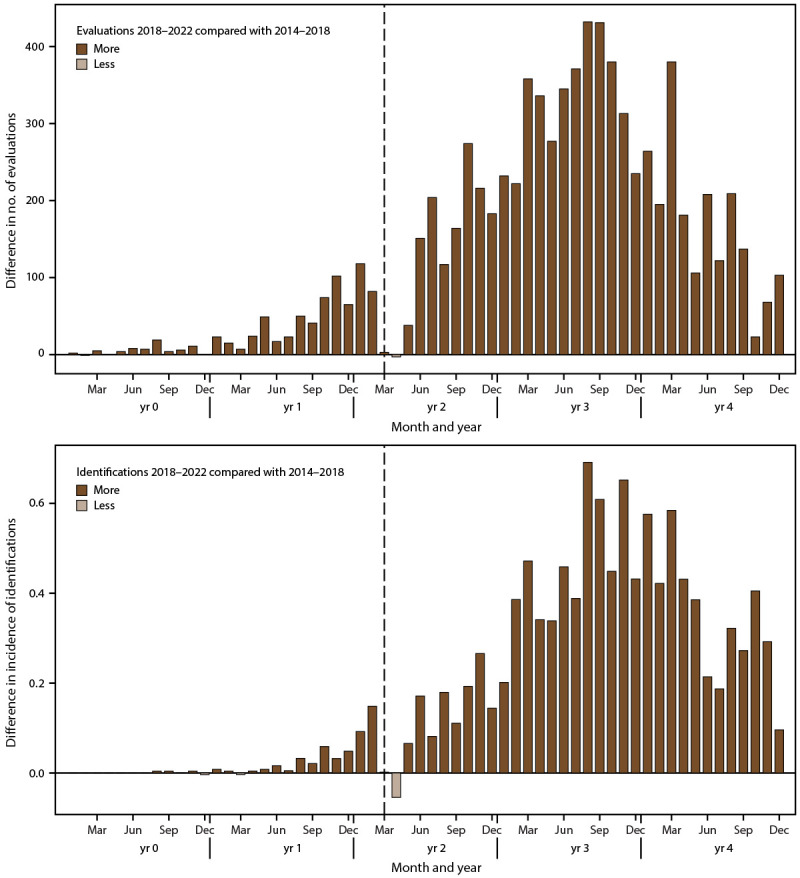
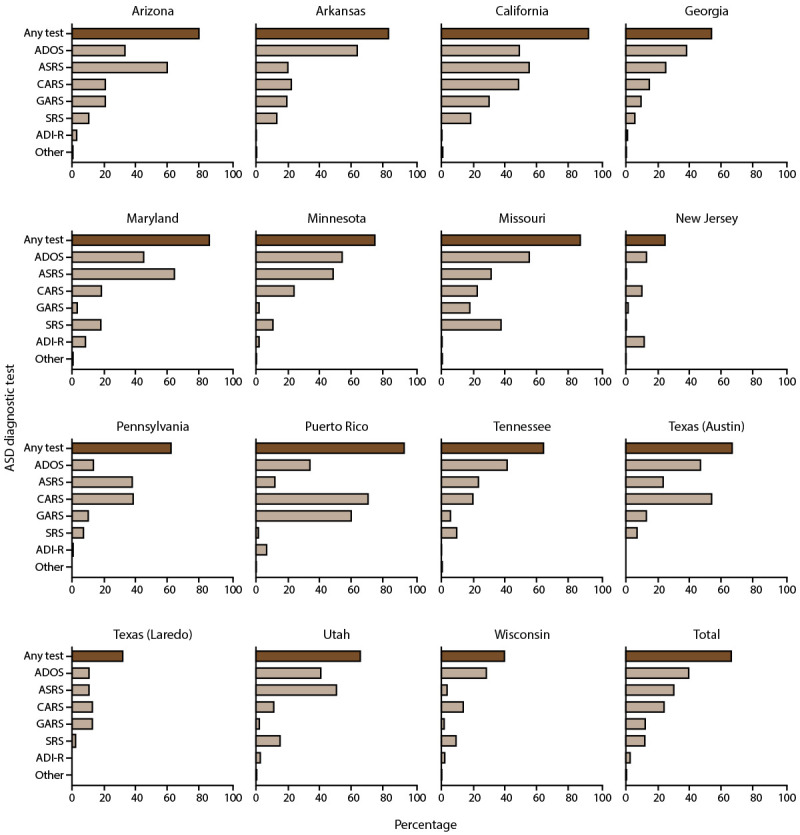
Problem/Condition: Autism spectrum disorder (ASD). Period Covered: 2022. Description of System: The Autism and Developmental Disabilities Monitoring Network is an active surveillance program that estimates prevalence and characteristics of ASD and monitors timing of ASD identification among children aged 4 and 8 years. In 2022, a total of 16 sites (located in Arizona, Arkansas, California, Georgia, Indiana, Maryland, Minnesota, Missouri, New Jersey, Pennsylvania, Puerto Rico, Tennessee, Texas [two sites: Austin and Laredo], Utah, and Wisconsin) conducted surveillance for ASD among children aged 4 and 8 years and suspected ASD among children aged 4 years. Surveillance included children who lived in the surveillance area at any time during 2022. Children were classified as having ASD if they ever received 1) an ASD diagnostic statement in a comprehensive developmental evaluation, 2) autism special education eligibility, or 3) an ASD International Classification of Diseases, Ninth Revision (ICD-9) code in the 299 range or International Classification of Diseases, Tenth Revision (ICD-10) code of F84.0, F84.3, F84.5, F84.8, or F84.9. Children aged 4 years were classified as having suspected ASD if they did not meet the case definition for ASD but had an evaluator's suspicion of ASD documented in a comprehensive developmental evaluation. Results: Among children aged 8 years in 2022, ASD prevalence was 32.2 per 1,000 children (one in 31) across the 16 sites, ranging from 9.7 in Texas (Laredo) to 53.1 in California. The overall observed prevalence estimate was similar to estimates calculated using Bayesian hierarchical and random effects models. ASD was 3.4 times as prevalent among boys (49.2) than girls (14.3). Overall, ASD prevalence was lower among non-Hispanic White (White) children (27.7) than among Asian or Pacific Islander (A/PI) (38.2), American Indian or Alaska Native (AI/AN) (37.5), non-Hispanic Black or African American (Black) (36.6), Hispanic or Latino (Hispanic) (33.0), and multiracial children (31.9). No association was observed between ASD prevalence and neighborhood median household income (MHI) at 11 sites; higher ASD prevalence was associated with lower neighborhood MHI at five sites.Record abstraction was completed for 15 of the 16 sites for 8,613 children aged 8 years who met the ASD case definition. Of these 8,613 children, 68.4% had a documented diagnostic statement of ASD, 67.3% had a documented autism special education eligibility, and 68.9% had a documented ASD ICD-9 or ICD-10 code. All three elements of the ASD case definition were present for 34.6% of children aged 8 years with ASD.Among 5,292 (61.4% of 8,613) children aged 8 years with ASD with information on cognitive ability, 39.6% were classified as having an intellectual disability. Intellectual disability was present among 52.8% of Black, 50.0% of AI/AN, 43.9% of A/PI, 38.8% of Hispanic, 32.7% of White, and 31.2% of multiracial children with ASD. The median age of earliest known ASD diagnosis was 47 months and ranged from 36 months in California to 69.5 months in Texas (Laredo).Cumulative incidence of ASD diagnosis or eligibility by age 48 months was higher among children born in 2018 (aged 4 years in 2022) than children born in 2014 (aged 8 years in 2022) at 13 of the 15 sites that were able to abstract records. Overall cumulative incidence of ASD diagnosis or eligibility by age 48 months was 1.7 times as high among those born in 2018 compared with those born in 2014 and ranged from 1.4 times as high in Arizona and Georgia to 3.1 times as high in Puerto Rico. Among children aged 4 years, for every 10 children meeting the case definition of ASD, one child met the definition of suspected ASD.Children with ASD who were born in 2018 had more evaluations and identification during ages 0-4 years than children with ASD who were born in 2014 during the 0-4 years age window, with an interruption in the pattern in early 2020 coinciding with onset of the COVID-19 pandemic.Overall, 66.5% of children aged 8 years with ASD had a documented autism test. Use of autism tests varied widely across sites: 24.7% (New Jersey) to 93.5% (Puerto Rico) of children aged 8 years with ASD had a documented autism test in their records. The most common tests documented for children aged 8 years were the Autism Diagnostic Observation Schedule, Autism Spectrum Rating Scales, Childhood Autism Rating Scale, Gilliam Autism Rating Scale, and Social Responsiveness Scale. Interpretation: Prevalence of ASD among children aged 8 years was higher in 2022 than previous years. ASD prevalence was higher among A/PI, Black, and Hispanic children aged 8 years than White children aged 8 years, continuing a pattern first observed in 2020. A/PI, Black, and Hispanic children aged 8 years with ASD were also more likely than White or multiracial children with ASD to have a co-occurring intellectual disability. Identification by age 48 months was higher among children born in 2018 com
Overview
AI snapshot
Written from the paper’s full text.
TL;DR
In 2022, ASD prevalence among children aged 8 years across 16 ADDM Network sites was 32.2 per 1,000 (one in 31), with wide site variation and higher prevalence among several racial and ethnic groups than White children. Early identification by age 48 months was 1.7 times as high among children born in 2018 compared with those born in 2014.
Key findings
- Among children aged 8 years, ASD prevalence was 32.2 per 1,000, ranging from 9.7 in Texas (Laredo) to 53.1 in California; prevalence was 49.2 per 1,000 among boys and 14.3 among girls (male-to-female ratio 3.4).
- Prevalence was lower among White children (27.7) than A/PI (38.2), AI/AN (37.5), Black (36.6), Hispanic (33.0), and multiracial children (31.9).
- Among 5,292 children aged 8 years with ASD and cognitive data, 39.6% had intellectual disability (IQ ≤70); median age of earliest known ASD diagnosis was 47 months.
- Cumulative incidence of ASD diagnosis or eligibility by age 48 months was 1.7 times as high among children born in 2018 (22.6 per 1,000) compared with children born in 2014 (13.1 per 1,000); suspected ASD among children aged 4 years was 3.1 per 1,000, or one suspected case for every 10 children meeting ASD case definition.
Methods
- Active surveillance in 16 sites in 2022 among children aged 4 and 8 years, using health and education records; ASD case definition required an ASD diagnostic statement, autism special education eligibility, or qualifying ICD-9/ICD-10 code, with suspected ASD defined for children aged 4 years.
- Record abstraction was completed for 15 sites for 8,613 children aged 8 years who met the ASD case definition; analyses included prevalence by sex, race and ethnicity, neighborhood median household income, and social vulnerability index.
- Prevalence was calculated per 1,000 children, with Bayesian hierarchical and random-effects models also used for overall estimates; cumulative incidence by age 48 months and monthly evaluation/identification patterns were compared between birth cohorts.
Limitations
- The paper states that ADDM surveillance populations are not nationally representative, overall estimates do not capture full community variability, and data quality depends on availability and completeness of records, which vary by site and source.
- The paper also states that sources reviewed generally do not include private schools or primary care providers, and that the surveillance definition of intellectual disability is not the same as a clinical diagnosis; IQ in young children may lack stability and adaptive behavior assessments are often absent.
- Evident from the text: Indiana was excluded from record-abstraction analyses because ASD diagnostic statement data were unavailable, and several site-specific estimates were suppressed because relative standard error was ≥30%.
Model-written summary. Check it against the paper before relying on it.
Integrity signals
Registry
Cites
Statistics
Figures
Verification
Claims the paper makes
93 Own result · 13 Not checked yet · 7 Own method · 7 Own interpretation · 2 No basis given
A result the paper reports from its own data — it cites no other source for it, so there is none to check. The quote shows it is in the paper.
In the paper
“The most common tests documented for children aged 8 years were the Autism Diagnostic Observation Schedule, Autism Spectrum Rating Scales, Childhood Autism Rating Scale, Gilliam Autism Rating Scale, and Social Responsiveness Scale.”
§ Prevalence and Early Identification of Autism Spectrum Disorder Among Children Aged 4 and 8 Years — Autism and Developmental Disabilities Monitoring Network, 16 Sites, United States, 2022 > Abstract > Results
plain- Asserted: passes — The authors put it forward as true.
- Checkable: passes — It can be checked against evidence.
- Load-bearing: unclear — It is unclear whether the paper’s conclusions depend on it.
- Based: passes — The paper gives a reason why it holds.
- Rests on an assumption: The surveillance ASD case definition accurately identifies children with ASD in the surveillance population.
A result the paper reports from its own data — it cites no other source for it, so there is none to check. The quote shows it is in the paper.
In the paper
“ASD prevalence was higher among A/PI, Black, and Hispanic children aged 8 years than White children aged 8 years, continuing a pattern first observed in 2020.”
§ Prevalence and Early Identification of Autism Spectrum Disorder Among Children Aged 4 and 8 Years — Autism and Developmental Disabilities Monitoring Network, 16 Sites, United States, 2022 > Abstract > Interpretation
plaincorrelational- Asserted: passes — The authors put it forward as true.
- Checkable: passes — It can be checked against evidence.
- Load-bearing: passes — The paper’s conclusions depend on it.
- Based: passes — The paper gives a reason why it holds.
- Rests on an assumption: The surveillance ASD case definition accurately identifies children with ASD in the surveillance population.
A result the paper reports from its own data — it cites no other source for it, so there is none to check. The quote shows it is in the paper.
In the paper
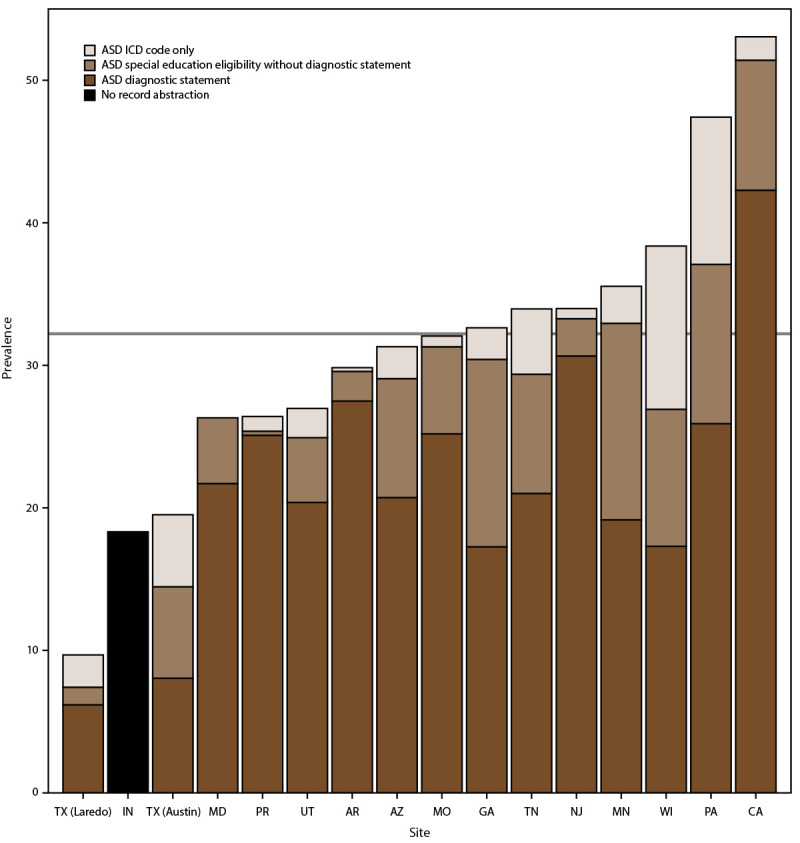
“Among children aged 8 years in 2022, ASD prevalence was 32.2 per 1,000 children (one in 31) across the 16 sites, ranging from 9.7 in Texas (Laredo) to 53.1 in California.”
- Also stated in: § ASD Prevalence Among Children Aged 8 Years · plain
“The overall observed ASD prevalence was 32.2 per 1,000 (one in 31) children aged 8 years and ranged from 9.7 in Texas (Laredo) to 53.1 in California (Table 1).”
§ Prevalence and Early Identification of Autism Spectrum Disorder Among Children Aged 4 and 8 Years — Autism and Developmental Disabilities Monitoring Network, 16 Sites, United States, 2022 > Abstract > Results
plainn = 8,613- Asserted: passes — The authors put it forward as true.
- Checkable: passes — It can be checked against evidence.
- Load-bearing: passes — The paper’s conclusions depend on it.
- Based: passes — The paper gives a reason why it holds.
- Rests on an assumption: The surveillance ASD case definition accurately identifies children with ASD in the surveillance population.
- Rests on an assumption: Children with ASD who are not captured by the available health and education records are negligible or do not substantially bias prevalence estimates.
- Also stated in: § ASD Prevalence Among Children Aged 8 Years · plain
A result the paper reports from its own data — it cites no other source for it, so there is none to check. The quote shows it is in the paper.
In the paper
“Overall, ASD prevalence was lower among non-Hispanic White (White) children (27.7) than among Asian or Pacific Islander (A/PI) (38.2), American Indian or Alaska Native (AI/AN) (37.5), non-Hispanic Black or African American (Black) (36.6), Hispanic or Latino (Hispanic) (33.0), and multiracial children (31.9).”
§ Prevalence and Early Identification of Autism Spectrum Disorder Among Children Aged 4 and 8 Years — Autism and Developmental Disabilities Monitoring Network, 16 Sites, United States, 2022 > Abstract > Results
plaincorrelationaln = 8,613- Asserted: passes — The authors put it forward as true.
- Checkable: passes — It can be checked against evidence.
- Load-bearing: unclear — It is unclear whether the paper’s conclusions depend on it.
- Based: passes — The paper gives a reason why it holds.
- Rests on an assumption: The surveillance ASD case definition accurately identifies children with ASD in the surveillance population.
A result the paper reports from its own data — it cites no other source for it, so there is none to check. The quote shows it is in the paper.
In the paper
“Children with ASD who were born in 2018 had more evaluations and identification during ages 0–4 years than children with ASD who were born in 2014 during the 0–4 years age window, with an interruption in the pattern in early 2020 coinciding with onset of the COVID-19 pandemic.”
§ Prevalence and Early Identification of Autism Spectrum Disorder Among Children Aged 4 and 8 Years — Autism and Developmental Disabilities Monitoring Network, 16 Sites, United States, 2022 > Abstract > Results
plaincorrelational- Asserted: passes — The authors put it forward as true.
- Checkable: passes — It can be checked against evidence.
- Load-bearing: passes — The paper’s conclusions depend on it.
- Based: passes — The paper gives a reason why it holds.
- Rests on an assumption: The surveillance ASD case definition accurately identifies children with ASD in the surveillance population.
A result the paper reports from its own data — it cites no other source for it, so there is none to check. The quote shows it is in the paper.
In the paper
“ASD was 3.4 times as prevalent among boys (49.2) than girls (14.3).”
§ Prevalence and Early Identification of Autism Spectrum Disorder Among Children Aged 4 and 8 Years — Autism and Developmental Disabilities Monitoring Network, 16 Sites, United States, 2022 > Abstract > Results
plaincorrelationaln = 8,613- Asserted: passes — The authors put it forward as true.
- Checkable: passes — It can be checked against evidence.
- Load-bearing: unclear — It is unclear whether the paper’s conclusions depend on it.
- Based: passes — The paper gives a reason why it holds.
- Rests on an assumption: The surveillance ASD case definition accurately identifies children with ASD in the surveillance population.
A result the paper reports from its own data — it cites no other source for it, so there is none to check. The quote shows it is in the paper.
In the paper
“Among 5,292 (61.4% of 8,613) children aged 8 years with ASD with information on cognitive ability, 39.6% were classified as having an intellectual disability.”
§ Prevalence and Early Identification of Autism Spectrum Disorder Among Children Aged 4 and 8 Years — Autism and Developmental Disabilities Monitoring Network, 16 Sites, United States, 2022 > Abstract > Results
plainn = 5,292- Asserted: passes — The authors put it forward as true.
- Checkable: passes — It can be checked against evidence.
- Load-bearing: unclear — It is unclear whether the paper’s conclusions depend on it.
- Based: passes — The paper gives a reason why it holds.
- Rests on an assumption: The surveillance ASD case definition accurately identifies children with ASD in the surveillance population.
A result the paper reports from its own data — it cites no other source for it, so there is none to check. The quote shows it is in the paper.
In the paper
“Children with ASD who were born in 2018 had more evaluations and identification during ages 0–4 years than children with ASD who were born in 2014 during the 0–4 years age window, with an interruption in the pattern in early 2020 coinciding with onset of the COVID-19 pandemic.”
§ Prevalence and Early Identification of Autism Spectrum Disorder Among Children Aged 4 and 8 Years — Autism and Developmental Disabilities Monitoring Network, 16 Sites, United States, 2022 > Abstract > Results
plaincorrelational- Asserted: passes — The authors put it forward as true.
- Checkable: passes — It can be checked against evidence.
- Load-bearing: unclear — It is unclear whether the paper’s conclusions depend on it.
- Based: passes — The paper gives a reason why it holds.
- Rests on an assumption: The surveillance ASD case definition accurately identifies children with ASD in the surveillance population.
A result the paper reports from its own data — it cites no other source for it, so there is none to check. The quote shows it is in the paper.
In the paper
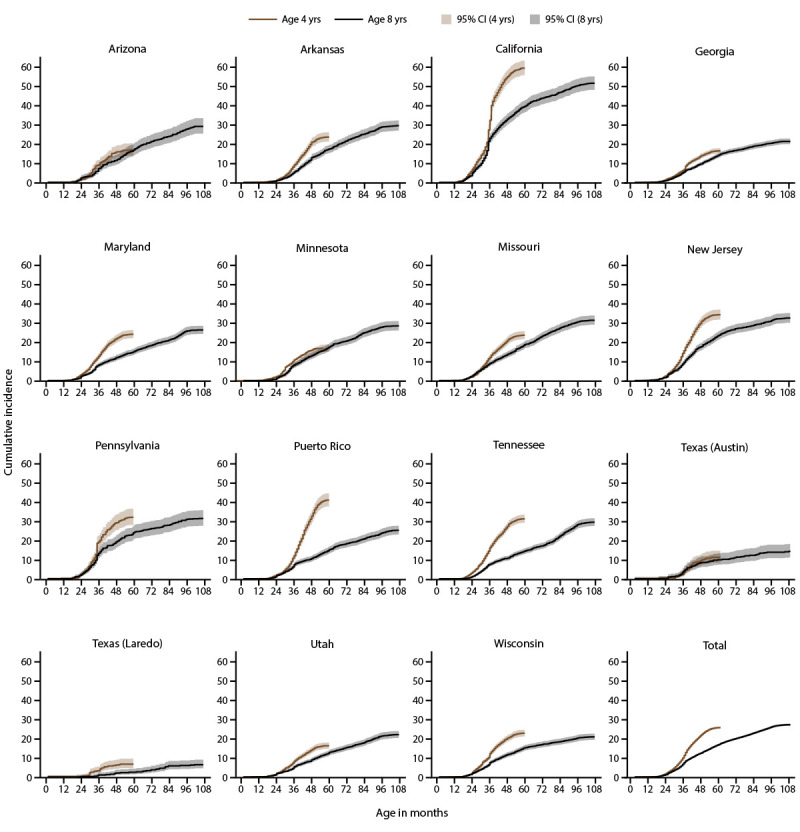
“Overall cumulative incidence of ASD diagnosis or eligibility by age 48 months was 1.7 times as high among those born in 2018 compared with those born in 2014 and ranged from 1.4 times as high in Arizona and Georgia to 3.1 times as high in Puerto Rico.”
§ Prevalence and Early Identification of Autism Spectrum Disorder Among Children Aged 4 and 8 Years — Autism and Developmental Disabilities Monitoring Network, 16 Sites, United States, 2022 > Abstract > Results
plaincorrelational- Asserted: passes — The authors put it forward as true.
- Checkable: passes — It can be checked against evidence.
- Load-bearing: passes — The paper’s conclusions depend on it.
- Based: passes — The paper gives a reason why it holds.
- Rests on an assumption: The surveillance ASD case definition accurately identifies children with ASD in the surveillance population.
A result the paper reports from its own data — it cites no other source for it, so there is none to check. The quote shows it is in the paper.
In the paper
“The median age of earliest known ASD diagnosis was 47 months and ranged from 36 months in California to 69.5 months in Texas (Laredo).”
§ Prevalence and Early Identification of Autism Spectrum Disorder Among Children Aged 4 and 8 Years — Autism and Developmental Disabilities Monitoring Network, 16 Sites, United States, 2022 > Abstract > Results
plain- Asserted: passes — The authors put it forward as true.
- Checkable: passes — It can be checked against evidence.
- Load-bearing: passes — The paper’s conclusions depend on it.
- Based: passes — The paper gives a reason why it holds.
- Rests on an assumption: The surveillance ASD case definition accurately identifies children with ASD in the surveillance population.
- It may state two separate claims as one. 25
- Probably not a substantial claim. 13
A result the paper reports from its own data — it cites no other source for it, so there is none to check. The quote shows it is in the paper.
In the paper
“Intellectual disability was present among 52.8% of Black, 50.0% of AI/AN, 43.9% of A/PI, 38.8% of Hispanic, 32.7% of White, and 31.2% of multiracial children with ASD.”
§ Prevalence and Early Identification of Autism Spectrum Disorder Among Children Aged 4 and 8 Years — Autism and Developmental Disabilities Monitoring Network, 16 Sites, United States, 2022 > Abstract > Results
plaincorrelational- Asserted: passes — The authors put it forward as true.
- Checkable: passes — It can be checked against evidence.
- Load-bearing: unclear — It is unclear whether the paper’s conclusions depend on it.
- Based: passes — The paper gives a reason why it holds.
It may state two separate claims as one.
- Rests on an assumption: The surveillance ASD case definition accurately identifies children with ASD in the surveillance population.
A result the paper reports from its own data — it cites no other source for it, so there is none to check. The quote shows it is in the paper.
In the paper
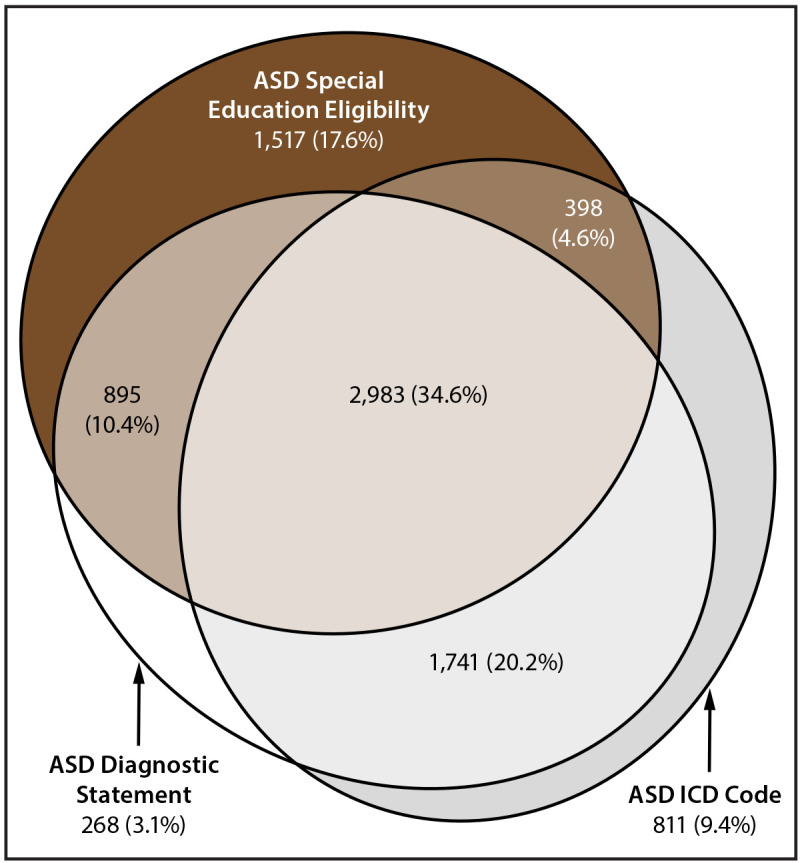
“Of these 8,613 children, 68.4% had a documented diagnostic statement of ASD, 67.3% had a documented autism special education eligibility, and 68.9% had a documented ASD ICD-9 or ICD-10 code.”
§ Prevalence and Early Identification of Autism Spectrum Disorder Among Children Aged 4 and 8 Years — Autism and Developmental Disabilities Monitoring Network, 16 Sites, United States, 2022 > Abstract > Results
plainn = 8,613- Asserted: passes — The authors put it forward as true.
- Checkable: passes — It can be checked against evidence.
- Load-bearing: passes — The paper’s conclusions depend on it.
- Based: passes — The paper gives a reason why it holds.
It may state two separate claims as one.
- Rests on an assumption: The surveillance ASD case definition accurately identifies children with ASD in the surveillance population.
A result the paper reports from its own data — it cites no other source for it, so there is none to check. The quote shows it is in the paper.
In the paper
“Variability was also observed in where children were identified (i.e., in a health or education setting), the frequency of cognitive and IQ testing, the proportion of children with IQ ≤70, and the use of ASD diagnostic tests.”
§ Prevalence and Early Identification of Autism Spectrum Disorder Among Children Aged 4 and 8 Years — Autism and Developmental Disabilities Monitoring Network, 16 Sites, United States, 2022 > Discussion
plain- Asserted: passes — The authors put it forward as true.
- Checkable: passes — It can be checked against evidence.
- Load-bearing: passes — The paper’s conclusions depend on it.
- Based: passes — The paper gives a reason why it holds.
It may state two separate claims as one.
A result the paper reports from its own data — it cites no other source for it, so there is none to check. The quote shows it is in the paper.
In the paper
“Prevalence of suspected ASD was 3.1 per 1,000 children aged 4 years, which translated to one child suspected of having ASD for every 10 children identified with ASD among children aged 4 years”
§ Prevalence and Early Identification of Autism Spectrum Disorder Among Children Aged 4 and 8 Years — Autism and Developmental Disabilities Monitoring Network, 16 Sites, United States, 2022 > Results > Early ASD Identification Among Children Aged 4 and 8 Years
plain- Asserted: passes — The authors put it forward as true.
- Checkable: passes — It can be checked against evidence.
- Load-bearing: unclear — It is unclear whether the paper’s conclusions depend on it.
- Based: passes — The paper gives a reason why it holds.
It may state two separate claims as one.
A result the paper reports from its own data — it cites no other source for it, so there is none to check. The quote shows it is in the paper.
In the paper
“The most common autism test documented among children aged 4 years with ASD was the CARS (38.0%), followed by the ADOS (31.7%), ASRS (21.1%), TELE-ASD-PEDS (8.7%), SRS (8.1%), GARS (6.2%), and ADI-R (3.8%).”
§ Prevalence and Early Identification of Autism Spectrum Disorder Among Children Aged 4 and 8 Years — Autism and Developmental Disabilities Monitoring Network, 16 Sites, United States, 2022 > Results > ASD Testing Among Children Aged 4 and 8 Years
plain- Asserted: passes — The authors put it forward as true.
- Checkable: passes — It can be checked against evidence.
- Load-bearing: unclear — It is unclear whether the paper’s conclusions depend on it.
- Based: passes — The paper gives a reason why it holds.
It may state two separate claims as one.
A result the paper reports from its own data — it cites no other source for it, so there is none to check. The quote shows it is in the paper.
In the paper
“The pattern of more evaluations and ASD identification among children born in 2018 resumed by June 2020 (Figure 5) and varied by site”
§ Prevalence and Early Identification of Autism Spectrum Disorder Among Children Aged 4 and 8 Years — Autism and Developmental Disabilities Monitoring Network, 16 Sites, United States, 2022 > Results > Evaluation and Identification After COVID-19 Pandemic Onset
plaincorrelational- Asserted: passes — The authors put it forward as true.
- Checkable: passes — It can be checked against evidence.
- Load-bearing: unclear — It is unclear whether the paper’s conclusions depend on it.
- Based: passes — The paper gives a reason why it holds.
It may state two separate claims as one.
A result the paper reports from its own data — it cites no other source for it, so there is none to check. The quote shows it is in the paper.
In the paper
“The Georgia site was the only site that met the threshold for statistical precision for AI/AN prevalence; the site-specific prevalence per 1,000 was 204.5 (111.5–345.0).”
§ Prevalence and Early Identification of Autism Spectrum Disorder Among Children Aged 4 and 8 Years — Autism and Developmental Disabilities Monitoring Network, 16 Sites, United States, 2022 > Results > ASD Prevalence Among Children Aged 8 Years
plain- Asserted: passes — The authors put it forward as true.
- Checkable: passes — It can be checked against evidence.
- Load-bearing: unclear — It is unclear whether the paper’s conclusions depend on it.
- Based: passes — The paper gives a reason why it holds.
It may state two separate claims as one.
A result the paper reports from its own data — it cites no other source for it, so there is none to check. The quote shows it is in the paper.
In the paper
“Significant differences for Pearson chi-square tests for proportion of Black children with IQ ≤70 among children with ASD versus A/PI, Hispanic, multiracial, or White (each comparison p<0.001); A/PI children with IQ ≤70 among children with ASD versus multiracial or White (each comparison p<0.001); Hispanic children with IQ ≤70 among children with ASD versus multiracial (p = 0.02) or White children”
§ Prevalence and Early Identification of Autism Spectrum Disorder Among Children Aged 4 and 8 Years — Autism and Developmental Disabilities Monitoring Network, 16 Sites, United States, 2022 > Results > Cognitive Ability Among Children with ASD Aged 8 Years
plaincorrelationaln = 8,613 ·- Asserted: passes — The authors put it forward as true.
- Checkable: passes — It can be checked against evidence.
- Load-bearing: unclear — It is unclear whether the paper’s conclusions depend on it.
- Based: passes — The paper gives a reason why it holds.
It may state two separate claims as one.
A result the paper reports from its own data — it cites no other source for it, so there is none to check. The quote shows it is in the paper.
In the paper
“| Total | 49.2 (48.1–50.3) | 14.3 (13.7–15.0) | 3.4 (3.3–3.6)** |”
§ Prevalence and Early Identification of Autism Spectrum Disorder Among Children Aged 4 and 8 Years — Autism and Developmental Disabilities Monitoring Network, 16 Sites, United States, 2022 > Results > ASD Prevalence Among Children Aged 8 Years
plain- Asserted: passes — The authors put it forward as true.
- Checkable: passes — It can be checked against evidence.
- Load-bearing: passes — The paper’s conclusions depend on it.
- Based: passes — The paper gives a reason why it holds.
It may state two separate claims as one.
A result the paper reports from its own data — it cites no other source for it, so there is none to check. The quote shows it is in the paper.
In the paper
“Similar percentages of girls and boys with ASD had data on cognitive ability (61.0 and 61.7%, respectively).”
§ Prevalence and Early Identification of Autism Spectrum Disorder Among Children Aged 4 and 8 Years — Autism and Developmental Disabilities Monitoring Network, 16 Sites, United States, 2022 > Results > Cognitive Ability Among Children with ASD Aged 8 Years
plain- Asserted: passes — The authors put it forward as true.
- Checkable: passes — It can be checked against evidence.
- Load-bearing: fails — The paper’s conclusions may not depend on it.
- Based: passes — The paper gives a reason why it holds.
Probably not a substantial claim. The paper’s conclusions may not depend on it.
A result the paper reports from its own data — it cites no other source for it, so there is none to check. The quote shows it is in the paper.
In the paper
“This pattern was consistent at most (13 of 16) sites, ranging from 1.4 times as high in Arizona and Georgia to 3.1 times as high in Puerto Rico.”
§ Prevalence and Early Identification of Autism Spectrum Disorder Among Children Aged 4 and 8 Years — Autism and Developmental Disabilities Monitoring Network, 16 Sites, United States, 2022 > Results > Early ASD Identification Among Children Aged 4 and 8 Years
plaincorrelational- Asserted: passes — The authors put it forward as true.
- Checkable: passes — It can be checked against evidence.
- Load-bearing: unclear — It is unclear whether the paper’s conclusions depend on it.
- Based: passes — The paper gives a reason why it holds.
It may state two separate claims as one.
A result the paper reports from its own data — it cites no other source for it, so there is none to check. The quote shows it is in the paper.
In the paper
“the top five eligibility categories were autism (77.7% of children); speech or language impairment (24.7%); health, physical, or other disability (7.9%); developmental delay (6.9%); and intellectual disability (3.6%).”
§ Prevalence and Early Identification of Autism Spectrum Disorder Among Children Aged 4 and 8 Years — Autism and Developmental Disabilities Monitoring Network, 16 Sites, United States, 2022 > Results > Presence of ASD Diagnostic Statements, Special Education Eligibility, and ICD Codes Among Children Aged 8 Years
plain- Asserted: passes — The authors put it forward as true.
- Checkable: passes — It can be checked against evidence.
- Load-bearing: unclear — It is unclear whether the paper’s conclusions depend on it.
- Based: passes — The paper gives a reason why it holds.
It may state two separate claims as one.
A result the paper reports from its own data — it cites no other source for it, so there is none to check. The quote shows it is in the paper.
In the paper
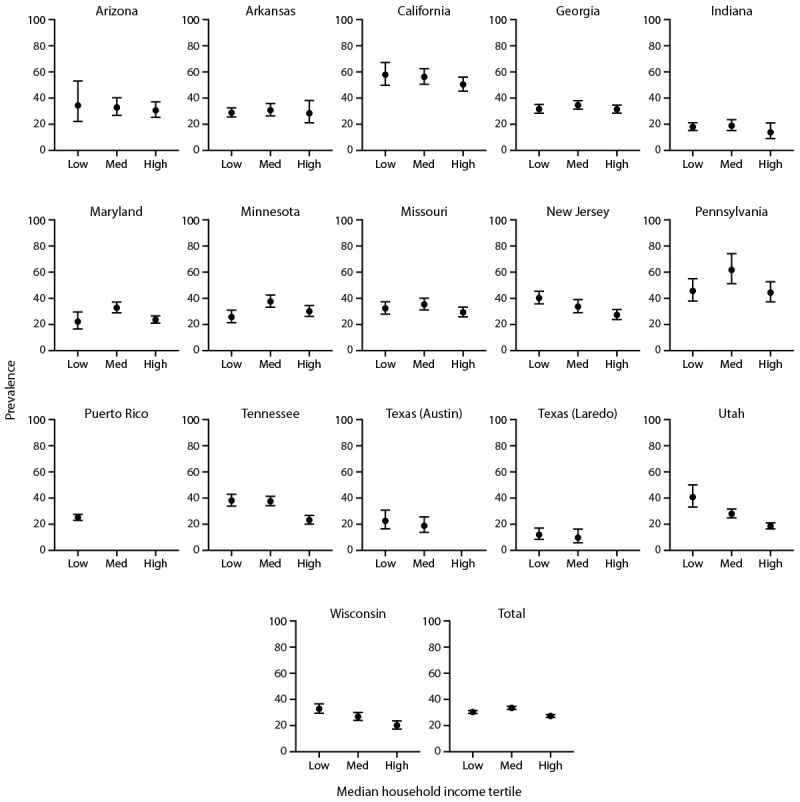
“lower neighborhood MHI was associated with higher ASD prevalence for five sites (New Jersey, Tennessee, Texas [Laredo], Utah, and Wisconsin) and overall (although the overall trend was not monotonic)”
§ Prevalence and Early Identification of Autism Spectrum Disorder Among Children Aged 4 and 8 Years — Autism and Developmental Disabilities Monitoring Network, 16 Sites, United States, 2022 > Results > ASD Prevalence Among Children Aged 8 Years
plaincorrelational- Asserted: passes — The authors put it forward as true.
- Checkable: passes — It can be checked against evidence.
- Load-bearing: unclear — It is unclear whether the paper’s conclusions depend on it.
- Based: passes — The paper gives a reason why it holds.
It may state two separate claims as one.
A result the paper reports from its own data — it cites no other source for it, so there is none to check. The quote shows it is in the paper.
In the paper
“ASD prevalence per 1,000 children aged 4 years in the 16 sites combined was 29.3, which was 0.9 times the overall prevalence among children aged 8 years in 2022”
§ Prevalence and Early Identification of Autism Spectrum Disorder Among Children Aged 4 and 8 Years — Autism and Developmental Disabilities Monitoring Network, 16 Sites, United States, 2022 > Results > Early ASD Identification Among Children Aged 4 and 8 Years
plain- Asserted: passes — The authors put it forward as true.
- Checkable: passes — It can be checked against evidence.
- Load-bearing: unclear — It is unclear whether the paper’s conclusions depend on it.
- Based: passes — The paper gives a reason why it holds.
It may state two separate claims as one.
A result the paper reports from its own data — it cites no other source for it, so there is none to check. The quote shows it is in the paper.
In the paper
“The median age of most recent cognitive test was 67 months overall and varied by site (range = 45 months in Texas [Austin] to 85 months in Puerto Rico)”
§ Prevalence and Early Identification of Autism Spectrum Disorder Among Children Aged 4 and 8 Years — Autism and Developmental Disabilities Monitoring Network, 16 Sites, United States, 2022 > Results > Cognitive Ability Among Children with ASD Aged 8 Years
plain- Asserted: passes — The authors put it forward as true.
- Checkable: passes — It can be checked against evidence.
- Load-bearing: unclear — It is unclear whether the paper’s conclusions depend on it.
- Based: passes — The paper gives a reason why it holds.
It may state two separate claims as one.
A result the paper reports from its own data — it cites no other source for it, so there is none to check. The quote shows it is in the paper.
In the paper
“higher social vulnerability was observed with higher ASD prevalence at five sites (Maryland, New Jersey, Tennessee, Utah, and Wisconsin) and overall (although overall, Maryland and Tennessee trends were not monotonic)”
§ Prevalence and Early Identification of Autism Spectrum Disorder Among Children Aged 4 and 8 Years — Autism and Developmental Disabilities Monitoring Network, 16 Sites, United States, 2022 > Results > ASD Prevalence Among Children Aged 8 Years
plaincorrelational- Asserted: passes — The authors put it forward as true.
- Checkable: passes — It can be checked against evidence.
- Load-bearing: unclear — It is unclear whether the paper’s conclusions depend on it.
- Based: passes — The paper gives a reason why it holds.
It may state two separate claims as one.
A result the paper reports from its own data — it cites no other source for it, so there is none to check. The quote shows it is in the paper.
In the paper
“AI/AN-to-White ratios were significant for Georgia (8.5 [95% CI = 4.7–15.5]) and overall (1.4 [95% CI = 1.0–1.9]).”
§ Prevalence and Early Identification of Autism Spectrum Disorder Among Children Aged 4 and 8 Years — Autism and Developmental Disabilities Monitoring Network, 16 Sites, United States, 2022 > Results > ASD Prevalence Among Children Aged 8 Years
plaincorrelational- Asserted: passes — The authors put it forward as true.
- Checkable: passes — It can be checked against evidence.
- Load-bearing: unclear — It is unclear whether the paper’s conclusions depend on it.
- Based: passes — The paper gives a reason why it holds.
It may state two separate claims as one.
A result the paper reports from its own data — it cites no other source for it, so there is none to check. The quote shows it is in the paper.
In the paper
“Among the 11 sites, prevalence was higher in 2022 than in 2020 at nine (from 14.0% to 36.7% higher) and overall (22.2% higher [absolute difference of 6.1 more children with ASD per 1,000 children aged 8 years]).”
§ Prevalence and Early Identification of Autism Spectrum Disorder Among Children Aged 4 and 8 Years — Autism and Developmental Disabilities Monitoring Network, 16 Sites, United States, 2022 > Results > ASD Prevalence Among Children Aged 8 Years
plain- Asserted: passes — The authors put it forward as true.
- Checkable: passes — It can be checked against evidence.
- Load-bearing: passes — The paper’s conclusions depend on it.
- Based: passes — The paper gives a reason why it holds.
It may state two separate claims as one.
- Rests on an assumption: The surveillance ASD case definition accurately identifies children with ASD in the surveillance population.
- Rests on an assumption: Children with ASD who are not captured by the available health and education records are negligible or do not substantially bias prevalence estimates.
The paper states this without a source or data behind it here, so there is nothing to check it against. The quote shows it is in the paper.
In the paper
“Puerto Rico was the site with second-highest prevalence among children aged 4 years, but prevalence among children aged 8 years in Puerto Rico was below the ADDM Network average.”
§ Prevalence and Early Identification of Autism Spectrum Disorder Among Children Aged 4 and 8 Years — Autism and Developmental Disabilities Monitoring Network, 16 Sites, United States, 2022 > Discussion
plain- Asserted: passes — The authors put it forward as true.
- Checkable: passes — It can be checked against evidence.
- Load-bearing: unclear — It is unclear whether the paper’s conclusions depend on it.
- Based: passes — The paper gives a reason why it holds.
It may state two separate claims as one.
None of the sources cited for this claim have been checked yet.
In the paper
“the American Academy of Pediatrics recommends that pediatric care providers screen all children for ASD at ages 18 and 24 months (2,3).”
§ Prevalence and Early Identification of Autism Spectrum Disorder Among Children Aged 4 and 8 Years — Autism and Developmental Disabilities Monitoring Network, 16 Sites, United States, 2022 > Introduction
What the sources say
- Not checked yetcites [2] Hyman, 2020, Identification, evaluation, and management of children with autism spectrum disorder., Pediatrics source
- Not checked yetcites [3] Lipkin, 2020, Promoting optimal development: identifying infants and young children with developmental disorders through developmental surveillance and screening., Pediatrics source
plain- Asserted: passes — The authors put it forward as true.
- Checkable: passes — It can be checked against evidence.
- Load-bearing: fails — The paper’s conclusions may not depend on it.
- Based: passes — The paper gives a reason why it holds.
Probably not a substantial claim. The paper’s conclusions may not depend on it.
In the paper
“Before 2016, the highest ASD prevalence was observed among White children and in children from neighborhoods with higher socioeconomic status (SES) (7).”
§ Prevalence and Early Identification of Autism Spectrum Disorder Among Children Aged 4 and 8 Years — Autism and Developmental Disabilities Monitoring Network, 16 Sites, United States, 2022 > Introduction
What the sources say
- Not checked yetcites [7] Durkin, 2017, Autism spectrum disorder among US children (2002–2010): socioeconomic, racial, and ethnic disparities., Am J Public Health source
plaincorrelational- Asserted: passes — The authors put it forward as true.
- Checkable: passes — It can be checked against evidence.
- Load-bearing: unclear — It is unclear whether the paper’s conclusions depend on it.
- Based: passes — The paper gives a reason why it holds.
It may state two separate claims as one.
None of the sources cited for this claim have been checked yet.
In the paper
“Although prevalence has been lower among children aged 4 years than aged 8 years in each reporting year, comparing cumulative incidence of identification by age 48 months has consistently indicated higher rates of ASD identification in younger cohorts (i.e., children born more recently) (9–11).”
§ Prevalence and Early Identification of Autism Spectrum Disorder Among Children Aged 4 and 8 Years — Autism and Developmental Disabilities Monitoring Network, 16 Sites, United States, 2022 > Introduction
What the sources say
- Not checked yetcites [9] Shaw, 2020, Early identification of autism spectrum disorder among children aged 4 years—Early Autism and Developmental Disabilities Monitoring Network, six sites, United States, 2016., MMWR Surveill Summ source
- Not checked yetcites [10] Shaw, 2021, Early identification of autism spectrum disorder among children aged 4 years—Autism and Developmental Disabilities Monitoring Network, 11 sites, United States, 2018., MMWR Surveill Summ source
- Not checked yetcites [11] Shaw, 2023, Early identification of autism spectrum disorder among children aged 4 years—Autism and Developmental Disabilities Monitoring Network, 11 sites, United States, 2020., MMWR Surveill Summ source
hedgedcorrelational- Asserted: passes — The authors put it forward as true.
- Checkable: passes — It can be checked against evidence.
- Load-bearing: unclear — It is unclear whether the paper’s conclusions depend on it.
- Based: passes — The paper gives a reason why it holds.
It may state two separate claims as one.
In the paper
“A report that presented data collected in 2020 found interruptions to early identification during the onset of the COVID-19 pandemic (11).”
§ Prevalence and Early Identification of Autism Spectrum Disorder Among Children Aged 4 and 8 Years — Autism and Developmental Disabilities Monitoring Network, 16 Sites, United States, 2022 > Introduction
What the sources say
- Not checked yetcites [11] Shaw, 2023, Early identification of autism spectrum disorder among children aged 4 years—Autism and Developmental Disabilities Monitoring Network, 11 sites, United States, 2020., MMWR Surveill Summ source
plaindirect- Asserted: passes — The authors put it forward as true.
- Checkable: passes — It can be checked against evidence.
- Load-bearing: fails — The paper’s conclusions may not depend on it.
- Based: passes — The paper gives a reason why it holds.
Probably not a substantial claim. The paper’s conclusions may not depend on it.
What the paper did — it cites no source for this, so there is none to check. The quote shows it is in the paper.
In the paper
“Record abstraction was completed for 15 of the 16 sites for 8,613 children aged 8 years who met the ASD case definition.”
§ Prevalence and Early Identification of Autism Spectrum Disorder Among Children Aged 4 and 8 Years — Autism and Developmental Disabilities Monitoring Network, 16 Sites, United States, 2022 > Abstract > Results
plainn = 8,613- Asserted: passes — The authors put it forward as true.
- Checkable: passes — It can be checked against evidence.
- Load-bearing: fails — The paper’s conclusions may not depend on it.
- Based: passes — The paper gives a reason why it holds.
Probably not a substantial claim. The paper’s conclusions may not depend on it.
In the paper
“Early identification of ASD can help children receive services and supports they might need for their development and to improve long-term outcomes (4).”
§ Prevalence and Early Identification of Autism Spectrum Disorder Among Children Aged 4 and 8 Years — Autism and Developmental Disabilities Monitoring Network, 16 Sites, United States, 2022 > Introduction
What the sources say
- Not checked yetcites [4] Zwaigenbaum, 2015, Early intervention for children with autism spectrum disorder under 3 years of age: recommendations for practice and research., Pediatrics source
hedgedconditional- Asserted: passes — The authors put it forward as true.
- Checkable: fails — It may be too vague to check against evidence.
- Load-bearing: fails — The paper’s conclusions may not depend on it.
- Based: passes — The paper gives a reason why it holds.
Probably not a substantial claim. It may be too vague to check against evidence. The paper’s conclusions may not depend on it.
What the paper did — it cites no source for this, so there is none to check. The quote shows it is in the paper.
In the paper
“A Bayesian hierarchical modelling approach and random-effects restricted maximum likelihood method were also used to calculate overall prevalence and measures of uncertainty (95% Bayesian credible intervals and 95% CIs, respectively) among children aged 8 years to better account for the wide range in prevalence across sites; full details are available (Supplementary Methods 2, https://stacks.cdc.”
§ Prevalence and Early Identification of Autism Spectrum Disorder Among Children Aged 4 and 8 Years — Autism and Developmental Disabilities Monitoring Network, 16 Sites, United States, 2022 > Methods > Analytic Methods
plain- Asserted: passes — The authors put it forward as true.
- Checkable: passes — It can be checked against evidence.
- Load-bearing: passes — The paper’s conclusions depend on it.
- Based: passes — The paper gives a reason why it holds.
Probably not a substantial claim.
The paper states this without a source or data behind it here, so there is nothing to check it against. The quote shows it is in the paper.
In the paper
“and has a local initiative (the Get SET Early model).”
§ Prevalence and Early Identification of Autism Spectrum Disorder Among Children Aged 4 and 8 Years — Autism and Developmental Disabilities Monitoring Network, 16 Sites, United States, 2022 > Discussion
plain- Asserted: passes — The authors put it forward as true.
- Checkable: passes — It can be checked against evidence.
- Load-bearing: passes — The paper’s conclusions depend on it.
- Based: passes — The paper gives a reason why it holds.
Probably not a substantial claim.
What the paper did — it cites no source for this, so there is none to check. The quote shows it is in the paper.
In the paper
“Thirteen sites had data agreements in place with education sources covering 100% of their study areas; three sites had agreements with education data sources covering <100% (Georgia [97.3%], Missouri [68.0%], and Texas [Laredo] [99.7%]).”
§ Prevalence and Early Identification of Autism Spectrum Disorder Among Children Aged 4 and 8 Years — Autism and Developmental Disabilities Monitoring Network, 16 Sites, United States, 2022 > Methods > Case Ascertainment and Surveillance Case Definition
plain- Asserted: passes — The authors put it forward as true.
- Checkable: passes — It can be checked against evidence.
- Load-bearing: fails — The paper’s conclusions may not depend on it.
- Based: passes — The paper gives a reason why it holds.
Probably not a substantial claim. The paper’s conclusions may not depend on it. It may state two separate claims as one.
What the paper did — it cites no source for this, so there is none to check. The quote shows it is in the paper.
In the paper
“Because Indiana did not have data available from record abstraction, Indiana is included in analyses of prevalence (by demographic characteristics, MHI, and SVI) but excluded from other analyses that required data from record abstraction (e.g., co-occurring intellectual disability or presence of evaluation or diagnosis or age at evaluation or diagnosis).”
§ Prevalence and Early Identification of Autism Spectrum Disorder Among Children Aged 4 and 8 Years — Autism and Developmental Disabilities Monitoring Network, 16 Sites, United States, 2022 > Methods > Analytic Methods
plain- Asserted: passes — The authors put it forward as true.
- Checkable: passes — It can be checked against evidence.
- Load-bearing: unclear — It is unclear whether the paper’s conclusions depend on it.
- Based: passes — The paper gives a reason why it holds.
It may state two separate claims as one.
In the paper
“In addition, California has regional centers throughout the state that provide evaluations and service coordination for persons with disabilities and their families (https://www.dds.ca.gov).”
§ Prevalence and Early Identification of Autism Spectrum Disorder Among Children Aged 4 and 8 Years — Autism and Developmental Disabilities Monitoring Network, 16 Sites, United States, 2022 > Discussion
What the sources say
- Not checked yetcites https://www.dds.ca.gov
plain- Asserted: passes — The authors put it forward as true.
- Checkable: passes — It can be checked against evidence.
- Load-bearing: fails — The paper’s conclusions may not depend on it.
- Based: passes — The paper gives a reason why it holds.
Probably not a substantial claim. The paper’s conclusions may not depend on it.
A conclusion the paper draws from its own results — it cites no other source for it, so there is none to check. The quote shows it is in the paper.
In the paper
“Variability in identification practices could affect receipt of services and suggests opportunities to implement successful identification strategies to ensure children in all communities receive the diagnostic and care services they need.”
§ Prevalence and Early Identification of Autism Spectrum Disorder Among Children Aged 4 and 8 Years — Autism and Developmental Disabilities Monitoring Network, 16 Sites, United States, 2022 > Discussion
hedgedconditional- Asserted: passes — The authors put it forward as true.
- Checkable: fails — It may be too vague to check against evidence.
- Load-bearing: passes — The paper’s conclusions depend on it.
- Based: passes — The paper gives a reason why it holds.
Probably not a substantial claim. It may be too vague to check against evidence. It may state two separate claims as one.
What the paper did — it cites no source for this, so there is none to check. The quote shows it is in the paper.
In the paper
“Prevalence estimates with a relative standard error ≥30% were suppressed because of limited statistical precision.”
§ Prevalence and Early Identification of Autism Spectrum Disorder Among Children Aged 4 and 8 Years — Autism and Developmental Disabilities Monitoring Network, 16 Sites, United States, 2022 > Methods > Analytic Methods
plain- Asserted: passes — The authors put it forward as true.
- Checkable: passes — It can be checked against evidence.
- Load-bearing: fails — The paper’s conclusions may not depend on it.
- Based: passes — The paper gives a reason why it holds.
Probably not a substantial claim. The paper’s conclusions may not depend on it.
What the paper did — it cites no source for this, so there is none to check. The quote shows it is in the paper.
In the paper
“All sites participating in 2022 had access to health and education records (Table 1).”
§ Prevalence and Early Identification of Autism Spectrum Disorder Among Children Aged 4 and 8 Years — Autism and Developmental Disabilities Monitoring Network, 16 Sites, United States, 2022 > Methods > Case Ascertainment and Surveillance Case Definition
plain- Asserted: passes — The authors put it forward as true.
- Checkable: passes — It can be checked against evidence.
- Load-bearing: fails — The paper’s conclusions may not depend on it.
- Based: passes — The paper gives a reason why it holds.
Probably not a substantial claim. The paper’s conclusions may not depend on it.
In the paper
“As part of the initiative, hundreds of local pediatricians have been trained to screen and refer children for assessment as early as possible, which could result in higher identification of ASD, especially at early ages (17).”
§ Prevalence and Early Identification of Autism Spectrum Disorder Among Children Aged 4 and 8 Years — Autism and Developmental Disabilities Monitoring Network, 16 Sites, United States, 2022 > Discussion
What the sources say
- Not checked yetcites [17] Pierce, 2021, Get SET Early to identify and treatment refer autism spectrum disorder at 1 year and discover factors that influence early diagnosis., J Pediatr source
hedgedconditional- Asserted: passes — The authors put it forward as true.
- Checkable: passes — It can be checked against evidence.
- Load-bearing: passes — The paper’s conclusions depend on it.
- Based: passes — The paper gives a reason why it holds.
It may state two separate claims as one.
A conclusion the paper draws from its own results — it cites no other source for it, so there is none to check. The quote shows it is in the paper.
In the paper
“Another reason for differences in prevalence could be whether children have insurance coverage or meet eligibility criteria for access to early intervention services.”
§ Prevalence and Early Identification of Autism Spectrum Disorder Among Children Aged 4 and 8 Years — Autism and Developmental Disabilities Monitoring Network, 16 Sites, United States, 2022 > Discussion
hedgedconditional- Asserted: passes — The authors put it forward as true.
- Checkable: passes — It can be checked against evidence.
- Load-bearing: fails — The paper’s conclusions may not depend on it.
- Based: passes — The paper gives a reason why it holds.
Probably not a substantial claim. The paper’s conclusions may not depend on it.
In the paper
“Pennsylvania, the site with second highest prevalence among children aged 8 years, has state Medicaid policy that includes children with physical, developmental, mental health, or intellectual disabilities regardless of parents’ income (18).”
§ Prevalence and Early Identification of Autism Spectrum Disorder Among Children Aged 4 and 8 Years — Autism and Developmental Disabilities Monitoring Network, 16 Sites, United States, 2022 > Discussion
What the sources say
- Not checked yetcites [18] Commonwealth of Pennsylvania, Department of Human Services. Medicaid for children with special needs. Harrisburg, PA: Commonwealth of Pennsylvania, Department of Human Services; 2024. https://www.pa.gov/agencies/dhs/resources/medicaid/medicaid-children-special-needs-ph95.html
plain- Asserted: passes — The authors put it forward as true.
- Checkable: passes — It can be checked against evidence.
- Load-bearing: passes — The paper’s conclusions depend on it.
- Based: passes — The paper gives a reason why it holds.
It may state two separate claims as one.
The paper relies on this without support.
The surveillance ASD case definition accurately identifies children with ASD in the surveillance population.
“children aged 8 years (born in 2014) or aged 4 years (born in 2018) met the surveillance ASD case definition if they lived in the surveillance area at any time in 2022 and they received 1) an ASD diagnostic statement in a comprehensive developmental evaluation, 2) autism special education eligibility, or 3) an ASD ICD-9 code in the 299 range or ICD-10 code of F84.0, F84.3, F84.5, F84.8, or F84.9.”
The paper relies on this without support.
Children with ASD who are not captured by the available health and education records are negligible or do not substantially bias prevalence estimates.
“All sites participating in 2022 had access to health and education records (Table 1).”
The authors state this as an assumption.
The methodology assumes that all Puerto Rico residents are Hispanic.
“This methodology assumes that all Puerto Rico residents are Hispanic.”
The paper relies on this without support.
Research has not demonstrated that living in certain communities puts children at greater risk for developing ASD.
“Research has not demonstrated that living in certain communities puts children at greater risk for developing ASD.”
Self-check
Percentages, sums and reported differences re-computed from the paper’s own numbers.
Each contradiction between two passages listed here was confirmed by an independent check.
Rated minor: it would not touch a result — a value no result rests on, a p-value that stays on the same side of the significance level, or a conflict that is clerical, resolved elsewhere in the paper, or outside its own findings.
In the paper
§ Prevalence and Early Identification of Autism Spectrum Disorder Among Children Aged 4 and 8 Years — Autism and Developmental Disabilities Monitoring Network, 16 Sites, United States, 2022 > Discussion
“In 2022, across the 13 sites with higher cumulative incidence of identification by age 48 months among children aged 4 years (born in 2018) compared with children aged 8 years (born in 2014), identification was 40%–300% higher in the younger group.”
§ Prevalence and Early Identification of Autism Spectrum Disorder Among Children Aged 4 and 8 Years — Autism and Developmental Disabilities Monitoring Network, 16 Sites, United States, 2022 > Results > Early ASD Identification Among Children Aged 4 and 8 Years
“This pattern was consistent at most (13 of 16) sites, ranging from 1.4 times as high in Arizona and Georgia to 3.1 times as high in Puerto Rico.”
Rated minor: it would not touch a result — a value no result rests on, a p-value that stays on the same side of the significance level, or a conflict that is clerical, resolved elsewhere in the paper, or outside its own findings.
In the paper
§ Prevalence and Early Identification of Autism Spectrum Disorder Among Children Aged 4 and 8 Years — Autism and Developmental Disabilities Monitoring Network, 16 Sites, United States, 2022 > Abstract > Results
“All three elements of the ASD case definition were present for 34.6% of children aged 8 years with ASD.”
§ Prevalence and Early Identification of Autism Spectrum Disorder Among Children Aged 4 and 8 Years — Autism and Developmental Disabilities Monitoring Network, 16 Sites, United States, 2022 > Results > Presence of ASD Diagnostic Statements, Special Education Eligibility, and ICD Codes Among Children Aged 8 Years
“A majority (69.9%) of children with ASD had at least two of the three types of ASD identification documented in their records and 34.7% had all three types (Figure 3).”
Citations
Cites
Diagnostic and Statistical Manual of Mental Disorders
American Psychiatric Association (2022) · doi:10.1176/appi.books.9780890425787 · Cited by 23,476
Maenner, M. J., Warren, Z., Williams, A. R., Amoakohene, E., Bakian, A. V., Bilder, D. A., Durkin, M. S., Fitzgerald, R. T., Furnier, S. M., Hughes, M. M., et al. (2023) · MMWR. Surveillance Summaries · doi:10.15585/mmwr.ss7202a1 · Cited by 2,706
Self-citationMaenner, M. J., Shaw, K. A., Bakian, A. V., Bilder, D. A., Durkin, M. S., Esler, A., Furnier, S. M., Hallas, L., Hall-Lande, J., Hudson, A., et al. (2021) · MMWR. Surveillance Summaries · doi:10.15585/mmwr.ss7011a1 · Cited by 1,818 · cited 4×
“For example, California has had the highest prevalence among children aged 4 years and 8 years since joining the ADDM Network in 2018 ( 6 , 10,11,13 ) and has a local initiative (the Get SET Early model).”
InfluentialSelf-citationIdentification, Evaluation, and Management of Children With Autism Spectrum Disorder
Hyman, S. L., Levy, S. E., Myers, S. M., COUNCIL ON CHILDREN WITH DISABILITIES, S. O. D. A. B. P., Kuo, D. Z., Apkon, S., Davidson, L. F., Ellerbeck, K. A., Foster, J. E. A., Noritz, G. H., et al. (2020) · Pediatrics · doi:10.1542/peds.2019-3447 · Cited by 1,798
Zwaigenbaum, L., Bauman, M. L., Choueiri, R., Kasari, C., Carter, A., Granpeesheh, D., Mailloux, Z., Smith Roley, S., Wagner, S., Fein, D., et al. (2015) · Pediatrics · doi:10.1542/peds.2014-3667e · Cited by 856
Self-citationLipkin, P. H., Macias, M. M., COUNCIL ON CHILDREN WITH DISABILITIES, S. O. D. A. B. P., Norwood, K. W., Brei, T. J., Davidson, L. F., Davis, B. E., Ellerbeck, K. A., Houtrow, A. J., Hyman, S. L., et al. (2020) · Pediatrics · doi:10.1542/peds.2019-3449 · Cited by 676
Christensen, D., Bilder, D. A., Zahorodny, W. M., Pettygrove, S. D., Durkin, M. S., Fitzgerald, R. T., Rice, C. E., Kurzius‐Spencer, M., Baio, J., & Yeargin‐Allsopp, M. (2015) · Journal of Developmental & Behavioral Pediatrics · doi:10.1097/dbp.0000000000000235 · Cited by 411
Self-citationDurkin, M. S., Maenner, M. J., Baio, J., Christensen, D., Daniels, J., Fitzgerald, R., Imm, P., Lee, L.-C., Schieve, L. A., Van Naarden Braun, K., et al. (2017) · American Journal of Public Health · doi:10.2105/ajph.2017.304032 · Cited by 347
Self-citationPierce, K., Gazestani, V. H., Bacon, E., Barnes, C. C., Cha, D., Nalabolu, S., Lopez, L., Moore, A., Pence-Stophaeros, S., & Courchesne, E. (2019) · JAMA Pediatrics · doi:10.1001/jamapediatrics.2019.0624 · Cited by 333
Self-citationShaw, K. A., Maenner, M. J., Baio, J., EdS1, Washington, A., Christensen, D. L., Wiggins, L. D., Pettygrove, S., Andrews, J. G., White, T., et al. (2020) · MMWR. Surveillance Summaries · doi:10.15585/mmwr.ss6903a1 · Cited by 286
Self-citation
Research works printed but not linked: 1
- Institute of Medicine (US) Committee on Understanding Premature Birth and Assuring Healthy Outcomes. Behrman RE, Butler AS, eds. Sociodemographic and community factors contributing to preterm birth [Chapter 4]. In: Preterm birth: causes, consequences, and prevention. Washington, DC: National Academies Press (US); 2007:124–47.
Cited by
Sorted by citations
Items 801–862 of 862
Alhuthali, D. Y., Alsaedi, A. D., Alharbi, J. K., Khayat, A. F., Alzahrani, J. H., Abutaleb, L. M., Alsheikh, E. O., Bafhaid, H. S., Alorfi, N. M., & Wali, S. M. (2026) · Journal of Disability Research · doi:10.57197/jdr-2026-0999
Charting brain growth in Chinese children with Autism
Li, L., Bai, M., Cai, K., Cao, D., Cao, X., Chen, J., Fan, X.-R., Gao, P., Gao, W., 何东之, et al. (2026) · 中国科学通报:英文版 · doi:10.1016/j.scib.2026.10.011
Leiber, K. K., Pohani, P., Tashjian, M., Garelick, E., & Parker, R. W. (2026) · Cureus · doi:10.7759/cureus.117554
“Autism spectrum disorder (ASD) is a common neurodevelopmental condition, affecting an estimated one in 31 children [1] and one in 45 adults [2] in the United States.”
Bourhis, A., Brun, P., & Thouvarecq, R. (2026) · Adapted Physical Activity Quarterly · doi:10.1123/apaq.2025-0112
Reading Skill Profiles in Elementary-School Children with Autism Spectrum Disorder
Mamokhina, U. A., Станиславаовна, П. Д., Uskova, O. A., & Ilyunceva, A. A. (2026) · Clinical Psychology and Special Education · doi:10.17759/cpse.2026150311
Suman, P., Kaur, J., Pal, S., Mehta, A., & Prajapati, J. (2026) · Journal of Developmental & Behavioral Pediatrics · doi:10.1097/dbp.0000000000001518
Hegarty, J. P., Komaki, H., Gu, M., Young, K., Ogbonnaya, N., Spielman, D. M., & Hardan, A. Y. (2026) · Journal of Autism and Developmental Disorders · doi:10.1007/s10803-026-07529-4
Alalwan, T. A., & Perna, S. (2026) · Behavioural Brain Research · doi:10.1016/j.bbr.2026.116512
Watkins, L., Devlin, M., Chang, W., Fedewa, M. P., & Klein, M. (2026) · Intervention in School and Clinic · doi:10.1177/10534512261489155
A multi-atlas ensemble learning framework for autism spectrum disorder diagnosis
Liang, S., Zhang, Z., Du, W., & Gu, F. (2026) · Biomedical Physics & Engineering Express · doi:10.1088/2057-1976/aeb128
Vittal, A. V., Thejaswini, C., Sahoo, S., Chandhok, S., Rao, B. C. S., Singh, R., P, M. P., Sindhu, C., V, Kotian, R., & Srikanth, N. (2026) · JMIR Research Protocols · doi:10.2196/99910
“According to the Centers for Disease Control and Prevention, approximately 1 in 31 children in the United States has been diagnosed with ASD [3].”
Bekele, M. W., Zhou, M., Li, W., Lv, Z., Wei, Y., Ran, R., Pan, Y., & Xi, W. (2026) · Artificial Intelligence in Medicine · doi:10.1016/j.artmed.2026.103546
Sajid, M. Z., Asma, W., Nadeem, M., & Hamid, M. F. (2026) · Information Sciences · doi:10.1016/j.ins.2026.124296
Effects of exergames on children and adolescents with autism spectrum disorder: a scoping review
Shi, T., Zhan, X., Kuang, Z., Lai, H., Zeng, L., BangNing, W., Peng, X., & Li, X. (2026) · Child Neuropsychology · doi:10.1080/09297049.2026.2741553
Zant, O. M., Anderson, C., Howell, A., Schafer, E. C., Miller, S. E., & Mathews, L. (2026) · American Journal of Audiology · doi:10.1044/2026_aja-26-00107
Gulati, S., & Shubha, S. N. (2026) · Journal of Academy of Pediatric Neurology · doi:10.5005/jaopn-11028-0033
Li, H., Li, Y., Liang, Z., Ji, Y., Lin, Y., Wang, X., Liu, S., Xiangyin, X., Zhang, Y., Tong, X., et al. (2026) · Research Square · doi:10.21203/rs.3.rs-11180700/v1
Implementation and Assessment of a Tiered Autism Assessment Model
Zemantic, P. K., Shillingsburg, M. A., Courson, C., Harris, T., & Blank, D. (2026) · Journal of Developmental & Behavioral Pediatrics · doi:10.1097/dbp.0000000000001527
Wu, Q.-F., & Du, J.-Q. (2026) · Journal of Autism and Developmental Disorders · doi:10.1007/s10803-026-07569-w
Лошкова, Е. В., Sayfitdinkhuzhaev, Z. F., Романова, Е. В., Федосова, М. В., Хаткевич, А. А., Леонидович, С. А., Владимирович, Б. А., Балакирева, Е. А., Voronkova, O. V., Зайцева, А. В., et al. (2026) · Children s medicine of the North-West · doi:10.56871/cmn-w.2026.95.33.008
Neural Circuits of Social Behavior in Autism Spectrum Disorder: From Mechanism to Intervention
Sparks, K. C. O., & Pedapati, E. V. (2026) · Biological Psychiatry · doi:10.1016/j.biopsych.2026.10.006
Araya, P. S. G., Underwood, L., Waldie, K., & Phillips, K. (2026) · Review Journal of Autism and Developmental Disorders · doi:10.1007/s40489-026-00598-2
Wang, Q., Luo, R., & Wen, Q. (2026) · Frontiers in Public Health · doi:10.3389/fpubh.2026.1923851
Clark, G. T., Skibicki, M., & Pesantes, G. (2026) · Review Journal of Autism and Developmental Disorders · doi:10.1007/s40489-026-00601-w
Harne, V., Fatheree, N. Y., Serrano, A. V., Okeugo, B., Alvarez, A. F., Hessabi, M., Tahanan, A., Mansour, R., Navarro, F., Imseis, E. M., et al. (2026) · Pediatric Research · doi:10.1038/s41390-026-05548-6
Wu, Z., Pu, Y., Zhou, W., Huang, L., Zhang, L., Hou, C., Ahlqvist, V. H., Li, J., Du, W., Ren, T., et al. (2026) · Autism · doi:10.1177/13623613261489847
Rose, S., Melnyk, S., James, S. J., & Frye, R. E. (2026) · International Journal of Molecular Sciences · doi:10.3390/ijms27209101
“Autism spectrum disorder (ASD) is a neurodevelopmental condition characterized by social communication differences and restricted or repetitive behaviors [1].”
Battling the Bottleneck: Evaluating Autism Diagnostic Training in Primary Care
Johnson, N. L., Hecke, A. V. V., Hine, J. F., Singh, M., & Koth, K. A. (2026) · Journal of Autism and Developmental Disorders · doi:10.1007/s10803-026-07565-0
Stalking-related homicides in the USA, National Violent Death Reporting System, 2012–2022
Forsberg, K., Nguyen, B. L., Smith, S. G., Leemis, R. W., & Fowler, K. A. (2026) · Injury Prevention · doi:10.1136/ip-2026-046218
Newbutt, N. A., Fan, Y., Kang, H., Orlando, A., Asadizanjani, N., & Nazef, A. (2026) · Australian Journal of Psychology · doi:10.1080/00049530.2026.2746627
“One in 31 children in the United States are diagnosed with autismOne in 31 children in the United States is diagnosed with autism (Shaw et al., 2025), and the number of autistic students entering higher education continues to grow (Barnhill, 2016; Davis et al., 2021).”
Past, present, and future of non-pharmacological interventions for autism spectrum disorder
Feng, X., Song, Y., Li, X., Yang, Y., Zhang, D., Zhang, Y., & Zhao, S. (2026) · Medicine · doi:10.1097/md.0000000000051164
NLGN3 autism variants have distinct functional impact on synapses and sleep behavior in Drosophila
Townsley, R., Andrews, J. C., Srivastav, S., Jangam, S. V., Hannan, S. B., Kanca, O., Marcogliese, P. C., Yamamoto, S., & Wangler, M. F. (2026) · PLoS Genetics · doi:10.1371/journal.pgen.1012341 · Cited by 2
“It affects approximately 1 in 31 children in the United States annually, with boys diagnosed 3.4 times more than girls [2].”
InfluentialSelf-citationMorgan, P. L., & Hu, E. H. (2026) · Autism · doi:10.1177/13623613261489314
Rispoli, M. J., Soland, J. G., Saina, C., Omollo, M., Boke, C., Mwendwa, E., Keehn, B., Pearson, J. N., & McHenry, M. S. (2026) · Journal of Developmental and Physical Disabilities · doi:10.1007/s10882-026-10097-1
Sadowsky, M., Wright, J., Ventimiglia, J. C., Rast, J. E., Mandell, D. S., Alford, A., Salett, B., & Sadowsky, M. (2026) · Public Health in Practice · doi:10.1016/j.puhip.2026.100875
“[5] As calculated in the current study, administrative prevalence for Pennsylvania at these ages was estimated to be less, at 3.49% and 2.86% respectively, and 3.61% and 3.15% for the surveillance site county.”
InfluentialSelf-citationYang, Y., Wang, F., Zhang, W., Chen, A., & Zhu, F. (2026) · Psychological Reports · doi:10.1177/00332941261501045
Camussi, D., Marchese, M., Ogi, A., Fronte, B., Nicoletti, F., Santorelli, F. M., & Mero, S. (2026) · International Journal of Molecular Sciences · doi:10.3390/ijms27209243
“Although its prevalence has risen substantially in recent years [3,4], effective treatments targeting core symptoms remain unavailable, underscoring the need for mechanistic studies and novel hypothesis-generating therapeutic strategies.”
Multimodal Assessment of Engagement: Evaluating the Engagement Metrics in Emotional Training Therapy
Hafizalshah, H., Ghazali, A. S., Ham, J. R. C., Sidek, S. N., & Yusof, H. M. (2026) · International Conference on Mechatronics Engineering (ICOM) · doi:10.1109/icom71159.2026.11726314
“Annual reports from the Centers for Disease Control and Prevention (CDC) show that the diagnostic rates are rising at an alarming rate [2]-[3].”
Καραβασίλης, Α., & Tsihouridis, C. (2026) · Education Sciences · doi:10.3390/educsci16101745
Maternal Factors Modifying the Link Between Genetic Risk for Autism and Developmental Milestones
D’Alesio, L., Patel, V., Walsh, M., Messias, E., & Lin, P. (2026) · American Journal of Medical Genetics Part B Neuropsychiatric Genetics · doi:10.1002/ajmg.b.70040
Autism: epidemiology, genetics, molecular mechanisms, clinical features, diagnosis, and management
Fan, R., Wang, Y., & Miao, T. (2026) · Molecular Biomedicine · doi:10.1186/s43556-026-00613-2
“CDC data from 2022 (published in 2025) show 3.22% of American 8-year-olds (about 1 in 31) identified as having ASD, nearly a five-fold increase from the 0.67% (1 in 150) recorded in 2000 [20].”
InfluentialEpilepsy in Children with Autism Spectrum Disorder: Clinical and Neuroimaging Correlates
Kilic, M. A., Abbasaliyev, V., Eltutan, C. B., Kayar, Ç. D., Aghalarov, M., Dinçel, M., Yıldız, E. P., & Genç, H. M. (2026) · Çocuk Dergisi / Journal of Child · doi:10.26650/jchild.2026.1930485
Habayeb, S., Godovich, S. A., Eisenman, E. E., Fuentes, V. E., Inge, A. P., Abu-Ramadan, T. M., Armour, A. C., Williams, R. M., Lauer, M., Taylor, A., et al. (2026) · Journal of Clinical Psychology in Medical Settings · doi:10.1007/s10880-026-10175-8
Ratnaik, R., Sriram Kumar, P., Selvaganesh, L., Sengar, S. S., & Ronickom, J. F. A. (2026) · Neuroscience · doi:10.1016/j.neuroscience.2026.10.024
Cola, M., Lyons, M., Schillinger, S., Lee, A., Faulk, C., Fulop, L., Knox, A., Howard, N., Franke, H., Mulqueen, A., et al. (2026) · Journal of Autism and Developmental Disorders · doi:10.1007/s10803-026-07562-3
Lu, J.-X., Hou, C.-H., Hsiao, S.-J., & Tsai, L. (2026) · American Journal of Occupational Therapy · doi:10.1177/19437676261498879
Findling, R. L., Bozhdaraj, D., Duffy, W. J., Strawn, J. R., Singh, M. K., Weinberg, M. S., Rekeda, L., Chen, C., Parikh, M., Lucas, M., et al. (2026) · Journal of the American Academy of Child & Adolescent Psychiatry · doi:10.1016/j.jaac.2026.10.017
Lati̇foğlu, F., Alp, Z. A., & Benli, Ş. G. (2026) · Behavioural Brain Research · doi:10.1016/j.bbr.2026.116545
“I Need Sleep Now”: A Qualitative Study of Sleep and Mothers of Autistic Individuals
Knutson, L. M., & Badahdah, A. M. (2026) · Family Relations · doi:10.1111/fare.70401
Yan, C., Liang, S., Zhu, G., Zhao, Y., Weimin, C. H. E. N., Xia, Q., Wu, Z., Wang, Z., Ji, T., Sun, X., et al. (2026) · Life · doi:10.3390/life16111782
Native American Parents of Children With Autism: Perceptions and Life Experiences
Eastman, K. S., & Deris, A. R. (2026) · Rural Special Education Quarterly · doi:10.1177/87568705261495115
Park, J. C., & Im, S. (2026) · Microbiome Research Reports · doi:10.20517/mrr.2026.48
Zhang, S., Yan, Y., Wang, M., Wei, J., Ma, X., & Xiao, Y. (2026) · Nutrition Reviews · doi:10.1093/nutrit/nuag159
da Silva, F. A., Mendes, H. S. M., & de Fontes, P. A. D. S. (2026) · South American Sciences · doi:10.63330/sasciencesv6n2-259
Graziano, R. T., Bernardini, L., Giovannone, F., Pizzuti, A., & Sogos, C. (2026) · Children · doi:10.3390/children13111484
Meng, X., Xiang, Z., & Wang, J. (2026) · Frontiers in Psychiatry · doi:10.3389/fpsyt.2026.1994047
“The U.S. Autism and Developmental Disabilities Monitoring Network identi fi ed ASD in 1 in 31 8-year-old children in 2022 (3), while the Global Burden of Disease Study 2021 estimated that 61.8 million people worldwide, or about 1 in 127, were on the autism spectrum (4).”
InfluentialMental health treatment access among U.S. children according to ASD and ADHD diagnostic status
Alabed, S. T., Shacker, M., Riestra, D. B., Riestra, J. M., & Hussain, N. U. (2026) · Psychiatry and Clinical Neurosciences Reports · doi:10.1002/pcn5.70435
Association between perinatal fine particulate matter and social responsiveness in children
Choi, H. M., Cardona, B., Lyall, K., Hart, J. E., & Weisskopf, M. G. (2026) · Environmental Advances · doi:10.1016/j.envadv.2026.100775
Machado, V. G. D. M., Rodrigues, G. F., & Wanderley, S. E. D. S. (2026) · Aracê. · doi:10.56238/arev8n10-157
Ghumman, U., Shafee, C., Altarawneh, L. N., Iorini, M., Kandel, H., Anand, N., Lopez, A., Mendoza, J., Romero, E., Dang, A., et al. (2026) · Frontiers in Psychiatry · doi:10.3389/fpsyt.2026.1906750
Metadata
- Authors
- Shaw, K. A., Williams, S., Patrick, M. E., Valencia-Prado, M., Durkin, M. S., Howerton, E. M., Ladd-Acosta, C. M., Pas, E. T., Bakian, A. V., Bartholomew, P., Nieves-Muñoz, N., Sidwell, K., Alford, A., Bilder, D. A., DiRienzo, M., Fitzgerald, R. T., Furnier, S. M., Hudson, A. E., Pokoski, O. M., Shea, L., Tinker, S. C., Warren, Z., Zahorodny, W., Agosto-Rosa, H., Anbar, J., Chavez, K. Y., Esler, A., Forkner, A., Grzybowski, A., Agib, A. H., Hallas, L., Lopez, M., Magaña, S., Nguyen, R. H. N., Parker, J., Pierce, K., Protho, T., Torres, H., Vanegas, S. B., Vehorn, A., Zhang, M., Andrews, J., Greer, F., Hall-Lande, J., McArthur, D., Mitamura, M., Montes, A. J., Pettygrove, S., Shenouda, J., Skowyra, C., Washington, A., & Maenner, M. J.
- Affiliations
- Centers for Disease Control and Prevention (US)
- University of Wisconsin–Madison (US)
- Johns Hopkins University (US)
- University of Utah (US)
- University of California San Diego (US)
- National Center on Birth Defects and Developmental Disabilities (US)
- Rutgers New Jersey Medical School (US)
- Pennsylvania Department of Human Services (US)
- Washington University in St. Louis (US)
- University of Arkansas for Medical Sciences (US)
- Vanderbilt University Medical Center (US)
- Puerto Rico Department of Health (PR)
- University of Minnesota (US)
- The University of Texas at Austin (US)
- Arizona State University (US)
- University of Arizona (US)
- Corresponding author
- Shaw, Kelly A.
- ORCID
- Patrick, Mary E.
- Durkin, Maureen S.
- Howerton, Ellen M.
- Ladd-Acosta, Christine M.
- Pas, Elise T.
- Bakian, Amanda V.
- Alford, Amy
- Bilder, Deborah A.
- DiRienzo, Monica
- Fitzgerald, Robert T.
- Furnier, Sarah M.
- Pokoski, Olivia M.
- Shea, Lindsay
- Tinker, Sarah C.
- Warren, Zachary
- Zahorodny, Walter
- Anbar, Joshua
- Esler, Amy
- Lopez, Maya
- Magaña, Sandy
- Nguyen, Ruby H.N.
- Pierce, Karen
- Vanegas, Sandra B.
- Zhang, Minyu
- Andrews, Jennifer
- McArthur, Dedria
- Pettygrove, Sydney
- Shenouda, Josephine
- Washington, Anita
- Maenner, Matthew J.
- Venue
- MMWR. Surveillance Summaries
- Published
- 2025-04-17
- Volume
- 74
- Issue
- 2
- Pages
- 1-22
- ISSN
- 1545-8636 (ISSN-L)
- 1546-0738
- PMC
- PMC12011386
- OpenAlex
- W4409458169
- Semantic Scholar
- ce82e952834c1f4b32c7226767552851cc1f0430
- Cited by
- 867
- References
- 31
- Citations by year
- 2026: 615 · 2025: 252
- FWCI
- 491.83
- Type
- journal article
- Language
- en
- Open access
- diamond
- doi.org
- Licence
- public-domain
- Locations
- MMWR Surveillance Summaries (publishedVersion, public-domain)
- PubMed Central (publishedVersion, public-domain)
- PubMed (publishedVersion)
- Topics
- Life Sciences › Neuroscience › Cognitive Neuroscience › Autism Spectrum Disorder Research
- Health Sciences › Medicine › Psychiatry and Mental health › Child Nutrition and Feeding Issues
- Social Sciences › Psychology › Clinical Psychology › Family and Disability Support Research
- Keywords
- autism spectrum disorder, autism prevalence, sex differences, racial and ethnic disparities, ASD subtypes, developmental disabilities, prevalence, early detection, autism screening
- MeSH terms
- Autism Spectrum Disorder, Child, Child, Preschool, Female, Humans, Male, Population Surveillance, United States, Prevalence, Early Diagnosis
About these checks
Registry, retraction, Cites and statistics results are computed, not judged, with one exception: a printed reference that no index lists is read once by a model before it counts as a citation error. Claims are extracted by a model and kept only when their quote appears verbatim in the text; each cited source is then checked, with a model’s help, for whether it says what the claim relies on. Those verdicts can be wrong — read the claim’s quote and the cited source before relying on one.
A language model drew the claims from the paper on 2026-10-06, under version 3 of the claim definition (model deepseek-v4.1-flash, prompt extract-v3).
A second model labelled each claim on 2026-10-06 (model jev-1.13-20260917, definition revision gold-guideline-v0.2).
Statistics and arithmetic are recomputed, not judged.
Confidence bands are shown only for fields calibrated on our annotated test set. None is calibrated yet, so no band is shown.
What counts as a claim ›How we measure confidence ›How we check this ›
Are you an author, or do you see a problem with this page? Request a review
