

Voluntary wheel running: patterns and physiological effects in mice
Open accessThe DOI matches its Crossref record; 50 of the 50 references it cites were found in a registry or an index.
Abstract
Exercise can prevent and improve the pathophysiology of diseases and promote healthy aging. Thus, understanding the mechanisms that regulate the beneficial effects of exercise may lead to the development of new strategies to enhance quality of life and to counteract chronic diseases. Voluntary wheel running is an interesting model to study the effects of exercise in mice. Compared to forced treadmill exercise, voluntary wheel running presents several advantages such as: 1) running pattern is similar to natural running behavior of mice; 2) it is performed under non-stressed conditions, according to the rhythmicity of the animal; 3) it does not require direct interference from the researcher, and can be easily applied in long-term studies. Mice run spontaneously when given access to running wheels, for a total distance of ∼4 to 20 km per day and a total activity time of ∼3 to 7 hours a day. Hence, voluntary wheel running can result in robust endurance-like adaptation in skeletal and cardiac muscles and protect from sarcopenia. However, due to the lack of control over exercise parameters in voluntary exercise models, it is important for the researcher to understand the patterns and variability of wheel running in mice, as well as the factors that can affect voluntary running activity. Overall, voluntary wheel running in mice is a very interesting approach to study the chronic adaptation to exercise, analyze the effects of exercise, and test exercise capacity in different experimental models.
Overview
The claims and statistics of this paper haven’t been checked yet.
Free: it reads the open-access text and checks the first 5 claims that cite a source we can check. Create a free account to check every claim.
Integrity signals
Registry
Cites
Statistics
Figures
Verification
Claims the paper makes
The claims and statistics of this paper haven’t been checked yet.
Free: it reads the open-access text and checks the first 5 claims that cite a source we can check. Create a free account to check every claim.
Claims other papers make about this one
Each is checked against this paper’s own text: does it say what the citing paper says it does?
In the citing paper
“Unlike the voluntary running model, in which mice can run 20 km per day (51), our treadmill model’s exercise volume is 10-20 times less than this.”
Self-check
Percentages, sums and reported differences re-computed from the paper’s own numbers.
The self-check needs the paper’s full text.
Citations
Cites
Murray, D. D., Suzuki, K., Law, M., Trebicka, J., Neuhaus, J., Wentworth, D., Johnson, M., Vjecha, M. J., Kelleher, A. D., Emery, S., et al. (2015) · PLOS ONE · doi:10.1371/journal.pone.0139981 · Cited by 2,740
Running enhances spatial pattern separation in mice
Creer, D. J., Romberg, C., Saksida, L. M., van Praag, H., & Bussey, T. J. (2010) · Proceedings of the National Academy of Sciences · doi:10.1073/pnas.0911725107 · Cited by 553 · cited 4×
“When mice are 22–24 months old (roughly corresponding to 70 years in humans), distance run per day is reduced by B50% compared to B10-month-old mice or by B75% compared to young animals (B2–4 months old) (11,15).”
BackgroundMethodInfluentialExercise Promotes Healthy Aging of Skeletal Muscle
Cartee, G. D., Hepple, R. T., Bamman, M. M., & Zierath, J. R. (2016) · Cell Metabolism · doi:10.1016/j.cmet.2016.05.007 · Cited by 483 · cited 2×
“1590/1414-431X20187830 Brazilian Journal of Medical and Biological Research (2019) 52(1): e7830, http://dx.”
BackgroundGarland, T., Schutz, H., Chappell, M. A., Keeney, B. K., Meek, T. H., Copes, L. E., Acosta, W., Drenowatz, C., Maciel, R. C., van Dijk, G., et al. (2011) · Journal of Experimental Biology · doi:10.1242/jeb.048397 · Cited by 444
Cardiac and skeletal muscle adaptations to voluntary wheel running in the mouse
Allen, D. L., Harrison, B. C., Maass, A., Bell, M. L., Byrnes, W. C., & Leinwand, L. A. (2001) · Journal of Applied Physiology · doi:10.1152/jappl.2001.90.5.1900 · Cited by 376 · cited 9×
“Most studies use in-chamber upright wheels with a diameter of B12 to 13 cm (10,15,17,22,23).”
BackgroundInfluentialStranahan, A. M., Lee, K., Martin, B., Maudsley, S., Golden, E., Cutler, R. G., & Mattson, M. P. (2009) · Hippocampus · doi:10.1002/hipo.20577 · Cited by 331 · cited 1×
“When combined with voluntary wheel running, caloric restriction did not alter total running distance in healthy C57BL/6J mice (although it severely improved voluntary running in db/db mice, a model of diabetic dyslipidemia) (47).”
BackgroundLerman, I., Harrison, B. C., Freeman, K., Hewett, T. E., Allen, D. L., Robbins, J., & Leinwand, L. A. (2002) · Journal of Applied Physiology · doi:10.1152/japplphysiol.01045.2001 · Cited by 271 · cited 3×
“In a study analyzing different inbred mouse strains, it was observed that C57BL/6J mice run significantly more and at a higher average speed, compared to six other strains (14).”
BackgroundVoluntary and forced exercise differentially alters the gut microbiome in C57BL/6J mice
Allen, J. M., Berg Miller, M. E., Pence, B. D., Whitlock, K., Nehra, V., Gaskins, H. R., White, B. A., Fryer, J. D., & Woods, J. A. (2015) · Journal of Applied Physiology · doi:10.1152/japplphysiol.01077.2014 · Cited by 266 · cited 1×
“For example, the gut microbiota is altered differently by voluntary or forced exercise (48): while voluntary exercise improved a mouse”
BackgroundAcosta-Rodríguez, V. A., de Groot, M. H. M., Rijo-Ferreira, F., Green, C. B., & Takahashi, J. S. (2017) · Cell Metabolism · doi:10.1016/j.cmet.2017.06.007 · Cited by 251
Genetic influence on daily wheel running activity level
Lightfoot, J. T., Turner, M. J., Daves, M., Vordermark, A., & Kleeberger, S. R. (2004) · Physiological Genomics · doi:10.1152/physiolgenomics.00125.2004 · Cited by 245 · cited 4×
“Voluntary wheel running activity in mice is significantly affected by genetic background (14,18).”
BackgroundInfluentialMeijer, J. H., & Robbers, Y. (2014) · Proceedings of the Royal Society B: Biological Sciences · doi:10.1098/rspb.2014.0210 · Cited by 230 · cited 2×
“Remarkably, this behavior is also observed in feral wild mice when running wheels are placed in nature (3).”
BackgroundSwallow, J. G., Garland, T., Carter, P. A., Zhan, W.-Z., & Sieck, G. C. (1998) · Journal of Applied Physiology · doi:10.1152/jappl.1998.84.1.69 · Cited by 215 · cited 1×
“Skeletal muscle adaptation to voluntary wheel running Mice subjected to a period of voluntary wheel running can present better endurance capacity as indicated by a significant increase (B90%) in the time to exhaustion and VO2max on treadmill tests (19,36).”
BackgroundVoluntary running induces fiber type-specific angiogenesis in mouse skeletal muscle
Waters, R. E., Rotevatn, S., Li, P., Annex, B. H., & Yan, Z. (2004) · American Journal of Physiology-Cell Physiology · doi:10.1152/ajpcell.00247.2004 · Cited by 213 · cited 3×
“Another endurance-type adaptation observed after 4 weeks of voluntary running was an increased capillary density and capillary-to-fiber ratio in the plantaris muscle of male C57BL/6J mice (38).”
BackgroundPatterns of Brain Activity Associated With Variation in Voluntary Wheel-Running Behavior.
Rhodes, J. S., Garland, T., & Gammie, S. C. (2003) · Behavioral Neuroscience · doi:10.1037/0735-7044.117.6.1243 · Cited by 207 · cited 1×
“This higher voluntary running performance in females is observed for young adult and aged mice of different strains (9,13,15,21,31,32).”
Sex modifies exercise and cardiac adaptation in mice
Konhilas, J. P., Maass, A. H., Luckey, S. W., Stauffer, B. L., Olson, E. N., & Leinwand, L. A. (2004) · American Journal of Physiology-Heart and Circulatory Physiology · doi:10.1152/ajpheart.00292.2004 · Cited by 203 · cited 11×
“In general, studies report that C57BL/6J mice run voluntarily for a total activity time of B3 to 7 h per day and a total distance that can range from B4 to 20 km per day (10,15,18,19,21).”
BackgroundInfluentialNovel quantitative phenotypes of exercise training in mouse models
De Bono, J. P., Adlam, D., Paterson, D. J., & Channon, K. M. (2006) · American Journal of Physiology-Regulatory, Integrative and Comparative Physiology · doi:10.1152/ajpregu.00694.2005 · Cited by 197
Resource Book for the Design of Animal Exercise Protocols
Jones, J. H. (2007) · American Journal of Veterinary Research · doi:10.2460/ajvr.68.6.583 · Cited by 196 · cited 1×
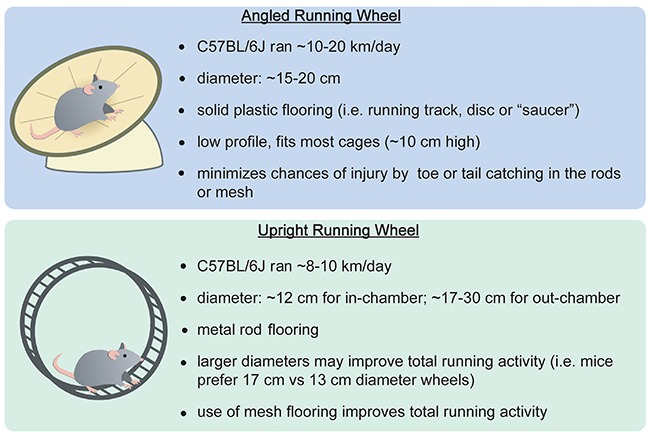
“It is important to consider that larger upright metal wheels, B17 to 35 cm in diameter, may present larger resistance than smaller wheels, and may affect mice running pattern (larger wheels are usually separated from the cage) (24).”
BackgroundPlace, N., Ivarsson, N., Venckunas, T., Neyroud, D., Brazaitis, M., Cheng, A. J., Ochala, J., Kamandulis, S., Girard, S., Volungevičius, G., et al. (2015) · Proceedings of the National Academy of Sciences · doi:10.1073/pnas.1507176112 · Cited by 181
Swallow, J. G., Koteja, P., Carter, P. A., & Garland, T. (1999) · Journal of Experimental Biology · doi:10.1242/jeb.202.18.2513 · Cited by 156
Bone marrow fat accumulation accelerated by high fat diet is suppressed by exercise
Styner, M., Thompson, W. R., Galior, K., Uzer, G., Wu, X., Kadari, S., Case, N., Xie, Z., Sen, B., Romaine, A., et al. (2014) · Bone · doi:10.1016/j.bone.2014.03.044 · Cited by 155
Cook, M. D., Martin, S. A., Williams, C., Whitlock, K., Wallig, M. A., Pence, B. D., & Woods, J. A. (2013) · Brain, Behavior, and Immunity · doi:10.1016/j.bbi.2013.05.005 · Cited by 153 · cited 1×
“model of colitis, forced exercise caused increased inflammation and mortality (49).”
BackgroundHoule-Leroy, P., Garland, T., Swallow, J. G., & Guderley, H. (2000) · Journal of Applied Physiology · doi:10.1152/jappl.2000.89.4.1608 · Cited by 139 · cited 2×
“Upregulation of PGC-1a and mitochondrial proteins expression, as well as increased activity of metabolic enzymes were also reported in the skeletal muscle after 4 to 8 weeks of voluntary wheel running (32,37).”
BackgroundFood consumption and body composition in mice selected for high wheel-running activity
Swallow, J. G., Koteja, P., Carter, P., & Garland, T. (2001) · Journal of Comparative Physiology B · doi:10.1007/s003600100216 · Cited by 137 · cited 1×
“Voluntary wheel running enhances mouse food intake (by B20%) and water consumption (15,17,30,41,43,44).”
BackgroundHolloszy, J. O. (1993) · Journal of Gerontology · doi:10.1093/geronj/48.3.b97 · Cited by 128 · cited 1×
“Voluntary running exercise has been shown to increase the average or median lifespan of mice and rats by B10 to 17% while maximum lifespan is not affected (23,42).”
BackgroundVoluntary Wheel Running in Mice
Goh, J., & Ladiges, W. (2015) · Current Protocols in Mouse Biology · doi:10.1002/9780470942390.mo140295 · Cited by 119 · cited 3×
“Also, voluntary wheel running is performed under non-stress conditions, as it does not require a negative stimulus (such as electric shock or touching the animals, which are used in forced treadmill running), and does not interfere in the normal nocturnal-diurnal rhythmicity of the animal (8).”
BackgroundWhite, Z., Terrill, J., White, R. B., McMahon, C., Sheard, P., Grounds, M. D., & Shavlakadze, T. (2016) · Skeletal Muscle · doi:10.1186/s13395-016-0117-3 · Cited by 117 · cited 4×
“In old mice, skeletal muscle mass has been reported to be augmented after long-term or loaded wheel running (25,34).”
BackgroundMethodInfluentialEffect of voluntary wheel-running exercise on muscles of the mdx mouse
Carter, G. T., Wineinger, M. A., Walsh, S. A., Horasek, S. J., Abresch, R. T., & Fowler, W. M. (1995) · Neuromuscular Disorders · doi:10.1016/0960-8966(94)00063-f · Cited by 103 · cited 1×
“Therefore, voluntary wheel running can also be used to study the adaptive responses to exercise (10) and to determine the effects of exercise on diseases (6,12) or aging (13).”
Sex-related differences in the wheel-running activity of mice decline with increasing age
Bartling, B., Al‐Robaiy, S., Lehnich, H., Binder, L., Hiebl, B., & Simm, A. (2016) · Experimental Gerontology · doi:10.1016/j.exger.2016.04.011 · Cited by 103 · cited 10×
“Most studies use in-chamber upright wheels with a diameter of B12 to 13 cm (10,15,17,22,23).”
BackgroundInfluentialLoaded wheel running and muscle adaptation in the mouse
Konhilas, J. P., Widegren, U., Allen, D. L., Paul, A. C., Cleary, A., & Leinwand, L. A. (2005) · American Journal of Physiology-Heart and Circulatory Physiology · doi:10.1152/ajpheart.00085.2005 · Cited by 99 · cited 4×
“In old mice, skeletal muscle mass has been reported to be augmented after long-term or loaded wheel running (25,34).”
BackgroundMethodInfluentialBronikowski, A. M., Carter, P. A., Morgan, T. J., Garland, T., Ung, N., Pugh, T. D., Weindruch, R., & Prolla, T. A. (2003) · Physiological Genomics · doi:10.1152/physiolgenomics.00082.2002 · Cited by 98 · cited 3×
“Also, long-term (lasting several months) or life-long voluntary wheel running has been used to study the effects of exercise in aging (23,33).”
Backgroundde Visser, L., van den Bos, R., & Spruijt, B. M. (2005) · Behavioural Brain Research · doi:10.1016/j.bbr.2004.12.004 · Cited by 97
Funkat, A., Massa, C. M., Jovanovska, V., Proietto, J., & Andrikopoulos, S. (2004) · Journal of Nutrition · doi:10.1093/jn/134.12.3264 · Cited by 95 · cited 1×
“In contrast, 6 weeks of a high-fat diet decreased voluntary running activity in C57BL/6J and DBA/2 male mice (45).”
BackgroundAdaptive and nonadaptive responses to voluntary wheel running by mdx mice
Landisch, R. M., Kosir, A. M., Nelson, S. A., Baltgalvis, K. A., & Lowe, D. A. (2008) · Muscle & Nerve · doi:10.1002/mus.21141 · Cited by 91 · cited 2×
“Voluntary wheel running can be used to evaluate changes in behavior and exercise capacity, such as what occurs in disease models (6) or in genetically modified mice (7,8).”
BackgroundWestern diet increases wheel running in mice selectively bred for high voluntary wheel running
Meek, T. H., Eisenmann, J. C., & Garland, T. (2010) · International Journal of Obesity · doi:10.1038/ijo.2010.25 · Cited by 77 · cited 1×
“In outbred mice selected for high running capacity, a western diet caused an increase in running activity (this was not observed in non-selected lines) (46).”
BackgroundYasumoto, Y., Nakao, R., & Oishi, K. (2015) · PLOS ONE · doi:10.1371/journal.pone.0116476 · Cited by 75 · cited 4×
“Wheel running also phase-advanced the expression of circadian clock genes and clock-controlled genes in the liver and white adipose tissue (43).”
InfluentialResting Is Rusting: A Critical View on Rodent Wheel-Running Behavior
Richter, S. H., Gass, P., & Fuss, J. (2014) · The Neuroscientist · doi:10.1177/1073858413516798 · Cited by 62 · cited 1×
“In upright wheels, mice do not run in a planar pattern, which can potentially cause ventral arching of the spine and hyperflexion of the tail, altering the animal locomotor abilities (16).”
BackgroundEffects of voluntary wheel running and amino acid supplementation on skeletal muscle of mice
Pellegrino, M. A., Brocca, L., Dioguardi, F. S., Bottinelli, R., & D’Antona, G. (2004) · European Journal of Applied Physiology · doi:10.1007/s00421-004-1237-8 · Cited by 62 · cited 6×
“Voluntary wheel running enhances mouse food intake (by B20%) and water consumption (15,17,30,41,43,44).”
BackgroundInfluentialIkeda, S., Kawamoto, H., Kasaoka, K., Hitomi, Y., Kizaki, T., Sankai, Y., Ohno, H., Haga, S., & Takemasa, T. (2006) · Acta Physiologica · doi:10.1111/j.1748-1716.2006.01623.x · Cited by 59 · cited 2×
“Some studies did not observe alterations of total body mass of young mice submitted to voluntary wheel running (10,15,21, 37,40).”
Skeletal muscle adaptations in response to voluntary wheel running in myosin heavy chain null mice
Harrison, B. C., Bell, M. L., Allen, D. L., Byrnes, W. C., & Leinwand, L. A. (2002) · Journal of Applied Physiology · doi:10.1152/japplphysiol.00832.2001 · Cited by 58 · cited 2×
“Most studies use in-chamber upright wheels with a diameter of B12 to 13 cm (10,15,17,22,23).”
BackgroundMcMullan, R. C., Kelly, S. A., Hua, K., Buckley, B. K., Faber, J. E., Pardo‐Manuel de Villena, F., & Pomp, D. (2016) · Physiological Reports · doi:10.14814/phy2.13011 · Cited by 56 · cited 6×
“Changes in total body mass, lean mass, and fat mass, as a result of voluntary wheel running, seem to be more pronounced with long-term protocols and in old mice as will be discussed further in this review (13,33).”
BackgroundInfluentialSoffe, Z., Radley‐Crabb, H. G., McMahon, C., Grounds, M. D., & Shavlakadze, T. (2016) · Scandinavian Journal of Medicine & Science in Sports · doi:10.1111/sms.12416 · Cited by 53 · cited 1×
“In this case, wheels are equipped with a servo brake (commercially available or alternatively using a home-made modified wheel system) (25,34,35).”
MethodBasterfield, L., Lumley, L., & Mathers, J. C. (2009) · International Journal of Obesity · doi:10.1038/ijo.2008.253 · Cited by 46 · cited 3×
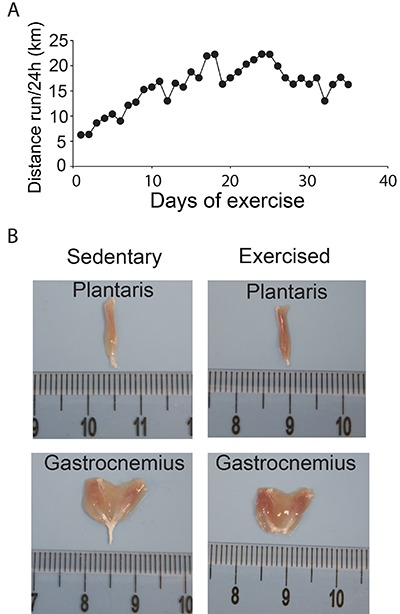
“During the first weeks of exposure to running wheels, the total running distance per day increases progressively, reaching a plateau after 2 to 5 weeks (9,15,29,30).”
BackgroundPersonius, K. E., Jayaram, A., Krull, D., Brown, R., Xu, T., Han, B., Burgess, K., Storey, C., Shah, B., Tawil, R., et al. (2010) · Journal of Applied Physiology · doi:10.1152/japplphysiol.00300.2010 · Cited by 45 · cited 2×
“Two studies showed a B5–10% lower body mass in exercised male C57BL/6J mice compared to sedentary controls (these effects were not observed in female mice) (7,9).”
BackgroundPreferences of mice, Mus musculus, for different types of running wheel
Banjanin, S., & Mrosovsky, N. (2000) · Laboratory Animals · doi:10.1258/002367700780384681 · Cited by 45 · cited 3×
“over 13 cm setups, suggesting that wheels with larger diameters may improve total running activity (4).”
Backgroundp300 is not required for metabolic adaptation to endurance exercise training
LaBarge, S. A., Migdal, C., Buckner, E. H., Okuno, H., Gertsman, I., Stocks, B., Barshop, B. A., Nalbandian, S., Philp, A., McCurdy, C. E., et al. (2015) · The FASEB Journal · doi:10.1096/fj.15-281741 · Cited by 34 · cited 9×
“In general, studies report that C57BL/6J mice run voluntarily for a total activity time of B3 to 7 h per day and a total distance that can range from B4 to 20 km per day (10,15,18,19,21).”
BackgroundInfluentialJeneson, J. A. L., de Snoo, M. W., Verlinden, N. A. T., Joosten, B. J. L. J., Doornenbal, A., Schot, A., & Everts, M. E. (2007) · Acta Physiologica · doi:10.1111/j.1748-1716.2007.01680.x · Cited by 32
Telemetric analysis of haemodynamic regulation during voluntary exercise training in mouse models
Adlam, D., de Bono, J. P., Danson, E., Zhang, M. H., Casadei, B., Paterson, D. J., & Channon, K. M. (2011) · Experimental Physiology · doi:10.1113/expphysiol.2011.059261 · Cited by 25 · cited 1×
“Resting heart rate also decreased after 20 days of wheel running, confirming that 20 days of wheel running results in adaptations in the heart (39).”
BackgroundA comparison of two types of running wheel in terms of mouse preference, health, and welfare
WALKER, M. D., & Mason, G. J. (2018) · Physiology & Behavior · doi:10.1016/j.physbeh.2018.04.006 · Cited by 23 · cited 3×
“Also, the angled wheel has a solid plastic surface that mice prefer over the rods of upright wheels (27) and that can minimize the chances of injury due to toe or tail catching.”
BackgroundIdentification of mouse gaits using a novel force-sensing exercise wheel
Smith, B. J. H., Cullingford, L., & Usherwood, J. R. (2015) · Journal of Applied Physiology · doi:10.1152/japplphysiol.01014.2014 · Cited by 15 · cited 2×
“Voluntary wheel running is rewarding for mice, and is performed under no psychological stress (3,4), in a running pattern that resembles the natural running behavior for mice (9,26).”
BackgroundA novel long term short interval physical activity regime improves body composition in mice
Goh, J., & Ladiges, W. (2013) · BMC Research Notes · doi:10.1186/1756-0500-6-66 · Cited by 15 · cited 2×
“Also, long-term (lasting several months) or life-long voluntary wheel running has been used to study the effects of exercise in aging (23,33).”
Background
Cited by
Gomes-Santos, I. L., Amoozgar, Z., Kumar, A. S., Ho, W. W., Roh, K., Talele, N. P., Curtis, H., Kawaguchi, K., Jain, R. K., & Fukumura, D. (2021) · Cancer Immunology Research · doi:10.1158/2326-6066.cir-20-0499 · Cited by 181
“Unlike the voluntary running model, in which mice can run 20 km per day (51), our treadmill model’s exercise volume is 10 to 20 times less than this.”
Exercise promotes satellite cell contribution to myofibers in a load-dependent manner
Masschelein, E., D’Hulst, G., Zvick, J., Hinte, L., Soro-Arnaiz, I., Gorski, T., von Meyenn, F., Bar-Nur, O., & De Bock, K. (2020) · Skeletal Muscle · doi:10.1186/s13395-020-00237-2 · Cited by 83
Becker, M., Joseph, S. S., García‐Carrizo, F., Tom, R. Z., Opaleva, D., Serr, I., Tschöp, M. H., Schulz, T. J., Hofmann, S. M., & Daniel, C. (2023) · Cell Metabolism · doi:10.1016/j.cmet.2023.08.010 · Cited by 84
“Average running distance per day per cage was 16 km (Figure S1K), a distance that is in accordance with detailed recent assessments of voluntary wheel running patterns and physiological effects in C57BL/6J mice.(19)”
MethodBarriers in translating preclinical rodent exercise metabolism findings to human health
Fuller, K. N. Z., & Thyfault, J. P. (2020) · Journal of Applied Physiology · doi:10.1152/japplphysiol.00683.2020 · Cited by 63
Similarities Between Disuse and Age-Induced Bone Loss
Buettmann, E. G., Goldscheitter, G., Hoppock, G. A., Friedman, M. A., Suva, L. J., & Donahue, H. J. (2020) · Journal of Bone and Mineral Research · doi:10.1002/jbmr.4643 · Cited by 67
“The articles that do report on skeletal parameters suggest highly variable changes in cortical and cancellous bone architecture following exercise compared to normal cage activity.((23-30)) These variable bone changes are highly dependent on mouse strain, age, and exercise type and duration.”
Background
Metadata
- Authors
- Manzanares, G., Brito-da-Silva, G., & Gandra, P. G.
- Affiliations
- Universidade Estadual de Campinas (UNICAMP) (BR)
- ORCID
- Gandra, P.G.
- Venue
- Brazilian Journal of Medical and Biological Research
- Publisher
- FapUNIFESP (SciELO)
- Published
- 2019
- Volume
- 52
- Issue
- 1
- Pages
- e7830-e7830
- ISSN
- 0100-879X (ISSN-L)
- 1414-431X
- PMC
- PMC6301263
- OpenAlex
- W2905321820
- Cited by
- 194
- References
- 50
- Citations by year
- 2026: 29 · 2025: 28 · 2024: 30 · 2023: 35 · 2022: 28 · 2021: 15 · 2020: 25 · 2019: 4
- FWCI
- 15.10
- Type
- journal article
- Language
- en
- Open access
- gold
- doi.org
- Licence
- cc-by
- creativecommons.org/licenses/by/4.0/ (vor)
- creativecommons.org/licenses/by/4.0/ (am)
- creativecommons.org/licenses/by/4.0/ (tdm)
- Locations
- Brazilian Journal of Medical and Biological Research (publishedVersion, cc-by)
- Europe PMC (PubMed Central) (publishedVersion, cc-by)
- PubMed Central (publishedVersion, cc-by)
- PubMed (publishedVersion)
- Americanae (AECID Library) (publishedVersion, other-oa)
- LA Referencia (Red Federada de Repositorios Institucionales de Publicaciones Científicas) (publishedVersion, other-oa)
- Americanae (AECID Library) (submittedVersion, cc-by-nc)
- DOAJ (DOAJ: Directory of Open Access Journals) (submittedVersion, cc-by-sa)
- Funders
- Conselho Nacional de Desenvolvimento Científico e Tecnológico
- Topics
- Health Sciences › Medicine › Physiology (medical) › Cardiovascular and exercise physiology
- Health Sciences › Medicine › Public Health, Environmental and Occupational Health › Physical Activity and Health
- Health Sciences › Medicine › Physiology (medical) › Exercise and Physiological Responses
- Keywords
- voluntary wheel running, mice, exercise physiology, running pattern, exercise capacity, skeletal muscle, myocardium, sarcopenia, exercise parameters
- MeSH terms
- Animals, Female, Male, Motor Activity, Oxygen Consumption, Physical Conditioning, Animal, Running, Muscle, Skeletal, Mice
About these checks
Registry, retraction, Cites and statistics results are computed, not judged, with one exception: a printed reference that no index lists is read once by a model before it counts as a citation error. Claims are extracted by a model and kept only when their quote appears verbatim in the text; each cited source is then checked, with a model’s help, for whether it says what the claim relies on. Those verdicts can be wrong — read the claim’s quote and the cited source before relying on one.
Statistics and arithmetic are recomputed, not judged.
Confidence bands are shown only for fields calibrated on our annotated test set. None is calibrated yet, so no band is shown.
What counts as a claim ›How we measure confidence ›How we check this ›
Are you an author, or do you see a problem with this page? Request a review
Data sources
Bibliographic data: Semantic Scholar, OpenAlex, Crossref.
Contains information from the Semantic Scholar Academic Graph Datasets, made available under the ODC Attribution License (ODC-BY 1.0).
Semantic Scholar’s data is described in: Kinney, R., et al. (2023). The Semantic Scholar Open Data Platform. arXiv:2301.10140.
