

Voluntary wheel running: patterns and physiological effects in mice
Open accessThe DOI matches its Crossref record; 50 of the 50 references it cites were found in a registry or an index.
Abstract
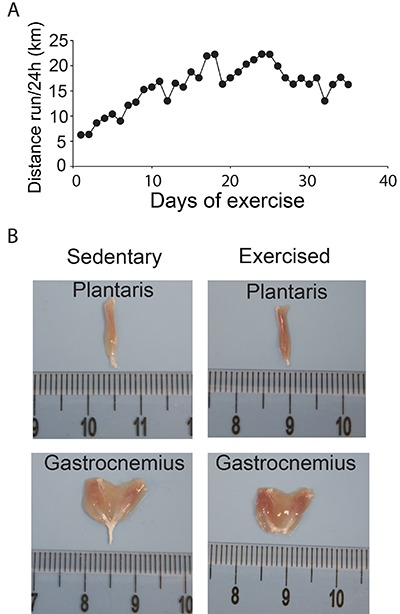
Exercise can prevent and improve the pathophysiology of diseases and promote healthy aging. Thus, understanding the mechanisms that regulate the beneficial effects of exercise may lead to the development of new strategies to enhance quality of life and to counteract chronic diseases. Voluntary wheel running is an interesting model to study the effects of exercise in mice. Compared to forced treadmill exercise, voluntary wheel running presents several advantages such as: 1) running pattern is similar to natural running behavior of mice; 2) it is performed under non-stressed conditions, according to the rhythmicity of the animal; 3) it does not require direct interference from the researcher, and can be easily applied in long-term studies. Mice run spontaneously when given access to running wheels, for a total distance of ∼4 to 20 km per day and a total activity time of ∼3 to 7 hours a day. Hence, voluntary wheel running can result in robust endurance-like adaptation in skeletal and cardiac muscles and protect from sarcopenia. However, due to the lack of control over exercise parameters in voluntary exercise models, it is important for the researcher to understand the patterns and variability of wheel running in mice, as well as the factors that can affect voluntary running activity. Overall, voluntary wheel running in mice is a very interesting approach to study the chronic adaptation to exercise, analyze the effects of exercise, and test exercise capacity in different experimental models.
Overview
The claims and statistics of this paper haven’t been checked yet.
Free: it reads the open-access text and checks the first 5 claims that cite a source we can check. Create a free account to check every claim.
Integrity signals
Registry
Cites
Statistics
Figures
Verification
Claims the paper makes
The claims and statistics of this paper haven’t been checked yet.
Free: it reads the open-access text and checks the first 5 claims that cite a source we can check. Create a free account to check every claim.
Claims other papers make about this one
Each is checked against this paper’s own text: does it say what the citing paper says it does?
In the citing paper
“Unlike the voluntary running model, in which mice can run 20 km per day (51), our treadmill model’s exercise volume is 10-20 times less than this.”
Self-check
Percentages, sums and reported differences re-computed from the paper’s own numbers.
The self-check needs the paper’s full text.
Citations
Cites
Murray, D. D., Suzuki, K., Law, M., Trebicka, J., Neuhaus, J., Wentworth, D., Johnson, M., Vjecha, M. J., Kelleher, A. D., Emery, S., et al. (2015) · PLOS ONE · doi:10.1371/journal.pone.0139981 · Cited by 2,740
Running enhances spatial pattern separation in mice
Creer, D. J., Romberg, C., Saksida, L. M., van Praag, H., & Bussey, T. J. (2010) · Proceedings of the National Academy of Sciences · doi:10.1073/pnas.0911725107 · Cited by 553 · cited 4×
“When mice are 22–24 months old (roughly corresponding to 70 years in humans), distance run per day is reduced by B50% compared to B10-month-old mice or by B75% compared to young animals (B2–4 months old) (11,15).”
BackgroundMethodInfluentialExercise Promotes Healthy Aging of Skeletal Muscle
Cartee, G. D., Hepple, R. T., Bamman, M. M., & Zierath, J. R. (2016) · Cell Metabolism · doi:10.1016/j.cmet.2016.05.007 · Cited by 483 · cited 2×
“1590/1414-431X20187830 Brazilian Journal of Medical and Biological Research (2019) 52(1): e7830, http://dx.”
BackgroundGarland, T., Schutz, H., Chappell, M. A., Keeney, B. K., Meek, T. H., Copes, L. E., Acosta, W., Drenowatz, C., Maciel, R. C., van Dijk, G., et al. (2011) · Journal of Experimental Biology · doi:10.1242/jeb.048397 · Cited by 444
Cardiac and skeletal muscle adaptations to voluntary wheel running in the mouse
Allen, D. L., Harrison, B. C., Maass, A., Bell, M. L., Byrnes, W. C., & Leinwand, L. A. (2001) · Journal of Applied Physiology · doi:10.1152/jappl.2001.90.5.1900 · Cited by 376 · cited 9×
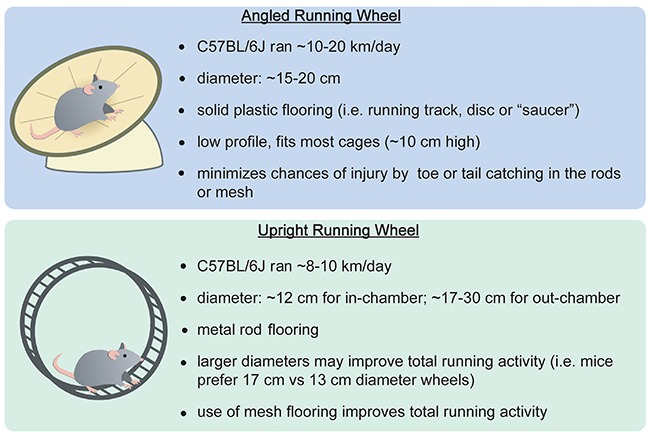
“Most studies use in-chamber upright wheels with a diameter of B12 to 13 cm (10,15,17,22,23).”
BackgroundInfluentialStranahan, A. M., Lee, K., Martin, B., Maudsley, S., Golden, E., Cutler, R. G., & Mattson, M. P. (2009) · Hippocampus · doi:10.1002/hipo.20577 · Cited by 331 · cited 1×
“When combined with voluntary wheel running, caloric restriction did not alter total running distance in healthy C57BL/6J mice (although it severely improved voluntary running in db/db mice, a model of diabetic dyslipidemia) (47).”
BackgroundLerman, I., Harrison, B. C., Freeman, K., Hewett, T. E., Allen, D. L., Robbins, J., & Leinwand, L. A. (2002) · Journal of Applied Physiology · doi:10.1152/japplphysiol.01045.2001 · Cited by 271 · cited 3×
“In a study analyzing different inbred mouse strains, it was observed that C57BL/6J mice run significantly more and at a higher average speed, compared to six other strains (14).”
BackgroundVoluntary and forced exercise differentially alters the gut microbiome in C57BL/6J mice
Allen, J. M., Berg Miller, M. E., Pence, B. D., Whitlock, K., Nehra, V., Gaskins, H. R., White, B. A., Fryer, J. D., & Woods, J. A. (2015) · Journal of Applied Physiology · doi:10.1152/japplphysiol.01077.2014 · Cited by 266 · cited 1×
“For example, the gut microbiota is altered differently by voluntary or forced exercise (48): while voluntary exercise improved a mouse”
BackgroundAcosta-Rodríguez, V. A., de Groot, M. H. M., Rijo-Ferreira, F., Green, C. B., & Takahashi, J. S. (2017) · Cell Metabolism · doi:10.1016/j.cmet.2017.06.007 · Cited by 251
Genetic influence on daily wheel running activity level
Lightfoot, J. T., Turner, M. J., Daves, M., Vordermark, A., & Kleeberger, S. R. (2004) · Physiological Genomics · doi:10.1152/physiolgenomics.00125.2004 · Cited by 245 · cited 4×
“Voluntary wheel running activity in mice is significantly affected by genetic background (14,18).”
BackgroundInfluential
Cited by
Gomes-Santos, I. L., Amoozgar, Z., Kumar, A. S., Ho, W. W., Roh, K., Talele, N. P., Curtis, H., Kawaguchi, K., Jain, R. K., & Fukumura, D. (2021) · Cancer Immunology Research · doi:10.1158/2326-6066.cir-20-0499 · Cited by 181
“Unlike the voluntary running model, in which mice can run 20 km per day (51), our treadmill model’s exercise volume is 10 to 20 times less than this.”
Exercise promotes satellite cell contribution to myofibers in a load-dependent manner
Masschelein, E., D’Hulst, G., Zvick, J., Hinte, L., Soro-Arnaiz, I., Gorski, T., von Meyenn, F., Bar-Nur, O., & De Bock, K. (2020) · Skeletal Muscle · doi:10.1186/s13395-020-00237-2 · Cited by 83
Becker, M., Joseph, S. S., García‐Carrizo, F., Tom, R. Z., Opaleva, D., Serr, I., Tschöp, M. H., Schulz, T. J., Hofmann, S. M., & Daniel, C. (2023) · Cell Metabolism · doi:10.1016/j.cmet.2023.08.010 · Cited by 84
“Average running distance per day per cage was 16 km (Figure S1K), a distance that is in accordance with detailed recent assessments of voluntary wheel running patterns and physiological effects in C57BL/6J mice.(19)”
MethodBarriers in translating preclinical rodent exercise metabolism findings to human health
Fuller, K. N. Z., & Thyfault, J. P. (2020) · Journal of Applied Physiology · doi:10.1152/japplphysiol.00683.2020 · Cited by 63
Similarities Between Disuse and Age-Induced Bone Loss
Buettmann, E. G., Goldscheitter, G., Hoppock, G. A., Friedman, M. A., Suva, L. J., & Donahue, H. J. (2020) · Journal of Bone and Mineral Research · doi:10.1002/jbmr.4643 · Cited by 67
“The articles that do report on skeletal parameters suggest highly variable changes in cortical and cancellous bone architecture following exercise compared to normal cage activity.((23-30)) These variable bone changes are highly dependent on mouse strain, age, and exercise type and duration.”
BackgroundMeasuring Exercise Capacity and Physical Function in Adult and Older Mice
Graber, T. G., Maroto, R., Fry, C. S., Brightwell, C. R., & Rasmussen, B. B. (2020) · The Journals of Gerontology Series A · doi:10.1093/gerona/glaa205 · Cited by 59
“This may make the wheels less comfortable to use for larger mice, encouraging less extensive running, which has been observed by others (30).”
BackgroundA reduction in voluntary physical activity in early pregnancy in mice is mediated by prolactin
Ladyman, S. R., Carter, K. M., Gillett, M. L., Aung, Z. K., & Grattan, D. R. (2021) · eLife · doi:10.7554/elife.62260 · Cited by 42
Daily running enhances molecular and physiological circadian rhythms in skeletal muscle
Casanova-Vallve, N., Duglan, D., Vaughan, M. E., Pariollaud, M., Handzlik, M. K., Fan, W., Yu, R. T., Liddle, C., Downes, M., Delezie, J., et al. (2022) · Molecular Metabolism · doi:10.1016/j.molmet.2022.101504 · Cited by 44
“As we [33] and others [60] have seen in prior studies, female mice tend to be more active than males; in addition, both maximum speed and tissue glycogen content are significantly greater in active c57BL/6J female mice than they are in males and there was no significant difference in these outcomes between female mice…”
BackgroundExercise: a molecular tool to boost muscle growth and mitochondrial performance in heart failure?
Nijholt, K. T., Sánchez-Aguilera, P., Voorrips, S. N., de Boer, R. A., & Westenbrink, B. D. (2022) · European Journal of Heart Failure · doi:10.1002/ejhf.2407 · Cited by 46
Nuñez‐Badinez, P., Leo, B. D., Laux‐Biehlmann, A., Hoffmann, A., Zollner, T. M., Saunders, P. T. K., Simitsidellis, I., Charrua, A., Cruz, F., Gómez, R., et al. (2021) · Pain · doi:10.1097/j.pain.0000000000002248 · Cited by 36
Vazquez-Medina, A., Rodriguez-Trujillo, N., Ayuso-Rodriguez, K., Marini-Martinez, F., Angeli-Morales, R., Caussade-Silvestrini, G. S., Godoy‐Vitorino, F., & Chorna, N. (2024) · Frontiers in Microbiology · doi:10.3389/fmicb.2024.1326584 · Cited by 38
Voluntary exercise ameliorates synaptic pruning deficits in sleep-deprived adolescent mice
Tuan, L., Tsao, C.-Y., Lee, L. J., & Lee, L.-J. (2020) · Brain Behavior and Immunity · doi:10.1016/j.bbi.2020.12.017 · Cited by 37
Wang, P., Liang, Y., Chen, K., Yau, S., Sun, X., Cheng, K. K. Y., Xu, A., So, K., & Li, A. (2020) · Frontiers in Cellular Neuroscience · doi:10.3389/fncel.2020.00189 · Cited by 29
Exercise Duration Differentially Effects Age-related Neuroinflammation and Hippocampal Neurogenesis
Connolly, M. G., Bruce, S. R., & Kohman, R. A. (2022) · Neuroscience · doi:10.1016/j.neuroscience.2022.03.022 · Cited by 34
Non-invasive assessment of HFpEF in mouse models: current gaps and future directions
Villalba‐Orero, M., García‐Pavía, P., & Lara‐Pezzi, E. (2022) · BMC Medicine · doi:10.1186/s12916-022-02546-3 · Cited by 36
“In contrast, motorized treadmill exercise provides well-controlled exercise measurements [68], although it requires negative stimulus (usually an electrical stimulus) and is carried out until exhaustion, increasing stress [66].”
BackgroundPhysical activity reduces anxiety and regulates brain fatty acid synthesis
Liśkiewicz, A., Przybyła, M., Wojakowska, A., Marczak, Ł., Bogus, K., Nowacka-Chmielewska, M. M., Liśkiewicz, D., Małecki, A., Barski, J. J., Lewin‐Kowalik, J., et al. (2020) · Molecular Brain · doi:10.1186/s13041-020-00592-7 · Cited by 33
Paton, S. E. J., Solano, J. L., Coulombe-Rozon, F., Lebel, M., & Ménard, C. (2023) · Journal of Psychiatry and Neuroscience · doi:10.1503/jpn.220218 · Cited by 27
Delanogare, E., de Souza, R. M., Rosa, G. K., Guanabara, F. G., Rafacho, A., & Moreira, E. L. G. (2020) · Stress · doi:10.1080/10253890.2020.1735344 · Cited by 29
Gioscia‐Ryan, R. A., Clayton, Z. S., Fleenor, B. S., Eng, J. S., Johnson, L. C., Rossman, M. J., Zigler, M. C., Evans, T. D., & Seals, D. R. (2020) · GeroScience · doi:10.1007/s11357-020-00212-1 · Cited by 29
“There are several established rodent aerobic exercise paradigms, including both forced (e.g., swimming, treadmill) and voluntary (primarily wheel running) modalities (Goh and Ladiges 2015; Manzanares et al. 2018).”
BackgroundInfluentialDeota, S., Pendergast, J. S., Kolthur‐Seetharam, U., Esser, K. A., Gachon, F., Asher, G., Dibner, C., Benitah, S. A., Escobar, C., Muoio, D. M., et al. (2025) · Nature Metabolism · doi:10.1038/s42255-025-01237-6 · Cited by 27
“Mice run a total distance of ~4–20 km in ~3–7 h of wheel-running activity per day, and wheel running has also been used as a stress-free model of voluntary long-term endurance training 96 .”
Insulin blood-brain barrier transport and interactions are greater following exercise in mice
Brown, C., Pemberton, S., Babin, A., Abdulhameed, N., Noonan, C., Brown, M. B., Banks, W. A., & Rhea, E. M. (2022) · Journal of Applied Physiology · doi:10.1152/japplphysiol.00866.2021 · Cited by 27
Calpe-López, C., Martínez-Caballero, M. Á., García-Pardo, M. P., & Aguilar, M. A. (2022) · Physiology & Behavior · doi:10.1016/j.physbeh.2022.113916 · Cited by 23
“Among possible environmental manipulations, physical exercise has been demonstrated to prevent and improve the pathophysiology of illnesses and to promote healthy aging [8].”
BackgroundFalkenhain, K., Ruiz‐Uribe, N. E., Haft‐Javaherian, M., Ali, M. A., contributors, S. C., Michelucci, P. E., Schaffer, C. B., & Bracko, O. (2020) · PLoS ONE · doi:10.1371/journal.pone.0235691 · Cited by 26
“To determine the effects of three months of voluntary exercise in 13 month old APP/PS1 mice, we provided single-housed mice with unrestricted access to a monitored running wheel inside their home cages (Fig 1A) [71].”
MethodRuxolitinib Cream Has Dual Efficacy on Pruritus and Inflammation in Experimental Dermatitis
Scuron, M. D., Fay, B. L., Connell, A. J., Peel, M. T., & Smith, P. A. (2021) · Frontiers in Immunology · doi:10.3389/fimmu.2020.620098 · Cited by 24
“org 9 inhibited pruritus without adversely affecting normal voluntary activity, such as wheel running (46, 47).”
BackgroundSantin, Y., Lopez, S., Ader, I., Andrieu, S., Blanchard, N., Carrière, A., Casteilla, L., Cousin, B., Davezac, N., Barreto, P. D. S., et al. (2021) · The Journal of Frailty & Aging · doi:10.14283/jfa.2020.43 · Cited by 22
“Voluntary wheel running thus consists of a rewarding behavior and not a stereotypic behavior that can result from environmental restriction and devoid of any goal or function (45).”
BackgroundSchmitt, A., Herzog, P., Röchner, F., Brändle, A.-L., Fragasso, A., & Munz, B. (2020) · Physiological Reports · doi:10.14814/phy2.14609 · Cited by 22
“With regard to endurance exercise training, the two main regimens are moderate-intensity forced treadmill running (FTR), usually on 3–5 days per week for 20–90 min, at speeds of about 10–20 m/min and 0–15° incline, or voluntary wheel running (VWR), for which animals’ cages are equipped with running wheels and the dist…”
BackgroundHyatt, J. K. (2022) · Physiological Reports · doi:10.14814/phy2.15377 · Cited by 26
“An exercise- trained group of mice (EX5; n = 6) were placed individually in cages for 5 weeks with voluntary access to resistance- free running low- profile wheels (#86180; Lafayette), which are preferred by the mice compared to up- right/vertical wheels (Manzanares et al., 2018).”
MethodBasten, A. M., Raymond‐Pope, C. J., Hoffman, D. B., Call, J. A., & Greising, S. M. (2022) · Experimental Physiology · doi:10.1113/ep090630 · Cited by 19
“Interventionssuchasvoluntarywheelrunningrelyonunplannedbouts that can vary greatly in timing and duration, although the total number of kilometres could be consistent between animals (Manzanares et al., 2018).”
BackgroundAndrade-Guerrero, J., Orta‐Salazar, E., Salinas‐Lara, C., Sánchez-Garibay, C., Rodríguez-Hernández, L. D., Vargas-Rodríguez, I., Barron-Leon, N., Ledesma-Alonso, C., Díaz-Cintra, S. Y., & Soto-Rojas, L. O. (2023) · International Journal of Molecular Sciences · doi:10.3390/ijms241311134 · Cited by 24
“Two types of physical exercise are used in rodents, “voluntary” and “forced” regimes, both of which have been shown beneficial effects on brain function [28,29].”
BackgroundNijholt, K. T., Meems, L. M. G., Ruifrok, W.-P. T., Maass, A. H., Yurista, S. R., Pávez, M., Mahmoud, B., Wolters, A. H. G., van Veldhuisen, D. J., van Gilst, W. H., et al. (2021) · Pflügers Archiv - European Journal of Physiology · doi:10.1007/s00424-021-02577-4 · Cited by 27
Cait, J., Winder, C. B., & Mason, G. J. (2024) · Applied Animal Behaviour Science · doi:10.1016/j.applanim.2024.106361 · Cited by 21
Kerdiles, O., Mi-mba, M.-F. O. M., Coulombe, K., Tremblay, C., Émond, V., Saint‐Pierre, M., Rouxel, C., Berthiaume, L., Julien, P., Cicchetti, F., et al. (2024) · Neural Regeneration Research · doi:10.4103/nrr.nrr-d-23-00595 · Cited by 20
“Furthermore, female mice run longer distances than males in running wheels (Manzanares et al., 2018).”
BackgroundMesgar, S., Jameie, S. B., Aliaghaei, A., Parvardeh, S., Torabi, A., & Haghparast, A. (2021) · Journal of Molecular Neuroscience · doi:10.1007/s12031-021-01923-6 · Cited by 18
“The number of each complete cycle of the running wheel was recorded by the magnetic switch in the running wheel (Manzanares et al. 2019).”
MethodDong, T. N., Kramár, E. A., Beardwood, J. H., Al‐Shammari, A., Wood, M. A., & Keiser, A. A. (2022) · Neurobiology of Learning and Memory · doi:10.1016/j.nlm.2022.107658 · Cited by 23
Sarto, F., Bottinelli, R., Franchi, M. V., Porcelli, S., Šimunič, B., Pišot, R., & Narici, M. V. (2023) · Acta Physiologica · doi:10.1111/apha.13986 · Cited by 26
Wang, Y., Hong, L., Jiang, J., Zhang, X., Chen, J., & Diao, H. (2023) · International Journal of Medical Sciences · doi:10.7150/ijms.82925 · Cited by 17
Carratalá‐Ros, C., Olivares-García, R., Martínez-Verdú, A., Arias‐Sandoval, E., Salamone, J. D., & Correa, M. (2021) · Psychopharmacology · doi:10.1007/s00213-021-05950-4 · Cited by 19
Leuchtmann, A. B., Afifi, Y., Ritz, D., & Handschin, C. (2023) · Physiological Reports · doi:10.14814/phy2.15701 · Cited by 19
“Activity patterns reflect the physiological rhythms, that is, during the active night phase, and correspond to mice's natural movement pattern of short individual bouts (Manzanares et al., 2018).”
BackgroundVoluntarily wheel running inhibits the growth of CRPC xenograft by inhibiting HMGB1 in mice
Yang, Z., Gao, Y., He, K., Sui, X., Chen, J., Wang, T., Chen, M., Wang, Z., Jiang, Y., & Zhao, L. (2023) · Experimental Gerontology · doi:10.1016/j.exger.2023.112118 · Cited by 18
“The running wheel was placed in the cage prior to the experiment to acclimatize the mice to its presence, and it was observed that the mice rapidly developed spontaneous running behavior, which was consistent with the findings in literature (Manzanares et al., 2018).”
BackgroundResultSchifino, A. G., Raymond‐Pope, C. J., Heo, J., McFaline‐Figueroa, J., Call, J. A., & Greising, S. M. (2023) · Experimental Physiology · doi:10.1113/ep091284 · Cited by 15
“Moreover, voluntary wheel running distance is highly variable in mice and can be influenced by the running wheel orientation (Manzanares et al., 2018), the type of inbred mouse strain (Ghosh et al., 2010) (Lerman et al., 2002), whether the mouse is a wild mouse, in nature, or a laboratory mouse…”
BackgroundSon, Y. H., Lee, S.-M., Lee, S. H., Yoon, J. H., Kang, J. S., Yang, Y. R., & Kwon, K. (2019) · Journal of Applied Physiology · doi:10.1152/japplphysiol.00091.2019 · Cited by 23
“Furthermore, consistent with other reports (22, 29, 33), VWR did not promote hypertrophy-signaling pathways.”
BackgroundResultVieira‐Lara, M. A., Reijne, A. C., Koshian, S., Čiapaitė, J., Abegaz, F., Talarovičová, A., van Dijk, T. H., Versloot, C. J., Bandsma, R., Wolters, J. C., et al. (2023) · Diabetes · doi:10.2337/db22-0746 · Cited by 17
Purohit, D. C., Mandyam, A. D., Terranova, M. J., & Mandyam, C. D. (2019) · Behavioural Brain Research · doi:10.1016/j.bbr.2019.112235 · Cited by 18
“Wheel running behavior in rodents can be modeled as a form of physical exercise, and wheel running is naturally reinforcing and rewarding in rodents (Knab et al., 2009; Detweiler et al., 2017; Manzanares et al., 2018).”
BackgroundZhuang, H., Li, Q., Sun, C., Xu, D., Gan, G., Zhang, C., Chen, C., Yuan, Y., Liu, L., Xiao, Y. M., et al. (2023) · Brain Behavior and Immunity · doi:10.1016/j.bbi.2023.09.002 · Cited by 16
Egawa, T., Ogawa, T., Yokokawa, T., Kido, K., Goto, K., & Hayashi, T. (2022) · Journal of Applied Physiology · doi:10.1152/japplphysiol.00539.2021 · Cited by 14
Effects of lifespan-extending interventions on cognitive healthspan
Čulig, L., Sahbaz, B. D., & Bohr, V. A. (2022) · Expert Reviews in Molecular Medicine · doi:10.1017/erm.2022.36 · Cited by 14
Ko, Y. J., & Ko, I. (2021) · International Neurourology Journal · doi:10.5213/inj.2142170.085 · Cited by 17
“Wheel running in rodents is more similar to the natural running of a person than to a forced treadmill running [11].”
BackgroundGlasenapp, A., Bankstahl, J. P., Bähre, H., Glage, S., & Bankstahl, M. (2024) · Frontiers in Veterinary Science · doi:10.3389/fvets.2024.1430726 · Cited by 17
Yuan, X., Sun, W., Xu, Y., Xiang, M., Gao, Y., Feng, W., Xiao, H., Zhang, L., Tang, Q., Lu, J., et al. (2025) · Scientific Reports · doi:10.1038/s41598-025-87190-6 · Cited by 17
Khemraj, P., Kuznyetsova, A., & Hood, D. A. (2025) · Journal of sport and health science/Journal of Sport and Health Science · doi:10.1016/j.jshs.2025.101049 · Cited by 17
“33 Thus, these exercise models lead to varying degrees of adaptation, 11,34,35 depending on exercise duration, intensity, and modality.”
Bresler, A., Vogel, J., Niederer, D., Gray, D. E., Schmitz‐Rixen, T., & Troidl, K. (2019) · International Journal of Molecular Sciences · doi:10.3390/ijms20163956 · Cited by 11
“It was expected that different mouse strains don’t have similar responses to voluntary training [27,38].”
BackgroundPellegrin, M., Bouzourène, K., Aubert, J.-F., Bielmann, C., Rolf Gruetter, A., Rosenblatt‐Velin, N., Poitry‐Yamate, C., & Mazzolai, L. (2020) · Scientific Reports · doi:10.1038/s41598-020-70961-8 · Cited by 11
Bittel, A. J., Bittel, D. C., Gordish‐Dressman, H., & Chen, Y. (2023) · iScience · doi:10.1016/j.isci.2023.108632 · Cited by 11
Zhang, L., Zou, W., Hu, Y., Wu, H., Gao, Y., Zhang, J., & Zheng, J. (2024) · Food Science and Human Wellness · doi:10.26599/fshw.2022.9250142 · Cited by 11
Janowski, A. J., Berardi, G., Hayashi, K., Plumb, A. N., Lesnak, J. B., Khataei, T., Martin, B., Benson, C. J., & Sluka, K. A. (2025) · Physiological Reports · doi:10.14814/phy2.70246 · Cited by 15
“Consideration of sex differences in wheel running behavior began in the early 1920's and numerous data support prominent sex differences in rodents; specifically, females run a greater distance and total time than males (Lightfoot, 2008; Lightfoot, 2013; Manzanares et al., 2018; Rosenfeld, 2017).”
InfluentialToriumi, T., Ohmori, H., & Nagasaki, Y. (2023) · Advanced Science · doi:10.1002/advs.202301159 · Cited by 11
Circadian disruption impairs fear extinction and memory of conditioned safety in mice
Clark, J. W., Hoyer, D., Cain, S. W., Phillips, A. J. K., Drummond, S. P. A., & Jacobson, L. H. (2020) · Behavioural Brain Research · doi:10.1016/j.bbr.2020.112788 · Cited by 13
O’Connor, T. N., Kallenbach, J. G., Orciuoli, H. M., Paris, N. D., Bachman, J. F., Johnston, C. J., Hernady, E., Williams, J. P., Dirksen, R. T., & Chakkalakal, J. V. (2022) · Skeletal Muscle · doi:10.1186/s13395-022-00291-y · Cited by 12
Wu, Z., Zhang, Y., Xu, Y., & Zhao, P. (2020) · Neurochemical Research · doi:10.1007/s11064-020-03023-0 · Cited by 10
Hahn, K. R., Hwang, I. K., & Yoo, D. Y. (2025) · Neurochemical Research · doi:10.1007/s11064-025-04441-8 · Cited by 9
“However, sex differences play an important role in neuroinflammation and demyelin - ation processes [ 34 , 63 ], emphasizing the need for future studies incorporating both male and female subjects to improve generalizability and explore potential sex-specific therapeutic strategies.”
Raun, S. H., Henríquez‐Olguín, C., Frank, E., Schlabs, F. L., Hahn, N. J., Knudsen, J. R., Ali, M. S., Andersen, N. R., Møller, L. L. V., Davey, J. R., et al. (2025) · Redox Biology · doi:10.1016/j.redox.2025.103844 · Cited by 11
“This exercise modality robustly induces adaptations in skeletal muscle of mice [14,45 – 47].”
Mulgrave, V. E., Alsayegh, A. A., Jaldi, A., Omire-Mayor, D., James, N., Ntekim, O. E., Walters, E., Akala, E. O., & Allard, J. S. (2022) · Neuropeptides · doi:10.1016/j.npep.2022.102307 · Cited by 10
Dial, M. B., Malek, E. M., Neblina, G. A., Cooper, A. R., Vaslieva, N. I., Frommer, R., Girgis, M., Dawn, B., & McGinnis, G. R. (2024) · Scientific Reports · doi:10.1038/s41598-023-50113-4 · Cited by 9
“Previous studies have shown that mice performing voluntary wheel running exercise will achieve much greater doses of exercise 25,26 , potentially leading to more robust cardiac adaptations.”
Pajski, M. L., Byrd, C., Nandigama, N., Seguin, E., Seguin, A., Fennell, A., & Graber, T. G. (2024) · Frontiers in Aging · doi:10.3389/fragi.2024.1356954 · Cited by 8
“Voluntary wheel running in mice improves both body composition and physical function (Graber et al., 2015; Manzanares et al., 2019).”
BackgroundSchnapp, W. I., Kim, J., Wang, Y., Timilsena, S., Fang, C., & Cai, H. (2024) · Cell Reports · doi:10.1016/j.celrep.2024.113933 · Cited by 10
“Consistent with previous studies, 37,38 there was a slight increase in daily wheel activity in females compared with males for both groups before food restriction started (Figures 5G, 5H, S12E, and S12F).”
ResultZhang, W., Liu, J., Wu, Z., Fan, G., Yang, Z. R., & Liu, C. (2023) · International Journal of Molecular Sciences · doi:10.3390/ijms24043212 · Cited by 9
“Compare to other exercise forms, the running pattern of voluntary wheel running is carried out under non-stressed conditions and is much more similar to the natural running behavior of mice [42].”
BackgroundKoopmans, P. J., Williams‐Frey, T. D., & Zwetsloot, K. A. (2023) · Experimental Physiology · doi:10.1113/ep091494 · Cited by 8
“When given access to a running wheel, mice tend to develop more consistent running in the first few weeks of training (Allen et al., 2001; Manzanares et al., 2018).”
BackgroundVoluntary physical activity protects against olanzapine-induced hyperglycemia
Shamshoum, H., McKie, G. L., Medak, K. D., Ashworth, K. E., Kemp, B. E., & Wright, D. C. (2020) · Journal of Applied Physiology · doi:10.1152/japplphysiol.00876.2020 · Cited by 10
“To do this we used a model of 109 voluntary wheel running (VWR), which has been previously shown to be an effective model to 110 study the effects of physical activity in mice (46).”
MethodRattling the cage: Behaviour and resource use of mice in laboratory and pet cages
Gygax, M., Fortes, M. S., Voelkl, B., Würbel, H., & Novak, J. (2024) · Applied Animal Behaviour Science · doi:10.1016/j.applanim.2024.106381 · Cited by 10
Sasaki, T., Sugiyama, M., Kuno, M., Miyata, T., Kobayashi, T., Yasuda, Y., Onoue, T., Takagi, H., Hagiwara, D., Iwama, S., et al. (2024) · Physiology & Behavior · doi:10.1016/j.physbeh.2024.114703 · Cited by 8
“The duration of the exercise was set at four weeks, based on a previous report [28].”
InfluentialEffectiveness of exercise interventions in animal models of multiple sclerosis
Parnow, A., Hafedh, M., Tsunoda, I., Patel, D. I., Baker, J. S., Saeidi, A., Bagchi, S., Sengupta, P., Dutta, S., Łuszczki, E., et al. (2023) · Frontiers in Medicine · doi:10.3389/fmed.2023.1143766 · Cited by 9
“advantages for VWR, including: (a) Running is analogous to the natural running behavior of mice; (b) running is conducted in non-stressed conditions, in accordance with the animal’s natural rhythm, and does not involve direct investigator’s intervention, making it suitable for long-term studies (28).”
BackgroundPate, B. S., Smiley, C. E., Harrington, E. N., Bielicki, H., Davis, J. M., Reagan, L. P., Grillo, C. A., & Wood, S. K. (2024) · Autonomic Neuroscience · doi:10.1016/j.autneu.2024.103175 · Cited by 7
Vrontou, S., Bédécarrats, A., Wei, X., Ayodeji, M., Brassai, A., Molnár, L., & Módy, I. (2022) · Brain Communications · doi:10.1093/braincomms/fcac166 · Cited by 9
“Voluntary wheel running is an approach to study the progress/adaptation of physical exercise in mice which changes in several disease models and with ageing.(85) In addition, numerous studies emphasized that wheel-running activity in captive rodents is in and of itself a complex behaviour also related to anxiety- and…”
BackgroundWang, G., Wang, W., Zhang, Y., Gou, X., Zhang, Q., Huang, Y., Zhang, K., Zhang, H., Yang, J., & Li, Y. (2023) · Neural Regeneration Research · doi:10.4103/1673-5374.379051 · Cited by 7
Wheel running for 26 weeks is associated with sustained vascular plasticity in the rat motor cortex
Stevenson, M. E., Kay, J., Atry, F., Wickstrom, A. T., Krueger, J. R., Pashaie, R., & Swain, R. A. (2019) · Behavioural Brain Research · doi:10.1016/j.bbr.2019.112447 · Cited by 8
“In summary, based on previous experiments (13,14,15,20,21, 45,46), we postulate angiogenesis primarily accounts for this increase in capillary density.”
Bivona, J. J., & Poynter, M. E. (2021) · PLoS ONE · doi:10.1371/journal.pone.0261618 · Cited by 8
Allerton, T. D., Kowalski, G. M., Hang, H., & Stephens, J. M. (2020) · American Journal of Physiology-Endocrinology and Metabolism · doi:10.1152/ajpendo.00450.2019 · Cited by 8
Cortical microglia dynamics are conserved during voluntary wheel running
Strohm, A. O., O’Connor, T. N., Oldfield, S., Young, S., Hammond, C., McCall, M. N., Dirksen, R. T., & Majewska, A. K. (2023) · Journal of Applied Physiology · doi:10.1152/japplphysiol.00311.2023 · Cited by 6
Lilliu, E., Hilber, K., Launikonis, B. S., & Koenig, X. (2020) · Frontiers in Physiology · doi:10.3389/fphys.2020.597647 · Cited by 6
Reed, C. H., Buhr, T. J., Tystahl, A. C., Bauer, E. E., Clark, P., & Valentine, R. J. (2022) · Alcohol · doi:10.1016/j.alcohol.2022.06.004 · Cited by 8
Gao, Y., Yang, Z., He, K., Wang, Z., Zhang, T., Jiang, Y., & Zhao, L. (2023) · Life Sciences · doi:10.1016/j.lfs.2023.122066 · Cited by 6
Wang, D., Zhang, H.-X., Yan, G.-J., Zhao, H.-R., Dong, X.-H., Tan, Y., Li, S., Lu, M., Mei, R., Liu, L.-N., et al. (2023) · Experimental Brain Research · doi:10.1007/s00221-023-06734-2 · Cited by 8
“Voluntary wheel running in mice is intermittent and resembles interval training among humans (Manzanares et al. 2018).”
BackgroundLima, T. C., Barbosa, M. A., Costa, D. C., Becker, L. K., Cardoso, L. M., & Alzamora, A. C. (2020) · Life Sciences · doi:10.1016/j.lfs.2020.117549 · Cited by 9
Petkov, S., Brenmoehl, J., Langhammer, M., Hoeflich, A., & Röntgen, M. (2022) · Cells · doi:10.3390/cells11061001 · Cited by 6
“However, as described in various studies using voluntary wheel running [36,51], muscle hypertrophy was not observed in active DUC mice.”
BackgroundMethodNijholt, K. T., Sánchez-Aguilera, P., Booij, H. G., Oberdorf‐Maass, S. U., Dokter, M. M., Wolters, A. H. G., Giepmans, B. N. G., van Gilst, W. H., Brown, J. H., de Boer, R. A., et al. (2023) · Scientific Reports · doi:10.1038/s41598-023-30514-1 · Cited by 5
Longitudinal Decline of Exercise Capacity in Male and Female Mice
Pajski, M. L., Maroto, R., Byrd, C., & Graber, T. G. (2024) · The Journals of Gerontology Series A · doi:10.1093/gerona/glae293 · Cited by 7
Anderle, S., Bonnar, O., Henderson, J., Shaw, K., Chagas, A. M., McMullan, L., Webber, A., Mcgowan, K., King, S. L., & Hall, C. N. (2025) · Communications Biology · doi:10.1038/s42003-025-07585-z · Cited by 7
Mattina, S. R., Ng, S. Y., Mikhail, A. I., Stouth, D. W., Jornacion, C. E., Rebalka, I. A., Hawke, T. J., & Ljubicic, V. (2025) · The Journal of Physiology · doi:10.1113/jp286768 · Cited by 8
“In addition, similar to previous VWR literature (Bittel et al., 2024; Manzanares et al., 2019; Vanlieshout et al., 2024), we observed a modest shift towards a slower, more oxidative myofiber composition, which is resistant to fatigue.”
Wang, Z., Zheng, R., Wang, X., Huang, X., Huang, J. A., Gu, C., He, Y., Wu, S., Chen, J., Yang, Q., et al. (2022) · Frontiers in Molecular Neuroscience · doi:10.3389/fnmol.2022.884790 · Cited by 6
An open-source, low-cost voluntary running activity tracking tool for in vivo rodent studies
Deitzler, G. E., Bira, N., Davidson, J. R., & David, M. M. (2022) · PLoS ONE · doi:10.1371/journal.pone.0273865 · Cited by 5
Sex-Specific Effect of CARM1 in Skeletal Muscle Adaptations to Exercise
vanLieshout, T. L., Stouth, D. W., Raziee, R., Sraka, A.-S. J., Masood, H. A., Ng, S. Y., Mattina, S. R., Mikhail, A. I., Manta, A., & Ljubicic, V. (2023) · Medicine & Science in Sports & Exercise · doi:10.1249/mss.0000000000003333 · Cited by 5
“the SOL muscle and predictably found that exercise increased type I and decreased type IIA fiber composition, as well as enlarged CSA of type IIA fibers similarly across genotypes (33,43,44).”
BackgroundResultInfluentialHuang, J., Tong, Y., Wang, S., Tagawa, T., Seki, Y., Ma, S., Zhang, Z., Cao, T., Kobori, H., & Suzuki, K. (2024) · Antioxidants · doi:10.3390/antiox13091147 · Cited by 7
“In contrast In contrast to forced treadmill exercise, running in a voluntary wheel more closely resembles the natural running behavior of mice [34–36], allowing them to exercise in a non-stressful environment without disturbing their circadian rhythm [34]. to forced treadmill exercise, running in a…”
Temporal flexibility in activity rhythms of a diurnal rodent, the ice rat ( Otomys sloggetti )
Oosthuizen, M. K. (2020) · Chronobiology International · doi:10.1080/07420528.2020.1782931 · Cited by 5
Aldekwer, S., Desiderio, A., Farges, M., Rougé, S., Naour, A. L., Guennec, D. L., Gonçalves-Mendes, N., Mille-Hamard, L., Momken, I., Rossary, A., et al. (2020) · European Journal of Nutrition · doi:10.1007/s00394-020-02420-z · Cited by 7
Uurasmaa, T., Streng, T., Alkio, M., Karikoski, M., HEINONEN, I. H. A., & Anttila, K. (2022) · American Journal of Physiology-Heart and Circulatory Physiology · doi:10.1152/ajpheart.00586.2021 · Cited by 5
Considerations for Small Animal Physical Rehabilitation
Greising, S. M., Basten, A. M., Schifino, A. G., & Call, J. A. (2022) · Physiology in health and disease · doi:10.1007/978-3-030-95884-8_2 · Cited by 6
Voluntary exercise does not always suppress lung cancer progression
Leimbacher, A. C., Villiger, P., Desboeufs, N., Aboouf, M. A., Nanni, M., Armbruster, J., Ademi, H., Flüchter, P., Ruetten, M., Gantenbein, F., et al. (2023) · iScience · doi:10.1016/j.isci.2023.107298 · Cited by 6
“Voluntary wheel running is less stressful than forced exercise on a treadmill, does not interfere with the circadian rhythm of mice, and resembles the natural activity pattern of mice.(46) The limitation is, however, the lacking control over exercise volume and intensity.”
BackgroundPAW, a cost-effective and open-source alternative to commercial rodent running wheels
Terstege, D. J., & Epp, J. R. (2023) · HardwareX · doi:10.1016/j.ohx.2023.e00499 · Cited by 7
“The low-profile nature of the wheel promotes a more natural spine angle than traditional, upright, vertical running wheels, and minimizes risk of injury making this system considerably safer as a long-term source of voluntary exercise [20].”
BackgroundLeveraging in vivo animal models of tendon loading to inform tissue engineering approaches
Muscat, S. N., & Nichols, A. E. C. (2024) · Frontiers in Bioengineering and Biotechnology · doi:10.3389/fbioe.2024.1449372 · Cited by 4
Ablation of UCP-1+ cells impacts FAP dynamics in muscle regeneration
Parson, J. C., & Meyer, G. A. (2025) · American Journal of Physiology-Cell Physiology · doi:10.1152/ajpcell.00249.2025 · Cited by 5
Metadata
- Authors
- Manzanares, G., Brito-da-Silva, G., & Gandra, P. G.
- Affiliations
- Universidade Estadual de Campinas (UNICAMP) (BR)
- ORCID
- Gandra, P.G.
- Venue
- Brazilian Journal of Medical and Biological Research
- Publisher
- FapUNIFESP (SciELO)
- Published
- 2019
- Volume
- 52
- Issue
- 1
- Pages
- e7830-e7830
- ISSN
- 0100-879X (ISSN-L)
- 1414-431X
- PMC
- PMC6301263
- OpenAlex
- W2905321820
- Cited by
- 194
- References
- 50
- Citations by year
- 2026: 29 · 2025: 28 · 2024: 30 · 2023: 35 · 2022: 28 · 2021: 15 · 2020: 25 · 2019: 4
- FWCI
- 15.10
- Type
- journal article
- Language
- en
- Open access
- gold
- doi.org
- Licence
- cc-by
- creativecommons.org/licenses/by/4.0/ (vor)
- creativecommons.org/licenses/by/4.0/ (am)
- creativecommons.org/licenses/by/4.0/ (tdm)
- Locations
- Brazilian Journal of Medical and Biological Research (publishedVersion, cc-by)
- Europe PMC (PubMed Central) (publishedVersion, cc-by)
- PubMed Central (publishedVersion, cc-by)
- PubMed (publishedVersion)
- Americanae (AECID Library) (publishedVersion, other-oa)
- LA Referencia (Red Federada de Repositorios Institucionales de Publicaciones Científicas) (publishedVersion, other-oa)
- Americanae (AECID Library) (submittedVersion, cc-by-nc)
- DOAJ (DOAJ: Directory of Open Access Journals) (submittedVersion, cc-by-sa)
- Funders
- Conselho Nacional de Desenvolvimento Científico e Tecnológico
- Topics
- Health Sciences › Medicine › Physiology (medical) › Cardiovascular and exercise physiology
- Health Sciences › Medicine › Public Health, Environmental and Occupational Health › Physical Activity and Health
- Health Sciences › Medicine › Physiology (medical) › Exercise and Physiological Responses
- Keywords
- voluntary wheel running, mice, exercise physiology, running pattern, exercise capacity, skeletal muscle, myocardium, sarcopenia, exercise parameters
- MeSH terms
- Animals, Female, Male, Motor Activity, Oxygen Consumption, Physical Conditioning, Animal, Running, Muscle, Skeletal, Mice
About these checks
Registry, retraction, Cites and statistics results are computed, not judged, with one exception: a printed reference that no index lists is read once by a model before it counts as a citation error. Claims are extracted by a model and kept only when their quote appears verbatim in the text; each cited source is then checked, with a model’s help, for whether it says what the claim relies on. Those verdicts can be wrong — read the claim’s quote and the cited source before relying on one.
Statistics and arithmetic are recomputed, not judged.
Confidence bands are shown only for fields calibrated on our annotated test set. None is calibrated yet, so no band is shown.
What counts as a claim ›How we measure confidence ›How we check this ›
Are you an author, or do you see a problem with this page? Request a review
Data sources
Bibliographic data: Semantic Scholar, OpenAlex, Crossref.
Contains information from the Semantic Scholar Academic Graph Datasets, made available under the ODC Attribution License (ODC-BY 1.0).
Semantic Scholar’s data is described in: Kinney, R., et al. (2023). The Semantic Scholar Open Data Platform. arXiv:2301.10140.
