

The DOI matches its Crossref record; 10 of the 10 references it cites were found in a registry or an index.
MS4A6A genotypes are associated with the atrophy rates of Alzheimer's disease related brain structures
Overview
The claims and statistics of this paper haven’t been checked yet.
Run the check — free, no account needed. It reads the open-access text and checks the sources it cites.
Integrity signals
Registry
Cites
Statistics
Figures
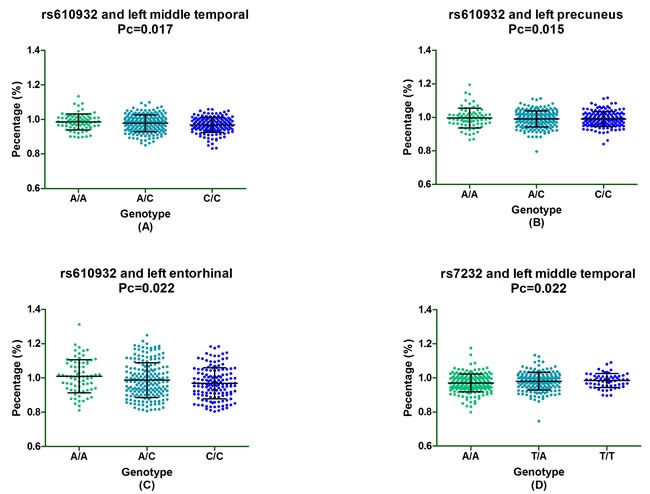
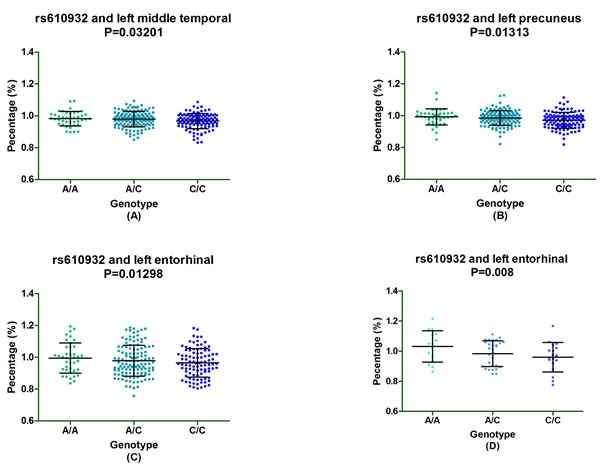
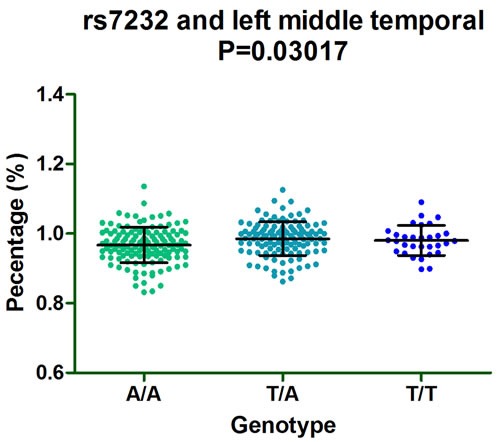
Verification
Claims the paper makes
The claims and statistics of this paper haven’t been checked yet.
Run the check — free, no account needed. It reads the open-access text and checks the sources it cites.
Claims other papers make about this one
Each is checked against this paper’s own text: does it say what the citing paper says it does?
The cited source says what the claim attributes to it.
In the citing paper
“Analysis of the risk genes with the highest expression in our iMGs showed that the majority of the genes significantly downregulated by miR-132 (MS4A6A, INPP5D, ACE, CR1) are either increased in the human AD brain or their high expression levels were associated with increased risk of AD [158–161].”
From microRNA-132 attenuates inflammation in induced pluripotent stem cell-derived microglia from Alzheimer’s disease patients (2026) · cites this paper as [158]
Self-check
Percentages, sums and reported differences re-computed from the paper’s own numbers.
The self-check needs the paper’s full text.
Citations
Cites
Harold, D., Abraham, R., Hollingworth, P., Sims, R., Gerrish, A., Hamshere, M. L., Pahwa, J. S., Moskvina, V., Dowzell, K., Williams, A., et al. (2009) · Nature Genetics · doi:10.1038/ng.440 · Cited by 3,326
Alzheimer's Disease Neuroimaging Initiative (ADNI)
Petersen, R. C., Aisen, P. S., Beckett, L. A., Donohue, M. C., Gamst, A. C., Harvey, D. J., Jack, C. R., Jagust, W. J., Shaw, L. M., Toga, A. W., et al. (2010) · Neurology · doi:10.1212/wnl.0b013e3181cb3e25 · Cited by 2,572
Alzheimer’s Disease: The Challenge of the Second Century
Holtzman, D. M., Morris, J. C., & Goate, A. M. (2011) · Science Translational Medicine · doi:10.1126/scitranslmed.3002369 · Cited by 1,424
Multimodal techniques for diagnosis and prognosis of Alzheimer's disease
Perrin, R. J., Fagan, A. M., & Holtzman, D. M. (2009) · Nature · doi:10.1038/nature08538 · Cited by 702
Comparing predictors of conversion and decline in mild cognitive impairment
Landau, S. M., Harvey, D., Madison, C. M., Reiman, E. M., Foster, N. L., Aisen, P. S., Petersen, R. C., Shaw, L. M., Trojanowski, J. Q., Jack, C. R., et al. (2010) · Neurology · doi:10.1212/wnl.0b013e3181e8e8b8 · Cited by 616
Baseline MRI predictors of conversion from MCI to probable AD in the ADNI cohort
Risacher, S., Saykin, A., Wes, J., Shen, L., Firpi, H., & McDonald, B. (2009) · Current Alzheimer Research · doi:10.2174/156720509788929273 · Cited by 538
Relationships between biomarkers in aging and dementia
Jagust, W. J., Landau, S. M., Shaw, L. M., Trojanowski, J. Q., Koeppe, R. A., Reiman, E. M., Foster, N. L., Petersen, R. C., Weiner, M. W., Price, J. C., et al. (2009) · Neurology · doi:10.1212/wnl.0b013e3181bc010c · Cited by 456
Expression of Novel Alzheimer’s Disease Risk Genes in Control and Alzheimer’s Disease Brains
Karch, C. M., Jeng, A. T., Nowotny, P., Cady, J., Cruchaga, C., & Goate, A. M. (2012) · PLoS ONE · doi:10.1371/journal.pone.0050976 · Cited by 328
Genetic Variation and Neuroimaging Measures in Alzheimer Disease
Biffi, A. (2010) · Archives of Neurology · doi:10.1001/archneurol.2010.108 · Cited by 222
Vardarajan, B. N., Ghani, M., Kahn, A., Sheikh, S., Sato, C., Barral, S., Lee, J. H., Cheng, R., Reitz, C., Lantigua, R., et al. (2015) · Annals of Neurology · doi:10.1002/ana.24466 · Cited by 148
Research works printed but not linked: 46
- Tan, 2013, Epidemiology and etiology of Alzheimer's disease: from genetic to non-genetic factors, Current Alzheimer research, 10, 852, 10.2174/15672050113109990155 · DOI
- Maier, 2015, Epidemiological and economic burden of Alzheimer's disease: a systematic literature review of data across Europe and the United States of America, Journal of Alzheimer's disease, 43, 1271
- Lange, 2001, Cognitive screening and neuropsychological assessment in early Alzheimer's disease, Clin Geriatr Med, 17, 229, 10.1016/S0749-0690(05)70067-7 · DOI
- Francisco, 2010, Non steroidal anti-inflammatory drugs prescription in General Practice in the centre of Portugal from 2007 to 2009, Acta reumatologica portuguesa, 35, 447
- Barletta, 2004, Imaging brain amyloid in Alzheimer's disease with Pittsburgh Compound-B, Annals of neurology, 55, 306, 10.1002/ana.20009 · DOI · Paper page
- Petersen, 2008, 11C PiB and structural MRI provide complementary information in imaging of Alzheimer's disease and amnestic mild cognitive impairment, Brain, 131, 665, 10.1093/brain/awm336 · DOI · Paper page
- Hulshoff Pol, 2007, Genetic influences on human brain structure: a review of brain imaging studies in twins, 6924 Hum Brain Mapp, 28, 464
- Yu, 2015, Rate of early onset Alzheimer's disease: a systematic review and meta-analysis, Annals of translational medicine, 3, 38
- Tan, 2014, Association between NME8 locus polymorphism and cognitive decline, cerebrospinal fluid and neuroimaging biomarkers in Alzheimer's disease, PloS one, 9, e114777, 10.1371/journal.pone.0114777 · DOI
- Yu, 2015, Impact of Common Variations in PLD3 on Neuroimaging Phenotypes in Non-demented Elders, Molecular neurobiology
- Yu, 2015, Common Variants in PLD3 and Correlation to Amyloid-Related Phenotypes in Alzheimer's Disease, Journal of Alzheimer's disease, 46, 491, 10.3233/JAD-150110 · DOI
- Stretton, 2011, Common variants at ABCA7, MS4A6A/MS4A4E, EPHA1, CD33 and CD2AP are associated with Alzheimer's disease, Nature genetics, 43, 429, 10.1038/ng.803 · DOI · Paper page
- Cui, 2013, Association of GWAS-linked loci with late-onset Alzheimer's disease in a northern Han Chinese population, Alzheimer's & dementia, 9, 546, 10.1016/j.jalz.2012.08.007 · DOI
- Chen, 2012, The prevalence of CD33 and MS4A6A variant in Chinese Han population with Alzheimer's disease, Human genetics, 131, 1245, 10.1007/s00439-012-1154-6 · DOI
- Chaim, 2014, Control of hypertension after roux-en-y gastric bypass among obese diabetic patients, Arquivos de gastroenterologia, 51, 21, 10.1590/S0004-28032014000100005 · DOI
- Yu, 2016, Effect of CR1 Genetic Variants on Cerebrospinal Fluid and Neuroimaging Biomarkers in Healthy, Mild Cognitive Impairment and Alzheimer's Disease Cohorts, Molecular neurobiology
- Yu, 2016, Effects of HLA-DRB1/DQB1 Genetic Variants on Neuroimaging in Healthy, Mild Cognitive Impairment, and Alzheimer's Disease Cohorts, Molecular neurobiology
- Yu, 2016, Genetic Association of HLA Gene Variants with MRI Brain Structure in Alzheimer's Disease, Molecular neurobiology
- Yu, 2016, Impacts of CD33 Genetic Variations on the Atrophy Rates of Hippocampus and Parahippocampal Gyrus in Normal Aging and Mild Cognitive Impairment, Molecular neurobiology
- Yu, 2016, GWAS-Linked Loci and Neuroimaging Measures in Alzheimer's Disease, Molecular neurobiology
- Vellas, 2014, Alzheimer's disease susceptibility variants in the MS4A6A gene are associated with altered levels of MS4A6A expression in blood, Neurobiology of aging, 35, 279, 10.1016/j.neurobiolaging.2013.08.002 · DOI · Paper page
- Ma, 2012, Novel late-onset Alzheimer disease loci variants associate with brain gene expression, Neurology, 79, 221, 10.1212/WNL.0b013e3182605801 · DOI
- Leinonen, 2015, Transcriptomics and mechanistic elucidation of Alzheimer's disease risk genes in the brain and in vitro models, Neurobiology of aging, 36, e1215
- AddNeuroMed, 2009, MRI measures of Alzheimer's disease and the AddNeuroMed study, Annals of the New York Academy of Sciences, 1180, 47, 10.1111/j.1749-6632.2009.05063.x · DOI
- Cotman, 1991, Quantification of magnetic resonance scans for hippocampal and parahippocampal atrophy in Alzheimer's disease, Neurology, 41, 51, 10.1212/WNL.41.1.51 · DOI
- George, 1997, Specific hippocampal volume reductions in individuals at risk for Alzheimer's disease, Neurobiology of aging, 18, 131, 10.1016/S0197-4580(97)00001-8 · DOI · Paper page
- Kokmen, 1998, Rate of medial temporal lobe atrophy in typical aging and Alzheimer's disease, Neurology, 51, 993, 10.1212/WNL.51.4.993 · DOI · Paper page
- Kinzler, 2002, Allelic variation in human gene expression, Science (New York, NY), 297, 1143, 10.1126/science.1072545 · DOI
- Vellas, 2014, Alzheimer's disease susceptibility variants in the MS4A6A gene are associated with altered levels of MS4A6A expression in blood, Neurobiology of aging, 35, 279, 10.1016/j.neurobiolaging.2013.08.002 · DOI · Paper page
- Reiser, 2011, Calcium dysregulation and homeostasis of neural calcium in the molecular mechanisms of neurodegenerative diseases provide multiple targets for neuroprotection, Antioxidants & redox signaling, 14, 1275, 10.1089/ars.2010.3359 · DOI
- Cho, 2011, Sensing change: the emerging role of calcium sensors in neuronal disease, Seminars in cell & developmental biology, 22, 530, 10.1016/j.semcdb.2011.07.014 · DOI
- Garaschuk, 2010, Intracellular calcium signalling in Alzheimer's disease, Journal of cellular and molecular medicine, 14, 30, 10.1111/j.1582-4934.2009.00976.x · DOI
- Vingtdeux, 2009, Calcium signaling in neurodegeneration, Molecular neurodegeneration, 4, 20, 10.1186/1750-1326-4-20 · DOI
- LaFerla, 2002, Calcium dyshomeostasis and intracellular signalling in Alzheimer's disease, Nature reviews Neuroscience, 3, 862, 10.1038/nrn960 · DOI
- Deans, 2013, Expression of MS4A and TMEM176 Genes in Human B Lymphocytes, Frontiers in immunology, 4, 195
- Deans, 2010, Phylogenetic analysis of the MS4A and TMEM176 gene families, PloS one, 5, e9369, 10.1371/journal.pone.0009369 · DOI
- Tan, 2015, MS4A Cluster in Alzheimer's Disease, Molecular neurobiology, 51, 1240, 10.1007/s12035-014-8800-z · DOI
- European Alzheimer's Disease I, Genetic, Environmental Risk in Alzheimer's D, Alzheimer's Disease Genetic C, Cohorts for H Aging Research in Genomic E, 2013, Meta-analysis of 74,046 individuals identifies 11 new susceptibility loci for Alzheimer's disease, Nature genetics, 45, 1452, 10.1038/ng.2802 · DOI · Paper page
- John, 2011, Genome-wide association study identifies multiple novel loci associated with disease progression in subjects with mild cognitive impairment, Translational psychiatry, 1, e54, 10.1038/tp.2011.50 · DOI
- Jimenez-Velazquez, 2015, Rare coding mutations identified by sequencing of Alzheimer's disease GWAS loci, Annals of neurology
- Koh, 2013, Association of GWAS top hits with late-onset Alzheimer disease in Korean population, Alzheimer disease and associated disorders, 27, 250, 10.1097/WAD.0b013e31826d7281 · DOI
- Noguera-Perea, 2011, The membrane-spanning 4-domains, subfamily A (MS4A) gene cluster contains a common variant associated with Alzheimer's disease, Genome medicine, 3, 33, 10.1186/gm249 · DOI
- Shen, 2011, Multimodal classification of Alzheimer's disease and mild cognitive impairment, NeuroImage, 55, 856, 10.1016/j.neuroimage.2011.01.008 · DOI
- Jagust, 2011, Associations between cognitive, functional, and FDG-PET measures of decline in AD and MCI, Neurobiology of aging, 32, 1207, 10.1016/j.neurobiolaging.2009.07.002 · DOI · Paper page
- Jagust, 2009, Episodic memory loss is related to hippocampal-mediated beta-amyloid deposition in elderly subjects, Brain, 132, 1310
- Benjamini, 1990, More powerful procedures for multiple significance testing, Statistics in medicine, 9, 811, 10.1002/sim.4780090710 · DOI · Paper page
Cited by
Sorted by citations
Penning, A., Snoeck, S., Ormaechea, O. R., Ayyildiz, D., Polzer, O., Buitrago-Arango, M., Capobianco, R., de Winter, F., Balusu, S., Verhaagen, J., et al. (2026) · Acta Neuropathologica Communications · doi:10.1186/s40478-026-02228-8 · Cited by 6
Metadata
- Authors
- Ma, J., Initiative, A. D. N., Zhang, W., Tan, L., Wang, H.-F., Wan, Y., Sun, F.-R., Tan, C.-C., Yu, J.-T., & Tan, L.
- Affiliations
- Department of Neurology, Qingdao Municipal Hospital, School of Medicine, Qingdao University, Qingdao, China
- College of Medicine and Pharmaceutics, Ocean University of China, Qingdao, China
- Venue
- Oncotarget
- Publisher
- Impact Journals, LLC
- Published
- 2016-05-23
- Volume
- 7
- Issue
- 37
- Pages
- 58779-58788
- ISSN
- 1949-2553
- PMC
- PMC5312275
- Cited by
- 23
- References
- 10
- Language
- en
About these checks
Registry, retraction, Cites and statistics results are computed, not judged, with one exception: a printed reference that no index lists is read once by a model before it counts as a citation error. Claims are extracted by a model and kept only when their quote appears verbatim in the text; each cited source is then checked, with a model’s help, for whether it says what the claim relies on. Those verdicts can be wrong — read the claim’s quote and the cited source before relying on one.
Statistics and arithmetic are recomputed, not judged.
Confidence bands are shown only for fields calibrated on our annotated test set. None is calibrated yet, so no band is shown.
What counts as a claim ›How we measure confidence ›How we check this ›
Are you an author, or do you see a problem with this page? Request a review
