

A Multiscale Visualization of Attention in the Transformer Model
Open accessThe DOI matches its Crossref record; 22 of the 22 references it cites were found in a registry or an index.
Abstract
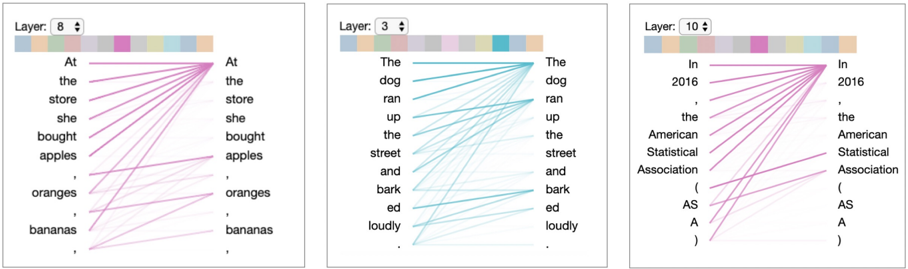
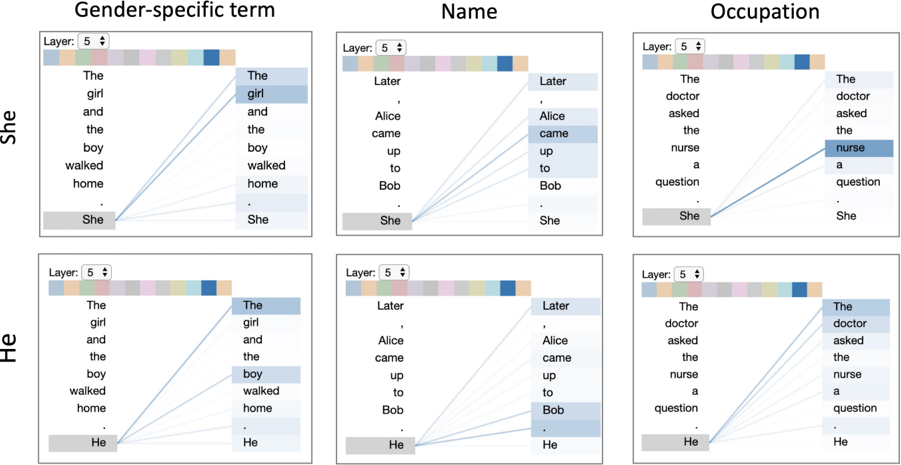
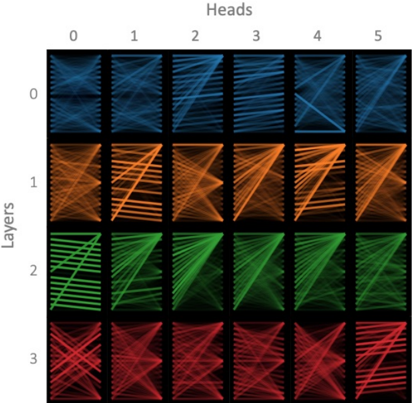
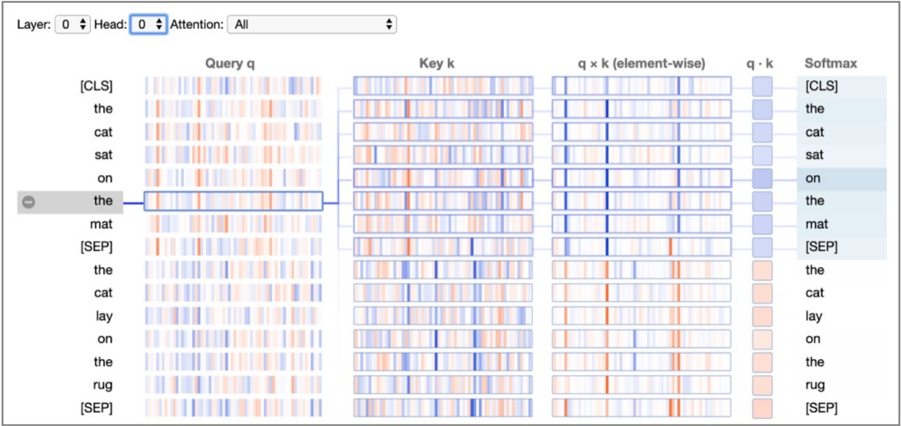
The Transformer is a sequence model that forgoes traditional recurrent architectures in favor of a fully attention-based approach.Besides improving performance, an advantage of using attention is that it can also help to interpret a model by showing how the model assigns weight to different input elements.However, the multi-layer, multi-head attention mechanism in the Transformer model can be difficult to decipher.To make the model more accessible, we introduce an open-source tool that visualizes attention at multiple scales, each of which provides a unique perspective on the attention mechanism.We demonstrate the tool on BERT and OpenAI GPT-2 and present three example use cases: detecting model bias, locating relevant attention heads, and linking neurons to model behavior.
Overview
The claims and statistics of this paper haven’t been checked yet.
Free: it reads the open-access text and checks the first 5 claims that cite a source we can check. Create a free account to check every claim.
Integrity signals
Registry
Cites
Statistics
Figures
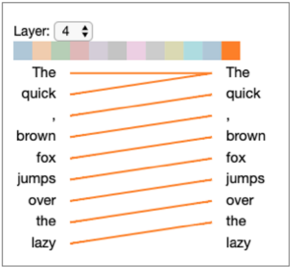
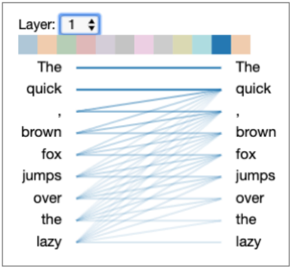
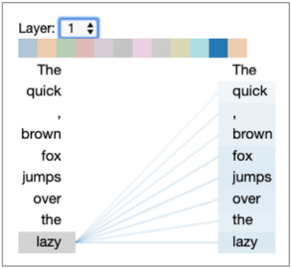
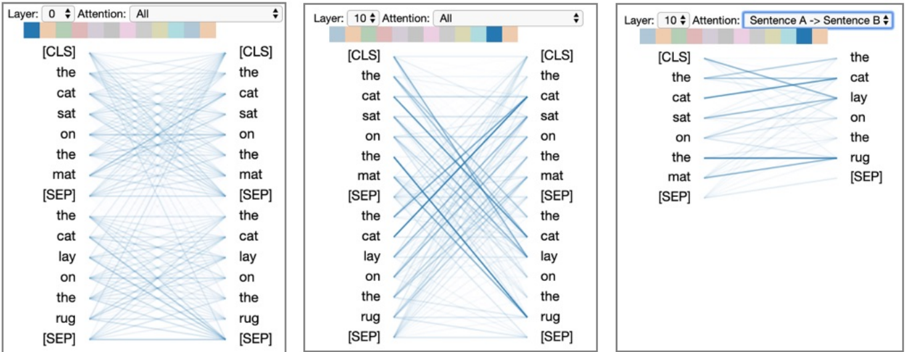
Verification
Claims the paper makes
The claims and statistics of this paper haven’t been checked yet.
Free: it reads the open-access text and checks the first 5 claims that cite a source we can check. Create a free account to check every claim.
Claims other papers make about this one
Each is checked against this paper’s own text: does it say what the citing paper says it does?
The source backs part of the claim, not all of it — or backs it for a different population, condition or comparison.
In the citing paper
“Prior work has shown how to use attention weights to visually depict which words in an input sequence, plus which words in previously-generated output, were responsible for a given token's output [95,96].”
From Investigating Explainability of Generative AI for Code through Scenario-based Design (2022) · cites this paper as [95]
Experimental — accuracy not yet measuredThe source backs part of the claim, not all of it — or backs it for a different population, condition or comparison.
In the citing paper
“Attention distribution is a popular approach to explain an individual prediction made by a neural networks model, by the relative importance of parts of input to determine the output [95,96].”
From Investigating Explainability of Generative AI for Code through Scenario-based Design (2022) · cites this paper as [95]
Experimental — accuracy not yet measured
Self-check
Percentages, sums and reported differences re-computed from the paper’s own numbers.
The self-check needs the paper’s full text.
Citations
Cites
Vaswani, A., Shazeer, N., Parmar, N., Uszkoreit, J., Jones, L., Gomez, A. N., Kaiser, L., & Polosukhin, I. (2017) · arXiv · doi:10.48550/arxiv.1706.03762 · Cited by 120,404 · cited 2×
“Jones (2017) designed a visualization tool specifically for multihead attention, which visualizes attention over multiple heads in a layer by superimposing their attention patterns (Vaswani et al., 2017, 2018).”
MethodBERT: Pre-training of Deep Bidirectional Transformers for Language Understanding
Devlin, J., Chang, M.-W., Lee, K., & Toutanova, K. (2018) · arXiv · doi:10.48550/arxiv.1810.04805 · Cited by 73,173 · cited 1×
“In 2018, the BERT (Bidirectional Encoder Representations from Transformers) language representation model achieved state-of-the-art performance across NLP tasks ranging from sentiment analysis to question answering (Devlin et al., 2018).”
BackgroundBERT: Pre-training of Deep Bidirectional Transformers for Language Understanding
Devlin, J., Chang, M.-W., Lee, K., & Toutanova, K. (2019) · Proceedings of the 2019 Conference of the North American Chapter of the Association for Computational Linguistics: Human Language Technologies, Volume 1 (Long and Short Papers) · doi:10.18653/v1/n19-1423 · Cited by 54,325 · cited 1×
“In 2018, the BERT (Bidirectional Encoder Representations from Transformers) language representation model achieved state-of-the-art performance across NLP tasks ranging from sentiment analysis to question answering (Devlin et al., 2018).”
BackgroundNeural Machine Translation by Jointly Learning to Align and Translate
Bahdanau, D., Cho, K., & Bengio, Y. (2014) · arXiv · doi:10.48550/arxiv.1409.0473 · Cited by 16,213 · cited 3×
“Various tools have been developed to visualize attention in NLP models, ranging from attention-matrix heatmaps (Bahdanau et al., 2015; Rush et al., 2015; Rocktäschel et al., 2016) to bipartite graph representations (Liu et al., 2018; Lee et al., 2017; Strobelt et al., 2018).”
BackgroundMethodKemp, C. D., & Tufte, E. R. (1992) · Biometrics · doi:10.2307/2532323 · Cited by 2,713
A Neural Attention Model for Abstractive Sentence Summarization
Rush, A. M., Chopra, S., & Weston, J. (2015) · Proceedings of the 2015 Conference on Empirical Methods in Natural Language Processing · doi:10.18653/v1/d15-1044 · Cited by 2,656 · cited 2×
“Various tools have been developed to visualize attention in NLP models, ranging from attention-matrix heatmaps (Bahdanau et al., 2015; Rush et al., 2015; Rocktäschel et al., 2016) to bipartite graph representations (Liu et al., 2018; Lee et al., 2017; Strobelt et al., 2018).”
MethodJain, S., & Wallace, B. (2019) · Conference of the North American Chapter of the Association for Computational Linguistics: Human Language Technologies (NAACL-HLT) · doi:10.18653/v1/n19-1357 · Cited by 2,037 · cited 1×
“, 2015; Belinkov and Glass, 2019), although its value in explaining individual predictions may be limited (Jain and Wallace, 2019).”
BackgroundAnalyzing Multi-Head Self-Attention: Specialized Heads Do the Heavy Lifting, the Rest Can Be Pruned
Voita, E., Talbot, D., Moiseev, F., Sennrich, R., & Titov, I. (2019) · Proceedings of the 57th Annual Meeting of the Association for Computational Linguistics · doi:10.18653/v1/p19-1580 · Cited by 1,146 · cited 2×
“Recent work shows that attention in the Transformer correlates with syntactic constructs such as dependency relations and part-of-speech tags (Raganato and Tiedemann, 2018; Voita et al., 2019; Vig and Belinkov, 2019).”
BackgroundGender bias in coreference resolution: Evaluation and debiasing methods
Zhao, J., Wang, T., Yatskar, M., Ordonez, V., & Chang, K.-W. (2018) · Proceedings of the 2018 Conference of the North American Chapter of the Association for Computational Linguistics: Human Language Technologies, Volume 2 (Short Papers) · doi:10.18653/v1/n18-2003 · Cited by 684 · cited 1×
“This suggests that the model’s coreference mechanism may encode gender bias (Zhao et al., 2018; Lu et al., 2018).”
BackgroundTensor2Tensor for Neural Machine TranslationPreprint
Vaswani, A., Bengio, S., Brevdo, E., Chollet, F., Gomez, A. N., Gouws, S., Jones, L., Kaiser, Ł., Kalchbrenner, N., Parmar, N., et al. (2018) · arXiv (Cornell University) · doi:10.48550/arxiv.1803.07416 · Cited by 656 · cited 1×
“Jones (2017) designed a visualization tool specifically for multi-head attention, which visualizes attention over multiple heads in a layer by superimposing their attention patterns (Vaswani et al., 2017, 2018).”
Research works printed but not linked: 1
- [18]18. Jesse Vig. 2019. BertViz: A tool for visualizing multi- head self-attention in the BERT model. In ICLR Workshop: Debugging Machine Learning Models.
Cited by
Items 401–500 of 797
PALT: Parameter-Lite Transfer of Language Models for Knowledge Graph Completion
Shen, J., Wang, C., Yuan, Y., Han, J., Ji, H., Sen, K., Zhang, M., & Song, D. X. (2022) · Findings of the Association for Computational Linguistics: EMNLP (Findings of EMNLP) · doi:10.18653/v1/2022.findings-emnlp.281 · Cited by 8
On Representation Learning-based Methods for Effective, Efficient, and Scalable Code Retrieval
França, C., Lima, R. C., de Andrade, C. M. V., da Cunha, W. L. M., de Melo, P. O. S. V., Ribeiro-Neto, B. A., da Rocha, L. C. D., Santos, R. L. T., Pagano, A. S., & Gonçalves, M. A. (2024) · Neurocomputing · doi:10.1016/j.neucom.2024.128172 · Cited by 10
Soteria: Language-Specific Functional Parameter Steering for Multilingual Safety Alignment
Banerjee, S., Layek, S., Chatterjee, P., Mukherjee, A., & Hazra, R. (2025) · Findings of the Association for Computational Linguistics: EMNLP (Findings of EMNLP) · doi:10.18653/v1/2025.findings-emnlp.497 · Cited by 14
Maveli, N. (2020) · Workshop on Noisy User-generated Text (W-NUT) · doi:10.18653/v1/2020.wnut-1.67 · Cited by 6
Pat-in-the-Loop: Declarative Knowledge for Controlling Neural Networks
Onorati, D., Tommasino, P., Ranaldi, L., Fallucchi, F., & Zanzotto, F. M. (2020) · Future Internet · doi:10.3390/fi12120218 · Cited by 6
“By way of example, we selected BERTviz [23] as the representative for this category of transformer visualizers.”
BackgroundMethodPointMTL: Multi-Transform Learning for Effective 3D Point Cloud Representations
Jian, Y., Yang, Y., Chen, Z., Qing, X., Zhao, Y., He, L., Chen, X.-K., & Luo, W. (2021) · IEEE Access · doi:10.1109/access.2021.3094624 · Cited by 6
“Instead of single-transform feature learning, multi-transform feature learning has been widely used in many research fields [32], [33], [51]–[53].”
MethodMultimodal Neurophysiological Transformer for Emotion Recognition
Koorathota, S., Khan, Z. A., Lapborisuth, P., & Sajda, P. (2022) · Annual International Conference of the IEEE Engineering in Medicine and Biology Society (EMBC) · doi:10.1109/embc48229.2022.9871421 · Cited by 9
Seo, S. H., Kim, S., Jung, S. J., Kwon, S., Lee, H., & Lee, J. W. (2022) · European Solid-State Circuits Conference (ESSCIRC) · doi:10.1109/esscirc55480.2022.9911343 · Cited by 7
“Visualization of the self-attention mechanism using BERT [6] scaling factor for stable gradients [1].”
BackgroundMethodAn Attribution Method for Siamese Encoders
Moeller, L., Nikolaev, D., & Padó, S. (2023) · Conference on Empirical Methods in Natural Language Processing (EMNLP) · doi:10.18653/v1/2023.emnlp-main.980 · Cited by 15
Patil, R., & Baths, V. (2020) · International Workshop on Semantic Evaluation (SemEval) · doi:10.18653/v1/2020.semeval-1.55 · Cited by 6
Transformer-GCRF: Recovering Chinese Dropped Pronouns with General Conditional Random Fields
Yang, J., Xu, K., Xu, J., Li, S., Gao, S., Guo, J. H., Wen, J.-R., & Xue, N. (2020) · Findings of the Association for Computational Linguistics: EMNLP (Findings of EMNLP) · doi:10.18653/v1/2020.findings-emnlp.13 · Cited by 7
Spurious Correlations in Cross-Topic Argument Mining
Jakobsen, T. S. T., Barrett, M., & Søgaard, A. (2021) · Joint Conference on Lexical and Computational Semantics · doi:10.18653/v1/2021.starsem-1.25 · Cited by 17
“(Abnar and Zuidema, 2020; Vig, 2019) and vector norms (Kobayashi et al., 2020).”
BackgroundGender screening on question-answering communities
Figueroa, A., Peralta, B., & Nicolis, O. (2022) · Expert Systems with Applications · doi:10.1016/j.eswa.2022.119405 · Cited by 6
Zouganeli, E., Yazidi, A., Mello, G. B. M. E., & Lind, P. G. (2022) · Communications in computer and information science · doi:10.1007/978-3-031-17030-0 · Cited by 6
Synthesis of Compositional Animations from Textual DescriptionsPreprint
Ghosh, A., Cheema, N., Oguz, C., Theobalt, C., & Slusallek, P. (2021) · arXiv (Cornell University) · doi:10.22028/d291-39177 · Cited by 16
Simbeck, K., & Mahran, M. (2025) · arXiv (Cornell University) · doi:10.48550/arxiv.2509.17665 · Cited by 9
“The former highlights token relationships across layers, but often fails to reflect the true basis of model decisions [19, 20].”
Re-appraising the Schema Linking for Text-to-SQL
Gan, Y., Chen, X., & Purver, M. (2023) · Findings of the Association for Computational Linguistics: ACL (Findings of ACL) · doi:10.18653/v1/2023.findings-acl.53 · Cited by 5
“Figure 9, generated by the bertviz (Vig, 2019), presents the BERT head view”
BackgroundArous, I., Chehbouni, K., Cheng, Z., & Dossou, B. F. P. (2025) · Springer eBooks · doi:10.1007/978-981-97-8440-0_85-1 · Cited by 6
R e T race : Interactive Visualizations for Reasoning Traces of Large Reasoning Models
Felder, L., Miller, J. A., Wallinger, M., Kobourov, S., & Chen, C. (2026) · Computer Graphics Forum · doi:10.1111/cgf.70452 · Cited by 5
Perturbation-Driven Visual Analytics for Probing InternalRepresentations in Neural Language Models
Pasula, E. (2026) · International Journal of Intelligent Systems and Data Science · doi:10.67231/jpr65e97 · Cited by 5
“Bipartite graph and matrix representations visualize attention patterns between tokens, revealing which parts of the input the model focuses on during inference [5].”
Stereotype and Categorical Bias Evaluation via Differential Cosine Bias Measure
Sayenju, S., Aygün, R. S., Franks, B., Johnston, S., Lee, G., & Modgil, G. (2022) · IEEE International Conference on Big Data (BigData) · doi:10.1109/bigdata55660.2022.10020924 · Cited by 6
Sun, L., Florian Luisier, A., Batmanghelich, K. N., Florencio, D. A. F., & Zhang, C. (2023) · Proceedings of the conference - Association for Computational Linguistics. Meeting · doi:10.18653/v1/2023.acl-long.200 · Cited by 18
Neural-IR-Explorer: A Content-Focused Tool to Explore Neural Re-ranking Results
Hofstätter, S., Zlabinger, M., & Hanbury, A. (2020) · Lecture notes in computer science · doi:10.1007/978-3-030-45442-5_58 · Cited by 5
“Transformer-based models provide ample opportunity to visualize different aspects of the many attention layers used [13,3].”
BackgroundRealistic Channel Models Pre-Training
Huangfu, Y., Wang, J., Xu, C., Li, R., Ge, Y., Wang, X., Zhang, H., & Wang, J. (2019) · IEEE Globecom Workshops (GC Wkshps) · doi:10.1109/gcwkshps45667.2019.9024572 · Cited by 5
“For a convenient visualization, we use a visualization tool [11] and keep only the first 5 subcarriers on the frequency domain.”
MethodPheonix at SemEval-2020 Task 5: Masking the Labels Lubricates Models for Sequence Labeling
Babvey, P., Borrelli, D., Zhao, Y., & Lipizzi, C. (2020) · International Workshop on Semantic Evaluation (SemEval) · doi:10.18653/v1/2020.semeval-1.88 · Cited by 5
“Some of these heads correspond well to linguistic notions of syntax, like direct objects of verbs, determiners of nouns, objects of prepositions, and coreference mentions (Clark et al., 2019; Vig, 2019).”
BackgroundViziTex: Interactive Visual Sense-Making of Text Corpora
Raman, N., Shah, S., Balch, T. R., & Veloso, M. (2021) · doi:10.18653/v1/2021.dash-1.3 · Cited by 5
“Hence we employ a parallel co-ordinate (Siirtola et al., 2009; Collins et al., 2009) representation to portray this high-dimensional data.”
MethodQuestion Answering System for low resource language using Transfer Learning
Phade, A., & Haribhakta, Y. V. (2021) · International Conference on Computational Intelligence and Computing Applications (ICCICA) · doi:10.1109/iccica52458.2021.9697268 · Cited by 6
Understanding Interpretability: Explainable AI Approaches for Hate Speech Classifiers
Yadav, S., Kaushik, A., & McDaid, K. (2023) · Communications in computer and information science · doi:10.1007/978-3-031-44070-0_3 · Cited by 6
Wu, X., Wang, B., & Li, W. (2024) · Chaos Solitons & Fractals · doi:10.1016/j.chaos.2024.115105 · Cited by 5
Rajagopal, A., Nirmala, V., Andrew, J., & Arun, M. (2021) · Research Square · doi:10.21203/rs.3.rs-382748/v1 · Cited by 9
A Comparison of Code Embeddings and BeyondPreprint
Han, S., Wang, D., Li, W., & Lu, X. (2021) · arXiv (Cornell University) · doi:10.48550/arxiv.2109.07173 · Cited by 7
Wu, P. Y., & Mebane, W. R. (2021) · arXiv (Cornell University) · doi:10.48550/arxiv.2109.11526 · Cited by 7
Astroconformer: Inferring Surface Gravity of Stars from Stellar Light Curves with TransformerPreprint
Pan, J., Ting, Y.-S., & Yu, J. (2022) · arXiv (Cornell University) · doi:10.48550/arxiv.2207.02787 · Cited by 5
Procedural Adherence and Interpretability Through Neuro-Symbolic Generative AgentsPreprint
Rothkopf, R., Zeng, H. T., & Santolucito, M. (2024) · arXiv (Cornell University) · doi:10.48550/arxiv.2402.16905 · Cited by 6
“…SHAP and integrated gradients (Lundberg and Lee 2017; Sundararajan, Taly, and Yan 2017), analyze attention weights to interpret the model’s focus (Vig 2019; Hoover, Strobelt, and Gehrmann 2019), generate textual descriptions to clarify decisions (Camburu et al. 2018), and reverse-engineer a…”
BackgroundMemoryLLM: Plug-n-Play Interpretable Feed-Forward Memory for TransformersPreprint
Jaiswal, A. K., Hannah, L., Kim, H.-B., Hoang, D. L., Kundu, A., Farajtabar, M., & Cho, M. (2026) · arXiv (Cornell University) · doi:10.48550/arxiv.2602.00398 · Cited by 5
“Numerous works have studied the role and optimization (Vig, 2019; Xiao et al., 2023, 2024; Clark et al., 2019) of self-attention by investigating token-level attention patterns generated during input text processing.”
Synthetic Training Data Optimization for Enhanced Fault Detection in Seismic Images
Choi, W., Pyun, S., & Jou, H. (2025) · Lithosphere · doi:10.2113/2025/lithosphere_2024_240 · Cited by 4
Research challenges and future directions in transformer-based neural machine translation
Banerjee, A., Singh, B. K., Kumar, V., & Banik, D. (2026) · Expert Systems with Applications · doi:10.1016/j.eswa.2025.131062 · Cited by 4
Khurana, D., Kaur, R., Roul, R. K., & Batra, S. (2026) · Expert Systems · doi:10.1111/exsy.70238 · Cited by 5
“Tools such as those introduced by Vig (2019) and Chefer et al. (2021) allow for layer-wise visualisation of attention in transformers.”
Revisiting “Conceptualizing Stigma”: Unpacking Minority College Students’ Stigmatization on Reddit
Han, C., Youm, S., Yoo, H., & Jang, S. H. (2026) · Cyberpsychology Behavior and Social Networking · doi:10.1177/21522715261425452 · Cited by 4
“Its reliability is further supported by explainable Arti fi cial Intelligence (AI) tools such as SHAP 32 and BERTViz, 33 which con fi rm its focus on meaningful linguistic patterns.”
Wang, T., Shen, B., & Zhong, Y. (2023) · Applied Intelligence · doi:10.1007/s10489-023-04896-8 · Cited by 4
“To explore how the structure loss enables the pretrained language model to obtain better results in link prediction, we use BertViz [39] to illustrate the attention weights of the PLMs.”
MethodAttHear: Explaining Audio Transformers Using Attention-Aware NMF
Akman, A., & Schuller, B. W. (2024) · IEEE International Conference on Acoustics Speech and Signal Processing · doi:10.1109/icassp48485.2024.10447390 · Cited by 7
“Certain studies target to explain transformer models by leveraging their attention mechanism and presenting attention weights as explanations [15, 16, 17].”
BackgroundTransformer-aided dynamic causal model for scalable estimation of effective connectivity
Nag, S., & Uludaǧ, K. (2024) · Imaging Neuroscience · doi:10.1162/imag_a_00290 · Cited by 6
“…it provides a first of its kind explainable machine learning framework for which the interpretability essentially comes from two aspects— biophysically interpretable P-DCM framework and attention which is considered as an explainable component of the Transformer ( Caron et al., 2021; Vig, 2019).”
BackgroundWang, Y., Sun, G., Fu, Z., & Liang, R. (2026) · Frontiers of Computer Science · doi:10.1007/s11704-025-50356-6 · Cited by 4
“…chart, Small multiple, Text style EA, DI, RS DeRose et al. [68] Glyph, Heatmap EA, DI, RS Gao et al. [69] Heatmap, Graph EA, DI, RS, NG Syed et al. [70] Heatmap, Text style, Bar chart EA, DI, RS Kahng et al. [71] Text style, Bar chart EA, DI, RS Arawjo et al. [72] Text style, Bar chart EA, DI, RS”
Samaran, J., García, N., Otani, M., Chu, C., & Nakashima, Y. (2021) · doi:10.18653/v1/2021.acl-srw.8 · Cited by 4
“To gain more insights into what models learn with the different attention supervision methods, we visualize attention heads using Bertviz 2 (Vig, 2019).”
MethodAssessing the use of attention weights to interpret BERT-based stance classification
Sáenz, C. A. C., & Becker, K. E. (2021) · IEEE/WIC/ACM International Conference on Web Intelligence · doi:10.1145/3486622.3493966 · Cited by 6
“Some works propose visualization tools for attention weights, such as bertviz [16], that allows visualizing the attention of the tokens in a text under different perspectives, but always considering”
BackgroundEL-VIT: Probing Vision Transformer with Interactive Visualization
Zhou, H., Zhang, R., Lai, P., Guo, C., Wang, Y., Sun, Z., & Li, J. (2023) · IEEE ... International Conference on Data Mining workshops · doi:10.1109/icdmw60847.2023.00023 · Cited by 6
Decoding Global Indoor Health Perception on Social Media Through NLP and Transformer Deep Learning
Ashayeri, M. (2024) · Wiley eBooks · doi:10.1002/9781394172092.ch8 · Cited by 6
Boutouar, Y., Rocca, M. L., Rocca, T. L., & D’Amico, A. (2025) · Finance research letters · doi:10.1016/j.frl.2025.107098 · Cited by 4
Reasoning-Grounded Natural Language Explanations for Language Models
Cahlík, V., Alves, R. A. D. S., & Kordík, P. (2025) · Communications in computer and information science · doi:10.1007/978-3-032-08327-2_1 · Cited by 8
“Numerous studies have focused on explaining attention heads using visualizations, such as with token-level bipartite graphs and heatmaps or neuron-level heatmaps [13,14].”
Kim, J.-H., Kang, J., Shin, S., & Myaeng, S.-H. (2021) · Cited by 4
KERMITviz: Visualizing Neural Network Activations on Syntactic Trees
Ranaldi, L., Fallucchi, F., Santilli, A., & Zanzotto, F. M. (2022) · Communications in computer and information science · doi:10.1007/978-3-030-98876-0_12 · Cited by 4
Towards the Generation of Musical Explanations with GPT-3
Krol, S. J., Llano, M. T., & McCormack, J. (2022) · Lecture notes in computer science · doi:10.1007/978-3-031-03789-4_9 · Cited by 10
“Research that aims at understanding how transformer-based language models behave in order to provide human-understandable interpretations has been focused on analysing the weights of their attention mechanisms [24,17].”
BackgroundArtificial fine-tuning tasks for yes/no question answering
Dimitriadis, D., & Tsoumakas, G. (2022) · Natural Language Engineering · doi:10.1017/s1351324922000286 · Cited by 4
“We visualize the attentions scores using the open-source tool BertViz (Vig 2019) to show the differences between the models firstly trained on a transfer task and the models trained only on yes/no QA task.”
MethodSayenju, S., Aygün, R. S., Boardman, J., Don, D. R., Zhang, Y., Franks, B., Johnston, S., Lee, G., Sullivan, D., & Modgil, G. (2022) · International Journal of Semantic Computing · doi:10.1142/s1793351x22500040 · Cited by 4
Matos, B. D. S., Lima, R. C., Almeida, J. M., Gonçalves, M. A., & Santos, R. L. T. (2024) · Social Network Analysis and Mining · doi:10.1007/s13278-023-01187-5 · Cited by 4
“Lastly, although our classifier delivers meaningful insights about the indistinguishability of content produced across contrarian groups, it provides little insight into why that is the case, which can be improved by adding explainability frameworks, such as BertViz (Vig 2019).”
Interpreting BERT-based stance classification: a case study about the Brazilian COVID vaccination
Sáenz, C. A. C., & Becker, K. E. (2021) · Simpósio Brasileiro de Bancos de Dados (SBBD) · doi:10.5753/sbbd.2021.17867 · Cited by 8
“Some techniques have been proposed [Chefer et al. 2021, Vig 2019].”
MethodANONYMOUS (2022) · Research Square · doi:10.21203/rs.3.rs-382748/v3 · Cited by 5
Comparison Study Between Token Classification and Sequence Classification In Text ClassificationPreprint
Jafari, A. (2022) · arXiv (Cornell University) · doi:10.48550/arxiv.2211.13899 · Cited by 5
“Powerful neural network architectures known as Transformers [24, 25, 26] have achieved state of art status in a number of machine learning domains, including Natural Language Processing (NLP), Neural Machine Translation (NMT) [27] and text generation summarization.”
BackgroundLearning-To-Embed: Adopting Transformer based models for E-commerce Products Representation LearningPreprint
Kumar, L., & Vempati, S. (2022) · arXiv (Cornell University) · doi:10.48550/arxiv.2212.03725 · Cited by 4
SeeBel: Seeing is BelievingPreprint
Saha, S., & Dipta, S. R. (2023) · arXiv (Cornell University) · doi:10.48550/arxiv.2312.10933 · Cited by 4
“In this work [16], the authors have used different idioms to increase the interpretability of attention-based models.”
Computational Approaches to Arabic-English Code-SwitchingPreprint
Sabty, C. (2024) · arXiv (Cornell University) · doi:10.48550/arxiv.2410.13318 · Cited by 5
Discovering Influential Neuron Path in Vision TransformersPreprint
Wang, Y., Liu, Y., Shi, Y., Li, C., Pang, A., Yang, S., Yu, J., & Ren, K. (2025) · arXiv (Cornell University) · doi:10.48550/arxiv.2503.09046 · Cited by 10
“…explain the patterns obtained at different network neurons via visualization (Foote et al., 2023; Ghi-asi et al., 2022; Karpathy et al., 2015; Vig, 2019; Zeiler & Fergus, 2014), or study the effects of individual neurons (You et al., 2025; Dai et al., 2022; Dalvi et al., 2019; Durrani et…”
Enriching large language models with semantic lexicons and analogies
Zervakis, G. (2023) · theses.fr (ABES) · doi:10.70675/4f4cd0e5z5987z422az813bzc6e431d1a918 · Cited by 7
Crisan, A., Butters, N., & Zoé (2024) · Workshop on Beyond Time and Errors: Novel Evaluation Methods for Visualization · doi:10.1109/beliv64461.2024.00007 · Cited by 5
“Specific tools like BertViz [69] and exBERT [29] provide insights into attention layers.”
Distilling vision-language pre-training models with modality-specific meta-learning
Ma, X., Wang, J., & Zhang, X. (2025) · Knowledge-Based Systems · doi:10.1016/j.knosys.2025.113300 · Cited by 5
He, X., Stewart, Z. E., Crasta, N., Nukala, V., Jang, A., Zhou, Z., Kijowski, R., Feng, L., Peng, W., van der Heijden, R. A., et al. (2025) · Radiology Advances · doi:10.1093/radadv/umaf027 · Cited by 3
“To elucidate the underlying mechanisms of RadGPT, we designed a visual-language attention map extended from a language-only attention map visualization 27 to visualize both image and language features regarding RadGPT’s generated output.”
ConceptViz: A Visual Analytics Approach for Exploring Concepts in Large Language Models
Li, H., Wen, Z., Jiang, Q., Li, C., Wu, Y., Yang, Y., Wang, Y., Huang, X., Zhu, M., & Chen, W. (2025) · IEEE Transactions on Visualization and Computer Graphics · doi:10.1109/tvcg.2025.3634806 · Cited by 8
“With the rise of Transformer architectures, research shifted toward visualizing attention mechanisms, with tools like ExBERT [55] and BertViz [57], along with related works [15, 61, 69], displaying self-attention distributions.”
Chen, M.-C., Ruan, S.-J., Wu, J.-H., & Chen, P. (2026) · Journal of Medical Internet Research · doi:10.2196/89540 · Cited by 5
“The self-attention scores were aggregated across all heads and averaged to represent interaction strengths between token groups [29].”
InteractiveKG: Transparent and user-controllable knowledge graph reasoning
Kim, M., Zhao, Y., Ju, J., Seo, J., & Park, H. (2026) · Information Visualization · doi:10.1177/14738716261435574 · Cited by 4
“4–6 More recent systems further support analysis of reasoning trajectories and large-scale model evaluation.”
Pedersen, T. M., Øvlisen, K., Connelly, L. C., Assent, I., & Petersen, M. G. (2026) · CHI Conference on Human Factors in Computing Systems · doi:10.1145/3772318.3791457 · Cited by 3
“Research has explored techniques for XAI for LLMs [56, 63], such as visualizing attention mechanisms [30, 67, 70], leveraging uncertainty measures [6, 71, 72], and utilizing Chain-of-Thought prompting [65, 68].”
Cross-Platform and Cross-Domain Abusive Language Detection with Supervised Contrastive Learning
Khondaker, M. T. I., Abdul-Mageed, M., & Lakshmanan, V. S. L. (2023) · doi:10.18653/v1/2023.woah-1.9 · Cited by 8
Yuan, Z. P., Cai, R., Maimaiti, M., & Abiderexiti, K. (2023) · IEEE International Conference on Pattern Recognition and Machine Learning (PRML) · doi:10.1109/prml59573.2023.10348182 · Cited by 3
“Instead of employing LSTMs for phrase modeling, BERT and OpenAI GPT [26] utilize multi-layer Transformers [27].”
MethodData Visualization for the Dataset Collected from Education Sector Using Python
Dol, S. M., & Jawandhiya, P. M. (2024) · International Conference on Communications and Computer Science (InCCCS) · doi:10.1109/incccs60947.2024.10593329 · Cited by 3
“…communicate finding more effectively, etc. Data visualization can be created using tools such as Tableau [2, 7, 8, 10, 16, 17] BERT [20], OpenAI [20], ARL Trade Space Visualizer [5], GraphPad Prism 5[11], VOSviewer [11], CiteSpace [11], TensorFlow Graph Visualizer [14], Object Role Modeling…”
MethodData-Augmented and Retrieval-Augmented Context Enrichment in Chinese Media Bias Detection
Lin, L., Li, J., & Wong, K. (2025) · ACM Transactions on Asian and Low-Resource Language Information Processing · doi:10.1145/3765898 · Cited by 4
“Because there is attention mechanism in both meth-ods, we use the visualization tool BertViz [52] to show the attention relationship in each layer and head among the tokens.”
Wang, Z., Wang, Y., Zhang, Z., Zhou, Z., Jin, H., Hu, T., Sun, J., Li, Z., Zhang, Y., & Xu, Z. J. (2025) · Findings of the Association for Computational Linguistics: EMNLP (Findings of EMNLP) · doi:10.18653/v1/2025.findings-emnlp.893 · Cited by 4
“Understanding the mechanism of neural model Our work builds upon previous studies on the attention mechanism (Voita et al., 2019; Vig, 2019; Kovaleva et al., 2019; Kobayashi et al., 2020).”
Multiple Hub-Driven Attention Graph Network for Scene Graph Generation
Yang, Y., & Gu, B. (2021) · IEEE International Conference on Multimedia and Expo (ICME) · doi:10.1109/icme51207.2021.9428430 · Cited by 3
“However, whether the novel architecture of multi-head attention works has been questioned [12, 13].”
BackgroundBiggiogera, J., Boateng, G., Hilpert, P., Vowels, M. J., Bodenmann, G., Neysari, M., Nußbeck, F. W., & Kowatsch, T. (2021) · Alexandria (UniSG) (University of St.Gallen) · doi:10.3929/ethz-b-000488408 · Cited by 8
TTCB System Description to a Shared Task on Implicit and Underspecified Language 2021
Wiriyathammabhum, P. (2021) · Workshop on Understanding Implicit and Underspecified Language (UnImplicit) · doi:10.18653/v1/2021.unimplicit-1.8 · Cited by 3
“We consider BertViz (Vig, 2019) to explain the XLNet model via attention visualization.”
MethodKim, K., Park, C., Seo, J., & Lim, H. (2021) · IEEE Access · doi:10.1109/access.2021.3122547 · Cited by 3
“For this, we incorporated Vig et al. [17] work on ‘‘neuron view’’ when choosing the layer of attention pattern to construct the number of added details when generating a visual representation of the target object.”
MethodSimilarityNet: A Deep Neural Network for Similarity Analysis Within Spatio‐temporal Ensembles
Huesmann, K., & Linsen, L. (2022) · Computer Graphics Forum · doi:10.1111/cgf.14548 · Cited by 3
“Thus, several visualization methods have been developed, which utilize transformer networks [NKWW21, JKV∗21] with a particular focus on the analysis of the attention mechanism [Vig19, AZ20, CGW21].”
MethodVisual Explanation Generation Based on Lambda Attention Branch Networks
Iida, T., Komatsu, T., Kaneda, K., Hirakawa, T., Yamashita, T., Fujiyoshi, H., & Sugiura, K. (2023) · Lecture notes in computer science · doi:10.1007/978-3-031-26284-5_29 · Cited by 3
Fibonet: A Light-weight and Efficient Neural Network for Image Segmentation
Wu, R., Xiao, X., Hu, G., Zhao, H., Zhang, H., & Peng, Y. (2023) · Proceedings - International Conference on Image Processing · doi:10.1109/icip49359.2023.10222857 · Cited by 6
“In recent years, there are many models based on attention mechanisms and transformers, which further improve the accuracy of the model [24, 25, 26].”
BackgroundMeaning, Form and the Limits of Natural Language Processing
Dürr, O. M., Segessenmann, J., & Steinmann, J. J. (2023) · Philosophy Theology and the Sciences · doi:10.1628/ptsc-2023-0005 · Cited by 5
Textual Pre-Trained Models for Age Screening Across Community Question-Answering
Figueroa, A., & Timilsina, M. (2024) · IEEE Access · doi:10.1109/access.2024.3368929 · Cited by 3
“In this image, positive attribution numbers (in green) indicate terms that positively contribute towards the predicted cohort, while negative numbers (in red) signal words that negatively contribute towards the recognized age group [29], [30].”
BackgroundInterpretability analysis in transformers based on attention visualization
Guo, Y. (2024) · Applied and Computational Engineering · doi:10.54254/2755-2721/76/20240571 · Cited by 3
BTFormer: A BNN-Based Trend-Aware Time-Series Prediction Model for Industrial Intelligence
Ren, L., Li, S., Wang, X., Wang, H., & Laili, Y. (2024) · IEEE Transactions on Industrial Informatics · doi:10.1109/tii.2024.3452181 · Cited by 3
Encoder models at the European Patent Office: Pre-training and use cases
Hähnke, V. D., Wéry, A., Wirth, M., & Klenner-Bajaja, A. (2025) · World Patent Information · doi:10.1016/j.wpi.2025.102360 · Cited by 3
Desot, T., Clercq, O. D., & Hoste, V. (2021) · International conference Recent advances in natural language processing · doi:10.26615/978-954-452-072-4_040 · Cited by 4
“In line with the studies of Vig (2019), Vig et al. (2019) and Clark et al. (2019), coreference relations are situated in the middle and deeper layers of the self-attention blocks as depicted in Figure 4.”
ResultSPSD: Similarity-preserving self-distillation for video–text retrieval
Wang, J., Yan, H., Yang, Y., & Kou, H. (2023) · International Journal of Multimedia Information Retrieval · doi:10.1007/s13735-023-00298-1 · Cited by 3
“According to the attention allocated characteristics of dif-ferenttransformerlayers,thefeaturesindifferentlayersfocus on different views [4, 7, 22–25].”
BackgroundVisBERT: Hidden-State Visualizations for TransformersPreprint
van Aken, B., Winter, B., Löser, A., & Gers, F. A. (2020) · arXiv (Cornell University) · doi:10.48550/arxiv.2011.04507 · Cited by 3
“ristic for visualizing the changes that are being made to the tokens’ representations in each layer. In contrast to analysing the single attention weights within BERT’s attention heads as proposed by [14], this method allows us to observe the actual outcomes of the whole encoder module in each layer. Each layer of BER…”
Kwak, B., Park, J., Kang, T., Jo, J., Lee, B., & Yoon, S. (2021) · arXiv (Cornell University) · doi:10.48550/arxiv.2106.15516 · Cited by 3
“Because we are interested in total attention among all head instead of specific head, we calculated L2 norm of attentions, rather than specific attention weight that other works [28] uses.”
MethodUnderstanding Attention in Machine Reading ComprehensionPreprint
Cui, Y., Zhang, W., Che, W., Liu, T., & Chen, Z. (2021) · arXiv (Cornell University) · Cited by 4
Do Transformers know symbolic rules, and would we know if they did?Preprint
Gröndahl, T., Guo, Y., & Asokan, N. (2022) · arXiv (Cornell University) · doi:10.48550/arxiv.2203.00162 · Cited by 3
Biggiogera, J., Boateng, G., Hilpert, P., Vowels, M. J., Bodenmann, G., Neysari, M., Nußbeck, F. W., & Kowatsch, T. (2021) · arXiv (Cornell University) · doi:10.48550/arxiv.2106.01536 · Cited by 3
“though LIWC features (and indeed, TF-IDF) have the advantage of being simpler and more easily interpretable, various approaches are being developed to make BERT features more interpretable via its multi-head attention mechanism [45] and Shapley [28].”
MethodAttention Flows for General TransformersPreprint
Metzger, N., Hahn, C., Siber, J., Schmitt, F., & Finkbeiner, B. (2022) · arXiv (Cornell University) · doi:10.48550/arxiv.2205.15389 · Cited by 4
“Explainability and visualization methods, e.g., [43], aid the machine learning practitioner and researcher in finding the cause for a misprediction or reveal unwanted biases.”
BackgroundMethodDo Large Language Models Advocate for Inferentialism?Preprint
ARAI, Y., & Tsugawa, S. (2024) · arXiv (Cornell University) · doi:10.48550/arxiv.2412.14501 · Cited by 3
Large Language Models for Psychological Assessment: A Comprehensive OverviewPreprint
Brickman, J., Gupta, M., & Oltmanns, J. R. (2025) · PsyArXiv (OSF Preprints) · doi:10.31234/osf.io/qm9ae_v1 · Cited by 3
T3-Vis: a visual analytic framework for Training and fine-Tuning Transformers in NLPPreprint
Li, R., Xiao, W., Wang, L., Jang, H., & Carenini, G. (2021) · arXiv (Cornell University) · doi:10.14288/1.0406310 · Cited by 4
Attention Eclipse: Manipulating Attention to Bypass LLM Safety-AlignmentPreprint
Zaree, P., Mamun, M. A. A., Alam, Q. M., Dong, Y., Alouani, I., & Abu-Ghazaleh, N. (2025) · arXiv (Cornell University) · doi:10.48550/arxiv.2502.15334 · Cited by 4
“Token-level attention is particularly useful in analyzing how information propagates across transformer layers and has been widely used in interpretability studies (Clark, 2019; Kobayashi et al., 2020; Vig, 2019).”
Metadata
- Authors
- Vig, J.
- Affiliations
- Palo Alto Research Center (US)
- Corresponding author
- Vig, Jesse
- ORCID
- Vig, Jesse
- Venue
- Proceedings of the 57th Annual Meeting of the Association for Computational Linguistics: System Demonstrations
- Published
- 2019
- Pages
- 37-42
- OpenAlex
- W2949202705
- Semantic Scholar
- 0de0a44b859a3719d11834479112314b4caba669
- Cited by
- 600
- References
- 17
- Citations by year
- 2026: 46 · 2025: 87 · 2024: 79 · 2023: 112 · 2022: 84 · 2021: 112 · 2020: 71 · 2019: 9
- FWCI
- 26.40
- Type
- conference paper
- Language
- en
- Open access
- hybrid
- doi.org
- Licence
- cc-by
- Locations
- Annual Meeting of the Association for Computational Linguistics: System Demonstrations (ACL Demo) (publishedVersion, cc-by)
- arXiv (Cornell University) (submittedVersion)
- arXiv (Cornell University)
- Topics
- Physical Sciences › Computer Science › Artificial Intelligence › Explainable Artificial Intelligence (XAI)
- Physical Sciences › Computer Science › Artificial Intelligence › Topic Modeling
- Physical Sciences › Computer Science › Computer Graphics and Computer-Aided Design › Data Visualization and Analytics
- Keywords
- attention visualization, transformer models, multi-scale visualization, interpretability, multi-head attention, BERT, GPT-2, attention heads, open-source visualization tool
About these checks
Registry, retraction, Cites and statistics results are computed, not judged, with one exception: a printed reference that no index lists is read once by a model before it counts as a citation error. Claims are extracted by a model and kept only when their quote appears verbatim in the text; each cited source is then checked, with a model’s help, for whether it says what the claim relies on. Those verdicts can be wrong — read the claim’s quote and the cited source before relying on one.
Statistics and arithmetic are recomputed, not judged.
Confidence bands are shown only for fields calibrated on our annotated test set. None is calibrated yet, so no band is shown.
What counts as a claim ›How we measure confidence ›How we check this ›
Are you an author, or do you see a problem with this page? Request a review
Data sources
Bibliographic data: Semantic Scholar, OpenAlex, Crossref.
Contains information from the Semantic Scholar Academic Graph Datasets, made available under the ODC Attribution License (ODC-BY 1.0).
Semantic Scholar’s data is described in: Kinney, R., et al. (2023). The Semantic Scholar Open Data Platform. arXiv:2301.10140.
