

A Multiscale Visualization of Attention in the Transformer Model
Open accessThe DOI matches its Crossref record; 22 of the 22 references it cites were found in a registry or an index.
Abstract
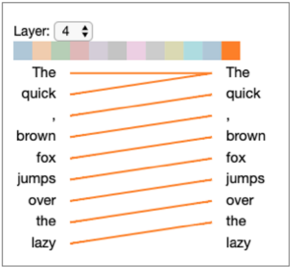
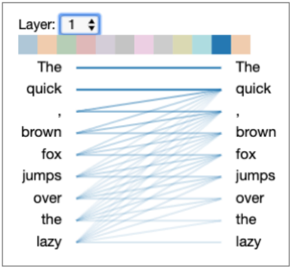
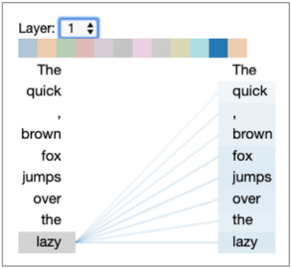
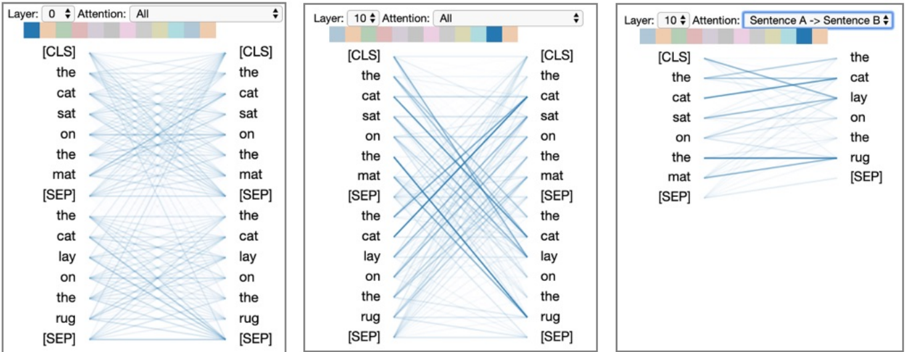
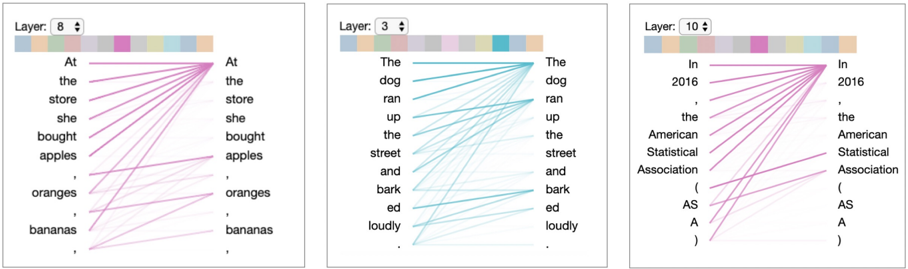
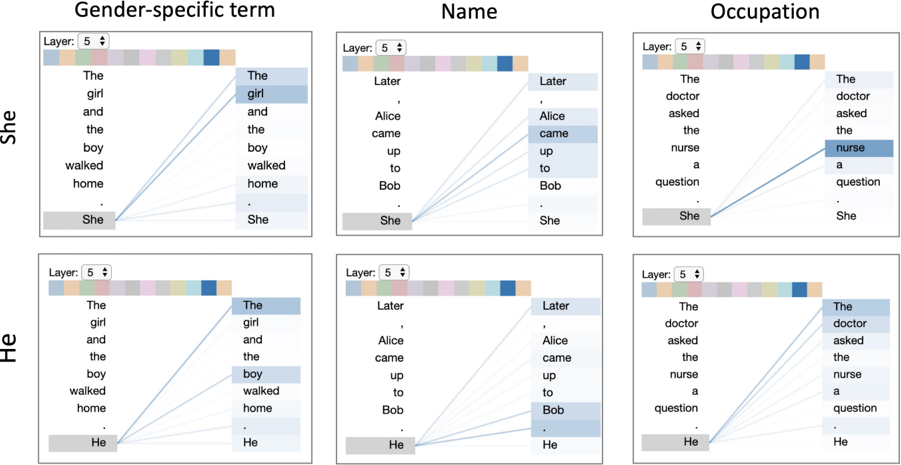
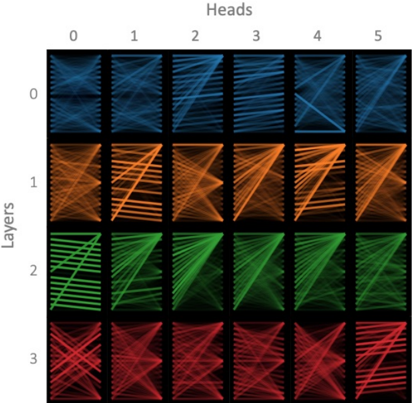
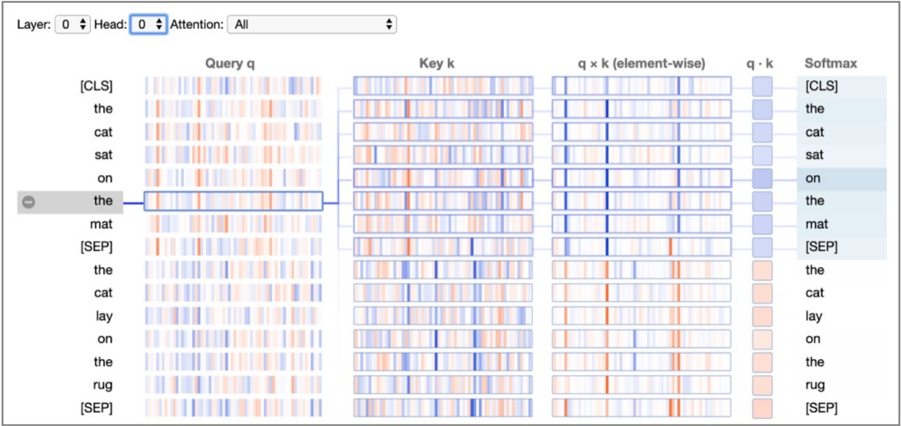
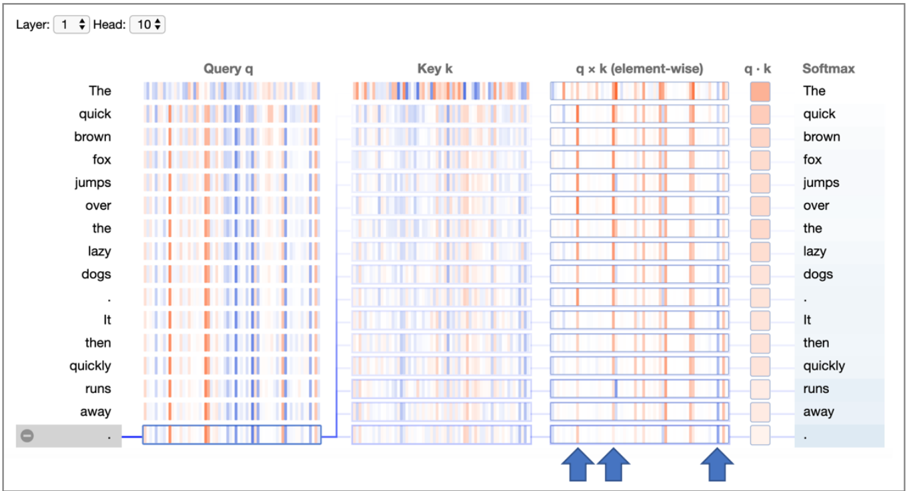
The Transformer is a sequence model that forgoes traditional recurrent architectures in favor of a fully attention-based approach.Besides improving performance, an advantage of using attention is that it can also help to interpret a model by showing how the model assigns weight to different input elements.However, the multi-layer, multi-head attention mechanism in the Transformer model can be difficult to decipher.To make the model more accessible, we introduce an open-source tool that visualizes attention at multiple scales, each of which provides a unique perspective on the attention mechanism.We demonstrate the tool on BERT and OpenAI GPT-2 and present three example use cases: detecting model bias, locating relevant attention heads, and linking neurons to model behavior.
Overview
The claims and statistics of this paper haven’t been checked yet.
Free: it reads the open-access text and checks the first 5 claims that cite a source we can check. Create a free account to check every claim.
Integrity signals
Registry
Cites
Statistics
Figures
Verification
Claims the paper makes
The claims and statistics of this paper haven’t been checked yet.
Free: it reads the open-access text and checks the first 5 claims that cite a source we can check. Create a free account to check every claim.
Claims other papers make about this one
Each is checked against this paper’s own text: does it say what the citing paper says it does?
The source backs part of the claim, not all of it — or backs it for a different population, condition or comparison.
In the citing paper
“Prior work has shown how to use attention weights to visually depict which words in an input sequence, plus which words in previously-generated output, were responsible for a given token's output [95,96].”
From Investigating Explainability of Generative AI for Code through Scenario-based Design (2022) · cites this paper as [95]
Experimental — accuracy not yet measuredThe source backs part of the claim, not all of it — or backs it for a different population, condition or comparison.
In the citing paper
“Attention distribution is a popular approach to explain an individual prediction made by a neural networks model, by the relative importance of parts of input to determine the output [95,96].”
From Investigating Explainability of Generative AI for Code through Scenario-based Design (2022) · cites this paper as [95]
Experimental — accuracy not yet measured
Self-check
Percentages, sums and reported differences re-computed from the paper’s own numbers.
The self-check needs the paper’s full text.
Citations
Cites
Vaswani, A., Shazeer, N., Parmar, N., Uszkoreit, J., Jones, L., Gomez, A. N., Kaiser, L., & Polosukhin, I. (2017) · arXiv · doi:10.48550/arxiv.1706.03762 · Cited by 120,404 · cited 2×
“Jones (2017) designed a visualization tool specifically for multihead attention, which visualizes attention over multiple heads in a layer by superimposing their attention patterns (Vaswani et al., 2017, 2018).”
MethodBERT: Pre-training of Deep Bidirectional Transformers for Language Understanding
Devlin, J., Chang, M.-W., Lee, K., & Toutanova, K. (2018) · arXiv · doi:10.48550/arxiv.1810.04805 · Cited by 73,173 · cited 1×
“In 2018, the BERT (Bidirectional Encoder Representations from Transformers) language representation model achieved state-of-the-art performance across NLP tasks ranging from sentiment analysis to question answering (Devlin et al., 2018).”
BackgroundBERT: Pre-training of Deep Bidirectional Transformers for Language Understanding
Devlin, J., Chang, M.-W., Lee, K., & Toutanova, K. (2019) · Proceedings of the 2019 Conference of the North American Chapter of the Association for Computational Linguistics: Human Language Technologies, Volume 1 (Long and Short Papers) · doi:10.18653/v1/n19-1423 · Cited by 54,325 · cited 1×
“In 2018, the BERT (Bidirectional Encoder Representations from Transformers) language representation model achieved state-of-the-art performance across NLP tasks ranging from sentiment analysis to question answering (Devlin et al., 2018).”
BackgroundNeural Machine Translation by Jointly Learning to Align and Translate
Bahdanau, D., Cho, K., & Bengio, Y. (2014) · arXiv · doi:10.48550/arxiv.1409.0473 · Cited by 16,213 · cited 3×
“Various tools have been developed to visualize attention in NLP models, ranging from attention-matrix heatmaps (Bahdanau et al., 2015; Rush et al., 2015; Rocktäschel et al., 2016) to bipartite graph representations (Liu et al., 2018; Lee et al., 2017; Strobelt et al., 2018).”
BackgroundMethodKemp, C. D., & Tufte, E. R. (1992) · Biometrics · doi:10.2307/2532323 · Cited by 2,713
A Neural Attention Model for Abstractive Sentence Summarization
Rush, A. M., Chopra, S., & Weston, J. (2015) · Proceedings of the 2015 Conference on Empirical Methods in Natural Language Processing · doi:10.18653/v1/d15-1044 · Cited by 2,656 · cited 2×
“Various tools have been developed to visualize attention in NLP models, ranging from attention-matrix heatmaps (Bahdanau et al., 2015; Rush et al., 2015; Rocktäschel et al., 2016) to bipartite graph representations (Liu et al., 2018; Lee et al., 2017; Strobelt et al., 2018).”
MethodJain, S., & Wallace, B. (2019) · Conference of the North American Chapter of the Association for Computational Linguistics: Human Language Technologies (NAACL-HLT) · doi:10.18653/v1/n19-1357 · Cited by 2,037 · cited 1×
“, 2015; Belinkov and Glass, 2019), although its value in explaining individual predictions may be limited (Jain and Wallace, 2019).”
BackgroundAnalyzing Multi-Head Self-Attention: Specialized Heads Do the Heavy Lifting, the Rest Can Be Pruned
Voita, E., Talbot, D., Moiseev, F., Sennrich, R., & Titov, I. (2019) · Proceedings of the 57th Annual Meeting of the Association for Computational Linguistics · doi:10.18653/v1/p19-1580 · Cited by 1,146 · cited 2×
“Recent work shows that attention in the Transformer correlates with syntactic constructs such as dependency relations and part-of-speech tags (Raganato and Tiedemann, 2018; Voita et al., 2019; Vig and Belinkov, 2019).”
BackgroundGender bias in coreference resolution: Evaluation and debiasing methods
Zhao, J., Wang, T., Yatskar, M., Ordonez, V., & Chang, K.-W. (2018) · Proceedings of the 2018 Conference of the North American Chapter of the Association for Computational Linguistics: Human Language Technologies, Volume 2 (Short Papers) · doi:10.18653/v1/n18-2003 · Cited by 684 · cited 1×
“This suggests that the model’s coreference mechanism may encode gender bias (Zhao et al., 2018; Lu et al., 2018).”
BackgroundTensor2Tensor for Neural Machine TranslationPreprint
Vaswani, A., Bengio, S., Brevdo, E., Chollet, F., Gomez, A. N., Gouws, S., Jones, L., Kaiser, Ł., Kalchbrenner, N., Parmar, N., et al. (2018) · arXiv (Cornell University) · doi:10.48550/arxiv.1803.07416 · Cited by 656 · cited 1×
“Jones (2017) designed a visualization tool specifically for multi-head attention, which visualizes attention over multiple heads in a layer by superimposing their attention patterns (Vaswani et al., 2017, 2018).”
Research works printed but not linked: 1
- [18]18. Jesse Vig. 2019. BertViz: A tool for visualizing multi- head self-attention in the BERT model. In ICLR Workshop: Debugging Machine Learning Models.
Cited by
Items 601–700 of 797
Concentrate Attention: Towards Domain-Generalizable Prompt Optimization for Language Models
Li, C., Liu, X., Zhang, Z., Wang, Y., Liu, C., Lan, Y., & Shen, C. (2024) · neural information processing systems · doi:10.52202/079017-0112 · Cited by 10
Analyzing natural language inference from a rigorous point of view
Salvatore, F. D. S. (2020) · Digital Library of Theses and Dissertations (Universidade de São Paulo) · doi:10.11606/t.45.2020.tde-05012021-151600 · Cited by 2
Bai, N., Luo, R., Nourian, P., & Roders, A. P. (2021) · arXiv (Cornell University) · Cited by 1
Qi, Y., Pan, Z., Hong, Y., Yang, M., van den Hengel, A., & Wu, Q. (2021) · arXiv (Cornell University) · Cited by 3
Identification of Enzymatic Active Sites with Unsupervised Language ModelingPreprint
Dassi, L. K., Manica, M., Probst, D., Schwaller, P., Teukam, Y. G. N., & Laino, T. (2022) · ChemRxiv · doi:10.26434/chemrxiv-2021-m20gg-v2 · Cited by 2
Human-Centered Reflective Writing Analytics with a Deep Transfer Learning ApproachPreprint
Liu, M., Krishna, A., & Shum, S. B. (2021) · SSRN Electronic Journal · doi:10.2139/ssrn.3991773 · Cited by 1
Rajagopal, A. (2022) · Research Square · doi:10.21203/rs.3.rs-382748/v2 · Cited by 1
Type-supervised sequence labeling based on the heterogeneous star graph for named entity recognitionPreprint
Wen, X., Zhou, C., Tang, H., Liang, L., Jiang, Y., & Qi, H. (2022) · arXiv (Cornell University) · doi:10.48550/arxiv.2210.10240 · Cited by 5
WITHDRAWN: Visual interpretation for contextualized word representation
Deng, S.-T., Tsai, C.-J., Chang, P.-C., & Wang, K.-C. (2023) · Visual Informatics · doi:10.1016/j.visinf.2023.06.002 · Cited by 1
RetractedExplainable Techniques for Analyzing Flow Cytometry Cell TransformersPreprint
Kowarsch, F., Weijler, L., Kleber, F., Wödlinger, M., Reiter, M. J., Maurer‐Granofszky, M., & Dworzak, M. N. (2023) · arXiv (Cornell University) · doi:10.48550/arxiv.2307.14581 · Cited by 1
“A common post-hoc method to interpret a transformer’s decisions is to visualize how the model attends to different parts of the input data [11, 12, 7], often called attention visualization.”
BackgroundMethodInfluentialDecoding Layer Saliency in Language TransformersPreprint
Hou, E., & Castanon, G. D. (2023) · arXiv (Cornell University) · doi:10.48550/arxiv.2308.05219 · Cited by 5
“Many works (Vig, 2019; Tsai et al., 2019; Likhosherstov et al., 2021) have attempted to attribute meaning to the attention mechanism with varying levels of success; however, they primarily focus on a single transformer block.”
BackgroundExploring Foundation Models for Seismic Event ProcessingPreprint
Linville, L. M. (2023) · doi:10.31223/x58d7p · Cited by 1
A cross-attention transformer encoder for paired sequence dataPreprint
Dens, C., Laukens, K., Meysman, P., & Bittremieux, W. (2023) · bioRxiv (Cold Spring Harbor Laboratory) · doi:10.1101/2023.12.11.571066 · Cited by 1
“Visualizations of the (self-)attention matrices were made with the python package bertviz [9].”
MethodA Multilingual Perspective on Probing Gender BiasPreprint
Stańczak, K. (2024) · arXiv (Cornell University) · doi:10.48550/arxiv.2403.10699 · Cited by 1
Cell-type-specific striatal modulation of amygdalar acetylcholine in salience assignmentPreprint
Chen, A., Li, Y., Zhu, H., Gu, H., Weng, Y., Ye, Q., Guan, W., Sun, Q., Li, B., Xu, F., et al. (2024) · bioRxiv (Cold Spring Harbor Laboratory) · doi:10.1101/2024.07.30.605919 · Cited by 1
Universal Response and Emergence of Induction in LLMsPreprint
Luick, N. (2024) · arXiv (Cornell University) · doi:10.48550/arxiv.2411.07071 · Cited by 2
Machine Learning for Zero Defect Manufacturing
Vásquez Lobos, J. M. (2022) · reposiTUm (TU Wien) · doi:10.34726/hss.2022.95242 · Cited by 1
Baird, C. (2024) · University Libraries (University of Maryland) · doi:10.13016/aw41-rfzz · Cited by 1
Madhurja, F. N., Sarmun, R., Chowdhury, M. E. H., Mushtak, A., Al‐Hashimi, I., & Zoghoul, S. B. M. (2026) · arXiv (Cornell University) · doi:10.48550/arxiv.2601.15235 · Cited by 1
“The attention matrices provide insights into the sequential reasoning process, illustrating how fracture patterns spanning multiple slices contributed to the final diagnostic decision (Vig, 2019; Wiegre ff e and Pinter, 2019).”
In Transformer We Trust? A Perspective on Transformer Architecture Failure ModesPreprint
Mondal, T., & Jagtap, A. D. (2026) · arXiv (Cornell University) · doi:10.48550/arxiv.2602.14318 · Cited by 1
“Adapted from Vig [27] Figure 3: Attribution maps from attention rollout (top) and attention flow (bottom) across six Transformer layers for three example sentences.”
Neural signatures of impaired semantic contextualization in Autism Spectrum DisorderPreprint
Franch, M. C., Katlowitz, K. A., Mickiewicz, E. A., Belanger, J. L., Mathura, R. K., Zhu, H., Yan, X., Ismail, T., Chavez, A. G., Chericoni, A., et al. (2026) · bioRxiv (Cold Spring Harbor Laboratory) · doi:10.64898/2026.03.16.712048 · Cited by 1
From Feature-Based Models to Generative AI: Validity Evidence for Constructed Response ScoringPreprint
Casabianca, J. M., McCaffrey, D. F., Johnson, M., Alper, N., & Zubenko, V. (2026) · arXiv (Cornell University) · doi:10.48550/arxiv.2603.19280 · Cited by 1
Pan–Pharmacological Drug–Target Interaction Prediction with 3D–Informed Protein Encoding at ScalePreprint
Kawaharada, A., Ito, T., & Shimizu, H. (2026) · bioRxiv (Cold Spring Harbor Laboratory) · doi:10.64898/2026.03.27.714727 · Cited by 1
Bias and reasoning in visual question answering
Kervadec, C. (2021) · theses.fr (ABES) · doi:10.70675/2962dc92zc2e2z4ff4z982cz0a5cff281b69 · Cited by 2
LinAlg-Bench: A Forensic Benchmark Revealing Structural Failure Modes in LLM Mathematical ReasoningPreprint
Agarwal, S., Rajbhar, D., & Tariq, J. (2026) · arXiv.org · doi:10.48550/arxiv.2605.16675
“The mechanistic interpretability literature has developed tools for localising computation within trans-former architectures [Vig, 2019, Meng et al., 2022, Conmy et al., 2023].”
Cross-Domain Sentence Modeling for Relevance Transfer with BERT
Yilmaz, Z. A. (2019) · UWSpace (University of Waterloo) · Cited by 1
Ethical Detection of Online Influence Campaigns Using Transformer Language Models
Crothers, E. (2020) · uO Research (University of Ottawa) · doi:10.20381/ruor-25079 · Cited by 2
“This phenomenon can be visualized using the BertViz tool [Vig, 2019], and several examples of specialized attention heads in BERTBASE are demonstrated in Figure 2.3.”
MethodInfluentialTransformer-GCRF: Recovering Chinese Dropped Pronouns with General Conditional Random FieldsPreprint
Yang, J., Xu, K., Xu, J., Li, S., Gao, S., Guo, J. H., Wen, J.-R., & Xue, N. (2020) · arXiv (Cornell University) · doi:10.48550/arxiv.2010.03224
“This is consistent with the observation in (Vig, 2019) that multi-head attention is powerful because it uses different heads to capture different relations.”
ResultStructural analysis of an all-purpose question answering modelPreprint
Micheli, V., Heinrich, Q., Fleuret, F., & Belblidia, W. (2021) · arXiv (Cornell University) · doi:10.48550/arxiv.2104.06045 · Cited by 4
“Indeed, multi-headed attention is essential to producing rich contextualized word representations and has recently been studied in great detail (Michel et al., 2019; Vig, 2019; Reif et al., 2019).”
BackgroundMachine learning research communication via illustrated and interactive web articles
Alammar, J. (2021) · International Conference on Learning Representations
Improving Human Happiness Analysis Based on Transfer Learning: Algorithm Development and Validation
Yu, L., Zhang, S., Zhang, Y., & Lin, H. (2021) · JMIR Medical Informatics · doi:10.2196/28292
“Through the analysis of happy moments via BertViz [18], different models pay extra attention to happy moments.”
MethodElbert: Fast Albert with Confidence-Window Based Early ExitPreprint
Xie, K., Lu, S., Wang, M., & Wang, Z. (2021) · arXiv (Cornell University) · doi:10.48550/arxiv.2107.00175 · Cited by 1
eXSTS: eXplainable Semantic Textual Similarity
Cui, J. (2021) · DalSpace (Dalhousie University)
Novel Algorithms for Understanding Online Reviews
Shi, T. (2021) · VTechWorks (Virginia Tech)
Commits Analysis for Software Refactoring Documentation and Recommendation
Rebai, S. (2021) · Deep Blue (University of Michigan) · doi:10.7302/2532
Identification of Enzymatic Active Sites with Unsupervised Language ModelingPreprint
Dassi, L. K., Manica, M., Probst, D., Schwaller, P., Teukam, Y. G. N., & Laino, T. (2021) · doi:10.33774/chemrxiv-2021-m20gg
“In the last two years, BERT [Devlin et al., 2018], and more in general models pretrained via masked language modeling, have become the de-facto standard for different language understanding problems [Vig, 2019, Hoover et al., 2019, Rogers et al., 2020].”
BackgroundDNAVec: Pre-Trained Word Vector Representation of Genomic DNA Sequences
郎, 梅. (2021) · Hans Journal of Biomedicine · doi:10.12677/hjbm.2021.113016
AidIR: An Interactive Dialog System to Aid Disease Information Retrieval
Wang, D.-J., Chen, T.-Y., & Su, C. (2022) · Applied Sciences · doi:10.3390/app12041875
Punctuation restoration in Swedish through fine-tuned KB-BERTPreprint
Nilsson, J. B. (2022) · arXiv (Cornell University) · doi:10.48550/arxiv.2202.06769
“This can be used to identify particularly interesting attention heads for further investigation [13].”
BackgroundMethodInfluentialIdentification of Enzymatic Active Sites with Unsupervised Language ModelingPreprint
Dassi, L. K., Manica, M., Probst, D., Schwaller, P., Teukam, Y. G. N., & Laino, T. (2021) · ChemRxiv · doi:10.26434/chemrxiv-2021-m20gg · Cited by 1
Identification of Enzymatic Active Sites with Unsupervised Language ModelingPreprint
Dassi, L. K., Manica, M., Probst, D., Schwaller, P., Teukam, Y. G. N., & Laino, T. (2022) · doi:10.33774/chemrxiv-2021-m20gg-v2
Essays on Representation Learning for Political Science Research
Wu, P. (2021) · Deep Blue (University of Michigan) · doi:10.7302/2687
FuncSA: Function Words-Guided Sentiment-Aware Attention for Chinese Sentiment Analysis
Wang, J., Zan, H., Han, Y., & Cao, J. (2022) · Lecture notes in computer science · doi:10.1007/978-3-031-17120-8_42
Multimodal Emotion Recognition among Couples from Lab Settings to Daily Life using SmartwatchesPreprint
Boateng, G. (2022) · arXiv (Cornell University) · doi:10.48550/arxiv.2212.13917
Multimodal Adversarial Learning
Osahor, U. (2022) · The Research Repository @ WVU (West Virginia University) · doi:10.33915/etd.11546
Multiple Words to Single Word Associations Using Masked Language Models
Soma, Y., Horiuchi, Y., & Kuroiwa, S. (2023) · International Conference on Knowledge and Smart Technology · doi:10.1109/kst57286.2023.10086780
Kwon, B. C., & Mihindukulasooriya, N. (2023) · Proceedings of the conference - Association for Computational Linguistics. Meeting · doi:10.18653/v1/2023.acl-demo.4 · Cited by 6
Wang, F., & Xie, Z. (2023) · Findings of the Association for Computational Linguistics: ACL (Findings of ACL) · doi:10.18653/v1/2023.findings-acl.532
ALens: An Adaptive Domain-Oriented Abstract Writing Training Tool for Novice ResearchersPreprint
Chen, C., Li, Z., Peng, Z., & Li, Q. (2023) · arXiv (Cornell University) · doi:10.48550/arxiv.2308.03989
“Finally, to solve the last issue, following the approach utilized in the works about attention [12, 83, 94, 95], we attempt to find relevant tokens in the generated abstract from the source text, apply semantic similarity to align the ideas between the reference abstract and the source text and…”
MethodInfluentialDK-STN: A Domain Knowledge Embedded Spatio-Temporal Network Model for MJO ForecastPreprint
Li, H., Zhang, N., Xu, Z., Li, X., Liu, C., Zhao, C., & Wu, J. (2023) · SSRN Electronic Journal · doi:10.2139/ssrn.4574792 · Cited by 3
Decoding the Encoded – Linguistic Secrets of Language Models: A Systematic Literature Review
Avetisyan, H., & Broneske, D. (2023) · International Conference on Machine Learning Techniques and NLP (MLNLP) · doi:10.5121/csit.2023.131606
“Prominent recent research has included studies on the self-attention mechanism [30–33], the role of individual neurons in the BERT model [34], gradient-based methods [35], and the visualization of attention weights [36].”
Huang, S., Ren, S., & Zhu, K. Q. (2023) · Frontiers in artificial intelligence and applications · doi:10.3233/faia230383
“The attention maps are visualized through an off-the-shelf tool [29] into a user-friendly demo, as shown in Figure 1.”
MethodBeinborn, L., & Hollenstein, N. (2023) · Synthesis lectures on human language technologies · doi:10.1007/978-3-031-43260-6_6
Explaining Sarcasm of Tweets using Attention Mechanism
Keerthana, R. L., Singh, A. K., Saini, P., & Malhotra, D. (2023) · Scalable Computing Practice and Experience · doi:10.12694/scpe.v24i4.2166 · Cited by 1
“BertViz [15] is a visualisation tool that allows us to depict the attention of tokens in a text from several perspectives, such as neuron view, head view, and model view.”
BackgroundNatural Language Processing for Medical Data Analysis
Przystalski, K., & Thanki, R. M. (2023) · Synthesis lectures on engineering, science, and technology · doi:10.1007/978-3-031-44877-5_3 · Cited by 1
METAPROBE: A Representation- and Task-Agnostic Probe
Zhou, Y., & Srikumar, V. (2023) · BlackboxNLP Workshop on Analyzing and Interpreting Neural Networks for NLP (BlackboxNLP) · doi:10.18653/v1/2023.blackboxnlp-1.18
“…structure of representations (Ethayarajh, 2019; Zhou and Srikumar, 2021; Xypolopoulos et al., 2021; Chang et al., 2022), and focuses on discovering properties of the representation using cluster analysis (Aharoni and Goldberg, 2020) or visualization technqiues (Reimers et al., 2019; Vig, 2019).”
MethodRyu, S. (2023) · Findings of the Association for Computational Linguistics: EMNLP (Findings of EMNLP) · doi:10.18653/v1/2023.findings-emnlp.27
NLP+Vis: NLP Meets Visualization
Joty, S., Hoque, E., & Vig, J. (2023) · doi:10.18653/v1/2023.emnlp-tutorial.1 · Cited by 1
“…how a model makes a prediction (Chatzimparmpas et al., 2020; Belinkov and Glass, 2019; Li et al., 2016; Tenney et al., 2020; Strobelt et al., 2018; Vig, 2019), and more recently to design prompts (i.e., natural language instructions accompanied with zero or few demonstrations) to effectively use…”
BackgroundSelf-citationEnhancing Relational Classification Model Fusing Entity and Sentence Semantic Information
Wei, C., Qin, X., & Yuan, T. (2023) · IEEE International Conference on Pattern Recognition and Machine Learning (PRML) · doi:10.1109/prml59573.2023.10348324
Song, H., Mao, Z., Dabre, R., Chu, C., & Kurohashi, S. (2024) · Journal of Natural Language Processing · doi:10.5715/jnlp.31.155
Chen, X., Li, L., Zhang, M., & Zhang, R. (2024) · Human-Centric Intelligent Systems · doi:10.1007/s44230-023-00054-y
“As in works done by Park et al. [16] and Vig et al. [17] which is using this mechanism to help build deep learning models with self-generated explanations.”
Designing and Evaluating Context-Sensitive Visualization Models for Deep Learning Text Classifiers
Dunn, A., Inkpen, D. Z., & Andonie, R. (2024) · Studies in computational intelligence · doi:10.1007/978-3-031-46549-9_14
IGOT: Information Gain Optimized Tokenizer on Domain Adaptive PretrainingPreprint
Feng, D., Zhang, Y., & Xu, Z. (2024) · arXiv (Cornell University) · doi:10.48550/arxiv.2405.09857 · Cited by 1
“Some studies have indicated that these models, during pretraining, not only learn contextual text vector representations and probability distributions but are also likely to learn grammar [2], syntax [3], factual knowledge [4], even behavior patterns strikingly similar to human common sense [5].”
Background3rd Workshop on Tools and Resources for People with REAding DIfficulties (READI 2024)
Wilkens, R., Cardon, R., Todiraşcu, A., & Gala, N. (2024) · HAL
Knowledge Graph Completion via Multi-feature Learning
Zhang, H., Yao, J., & Zhu, Y. (2024) · Lecture notes in computer science · doi:10.1007/978-981-97-5672-8_23
Domain Terminology Knowledge Graph Completion Method Based on Bert
Huang, W., Xiao, G., Yang, J. K., & Hu, X. (2023) · International Conference on Information Technology: IoT and Smart City (ICIT) · doi:10.1109/itiotsc60379.2023.00007
“We use BertViz[15] to show the attention visualiation of our model.”
MethodLLaMA-Annotate—Visualizing Token-Level Confidences for LLMs
Schultheis, E., & John, S. T. (2024) · Lecture notes in computer science · doi:10.1007/978-3-031-70371-3_33
Design of Network Security Intrusion Detection System Based on NIDSeqFormer Framework
Zhou, Y., Gao, Z., Zhou, X., & Li, X. (2024) · International Conference on Signal Processing and Intelligent Computing (SPIC) · doi:10.1109/spic62469.2024.10691405
“Using attention has several benefits, including enhancing performance and aiding in model interpretation by illuminating the model's weighting of various input components [2] .”
BackgroundLiu, Y. (2024) · bioRxiv (Cold Spring Harbor Laboratory) · doi:10.1101/2024.10.12.613667
“As shown in the overall model architecture in Figure 1, we did not fine-tune the pre-trained model, but the attention-based deep learning module inherently provided interpretability through attention scores [36].”
ResultMultimodal machine learning methods for pattern analysis in smart cities and transportation
Drosouli, I. (2024) · theses.fr (ABES) · doi:10.12681/eadd/56944
Ponkshe, K., Subramanian, V., Modani, N., & Ramakrishnan, G. (2024) · arXiv (Cornell University) · doi:10.48550/arxiv.2411.16618
“Jesse Vig provides open-source tools (Vig, 2019) that can be used to visualize attention at multiple scales, each of which provides a unique perspective on the attention mechanism.”
A BERT base model for the analysis of Electronic Health Records from diabetic patients
Manzini, E., Vlacho, B., Franch‐Nadal, J., Escudero, J., Génova, A., Reixach, E., Andrés, E., Pizarro, I., Mauricio, D., & Perera-Lluna, A. (2024) · Annual International Conference of the IEEE Engineering in Medicine and Biology Society (EMBC) · doi:10.1109/embc53108.2024.10782488
Automatic Text Simplification for Lithuanian: Transforming Administrative Texts into Plain Language
Mandravickaitė, J., Rimkienė, E., Kapkan, D. K., Kalinauskaitė, D., Čenys, A., & Krilavičius, T. (2025) · Mathematics · doi:10.3390/math13030465 · Cited by 1
Inoue, A., Zhu, B., Mizutani, K., Kobayashi, K., Yasuda, T., Wellner, A., Liu, C. C., & Kitaguchi, T. (2025) · JACS Au · doi:10.1021/jacsau.4c01189
Tae-hoon, U. H. M. B., Hamada, Y., & Hirose, T. (2025) · doi:10.22541/essoar.174180448.86090631/v1
(2025) · IJARCCE · doi:10.17148/ijarcce.2025.14442
Visual Attention Exploration in Vision-Based Mamba Models
Wang, J., Yeh, C. M., Saini, U. S., & Das, M. (2025) · IEEE Pacific Visualization Conference (PacificVis) · doi:10.1109/pacificvis64226.2025.00031 · Cited by 1
“Vig [14] employed multiple parallel coordinate plots to visualize the attention patterns in BERT and GPT-2 models.”
MDATS―A Multi-Domain Adaptive Classification Strategy for Mechanical Fault Detection
Wang, Z., Huang, W., Hu, Y., & Gao, Y. (2024) · Asia Conference Mechanical and Aerospace Engineering · doi:10.1109/meae62008.2024.11026598
“The self-attention mechanism in Transformers [8]-[9] allows the model to dynamically assign importance to different time steps, enabling it to focus on the most relevant parts of the sequence for classification.”
Seq2KING: An unsupervised internal transformer representation of global human heritagesPreprint
Jonnalagadda, B., & Njie, E. G. (2025) · bioRxiv (Cold Spring Harbor Laboratory) · doi:10.1101/2025.06.17.660172
Advanced Flood Risk Assessment Using a Novel Hybrid Transformer-SE-ANN FrameworkPreprint
Raza, M. O., Hanzla, M., Shinwari, A. R., & Shaukat, N. (2025) · Research Square · doi:10.21203/rs.3.rs-7103826/v1
A contrastive dual attention framework for enhancing adverse drug event relations extraction
Kashtriya, P., & Singh, P. (2025) · Revista Cientifica de Sistemas e Informatica · doi:10.51252/rcsi.v5i2.968
Explainability of Language Models (XAI and LLM)
Cecco, A. D., & Gianfagna, L. (2025) · Springer eBooks · doi:10.1007/978-3-031-92229-9_8 · Cited by 1
ALERT: Active Learning and Explainable AI for Robust Threat Detection in Telegram
Ravi, K., & Yuan, J. S. (2025) · Digital Threats Research and Practice · doi:10.1145/3758967
“To facilitate this, BertViz provides an interactive tool for visualizing attention weights across different layers and heads of Transformer models [49].”
de Sena, R. L. R., Souza, M., Santana, A. S., & de Melo, J. L. L. (2025) · Anais do Workshop sobre as Implicações da Computação na Sociedade (WICS) · doi:10.5753/wics.2025.9056
Explainable AI for Building Trustworthy Transformer-Based Abstractive Summarization Models
Panawenna, H., Hettihewa, K. G., Wickramanayake, S., & Meedeniya, D. (2025) · Springer eBooks · doi:10.1007/978-3-031-97007-8_10 · Cited by 1
The Role of Feature Interactions in Graph-based Tabular Deep Learning
Dubbeldam, E., Mohammadi, R., Schoonhoven, M., & Birbil, Ş. İ. (2026) · Transactions on machine learning research · doi:10.48550/arxiv.2510.04543 · Cited by 1
“This approach is popular in natural language, with BertViz (Vig, 2019) being used to interpret how the model assigns weights to different tokens.”
Einsatz von Foundation-Modellen entlang der Patientenreise
Antweiler, D., Rüping, S., & Wrobel, S. (2025) · Springer eBooks · doi:10.1007/978-3-658-48573-3_40
Fine-Tuning Transformer Models for Low-Resource Indian Languages
Deeksha, M., Kurundwade, P., R, P. K. H., Kabeer, M. A., Tendulkar, N., & Pallavi (2025) · International Conference on Engineering Innovations and Technologies (ICoEIT) · doi:10.1109/icoeit63558.2025.11211529
Hossain, P. S., Raj, C., Zhu, Z., Lin, J., & Marasco, E. (2025) · Findings of the Association for Computational Linguistics: EMNLP (Findings of EMNLP) · doi:10.18653/v1/2025.findings-emnlp.134 · Cited by 2
“Previous research suggests that certain attention heads disproportionately encode and propagate social biases, yet our understanding of which heads contribute most significantly to bias and how they process biased information remains limited (Vig, 2019; Nostalgebraist.”
Additive Large Language Models for Semi-Structured TextPreprint
Karthikeyan, K., Thirukovalluru, R., & Carlson, D. (2025) · arXiv (Cornell University) · doi:10.48550/arxiv.2511.11922
“…and Integrated Gradients (Sundarara-jan et al., 2017), local surrogate models like LIME (Ribeiro et al., 2016), attention visualization methods (Vig, 2019; Yeh et al., 2023), and similarity-based approaches such as K-Nearest Neighbors (Papernot and McDaniel, 2018) and In-fluence Functions (Koh…”
Research on bamboo strip density control technology based on deep learning
Liu, Z., Zhang, W., Zhao, Y., Wu, A., Zhang, J., Zheng, J., & Wang, J. (2025) · Scientific Reports · doi:10.1038/s41598-025-26909-x · Cited by 3
Multimorbidity measurement strategies for predicting hospital visits
Neves, B. D., Moreira, J. M., Gonçalves, S., Cerejo, J., Mota, I., Silva, N. A., Leite, F., & Silva, M. J. (2025) · BMC Health Services Research · doi:10.1186/s12913-025-13817-z
Metadata
- Authors
- Vig, J.
- Affiliations
- Palo Alto Research Center (US)
- Corresponding author
- Vig, Jesse
- ORCID
- Vig, Jesse
- Venue
- Proceedings of the 57th Annual Meeting of the Association for Computational Linguistics: System Demonstrations
- Published
- 2019
- Pages
- 37-42
- OpenAlex
- W2949202705
- Semantic Scholar
- 0de0a44b859a3719d11834479112314b4caba669
- Cited by
- 600
- References
- 17
- Citations by year
- 2026: 46 · 2025: 87 · 2024: 79 · 2023: 112 · 2022: 84 · 2021: 112 · 2020: 71 · 2019: 9
- FWCI
- 26.40
- Type
- conference paper
- Language
- en
- Open access
- hybrid
- doi.org
- Licence
- cc-by
- Locations
- Annual Meeting of the Association for Computational Linguistics: System Demonstrations (ACL Demo) (publishedVersion, cc-by)
- arXiv (Cornell University) (submittedVersion)
- arXiv (Cornell University)
- Topics
- Physical Sciences › Computer Science › Artificial Intelligence › Explainable Artificial Intelligence (XAI)
- Physical Sciences › Computer Science › Artificial Intelligence › Topic Modeling
- Physical Sciences › Computer Science › Computer Graphics and Computer-Aided Design › Data Visualization and Analytics
- Keywords
- attention visualization, transformer models, multi-scale visualization, interpretability, multi-head attention, BERT, GPT-2, attention heads, open-source visualization tool
About these checks
Registry, retraction, Cites and statistics results are computed, not judged, with one exception: a printed reference that no index lists is read once by a model before it counts as a citation error. Claims are extracted by a model and kept only when their quote appears verbatim in the text; each cited source is then checked, with a model’s help, for whether it says what the claim relies on. Those verdicts can be wrong — read the claim’s quote and the cited source before relying on one.
Statistics and arithmetic are recomputed, not judged.
Confidence bands are shown only for fields calibrated on our annotated test set. None is calibrated yet, so no band is shown.
What counts as a claim ›How we measure confidence ›How we check this ›
Are you an author, or do you see a problem with this page? Request a review
Data sources
Bibliographic data: Semantic Scholar, OpenAlex, Crossref.
Contains information from the Semantic Scholar Academic Graph Datasets, made available under the ODC Attribution License (ODC-BY 1.0).
Semantic Scholar’s data is described in: Kinney, R., et al. (2023). The Semantic Scholar Open Data Platform. arXiv:2301.10140.
