

A Multiscale Visualization of Attention in the Transformer Model
Open accessThe DOI matches its Crossref record; 22 of the 22 references it cites were found in a registry or an index.
Abstract
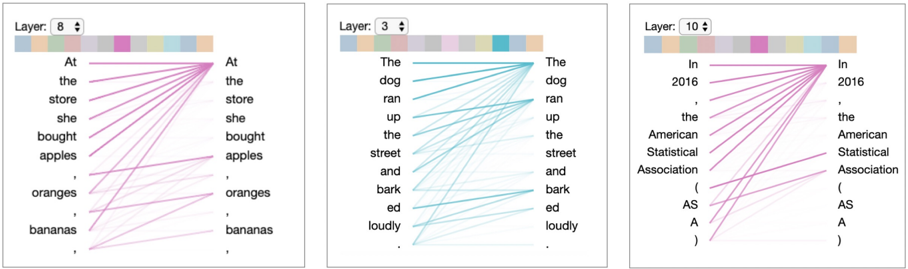
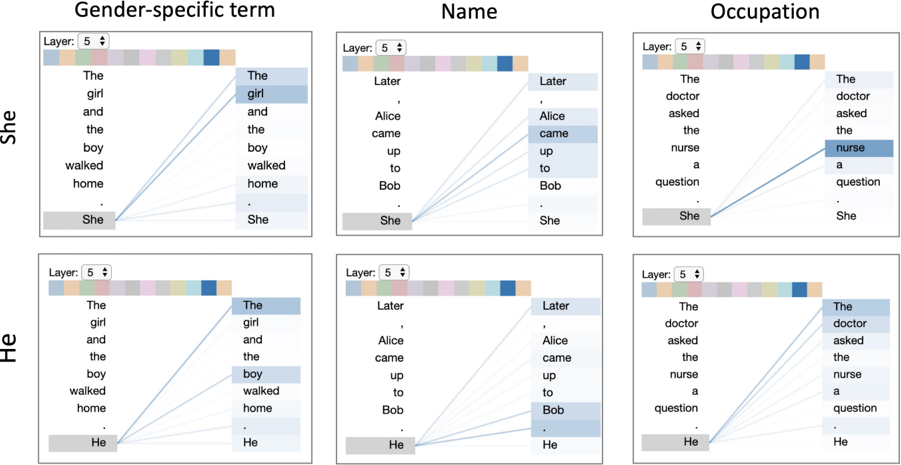
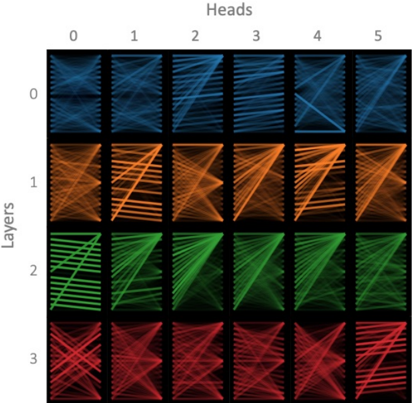
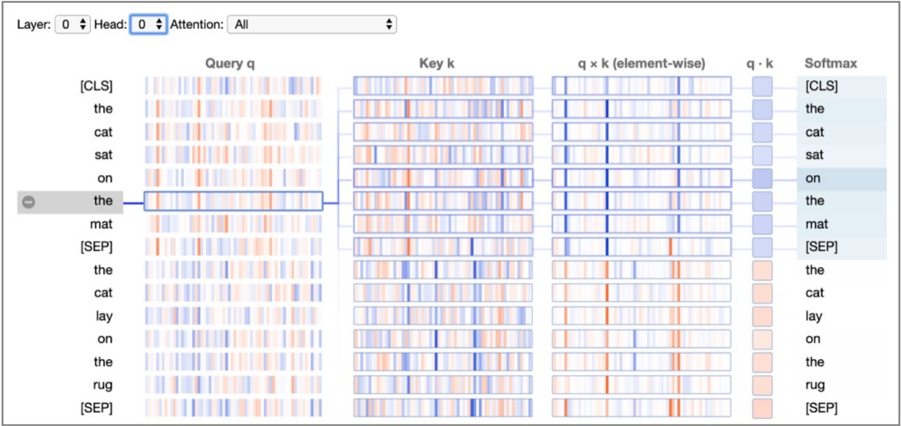
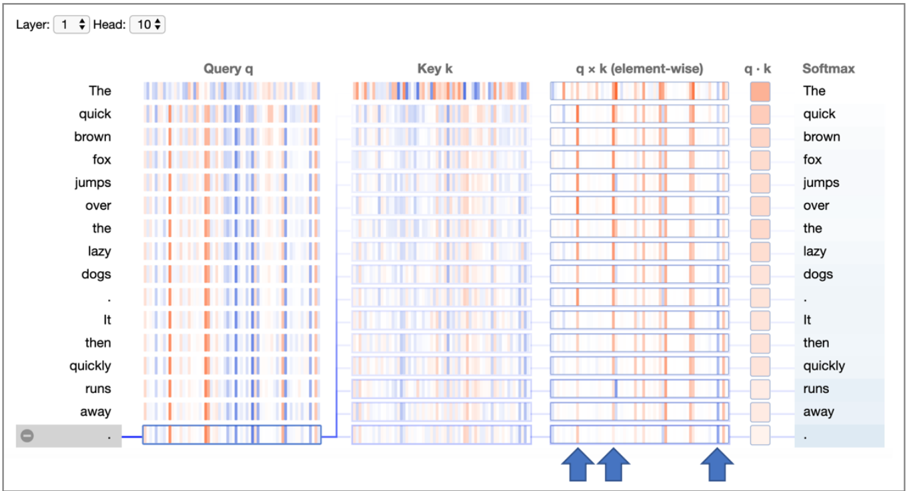
The Transformer is a sequence model that forgoes traditional recurrent architectures in favor of a fully attention-based approach.Besides improving performance, an advantage of using attention is that it can also help to interpret a model by showing how the model assigns weight to different input elements.However, the multi-layer, multi-head attention mechanism in the Transformer model can be difficult to decipher.To make the model more accessible, we introduce an open-source tool that visualizes attention at multiple scales, each of which provides a unique perspective on the attention mechanism.We demonstrate the tool on BERT and OpenAI GPT-2 and present three example use cases: detecting model bias, locating relevant attention heads, and linking neurons to model behavior.
Overview
The claims and statistics of this paper haven’t been checked yet.
Free: it reads the open-access text and checks the first 5 claims that cite a source we can check. Create a free account to check every claim.
Integrity signals
Registry
Cites
Statistics
Figures
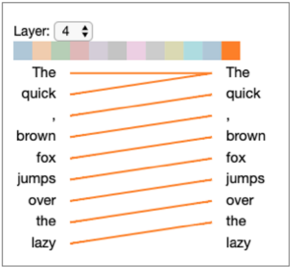
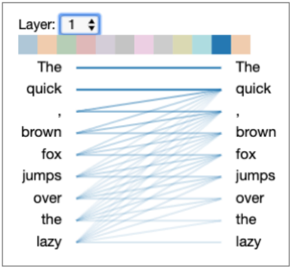
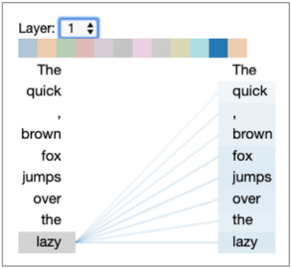
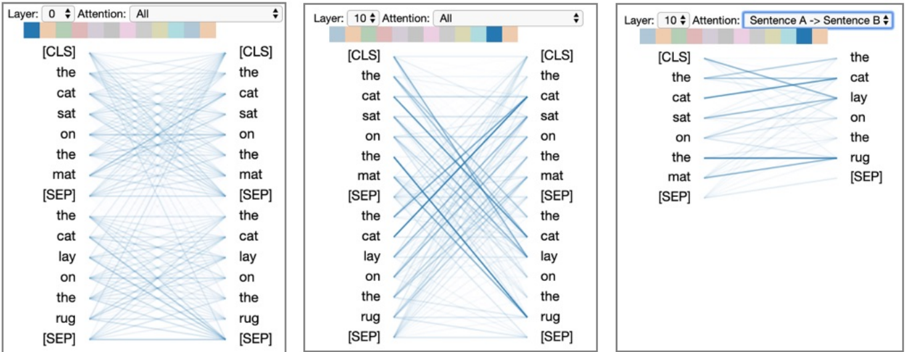
Verification
Claims the paper makes
The claims and statistics of this paper haven’t been checked yet.
Free: it reads the open-access text and checks the first 5 claims that cite a source we can check. Create a free account to check every claim.
Claims other papers make about this one
Each is checked against this paper’s own text: does it say what the citing paper says it does?
The source backs part of the claim, not all of it — or backs it for a different population, condition or comparison.
In the citing paper
“Prior work has shown how to use attention weights to visually depict which words in an input sequence, plus which words in previously-generated output, were responsible for a given token's output [95,96].”
From Investigating Explainability of Generative AI for Code through Scenario-based Design (2022) · cites this paper as [95]
Experimental — accuracy not yet measuredThe source backs part of the claim, not all of it — or backs it for a different population, condition or comparison.
In the citing paper
“Attention distribution is a popular approach to explain an individual prediction made by a neural networks model, by the relative importance of parts of input to determine the output [95,96].”
From Investigating Explainability of Generative AI for Code through Scenario-based Design (2022) · cites this paper as [95]
Experimental — accuracy not yet measured
Self-check
Percentages, sums and reported differences re-computed from the paper’s own numbers.
The self-check needs the paper’s full text.
Citations
Cites
Vaswani, A., Shazeer, N., Parmar, N., Uszkoreit, J., Jones, L., Gomez, A. N., Kaiser, L., & Polosukhin, I. (2017) · arXiv · doi:10.48550/arxiv.1706.03762 · Cited by 120,404 · cited 2×
“Jones (2017) designed a visualization tool specifically for multihead attention, which visualizes attention over multiple heads in a layer by superimposing their attention patterns (Vaswani et al., 2017, 2018).”
MethodBERT: Pre-training of Deep Bidirectional Transformers for Language Understanding
Devlin, J., Chang, M.-W., Lee, K., & Toutanova, K. (2018) · arXiv · doi:10.48550/arxiv.1810.04805 · Cited by 73,173 · cited 1×
“In 2018, the BERT (Bidirectional Encoder Representations from Transformers) language representation model achieved state-of-the-art performance across NLP tasks ranging from sentiment analysis to question answering (Devlin et al., 2018).”
BackgroundBERT: Pre-training of Deep Bidirectional Transformers for Language Understanding
Devlin, J., Chang, M.-W., Lee, K., & Toutanova, K. (2019) · Proceedings of the 2019 Conference of the North American Chapter of the Association for Computational Linguistics: Human Language Technologies, Volume 1 (Long and Short Papers) · doi:10.18653/v1/n19-1423 · Cited by 54,325 · cited 1×
“In 2018, the BERT (Bidirectional Encoder Representations from Transformers) language representation model achieved state-of-the-art performance across NLP tasks ranging from sentiment analysis to question answering (Devlin et al., 2018).”
BackgroundNeural Machine Translation by Jointly Learning to Align and Translate
Bahdanau, D., Cho, K., & Bengio, Y. (2014) · arXiv · doi:10.48550/arxiv.1409.0473 · Cited by 16,213 · cited 3×
“Various tools have been developed to visualize attention in NLP models, ranging from attention-matrix heatmaps (Bahdanau et al., 2015; Rush et al., 2015; Rocktäschel et al., 2016) to bipartite graph representations (Liu et al., 2018; Lee et al., 2017; Strobelt et al., 2018).”
BackgroundMethodKemp, C. D., & Tufte, E. R. (1992) · Biometrics · doi:10.2307/2532323 · Cited by 2,713
A Neural Attention Model for Abstractive Sentence Summarization
Rush, A. M., Chopra, S., & Weston, J. (2015) · Proceedings of the 2015 Conference on Empirical Methods in Natural Language Processing · doi:10.18653/v1/d15-1044 · Cited by 2,656 · cited 2×
“Various tools have been developed to visualize attention in NLP models, ranging from attention-matrix heatmaps (Bahdanau et al., 2015; Rush et al., 2015; Rocktäschel et al., 2016) to bipartite graph representations (Liu et al., 2018; Lee et al., 2017; Strobelt et al., 2018).”
MethodJain, S., & Wallace, B. (2019) · Conference of the North American Chapter of the Association for Computational Linguistics: Human Language Technologies (NAACL-HLT) · doi:10.18653/v1/n19-1357 · Cited by 2,037 · cited 1×
“, 2015; Belinkov and Glass, 2019), although its value in explaining individual predictions may be limited (Jain and Wallace, 2019).”
BackgroundAnalyzing Multi-Head Self-Attention: Specialized Heads Do the Heavy Lifting, the Rest Can Be Pruned
Voita, E., Talbot, D., Moiseev, F., Sennrich, R., & Titov, I. (2019) · Proceedings of the 57th Annual Meeting of the Association for Computational Linguistics · doi:10.18653/v1/p19-1580 · Cited by 1,146 · cited 2×
“Recent work shows that attention in the Transformer correlates with syntactic constructs such as dependency relations and part-of-speech tags (Raganato and Tiedemann, 2018; Voita et al., 2019; Vig and Belinkov, 2019).”
BackgroundGender bias in coreference resolution: Evaluation and debiasing methods
Zhao, J., Wang, T., Yatskar, M., Ordonez, V., & Chang, K.-W. (2018) · Proceedings of the 2018 Conference of the North American Chapter of the Association for Computational Linguistics: Human Language Technologies, Volume 2 (Short Papers) · doi:10.18653/v1/n18-2003 · Cited by 684 · cited 1×
“This suggests that the model’s coreference mechanism may encode gender bias (Zhao et al., 2018; Lu et al., 2018).”
BackgroundTensor2Tensor for Neural Machine TranslationPreprint
Vaswani, A., Bengio, S., Brevdo, E., Chollet, F., Gomez, A. N., Gouws, S., Jones, L., Kaiser, Ł., Kalchbrenner, N., Parmar, N., et al. (2018) · arXiv (Cornell University) · doi:10.48550/arxiv.1803.07416 · Cited by 656 · cited 1×
“Jones (2017) designed a visualization tool specifically for multi-head attention, which visualizes attention over multiple heads in a layer by superimposing their attention patterns (Vaswani et al., 2017, 2018).”
Research works printed but not linked: 1
- [18]18. Jesse Vig. 2019. BertViz: A tool for visualizing multi- head self-attention in the BERT model. In ICLR Workshop: Debugging Machine Learning Models.
Cited by
Items 501–600 of 797
Task Vectors, Learned Not Extracted: Performance Gains and Mechanistic Insight
Yang, H., Cho, H., Ding, K., & Inoue, N. (2026) · International Conference on Learning Representations · doi:10.48550/arxiv.2509.24169 · Cited by 3
“Second, randomly selected heads exhibit a strong “attention sink” (Xiao et al., 2023; Sun et al., 2024), focusing on the first token and often performing “no-op” behaviors (Vig & Belinkov, 2019; Vig, 2019), making them unresponsive to TV injection (see Figure 5b).”
Segundo, L. B. D. S., Teixeira, V., Pedrini, H., & Dias, Z. (2020) · Lecture notes in computer science · doi:10.1007/978-3-030-65775-8_14 · Cited by 2
Silver Data for Coreference Resolution in Ukrainian: Translation, Alignment, and Projection
Kuchmiichuk, P. (2023) · Ukrainian Natural Language Processing Workshop (UNLP) · doi:10.18653/v1/2023.unlp-1.8 · Cited by 4
“Using the bertviz package, we created attention weight graphs of all the layers and heads of the chosen model (Vig, 2019).”
MethodVisual Analytics for Fine‐grained Text Classification Models and Datasets
Battogtokh, M., Xing, Y., Davidescu, C., Abdul‐Rahman, A., Flucke, G., & Borgo, R. (2024) · Computer Graphics Forum · doi:10.1111/cgf.15098 · Cited by 2
“…phrase composition [LCHJ16], bipartite-graph visualization for understanding the behavior of self-attention in Transformer-based language models [Vig19], or saliency visualizations of feature importance based on model-agnostic black-box explanation techniques like LIME [RSG16] and SHAP [LAL17].”
BackgroundAttention to Phonetics: A Visually Informed Explanation of Speech Transformers
Shams, E. A., & Carson-Berndsen, J. (2024) · Lecture notes in computer science · doi:10.1007/978-3-031-70566-3_8 · Cited by 2
Recent Progress in Understanding Transformer and Developing Its Surpasser: A Survey
Liu, M., Yang, D., Beyette, F. R., Wang, S., & Zhao, L. (2024) · IEEE Signal Processing in Medicine and Biology Symposium · doi:10.1109/spmb62441.2024.10842272 · Cited by 3
“Serrano and Smith used perturbation to show that removing high-attention words does not always impact model predictions significantly, raising questions about the reliability of attention-based explanations alone [42].”
Understanding Sarcasm Detection Through Mechanistic Interpretability
Katta, J., Allanki, M., & Kodumuru, N. R. (2025) · International Conference on Sentiment Analysis and Deep Learning (ICSADL) · doi:10.1109/icsadl65848.2025.10933475 · Cited by 2
“These include SHAP explanations[5], attention visualization [6], and layer-wise ablation studies [7] to uncover the specific mechanisms enabling sarcasm detection.”
TELL-ME: Toward Personalized Explanations of Large Language Models
Jeck, J., Leiser, F., Hüsges, A., & Sunyaev, A. (2025) · CHI Conference Extended Abstracts on Human Factors in Computing Systems (CHI EA) · doi:10.1145/3706599.3719982 · Cited by 8
LLM-based Contrastive Representation Learning for Enhanced Maintenance Work Order Retrieval
Siouffi, C., Glandon, P., Kubler, S., & Soumianarayanan, V. (2025) · Procedia CIRP · doi:10.1016/j.procir.2025.02.230 · Cited by 3
Architectural Gaps in Generative AI: Quantifying Cognitive Risks for Safety Applications
Wen, H., & Hu, P. (2025) · AI · doi:10.3390/ai6070138 · Cited by 2
Unbiased multimodal intent recognition with auxiliary rationale generation
Dong, Q., Dai, R., Duan, G., Qin, K., Zhang, Y., & He, T. (2025) · Neurocomputing · doi:10.1016/j.neucom.2025.131197 · Cited by 7
FuseAttenX: Leveraging Attention-Enhanced Deep Learning for Business Strategy Optimization
Mahmud, F. U., Rahman, A., Khan, M. A., Bishnu, K. K., Eva, A. A., & Maua, J. (2025) · IEEE International Conference on Computing and Machine Intelligence (ICMI) · doi:10.1109/icmi65310.2025.11141140 · Cited by 2
“This paper introduces a novel DL architecture, FuseAttenX, which combines Convolutional Neural Networks (CNNs) [6], Long Short-Term Memory (LSTM) networks [7], and Trans-former layers with an attention mechanism [8].”
Li, Z., Xu, Y. G., Chowdhury, D., Yip, H. F., Wang, C., & Zhang, L. (2025) · Interdisciplinary Sciences Computational Life Sciences · doi:10.1007/s12539-025-00749-9 · Cited by 3
“In this study, we use BertViz [35], a Python library, to visualize attention patterns within the Med-Causal-Transformer model.”
Li, B., Zhang, K., Chen, X., & Hong, R. (2025) · IEEE Transactions on Neural Networks and Learning Systems · doi:10.1109/tnnls.2025.3609842 · Cited by 2
Seismic Intensity Prediction with a Low-Computational-Cost Transformer-Based Tracking Method
Wang, H., Bai, Z., Bai, R., Zhao, L., Ma, L., & Han, Y. (2025) · Sensors · doi:10.3390/s25206269 · Cited by 2
“Inspired by [26,27], we observe that self-attention in adjacent layers of state-of-the-art language models exhibits very high similarity.”
Ali, S., Waleed, M., & Lee, D. (2025) · Energy Conversion and Management · doi:10.1016/j.enconman.2025.120673 · Cited by 3
Gondim, J. M., Claro, D. B., & Souza, M. (2025) · Journal of the Brazilian Computer Society · doi:10.5753/jbcs.2025.5792 · Cited by 2
“[2016] have shown that the attention mechanism operations between image features and words relate well with human perception when predicting words of a description, Vig [2019] argue that attention mechanisms aid on model interpretation and Clark et al .”
Prognostics of Turbofan Engines Using Self-Attention Transformers and Explainable AI Techniques
Prete, A. D., Cirillo, E., Mashaallah, Z., & Moccardi, A. (2025) · Lecture notes on data engineering and communications technologies · doi:10.1007/978-3-032-10344-4_20 · Cited by 2
Wang, H., Wencheng, Z., Wang, Z., Lu, Z., & Ma, Y. (2025) · IEEE Transactions on Visualization and Computer Graphics · doi:10.1109/tvcg.2025.3634257 · Cited by 2
“…Shao et al. [63] apply the attribution method to expand tree visualization to track the paths in BERT, while other studies including works by Vig [69] and DeRose et al. [17] support in-depth analysis of core structures like tokens and heads across multiple layers; For the vision model, Li et al.…”
Dong, H. (2025) · IEEE/ACS International Conference on Computer Systems and Applications (AICCSA) · doi:10.1109/aiccsa66935.2025.11315233 · Cited by 2
“Interpretation methods from computer vision, such as analyzing attention patterns across hierarchical layers [68], could transfer to security domains.”
Oguz, C., & Vu, N. T. (2020) · Workshop on Simple and Efficient Natural Language Processing (SustaiNLP) · doi:10.18653/v1/2020.sustainlp-1.10 · Cited by 2
“In order to find the focused layers on local context (Tenney et al., 2019) in these linguistic notions, the attention visualization tool (Vig, 2019) is used on randomly selected samples.”
MethodSpindola, S., José, M. M., Oliveira, A. S., Cação, F. N., & Cozman, F. G. (2021) · doi:10.5753/eniac.2021.18302 · Cited by 2
“BertViz was introduced by [Vig 2019a] as an open-source tool for visualizing multi-headed attention in Transformers models, such as BERT and GPT-2.”
BackgroundMethodInfluentialExsumm-VIZ: Visual Interpretation of Attention Model In Text Summarizations
Salako, A. A., Pu, J., Jinlun, Z., Guanqun, L. T. L., & Agbley, B. L. Y. (2021) · International Computer Conference on Wavelet Active Media Technology and Information Processing (ICCWAMTIP) · doi:10.1109/iccwamtip53232.2021.9674053 · Cited by 2
“With Transformers[7] overtaking recurrent models as the primary architectures for many NLP tasks, Vig [8] created a visualization that depicts attention at many stages, each offering a different viewpoint on the attention process.”
MethodModeling Temporal-Modal Entity Graph for Procedural Multimodal Machine Comprehension
Zhang, H., Zhang, Z., Zhang, Y., Wang, J., Li, Y., Jiang, N., Wei, X., & Yang, Z. (2022) · Proceedings of the conference - Association for Computational Linguistics. Meeting · doi:10.18653/v1/2022.acl-long.84 · Cited by 4
Evaluation of Deep Learning Context-Sensitive Visualization Models
Dunn, A., Inkpen, D. Z., & Andonie, R. (2022) · International Conference on Information Visualisation (IV) · doi:10.1109/iv56949.2022.00066 · Cited by 4
“A common approach to this problem relies on visualizing the attention layer [18].”
BackgroundAnalyzing Immunomes using Sequence Embedding and Network Analysis
Motuzenko, K., & Makarov, I. (2023) · IEEE World Symposium on Applied Machine Intelligence and Informatics (SAMI) · doi:10.1109/sami58000.2023.10044509 · Cited by 2
“The BertViz tool [28] was used for this purpose.”
MethodExtracting Operator Trees from Model Embeddings
Reusch, A., & Lehner, W. (2022) · Workshop on Mathematical Natural Language Processing (MathNLP) · doi:10.18653/v1/2022.mathnlp-1.6 · Cited by 3
“Visual frameworks like bertviz by (Vig, 2019) support the analysis of BERT’s inner working by visualizing the attention weights of trained models.”
MethodDesot, T., Clercq, O. D., & Hoste, V. (2022) · Workshop on Challenges and Applications of Automated Extraction of Socio-political Events from Text (CASE) · doi:10.18653/v1/2022.case-1.4 · Cited by 4
“Certain self-attention layers and heads of the trans-former model exhibit linguistic notions, such as syntax and coreference (Vig, 2019; Vig and Be-linkov, 2019; Clark et al., 2019).”
BackgroundUnderstanding stance classification of BERT models: an attention-based framework
Sáenz, C. A. C., & Becker, K. E. (2023) · Knowledge and Information Systems · doi:10.1007/s10115-023-01962-y · Cited by 3
“Bertviz [15] allows visualizing the tokens’ attention in a text under different perspectives but always considers each attention weight relative to a given layer and head, which is difficult to be understood by a non-expert user.”
InfluentialPrevention of Global Mental Health Crisis with Transformer Neural Networks
Rajagopal, A. R., Nirmala, V., Andrew, J., Arun, M., & Piush, A. (2023) · Intelligent systems reference library · doi:10.1007/978-3-031-12419-8_11 · Cited by 3
Chen, T., Liu, S., Chen, Z., Hu, W., Chen, D., Wang, Y., Lyu, Q., Le, C. X., & Wang, W. (2023) · Advances in Artificial Intelligence and Machine Learning · doi:10.54364/aaiml.2023.1181 · Cited by 2
“In the future, more advanced approaches such as [29], and [30], can be incorporated.”
BackgroundCherepanov, I., Sessler, D., Ulmer, A., Lücke‐Tieke, H., & Kohlhammer, J. (2023) · Communications in computer and information science · doi:10.1007/978-3-031-44067-0_1 · Cited by 2
“There are also some approaches that visually explain how some ML methods work [58,63,64].”
BackgroundWord-Level Interpretation of Chatgpt Detector Based on Classification Contribution
Chen, D. (2023) · Highlights in Science Engineering and Technology · doi:10.54097/hset.v70i.12204 · Cited by 2
“BertViz was one of the early prominent works in this field [1].”
BackgroundMethodZou, Y., Zhang, P., Ling, Y., Lv, D., Li, Z., Lu, S., & Zhang, G. (2023) · IEEE International Conference on Bioinformatics and Biomedicine (BIBM) · doi:10.1109/bibm58861.2023.10386068 · Cited by 2
“[29], utilizing a sentence belonging to the "Admission" category from the HPICP dataset as an illustrative example.”
MethodAnastasakis, Z., Mallis, D., Diomataris, M., Alexandridis, G., Kollias, S., & Pitsikalis, V. (2024) · IEEE Winter Conference on Applications of Computer Vision · doi:10.1109/wacv57701.2024.00124 · Cited by 2
“Visualization of self-attention scores (as in [36]) for our self-supervised transformer model trained with MBBR.”
MethodLeveraging Transformer Neural Networks for Enhanced Sentiment Analysis on Online Platform Comments
Tang, J. (2023) · International Conference on Machine Learning and Computer Application (ICMLCA) · doi:10.1145/3650215.3650260 · Cited by 3
“We enhance the standard self-attention mechanism in the Trans-former model by integrating a local-global attention strategy [25, 26].”
MethodArora, S., & Khayal, I. S. (2024) · IEEE International Conference on Artificial Intelligence for Medicine, Health and Care (AIMHC) · doi:10.1109/aimhc59811.2024.00007 · Cited by 2
“For improved model interpretability, we employed the use of an open-source, multiscale visualization tool BERTviz [29], which produces visualizations of how the model assigns weights to different input elements.”
MethodHo, S. (2024) · Frontiers in artificial intelligence and applications · doi:10.3233/faia241259 · Cited by 2
“Attention heads have been shown to target tokens representing particular parts of speech [15–18].”
BackgroundMethodJeon, Y., Kim, J.-J., Yu, S., Choi, J., & Han, S. (2024) · Frontiers in Neuroscience · doi:10.3389/fnins.2024.1402657 · Cited by 2
“…distribution A ( i ) ( q , r ) as the matrix Y ( i ) g | g , h , for g 6= h and g , h = 1, · · · , G , where each row and column corresponds to ROIs, and the values indicate the significance of each ROI’s contribution to the classify the subject i in group g against group h (Vig, 2019) (Figure 2G).”
Auxiliary captioning: Bridging image–text matching and image captioning
Li, H., Xiao, J., Sun, M., Lim, E. G., & Zhao, Y. (2025) · Signal Processing Image Communication · doi:10.1016/j.image.2025.117337 · Cited by 2
Self-attention-based Graph-of-Thought for Math Problem Solving
Bai, R., Han, X., Lei, S., Feng, J., Luo, Y., & Deng, C. (2025) · Findings of the Association for Computational Linguistics: ACL (Findings of ACL) · doi:10.18653/v1/2025.findings-acl.317 · Cited by 8
What’s Wrong with Your Synthetic Tabular Data? Using Explainable AI to Evaluate Generative Models
Kapar, J., Koenen, N., & Jullum, M. (2025) · Communications in computer and information science · doi:10.1007/978-3-032-08327-2_2 · Cited by 7
MOOC opinion mining based on attention alignment
Ouyang, Y., Zhang, H., Rong, W., Li, X., & Xiong, Z. (2020) · Information Discovery and Delivery · doi:10.1108/idd-01-2020-0012 · Cited by 2
Training philosopher engineers for better AI
Ball, B., & Koliousis, A. (2022) · AI & Society · doi:10.1007/s00146-022-01535-7 · Cited by 3
“BertViz (Vig 2019), for example, is a tool that helps decipher model behaviour—word associations within a model—and detect model biases.”
BackgroundThe 7th Workshop on Online Abuse and Harms (WOAH)
(2023) · doi:10.18653/v1/2023.woah-1 · Cited by 2
Kuo, M., Zhang, J., Li, D., & Chen, Y. (2023) · arXiv (Cornell University) · doi:10.48550/arxiv.2311.04799 · Cited by 2
“Another study by (Vig, 2019) enables the visualization of attention information to understand which words are semantically significant for the model’s behaviors.”
Visual Analytics for Generative Transformer ModelsPreprint
Li, R., Yang, R., Wen, X., AbuRa’ed, A., Murray, G., & Carenini, G. (2023) · arXiv (Cornell University) · doi:10.48550/arxiv.2311.12418 · Cited by 2
“Specifically for transformers, there has been substantial work on visualizing the hidden states dynamics and attention patterns (Vig, 2019a; Hoover et al., 2020), and investigating model predictions with instance-level saliency maps (Wallace et al., 2019; Li et al., 2021).”
BackgroundMethodZhang, Y., & Dong, Q. (2025) · arXiv (Cornell University) · doi:10.48550/arxiv.2505.20333 · Cited by 2
“While prior inter-pretability research has made progress—analyzing attention patterns (Vig, 2019; Clark et al., 2019), probing layer-wise representations (Tenney et al., 2019; Hewitt and Manning, 2019), and tracing information flow (Elhage et al., 2021)—these approaches typically examine individual…”
InTraVisTo: Inside Transformer Visualisation ToolPreprint
Brunello, N., Rigamonti, D., Sassella, A., Scotti, V., & Carman, M. (2025) · arXiv (Cornell University) · doi:10.48550/arxiv.2507.13858 · Cited by 2
“Early approaches, like BERTViz [19], focused on visualising the attention weights within layers individually.”
HOLE: Homological Observation of Latent Embeddings for Neural Network InterpretabilityPreprint
Athreya, S. M., & Rosen, P. (2025) · arXiv (Cornell University) · doi:10.48550/arxiv.2512.07988 · Cited by 2
“…which focuses on quantifying the lifetime of topological features across scales, Mapper addresses the complementary problem of shape summarization —creating interpretable, graph-based visualizations that preserve the topological structure of the data while allowing interactive exploration.”
Decomposing Query-Key Feature Interactions Using Contrastive CovariancesPreprint
Lee, A., Belinkov, Y., Viégas, F. B., & WATTENBERG, M. P. (2026) · arXiv (Cornell University) · doi:10.48550/arxiv.2602.04752 · Cited by 2
“Early works often visualized attention patterns over individual inputs as bipartite graphs (Liu et al., 2018; Strobelt et al., 2018; Vig, 2019) or heatmaps (Aflalo et al., 2022; Hoover et al., 2020; Kovaleva et al., 2019; Nanda et al., 2023), while subsequent work visualized the joint embedding…”
Orlov, A. V., Makus, Y. V., Ashniev, G. A., Orlova, N. N., & Nikitin, P. I. (2026) · bioRxiv (Cold Spring Harbor Laboratory) · doi:10.64898/2026.03.04.709491 · Cited by 3
Metheniti, E. (2023) · theses.fr (ABES) · doi:10.70675/2f81071bz4724z44ecz999dz1acee85d8951 · Cited by 5
The Hitchhiker's Guide to Agentic AI: From Foundations to SystemsPreprint
Roitman, H. (2026) · arXiv (Cornell University) · doi:10.48550/arxiv.2606.24937 · Cited by 2
Cahlík, V., Alves, R. A. D. S., & Kordík, P. (2025) · Zenodo (CERN European Organization for Nuclear Research) · doi:10.5281/zenodo.15149692 · Cited by 2
TokenSHAP: Interpreting Large Language Models with Monte Carlo Shapley Value Estimation
Goldshmidt, R., & Horovicz, M. (2024) · arXiv · doi:10.48550/arxiv.2407.10114 · Cited by 2
“In the NLP domain, attention visualization techniques [10] have gained popularity, offering insights into which parts of the input a model focuses on.”
BackgroundLiu, A., Kim, G., & Song, H. (2026) · Chemical Engineering Journal · doi:10.1016/j.cej.2026.175701 · Cited by 1
Multi-Source Probing for Open-Domain Conversational Understanding
Li, Y., Zhou, H., Zhou, J., & Huang, M. (2023) · Conference on Empirical Methods in Natural Language Processing (EMNLP) · doi:10.18653/v1/2023.emnlp-main.769 · Cited by 1
“Previous studies (Vig, 2019; Vig and Belinkov, 2019) have shown that the attention mechanism is sensitive to local features, while global features of conversations should also be considered to produce a comprehensive representation.”
BackgroundChang, Y.-T., Song, Y.-Z., Chen, Y.-S., & Shuai, H.-H. (2023) · Conference on Empirical Methods in Natural Language Processing (EMNLP) · doi:10.18653/v1/2023.emnlp-main.707 · Cited by 5
“Interpretability One class of studies typically explains model predictions by analyzing the attention given to different parts of inputs, which is usually accomplished by visualizing the word importance scores (Ribeiro et al., 2016; Vig, 2019) or using heatmap (Samek et al., 2017).”
BackgroundTargeted Visualization of the Backbone of Encoder LLMs
Roberts, I., Schulz, A., Schröder, S., Hermes, L., & Hammer, B. (2026) · Communications in computer and information science · doi:10.1007/978-3-032-25305-7_7 · Cited by 2
AMPLIFY: attention-based mixup for performance improvement and label smoothing in transformer
Yang, L., & Xiang, Y. (2024) · PeerJ Computer Science · doi:10.7717/peerj-cs.2011 · Cited by 3
“In addition, all attention visualization patterns in this section are from [Vig 2019] and [Wang et al. 2021].”
BackgroundMethodDesigning Pre-training Datasets from Unlabeled Data for EEG Classification with Transformers
Bary, T., & Macq, B. M. M. (2024) · IEEE Mediterranean Electrotechnical Conference (MELECON) · doi:10.1109/melecon56669.2024.10608657 · Cited by 1
“These traits however come at a price: transformer-based models require a substantial amount of annotated data during training to avoid overfitting [1,2].”
BackgroundUnravelling the semantic mysteries of transformers layer by layer
Zhang, C., Lv, J., Cao, J., Sheng, J., Song, D., & Zhang, T. (2025) · The Computer Journal · doi:10.1093/comjnl/bxaf034 · Cited by 5
Serbetci, O., Blüher, S., Gellert, P. R., & Leser, U. (2025) · JAMIA Open · doi:10.1093/jamiaopen/ooaf064 · Cited by 1
TR-YOLO: An Enhanced Model for PCB Mixed Defect Detection and Classification
Ancha, V. K., Gonuguntla, V., & Vaddi, R. (2025) · International Conference on Electronics, AI and Computing (EAIC) · doi:10.1109/eaic66483.2025.11101424 · Cited by 1
“Transformers [20] depicted in Fig.03 using an attention mechanism for parallel sequence processing and fast learning.”
Evaluation of Local Explainability Methods in Turkish Text Classification Tasks
Porsuk, O., Yıldırım, S., & Başar, A. (2025) · Lecture notes in networks and systems · doi:10.1007/978-3-031-92602-0_30 · Cited by 1
Schwenke, L., Stückemann, T., & Atzmueller, M. (2025) · Lecture notes in computer science · doi:10.1007/978-3-032-02725-2_27 · Cited by 1
Responsible Data Practices and Generative AI: Organizational, Legal, and Technical Perspectives
Chowdhury, R. (2025) · Oxford University Press eBooks · doi:10.1093/oxfordhb/9780198940272.013.0003 · Cited by 2
Kosna, S. R. (2025) · Journal of Computer Science and Technology Studies · doi:10.32996/jcsts.2025.7.10.35 · Cited by 1
Attention Eclipse: Manipulating Attention to Bypass LLM Safety-Alignment
Zaree, P., Mamun, M. A. A., Alam, Q. M., Dong, Y., Alouani, I., & Abu‐Ghazaleh, N. (2025) · Conference on Empirical Methods in Natural Language Processing (EMNLP) · doi:10.18653/v1/2025.emnlp-main.842 · Cited by 5
Angara, D., & Yellapu, J. (2025) · Journal of Information & Knowledge Management · doi:10.1142/s0219649225501163 · Cited by 1
Omizo, R. (2025) · College Composition and Communication · doi:10.58680/ccc2025771197 · Cited by 1
CyberLLM: Enable Mapping CVE to Tactics and Techniques of Cyber Threats via LLM
Zhao, Z., Li, Z., Li, T., & Zhang, F. (2026) · Lecture notes in computer science · doi:10.1007/978-981-95-4155-3_33 · Cited by 1
Semantic search approach for information extraction from traffic crash narratives
Arteaga, C., Ray, U., Park, J., & Paz, A. (2026) · Transportation Research Interdisciplinary Perspectives · doi:10.1016/j.trip.2026.101888 · Cited by 4
Khan, K. I., Correia, A. B., Nasir, A., Dantas, R. M., & Mata, P. N. (2026) · Journal of the Knowledge Economy · doi:10.1007/s13132-026-03182-5 · Cited by 1
“Vig (2019) established an accessible, open-source model that visualizes attention on multiple scales and can stipulate its unique perspective mechanism.”
ULLAH, J., Ramasamy, R. K., & Rajendran, V. (2026) · BioMedInformatics · doi:10.3390/biomedinformatics6020021 · Cited by 1
“…current studies report ∆ AUC but rarely identify which narrative features drive predictions, future work should employ attention visualization [49] SHAP values [50], or saliency mapping to extract and validate the specific text features like ngrams or the semantic clusters most predictive of…”
Inside the Newsroom: How Media Company AI Strategies Fall Short in Practice
Pedersen, T. M., Øvlisen, K., & Petersen, M. G. (2026) · CHI Conference Extended Abstracts on Human Factors in Computing Systems (CHI EA) · doi:10.1145/3772363.3799296 · Cited by 1
RAGExplorer: A Visual Analytics System for the Comparative Diagnosis of RAG Systems
Tian, H., Feng, Y., Wen, Z., Li, H., Zhu, M., & Chen, W. (2026) · IEEE Transactions on Visualization and Computer Graphics · doi:10.1109/tvcg.2026.3694443 · Cited by 5
“Strobelt et al. visualized the computational mechanisms of traditional NLP models [50,51], followed by other researchers using various types of visualizations to interpret attention or neuron distributions of modern NLP models [16,28,30,57, 63,70].”
Applications of AI in Organic Chemistry
Khuzaifa, M., Kainat, I., & Zeng, Q. (2026) · ChemistrySelect · doi:10.1002/slct.73624 · Cited by 1
A novel transformer architecture for EEG decoding and neuroscientific analysis
Yeom, H. G., Choi, W. S., & An, K. (2026) · Scientific Reports · doi:10.1038/s41598-026-56405-9 · Cited by 1
LLMs Explain’t: A Post-Mortem on Semantic Interpretability in Transformer Models
Abdelhalim, A., Edinger, J., Laue, S., & Regneri, M. (2026) · IEEE International Conference on Pervasive Computing and Communications Workshops (PerCom Workshops) · doi:10.1109/percomworkshops68308.2026.11585476 · Cited by 1
“This line of research has produced influential tools for visualizing attention matrices [16], along with claims that specific heads implement syntactic dependencies or semantic associations [17].”
Measuring and Controlling Text Generation by Semantic Search
Lee, J.-S. (2020) · International World Wide Web Conference (WWW) · doi:10.1145/3366424.3382086 · Cited by 6
“Although visualization tools, such as BertViz [17], are capable of showing the attention weights inside a model, it is unknown whether such visualization can provide a clue for controlling the model.”
MethodChallenge Closed-Book Science Exam: A Meta-Learning Based Question Answering System
Zheng, X., Wang, P., Wang, Q., & Shi, Z. (2021) · Lecture notes in computer science · doi:10.1007/978-3-030-69886-7_12 · Cited by 1
A Comparative Study on Transformer Versus Sequence to Sequence in Machine Translation
Jiang, H., Zhao, S. P., Da, F., Zhang, C., & Duan, J. (2021) · Smart innovation, systems and technologies · doi:10.1007/978-981-33-6141-6_10 · Cited by 1
TX$^2$: Transformer eXplainability and eXploration
Martindale, N., & STEWART, S. L. (2021) · The Journal of Open Source Software · doi:10.21105/joss.03652 · Cited by 1
“Various works have explored the value of analyzing the attention layers in order to provide explainability in the output of a transformer network (Vig, 2019).”
BackgroundIs “My Favorite New Movie” My Favorite Movie? Probing the Understanding of Recursive Noun Phrases
Lyu, Q., Zheng, H., Li, D., Zhang, L., Apidianaki, M., & Callison-Burch, C. (2022) · Conference of the North American Chapter of the Association for Computational Linguistics: Human Language Technologies (NAACL-HLT) · doi:10.18653/v1/2022.naacl-main.388 · Cited by 6
UoR-NCL at SemEval-2022 Task 3: Fine-Tuning the BERT-Based Models for Validating Taxonomic Relations
Markchom, T., Liang, H., & Chen, J. (2022) · International Workshop on Semantic Evaluation (SemEval) · doi:10.18653/v1/2022.semeval-1.33 · Cited by 1
Transformer-Based Music Language Modelling and Transcription
Zonios, C., Pavlopoulos, J., & Likas, A. C. (2022) · Hellenic Conference on Artificial Intelligence · doi:10.1145/3549737.3549754 · Cited by 1
Evaluation of Sequential and Temporally Embedded Deep Learning Models for Health Outcome Prediction
Boursalie, O., Samavi, R., & Doyle, T. E. (2022) · Advances in intelligent systems and computing · doi:10.1007/978-981-19-6153-3_2 · Cited by 1
Self-supervised and Template-Enhanced Unknown-Defect Detection
Li, T., Liao, Y., Wang, X., Kuang, G., Chen, Z., & Yang, J. (2022) · Lecture notes in computer science · doi:10.1007/978-3-031-18913-5_57 · Cited by 1
Knowledge Infused Representations Through Combination of Expert Knowledge and Original Input
Biermann, D., Goodwin, M., & Granmo, O. (2022) · Communications in computer and information science · doi:10.1007/978-3-031-17030-0_1 · Cited by 1
Towards Explaining Shortcut Learning Through Attention Visualization and Adversarial Attacks
Correia, P. G., & Cardoso, H. L. (2023) · Communications in computer and information science · doi:10.1007/978-3-031-34204-2_45 · Cited by 1
Gui, A., Ye, J., & Xiao, H. (2023) · International Joint Conference on Neural Networks (IJCNN) · doi:10.1109/ijcnn54540.2023.10191351 · Cited by 1
“(1)) has been considered to explain the predictive behavior of the model [32], [33].”
BackgroundUKP-SQuARE v3: A Platform for Multi-Agent QA Research
Puerto, H., Baumgärtner, T., Sachdeva, R. S., Fang, H., Zhang, H., Tariverdian, S., Wang, K., & Gurevych, I. (2023) · Proceedings of the conference - Association for Computational Linguistics. Meeting · doi:10.18653/v1/2023.acl-demo.55 · Cited by 1
Multi-Task Transformer Visualization to build Trust for Clinical Outcome Prediction
Antweiler, D., Gallusser, F., & Fuchs, G. (2023) · Workshop on Visual Analytics in Healthcare (VAHC) · doi:10.1109/vahc60858.2023.00010 · Cited by 2
“Existing approaches can be roughly grouped into architecture-agnostic [23] or dedicated to a specific component of the trans-former architecture, e.g., the attention mechanism [12, 15, 37] or the contextual token representations [34, 40].”
BackgroundLiu, X., Rzepka, R., & Araki, K. (2024) · Knowledge-Based Systems · doi:10.1016/j.knosys.2024.111883 · Cited by 1
HyperCausal: Visualizing Causal Inference in 3D Hypertext
Bönisch, K., Stoeckel, M., & Mehler, A. (2024) · ACM Conference on Hypertext and Social Media (HT) · doi:10.1145/3648188.3677049 · Cited by 1
Vito: Vision Transformer Optimization Via Knowledge Distillation On Decoders
Bellitto, G., Sortino, R., Spadaro, P., Palazzo, S., Salanitri, F. P., Fiameni, G., Gavves, E., & Spampinato, C. (2024) · Proceedings - International Conference on Image Processing · doi:10.1109/icip51287.2024.10647295 · Cited by 1
Woodman, O., Wen, Z., Lu, H., Ren, Y., Zhu, M., & Chen, W. (2024) · Graphical Models · doi:10.1016/j.gmod.2024.101238 · Cited by 2
Linear B Cell Epitope Prediction using ProtVec based Encoder and Feed Forward Neural Network
Manzoor, H., & Wani, M. A. (2024) · IEEE Delhi Section Conference (DELCON) · doi:10.1109/delcon64804.2024.10866071 · Cited by 1
“Recent development of transformer models [9] has set a gold standard through the use of the attention mechanism and bypassing the sequential limitations of RNNs.”
Metadata
- Authors
- Vig, J.
- Affiliations
- Palo Alto Research Center (US)
- Corresponding author
- Vig, Jesse
- ORCID
- Vig, Jesse
- Venue
- Proceedings of the 57th Annual Meeting of the Association for Computational Linguistics: System Demonstrations
- Published
- 2019
- Pages
- 37-42
- OpenAlex
- W2949202705
- Semantic Scholar
- 0de0a44b859a3719d11834479112314b4caba669
- Cited by
- 600
- References
- 17
- Citations by year
- 2026: 46 · 2025: 87 · 2024: 79 · 2023: 112 · 2022: 84 · 2021: 112 · 2020: 71 · 2019: 9
- FWCI
- 26.40
- Type
- conference paper
- Language
- en
- Open access
- hybrid
- doi.org
- Licence
- cc-by
- Locations
- Annual Meeting of the Association for Computational Linguistics: System Demonstrations (ACL Demo) (publishedVersion, cc-by)
- arXiv (Cornell University) (submittedVersion)
- arXiv (Cornell University)
- Topics
- Physical Sciences › Computer Science › Artificial Intelligence › Explainable Artificial Intelligence (XAI)
- Physical Sciences › Computer Science › Artificial Intelligence › Topic Modeling
- Physical Sciences › Computer Science › Computer Graphics and Computer-Aided Design › Data Visualization and Analytics
- Keywords
- attention visualization, transformer models, multi-scale visualization, interpretability, multi-head attention, BERT, GPT-2, attention heads, open-source visualization tool
About these checks
Registry, retraction, Cites and statistics results are computed, not judged, with one exception: a printed reference that no index lists is read once by a model before it counts as a citation error. Claims are extracted by a model and kept only when their quote appears verbatim in the text; each cited source is then checked, with a model’s help, for whether it says what the claim relies on. Those verdicts can be wrong — read the claim’s quote and the cited source before relying on one.
Statistics and arithmetic are recomputed, not judged.
Confidence bands are shown only for fields calibrated on our annotated test set. None is calibrated yet, so no band is shown.
What counts as a claim ›How we measure confidence ›How we check this ›
Are you an author, or do you see a problem with this page? Request a review
Data sources
Bibliographic data: Semantic Scholar, OpenAlex, Crossref.
Contains information from the Semantic Scholar Academic Graph Datasets, made available under the ODC Attribution License (ODC-BY 1.0).
Semantic Scholar’s data is described in: Kinney, R., et al. (2023). The Semantic Scholar Open Data Platform. arXiv:2301.10140.
