

The DOI matches its Crossref record; 80 of the 80 references it cites were found in a registry or an index.
Roles of Rap1 signaling in tumor cell migration and invasion
Open accessAbstract
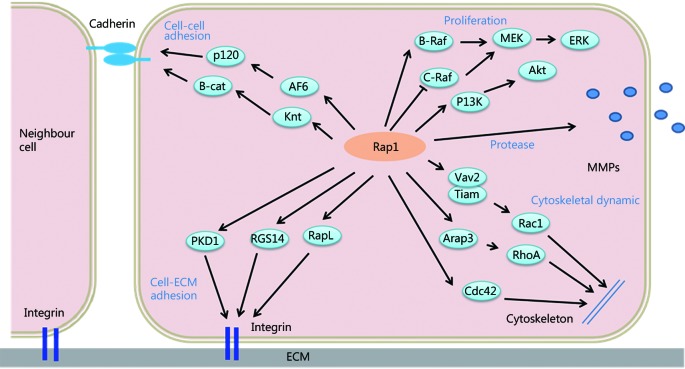
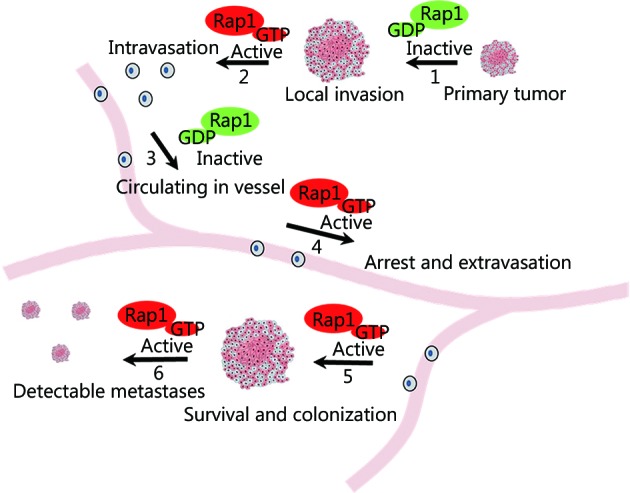
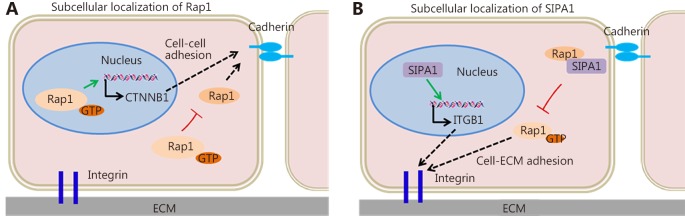
Ras-associated protein-1 (Rap1), a small GTPase in the Ras-related protein family, is an important regulator of basic cellular functions (e.g., formation and control of cell adhesions and junctions), cellular migration, and polarization. Through its interaction with other proteins, Rap1 plays many roles during cell invasion and metastasis in different cancers. The basic function of Rap1 is straightforward; it acts as a switch during cellular signaling transduction and regulated by its binding to either guanosine triphosphate (GTP) or guanosine diphosphate (GDP). However, its remarkably diverse function is rendered by its interplay with a large number of distinct Rap guanine nucleotide exchange factors and Rap GTPase activating proteins. This review summarizes the mechanisms by which Rap1 signaling can regulate cell invasion and metastasis, focusing on its roles in integrin and cadherin regulation, Rho GTPase control, and matrix metalloproteinase expression.
Overview
The claims and statistics of this paper haven’t been checked yet.
Run the check — free, no account needed. It reads the open-access text and checks the sources it cites.
Integrity signals
Registry
Cites
Statistics
Figures
Verification
Claims the paper makes
The claims and statistics of this paper haven’t been checked yet.
Run the check — free, no account needed. It reads the open-access text and checks the sources it cites.
Claims other papers make about this one
Each is checked against this paper’s own text: does it say what the citing paper says it does?
The cited source says what the claim attributes to it.
In the citing paper
“We observed enrichment in the PI3K-Akt signaling pathway as well as the Rap1 signaling pathway which has crosstalk with the PI3K-Akt pathway (Fig. 7B) (41).”
From Cholesterol efflux protein, ABCA1, supports anticancer functions of myeloid immune cells (2026) · cites this paper as [41]
Self-check
Percentages, sums and reported differences re-computed from the paper’s own numbers.
The self-check needs the paper’s full text.
Citations
Cites
Matrix Metalloproteinases: Regulators of the Tumor Microenvironment
Kessenbrock, K., Plaks, V., & Werb, Z. (2010) · Cell · doi:10.1016/j.cell.2010.03.015 · Cited by 5,151
Tumor Metastasis: Molecular Insights and Evolving Paradigms
Valastyan, S., & Weinberg, R. A. (2011) · Cell · doi:10.1016/j.cell.2011.09.024 · Cited by 4,011
Cancer Invasion and the Microenvironment: Plasticity and Reciprocity
Friedl, P., & Alexander, S. (2011) · Cell · doi:10.1016/j.cell.2011.11.016 · Cited by 1,940
The Guanine Nucleotide-Binding Switch in Three Dimensions
Vetter, I. R., & Wittinghofer, A. (2001) · Science · doi:10.1126/science.1062023 · Cited by 1,875
cAMP Activates MAP Kinase and Elk-1 through a B-Raf- and Rap1-Dependent Pathway
Vossler, M. R., Yao, H. W., York, R. D., Pan, M., Rim, C. S., & Stork, P. A. (1997) · Cell · doi:10.1016/s0092-8674(00)80184-1 · Cited by 1,044
A ras-related gene with transformation suppressor activity
Kitayama, H., Sugimoto, Y., Matsuzaki, T., Ikawa, Y., & Noda, M. (1989) · Cell · doi:10.1016/0092-8674(89)90985-9 · Cited by 942
The structural basis of the activation of Ras by Sos
Boriack-Sjodin, P. A., Margarit, S. M., Bar-Sagi, D., & Kuriyan, J. (1998) · Nature · doi:10.1038/28548 · Cited by 799
Rap1 signalling: adhering to new models
Bos, J. L., de Rooij, J., & Reedquist, K. A. (2001) · Nature Reviews Molecular Cell Biology · doi:10.1038/35073073 · Cited by 625
Insulin-stimulated GLUT4 translocation requires the CAP-dependent activation of TC10
Chiang, S.-H., Baumann, C. A., Kanzaki, M., Thurmond, D. C., Watson, R. T., Neudauer, C. L., Macara, I. G., Pessin, J. E., & Saltiel, A. R. (2001) · Nature · doi:10.1038/35073608 · Cited by 611
Transcriptional Enhancers in Animal Development and Evolution
Levine, M. (2010) · Current Biology · doi:10.1016/j.cub.2010.06.070 · Cited by 468
Reconstructing and Deconstructing Agonist-Induced Activation of Integrin αIIbβ3
Han, J., Lim, C. J., Watanabe, N., Soriani, A., Ratnikov, B. I., Calderwood, D., Puzon-McLaughlin, W., Lafuente, E. M., Boussiotis, V. A., Shattil, S. J., et al. (2006) · Current Biology · doi:10.1016/j.cub.2006.08.035 · Cited by 447
RIAM, an Ena/VASP and Profilin Ligand, Interacts with Rap1-GTP and Mediates Rap1-Induced Adhesion
Lafuente, E. M., van Puijenbroek, A. A. F. L., Krause, M., Carman, C. V., Freeman, G. J., Berezovskaya, A., Constantine, E., Springer, T. A., Gertler, F. B., & Boussiotis, V. A. (2004) · Developmental Cell · doi:10.1016/j.devcel.2004.07.021 · Cited by 420
RapV12 antagonizes Ras‐dependent activation of ERK1 and ERK2 by LPA and EGF in Rat‐1 fibroblasts.
Cook, S. J., Rubinfeld, B., Albert, I., & McCormick, F. P. (1993) · The EMBO Journal · doi:10.1002/j.1460-2075.1993.tb06022.x · Cited by 348
Rap1: a key regulator in cell-cell junction formation
Kooistra, M. R. H., Dubé, N., & Bos, J. L. (2006) · Journal of Cell Science · doi:10.1242/jcs.03306 · Cited by 325
Migrastatin analogues target fascin to block tumour metastasis
Chen, L., Yang, S., Jakoncic, J., Zhang, J. J., & Huang, X.-Y. (2010) · Nature · doi:10.1038/nature08978 · Cited by 270
Rap1 promotes cell spreading by localizing Rac guanine nucleotide exchange factors
Arthur, W. T., Quilliam, L. A., & Cooper, J. A. (2004) · The Journal of Cell Biology · doi:10.1083/jcb.200404068 · Cited by 252
DOCK4, a GTPase activator, is disrupted during tumorigenesis.
Yajnik, V., Paulding, C., Sordella, R., McClatchey, A. I., Saito, M., Wahrer, D. C. R., Reynolds, P., Bell, D. W., Lake, R., van den Heuvel, S., et al. (2003) · Cell · doi:10.1016/s0092-8674(03)00155-7 · Cited by 230
Membranes as messengers in T cell adhesion signaling
Dustin, M. L., Bivona, T. G., & Philips, M. R. (2004) · Nature Immunology · doi:10.1038/ni1057 · Cited by 224
Extracellular signal‐regulated activation of Rap1 fails to interfere in Ras effector signalling
Zwartkruis, F. J. T., Wolthuis, R. M. F., Nabben, N. M. J. M., Franke, B., & Bos, J. L. (1998) · The EMBO Journal · doi:10.1093/emboj/17.20.5905 · Cited by 218
Requirement for C3G‐dependent Rap1 activation for cell adhesion and embryogenesis
Ohba, Y., Ikuta, K., Ogura, A., Matsuda, J., Mochizuki, N., Nagashima, K., Kurokawa, K., Mayer, B. J., Maki, K., Miyazaki, J., et al. (2001) · The EMBO Journal · doi:10.1093/emboj/20.13.3333 · Cited by 216
Cellular functions of the Rap1 GTP-binding protein: a pattern emerges
Caron, E. (2002) · Journal of Cell Science · doi:10.1242/jcs.00238 · Cited by 214
The role of Rap1 in integrin-mediated cell adhesion
Bos, J. L., de Bruyn, K., Enserink, J. M., Kuiperij, H. B., Rangarajan, S., Rehmann, H., Riedl, J., de Rooij, J., van Mansfeld, F., & Zwartkruis, F. J. T. (2003) · Biochemical Society Transactions · doi:10.1042/bst0310083 · Cited by 214
A Novel EPAC-Specific Inhibitor Suppresses Pancreatic Cancer Cell Migration and Invasion
Almahariq, M. F., Tsalkova, T. N., Mei, F. C., Chen, H., Zhou, J., Sastry, S. K., Schwede, F., & Cheng, X. (2012) · Molecular Pharmacology · doi:10.1124/mol.112.080689 · Cited by 207
Targeting tumor cell motility as a strategy against invasion and metastasis
Wells, A. H., Grahovac, J., Wheeler, S., Ma, B., & Lauffenburger, D. A. (2013) · Trends in Pharmacological Sciences · doi:10.1016/j.tips.2013.03.001 · Cited by 202
Crucial functions of the Rap1 effector molecule RAPL in lymphocyte and dendritic cell trafficking
Katagiri, K., Ohnishi, N., Kabashima, K., Iyoda, T., Takeda, N., Shinkai, Y., Inaba, K., & Kinashi, T. (2004) · Nature Immunology · doi:10.1038/ni1111 · Cited by 199
Specificity in Ras and Rap Signaling
Raaijmakers, J. H., & Bos, J. L. (2008) · Journal of Biological Chemistry · doi:10.1074/jbc.r800061200 · Cited by 188
Gao, Q., Srinivasan, S. V., Boyer, S. N., Wazer, D. E., & Band, V. (1999) · Molecular and Cellular Biology · doi:10.1128/mcb.19.1.733 · Cited by 187
Rap1 GTPase: Functions, Regulation, and Malignancy
Hattori, M. (2003) · The Journal of Biochemistry · doi:10.1093/jb/mvg180 · Cited by 184
Balzac, F., Avolio, M., Degani, S., Kaverina, I., Torti, M., Silengo, L., Small, J. V., & Retta, S. F. (2005) · Journal of Cell Science · doi:10.1242/jcs.02584 · Cited by 177
Severson, E. A., Lee, W. Y., Capaldo, C., Nusrat, A., & Parkos, C. A. (2009) · Molecular Biology of the Cell · doi:10.1091/mbc.e08-10-1014 · Cited by 175
Regulation of E-cadherin Endocytosis by Nectin through Afadin, Rap1, and p120ctn
Hoshino, T., Sakisaka, T., Baba, T., Yamada, T., Kimura, T., & Takai, Y. (2005) · Journal of Biological Chemistry · doi:10.1074/jbc.m414447200 · Cited by 171
Regulating Rap small G-proteins in time and space
Gloerich, M., & Bos, J. L. (2011) · Trends in Cell Biology · doi:10.1016/j.tcb.2011.07.001 · Cited by 163
Grewal, S., Horgan, A., York, R. D., Withers, G. S., Banker, G. A., & Stork, P. A. (2000) · Journal of Biological Chemistry · doi:10.1074/jbc.275.5.3722 · Cited by 159
Cell–cell junction formation: The role of Rap1 and Rap1 guanine nucleotide exchange factors
Pannekoek, W., Kooistra, M. R. H., Zwartkruis, F. J. T., & Bos, J. L. (2008) · Biochimica et Biophysica Acta (BBA) - Biomembranes · doi:10.1016/j.bbamem.2008.12.010 · Cited by 156
Activation of Rap1 Promotes Prostate Cancer Metastasis
Bailey, C. L., Kelly, P., & Casey, P. J. (2009) · Cancer Research · doi:10.1158/0008-5472.can-08-4269 · Cited by 152
Proteomic identification of multitasking proteins in unexpected locations complicates drug targeting
Butler, G. S., & Overall, C. M. (2009) · Nature Reviews Drug Discovery · doi:10.1038/nrd2945 · Cited by 144
Rasip1 mediates Rap1 regulation of Rho in endothelial barrier function through ArhGAP29
Post, A. M., Pannekoek, W., Ross, S. H., Verlaan-Klink, I., Brouwer, P. M., & Bos, J. L. (2013) · Proceedings of the National Academy of Sciences · doi:10.1073/pnas.1306595110 · Cited by 140
The Par polarity complex regulates Rap1- and chemokine-induced T cell polarization
Gérard, A., Mertens, A. E. E., van der Kammen, R. A., & Collard, J. G. (2007) · The Journal of Cell Biology · doi:10.1083/jcb.200608161 · Cited by 137
McSherry, E. A., Brennan, K., Hudson, L., Hill, A. D. K., & Hopkins, A. M. (2011) · Breast Cancer Research · doi:10.1186/bcr2853 · Cited by 132
Gao, L., Feng, Y., Bowers, R., Becker‐Hapak, M., Gardner, J., Linette, G. P., Zhao, H., & Cornelius, L. A. (2006) · Cancer Research · doi:10.1158/0008-5472.can-06-0254 · Cited by 108
Direct Spatial Control of Epac1 by Cyclic AMP
Ponsioen, B., Gloerich, M., Ritsma, L., Rehmann, H., Bos, J. L., & Jalink, K. (2009) · Molecular and Cellular Biology · doi:10.1128/mcb.01630-08 · Cited by 104
Su, L., Hattori, M., Moriyama, M., Murata, N., Harazaki, M., Kaibuchi, K., & Minato, N. (2003) · Journal of Biological Chemistry · doi:10.1074/jbc.m211888200 · Cited by 97
Zuo, H., Gandhi, M., Edreira, M. M., Hochbaum, D. R., Nimgaonkar, V. L., Zhang, P., DiPaola, J. E., Evdokimova, V. N., Altschuler, D. L., & Nikiforov, Y. E. (2010) · Cancer Research · doi:10.1158/0008-5472.can-09-2812 · Cited by 96
Vallés, A. M., Beuvin, M., & Boyer, B. (2004) · Journal of Biological Chemistry · doi:10.1074/jbc.m405144200 · Cited by 93
Rap1: A turnabout for the crosstalk between cadherins and integrins
Retta, S. F., Balzac, F., & Avolio, M. (2005) · European Journal of Cell Biology · doi:10.1016/j.ejcb.2005.09.007 · Cited by 93
Identification of a Putative Tumor Suppressor Gene Rap1GAP in Pancreatic Cancer
Zhang, L., Li, C., Mahmood, R. Z., van Golen, K., Greenson, J., Li, G., D’Silva, N. J., Li, X., Burant, C., Logsdon, C. D., et al. (2006) · Cancer Research · doi:10.1158/0008-5472.can-05-3025 · Cited by 93
Functional Interaction between Gαz and Rap1GAP Suggests a Novel Form of Cellular Cross-talk
Meng, J., Glick, J. L., Polakis, P. G., & Casey, P. J. (1999) · Journal of Biological Chemistry · doi:10.1074/jbc.274.51.36663 · Cited by 93
Zheng, H., Gao, L., Feng, Y., Yuan, L., Zhao, H., & Cornelius, L. A. (2009) · Cancer Research · doi:10.1158/0008-5472.can-08-2399 · Cited by 92
Ntantie, E., Gonyo, P., Lorimer, E., Hauser, A. D., Schuld, N. J., McAllister, D. M., Kalyanaraman, B., Dwinell, M. B., Auchampach, J. A., & Williams, C. L. (2013) · Science Signaling · doi:10.1126/scisignal.2003374 · Cited by 87
Mitra, R. S., Zhang, Z., Henson, B. S., Kurnit, D. M., Carey, T. E., & D’Silva, N. J. (2003) · Oncogene · doi:10.1038/sj.onc.1206534 · Cited by 76
Wang, K., Li, J., Guo, H., Xu, X., Xiong, G., Guan, X., Liu, B., Li, J., Chen, X., Yang, K., et al. (2012) · Carcinogenesis · doi:10.1093/carcin/bgs259 · Cited by 74
Mitra, R. S., Goto, M., Lee, J. J., Maldonado, D., Taylor, J. M. G., Pan, Q., Carey, T. E., Bradford, C. R., Prince, M. E., Cordell, K. G., et al. (2008) · Cancer Research · doi:10.1158/0008-5472.can-07-2755 · Cited by 73
EGFR-dependent pancreatic carcinoma cell metastasis through Rap1 activation
Huang, M., Anand, S., Murphy, E. A., Desgrosellier, J. S., Stupack, D. G., Shattil, S. J., Schlaepfer, D. D., & Cheresh, D. A. (2011) · Oncogene · doi:10.1038/onc.2011.450 · Cited by 67
Che, Y., Luo, S., Li, G., Cheng, M., Gao, Y., Li, X., Dai, J.-M., He, H., Wang, J., Peng, H., et al. (2015) · Cancer Letters · doi:10.1016/j.canlet.2015.01.019 · Cited by 67
Alemayehu, M., Dragan, M., Pape, C., Siddiqui, I. F. S., Sacks, D. B., Guglielmo, G. M. D., Babwah, A. V., & Bhattacharya, M. M. (2013) · PLoS ONE · doi:10.1371/journal.pone.0056174 · Cited by 64
Mathieu, V., Pirker, C., Schmidt, W. M., Spiegl‐Kreinecker, S., Lötsch, D., Heffeter, P., Hegedűs, B., Grusch, M., Robert Kiss, A., & Berger, W. (2012) · Oncotarget · doi:10.18632/oncotarget.473 · Cited by 63
Goto, M., Mitra, R. S., Liu, M., Lee, J. J., Henson, B. S., Carey, T. E., Bradford, C. R., Prince, M. E., Wang, C.-Y., Fearon, E. R., et al. (2009) · Clinical Cancer Research · doi:10.1158/1078-0432.ccr-09-1122 · Cited by 59
Wu, J., Zhang, Y., Frilot, N., Kim, J. I., Kim, W.-J., & Daaka, Y. (2011) · Journal of Biological Chemistry · doi:10.1074/jbc.m110.187344 · Cited by 58
Takahashi, M., Dillon, T. J., Liu, C., Kariya, Y., Wang, Z., & Stork, P. A. (2013) · Journal of Biological Chemistry · doi:10.1074/jbc.m113.466904 · Cited by 56
Lyle, K. S., Raaijmakers, J. H., Bruinsma, W., Bos, J. L., & de Rooij, J. (2008) · Cellular Signalling · doi:10.1016/j.cellsig.2008.01.018 · Cited by 56
Christian, S. L., Lee, R. L., McLeod, S. J., Burgess, A. E., Li, A. H. Y., Dang-Lawson, M., Lin, K. B. L., & Gold, M. R. (2003) · Journal of Biological Chemistry · doi:10.1074/jbc.m303180200 · Cited by 54
Downregulation of Rap1GAP Contributes to Ras Transformation
Tsygankova, O. M., Prendergast, G. V., Puttaswamy, K., Wang, Y., Feldman, M. D., Wang, H., Brose, M. S., & Meinkoth, J. L. (2007) · Molecular and Cellular Biology · doi:10.1128/mcb.00155-07 · Cited by 50
Takahashi, M., Rikitake, Y., Nagamatsu, Y., Hara, T., Ikeda, W., Hirata, K., & Takai, Y. (2008) · Genes to Cells · doi:10.1111/j.1365-2443.2008.01187.x · Cited by 50
Nuclear SIPA1 activates integrin β1 promoter and promotes invasion of breast cancer cells
Zhang, Y., Gong, Y., Hu, D., Zhu, P., Wang, N., Zhang, Q., Wang, M., Aldeewan, A. B., Xia, H., Qu, X., et al. (2014) · Oncogene · doi:10.1038/onc.2014.36 · Cited by 46
Rap1GAP regulates renal cell carcinoma invasion
Kim, W.-J., Gersey, Z. C., & Daaka, Y. (2012) · Cancer Letters · doi:10.1016/j.canlet.2012.01.022 · Cited by 45
Rap1-GTP-interacting Adaptor Molecule (RIAM) Protein Controls Invasion and Growth of Melanoma Cells
Hernández-Varas, P., Coló, G. P., Bartolomé, R. A., Paterson, A., Medraño-Fernández, I., Arellano‐Sánchez, N., Cabañas, C., Sánchez‐Mateos, P., Lafuente, E. M., Boussiotis, V. A., et al. (2011) · Journal of Biological Chemistry · doi:10.1074/jbc.m110.189811 · Cited by 42
Magliozzi, R., Low, T. Y., Weijts, B. G. M. W., Cheng, T., Spanjaard, E., Mohammed, S., van Veen, A., Ovaa, H., de Rooij, J., Zwartkruis, F. J. T., et al. (2013) · Developmental Cell · doi:10.1016/j.devcel.2013.10.023 · Cited by 39
SPA‐1 controls the invasion and metastasis of human prostate cancer
Shimizu, Y., Hamazaki, Y., Hattori, M., Doi, K., Terada, N., Kobayashi, T., Toda, Y., Yamasaki, T., Inoue, T., Kajita, Y., et al. (2011) · Cancer Science · doi:10.1111/j.1349-7006.2011.01876.x · Cited by 37
Ho, S., Lau, K., Mok, S. C., & Syed, V. (2003) · Oncogene · doi:10.1038/sj.onc.1206437 · Cited by 34
Malchinkhuu, E., Sato, K., Maehama, T., Ishiuchi, S., Yoshimoto, Y., Mogi, C., Kimura, T., Kurose, H., Tomura, H., & Okajima, F. (2009) · Molecular Biology of the Cell · doi:10.1091/mbc.e09-08-0692 · Cited by 33
Statins inhibit T-acute lymphoblastic leukemia cell adhesion and migration through Rap1b
Infante, E., Heasman, S. J., & Ridley, A. J. (2011) · Journal of Leukocyte Biology · doi:10.1189/jlb.0810441 · Cited by 31
The Rap GTPases regulate the migration, invasiveness and in vivo dissemination of B-cell lymphomas
Lin, K. B. L., Tan, P., Freeman, S. A., Lam, M., McNagny, K. M., & Gold, M. R. (2009) · Oncogene · doi:10.1038/onc.2009.345 · Cited by 30
Tsygankova, O. M., Wang, H., & Meinkoth, J. L. (2013) · Journal of Biological Chemistry · doi:10.1074/jbc.m113.464594 · Cited by 30
Ji, K., Ye, L., Toms, A.-M., Hargest, R., Martin, T. A., Ruge, F., Ji, J., & Jiang, W. G. (2012) · PubMed · Cited by 26
Rap1GAP alters leukemia cell differentiation, apoptosis and invasion in vitro
Qiu, T., Qi, X., Cen, J., & Chen, Z. (2012) · Oncology Reports · doi:10.3892/or.2012.1825 · Cited by 24
Radil controls neutrophil adhesion and motility through β2-integrin activation
Liu, L., Aerbajinai, W., Ahmed, S. M., Rodgers, G. P., Angers, S., & Parent, C. A. (2012) · Molecular Biology of the Cell · doi:10.1091/mbc.e12-05-0408 · Cited by 22
RAP1GAP inhibits cytoskeletal remodeling and motility in thyroid cancer cells
Dong, X., Tang, W., Stopenski, S. J., Brose, M. S., Korch, C. T., & Meinkoth, J. L. (2012) · Endocrine Related Cancer · doi:10.1530/erc-12-0086 · Cited by 19
Critical role for DOK1 in PDGF-BB stimulated glioma cell invasion via p130Cas and Rap1 signalling
Barrett, A. N., Evans, I. M., Frolov, A., Britton, G., Pellet‐Many, C., Yamaji, M., Mehta, V., Bandophadyay, R., Li, N., Brandner, S., et al. (2014) · Journal of Cell Science · doi:10.1242/jcs.135988 · Cited by 17
Rap1GAP impairs cell-matrix adhesion in the absence of effects on cell-cell adhesion
Vuchak, L. A., Tsygankova, O. M., & Meinkoth, J. L. (2011) · Cell Adhesion & Migration · doi:10.4161/cam.5.4.17041 · Cited by 15
Guvakova, M. A., Lee, W., Furstenau, D. K., Prabakaran, I., Li, D. C., Hung, R. K., & Kushnir, N. (2014) · Biochemical Journal · doi:10.1042/bj20131638 · Cited by 13
Research works printed but not linked: 2
- [16]Rebhun JF Castro AF Quilliam LA Regulating Rap small G-proteins in time and space Trends Cell Biol 2011 21 615 23 21820312
- [75]Dong X Korch C Meinkoth JL Rap1 stabilizes β-catenin and enhances β-catenin-dependent transcription and invasion in squamous cell carcinoma of the head and neck Clin Cancer Res 2010 16 65 76 20028760 PMC2844500
Cited by
Sorted by citations
Ülgen, E., Özışık, O., & Sezerman, O. U. (2019) · Frontiers in Genetics · doi:10.3389/fgene.2019.00858 · Cited by 471
Potential Effects of MSC-Derived Exosomes in Neuroplasticity in Alzheimer’s Disease
Reza-Zaldívar, E. E., Hernández-Sapiéns, M. A., Minjarez, B. D., Gutiérrez-Mercado, Y. K., Márquez-Aguirre, A. L., & Canales-Aguirre, A. A. (2018) · Frontiers in Cellular Neuroscience · doi:10.3389/fncel.2018.00317 · Cited by 169
Progress on Ras/MAPK Signaling Research and Targeting in Blood and Solid Cancers
Dillon, M., Lopez, A. R., Lin, E., Sales, D., Perets, R., & Jain, P. (2021) · Cancers · doi:10.3390/cancers13205059 · Cited by 175
Maleki-Ghaleh, H., Hossein Siadati, M., Fallah, A., Zarrabi, A., Afghah, F., Koc, B., Dalir Abdolahinia, E., Omidi, Y., Barar, J., Akbari-Fakhrabadi, A., et al. (2021) · Chemical Engineering Journal · doi:10.1016/j.cej.2021.131321 · Cited by 117
Gut microbiota–derived short-chain fatty acids protect against the progression of endometriosis
Chadchan, S. B., Popli, P., Ambati, C. R., Tycksen, E., Han, S. J., Bulun, S. E., Putluri, N., Biest, S. W., & Kommagani, R. (2021) · Life Science Alliance · doi:10.26508/lsa.202101224 · Cited by 119
Metadata
- Authors
- Yi-Lei, Z., Yi-Lei, Z., Ruo-Chen, W., Ken, C., Brian Z., R., Li, S., Ruo-Chen, W., Ken, C., Brian Z., R., & Li, S.
- Venue
- Cancer Biology & Medicine
- Publisher
- China Anti-cancer Association
- Published
- 2017
- Volume
- 14
- Issue
- 1
- Pages
- 90-99
- ISSN
- 2095-3941 (ISSN-L)
- PMC
- PMC5365179
- OpenAlex
- W2592760610
- Cited by
- 244
- References
- 80
- Citations by year
- 2026: 23 · 2025: 35 · 2024: 32 · 2023: 24 · 2022: 33 · 2021: 23 · 2020: 28 · 2019: 23 · 2018: 22 · 2017: 1
- FWCI
- 8.27
- Type
- journal article
- Language
- en
- Open access
- gold
- doi.org
- Licence
- cc-by
- Locations
- Cancer Biology and Medicine (publishedVersion, cc-by)
- Europe PMC (PubMed Central) (publishedVersion, cc-by-nc-sa)
- PubMed Central (publishedVersion, cc-by-nc-sa)
- PubMed (publishedVersion)
- DOAJ (DOAJ: Directory of Open Access Journals) (submittedVersion, cc-by-sa)
- Funders
- National Natural Science Foundation of China
- Shenzhen Municipal Science and Technology Innovation Council
- Topics
- Life Sciences › Biochemistry, Genetics and Molecular Biology › Molecular Biology › Protein Kinase Regulation and GTPase Signaling
- Health Sciences › Medicine › Immunology and Allergy › Cell Adhesion Molecules Research
- Life Sciences › Biochemistry, Genetics and Molecular Biology › Molecular Biology › Mechanisms of cancer metastasis
- Keywords
- Rap1, tumor cell migration, tumor invasion, metastasis, guanine nucleotide exchange factor, GTPase-activating protein, integrin regulation, Rho GTPases, matrix metalloproteinase expression, cell adhesion, cell polarity
About these checks
Registry, retraction, Cites and statistics results are computed, not judged, with one exception: a printed reference that no index lists is read once by a model before it counts as a citation error. Claims are extracted by a model and kept only when their quote appears verbatim in the text; each cited source is then checked, with a model’s help, for whether it says what the claim relies on. Those verdicts can be wrong — read the claim’s quote and the cited source before relying on one.
Statistics and arithmetic are recomputed, not judged.
Confidence bands are shown only for fields calibrated on our annotated test set. None is calibrated yet, so no band is shown.
What counts as a claim ›How we measure confidence ›How we check this ›
Are you an author, or do you see a problem with this page? Request a review
