

Two putative glutamate decarboxylases of Streptococcus pneumoniae as possible antigens for the production of anti-GAD65 antibodies leading to type 1 diabetes mellitus
Open accessPreprint — published as 10.1007/s10123-023-00364-y · Paper page
The DOI matches its Crossref record; 103 of the 103 references it cites were found in a registry or an index.
Abstract
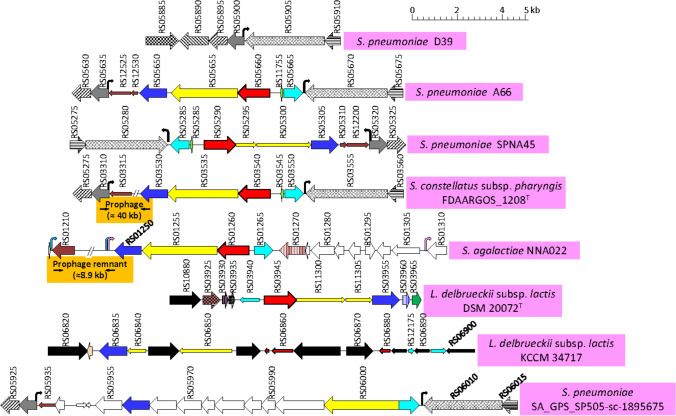
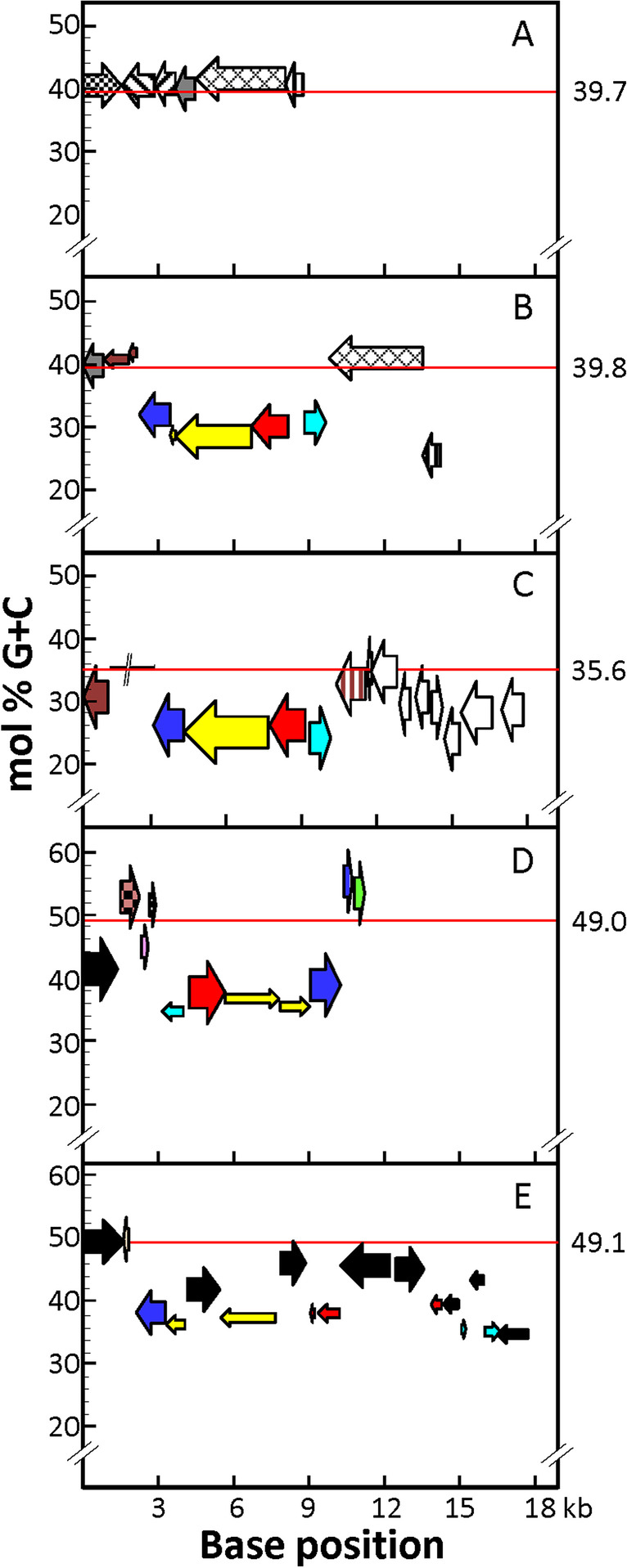
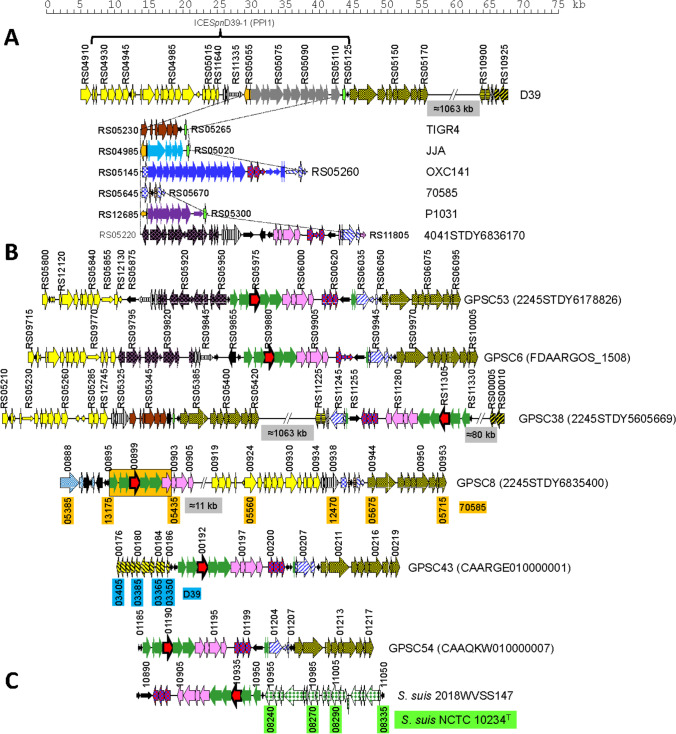
Type 1diabetes mellitus (T1DM) has been increasing in prevalence in the last decades and has become a global burden. Autoantibodies against human glutamate decarboxylase (GAD65) are among the first to be detected at the onset of T1DM. Diverse viruses have been proposed to be involved in the triggering of T1DM because of molecular mimicry, i.e., similarity between some viral proteins and one or more epitopes of GAD65. However, the possibility that bacterial proteins might also be responsible of GAD65 mimicry has been seldom investigated. To date, many genomes of Streptococcus pneumoniae (the pneumococcus), a prominent human pathogen particularly among children and the elderly, have been sequenced. A dataset of more than 9000 pneumococcal genomes were mined and two different (albeit related) genes (gadA and gadB), presumably encoding two glutamate decarboxylases similar to GAD65, were found. The various gadASpn alleles were present only in serotype 3 pneumococci belonging to the global lineage GPSC83, although some paralogs have also been discovered in two subspecies of Streptococcus constellatus (pharyngis and viborgensis), an isolate of the group B streptococci, and several strains of Lactobacillus delbrueckii. Besides, gadBSpn alleles are present in > 10% of the isolates in our dataset and represent 16 GPSCs with 123 sequence types and 20 different serotypes. Sequence analyses indicated that gadA- and gadB-like genes have been mobilized among different bacteria either by prophage(s) or by integrative and conjugative element(s), respectively. Substantial similarities appear to exist between the putative pneumococcal glutamate decarboxylases and well-known epitopes of GAD65. These results deserve upcoming studies on the possible involvement of S. pneumoniae in the etiopathogenesis and clinical onset of T1DM.
Overview
The claims and statistics of this paper haven’t been checked yet.
Free: it reads the open-access text and checks the first 5 claims that cite a source we can check. Create a free account to check every claim.
Integrity signals
Registry
Cites
Statistics
Figures
Verification
Claims the paper makes
The claims and statistics of this paper haven’t been checked yet.
Free: it reads the open-access text and checks the first 5 claims that cite a source we can check. Create a free account to check every claim.
Self-check
Percentages, sums and reported differences re-computed from the paper’s own numbers.
The self-check needs the paper’s full text.
Citations
Cites
Highly accurate protein structure prediction with AlphaFold
Jumper, J., Evans, R., Pritzel, A., Green, T., Figurnov, M., Ronneberger, O., Tunyasuvunakool, K., Bates, R., Žídek, A., Potapenko, A., et al. (2021) · Nature · doi:10.1038/s41586-021-03819-2 · Cited by 43,764
Varadi, M., Anyango, S., Deshpande, M., Nair, S., Natassia, C., Yordanova, G., Yuan, D., Stroe, O., Wood, G., Laydon, A., et al. (2022) · Nucleic Acids Research · doi:10.1093/nar/gkab1061 · Cited by 7,850
Jolley, K. A., Bray, J. E., & Maiden, M. C. J. (2018) · Wellcome Open Research · doi:10.12688/wellcomeopenres.14826.1 · Cited by 3,551
Ashkenazy, H., Abadi, S., Martz, E., Chay, O., Mayrose, I., Pupko, T., & Ben-Tal, N. (2016) · Nucleic Acids Research · doi:10.1093/nar/gkw408 · Cited by 3,163
Ikuta, K. S., Swetschinski, L. R., Robles Aguilar, G., Sharara, F., Mestrovic, T., Gray, A. P., Davis Weaver, N., Wool, E. E., Han, C., Gershberg Hayoon, A., et al. (2022) · The Lancet · doi:10.1016/s0140-6736(22)02185-7 · Cited by 2,235
DiMeglio, L. A., Evans-Molina, C., & Oram, R. A. (2018) · The Lancet · doi:10.1016/s0140-6736(18)31320-5 · Cited by 1,561
Katsarou, A., Gudbjörnsdottir, S., Rawshani, A., Dabelea, D., Bonifacio, E., Anderson, B. J., Jacobsen, L. M., Schatz, D. A., & Lernmark, Å. (2017) · Nature Reviews Disease Primers · doi:10.1038/nrdp.2017.16 · Cited by 1,475
Two genes encode distinct glutamate decarboxylases
Erlander, M. G., Tillakaratne, N. J. K., Feldblum, S., Patel, N., & Tobin, A. J. (1991) · Neuron · doi:10.1016/0896-6273(91)90077-d · Cited by 1,213
Enright, M. C., & Spratt, B. G. (1998) · Microbiology · doi:10.1099/00221287-144-11-3049 · Cited by 1,074
Stress Physiology of Lactic Acid Bacteria.
Papadimitriou, K., Alegría, Á., Bron, P. A., de Angelis, M., Gobbetti, M., Kleerebezem, M., Lemos, J. A., Linares, D. M., Ross, P., Stanton, C., et al. (2016) · Microbiology and Molecular Biology Reviews · doi:10.1128/mmbr.00076-15 · Cited by 914
Research works printed but not linked: 7
- Cunningham MW (2019) Molecular mimicry, autoimmunity, and infection: the cross-reactive antigens of group A streptococci and their sequelae. Microbiol Spectr 7:10.1128/microbiolspec.GPP1123-0045-2018. https://doi.org/10.1128/microbiolspec.GPP3-0045-2018. · DOI · Paper page
- International Diabetes Federation (2021) IDF diabetes atlas (10th Ed.). Ed. Brussels, Belgium: GLOBODIAB Research Consortium. https://diabetesatlas.org/idfawp/resource-files/2021/07/IDF_Atlas_10th_Edition_2021.pdf. Accessed December 7, 2022.
- Ivanov II, Tuganbaev T, Skelly AN, Honda K (2022) T cell responses to the microbiota. Annu Rev Immunol 40:559–587. https://doi.org/10.1146/annurev-immunol-101320011829. · doi:10.1146/annurev-immunol-101320011829
- James EA, Mallone R, Kent SC, DiLorenzo TP (2020) T-cell epitopes and neo-epitopes in type 1 diabetes: a comprehensive update and reappraisal. Diabetes 69:1311–1335. https://doi.org/0.2337/dbi19-0022.
- Lloyd RE, Tamhankar M, Lernmark A (2022) Enteroviruses and type 1 diabetes: multiple mechanisms and factors? Annu Rev Med 73:483–499. https://doi.org/10.1146/annurev-med-042320015952. · doi:10.1146/annurev-med-042320015952
- Luck JN, Tettelin H, Orihuela CJ (2020) Sugar-coated killer: serotype 3 pneumococcal disease. Front Cell Infect Microbiol 10:613287. https://doi.org/&10.3389/fcimb.2020.613287. · DOI
- Parker AM, Jackson N, Awasthi S, Kim H, Alwan T, Wyllie AL, et al. (2022) Association of upper respiratory Streptococcus pneumoniae colonization with SARS-CoV-2 infection among adults. Clin Infect Dis:ciac907. https://doi.org/10.1093/cid/ciac907. · DOI
Metadata
- Authors
- García, E.
- Affiliations
- Centro de Investigaciones Biológicas Margarita Salas, CSIC
- Venue
- International Microbiology
- Publisher
- Research Square Platform LLC
- Published
- 2023-01-16
- Volume
- 26
- Issue
- 3
- Pages
- 675-690
- ISSN
- 1139-6709 (ISSN-L)
- PMC
- PMC10165594
- OpenAlex
- W4375861910
- Cited by
- 6
- References
- 103
- Citations by year
- 2025: 5 · 2023: 1
- FWCI
- 1.00
- Type
- journal article
- Language
- en
- Open access
- hybrid
- doi.org
- Locations
- International Microbiology (publishedVersion, cc-by)
- Research Square (acceptedVersion, cc-by)
- PubMed Central (publishedVersion, cc-by)
- PubMed (publishedVersion)
- DIGITAL.CSIC (Spanish National Research Council (CSIC)) (submittedVersion, cc-by)
- Funders
- Consejo Superior de Investigaciones Científicas
- Topics
- Life Sciences › Biochemistry, Genetics and Molecular Biology › Genetics › Diabetes and associated disorders
- Life Sciences › Biochemistry, Genetics and Molecular Biology › Molecular Biology › vaccines and immunoinformatics approaches
- Health Sciences › Medicine › Epidemiology › Pneumonia and Respiratory Infections
- Keywords
- Streptococcus pneumoniae, glutamic acid decarboxylase, GAD65, type 1 diabetes, autoantibodies, molecular mimicry, GADA, gadB, Streptococcus constellatus, Lactobacillus delbrueckii, integrative and conjugative elements, prophages, pneumococcal conjugate vaccine, PCV20
- MeSH terms
- Aged, Epitopes, Child, Diabetes Mellitus, Type 1, Glutamate Decarboxylase, Glutamates, Humans, Streptococcus pneumoniae, Pneumococcal Vaccines
About these checks
Registry, retraction, Cites and statistics results are computed, not judged, with one exception: a printed reference that no index lists is read once by a model before it counts as a citation error. Claims are extracted by a model and kept only when their quote appears verbatim in the text; each cited source is then checked, with a model’s help, for whether it says what the claim relies on. Those verdicts can be wrong — read the claim’s quote and the cited source before relying on one.
Statistics and arithmetic are recomputed, not judged.
Confidence bands are shown only for fields calibrated on our annotated test set. None is calibrated yet, so no band is shown.
What counts as a claim ›How we measure confidence ›How we check this ›
Are you an author, or do you see a problem with this page? Request a review
How to cite
Cite CoChat for the checks on this page, and the paper for its own findings.
- This page
- CoChat. (2026). Citation check: Two putative glutamate decarboxylases of Streptococcus pneumoniae as possible antigens for the production of anti-GAD65 antibodies leading to type 1 diabetes mellitus. https://app.cochat.ai/papers/10.21203/rs.3.rs-2468797/v1
- The paper
- García, E. (2023). Two putative glutamate decarboxylases of Streptococcus pneumoniae as possible antigens for the production of anti-GAD65 antibodies leading to type 1 diabetes mellitus. International Microbiology. https://doi.org/10.21203/rs.3.rs-2468797/v1
Data sources
Bibliographic data: Semantic Scholar, OpenAlex, Crossref.
Contains information from the Semantic Scholar Academic Graph Datasets, made available under the ODC Attribution License (ODC-BY 1.0).
Semantic Scholar’s data is described in: Kinney, R., et al. (2023). The Semantic Scholar Open Data Platform. arXiv:2301.10140.
