

Mechanisms of NF-κB p65 and strategies for therapeutic manipulation
Open accessThe DOI matches its Crossref record; 133 of the 134 references it cites were found in a registry or an index.
Abstract
The transcription factor NF-κB is a critical regulator of immune and inflammatory responses. In mammals, the NF-κB/Rel family comprises five members: p50, p52, p65 (Rel-A), c-Rel, and Rel-B proteins, which form homo- or heterodimers and remain as an inactive complex with the inhibitory molecules called IκB proteins in resting cells. Two distinct NF-κB signaling pathways have been described: 1) the canonical pathway primarily activated by pathogens and inflammatory mediators, and 2) the noncanonical pathway mostly activated by developmental cues. The most abundant form of NF-κB activated by pathologic stimuli via the canonical pathway is the p65:p50 heterodimer. Disproportionate increase in activated p65 and subsequent transactivation of effector molecules is integral to the pathogenesis of many chronic diseases such as the rheumatoid arthritis, inflammatory bowel disease, multiple sclerosis, and even neurodegenerative pathologies. Hence, the NF-κB p65 signaling pathway has been a pivotal point for intense drug discovery and development. This review begins with an overview of p65-mediated signaling followed by discussion of strategies that directly target NF-κB p65 in the context of chronic inflammation.
Overview
The claims and statistics of this paper haven’t been checked yet.
Free: it reads the open-access text and checks the first 5 claims that cite a source we can check. Create a free account to check every claim.
Integrity signals
Registry
Cites
Statistics
Figures
Verification
Claims the paper makes
The claims and statistics of this paper haven’t been checked yet.
Free: it reads the open-access text and checks the first 5 claims that cite a source we can check. Create a free account to check every claim.
Claims other papers make about this one
Each is checked against this paper’s own text: does it say what the citing paper says it does?
The source backs part of the claim, not all of it — or backs it for a different population, condition or comparison.
In the citing paper
“P-II has demonstrated the ability to suppress LPS-induced inflammation by targeting the NF-κB signaling pathway”
From Picroside II suppresses chondrocyte pyroptosis through MAPK/NF-κB/NLRP3 signaling pathway alleviates osteoarthritis (2024) · cites this paper as [59]
Experimental — accuracy not yet measuredThe cited source says what the claim attributes to it.
In the citing paper
“where p65 phosphorylation is a critical step in activation [59,60]”
From Picroside II suppresses chondrocyte pyroptosis through MAPK/NF-κB/NLRP3 signaling pathway alleviates osteoarthritis (2024) · cites this paper as [59]
Self-check
Percentages, sums and reported differences re-computed from the paper’s own numbers.
The self-check needs the paper’s full text.
Citations
Cites
NF-κB signaling in inflammation
Liu, T., Zhang, L., Joo, D., & Sun, S.-C. (2017) · Signal Transduction and Targeted Therapy · doi:10.1038/sigtrans.2017.23 · Cited by 8,791
Phosphorylation meets ubiquitination: the control of NF-κB activity
Karin, M., & Ben-Neriah, Y. (2000) · Annual Review of Immunology · doi:10.1146/annurev.immunol.18.1.621 · Cited by 4,766
The NF- B Family of Transcription Factors and Its Regulation
Oeckinghaus, A., & Ghosh, S. (2009) · Cold Spring Harbor Perspectives in Biology · doi:10.1101/cshperspect.a000034 · Cited by 2,842 · cited 6×
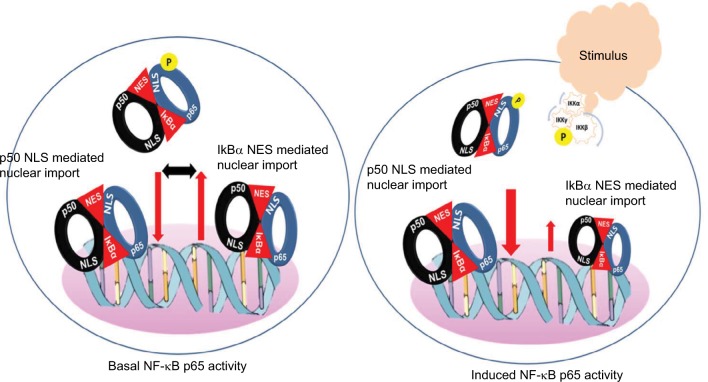
“In addition, strong oscillations of the negative feedback regulation between the activated p65 and IκBα are monitored by the IκBβ and IκBγ, the inhibitory proteins that undergo slow degradation, exhibit limited activation potential, and prevent abundance of activated p65 in the nucleus.(2,62) Dephosphorylation of p65:…”
BackgroundInfluentialModulation of NF‐κB‐dependent transcription and cell survival by the SIRT1 deacetylase
Yeung, F., Hoberg, J. E., Ramsey, C. S., Keller, M. D., Jones, D. R., Frye, R. A., & Mayo, M. W. (2004) · The EMBO Journal · doi:10.1038/sj.emboj.7600244 · Cited by 2,750 · cited 1×
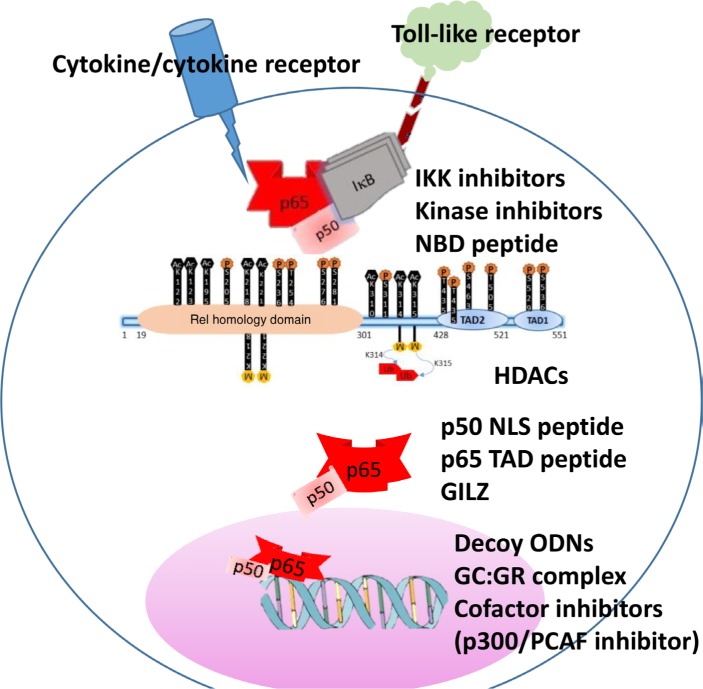
“Although acetylation at Lys310 is critical for full transcriptional activity of p65, it does not affect the DNA binding or assembly with IκΒα.(43,46) Lys314 and Lys315 acetylation increases promoter selectivity without affecting the NF-κB p65 shuttling or the DNA binding.”
BackgroundCrosstalk in NF-κB Signaling Pathways
Oeckinghaus, A., Hayden, M. S., & Ghosh, S. (2011) · Nature Immunology · doi:10.1038/ni.2065 · Cited by 1,942 · cited 2×
“This suggests that the cross talk between the two pathways and a rate-limiting canonical NF-κB signaling perhaps determine the basal pool of NIK and the constitutive NF-κB activity.(2,7,8)”
BackgroundSTEROID RECEPTOR REGULATED TRANSCRIPTION OF SPECIFIC GENES AND GENE NETWORKS
Yamamoto, K. R. (1985) · Annual Review of Genetics · doi:10.1146/annurev.ge.19.120185.001233 · Cited by 1,872 · cited 1×
“87,88 With six GRE in its promoter, glucocorticoid-induced leucine zipper is strongly upregulated by glucocorticoids.”
BackgroundPhosphorylation of NF-κB and IκB proteins: implications in cancer and inflammation
Viatour, P., Merville, M.-P., Bours, V., & Chariot, A. (2005) · Trends in Biochemical Sciences · doi:10.1016/j.tibs.2004.11.009 · Cited by 1,496 · cited 2×
“In summary, the sequential post-translational modifications modulate the strength and duration of NF-κB activity, contribute to the target gene specificity, and thereby fine-tune the biologic responses.(28,38,56) Indeed, it has been observed that the phosphorylation of Ser276 followed by acetylation of Lys310 of p65 f…”
BackgroundThe IKK NF-κB system: a treasure trove for drug development
Karin, M., Yamamoto, Y., & Wang, Q. M. (2004) · Nature Reviews Drug Discovery · doi:10.1038/nrd1279 · Cited by 1,364
Shaping the nuclear action of NF-κB
Chen, L.-F., & Greene, W. C. (2004) · Nature Reviews Molecular Cell Biology · doi:10.1038/nrm1368 · Cited by 1,221 · cited 4×
“This MSK1/2-mediated phosphorylation depends on the nature of stimuli and may require additional kinases such as casein kinase 2 and ribosomal s6 kinase (RSK1).(9,28) Phosphorylation of p65 at Thr 254 leads to a phosphorylated Thr–proline motif that is recognized by the peptidyl-prolyl isomerase Pin1.”
BackgroundInfluentialRay, A., & Prefontaine, K. E. (1994) · Proceedings of the National Academy of Sciences · doi:10.1073/pnas.91.2.752 · Cited by 1,064
Research works printed but not linked: 3
- [21]Jacobs MD Harrison SC Structure of an IkappaBalpha/NF-kappaB complex Cell 1998 95 749 758 9865693
- [69]Calzado M Bacher S Schmitz ML NF-kappaB inhibitors for the treatment of inflammatory diseases and cancer Curr Med Chem 2007 14 3 367 376 17305539
- [70]Gasparini C Feldmann M NF-kappaB as a target for modulating inflammatory responses Curr Pharm Des 2012 18 35 5735 5745 22726116
Cited by
The BET family in immunity and disease
Wang, N., Wu, R., Tang, D., & Kang, R. (2021) · Signal Transduction and Targeted Therapy · doi:10.1038/s41392-020-00384-4 · Cited by 295
“RELA acetylation is regulated by the acetyltransferase activity of CREB binding protein (CREBP)/E1A binding protein P300 (EP300) and lysine acetyltransferase 2B (KAT2B), and it occurs at multiple sites, including lysine (Lys)122, −123, −218, −221, and −310.(83,84) Among these, the acetylation of Lys310 is required for…”
BackgroundSmall Molecule NF-κB Pathway Inhibitors in Clinic
Ramadass, V., Vaiyapuri, T., & Tergaonkar, V. (2020) · International Journal of Molecular Sciences · doi:10.3390/ijms21145164 · Cited by 210
NF-κB activation enhances STING signaling by altering microtubule-mediated STING trafficking
Zhang, L., Wei, X., Wang, Z., Liu, P., Hou, Y., Xu, Y., Su, H., Koci, M. D., Yin, H., & Zhang, C. (2023) · Cell Reports · doi:10.1016/j.celrep.2023.112185 · Cited by 180
Fornari Laurindo, L., Aparecido Dias, J., Cressoni Araújo, A., Torres Pomini, K., Machado Galhardi, C., Rucco Penteado Detregiachi, C., Santos de Argollo Haber, L., Donizeti Roque, D., Dib Bechara, M., Vialogo Marques de Castro, M., et al. (2024) · Frontiers in Immunology · doi:10.3389/fimmu.2023.1305933 · Cited by 144
Jiang, H., Chen, C., & Gao, J. (2022) · Nutrients · doi:10.3390/nu15010151 · Cited by 160
“Briefly, the biological mechanism of this process is that IPA treatment significantly inhibits the phosphorylation of p65, IκBα, and IKKα/β in the upstream signaling pathway of NFκB [85], thereby reducing the expression of its downstream targets of inflammatory factors (TNFα, IL-1β, and IL-6) and chemokine (CCL2 and C…”
BackgroundSignal pathways in the treatment of Alzheimer’s disease with traditional Chinese medicine
Ding, M.-R., Qu, Y.-J., Hu, B., & An, H. (2022) · Biomedicine & Pharmacotherapy · doi:10.1016/j.biopha.2022.113208 · Cited by 159
Neutrophil Activated by the Famous and Potent PMA (Phorbol Myristate Acetate)
Damascena, H. L., Silveira, W. A. A., Castro, M. S., & Fontes, W. (2022) · Cells · doi:10.3390/cells11182889 · Cited by 168
Winiarska‐Mieczan, A., Kwiecień, M., Jachimowicz-Rogowska, K., Donaldson, J., Tomaszewska, E., & Baranowska‐Wójcik, E. (2023) · International Journal of Molecular Sciences · doi:10.3390/ijms24032258 · Cited by 155
“ROSinduced oxidative stress leads to inflammation and also triggers NF-κB dependent (nuclear factor kappa-light-chain-enhancer of activated B cells) gene transcription for many proinflammatory factors [97].”
BackgroundRegulation of IRF3 activation in human antiviral signaling pathways
Hamrashdi, M. A., & Brady, G. (2022) · Biochemical Pharmacology · doi:10.1016/j.bcp.2022.115026 · Cited by 154
Paing, Y. M. M., Eom, Y., Song, G. B., Kim, B., Choi, M. G., Hong, S., & Lee, S. H. (2024) · The Science of The Total Environment · doi:10.1016/j.scitotenv.2024.171681 · Cited by 138
Natural medicines of targeted rheumatoid arthritis and its action mechanism
Liu, X., Wang, Z., Qian, H., Tao, W., Zhang, Y., Hu, C., Mao, W., & Guo, Q. (2022) · Frontiers in Immunology · doi:10.3389/fimmu.2022.945129 · Cited by 151
Krajka‐Kuźniak, V., & Baer‐Dubowska, W. (2021) · International Journal of Molecular Sciences · doi:10.3390/ijms22158223 · Cited by 145
“In this complex, the p65 subunit is responsible for initiating transcription, while the p50 subunit serves only as a helper in NF-κB DNA binding [17,18].”
BackgroundAnti‐inflammation effects of injectable platelet‐rich fibrin via macrophages and dendritic cells
Zhang, J., Yin, C., Zhao, Q. P., Zhao, Z., Wang, J., Miron, R. J., & Zhang, Y. (2019) · Journal of Biomedical Materials Research Part A · doi:10.1002/jbm.a.36792 · Cited by 134
Ridzuan, N., Zakaria, N., Widera, D., Sheard, J., Morimoto, M., Kiyokawa, H., Isa, S. A. M., Singh, G. K. C., Then, K.-Y., Ooi, G., et al. (2021) · Stem Cell Research & Therapy · doi:10.1186/s13287-020-02088-6 · Cited by 118
Park, M. Y., Ha, S. E., Kim, H. H., Bhosale, P. B., Abusaliya, A., Jeong, S. H., Park, J., Heo, J., & Kim, G. S. (2022) · Molecules · doi:10.3390/molecules27123782 · Cited by 108
“Both phosphorylation and degradation of IкB-kinase (IKK) play a role in NF-кB activation [7,8].”
BackgroundHuang, Z., Zhang, Y., Li, H., Zhou, Y., Zhang, Q., Chen, R., Jin, T., Hu, K., Li, S., Wang, Y., et al. (2019) · Cell Death and Disease · doi:10.1038/s41419-019-2177-x · Cited by 109
Role of Dietary Polyphenols in the Activity and Expression of Nitric Oxide Synthases: A Review
Serreli, G., & Deiana, M. (2023) · Antioxidants · doi:10.3390/antiox12010147 · Cited by 110
“This inhibition can result from direct capture of NF-κB by protein– protein interactions, inhibition of NF-κB transactivation activity, inhibition of nuclear translocation of NF-κB, or from the enhancement of the expression of IκB isoforms, which are the specific inhibitors of NF-κB [24].”
BackgroundChe, J., Wang, H., Dong, J., Wu, Y., Zhang, H., Fu, L., & Zhang, J. (2023) · CNS Neuroscience & Therapeutics · doi:10.1111/cns.14454 · Cited by 104
Gut microbiota impacts bone via Bacteroides vulgatus-valeric acid-related pathways
Lin, X., Xiao, H.-M., Liu, H.-M., Lv, W.-Q., Greenbaum, J., Gong, R., Zhang, Q., Chen, Y.-C., Peng, C., Xu, X.-J., et al. (2023) · Nature Communications · doi:10.1038/s41467-023-42005-y · Cited by 101
Rai, S. N., Tiwari, N., Singh, P., Mishra, D., Singh, A. K., Hooshmandi, E., Vamanu, E., & Singh, M. P. (2021) · Frontiers in Neuroscience · doi:10.3389/fnins.2021.777347 · Cited by 95
“Furthermore, age-related oxidative stress has been found to regulate the dissociation of I-κB and nuclear translocation of NFκB (Kaltschmidt et al., 1999; Lingappan, 2018).”
BackgroundChen, J., Wu, S., Shi, Z.-M., & Hu, B. (2023) · Chinese Medicine · doi:10.1186/s13020-023-00719-7 · Cited by 102
“The five currently known members of the NF-κB family are as follows: p50/p105 (NF-κB1), p52/p100 (NF-κB2), c-Rel, RelB, and p65 (RelA); each protein has its Rel homologous structural domain that controls DNA binding, dimerization, and interaction with the repressor IκB [61].”
BackgroundZheng, S.-L., Wang, Y., Chi, C., & Wang, B. (2024) · Antioxidants · doi:10.3390/antiox13030294 · Cited by 104
“Consequently, the NF-κ B p65 signaling pathway has become a focal point in drug Consequently, the NF-κ B p65 signaling pathway has become a focal point in drug discovery and development initiatives [51]. discovery and development initiatives [51].”
BackgroundMale sex hormones, aging, and inflammation
Ketchem, J. M., Bowman, E. J., & Isales, C. M. (2023) · Biogerontology · doi:10.1007/s10522-022-10002-1 · Cited by 92
“NF-kB and p65 have been implicated in the production of pro-inflammatory cytokines and the pathogenesis of many inflammatory diseases (Giridharan and Srinivasan 2018).”
BackgroundRedox Homeostasis in Poultry: Regulatory Roles of NF-κB
Surai, P. F., Kochish, I. I., & Kidd, M. T. (2021) · Antioxidants · doi:10.3390/antiox10020186 · Cited by 103
“NF-κB is involved in the modulation of many different molecular events, including inflammation, immune function, cellular growth, and apoptosis [46,70].”
BackgroundBis-chalcones: A review of synthetic methodologies and anti-inflammatory effects
Pereira, R., Silva, A. M. S., Ribeiro, D., Silva, V. L. M., & Fernandes, E. G. R. (2023) · European Journal of Medicinal Chemistry · doi:10.1016/j.ejmech.2023.115280 · Cited by 97
Bessa‐Gonçalves, M., da Silva, A. M., Brás, J. P., Helmholz, H., Luthringer-Feyerabend, B., Willumeit‐Römer, R., Barbosa, M. A., & Santos, S. G. (2020) · Acta Biomaterialia · doi:10.1016/j.actbio.2020.07.028 · Cited by 89
Wang, Y., Feng, J., Zhao, L., Zhao, M., Wei, X., Geng, Y., Yuan, H., Hou, C., Zhang, H., Wang, G., et al. (2023) · Acta Pharmacologica Sinica · doi:10.1038/s41401-023-01062-1 · Cited by 91
“Disproportionate increase in activated p65 and subsequent transactivation of effector molecules is integral to the pathogenesis of many chronic diseases [51].”
BackgroundIbrahim, N. ‘., & Mohamed, I. N. (2021) · Life · doi:10.3390/life11020103 · Cited by 91
Wang, Z., Zhao, S., Tao, S., Hou, G., Zhao, F.-L., Tan, S., & Meng, Q. (2023) · Molecules · doi:10.3390/molecules28062878 · Cited by 99
“The dioscin of DNRE may be an inhibitor of p65 phosphorylation and translocation, and inhibition of transcription of multiple inflammatory cytokines and has a preventive effect on neuroinflammation [89,90].”
BackgroundMechanism of Nicotiflorin in San-Ye-Qing rhizome for anti-inflammatory effect in ulcerative colitis
Ruan, Y., Zhu, X., Shen, J., Chen, H. H., & Zhou, G. (2024) · Phytomedicine · doi:10.1016/j.phymed.2024.155564 · Cited by 82
Senescent macrophages in the human adipose tissue as a source of inflammaging
Matacchione, G., Perugini, J., Di Mercurio, E., Sabbatinelli, J., Prattichizzo, F., Senzacqua, M., Storci, G., Dani, C., Lezoche, G., Guerrieri, M., et al. (2022) · GeroScience · doi:10.1007/s11357-022-00536-0 · Cited by 73
“NF-kB activity is mediated by the activation of the IKK complex, which in turn leads to IKBα degradation with the consequent release of the NF-kB dimers that translocate in the nucleus modulating target gene expression [29].”
BackgroundKaewmool, C., Kongtawelert, P., Phitak, T., Pothacharoen, P., & Udomruk, S. (2020) · Journal of Neuroimmunology · doi:10.1016/j.jneuroim.2020.577164 · Cited by 79
Bornyl acetate: A promising agent in phytomedicine for inflammation and immune modulation
Zhao, Z., Sun, Y., & Ruan, X. (2023) · Phytomedicine · doi:10.1016/j.phymed.2023.154781 · Cited by 79
Mannan, A., Garg, N., Singh, T. G., & Kang, H. K. (2021) · Neurochemical Research · doi:10.1007/s11064-021-03402-1 · Cited by 76
Youn, K., Ho, C., & Jun, M. (2022) · Food Science and Human Wellness · doi:10.1016/j.fshw.2021.12.006 · Cited by 78
Drosophila as a Model for Infectious Diseases
Harnish, J. M., Link, N., & Yamamoto, S. (2021) · International Journal of Molecular Sciences · doi:10.3390/ijms22052724 · Cited by 78
“Upon stimulation by a pathogen, the IκB proteins are phosphorylated by the IκB kinase (IKK, encoded by IKKβ, IKKε and IKKγ in flies) complex, ubiquitinated by β-TRcP (beta-transducin repeat containing E3 ubiquitin protein ligase, encoded by the supernumerary limbs (slmb) gene in flies), and ultimately degraded [31].”
BackgroundShi, H., Koronyo, Y., Fuchs, D.-T. S., Sheyn, J., Wawrowsky, K., Lahiri, S., Black, K. L., & Koronyo‐Hamaoui, M. (2020) · Acta Neuropathologica Communications · doi:10.1186/s40478-020-01076-4 · Cited by 73
Huang, Z., Zhang, Y., Li, H., Zhou, Y., Zhang, Q., Chen, R., Jin, T., Hu, K., Li, S., Wang, Y., et al. (2020) · Cell Death and Disease · doi:10.1038/s41419-020-2389-0 · Cited by 72
Post-translational Modifications of IκBα: The State of the Art
Wang, X., Peng, H., Huang, Y., Kong, W., Cui, Q., Du, J., & Jin, H. (2020) · Frontiers in Cell and Developmental Biology · doi:10.3389/fcell.2020.574706 · Cited by 90
Besednova, N. N., Andryukov, B. G., Zaporozhets, T. S., Kuznetsova, T. A., Kryzhanovsky, S. P., Ermakova, S. P., Galkina, I. V., & Shchelkanov, M. Y. (2022) · Marine Drugs · doi:10.3390/md20040243 · Cited by 75
Kafali, M., Finos, M. A., & Τσούπρας, Α. (2024) · Nutraceuticals · doi:10.3390/nutraceuticals4040030 · Cited by 79
“The transcription factor NF-κ B significantly regulates immune and inflammatory responses [63], and the NF-κ B-inhibitory action of vanillin seems to be dose-dependent.”
Luo, H., He, J., Qin, L., Chen, Y., Chen, L., Li, R., Zeng, Y., Zhu, C., You, X., & Wu, Y. (2020) · Clinical & Experimental Immunology · doi:10.1111/cei.13510 · Cited by 73
Cytoprotective remedies for ameliorating nephrotoxicity induced by renal oxidative stress
Ranasinghe, R., Mathai, M. L., & Zulli, A. (2023) · Life Sciences · doi:10.1016/j.lfs.2023.121466 · Cited by 74
Ibrahim, K. M., Darwish, S. F., Mantawy, E. M., & El‐Demerdash, E. (2023) · Molecular and Cellular Biochemistry · doi:10.1007/s11010-023-04805-0 · Cited by 70
“It consists of five proteins, p50, p52, p65 (Rel-A), c-Rel, and Rel-B that combine with each other to form distinctive heterodimeric complexes [33].”
BackgroundRecent Advances Regarding the Molecular Mechanisms of Triterpenic Acids: A Review (Part I)
Mioc, M., Milan, A., Malița, D., Mioc, A., Prodea, A., Racoviceanu, R., Ghiulai, R., Cristea, A., Căruntu, F., & Șoica, C. (2022) · International Journal of Molecular Sciences · doi:10.3390/ijms23147740 · Cited by 64
“When such stimulation occurs, it is immediately followed by the degradation of IkB proteins and activation of NF-κB, the most abundant form being the p65: p50 heterodimer; subsequently, the transactivation of several effector molecules takes place and facilitates the pathogenesis of numerous diseases [59].”
BackgroundChen, K., Kortesniemi, M. K., Linderborg, K. M., & Yang, B. (2022) · Journal of Agricultural and Food Chemistry · doi:10.1021/acs.jafc.2c05879 · Cited by 67
The Role of Sirtuin 1 (SIRT1) in Neurodegeneration
Razick, D., Akhtar, M., Wen, J., Alam, M., Dean, N., Karabala, M., Ansari, U., Ansari, Z., Tabaie, E. A., & Siddiqui, S. (2023) · Cureus · doi:10.7759/cureus.40463 · Cited by 78
Impact of NF-κB Signaling and Sirtuin-1 Protein for Targeted Inflammatory Intervention
Das, S., Mukherjee, T., Mohanty, S., Nayak, N., Mal, P., Ashique, S., Pal, R., Mohanto, S., & Sharma, H. (2024) · Current Pharmaceutical Biotechnology · doi:10.2174/0113892010301469240409082212 · Cited by 73
Adjuvant Properties of Caffeic Acid in Cancer Treatment
Cortez, N., Villegas, C., Burgos, V., Cabrera‐Pardo, J. R., Ortíz, L., González‐Chavarría, I., Nchiozem‐Ngnitedem, V., & Paz, C. (2024) · International Journal of Molecular Sciences · doi:10.3390/ijms25147631 · Cited by 64
Anti-Inflammatory Activity of Bilberry (Vaccinium myrtillus L.)
Sharma, A., & Lee, H. (2022) · Current Issues in Molecular Biology · doi:10.3390/cimb44100313 · Cited by 65
“The NF-κB p65 subunit is a target in inflammation because of the imbalanced surge in pro-inflammatory mediators [14].”
BackgroundPrasher, P., Sharma, M., Mehta, M., Paudel, K. R., Satija, S., Chellappan, D. K., Dureja, H., Gupta, G., Tambuwala, M. M., Negi, P., et al. (2020) · Chemico-Biological Interactions · doi:10.1016/j.cbi.2020.109125 · Cited by 65
Effects of Oleuropein and Hydroxytyrosol on Inflammatory Mediators: Consequences on Inflammaging
Pojero, F., Aiello, A., Gervasi, F., Caruso, C., Ligotti, M. E., Calabrò, A., Procopio, A., Candore, G., Accardi, G., & Allegra, M. (2022) · International Journal of Molecular Sciences · doi:10.3390/ijms24010380 · Cited by 65
Biotin Supplementation Ameliorates Murine Colitis by Preventing NF-κB Activation
Skupsky, J., Sabui, S., Hwang, M., Nakasaki, M., Cahalan, M. D., & Said, H. M. (2019) · Cellular and Molecular Gastroenterology and Hepatology · doi:10.1016/j.jcmgh.2019.11.011 · Cited by 61
Winiarska‐Mieczan, A., Baranowska‐Wójcik, E., Kwiecień, M., GRELA, E. R., Szwajgier, D., Kwiatkowska, K., & Kiczorowska, B. (2020) · Nutrients · doi:10.3390/nu12020435 · Cited by 63
Hsp70 and NF-kB Mediated Control of Innate Inflammatory Responses in a Canine Macrophage Cell Line
Lyu, Q., Wawrzyniuk, M., Rutten, V. P. M. G., van Eden, W., Sijts, A. J. A. M., & Broere, F. (2020) · International Journal of Molecular Sciences · doi:10.3390/ijms21186464 · Cited by 62
“Previous studies have shown that the phosphorylation of p65 on Ser 276, 529 and 536 enhances the NF-κB-mediated transcription of inflammatory genes [40,41]; however, the phosphorylation of p65 on Thr 254 suppresses p65 activity [42].”
BackgroundAlmoiliqy, M., Wen, J., Xu, B., Sun, Y., Lian, M., Li, Y., Qaed, E., Al‐Azab, M., Chen, D., Shopit, A., et al. (2020) · Acta Pharmacologica Sinica · doi:10.1038/s41401-020-0359-9 · Cited by 59
“The NF-κB p65 subunit is the main member of the NF-κB transcription factor complex (which contains IKKβ, IK-α, NF-κB p50, and NF-κB p65) [67].”
BackgroundImportance of Redox Equilibrium in the Pathogenesis of Psoriasis—Impact of Antioxidant-Rich Diet
Winiarska‐Mieczan, A., Mieczan, T., & Wójcik, G. M. (2020) · Nutrients · doi:10.3390/nu12061841 · Cited by 59
“ROS-induced oxidative stress triggers inflammatory response as well as NF-κB protein-dependent gene transcription for various inflammatory factors [27].”
BackgroundArifuzzaman, S., Khatun, M. R., & Khatun, R. (2020) · Biomedicine & Pharmacotherapy · doi:10.1016/j.biopha.2020.110392 · Cited by 61
Huang, M., Wu, K., Zeng, S., Liu, W., Cui, T., Chen, Z., Lin, L., Chen, D., & Ouyang, H. (2021) · Journal of Inflammation Research · doi:10.2147/jir.s302929 · Cited by 60
“activated NF-κB pathway was a key regulator in the development of synovial inflammation and joint destruction.(39)”
BackgroundMadhi, I., Kim, J.-H., Shin, J., & Kim, Y. (2021) · Molecular Medicine Reports · doi:10.3892/mmr.2021.12337 · Cited by 58
“to be directly involved in a wide range of human disor‐ ders, including neuroinflammatory and neurodegenerative diseases (50,51); therefore, the development of drugs that regu‐ late NF‐κB is considered a promising strategy for therapeutic manipulation of inflammatory disease (52).”
BackgroundNatural products: Potential therapeutic agents to prevent skeletal muscle atrophy
Yadav, A., Yadav, S. S., Singh, S., & Dabur, R. (2022) · European Journal of Pharmacology · doi:10.1016/j.ejphar.2022.174995 · Cited by 58
Lee, J., Kim, S., & Kang, C.-H. (2022) · Microorganisms · doi:10.3390/microorganisms10112247 · Cited by 56
“Phosphorylation of p65, an NF-κB subunit, promotes NF-κB activation [39].”
BackgroundTan, L., Li, J., Wang, Y., & Tan, R. (2019) · Cells · doi:10.3390/cells8070739 · Cited by 56
“The NF-κB signaling pathway consists of a series of intracellular secondary reactions [14,15].”
BackgroundZheng, Y., Zhang, X., Zhang, R., Wang, Z., Gan, J., Gao, Q., Yang, L., Xu, P., & Jiang, X. (2023) · International Journal of Molecular Medicine · doi:10.3892/ijmm.2023.5314 · Cited by 52
“The NF‐κB signaling pathway is a complex protein interaction network (29) that plays a critical role in regulating gene expression in response to various stimuli, including pro‐inflammatory signals (30).”
BackgroundTong, C., Li, P., Yu, L., Li, L., Li, K., Chen, Y., Yang, S., & Long, M. (2020) · Journal of Functional Foods · doi:10.1016/j.jff.2020.103784 · Cited by 56
Winiarska‐Mieczan, A., Tomaszewska, E., & Jachimowicz-Rogowska, K. (2021) · Nutrients · doi:10.3390/nu13113972 · Cited by 56
“This leads to an inflammatory response as well as triggers NF-κB protein-dependent transcription of genes for various inflammatory factors [34].”
BackgroundEctodysplasin A/Ectodysplasin A Receptor System and Their Roles in Multiple Diseases
Cai, Z., Deng, X., Jia, J., Wang, D., & Yuan, G. (2021) · Frontiers in Physiology · doi:10.3389/fphys.2021.788411 · Cited by 51
“NF-κB plays a broad role in cell proliferation and mediates apoptosis, especially its RelA (p65) subunit (Giridharan and Srinivasan, 2018; Zeng et al., 2019).”
BackgroundPost-translational modifications of p65: state of the art
Sun, X., Cao, S., Mao, C., Sun, F., Zhang, X., & Song, Y. (2024) · Frontiers in Cell and Developmental Biology · doi:10.3389/fcell.2024.1417502 · Cited by 61
Alsharif, I., Fayed, H. M., Abdel-Rahman, R. F., Abd‐Elsalam, R. M., & Ogaly, H. A. (2022) · Biology · doi:10.3390/biology11020303 · Cited by 56
“Thus, the activated NF-κB transcription factors stimulate the gene expression of numerous cytokines including IL-6 and TNF-α [62,63].”
BackgroundAkhtar, M. F., Shaukat, A., Zahoor, A., Chen, Y., Wang, Y., Yang, M., Umar, T., Guo, M., & Deng, G. (2019) · Inflammation · doi:10.1007/s10753-019-01139-2 · Cited by 49
Aliena‐Valero, A., Rius‐Pérez, S., Baixauli-Martín, J., Torregrosa, G., Chamorro, Á., Pérez, S., & Salom, J. B. (2020) · Molecular Neurobiology · doi:10.1007/s12035-020-02115-w · Cited by 52
“transactivation domain—is considered one of the most important inducible phosphorylations of NF-κB [55], and it has”
BackgroundBenzo[a]pyrene immunogenetics and immune archetype reprogramming of lung
El-Fattah, E. E. A., & Abdelhamid, A. M. (2021) · Toxicology · doi:10.1016/j.tox.2021.152994 · Cited by 50
Pivotal functions and impact of long con-coding RNAs on cellular processes and genome integrity
Sharma, S., Houfani, A. A., & Foster, L. J. (2024) · Journal of Biomedical Science · doi:10.1186/s12929-024-01038-1 · Cited by 51
“Finally, the p65 (RelA) transcription factor is a critical regulator of innate immunity as it forms a heterodimer with p50 to stimulate the production of various inflammatory cytokines to regulate immune response [31].”
BackgroundSong, M. J., Park, C., Kim, H., Han, S., Lee, S., Lee, D. H., & Chung, J. H. (2023) · Aging Cell · doi:10.1111/acel.14000 · Cited by 52
“Phosphorylated IĸB α induces its proteasomal degradation, leading to decreased total IĸB α and liberation of p65, enabling shuttling of p65 into the nucleus (Giridharan & Srinivasan, 2018).”
BackgroundAli, A. M., El-Tawil, O. S., Al‐Mokaddem, A. K., & El‐Rahman, S. S. A. (2021) · Chemico-Biological Interactions · doi:10.1016/j.cbi.2021.109398 · Cited by 49
Polarization of Microglia and Its Therapeutic Potential in Sepsis
Castro, L. V. G., Gonçalves-de-Albuquerque, C. F., & Silva, A. R. (2022) · International Journal of Molecular Sciences · doi:10.3390/ijms23094925 · Cited by 43
“These dimers remain in the cytoplasm in their inactive forms, connected to the inhibitory protein IκB family (IκBα, β, ε, γ, and δ) until further phosphorylation, disassociation, and subsequent nuclear translocation [66,67].”
BackgroundWang, X., Zhang, Y., Cao, L., Zhu, L., Huang, Y., Chen, X., Chu, X.-Y., Zhu, D., Rahman, S. U., Feng, S., et al. (2019) · Toxins · doi:10.3390/toxins11110663 · Cited by 46
“When NF-κB is not activated, it is mainly stored in the cytoplasm in the form of p50/65-IκBα dimer [36].”
BackgroundAhmed, N., Rayes, S. M. E., Khalil, W. F., Abdeen, A., Abdelkader, A., Youssef, M., Maher, Z. M., Ibrahim, A. N., Abdelrahman, S. M., Ibrahim, S. F., et al. (2022) · Toxins · doi:10.3390/toxins14090605 · Cited by 49
Role of TLRs as signaling cascades to combat infectious diseases: a review
Salauddin, M., Bhattacharyya, D., Samanta, I., Saha, S., Xue, M., Hossain, M. G., & Zheng, C. (2025) · Cellular and Molecular Life Sciences · doi:10.1007/s00018-025-05631-x · Cited by 48
“The formation of a lysine-63-linked polyubiquitin chain by the UBC13-TRAF6 complex then causes TAK1 activation [61, 62].”
Du, X., Wang, S., Liu, X., He, T., Lin, X., Wu, S., Wang, D., Li, J., Huang, W., & Yang, H. (2020) · Cancer Cell International · doi:10.1186/s12935-020-01595-z · Cited by 46
Insights Into the Function and Clinical Application of HDAC5 in Cancer Management
Yang, J., Gong, C., Ke, Q., Fang, Z., Chen, X., Ye, M., & Xi Tao, X. U. (2021) · Frontiers in Oncology · doi:10.3389/fonc.2021.661620 · Cited by 48
Kanlaya, R., & Thongboonkerd, V. (2019) · Current Developments in Nutrition · doi:10.1093/cdn/nzz101 · Cited by 47
Mechanistic Insight into the Effects of Curcumin on Neuroinflammation-Driven Chronic Pain
Hasriadi, H., Wasana, P. W. D., Vajragupta, O., Rojsitthisak, P., & Towiwat, P. (2021) · Pharmaceuticals · doi:10.3390/ph14080777 · Cited by 45
Anti-Cancer Potential of Synthetic Oleanolic Acid Derivatives and Their Conjugates with NSAIDs
Baer‐Dubowska, W., Narożna, M., & Krajka‐Kuźniak, V. (2021) · Molecules · doi:10.3390/molecules26164957 · Cited by 43
“In this complex, the p65 subunit is responsible for initiating transcription, while the p50 subunit serves only as a helper in NF-κB DNA binding [11,12].”
BackgroundDuarte, D., Nunes, M., Ricardo, S. A. V., & Vale, N. (2022) · Biomolecules · doi:10.3390/biom12101490 · Cited by 43
“Its inactive form is located in the cytoplasm and, upon activation, it migrates to the nucleus, enabling DNA transcription [20].”
BackgroundRahbardar, M. G., & Hosseinzadeh, H. (2023) · Naunyn-Schmiedeberg s Archives of Pharmacology · doi:10.1007/s00210-023-02487-5 · Cited by 44
“The target gene transcription is activated by the released active dimers as they go into the nucleus (Giridharan and Srinivasan 2018).”
BackgroundDeoxynivalenol Induces Inflammatory Injury in IPEC-J2 Cells via NF-κB Signaling Pathway
Wang, X., Zhang, Y., Zhao, J., Cao, L., Zhu, L., Huang, Y., Chen, X., Rahman, S. U., Feng, S., Li, Y., et al. (2019) · Toxins · doi:10.3390/toxins11120733 · Cited by 41
“Previously, it commonly exists in the shape of a p50/65-IκBα dimer [32].”
BackgroundVaccinia Virus Activation and Antagonism of Cytosolic DNA Sensing
El-Jesr, M., Teir, M., & de Motes, C. M. (2020) · Frontiers in Immunology · doi:10.3389/fimmu.2020.568412 · Cited by 41
“There it can induce the transcription of several target genes, which include immunomodulatory proteins as well as IκBα, which is required to maintain a negative feedback loop (80).”
BackgroundLiu, X., Zhang, X., Niu, X., Zhang, P., Wang, Q., Xue, X., Song, G., Yu, J., Xi, G., Song, L., et al. (2021) · Molecular Neurobiology · doi:10.1007/s12035-021-02552-1 · Cited by 46
METTL23 mutation alters histone H3R17 methylation in normal-tension glaucoma
Pan, Y., Suga, A., Kimura, I., Kimura, C., Minegishi, Y., Nakayama, M., Yoshitake, K., Iejima, D., Minematsu, N., Yamamoto, M., et al. (2022) · Journal of Clinical Investigation · doi:10.1172/jci153589 · Cited by 41
“Immunohistochemical staining for phosphorylated NF-κ B–p65 (p–NF-κ B–p65), which regulates the transcriptional activity of NF-κ B (40), revealed intense immunostaining in the RGC and RNFLs of Mettl23 -KI and -KO mice, but not in those of control mice (Figure 8G).”
Xu, N., Wang, Y., Zhao, S., Jiao, T., Xue, H., Shan, F., & Zhang, N. (2019) · International Immunopharmacology · doi:10.1016/j.intimp.2019.106056 · Cited by 39
Beacon, T. H., Su, R., Lakowski, T. M., Delcuve, G. P., & Davie, J. (2020) · IUBMB Life · doi:10.1002/iub.2379 · Cited by 45
“The p65 protein undergoes multiple modifications, including phosphorylation, acetylation, ubiquitination, and methylation.(193,196,197) These modifications are reversed by protein phosphatases and HDACs (SIRT1), which terminate NF-κB signaling.”
BackgroundThe Therapeutic Potential of Urolithin A for Cancer Treatment and Prevention
Rogovskii, V. (2022) · Current Cancer Drug Targets · doi:10.2174/1568009622666220602125343 · Cited by 41
Olcha, P., Winiarska‐Mieczan, A., Kwiecień, M., Nowakowski, Ł., Miturski, A., Semczuk, A., Kiczorowska, B., & Gałczyński, K. (2022) · International Journal of Molecular Sciences · doi:10.3390/ijms23126703 · Cited by 39
“Oxidative stress leads not only to inflammatory response as such but also to the activation of an NF-κB protein-dependent (nuclear factor-κB) transcription of genes for various inflammatory factors [46].”
BackgroundLin, J., Lai, X., Fan, X., Ye, B., Zhong, L., Zhang, Y., Shao, R., Shi, S., Huang, W., Su, L., et al. (2022) · Genes · doi:10.3390/genes13112133 · Cited by 39
Breast Cancer and the Other Non-Coding RNAs
Dvorská, D., Braný, D., Ňachajová, M., Halašová, E., & Danková, Z. (2021) · International Journal of Molecular Sciences · doi:10.3390/ijms22063280 · Cited by 38
“P65 is an essential protein, involved in NF-κB heterodimer formation, nuclear translocation and activation [212].”
BackgroundAnti-inflammatory therapy of atherosclerosis: focusing on IKKβ
Gan, J., Guo, L., Zhang, X., Yu, Q., Yang, Q., Zhang, Y., Zeng, W., Jiang, X., & Guo, M. (2023) · Journal of Inflammation · doi:10.1186/s12950-023-00330-5 · Cited by 39
“The most abundant forms of NF-κB activated by the typical pathway are the heterodimers of p50 and p65 [32].”
BackgroundIn vitro and Molecular Docking Analysis of Quercetin as an Anti-inflammatory and Antioxidant
Bastin, A., Teimouri, M., Faramarz, S., Shabani, M., Doustimotlagh, A. H., & Sadeghi, A. (2023) · Current Pharmaceutical Design · doi:10.2174/1381612829666230330084043 · Cited by 41
Miao, C., Chen, H., Li, Y., Guo, Y., Xu, F., Chen, Q., Zhang, Y., Hu, M., & Chen, G. (2021) · Diabetology & Metabolic Syndrome · doi:10.1186/s13098-021-00638-3 · Cited by 40
Lanthanide-Based Peptide-Directed Visible/Near-Infrared Imaging and Inhibition of LMP1
Chau, H.-F., Wu, Y., Fok, W., Thor, W., Cho, W. C. S., Ma, P., Lin, J., Mak, N. K., Bünzli, J. G., Jiang, L., et al. (2021) · JACS Au · doi:10.1021/jacsau.1c00187 · Cited by 38
Metadata
- Authors
- Giridharan, S., & Srinivasan, M.
- Affiliations
- Indiana University Indianapolis (US)
- Corresponding author
- Srinivasan, Mythily
- ORCID
- Srinivasan, Mythily
- Venue
- Journal of Inflammation Research
- Publisher
- Informa UK Limited
- Published
- 2018-10
- Volume
- Volume 11
- Pages
- 407-419
- ISSN
- 1178-7031 (ISSN-L)
- PMC
- PMC6217131
- OpenAlex
- W2899158325
- Semantic Scholar
- 8f397148aeee46d1c4ec54c5912ac84eded3e512
- Cited by
- 686
- References
- 134
- Citations by year
- 2026: 87 · 2025: 124 · 2024: 104 · 2023: 108 · 2022: 97 · 2021: 91 · 2020: 56 · 2019: 18
- FWCI
- 4.29
- Type
- journal article
- Language
- en
- Open access
- gold
- doi.org
- Licence
- Locations
- Journal of Inflammation Research (publishedVersion, cc-by-nc)
- Europe PMC (PubMed Central) (publishedVersion, cc-by-nc)
- PubMed Central (publishedVersion, cc-by-nc)
- PubMed (publishedVersion)
- Dove Medical Press (Taylor and Francis Group) (submittedVersion, cc-by-nc)
- DOAJ (DOAJ: Directory of Open Access Journals) (submittedVersion, cc-by-sa)
- IUScholarWorks (Indiana University) (submittedVersion, cc-by-nc)
- PMC
- Funders
- National Institutes of Health
- National Institute on Aging (R41AG053117)
- Topics
- Life Sciences › Biochemistry, Genetics and Molecular Biology › Cancer Research › NF-κB Signaling Pathways
- Life Sciences › Biochemistry, Genetics and Molecular Biology › Molecular Biology › Signaling Pathways in Disease
- Health Sciences › Medicine › Complementary and alternative medicine › Natural Compounds in Disease Treatment
- Keywords
- NF-κB p65, RelA, NF-κB signaling, IκB proteins, chronic inflammation, inflammatory diseases, therapeutic target, anti-inflammatory agents
About these checks
Registry, retraction, Cites and statistics results are computed, not judged, with one exception: a printed reference that no index lists is read once by a model before it counts as a citation error. Claims are extracted by a model and kept only when their quote appears verbatim in the text; each cited source is then checked, with a model’s help, for whether it says what the claim relies on. Those verdicts can be wrong — read the claim’s quote and the cited source before relying on one.
Statistics and arithmetic are recomputed, not judged.
Confidence bands are shown only for fields calibrated on our annotated test set. None is calibrated yet, so no band is shown.
What counts as a claim ›How we measure confidence ›How we check this ›
Are you an author, or do you see a problem with this page? Request a review
Data sources
Bibliographic data: Semantic Scholar, OpenAlex, Crossref.
Contains information from the Semantic Scholar Academic Graph Datasets, made available under the ODC Attribution License (ODC-BY 1.0).
Semantic Scholar’s data is described in: Kinney, R., et al. (2023). The Semantic Scholar Open Data Platform. arXiv:2301.10140.
