

Mechanisms of NF-κB p65 and strategies for therapeutic manipulation
Open accessThe DOI matches its Crossref record; 133 of the 134 references it cites were found in a registry or an index.
Abstract
The transcription factor NF-κB is a critical regulator of immune and inflammatory responses. In mammals, the NF-κB/Rel family comprises five members: p50, p52, p65 (Rel-A), c-Rel, and Rel-B proteins, which form homo- or heterodimers and remain as an inactive complex with the inhibitory molecules called IκB proteins in resting cells. Two distinct NF-κB signaling pathways have been described: 1) the canonical pathway primarily activated by pathogens and inflammatory mediators, and 2) the noncanonical pathway mostly activated by developmental cues. The most abundant form of NF-κB activated by pathologic stimuli via the canonical pathway is the p65:p50 heterodimer. Disproportionate increase in activated p65 and subsequent transactivation of effector molecules is integral to the pathogenesis of many chronic diseases such as the rheumatoid arthritis, inflammatory bowel disease, multiple sclerosis, and even neurodegenerative pathologies. Hence, the NF-κB p65 signaling pathway has been a pivotal point for intense drug discovery and development. This review begins with an overview of p65-mediated signaling followed by discussion of strategies that directly target NF-κB p65 in the context of chronic inflammation.
Overview
The claims and statistics of this paper haven’t been checked yet.
Free: it reads the open-access text and checks the first 5 claims that cite a source we can check. Create a free account to check every claim.
Integrity signals
Registry
Cites
Statistics
Figures
Verification
Claims the paper makes
The claims and statistics of this paper haven’t been checked yet.
Free: it reads the open-access text and checks the first 5 claims that cite a source we can check. Create a free account to check every claim.
Claims other papers make about this one
Each is checked against this paper’s own text: does it say what the citing paper says it does?
The source backs part of the claim, not all of it — or backs it for a different population, condition or comparison.
In the citing paper
“P-II has demonstrated the ability to suppress LPS-induced inflammation by targeting the NF-κB signaling pathway”
From Picroside II suppresses chondrocyte pyroptosis through MAPK/NF-κB/NLRP3 signaling pathway alleviates osteoarthritis (2024) · cites this paper as [59]
Experimental — accuracy not yet measuredThe cited source says what the claim attributes to it.
In the citing paper
“where p65 phosphorylation is a critical step in activation [59,60]”
From Picroside II suppresses chondrocyte pyroptosis through MAPK/NF-κB/NLRP3 signaling pathway alleviates osteoarthritis (2024) · cites this paper as [59]
Self-check
Percentages, sums and reported differences re-computed from the paper’s own numbers.
The self-check needs the paper’s full text.
Citations
Cites
NF-κB signaling in inflammation
Liu, T., Zhang, L., Joo, D., & Sun, S.-C. (2017) · Signal Transduction and Targeted Therapy · doi:10.1038/sigtrans.2017.23 · Cited by 8,791
Phosphorylation meets ubiquitination: the control of NF-κB activity
Karin, M., & Ben-Neriah, Y. (2000) · Annual Review of Immunology · doi:10.1146/annurev.immunol.18.1.621 · Cited by 4,766
The NF- B Family of Transcription Factors and Its Regulation
Oeckinghaus, A., & Ghosh, S. (2009) · Cold Spring Harbor Perspectives in Biology · doi:10.1101/cshperspect.a000034 · Cited by 2,842 · cited 6×
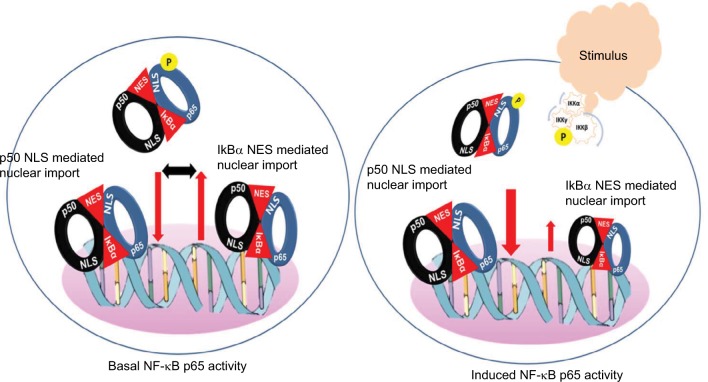
“In addition, strong oscillations of the negative feedback regulation between the activated p65 and IκBα are monitored by the IκBβ and IκBγ, the inhibitory proteins that undergo slow degradation, exhibit limited activation potential, and prevent abundance of activated p65 in the nucleus.(2,62) Dephosphorylation of p65:…”
BackgroundInfluentialModulation of NF‐κB‐dependent transcription and cell survival by the SIRT1 deacetylase
Yeung, F., Hoberg, J. E., Ramsey, C. S., Keller, M. D., Jones, D. R., Frye, R. A., & Mayo, M. W. (2004) · The EMBO Journal · doi:10.1038/sj.emboj.7600244 · Cited by 2,750 · cited 1×
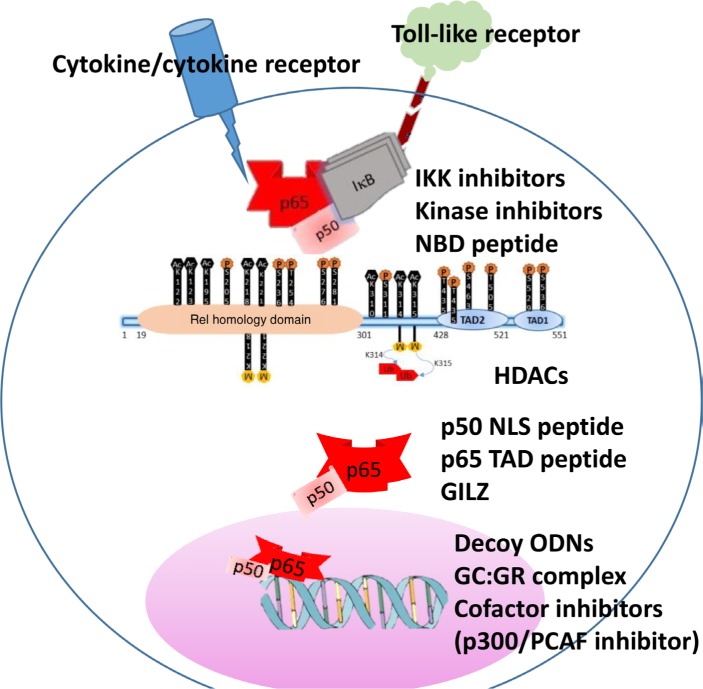
“Although acetylation at Lys310 is critical for full transcriptional activity of p65, it does not affect the DNA binding or assembly with IκΒα.(43,46) Lys314 and Lys315 acetylation increases promoter selectivity without affecting the NF-κB p65 shuttling or the DNA binding.”
BackgroundCrosstalk in NF-κB Signaling Pathways
Oeckinghaus, A., Hayden, M. S., & Ghosh, S. (2011) · Nature Immunology · doi:10.1038/ni.2065 · Cited by 1,942 · cited 2×
“This suggests that the cross talk between the two pathways and a rate-limiting canonical NF-κB signaling perhaps determine the basal pool of NIK and the constitutive NF-κB activity.(2,7,8)”
BackgroundSTEROID RECEPTOR REGULATED TRANSCRIPTION OF SPECIFIC GENES AND GENE NETWORKS
Yamamoto, K. R. (1985) · Annual Review of Genetics · doi:10.1146/annurev.ge.19.120185.001233 · Cited by 1,872 · cited 1×
“87,88 With six GRE in its promoter, glucocorticoid-induced leucine zipper is strongly upregulated by glucocorticoids.”
BackgroundPhosphorylation of NF-κB and IκB proteins: implications in cancer and inflammation
Viatour, P., Merville, M.-P., Bours, V., & Chariot, A. (2005) · Trends in Biochemical Sciences · doi:10.1016/j.tibs.2004.11.009 · Cited by 1,496 · cited 2×
“In summary, the sequential post-translational modifications modulate the strength and duration of NF-κB activity, contribute to the target gene specificity, and thereby fine-tune the biologic responses.(28,38,56) Indeed, it has been observed that the phosphorylation of Ser276 followed by acetylation of Lys310 of p65 f…”
BackgroundThe IKK NF-κB system: a treasure trove for drug development
Karin, M., Yamamoto, Y., & Wang, Q. M. (2004) · Nature Reviews Drug Discovery · doi:10.1038/nrd1279 · Cited by 1,364
Shaping the nuclear action of NF-κB
Chen, L.-F., & Greene, W. C. (2004) · Nature Reviews Molecular Cell Biology · doi:10.1038/nrm1368 · Cited by 1,221 · cited 4×
“This MSK1/2-mediated phosphorylation depends on the nature of stimuli and may require additional kinases such as casein kinase 2 and ribosomal s6 kinase (RSK1).(9,28) Phosphorylation of p65 at Thr 254 leads to a phosphorylated Thr–proline motif that is recognized by the peptidyl-prolyl isomerase Pin1.”
BackgroundInfluentialRay, A., & Prefontaine, K. E. (1994) · Proceedings of the National Academy of Sciences · doi:10.1073/pnas.91.2.752 · Cited by 1,064
Research works printed but not linked: 3
- [21]Jacobs MD Harrison SC Structure of an IkappaBalpha/NF-kappaB complex Cell 1998 95 749 758 9865693
- [69]Calzado M Bacher S Schmitz ML NF-kappaB inhibitors for the treatment of inflammatory diseases and cancer Curr Med Chem 2007 14 3 367 376 17305539
- [70]Gasparini C Feldmann M NF-kappaB as a target for modulating inflammatory responses Curr Pharm Des 2012 18 35 5735 5745 22726116
Cited by
Items 201–300 of 717
Zhou, Y., Gu, C., Zhu, Y. Y., Zhu, Y., Chen, Y., Li, S., Yang, Y., Lu, X. L., & Pang, H. (2024) · Frontiers in Pharmacology · doi:10.3389/fphar.2024.1463140 · Cited by 20
Zhang, Q., Yang, Z., Ni, Y., Bai, H., Han, Q., Yi, Z., Yi, X., Agbana, Y. L., Kuang, Y., & Zhu, Y. (2020) · Cancer Cell International · doi:10.1186/s12935-020-01576-2 · Cited by 21
Lawrence, D. W., Willard, P. A., Cochran, A. M., Matchett, E. C., & Kornbluth, J. (2020) · Frontiers in Physiology · doi:10.3389/fphys.2020.573372 · Cited by 21
“Phosphorylation at serine 536 is associated with NFκB transcriptional activity (Giridharan and Srinivasan, 2018).”
BackgroundProtective Effect of Gochujang on Inflammation in a DSS-Induced Colitis Rat Model
Mahoro, P., Moon, H., Yang, H.-J., Kim, K., & Cha, Y. (2021) · Foods · doi:10.3390/foods10051072 · Cited by 21
“It is known that p65 is a subunit of NF-κB and is phosphorylated to activate the NF-κB signaling pathway [42].”
BackgroundBalde, A., Chatterjee, A., Shukla, S., Joshi, I., Benjakul, S., Kim, S., & Nazeer, R. A. (2023) · International Journal of Peptide Research and Therapeutics · doi:10.1007/s10989-023-10552-z · Cited by 19
Ye, Y., Li, M., Chen, W., Wang, H., He, X., Liu, N., Guo, Z., & Zheng, C. (2024) · Pharmacological Research · doi:10.1016/j.phrs.2024.107301 · Cited by 19
Braegelmann, C., Fetter, T., Niebel, D., Dietz, L., Bieber, T. R. M., & Wenzel, J. (2021) · Frontiers in Immunology · doi:10.3389/fimmu.2020.622511 · Cited by 20
Targeted protein modification as a paradigm shift in drug discovery
Amirian, R., Azadi Badrbani, M., Izadi, Z., Samadian, H., Bahrami, G., Sarvari, S., Abdolmaleki, S., Nabavi, S. M., Derakhshankhah, H., & Jaymand, M. (2023) · European Journal of Medicinal Chemistry · doi:10.1016/j.ejmech.2023.115765 · Cited by 18
20-Hydroxyecdysone inhibits inflammation via SIRT6-mediated NF-κB signaling in endothelial cells
Jin, Z., Wang, B., Ren, L., Yang, J., Zheng, Z., Yao, F., Ding, R., Wang, J., He, J., Wang, W., et al. (2023) · Biochimica et Biophysica Acta (BBA) - Molecular Cell Research · doi:10.1016/j.bbamcr.2023.119460 · Cited by 18
Zhang, S., Li, Y., & Tu, Y. (2021) · Experimental and Therapeutic Medicine · doi:10.3892/etm.2021.9643 · Cited by 18
“NF‐κB is a protein with transcriptional activation function, with the p65/p50 complex being the main form (39).”
BackgroundMotolani, A., Martin, M., Wang, B., Jiang, G., Alipourgivi, F., Huang, X., Safa, A. R., Liu, Y., & Lu, T. (2023) · Cancers · doi:10.3390/cancers15194742 · Cited by 18
“This phenomenon highlights one of the complexities of the NF-κ B signaling pathway in cancer [16].”
BackgroundLiu, Z., Vinh, L. B., Tuấn, N. Q., Lee, H., Kim, Y., Kim, Y.-C., Sohn, J. H., Yim, J. H., Lee, D., Lee, D., et al. (2023) · Chemico-Biological Interactions · doi:10.1016/j.cbi.2023.110718 · Cited by 18
Salam, A. S. G. A. E., Samaha, M. M., & Elrazik, N. A. A. (2023) · International Immunopharmacology · doi:10.1016/j.intimp.2023.111044 · Cited by 18
Yang, Y., Wang, N., Wang, Z., Zhao, M., Chen, L., & Shi, Z. (2024) · Chemico-Biological Interactions · doi:10.1016/j.cbi.2024.110953 · Cited by 18
The Potential Role of Phytochemicals in Alzheimer’s Disease
Baranowska‐Wójcik, E., Gajowniczek-Ałasa, D., Pawlikowska-Pawlęga, B., & Szwajgier, D. (2025) · Nutrients · doi:10.3390/nu17040653 · Cited by 20
“The nuclear factor NF-κ B (NF-κ B) significantly influences inflammatory states, immunity, cell proliferation, and apoptosis [16].”
Ceccarelli, D. C., & Solerte, S. B. (2025) · Metabolites · doi:10.3390/metabo15030159 · Cited by 21
Wang, Y., Sun, A., Sun, Y., Zhang, S., Xia, T., Guo, T., Hao, Z., Sun, L., Jiang, Y., Qiao, X., et al. (2019) · Virology Journal · doi:10.1186/s12985-019-1206-9 · Cited by 19
“NF-κB signaling pathway is activated through the canonical or noncanonical pathway and depends on the phosphorylation-induced ubiquitination of IκB proteins [29].”
BackgroundKim, M. J., Kim, J. G., Sydara, K. M., Lee, S. W., & Jung, S. K. (2020) · Journal of Microbiology and Biotechnology · doi:10.4014/jmb.1908.08045 · Cited by 21
“Phosphorylation of p65, the catalytic subunit of NF-κB, at S276 facilitates NF-κB activity [30, 31].”
BackgroundIs nuclear sirtuin SIRT6 a master regulator of immune function?
Pillai, V. B., & Gupta, M. P. (2020) · American Journal of Physiology-Endocrinology and Metabolism · doi:10.1152/ajpendo.00483.2020 · Cited by 19
Müller, E. K., Białas, N., Epple, M., & Hilger, I. (2022) · Pharmaceutics · doi:10.3390/pharmaceutics14020419 · Cited by 20
Amin, A., Akhtar, M. S., Khalil, A. A. K., Ali, S., & Zaman, W. (2025) · Medicinal Chemistry Research · doi:10.1007/s00044-025-03508-z · Cited by 19
“In resting cells, NF-κ B dimers (commonly p65/p50) are sequestered in the cyto-plasm by inhibitory proteins such as I κ B α [75].”
Azam, S., Kim, Y.-S., Jakaria, M., Yu, Y.-J., Ahn, J.-Y., Kim, I., & Choi, D. (2022) · International Journal of Molecular Sciences · doi:10.3390/ijms23179923 · Cited by 18
“Since NF-κB p65 phosphorylation and nuclear localisation could transcribe multiple inflammatory cytokines, one of the therapeutic strategies is to prevent p65 nuclear translocation [23].”
BackgroundYun, H.-J., Suh, Y.-J., Kim, Y. B., Kang, E., Choi, J. H., Choi, J. H., Lee, I.-B., Choi, D., Seo, Y. J., Noh, J., et al. (2022) · International Journal of Molecular Sciences · doi:10.3390/ijms232214009 · Cited by 20
Zhao, Q., Li, Z., Liu, Z., Zhao, X., Fan, Y., Dong, P., & Hou, H. (2024) · Food Research International · doi:10.1016/j.foodres.2024.114697 · Cited by 18
Sirtuin Proteins and Memory: A Promising Target in Alzheimer’s Disease Therapy?
Fernandez, F., Griffiths, L. R., Sutherland, H. G. E., Cole, M. H., Fitton, J. H., Winberg, P. C., Schweitzer, D. R., Hopkins, L. N., & Meyer, B. J. (2024) · Nutrients · doi:10.3390/nu16234088 · Cited by 17
Nuclear Mechanisms Involved in Endocrine Resistance
Dittmer, J. (2021) · Frontiers in Oncology · doi:10.3389/fonc.2021.736597 · Cited by 17
“A number of drugs interfering with the NFкB pathway have been developed (160).”
BackgroundDPP promotes odontogenic differentiation of DPSCs through NF-κB signaling
Chen, Y., Petho, A., Ganapathy, A., & George, A. (2021) · Scientific Reports · doi:10.1038/s41598-021-01359-3 · Cited by 17
Xie, C., Lin, X., Hu, J.-W., Wang, S., Wu, J., Xiong, W., & Wu, L. (2022) · Food & Nutrition Research · doi:10.29219/fnr.v66.8963 · Cited by 19
“The dissociated NF-κB will be activated and rapidly translocated into nuclear to regulate the transcription of related genes by binding to the mRNA promoter region, ultimately leading to the release of related molecules and the activation of macrophages (16, 17).”
BackgroundJang, D. K., Lee, I. S., Shin, H.-S., & Yoo, H. M. (2020) · Biomolecules · doi:10.3390/biom10020324 · Cited by 17
“For example, the adapter protein importin enables p65 translocation through the nuclear pore complex (NPC) [68].”
Guo, H., Liu, W.-C., Sun, Y., Jin, X., & Geng, P. (2025) · Acta Pharmacologica Sinica · doi:10.1038/s41401-025-01640-5 · Cited by 19
“The p65 protein is an important component of NF-κ B, which is a key molecule in a variety of important physiological and pathological processes such as in fl ammatory response and stress response [155].”
Jung, J., Kim, H., Lee, S., Hong, M., & Hwang, D. (2022) · Molecules · doi:10.3390/molecules27144628 · Cited by 16
“The IκBα proteins bind to p65, masking their nuclear localization signal and causing their cytoplasmic retention [37].”
Ma, X., & Ning, S. (2019) · Toxicology Letters · doi:10.1016/j.toxlet.2019.04.030 · Cited by 16
Jin, G., Su, Y., Dong, Q., Zhao, X., Zhang, L., & Yan, X. (2019) · Biochemical and Biophysical Research Communications · doi:10.1016/j.bbrc.2019.09.130 · Cited by 16
Kumar, S., & Vinayak, M. (2019) · Neurochemistry International · doi:10.1016/j.neuint.2019.104652 · Cited by 16
The, E., Yao, Q., Zhang, P., Zhai, Y., Ao, L., Fullerton, D. A., & Meng, X. (2020) · Cells · doi:10.3390/cells9020385 · Cited by 16
“When it is activated, NF-κB translocates to the nucleus and plays a critical role in activating the inflammatory signaling network [52].”
BackgroundNarożna, M., Krajka‐Kuźniak, V., Bednarczyk–Cwynar, B., Kleszcz, R., & Baer‐Dubowska, W. (2020) · Pharmaceuticals · doi:10.3390/ph14010032 · Cited by 16
“Hence, NF-κB p65 was so far considered a major point for drug discovery and development [22].”
BackgroundNarożna, M., Krajka‐Kuźniak, V., Bednarczyk–Cwynar, B., Kucińska, M., Kleszcz, R., Kujawski, J., Piotrowska‐Kempisty, H., Plewiński, A., Murias, M., & Baer‐Dubowska, W. (2021) · Pharmaceuticals · doi:10.3390/ph14070688 · Cited by 16
“The p50 subunit serves only as a helper in NF-κB DNA binding [40,41].”
BackgroundHa, S. E., Bhosale, P. B., Kim, H.-H., Park, M.-Y., Abusaliya, A., Kim, G. S., & Kim, J. (2022) · Current Issues in Molecular Biology · doi:10.3390/cimb44060180 · Cited by 16
“The NF-κB p65 subunit has received substantial attention as a key target protein for inflammation due to the disproportionate increase in the p65-mediated transactivation of proinflammatory mediators [14].”
BackgroundZC3H11A loss of function enhances NF-κB signaling through defective IκBα protein expression
Darweesh, M. F., Younis, S., Hajikhezri, Z., Ali, A., Jin, C., Punga, T., Gupta, S., Essand, M., Andersson, L., & Akusjärvi, G. (2022) · Frontiers in Immunology · doi:10.3389/fimmu.2022.1002823 · Cited by 20
Yang, C., Lin, C.-C., Yang, C., Cho, R., & Hsiao, L. (2020) · Biomolecules · doi:10.3390/biom10030381 · Cited by 16
Xu, J., Guo, C., Zhou, G., Chen, H., Dai, P., Tang, C., Lin, S., Chen, T., Zhang, C., Chen, F., et al. (2025) · Biomaterials · doi:10.1016/j.biomaterials.2025.123614 · Cited by 15
Tonini, C., Schiavi, S., Macca, F., Segatto, M., Trezza, V., & Pallottini, V. (2020) · Nutritional Neuroscience · doi:10.1080/1028415x.2020.1724452 · Cited by 15
Ghare, S. S., Charpentier, B. T., Ghooray, D. T., Zhang, J., Vadhanam, M. V., Reddy, S., Joshi‐Barve, S., McClain, C. J., & Barve, S. S. (2023) · Nutrients · doi:10.3390/nu15204397 · Cited by 16
“NF κ B is one such transcription factor whose function is affected by the acetylation of lysine residues [33,48].”
BackgroundKim, T., Park, N.-J., Jo, B.-G., Lee, B. S., Keem, M.-J., Kwon, T.-H., Kim, K. H., Kim, S., & Yang, M. H. (2023) · Antioxidants · doi:10.3390/antiox12101899 · Cited by 16
TNFR1 mediates heterogeneity in single-cell NF-κB activation
Cheng, C.-T., Hsiao, J., Hoffmann, A., & Tu, H. (2024) · iScience · doi:10.1016/j.isci.2024.109486 · Cited by 16
“Using TIRF microscopy to image fixed cells, our photobleaching step analysis revealed there is a substantial TNFR1 dimer and trimer populations ( (cid:1) 40% and (cid:1) 7”
MethodLi, R., Lou, Q., Ji, T., Li, Y., Yang, H., Ma, Z., Zhu, Y., Qian, C., Yang, W., Wang, Y., et al. (2024) · Journal of Ethnopharmacology · doi:10.1016/j.jep.2024.118157 · Cited by 17
Li, Z., Lan, J., Liu, L., Wang, Y., Chen, L., Zeng, R., Gu, D., Hu, R., Zhang, T., & Ding, Y. (2024) · International Journal of Pharmaceutics · doi:10.1016/j.ijpharm.2024.124583 · Cited by 15
Samulevich, M. L., Carman, L. E., & Aneskievich, B. J. (2024) · Biomedicines · doi:10.3390/biomedicines12122723 · Cited by 16
“The NF-κ B family consists of five different monomers: NFKB1 (p50/p105), NFKB2 (p52/p100), RelA (p65), c-Rel, and RelB [96]; the p50 and p52 subunits must also be cleaved via the proteasome, constitutively or upon stimulus, from their p105 and p100 precursors, respectively, in order to be active…”
Zhang, L., Ning, X., Cui, J., Zhao, Y., Xie, F., Zhu, N., Wang, D., Qin, M., Lin, Z., & Wang, Y. (2025) · Materials Today Bio · doi:10.1016/j.mtbio.2025.101482 · Cited by 15
Targeting Cullin-RING E3 Ligases for Radiosensitization: From NEDDylation Inhibition to PROTACs
Zheng, S., & Tao, W. (2020) · Frontiers in Oncology · doi:10.3389/fonc.2020.01517 · Cited by 16
Choi, J. H., Lee, G. H., Jin, S. W., Kim, J. Y., Hwang, Y. P., Han, E. H., Kim, Y. H., & Jeong, H. G. (2021) · International Journal of Molecular Sciences · doi:10.3390/ijms22052334 · Cited by 16
“Additionally, MAPKs are implicated in the regulation of NF-κB transcriptional activation [46].”
BackgroundPuerarin: A Potential Therapeutic for SARS-CoV-2 and Hantavirus Co-Infection
Liang, W., Li, X., Wang, H., Nie, K., Meng, Q., He, J., & Zheng, C. (2022) · Frontiers in Immunology · doi:10.3389/fimmu.2022.892350 · Cited by 16
Patiño‐Martínez, E., Solís‐Barbosa, M. A., Santana, E., González‐Domínguez, E., Segovia-Gamboa, N. C., Meraz‐Ríos, M. A., Córdova, E. J., Valdés, J., Corbí, A. L., & Sánchez‐Torres, C. (2022) · Immunobiology · doi:10.1016/j.imbio.2022.152299 · Cited by 15
Phukan, B. C., Roy, R., Paul, R. K., Mazumder, M. K., Nath, J., Bhattacharya, P., & Borah, A. (2023) · Metabolic Brain Disease · doi:10.1007/s11011-023-01177-8 · Cited by 16
“NFκB is the transcription factor that remains associated with its inhibitor protein IκBα (inhibitor of nuclear factor of kappa-light-polypeptide gene enhancer of activated B cells) in the cytoplasm in resting condition.”
BackgroundInfluentialYang, T., Zhao, S., Sun, N., Zhao, Y., Wang, H., Zhang, Y., Hou, X., Tang, Y., Gao, X. Y., & Fan, H. (2023) · International Immunopharmacology · doi:10.1016/j.intimp.2023.109898 · Cited by 16
Farhana, A., Alsrhani, A., Nazam, N., Ullah, M. I., Khan, Y. S., & Rasheed, Z. (2023) · Biology · doi:10.3390/biology12060777 · Cited by 16
“Activation of NF-κB signaling via movement of its subunit p65 in the nucleus has now been considered one of the main pathogenic mechanisms involved in tumorigenesis and has now been well-considered to be the best target for cancer therapy [45].”
BackgroundWang, H., Zhai, Y., Lei, Z., Chen, S., Sun, M., Yin, P., Duan, Z., & Wang, X. (2023) · Frontiers in Immunology · doi:10.3389/fimmu.2023.1171351 · Cited by 20
“Elevated level of phosphorylated P65 (p-p65) in the nucleus is favorable for p65 binding to transcriptional coactivators and promoting transcription (50).”
BackgroundInfluentialWang, Y., Wang, X. D., Tang, T., Xie, Y., Li, J., Wang, W., Li, T., Liu, D., Yang, K., Shi, Y., et al. (2023) · Fitoterapia · doi:10.1016/j.fitote.2023.105744 · Cited by 15
Mizuno, S., Kurobe-Takashima, Y., Kuriki, D., Susaki, K., Otsuka, K., Tsuchihashi, T., Abe, K., & Kobayashi, S. (2025) · PLoS ONE · doi:10.1371/journal.pone.0328206 · Cited by 14
“NF-κ B is a nuclear transcription factor that plays an important role in inflammation [34], and among the NF-κ B family, NF-κ B p65 is a major subunit in the inflammatory response [35].”
Post-Translational Modifications in Atopic Dermatitis: Current Research and Clinical Relevance
Ma, X., Ru, Y., Luo, Y., Kuai, L., Chen, Q., Bai, Y. C., Liu, Y., Chen, J., Luo, Y. Y., Song, J., et al. (2022) · Frontiers in Cell and Developmental Biology · doi:10.3389/fcell.2022.942838 · Cited by 14
Dietary artemisinin boosts intestinal immunity and healthy in fat greenling (Hexagrammos otakii)
Gu, Y., Wang, W., Zhan, Y., Wei, X., Shi, Y., Cui, D., Peng, T., Han, J., Li, X., Chen, Y., et al. (2023) · Frontiers in Immunology · doi:10.3389/fimmu.2023.1198902 · Cited by 14
Salem, M. B., Mohammed, D. M., Hammam, O. A., & Elzallat, M. (2024) · BMC Complementary Medicine and Therapies · doi:10.1186/s12906-024-04351-2 · Cited by 15
“NF-κB is a crucial transcription factor that regulates several inflammatory cytokines, including IL-6 and IL-1β [88].”
BackgroundChen, Z., Shi, Q., Liu, X., Lu, G., Yang, J., Luo, W., & Yang, F. (2024) · Pharmacology · doi:10.1159/000538490 · Cited by 14
“As a member of the NF-κ B family, p65 protein plays an important role in the regulation of this NF-κ B signaling pathway; speci fi cally, it plays a key role in NF-κ B nuclear translocation and the activation of target gene transcription [54].”
Ticona, L. A., Sánchez-Corral, J. S., Martín, C. D.-G., Jiménez, S. C., González, A. L., & Estrada, C. T. (2024) · Pharmaceuticals · doi:10.3390/ph17070937 · Cited by 19
Xiao, H. T., Bao, X., Bai, N., Zhu, W., Saqirila, S., Hu, X., Bao, Q., & Baigude, H. (2024) · Journal of Medicinal Chemistry · doi:10.1021/acs.jmedchem.4c01176 · Cited by 14
Liu, N., Jiang, F., Feng, Z., Mei, S., Cui, Y., Zheng, Y., Yang, W. M., Wang, B., Zhang, W., Xie, J., et al. (2025) · Nanoscale Advances · doi:10.1039/d4na00900b · Cited by 15
“43 In addition, MMP-13 is a central node in the cartilage degradation network, being signi cantly overexpressed in the joints and articular cartilage of patients with OA, while being scarcely detected in normal adult tissues.”
Molecular pathogenesis of Cryptosporidium and advancements in therapeutic interventions
Lu, Y., Zhang, X., Guan, Z., Ji, R., Peng, F., Zhao, C., Gao, W. D., & Gao, F. (2025) · Parasite · doi:10.1051/parasite/2025001 · Cited by 16
Usatiuc, L.-O., Pop, R. M., Surd, A. O., Pârvu, M., Țicolea, M., Uifălean, A., Vălean, D., Gavrilaș, L. I., Szabo, C. E., LEOPOLD, L. F., et al. (2025) · International Journal of Molecular Sciences · doi:10.3390/ijms26104712 · Cited by 14
“ROS can activate NF-κ B directly or through DNA damage [39,50].”
Wang, H., Jiang, F., Liu, W., & Tian, W. (2020) · Pathology - Research and Practice · doi:10.1016/j.prp.2020.152899 · Cited by 14
Temporal modulation of the NF-κB RelA network in response to different types of DNA damage
Campbell, A. E., Franco, C., Su, L.-I., Corbin, E. K., Perkins, S. R., Kalyuzhnyy, A., Jones, A. R., Brownridge, P., Perkins, N. D., & Eyers, C. E. (2021) · Biochemical Journal · doi:10.1042/bcj20200627 · Cited by 14
Jin, H.-G., Kim, K.-W., Li, J., Lee, D., Yoon, D., Jeong, J. T., Kim, G., Oh, H., An, R., & Kim, Y. (2022) · Applied Biological Chemistry · doi:10.1186/s13765-022-00673-2 · Cited by 16
“This family consists of five structurally related members, including RelA (p65), p50, p52, RelB, and c-Rel, and these subunits form at least 12 different homo- or heterodimers [58].”
BackgroundTan, J. N., Husain, K., Jubri, Z., Chan, K. M., Jantan, I., & Fauzi, N. M. (2022) · Journal of Ethnopharmacology · doi:10.1016/j.jep.2022.115391 · Cited by 14
Lin, Z., Liao, L., Zhao, S., Gu, W., Wang, G., Shen, Z., Wang, Y., Chen, K., Liu, W., Cai, Y., et al. (2022) · Phytomedicine · doi:10.1016/j.phymed.2022.154627 · Cited by 14
Anese, M., Alongi, M., Cervantes-Flores, M., Simental‐Mendía, L. E., Martínez‐Aguilar, G., Valenzuela-Ramírez, A. A., Rojas‐Contreras, J. A., Guerrero‐Romero, F., & Gamboa‐Gómez, C. I. (2023) · Food Research International · doi:10.1016/j.foodres.2023.112530 · Cited by 14
Truong, V. N.-P., Nguyen, Y. T.-K., & Cho, S. K. (2021) · Pharmaceuticals · doi:10.3390/ph14080794 · Cited by 16
Tu, Y., Gao, H., Zhao, R., Yan, J., & Wu, X. (2024) · Frontiers in Cellular and Infection Microbiology · doi:10.3389/fcimb.2024.1407219 · Cited by 15
“Activated NF-k B dimers, p50, and p65 translocate to the nucleus, triggering the reactivation of downstream proin fl ammatory cytokines such as IL-1, IL-6, and IL-8 (Perkins, 2015; Giridharan and Srinivasan, 2018).”
BackgroundWu, X., Huang, P., Xiao, Y., Zha, L., Ma, J., & Xiao, H. (2024) · International Heart Journal · doi:10.1536/ihj.24-162 · Cited by 13
Innate Immune Cell Profiling in Peripheral Blood Mononuclear Cells of Patients with Moyamoya Disease
Liu, C., Mou, S., Zhang, B., Pang, Y., Chan, L., Li, J., He, Q., Zheng, Z., Zhao, Z., Sun, W., et al. (2024) · Inflammation · doi:10.1007/s10753-024-02201-4 · Cited by 13
“An excessive increase in p65 activation and its subsequent transcription of effector molecules plays a central role in the development of various chronic conditions, such as rheumatoid arthritis, inflammatory bowel disease, multiple sclerosis, and neurodegenerative diseases [51].”
Liu, Z., Chu, A., Bai, Z., & Yang, C. (2025) · Immunology Letters · doi:10.1016/j.imlet.2025.106982 · Cited by 13
Alfalfa as a nutritional and functional food resource: Applications and health benefits
Tlahig, S., & Elfalleh, W. (2025) · Food Bioscience · doi:10.1016/j.fbio.2025.106762 · Cited by 14
Li, M., Bai, Y., Han, K., Li, X., & Meng, J. (2020) · Experimental and Therapeutic Medicine · doi:10.3892/etm.2020.8578 · Cited by 14
“NF-κB plays a widespread role in cellular proliferation and acts as a mediator of apoptosis during tumorigenesis, particularly the RelA (p65) subunit (52,53).”
BackgroundRetinoic acid attenuates nuclear factor kappaB mediated induction of NLRP3 inflammasome
Purbasari, B., Madhyastha, R., Madhyastha, H., Nurrahmah, Q. I., Maruyama, M., Nakajima, Y., Kataoka, H., & Watanabe, N. (2021) · Pharmacological Reports · doi:10.1007/s43440-021-00321-4 · Cited by 13
Therapeutic Properties of Ayahuasca Components in Ischemia/Reperfusion Injury of the Eye
Szilágyi, A., Takács, B., Szekeres, R., Tarjányi, V., Bombicz, M., Priksz, D., Kovacs, A. I., Juhász, B., Frecska, E., Szilvássy, Z., et al. (2022) · Biomedicines · doi:10.3390/biomedicines10050997 · Cited by 13
“This heterodimer is a major regulator of inflammatory processes [38], and its activation in microglia has prime importance in the production of ROS and pro-inflammatory cytokines (including IL-1β, interferon-γ, and TNF-α) that can cause neuronal damage [39]; accordingly, the inhibition or downregulation of NFκB has a…”
BackgroundHou, C.-X., Mao, G., Sun, Q.-W., Meng, Y., Zhu, Q., Tang, Y., Han, W., Sun, N.-N., Song, X., Wang, C., et al. (2022) · Annals of Surgical Oncology · doi:10.1245/s10434-022-12098-8 · Cited by 13
“The NF-jB/Rel family includes five proteins: p50, c-Rel, Rel-B, p52, and p65 (Rel-A) proteins, which form dimers to regulate gene expression by combining with jB elements.(38) The NF-jB classical pathway activation triggers the release of p65 and p50 dimers from the inhibitory complex,(39) a function related to cell g…”
BackgroundShen, J., Qi, Q., Han, D. K., Lu, Y., Huang, R., Zhu, Y., Zhang, L., Qin, X.-D., Zhang, F., Wu, H., et al. (2023) · Journal of Chinese Integrative Medicine · doi:10.1016/j.joim.2023.01.001 · Cited by 13
Chichai, A. S., Попова, Т. Н., Крыльский, Е. Д., Oleinik, S. A., & Razuvaev, G. A. (2023) · Biochimie · doi:10.1016/j.biochi.2023.04.018 · Cited by 14
Amin, A., Morello, M., Petrara, M. R., Rizzo, B., Argenton, F., Rossi, A. D., & Giunco, S. (2023) · Cancers · doi:10.3390/cancers15102673 · Cited by 13
“the nuclear protein levels of p65 are affected by TERT inhibition, without any change in mRNA expression, suggests that TERT favours the stability of nuclear DNA-bound p65 by reducing its ubiquitination and proteasomal degradation, which are known to constitute downstream events playing major roles in limiting the int…”
BackgroundZhang, X., Wang, G., Li, M., Li, Y., Luo, X., Liu, Y., Zhang, X., Hocher, J.-G., Krämer, B. K., Hocher, B., et al. (2024) · Nephrology Dialysis Transplantation · doi:10.1093/ndt/gfae090 · Cited by 13
Biomaterial-based osteoimmunomodulatory strategies via the TLR4-NF-κB signaling pathway: A review
Xing, H., Li, R., Qing, Y., Ying, B., & Qin, Y. (2021) · Applied Materials Today · doi:10.1016/j.apmt.2021.100969 · Cited by 20
Khan, A. N., Singh, R., Bhattacharya, A., Kumar, S., Ghosh, A., Nag, D., Ravichandiran, V., & Ghosh, D. (2022) · Molecules · doi:10.3390/molecules27165263 · Cited by 14
“IKKα, an inhibitor of IκBα, is activated by extracellular signals, which further leads to IKKα activation and the phosphorylation of IκBα, which can then be polyubiquitinated and degraded, leading to the translocation of p-65 from the cytoplasm to the nucleus and thus resulting in the release of pro-inflammatory cytok…”
BackgroundMachaj, F., Rosik, J., Szostak, B., & Pawlik, A. (2019) · Expert Opinion on Drug Discovery · doi:10.1080/17460441.2020.1682992 · Cited by 15
“Several therapeutic strategies have been proposed [159].”
Wang, F., Xiao, J., Li, M., He, Q., Wang, X., Pan, Z., Li, S., Wang, H., & Zhou, C. (2024) · PLOS ONE · doi:10.1371/journal.pone.0308731 · Cited by 12
Polyphenols Influence the Development of Endometrial Cancer by Modulating the Gut Microbiota
Baranowska‐Wójcik, E., Winiarska‐Mieczan, A., Olcha, P., Kwiecień, M., Jachimowicz-Rogowska, K., Nowakowski, Ł., Miturski, A., & Gałczyński, K. (2024) · Nutrients · doi:10.3390/nu16050681 · Cited by 12
“Oxidative stress not only leads to the occurrence of inflammatory reactions but also activates the transcription of genes for various inflammatory factors, depending on proteins from the nuclear factor κ B (NF-κ B) family [167].”
BackgroundUsatiuc, L.-O., Pârvu, M., Pop, R. M., Uifălean, A., Vălean, D., Szabo, C.-E., Țicolea, M., Cătoi, A. F., Ranga, F., & Pârvu, A. E. (2024) · Antioxidants · doi:10.3390/antiox13091029 · Cited by 12
“The transcription factor NF-κ B is a critical regulator of immune and inflammatory responses [64].”
BackgroundA review: hepatoprotective compounds and its mechanism of medicine-food homology resources
Hu, Q., Zhang, S., Liu, J., Liu, Y., Chen, X., & Wang, J. (2025) · Agricultural Products Processing and Storage · doi:10.1007/s44462-025-00009-5 · Cited by 13
Zhai, H., Xiang, X., Pu, J., Niu, X., Gao, J., Mu, D., Du, J., Li, Y., Qu, L., Liu, B., et al. (2025) · International Journal of Biological Sciences · doi:10.7150/ijbs.112233 · Cited by 13
“To validate this finding, we then analyzed the correlation between SLC7A11AR and the key activators involved in the NF-κB signaling pathway, we analyzed key DNA-binding proteins NFKB1(p50) and NFKB2(p52) in both the canonical and non-canonical NF-κB signaling pathways[33].”
Kaushal, J., Shukla, V., Sankhwar, P., Jha, R. K., & Dwivedi, A. (2021) · Cytokine · doi:10.1016/j.cyto.2021.155700 · Cited by 12
Ni, J., Li, X., Tu, X., Zhu, H., Wang, S., Hou, Y., & Dou, H. (2022) · International Immunopharmacology · doi:10.1016/j.intimp.2022.109487 · Cited by 12
A LY6E-PHB1-TRIM21 assembly degrades CD14 protein to mitigate LPS-induced inflammatory response
Zhu, X., Zhang, L., Feng, D., Jiang, L., Sun, P., Zhao, C., Zhang, X., & Xu, J. (2023) · iScience · doi:10.1016/j.isci.2023.106808 · Cited by 12
“The canonical NF-kB dimers, comprising p65 and p50 subunits, are inactive in unstimulated cells due to cytoplasmic sequestration by binding to IkB.23 In LPS-stimulated cells, TLR4 signaling leads to the activation of downstream kinases, which promote the phosphorylation and the subsequent degradation of IkB proteins,…”
BackgroundWang, Y., Ke, W., Gan, J., Zhu, H., Xie, X., He, G., Liu, S., Huang, Y., & Tang, H. (2023) · PLoS ONE · doi:10.1371/journal.pone.0287597 · Cited by 14
Metadata
- Authors
- Giridharan, S., & Srinivasan, M.
- Affiliations
- Indiana University Indianapolis (US)
- Corresponding author
- Srinivasan, Mythily
- ORCID
- Srinivasan, Mythily
- Venue
- Journal of Inflammation Research
- Publisher
- Informa UK Limited
- Published
- 2018-10
- Volume
- Volume 11
- Pages
- 407-419
- ISSN
- 1178-7031 (ISSN-L)
- PMC
- PMC6217131
- OpenAlex
- W2899158325
- Semantic Scholar
- 8f397148aeee46d1c4ec54c5912ac84eded3e512
- Cited by
- 686
- References
- 134
- Citations by year
- 2026: 87 · 2025: 124 · 2024: 104 · 2023: 108 · 2022: 97 · 2021: 91 · 2020: 56 · 2019: 18
- FWCI
- 4.29
- Type
- journal article
- Language
- en
- Open access
- gold
- doi.org
- Licence
- Locations
- Journal of Inflammation Research (publishedVersion, cc-by-nc)
- Europe PMC (PubMed Central) (publishedVersion, cc-by-nc)
- PubMed Central (publishedVersion, cc-by-nc)
- PubMed (publishedVersion)
- Dove Medical Press (Taylor and Francis Group) (submittedVersion, cc-by-nc)
- DOAJ (DOAJ: Directory of Open Access Journals) (submittedVersion, cc-by-sa)
- IUScholarWorks (Indiana University) (submittedVersion, cc-by-nc)
- PMC
- Funders
- National Institutes of Health
- National Institute on Aging (R41AG053117)
- Topics
- Life Sciences › Biochemistry, Genetics and Molecular Biology › Cancer Research › NF-κB Signaling Pathways
- Life Sciences › Biochemistry, Genetics and Molecular Biology › Molecular Biology › Signaling Pathways in Disease
- Health Sciences › Medicine › Complementary and alternative medicine › Natural Compounds in Disease Treatment
- Keywords
- NF-κB p65, RelA, NF-κB signaling, IκB proteins, chronic inflammation, inflammatory diseases, therapeutic target, anti-inflammatory agents
About these checks
Registry, retraction, Cites and statistics results are computed, not judged, with one exception: a printed reference that no index lists is read once by a model before it counts as a citation error. Claims are extracted by a model and kept only when their quote appears verbatim in the text; each cited source is then checked, with a model’s help, for whether it says what the claim relies on. Those verdicts can be wrong — read the claim’s quote and the cited source before relying on one.
Statistics and arithmetic are recomputed, not judged.
Confidence bands are shown only for fields calibrated on our annotated test set. None is calibrated yet, so no band is shown.
What counts as a claim ›How we measure confidence ›How we check this ›
Are you an author, or do you see a problem with this page? Request a review
Data sources
Bibliographic data: Semantic Scholar, OpenAlex, Crossref.
Contains information from the Semantic Scholar Academic Graph Datasets, made available under the ODC Attribution License (ODC-BY 1.0).
Semantic Scholar’s data is described in: Kinney, R., et al. (2023). The Semantic Scholar Open Data Platform. arXiv:2301.10140.
