

Mechanisms of NF-κB p65 and strategies for therapeutic manipulation
Open accessThe DOI matches its Crossref record; 133 of the 134 references it cites were found in a registry or an index.
Abstract
The transcription factor NF-κB is a critical regulator of immune and inflammatory responses. In mammals, the NF-κB/Rel family comprises five members: p50, p52, p65 (Rel-A), c-Rel, and Rel-B proteins, which form homo- or heterodimers and remain as an inactive complex with the inhibitory molecules called IκB proteins in resting cells. Two distinct NF-κB signaling pathways have been described: 1) the canonical pathway primarily activated by pathogens and inflammatory mediators, and 2) the noncanonical pathway mostly activated by developmental cues. The most abundant form of NF-κB activated by pathologic stimuli via the canonical pathway is the p65:p50 heterodimer. Disproportionate increase in activated p65 and subsequent transactivation of effector molecules is integral to the pathogenesis of many chronic diseases such as the rheumatoid arthritis, inflammatory bowel disease, multiple sclerosis, and even neurodegenerative pathologies. Hence, the NF-κB p65 signaling pathway has been a pivotal point for intense drug discovery and development. This review begins with an overview of p65-mediated signaling followed by discussion of strategies that directly target NF-κB p65 in the context of chronic inflammation.
Overview
The claims and statistics of this paper haven’t been checked yet.
Free: it reads the open-access text and checks the first 5 claims that cite a source we can check. Create a free account to check every claim.
Integrity signals
Registry
Cites
Statistics
Figures
Verification
Claims the paper makes
The claims and statistics of this paper haven’t been checked yet.
Free: it reads the open-access text and checks the first 5 claims that cite a source we can check. Create a free account to check every claim.
Claims other papers make about this one
Each is checked against this paper’s own text: does it say what the citing paper says it does?
The source backs part of the claim, not all of it — or backs it for a different population, condition or comparison.
In the citing paper
“P-II has demonstrated the ability to suppress LPS-induced inflammation by targeting the NF-κB signaling pathway”
From Picroside II suppresses chondrocyte pyroptosis through MAPK/NF-κB/NLRP3 signaling pathway alleviates osteoarthritis (2024) · cites this paper as [59]
Experimental — accuracy not yet measuredThe cited source says what the claim attributes to it.
In the citing paper
“where p65 phosphorylation is a critical step in activation [59,60]”
From Picroside II suppresses chondrocyte pyroptosis through MAPK/NF-κB/NLRP3 signaling pathway alleviates osteoarthritis (2024) · cites this paper as [59]
Self-check
Percentages, sums and reported differences re-computed from the paper’s own numbers.
The self-check needs the paper’s full text.
Citations
Cites
NF-κB signaling in inflammation
Liu, T., Zhang, L., Joo, D., & Sun, S.-C. (2017) · Signal Transduction and Targeted Therapy · doi:10.1038/sigtrans.2017.23 · Cited by 8,791
Phosphorylation meets ubiquitination: the control of NF-κB activity
Karin, M., & Ben-Neriah, Y. (2000) · Annual Review of Immunology · doi:10.1146/annurev.immunol.18.1.621 · Cited by 4,766
The NF- B Family of Transcription Factors and Its Regulation
Oeckinghaus, A., & Ghosh, S. (2009) · Cold Spring Harbor Perspectives in Biology · doi:10.1101/cshperspect.a000034 · Cited by 2,842 · cited 6×
“In addition, strong oscillations of the negative feedback regulation between the activated p65 and IκBα are monitored by the IκBβ and IκBγ, the inhibitory proteins that undergo slow degradation, exhibit limited activation potential, and prevent abundance of activated p65 in the nucleus.(2,62) Dephosphorylation of p65:…”
BackgroundInfluentialModulation of NF‐κB‐dependent transcription and cell survival by the SIRT1 deacetylase
Yeung, F., Hoberg, J. E., Ramsey, C. S., Keller, M. D., Jones, D. R., Frye, R. A., & Mayo, M. W. (2004) · The EMBO Journal · doi:10.1038/sj.emboj.7600244 · Cited by 2,750 · cited 1×
“Although acetylation at Lys310 is critical for full transcriptional activity of p65, it does not affect the DNA binding or assembly with IκΒα.(43,46) Lys314 and Lys315 acetylation increases promoter selectivity without affecting the NF-κB p65 shuttling or the DNA binding.”
BackgroundCrosstalk in NF-κB Signaling Pathways
Oeckinghaus, A., Hayden, M. S., & Ghosh, S. (2011) · Nature Immunology · doi:10.1038/ni.2065 · Cited by 1,942 · cited 2×
“This suggests that the cross talk between the two pathways and a rate-limiting canonical NF-κB signaling perhaps determine the basal pool of NIK and the constitutive NF-κB activity.(2,7,8)”
BackgroundSTEROID RECEPTOR REGULATED TRANSCRIPTION OF SPECIFIC GENES AND GENE NETWORKS
Yamamoto, K. R. (1985) · Annual Review of Genetics · doi:10.1146/annurev.ge.19.120185.001233 · Cited by 1,872 · cited 1×
“87,88 With six GRE in its promoter, glucocorticoid-induced leucine zipper is strongly upregulated by glucocorticoids.”
BackgroundPhosphorylation of NF-κB and IκB proteins: implications in cancer and inflammation
Viatour, P., Merville, M.-P., Bours, V., & Chariot, A. (2005) · Trends in Biochemical Sciences · doi:10.1016/j.tibs.2004.11.009 · Cited by 1,496 · cited 2×
“In summary, the sequential post-translational modifications modulate the strength and duration of NF-κB activity, contribute to the target gene specificity, and thereby fine-tune the biologic responses.(28,38,56) Indeed, it has been observed that the phosphorylation of Ser276 followed by acetylation of Lys310 of p65 f…”
BackgroundThe IKK NF-κB system: a treasure trove for drug development
Karin, M., Yamamoto, Y., & Wang, Q. M. (2004) · Nature Reviews Drug Discovery · doi:10.1038/nrd1279 · Cited by 1,364
Shaping the nuclear action of NF-κB
Chen, L.-F., & Greene, W. C. (2004) · Nature Reviews Molecular Cell Biology · doi:10.1038/nrm1368 · Cited by 1,221 · cited 4×
“This MSK1/2-mediated phosphorylation depends on the nature of stimuli and may require additional kinases such as casein kinase 2 and ribosomal s6 kinase (RSK1).(9,28) Phosphorylation of p65 at Thr 254 leads to a phosphorylated Thr–proline motif that is recognized by the peptidyl-prolyl isomerase Pin1.”
BackgroundInfluentialRay, A., & Prefontaine, K. E. (1994) · Proceedings of the National Academy of Sciences · doi:10.1073/pnas.91.2.752 · Cited by 1,064
Lin, Y.-Z., Yao, S., Veach, R. A., Torgerson, T. R., & Hawiger, J. (1995) · Journal of Biological Chemistry · doi:10.1074/jbc.270.24.14255 · Cited by 918 · cited 1×
“78,79 Interestingly a short peptide mimic (RLRWR) of the DNA binding motif of p50 designated as anti-inflammatory peptide-6 exhibited cell-penetrating ability, interacted directly with the p65 thereby inhibiting DNA binding and transactivation of inflammatory mediators.”
BackgroundTransport into and out of the Nucleus
Macara, I. G. (2001) · Microbiology and Molecular Biology Reviews · doi:10.1128/mmbr.65.4.570-594.2001 · Cited by 905 · cited 1×
“In addition, strong oscillations of the negative feedback regulation between the activated p65 and IκBα are monitored by the IκBβ and IκBγ, the inhibitory proteins that undergo slow degradation, exhibit limited activation potential, and prevent abundance of activated p65 in the nucleus.(2,62) Dephosphorylation of p65:…”
BackgroundAcetylation of RelA at discrete sites regulates distinct nuclear functions of NF‐κB
Chen, L., Mu, Y., & Greene, W. C. (2002) · The EMBO Journal · doi:10.1093/emboj/cdf660 · Cited by 827 · cited 1×
“While acetylation on Lys122 and Lys123 decreases DNA binding, Lys221 and Lys218 acetylation enhances the DNA binding of NF-κB p65 by impairing its association with IκBα.(44,45) Although acetylation at Lys310 is critical for full transcriptional activity of p65, it does not affect the DNA binding or assembly with IκΒα.”
BackgroundZhong, H., SuYang, H., Erdjument-Bromage, H., Tempst, P., & Ghosh, S. (1997) · Cell · doi:10.1016/s0092-8674(00)80222-6 · Cited by 827
IκB Kinases Phosphorylate NF-κB p65 Subunit on Serine 536 in the Transactivation Domain
Sakurai, H., Chiba, H., Miyoshi, H., Sugita, T., & Toriumi, W. (1999) · Journal of Biological Chemistry · doi:10.1074/jbc.274.43.30353 · Cited by 823
Structure of an IκBα/NF-κB Complex
Jacobs, M. D., & Harrison, S. C. (1998) · Cell · doi:10.1016/s0092-8674(00)81698-0 · Cited by 821
CREB-binding protein/p300 are transcriptional coactivators of p65
Gerritsen, M. E., Williams, A. J., Neish, A. S., Moore, S., Shi, Y., & Collins, T. (1997) · Proceedings of the National Academy of Sciences · doi:10.1073/pnas.94.7.2927 · Cited by 816
The p65 subunit is responsible for the strong transcription activating potential of NF-kappa B.
Schmitz, M. L., & Baeuerle, P. A. (1991) · The EMBO Journal · doi:10.1002/j.1460-2075.1991.tb04950.x · Cited by 796 · cited 2×
“Sequence-specific DNA-binding of p65 is greatly stimulated by the interaction with various components of the basic transcription machinery such as the TFIIB, TBP-associated factors and several coactivators including p300 and Tip60.(15,17,18) Export of p65 out of the nucleus is facilitated by the exportin proteins that…”
BackgroundInhibiting NF-κB activation by small molecules as a therapeutic strategy
Gupta, S. C., Sundaram, C., Reuter, S., & Aggarwal, B. B. (2010) · Biochimica et Biophysica Acta (BBA) - Gene Regulatory Mechanisms · doi:10.1016/j.bbagrm.2010.05.004 · Cited by 762 · cited 2×
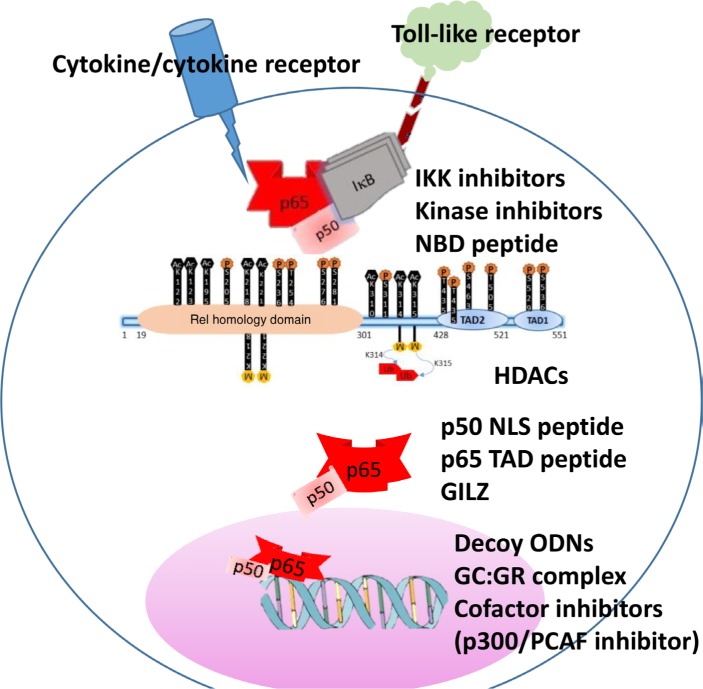
“A vast number of kinase inhibitors target either the IKK complex or the adapter proteins in the NF-kB signal transduction pathway (please refer to excellent reviews 3,71,73,74 ).”
BackgroundThe Regulation of NF-κB Subunits by Phosphorylation
Christian, F., Smith, E., & Carmody, R. (2016) · Cells · doi:10.3390/cells5010012 · Cited by 717 · cited 10×
“The mitogen and stressactivated protein kinase-1 (MSK-1)/MSK-2 phosphorylates Ser-276 in the nucleus and enhances inflammatory gene expression.(4,9,31) This MSK1/2-mediated phosphorylation depends on the nature of stimuli and may require additional kinases such as casein kinase 2 and ribosomal s6 kinase (RSK1).”
BackgroundInfluentialRyo, A., Suizu, F., Yoshida, Y., Perrem, K., Liou, Y.-C., Wulf, G., Rottapel, R., Yamaoka, S., & Lu, K. P. (2003) · Molecular Cell · doi:10.1016/s1097-2765(03)00490-8 · Cited by 637 · cited 2×
“Mutation of Thr 254 dramatically reduced the half-life of p65 protein and inhibited p65 transcriptional activity.(32) Phosphorylation of Ser-468 in p65 T mediated by IKKε or glycogen synthase kinase 3β in unstimulated cells has been shown to negatively regulate basal NF-κB activity.”
BackgroundMorishita, R., Sugimoto, T., Aoki, M., Kida, I., Tomita, N., Moriguchi, A., Maeda, K., Sawa, Y., Kaneda, Y., Higaki, J., et al. (1997) · Nature Medicine · doi:10.1038/nm0897-894 · Cited by 584 · cited 1×
“102 Trans-fection of NF-κΒ decoy ODNs to the arteries by hemaggluti-nating virus of Japan liposomes prevented ischemia-induced myocardial infarction by suppressing expression of cytokines and adhesion molecules.”
MethodBrd4 Coactivates Transcriptional Activation of NF-κB via Specific Binding to Acetylated RelA
Huang, B., Yang, X.-D., Zhou, M.-M., Ozato, K., & Chen, L.-F. (2009) · Molecular and Cellular Biology · doi:10.1128/mcb.01365-08 · Cited by 579 · cited 1×
“The acetylated Lys310 is specifically recognized by the two bromodomains of Brd4, which recruits activated CDK9 to phosphorylate RNA polymerase II for the transcription of a subset of NF-κB target genes.(28,48) Tip60 (HIV Tat-interacting protein, 60 kDa), originally identified as a binding partner for the HIV-1 Tat pr…”
BackgroundThe Crystal Structure of the IκBα/NF-κB Complex Reveals Mechanisms of NF-κB Inactivation
Huxford, T., Huang, D.-B., Malek, S., & Ghosh, G. (1998) · Cell · doi:10.1016/s0092-8674(00)81699-2 · Cited by 578
Post-activation Turn-off of NF-κB-dependent Transcription Is Regulated by Acetylation of p65
Kiernan, R., Brès, V., Ng, R. W. M., Coudart, M.-P., El Messaoudi, S., Sardet, C., Jin, D.-Y., Emiliani, S., & Benkirane, M. (2003) · Journal of Biological Chemistry · doi:10.1074/jbc.m209572200 · Cited by 535 · cited 1×
“While acetylation on Lys122 and Lys123 decreases DNA binding, Lys221 and Lys218 acetylation enhances the DNA binding of NF-κB p65 by impairing its association with IκBα.(44,45) Although acetylation at Lys310 is critical for full transcriptional activity of p65, it does not affect the DNA binding or assembly with IκΒα.”
BackgroundStein, B., Cogswell, P. C., & Baldwin, A. S. (1993) · Molecular and Cellular Biology · doi:10.1128/mcb.13.7.3964 · Cited by 520 · cited 1×
“Efficient and controlled transactivation of the target genes is facilitated by cross talk with other transcription factors with either synergistic (eg, AP-1) or antagonistic (eg, cEBP/β) effects.(2,27) In addition, a”
BackgroundA single NFκB system for both canonical and non-canonical signaling
Shih, V. F.-S., Tsui, R., Caldwell, A., & Hoffmann, A. (2011) · Cell Research · doi:10.1038/cr.2010.161 · Cited by 499 · cited 2×
“This suggests that the cross talk between the two pathways and a rate-limiting canonical NF-κB signaling perhaps determine the basal pool of NIK and the constitutive NF-κB activity.(2,7,8)”
BackgroundNF-κB RelA Phosphorylation Regulates RelA Acetylation
Chen, L.-F., Williams, S. A., Mu, Y., Nakano, H., Duerr, J. M., Buckbinder, L., & Greene, W. C. (2005) · Molecular and Cellular Biology · doi:10.1128/mcb.25.18.7966-7975.2005 · Cited by 438 · cited 1×
“For example, phosphorylation at Ser276 and Ser-536 enhances the p300- and PCAF-mediated acetylation of Lys122, Lys123, and Lys310 and upregulates transcriptional activation by p65.(58) Thus, by virtue of modifying the interaction of p65 with select cofactors, the post-translational modifications at specific sites cont…”
BackgroundArenzana-Seisdedos, F., Thompson, J., Rodriguez, M. S., Bachelerie, F., Thomas, D., & Hay, R. T. (1995) · Molecular and Cellular Biology · doi:10.1128/mcb.15.5.2689 · Cited by 433 · cited 2×
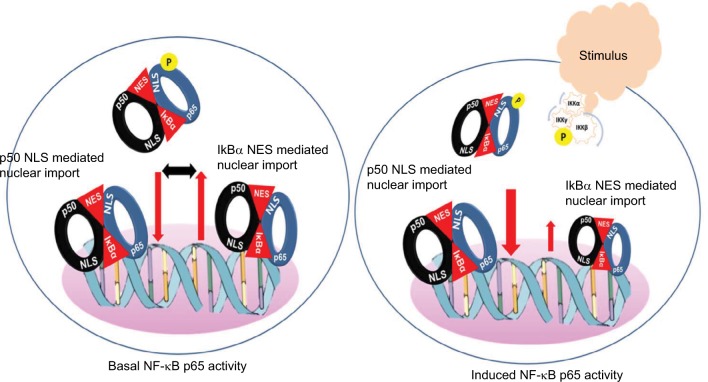
“Continuous shuttling of the NF-κB:importin:IκBα complex between the nucleus and cytoplasm maintains a low level of basal p65 activity.(4,19,22)”
BackgroundHuang, T. T., Kudo, N., Yoshida, M., & Miyamoto, S. (2000) · Proceedings of the National Academy of Sciences · doi:10.1073/pnas.97.3.1014 · Cited by 380
Buss, H., Dörrie, A., Schmitz, M. L., Hoffmann, E., Resch, K., & Kracht, M. (2004) · Journal of Biological Chemistry · doi:10.1074/jbc.m409825200 · Cited by 364 · cited 1×
“translocation, suggesting potential dephosphorylation of Ser536 in the nucleus.(37,68) Ubiquitination and proteosomal degrada-”
BackgroundPosttranslational modifications of NF-κB: Another layer of regulation for NF-κB signaling pathway
Huang, B., Yang, X.-D., Lamb, A., & Chen, L.-F. (2010) · Cellular Signalling · doi:10.1016/j.cellsig.2010.03.017 · Cited by 343 · cited 8×
“28,36 Nuclear p65 is degraded by the proteasome in a DNA-binding-dependent manner.”
InfluentialGlucocorticoid‐induced leucine zipper (GILZ): a new important mediator of glucocorticoid action
Ayroldi, E., & Riccardi, C. (2009) · The FASEB Journal · doi:10.1096/fj.09-134684 · Cited by 338 · cited 1×
“90,91 In protein interfaces, proline-rich regions that adopt extended polyproline type II helical conformation constitute excellent drug templates with the specificity of the interaction determined by the residues adjacent to the interacting moieties in each partner.”
BackgroundEvidence for Distinct Substrate Specificities of Importin α Family Members in Nuclear Protein Import
Köhler, M., Speck, C., Christiansen, M., Bischoff, F. R., Prehn, S., Haller, H., Görlich, D., & Hartmann, E. (1999) · Molecular and Cellular Biology · doi:10.1128/mcb.19.11.7782 · Cited by 316 · cited 1×
“Furthermore, the expression levels of importin α and importin β have been shown to vary widely in different cells and tissues.(26) Hence, the combined effects of the expression levels of the importin proteins and the differential p65 affinities determine the extent of nuclear translocation of p65 and subsequent transa…”
BackgroundNF-κB Is Transported into the Nucleus by Importin α3 and Importin α4
Fagerlund, R., Kinnunen, L., Köhler, M., Julkunen, I., & Melén, K. (2005) · Journal of Biological Chemistry · doi:10.1074/jbc.m500814200 · Cited by 290
Saha, R. N., Jana, M., & Pahan, K. (2007) · The Journal of Immunology · doi:10.4049/jimmunol.179.10.7101 · Cited by 289
Regulation of NF-κB by NSD1/FBXL11-dependent reversible lysine methylation of p65
Lu, T., Jackson, M. W., Wang, B., Yang, M., Chance, M. R., Miyagi, M., Gudkov, A. V., & Stark, G. R. (2010) · Proceedings of the National Academy of Sciences · doi:10.1073/pnas.0912493107 · Cited by 280 · cited 2×
“Demethylation of methylated Lys-218 and Lys-221 by F-box and leucine-rich repeat protein 11, an H3K36 demethylase, has been shown to negatively regulate the transcriptional activity of NF-κB p65 and decrease cell proliferation.(55,66) Ubiquitination and degradation: They have been suggested as mechanisms that control…”
BackgroundBaldwin, A. S. (2012) · Immunological Reviews · doi:10.1111/j.1600-065x.2012.01095.x · Cited by 277 · cited 1×
“Mechanisms and modulations of the p65-mediated transactivation Induced activation of p65 in response to a variety of stimuli is typically transient but sufficient to upregulate transactivation of target genes of diverse activities such as the cellular proliferation, inflammatory cytokines, chemokines, and mediators of…”
BackgroundRegulation of the NF-κB-Mediated Transcription of Inflammatory Genes
Bhatt, D., & Ghosh, S. (2014) · Frontiers in Immunology · doi:10.3389/fimmu.2014.00071 · Cited by 263 · cited 2×
“Thus, by virtue of modifying the interaction of p65 with select cofactors, the post-translational modifications at specific sites contribute to specific biologic responses.(54,57)”
BackgroundPhosphorylation of Serine 468 by GSK-3β Negatively Regulates Basal p65 NF-κB Activity
Buss, H., Dörrie, A., Schmitz, M. L., Frank, R., Livingstone, M., Resch, K., & Kracht, M. (2004) · Journal of Biological Chemistry · doi:10.1074/jbc.c400442200 · Cited by 252
PRMT5 dimethylates R30 of the p65 subunit to activate NF-κB
Wei, H., Wang, B., Miyagi, M., She, Y., Gopalan, B., Huang, D.-B., Ghosh, G., Stark, G. R., & Lu, T. (2013) · Proceedings of the National Academy of Sciences · doi:10.1073/pnas.1311784110 · Cited by 237 · cited 2×
“Molecular modeling suggests that methylated R30 can mediate Van der Waals contacts and increase the affinity of p65 for DNA and consequent transactivation of target gene expressions.(53) Hence, differential methylation could represent another regulatory mechanism for differential activation of individual genes based o…”
BackgroundRegulation of NF-κB activity through lysine monomethylation of p65
Ea, C.-K., & Baltimore, D. (2009) · Proceedings of the National Academy of Sciences · doi:10.1073/pnas.0910439106 · Cited by 236 · cited 1×
“In contrast, methylation of Lys37 by Set9 or that of Lys218 and Lys221 by nuclear receptor-binding SET domain-containing protein 1, a histone H3K36 methyltransferase, enhances the transcriptional activity by stabilizing binding of p65 to its enhancers.(52,55) Apart from lysine residues, demethylation of Arg 30 by prot…”
BackgroundNF-κB as a Target for Modulating Inflammatory Responses
Gasparini, C., & Feldmann, M. (2012) · Current Pharmaceutical Design · doi:10.2174/138161212803530763 · Cited by 224
Schäcke, H., Berger, M., Rehwinkel, H., & Asadullah, K. (2007) · Molecular and Cellular Endocrinology · doi:10.1016/j.mce.2007.05.014 · Cited by 223
Regulation at multiple levels of NF-κB-mediated transactivation by protein acetylation
Quivy, V., & Van Lint, C. (2004) · Biochemical Pharmacology · doi:10.1016/j.bcp.2004.05.039 · Cited by 219 · cited 1×
“In summary, the sequential post-translational modifications modulate the strength and duration of NF-κB activity, contribute to the target gene specificity, and thereby fine-tune the biologic responses.(28,38,56) Indeed, it has been observed that the phosphorylation of Ser276 followed by acetylation of Lys310 of p65 f…”
BackgroundSelective glucocorticoid receptor modulation: New directions with non-steroidal scaffolds
Sundahl, N., Bridelance, J., Libert, C., De Bosscher, K., & Beck, I. M. (2015) · Pharmacology & Therapeutics · doi:10.1016/j.pharmthera.2015.05.001 · Cited by 216 · cited 3×
“…interference of GR with p65 and associated basal transcription machinery, and competitive binding of co-activators such as PKAc or CBP. 87,109,110 113 In this context it has been reported that coactivation of GR and p65 results in their association at binding sites that cluster with p65 target…”
BackgroundCoactivation of GR and NFKB alters the repertoire of their binding sites and target genes
Rao, N. A. S., McCalman, M. T., Moulos, P., Francoijs, K.-J., Chatziioannou, A., Kolisis, F. N., Alexis, M. N., Mitsiou, D. J., & Stunnenberg, H. G. (2011) · Genome Research · doi:10.1101/gr.118042.110 · Cited by 216
Negative regulation of NF‐κB action by Set9‐mediated lysine methylation of the RelA subunit
Yang, X., Huang, B., Li, M., Lamb, A., Kelleher, N. L., & Chen, L. (2009) · The EMBO Journal · doi:10.1038/emboj.2009.55 · Cited by 216 · cited 2×
“Thus, by virtue of modifying the interaction of p65 with select cofactors, the post-translational modifications at specific sites contribute to specific biologic responses.(54,57)”
BackgroundTakada, Y., Singh, S., & Aggarwal, B. B. (2004) · Journal of Biological Chemistry · doi:10.1074/jbc.m311192200 · Cited by 179 · cited 1×
“Interestingly synthetic peptides derived from the p65-TAD have been shown to inhibit NF-kB p65-mediated cellular responses.(61)”
BackgroundNadler, S. G., Tritschler, D., Haffar, O. K., Blake, J., Bruce, A. G., & Cleaveland, J. S. (1997) · Journal of Biological Chemistry · doi:10.1074/jbc.272.7.4310 · Cited by 174 · cited 1×
“81,82 b.”
WIP1 phosphatase is a negative regulator of NF-κB signalling
Chew, J., Biswas, S., Shreeram, S., Humaidi, M., Wong, E. T., Dhillion, M. K., Teo, H., Hazra, A., Fang, C. C., López-Collazo, E., et al. (2009) · Nature Cell Biology · doi:10.1038/ncb1873 · Cited by 172 · cited 1×
“1 has been shown to reduce the interaction of p65 with p300 and thereby inhibit gene expression.(4,63,64) However, much like”
BackgroundSrinivasan, M., & Lahiri, D. K. (2015) · Expert Opinion on Therapeutic Targets · doi:10.1517/14728222.2014.989834 · Cited by 164
Self-citationUranishi, H., Tetsuka, T., Yamashita, M., Asamitsu, K., Shimizu, M., Itoh, M., & Okamoto, T. (2001) · Journal of Biological Chemistry · doi:10.1074/jbc.m011176200 · Cited by 159 · cited 2×
“Sequence-specific DNA-binding of p65 is greatly stimulated by the interaction with various components of the basic transcription machinery such as the TFIIB, TBP-associated factors and several coactivators including p300 and Tip60.(15,17,18) Export of p65 out of the nucleus is facilitated by the exportin proteins that…”
BackgroundGeng, H., Wittwer, T., Dittrich‐Breiholz, O., Kracht, M., & Schmitz, M. L. (2009) · EMBO reports · doi:10.1038/embor.2009.10 · Cited by 155 · cited 1×
“Copper metabolism domain protein, a physiologic inhibitor of NF-κΒ, binds to an E3 ligase SOCS1 (suppressor of cytokine signaling 1) and p65, stabilizing the p65:SOCS1 interaction and thereby promote ubiquitination and degradation of p65.(4,67) PDLIM2, a nuclear LIM domain containing ligase, mediates polyubiquitinatio…”
BackgroundSer276 Phosphorylation of NF-kB p65 by MSK1 Controls SCF Expression in Inflammation
Reber, L., Vermeulen, L., Haegeman, G., & Frossard, N. (2009) · PLoS ONE · doi:10.1371/journal.pone.0004393 · Cited by 155 · cited 1×
“The mitogen and stressactivated protein kinase-1 (MSK-1)/MSK-2 phosphorylates Ser-276 in the nucleus and enhances inflammatory gene expression.(4,9,31) This MSK1/2-mediated phosphorylation depends on the nature of stimuli and may require additional kinases such as casein kinase 2 and ribosomal s6 kinase (RSK1).”
BackgroundA pervasive role of histone acetyltransferases and deacetylases in an NF-κB-signaling code
Calao, M., Burny, A., Quivy, V., Dekoninck, A., & Lint, C. M. V. (2008) · Trends in Biochemical Sciences · doi:10.1016/j.tibs.2008.04.015 · Cited by 154 · cited 4×
“inflammatory gene expression, deacetylation at Lys218 and Lys221 promotes the binding of p65 with IκBα leading to the nuclear export and downregulation of NF-κB.(43) Demethylation of p65: Similar to phosphorylation and acetylation, methylation is also a reversible event mediated by demethylases.”
BackgroundInfluentialHistone deacetylase 3 (HDAC 3) as emerging drug target in NF-κB-mediated inflammation
Leus, N. G., Zwinderman, M. R., & Dekker, F. J. (2016) · Current Opinion in Chemical Biology · doi:10.1016/j.cbpa.2016.06.019 · Cited by 150
Histone Deacetylase Inhibitors Affect Dendritic Cell Differentiation and Immunogenicity
Nencioni, A., Beck, J., Werth, D., Grünebach, F., Patrone, F., Ballestrero, A., & Brossart, P. (2007) · Clinical Cancer Research · doi:10.1158/1078-0432.ccr-06-2903 · Cited by 149 · cited 1×
“124 In contrast, in a model of cigarette smoke-exposed lung inflammation that mimics the human COPD, MS-275 treatment robustly attenuated the expression of inflammatory chemokines and decreased neutrophil influx in the lungs.”
BackgroundCyclin-Dependent Kinase 6 Is a Chromatin-Bound Cofactor for NF-κB-Dependent Gene Expression
Handschick, K., Beuerlein, K., Jurida, L., Bartkuhn, M., Müller, H., Soelch, J., Weber, A., Dittrich-Breiholz, O., Schneider, H., Scharfe, M., et al. (2014) · Molecular Cell · doi:10.1016/j.molcel.2013.12.002 · Cited by 141 · cited 1×
“Inhibition of CDK-6 catalytic activity suppressed NF-κB p65-mediated inflammatory gene expressions.(39,40) Interestingly Ser-536 has also”
BackgroundNF-κB Inhibitors for the Treatment of Inflammatory Diseases and Cancer
Calzado, M., Bacher, S., & Schmitz, M. L. (2007) · Current Medicinal Chemistry · doi:10.2174/092986707779941113 · Cited by 141
Kashyap, T., Argueta, C., Aboukameel, A., Unger, T. J., Klebanov, B., Mohammad, R. M., Muqbil, I., Azmi, A. S., Drolen, C., Senapedis, W., et al. (2016) · Oncotarget · doi:10.18632/oncotarget.12428 · Cited by 137 · cited 1×
“83,84 The efficacy of these agents has been largely investigated in tumor models and is yet to be evaluated in inflammatory pathologies. c. Blocking p65 TAD: This includes strategies that inhibit p65 independent of other rel proteins. i. Competing p65 peptide: The p65 nuclear translocation and…”
BackgroundDekker, F. J., van den Bosch, T., & Martin, N. I. (2014) · Drug Discovery Today · doi:10.1016/j.drudis.2013.11.012 · Cited by 132 · cited 1×
“Acetylation Lysine acetylation is a reversible event regulated by histone acetyltransferases (HATs) and histone deacetylases (HDACs).(42) Seven acetylation sites are identified in p65: Lys122, Lys123, Lys218, Lys221, Lys310, Lys314, and Lys315.”
BackgroundLeus, N. G. J., van der Wouden, P. E., van den Bosch, T., Hooghiemstra, W. T. R., Ourailidou, M. E., Kistemaker, L. E. M., Bischoff, R., Gosens, R., Haisma, H. J., & Dekker, F. J. (2016) · Biochemical Pharmacology · doi:10.1016/j.bcp.2016.03.010 · Cited by 131
Lessons from mathematically modeling the NF‐κB pathway
Basak, S., Behar, M., & Hoffmann, A. (2012) · Immunological Reviews · doi:10.1111/j.1600-065x.2011.01092.x · Cited by 131 · cited 2×
“Mechanisms and modulations of the p65-mediated transactivation Induced activation of p65 in response to a variety of stimuli is typically transient but sufficient to upregulate transactivation of target genes of diverse activities such as the cellular proliferation, inflammatory cytokines, chemokines, and mediators of…”
BackgroundProtein phosphatase 2A interacts with and directly dephosphorylates RelA
Yang, J., Fan, G.-H., Wadzinski, B. E., Sakurai, H., & Richmond, A. (2001) · Journal of Biological Chemistry · doi:10.1074/jbc.m106103200 · Cited by 130 · cited 1×
“1 has been shown to reduce the interaction of p65 with p300 and thereby inhibit gene expression.(4,63,64) However, much like”
BackgroundLee, S.-K., Kim, J.-H., Lee, Y. C., Cheong, J., & Lee, J. W. (2000) · Journal of Biological Chemistry · doi:10.1074/jbc.275.17.12470 · Cited by 127
Doucas, V., Shi, Y., Miyamoto, S., West, A., Verma, I., & Evans, R. M. (2000) · Proceedings of the National Academy of Sciences · doi:10.1073/pnas.220413297 · Cited by 125
Inducible Phosphorylation of NF-κB p65 at Serine 468 by T Cell Costimulation Is Mediated by IKKϵ
Mattioli, I., Geng, H., Sebald, A., Hodel, M., Bucher, C., Kracht, M., & Schmitz, M. L. (2006) · Journal of Biological Chemistry · doi:10.1074/jbc.m508045200 · Cited by 124 · cited 1×
“33,34 Phosphorylation of Thr-505 by checkpoint kinase 1 has been identified as a means of cross talk between DNA damage and the activation of NF-κ B. 36–38 While phosphorylation of Ser536 in the cytosolic p65 by IKK or RSK1 promotes its nuclear translocation, 37 cyclin-dependent kinase-6 (CDK-6)…”
BackgroundMechanism of κB DNA binding by Rel/NF-κB dimers
Phelps, C. B., Sengchanthalangsy, L. L., Malek, S., & Ghosh, G. (2000) · Journal of Biological Chemistry · doi:10.1074/jbc.m003784200 · Cited by 122
Kinases as Novel Therapeutic Targets in Asthma and Chronic Obstructive Pulmonary Disease
Barnes, P. J. (2016) · Pharmacological Reviews · doi:10.1124/pr.116.012518 · Cited by 121 · cited 1×
“Phosphorylation is mediated by protein kinases that transfer the γ-phosphate of adenosine triphosphate to the hydroxyl group of a serine (Ser), threonine (Thr), or tyrosine (Tyr) residue of the target protein.(29) The NF-κΒ p65 possesses many Ser and Thr residues distributed in the RHD and the TAD.”
BackgroundYeh, P. Y., Yeh, K.-H., Chuang, S.-E., Song, Y. C., & Cheng, A.-L. (2004) · Journal of Biological Chemistry · doi:10.1074/jbc.m402362200 · Cited by 119
Razani, B., Zarnegar, B., Ytterberg, A. J., Shiba, T., Dempsey, P. W., Ware, C. F., Loo, J. A., & Cheng, G. (2010) · Science Signaling · doi:10.1126/scisignal.2000778 · Cited by 118
The Ubiquitination of NF-κB Subunits in the Control of Transcription
Collins, P. E., Mitxitorena, I., & Carmody, R. J. (2016) · Cells · doi:10.3390/cells5020023 · Cited by 118 · cited 2×
“As stated above typically triggered by an NEMO-dependent activation of IKK, phosphorylation of IκB proteins followed by ubiquitination and degradation by proteasomes releases the NF-κB p65:p50 dimers from the inhibitory complex.(4,9,10) This exposes the arginine- and lysine-rich NLS of the p65 and the p50 subunits for…”
BackgroundTranscription factor decoy technology: A therapeutic update
Hecker, M., & Wagner, A. H. (2017) · Biochemical Pharmacology · doi:10.1016/j.bcp.2017.06.122 · Cited by 118 · cited 3×
“101 Decoy ODNs possessing κ B consensus sequence bind NF-κ B p65, prevent it from interacting with the cis-element of specific target gene, and thereby inhibit initiation of the transcription process.”
BackgroundFunctional relevance of novel p300-mediated lysine 314 and 315 acetylation of RelA/p65
Buerki, C., Rothgiesser, K. M., Valovka, T., Owen, H. R., Rehrauer, H., Fey, M., Lane, W. S., & Hottiger, M. O. (2008) · Nucleic Acids Research · doi:10.1093/nar/gkn003 · Cited by 116 · cited 1×
“Lys314 and Lys315 acetylation increases promoter selectivity without affecting the NF-κB p65 shuttling or the DNA binding.(43,47) The acetylated Lys310 is specifically recognized by the two bromodomains of Brd4, which recruits activated CDK9 to phosphorylate RNA polymerase II for the transcription of a subset of NF-κB…”
BackgroundTahara, K., Samura, S., Tsuji, K., Yamamoto, H., Tsukada, Y., Bando, Y., Tsujimoto, H., Morishita, R., & Kawashimà, Y. (2010) · Biomaterials · doi:10.1016/j.biomaterials.2010.09.034 · Cited by 115
KPNB1, XPO7 and IPO8 Mediate the Translocation of NF‐κB/p65 into the Nucleus
Liang, P., Zhang, H., Wang, G., Li, S., Cong, S., Luo, Y., & Zhang, B. (2013) · Traffic · doi:10.1111/tra.12097 · Cited by 109 · cited 2×
“Different importins including the importin α3, α4, α5, and β1 exhibit variable affinities for binding the p65 NLS and hence compete with or substitute for each other in facilitating its nuclear import.(11,25) Furthermore, the expression levels of importin α and importin β have been shown to vary widely in different ce…”
BackgroundCubellis, M. V., Caillez, F., Blundell, T. L., & Lovell, S. C. (2005) · Proteins Structure Function and Bioinformatics · doi:10.1002/prot.20327 · Cited by 107
Anti-inflammatory interventions of NF-κB signaling: Potential applications and risks
Senftleben, U. (2007) · Biochemical Pharmacology · doi:10.1016/j.bcp.2007.10.027 · Cited by 106 · cited 1×
“A vast number of kinase inhibitors target either the IKK complex or the adapter proteins in the NF-kB signal transduction pathway (please refer to excellent reviews 3,71,73,74 ).”
BackgroundNF-κB: Regulation by Methylation
Lu, T., & Stark, G. R. (2015) · Cancer Research · doi:10.1158/0008-5472.can-15-1022 · Cited by 101 · cited 5×
“Apart from lysine residues, demethylation of Arg 30 by protein arginine methyltransferase 5 (PRMT5) has been shown to activate p65 suggesting that the methylation of both lysine and arginine residues regulate NF-κB-mediated transcriptional activity.(50,53) Molecular modeling suggests that methylated R30 can mediate Va…”
BackgroundInfluentialTargeting the Nuclear Import Receptor Kpnβ1 as an Anticancer Therapeutic
van der Watt, P. J., Chi, A., Stelma, T., Stowell, C., Strydom, E., Carden, S., Angus, L., Hadley, K., Lang, D. M., Wei, W., et al. (2016) · Molecular Cancer Therapeutics · doi:10.1158/1535-7163.mct-15-0052 · Cited by 93
Sawa, Y., Morishita, R., Suzuki, K., Kagisaki, K., Kaneda, Y., Maeda, K., Kadoba, K., & Matsuda, H. (1997) · PubMed · Cited by 92
Buss, H., Handschick, K., Jurrmann, N., Pekkonen, P., Beuerlein, K., Müller, H., Wait, R., Saklatvala, J., Ojala, P. M., Schmitz, M. L., et al. (2012) · PLoS ONE · doi:10.1371/journal.pone.0051847 · Cited by 89 · cited 1×
“Inhibition of CDK-6 catalytic activity suppressed NF-κB p65-mediated inflammatory gene expressions.(39,40) Interestingly Ser-536 has also”
BackgroundCorrelation between posttranslational modification and intrinsic disorder in protein.
Gao, J., & Xu, D. H. (2012) · PubMed · Cited by 88
The Molecular Mechanism of Transport of Macromolecules Through Nuclear Pore Complexes
Bayliss, R. W., Corbett, A. H., & Stewart, M. (2000) · Traffic · doi:10.1034/j.1600-0854.2000.010602.x · Cited by 87 · cited 1×
“However, importin β has been shown to directly bind the NLS of p65 and promote its nuclear translocation.(11,12) Within the nucleus, the Ran-GTP protein binds and dissociates the importin-β from the complex with p65.”
BackgroundRegulation of the RelA (p65) transactivation domain
O'shea, J. M., & Perkins, N. D. (2008) · Biochemical Society Transactions · doi:10.1042/bst0360603 · Cited by 87
Lesovaya, E. A., Yemelyanov, A. Y., Swart, A. C., Swart, P., Haegeman, G., & Budunova, I. V. (2015) · Oncotarget · doi:10.18632/oncotarget.5078 · Cited by 78
Two Modes of Transcriptional Activation at Native Promoters by NF-κB p65
van Essen, D., Engist, B., Natoli, G., & Saccani, S. (2009) · PLoS Biology · doi:10.1371/journal.pbio.1000073 · Cited by 76
Leus, N. G. J., van den Bosch, T., van der Wouden, P. E., Krist, K., Ourailidou, M. E., Eleftheriadis, N., Kistemaker, L. E. M., Bos, S., Gjaltema, R. A. F., Mekonnen, S. A., et al. (2017) · Scientific Reports · doi:10.1038/srep45047 · Cited by 76 · cited 2×
“66,123 Increased expression of PRMT5 that correlates with the enhanced inflammatory cytokines has been observed in the synovial tissues in rheumatoid arthritis.”
BackgroundNoncanonical NF-κB Signaling Is Limited by Classical NF-κB Activity
Gray, C. M., Remouchamps, C., McCorkell, K. A., Solt, L. A., Dejardin, E., Orange, J. S., & May, M. J. (2014) · Science Signaling · doi:10.1126/scisignal.2004557 · Cited by 70 · cited 1×
“The noncanonical NF-κB pathway is triggered by developmental cues that signal via a select group of receptors such as a subset of tumor necrosis factor family of receptors (TNFRs), B cell-activating factor receptor, lymphotoxin β receptor, and receptor activator of NF-κB and occurs at slower kinetics.(5,6) It is media…”
BackgroundWebb, L., Amici, S. A., Jablonski, K., Savardekar, H., Panfil, A. R., Li, L., Zhou, W., Peine, K. J., Karkhanis, V. A., Bachelder, E. M., et al. (2017) · The Journal of Immunology · doi:10.4049/jimmunol.1601702 · Cited by 70 · cited 1×
“130 Taken together these observations suggest that the manipulation of specific acetylation sites in p65 can lead to resultant proinflammatory or anti-inflammatory effects.”
BackgroundRecent progress on MAP kinase pathway inhibitors
Uehling, D., & Harris, P. A. (2015) · Bioorganic & Medicinal Chemistry Letters · doi:10.1016/j.bmcl.2015.07.093 · Cited by 68 · cited 1×
“of these kinase inhibitors has been predominantly evaluated in multiple cancers.(3,74) While none of these have been shown”
BackgroundCORRELATION BETWEEN POSTTRANSLATIONAL MODIFICATION AND INTRINSIC DISORDER IN PROTEIN
GAO, J., & XU, D. (2011) · Biocomputing 2012 · doi:10.1142/9789814366496_0010 · Cited by 68 · cited 2×
“sequent cofactor interactions required for transcriptional activation.(4,59) In this context it is of interest to note that”
BackgroundShanmugasundaram, K., Nayak, B., Shim, E., Livi, C. B., Block, K. L., & Sudarshan, S. (2014) · Journal of Biological Chemistry · doi:10.1074/jbc.m114.568162 · Cited by 67 · cited 1×
“kinase 1), a Ser-Thr kinase, belonging to the noncanonical IκB kinases, suggesting that the two NF-κB pathways are interrelated at multiple levels.(41) Taken together, modulation Jo ur na l o f I nf la m m at io n R es ea rc h do w nl oa de d fr om h ttp s: //w w w .”
BackgroundModeling the NF-κB mediated inflammatory response predicts cytokine waves in tissue
Yde, P., Pers, B. M., Jensen, M. H., Krishna, S., & Trusina, A. (2011) · BMC Systems Biology · doi:10.1186/1752-0509-5-115 · Cited by 66 · cited 1×
“Mechanisms and modulations of the p65-mediated transactivation Induced activation of p65 in response to a variety of stimuli is typically transient but sufficient to upregulate transactivation of target genes of diverse activities such as the cellular proliferation, inflammatory cytokines, chemokines, and mediators of…”
BackgroundKim, J.-W., Jang, S.-M., Kim, C.-H., An, J.-H., Kang, E.-J., & Choi, K.-H. (2012) · Journal of Biological Chemistry · doi:10.1074/jbc.m111.278465 · Cited by 65 · cited 1×
“Tip60 (HIV Tat-interacting protein, 60 kDa), originally identified as a binding partner for the HIV-1 Tat protein, has been shown to function as a coactivator of NF-κB p65, enhance acetylation on Lys310, and upregulate p65 transcriptional activity through a protein–protein interaction.(49) The Tip60 has been shown to…”
BackgroundA Cell-penetrating Peptide Suppresses Inflammation by Inhibiting NF-κB Signaling
Wang, Y.-F., Xu, X. M., Fan, X., Zhang, C., Wei, Q., Wang, X., Guo, W., Xing, W., Yu, J., Yan, J., et al. (2011) · Molecular Therapy · doi:10.1038/mt.2011.82 · Cited by 65
Srinivasan, M., & Janardhanam, S. (2011) · Journal of Biological Chemistry · doi:10.1074/jbc.m111.279257 · Cited by 65
Self-citationFujihara, S. M., Cleaveland, J. S., Grosmaire, L. S., Berry, K. K., Kennedy, K. A., Blake, J., Loy, J. K., Rankin, B. M., Ledbetter, J. A., & Nadler, S. G. (2000) · The Journal of Immunology · doi:10.4049/jimmunol.165.2.1004 · Cited by 64 · cited 1×
“78,79 Interestingly a short peptide mimic (RLRWR) of the DNA binding motif of p50 designated as anti-inflammatory peptide-6 exhibited cell-penetrating ability, interacted directly with the p65 thereby inhibiting DNA binding and transactivation of inflammatory mediators.”
BackgroundChoi, Y., Park, S., Kim, H. M., Kang, J. S., Yoon, Y. D., Han, S., Han, J. W., Yang, J. S., & Han, G. (2008) · Experimental & Molecular Medicine · doi:10.3858/emm.2008.40.5.574 · Cited by 63
p38 MAPK inhibitors: a patent review (2012 – 2013)
Bühler, S., & Laufer, S. (2014) · Expert Opinion on Therapeutic Patents · doi:10.1517/13543776.2014.894977 · Cited by 63
Blockade of Experimental Atopic Dermatitis via Topical NF-κB Decoy Oligonucleotide
Dajee, M., Muchamuel, T., Schryver, B. B., Oo, A., Alleman, J., Vry, C. G. D., Prasad, S., Ruhrmund, D., Shyamsundar, R., Mutnick, D., et al. (2006) · Journal of Investigative Dermatology · doi:10.1038/sj.jid.5700307 · Cited by 63
Role of lysine methylation of NF-κB in differential gene regulation
Lu, T., Yang, M., Huang, D.-B., Han, W., Ozer, G. H., Ghosh, G., & Stark, G. R. (2013) · Proceedings of the National Academy of Sciences · doi:10.1073/pnas.1311770110 · Cited by 58 · cited 1×
“Demethylation of methylated Lys-218 and Lys-221 by F-box and leucine-rich repeat protein 11, an H3K36 demethylase, has been shown to negatively regulate the transcriptional activity of NF-κB p65 and decrease cell proliferation.(55,66) Ubiquitination and degradation: They have been suggested as mechanisms that control…”
BackgroundAlam, J. J., Blackburn, K., & Patrick, D. (2017) · PubMed · doi:10.14283/jpad.2017.41 · Cited by 57 · cited 1×
“76,77 Inhibitors that prevent p65 nuclear translocation a. NLS inhibitors: As stated above, nucleocytoplasmic shut-tling of p65 is critical for transcriptional regulation of target genes.”
BackgroundGao, S., Li, X., Zang, J., Xu, W., & Zhang, Y. (2017) · Anti-Cancer Agents in Medicinal Chemistry · doi:10.2174/1871520616666160901150427 · Cited by 55 · cited 1×
“43,119 122 The following are few examples of HADC inhibitors that have been shown to modulate inflammation.”
BackgroundWinkler, A. R., Nocka, K. N., & Williams, C. M. M. (2012) · Pulmonary Pharmacology & Therapeutics · doi:10.1016/j.pupt.2012.05.003 · Cited by 53 · cited 2×
“126 In human macrophages, HDAC3 siRNA inhibited cytokine response to LPS. 127 In contrast to the multiple HDAC inhibitor MS 275, treatment with RGFP966, a selective and potent inhibitor of HDAC-3, upregulated IL-10 and exhibited anti-inflammatory effects in response to LPS/IFN γ in macrophages and…”
MethodChen, D., Zeng, S., Huang, M., Xu, H., Liang, L., & Yang, X. (2016) · Journal of Cellular and Molecular Medicine · doi:10.1111/jcmm.13020 · Cited by 53
Inhibition of BMP2-Induced Bone Formation by the p65 Subunit of NF-κB via an Interaction With Smad4
Hirata‐Tsuchiya, S., Fukushima, H., Katagiri, T., Ohte, S., Shin, M., Nagano, K., Aoki, K., Morotomi, T., Sugiyama, G., Nakatomi, C., et al. (2014) · Molecular Endocrinology · doi:10.1210/me.2014-1094 · Cited by 49
Msaki, A., Sanchez, A. M., Koh, L. F., Barré, B., Rocha, S., Perkins, N. D., & Johnson, R. (2011) · Molecular Biology of the Cell · doi:10.1091/mbc.e11-04-0280 · Cited by 48 · cited 1×
“Phosphorylation of Thr-505 by checkpoint kinase 1 has been identified as a means of cross talk between DNA damage and the activation of NF-κB.(4,35)”
BackgroundKoyanagi, M., Hijikata, M., Watashi, K., Masui, O., & Shimotohno, K. (2005) · Journal of Biological Chemistry · doi:10.1074/jbc.m410420200 · Cited by 42 · cited 2×
“Sequence-specific DNA-binding of p65 is greatly stimulated by the interaction with various components of the basic transcription machinery such as the TFIIB, TBP-associated factors and several coactivators including p300 and Tip60.(15,17,18) Export of p65 out of the nucleus is facilitated by the exportin proteins that…”
BackgroundStelma, T., & Leaner, V. D. (2017) · Oncotarget · doi:10.18632/oncotarget.15834 · Cited by 41 · cited 1×
“83,84 The efficacy of these agents has been largely investigated in tumor models and is yet to be evaluated in inflammatory pathologies. c. Blocking p65 TAD: This includes strategies that inhibit p65 independent of other rel proteins. i. Competing p65 peptide: The p65 nuclear translocation and…”
BackgroundPark, S., Kim, M., Kim, Y. J., Lee, Y., Bae, D., Kim, S., Na, Y., & Yoon, H. (2015) · International Journal of Molecular Medicine · doi:10.3892/ijmm.2015.2099 · Cited by 39
Precision engineering of targeted nanocarriers
Deci, M. B., Liu, M., Dinh, Q. T., & Nguyen, J. (2018) · Wiley Interdisciplinary Reviews Nanomedicine and Nanobiotechnology · doi:10.1002/wnan.1511 · Cited by 39
Basic Nuclear Processes Affected by Histone Acetyltransferases and Histone Deacetylase Inhibitors
Legartová, S., Stixová, L., Strnad, H., Kozubek, S., Martinet, N., Dekker, F. J., Franek, M., & Bártová, E. (2013) · Epigenomics · doi:10.2217/epi.13.38 · Cited by 38 · cited 1×
“43,119 122 The following are few examples of HADC inhibitors that have been shown to modulate inflammation.”
BackgroundProline Rich Motifs as Drug Targets in Immune Mediated Disorders
Srinivasan, M., & Dunker, A. K. (2012) · International Journal of Peptides · doi:10.1155/2012/634769 · Cited by 36 · cited 1×
“intermolecular interaction.(60) Interestingly synthetic peptides derived from the p65-TAD have been shown to inhibit NF-kB p65-mediated cellular responses.”
BackgroundSelf-citationCarson, M. W., Luz, J. G., Suen, C. S., Montrose, C., Zink, R. W., Ruan, X., Cheng, C. C., Cole, H. W., Adrian, M. D., Kohlman, D. T., et al. (2014) · Journal of Medicinal Chemistry · doi:10.1021/jm401616g · Cited by 34 · cited 1×
“113,114 Together with the enhanced potential for the nuclear GR to compete for the co-activators, the anti-inflammatory effects of such SEGRM could be attributed to specific inhibition of NF-κ B p65.”
BackgroundKanazawa, T., Hamasaki, T., Endo, T., Tamano, K., Sogabe, K., Seta, Y., Ohgi, T., & Okada, H. (2015) · International Journal of Pharmaceutics · doi:10.1016/j.ijpharm.2015.05.003 · Cited by 33
Progress of HDAC Inhibitor Panobinostat in the Treatment of Cancer
Li, X., Zhang, J., Xie, Y., Jiang, Y., Zhang, Y., & Xu, W. (2014) · Current Drug Targets · doi:10.2174/1389450115666140306152642 · Cited by 33
Farahmand, L., Darvishi, B., & Majidzadeh‐A, K. (2017) · Drug Delivery · doi:10.1080/10717544.2017.1370511 · Cited by 32
Xu, J., Sun, J., Wang, P., Ma, X., & Li, S. (2017) · Journal of drug targeting · doi:10.1080/1061186x.2017.1419355 · Cited by 32
Urata, M., Kokabu, S., Matsubara, T., Sugiyama, G., Nakatomi, C., Takeuchi, H., Hirata‐Tsuchiya, S., Aoki, K., Tamura, Y., Moriyama, Y., et al. (2018) · Journal of Cellular Physiology · doi:10.1002/jcp.26571 · Cited by 31
Stock, T. C., Fleishaker, D. L., Wang, X., Mukherjee, A., & Mebus, C. (2017) · International Journal of Rheumatic Diseases · doi:10.1111/1756-185x.13053 · Cited by 30 · cited 1×
“113,115,116 Elucidation of these mechanisms would also assist in adopting the information from the GR:p65 interactome in developing agents that provide beneficial (predominantly transrepressive) effects of glucocorticoids while avoiding the serious adverse responses.”
BackgroundOligonucleotides decoy to NF-kappaB: becoming a reality?
Stefano, D. D. (2011) · PubMed · Cited by 26
van den Bosch, T., Leus, N. G. J., Wapenaar, H., Boichenko, A. P., Hermans, J. H., Bischoff, R., Haisma, H. J., & Dekker, F. J. (2017) · Pulmonary Pharmacology & Therapeutics · doi:10.1016/j.pupt.2017.03.006 · Cited by 26
Catley, M. C. (2007) · The Scientific World JOURNAL · doi:10.1100/tsw.2007.97 · Cited by 26
Knowledge-based modeling of peptides at protein interfaces: PiPreD
Oliva, B., & Fernández‐Fuentes, N. (2014) · Bioinformatics · doi:10.1093/bioinformatics/btu838 · Cited by 17 · cited 1×
“85,86 As stated above, phosphorylation on Ser276, Ser529, Ser536, and Ser471 induces conformational changes in p65 and facilitates its binding with other transcriptional cofactors such as p300 and PCAF.”
BackgroundSrinivasan, M., Bayon, B. L., Chopra, N., & Lahiri, D. (2016) · PLoS ONE · doi:10.1371/journal.pone.0160314 · Cited by 17 · cited 1×
“90,91 In protein interfaces, proline-rich regions that adopt extended polyproline type II helical conformation constitute excellent drug templates with the specificity of the interaction determined by the residues adjacent to the interacting moieties in each partner.”
BackgroundSelf-citationImportins promote high-frequency NF-κB oscillations increasing information channel capacity
Korwek, Z., Tudelska, K., Nałęcz‐Jawecki, P., Czerkies, M., Prus, W., Markiewicz, J., Kochańczyk, M., & Lipniacki, T. (2016) · Biology Direct · doi:10.1186/s13062-016-0164-z · Cited by 17
Riccardi, C. (2010) · PubMed · Cited by 14
Srinivasan, M., Lahiri, D. K., & Blackburn, C. (2014) · Drug Design Development and Therapy · doi:10.2147/dddt.s59722 · Cited by 13 · cited 1×
“93,94 iii.”
Self-citationUsing Sequential Immunoprecipitation and Mass Spectrometry to Identify Methylation of NF-κB
Lu, T., & Stark, G. R. (2015) · Methods in molecular biology · doi:10.1007/978-1-4939-2422-6_23 · Cited by 6 · cited 2×
“donor for the enzymatic methylation of lysine and arginine side chains.(50,51) Methylations of both lysine and arginine on NF-κB p65 has been shown to regulate its transactivation potential.”
BackgroundMattioli, I., Geng, H., Sebald, A., Hodel, M., Bucher, C., Kracht, M., & Schmitz, M. L. (2006) · Bern Open Repository and Information System (University of Bern) · Cited by 4
Smad Proteins in TGF-Beta Signaling
Dennler, S., & ten Dijke, P. (2011) · Springer eBooks · doi:10.1007/978-3-642-16483-5_5364 · Cited by 3
Research works printed but not linked: 3
- [21]Jacobs MD Harrison SC Structure of an IkappaBalpha/NF-kappaB complex Cell 1998 95 749 758 9865693
- [69]Calzado M Bacher S Schmitz ML NF-kappaB inhibitors for the treatment of inflammatory diseases and cancer Curr Med Chem 2007 14 3 367 376 17305539
- [70]Gasparini C Feldmann M NF-kappaB as a target for modulating inflammatory responses Curr Pharm Des 2012 18 35 5735 5745 22726116
Cited by
The BET family in immunity and disease
Wang, N., Wu, R., Tang, D., & Kang, R. (2021) · Signal Transduction and Targeted Therapy · doi:10.1038/s41392-020-00384-4 · Cited by 295
“RELA acetylation is regulated by the acetyltransferase activity of CREB binding protein (CREBP)/E1A binding protein P300 (EP300) and lysine acetyltransferase 2B (KAT2B), and it occurs at multiple sites, including lysine (Lys)122, −123, −218, −221, and −310.(83,84) Among these, the acetylation of Lys310 is required for…”
BackgroundSmall Molecule NF-κB Pathway Inhibitors in Clinic
Ramadass, V., Vaiyapuri, T., & Tergaonkar, V. (2020) · International Journal of Molecular Sciences · doi:10.3390/ijms21145164 · Cited by 210
NF-κB activation enhances STING signaling by altering microtubule-mediated STING trafficking
Zhang, L., Wei, X., Wang, Z., Liu, P., Hou, Y., Xu, Y., Su, H., Koci, M. D., Yin, H., & Zhang, C. (2023) · Cell Reports · doi:10.1016/j.celrep.2023.112185 · Cited by 180
Fornari Laurindo, L., Aparecido Dias, J., Cressoni Araújo, A., Torres Pomini, K., Machado Galhardi, C., Rucco Penteado Detregiachi, C., Santos de Argollo Haber, L., Donizeti Roque, D., Dib Bechara, M., Vialogo Marques de Castro, M., et al. (2024) · Frontiers in Immunology · doi:10.3389/fimmu.2023.1305933 · Cited by 144
Jiang, H., Chen, C., & Gao, J. (2022) · Nutrients · doi:10.3390/nu15010151 · Cited by 160
“Briefly, the biological mechanism of this process is that IPA treatment significantly inhibits the phosphorylation of p65, IκBα, and IKKα/β in the upstream signaling pathway of NFκB [85], thereby reducing the expression of its downstream targets of inflammatory factors (TNFα, IL-1β, and IL-6) and chemokine (CCL2 and C…”
Background
Metadata
- Authors
- Giridharan, S., & Srinivasan, M.
- Affiliations
- Indiana University Indianapolis (US)
- Corresponding author
- Srinivasan, Mythily
- ORCID
- Srinivasan, Mythily
- Venue
- Journal of Inflammation Research
- Publisher
- Informa UK Limited
- Published
- 2018-10
- Volume
- Volume 11
- Pages
- 407-419
- ISSN
- 1178-7031 (ISSN-L)
- PMC
- PMC6217131
- OpenAlex
- W2899158325
- Semantic Scholar
- 8f397148aeee46d1c4ec54c5912ac84eded3e512
- Cited by
- 686
- References
- 134
- Citations by year
- 2026: 87 · 2025: 124 · 2024: 104 · 2023: 108 · 2022: 97 · 2021: 91 · 2020: 56 · 2019: 18
- FWCI
- 4.29
- Type
- journal article
- Language
- en
- Open access
- gold
- doi.org
- Licence
- Locations
- Journal of Inflammation Research (publishedVersion, cc-by-nc)
- Europe PMC (PubMed Central) (publishedVersion, cc-by-nc)
- PubMed Central (publishedVersion, cc-by-nc)
- PubMed (publishedVersion)
- Dove Medical Press (Taylor and Francis Group) (submittedVersion, cc-by-nc)
- DOAJ (DOAJ: Directory of Open Access Journals) (submittedVersion, cc-by-sa)
- IUScholarWorks (Indiana University) (submittedVersion, cc-by-nc)
- PMC
- Funders
- National Institutes of Health
- National Institute on Aging (R41AG053117)
- Topics
- Life Sciences › Biochemistry, Genetics and Molecular Biology › Cancer Research › NF-κB Signaling Pathways
- Life Sciences › Biochemistry, Genetics and Molecular Biology › Molecular Biology › Signaling Pathways in Disease
- Health Sciences › Medicine › Complementary and alternative medicine › Natural Compounds in Disease Treatment
- Keywords
- NF-κB p65, RelA, NF-κB signaling, IκB proteins, chronic inflammation, inflammatory diseases, therapeutic target, anti-inflammatory agents
About these checks
Registry, retraction, Cites and statistics results are computed, not judged, with one exception: a printed reference that no index lists is read once by a model before it counts as a citation error. Claims are extracted by a model and kept only when their quote appears verbatim in the text; each cited source is then checked, with a model’s help, for whether it says what the claim relies on. Those verdicts can be wrong — read the claim’s quote and the cited source before relying on one.
Statistics and arithmetic are recomputed, not judged.
Confidence bands are shown only for fields calibrated on our annotated test set. None is calibrated yet, so no band is shown.
What counts as a claim ›How we measure confidence ›How we check this ›
Are you an author, or do you see a problem with this page? Request a review
Data sources
Bibliographic data: Semantic Scholar, OpenAlex, Crossref.
Contains information from the Semantic Scholar Academic Graph Datasets, made available under the ODC Attribution License (ODC-BY 1.0).
Semantic Scholar’s data is described in: Kinney, R., et al. (2023). The Semantic Scholar Open Data Platform. arXiv:2301.10140.
