

Mycosporine-Like Amino Acids for Skin Photoprotection
Open accessThe DOI matches its Crossref record; 113 of the 113 references it cites were found in a registry or an index; 18 of the 130 sources its claims cite were checked for support.
Abstract
Background: Excessive human exposure to solar ultraviolet radiation (UVR) continues to be a major public health concern, with skin cancer rates increasing year on year. The major protective measure is the use of synthetic UVR filters formulated into sunscreens, but there is a growing concern that some of these chemicals cause damage to delicate marine ecosystems. One alternative is the use of biocompatible mycosporine-like amino acids (MAA), which occur naturally in a wide range of marine species. Their role within nature is mainly thought to be photoprotective. However, their potential for human photoprotection is largely understudied. Objective: To review the role of MAA in nature and assess their potential as natural sunscreens for human skin photoprotection. Method: A literature review of all relevant papers was conducted. Conclusion: MAA are natural photostable compounds that are thought to offer photoprotection to marine species. Initially thought of as protective based on their absorption properties in the solar UVR spectrum, it is clear that MAA are multifunctional photoprotective compounds acting as chemical and biological anti-oxidants. This suggests that MAA may offer a novel eco-friendly approach to human skin photoprotection. Most studies have been carried out in vitro and current data strongly suggest that MAA have potential for development as natural biocompatible sunscreens that protect against a diverse range of solar UVR induced adverse effects on human health.
Overview
CoChat Summary
TL;DR
This review argues that mycosporine-like amino acids (MAA) are natural, photostable, multifunctional photoprotective compounds with potential as eco-friendly sunscreens for human skin. It synthesizes evidence from marine organisms, chemical assays, and limited in vitro/mouse skin studies, concluding that MAA act by UVR absorption plus antioxidant and Nrf2-related activities, though human data remain scarce.
Key findings
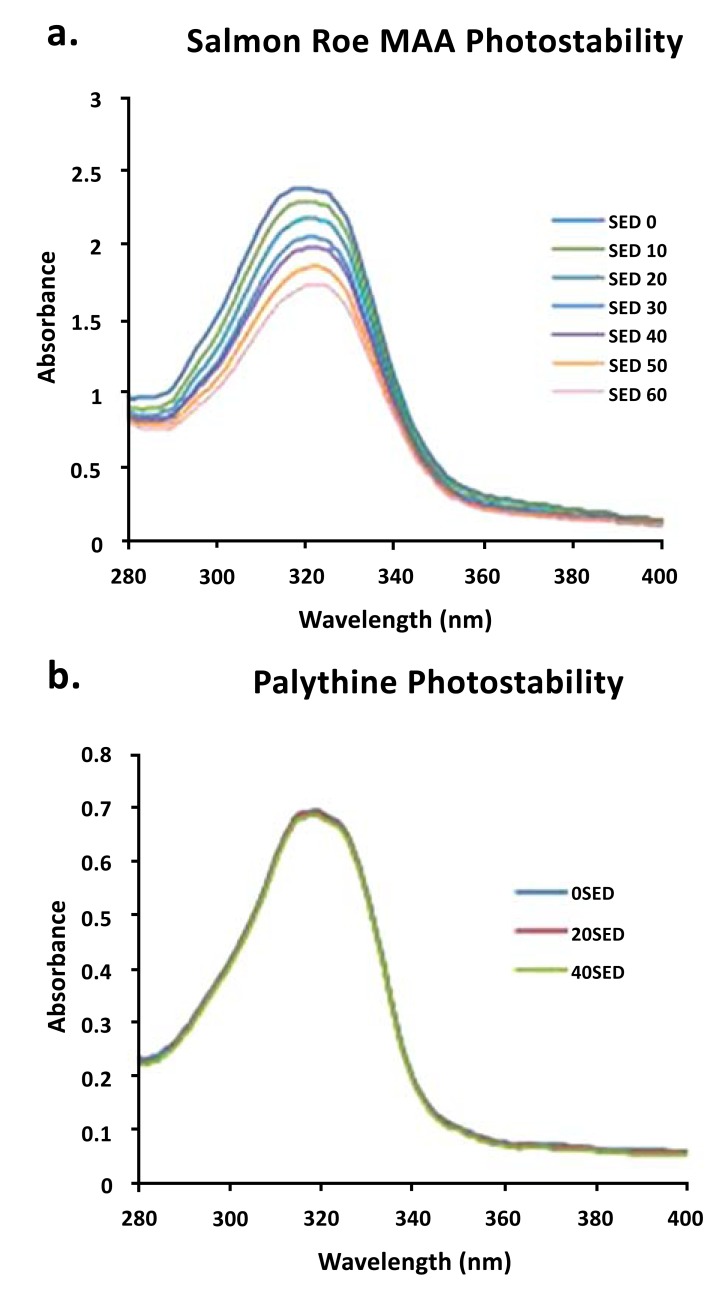
- MAA are small (<400 Da), water-soluble, with over 20 known compounds and λmax between 268–362 nm; porphyra-334 and shinorine dissipate 96–98% of absorbed energy as heat without ROS, and palythine showed only 3% degradation after 40 SED of solar simulated radiation (~60 J/cm²).
- In SKH-1 hairless mice, topical 2% porphyra-334/shinorine (88:12) prevented solar-simulated UVR-induced erythema, stratum corneum thickening, edema, and sunburn cells, with a calculated SPF of 3.71±0.78, though applied at 4 mg/cm², double standard sunscreen testing thickness.
- MAA show antioxidant activity, Nrf2 activation (porphyra-334 reduced IL-6, IL-1β, TNF-α and NF-κB, and increased HMOX-1, GSH, NQO1), and anti-photoageing effects (porphyra-334 inhibited MMP-1/MMP-8, reduced elastase, increased collagen/elastin; shinorine, porphyra-334, and palythine inhibited MMP-2).
- Commercial use is limited: Helioguard 365 contains porphyra-334 and shinorine (11.5:1) but final MAA concentration is 0.0005%, versus 0.5–10% w/v for typical sunscreen filters, and large-scale production is hindered by difficult biosynthesis and chiral synthesis.
Methods
- Design: narrative literature review of all relevant papers on MAA in nature and their potential for human skin photoprotection.
- Data: published studies across marine species, chemical/biological antioxidant assays, in silico Keap1-Nrf2 screening, in vitro skin cells/fibroblasts/keratinocytes, mouse skin, and one human volunteer pilot.
- Analysis: qualitative synthesis of structural, circumstantial, biological, and skin-model evidence; no systematic search strategy or meta-analysis is reported.
Limitations
- Stated: most MAA studies are in vitro; photochemistry is poorly understood with only a few compounds studied; MAA biosynthesis route is contentious; human DNA damage/erythema data are under-researched; biological and chemical antioxidant assay results disagree; exact antioxidant mechanisms remain unclear.
- Stated: the mouse SPF study applied formulation at 4 mg/cm², double standard testing thickness, so the real SPF would likely be at least half; the human collemin A pilot had one volunteer and requires confirmation.
- Evident: as a narrative review, it does not report a systematic search/selection protocol, and many conclusions rely on cited reviews or small, heterogeneous studies; commercial formulation and large-scale production barriers are noted but not experimentally resolved.
Model-written summary. Check it against the paper before relying on it.
Integrity signals
Registry
Cites
Statistics
Figures
Verification
Claims the paper makes
15 Valid · 0 Not valid · 64 Not checked · 19 Own results and interpretations
The cited sources support only part of this claim — read each source’s verdict below.
In the paper
“The cellular concentration and type of MAA vary with species, geographical location and environment (e.g. nitrate concentration) in which they are found.”
§ Mycosporine-Like Amino Acids for Skin Photoprotection > MYCOSPORINE-LIKE AMINO ACIDS
What the sources say
- Not checked yetcites [32] Figueroa F.L. Korbee N. Abdala R. Jerez C.G. López-de la Torre M. Güenaga L. Larrubia M.A. Gómez-Pinchetti J.L. Biofiltration of fishpond effluents and accumulation of N-compounds (phycobiliproteins and mycosporine-like amino acids) versus C-compounds (polysaccharides) in Hydropuntia cornea (Rhodophyta). Mar. Pollut. Bull. 2012 64 2 310 318 22169735 source
- Not checked yetcites [33] Barufi J.B. Mata M.T. Oliveira M.C. Figueroa F.L. Nitrate reduces the negative effect of UV radiation on photosynthesis and pigmentation in Gracilaria tenuistipitata (Rhodophyta): the photoprotection role of mycosporine-like amino acids. Phycologia 2012 51 6 636 648 source
- Not checked yetcites [34] Barufi J.B. Korbee N. Oliveira M.C. Figueroa F.L. Effects of N supply on the accumulation of photosynthetic pigments and photoprotectors in Gracilaria tenuistipitata (Rhodophyta) cultured under UV radiation. J. Appl. Phycol. 2011 23 3 457 466 source
- Not checked yetcites [35] Korbee N. Huovinen P. Figueroa F.L. Aguilera J. Karsten U. Availability of ammonium influences photosynthesis and the accumulation of mycosporine-like amino acids in two Porphyra species (Bangiales, Rhodophyta). Mar. Biol. 2005 146 4 645 654 source
- Partly supportedcites [36] Peinado N.K. Diaz R.T. Figueroa F.L. Helbling E.W. Ammonium and UV radiation stimulate the accumulation of mycosporine-like amino acids in Porphyra columbina (Rhodophyta) from Patagonia, Argentina. J. Phycol. 2004 40 2 248 259 sourceExperimental — accuracy not yet measured
Our copy supports most of the breadth of the claim: the Introduction (p. 1) states that besides solar radiation MAA accumulation 'can be affected by other environmental variables such as salinity, temperature, or nutrient availability', the Discussion (p. 8) reports that high ammonium significantly increased MAA content in P. columbina, and the latitude/water-column ('different latitudes'; intertidal vs subtidal) point appears in the Discussion (p. 6), though credited to earlier work (Karsten et al. 1998a, Franklin et al. 2001, Hoyer et al. 2001). Species-level variation is only implicit: the Introduction (p. 1) notes Porphyra spp. contain high levels of MAAs, 'mainly porphyra-334', and the highest concentrations among red macroalgae analysed, and the Results (p. 4) list five MAAs in P. columbina with porphyra-334 ~80% and shinorine ~20%. The claim's specific example 'nitrate concentration' is not supported: this paper manipulated ammonium (0, 50, 300 microM NH4Cl) and explicitly says there is 'scarce information on the effect of nitrogen availability on the synthesis and accumulation of MAAs'. (LLM, conf=0.72)
- Not checked yetcites [37] Huovinen P. Gomez I. Figueroa F.L. Ulloa N. Morales V. Lovengreen C. Ultraviolet-absorbing mycosporine-like amino acids in red macroalgae from Chile. Bot. Mar. 2004 47 1 21 29 source
- Not checked yetcites [38] Hoyer K. Karsten U. Wiencke C. Induction of sunscreen compounds in Antarctic macroalgae by different radiation conditions. Mar. Biol. 2002 141 4 619 627 source
- Not checked yetcites [39] Karsten U. Sawall T. Hanelt D. Bischof K. Figueroa F.L. Flores-Moya A. Wiencke C. An inventory of UV-absorbing mycosporine-like amino acids in macroalgae from polar to warm-temperate regions. Bot. Mar. 1998 41 5 443 453 source
plainstates an association- Asserted: passes — The authors put it forward as true.
- Checkable: passes — It can be checked against evidence.
- Load-bearing: unclear — It is unclear whether the paper’s conclusions depend on it.
- Based: passes — The paper gives a reason why it holds.
The cited sources support only part of this claim — read each source’s verdict below.
In the paper
“Species show seasonal variation in MAA concentration. In winter months, they have a lower concentration compared to summer months when UVR exposure is highest as demonstrated in plankton growing in lake environments [65, 66].”
§ Mycosporine-Like Amino Acids for Skin Photoprotection > PHOTOPROTECTIVE ROLE OF MAA IN NATURE > Circumstantial Evidence for Photoprotection
What the sources say
- Supportedcites [65] Tartarotti B. Sommaruga R. Seasonal and ontogenetic changes of mycosporine-like amino acids in planktonic organisms from an alpine lake. Limnol. Oceanogr. 2006 51 3 1530 1541 21258624 PMC3024532 source
The Discussion section on seasonal patterns reports that MAA concentrations in lake phytoplankton and zooplankton were low to almost undetectable during ice cover and highest during the ice-free season. It also states that incident solar UVR is highest during that ice-free period and lowest in winter. (LLM, conf=0.94)
- Partly supportedcites [66] Ha S-Y. Lee Y. Kim M-S. Kumar K.S. Shin K-H. Seasonal Changes in Mycosporine-Like Amino Acid Production Rate with Respect to Natural Phytoplankton Species Composition. Mar. Drugs 2015 13 11 6740 6758 26561820 PMC4663551 sourceExperimental — accuracy not yet measured
Results §2.2 reports seasonal variation in MAA concentration in two lakes, but the measurements run from March to November and do not establish a winter–summer comparison. Concentrations peaked in September at Lake Cheongpyeong and October at Lake Paldang, rather than during the summer UVR peak. The source therefore supports seasonal variation, not the claimed winter-low, summer-high pattern. (LLM, conf=0.88)
boostedstates an association- Asserted: passes — The authors put it forward as true.
- Checkable: passes — It can be checked against evidence.
- Load-bearing: unclear — It is unclear whether the paper’s conclusions depend on it.
- Based: passes — The paper gives a reason why it holds.
- Supported
The sources with a verdict support this claim; the rest weren’t checked yet, have no full text we could read, or their verdicts aren’t rated yet.
In the paper
“This hypothesis has since been investigated and the role of MAA in prevention from osmotic stress supported [77, 85-88].”
§ Mycosporine-Like Amino Acids for Skin Photoprotection > PHOTOPROTECTIVE ROLE OF MAA IN NATURE > Additional Protective Roles of MAA in Nature
What the sources say
- Not checked yetcites [77] Oren A. Gunde-Cimerman N. Mycosporines and mycosporine-like amino acids: UV protectants or multipurpose secondary metabolites? FEMS Microbiol. Lett. 2007 269 1 1 10 17286572 source
- Not checked yetcites [85] Portwich A. Garcia-Pichel F. Ultraviolet and osmotic stresses induce and regulate the synthesis of mycosporines in the cyanobacterium chlorogloeopsis PCC 6912. Arch. Microbiol. 1999 172 4 187 192 10525734 source
- Not checked yetcites [86] Kogej T. Gostinčar C. Volkmann M. Gorbushina A.A. Gunde-Cimerman N. Mycosporines in Extremophilic Fungi—Novel Complementary Osmolytes? Environ. Chem. 2006 3 2 105 110 source
- Not checked yetcites [87] Singh S.P. Klisch M. Sinha R.P. Häder D.P. Effects of abiotic stressors on synthesis of the mycosporine-like amino acid shinorine in the Cyanobacterium Anabaena variabilis PCC 7937. Photochem. Photobiol. 2008 84 6 1500 1505 18557824 source
- Supportedcites [88] Waditee-Sirisattha R. Kageyama H. Sopun W. Tanaka Y. Takabe T. Identification and upregulation of biosynthetic genes required for accumulation of Mycosporine-2-glycine under salt stress conditions in the halotolerant cyanobacterium Aphanothece halophytica. Appl. Environ. Microbiol. 2014 80 5 1763 1769 24375141 PMC3957624 source
The DISCUSSION (p. of passage 1) states directly that 'the present results support the notion that MAAs can play a role not only as an UV-absorbing compound but also as an osmoprotectant in response to salt stress.' This is grounded in the paper's own in vivo data: RESULTS (passage 2) show salt upshock (0.5 to 2.5 M NaCl) raised mycosporine-2-glycine from 0.35 to 31.97 μmol/g, more than UV-B exposure, and the Abstract and transformed-strain data (passages 5, 7) repeat the salt-driven accumulation. The INTRODUCTION (passage 3) likewise notes MAAs are synthesized under osmotic stress. The citing sentence's weaker hedge ('supported') matches the source's own framing. (LLM, conf=0.87)
plainstates a cause- Asserted: passes — The authors put it forward as true.
- Checkable: passes — It can be checked against evidence.
- Load-bearing: unclear — It is unclear whether the paper’s conclusions depend on it.
- Based: passes — The paper gives a reason why it holds.
Every source the paper cites for this claim was checked and supports it.
In the paper
“Porphyra-334 has also shown have no effect on cell viability of human skin fibroblasts at concentrations up to 200μM [93].”
§ Mycosporine-Like Amino Acids for Skin Photoprotection > PHOTOPROTECTION OF THE SKIN > Cell Viability/Proliferation
What the sources say
- Supportedcites [93] Ryu J. Park S.J. Kim I.H. Choi Y.H. Nam T.J. Protective effect of porphyra-334 on UVA-induced photoaging in human skin fibroblasts. Int. J. Mol. Med. 2014 34 3 796 803 24946848 PMC4121349 source
The ‘Effect of porphyra-334 on cell viability’ section reports that human skin fibroblasts treated with 0–200 µM porphyra-334 showed no significant toxicity after 24 hours. Figure 2A likewise states that this concentration range did not exert cytotoxic effects on fibroblasts. (LLM, conf=0.93)
plain- Asserted: passes — The authors put it forward as true.
- Checkable: passes — It can be checked against evidence.
- Load-bearing: unclear — It is unclear whether the paper’s conclusions depend on it.
- Based: passes — The paper gives a reason why it holds.
- Supported
Every source the paper cites for this claim was checked and supports it.
In the paper
“Porphyra-334, the most widely studied MAA, has also demonstrated a dose dependent reduction in oxidative stress in skin fibroblasts, when added post exposure, again suggesting antioxidant capability [93].”
§ Mycosporine-Like Amino Acids for Skin Photoprotection > PHOTOPROTECTION OF THE SKIN > Oxidative Stress
What the sources say
- Supportedcites [93] Ryu J. Park S.J. Kim I.H. Choi Y.H. Nam T.J. Protective effect of porphyra-334 on UVA-induced photoaging in human skin fibroblasts. Int. J. Mol. Med. 2014 34 3 796 803 24946848 PMC4121349 source
The Discussion reports a dose-dependent decrease in UVA-induced intracellular ROS in human skin fibroblasts. The “UVA irradiation and treatment” section specifies that porphyra-334 was added after irradiation, supporting the post-exposure timing. (LLM, conf=0.93)
boostedstates a cause- Asserted: passes — The authors put it forward as true.
- Checkable: passes — It can be checked against evidence.
- Load-bearing: passes — The paper’s conclusions depend on it.
- Based: passes — The paper gives a reason why it holds.
- Supported
50 more claims · 6 with their cited sources checked
Create a free account to see all 98 claims and to verify the 112 references still open.
- It may state two separate claims as one. 37
- Probably not a substantial claim. 11
- The quote only partly states this claim. 2
Claims other papers make about this one
Each is checked against this paper’s own text: does it say what the citing paper says it does?
The source backs part of the claim, not all of it — or backs it for a different population, condition or comparison.
In the citing paper
“most formulations of sunscreens with MAAs currently contain only a very small percentage of this active ingredient, and it functions as an adjuvant to UV filters and other sources of photoprotection [83].”
From Sunscreens and Photoaging: A Review of Current Literature (2021) · cites this paper as [83]
Experimental — accuracy not yet measured
Citations
Cites
Molecular Mechanisms of Stress-Responsive Changes in Collagen and Elastin Networks in Skin
Aziz, J., Shezali, H., Radzi, Z., Yahya, N. A., Abu Kassim, N. H., Czernuszka, J., & Rahman, M. T. (2016) · Skin Pharmacology and Physiology · doi:10.1159/000447017 · Cited by 7,323
The epidemiology of UV induced skin cancer
Armstrong, B. K., & Kricker, A. (2001) · Journal of Photochemistry and Photobiology B: Biology · doi:10.1016/s1011-1344(01)00198-1 · Cited by 1,811
Molecular basis of sun-induced premature skin ageing and retinoid antagonism
Fisher, G. J., Datta, S. C., Talwar, H. S., Wang, Z.-Q., Varani, J., Kang, S., & Voorhees, J. J. (1996) · Nature · doi:10.1038/379335a0 · Cited by 1,410
Oxidative Stress in the Pathogenesis of Skin Disease
Bickers, D. R., & Athar, M. (2006) · Journal of Investigative Dermatology · doi:10.1038/sj.jid.5700340 · Cited by 1,092
Metabolites from algae with economical impact
Cardozo, K. H. M., Guaratini, T., Barros, M. P., Falcão, V. R., Tonon, A. P., Lopes, N. P., Campos, S., Torres, M. A., Souza, A. O., Colepicolo, P., et al. (2007) · Comparative Biochemistry and Physiology Part C: Toxicology & Pharmacology · doi:10.1016/j.cbpc.2006.05.007 · Cited by 957
Reduced melanoma after regular sunscreen use: randomized trial follow-up
Green, A. C., Williams, G. M., Logan, V., & Strutton, G. M. (2011) · Journal of Clinical Oncology · doi:10.1200/jco.2010.28.7078 · Cited by 799
Shick, J. M., & Dunlap, W. C. (2002) · Annual Review of Physiology · doi:10.1146/annurev.physiol.64.081501.155802 · Cited by 676
Sunscreens cause coral bleaching by promoting viral infections
Danovaro, R., Bongiorni, L., Corinaldesi, C., Giovannelli, D., Damiani, E., Astolfi, P., Greci, L., & Pusceddu, A. (2008) · Environmental Health Perspectives · doi:10.1289/ehp.10966 · Cited by 611
Chemiexcitation of melanin derivatives induces DNA photoproducts long after UV exposure
Premi, S., Wallisch, S., Mano, C. M., Weiner, A. B., Bacchiocchi, A., Wakamatsu, K., Bechara, E. J. H., Halaban, R., Douki, T., & Brash, D. E. (2015) · Science · doi:10.1126/science.1256022 · Cited by 550
UV wavelength-dependent DNA damage and human non-melanoma and melanoma skin cancer
Pfeifer, G. P., & Besaratinia, A. (2012) · Photochemical & Photobiological Sciences · doi:10.1039/c1pp05144j · Cited by 473
Research works printed but not linked: 1
- Peinado N.K. Abdala Díaz R.T. Figueroa F.L. Helbling E.W. Ammonium and UV radiation stimulate the accumulation of mycosporine-like amino acids in porphyra Columbina (rhodophta) from Patagonia Argentina. J. Phycol. 2004 40 2 248 259 · DOI · Paper page
Cited by
Seaweed Phenolics: From Extraction to Applications
Cotas, J., Leandro, A., Monteiro, P., Pacheco, D., Figueirinha, A., Gonçalves, A. M. M., da Silva, G. J., & Pereira, L. (2020) · Marine Drugs · doi:10.3390/md18080384 · Cited by 525
Bais, A. F., Lucas, R. M., Bornman, J. F., Williamson, C. E., Sulzberger, B., Austin, A. T., Wilson, S. R., Andrady, A. L., Bernhard, G., McKenzie, R. L., et al. (2018) · Photochemical & Photobiological Sciences · doi:10.1039/c7pp90043k · Cited by 350
Self-citationGalasso, C., Gentile, A., Orefice, I., Ianora, A., Bruno, A., Noonan, D. M., Sansone, C., Albini, A., & Brunet, C. (2019) · Nutrients · doi:10.3390/nu11061226 · Cited by 295
“MAAs are water soluble, low molecular weight and polar compounds [53] that have been shown to protect cells from UV-induced damage due to the presence of double bonds, providing them with antioxidant properties and photostability [54].”
BackgroundSunscreens and Photoaging: A Review of Current Literature
Guan, L. L., Lim, H. W., & Mohammad, T. F. (2021) · American Journal of Clinical Dermatology · doi:10.1007/s40257-021-00632-5 · Cited by 313
“With controversies around chemical sunscreens and their effects on marine life, algae-derived sunscreens may provide a future solution for eco-friendly photoprotection; however, most formulations of sunscreens with MAAs currently contain only a very small percentage of this active ingredient, and it functions as an ad…”
BackgroundLucas, R. M., Yazar, S., Young, A. R., Norval, M., de Gruijl, F. R., Takizawa, Y., Rhodes, L. E., Sinclair, C. A., & Neale, R. E. (2019) · Photochemical & Photobiological Sciences · doi:10.1039/c8pp90060d · Cited by 233
Self-citationSeaweed’s Bioactive Candidate Compounds to Food Industry and Global Food Security
Leandro, A., Pacheco, D., Cotas, J., Marques, J. C., Pereira, L., & Gonçalves, A. M. M. (2020) · Life · doi:10.3390/life10080140 · Cited by 216
Cotas, J., Leandro, A., Pacheco, D., Gonçalves, A. M. M., & Pereira, L. (2020) · Life · doi:10.3390/life10030019 · Cited by 210
“Such methods will make the seaweeds produce more photoprotective compounds [61].”
BackgroundInfluentialMycosporine-Like Amino Acids (MAAs): Biology, Chemistry and Identification Features
Geraldes, V., & Pinto, E. (2021) · Pharmaceuticals · doi:10.3390/ph14010063 · Cited by 193
“The concentration of MAAs in organisms is directly relat d to their level of UVR exposure, which depends on latitude and altitude, seasonality and water depth [15,33,60,61].”
InfluentialKageyama, H., & Waditee-Sirisattha, R. (2019) · Marine Drugs · doi:10.3390/md17040222 · Cited by 191
“Their pronounced photo-protective potential was first noted when they were proved to be ROS scavengers, an ability which arose via their antioxidant ability [14,50].”
BackgroundTorres, P., Santos, J. P., Chow, F., & dos Santos, D. Y. A. C. (2019) · Algal Research · doi:10.1016/j.algal.2018.12.009 · Cited by 174
Williamson, C. E., Neale, P. J., Hylander, S., Rose, K. C., Figueroa, F. L., Robinson, S. A., Häder, D.-P., Wä, S.-Å., & Worrest, R. C. (2019) · Photochemical & Photobiological Sciences · doi:10.1039/c8pp90062k · Cited by 169
Mycosporine-Like Amino Acids: Making the Foundation for Organic Personalised Sunscreens
Rosic, N. (2019) · Marine Drugs · doi:10.3390/md17110638 · Cited by 125
Microalgal Cell Biofactory—Therapeutic, Nutraceutical and Functional Food Applications
Kiran, B. R., & Venkata Mohan, S. (2021) · Plants · doi:10.3390/plants10050836 · Cited by 124
“B16-F1 murine skin melanoma of human cell lines [84].”
Backgroundde la Coba, F., Aguilera, J., Korbee, N., de Gálvez, M. V., Herrera-Ceballos, E., Álvarez-Gómez, F., & Figueroa, F. L. (2019) · Marine Drugs · doi:10.3390/md17010055 · Cited by 105
“In fact, it was recently found that palythine showed only 3% degradation after an exposure of 40 standard erythema doses of solar simulated radiation [62].”
BackgroundNutraceuticals: Pharmacologically Active Potent Dietary Supplements
Chandra, S., Saklani, S., Kumar, P., Kim, B., & Coutinho, H. D. M. (2022) · BioMed Research International · doi:10.1155/2022/2051017 · Cited by 119
“The amino acids are playing a signi fi cant role in anti-in fl ammatory, immunomodulatory, and antioxidant properties [29].”
Seaweed-Based Molecules and Their Potential Biological Activities: An Eco-Sustainable Cosmetics
Kalasariya, H. S., Yadav, V. K., Yadav, K. K., Tirth, V., Algahtani, A., Islam, S., Gupta, N., & Jeon, B.-H. (2021) · Molecules · doi:10.3390/molecules26175313 · Cited by 98
Bioactive compounds by microalgae and potentials for the management of some human disease conditions
Eze, C. N., Onyejiaka, C. K., Ihim, S. A., Ayoka, T. O., Aduba, C. C., Ndukwe, J. K., Nwaiwu, O., & Onyeaka, H. (2023) · AIMS Microbiology · doi:10.3934/microbiol.2023004 · Cited by 95
Sunscreens and their usefulness: have we made any progress in the last two decades?
Serpone, N. (2021) · Photochemical & Photobiological Sciences · doi:10.1007/s43630-021-00013-1 · Cited by 92
Nandagopal, P., Steven, A. N., Chan, L.-W., Rahmat, Z., Jamaluddin, H., & Noh, N. I. M. (2021) · Biology · doi:10.3390/biology10101061 · Cited by 137
“Nevertheless, these products are able to provide maximal protection in the UVA range but only allow minimum protection in the more damaging UVB range [125].”
BackgroundVega, J., Schneider, G., Moreira, B. R., Herrera, C., Bonomi‐Barufi, J., & Figueroa, F. L. (2021) · Applied Sciences · doi:10.3390/app11115112 · Cited by 97
“As previously mentioned, numerous studies suggest the use of MAAs as UV screen substances [23,33,41,146].”
BackgroundInfluentialPhotosynthetic Production of Sunscreen Shinorine Using an Engineered Cyanobacterium
Yang, G., Cozad, M. A., Holland, D. A., Zhang, Y., Luesch, H., & Ding, Y. (2018) · ACS Synthetic Biology · doi:10.1021/acssynbio.7b00397 · Cited by 82
Gacesa, R., Lawrence, K. P., Georgakopoulos, N. D., Yabe, K., Dunlap, W. C., Barlow, D. J., Wells, G., Young, A. R., & Long, P. F. (2018) · Biochimie · doi:10.1016/j.biochi.2018.07.020 · Cited by 82
“Yet, MAAs are multifunctional metabolites that protect also against free-radical damage and boost cellular tolerance to desiccation, hyper-salinity and heat stress [16,19]; there are more than 20 known MAAs in this class of natural metabolites (Fig.”
BackgroundSelf-citationFuentes-Tristan, S., Parra‐Saldívar, R., Iqbal, H. M. N., & Carrillo-Nieves, D. (2019) · Journal of Photochemistry and Photobiology B Biology · doi:10.1016/j.jphotobiol.2019.111684 · Cited by 93
Neale, P. J., Williamson, C. E., Banaszak, A. T., Häder, D.-P., Hylander, S., Ossola, R., Rose, K. C., Wängberg, S.-Å., & Zepp, R. (2023) · Photochemical & Photobiological Sciences · doi:10.1007/s43630-023-00370-z · Cited by 79
“Among the various compounds, there is a particular interest in mycosporine-glycine [180], palythine [181], palythene [182], shinorine [183], porphyra-334 [184], and scytonemin as UV filters for sunscreen [185], skin care [186], and cosmetic formulations [187, 188] due to their availability, stability, and antioxidant…”
BackgroundConcise review of the red macroalga dulse, Palmaria palmata (L.) Weber & Mohr
Stévant, P., Schmedes, P. S., Gall, L. L., Wegeberg, S., Dumay, J., & Rebours, C. (2023) · Journal of Applied Phycology · doi:10.1007/s10811-022-02899-5 · Cited by 92
Dutta, S., Kumar, S., & Banerjee, R. (2023) · Algal Research · doi:10.1016/j.algal.2023.103168 · Cited by 82
In vivo SPF from multifunctional sunscreen systems developed with natural compounds—A review
Morocho‐Jácome, A. L., Freire, T. B., de Oliveira, A. C., de Almeida, T. S., Rosado, C., Velasco, M. V. R., & Baby, A. R. (2021) · Journal of Cosmetic Dermatology · doi:10.1111/jocd.13609 · Cited by 70
Lawrence, K. P., Gacesa, R., Long, P. F., & Young, A. R. (2018) · British Journal of Dermatology · doi:10.1111/bjd.16125 · Cited by 69
Self-citationMicroalgae as a Source of Mycosporine-like Amino Acids (MAAs); Advances and Future Prospects
Raj, S., Kuniyil, A. M., Sreenikethanam, A., Gugulothu, P., Jeyakumar, R. B., & Bajhaiya, A. K. (2021) · International Journal of Environmental Research and Public Health · doi:10.3390/ijerph182312402 · Cited by 74
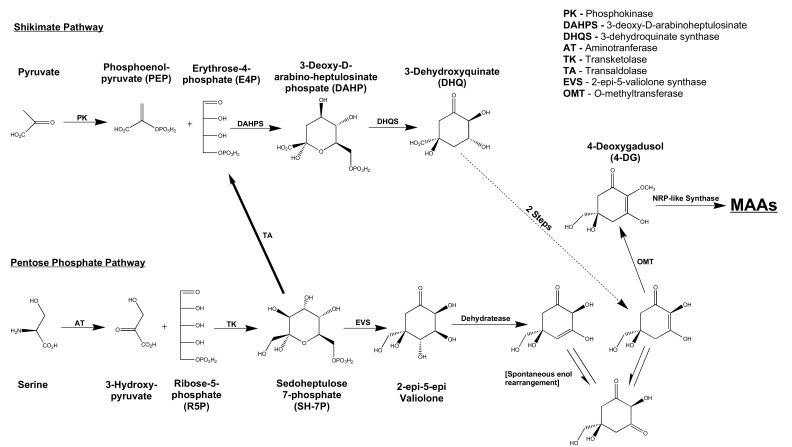
“The pentose phosphate pathway is not the major pathway involved in MAAs production [60].”
BackgroundSouak, D., Barreau, M., Courtois, A., André, V., Duclairoir Poc, C., Feuilloley, M. G. J., & Gault, M. (2021) · Microorganisms · doi:10.3390/microorganisms9050936 · Cited by 61
“Organic (chemical) UV filters (such as Tinosorb® M-BASF Care Creations, MexorylTM XL-L’Oréal, TriasorbTM-Pierre Fabre) absorb high-energy UV rays and release lower energy radiation thanks to a chromophore that is typically an aromatic moiety conjugated or not to a carbonyl group [23,49,54].”
BackgroundRecent Advances and Future Prospects of Mycosporine-like Amino Acids
Peng, J., Guo, F., Liu, S., Fang, H., Xu, Z., & Wang, T. (2023) · Molecules · doi:10.3390/molecules28145588 · Cited by 68
“MAAs have a maximum absorption range of 268–362 nm, which is mainly concentrated between 310 and 360 nm [57].”
BackgroundRastogi, R. P., Madamwar, D., & Incharoensakdi, A. (2015) · Journal of Applied Microbiology · doi:10.1111/jam.12879 · Cited by 55
Ashokkumar, V., Shanmugam, J., Kumar, G., Sharmili, S. A., Gopal, M., Dharmaraj, S., Chen, W., Kothari, R., Manasa, I., Park, J. H., et al. (2022) · Bioresource Technology · doi:10.1016/j.biortech.2022.127235 · Cited by 58
Guihéneuf, F., Gietl, A., & Stengel, D. B. (2018) · Journal of Applied Phycology · doi:10.1007/s10811-018-1436-z · Cited by 61
Up-to-Date Overview of the Use of Natural Ingredients in Sunscreens
Resende, D. I. S. P., de Jesus, A. I. M., Lobo, J. M. S., Sousa, E., Cruz, M. T., Cidade, H. M., & Almeida, I. F. (2022) · Pharmaceuticals · doi:10.3390/ph15030372 · Cited by 66
Geraldes, V., Jacinavicius, F. R., Genuário, D. B., & Pinto, E. (2019) · Rapid Communications in Mass Spectrometry · doi:10.1002/rcm.8634 · Cited by 55
Park, S.-H., Lee, K., Jang, J. W., & Hahn, J. (2018) · ACS Synthetic Biology · doi:10.1021/acssynbio.8b00388 · Cited by 53
Mycosporine-Like Amino Acids from Marine Resource
Figueroa, F. L. (2021) · Marine Drugs · doi:10.3390/md19010018 · Cited by 49
Geraldes, V., de Medeiros, L. S., Jacinavicius, F. R., Long, P. F., & Pinto, E. (2020) · Algal Research · doi:10.1016/j.algal.2020.101796 · Cited by 49
Self-citationRosic, N. N., Climstein, M., Boyle, G. M., Nguyen, T., & Feng, Y. (2023) · Marine Drugs · doi:10.3390/md21040253 · Cited by 55
“There were concerns regarding whether MAA water solubility could present an additional challenge when using these molecules within sunscreen formulations for UVR protection during aquatic activities [18].”
BackgroundInfluentialFrom Sea to Skin: Is There a Future for Natural Photoprotectants?
Milito, A., Castellano, I., & Damiani, E. (2021) · Marine Drugs · doi:10.3390/md19070379 · Cited by 43
“Furthermore, some natural compounds also possess broad UVA/UVB spectrum coverage [150] which would reduce the need for blending a series of filters to achieve this purpose.”
BackgroundRangel, K. C., Villela, L. Z., Pereira, K. D. C., Colepicolo, P., Debonsi, H. M., & Gaspar, L. R. (2020) · Algal Research · doi:10.1016/j.algal.2020.101984 · Cited by 42
Nutritional value of seaweeds and their potential to serve as nutraceutical supplements
Imchen, T. (2021) · Phycologia · doi:10.1080/00318884.2021.1973753 · Cited by 44
Orfanoudaki, M., Hartmann, A., Miladinovic, H., Nguyen-Ngoc, H., Karsten, U., & Ganzera, M. (2019) · Marine Drugs · doi:10.3390/md17060356 · Cited by 45
UVA Photoprotective Activity of Brown Macroalgae Sargassum cristafolium
Prasedya, E. S., Syafitri, S. M., Geraldine, B. A. F. D., Hamdin, C. D., Frediansyah, A., Miyake, M., Kobayashi, D., Hazama, A., & Sunarpi, H. (2019) · Biomedicines · doi:10.3390/biomedicines7040077 · Cited by 39
“Cells with high concentrations of MAA are likely to be more resistant to UVR than those with low concentrations [24].”
BackgroundPigment Production Improvement in Rhodotorula mucilaginosa AJB01 Using Design of Experiments
cortes, A. G., Vásquez, J. A. G., Aranguren, Y., & Ramírez-Castrillón, M. (2021) · Microorganisms · doi:10.3390/microorganisms9020387 · Cited by 38
“Ultraviolet radiation triggers a defense mechanism against oxidative stress through the cell’s production of photo-protectant molecules, such as carotenoids and mycosporines [27].”
BackgroundApplications of mycosporine-like amino acids beyond photoprotection
Punchakara, A., Prajapat, G., Bairwa, H. K., Jain, S., & Agrawal, A. (2023) · Applied and Environmental Microbiology · doi:10.1128/aem.00740-23 · Cited by 46
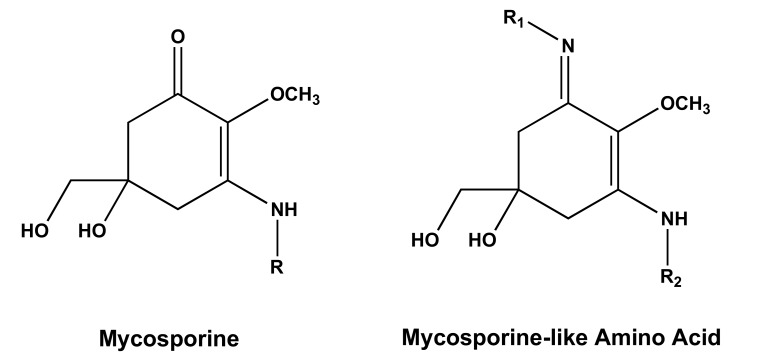
“The difference in absorption spectra of MAAs is due to the variation in amino acids side chains (5, 20).”
BackgroundSustainable Sources from Aquatic Organisms for Cosmeceuticals Ingredients
Sotelo, C. G., Blanco, M., Ramos, P., Vázquez, J. A., & Pérez‐Martín, R. I. (2021) · Cosmetics · doi:10.3390/cosmetics8020048 · Cited by 38
“These compounds were discovered in fungi in 1965, and it has been shown that marine bacteria and fungi synthesize them while others accumulate them [86].”
BackgroundCoral holobionts and biotechnology: from Blue Economy to coral reef conservation
van de Water, J. A. J. M., Tignat‐Perrier, R., Allemand, D., & Ferrier‐Pagès, C. (2021) · Current Opinion in Biotechnology · doi:10.1016/j.copbio.2021.10.013 · Cited by 43
Marine cosmetics and the blue bioeconomy: From sourcing to success stories
Rotter, A., Varamogianni-Mamatsi, D., Pobirk, A. Z., Matjaž, M. G., Cueto, M., Díaz‐Marrero, A. R., Jónsdóttir, R., Sveinsdóttir, K., Catalá, T. S., Romano, G., et al. (2024) · iScience · doi:10.1016/j.isci.2024.111339 · Cited by 42
Sen, S., & Mallick, N. (2021) · Algal Research · doi:10.1016/j.algal.2021.102425 · Cited by 39
Dermo-Cosmetic Benefits of Marine Macroalgae-Derived Phenolic Compounds
Kalasariya, H. S., & Pereira, L. (2022) · Applied Sciences · doi:10.3390/app122311954 · Cited by 40
Majeed, M. A., Majeed, S., Jain, R., Mundkur, L., Rajalakshmi, H., Lad, P. S., & Neupane, P. (2020) · Cosmetics · doi:10.3390/cosmetics7010016 · Cited by 35
Görünmek, M., Ballık, B., Çakmak, Z. E., & Çakmak, T. (2024) · Algal Research · doi:10.1016/j.algal.2024.103507 · Cited by 41
Chauton, M. S., Forbord, S., Mäkinen, S., Sarno, A., Slizyte, R., Mozuraityte, R., Standal, I. B., & Skjermo, J. (2021) · Physiologia Plantarum · doi:10.1111/ppl.13391 · Cited by 28
“They can be used to produce safe, eco-friendly sun care products (Lawrence et al., 2018; Oren & Gunde-Cimerman, 2007).”
BackgroundModulation of the ubiquitin-proteasome system by marine natural products
Vasilopoulou, M. Α., Ioannou, E., Roussis, V., & Chondrogianni, N. (2021) · Redox Biology · doi:10.1016/j.redox.2021.101897 · Cited by 29
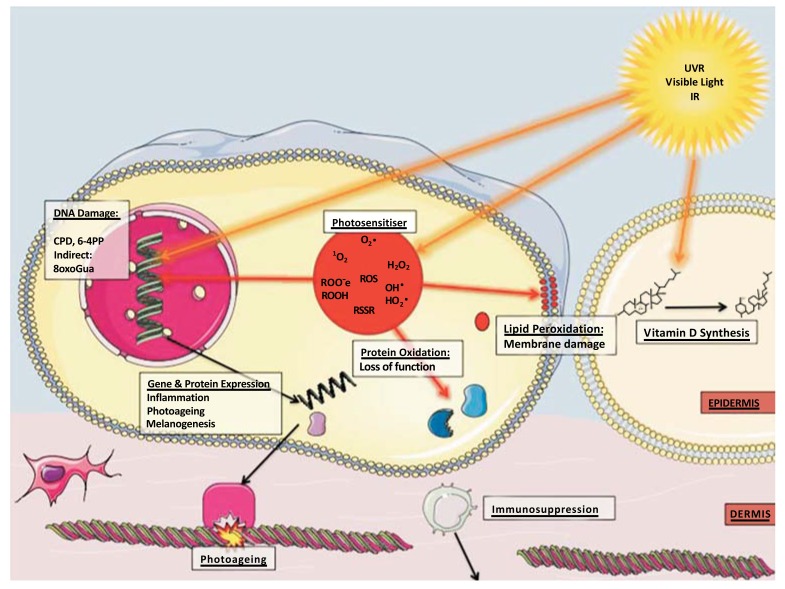
“Antioxidation, anti-photoaging, photoprotection and protection against DNA damage are characteristic biological properties of MAAs [107,217,226,227].”
BackgroundInfluentialUnravelling the Dermatological Potential of the Brown Seaweed Carpomitra costata
Susano, P., Silva, J., Alves, C., Martins, A., Gaspar, H., Pintéus, S., Mouga, T., Goettert, M. I., Petrovski, Ž., Branco, L. B., et al. (2021) · Marine Drugs · doi:10.3390/md19030135 · Cited by 36
“Exposure to UVR originates photo-oxidation reactions, impairing the skin’s antioxidant defence mechanisms and consequent acceleration of photoaging events [6,7].”
BackgroundThe impact of solar ultraviolet radiation on fish: Immunomodulation and photoprotective strategies
Lawrence, K. P., Young, A. R., Diffey, B. L., & Norval, M. (2019) · Fish and Fisheries · doi:10.1111/faf.12420 · Cited by 25
Self-citationAmador-Castro, F., Rodriguez-Martinez, V., & Carrillo-Nieves, D. (2020) · Science of The Total Environment · doi:10.1016/j.scitotenv.2020.141576 · Cited by 25
Torres, P. B., Nagai, A., Teixeira, D. I. A., Marinho‐Soriano, E., Chow, F., & dos Santos, D. Y. A. C. (2019) · Journal of Applied Phycology · doi:10.1007/s10811-019-01804-x · Cited by 25
Red Seaweed-Derived Compounds as a Potential New Approach for Acne Vulgaris Care
Januário, A. P., Félix, R., Félix, C., Reboleira, J., Valentão, P., & Lemos, M. F. L. (2021) · Pharmaceutics · doi:10.3390/pharmaceutics13111930 · Cited by 30
“In particular, red algae species, the oldest division (Rhodophyta) of lower plants [15], are renowned producers of both anti-inflammatory metabolites (MAAs—mycosporine-like amino acids [16], phycocyanin [17], allophycocyanin [18], carotenoids [19], porphyrans [20]) and antimicrobials (diterpenes [21], monoterpenes [22…”
BackgroundExtracts of red seaweed, Pyropia yezoensis, inhibit melanogenesis but stimulate collagen synthesis
Park, J., Lee, H., Choi, S., Pandey, L. K., Depuydt, S., Saeger, J. D., Park, J.-T., & Han, T. (2021) · Journal of Applied Phycology · doi:10.1007/s10811-020-02305-y · Cited by 23
Triplet-Energy Quenching Functions of Antioxidant Molecules
Angelé-Martínez, C., Goncalves, L. C. P., Premi, S., Augusto, F. A., Palmatier, M. A., Amar, S. K., & Brash, D. E. (2022) · Antioxidants · doi:10.3390/antiox11020357 · Cited by 21
Figueroa, F. L., Álvarez‐Gómez, F., Bonomi‐Barufi, J., Vega, J., Massocato, T. F., Gómez‐Pinchetti, J. L., & Korbee, N. (2022) · Algal Research · doi:10.1016/j.algal.2022.102890 · Cited by 20
Wang, K., Deng, Y., He, Y., Cao, J., Zhang, L., Qin, L., Qu, C., Li, H., & Miao, J. (2023) · International Journal of Molecular Sciences · doi:10.3390/ijms242015055 · Cited by 23
“Among these, porphyra-334, shinorine, and mycosporine-glycine have attracted the most attention in photochemistry [15].”
BackgroundGeraldes, V., de Medeiros, L. S., de Lima, S. T., Alvarenga, D. O., Gaćeša, R., Long, P. F., Fiore, M. F., & Pinto, E. (2020) · ALGAE · doi:10.4490/algae.2020.35.5.19 · Cited by 27
“Thus, MAAs have been widely studied as natural alternatives to potentially toxic synthetic sunscreens and for other bio-technological applications (Lawrence et al. 2017).”
BackgroundSelf-citationEnhancing microalgal proteins for nutraceutical and functional food applications
Kaur, M., Bhatia, S., Bagchi, D., Tak, Y., Kaur, G., Kaur, C., Kaur, A., & Sharma, N. (2025) · Future Foods · doi:10.1016/j.fufo.2025.100564 · Cited by 19
Microalgae: revolutionizing skin repair and enhancement
Chinjoo, N., & Golzary, A. (2025) · Biotechnology Reports · doi:10.1016/j.btre.2025.e00911 · Cited by 30
“Studies on human fibroblast cells indicate that MAAs can inhibit thymine-thymine dimer formation, effectively preventing UV-induced DNA mutations [139,140].”
Zwerger, M. J., Hammerle, F. J., Siewert, B., & Ganzera, M. (2023) · Journal of Applied Phycology · doi:10.1007/s10811-023-02906-3 · Cited by 21
Dextro, R. B., Delbaje, E., Geraldes, V., Pinto, E., Long, P. F., & Fiore, M. F. (2023) · Molecules · doi:10.3390/molecules28031420 · Cited by 23
Self-citationPhenolic compounds of brown algae
Barzkar, N., Ivanova, S. A., Сухих, С. А., Malkov, D., Носкова, С., & Babich, O. (2024) · Food Bioscience · doi:10.1016/j.fbio.2024.105374 · Cited by 20
Molecular mechanisms of Marine-Derived Natural Compounds as photoprotective strategies
Liu, Y., Liu, Y., Deng, J., Wu, X., He, W., Mu, X., & Nie, X. (2022) · International Immunopharmacology · doi:10.1016/j.intimp.2022.109174 · Cited by 18
Excited-state dynamics with machine learning
Zhang, L., Ullah, A., Pinheiro, M., Dral, P. O., & Barbatti, M. (2022) · Elsevier eBooks · doi:10.1016/b978-0-323-90049-2.00008-1 · Cited by 18
Contamination of Coral Reefs in the Mexican Caribbean
Banaszak, A. T. (2021) · Springer eBooks · doi:10.1007/978-3-030-75602-4_6 · Cited by 20
Microalgae growth rate multivariable mathematical model for biomass production
Martínez-Ruiz, M., Vazquez, K., Losoya, L., González, S., Robledo‐Padilla, F., Gutierrez, O. A., Iqbal, H. M. N., & Parra‐Saldívar, R. (2022) · Heliyon · doi:10.1016/j.heliyon.2022.e12540 · Cited by 20
Zhang, S., Liu, Z., Li, X., Abubaker, M. A., Liu, X., Li, Z., Wang, X., Zhu, X., Zhang, J., & Chen, X. (2022) · Applied Sciences · doi:10.3390/app12030990 · Cited by 19
Kumar, A., Archoo, S., Singh, C. P., Naikoo, S. H., Singh, B., Kaur, S., & Abdullah, S. T. (2022) · Bioorganic & Medicinal Chemistry Letters · doi:10.1016/j.bmcl.2022.128984 · Cited by 17
Application of Synthetic Biology Approaches to High-Yield Production of Mycosporine-like Amino Acids
Singh, V. K., Jha, S., Rana, P., Gupta, A., Singh, A. P., Kumari, N., Mishra, S., Singh, P. R., Jaiswal, J., & Sinha, R. P. (2023) · Fermentation · doi:10.3390/fermentation9070669 · Cited by 18
Figueroa, F. L., Castro-Varela, P., Vega, J., Losantos, R., Peñín, B., López‐Cóndor, L., Pacheco, M. J., Redoli, S. L., Marí‐Beffa, M., Abdala‐Díaz, R., et al. (2024) · Journal of Photochemistry and Photobiology B Biology · doi:10.1016/j.jphotobiol.2024.113050 · Cited by 18
“The synthetic UV screen compounds showed zero toxicity similar to natural MAAs [27] or other natural compounds extracted from algae, such as polysaccharides ( e.g. Ulvans present a EC 50 of 4.2 and 1.2 mg mL (cid:0) 1 on HACAT and 1064sk cells; [62]).”
InfluentialHengardi, M. T., Liang, C., Madivannan, K., Yang, L. K., Koduru, L., Kanagasundaram, Y., & Arumugam, P. (2024) · Microbial Cell Factories · doi:10.1186/s12934-024-02365-6 · Cited by 16
“However, these sunscreens are unsuitable for long-term use as they cause harmful effects such as endocrine disruption, genotoxicity, coral bleaching, as well as other undesirable consequences on human health and the environment [2].”
BackgroundProduction and properties of mycosporine-like amino acids isolated from seaweeds
Bedoux, G., Pliego-Cortés, H. S., Dufau, C., Hardouin, K., Boulho, R., Freile‐Pelegrín, Y., Robledo, D., & Bourgougnon, N. (2019) · Advances in botanical research · doi:10.1016/bs.abr.2019.11.004 · Cited by 18
Orfanoudaki, M., Alilou, M., Hartmann, A., Mayr, J., Karsten, U., Nguyen-Ngoc, H., & Ganzera, M. (2023) · Marine Drugs · doi:10.3390/md21100543 · Cited by 16
The role of mycosporine-like amino acids in skin care formulations: a patent review (2014–2024)
Urrea‐Victoria, V., Hernández, A. R., Castellanos, L., Alves, I. A., & Aragón, D. M. (2025) · Photochemical & Photobiological Sciences · doi:10.1007/s43630-025-00717-8 · Cited by 17
Kim, S. Y., Cho, W. K., Kim, H., Paek, S. H., Jang, S. J., Jo, Y., Choi, H., Lee, J. H., & Moh, S. H. (2021) · Evidence-based Complementary and Alternative Medicine · doi:10.1155/2021/6637513 · Cited by 15
“Moreover, MAAs have diverse functions, including protection from free-radical damage and resistance to several stresses, such as hypersalinity, desiccation, and heat stress [2, 10].”
BackgroundMartin, C. A., Rezaeeyazdi, M., Colombani, T., Dinneen, S. R., Kumar, A., Bencherif, S. A., & Deravi, L. F. (2019) · Chemical Communications · doi:10.1039/c9cc06323d · Cited by 12
Bioactive compounds from microalgae cultivated in wastewaters
Koutra, E., Papavasileiou, P., Andriopoulos, V., Mastropetros, S. G., & Kornaros, M. E. (2021) · Elsevier eBooks · doi:10.1016/b978-0-12-823499-0.00009-2 · Cited by 16
Dermocosmetic applications of microalgal pigments
Baby, A. R., & Morocho‐Jácome, A. L. (2021) · Advances in applied microbiology · doi:10.1016/bs.aambs.2021.09.002 · Cited by 20
Homeostasis in Topical Photoprotection: Getting the Spectral Balance Right
Stengel, F. M. (2018) · American Journal of Clinical Dermatology · doi:10.1007/s40257-018-0369-2 · Cited by 13
Saccorhiza polyschides—A Source of Natural Active Ingredients for Greener Skincare Formulations
Susano, P., Silva, J., Alves, C., Martins, A., Pintéus, S., Gaspar, H., Goettert, M., & Pedrosa, R. (2022) · Molecules · doi:10.3390/molecules27196496 · Cited by 11
“Exposure to UV radiation is responsible for causing several types of damage to the skin, including photoaging, resulting in ROS-mediated secondary reactions [34].”
BackgroundSunscreen-Based Skin Protection Against Solar Insult: Molecular Mechanisms and Opportunities
Wondrak, G. T. (2013) · Springer eBooks · doi:10.1007/978-3-642-38983-2_11 · Cited by 12
Bairwa, H. K., Prajapat, G., Jain, S., Khan, I. A., Ledwani, L., Yadav, P., & Agrawal, A. (2021) · Bioresource Technology Reports · doi:10.1016/j.biteb.2021.100749 · Cited by 13
Lim, M. C. X., Loo, C. T., Wong, C.-Y., Lee, C. S., Koh, R. Y., Lim, C. L., Kok, Y.-Y., & Chye, S. M. (2024) · Fitoterapia · doi:10.1016/j.fitote.2024.106025 · Cited by 10
Yuki, H., Hatakeyama, M., Maeda, S., Gao, Q., Koizumi, K., Sakamoto, Y., Ono, Y., & Nakamura, S. (2022) · ACS Omega · doi:10.1021/acsomega.1c06453 · Cited by 9
Urrea‐Victoria, V., Geraldes, V., Pinto, E., & Castellanos, L. (2023) · Journal of Experimental Marine Biology and Ecology · doi:10.1016/j.jembe.2023.151908 · Cited by 10
Zuccarotto, A., Sollitto, M., Leclère, L., Panzella, L., Gerdol, M., Leone, S., & Castellano, I. (2024) · Free Radical Biology and Medicine · doi:10.1016/j.freeradbiomed.2024.11.037 · Cited by 10
Orfanoudaki, M., Hartmann, A., Mayr, J., Figueroa, F. L., Vega, J., West, J. A., Bermejo, R., Maggs, C. A., & Ganzera, M. (2021) · Marine Drugs · doi:10.3390/md19060321 · Cited by 8
Antioxidant, Anti-aging and Anti-neurodegenerative Biomolecules from Cyanobacteria
Chaubey, M. G., Patel, S. N., Sonani, R. R., Singh, N., Rastogi, R. P., & Madamwar, D. (2021) · Springer eBooks · doi:10.1007/978-981-16-4873-1_15 · Cited by 9
Rupali, B., & Sharma, P. K. (2021) · Environmental and Experimental Biology · doi:10.22364/eeb.19.09 · Cited by 10
Mercer, S. D., McBain, A. J., & O’Neill, C. A. (2025) · Experimental Dermatology · doi:10.1111/exd.70142 · Cited by 8
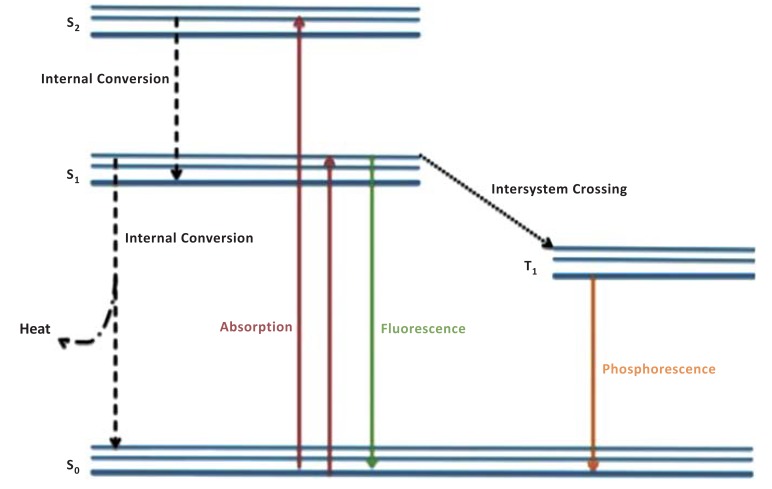
“These SM can absorb the photonic energies of UVR and convert this to heat without generating reactive oxygen species [115–117].”
UV-protective secondary metabolites from cyanobacteria
Martins, T. P., Arsın, S., Fewer, D. P., & Leão, P. N. (2022) · Elsevier eBooks · doi:10.1016/b978-0-12-821491-6.00005-3 · Cited by 12
Metadata
- Authors
- Lawrence, K. P., Long, P. F., & Young, A. R.
- Affiliations
- King's College London (GB)
- Corresponding author
- Young, Antony R.
- Venue
- Current Medicinal Chemistry
- Publisher
- Bentham Science Publishers Ltd.
- Published
- 2019-01-21
- Volume
- 25
- Issue
- 40
- Pages
- 5512-5527
- ISSN
- 0929-8673 (ISSN-L)
- PMC
- PMC6446518
- OpenAlex
- W2618895543
- Semantic Scholar
- ccc352ad65aa4c44bf2f6f23952170d95384abc2
- Cited by
- 157
- References
- 112
- Citations by year
- 2026: 10 · 2025: 21 · 2024: 12 · 2023: 22 · 2022: 19 · 2021: 32 · 2020: 12 · 2019: 16
- FWCI
- 1.91
- Type
- journal article
- Language
- en
- Open access
- green
- www.ncbi.nlm.nih.gov
- Licence
- cc-by-nc
- Locations
- Current Medicinal Chemistry (publishedVersion)
- Europe PMC (PubMed Central) (publishedVersion, cc-by-nc)
- PubMed Central (publishedVersion, cc-by-nc)
- PubMed (publishedVersion)
- Research Portal (King's College London) (submittedVersion)
- Topics
- Health Sciences › Medicine › Dermatology › Skin Protection and Aging
- Life Sciences › Biochemistry, Genetics and Molecular Biology › Cell Biology › melanin and skin pigmentation
- Physical Sciences › Materials Science › Materials Chemistry › Photochromic and Fluorescence Chemistry
- Keywords
- mycosporine-like amino acids, skin photoprotection, ultraviolet radiation, natural sunscreen, antioxidants, photostability, marine organisms, skin cancer prevention
- MeSH terms
- Amino Acids, Animals, Humans, Radiation Protection, Skin, Ultraviolet Rays
About these checks
Registry, retraction, Cites and statistics results are computed, not judged, with one exception: a printed reference that no index lists is read once by a model before it counts as a citation error. Claims are extracted by a model and kept only when their quote appears verbatim in the text; each cited source is then checked, with a model’s help, for whether it says what the claim relies on. Those verdicts can be wrong — read the claim’s quote and the cited source before relying on one.
The claim verdicts this report counts are experimental: their accuracy is not yet measured.
A language model drew the claims from the paper on 2026-10-05, under version 3 of the claim definition (model deepseek-v4.1-flash, prompt extract-v3).
A second model labelled each claim on 2026-10-05 (model jev-1.13-20260917, definition revision gold-guideline-v0.2).
Cited sources are checked with a language model’s help (qwen3.8-omni-flash and gpt-6-sol).
Statistics and arithmetic are recomputed, not judged.
Confidence bands are shown only for fields calibrated on our annotated test set. None is calibrated yet, so no band is shown.
What counts as a claim ›How we measure confidence ›How we check this ›
Are you an author, or do you see a problem with this page? Request a review
Data sources
Bibliographic data: Semantic Scholar, OpenAlex, Crossref.
Contains information from the Semantic Scholar Academic Graph Datasets, made available under the ODC Attribution License (ODC-BY 1.0).
Semantic Scholar’s data is described in: Kinney, R., et al. (2023). The Semantic Scholar Open Data Platform. arXiv:2301.10140.
