

Development of Sendai Virus Vectors and their Potential Applications in Gene Therapy and Regenerative Medicine
Open accessThe DOI matches its Crossref record; 69 of the 70 references it cites were found in a registry or an index.
Abstract
Gene delivery/expression vectors have been used as fundamental technologies in gene therapy since the 1980s. These technologies are also being applied in regenerative medicine as tools to reprogram cell genomes to a pluripotent state and to other cell lineages. Rapid progress in these new research areas and expectations for their translation into clinical applications have facilitated the development of more sophisticated gene delivery/expression technologies. Since its isolation in 1953 in Japan, Sendai virus (SeV) has been widely used as a research tool in cell biology and in industry, but the application of SeV as a recombinant viral vector has been investigated only recently. Recombinant SeV vectors have various unique characteristics, such as low pathogenicity, powerful capacity for gene expression and a wide host range. In addition, the cytoplasmic gene expression mediated by this vector is advantageous for applications, in that chromosomal integration of exogenous genes can be undesirable. In this review, we introduce a brief historical background on the development of recombinant SeV vectors and describe their current applications in gene therapy. We also describe the application of SeV vectors in advanced nuclear reprogramming and introduce a defective and persistent SeV vector (SeVdp) optimized for such reprogramming.
Overview
The claims and statistics of this paper haven’t been checked yet.
Free: it reads the open-access text and checks the first 5 claims that cite a source we can check. Create a free account to check every claim.
Integrity signals
Registry
Cites
Statistics
Figures
Verification
Claims the paper makes
The claims and statistics of this paper haven’t been checked yet.
Free: it reads the open-access text and checks the first 5 claims that cite a source we can check. Create a free account to check every claim.
Claims other papers make about this one
Each is checked against this paper’s own text: does it say what the citing paper says it does?
The cited source doesn’t support the claim as written.
In the citing paper
“Although both methods have low reprogramming efficiency, Sendai virus-mediated reprogramming has been used for several clinical applications, notably, in cystic fibrosis, the AIDS vaccine, and other iPSC replacement therapies [29,30,31,32,33].”
From Overcoming the Variability of iPSCs in the Manufacturing of Cell-Based Therapies (2023) · cites this paper as [33]
Checked by a reasoning model — may be wrong.
Experimental — accuracy not yet measuredThe source backs part of the claim, not all of it — or backs it for a different population, condition or comparison.
In the citing paper
“Although the SeV vector is known as being “ex-gene-free”, several researchers are still unsure of its safety in producing clinical-grade iPSC lines, as the avoidance of transgene integration passively depends on the cell passage [64].”
From Non-Integrating Lentiviral Vectors in Clinical Applications: A Glance Through (2022) · cites this paper as [64]
Experimental — accuracy not yet measured
Self-check
Percentages, sums and reported differences re-computed from the paper’s own numbers.
The self-check needs the paper’s full text.
Citations
Cites
Takahashi, K., & Yamanaka, S. (2006) · Cell · doi:10.1016/j.cell.2006.07.024 · Cited by 26,673 · cited 1×
“Reprogramming skin fibroblasts into induced pluripotent stem cells (iPSCs) by the ectopic expression of four reprogramming factors (Oct4, Sox2, Klf4 and c-Myc) opened a new era in this field [48-51].”
BackgroundInduction of Pluripotent Stem Cells from Adult Human Fibroblasts by Defined Factors
Takahashi, K., Tanabe, K., Ohnuki, M., Narita, M., Ichisaka, T., Tomoda, K., & Yamanaka, S. (2007) · Cell · doi:10.1016/j.cell.2007.11.019 · Cited by 20,221
Induced Pluripotent Stem Cell Lines Derived from Human Somatic Cells
Yu, J., Vodyanik, M. A., Smuga-Otto, K., Antosiewicz-Bourget, J., Frane, J. L., Tian, S., Nie, J., Jonsdottir, G. A., Ruotti, V., Stewart, R., et al. (2007) · Science · doi:10.1126/science.1151526 · Cited by 10,310 · cited 1×
“Reprogramming skin fibroblasts into induced pluripotent stem cells (iPSCs) by the ectopic expression of four reprogramming factors (Oct4, Sox2, Klf4 and c-Myc) opened a new era in this field [48-51].”
BackgroundLipofection: a highly efficient, lipid-mediated DNA-transfection procedure.
Felgner, P. L., Gadek, T. R., Holm, M., Roman, R., Chan, H. W., Wenz, M., Northrop, J. P., Ringold, G. M., & Danielsen, M. (1987) · Proceedings of the National Academy of Sciences · doi:10.1073/pnas.84.21.7413 · Cited by 4,978 · cited 1×
“Development of sophisticated gene delivery tools in the 1980s such as retroviral vectors [1, 2], adenoviral vectors [3] and cationic lipidbased reagents [4] facilitated the translation of these technologies to human gene therapy.”
BackgroundGeneration of germline-competent induced pluripotent stem cells
Okita, K., Ichisaka, T., & Yamanaka, S. (2007) · Nature · doi:10.1038/nature05934 · Cited by 4,299
Expression of a single transfected cDNA converts fibroblasts to myoblasts
Davis, R. L., Weintraub, H., & Lassar, A. B. (1987) · Cell · doi:10.1016/0092-8674(87)90585-x · Cited by 3,385 · cited 1×
“The concept of nuclear reprogramming was first proposed in the 1970s, based on experiments with somatic cell fusion and was proven by the discovery of MyoD, a gene encoding a master transcription factor inducing the dynamic transition of fibroblasts to myoblasts [47].”
BackgroundStem Cells, the Molecular Circuitry of Pluripotency and Nuclear Reprogramming
Jaenisch, R., & Young, R. (2008) · Cell · doi:10.1016/j.cell.2008.01.015 · Cited by 1,427
FUSAKI, N., BAN, H., NISHIYAMA, A., SAEKI, K., & HASEGAWA, M. (2009) · Proceedings of the Japan Academy Series B · doi:10.2183/pjab.85.348 · Cited by 1,411 · cited 1×
“Wild-type SeV vectors installed with Oct4, Sox2, Klf4 and cMyc cDNA were reported to generate ex-gene-free iPSCs, dependent on passive elimination of the genome through cell passage [54].”
BackgroundIn vivo reprogramming of murine cardiac fibroblasts into induced cardiomyocytes
Qian, L., Huang, Y., Spencer, C. I., Foley, A., Vedantham, V., Liu, L., Conway, S. J., Fu, J.-D., & Srivastava, D. (2012) · Nature · doi:10.1038/nature11044 · Cited by 1,360
Induction of Pluripotent Stem Cells From Adult Human Fibroblasts by Defined Factors
Takahashi, K., Tanabe, K., Ohnuki, M., Narita, M., Ichisaka, T., Tomoda, K., & Yamanaka, S. (2008) · Obstetrical & Gynecological Survey · doi:10.1097/01.ogx.0000305204.97355.0d · Cited by 1,174
Heart repair by reprogramming non-myocytes with cardiac transcription factors
Song, K., Nam, Y.-J., Luo, X., Qi, X., Tan, W., Huang, G. N., Acharya, A., Smith, C. L., Tallquist, M. D., Neilson, E. G., et al. (2012) · Nature · doi:10.1038/nature11139 · Cited by 1,147 · cited 1×
“This procedure has been investigated not only in cells cultured in vitro but also in disease target tissues in situ [64, 65].”
BackgroundInfectious rabies viruses from cloned cDNA.
Schnell, M. J., Mebatsion, T., & Conzelmann, K. K. (1994) · The EMBO Journal · doi:10.1002/j.1460-2075.1994.tb06739.x · Cited by 641 · cited 1×
“Reconstitution of recombinant SeV from full-length genomic cDNA was accomplished in 1995 [20] following the establishment of a breakthrough strategy allowing the reconstitution of Rabies virus from cDNA in 1994 [21].”
MethodInfluentialBan, H., Nishishita, N., Fusaki, N., Tabata, T., Saeki, K., Shikamura, M., Takada, N., Inoue, M., Hasegawa, M., Kawamata, S., et al. (2011) · Proceedings of the National Academy of Sciences · doi:10.1073/pnas.1103509108 · Cited by 605 · cited 1×
“SeV vector with a temperature-sensitive (ts) mutation was also reported to facilitate the erasure of the vector genome [56].”
BackgroundSeki, T., Yuasa, S., Oda, M., Egashira, T., Yae, K., Kusumoto, D., Nakata, H., Tohyama, S., Hashimoto, H., Kodaira, M., et al. (2010) · Cell Stem Cell · doi:10.1016/j.stem.2010.06.003 · Cited by 584 · cited 2×
“In addition to skin fibroblasts, SeV vectors can reprogram the nuclei of various human cells, including CD34 cord blood cells [62], activated T lymphocytes [55] and monocytes (Nishimura and Nakanishi, unpublished).”
BackgroundHomma, M., & Ohuchi, M. (1973) · Journal of Virology · doi:10.1128/jvi.12.6.1457-1465.1973 · Cited by 517
Induced Pluripotent Stem Cell Lines Derived From Human Somatic Cells
Yu, J., Vodyanik, M. A., Smuga-Otto, K., Antosiewicz-Bourget, J., Frane, J. L., Tian, S., Nie, J., Jonsdottir, G. A., Ruotti, V., Stewart, R., et al. (2008) · Obstetrical & Gynecological Survey · doi:10.1097/01.ogx.0000305193.72586.39 · Cited by 514
Methods for making induced pluripotent stem cells: reprogramming à la carte
González, F., Boué, S., & Belmonte, J. C. I. (2011) · Nature Reviews Genetics · doi:10.1038/nrg2937 · Cited by 508 · cited 3×
“sired side effects (cell transformation and insertional mutagenesis) and for maintaining full pluripotency in these cells [53].”
BackgroundInfluentialLive cell imaging distinguishes bona fide human iPS cells from partially reprogrammed cells
Chan, E. M., Ratanasirintrawoot, S., Park, I.-H., Manos, P. D., Loh, Y.-H., Huo, H., Miller, J. D., Hartung, O., Rho, J., Ince, T. A., et al. (2009) · Nature Biotechnology · doi:10.1038/nbt.1580 · Cited by 487 · cited 1×
“The human iPSC lines generated are ex-gene free and are quite uniform in their characteristics: more than 80% of the colonies are positive for TRA-1-60, a reliable marker for pluripotency [61] (Nishimura and Nakanishi, unpublished).”
BackgroundDevelopment of Defective and Persistent Sendai Virus Vector
Nishimura, K., Sano, M., Ohtaka, M., Furuta, B., Umemura, Y., Nakajima, Y., Ikehara, Y., Kobayashi, T., Segawa, H., Takayasu, S., et al. (2011) · Journal of Biological Chemistry · doi:10.1074/jbc.m110.183780 · Cited by 368 · cited 5×
“(3)), and for preventing secondary virion production from infected cells [30].”
BackgroundSelf-citationTakayama, N., Nishimura, S., Nakamura, S., Shimizu, T., Ohnishi, R., Endo, H., Yamaguchi, T., Otsu, M., Nishimura, K., Nakanishi, M., et al. (2010) · Journal of Experimental Medicine · doi:10.1084/jem.20100844 · Cited by 349 · cited 1×
“In addition to skin fibroblasts, SeV vectors can reprogram the nuclei of various human cells, including CD34 cord blood cells [62], activated T lymphocytes [55] and monocytes (Nishimura and Nakanishi, unpublished).”
BackgroundSelf-citationInduced Pluripotent Stem Cell Lines Derived from Human Somatic Cells
Thiers, B. H. (2008) · Yearbook of Dermatology and Dermatologic Surgery · doi:10.1016/s0093-3619(08)70914-6 · Cited by 346
Carey, B. W., Markoulaki, S., Hanna, J. H., Faddah, D. A., Buganim, Y., Kim, J., Ganz, K., Steine, E. J., Cassady, J. P., Creyghton, M. P., et al. (2011) · Cell Stem Cell · doi:10.1016/j.stem.2011.11.003 · Cited by 325 · cited 1×
“Therefore, the biological characteristics of each iPSC line generated by these separate SeV vectors should be examined carefully, as the balance of expression of reprogramming genes might affect the quality of the iPSC line [57].”
BackgroundGething, M. J., White, J. M., & Waterfield, M. D. (1978) · Proceedings of the National Academy of Sciences · doi:10.1073/pnas.75.6.2737 · Cited by 281 · cited 1×
“Infectivity of wild-type SeV absolutely requires the cleavage of the precursor F0 protein to F1 and F2 subunits [42], resulting in exposure of the hydrophobic N-terminus of the F1 subunit [43].”
BackgroundKido, H., Yokogoshi, Y., Sakai, K., Tashiro, M., Kishino, Y., Fukutomi, A., & Katunuma, N. (1992) · Journal of Biological Chemistry · doi:10.1016/s0021-9258(18)42250-8 · Cited by 263 · cited 1×
“Serine protease is responsible for this cleavage in the lungs of natural hosts [44].”
BackgroundDirect lineage conversions: unnatural but useful?
Vierbuchen, T., & Wernig, M. (2011) · Nature Biotechnology · doi:10.1038/nbt.1946 · Cited by 259 · cited 1×
“Since the discovery that the genomes of somatic cells could be reprogrammed to generate pluripotent iPSCs, the notion of direct genomic reprogramming of somatic cells to other cell lineages (either to terminally differentiated cells or to tissue stem cells) has also attracted significant interest [63].”
BackgroundShimotohno, K., & Temin, H. M. (1981) · Cell · doi:10.1016/0092-8674(81)90034-9 · Cited by 245 · cited 1×
“Development of sophisticated gene delivery tools in the 1980s such as retroviral vectors [1, 2], adenoviral vectors [3] and cationic lipidbased reagents [4] facilitated the translation of these technologies to human gene therapy.”
BackgroundEfficient gene transfer to airway epithelium using recombinant Sendai virus
Yonemitsu, Y., Kitson, C., Ferrari, S., Farley, R., Griesenbach, U., Judd, D., Steel, R., Scheid, P., Zhu, J., Jeffery, P. K., et al. (2000) · Nature Biotechnology · doi:10.1038/79463 · Cited by 244 · cited 1×
“In addition to the lung/airway epithelium [25], a recombinant SeV vector can induce strong ex-gene expression in the cardiovascular system [26], in retinal epithelium [27], in hepatocytes [12], in colonic epithelium [28], in neurons [24], in dendritic cells [29] and in human hematopoietic stem cells [30].”
BackgroundLi, H.-O., Zhu, Y.-F., Asakawa, M., Kuma, H., Hirata, T., Ueda, Y., Lee, Y.-S., Fukumura, M., Iida, A., Kato, A., et al. (2000) · Journal of Virology · doi:10.1128/jvi.74.14.6564-6569.2000 · Cited by 244 · cited 2×
“In addition to the lung/airway epithelium [25], a recombinant SeV vector can induce strong ex-gene expression in the cardiovascular system [26], in retinal epithelium [27], in hepatocytes [12], in colonic epithelium [28], in neurons [24], in dendritic cells [29] and in human hematopoietic stem cells [30].”
BackgroundMasaki, I., Yonemitsu, Y., Yamashita, A., Sata, S., Tanii, M., Komori, K., Nakagawa, K., Hou, X., Nagai, Y., Hasegawa, M., et al. (2002) · Circulation Research · doi:10.1161/01.res.0000019540.41697.60 · Cited by 240 · cited 1×
“Replication-defective (F-defective) SeV vectors expressing the angiogenic cytokine fibroblast growth factor-2 (FGF2) have been developed for treatment of critical limb ischemia [39, 40].”
BackgroundWei, C. M., Gibson, M., Spear, P. G., & Scolnick, E. M. (1981) · Journal of Virology · doi:10.1128/jvi.39.3.935-944.1981 · Cited by 239 · cited 1×
“Development of sophisticated gene delivery tools in the 1980s such as retroviral vectors [1, 2], adenoviral vectors [3] and cationic lipidbased reagents [4] facilitated the translation of these technologies to human gene therapy.”
BackgroundGeneration of germline-competent induced pluripotent stem cells
Galbraith, G. M. P. (2008) · Yearbook of Dermatology and Dermatologic Surgery · doi:10.1016/s0093-3619(08)70912-2 · Cited by 208
Garcin, D., Pelet, T., Calain, P., Roux, L., Curran, J., & Kolakofsky, D. (1995) · The EMBO Journal · doi:10.1002/j.1460-2075.1995.tb00299.x · Cited by 196 · cited 1×
“Reconstitution of recombinant SeV from full-length genomic cDNA was accomplished in 1995 [20] following the establishment of a breakthrough strategy allowing the reconstitution of Rabies virus from cDNA in 1994 [21].”
MethodShioda, T., Iwasaki, K., & Shibuta, H. (1986) · Nucleic Acids Research · doi:10.1093/nar/14.4.1545 · Cited by 175 · cited 1×
“The complete genome sequence of the SeV Z strain was determined in 1986: first among the paramyxoviruses [19].”
BackgroundAdvances and Future Challenges in Adenoviral Vector Pharmacology and Targeting
Khare, R., Y. Chen, C., A. Weaver, E., & A. Barry, M. (2011) · Current Gene Therapy · doi:10.2174/156652311796150363 · Cited by 156 · cited 1×
“Prototypes of the current gene delivery tools used in research and clinics were mostly established in those early periods, and then followed by significant progress in each technology [5-8].”
MethodCurrent Advances in Retroviral Gene Therapy
Yi, Y., Jong Noh, M., & Hee Lee, K. (2011) · Current Gene Therapy · doi:10.2174/156652311795684740 · Cited by 143 · cited 1×
“Prototypes of the current gene delivery tools used in research and clinics were mostly established in those early periods, and then followed by significant progress in each technology [5-8].”
MethodKato, K., Nakanishi, M., Kaneda, Y., Uchida, T., & Okada, Y. (1991) · Journal of Biological Chemistry · doi:10.1016/s0021-9258(19)67798-7 · Cited by 142
Self-citationMuramatsu, M., & Homma, M. (1980) · Microbiology and Immunology · doi:10.1111/j.1348-0421.1980.tb00569.x · Cited by 142
Slobod, K. S., Shenep, J. L., Luján‐Zilbermann, J., Allison, K., Brown, B., Scroggs, R. A., Portner, A., Coleclough, C., & Hurwitz, J. L. (2004) · Vaccine · doi:10.1016/j.vaccine.2004.01.053 · Cited by 142 · cited 1×
“Results of a phase 1 trial where live wild-type SeV was administered intranasally showed that SeV induced anti-hPIV-1 immunity effectively without any severe adverse events [34].”
BackgroundWarnock, J. N., Daigre, C., & Al-Rubeai, M. (2011) · Methods in Molecular Biology · doi:10.1007/978-1-61779-095-9_1 · Cited by 135 · cited 1×
“Nonetheless, the refinement of current viral vectors and development of novel viral vectors are still desired, as none of the current viral vectors satisfies all of the requirements for various applications [9, 10].”
BackgroundKuroya, M., & Ishida, N. (1953) · PubMed · Cited by 134
Engineering Biomaterial Systems to Enhance Viral Vector Gene Delivery
Jang, J.-H., Schaffer, D. V., & Shea, L. D. (2011) · Molecular Therapy · doi:10.1038/mt.2011.111 · Cited by 123 · cited 1×
“Nonetheless, the refinement of current viral vectors and development of novel viral vectors are still desired, as none of the current viral vectors satisfies all of the requirements for various applications [9, 10].”
Background[3] Sendai virus-induced cell fusion
Okada, Y. (1993) · Methods in enzymology on CD-ROM/Methods in enzymology · doi:10.1016/0076-6879(93)21005-s · Cited by 110 · cited 1×
“Long before being characterized at a molecular level, SeV particles inactivated by brief exposure to ultraviolet light or by treatment with alkylation reagents have been widely used as research tools as a fusogenic agent to make hybrid cells [14] and as a tool for delivering macromolecules (protein and nucleic acid) i…”
MethodStudies on the role of M protein in virus assembly using a is mutant of HVJ (Sendai virus)
Yoshida, T., Nagai, Y., Maeno, K., Iinuma, M., Hamaguchi, M., Matsumoto, T., Nagayoshi, S., & Hoshino, M. (1979) · Virology · doi:10.1016/0042-6822(79)90220-4 · Cited by 107 · cited 1×
“151), originally isolated in 1979 [58].”
Uchida, T., Kim, J., Yamaizumi, M., Miyake, Y., & Okada, Y. (1979) · The Journal of Cell Biology · doi:10.1083/jcb.80.1.10 · Cited by 103 · cited 1×
“Nonetheless, the refinement of current viral vectors and development of novel viral vectors are still desired, as none of the current viral vectors satisfies all of the requirements for various applications [9, 10].”
BackgroundPolycation-Based Gene Therapy: Current Knowledge and New Perspectives
J. Tiera, M., Shi, Q., M. Winnik, F., & C. Fernandes, J. (2011) · Current Gene Therapy · doi:10.2174/156652311796150408 · Cited by 101 · cited 1×
“Prototypes of the current gene delivery tools used in research and clinics were mostly established in those early periods, and then followed by significant progress in each technology [5-8].”
MethodHasan, M. K., Nagai, Y., Yu, D., Sakai, Y., Kato, A., & Shioda, T. (1997) · Journal of General Virology · doi:10.1099/0022-1317-78-11-2813 · Cited by 98 · cited 1×
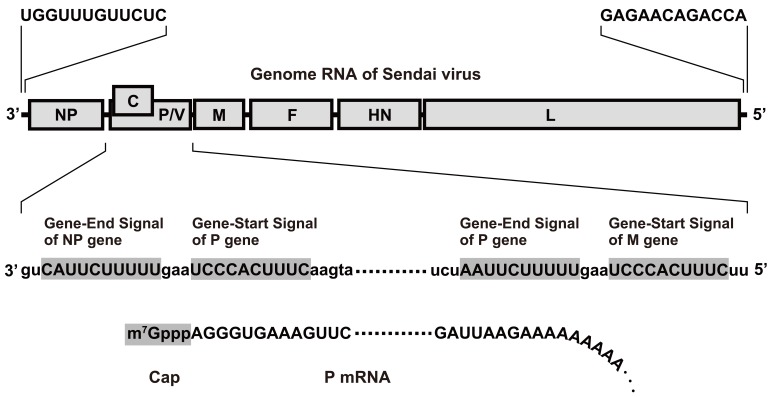
“In the first generation of SeV vectors, exogenous cDNA was installed between the 3 terminus and the NP gene of a fulllength SeV genome [22].”
BackgroundOnimaru, M., Yonemitsu, Y., Tanii, M., Nakagawa, K., Masaki, I., Okano, S., Ishibashi, H., Shirasuna, K., Hasegawa, M., & Sueishi, K. (2002) · Circulation Research · doi:10.1161/01.res.0000043281.66969.32 · Cited by 96 · cited 1×
“Replication-defective (F-defective) SeV vectors expressing the angiogenic cytokine fibroblast growth factor-2 (FGF2) have been developed for treatment of critical limb ischemia [39, 40].”
BackgroundMasaki, I., Yonemitsu, Y., Komori, K., Ueno, H., Nakashima, Y., Nakagawa, K., Fukumura, M., Kato, A., Hasan, M. K., Nagai, Y., et al. (2001) · The FASEB Journal · doi:10.1096/fj.00-0460fje · Cited by 81 · cited 1×
“In addition to the lung/airway epithelium [25], a recombinant SeV vector can induce strong ex-gene expression in the cardiovascular system [26], in retinal epithelium [27], in hepatocytes [12], in colonic epithelium [28], in neurons [24], in dendritic cells [29] and in human hematopoietic stem cells [30].”
BackgroundJohnston, M. (1981) · Journal of General Virology · doi:10.1099/0022-1317-56-1-175 · Cited by 77 · cited 1×
“Intact live SeV was also used in the large-scale production of interferon (IFN) as an inducer of IFN expression [17, 18].”
MethodBousse, T. L., Chambers, R., Scroggs, R. A., Portner, A., & Takimoto, T. (2006) · Virus Research · doi:10.1016/j.virusres.2006.03.012 · Cited by 65 · cited 5×
“This result further emphasized the nonpathogenic nature of SeV to humans, partly because of the sensitivity of SeV replication to IFN [35].”
BackgroundInfluentialShibata, S., Okano, S., Yonemitsu, Y., Onimaru, M., Sata, S., 竹下, 寛., Inoue, M., Zhu, T., Hasegawa, M., Moroi, Y., et al. (2006) · The Journal of Immunology · doi:10.4049/jimmunol.177.6.3564 · Cited by 61 · cited 2×
“In addition to the stimulation of dendritic cells with SeV vector expressing IFN (rSeV-IFN ) [29], virotherapy with the unique hostrestricted SeV vector rSeV/dMFct14(uPA2) (“BioKnife”) has been developed [41].”
BackgroundJones, B. G., Zhan, X., Mishin, V. P., Slobod, K. S., Surman, S. L., Russell, C. J., Portner, A., & Hurwitz, J. L. (2009) · Vaccine · doi:10.1016/j.vaccine.2009.01.041 · Cited by 58 · cited 1×
“quently, replication-competent recombinant SeV vectors expressing envelope proteins of hPIV-1, hPIV-2, hPIV-3 and respiratory syncytial virus (RSV) were developed and their effectiveness was proven in model animals [36].”
BackgroundBarkner, K. L., & Sharp, P. A. (1984) · Nucleic Acids Research · doi:10.1093/nar/12.4.1925 · Cited by 49
Nishimura, K., Segawa, H., Goto, T., Morishita, M., Masago, A., Takahashi, H., Ohmiya, Y., Sakaguchi, T., Asada, M., Imamura, T., et al. (2007) · Journal of Biological Chemistry · doi:10.1074/jbc.m702028200 · Cited by 48 · cited 1×
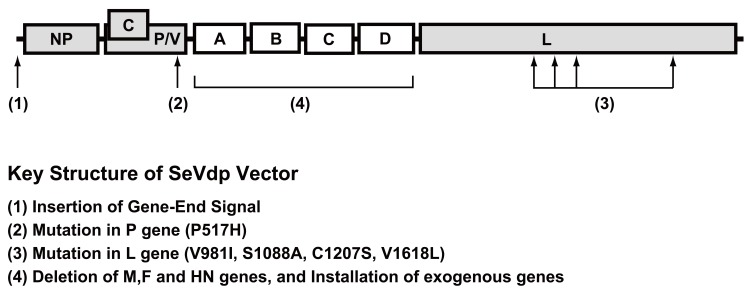
“We identified the mutations responsible for this phenotype [30, 59, 60] and showed that this virus escapes from the intrinsic cytotoxicity of SeV by a defect in the induction of IFN production in target cells [60].”
BackgroundSelf-citationKumar, P., & Chan, W. (2011) · Current Gene Therapy · doi:10.2174/156652311794940782 · Cited by 45 · cited 1×
“Prototypes of the current gene delivery tools used in research and clinics were mostly established in those early periods, and then followed by significant progress in each technology [5-8].”
MethodNovel Mucosal Insulin Delivery Systems Based on Fusogenic Liposomes
Goto, T., Morishita, M., Nishimura, K., Nakanishi, M., Kato, A., Ehara, J., & Takayama, K. (2005) · Pharmaceutical Research · doi:10.1007/s11095-005-9175-7 · Cited by 42 · cited 1×
“In addition to the lung/airway epithelium [25], a recombinant SeV vector can induce strong ex-gene expression in the cardiovascular system [26], in retinal epithelium [27], in hepatocytes [12], in colonic epithelium [28], in neurons [24], in dendritic cells [29] and in human hematopoietic stem cells [30].”
BackgroundSelf-citationKondo, T., Yoshida, T., Miura, N., & Nakanishi, M. (1993) · Journal of Biological Chemistry · doi:10.1016/s0021-9258(20)80629-2 · Cited by 35
Self-citationYu, S., Feng, X., Shu, T., Matano, T., Hasegawa, M., Wang, X., Ma, H., Li, H., Li, Z., & Zeng, Y. (2008) · Vaccine · doi:10.1016/j.vaccine.2008.09.017 · Cited by 33 · cited 1×
“SeV vectors have also been investigated as platforms for vaccines against the human immunodeficiency virus [37] and influenza viruses [38].”
BackgroundKinoh, H., Inoue, M., Komaru, A., Ueda, Y., Hasegawa, M., & Yonemitsu, Y. (2008) · Gene Therapy · doi:10.1038/gt.2008.167 · Cited by 29 · cited 2×
“BioKnife is created by altering the structure of this cleavage site to that optimal to urokinase-type plasminogen activator (uPA) and by deletion of the M gene to interfere with virion production [41].”
BackgroundMethodMorodomi, Y., Yano, T., Kinoh, H., Harada, Y., Saito, S., Kyuragi, R., Yoshida, K., Onimaru, M., Shoji, F., Yoshida, T., et al. (2012) · Molecular Therapy · doi:10.1038/mt.2011.305 · Cited by 27
Induction of Influenza-Specific Mucosal Immunity by an Attenuated Recombinant Sendai Virus
Le, T.-V. L., Mironova, E., Garcin, D., & Compans, R. W. (2011) · PLoS ONE · doi:10.1371/journal.pone.0018780 · Cited by 27 · cited 1×
“SeV vectors have also been investigated as platforms for vaccines against the human immunodeficiency virus [37] and influenza viruses [38].”
BackgroundHasegawa, Y., Kinoh, H., Iwadate, Y., Onimaru, M., Ueda, Y., Harada, Y., Saito, S., Furuya, A., Saegusa, T., Morodomi, Y., et al. (2010) · Molecular Therapy · doi:10.1038/mt.2010.138 · Cited by 21 · cited 1×
“BioKnife has been reported to be effective in treating intractable cancers such as malignant glioblastomas [45] and malignant pleural mesotheliomas [46] in animal models.”
BackgroundMurakami, Y., Ikeda, Y., Yonemitsu, Y., Tanaka, S., Kondo, H., Okano, S., Kohno, R.-I., Miyazaki, M., Inoue, M., Hasegawa, M., et al. (2007) · The Journal of Gene Medicine · doi:10.1002/jgm.1142 · Cited by 19 · cited 1×
“In addition to the lung/airway epithelium [25], a recombinant SeV vector can induce strong ex-gene expression in the cardiovascular system [26], in retinal epithelium [27], in hepatocytes [12], in colonic epithelium [28], in neurons [24], in dendritic cells [29] and in human hematopoietic stem cells [30].”
BackgroundProtein Factors Required for In Vitro Transcription of Sendai Virus Genome1
Mizumoto, K., Muroya, K., Takagi, T., Omata-Yamada, T., Shibuta, H., & Iwasaki, K. (1995) · The Journal of Biochemistry · doi:10.1093/oxfordjournals.jbchem.a124740 · Cited by 18 · cited 1×
“In addition, SeV vectors rely for their gene expression only on virus-encoded RNA polymerase and tubulin, a ubiquitous conserved cytoskeletal protein [32].”
BackgroundHurwitz, J. L. (2008) · The Pediatric Infectious Disease Journal · doi:10.1097/inf.0b013e318168b780 · Cited by 18 · cited 1×
“Recombinant SeV vectors have been most intensively investigated as a vaccine platform for inducing mucosal immunity [33].”
BackgroundEguchi, A., Kondoh, T., Kosaka, H., Suzuki, T., Momota, H., Masago, A., Yoshida, T., Taira, H., Ishii‐Watabe, A., Okabe, J., et al. (2000) · Journal of Biological Chemistry · doi:10.1074/jbc.m910004199 · Cited by 17 · cited 2×
“This remarkably wide host range partly depends on the fact that the primary SeV receptor, sialic acid, is distributed universally among animal cells; the presence of a ubiquitous secondary receptor indispensable for SeV-mediated membrane fusion has also been suggested [31].”
BackgroundSelf-citationMoriya, C., Shioda, T., Tashiro, K., Nagasawa, T., Ikegawa, M., Ohnishi, Y., Kato, A., Hu, H., Xin, X., Hasan, M. K., et al. (1998) · FEBS Letters · doi:10.1016/s0014-5793(98)00207-5 · Cited by 16
Sendai Virus-Mediated Gene Delivery into Hepatocytes via Isolated Hepatic Perfusion
Fujita, S., Eguchi, A., Okabe, J., Harada, A., Sasaki, K., Ogiwara, N., Inoue, Y., Ito, T., Matsuda, H., Kataoka, K., et al. (2006) · Biological and Pharmaceutical Bulletin · doi:10.1248/bpb.29.1728 · Cited by 15 · cited 2×
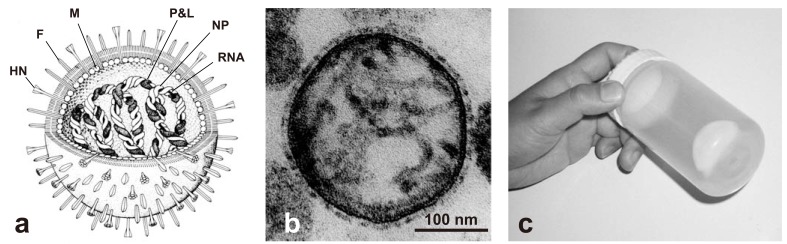
“SeV (mouse parainfluenza virus type 1, hemagglutinating virus of Japan (HVJ)) is a nonsegmented negative-strand RNA virus belonging to the Paramyxovirus family [11] with a large spherical shape and an average diameter of 260 nm [12].”
BackgroundSelf-citationFactors Influencing Production of Interferon by Human Lymphoblastoid Cells
Johnston, M., Fantes, K. H., Finter, N. B., & Chir, B. (1978) · Advances in experimental medicine and biology · doi:10.1007/978-1-4615-9080-4_6 · Cited by 9 · cited 1×
“Intact live SeV was also used in the large-scale production of interferon (IFN) as an inducer of IFN expression [17, 18].”
Method
Research works printed but not linked: 1
- [11]Lamb RA Kolakofsky D Paramyxoviridae: The Viruses and Their Replication Fundamental Virology Fourth Edition 2001 689 724
Cited by
Opportunities and Challenges in the Delivery of mRNA-Based Vaccines
Wadhwa, A., Aljabbari, A., Lokras, A., Foged, C., & Thakur, A. (2020) · Pharmaceutics · doi:10.3390/pharmaceutics12020102 · Cited by 584
“It is favored for its high but transient gene expression levels, wide host cell specificity, low pathogenicity, and strong immunogenicity [120].”
BackgroundDevelopments in Viral Vector-Based Vaccines
Ura, T., Okuda, K., & Shimada, M. (2014) · Vaccines · doi:10.3390/vaccines2030624 · Cited by 436
“The SeV vector has been used for gene therapy and in a vaccine in human trials [13,97].”
MethodViral vector‐based gene therapies in the clinic
Zhao, Z., Anselmo, A. C., & Mitragotri, S. (2022) · Bioengineering & Translational Medicine · doi:10.1002/btm2.10258 · Cited by 269
Kwon, H., Kim, M., Seo, Y., Moon, Y. S., Lee, H. J., Lee, K., & Lee, H. (2018) · Biomaterials · doi:10.1016/j.biomaterials.2017.11.034 · Cited by 208
Omole, A. E., & Fakoya, A. O. J. (2018) · PeerJ · doi:10.7717/peerj.4370 · Cited by 204
Metadata
- Authors
- Nakanishi, M., & Otsu, M.
- Affiliations
- National Institute of Advanced Industrial Science and Technology (JP)
- Institute of Medical Science, The University of Tokyo (JP)
- Corresponding author
- Nakanishi, Mahito
- Venue
- Current Gene Therapy
- Publisher
- Bentham Science Publishers Ltd.
- Published
- 2012-09-01
- Volume
- 12
- Issue
- 5
- Pages
- 410-416
- ISSN
- 1566-5232 (ISSN-L)
- PMC
- PMC3504922
- OpenAlex
- W2008332694
- Cited by
- 147
- References
- 70
- Citations by year
- 2026: 6 · 2025: 11 · 2024: 19 · 2023: 7 · 2022: 12 · 2021: 11 · 2020: 13 · 2019: 14 · 2018: 15 · 2017: 13 · 2016: 6 · 2015: 8 · 2014: 6 · 2013: 6
- FWCI
- 0.78
- Type
- journal article
- Language
- en
- Open access
- bronze
- doi.org
- Locations
- Current Gene Therapy (publishedVersion)
- PubMed Central (publishedVersion, cc-by)
- PubMed (publishedVersion)
- Funders
- National Institute of Biomedical Innovation
- Japan Society for the Promotion of Science (24659489)
- Topics
- Life Sciences › Biochemistry, Genetics and Molecular Biology › Genetics › Virus-based gene therapy research
- Health Sciences › Medicine › Epidemiology › Virology and Viral Diseases
- Life Sciences › Biochemistry, Genetics and Molecular Biology › Molecular Biology › RNA Interference and Gene Delivery
- Keywords
- Sendai virus, recombinant viral vectors, gene therapy, regenerative medicine, nuclear reprogramming, pluripotency, gene delivery
- MeSH terms
- Animals, Genetic Vectors, Humans, Genetic Therapy, Gene Expression, Gene Transfer Techniques, Sendai virus, Regenerative Medicine, Cellular Reprogramming
About these checks
Registry, retraction, Cites and statistics results are computed, not judged, with one exception: a printed reference that no index lists is read once by a model before it counts as a citation error. Claims are extracted by a model and kept only when their quote appears verbatim in the text; each cited source is then checked, with a model’s help, for whether it says what the claim relies on. Those verdicts can be wrong — read the claim’s quote and the cited source before relying on one.
Statistics and arithmetic are recomputed, not judged.
Confidence bands are shown only for fields calibrated on our annotated test set. None is calibrated yet, so no band is shown.
What counts as a claim ›How we measure confidence ›How we check this ›
Are you an author, or do you see a problem with this page? Request a review
Data sources
Bibliographic data: Semantic Scholar, OpenAlex, Crossref.
Contains information from the Semantic Scholar Academic Graph Datasets, made available under the ODC Attribution License (ODC-BY 1.0).
Semantic Scholar’s data is described in: Kinney, R., et al. (2023). The Semantic Scholar Open Data Platform. arXiv:2301.10140.
