

The DOI matches its Crossref record; 266 of the 266 references it cites were found in a registry or an index.
C-Phycocyanin-derived Phycocyanobilin as a Potential Nutraceutical Approach for Major Neurodegenerative Disorders and COVID-19-induced Damage to the Nervous System
Open accessAbstract
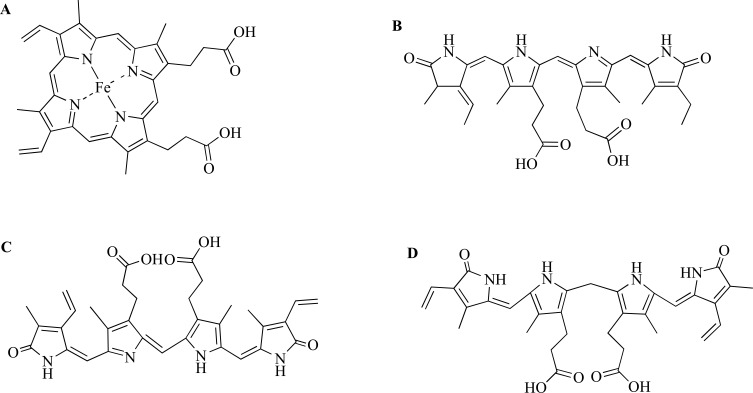
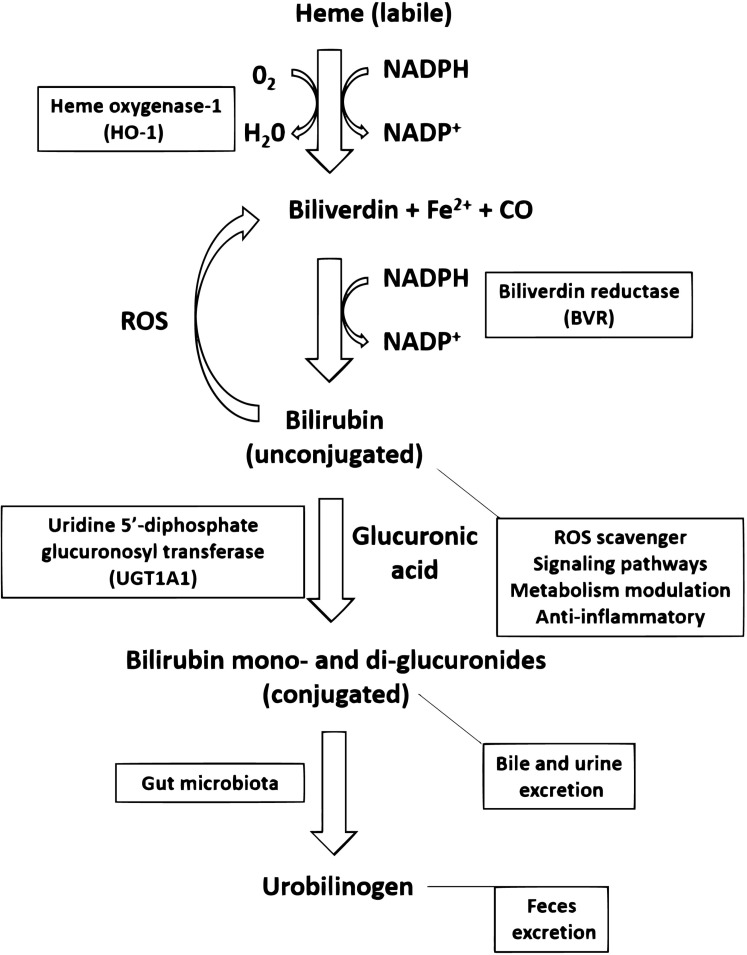
The edible cyanobacterium Spirulina platensis and its chief biliprotein C-Phycocyanin have shown protective activity in animal models of diverse human health diseases, often reflecting antioxidant and anti-inflammatory effects. The beneficial effects of C-Phycocyanin seem likely to be primarily attributable to its covalently attached chromophore Phycocyanobilin (PCB). Within cells, biliverdin is generated from free heme and it is subsequently reduced to bilirubin. Although bilirubin can function as an oxidant scavenger, its potent antioxidant activity reflects its ability to inactivate some isoforms of NADPH oxidase. Free bilirubin can also function as an agonist for the aryl hydrocarbon receptor (AhR); this may explain its ability to promote protective Treg activity in cellular and rodent models of inflammatory disease. AhR agonists also promote transcription of the gene coding for Nrf-2, and hence can up-regulate phase 2 induction of antioxidant enzymes, such as HO-1. Hence, it is proposed that C-Phycocyanin/PCB chiefly exert their protective effects via inhibition of NADPH oxidase activity, as well as by AhR agonism that both induces Treg activity and up-regulates phase 2 induction. This simple model may explain their potent antioxidant/antiinflammatory effects. Additionally, PCB might mimic biliverdin in activating anti-inflammatory signaling mediated by biliverdin reductase. This essay reviews recent research in which CPhycocyanin and/or PCB, administered orally, parenterally, or intranasally, have achieved marked protective effects in rodent and cell culture models of Ischemic Stroke and Multiple Sclerosis, and suggests that these agents may likewise be protective for Alzheimer's disease, Parkinson's disease, and in COVID-19 and its neurological complications.
Overview
The claims and statistics of this paper haven’t been checked yet.
Run the check — free, no account needed. It reads the open-access text and checks the sources it cites.
Integrity signals
Registry
Cites
Statistics
Figures
Verification
Claims the paper makes
The claims and statistics of this paper haven’t been checked yet.
Run the check — free, no account needed. It reads the open-access text and checks the sources it cites.
Claims other papers make about this one
Each is checked against this paper’s own text: does it say what the citing paper says it does?
The source backs part of the claim, not all of it — or backs it for a different population, condition or comparison.
In the citing paper
“In addition to its rich mineral content, vitamin and amino acids composition, antiviral and anti-inflammatory action, Arthrospira platensis has also a regulatory effect on cholesterol level, oxidative stress, mitochondrial dysfunction, and neurodegenerative disorders [86,87].”
From Application of Arthrospira platensis for Medicinal Purposes and the Food Industry: A Review of the Literature (2023) · cites this paper as [86]
Experimental — accuracy not yet measured
Self-check
Percentages, sums and reported differences re-computed from the paper’s own numbers.
The self-check needs the paper’s full text.
Citations
Cites
1 retracted
Effect of C-phycocyanin on HDAC3 and miRNA-335 in Alzheimer’s disease
Li, Z., Gan, L., Yan, S., Yan, Y., & Huang, W. (2020) · Translational Neuroscience · doi:10.1515/tnsci-2020-0101 · Cited by 23
RetractedFree radicals and antioxidants in normal physiological functions and human disease
Valko, M., Leibfritz, D., Moncol, J., Cronin, M. T. D., Mazur, M., & Telser, J. (2007) · The International Journal of Biochemistry & Cell Biology · doi:10.1016/j.biocel.2006.07.001 · Cited by 14,269
Heart Disease and Stroke Statistics—2020 Update: A Report From the American Heart Association
Virani, S. S., Alonso, A., Benjamin, E. J., Bittencourt, M. S., Callaway, C. W., Carson, A. P., Chamberlain, A. M., Chang, A. R., Cheng, S., Delling, F. N., et al. (2020) · Circulation · doi:10.1161/cir.0000000000000757 · Cited by 9,175
Structure, function and antigenicity of the SARS-CoV-2 spike glycoprotein
Walls, A. C., Park, Y.-J., Tortorici, M. A., Wall, A., McGuire, A. T., & Veesler, D. (2020) · doi:10.1101/2020.02.19.956581 · Cited by 8,586
Angiotensin-converting enzyme 2 is a functional receptor for the SARS coronavirus
Li, W., Moore, M. J., Vasilieva, N., Sui, J., Wong, S. K., Berne, M. A., Somasundaran, M., Sullivan, J. L., Luzuriaga, K., Greenough, T. C., et al. (2003) · Nature · doi:10.1038/nature02145 · Cited by 5,923
Isolation of a Novel Coronavirus from a Man with Pneumonia in Saudi Arabia
Zaki, A. M., van Boheemen, S., Bestebroer, T. M., Osterhaus, A. D. M. E., & Fouchier, R. A. M. (2012) · New England Journal of Medicine · doi:10.1056/nejmoa1211721 · Cited by 5,677
Epidemiology of Parkinson's disease
de Lau, L. M., & Breteler, M. M. (2006) · The Lancet Neurology · doi:10.1016/s1474-4422(06)70471-9 · Cited by 4,110
Structural basis of receptor recognition by SARS-CoV-2
Shang, J., Ye, G., Shi, K., Wan, Y., Luo, C., Aihara, H., Geng, Q., Auerbach, A., & Li, F. (2020) · Nature · doi:10.1038/s41586-020-2179-y · Cited by 3,661
Ou, X., Liu, Y., Lei, X., Li, P., Mi, D., Ren, L., Guo, L., Guo, R., Chen, T., Hu, J., et al. (2020) · Nature Communications · doi:10.1038/s41467-020-15562-9 · Cited by 3,097
Dorsey, E. R., Elbaz, A., Nichols, E., Abbasi, N., Abd-Allah, F., Abdelalim, A., Adsuar, J. C., Ansha, M. G., Brayne, C., Choi, J.-Y. J., et al. (2018) · The Lancet Neurology · doi:10.1016/s1474-4422(18)30295-3 · Cited by 2,816
Research works printed but not linked: 3
- [11]Mathur M. Bioactive Molecules of Spirulina: A Food Supplement. Bioactive Molecules in Food. Mérillon J-M. Ramawat K.G. Cham Springer International Publishing 2018 1 22
- [229]Mesci P. Macia A. Saleh A. Martin-Sancho L. Yin X. Snethlage C. Avansini S. Chanda S.K. Muotri A. Sofosbuvir protects human brain organoids against SARS-CoV-2. bioRxiv 2020 2020 05.30.125856
- [233]Brahmaiah P. Ankit P. In silico screening of food bioactive compounds to predict potential inhibitors of COVID-19 main protease (Mpro) and RNA-dependent RNA polymerase (RdRp). ChemRxiv 2020
Cited by
Sorted by citations
Gentscheva, G., Nikolova, K., Panayotova, V., Peycheva, K., Makedonski, L., Slavov, P., Radusheva, P., Petrova, P., & Yotkovska, I. (2023) · Life · doi:10.3390/life13030845 · Cited by 106
Antiinflammatory Activities of Curcumin and Spirulina: Focus on Their Role against COVID-19
Perna, A., Hay, E., Sellitto, C., Del Genio, E., De Falco, M., Guerra, G., De Luca, A., De Blasiis, P., & Lucariello, A. (2023) · Journal of Dietary Supplements · doi:10.1080/19390211.2023.2173354 · Cited by 12
Metadata
- Authors
- Pentón-Rol, G., Marín-Prida, J., & McCarty, M. F.
- Affiliations
- Centre for Genetic Engineering and Biotechnology, Ave. 31 e/158 y 190, Playa. PO Box: 6162, Havana,Cuba
- Centre for Research and Biological Evaluations, Institute of Pharmacy and Food, University of Havana, Ave. 23 e/ 214 y 222, La Lisa. PO Box: 430, Havana,Cuba
- Catalytic Longevity (US)
- ORCID
- McCarty, Mark F.
- Venue
- Current Neuropharmacology
- Publisher
- Bentham Science Publishers Ltd.
- Published
- 2021-12
- Volume
- 19
- Issue
- 12
- Pages
- 2250-2275
- ISSN
- 1570-159X (ISSN-L)
- PMC
- PMC9185767
- OpenAlex
- W3140179711
- Cited by
- 73
- References
- 266
- Citations by year
- 2026: 16 · 2025: 13 · 2024: 21 · 2023: 11 · 2022: 10 · 2021: 2
- FWCI
- 3.45
- Type
- journal article
- Language
- en
- Open access
- green
- www.ncbi.nlm.nih.gov
- Licence
- cc-by-nc
- Locations
- Current Neuropharmacology (publishedVersion)
- PubMed Central (publishedVersion, cc-by-nc)
- PubMed (publishedVersion)
- Topics
- Life Sciences › Biochemistry, Genetics and Molecular Biology › Molecular Biology › Heme Oxygenase-1 and Carbon Monoxide
- Health Sciences › Medicine › Pediatrics, Perinatology and Child Health › Neonatal Health and Biochemistry
- Life Sciences › Biochemistry, Genetics and Molecular Biology › Biotechnology › Microbial Metabolism and Applications
- Keywords
- C-phycocyanin, phycocyanobilin, Spirulina platensis, cyanobacteria, neuroprotection, neurodegenerative diseases, Alzheimer's disease, Parkinson's disease, multiple sclerosis, ischemic stroke, neurological complications of COVID-19, bilirubin, NADPH oxidase inhibition, aryl hydrocarbon receptor, Nrf2, heme oxygenase-1, biliverdin reductase, regulatory T cells, antioxidant activity, anti-inflammatory activity, nutraceuticals
- MeSH terms
- COVID-19, SARS-CoV-2, Animals, Humans, Phycocyanin, Dietary Supplements, Neurodegenerative Diseases, Phycobilins
About these checks
Registry, retraction, Cites and statistics results are computed, not judged, with one exception: a printed reference that no index lists is read once by a model before it counts as a citation error. Claims are extracted by a model and kept only when their quote appears verbatim in the text; each cited source is then checked, with a model’s help, for whether it says what the claim relies on. Those verdicts can be wrong — read the claim’s quote and the cited source before relying on one.
Statistics and arithmetic are recomputed, not judged.
Confidence bands are shown only for fields calibrated on our annotated test set. None is calibrated yet, so no band is shown.
What counts as a claim ›How we measure confidence ›How we check this ›
Are you an author, or do you see a problem with this page? Request a review
