

The DOI matches its Crossref record; 184 of the 185 references it cites were found in a registry or an index.
Understanding the Role of Histone Deacetylase and their Inhibitors in Neurodegenerative Disorders: Current Targets and Future Perspective
Open accessAbstract
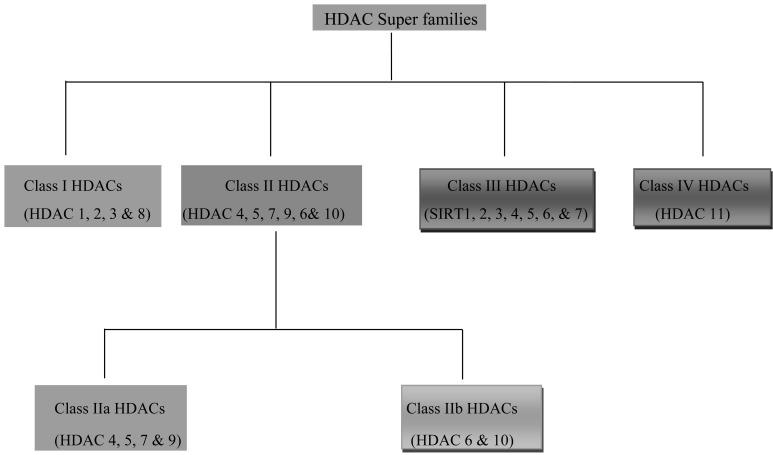
Neurodegenerative diseases are a group of pathological conditions that cause motor incordination (jerking movements), cognitive and memory impairments result from degeneration of neurons in a specific area of the brain. Oxidative stress, mitochondrial dysfunction, excitotoxicity, neuroinflammation, neurochemical imbalance and histone deacetylase enzymes (HDAC) are known to play a crucial role in neurodegeneration. HDAC is classified into four categories (class I, II, III and class IV) depending upon their location and functions. HDAC1 and 2 are involved in neurodegeneration, while HDAC3-11 and class III HDACs are beneficial as neuroprotective. HDACs are localized in different parts of the brain- HDAC1 (hippocampus and cortex), HDAC2 (nucleus), HDAC3, 4, 5, 7 and 9 (nucleus and cytoplasm), HDAC6 & HDAC7 (cytoplasm) and HDAC11 (Nucleus, cornus ammonis 1 and spinal cord). In pathological conditions, HDAC up-regulates glutamate, phosphorylation of tau, and glial fibrillary acidic proteins while down-regulating BDNF, Heat shock protein 70 and Gelsolin. Class III HDACs are divided into seven sub-classes (SIRT1-SIRT7). Sirtuins are localized in the different parts of the brain and neuron -Sirt1 (nucleus), Sirt2 (cortex, striatum, hippocampus and spinal cord), Sirt3 (mitochondria and cytoplasm), Sirt4, Sirt5 & Sirt6 (mitochondria), Sirt7 (nucleus) and Sirt8 (nucleolus). SIRTs (1, 3, 4, and 6) are involved in neuronal survival, proliferation and modulating stress response, and SIRT2 is associated with Parkinsonism, Huntington's disease and Alzheimer's disease, whereas SIRT6 is only associated with Alzheimer's disease. In this critical review, we have discussed the mechanisms and therapeutic targets of HDACs that would be beneficial for the management of neurodegenerative disorders.
Overview
The claims and statistics of this paper haven’t been checked yet.
Run the check — free, no account needed. It reads the open-access text and checks the sources it cites.
Integrity signals
Registry
Cites
Statistics
Figures
Verification
Claims the paper makes
The claims and statistics of this paper haven’t been checked yet.
Run the check — free, no account needed. It reads the open-access text and checks the sources it cites.
Claims other papers make about this one
Each is checked against this paper’s own text: does it say what the citing paper says it does?
The source backs part of the claim, not all of it — or backs it for a different population, condition or comparison.
In the citing paper
“HDAC inhibitors often display limited isoform selectivity and off-target activity, which constrains their translational potential in the nervous system (Kumar et al., 2022).”
From Histone modifications and depression: epigenetic mechanisms, therapeutic targets, and translational outlook (2026) · cites this paper as Kumar et al., 2022
Experimental — accuracy not yet measuredThe source backs part of the claim, not all of it — or backs it for a different population, condition or comparison.
In the citing paper
“HDAC6, a predominantly cytoplasmic deacetylase, regulates microtubule dynamics and autophagic flux (Kumar et al., 2022).”
From Histone modifications and depression: epigenetic mechanisms, therapeutic targets, and translational outlook (2026) · cites this paper as Kumar et al., 2022
Experimental — accuracy not yet measuredThe source backs part of the claim, not all of it — or backs it for a different population, condition or comparison.
In the citing paper
“HDAC inhibitors can enhance histone acetylation and ameliorate cognitive impairments in various AD models, and HDAC inhibition has been recognized as an attractive therapeutic strategy for AD [4, 5, 7].”
From CI-994 is a dual modulator of class I HDACs and Wnt/β-catenin signaling for the treatment of Alzheimer's disease (2026) · cites this paper as [7]
Experimental — accuracy not yet measuredThe cited source says what the claim attributes to it.
In the citing paper
“HDAC inhibitors also demonstrate anti-inflammatory and neuroprotective effects in neurodegenerative models by dampening inflammatory signaling and supporting synaptic and cognitive function (Morrison et al., 2006; Zhou et al., 2018; Kumar et al., 2022).”
From Histone modifications and depression: epigenetic mechanisms, therapeutic targets, and translational outlook (2026) · cites this paper as Kumar et al., 2022
The cited source says what the claim attributes to it.
In the citing paper
“while aberrant HDAC3 expression increases neuronal vulnerability (Kumar et al., 2022)”
From Histone modifications and depression: epigenetic mechanisms, therapeutic targets, and translational outlook (2026) · cites this paper as Kumar et al., 2022
The cited source says what the claim attributes to it.
In the citing paper
“The ability of HDAC inhibitors to improve behavioral outcomes through anti-inflammatory and neuroplastic mechanisms (Dai et al., 2021; Kumar et al., 2022)”
From Histone modifications and depression: epigenetic mechanisms, therapeutic targets, and translational outlook (2026) · cites this paper as Kumar et al., 2022
The cited source says what the claim attributes to it.
In the citing paper
“Growing evidence supports that epigenetic dysregulation through histone deacetylases (HDACs) plays a critical role in synaptic dysfunction and memory loss in Alzheimer’s disease”
From CI-994 is a dual modulator of class I HDACs and Wnt/β-catenin signaling for the treatment of Alzheimer's disease (2026) · cites this paper as [7]
The cited source says what the claim attributes to it.
In the citing paper
“HDAC inhibitors can enhance histone acetylation and ameliorate cognitive impairments in various AD models, and HDAC inhibition has been recognized as an attractive therapeutic strategy for AD [4, 5, 7].”
From CI-994 is a dual modulator of class I HDACs and Wnt/β-catenin signaling for the treatment of Alzheimer's disease (2026) · cites this paper as [7]
Self-check
Percentages, sums and reported differences re-computed from the paper’s own numbers.
The self-check needs the paper’s full text.
Citations
Cites
Regulation of chromatin by histone modifications
Bannister, A. J., & Kouzarides, T. (2011) · Cell Research · doi:10.1038/cr.2011.22 · Cited by 6,012
The tumour suppressor protein VHL targets hypoxia-inducible factors for oxygen-dependent proteolysis
Maxwell, P. H., Wiesener, M. S., Chang, G.-W., Clifford, S. C., Vaux, E. C., Cockman, M. E., Wykoff, C. C., Pugh, C. W., Maher, E. R., & Ratcliffe, P. J. (1999) · Nature · doi:10.1038/20459 · Cited by 5,180
Epidemiology of Parkinson's disease
de Lau, L. M., & Breteler, M. M. (2006) · The Lancet Neurology · doi:10.1016/s1474-4422(06)70471-9 · Cited by 4,110
Transcriptional silencing and longevity protein Sir2 is an NAD-dependent histone deacetylase
Imai, S.-I., Armstrong, C. M., Kaeberlein, M., & Guarente, L. (2000) · Nature · doi:10.1038/35001622 · Cited by 3,510
Autophagy and the Integrated Stress Response
Kroemer, G., Mariño, G., & Levine, B. (2010) · Molecular Cell · doi:10.1016/j.molcel.2010.09.023 · Cited by 3,506
Histone deacetylases (HDACs): characterization of the classical HDAC family
RUIJTER, A. J. M. D., GENNIP, A. H. V., CARON, H. N., KEMP, S., & KUILENBURG, A. B. P. V. (2003) · Biochemical Journal · doi:10.1042/bj20021321 · Cited by 3,114
Haberland, M., Montgomery, R. L., & Olson, E. N. (2008) · Nature Reviews Genetics · doi:10.1038/nrg2485 · Cited by 2,600
Erasers of Histone Acetylation: The Histone Deacetylase EnzymesPreprint
Seto, E., & Yoshida, M. (2014) · Cold Spring Harbor Perspectives in Biology · doi:10.1101/cshperspect.a018713 · Cited by 2,105
Calorie restriction promotes mammalian cell survival by inducing the SIRT1 deacetylase
Cohen, H. Y., Miller, C., Bitterman, K. J., Wall, N. R., Hekking, B., Kessler, B., Howitz, K. T., Gorospe, M., de Cabo, R., & Sinclair, D. A. (2004) · Science · doi:10.1126/science.1099196 · Cited by 1,924
Histone deacetylases and cancer: causes and therapies
Marks, P. A., Rifkind, R. A., Richon, V. M., Breslow, R., Miller, T., & Kelly, W. K. (2001) · Nature reviews. Cancer · doi:10.1038/35106079 · Cited by 1,866
Research works printed but not linked: 4
- Alberts B.; Molecular biology of the cell Garland science 2008
- Alberts B.; Johnson A.; Lewis J.; Raff M.; Roberts K.; Walter P.; Drosophila and the molecular genetics of pattern formation: Genesis of the body planMolecular Biology of the Cell 2002
- Szegő É.M.; Outeiro T.F.; Kazantsev A.G.; Sirtuins in brain and neurodegenerative disease Introductory Review on Sirtuins in Biology, Aging, and Disease 2018,175-195
- Chang, JK Tolfenamic acid: A potential modifier of tau protein in Alzheimer's disease 2015 (Thesis)
Cited by
Sorted by citations
Items 101–200 of 210
Liu, R., Guo, L., Zhao, Y., Yu, J., Yu, J., & Liu, P. (2024) · Brain Research · doi:10.1016/j.brainres.2024.148847 · Cited by 7
The role of histone deacetylases in inflammatory respiratory diseases: an update
Pan, S., Wang, X., Jiao, J., & Zhang, L. (2024) · Expert Review of Clinical Immunology · doi:10.1080/1744666x.2024.2363803 · Cited by 6
Alrouji, M., Yasmin, S., Alshammari, M. S., Alhumaydhi, F. A., Sharaf, S. E., Shahwan, M. J., & Shamsi, A. (2025) · PLoS ONE · doi:10.1371/journal.pone.0316343 · Cited by 8
The Role of Histone H2B Acetylation Modification in Aluminum-Induced Cognitive Dysfunction
Gao, J., Liu, W., Pei, J., Li, J., Hao, N., Yang, S., Yang, X., Zou, D., Xu, K., & Zhang, L. (2023) · Biological Trace Element Research · doi:10.1007/s12011-023-03959-8 · Cited by 6
Yao, Y., Wu, X., Wu, H., Su, W., & Li, P. (2026) · Foods · doi:10.3390/foods15010171 · Cited by 5
Bhatia, V., Bisht, G., Thakur, T., Thakur, H., & Ashawat, M. S. (2026) · Inflammopharmacology · doi:10.1007/s10787-026-02146-0 · Cited by 5
Tyler, S. E. B., & Tyler, L. D. K. (2023) · Brain Disorders · doi:10.1016/j.dscb.2023.100094 · Cited by 6
Boronate-based bioactive compounds activated by peroxynitrite and hydrogen peroxide
Rola, M., Zielonka, J., Smulik-Izydorczyk, R., Pięta, J., Pierzchała, K., Sikora, A., & Michalski, R. (2024) · Redox Biochemistry and Chemistry · doi:10.1016/j.rbc.2024.100040 · Cited by 5
Mandal, D., Akhtar, N., Shafi, S., & Gupta, J. (2024) · Planta Medica · doi:10.1055/a-2464-4354 · Cited by 4
Seo, J., Kim, J., Ko, Y., Lee, B., Hur, K., Jung, Y. H., Park, H., Lee, S., & Jang, C. (2025) · Biomolecules & Therapeutics · doi:10.4062/biomolther.2024.110 · Cited by 5
HDAC11: A novel inflammatory biomarker in Huntington’s disease
Kumar, V., Kaur, S., Kapil, L., Singh, C., & Singh, A. (2022) · EXCLI journal · doi:10.17179/excli2022-4741 · Cited by 5
Self-citationSchäker‐Hübner, L., Toledano‐Pinedo, M., Eimermacher, S., Krasniqi, V., Porro-Pérez, A., Tan, K., Horn, G., Stegen, P., Elsinghorst, P. W., Wille, T., et al. (2025) · ACS Pharmacology & Translational Science · doi:10.1021/acsptsci.4c00709 · Cited by 5
Lu, W., Kawatani, K., Ren, Y., Nambara, T., Jia, L., Jeevaratnam, S., Lee, E., Martinez, P. R., Izhar, T., Wang, N., et al. (2026) · Alzheimer's Research & Therapy · doi:10.1186/s13195-026-01982-0 · Cited by 4
Oljačić, S., Popovic-Nikolic, M., Filipić, B., Gagić, Ž., & Nikolic, K. M. (2024) · Current Topics in Medicinal Chemistry · doi:10.2174/0115680266337668241025061804 · Cited by 5
Bahí, A. (2025) · Physiology & Behavior · doi:10.1016/j.physbeh.2025.114839 · Cited by 4
Epigenetic Histone Deacetylases Activity Assay in the Brain and Peripheral Organ Tissues
Reddy, D. S., Boyd, H. E. G., Karnati, V., Kim, J., Ramakrishnan, S., & Wu, X. Y. (2025) · Current Protocols · doi:10.1002/cpz1.70143 · Cited by 4
NUCKS1 promotes invasion and metastasis of colorectal cancer by stabilizing HDAC2 and activating AKT
Zhu, L., Zhao, T., Su, H., Li, J., Shen, X., Zhang, L., Chen, J., & Song, Y. (2025) · Oncogenesis · doi:10.1038/s41389-025-00562-5 · Cited by 4
He, Y., Guo, Y., Li, X., Wu, J., Feng, Z., Wang, G., & Zhang, M. (2025) · Brain Research Bulletin · doi:10.1016/j.brainresbull.2025.111497 · Cited by 4
Cai, M., Shao, H., Xu, S., Wang, H., Yang, M.-J., Zhu, T., Chen, J., Li, G.-Z., Lu, S., Zang, Y., et al. (2026) · Inflammation · doi:10.1007/s10753-025-02360-y · Cited by 4
Elkafoury, E. M., El-Moselhy, T. F., El‐Hamamsy, M. H., El-Bastawissy, E. A., Afarinkia, K., Salih, M. A. M., El‐Damasy, A. K., Ibrahim, M. A. A., ElShewy, A. M., Shawky, A. M., et al. (2026) · European Journal of Medicinal Chemistry · doi:10.1016/j.ejmech.2026.118743 · Cited by 4
Huang, N., Hong, R., Cui, X., Cao, L., Shi, L., Chen, B., Su, Y., Xu, X., Hua, C., & Ying, T. (2026) · Journal of Nanobiotechnology · doi:10.1186/s12951-026-04297-2 · Cited by 5
Toro, T. B., Skripnikova, E., Bornes, K. E., Zhang, K., & Watt, T. J. (2023) · PLoS ONE · doi:10.1371/journal.pone.0291779 · Cited by 4
Aleksandrova, Y. R., & Неганова, М. Е. (2023) · International Journal of Molecular Sciences · doi:10.3390/ijms241914766 · Cited by 4
Getsy, P. M., Coffee, G. A., Kelley, T. J., & Lewis, S. J. (2024) · Frontiers in Physiology · doi:10.3389/fphys.2023.1332810 · Cited by 4
Synthesis and evaluation of hybrid molecules as RIPK1 and HDACs dual inhibitors
Tang, M., Zhou, X., Shen, Q., Chen, F., Peng, X., Ji, Y., Zhu, G., Geng, M., Chen, Y., Duan, W., et al. (2024) · Journal of Molecular Structure · doi:10.1016/j.molstruc.2024.139238 · Cited by 4
Ng, B., Avey, D. R., Sultan, F., Lopes, K. D. P., Fujita, M., Saunders, D., Vialle, R. A., Vyas, H., Kearns, N. A., Tasaki, S., et al. (2024) · bioRxiv (Cold Spring Harbor Laboratory) · doi:10.1101/2024.10.27.620550 · Cited by 4
Qian, Y., Luo, H., Xie, Z., Huang, Y., Hu, H., Jin, M., Xu, K., Pang, Y., Song, Y., & Zhang, X. (2025) · Investigative Ophthalmology & Visual Science · doi:10.1167/iovs.66.1.62 · Cited by 3
Histone and Non-histone Reversible Acetylation in Development, Aging, and Disease
Gunes, S. O., Hekim, N., Ergün, S., Alkan, E. N., & Can, C. (2025) · Results and problems in cell differentiation · doi:10.1007/978-3-031-91459-1_1 · Cited by 3
Zhang, Y., Zhang, Y., Liu, C., Liang, J., Nong, Y., Chen, M., Sun, R., Ito, Y., & Li, S. (2025) · Industrial Crops and Products · doi:10.1016/j.indcrop.2025.121654 · Cited by 3
Zhang, W., Zhang, Y., Wang, Y., Wang, C., & Zhang, C. M. (2025) · Frontiers in Drug Discovery · doi:10.3389/fddsv.2025.1662691 · Cited by 3
The epigenetic mechanism of sleep disorders related cognitive impairment
Guo, M., Liu, Y., Zhou, J., & Yu, L. (2025) · Neurochemistry International · doi:10.1016/j.neuint.2025.106079 · Cited by 3
Fanglei, C. H. A. I., Liu, C., Liu, Y., & Zou, W. (2025) · Frontiers in Neurology · doi:10.3389/fneur.2025.1678595 · Cited by 3
Fallica, A. N., Barbaraci, C., Ruiz‐Cantero, M. C., Scarlatti, A., Coco, A., Giordano, G., Mantia, A. L., Prezzavento, O., Stefano, A. D., Cacciatore, I., et al. (2026) · ChemMedChem · doi:10.1002/cmdc.202500922 · Cited by 3
Mishra, A., Satapathy, B. S., Sahu, P. K., Ghose, A., & Paidesetty, S. K. (2026) · ACS Omega · doi:10.1021/acsomega.6c00142 · Cited by 4
Guardigni, M., Greco, G., Poeta, E., Santini, A., Tassinari, E., Bergamini, C., Zalambani, C., Simone, A. D., Andrisano, V., Uliassi, E., et al. (2024) · RSC Medicinal Chemistry · doi:10.1039/d4md00175c · Cited by 3
Tripathi, S., & Bhawana, B. (2024) · Neurochemical Research · doi:10.1007/s11064-024-04167-z · Cited by 4
Lee, H., Kim, H., Min, J., Lee, E. H., Choi, D. K., Choi, J., Seo, Y., Lee, S., Im, C. Y., Bae, G. H., et al. (2025) · Pharmacology Research & Perspectives · doi:10.1002/prp2.70057 · Cited by 3
Pansa, C. C., Molica, L. R., & Moraes, K. C. M. (2022) · Scandinavian Journal of Gastroenterology · doi:10.1080/00365521.2022.2148835 · Cited by 3
Wan, M., Wang, C., Cui, J., Xia, Q. J., & Zhang, L. (2024) · International Journal of COPD · doi:10.2147/copd.s451264 · Cited by 3
Zhang, Y., He, J., Xiang, L., Tang, X., Wang, S., Li, A., Wang, C., Li, L., & Zhu, B. (2024) · Current Pharmaceutical Design · doi:10.2174/0113816128288504240321041408 · Cited by 3
Alvariño, R., Alfonso, A., Tabudravu, J. N., González-Jartı́n, J. M., Maqbali, K. S. A., Elhariry, M., Vieytes, M. R., & Botana, L. M. (2024) · Journal of Natural Products · doi:10.1021/acs.jnatprod.4c00153 · Cited by 3
Rühling, M. R., Hartmann, H., & Das, A. M. (2024) · Nutrients · doi:10.3390/nu16111678 · Cited by 3
Yu, H., Lin, K.-L., Yang, C.-H., Chan, C.-H., & Wang, M.-H. (2024) · Applied Radiation and Isotopes · doi:10.1016/j.apradiso.2024.111650 · Cited by 3
Potential of Histone Deacetylase 6 Inhibitors as a Treatment of Neurodegenerative Diseases
Abdel‐Magid, A. F. (2025) · ACS Medicinal Chemistry Letters · doi:10.1021/acsmedchemlett.5c00024 · Cited by 3
Santini, A., Tassinari, E., Altomare, A., Loi, M., Ciani, E., Trazzi, S., Piccarducci, R., Daniele, S., Martini, C., Pagliarani, B., et al. (2025) · European Journal of Medicinal Chemistry · doi:10.1016/j.ejmech.2025.117838 · Cited by 5
Liu, Z., Bian, M., He, J., & Pang, L. (2025) · Brain Research Bulletin · doi:10.1016/j.brainresbull.2025.111619 · Cited by 2
Cao, D., Geng, X., Yi, S., Zhang, H., & Fu, Y. (2026) · Frontiers in Behavioral Neuroscience · doi:10.3389/fnbeh.2025.1742898 · Cited by 2
Boosting Brain Clean-Up: Can Targeting UPS Genes Offer Neuroprotection?
Mannan, A., Sharma, A., & Singh, T. G. (2025) · Molecular Neurobiology · doi:10.1007/s12035-025-05263-z · Cited by 2
Parveen, R., Ali, S., & Fatima, S. (2023) · Protein and Peptide Letters · doi:10.2174/0109298665274059231002071951 · Cited by 1
Wang, X., Peng, L., Han, L., Tuo, Y., Chen, H., Wang, X., Xue, L., & Ding, X. (2025) · Shock · doi:10.1097/shk.0000000000002688 · Cited by 1
Epigenomic profile of GBA1 in Parkinson's disease
Berson, E., Zaghroun, R., Santoro, M., Bukhari, S. A., Seong, D., Shu, C.-H., Perna, A., James, T. K., Montine, K. S., Serrano, G. E., et al. (2025) · Parkinsonism & Related Disorders · doi:10.1016/j.parkreldis.2025.108066 · Cited by 1
The potential of HDAC inhibitors for Alzheimer’s disease
Jain, V., & Bharti, S. (2026) · International review of neurobiology · doi:10.1016/bs.irn.2026.01.005 · Cited by 1
Tian, S., Li, Y., Kang, J., Yang, G., Rao, Z., & Sun, H. (2026) · Behavioural Brain Research · doi:10.1016/j.bbr.2026.116112 · Cited by 1
Joo, B. R., Lee, I., Shin, K. S., & Kang, S. J. (2026) · Biochemical and Biophysical Research Communications · doi:10.1016/j.bbrc.2026.153495 · Cited by 1
Liu, G.-X., Zhang, Y. H., Song, Y., Yang, S., Su, A.-X., Feng, Y.-Z., Zhou, Y.-S., Ma, Z.-J., Xia, L., & Chen, G. (2026) · Nature and Science of Sleep · doi:10.2147/nss.s518388 · Cited by 1
Histone Deacetylase Meets Protein Degradation: Accelerating Anticancer Drug Discovery
Wang, J.-J., Gao, Y., Ji, X.-Q., Yin, J.-Y., Zhang, M., Wang, B., Liu, H., Feng, S., Wang, N., Lu, G., et al. (2026) · Medicinal Research Reviews · doi:10.1002/med.70052 · Cited by 2
Elkafoury, E. M., Mahmoud, S., Afarinkia, K., Salih, M. A. M., El‐Damasy, A. K., Ibrahim, M. A. A., Shawky, A. M., Sharaf, S. E., Alzahrani, O. R., Jaragh-Alhadad, L. A., et al. (2026) · Bioorganic Chemistry · doi:10.1016/j.bioorg.2026.110048 · Cited by 1
Ye, J., Deng, Y., Zhang, B., Li, C., Guo, X., Yue, R., Wan, H., Hao, Y., & Xiao, S. (2026) · Alzheimer s Research & Therapy · doi:10.1186/s13195-026-02121-5 · Cited by 1
The histone deacetylase family in health and disease
Wen, R., Yang, Y., Zhang, T., Zhang, S.-Y., Yang, X.-R., Zhang, L.-Y., Hao, P.-H., Zheng, Y., Ni, Y., & Zhang, T. (2026) · Signal Transduction and Targeted Therapy · doi:10.1038/s41392-026-02764-8 · Cited by 1
Cherednichenko, A. S., Mozdor, P. V., Oleynikova, T. K., Khatam, P. A., Nastueva, F. M., Kovalenkov, K. O., Serdinova, A. S., Osmaeva, A. K., Rovchak, A. I., Esikova, Y. Y., et al. (2024) · Epilepsy and Paroxysmal Conditions · doi:10.17749/2077-8333/epi.par.con.2024.190 · Cited by 1
Zhu, C., Fan, Y., & Peng, W. (2025) · Communications Biology · doi:10.1038/s42003-025-08613-8 · Cited by 1
Wenqing, W. (2023) · Academic Journal of Medicine & Health Sciences · doi:10.25236/ajmhs.2023.041212
Turunç, E., Uyanıkgil, Y., Temiz, T. K., & Yalçın, A. (2022) · European Journal of Therapeutics · doi:10.5152/eurjther.2022.22056
Histone Deacetylase 6 as A Putative Target in Alzheimer’s Disease Therapeutics
Shrivastav, S. K., & Kumar, P. (2023) · International Conference on Applied Intelligence and Sustainable Computing (ICAISC) · doi:10.1109/icaisc58445.2023.10200676
Role of the Sirt6/Hmgb1 pathway in neuroinflammation of Sleep deprivation-induced depressed micePreprint
Cao, D., Wei, D., Wang, Y., Yan, M., Su, S., Pan, H., & Wang, Q. (2023) · Research Square · doi:10.21203/rs.3.rs-3687315/v1
The Impact of Varied Durations of Sleep Deprivation on Anxiety and Depressive-like Behaviors in MicePreprint
Cao, D., Geng, X., Xiaoling, F., Yi, S., Pan, H., & Zhao, Y. (2023) · Research Square · doi:10.21203/rs.3.rs-3699810/v1
Design, synthesis and biological activity of oxyevodiamine-based histone deacetylase 6 inhibitors
Siyuan, L., Guo, J.-S., & Yang, Y. (2024) · Journal of Asian Natural Products Research · doi:10.1080/10286020.2024.2362383
Kundu, S., Kumar, V., Arora, S., Prasad, S., Singh, C., & Singh, A. K. (2024) · Elsevier eBooks · doi:10.1016/b978-0-443-15702-8.00026-9
Self-citationJia, D., He, T., Sun, L., Wang, Q., & Yu, H. (2024) · Current Alzheimer Research · doi:10.2174/0115672050339307241108101528
Santini, A., Tassinari, E., Altomare, A., Loi, M., Ciani, E., Trazzi, S., Piccarducci, R., Daniele, S., Martini, C., Pagliarani, B., et al. (2025) · SSRN Electronic Journal · doi:10.2139/ssrn.5212874
The Role of DNA in Neural Development and Cognitive Function
Raja, T. R. W., Udaiyappan, J. P., & Pillay, M. (2025) · DNA · doi:10.3390/dna5030037
Tang, Z., Zhang, H., Lin, Y., Hu, R., Hu, X., Jin, X., Wen, G., & Xiong, P. (2025) · Research Square · doi:10.21203/rs.3.rs-7125132/v1
Li, Y., Zhou, C., Li, C., Qiao, J., Pang, Y., Luan, Y., & Gou, M. (2025) · Fish & Shellfish Immunology · doi:10.1016/j.fsi.2025.110938
Li, X., Wang, L., Xiao, B., Liu, Z., & Dou, Y. (2025) · Journal of Medical Biochemistry · doi:10.5937/jomb0-60965
Kalinina, T. S., Sukhareva, E. V., Lanshakov, D. A., Bulygina, V. V., & Дыгало, Н. Н. (2025) · Neurochemical Journal · doi:10.1134/s1819712425700436
Brown adipocytes from pluripotent stem cells: a promising therapy for obesity
Ha, M., Leng, T., Jiang, J., Ma, X., Chen, Y., Hu, T., Huang, Y., & Rao, C. (2025) · Molecular Biology Reports · doi:10.1007/s11033-025-11281-w
Cao, W., Ji, Z., Zhu, S., Wang, M., & Sun, R. (2024) · Figshare · doi:10.6084/m9.figshare.26659123
Cao, W., Ji, Z., Zhu, S., Wang, M., & Sun, R. (2024) · Figshare · doi:10.6084/m9.figshare.26659126
A Heterogeneous Graph Framework for Inference of Metabolite–Protein-Drug Interaction NetworksPreprint
Lu, Y., & C.Sriram, C. S. (2025) · bioRxiv (Cold Spring Harbor Laboratory) · doi:10.64898/2025.12.18.695016
YANG, Y. G., Ahmed, K. A. M., Dinislam, K., Prasad, P., & Atiya, A. (2026) · Journal of Chemistry · doi:10.1155/joch/4628759
Li, J., Liu, Y., Liao, Z., Zeng, C., Zeng, L., Han, J., Wu, Y., & Shen, Z. (2026) · Neurochemical Research · doi:10.1007/s11064-025-04651-0
Flinkman, D., Deshpande, P., James, P., & Coffey, E. T. (2026) · bioRxiv (Cold Spring Harbor Laboratory) · doi:10.64898/2026.01.08.697160
Introduction to Neurodegenerative Diseases
Bele, T. N., Devarshi, S. P., Kamble, R. V., Walvekar, A. P., & Chouhan, P. S. (2026) · IGI Global eBooks · doi:10.4018/979-8-3373-1365-8.ch001
Processes and therapeutic perspectives of acylation modifications of lysine and cysteine in tumors
Jiang, J., Chen, J., Huang, S., Tian, Y., Liu, L., Yao, J., Zhang, Y., Jiang, C., Zhang, X., Han, N., et al. (2026) · Cell Communication and Signaling · doi:10.1186/s12964-026-02707-4
Epigenetic Regulation of Oxygenases Involved in ROS Production in Metabolic Disorders
Sachan, N., Varshney, P. K., Chandra, P., & Singh, P. N. D. (2026) · Springer eBooks · doi:10.1007/978-3-032-11752-6_5
Abdelrahman, K. S., Soltan, O. M., Mansour, H. E. A., Nofal, A. E., Eissa, E. A., Salem, H. R., Mahfouz, M. M., El‐Adawy, S. A., Ewies, G. S. A., Hamdi, A., et al. (2026) · European Journal of Medicinal Chemistry · doi:10.1016/j.ejmech.2026.118738
Development of a new 18F-labeled PET tracer for potential application to HDAC2 neuroimaging
Huang, Y., Wang, Y., Wang, Y., Cheng, H., Siewko, A., Varela, B. L., Wang, C., & Xu, Y. (2026) · Nuclear Medicine and Biology · doi:10.1016/j.nucmedbio.2026.109620
Molecular Glue Degraders Redefining Targeted Therapies From Discovery to Therapeutic Applications
Wen, J., Yu, J., Wen, W., & Jiang, B. (2026) · MedComm – Oncology · doi:10.1002/mog2.70058
Juárez‐Gutiérrez, M. E., Colin-Orozco, V., Palomera‐Sánchez, Z., Navarrete‐Ramírez, P., & Martínez‐Chávez, C. C. (2026) · Frontiers in Endocrinology · doi:10.3389/fendo.2026.1818535
Lü, W., Caulfield, T. R., Lee, E., Jeevaratnam, S., Wang, N., Bu, G., Kanekiyo, T., & Li, Y. (2026) · bioRxiv (Cold Spring Harbor Laboratory) · doi:10.64898/2026.04.30.721954
Sirtuins in neurodegenerative diseases
Sachan, N., Ali, Z., Fatma, N., & Chandra, P. (2026) · Elsevier eBooks · doi:10.1016/b978-0-443-45380-9.00002-x
Lu, W., Caulfield, T. R., Lee, E., Jeevaratnam, S., Wang, N., Bu, G., Kanekiyo, T., & Li, Y. (2026) · Neurotherapeutics · doi:10.1016/j.neurot.2026.e00974
Yang, Z., Liao, H., Liu, Y., Jiang, H., Xiang, X., Liu, K., Guo, L., Su, Y., Gao, X., Wang, H., et al. (2026) · Animals · doi:10.3390/ani16152369
Zheng, M., Loers, G., Lin, S., Siebert, H., Wang, Q., Zhang, R., Zheng, X., & Zhang, N. (2026) · Food Frontiers · doi:10.1002/fft2.70346
Epigenetic Control of Stress-Induced Depression: Emerging Roles of HDAC3 and HDAC6
Mohan, A. S., Narayanan, J., Kashid, V. A., Patel, R. J., & Prajapati, B. G. (2026) · International Journal of Molecular Sciences · doi:10.3390/ijms27167313
Cheng, L., Gong, P., Su, X., Fang, Y., & Wang, T. (2026) · Acta Neurologica Belgica · doi:10.1007/s13760-026-03170-1
Epigenetic mechanisms in post-stroke neuronal resilience and survival pathways
Xia, Y., Yan, X., Zhao, Y., Huang, Y., Zhu, X., Gao, F., Li, Q., & Xu, Z. (2026) · Neurochemistry International · doi:10.1016/j.neuint.2026.106250
Treating neurological diseases through epigenetic inhibition: A neuroepigenetic therapy hypothesis
Reddy, D. S., Franklin, L., Golub, V. M., Desai, H., & Ramakrishnan, S. (2026) · Journal of Pharmacology and Experimental Therapeutics · doi:10.1016/j.jpet.2026.105019
Cartas‐Cejudo, P., Miguel, M. D., Extramiana, L., Lachén‐Montes, M., Romero-Murillo, S., Gveric, D. O., Fernández‐Irigoyen, J., & Santamaría, E. (2026) · Brain Pathology · doi:10.1111/bpa.70140
Metadata
- Authors
- Kumar, V., Kundu, S., Singh, A., & Singh, S.
- Affiliations
- Indo Soviet Friendship College of Pharmacy (IN)
- Corresponding author
- Singh, Shamsher
- Venue
- Current Neuropharmacology
- Publisher
- Bentham Science Publishers Ltd.
- Published
- 2022-01
- Volume
- 20
- Issue
- 1
- Pages
- 158-178
- ISSN
- 1570-159X (ISSN-L)
- PMC
- PMC9199543
- OpenAlex
- W3174079095
- Cited by
- 210
- References
- 185
- Citations by year
- 2026: 46 · 2025: 60 · 2024: 54 · 2023: 35 · 2022: 14
- FWCI
- 2.73
- Type
- journal article
- Language
- en
- Open access
- green
- www.ncbi.nlm.nih.gov
- Licence
- cc-by-nc
- Locations
- Current Neuropharmacology (publishedVersion)
- PubMed Central (publishedVersion, cc-by-nc)
- PubMed (publishedVersion)
- Topics
- Life Sciences › Biochemistry, Genetics and Molecular Biology › Molecular Biology › Histone Deacetylase Inhibitors Research
- Life Sciences › Neuroscience › Cellular and Molecular Neuroscience › Alzheimer's disease research and treatments
- Health Sciences › Medicine › Geriatrics and Gerontology › Sirtuins and Resveratrol in Medicine
- Keywords
- histone deacetylase, histone deacetylase inhibitors, neurodegenerative diseases, class I HDACs, class II HDACs, sirtuins, SIRT1, SIRT2, SIRT6, neuroprotection, Alzheimer's disease, Parkinson's disease, Huntington's disease, oxidative stress, neuroinflammation, mitochondrial dysfunction, excitotoxicity, brain-derived neurotrophic factor, tau phosphorylation, glial fibrillary acidic protein
- MeSH terms
- Neuroinflammatory Diseases, Brain, Histone Deacetylases, Humans, Neurodegenerative Diseases, Sirtuins
About these checks
Registry, retraction, Cites and statistics results are computed, not judged, with one exception: a printed reference that no index lists is read once by a model before it counts as a citation error. Claims are extracted by a model and kept only when their quote appears verbatim in the text; each cited source is then checked, with a model’s help, for whether it says what the claim relies on. Those verdicts can be wrong — read the claim’s quote and the cited source before relying on one.
Statistics and arithmetic are recomputed, not judged.
Confidence bands are shown only for fields calibrated on our annotated test set. None is calibrated yet, so no band is shown.
What counts as a claim ›How we measure confidence ›How we check this ›
Are you an author, or do you see a problem with this page? Request a review
