

Negative and Positive Affect Regulation in a Transdiagnostic Internet-Based Protocol for Emotional Disorders: Randomized Controlled Trial
Open accessPublished version of a preprint
The DOI matches its Crossref record; 115 of the 116 references it cites were found in a registry or an index; 27 of the 80 sources its claims cite were checked for support.
Abstract
Background: Emotional disorders (EDs) are among the most prevalent mental disorders. Existing evidence-based psychological treatments are not sufficient to reduce the disease burden of mental disorders. It is therefore essential to implement innovative solutions to achieve a successful dissemination of psychological treatment protocols, and in this regard, the use of information and communication technologies such as the internet can be very useful. Furthermore, the literature suggests that not everyone with an ED receives the appropriate treatment. This situation has led to the development of new intervention proposals based on the transdiagnostic perspective, which attempts to address the underlying processes common to EDs. Most of these transdiagnostic interventions focus primarily on downregulating negative affectivity (NA), and less attention has been paid to strengths and the upregulation of positive affectivity, despite its importance for well-being and mental health. Objective: This study aims to evaluate the efficacy of a transdiagnostic internet-based treatment for EDs in a community sample. Methods: A 3-armed randomized controlled trial was conducted. A total of 216 participants were randomly assigned to a transdiagnostic internet-based protocol (TIBP), a TIBP+ positive affect (PA) component, or a waiting list (WL) control group. The treatment protocol contained core components mainly addressed to downregulate NA (ie, present-focused emotional awareness and acceptance, cognitive flexibility, behavioral and emotional avoidance patterns, and interoceptive and situational exposure) as well as a PA regulation component to promote psychological strengths and enhance well-being. Data on depression, anxiety, quality of life, neuroticism and extraversion, and PA/NA before and after treatment were analyzed. Expectations and opinions of treatment were also analyzed. Results: Within-group comparisons indicated significant pre-post reductions in the two experimental conditions. In the TIBP+PA condition, the effect sizes were large for all primary outcomes (d=1.42, Beck Depression Inventory [BDI-II]; d=0.91, Beck Anxiety Inventory [BAI]; d=1.27, Positive and Negative Affect Schedule-Positive [PANAS-P]; d=1.26, Positive and Negative Affect Schedule-Negative [PANAS-N]), whereas the TIBP condition yielded large effect sizes for BDI-II (d=1.19) and PANAS-N (d=1.28) and medium effect sizes for BAI (d=0.63) and PANAS-P (d=0.69). Between-group comparisons revealed that participants who received one of the two active treatments scored better at posttreatment than WL participants. Although there were no statistically significant differences between the two intervention groups on the PA measure, effect sizes were consistently larger in the TIBP+PA condition than in the standard transdiagnostic protocol. Conclusions: Overall, the findings indicate that EDs can be effectively treated with a transdiagnostic intervention via the internet, as significant improvements in depression, anxiety, and quality of life measures were observed. Regarding PA measures, promising effects were found, but more research is needed to study the role of PA as a therapeutic component. © Amanda Díaz-García, Alberto González-Robles, Azucena García-Palacios, Javier Fernández-Álvarez, Diana Castilla, Juana María Bretón, Rosa María Baños, Soledad Quero, Cristina Botella. Originally published in the Journal of Medical Internet Research (http://www.jmir.org), 01.02.2021. This is an open-access article distributed under the terms of the Creative Commons Attribution License (https://creativecommons.org/licenses/by/4.0/), which permits unrestricted use, distribution, and reproduction in any medium, provided the original work, first published in the Journal of Medical Internet Research, is properly cited. The complete bibliographic information, a link to the original publication on http://www.jmir.org/, as well as this copyright and license information must be included.
Overview
CoChat Summary
## TL;DR
This 3-armed randomized controlled trial found that a transdiagnostic internet-based treatment improved depression, anxiety, positive/negative affect, and quality of life in a community sample with emotional disorders. Adding a specific positive-affect component did not significantly outperform the standard transdiagnostic protocol on positive-affect outcomes, though effects were generally larger.
## Key findings
- 216 participants were randomized to TIBP (n=71), TIBP+PA (n=73), or waiting list (n=72); mean age was 33.57 years (SD 11.24), and 71.8% were female.
- Both active treatments produced significant pre-post improvements on primary outcomes; in TIBP+PA, effect sizes were large for BDI-II (d=1.42), BAI (d=0.91), PANAS-P (d=1.27), and PANAS-N (d=1.26), while TIBP showed large effects for BDI-II (d=1.19) and PANAS-N (d=1.28) and medium effects for BAI (d=0.63) and PANAS-P (d=0.69).
- Compared with waiting list, both interventions did better at posttreatment: for example, BDI-II mean differences were −13.61 for TIBP and −14.31 for TIBP+PA, both P<.001; BAI mean differences were −8.19 (P=.001) and −9.28 (P<.001).
- There were no statistically significant differences between TIBP+PA and TIBP on positive-affect measures or on reliable/clinically significant change; the paper reports no significant between-group differences for PANAS-P (mean difference −2.44; P=.08; d=0.25) or PANAS-N (mean difference −0.02; P=.99; d=0.01).
## Methods
- Three-armed superiority RCT: participants were randomly allocated to TIBP, TIBP+PA, or waiting list; block randomization was used to balance primary diagnoses across conditions.
- Community sample recruited between June 2015 and July 2018; inclusion required age ≥18, DSM-IV emotional disorder diagnosis, Spanish literacy, internet/email access, and web-based informed consent.
- Main analyses used intention-to-treat mixed models with full information maximum likelihood, pairwise comparisons with Bonferroni correction, Cohen-style effect sizes, and reliable change index analyses for completers.
## Limitations
- The paper states the main limitation was that the two protocols differed in length: TIBP had 12 modules and TIBP+PA had 16, so the observed effect of the PA component may partly reflect the greater number of modules.
- The paper states another limitation is that, although termed transdiagnostic, the interventions were based on discrete DSM-IV diagnostic categories rather than mechanistically transdiagnostic principles.
- The paper states that follow-up data were not included, so long-term effects are not yet known.
- Evident from the text: attrition was substantial (86/216 withdrew; 37% in each treatment arm vs 24% in waiting list), which reduces complete-case data and may affect precision despite ITT handling.
Model-written summary. Check it against the paper before relying on it.
Integrity signals
Registry
Cites
Statistics
Figures

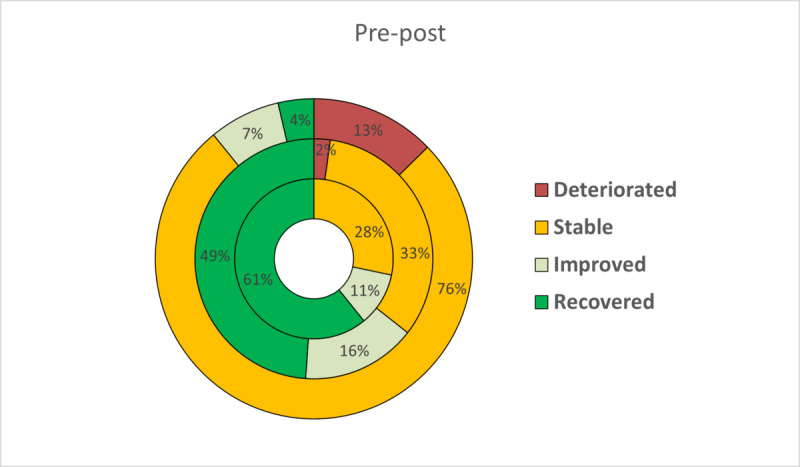

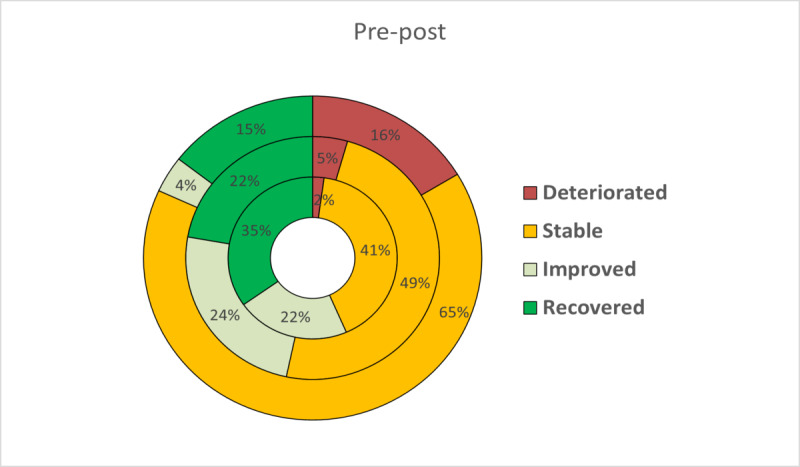

Verification
Claims the paper makes
20 Valid · 1 Not valid · 29 Not checked · 106 Own results and interpretations
The sources with a verdict support this claim; the rest weren’t checked yet, have no full text we could read, or their verdicts aren’t rated yet.
In the paper
“Mounting evidence demonstrates the efficacy of transdiagnostic treatments in patients with EDs compared with control groups [16-19]”
§ Negative and Positive Affect Regulation in a Transdiagnostic Internet-Based Protocol for Emotional Disorders: Randomized Controlled Trial > Introduction > Transdiagnostic Treatments for the Common Psychopathological Processes Underlying Emotional Disorders
What the sources say
- Not checked — no full text of the sourcecites [16] source
- Supportedcites [17] source
The Discussion reports that pooled randomized-trial results showed transdiagnostic treatments outperformed controls on anxiety severity, depression severity, and quality of life. This supports the cited claim about efficacy for emotional disorders compared with control groups, although effects varied by control condition. (LLM, conf=0.94)
- Not checked — no full text of the sourcecites [18] source
- Not checked — no full text of the sourcecites [19] source
boostedstates a cause- Asserted: passes — The authors put it forward as true.
- Checkable: passes — It can be checked against evidence.
- Load-bearing: passes — The paper’s conclusions depend on it.
- Based: passes — The paper gives a reason why it holds.
The cited sources support only part of this claim — read each source’s verdict below.
In the paper
“people with EDs have higher levels of N/NA/BI [8]”
§ Negative and Positive Affect Regulation in a Transdiagnostic Internet-Based Protocol for Emotional Disorders: Randomized Controlled Trial > Introduction > The Role of Positive Affect in EDs Regarding the temperamental vulnerabilities, some authors have identified two essential dimensions of temperament in the etiology and course of EDs: N/NA and E/positive affect (PA) [8]. Hence, neuroticism has been identified as a core factor involved in the development of EDs [23]. In addition, N/NA and E/PA have been closely related to Gray’s (1987) constructs of BI and BA, respectively [24-26], and these terms are often used interchangeably as the most stable measures of temperament [8,15,26,27]. Thus, people with EDs have higher levels of N/NA/BI [8], and they experience negative emotions more intensely and frequently [28] than people who do not have any ED. In contrast, the dimension of positive emotionality, E/PA/BA, has also been observed in many disorders, suggesting that people with an ED show low levels of E/BA [29], which can predict the onset of depression [30] and increase the severity of the problem [31]. Despite the importance of PA in health and well-being, there is limited research on its promotion; therefore, more research is needed in this area. Furthermore, notwithstanding the recent upsurge in transdiagnostic treatments for EDs, most of these protocols have focused on reducing NA. They have addressed core psychopathological deficits in the way patients experience and respond to negative emotions [32]. However, less attention has been paid to positive emotions or promoting PA [33]. In addition to being involved in the symptomatology of EDs, positive emotionality is considered a core element of mental health, showing beneficial, generalized effects on health and functioning [34-37]. Thus, the relationship between emotion regulation (eg, cognitive reappraisal) and well-being has also been demonstrated [38]. On the basis of the literature that highlights the potential importance of positive emotionality as a treatment component [39-43], it is necessary to develop and test treatment components focused on upregulating PA.
What the sources say
- Partly supportedcites [8] sourceExperimental — accuracy not yet measured
The Alternative Classification Systems section describes neuroticism/negative affect as relevant to emotional disorders and closely related to behavioral inhibition. It also reports substantial covariance between N/BI and emotional disorders. However, the passages do not establish the stated comparison with people who have no emotional disorder. (LLM, conf=0.81)
plainstates an association- Asserted: passes — The authors put it forward as true.
- Checkable: passes — It can be checked against evidence.
- Load-bearing: unclear — It is unclear whether the paper’s conclusions depend on it.
- Based: passes — The paper gives a reason why it holds.
- Partly supported
Every source the paper cites for this claim was checked and supports it.
In the paper
“the effect of the UP has been shown on the two temperament dimensions of neuroticism (N)/behavioral inhibition (BI) and extraversion (E)/behavioral activation (BA) [15].”
§ Negative and Positive Affect Regulation in a Transdiagnostic Internet-Based Protocol for Emotional Disorders: Randomized Controlled Trial > Introduction > Transdiagnostic Treatments for the Common Psychopathological Processes Underlying Emotional Disorders
What the sources say
- Supportedcites [15] source
The Abstract (page not provided) reports small effects of the Unified Protocol on both N/BI and E/BA compared with a waitlist control at post-treatment. The finding is preliminary and concerns adults with principal anxiety disorders. (LLM, conf=0.92)
plainstates a cause- Asserted: passes — The authors put it forward as true.
- Checkable: passes — It can be checked against evidence.
- Load-bearing: unclear — It is unclear whether the paper’s conclusions depend on it.
- Based: passes — The paper gives a reason why it holds.
- Supported
Every source the paper cites for this claim was checked and supports it.
In the paper
“The UP has been tested and results indicate that it is effective in reducing negative affect (NA) [13]”
§ Negative and Positive Affect Regulation in a Transdiagnostic Internet-Based Protocol for Emotional Disorders: Randomized Controlled Trial > Introduction > Transdiagnostic Treatments for the Common Psychopathological Processes Underlying Emotional Disorders
What the sources say
- Supportedcites [13] source
The Results (Efficacy at Posttreatment) report a decrease in negative affectivity measured by PANAS-NA. The Abstract also reports significant improvement in negative affect, supporting the citing sentence’s claim. (LLM, conf=0.93)
hedgedstates a cause- Asserted: passes — The authors put it forward as true.
- Checkable: passes — It can be checked against evidence.
- Load-bearing: passes — The paper’s conclusions depend on it.
- Based: passes — The paper gives a reason why it holds.
- Supported
Every source the paper cites for this claim was checked and supports it.
In the paper
“a recent meta-analysis showed that the UP is more effective compared with different control groups, such as treatment as usual, waitlist, and medication control groups, in treating anxiety and depressive symptoms [22].”
§ Negative and Positive Affect Regulation in a Transdiagnostic Internet-Based Protocol for Emotional Disorders: Randomized Controlled Trial > Introduction > Transdiagnostic Treatments for the Common Psychopathological Processes Underlying Emotional Disorders
What the sources say
- Supportedcites [22] source
The Controlled effects passage reports that, at post-intervention, the Unified Protocol had significantly greater efficacy than treatment as usual, waitlist, and medication control groups. It identifies the effects as moderate for depression and large for anxiety, matching the cited claim. (LLM, conf=0.94)
plainstates a cause- Asserted: passes — The authors put it forward as true.
- Checkable: passes — It can be checked against evidence.
- Load-bearing: passes — The paper’s conclusions depend on it.
- Based: passes — The paper gives a reason why it holds.
- Supported
78 more claims
Create a free account to see all 156 claims and to verify the 2 references still open.
- It may state two separate claims as one. 43
- Probably not a substantial claim. 40
- The quote only partly states this claim. 2
Claims other papers make about this one
Each is checked against this paper’s own text: does it say what the citing paper says it does?
The cited source says what the claim attributes to it.
In the citing paper
“These scales have been used in other research studies by our group.53 54”
From Effectiveness of a projection-based augmented reality exposure system in treating cockroach phobia: Study protocol of a randomised controlled trial (2023) · cites this paper as [54]
Self-check
Percentages, sums and reported differences re-computed from the paper’s own numbers.
Rated major: it would touch a result — a value a result rests on, reported and recomputed p-values on opposite sides of the significance level, two passages that conflict with no sign which is right, or a cited work retracted before this paper was published.
In the paper
“Overall, of the 216 participants who started the study, 86 participants withdrew from the program.”
§ Negative and Positive Affect Regulation in a Transdiagnostic Internet-Based Protocol for Emotional Disorders: Randomized Controlled Trial > Results > Participant Flow and Attrition
Reported 86 · recomputed 70
Citations
Cites
Faul, F., Erdfelder, E., Lang, A.-G., & Buchner, A. (2007) · Behavior Research Methods · doi:10.3758/bf03193146 · Cited by 65,971 · cited 1×
“1 [59] and published in the study protocol [58].”
BackgroundStatistical Power Analysis for the Behavioral Sciences (2nd ed.).
Lachenbruch, P. A., & Cohen, J. (1989) · Journal of the American Statistical Association · doi:10.2307/2290095 · Cited by 37,395
Fredrickson, B. L. (2001) · American Psychologist · doi:10.1037//0003-066x.56.3.218 · Cited by 18,025 · cited 3×
“Furthermore, well-being therapy strategies [66,67] and some concepts from Fredickson’s Broaden-and-Build Theory [68] are also included in the program.”
BackgroundMethodDiagnostic and Statistical Manual of Mental Disorders, 5th ed.
Carter, M. J. (2014) · Therapeutic Recreation Journal · Cited by 15,169
Kessler, R. C., Chiu, W. T., Demler, O., & Walters, E. E. (2005) · Archives of General Psychiatry · doi:10.1001/archpsyc.62.6.617 · Cited by 12,052 · cited 1×
“In addition, the co-occurrence of multiple EDs has also been found to be elevated, with studies showing that more than 40% of people with one diagnosis also met the diagnostic criteria for a second disorder over a 12-month period [2].”
BackgroundPositive psychology: An introduction.
Seligman, M. E. P., & Csikszentmihalyi, M. (2000) · American Psychologist · doi:10.1037/0003-066x.55.1.5 · Cited by 11,351 · cited 1×
“The PA regulation component is based mainly on BA strategies [64], strategies to promote pleasant and significant activities linked to values and life goals, and strategies to enhance personal strengths, positive feelings, positive cognitions, and positive behavior [63,65].”
BackgroundThe structure of psychological well-being revisited.
Ryff, C. D., & Keyes, C. L. M. (1995) · Journal of Personality and Social Psychology · doi:10.1037//0022-3514.69.4.719 · Cited by 10,285 · cited 1×
“A detailed description of modules that contain the PA regulation component is presented in Multimedia Appendix 1 [64,66,68-77].”
BackgroundMoher, D., Hopewell, S., Schulz, K. F., Montori, V., Gotzsche, P. C., Devereaux, P. J., Elbourne, D., Egger, M., & Altman, D. G. (2010) · BMJ · doi:10.1136/bmj.c869 · Cited by 8,883
Illusion and well‐being: A social psychological perspective on mental health
Taylor, S. E., & Brown, J. D. (1988) · Psychological Bulletin · doi:10.1037/0033-2909.103.2.193 · Cited by 7,814 · cited 1×
“For example, a large body of literature has highlighted the importance of accurate perceptions of reality in psychological health, such as positive illusions or positive self-evaluations, perceptions of control or mastery, and unrealistic optimism [109,110].”
BackgroundJacobson, N. S., & Truax, P. (1991) · Journal of Consulting and Clinical Psychology · doi:10.1037/0022-006x.59.1.12 · Cited by 7,770 · cited 1×
“To determine the existence of a reliable change in a patient, the reliable change index (RCI; Jacobson and Truax’s method) [83] was used.”
Method
Research works printed but not linked: 3
- Nathan, P, 2015, 4th Edition
- Ferrando, L, 1997, Manejo De Los Trastornos Mentales Y Del Comportamiento en Atención Primaria
- 10.1001/jamapsychiatry.2017.2164 · DOI · Paper page
Cited by
Virtual Reality for the Enhancement of Emotion Regulation
Colombo, D., Díaz‐García, A., Fernandez‐Álvarez, J., & Botella, C. (2021) · Clinical Psychology & Psychotherapy · doi:10.1002/cpp.2618 · Cited by 120
Self-citationTransdiagnostic treatment of depression and anxiety: a meta-analysis
Cuijpers, P., Miguel, C., Ciharova, M., Ebert, D., Harrer, M., & Karyotaki, E. (2023) · Psychological Medicine · doi:10.1017/s0033291722003841 · Cited by 96
“We did find a small, but significant difference between the effect sizes in studies in which some participants with OCD were included ( g = 0.81; 95% CI 0.49 – 1.12) and studies without such participants ( g = 0.50; 95% CI 0.34 – 0.67; p for difference = 0.04). did not substantially change the effect size or heterogen…”
BackgroundInfluentialSchaeuffele, C., Meine, L. E., Schulz, A., Weber, M. C., Moser, A., Paersch, C., Recher, D., Boettcher, J., Renneberg, B., Flückiger, C., et al. (2024) · Nature Human Behaviour · doi:10.1038/s41562-023-01787-3 · Cited by 91
Kolaas, K., Berman, A. H., Hedman‐Lagerlöf, E., Lindsäter, E., Hybelius, J., & Axelsson, E. (2024) · BMJ Open · doi:10.1136/bmjopen-2023-075796 · Cited by 30
Castilla, D., Haro, M. V. N., Suso‐Ribera, C., Díaz‐García, A., Zaragozá, I., & García‐Palacios, A. (2022) · BMC Psychiatry · doi:10.1186/s12888-022-03800-x · Cited by 20
Self-citationDiaz-Sanahuja, L., Campos, D., Mira, A., Castilla, D., García-Palacios, A., & Bretón-López, J. M. (2021) · Internet Interventions · doi:10.1016/j.invent.2021.100466 · Cited by 10
Self-citationSørensen, C. W., Sonne, C., Sacha, M., Kristiansen, M., Hannemose, S. Z., Stein, D. J., & Carlsson, J. M. (2023) · Journal of Affective Disorders · doi:10.1016/j.jad.2023.01.038 · Cited by 14
Flückiger, C., Mahlke, F., John, G., Daus, P., Zinbarg, R. E., Allemand, M., & Schürmann‐Vengels, J. (2024) · Journal of Anxiety Disorders · doi:10.1016/j.janxdis.2024.102956 · Cited by 16
Liu, J., Li, C., Qiu, Y.-F., Yu, Y.-Q., Zeng, L., Wu, M., Han, Y., & Yang, F. (2024) · Psychiatry Research · doi:10.1016/j.psychres.2024.116324 · Cited by 10
Transdiagnostic psychological interventions for emotional disorders: A comprehensive meta-analysis
Jiménez-Orenga, N., Miguel, C., González-Robles, A., Fernández‐Álvarez, J., Grimaldos, J., Bretón-López, J. M., Botella, C., Cuijpers, P. J., García‐Palacios, A., Papola, D., et al. (2025) · Journal of Affective Disorders · doi:10.1016/j.jad.2025.119537 · Cited by 13
Self-citationTransdiagnostic Cognitive Behavioral Group Interventions: A Systematic Review
Joaquim, S. B., de Almeida, R. S., & Marques, A. J. (2023) · Cognitive Therapy and Research · doi:10.1007/s10608-023-10372-x · Cited by 15
O’Toole, M. S., Ramsdal, N. B., Nørskov, C. S., Roepstorff, I. G., Buskbjerg, C. R., Mads, B., Christiansen, & Elkjær, E. (2025) · Journal of Affective Disorders · doi:10.1016/j.jad.2025.119791 · Cited by 11
Ader, L., Schick, A., Vaessen, T., GROUP investigators, Alizadeh, B. Z., van Amelsvoort, T., Cahn, W., de Haan, L., Schirmbeck, F. N., Simons, C. J. P., et al. (2024) · Schizophrenia Bulletin · doi:10.1093/schbul/sbae004 · Cited by 11
“39-42 From an evolutionary perspective, it can be argued that negative affect has a warning function to promote behaviors to avoid danger, whereas positive affect has the function to motivate exploration and curiosity.”
BackgroundKlein, B., Huy, N. V., McLaren, S., Andrews, B., & Shandley, K. A. (2023) · JMIR Formative Research · doi:10.2196/43385 · Cited by 8
“To date, 1 group [26] has extended their CBT+Emotional Regulation transdiagnostic digital program by adding content and strategies to specifically enhance positive affect.”
BackgroundOpenness to the Future Scale: The Russian Adaptation and Validization
Khegay, A. S., Zolotareva, A. A., Kashtanova, T. A., Vitko, J. S., & Lebedeva, A. A. (2023) · Counseling Psychology and Psychotherapy · doi:10.17759/cpp.2023310206 · Cited by 6
Paredes-Mealla, M., Martínez‐Borba, V., Miragall, M., García‐Palacios, A., Baños, R. M., & Suso‐Ribera, C. (2022) · Current Psychology · doi:10.1007/s12144-022-03884-4 · Cited by 6
Self-citationEustis, E. H., Nauphal, M., Jaso, B. A., Spencer-Laitt, D., Woodard, L. S., Farchione, T. J., & Barlow, D. H. (2024) · Cognitive and Behavioral Practice · doi:10.1016/j.cbpra.2024.07.003 · Cited by 7
Jiménez-Orenga, N., Díaz-García, A., Lorente-Català, R., González-Robles, A., Paredes-Mealla, M., García-Palacios, A., & Bretón-López, J. (2025) · Internet Interventions · doi:10.1016/j.invent.2025.100823 · Cited by 3
Self-citationGrimaldos, J., Bretón-López, J., Palau-Batet, M., Díaz-Sanahuja, L., & Quero, S. (2023) · BMJ Open · doi:10.1136/bmjopen-2022-069025 · Cited by 3
Self-citationThe effectiveness of telemedicine applications in mental health services: a meta-analysis study
Güler, K. G., Uzun, S., & Emirza, E. G. (2024) · Irish Journal of Medical Science (1971 -) · doi:10.1007/s11845-024-03841-z · Cited by 4
Web-Based Emotion Regulation Training for Sexual Health: Randomized Controlled Trial
Fischer, V. J., Holz, M. R., Billieux, J., Andersson, G., & Vögele, C. (2024) · JMIR Formative Research · doi:10.2196/50850 · Cited by 3
“Internet-based ER interventions for depression and emotional disorders have been shown to be efficacious with moderate-to-large between-group effect sizes [56-58].”
BackgroundJiménez-Orenga, N., Díaz‐García, A., García‐Palacios, A., & Bretón-López, J. M. (2024) · Internet Interventions · doi:10.1016/j.invent.2024.100761 · Cited by 2
Self-citationPsychometric Evaluation of the Swedish Version of the Types of Positive Affect Scale
Lehmivaara, J., Pfaltz, M. C., & Jansson, B. (2024) · Psychological Test Adaptation and Development · doi:10.1027/2698-1866/a000082 · Cited by 2
Palau-Batet, M., Bretón-López, J. M., Grimaldos, J., Díaz-Sanahuja, L., & Quero, S. (2023) · BMJ Open · doi:10.1136/bmjopen-2022-069026 · Cited by 2
Self-citationQuality of Life and Positive and Negative Affect in the Personality Disorder
Ramos, J. M., Marco, P. M., Sánchez, A., & Doll, A. (2024) · Clínica y Salud · doi:10.5093/clysa2024a16
Impact of a mental fatigue protocol on performance in an extreme conditioning program
Silva, V. J., Neto, A. R., de Sousa, D. F., Bertolini, G. R. F., & Bertoncello, D. (2025) · Sport Sciences for Health · doi:10.1007/s11332-025-01430-w · Cited by 1
Goldschmidt, A. B., Mason, T. B., Smith, K. E., Hipwell, A. E., Stepp, S. D., & Keenan, K. E. (2025) · Research on Child and Adolescent Psychopathology · doi:10.1007/s10802-025-01342-w
“…prevention work targeting youth at risk for a range of psychopathology outcomes through decreasing negative affect/increasing positive affect (Díaz-García et al., 2021), fostering distress tolerance (DeTore et al., 2023), and enhancing emotion regulation (Houck et al., 2016) all have been…”
Telepsicología: Beneficios en el proceso de intervención y consideraciones éticas
la Rosa-Gómez, A. D. (2021) · Preferencias REDES Revista de Divulgación Crisis y Retos en la Familia y Pareja · doi:10.22402/https://doi.org/10.22402/j.redes.unam.3.1.2021.370.32-38
Antuña‐Camblor, C., Esteller-Collado, G., Hernández, V. T., & Muñoz‐Navarro, R. (2026) · International Journal of Social Psychiatry · doi:10.1177/00207640251411743
“In this regard, transdiagnostic interventions, such as the Unified Protocol or PsicAP protocol, have demonstrated efficacy in the regulation of positive and negative affect (Cano-Vindel et al., 2021; Díaz-García et al., 2021; Peris-Baquero & Osma, 2023).”
Ambalavanar, N., Tang, B., Galinato, D. J. A., Spoelma, M. J., Newby, J. M., & Whitton, A. E. (2026) · Neuroscience & Biobehavioral Reviews · doi:10.1016/j.neubiorev.2026.106667
Carpallo-González, M., Esteller-Collado, G., González‐Blanch, C., Prieto-Vila, M., Ruiz‐Rodríguez, P., Moriana, J. A., Vindel, A. C., & Muñoz‐Navarro, R. (2026) · Behaviour Research and Therapy · doi:10.1016/j.brat.2026.105045 · Cited by 1
Tan, C., Seet, V. A. L., Tan, R. H. S., Chang, S. S. H., Tan, Y. B., Tor, P.-C., Tang, C. Y. Z., Lee, Y. W., Chandwani, N., Verma, S. K., et al. (2026) · European Journal of Psychotraumatology · doi:10.1080/20008066.2026.2694161
Theurel, A., Martinie, M., Fournier, A., Witt, A., Millot, I., & Shankland, R. (2026) · Behaviour Research and Therapy · doi:10.1016/j.brat.2026.105123
Systematic Review of Positive Affect Therapy on a Variety of Neurotic Disorders
Dolatshahi, B., Lotfi, M., & Shakiba, S. (2026) · Iranian Journal of Psychiatry and Behavioral Sciences · doi:10.5812/ijpbs-168433
“Watson et al.'s (5) two-factor model of affect posits that positive affect (PA) and negative affect (NA) are not Iran J Psychiatry Behav Sci. 2026 ; 20(3): e168433 opposite ends of a single continuum but rather two largely independent dimensions.”
Elia, F. L., García‐Palacios, A., Botella, C., Penedo, J. M. G., Holtforth, M. G., Berger, T., & Fernández‐Álvarez, J. (2026) · Frontiers in Psychiatry · doi:10.3389/fpsyt.2026.1918892
Self-citation
Metadata
- Authors
- Díaz-García, A., González-Robles, A., García-Palacios, A., Fernández-Álvarez, J., Castilla, D., Bretón, J. M., Baños, R. M., Quero, S., & Botella, C.
- Affiliations
- Universidad de Zaragoza (ES)
- Universitat de València (ES)
- Universitat Jaume I (ES)
- ORCID
- Venue
- Journal of Medical Internet Research
- Publisher
- JMIR Publications Inc.
- Published
- 2021-02-01
- Volume
- 23
- Issue
- 2
- Pages
- e21335
- ISSN
- 1438-8871 (ISSN-L)
- PMC
- PMC7884218
- OpenAlex
- W3129090834
- Cited by
- 36
- References
- 116
- Citations by year
- 2026: 7 · 2025: 5 · 2024: 11 · 2023: 8 · 2022: 2 · 2021: 3
- FWCI
- 5.33
- Type
- journal article
- Language
- en
- Open access
- gold
- doi.org
- Licence
- cc-by
- Locations
- Journal of Medical Internet Research (publishedVersion, cc-by)
- PubMed Central (publishedVersion, cc-by)
- PubMed (publishedVersion)
- Repositori UJI (Universitat Jaume I) (publishedVersion, cc-by-sa)
- Repository of Digital Objects for Teaching Research and Culture (University of Valencia) (submittedVersion, cc-by-nc)
- LA Referencia (Red Federada de Repositorios Institucionales de Publicaciones Científicas) (submittedVersion, cc-by-sa)
- DOAJ (DOAJ: Directory of Open Access Journals) (submittedVersion, cc-by-sa)
- Zaguan (Universidad de Zaragoza) (submittedVersion, cc-by)
- Funders
- Ministerio de Economía y Competitividad (PSI2014–54172-R, PSI2014, BES-2015-072360, CB06/03)
- Instituto de Salud Carlos III (CB06 03/0052, CB06/03)
- Topics
- Social Sciences › Psychology › Applied Psychology › Digital Mental Health Interventions
- Social Sciences › Psychology › Experimental and Cognitive Psychology › Anxiety, Depression, Psychometrics, Treatment, Cognitive Processes
- Social Sciences › Psychology › Experimental and Cognitive Psychology › Mental Health Research Topics
- Keywords
- emotional disorders, negative affect regulation, depression, anxiety, psychological strengths, well-being, interoceptive exposure, cognitive flexibility, emotional avoidance, treatment expectations, community sample, quality of life, treatment acceptability, medication adherence, treatment discontinuation
- MeSH terms
- Internet-Based Intervention, Adolescent, Adult, Affect, Aged, Mental Disorders, Emotions, Female, Humans, Male, Middle Aged, Quality of Life, Treatment Outcome, Telemedicine, Young Adult
About these checks
Registry, retraction, Cites and statistics results are computed, not judged, with one exception: a printed reference that no index lists is read once by a model before it counts as a citation error. Claims are extracted by a model and kept only when their quote appears verbatim in the text; each cited source is then checked, with a model’s help, for whether it says what the claim relies on. Those verdicts can be wrong — read the claim’s quote and the cited source before relying on one.
The claim verdicts this report counts are experimental: their accuracy is not yet measured.
A language model drew the claims from the paper on 2026-10-11, under version 3 of the claim definition (model deepseek-v4.1-flash, prompt extract-v3).
A second model labelled each claim on 2026-10-11 (model jev-1.13-20260917, definition revision gold-guideline-v0.2).
Cited sources are checked with a language model’s help (gpt-6-sol).
Statistics and arithmetic are recomputed, not judged.
Confidence bands are shown only for fields calibrated on our annotated test set. None is calibrated yet, so no band is shown.
What counts as a claim ›How we measure confidence ›How we check this ›
Are you an author, or do you see a problem with this page? Request a review
Data sources
Bibliographic data: Semantic Scholar, OpenAlex, Crossref.
Contains information from the Semantic Scholar Academic Graph Datasets, made available under the ODC Attribution License (ODC-BY 1.0).
Semantic Scholar’s data is described in: Kinney, R., et al. (2023). The Semantic Scholar Open Data Platform. arXiv:2301.10140.
