

Future Medical Artificial Intelligence Application Requirements and Expectations of Physicians in German University Hospitals: Web-Based Survey
Open accessPublished version of a preprint
The DOI matches its Crossref record; 95 of the 95 references it cites were found in a registry or an index.
Abstract
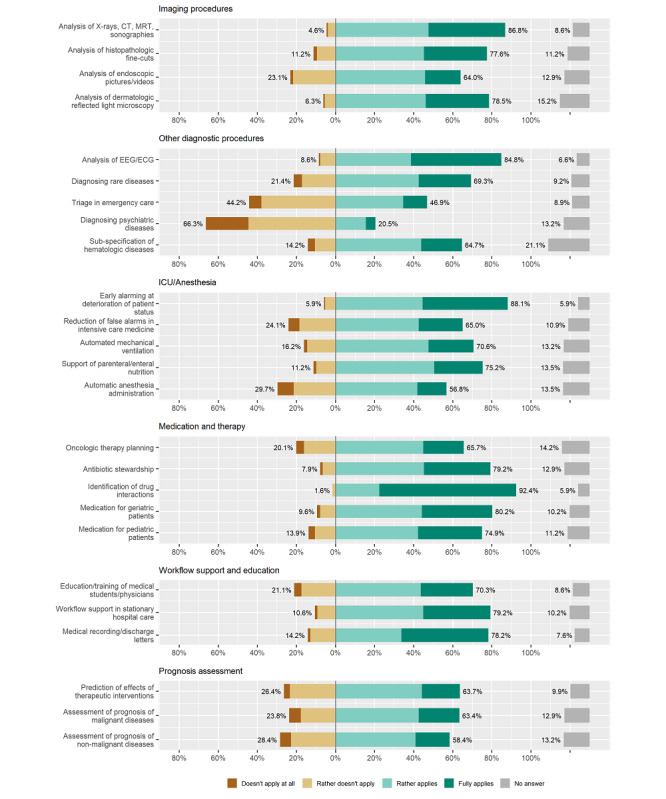
Background: The increasing development of artificial intelligence (AI) systems in medicine driven by researchers and entrepreneurs goes along with enormous expectations for medical care advancement. AI might change the clinical practice of physicians from almost all medical disciplines and in most areas of health care. While expectations for AI in medicine are high, practical implementations of AI for clinical practice are still scarce in Germany. Moreover, physicians’ requirements and expectations of AI in medicine and their opinion on the usage of anonymized patient data for clinical and biomedical research have not been investigated widely in German university hospitals. Objective: This study aimed to evaluate physicians’ requirements and expectations of AI in medicine and their opinion on the secondary usage of patient data for (bio)medical research (eg, for the development of machine learning algorithms) in university hospitals in Germany. Methods: A web-based survey was conducted addressing physicians of all medical disciplines in 8 German university hospitals. Answers were given using Likert scales and general demographic responses. Physicians were asked to participate locally via email in the respective hospitals. Results: The online survey was completed by 303 physicians (female: 121/303, 39.9%; male: 173/303, 57.1%; no response: 9/303, 3.0%) from a wide range of medical disciplines and work experience levels. Most respondents either had a positive (130/303, 42.9%) or a very positive attitude (82/303, 27.1%) towards AI in medicine. There was a significant association between the personal rating of AI in medicine and the self-reported technical affinity level (H4=48.3, P<.001). A vast majority of physicians expected the future of medicine to be a mix of human and artificial intelligence (273/303, 90.1%) but also requested a scientific evaluation before the routine implementation of AI-based systems (276/303, 91.1%). Physicians were most optimistic that AI applications would identify drug interactions (280/303, 92.4%) to improve patient care substantially but were quite reserved regarding AI-supported diagnosis of psychiatric diseases (62/303, 20.5%). Of the respondents, 82.5% (250/303) agreed that there should be open access to anonymized patient databases for medical and biomedical research. Conclusions: Physicians in stationary patient care in German university hospitals show a generally positive attitude towards using most AI applications in medicine. Along with this optimism comes several expectations and hopes that AI will assist physicians in clinical decision making. Especially in fields of medicine where huge amounts of data are processed (eg, imaging procedures in radiology and pathology) or data are collected continuously (eg, cardiology and intensive care medicine), physicians’ expectations of AI to substantially improve future patient care are high. In the study, the greatest potential was seen in the application of AI for the identification of drug interactions, assumedly due to the rising complexity of drug administration to polymorbid, polypharmacy patients. However, for the practical usage of AI in health care, regulatory and organizational challenges still have to be mastered.
Overview
The claims and statistics of this paper haven’t been checked yet.
Free: it reads the open-access text and checks the first 5 claims that cite a source we can check. Create a free account to check every claim.
Integrity signals
Registry
Cites
Statistics
Figures



Verification
Claims the paper makes
The claims and statistics of this paper haven’t been checked yet.
Free: it reads the open-access text and checks the first 5 claims that cite a source we can check. Create a free account to check every claim.
Claims other papers make about this one
Each is checked against this paper’s own text: does it say what the citing paper says it does?
The source backs part of the claim, not all of it — or backs it for a different population, condition or comparison.
In the citing paper
“Hereby, a facilitating factor is that the outcomes and clinical effectivenes of AI applications should be evidence-based, ideally relying on large randomized controlled trials (RCTs) to support claims about its effectiveness and safety [36, 38, 39, 42, 58], while the development process itself should be transparent [63] and the AI system used should be explainable and verifiable [63].”
From Healthcare professionals’ perspectives on artificial intelligence in patient care: a systematic review of hindering and facilitating factors on different levels (2025) · cites this paper as [58]
Experimental — accuracy not yet measured
Self-check
Percentages, sums and reported differences re-computed from the paper’s own numbers.
The self-check needs the paper’s full text.
Citations
Cites
Wickham, H. (2016) · Use R! · doi:10.1007/978-3-319-24277-4 · Cited by 33,115
The FAIR Guiding Principles for scientific data management and stewardship
Wilkinson, M. D., Dumontier, M., Aalbersberg, I. J., Appleton, G., Axton, M., Baak, A., Blomberg, N., Boiten, J.-W., da Silva Santos, L. B., Bourne, P. E., et al. (2016) · Scientific Data · doi:10.1038/sdata.2016.18 · Cited by 18,423
Dermatologist-level classification of skin cancer with deep neural networks
Esteva, A., Kuprel, B., Novoa, R. A., Ko, J., Swetter, S. M., Blau, H. M., & Thrun, S. (2017) · Nature · doi:10.1038/nature21056 · Cited by 14,362 · cited 1×
“4 Analysis of dermatologic reflected light microscopy [44,45]”
BackgroundHigh-performance medicine: the convergence of human and artificial intelligence
Topol, E. J. (2019) · Nature Medicine · doi:10.1038/s41591-018-0300-7 · Cited by 10,450 · cited 2×
“Here, we partly reference peer-reviewed publications of AI algorithms, comparing AI algorithms with physicians cited by Topol [32].”
BackgroundMethodMIMIC-III, a freely accessible critical care database
Johnson, A. E. W., Pollard, T. J., Shen, L., Lehman, L.-W. H., Feng, M., Ghassemi, M., Moody, B., Szolovits, P., Anthony Celi, L., & Mark, R. G. (2016) · Scientific Data · doi:10.1038/sdata.2016.35 · Cited by 8,141
A guide to deep learning in healthcare
Esteva, A., Robicquet, A., Ramsundar, B., Kuleshov, V., DePristo, M., Chou, K., Cui, C., Corrado, G., Thrun, S., & Dean, J. (2019) · Nature Medicine · doi:10.1038/s41591-018-0316-z · Cited by 5,312
The future of digital health with federated learning
Rieke, N., Hancox, J., Li, W., Milletarì, F., Roth, H. R., Albarqouni, S., Bakas, S., Galtier, M. N., Landman, B. A., Maier-Hein, K., et al. (2020) · npj Digital Medicine · doi:10.1038/s41746-020-00323-1 · Cited by 4,015 · cited 1×
“In this context, federated ML [30] is a promising approach to obtain powerful, accurate, safe, robust, and unbiased models by enabling multiple organizations to train collaboratively without the need to exchange or centralize datasets.”
BackgroundThe Future of Digital Health with Federated Learning
Rieke, N., Hancox, J., Li, W., Milletari, F., Roth, H., Albarqouni, S., Bakas, S., Galtier, M. N., Landman, B., Maier-Hein, K., et al. (2020) · arXiv · doi:10.48550/arxiv.2003.08119 · Cited by 3,495 · cited 1×
“In this context, federated ML [30] is a promising approach to obtain powerful, accurate, safe, robust, and unbiased models by enabling multiple organizations to train collaboratively without the need to exchange or centralize datasets.”
BackgroundEhteshami Bejnordi, B., Veta, M., Johannes van Diest, P., van Ginneken, B., Karssemeijer, N., Litjens, G., van der Laak, J. A. W. M., and the CAMELYON16 Consortium, Hermsen, M., Manson, Q. F., et al. (2017) · JAMA · doi:10.1001/jama.2017.14585 · Cited by 3,293 · cited 1×
“2 Analysis of histopathologic fine cuts [39,40]”
Hannun, A. Y., Rajpurkar, P., Haghpanahi, M., Tison, G. H., Bourn, C., Turakhia, M. P., & Ng, A. Y. (2019) · Nature Medicine · doi:10.1038/s41591-018-0268-3 · Cited by 3,148 · cited 2×
“1 Analysis of electroencephalography (EEG)/electrocardiography (ECG) [46,47]”
Influential
Research works printed but not linked: 3
- Choi, E, 2016, JMLR Workshop Conf Proc, 56, 301
- Article metrics: MIMIC-III, a freely accessible critical care databaseScientific data20212021-02-21https://www.nature.com/articles/sdata201635/metrics
- RaghuMZhangCKleinbergJBengioSTransfusion: Understanding transfer learning for medical imagingAdvances in Neural Information Processing Systems 32 (NeurIPS 2019)20192021-02-21https://papers.nips.cc/paper/2019/hash/eb1e78328c46506b46a4ac4a1e378b91-Abstract.html
Cited by
Esmaeilzadeh, P. (2024) · Artificial Intelligence in Medicine · doi:10.1016/j.artmed.2024.102861 · Cited by 377
Fritsch, S. J., Blankenheim, A., Wahl, A., Hetfeld, P., Maassen, O., Deffge, S., Kunze, J., Rossaint, R., Riedel, M., Marx, G., et al. (2022) · DIGITAL HEALTH · doi:10.1177/20552076221116772 · Cited by 232
Self-citationHealth Care Students’ Perspectives on Artificial Intelligence: Countrywide Survey in Canada
Teng, M., Singla, R., Yau, O., Lamoureux, D., Gupta, A., Hu, Z., Hu, R., Aissiou, A., Eaton, S., Hamm, C., et al. (2022) · JMIR Medical Education · doi:10.2196/33390 · Cited by 214
“Health care workers appear hopeful that the incorporation of AI will bring improvements in diagnostic accuracy [34] and patient monitoring [33] and reductions in medical errors [36] and improve the accessibility of care in medically deficient regions [33].”
BackgroundNatali, C., Marconi, L., Dias Duran, L. D., & Cabitza, F. (2025) · Artificial Intelligence Review · doi:10.1007/s10462-025-11352-1 · Cited by 143
“Physicians’ expectations include the potential for AI to predict clinical events, improve diagnostic accuracy, and reduce the burden of disease (Maassen et al. 2021 ).”
Large language models for generating medical examinations: systematic review
Artsi, Y., Sorin, V., Konen, E., Glicksberg, B. S., Nadkarni, G., & Klang, E. (2024) · BMC Medical Education · doi:10.1186/s12909-024-05239-y · Cited by 128
“Nowadays, AI continues to evolve, becoming more integrated in various medical fields [46].”
BackgroundAmann, J., Vayena, E., Ormond, K. E., Frey, D., Madai, V. I., & Blasimme, A. (2023) · PLOS ONE · doi:10.1371/journal.pone.0279088 · Cited by 106
AI in medical diagnosis: AI prediction & human judgment
Göndöcs, D., & Dörfler, V. (2024) · Artificial Intelligence in Medicine · doi:10.1016/j.artmed.2024.102769 · Cited by 90
Artificial Intelligence in Andrology: From Semen Analysis to Image Diagnostics
Ghayda, R. A., Cannarella, R., Calogero, A. E., Shah, R. S., Rambhatla, A., Zohdy, W., Kavoussi, P. K., Avidor‐Reiss, T., Boitrelle, F., Mostafa, T., et al. (2023) · The World Journal of Men s Health · doi:10.5534/wjmh.230050 · Cited by 95
“Nevertheless, a recent survey of German healthcare providers demonstrates a willingness to adopt AI technology in medical care [125].”
BackgroundIntegrating artificial intelligence in healthcare: applications, challenges, and future directions
Chong, P. L., Vaigeshwari, V., Reyasudin, B. K. M., Hidayah, B. R. A. N., Purnshatman, T., Yeow, J. A., & Kong, F. Y. (2025) · Future Science OA · doi:10.1080/20565623.2025.2527505 · Cited by 130
“…progressively acknowledging the significance of using artificial intelligence (Ai) in personalized medicine to provide efficient and top-notch care [65]. the incorporation of artificial intelligence (Ai) in the field of pathology has simplified diagnostic processes and enhanced the precision of…”
Artificial intelligence in (gastrointestinal) healthcare: patients’ and physicians’ perspectives
van der Zander, Q. E. W., Loon, M. C. M. V. D. E., Janssen, J. M. M., Winkens, B., van der Sommen, F., Masclee, A., & Schoon, E. J. (2022) · Scientific Reports · doi:10.1038/s41598-022-20958-2 · Cited by 66
“AI use is believed to save time, time that physicians could invest in personal contact with their patients, improving the physician–patient relationship 16,25 .”
BackgroundMale Infertility: New Developments, Current Challenges, and Future Directions
Gül, M., Russo, G. I., Kandil, H., Boitrelle, F., Saleh, R. A., Chung, E., Kavoussi, P. K., Mostafa, T., Shah, R. S., & Agarwal, A. K. (2023) · The World Journal of Men s Health · doi:10.5534/wjmh.230232 · Cited by 75
“However, a recent survey involving German healthcare providers indicates an inclination to embrace AI technology in medical care [60].”
BackgroundHeinrichs, H., Kies, A., Nagel, S. K., & Kiessling, F. (2025) · Journal of Medical Internet Research · doi:10.2196/74187 · Cited by 66
“Furthermore, our findings align with prior research indicating that attitudes toward AI do not vary across medical disciplines [41,42].”
Expectations for Artificial Intelligence (AI) in Psychiatry
Monteith, S., Glenn, T., Geddes, J., Whybrow, P. C., Achtyes, E., & Bauer, M. (2022) · Current Psychiatry Reports · doi:10.1007/s11920-022-01378-5 · Cited by 55
“In a survey of 303 physicians of all specialties in Germany, the overall attitude toward AI in medicine was positive, but only 20.5% thought AI would help with the diagnosis of psychiatric disease [119].”
BackgroundInfluentialAl-Medfa, M. K., Al-Ansari, A. M. S., Darwish, A. H., Qreeballa, T. A., & Jahrami, H. (2023) · Heliyon · doi:10.1016/j.heliyon.2023.e14744 · Cited by 54
Radiology Residents’ Perceptions of Artificial Intelligence: Nationwide Cross-Sectional Survey Study
Chen, Y., Wu, Z., Wang, P., Xie, L., Yan, M., Jiang, M., Yang, Z., Zheng, J., Zhang, J., & Zhu, J. (2023) · Journal of Medical Internet Research · doi:10.2196/48249 · Cited by 75
“Therefore, it is crucial to develop physician guidelines addressing the opportunities and challenges posed by AI to establish a foundational understanding of AI in health care [93,94], including considerations of the legal and ethical challenges associated with AI adoption [95,96].”
Henzler, D., Schmidt, S., Koçar, A., Herdegen, S., Lindinger, G. L., Maris, M. T., Bak, M. A. R., Willems, D. L., Tan, H. L., Lauerer, M., et al. (2025) · BMC Health Services Research · doi:10.1186/s12913-025-12664-2 · Cited by 54
“These concerns are substantiated in the desire of many healthcare professionals to precondition the use of AI applications on clinical trials, with ideally large RCTs supporting the validity of its results [36, 38, 39, 42, 58].”
InfluentialMatthiesen, S., Diederichsen, S. Z., Hansen, M. K. H., Villumsen, C., Lassen, M. C. H., Jacobsen, P. K., Risum, N., Winkel, B. G., Philbert, B. T., Svendsen, J. H., et al. (2021) · JMIR Human Factors · doi:10.2196/26964 · Cited by 45
“This aligns with recent studies that reported on physicians’ high expectations and attitudes toward medical AI [22,23,51,65].”
BackgroundResultApplications of Artificial Intelligence (AI) for cardiology during COVID-19 pandemic
Haleem, A., Javaid, M., Singh, R. P., & Suman, R. (2021) · Sustainable Operations and Computers · doi:10.1016/j.susoc.2021.04.003 · Cited by 58
Wu, H., Jin, K., Yip, C. C., Koh, V., & Ye, J. (2024) · Survey of Ophthalmology · doi:10.1016/j.survophthal.2024.03.008 · Cited by 53
van der Meijden, S. L., de Hond, A. A. H., Thoral, P. J., Steyerberg, E. W., Kant, I. M. J., Cinà, G., & Arbous, M. S. (2023) · JMIR Human Factors · doi:10.2196/39114 · Cited by 39
“Physicians’ perspectives on clinical AI have been investigated in survey studies in the fields of psychiatry [14], gastroenterology [15], diagnostic pathology [16], and cardiology [17], as well as across specialties [18-20].”
BackgroundMapping the Bibliometrics Landscape of AI in Medicine: Methodological Study
Shi, J., Bendig, D., Vollmar, H. C., & Rasche, P. (2023) · Journal of Medical Internet Research · doi:10.2196/45815 · Cited by 53
“The detailed search strategy is presented in Multimedia Appendix 1 [14,17,19,26-30].”
Evans, R. P., Bryant, L. D., Russell, G., & Absolom, K. L. (2024) · International Journal of Medical Informatics · doi:10.1016/j.ijmedinf.2024.105342 · Cited by 41
Daniyal, M., Qureshi, M., Marzo, R. R., Aljuaid, M. M., & Shahid, D. (2024) · BMC Health Services Research · doi:10.1186/s12913-024-10928-x · Cited by 47
“The optimism persisted in a study among neurosurgeons, reinforcing the anticipation of AI as a crucial component in the future of medicine [15].”
BackgroundIrgang, L., Sestino, A., Barth, H., & Holmén, M. (2025) · Technological Forecasting and Social Change · doi:10.1016/j.techfore.2024.123967 · Cited by 43
Feduniw, S., Golik, D., Kajdy, A., Pruc, M., Modzelewski, J., Sys, D., Kwiatkowski, S., Makomaska-Szaroszyk, E., & Rabijewski, M. (2022) · Healthcare · doi:10.3390/healthcare10112164 · Cited by 40
Düvel, J. A., Lampe, D., Kirchner, M., Elkenkamp, S., Cimiano, P., Düsing, C., Marchi, H., Schmiegel, S., Fuchs, C., Claßen, S., et al. (2024) · JMIR Human Factors · doi:10.2196/66699 · Cited by 35
Choudhury, A., Shahsavar, Y., & Shamszare, H. (2025) · JMIR Human Factors · doi:10.2196/72867 · Cited by 46
“The survey items were adapted from established measurement scales commonly used in technology acceptance and human-computer interaction research [16,17].”
Henckert, D., Malorgio, A., Schweiger, G., Raimann, F. J., Piekarski, F., Zacharowski, K. D., Hottenrott, S., Meybohm, P., Tscholl, D. W., Spahn, D. R., et al. (2023) · Journal of Clinical Medicine · doi:10.3390/jcm12062096 · Cited by 35
Abdulazeem, H. M., Meckawy, R., Schwarz, S., Novillo-Ortiz, D., & Klug, S. J. (2025) · International Journal of Medical Informatics · doi:10.1016/j.ijmedinf.2025.105945 · Cited by 39
A Human–AI interaction paradigm and its application to rhinocytology
Desolda, G., Dimauro, G., Esposito, A., Lanzilotti, R., Matera, M., & Zancanaro, M. (2024) · Artificial Intelligence in Medicine · doi:10.1016/j.artmed.2024.102933 · Cited by 28
Negash, S., Gundlack, J., Buch, C., Apfelbacher, T., Schildmann, J., Frese, T., Christoph, J., & Mikolajczyk, R. (2025) · Frontiers in Digital Health · doi:10.3389/fdgth.2025.1616827 · Cited by 27
Status of AI-Enabled Clinical Decision Support Systems Implementations in China
Ji, M., Chen, X., Genchev, G. Z., Xu, T., Wei, M., & Yu, G. (2021) · Methods of Information in Medicine · doi:10.1055/s-0041-1736461 · Cited by 23
Aljamaan, F., Malki, K. H., Alhasan, K. A., Jamal, A. A., Altamimi, I., Khayat, A., Alhaboob, A. A. N., Abdulmajeed, N., Alshahrani, F. S., Saad, K., et al. (2024) · Heliyon · doi:10.1016/j.heliyon.2024.e28962 · Cited by 34
“For example a German study assessed university physicians perceived requirement and application of AI in medical practice was able to show merely strong association between personal rating of AI in medicine and the self-reported technical affinity level, without more objective assessment [19,20].”
BackgroundMedical Expectations of Physicians on AI Solutions in Daily Practice: Cross-Sectional Survey Study
Bianchi, M. G., Amaro, E., & Machado, B. S. (2024) · JMIRx Med · doi:10.2196/50803 · Cited by 32
“Examples of practical use of AI solutions in clinical routine are still scarce around the globe [2].”
BackgroundEffect of Mixed Variation of Magnesium Carbonate and Bottom Ash for Stabilization of Subgrade Soils
Firdaus, N. A. A., Ismanti, S., & Rifa'i, A. (2024) · The Open Civil Engineering Journal · doi:10.2174/0118749445304699240416074458 · Cited by 20
Kamradt, M., Poß-Doering, R., & Szécsényi, J. (2022) · JMIR Formative Research · doi:10.2196/35367 · Cited by 18
“…consolidated flow of deidentified real-world care data, ideally from multiple facilities in clinical and ambulatory settings, into a data pool is perceived to be a possible solution to overcome the challenge of providing a sufficient data volume for secondary use in research and implementation [4].”
InfluentialMedical Doctors’ Perceptions of Artificial Intelligence (AI) in Healthcare
Banerjee, A., Sarangi, P. K., & Kumar, S. (2024) · Cureus · doi:10.7759/cureus.70508 · Cited by 35
Qiao, Y., Gao, Y., Wang, Y., Dai, D., & Luan, Z. (2025) · International Journal of Human-Computer Interaction · doi:10.1080/10447318.2025.2518333 · Cited by 21
“Studies by Maassen et al. and Li et al. supported the concept of human-machine symbiosis and advocated for AI applications guided by human wisdom (Li et al., 2021; Maassen et al., 2021).”
Weichert, J., Welp, A., Scharf, J. L., Dracopoulos, C., Becker, W.-H., & Gembicki, M. (2021) · Geburtshilfe und Frauenheilkunde · doi:10.1055/a-1522-3029 · Cited by 19
“The study participants considered the greatest potential lay in analysis of sensor-based, continuously collected data in electrocardiography/electroencephalography, in monitoring of patients in intensive care and in imaging procedures in targeted diagnostics and workflow support [93].”
Nawaz, F. A., Barr, A. A., Desai, M. Y., Tsagkaris, C., Singh, R., Klager, E., Eibensteiner, F., Parvanov, E. D., Hriberšek, M., Kletečka-Pulker, M., et al. (2022) · Frontiers in Public Health · doi:10.3389/fpubh.2022.856571 · Cited by 20
Attitudes and Acceptance Towards Artificial Intelligence in Medical Care
Holzner, D., Apfelbacher, T., Rödle, W., Schüttler, C., Prokosch, H.-U., Mikolajczyk, R., Negash, S., Kartschmit, N., Manuilova, I., Buch, C., et al. (2022) · Studies in Health Technology and Informatics · doi:10.3233/shti220398 · Cited by 15
Catalina, Q. M., Fuster‐Casanovas, A., Solé‐Casals, J., & Vidal‐Alaball, J. (2022) · JMIR Research Protocols · doi:10.2196/39536 · Cited by 21
“Although some studies have shown that AI has a high potential to be useful as a diagnostic tool, it is remarkable that most patients still preferred the diagnoses done by physicians, and professionals only accepted AI models if they were used in combination with “human diagnosis” [23,24].”
Hudecek, M. F. C., Lermer, E., Gaube, S., Cecil, J., Heiss, S. F., & Batz, F. (2024) · Computers in Human Behavior Artificial Humans · doi:10.1016/j.chbah.2024.100046 · Cited by 23
“The existing literature suggests that there is positive attitude toward AI in healthcare (e.g., Maassen, 2021; Robertson et al., 2023), but also a preference for human physicians over AI technology (e. g., Lennartz et al., 2021; Yakar et al., 2022).”
BackgroundWac, M., Craddock, I. J., Chantziara, S., Campbell, T., Santos‐Rodríguez, R., Davidson, B. I., & McWilliams, C. (2023) · JMIR Human Factors · doi:10.2196/49438 · Cited by 13
“The use of dashboards is becoming increasingly popular in health care services, as an increasing amount of patient information is digitized [12].”
Alkhatieb, M., & Subke, A. A. (2024) · Cureus · doi:10.7759/cureus.57256 · Cited by 33
“For instance, a German study reported that only 42.9% of physicians had a positive or very positive attitude toward AI in medicine, despite most believing it would play a future role [12,13].”
InfluentialGouda, A. D. K., Sorour, M. S., Ayoub, A. S., Aboushady, R. M. N., Awad, M., swerky, F. M. E., Ayed, M. M. A., Elrefay, B. W., Elshnawie, H. A. E., & Elsayed, H. T. M. (2026) · BMC Nursing · doi:10.1186/s12912-025-04238-8 · Cited by 13
"Challenges implementing and running an AI-Lab: Experience and Literature Review"
Hergan, K. (2022) · Biomedical Journal of Scientific & Technical Research · doi:10.26717/bjstr.2022.45.007222 · Cited by 14
Esfandiari, E., Kalroozi, F., Mehrabi, N., & Hosseini, Y. (2024) · Journal of Education and Health Promotion · doi:10.4103/jehp.jehp_898_23 · Cited by 17
“[21] in Germany (2021) entitled “Future Medical Artificial Intelligence Application Requirements and Expectations of Physicians in German University Hospitals,” the vast majority of doctors expected that the future of medicine would be a mixture of humans and AI, but also requested a scientific…”
BackgroundPurohit, R., Saineni, S., Chalise, S., Mathai, R., Sambandam, R., Medina-Perez, R., & Bhanusali, N. (2024) · Rheumatology International · doi:10.1007/s00296-024-05737-8 · Cited by 12
Artificial Intelligence in Radiology
Mohseni, A., Ghotbi, E., Kazemi, F., Shababi, A., Jahan, S. C., Mohseni, A., & Shababi, N. (2024) · Radiologic Clinics of North America · doi:10.1016/j.rcl.2024.03.008 · Cited by 15
Wenderott, K., Gambashidze, N., & Weigl, M. (2022) · JMIR Research Protocols · doi:10.2196/40485 · Cited by 14
“Especially, in specialties that are largely image-based or process big amounts of data, AI is expected to support physicians and improve patient care by leading to more effective and efficient diagnostics [9,10].”
BackgroundMayta‐Tovalino, F., Munive-Degregori, A., Luza, S., Cárdenas-Mariño, F. C., Guerrero, M. E., & Barja–Ore, J. (2023) · Journal of International Society of Preventive and Community Dentistry · doi:10.4103/jispcd.jispcd_35_22 · Cited by 16
“Artificial intelligence (AI)[1-3,10-14,25-33] 3Shape's open system includes 3Shape TRIOS Studio applications with seamless integration, reliable connections to leading third-party milling machines, and compatibility Artificial intelligence can now define the outcomes of diseased dental implants.”
BackgroundNatali, C., Marconi, L., Duran, L. D. D., Miglioretti, M., & Cabitza, F. (2025) · SSRN Electronic Journal · doi:10.2139/ssrn.5166364 · Cited by 10
Why nursing cannot be replaced with artificial intelligence
Jo, H. K. (2024) · Women s Health Nursing · doi:10.4069/whn.2024.12.12 · Cited by 11
“AI can also protect patients by reducing the risk of falls and assisting in the care of patients with sleep apnea [16].”
Assessing Physician Confidence in Artificial Intelligence: Insights from Iran
Firuzpour, F., Abdolalipour, E., rezaeiroushan, N., Barancheshmeh, M., Moradi, N., & Shokouhi, H. (2025) · InfoScience Trends · doi:10.61186/ist.202502.02.01 · Cited by 8
Baillie, L., Stewart-Lord, A., Thomas, N., & Frings, D. (2025) · Digital Health · doi:10.1177/20552076251328578 · Cited by 13
National study on use of artificial intelligence in breast disease and cancer
EMIROGLU, M., Huseyin, E. S. I. N., ERDOGAN, M., UGURLU, L., Dursun, A., Mertoğlu, S., KIZILOGLU, I., & KARAALI, C. (2022) · Bratislavské lekárske listy/Bratislava medical journal · doi:10.4149/bll_2022_032 · Cited by 9
Intensive Care Nurses' Knowledge and Perception Regarding Artificial Intelligence Applications
Ahmed, S. A. E. M., & Elderiny, S. N. M. (2024) · Trends in Nursing and Health Care Journal · doi:10.21608/tnhcj.2024.250044.1038 · Cited by 20
Mohseni, R., Nouri, S., Navari, S., Kiani, B. M., & Poursiahbidi, P. (2025) · InfoScience Trends · doi:10.61186/ist.202502.03.03 · Cited by 7
Serin, O., Yıldırım, B. F., Duman, F., Ercorumlu, K., Yavas, R., Taşar, M. A., & Celik, M. S. (2025) · International Journal of Medical Informatics · doi:10.1016/j.ijmedinf.2025.106003 · Cited by 7
Artificial Intelligence in Cardiovascular Medicine: A Giant Step in Personalized Medicine?
Jankauskas, S. S., Varzideh, F., Kansakar, U., & Santulli, G. (2026) · Journal of Personalized Medicine · doi:10.3390/jpm16040192 · Cited by 11
Kurasawa, H., Waki, K., Seki, T., Chiba, A., Fujino, A., Hayashi, K., Nakahara, E., Haga, T., Noguchi, T., & Ohe, K. (2024) · JMIR AI · doi:10.2196/56700 · Cited by 7
“To allow the interpretation of ML models, so that they are more acceptable to physicians [20,21] and patients [22], explainable artificial intelligence (XAI) has been studied [23].”
BackgroundTransforming paperwork with AI: applications across healthcare and other industries
Jnainati, M. A., Jnainati, J. A., Rath, S., Aujla, S., Nasir, E., Govindarajan, A., Samantaray, Y., & Semy, M. (2025) · AI & Society · doi:10.1007/s00146-025-02380-0 · Cited by 14
“When AI was first used in German university hospitals, doctors were quite optimistic about how it might improve patient care, particularly in specialties like cardiology and radiology that need a lot of data handling (Maassen et al. 2021).”
Yang, X., Man, D., Yun, K., Zhang, S., & Han, X. (2023) · Research Square · doi:10.21203/rs.3.rs-3493725/v1 · Cited by 6
Wichmann, J., Gesk, T. S., & Leyer, M. (2024) · JMIR Formative Research · doi:10.2196/48600 · Cited by 8
“To investigate the requirements and expectations of physicians in German university hospitals toward future medical AI applications, Maassen et al [39] conducted a web-based survey.”
BackgroundResultArtificial Intelligence in Healthcare: University Students’ Perceptions and Level of Confidence
Péres, P., Castro, L., & Duarte, I. (2025) · Healthcare · doi:10.3390/healthcare13182312 · Cited by 10
“The impact of prior training in the use of AI is also noteworthy, showing it to be a predisposing factor for greater confidence and positivity in the perception of AI [17].”
Karaferis, D. C., Balaska, D., Karaferi, M. E., & Pollalis, Y. (2025) · Hygiene · doi:10.3390/hygiene5040044 · Cited by 9
Patients’ perspectives on the use of artificial intelligence and robots in healthcare
Esin, H., Karaalı, C., Teker, K., Mergen, H., DEMIR, O., Aydoğan, S., KESKIN, M. Z., & Emiroğlu, M. (2024) · Bratislavské lekárske listy/Bratislava medical journal · doi:10.4149/bll_2024_80 · Cited by 6
Ehlert, H., & Lüdtke, U. M. (2025) · International Journal of Language & Communication Disorders · doi:10.1111/1460-6984.70172 · Cited by 5
Knowledge, interest and perspectives on Artificial Intelligence in Neurosurgery. A global survey
Boaro, A., Mezzalira, E., Siddi, F., Bagattini, C., Gabrovsky, N., Marchesini, N., Broekman, M. L. D., Sala, F., Gabrovsky, N., Ivanov, M., et al. (2024) · Brain and Spine · doi:10.1016/j.bas.2024.104156 · Cited by 11
“…recent years to evaluate current level of knowledge of and attitude towards AI technologies in numerous medical disciplines in multiple countries (Maassen et al., 2021; Oh et al., 2019; Palmisciano et al., 2020; Tamori et al., 2022; Doraiswamy et al., 2020; Scheetz et al., 2021; Castagno and…”
Yao, Y., Wang, H., Zhang, Q., Teng, H., Qi, H., & Zhang, Q. (2024) · PLoS ONE · doi:10.1371/journal.pone.0291147 · Cited by 3
Hwang, G. W., Hejazian, S. S., Sadr, A. V., Wagner, J. K., Hao, P., Vemuri, A. K., Kawamura, Y., Nawab, K., Hijjawi, S. B., Zand, R., et al. (2025) · Bioengineering · doi:10.3390/bioengineering12121363 · Cited by 5
“%) studies [20–22]—from distinct geographic locations and, thus, different legal jurisdictions—mentioned “malpractice.””
da Costa, R. L., Pereira, M., Pereira, A. A., Canas, J. M., Correia, R., & Dimande, C. (2025) · Businesses · doi:10.3390/businesses5040044 · Cited by 6
“…perception and acceptance, as well as user trustworthiness (Zhang et al., 2021), the violation of ethical and privacy issues (Gerke et al., 2020; Maassen et al., 2021), and medical students’ attitudes towards AI systems (Sit et al., 2020) proved to be of little significance when it comes to…”
The Role of AI Anxiety and Attitudes Shaping Healthcare Perceptions among Jordanian Children
Al-Smadi, S., Al-Smadi, F., Alzayyat, A. A., & Al-Shawabkeh, J. D. (2025) · The Open Nursing Journal · doi:10.2174/0118744346417980250718070018 · Cited by 5
How deep learning influences workflows and roles in virtual surgical planning
Hofer, B., Kittler, M. G., & Laukens, K. (2023) · Discover Health Systems · doi:10.1007/s44250-023-00041-x · Cited by 3
Improving Nurses' Cooperation with Clinical Research
Lasoff, E. M. (1986) · JONA The Journal of Nursing Administration · doi:10.1097/00005110-198609000-00002 · Cited by 3
Polzin, R., Fritsch, S. J., Sharafutdinov, K., Marx, G., & Schuppert, A. (2023) · SoftwareX · doi:10.1016/j.softx.2023.101517 · Cited by 3
Self-citationChoudhury, A., Shahsavar, Y., & Shamszare, H. (2025) · doi:10.2196/preprints.72867 · Cited by 3
Reshaping Anesthesia with Artificial Intelligence: From Concept to Reality
Dost, A., Alaraj, R., Mayet, R., & Agrawal, D. K. (2025) · Anesthesia and Critical Care · doi:10.26502/acc.087 · Cited by 12
“Scientists emphasize that although AI tools have demonstrated potential, their clinical integration remains hindered by a lack of real-time validation studies and minimal adoption into actual anesthetic environments [82].”
Augustin, M., Reitz, A. S., Wirtz, J., Hallawa, A., Dartmann, G., & Schmeink, A. (2026) · Der Nervenarzt · doi:10.1007/s00115-026-01948-5 · Cited by 5
Leonard, F., Lyttle, M. D., O’Sullivan, D. M., Gilligan, J., Roland, D., Barrett, M. J., & PERUKI, O. B. O. (2026) · PLOS Digital Health · doi:10.1371/journal.pdig.0001213 · Cited by 2
“Maassen et al [20] identified that 82.5% of surveyed German hospital physicians agreed on the value of making data available for research, compared to 92.3% from our results.”
InfluentialDaus, Z., Howard, M., Reeder, S. C., Foster, E., Ge, Z., Sparrow, R., & Kwan, P. (2026) · Health and Technology · doi:10.1007/s12553-026-01066-x · Cited by 3
Zhang, W., Qi, S., Hu, Y., Zhai, X., Zhai, W., Liu, S., Li, Z., Su, W., Liu, S., Liu, W., et al. (2026) · npj Health Systems · doi:10.1038/s44401-026-00101-3 · Cited by 2
Lundsten, S. D., Jacobsson, M., Rydén, P., Mattsson, L., & Lindgren, L. (2024) · Journal of Nursing Management · doi:10.1155/jonm/3189531 · Cited by 2
Cano, C. A. G. (2022) · Seminars in Medical Writing and Education · doi:10.56294/mw202271 · Cited by 1
Klaib, A. F., Alhosanie, T. N., Mahadin, L. W., & Altatar, E. J. (2025) · BMJ Leader · doi:10.1136/leader-2024-001093 · Cited by 3
Lee, J., Yoo, W., & Kim, H. (2025) · Frontiers in Genetics · doi:10.3389/fgene.2025.1563544 · Cited by 2
Zhang, E., & Wang, D. P. (2025) · Scientific Reports · doi:10.1038/s41598-025-34208-8 · Cited by 4
“Maassen et al. 21 , through surveys of German physicians, found that user trust and expectations in medical AI were constrained by the technology’s limited understanding of context, revealing the algorithmic obscuration of complex human needs 21 .”
Potas, N., ERKILIÇ, C. E., Caner, S., & Fritsch, S. J. (2026) · Work · doi:10.1177/10519815261429412 · Cited by 1
Self-citationHu, Z., Wang, M., Zheng, S., Xu, X., Zhang, Z., Ge, Q., Li, J., & Yao, Y. (2024) · JMIR Human Factors · doi:10.2196/55802 · Cited by 1
Artificial Intelligence in Andrology and Reproductive Medicine
Zohdy, W., & Agarwal, A. K. (2024) · Springer eBooks · doi:10.1007/978-3-031-62648-7_18 · Cited by 1
Psychiatrists’ Attitudes Toward Artificial Intelligence: Tasks, Job Security and Benefits (Preprint)Preprint
Al-Ansari, A. M., & Al-Medfa, M. K. (2022) · doi:10.2196/preprints.38558 · Cited by 2
Al-Medfa, M. K. (2022) · doi:10.2196/preprints.38137 · Cited by 1
Henckert, D., Malorgio, A., Schweiger, G., Raimann, F. J., Piekarski, F., Zacharowski, K. D., Hottenrott, S., Meybohm, P., Tscholl, D. W., Spahn, D. R., et al. (2022) · doi:10.2196/preprints.43290 · Cited by 1
Medical Expectations Survey on Artificial Intelligence Solutions in daily practicePreprint
Bianchi, M. G., Amaro, E., & Machado, B. S. (2023) · medRxiv · doi:10.1101/2023.06.29.23291561 · Cited by 1
“Specialization Internship Master's degree 16(9) 27(16) 43(25) PhD degree 7(4) 48(28) 55(32) Post-doc 3(2) 6(3) 9(5) Associated Professor 0(0) 6(3) 6(3) Other 0(0) 1(1) 1(1) 5.”
BackgroundInfluentialLeonard, F., Lyttle, M. D., O’Sullivan, D. M., Gilligan, J., Roland, D., & Barrett, M. J. (2025) · medRxiv · doi:10.1101/2025.06.29.25330501 · Cited by 1
What Do Healthcare Student Want to Know About Artificial Intelligence? A Canada-Wide SurveyPreprint
Teng, M. Y., Singla, R., Yau, O., Lamoureux, D., Gupta, A., Hu, Z., Hu, R., Aissiou, A., Eaton, S., Hamm, C., et al. (2021) · SSRN Electronic Journal · doi:10.2139/ssrn.3900405
Yang, X., Man, D., Yun, K., Zhang, S., & Han, X. (2023) · doi:10.2196/preprints.46626
Health related quality of life and associated symptoms in barrett’s esophagus patients
Loon, M. C. M. V. D. E., & van Loon (2024) · Research Publications (Maastricht University) · doi:10.26481/dis.20240327me
Singh, B., Jermsittiparsert, K., Lal, S., & Arora, M. K. (2024) · Advances in human and social aspects of technology book series · doi:10.4018/979-8-3693-6190-0.ch018
Metadata
- Authors
- Maassen, O., Fritsch, S., Palm, J., Deffge, S., Kunze, J., Marx, G., Riedel, M., Schuppert, A., & Bickenbach, J.
- Affiliations
- Universitätsklinikum Aachen (DE)
- Forschungszentrum Jülich (DE)
- Jena University Hospital (DE)
- University of Iceland (IS)
- Corresponding author
- Maassen, Oliver
- ORCID
- Venue
- Journal of Medical Internet Research
- Publisher
- JMIR Publications Inc.
- Published
- 2021-03-05
- Volume
- 23
- Issue
- 3
- Pages
- e26646
- ISSN
- 1438-8871 (ISSN-L)
- PMC
- PMC7980122
- OpenAlex
- W3130272805
- Cited by
- 125
- References
- 95
- Citations by year
- 2026: 22 · 2025: 32 · 2024: 34 · 2023: 14 · 2022: 16 · 2021: 6
- FWCI
- 5.10
- Type
- journal article
- Language
- en
- Open access
- gold
- doi.org
- Licence
- cc-by
- Locations
- Journal of Medical Internet Research (publishedVersion, cc-by)
- PubMed Central (publishedVersion, cc-by)
- PubMed (publishedVersion)
- DOAJ (DOAJ: Directory of Open Access Journals) (submittedVersion, cc-by-sa)
- Funders
- Bundesministerium für Bildung und Forschung (01ZZ1803M, 01ZZ1803C, 01ZZ1803B)
- Topics
- Health Sciences › Medicine › Health Informatics › Artificial Intelligence in Healthcare and Education
- Health Sciences › Health Professions › Health Information Management › Artificial Intelligence in Healthcare
- Health Sciences › Health Professions › Health Information Management › Electronic Health Records Systems
- Keywords
- artificial intelligence in healthcare, physician expectations, anonymized patient data, clinical decision support, psychiatric diagnosis, university hospital, German physicians, clinical implementation of AI, polypharmacy
- MeSH terms
- Artificial Intelligence, Female, Hospitals, University, Humans, Male, Motivation, Physicians, Surveys and Questionnaires, Radiology, Internet
About these checks
Registry, retraction, Cites and statistics results are computed, not judged, with one exception: a printed reference that no index lists is read once by a model before it counts as a citation error. Claims are extracted by a model and kept only when their quote appears verbatim in the text; each cited source is then checked, with a model’s help, for whether it says what the claim relies on. Those verdicts can be wrong — read the claim’s quote and the cited source before relying on one.
Statistics and arithmetic are recomputed, not judged.
Confidence bands are shown only for fields calibrated on our annotated test set. None is calibrated yet, so no band is shown.
What counts as a claim ›How we measure confidence ›How we check this ›
Are you an author, or do you see a problem with this page? Request a review
Data sources
Bibliographic data: Semantic Scholar, OpenAlex, Crossref.
Contains information from the Semantic Scholar Academic Graph Datasets, made available under the ODC Attribution License (ODC-BY 1.0).
Semantic Scholar’s data is described in: Kinney, R., et al. (2023). The Semantic Scholar Open Data Platform. arXiv:2301.10140.
