

Future Medical Artificial Intelligence Application Requirements and Expectations of Physicians in German University Hospitals: Web-Based Survey
Open accessPublished version of a preprint
The DOI matches its Crossref record; 95 of the 95 references it cites were found in a registry or an index.
Abstract
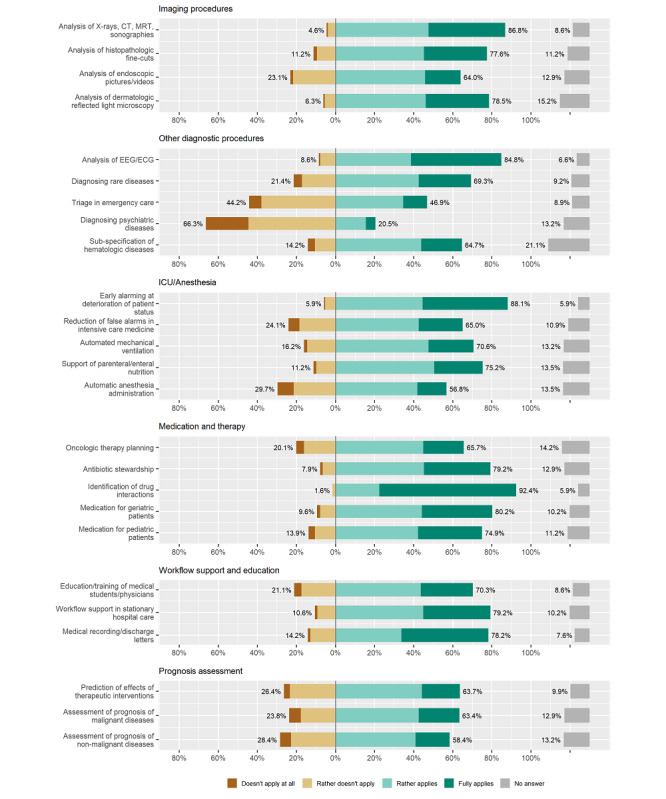
Background: The increasing development of artificial intelligence (AI) systems in medicine driven by researchers and entrepreneurs goes along with enormous expectations for medical care advancement. AI might change the clinical practice of physicians from almost all medical disciplines and in most areas of health care. While expectations for AI in medicine are high, practical implementations of AI for clinical practice are still scarce in Germany. Moreover, physicians’ requirements and expectations of AI in medicine and their opinion on the usage of anonymized patient data for clinical and biomedical research have not been investigated widely in German university hospitals. Objective: This study aimed to evaluate physicians’ requirements and expectations of AI in medicine and their opinion on the secondary usage of patient data for (bio)medical research (eg, for the development of machine learning algorithms) in university hospitals in Germany. Methods: A web-based survey was conducted addressing physicians of all medical disciplines in 8 German university hospitals. Answers were given using Likert scales and general demographic responses. Physicians were asked to participate locally via email in the respective hospitals. Results: The online survey was completed by 303 physicians (female: 121/303, 39.9%; male: 173/303, 57.1%; no response: 9/303, 3.0%) from a wide range of medical disciplines and work experience levels. Most respondents either had a positive (130/303, 42.9%) or a very positive attitude (82/303, 27.1%) towards AI in medicine. There was a significant association between the personal rating of AI in medicine and the self-reported technical affinity level (H4=48.3, P<.001). A vast majority of physicians expected the future of medicine to be a mix of human and artificial intelligence (273/303, 90.1%) but also requested a scientific evaluation before the routine implementation of AI-based systems (276/303, 91.1%). Physicians were most optimistic that AI applications would identify drug interactions (280/303, 92.4%) to improve patient care substantially but were quite reserved regarding AI-supported diagnosis of psychiatric diseases (62/303, 20.5%). Of the respondents, 82.5% (250/303) agreed that there should be open access to anonymized patient databases for medical and biomedical research. Conclusions: Physicians in stationary patient care in German university hospitals show a generally positive attitude towards using most AI applications in medicine. Along with this optimism comes several expectations and hopes that AI will assist physicians in clinical decision making. Especially in fields of medicine where huge amounts of data are processed (eg, imaging procedures in radiology and pathology) or data are collected continuously (eg, cardiology and intensive care medicine), physicians’ expectations of AI to substantially improve future patient care are high. In the study, the greatest potential was seen in the application of AI for the identification of drug interactions, assumedly due to the rising complexity of drug administration to polymorbid, polypharmacy patients. However, for the practical usage of AI in health care, regulatory and organizational challenges still have to be mastered.
Overview
The claims and statistics of this paper haven’t been checked yet.
Free: it reads the open-access text and checks the first 5 claims that cite a source we can check. Create a free account to check every claim.
Integrity signals
Registry
Cites
Statistics
Figures



Verification
Claims the paper makes
The claims and statistics of this paper haven’t been checked yet.
Free: it reads the open-access text and checks the first 5 claims that cite a source we can check. Create a free account to check every claim.
Claims other papers make about this one
Each is checked against this paper’s own text: does it say what the citing paper says it does?
The source backs part of the claim, not all of it — or backs it for a different population, condition or comparison.
In the citing paper
“Hereby, a facilitating factor is that the outcomes and clinical effectivenes of AI applications should be evidence-based, ideally relying on large randomized controlled trials (RCTs) to support claims about its effectiveness and safety [36, 38, 39, 42, 58], while the development process itself should be transparent [63] and the AI system used should be explainable and verifiable [63].”
From Healthcare professionals’ perspectives on artificial intelligence in patient care: a systematic review of hindering and facilitating factors on different levels (2025) · cites this paper as [58]
Experimental — accuracy not yet measured
Self-check
Percentages, sums and reported differences re-computed from the paper’s own numbers.
The self-check needs the paper’s full text.
Citations
Cites
Wickham, H. (2016) · Use R! · doi:10.1007/978-3-319-24277-4 · Cited by 33,115
The FAIR Guiding Principles for scientific data management and stewardship
Wilkinson, M. D., Dumontier, M., Aalbersberg, I. J., Appleton, G., Axton, M., Baak, A., Blomberg, N., Boiten, J.-W., da Silva Santos, L. B., Bourne, P. E., et al. (2016) · Scientific Data · doi:10.1038/sdata.2016.18 · Cited by 18,423
Dermatologist-level classification of skin cancer with deep neural networks
Esteva, A., Kuprel, B., Novoa, R. A., Ko, J., Swetter, S. M., Blau, H. M., & Thrun, S. (2017) · Nature · doi:10.1038/nature21056 · Cited by 14,362 · cited 1×
“4 Analysis of dermatologic reflected light microscopy [44,45]”
BackgroundHigh-performance medicine: the convergence of human and artificial intelligence
Topol, E. J. (2019) · Nature Medicine · doi:10.1038/s41591-018-0300-7 · Cited by 10,450 · cited 2×
“Here, we partly reference peer-reviewed publications of AI algorithms, comparing AI algorithms with physicians cited by Topol [32].”
BackgroundMethodMIMIC-III, a freely accessible critical care database
Johnson, A. E. W., Pollard, T. J., Shen, L., Lehman, L.-W. H., Feng, M., Ghassemi, M., Moody, B., Szolovits, P., Anthony Celi, L., & Mark, R. G. (2016) · Scientific Data · doi:10.1038/sdata.2016.35 · Cited by 8,141
A guide to deep learning in healthcare
Esteva, A., Robicquet, A., Ramsundar, B., Kuleshov, V., DePristo, M., Chou, K., Cui, C., Corrado, G., Thrun, S., & Dean, J. (2019) · Nature Medicine · doi:10.1038/s41591-018-0316-z · Cited by 5,312
The future of digital health with federated learning
Rieke, N., Hancox, J., Li, W., Milletarì, F., Roth, H. R., Albarqouni, S., Bakas, S., Galtier, M. N., Landman, B. A., Maier-Hein, K., et al. (2020) · npj Digital Medicine · doi:10.1038/s41746-020-00323-1 · Cited by 4,015 · cited 1×
“In this context, federated ML [30] is a promising approach to obtain powerful, accurate, safe, robust, and unbiased models by enabling multiple organizations to train collaboratively without the need to exchange or centralize datasets.”
BackgroundThe Future of Digital Health with Federated Learning
Rieke, N., Hancox, J., Li, W., Milletari, F., Roth, H., Albarqouni, S., Bakas, S., Galtier, M. N., Landman, B., Maier-Hein, K., et al. (2020) · arXiv · doi:10.48550/arxiv.2003.08119 · Cited by 3,495 · cited 1×
“In this context, federated ML [30] is a promising approach to obtain powerful, accurate, safe, robust, and unbiased models by enabling multiple organizations to train collaboratively without the need to exchange or centralize datasets.”
BackgroundEhteshami Bejnordi, B., Veta, M., Johannes van Diest, P., van Ginneken, B., Karssemeijer, N., Litjens, G., van der Laak, J. A. W. M., and the CAMELYON16 Consortium, Hermsen, M., Manson, Q. F., et al. (2017) · JAMA · doi:10.1001/jama.2017.14585 · Cited by 3,293 · cited 1×
“2 Analysis of histopathologic fine cuts [39,40]”
Hannun, A. Y., Rajpurkar, P., Haghpanahi, M., Tison, G. H., Bourn, C., Turakhia, M. P., & Ng, A. Y. (2019) · Nature Medicine · doi:10.1038/s41591-018-0268-3 · Cited by 3,148 · cited 2×
“1 Analysis of electroencephalography (EEG)/electrocardiography (ECG) [46,47]”
InfluentialWang, L., Lin, Z. Q., & Wong, A. (2020) · Scientific Reports · doi:10.1038/s41598-020-76550-z · Cited by 3,113 · cited 2×
“Well-known examples for AI in medicine are the application of deep learning as a subfield of ML in medical imaging for disease detection from x-rays [7].”
BackgroundMethodCoudray, N., Ocampo, P. S., Sakellaropoulos, T., Narula, N., Snuderl, M., Fenyö, D., Moreira, A. L., Razavian, N., & Tsirigos, A. (2018) · Nature Medicine · doi:10.1038/s41591-018-0177-5 · Cited by 2,930 · cited 1×
“2 Analysis of histopathologic fine cuts [39,40]”
Artificial intelligence in healthcare
Yu, K.-H., Beam, A. L., & Kohane, I. S. (2018) · Nature Biomedical Engineering · doi:10.1038/s41551-018-0305-z · Cited by 2,817
The practical implementation of artificial intelligence technologies in medicine
He, J., Baxter, S. L., Xu, J., Xu, J., Zhou, X., & Zhang, K. (2019) · Nature Medicine · doi:10.1038/s41591-018-0307-0 · Cited by 2,246 · cited 3×
“Specific hurdles to be mastered are the absence of interoperabilitiy standards and missing regularities in cases of AI-driven, wrong decisions [23].”
BackgroundInfluentialHaenssle, H. A., Fink, C., Schneiderbauer, R., Toberer, F., Buhl, T., Blum, A., Kalloo, A., Hassen, A. B. H., Thomas, L., Enk, A., et al. (2018) · Annals of Oncology · doi:10.1093/annonc/mdy166 · Cited by 1,571
Privacy in the age of medical big data
Price, W. N., & Cohen, I. G. (2019) · Nature Medicine · doi:10.1038/s41591-018-0272-7 · Cited by 1,522 · cited 1×
“Price and Cohen [92] described the legal and ethical challenges of big data for data privacy and how to handle patient data for the best conception of health privacy.”
BackgroundModeling polypharmacy side effects with graph convolutional networks
Zitnik, M., Agrawal, M., & Leskovec, J. (2018) · Bioinformatics · doi:10.1093/bioinformatics/bty294 · Cited by 1,501
Komorowski, M., Celi, L. A., Badawi, O., Gordon, A. C., & Faisal, A. A. (2018) · Nature Medicine · doi:10.1038/s41591-018-0213-5 · Cited by 1,290 · cited 1×
“While most physicians expect the future of medicine to be characterized by the combination of human and artificial intelligence, AI has already been proven to be able to outperform human physicians in specific tasks [80].”
BackgroundBenjamens, S., Dhunnoo, P., & Meskó, B. (2020) · npj Digital Medicine · doi:10.1038/s41746-020-00324-0 · Cited by 1,215 · cited 1×
“On the other hand, only a few AI applications have passed the regulatory requirements and have been implemented in clinical routine practice [85].”
BackgroundKather, J. N., Krisam, J., Charoentong, P., Luedde, T., Herpel, E., Weis, C.-A., Gaiser, T., Marx, A., Valous, N. A., Ferber, D., et al. (2019) · PLOS Medicine · doi:10.1371/journal.pmed.1002730 · Cited by 1,082 · cited 2×
“2 Assessment of prognosis of malignant diseases [13-15]”
BackgroundFiske, A., Henningsen, P., & Buyx, A. (2019) · Journal of Medical Internet Research · doi:10.2196/13216 · Cited by 857 · cited 1×
“The low rating of AI’s potential for psychiatric diseases is remarkable as there are several AI applications for this medical field as described for ML in recent publications [52,53].”
BackgroundAn interpretable machine learning model for accurate prediction of sepsis in the ICU
Nemati, S., Holder, A., Razmi, F., Stanley, M. D., Clifford, G. D., & Buchman, T. G. (2018) · Critical Care Medicine · doi:10.1097/ccm.0000000000002936 · Cited by 832
Urban, G., Tripathi, P., Alkayali, T., Mittal, M., Jalali, F., Karnes, W., & Baldi, P. (2018) · Gastroenterology · doi:10.1053/j.gastro.2018.06.037 · Cited by 744 · cited 1×
“3 Analysis of endoscopic pictures or videos [41-43]”
BackgroundDeep neural network improves fracture detection by clinicians
Lindsey, R., Daluiski, A., Chopra, S., Lachapelle, A., Mozer, M., Sicular, S., Hanel, D., Gardner, M., Gupta, A., Hotchkiss, R., et al. (2018) · Proceedings of the National Academy of Sciences · doi:10.1073/pnas.1806905115 · Cited by 640 · cited 1×
“1 Analysis of x-rays, computed tomography (CT), magnetic resonance tomography (MRT), sonographies [36-38]”
MethodChurpek, M. M., Yuen, T. C., Winslow, C., Meltzer, D. O., Kattan, M. W., & Edelson, D. P. (2016) · Critical Care Medicine · doi:10.1097/ccm.0000000000001571 · Cited by 638 · cited 1×
“1 Early alarm of the deterioration of patient status [57]”
BackgroundWillemink, M. J., & Noël, P. B. (2019) · European Radiology · doi:10.1007/s00330-018-5810-7 · Cited by 603 · cited 1×
“Especially in radiology and other medical imaging procedures, vendors of medical technology have predominantly integrated some kind of AI (eg, ML algorithms) into their products [24].”
BackgroundCOVID-19 Artificial Intelligence Diagnosis Using Only Cough Recordings
Laguarta, J., Hueto, F., & Subirana, B. (2020) · IEEE Open Journal of Engineering in Medicine and Biology · doi:10.1109/ojemb.2020.3026928 · Cited by 589 · cited 2×
“Recently, Laguarta et al [86] from the Massachusetts Institute of Technology successfully developed and applied an AI model for diagnosing COVID-19 using only cough recordings, achieving a COVID-19 sensitivity of 98.5% with a specificity of 94.2% (area under the curve: 0.97).”
MethodInfluentialDeep learning for lung cancer prognostication: A retrospective multi-cohort radiomics study
Hosny, A., Parmar, C., Coroller, T. P., Grossmann, P., Zeleznik, R., Kumar, A., Bussink, J., Gillies, R. J., Mak, R. H., & Aerts, H. J. W. L. (2018) · PLOS Medicine · doi:10.1371/journal.pmed.1002711 · Cited by 579 · cited 2×
“2 Assessment of prognosis of malignant diseases [13-15]”
Background(2016) · PubMed · Cited by 576
Artificial Intelligence in Healthcare: Review and Prediction Case Studies
Rong, G., Mendez, A., Bou Assi, E., Zhao, B., & Sawan, M. (2020) · Engineering · doi:10.1016/j.eng.2019.08.015 · Cited by 552
Menden, M. P., Iorio, F., Garnett, M., McDermott, U., Benes, C. H., Ballester, P. J., & Saez-Rodriguez, J. (2013) · PLoS ONE · doi:10.1371/journal.pone.0061318 · Cited by 542
Artificial Intelligence in Health Care: Bibliometric Analysis
Guo, Y., Hao, Z., Zhao, S., Gong, J., & Yang, F. (2020) · Journal of Medical Internet Research · doi:10.2196/18228 · Cited by 461 · cited 1×
“Over the last decade, research on AI in medicine and biomedicine and the number of publications in these fields have substantially increased [3,4].”
BackgroundAutomated deep-neural-network surveillance of cranial images for acute neurologic events
Titano, J. J., Badgeley, M., Schefflein, J., Pain, M., Su, A., Cai, M., Swinburne, N., Zech, J., Kim, J., Bederson, J., et al. (2018) · Nature Medicine · doi:10.1038/s41591-018-0147-y · Cited by 458 · cited 1×
“1 Analysis of x-rays, computed tomography (CT), magnetic resonance tomography (MRT), sonographies [36-38]”
MethodA multimodal deep learning framework for predicting drug–drug interaction events
Deng, Y., Xu, X., Qiu, Y., Xia, J., Zhang, W., & Liu, S. (2020) · Bioinformatics · doi:10.1093/bioinformatics/btaa501 · Cited by 453
From hype to reality: data science enabling personalized medicine
Fröhlich, H., Balling, R., Beerenwinkel, N., Kohlbacher, O., Kumar, S., Lengauer, T., Maathuis, M. H., Moreau, Y., Murphy, S. A., Przytycka, T. M., et al. (2018) · BMC Medicine · doi:10.1186/s12916-018-1122-7 · Cited by 414 · cited 1×
“AI is perceived as the next big thing that will sustainably change medicine towards precision and personalized medicine [8] and change health care and with it, the role of physicians.”
BackgroundSelf-citationA short guide for medical professionals in the era of artificial intelligence
Meskó, B., & Görög, M. (2020) · npj Digital Medicine · doi:10.1038/s41746-020-00333-z · Cited by 409 · cited 2×
“To give physicians a basic understanding of AI for medical practice as well as its limitations and opportunities, Meskó and Görög [84] published a guide for medical professionals in the era of AI.”
BackgroundArtificial Intelligence-Assisted Polyp Detection for Colonoscopy: Initial Experience
Misawa, M., Kudo, S.-E., Mori, Y., Cho, T., Kataoka, S., Yamauchi, A., Ogawa, Y., Maeda, Y., Takeda, K., Ichimasa, K., et al. (2018) · Gastroenterology · doi:10.1053/j.gastro.2018.04.003 · Cited by 394 · cited 1×
“3 Analysis of endoscopic pictures or videos [41-43]”
BackgroundArtificial intelligence and the implementation challenge
Shaw, J., Rudzicz, F., Jamieson, T., & Goldfarb, A. (2019) · Journal of Medical Internet Research · doi:10.2196/13659 · Cited by 389 · cited 1×
“Shaw et al [74] investigated the challenges of implementing AI in health care compared with other technologies, suggesting that AI implementation in medicine poses novel difficulties.”
BackgroundSapci, A. H., & Sapci, H. A. (2020) · JMIR Medical Education · doi:10.2196/19285 · Cited by 377
Magrabi, F., Ammenwerth, E., McNair, J. B., De Keizer, N. F., Hyppönen, H., Nykänen, P., Rigby, M., Scott, P. J., Vehko, T., Wong, Z. S.-Y., et al. (2019) · Yearbook of Medical Informatics · doi:10.1055/s-0039-1677903 · Cited by 347 · cited 3×
“According to Magrabi et al [28], a rigorous initial and ongoing evaluation is essential for the safety and effectiveness of AI integration in sociotechnical settings like health care.”
BackgroundMethodInfluentialggplot2:Elegant Graphics for Data Analysis
Valero-Mora, P. M. (2010) · Journal of Statistical Software · doi:10.18637/jss.v035.b01 · Cited by 303
Mirchi, N., Bissonnette, V., Yilmaz, R., Ledwos, N., Winkler-Schwartz, A., & Del Maestro, R. F. (2020) · PLOS ONE · doi:10.1371/journal.pone.0229596 · Cited by 296
Big Data and Data Science in Critical Care
Sanchez-Pinto, L. N., Luo, Y., & Churpek, M. M. (2018) · Chest · doi:10.1016/j.chest.2018.04.037 · Cited by 282
Doctor AI: Predicting Clinical Events via Recurrent Neural Networks
Choi, E., Bahadori, M. T., Schuetz, A., Stewart, W. F., & Sun, J. (2015) · arXiv (Cornell University) · doi:10.48550/arxiv.1511.05942 · Cited by 244 · cited 1×
“Research has come up with promising AI developments in general machine learning (ML) algorithms, for manifold applications to predict clinical events, to improve diagnoses accuracy as well as treatments, and to reduce the burden of disease [5,6].”
BackgroundMachine learning models in breast cancer survival prediction
Montazeri, M., Montazeri, M., Montazeri, M., & Beigzadeh, A. (2016) · Technology and Health Care · doi:10.3233/thc-151071 · Cited by 233 · cited 2×
“2 Assessment of prognosis of malignant diseases [13-15]”
BackgroundSemler, S., Wissing, F., & Heyder, R. (2018) · Methods of Information in Medicine · doi:10.3414/me18-03-0003 · Cited by 230
Deep learning and alternative learning strategies for retrospective real-world clinical data
Chen, D., Liu, S., Kingsbury, P., Sohn, S., Storlie, C. B., Habermann, E. B., Naessens, J. M., Larson, D. W., & Liu, H. (2019) · npj Digital Medicine · doi:10.1038/s41746-019-0122-0 · Cited by 223 · cited 1×
“However, while deep learning is superior for specific applications, it has limitations for other applications where conventional ML techniques are superior [12].”
BackgroundDigital morphology analyzers in hematology: ICSH review and recommendations
Kratz, A., Lee, S., Zini, G., Riedl, J. A., Hur, M., Machin, S., & the International Council for Standardization in Haematology (2019) · International Journal of Laboratory Hematology · doi:10.1111/ijlh.13042 · Cited by 190
Digital diabetes: Perspectives for diabetes prevention, management and research
Fagherazzi, G., & Ravaud, P. (2019) · Diabetes & Metabolism · doi:10.1016/j.diabet.2018.08.012 · Cited by 188 · cited 1×
“Research has come up with promising AI developments in general machine learning (ML) algorithms, for manifold applications to predict clinical events, to improve diagnoses accuracy as well as treatments, and to reduce the burden of disease [5,6].”
BackgroundAre Current Tort Liability Doctrines Adequate for Addressing Injury Caused by AI?
(2019) · AMA Journal of Ethics · doi:10.1001/amajethics.2019.160 · Cited by 188 · cited 2×
“Sullivan and Schweikart [29] described the complexity of legal responsibilities of health professionals and technology manufacturers, especially if the AI technology recommendations are not explainable.”
BackgroundA Scoping Review of Machine Learning in Psychotherapy Research
Aafjes-van Doorn, K., Kamsteeg, C., Bate, J., & Aafjes, M. (2021) · Psychotherapy Research · doi:10.1080/10503307.2020.1808729 · Cited by 179 · cited 1×
“The low rating of AI’s potential for psychiatric diseases is remarkable as there are several AI applications for this medical field as described for ML in recent publications [52,53].”
BackgroundArtificial intelligence in gastrointestinal endoscopy: The future is almost here
Alagappan, M., Brown, J. R. G., Mori, Y., & Berzin, T. M. (2018) · World Journal of Gastrointestinal Endoscopy · doi:10.4253/wjge.v10.i10.239 · Cited by 163 · cited 1×
“3 Analysis of endoscopic pictures or videos [41-43]”
BackgroundHiGHmed – An Open Platform Approach to Enhance Care and Research across Institutional Boundaries
Haarbrandt, B., Schreiweis, B., Rey, S., Sax, U., Scheithauer, S., Rienhoff, O., Knaup, P., Bavendiek, U., Dieterich, C., Brors, B., et al. (2018) · Methods of Information in Medicine · doi:10.3414/me18-02-0002 · Cited by 145 · cited 2×
“Four consortia (Smart Medical Information Technology for Healthcare [SMITH] [76], Medical Informatics in Research and Care in University Medicine [MIRACUM] [77], HiGHmed [78], and Data Integration for Future Medicine [DIFUTURE] [79]) that include all German university hospitals are conceptualizing, developing, and ope…”
BackgroundMIRACUM: Medical Informatics in Research and Care in University Medicine
Prokosch, H., Acker, T., Bernarding, J., Binder, H., Boeker, M., Boerries, M., Daumke, P., Ganslandt, T., Hesser, J., Höning, G., et al. (2018) · Methods of Information in Medicine · doi:10.3414/me17-02-0025 · Cited by 145 · cited 1×
“Four consortia (Smart Medical Information Technology for Healthcare [SMITH] [76], Medical Informatics in Research and Care in University Medicine [MIRACUM] [77], HiGHmed [78], and Data Integration for Future Medicine [DIFUTURE] [79]) that include all German university hospitals are conceptualizing, developing, and ope…”
BackgroundBrajer, N., Cozzi, B., Gao, M., Nichols, M., Revoir, M., Balu, S., Futoma, J., Bae, J., Setji, N., Hernandez, A., et al. (2020) · JAMA Network Open · doi:10.1001/jamanetworkopen.2019.20733 · Cited by 138
Coiera, E., Kocaballi, B., Halamka, J., & Laranjo, L. (2018) · npj Digital Medicine · doi:10.1038/s41746-018-0066-9 · Cited by 132
Winter, A., Stäubert, S., Ammon, D., Aiche, S., Beyan, O., Bischoff, V., Daumke, P., Decker, S., Funkat, G., Gewehr, J., et al. (2018) · Methods of Information in Medicine · doi:10.3414/me18-02-0004 · Cited by 130 · cited 1×
“Four consortia (Smart Medical Information Technology for Healthcare [SMITH] [76], Medical Informatics in Research and Care in University Medicine [MIRACUM] [77], HiGHmed [78], and Data Integration for Future Medicine [DIFUTURE] [79]) that include all German university hospitals are conceptualizing, developing, and ope…”
BackgroundSelf-citationLee, H.-C., Ryu, H.-G., Chung, E.-J., & Jung, C.-W. (2018) · Anesthesiology · doi:10.1097/aln.0000000000001892 · Cited by 129
Kang, D.-Y., Cho, K.-J., Kwon, O., Kwon, J.-M., Jeon, K.-H., Park, H., Lee, Y., Park, J., & Oh, B.-H. (2020) · Scandinavian Journal of Trauma, Resuscitation and Emergency Medicine · doi:10.1186/s13049-020-0713-4 · Cited by 129
Reimagining Clinical Documentation With Artificial Intelligence
Lin, S., Shanafelt, T. D., & Asch, S. M. (2018) · Mayo Clinic Proceedings · doi:10.1016/j.mayocp.2018.02.016 · Cited by 117 · cited 1×
“3 Medical recording or discharge letters [71,72]”
Warnat-Herresthal, S., Perrakis, K., Taschler, B., Becker, M., Baßler, K., Beyer, M., Günther, P., Schulte-Schrepping, J., Seep, L., Klee, K., et al. (2020) · iScience · doi:10.1016/j.isci.2019.100780 · Cited by 117 · cited 1×
“5 Subspecification of hematologic diseases [54-56]”
Validation of a Machine Learning Algorithm to Predict 180-Day Mortality for Outpatients With Cancer
Manz, C. R., Chen, J., Liu, M., Chivers, C., Regli, S. H., Braun, J., Draugelis, M., Hanson, C. W., Shulman, L. N., Schuchter, L. M., et al. (2020) · JAMA Oncology · doi:10.1001/jamaoncol.2020.4331 · Cited by 117 · cited 1×
“In addition, in the field of medical prediction, there are cases that have already been applied to electronic health records to complete prospective verification studies [25,26].”
BackgroundBridging the “last mile” gap between AI implementation and operation: “data awareness” that matters
Cabitza, F., Campagner, A., & Balsano, C. (2020) · Annals of Translational Medicine · doi:10.21037/atm.2020.03.63 · Cited by 113 · cited 1×
“Cabitza et al [27] described the sociotechnical elements that must be mastered to successfully implement potentially effective AI in real-world clinical settings, which they call the “last mile” gap of AI implementation.”
BackgroundSottile, P. D., Albers, D., Higgins, C., Mckeehan, J., & Moss, M. M. (2018) · Critical Care Medicine · doi:10.1097/ccm.0000000000002849 · Cited by 111 · cited 1×
“3 Automatic mechanical ventilation [59,60]”
AI-RADS: an artificial intelligence curriculum for residents
Lindqwister, A. L., Hassanpour, S., Lewis, P. J., & Sin, J. M. (2021) · Academic Radiology · doi:10.1016/j.acra.2020.09.017 · Cited by 103 · cited 1×
“However, we see a general urgent need to integrate AI in medical education and professional training curricula [82,83].”
BackgroundData Integration for Future Medicine (DIFUTURE): An Architectural and Methodological Overview
Prasser, F., Kohlbacher, O., Mansmann, U., Bauer, B., & Kuhn, K. (2018) · Methods of Information in Medicine · doi:10.3414/me17-02-0022 · Cited by 100 · cited 1×
“Four consortia (Smart Medical Information Technology for Healthcare [SMITH] [76], Medical Informatics in Research and Care in University Medicine [MIRACUM] [77], HiGHmed [78], and Data Integration for Future Medicine [DIFUTURE] [79]) that include all German university hospitals are conceptualizing, developing, and ope…”
BackgroundOptimal intensive care outcome prediction over time using machine learning
Meiring, C., Dixit, A., Harris, S., MacCallum, N. S., Brealey, D. A., Watkinson, P. J., Jones, A., Ashworth, S., Beale, R., Brett, S. J., et al. (2018) · PLOS ONE · doi:10.1371/journal.pone.0206862 · Cited by 94
Applying machine learning to continuously monitored physiological data
Rush, B., Celi, L. A., & Stone, D. J. (2019) · Journal of Clinical Monitoring and Computing · doi:10.1007/s10877-018-0219-z · Cited by 93 · cited 2×
“2 Workflow support in stationary hospital care [19,20]”
BackgroundBaltruschat, I., Steinmeister, L., Nickisch, H., Saalbach, A., Grass, M., Adam, G., Knopp, T., & Ittrich, H. (2021) · European Radiology · doi:10.1007/s00330-020-07480-7 · Cited by 78 · cited 2×
“2 Workflow support in stationary hospital care [19,20]”
BackgroundRole of Artificial Intelligence in Fighting Antimicrobial Resistance in Pediatrics
Fanelli, U., Pappalardo, M., Chiné, V., Gismondi, P., Neglia, C., Argentiero, A., Calderaro, A., Prati, A., & Esposito, S. (2020) · Antibiotics · doi:10.3390/antibiotics9110767 · Cited by 77
Fuzzy logic control of mechanical ventilation during anaesthesia
Schäublin, J., Derighetti, M., Feigenwinter, P., Petersen‐Felix, S., & Zbinden, A. M. (1996) · British Journal of Anaesthesia · doi:10.1093/bja/77.5.636 · Cited by 76 · cited 1×
“3 Automatic mechanical ventilation [59,60]”
Chen, L., Dubrawski, A., Wang, D., Fiterau, M., Guillame-Bert, M., Bose, E., Kaynar, A. M., Wallace, D. J., Guttendorf, J., Clermont, G., et al. (2016) · Critical Care Medicine · doi:10.1097/ccm.0000000000001660 · Cited by 75 · cited 1×
“2 Reduction of false alarms in intensive care medicine [58]”
BackgroundMachine learning detects EEG microstate alterations in patients living with temporal lobe epilepsy
Raj, K., Rajagopalan, S. S., Bhardwaj, S., Panda, R., Reddam, V. R., Ganne, C., Kenchaiah, R., Mundlamuri, R. C., Thennarasu, K., Majumdar, K., et al. (2018) · Seizure · doi:10.1016/j.seizure.2018.07.007 · Cited by 70 · cited 2×
“1 Analysis of electroencephalography (EEG)/electrocardiography (ECG) [46,47]”
InfluentialKiely, D. G., Doyle, O., Drage, E., Jenner, H., Salvatelli, V., Daniels, F. A., Rigg, J., Schmitt, C., Samyshkin, Y., Lawrie, A., et al. (2019) · Pulmonary Circulation · doi:10.1177/2045894019890549 · Cited by 62
Tahayori, B., Chini‐Foroush, N., & Akhlaghi, H. (2021) · Emergency Medicine Australasia · doi:10.1111/1742-6723.13656 · Cited by 54
Xu, F., Sepulveda, M., Jiang, Z., Wang, H., Li, J., Liu, Z., Yin, Y., Roebuck, M. C., Shortliffe, E. H., Yan, M., et al. (2020) · JCO Clinical Cancer Informatics · doi:10.1200/cci.20.00018 · Cited by 53 · cited 1×
“Examples of AI in medicine are AI applications to support diagnostic procedures, predict the course of the disease [13-17], enhance the potential of clinical decision support [18], and support the management of hospital workflows [19,20].”
BackgroundLiu, N., Chen, C.-B., & Kumara, S. (2020) · IEEE Journal of Biomedical and Health Informatics · doi:10.1109/jbhi.2019.2932740 · Cited by 50 · cited 1×
“3 Identification of drug interactions [65-67]”
Kreif, N., Tran, L., Grieve, R., Stavola, B. L. D., Tasker, R. C., & Petersen, M. L. (2017) · American Journal of Epidemiology · doi:10.1093/aje/kwx213 · Cited by 45
Big Data Privacy in Biomedical Research
Wang, S., Bonomi, L., Dai, W., Chen, F., Cheung, C., Bloss, C. S., Cheng, S., & Jiang, X. (2020) · IEEE Transactions on Big Data · doi:10.1109/tbdata.2016.2608848 · Cited by 44
Big data and machine learning in critical care: Opportunities for collaborative research
Reiz, A. N., Martínez‐Sagasti, F., González, M. Á., Blesa-Malpica, A., Benítez, J. C. M., Nieto, M., Ramírez, Á. D. P., Perdomo, J. M. G., Alonso, J. P., Celi, L. A., et al. (2018) · Medicina Intensiva · doi:10.1016/j.medin.2018.06.002 · Cited by 40 · cited 1×
“This paves the way for the application of different ML techniques like deep learning [7], traditional shallow neural networks, support vector machines, and random forests, which are specific models for using AI in practice [10].”
MethodAcute myeloid leukemia and artificial intelligence, algorithms and new scores
Radakovich, N., Cortese, M. J., & Nazha, A. (2020) · Best Practice & Research Clinical Haematology · doi:10.1016/j.beha.2020.101192 · Cited by 40 · cited 1×
“5 Subspecification of hematologic diseases [54-56]”
A cognitive technology based healthcare monitoring system and medical data transmission
Kumar, M., Vimala, R., & Britto, K. R. A. (2019) · Measurement · doi:10.1016/j.measurement.2019.03.017 · Cited by 39 · cited 1×
“An ever-increasing amount of medical data is being recorded by monitoring patient care devices, enabling big data analysis in health care [9].”
BackgroundWan, Y.-L., Wu, P., Huang, P.-C., Tsay, P.-K., Pan, K.-T., Trang, N., Chuang, W.-Y., Wu, C.-Y., & Lo, S. (2020) · Cancers · doi:10.3390/cancers12082211 · Cited by 38 · cited 1×
“1 Analysis of x-rays, computed tomography (CT), magnetic resonance tomography (MRT), sonographies [36-38]”
MethodParreco, J. P., Hidalgo, A. E., Kozol, R. A., Namias, N., & Rattan, R. (2018) · The American Surgeon · doi:10.1177/000313481808400736 · Cited by 32 · cited 2×
“3 Assessment of prognosis of nonmalignant diseases [16,17]”
BackgroundZhao, X., Zhang, Y., Ma, X., Chen, Y., Xi, J., Yin, X., Kang, H., Guan, H., Dai, Z., Liu, D., et al. (2020) · Japanese Journal of Clinical Oncology · doi:10.1093/jjco/hyaa051 · Cited by 31
Grigull, L., Mehmecke, S., Rother, A.-K., Blöß, S., Klemann, C., Schumacher, U., Mücke, U., Kortum, X., Lechner, W. M., & Klawonn, F. (2019) · PLoS ONE · doi:10.1371/journal.pone.0222637 · Cited by 26
Kennedy, W. J., & Gentle, J. E. (2020) · Routledge eBooks · doi:10.1201/9780203738672 · Cited by 24
Narrative Review of Decision-Making Processes in Critical Care
Ruiz, A. A., Wyszyńska, P., & Laudański, K. (2018) · Anesthesia & Analgesia · doi:10.1213/ane.0000000000003683 · Cited by 20
Sessa, M., Rasmussen, D. B., Jensen, M. T., Kragholm, K. H., Torp-Pedersen, C. T., & Andersen, M. T. (2020) · The American Journal of Cardiology · doi:10.1016/j.amjcard.2019.12.048 · Cited by 20 · cited 1×
“4 Medication for geriatric patients [68]”
Big data and machine learning in critical care: Opportunities for collaborative research
Reiz, A. N. (2019) · Medicina Intensiva (English Edition) · doi:10.1016/j.medine.2018.06.006 · Cited by 19
Rush, B. N. M., Stone, D. J., & Celi, L. A. (2018) · Critical Care Medicine · doi:10.1097/ccm.0000000000002892 · Cited by 18 · cited 1×
“In this context, Rush et al [87] argued that the data-rich ICU environment has massive AI usage potential.”
BackgroundHaenssle, H. A., Fink, C., Rosenberger, A., & Uhlmann, L. (2019) · Annals of Oncology · doi:10.1093/annonc/mdz015 · Cited by 15
(2016) · Nature Genetics · doi:10.1038/ng.3642 · Cited by 14
Author Correction: The digital scribe
Coiera, E. W., Kocaballi, A. B., Halamka, J. D., & Laranjo, L. (2018) · npj Digital Medicine · doi:10.1038/s41746-018-0069-6 · Cited by 2
Research works printed but not linked: 3
- Choi, E, 2016, JMLR Workshop Conf Proc, 56, 301
- Article metrics: MIMIC-III, a freely accessible critical care databaseScientific data20212021-02-21https://www.nature.com/articles/sdata201635/metrics
- RaghuMZhangCKleinbergJBengioSTransfusion: Understanding transfer learning for medical imagingAdvances in Neural Information Processing Systems 32 (NeurIPS 2019)20192021-02-21https://papers.nips.cc/paper/2019/hash/eb1e78328c46506b46a4ac4a1e378b91-Abstract.html
Cited by
Esmaeilzadeh, P. (2024) · Artificial Intelligence in Medicine · doi:10.1016/j.artmed.2024.102861 · Cited by 377
Fritsch, S. J., Blankenheim, A., Wahl, A., Hetfeld, P., Maassen, O., Deffge, S., Kunze, J., Rossaint, R., Riedel, M., Marx, G., et al. (2022) · DIGITAL HEALTH · doi:10.1177/20552076221116772 · Cited by 232
Self-citationHealth Care Students’ Perspectives on Artificial Intelligence: Countrywide Survey in Canada
Teng, M., Singla, R., Yau, O., Lamoureux, D., Gupta, A., Hu, Z., Hu, R., Aissiou, A., Eaton, S., Hamm, C., et al. (2022) · JMIR Medical Education · doi:10.2196/33390 · Cited by 214
“Health care workers appear hopeful that the incorporation of AI will bring improvements in diagnostic accuracy [34] and patient monitoring [33] and reductions in medical errors [36] and improve the accessibility of care in medically deficient regions [33].”
BackgroundNatali, C., Marconi, L., Dias Duran, L. D., & Cabitza, F. (2025) · Artificial Intelligence Review · doi:10.1007/s10462-025-11352-1 · Cited by 143
“Physicians’ expectations include the potential for AI to predict clinical events, improve diagnostic accuracy, and reduce the burden of disease (Maassen et al. 2021 ).”
Large language models for generating medical examinations: systematic review
Artsi, Y., Sorin, V., Konen, E., Glicksberg, B. S., Nadkarni, G., & Klang, E. (2024) · BMC Medical Education · doi:10.1186/s12909-024-05239-y · Cited by 128
“Nowadays, AI continues to evolve, becoming more integrated in various medical fields [46].”
Background
Metadata
- Authors
- Maassen, O., Fritsch, S., Palm, J., Deffge, S., Kunze, J., Marx, G., Riedel, M., Schuppert, A., & Bickenbach, J.
- Affiliations
- Universitätsklinikum Aachen (DE)
- Forschungszentrum Jülich (DE)
- Jena University Hospital (DE)
- University of Iceland (IS)
- Corresponding author
- Maassen, Oliver
- ORCID
- Venue
- Journal of Medical Internet Research
- Publisher
- JMIR Publications Inc.
- Published
- 2021-03-05
- Volume
- 23
- Issue
- 3
- Pages
- e26646
- ISSN
- 1438-8871 (ISSN-L)
- PMC
- PMC7980122
- OpenAlex
- W3130272805
- Cited by
- 125
- References
- 95
- Citations by year
- 2026: 22 · 2025: 32 · 2024: 34 · 2023: 14 · 2022: 16 · 2021: 6
- FWCI
- 5.10
- Type
- journal article
- Language
- en
- Open access
- gold
- doi.org
- Licence
- cc-by
- Locations
- Journal of Medical Internet Research (publishedVersion, cc-by)
- PubMed Central (publishedVersion, cc-by)
- PubMed (publishedVersion)
- DOAJ (DOAJ: Directory of Open Access Journals) (submittedVersion, cc-by-sa)
- Funders
- Bundesministerium für Bildung und Forschung (01ZZ1803M, 01ZZ1803C, 01ZZ1803B)
- Topics
- Health Sciences › Medicine › Health Informatics › Artificial Intelligence in Healthcare and Education
- Health Sciences › Health Professions › Health Information Management › Artificial Intelligence in Healthcare
- Health Sciences › Health Professions › Health Information Management › Electronic Health Records Systems
- Keywords
- artificial intelligence in healthcare, physician expectations, anonymized patient data, clinical decision support, psychiatric diagnosis, university hospital, German physicians, clinical implementation of AI, polypharmacy
- MeSH terms
- Artificial Intelligence, Female, Hospitals, University, Humans, Male, Motivation, Physicians, Surveys and Questionnaires, Radiology, Internet
About these checks
Registry, retraction, Cites and statistics results are computed, not judged, with one exception: a printed reference that no index lists is read once by a model before it counts as a citation error. Claims are extracted by a model and kept only when their quote appears verbatim in the text; each cited source is then checked, with a model’s help, for whether it says what the claim relies on. Those verdicts can be wrong — read the claim’s quote and the cited source before relying on one.
Statistics and arithmetic are recomputed, not judged.
Confidence bands are shown only for fields calibrated on our annotated test set. None is calibrated yet, so no band is shown.
What counts as a claim ›How we measure confidence ›How we check this ›
Are you an author, or do you see a problem with this page? Request a review
Data sources
Bibliographic data: Semantic Scholar, OpenAlex, Crossref.
Contains information from the Semantic Scholar Academic Graph Datasets, made available under the ODC Attribution License (ODC-BY 1.0).
Semantic Scholar’s data is described in: Kinney, R., et al. (2023). The Semantic Scholar Open Data Platform. arXiv:2301.10140.
