

The DOI matches its Crossref record; 16 of the 16 references it cites were found in a registry or an index.
Community Attitudes to the Appropriation of Mobile Phones for Monitoring and Managing Depression, Anxiety, and Stress
Open accessAbstract
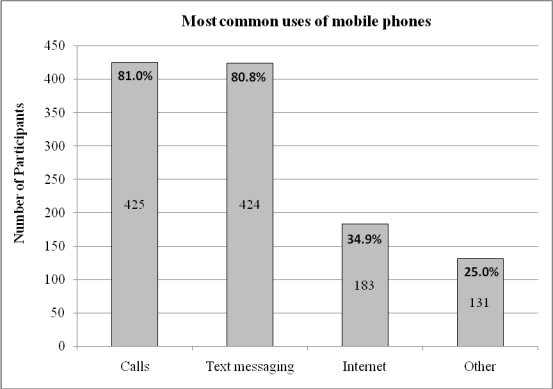
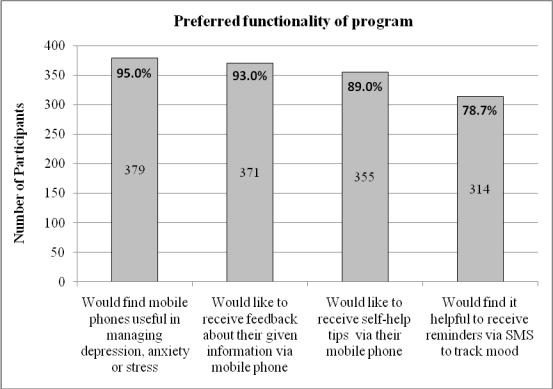
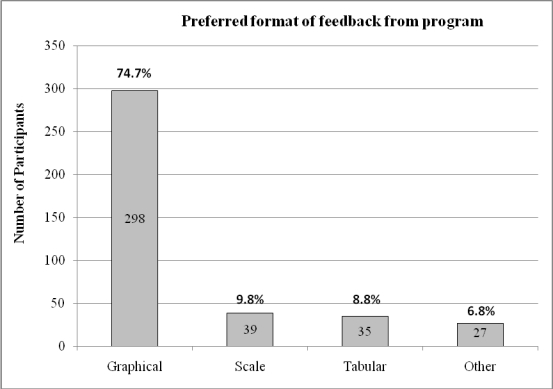
BACKGROUND: The benefits of self-monitoring on symptom severity, coping, and quality of life have been amply demonstrated. However, paper and pencil self-monitoring can be cumbersome and subject to biases associated with retrospective recall, while computer-based monitoring can be inconvenient in that it relies on users being at their computer at scheduled monitoring times. As a result, nonadherence in self-monitoring is common. Mobile phones offer an alternative. Their take-up has reached saturation point in most developed countries and is increasing in developing countries; they are carried on the person, they are usually turned on, and functionality is continually improving. Currently, however, public conceptions of mobile phones focus on their use as tools for communication and social identity. Community attitudes toward using mobile phones for mental health monitoring and self-management are not known. OBJECTIVE: The objective was to explore community attitudes toward the appropriation of mobile phones for mental health monitoring and management. METHODS: We held community consultations in Australia consisting of an online survey (n = 525), focus group discussions (n = 47), and interviews (n = 20). RESULTS: Respondents used their mobile phones daily and predominantly for communication purposes. Of those who completed the online survey, the majority (399/525 or 76%) reported that they would be interested in using their mobile phone for mental health monitoring and self-management if the service were free. Of the 455 participants who owned a mobile phone or PDA, there were no significant differences between those who expressed interest in the use of mobile phones for this purpose and those who did not by gender (χ2(1), = 0.98, P = .32, phi = .05), age group (χ2(4), = 1.95, P = .75, phi = .06), employment status (χ2(2), = 2.74, P = .25, phi = .08) or marital status (χ2(4), = 4.62, P = .33, phi = .10). However, the presence of current symptoms of depression, anxiety, or stress affected interest in such a program in that those with symptoms were more interested (χ(2) (1), = 16.67, P < .001, phi = .19). Reasons given for interest in using a mobile phone program were that it would be convenient, counteract isolation, and help identify triggers to mood states. Reasons given for lack of interest included not liking to use a mobile phone or technology, concerns that it would be too intrusive or that privacy would be lacking, and not seeing the need. Design features considered to be key by participants were enhanced privacy and security functions including user name and password, ease of use, the provision of reminders, and the availability of clear feedback. CONCLUSIONS: Community attitudes toward the appropriation of mobile phones for the monitoring and self-management of depression, anxiety, and stress appear to be positive as long as privacy and security provisions are assured, the program is intuitive and easy to use, and the feedback is clear.
Overview
The claims and statistics of this paper haven’t been checked yet.
Run the check — free, no account needed. It reads the open-access text and checks the sources it cites.
Integrity signals
Registry
Cites
Statistics
Figures
Verification
Claims the paper makes
The claims and statistics of this paper haven’t been checked yet.
Run the check — free, no account needed. It reads the open-access text and checks the sources it cites.
Claims other papers make about this one
Each is checked against this paper’s own text: does it say what the citing paper says it does?
The source backs part of the claim, not all of it — or backs it for a different population, condition or comparison.
In the citing paper
“Indeed, most adolescents indicated that they would use an app to screen for emotional problems and treatment if available [20].”
From A Smartphone Serious Game for Adolescents (Grow It! App): Development, Feasibility, and Acceptance Study (2022) · cites this paper as [20]
Experimental — accuracy not yet measuredIn the citing paper
“Security is considered by many to be “paramount and drive all other considerations” when designing interventions [14,23,32].”
From Acceptability of Mental Health Apps for Aboriginal and Torres Strait Islander Australians: A Qualitative Study (2016) · cites this paper as [32]
In the citing paper
“Socially connected mobile technology can encourage people to reach out to each other and build communities [52-55].”
From Theory-Based Design and Development of a Socially Connected, Gamified Mobile App for Men About Breastfeeding (Milk Man) (2016) · cites this paper as [55]
In the citing paper
“one recent exception found no significant effect of age or baseline distress on adherence, but found user perceptions of usefulness, user-friendliness, and overall satisfaction predicted higher adherence to an online intervention for breast cancer survivors [28]”
From Uptake and adherence to an online intervention for cancer-related distress: older age is not a barrier to adherence but may be a barrier to uptake (2017) · cites this paper as [28]
In the citing paper
“compares favourably with other online psychological interventions for cancer survivors, for example, one trial found 'continuous' usage to be 44.3%, with all weeks of the intervention logged in to by less than 10% of participants [28].”
From Uptake and adherence to an online intervention for cancer-related distress: older age is not a barrier to adherence but may be a barrier to uptake (2017) · cites this paper as [28]
Self-check
Percentages, sums and reported differences re-computed from the paper’s own numbers.
The self-check needs the paper’s full text.
Citations
Cites
Using thematic analysis in psychology
Braun, V., & Clarke, V. (2006) · Qualitative Research in Psychology · doi:10.1191/1478088706qp063oa · Cited by 194,414
Handbook of Qualitative Research
Crozier, G., Denzin, N., & Lincoln, Y. (1994) · British Journal of Educational Studies · doi:10.2307/3121684 · Cited by 26,666
The SAGE handbook of qualitative research
(2005) · Choice Reviews Online · doi:10.5860/choice.43-1330 · Cited by 10,178
Patient non-compliance with paper diaries
Stone, A. A., Shiffman, S., Schwartz, J. E., Broderick, J. E., & Hufford, M. R. (2002) · BMJ · doi:10.1136/bmj.324.7347.1193 · Cited by 810
Hurling, R., Catt, M., De Boni, M., Fairley, B. W., Hurst, T., Murray, P., Richardson, A., & Sodhi, J. S. (2007) · Journal of Medical Internet Research · doi:10.2196/jmir.9.2.e7 · Cited by 536
Ecological momentary assessment research in behavioral medicine
Smyth, J. M., & Stone, A. A. (2003) · Journal of Happiness Studies · doi:10.1023/a:1023657221954 · Cited by 439
Selection Bias in Web Surveys and the Use of Propensity Scores
Schonlau, M., van Soest, A., Kapteyn, A., & Couper, M. P. (2006) · Sociological Methods & Research · doi:10.1177/0049124108327128 · Cited by 261
Collins, R. L., Kashdan, T. B., & Gollnisch, G. (2003) · Experimental and Clinical Psychopharmacology · doi:10.1037//1064-1297.11.1.73 · Cited by 185
Collins, R. L., Kashdan, T. B., & Gollnisch, G. (2003) · Experimental and Clinical Psychopharmacology · doi:10.1037/1064-1297.11.1.73 · Cited by 185 · cited 1×
“Mobile phones have been used for monitoring within behavioral health applications such as alcohol consumption [5] and gambling [6].”
MethodWhittaker, R., Maddison, R., McRobbie, H., Bullen, C., Denny, S., Dorey, E., Ellis-Pegler, M., van Rooyen, J., & Rodgers, A. (2008) · Journal of Medical Internet Research · doi:10.2196/jmir.1007 · Cited by 171
Research works printed but not linked: 1
- Proudfoot, J, 2010, Oxford Guide to Low Intensity CBT Interventions (Oxford Guides in Cognitive Behavioural Therapy)
Cited by
Sorted by citations
Smartphones for smarter delivery of mental health programs: A systematic review
Donker, T., Petrie, K., Proudfoot, J., Clarke, J., Birch, M.-R., & Christensen, H. (2013) · Journal of Medical Internet Research · doi:10.2196/jmir.2791 · Cited by 1,136
“A survey among the Australian general public indicated that 76% would be interested in using mobile phones for mental health monitoring and self-management [4].”
BackgroundSelf-citationMental Health Smartphone Apps: Review and Evidence-Based Recommendations for Future Developments
Bakker, D., Kazantzis, N., Rickwood, D., & Rickard, N. (2016) · JMIR Mental Health · doi:10.2196/mental.4984 · Cited by 886
Dennison, L., Morrison, L., Conway, G., & Yardley, L. (2013) · Journal of Medical Internet Research · doi:10.2196/jmir.2583 · Cited by 895
Mobile Apps for Bipolar Disorder: A Systematic Review of Features and Content Quality
Nicholas, J., Larsen, M. E., Proudfoot, J., & Christensen, H. (2015) · Journal of Medical Internet Research · doi:10.2196/jmir.4581 · Cited by 438
Self-citationCurrent and Future Trends in Internet-Supported Mental Health Interventions
Barak, A., & Grohol, J. M. (2011) · Journal of Technology in Human Services · doi:10.1080/15228835.2011.616939 · Cited by 373
Metadata
- Authors
- Proudfoot, J., Parker, G., Hadzi Pavlovic, D., Manicavasagar, V., Adler, E., & Whitton, A.
- Affiliations
- UNSW Sydney (AU)
- Black Dog Institute (AU)
- Corresponding author
- Proudfoot, Judith
- Venue
- Journal of Medical Internet Research
- Publisher
- JMIR Publications Inc.
- Published
- 2010-12-19
- Volume
- 12
- Issue
- 5
- Pages
- e64
- ISSN
- 1438-8871 (ISSN-L)
- PMC
- PMC3057321
- OpenAlex
- W1996685790
- Cited by
- 274
- References
- 15
- Citations by year
- 2026: 4 · 2025: 9 · 2024: 13 · 2023: 23 · 2022: 23 · 2021: 24 · 2020: 21 · 2019: 29 · 2018: 28 · 2017: 16 · 2016: 25 · 2015: 21 · 2014: 15 · 2013: 12 · 2012: 6
- FWCI
- 11.09
- Type
- journal article
- Language
- en
- Open access
- gold
- doi.org
- Licence
- cc-by
- Locations
- Journal of Medical Internet Research (publishedVersion, cc-by)
- PubMed Central (publishedVersion, cc-by)
- PubMed (publishedVersion)
- DOAJ (DOAJ: Directory of Open Access Journals) (submittedVersion, cc-by-sa)
- Funders
- Australian Government
- Medical Research Council
- National Health and Medical Research Council (510135)
- Topics
- Social Sciences › Psychology › Applied Psychology › Digital Mental Health Interventions
- Health Sciences › Health Professions › General Health Professions › Mobile Health and mHealth Applications
- Social Sciences › Psychology › Experimental and Cognitive Psychology › Mental Health Research Topics
- Keywords
- phones, depression, anxiety, stress, self-monitoring, self-management, community attitudes, mobile health, mental health service utilization, technology adoption barriers, social stigma, privacy concerns, community consultation, South America, Pacific Islands
- MeSH terms
- Adaptation, Psychological, Adult, Anxiety, Attitude to Health, Australia, Depression, Female, Humans, Male, Middle Aged, Surveys and Questionnaires, Self Concept, Stress, Psychological, Monitoring, Ambulatory, Privacy, Cell Phone, Young Adult
About these checks
Registry, retraction, Cites and statistics results are computed, not judged, with one exception: a printed reference that no index lists is read once by a model before it counts as a citation error. Claims are extracted by a model and kept only when their quote appears verbatim in the text; each cited source is then checked, with a model’s help, for whether it says what the claim relies on. Those verdicts can be wrong — read the claim’s quote and the cited source before relying on one.
Statistics and arithmetic are recomputed, not judged.
Confidence bands are shown only for fields calibrated on our annotated test set. None is calibrated yet, so no band is shown.
What counts as a claim ›How we measure confidence ›How we check this ›
Are you an author, or do you see a problem with this page? Request a review
