

Incretin Effects on β-Cell Function, Replication, and Mass
Open accessThe DOI matches its Crossref record; 61 of the 61 references it cites were found in a registry or an index.
Abstract
There is a progressive deterioration in β-cell function in patients with type 2 diabetes. At diagnosis, islet function may be reduced by up to 50% compared with healthy control subjects, and there is also likely to be a reduction in β-cell mass of up to 60%. The reduction in β-cell mass is due to accelerated apoptosis. Currently, few pharmacological therapies address this reduction in β-cell mass and function. This means that patients are generally subjected to an increasing polypharmacy to control their diabetes, with most eventually being treated by insulin. Incretin hormones, which are released from the gastrointestinal tract after a meal, enhance glucose-dependent insulin secretion from the pancreas, aiding the overall regulation of glucose homeostasis in healthy subjects. In addition, these hormones, especially glucagon-like peptide (GLP)-1, have a number of protective effects on the β-cells, including a reduction in apoptosis and enhancement of β-cell proliferation and neogenesis. These benefits are lost to a significant extent in patients with diabetes. The recently developed diabetes therapies, GLP-1 receptor agonists, such as exenatide and liraglutide, appear to have beneficial effects on β-cell function and hence offer promise for durable glycemic control as well as potentially reducing the micro- and macrovascular complications associated with type 2 diabetes. The clinical course of type 2 diabetes is characterized by a progressive decline in β-cell mass and function. Although the elevated levels of fasting glucose and impairment of insulin action in peripheral tissues may predate the diagnosis of type 2 diabetes, chronic hyperglycemia only results after a prolonged period of β-cell degeneration, a process that may begin as much as 12 years before diagnosis, involving a progressive reduction in functionality and mass (1,2). In the UK Prospective Diabetes Study, it was estimated that, at diagnosis, type 2 diabetic patients may have already lost up …
Overview
The claims and statistics of this paper haven’t been checked yet.
Free: it reads the open-access text and checks the first 5 claims that cite a source we can check. Create a free account to check every claim.
Integrity signals
Registry
Cites
Statistics
Figures
Verification
Claims the paper makes
The claims and statistics of this paper haven’t been checked yet.
Free: it reads the open-access text and checks the first 5 claims that cite a source we can check. Create a free account to check every claim.
Claims other papers make about this one
Each is checked against this paper’s own text: does it say what the citing paper says it does?
In the citing paper
“Inhibition of the beta-cell apoptosis in isolated human pancreatic cells was also reported after liraglutide administration, and the beta-cell proliferation rate was increased up to three-fold after incubation for 24 h.265”
From A review of current trends with type 2 diabetes epidemiology, aetiology, pathogenesis, treatments and future perspectives (2021) · cites this paper as [265]
Self-check
Percentages, sums and reported differences re-computed from the paper’s own numbers.
The self-check needs the paper’s full text.
Citations
Cites
β-Cell Deficit and Increased β-Cell Apoptosis in Humans With Type 2 Diabetes
Butler, A. E., Janson, J., Bonner-Weir, S., Ritzel, R., Rizza, R. A., & Butler, P. C. (2003) · Diabetes · doi:10.2337/diabetes.52.1.102 · Cited by 4,011
Drucker, D. J., & Nauck, M. A. (2006) · The Lancet · doi:10.1016/s0140-6736(06)69705-5 · Cited by 3,896 · cited 2×
“Exendin-4 is a naturally occurring GLP-1 receptor agonist, found in the lizard Heloderma suspectum, that has a 53% overlap of the natural amino acid sequence with mammalian GLP-1 but is more stable and less rapidly degraded than native human GLP-1 (28).”
BackgroundGlycemic durability of rosiglitazone, metformin, or glyburide monotherapy
Kahn, S. E., Haffner, S. M., Heise, M. A., Herman, W. H., Holman, R. R., Jones, N. P., Kravitz, B. G., Lachin, J. M., O'Neill, M. C., Zinman, B., et al. (2006) · New England Journal of Medicine · doi:10.1056/nejmoa066224 · Cited by 2,962 · cited 2×
“Because most current therapeutic options address the impaired glucose action or stimulate insulin secretion rather than the declining b-cell function, the ongoing decline in b-cell function leads to eventual failure of most antidiabetic therapies (3,4).”
BackgroundU.K. Prospective Diabetes Study Group (1995) · Diabetes · doi:10.2337/diab.44.11.1249 · Cited by 1,923
DeFronzo, R. A., Ratner, R. E., Han, J., Kim, D. D., Fineman, M. S., & Baron, A. D. (2005) · Diabetes Care · doi:10.2337/diacare.28.5.1092 · Cited by 1,559 · cited 2×
“Three similarly designed 6-month placebo-controlled trials involving patients with type 2 diabetes inadequately controlled on metformin or a sulfonylurea evaluated the effects of the addition of exenatide to metformin alone, or metformin and a sulfonylurea together (46,47,57).”
BackgroundBuse, J. B., Rosenstock, J., Sesti, G., Schmidt, W. E., Montanya, E., Brett, J. H., Zychma, M., & Blonde, L. (2009) · The Lancet · doi:10.1016/s0140-6736(09)60659-0 · Cited by 1,503 · cited 1×
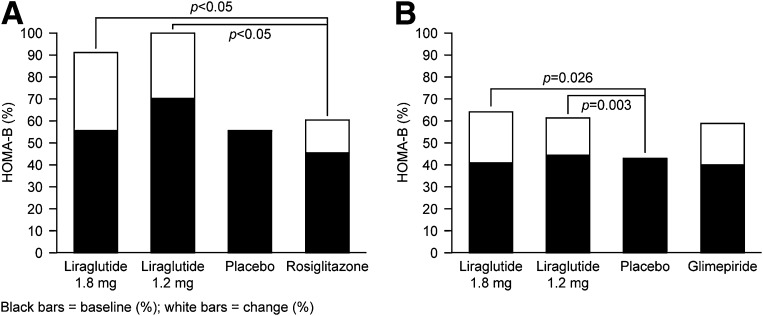
“Across all six studies, an improvement of between 20 and 44% from baseline in HOMA-B was observed (55) (Fig.”
BackgroundBuse, J. B., Henry, R. R., Han, J., Kim, D. D., Fineman, M. S., Baron, A. D., & for the Exenatide-113 Clinical Study Group (2004) · Diabetes Care · doi:10.2337/diacare.27.11.2628 · Cited by 1,346
Xu, G., Stoffers, D. A., Habener, J. F., & Bonner-Weir, S. (1999) · Diabetes · doi:10.2337/diabetes.48.12.2270 · Cited by 1,209 · cited 3×
“In animal and human studies, exenatide was shown to increase b-cell mass while at the same time causing a significant reduction in plasma glucose levels (20,37).”
BackgroundResultKendall, D. M., Riddle, M. C., Rosenstock, J., Zhuang, D., Kim, D. D., Fineman, M. S., & Baron, A. D. (2005) · Diabetes Care · doi:10.2337/diacare.28.5.1083 · Cited by 1,177
Nauck, M., Frid, A., Hermansen, K., Shah, N. S., Tankova, T., Mitha, I. H., Zdravkovic, M., Düring, M., Matthews, D. R., & for the LEAD-2 Study Group (2009) · Diabetes Care · doi:10.2337/dc08-1355 · Cited by 1,129
Cited by
Reed, J., Bain, S., & Kanamarlapudi, V. (2021) · Diabetes, Metabolic Syndrome and Obesity: Targets and Therapy · doi:10.2147/dmso.s319895 · Cited by 441
Targeting innate immune mediators in type 1 and type 2 diabetes
Donath, M. Y., Dinarello, C. A., & Mandrup-Poulsen, T. (2019) · Nature Reviews Immunology · doi:10.1038/s41577-019-0213-9 · Cited by 416
de Mello, V. D., Paananen, J., Lindström, J., Lankinen, M. A., Shi, L., Kuusisto, J., Pihlajamäki, J., Auriola, S., Lehtonen, M., Rolandsson, O., et al. (2017) · Scientific Reports · doi:10.1038/srep46337 · Cited by 379
Adipose tissue and its role in organ crosstalk
Romacho, T., Elsen, M., Röhrborn, D., & Eckel, J. (2014) · Acta Physiologica · doi:10.1111/apha.12246 · Cited by 279
“The beneficial effects of GLP-1 on pancreatic b-cells have been also reported in studies with diabetic animals (as reviewed in Garber 2011).”
BackgroundTan, T. M., Field, B. C. T., McCullough, K. A., Troke, R. C., Chambers, E. S., Salem, V., Gonzalez Maffe, J., Baynes, K. C. R., De Silva, A., Viardot, A., et al. (2013) · Diabetes · doi:10.2337/db12-0797 · Cited by 258
Potential Bioactive Compounds from Seaweed for Diabetes Management
Sharifuddin, Y., Chin, Y.-X., Lim, P.-E., & Phang, S.-M. (2015) · Marine Drugs · doi:10.3390/md13085447 · Cited by 187
Pancreatic Volume Is Reduced in Adult Patients with Recently Diagnosed Type 1 Diabetes
Williams, A. J. K., Thrower, S. L., Sequeiros, I. M., Ward, A., Bickerton, A. S., Triay, J. M., Callaway, M. P., & Dayan, C. M. (2012) · The Journal of Clinical Endocrinology & Metabolism · doi:10.1210/jc.2012-1815 · Cited by 165
Latreille, M., Herrmanns, K., Renwick, N., Tuschl, T., Malecki, M. T., McCarthy, M. I., Owen, K. R., Rülicke, T., & Stoffel, M. (2015) · Journal of Molecular Medicine · doi:10.1007/s00109-015-1296-9 · Cited by 122
Kapitza, C., Dahl, K., Jacobsen, J. B., Axelsen, M. B., & Flint, A. (2017) · Diabetologia · doi:10.1007/s00125-017-4289-0 · Cited by 117
Zhang, B., Jiang, M., Zhao, J., Song, Y., Du, W., & Shi, J. (2022) · Frontiers in Endocrinology · doi:10.3389/fendo.2022.841703 · Cited by 141
Kawamori, R., Inagaki, N., Araki, E., Watada, H., Hayashi, N., Horie, Y., Sarashina, A., Gong, Y., von Eynatten, M., Woerle, H. J., et al. (2012) · Diabetes, Obesity and Metabolism · doi:10.1111/j.1463-1326.2011.01545.x · Cited by 112
Pathophysiology and pharmacotherapy of gastroparesis: current and future perspectives
Stevens, J. E., Jones, K. L., Rayner, C. K., & Horowitz, M. (2013) · Expert Opinion on Pharmacotherapy · doi:10.1517/14656566.2013.795948 · Cited by 88
Woerle, H. J., Carneiro, L., Derani, A., Göke, B., & Schirra, J. (2012) · Diabetes · doi:10.2337/db11-1701 · Cited by 73
“Plasma insulin (A and B) and C-peptide (C andD) in response to hyperglycemic isoglycemic clamp experiments with intravenous (IV) saline plus duodenal meal (blue triangles), exendin(9-39) (ex[9-39]) IV plus duodenal meal (yellow squares), and isoglycemic IV glucose experiments without intraduodenal meal perfusion (red…”
InfluentialConcise Review: Pancreas Regeneration: Recent Advances and Perspectives
Lysy, P. A., Weir, G. C., & Bonner‐Weir, S. (2012) · Stem Cells Translational Medicine · doi:10.5966/sctm.2011-0025 · Cited by 80
Anti-diabetic potential of selected Malaysian seaweeds
Chin, Y., Lim, P. E., Maggs, C. A., Phang, S. M., Sharifuddin, Y., & Green, B. D. (2014) · Journal of Applied Phycology · doi:10.1007/s10811-014-0462-8 · Cited by 76
“…are glucose-dependent insulinotrophic polypeptide (GIP) and glucagon-like peptide-1 (GLP-1), and these evidently have the added benefits that they promote pancreatic β-cell proliferation and inhibition of apoptosis, which can increase β-cell mass and enhance insulin production (Garber 2011).”
Pasqua, M.-R., Tsoukas, M. A., Kobayati, A., Aboznadah, W., Jafar, A., & Haidar, A. (2025) · Nature Medicine · doi:10.1038/s41591-024-03463-z · Cited by 68
Natalicchio, A., Labarbuta, R., Tortosa, F., Biondi, G., Marrano, N., Peschechera, A., Carchia, E., Orlando, M. R., Leonardini, A., Cignarelli, A., et al. (2013) · Diabetologia · doi:10.1007/s00125-013-3028-4 · Cited by 79
Recent advances in understanding the role of glucagon-like peptide 1
Reed, J., Bain, S., & Kanamarlapudi, V. (2020) · F1000Research · doi:10.12688/f1000research.20602.1 · Cited by 66
“Additionally, exendin-4 treatment in vivo has been shown to decrease tacrolimus-induced oxidative stress, hyperglycemia, and apoptosis [43].”
BackgroundAbdalla, M. A., Deshmukh, H., Atkin, S., & Sathyapalan, T. (2021) · Therapeutic Advances in Endocrinology and Metabolism · doi:10.1177/2042018821989238 · Cited by 60
Inhibitory G proteins and their receptors: emerging therapeutic targets for obesity and diabetes
Kimple, M. E., Neuman, J. C., Linnemann, A. K., & Casey, P. J. (2014) · Experimental & Molecular Medicine · doi:10.1038/emm.2014.40 · Cited by 55
Making β Cells from Adult Cells Within the Pancreas
Lysy, P. A., Weir, G. C., & Bonner‐Weir, S. (2013) · Current Diabetes Reports · doi:10.1007/s11892-013-0400-1 · Cited by 60
Phoenixin-14 stimulates proliferation and insulin secretion in insulin producing INS-1E cells
Billert, M., Kolodziejski, P. A., Strowski, M. Z., Nowak, K. W., & Skrzypski, M. (2019) · Biochimica et Biophysica Acta (BBA) - Molecular Cell Research · doi:10.1016/j.bbamcr.2019.118533 · Cited by 56
First-phase insulin secretion: can its evaluation direct therapeutic approaches?
Di Giuseppe, G., Ciccarelli, G., Soldovieri, L., Capece, U., Cefalo, C. M. A., Moffa, S., Nista, E. C., Brunetti, M., Cinti, F., Gasbarrini, A., et al. (2023) · Trends in Endocrinology & Metabolism · doi:10.1016/j.tem.2023.02.001 · Cited by 46
“GLP-1 RAs have several beneficial effects on β cell function, guaranteeing sustained glycemic control and preventing glucolipotoxicity [120,121].”
Khunti, K., Davies, M. J., & Kalra, S. (2013) · Diabetes, Obesity and Metabolism · doi:10.1111/dom.12053 · Cited by 45
McKillop, A. M., Moran, B. M., Abdel‐Wahab, Y. H. A., Gormley, N., & Flatt, P. R. (2016) · Diabetologia · doi:10.1007/s00125-016-4108-z · Cited by 48
“including proliferation, neogenesis and anti-apoptosis [35].”
Risdon, S., Battault, S., Romo-Romo, A., Roustit, M., Briand, L. V., Meyer, G., Almeda‐Valdés, P., & Walther, G. (2021) · Advances in Nutrition · doi:10.1093/advances/nmaa185 · Cited by 46
Krentz, N. A. J., Shea, L. D., Huising, M. O., & Shaw, J. (2021) · The Lancet Diabetes & Endocrinology · doi:10.1016/s2213-8587(21)00170-4 · Cited by 42
Overbasalization: Addressing Hesitancy in Treatment Intensification Beyond Basal Insulin
Cowart, K. (2020) · Clinical Diabetes · doi:10.2337/cd19-0061 · Cited by 33
RETRACTED: Cannabinoids as anti-ROS in aged pancreatic islet cells
Baeeri, M., Rahimifard, M., Daghighi, S. M., Khan, F., Salami, S. A., Moeini‐Nodeh, S., Haghi‐Aminjan, H., Bayrami, Z., Rezaee, F., & Abdollahi, M. R. (2020) · Life Sciences · doi:10.1016/j.lfs.2020.117969 · Cited by 34
RetractedPrasannaraja, C., Kamalanathan, A. S., Vijayalakshmi, M. A., & Venkataraman, K. (2020) · Preparative Biochemistry & Biotechnology · doi:10.1080/10826068.2019.1710712 · Cited by 32
Puddu, A., Mach, F., Nencioni, A., Viviani, G. L., & Montecucco, F. (2013) · Mediators of Inflammation · doi:10.1155/2013/591056 · Cited by 35
Pratt, E. P. S., Harvey, K. E., Salyer, A. E., Tang, S., & Hockerman, G. H. (2019) · PLoS ONE · doi:10.1371/journal.pone.0215188 · Cited by 33
Metawea, M. R., Abdelrazek, H. M. A., El-Hak, H. N. G., Moghazee, M. M., & Marie, O. (2023) · Environmental Science and Pollution Research · doi:10.1007/s11356-023-26260-6 · Cited by 30
“The understanding of the pancreatic β-cell holds promise for enhancing glycaemia management and maybe slowing the development of diabetes complications (Garber 2011).”
BackgroundZhang, W.-Q., Tian, Y., Chen, X.-M., Wang, L.-F., Chen, C.-C., & Qiu, C.-M. (2018) · Diabetology & Metabolic Syndrome · doi:10.1186/s13098-018-0392-8 · Cited by 27
Gejl, M., Rungby, J., Brock, B., & Gjedde, A. (2014) · Basic & Clinical Pharmacology & Toxicology · doi:10.1111/bcpt.12240 · Cited by 27
Huang, J., Deng, X., Zhou, S., Wang, N., Qin, Y., Meng, L., Li, G., Xiong, Y., Fan, Y., Guo, L., et al. (2019) · Bioorganic & Medicinal Chemistry · doi:10.1016/j.bmc.2019.01.001 · Cited by 27
Effect of Renal Impairment on the Pharmacokinetics, Efficacy, and Safety of Albiglutide
Young, M. A., Wald, J. A., Matthews, J. E., Yang, F., & Reinhardt, R. R. (2014) · Postgraduate Medicine · doi:10.3810/pgm.2014.05.2754 · Cited by 28
Interactions between Gut Microbiota and Oral Antihyperglycemic Drugs: A Systematic Review
Mîndrescu, N. M., Guja, C., Jinga, V., Ispas, S., Curici, A., Twakor, A. N., & Stoian, A. P. (2024) · International Journal of Molecular Sciences · doi:10.3390/ijms25063540 · Cited by 25
“This leads to an increase in the levels of these two incretin hormones with a consequent increase in insulin production, preservation of β -cell function, and maintenance of glucose balance in the body [105–107].”
BackgroundStreckel, E., Braun-Reichhart, C., Herbach, N., Dahlhoff, M., Keßler, B., Blutke, A., Bähr, A., Übel, N., Eddicks, M., Ritzmann, M., et al. (2015) · Journal of Translational Medicine · doi:10.1186/s12967-015-0431-2 · Cited by 29
Öztay, F., Sancar‐Baş, S., Gezginci-Oktayoğlu, S., Erçin, M., & Bolkent, Ş. (2017) · Peptides · doi:10.1016/j.peptides.2017.12.007 · Cited by 25
Jalili, C., Hosseinkhani, F., Dayer, D., Tabandeh, M. R., Abbasi, A., & Nasta, T. Z. (2025) · The Journal of Steroid Biochemistry and Molecular Biology · doi:10.1016/j.jsbmb.2025.106877 · Cited by 27
Li, Q., Meng, L., Zhou, S., Deng, X., Wang, N., Ji, Y., Peng, Y., Xing, J., & Yao, G. (2019) · European Journal of Medicinal Chemistry · doi:10.1016/j.ejmech.2019.07.045 · Cited by 24
Keleszade, E., Patterson, M., Trangmar, S. J., Guinan, K. J., & Costabile, A. (2021) · Molecules · doi:10.3390/molecules26030714 · Cited by 28
Thong, K. Y., McDonald, T. J., Hattersley, A. T., Blann, A. D., Ramtoola, S., Duncan, C., Carr, S. V., Adamson, K., Nayak, A., Khurana, R., et al. (2013) · Diabetic Medicine · doi:10.1111/dme.12367 · Cited by 24
Dulaglutide: an evidence-based review of its potential in the treatment of type 2 diabetes
Edwards, K. L., & Minze, M. G. (2015) · Core evidence · doi:10.2147/ce.s55944 · Cited by 24
Gatford, K. L., Sulaiman, S. A., Mohammad, S. N. B., Blasio, M. J. D., Harland, M. L., Simmons, R. A., & Owens, J. A. (2013) · PLoS ONE · doi:10.1371/journal.pone.0056553 · Cited by 23
“Previous rodent studies have reported increased b-cell replication after similar exendin-4 treatment durations, but differences in b-cell mass are sometimes not apparent until several weeks later [50,51].”
BackgroundLotfy, M. A., Singh, J., Rashed, H., Tariq, S., Zilahi, E., & Adeghate, E. A. (2014) · Cell and Tissue Research · doi:10.1007/s00441-014-1959-9 · Cited by 23
Practical combination therapy based on pathophysiology of type 2 diabetes
LEVIN, P. A. (2016) · Diabetes Metabolic Syndrome and Obesity · doi:10.2147/dmso.s109216 · Cited by 21
Longer-Term Physiological and Metabolic Effects of Gastric Bypass Surgery
Mosinski, J. D., & Kirwan, J. P. (2016) · Current Diabetes Reports · doi:10.1007/s11892-016-0747-1 · Cited by 25
Reed, J., Bain, S. C., & Kanamarlapudi, V. (2024) · Diabetes Metabolic Syndrome and Obesity · doi:10.2147/dmso.s415934 · Cited by 24
Grong, E., Kulseng, B. E., Arbo, I. B., Nord, C., Eriksson, M., Ahlgren, U., & Mårvik, R. (2015) · Surgical Endoscopy · doi:10.1007/s00464-015-4236-4 · Cited by 18
Bonadonna, R. C., Blonde, L., Antsiferov, M. B., Berria, R., Gourdy, P., Hatunic, M., Mohan, V., & Horowitz, M. (2017) · Diabetes/Metabolism Research and Reviews · doi:10.1002/dmrr.2897 · Cited by 18
Comparative effectiveness of early versus delayed metformin in the treatment of type 2 diabetes
Romanelli, R. J., Chung, S., Pu, J., Nimbal, V. C., Zhao, B., & Palaniappan, L. P. (2015) · Diabetes Research and Clinical Practice · doi:10.1016/j.diabres.2014.12.019 · Cited by 21
Bortell, R., Yang, C., Loehn, M., Jurczyk, A., Przewozniak, N., Leehy, L., Herrera, P. L., Shultz, L. D., Greiner, D. L., & Harlan, D. M. (2015) · Diabetes Metabolic Syndrome and Obesity · doi:10.2147/dmso.s87253 · Cited by 17
Call-to-action: Timely and appropriate treatment for people with type 2 diabetes in Latin America
Escalante, M., Gagliardino, J. J., Guzmán, J. R., & Tschiedel, B. (2014) · Diabetes Research and Clinical Practice · doi:10.1016/j.diabres.2014.01.004 · Cited by 21
Davis, H., Briscoe, V. J., Dumbadze, S., & Davis, S. N. (2019) · Expert Opinion on Investigational Drugs · doi:10.1080/13543784.2019.1592156 · Cited by 16
Cai, X., Yang, W., Zhou, L., Zhang, S., Han, X., & Ji, L. (2015) · Endocrine · doi:10.1007/s12020-015-0653-3 · Cited by 15
Human β-cell regeneration: progress, hurdles, and controversy
Jurczyk, A., Bortell, R., & Alonso, L. C. (2014) · Current Opinion in Endocrinology Diabetes and Obesity · doi:10.1097/med.0000000000000042 · Cited by 15
Glucococorticoid-Induced Death of Pancreatic Beta Cells: An Organized Chaos
Rojas, J., Chávez-Castillo, M., Chávez-Castillo, M., Cabrera, M., Cabrera, M., Bermúdez, V., & Bermúdez, V. (2015) · PubMed · doi:10.6092/1590-8577/2893 · Cited by 16
“In cretins appear outstandingly promising by virtue of the central role they play as survival promoters through PKA [115].”
BackgroundROLE OF LIRAGLUTIDE IN A MAJOR COMPLICATION OF DIABETES: A CRITICAL REVIEW OF CLINICAL STUDIES
Gupta, G., Dahiya, R., Singh, M., Tiwari, J. P., Sah, S. K., Ashwathanarayana, M., Krishna, G., & Dua, K. (2018) · Bulletin of Pharmaceutical Research · doi:10.21276/bpr.2018.8.1.4 · Cited by 13
Systematic review and meta-analysis of teneligliptin for treatment of type 2 diabetes
Pelluri, R., Kongara, S., Nagasubramanian, V. R., Mahadevan, S., & Chimakurthy, J. (2023) · Journal of Endocrinological Investigation · doi:10.1007/s40618-023-02003-9 · Cited by 14
Exenatide Treatment Alone Improves β-Cell Function in a Canine Model of Pre-Diabetes
Ionut, V., Woolcott, O. O., Mkrtchyan, H., Stefanovski, D., Kabir, M., Iyer, M. S., Liu, H., Castro, A. V., Wu, Q., Broussard, J. L., et al. (2016) · PLoS ONE · doi:10.1371/journal.pone.0158703 · Cited by 26
Östenson, C., Matthaei, S., Reaney, M., Krarup, T., Guerci, B., Kiljański, J., Salaun-Martin, C., Sapin, H., Bruhn, D., Mathieu, C., et al. (2013) · Diabetes, Metabolic Syndrome and Obesity : Targets and Therapy · doi:10.2147/dmso.s41827 · Cited by 14
Functionality and antidiabetic utility of β- and L-cell containing pseudoislets
Green, A. D., Vasu, S., & Flatt, P. R. (2016) · Experimental Cell Research · doi:10.1016/j.yexcr.2016.04.007 · Cited by 10
Hannon, T. S., Kirkman, M. S., Patel, Y. R., Considine, R. V., & Mather, K. J. (2014) · Diabetes/Metabolism Research and Reviews · doi:10.1002/dmrr.2553 · Cited by 10
Green, A. D., Vasu, S., Moffett, R. C., & Flatt, P. R. (2016) · Biochimie · doi:10.1016/j.biochi.2016.03.007 · Cited by 14
Incretin hormone receptors are required for normal beta cell development and function in female mice
Omar, B. A., Ahlkvist, L., Yamada, Y., Seino, Y., & Åhrén, B. (2016) · Peptides · doi:10.1016/j.peptides.2016.03.012 · Cited by 9
Reprogramming—Evolving Path to Functional Surrogate β-Cells
Kalo, E., Read, S. A., & Ahlenstiel, G. (2022) · Cells · doi:10.3390/cells11182813 · Cited by 13
Bariatric Surgery and Gut-Brain-Axis Driven Alterations in Cognition and Inflammation
Custers, E., Franco, A., & Kiliaan, A. J. (2023) · Journal of Inflammation Research · doi:10.2147/jir.s437156 · Cited by 9
Eckel, J. (2018) · Elsevier eBooks · doi:10.1016/b978-0-12-809518-8.00002-7 · Cited by 11
Onoja, S. O., Chimaobi, N. G., Maxwell, E., & Ndukaku, O. Y. (2017) · Journal of Complementary and Integrative Medicine · doi:10.1515/jcim-2015-0017 · Cited by 9
The potential role of incretin therapy in the hospital setting
Macdonald, J. J., Neupane, S., & Gianchandani, R. Y. (2015) · Clinical Diabetes and Endocrinology · doi:10.1186/s40842-015-0005-5 · Cited by 8
Interventions to improve β-cell mass and function
Mondal, P., Prasad, A., & Girdhar, K. (2017) · Annales d Endocrinologie · doi:10.1016/j.ando.2016.11.002 · Cited by 8
Managing Diabetes From First Diagnosis
Kruger, D. (2012) · The diabetes educator · doi:10.1177/0145721712450619 · Cited by 3
Dharmalingam, M. (2014) · Therapeutic Advances in Endocrinology and Metabolism · doi:10.1177/2042018814552657 · Cited by 7
“Even though the direct effects of liraglutide and exenatide on beta cell mass have not been demonstrated directly due to unavailability of suitable noninvasive technology, beneficial effects on islet cell function have been consistently reported [Garber, 2011].”
BackgroundKong, X., Lin, C., Yang, C., Wang, X., Li, B., Yan, D., Yang, Y., Hu, A., Chen, Y., Xu, X., et al. (2024) · Molecular Biology Reports · doi:10.1007/s11033-023-09165-y · Cited by 5
Palit, S. P., Patel, R., PARMAR, N. R., RATHWA, N. N., Dalvi, N., Ramachandran, A. V., & Begum, R. (2023) · Life · doi:10.3390/life13040929 · Cited by 3
“In this context, though, L-glutamine is not a prescribed drug for T2D but is consumed by athletes as a supplement to enhance or maintain their power output and strength, and as a matter of fact, L-glutamine is also a GLP-1 secretagogue that works by raising cytosolic Ca2+ and cAMP in intestinal L-cells [2,5].”
BackgroundLovre, D., Htun, W., Carrion, C., & Fonseca, V. A. (2016) · Current Diabetes Reports · doi:10.1007/s11892-016-0788-5 · Cited by 3
Деякі аспекти медикаментозної терапії цукрового діабету 2-го типу у людей з надмірною масою тіла
Jargin, S. V. (2019) · INTERNATIONAL JOURNAL OF ENDOCRINOLOGY (Ukraine) · doi:10.22141/2224-0721.15.5.2019.180046 · Cited by 5
Shubrook, J. H. (2014) · Journal of Osteopathic Medicine · doi:10.7556/jaoa.2014.088 · Cited by 2
Husain, W. M., Mohammad, I. J., & Al-Saidi, D. N. (2025) · Advances in Animal and Veterinary Sciences · doi:10.17582/journal.aavs/2025/13.3.704.711 · Cited by 1
Models of Regeneration of Beta Cells in Vivo
Ilie, I. R. P., & Ilie, R. (2013) · Cited by 1
Obesity in the Pathophysiology of Diabetes
Paniagua, J. A., & Vidal‐Puig, A. (2023) · Springer eBooks · doi:10.1007/978-3-031-25519-9_14 · Cited by 1
The Effect of Pumpkin on GLP-1 and HOMA-β in Hypercholesterolemic Rats
Sunarti, S., Rubi, D. S., & Sadewa, A. H. (2016) · Romanian Journal of Diabetes Nutrition and Metabolic Diseases · doi:10.1515/rjdnmd-2016-0003 · Cited by 1
Zinych, О. В., Kushnariova, N. M., Ковальчук, А., Prybila, O. V., Shyshkan-Shyshova, К. О., Gurina, N. M., & Korpachev, V. V. (2016) · INTERNATIONAL JOURNAL OF ENDOCRINOLOGY (Ukraine) · doi:10.22141/2224-0721.7.79.2016.86417 · Cited by 1
GPR119 Agonism Revisited: A Novel Target for Increasing β-Cell Mass?
Nasteska, D., & Hodson, D. J. (2020) · Endocrinology · doi:10.1210/endocr/bqz018 · Cited by 1
Adding a DPP-4 inhibitor to metformin therapy may be safer than you think
Aravind, S. R. (2014) · Current Medical Research and Opinion · doi:10.1185/03007995.2014.893867 · Cited by 1
Incretin Effects on β-Cell Function, Replication, and Mass: The human perspective
Oetjen, E. (2012) · Yearbook of Endocrinology · doi:10.1016/j.yend.2012.05.009 · Cited by 68
Obesity in the Pathophysiology of Diabetes
Paniagua, J. A., & Vidal‐Puig, A. (2019) · Springer eBooks · doi:10.1007/978-3-030-11815-0_13
Jo, M.-J., Hwang, S. J., Kwon, H.-O., Kim, J., Shim, S. L., & Park, S.-J. (2024) · Journal of Medicinal Food · doi:10.1089/jmf.2024.k.0179
The Impact of Gut Microbial Metabolomics on Type 2 Diabetes Development in People Living with HIV
Rodríguez, D., Anaya-Ambriz, E. J., Méndez-Ríos, P. C., Andrade-Villanueva, J. F., González-Hernández, L. A., Holguín-Aguirre, T. E., Martínez-Ayala, P., Ruíz-Herrera, V. V., Álvarez-Zavala, M., & Sánchez-Reyes, K. (2025) · Metabolites · doi:10.3390/metabo15090627
Metadata
- Authors
- Garber, A. J.
- Affiliations
- Baylor College of Medicine (US)
- Corresponding author
- Garber, Alan J.
- Venue
- Diabetes Care
- Publisher
- American Diabetes Association
- Published
- 2011-04-22
- Volume
- 34
- Issue
- Supplement_2
- Pages
- S258-S263
- ISSN
- 0149-5992 (ISSN-L)
- 1935-5548
- PMC
- PMC3632189
- OpenAlex
- W2159416991
- Cited by
- 92
- References
- 60
- Citations by year
- 2025: 3 · 2024: 4 · 2023: 6 · 2022: 2 · 2021: 6 · 2020: 5 · 2019: 8 · 2018: 3 · 2017: 6 · 2016: 10 · 2015: 10 · 2014: 13 · 2013: 8 · 2012: 7
- FWCI
- 9.48
- Type
- journal article
- Language
- en
- Open access
- hybrid
- doi.org
- Licence
- Locations
- Diabetes Care (publishedVersion, cc-by-nc-nd)
- Europe PMC (PubMed Central) (publishedVersion, cc-by-nc-nd)
- PubMed Central (publishedVersion, cc-by-nc-nd)
- PubMed (publishedVersion)
- Topics
- Health Sciences › Medicine › Endocrinology, Diabetes and Metabolism › Pancreatic function and diabetes
- Health Sciences › Medicine › Endocrinology, Diabetes and Metabolism › Diabetes Treatment and Management
- Life Sciences › Biochemistry, Genetics and Molecular Biology › Genetics › Diabetes and associated disorders
- Keywords
- incretins, type 2 diabetes, beta-cell function, beta-cell mass, beta-cell apoptosis, beta-cell proliferation, beta-cell neogenesis, glucagon-like peptide-1, GLP-1 receptor agonists, exenatide, liraglutide, glucose-dependent insulin secretion, glucose homeostasis, beta cell degeneration
- MeSH terms
- Glucagon-Like Peptide-1 Receptor, Liraglutide, Exenatide, Diabetes Mellitus, Type 2, Humans, Hypoglycemic Agents, Peptides, Venoms, Receptors, Glucagon, Insulin-Secreting Cells, Glucagon-Like Peptide 1, Incretins
About these checks
Registry, retraction, Cites and statistics results are computed, not judged, with one exception: a printed reference that no index lists is read once by a model before it counts as a citation error. Claims are extracted by a model and kept only when their quote appears verbatim in the text; each cited source is then checked, with a model’s help, for whether it says what the claim relies on. Those verdicts can be wrong — read the claim’s quote and the cited source before relying on one.
Statistics and arithmetic are recomputed, not judged.
Confidence bands are shown only for fields calibrated on our annotated test set. None is calibrated yet, so no band is shown.
What counts as a claim ›How we measure confidence ›How we check this ›
Are you an author, or do you see a problem with this page? Request a review
Data sources
Bibliographic data: Semantic Scholar, OpenAlex, Crossref.
Contains information from the Semantic Scholar Academic Graph Datasets, made available under the ODC Attribution License (ODC-BY 1.0).
Semantic Scholar’s data is described in: Kinney, R., et al. (2023). The Semantic Scholar Open Data Platform. arXiv:2301.10140.
