

Incretin Effects on β-Cell Function, Replication, and Mass
Open accessThe DOI matches its Crossref record; 61 of the 61 references it cites were found in a registry or an index.
Abstract
There is a progressive deterioration in β-cell function in patients with type 2 diabetes. At diagnosis, islet function may be reduced by up to 50% compared with healthy control subjects, and there is also likely to be a reduction in β-cell mass of up to 60%. The reduction in β-cell mass is due to accelerated apoptosis. Currently, few pharmacological therapies address this reduction in β-cell mass and function. This means that patients are generally subjected to an increasing polypharmacy to control their diabetes, with most eventually being treated by insulin. Incretin hormones, which are released from the gastrointestinal tract after a meal, enhance glucose-dependent insulin secretion from the pancreas, aiding the overall regulation of glucose homeostasis in healthy subjects. In addition, these hormones, especially glucagon-like peptide (GLP)-1, have a number of protective effects on the β-cells, including a reduction in apoptosis and enhancement of β-cell proliferation and neogenesis. These benefits are lost to a significant extent in patients with diabetes. The recently developed diabetes therapies, GLP-1 receptor agonists, such as exenatide and liraglutide, appear to have beneficial effects on β-cell function and hence offer promise for durable glycemic control as well as potentially reducing the micro- and macrovascular complications associated with type 2 diabetes. The clinical course of type 2 diabetes is characterized by a progressive decline in β-cell mass and function. Although the elevated levels of fasting glucose and impairment of insulin action in peripheral tissues may predate the diagnosis of type 2 diabetes, chronic hyperglycemia only results after a prolonged period of β-cell degeneration, a process that may begin as much as 12 years before diagnosis, involving a progressive reduction in functionality and mass (1,2). In the UK Prospective Diabetes Study, it was estimated that, at diagnosis, type 2 diabetic patients may have already lost up …
Overview
The claims and statistics of this paper haven’t been checked yet.
Free: it reads the open-access text and checks the first 5 claims that cite a source we can check. Create a free account to check every claim.
Integrity signals
Registry
Cites
Statistics
Figures
Verification
Claims the paper makes
The claims and statistics of this paper haven’t been checked yet.
Free: it reads the open-access text and checks the first 5 claims that cite a source we can check. Create a free account to check every claim.
Claims other papers make about this one
Each is checked against this paper’s own text: does it say what the citing paper says it does?
In the citing paper
“Inhibition of the beta-cell apoptosis in isolated human pancreatic cells was also reported after liraglutide administration, and the beta-cell proliferation rate was increased up to three-fold after incubation for 24 h.265”
From A review of current trends with type 2 diabetes epidemiology, aetiology, pathogenesis, treatments and future perspectives (2021) · cites this paper as [265]
Self-check
Percentages, sums and reported differences re-computed from the paper’s own numbers.
The self-check needs the paper’s full text.
Citations
Cites
β-Cell Deficit and Increased β-Cell Apoptosis in Humans With Type 2 Diabetes
Butler, A. E., Janson, J., Bonner-Weir, S., Ritzel, R., Rizza, R. A., & Butler, P. C. (2003) · Diabetes · doi:10.2337/diabetes.52.1.102 · Cited by 4,011
Drucker, D. J., & Nauck, M. A. (2006) · The Lancet · doi:10.1016/s0140-6736(06)69705-5 · Cited by 3,896 · cited 2×
“Exendin-4 is a naturally occurring GLP-1 receptor agonist, found in the lizard Heloderma suspectum, that has a 53% overlap of the natural amino acid sequence with mammalian GLP-1 but is more stable and less rapidly degraded than native human GLP-1 (28).”
BackgroundGlycemic durability of rosiglitazone, metformin, or glyburide monotherapy
Kahn, S. E., Haffner, S. M., Heise, M. A., Herman, W. H., Holman, R. R., Jones, N. P., Kravitz, B. G., Lachin, J. M., O'Neill, M. C., Zinman, B., et al. (2006) · New England Journal of Medicine · doi:10.1056/nejmoa066224 · Cited by 2,962 · cited 2×
“Because most current therapeutic options address the impaired glucose action or stimulate insulin secretion rather than the declining b-cell function, the ongoing decline in b-cell function leads to eventual failure of most antidiabetic therapies (3,4).”
BackgroundU.K. Prospective Diabetes Study Group (1995) · Diabetes · doi:10.2337/diab.44.11.1249 · Cited by 1,923
DeFronzo, R. A., Ratner, R. E., Han, J., Kim, D. D., Fineman, M. S., & Baron, A. D. (2005) · Diabetes Care · doi:10.2337/diacare.28.5.1092 · Cited by 1,559 · cited 2×
“Three similarly designed 6-month placebo-controlled trials involving patients with type 2 diabetes inadequately controlled on metformin or a sulfonylurea evaluated the effects of the addition of exenatide to metformin alone, or metformin and a sulfonylurea together (46,47,57).”
BackgroundBuse, J. B., Rosenstock, J., Sesti, G., Schmidt, W. E., Montanya, E., Brett, J. H., Zychma, M., & Blonde, L. (2009) · The Lancet · doi:10.1016/s0140-6736(09)60659-0 · Cited by 1,503 · cited 1×
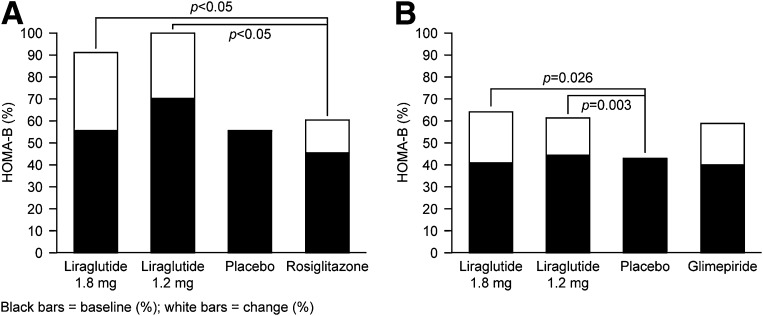
“Across all six studies, an improvement of between 20 and 44% from baseline in HOMA-B was observed (55) (Fig.”
BackgroundBuse, J. B., Henry, R. R., Han, J., Kim, D. D., Fineman, M. S., Baron, A. D., & for the Exenatide-113 Clinical Study Group (2004) · Diabetes Care · doi:10.2337/diacare.27.11.2628 · Cited by 1,346
Xu, G., Stoffers, D. A., Habener, J. F., & Bonner-Weir, S. (1999) · Diabetes · doi:10.2337/diabetes.48.12.2270 · Cited by 1,209 · cited 3×
“In animal and human studies, exenatide was shown to increase b-cell mass while at the same time causing a significant reduction in plasma glucose levels (20,37).”
BackgroundResultKendall, D. M., Riddle, M. C., Rosenstock, J., Zhuang, D., Kim, D. D., Fineman, M. S., & Baron, A. D. (2005) · Diabetes Care · doi:10.2337/diacare.28.5.1083 · Cited by 1,177
Nauck, M., Frid, A., Hermansen, K., Shah, N. S., Tankova, T., Mitha, I. H., Zdravkovic, M., Düring, M., Matthews, D. R., & for the LEAD-2 Study Group (2009) · Diabetes Care · doi:10.2337/dc08-1355 · Cited by 1,129
Garber, A., Henry, R., Ratner, R., Garcia-Hernandez, P. A., Rodriguez-Pattzi, H., Olvera-Alvarez, I., Hale, P. M., Zdravkovic, M., & Bode, B. (2009) · The Lancet · doi:10.1016/s0140-6736(08)61246-5 · Cited by 1,057 · cited 2×
“In comparison with glimepiride, both doses of liraglutide significantly improved insulin resistance (as assessed by HOMA-1R) relative to sulfonylurea monotherapy (52).”
BackgroundSelf-citationZinman, B., Gerich, J., Buse, J. B., Lewin, A., Schwartz, S., Raskin, P., Hale, P. M., Zdravkovic, M., Blonde, L., & the LEAD-4 Study Investigators (2009) · Diabetes Care · doi:10.2337/dc08-2124 · Cited by 848
on behalf of the Liraglutide Effect and Action in Diabetes 5 (LEAD-5) met+SU Study Group, Russell-Jones, D., Vaag, A., Schmitz, O., Sethi, B. K., Lalic, N., Antic, S., Zdravkovic, M., Ravn, G. M., & Simó, R. (2009) · Diabetologia · doi:10.1007/s00125-009-1472-y · Cited by 835 · cited 1×
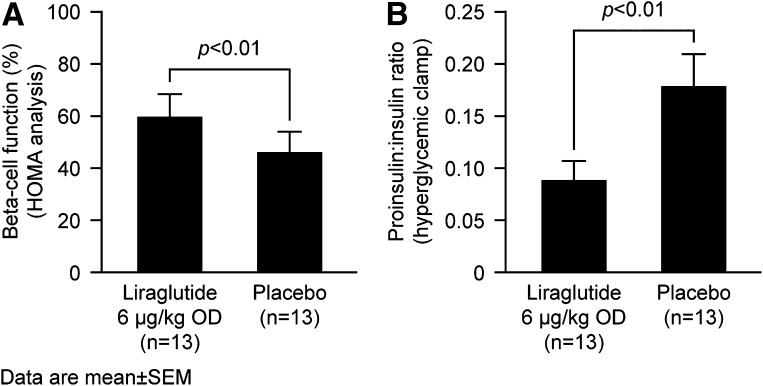
“8 mg liraglutide demonstrated significant improvement versus placebo onmultiple indices of b-cell function including HOMA-B (50,53), proinsulin-to-insulin ratio (50,51,53), and proinsulin–to–Cpeptide ratio (54).”
Marre, M., Shaw, J., Brändle, M., Bebakar, W. M. W., Kamaruddin, N. A., Strand, J., Zdravkovic, M., Le Thi, T. D., Colagiuri, S., & on behalf of the LEAD‐1 SU study group (2009) · Diabetic Medicine · doi:10.1111/j.1464-5491.2009.02666.x · Cited by 820
Hyperinsulinemic hypoglycemia with nesidioblastosis after gastric-bypass surgery.
Service, G. J., Thompson, G. B., Service, F. J., Andrews, J. C., Collazo-Clavell, M. L., & Lloyd, R. V. (2005) · New England Journal of Medicine · doi:10.1056/nejmoa043690 · Cited by 779
Knudsen, L. B., Nielsen, P. F., Huusfeldt, P. O., Johansen, N. L., Madsen, K., Pedersen, F. Z., Thøgersen, H., Wilken, M., & Agersø, H. (2000) · Journal of Medicinal Chemistry · doi:10.1021/jm9909645 · Cited by 700 · cited 1×
“acylated derivative of human GLP-1, sharing 97% sequence identity with the native peptide, modified only by the addition of a glutamic acid residue at position 26, allowing attachment of a C16 palmitoyl group and substitution of arginine for lysine at position 34 (29).”
BackgroundFarilla, L., Bulotta, A., Hirshberg, B., Li Calzi, S., Khoury, N., Noushmehr, H., Bertolotto, C., Di Mario, U., Harlan, D. M., & Perfetti, R. (2003) · Endocrinology · doi:10.1210/en.2003-0323 · Cited by 664 · cited 1×
“(19) reported a reduction in the number of apoptotic b-cells after treatment for 5 days with GLP-1.”
BackgroundBays, H., Mandarino, L., & DeFronzo, R. A. (2004) · The Journal of Clinical Endocrinology & Metabolism · doi:10.1210/jc.2003-030723 · Cited by 664 · cited 1×
“Lipotoxicity, associated with high concentrations of free fatty acids, commonly observed in people who are obese, are insulin-resistant, or have type 2 diabetes, has also been linked to increased metabolic stress of the b-cells (11).”
BackgroundAbnormal patterns of insulin secretion in non-insulin-dependent diabetes mellitus.
Polonsky, K. S., Given, B. D., Hirsch, L. J., Tillil, H., Shapiro, E. T., Beebe, C., Frank, B. H., Galloway, J. A., & Van Cauter, E. (1988) · New England Journal of Medicine · doi:10.1056/nejm198805123181903 · Cited by 567 · cited 2×
“THE b-CELL IN TYPE 2 DIABETES—Physiologically, b-cells secrete insulin at low levels between meals to control hepatic glucose output and at higher levels after meals to facilitate the uptake of glucose (6).”
BackgroundT., V., T., K., S., M., & J., H. (2002) · Diabetologia · doi:10.1007/s00125-002-0878-6 · Cited by 518 · cited 1×
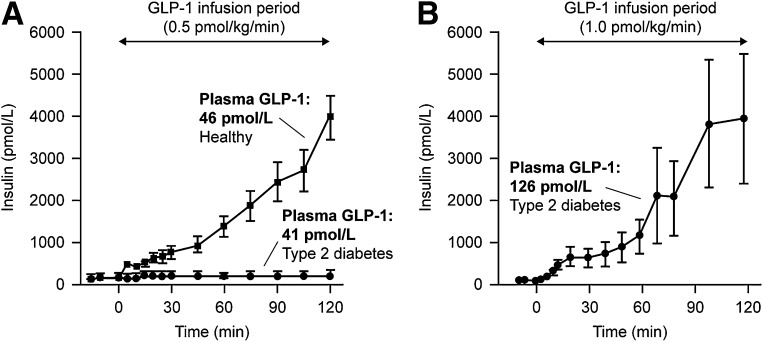
“Infusion of GLP-1 at pharmacological levels (1 pmol/kg/min), however, augmented the “late phase” (20– 120 min) insulin response to levels similar to those observed in healthy subjects (17) (Fig.”
ResultAgersø, H., Jensen, L. B., Elbrønd, B., Rolan, P., & Zdravkovic, M. (2002) · Diabetologia · doi:10.1007/s00125-001-0719-z · Cited by 510 · cited 1×
“5 h after subcutaneous injection (30) makes it suitable for oncedaily administration (31).”
BackgroundDiminished B cell secretory capacity in patients with noninsulin-dependent diabetes mellitus
Ward, W. K., Bolgiano, D. C., McKnight, B., Halter, J. B., & Porte, D. (1984) · Journal of Clinical Investigation · doi:10.1172/jci111542 · Cited by 483 · cited 1×
“The firstphase insulin response is almost abolished or at least severely blunted in patients with type 2 diabetes (7), although levels of fasting insulin may be higher than normal (8).”
BackgroundPerfetti, R. (2000) · Endocrinology · doi:10.1210/en.141.12.4600 · Cited by 442
Zinman, B., Hoogwerf, B. J., Durán García, S., Milton, D. R., Giaconia, J. M., Kim, D. D., Trautmann, M. E., & Brodows, R. G. (2007) · Annals of Internal Medicine · doi:10.7326/0003-4819-146-7-200704030-00003 · Cited by 427 · cited 6×
“In a head-to-head comparison of liraglutide, HOMA-B was reduced from baseline to a significantly greater extent with 1.8 mg/ day liraglutide (32”
BackgroundInfluentialDegn, K. B., Juhl, C. B., Sturis, J., Jakobsen, G., Brock, B., Chandramouli, V., Rungby, J., Landau, B. R., & Schmitz, O. (2004) · Diabetes · doi:10.2337/diabetes.53.5.1187 · Cited by 427
Biarnés, M., Montolio, M., Nacher, V., Raurell, M., Soler, J., & Montanya, E. (2002) · Diabetes · doi:10.2337/diabetes.51.1.66 · Cited by 420 · cited 1×
“b-Cell apoptosis is multifactorial; chronic exposure of the b-cells to elevated levels of glucose leads to “glucotoxicity,” a process where hyperglycemia causes cellular dysfunction andmortality (10).”
BackgroundThe role of impaired early insulin secretion in the pathogenesis of Type II diabetes mellitus
Pratley, R. E., & Weyer, C. (2001) · Diabetologia · doi:10.1007/s001250100580 · Cited by 419 · cited 1×
“Although the elevated levels of fasting glucose and impairment of insulin action in peripheral tissues may predate the diagnosis of type 2 diabetes, chronic hyperglycemia only results after a prolongedperiod ofb-cell degeneration, a process that may begin as much as 12 years before diagnosis, involving a progressive r…”
BackgroundWeyer, C., Tataranni, P. A., Bogardus, C., & Pratley, R. E. (2001) · Diabetes Care · doi:10.2337/diacare.24.1.89 · Cited by 357
Reduced Incretin Effect in Type 2 Diabetes
Knop, F. K., Vilsbøll, T., Højberg, P. V., Larsen, S., Madsbad, S., Vølund, A., Holst, J. J., & Krarup, T. (2007) · Diabetes · doi:10.2337/db07-0100 · Cited by 349
Glucagon-like peptide-1 prevents beta cell glucolipotoxicity
Joly, E., Prentki, M., Buteau, J., El-Assaad, W., Rhodes, C. J., & Rosenberg, L. (2004) · Diabetologia · doi:10.1007/s00125-004-1379-6 · Cited by 337 · cited 1×
“(23) noted that b-cell apoptosis induced by gluco- and lipotoxicity was prevented by GLP-1.”
BackgroundMadsbad, S., Schmitz, O., Ranstam, J., Jakobsen, G., Matthews, D. R., & on behalf of the NN2211-1310 International Study Group (2004) · Diabetes Care · doi:10.2337/diacare.27.6.1335 · Cited by 312
Fehse, F., Trautmann, M., Holst, J. J., Halseth, A. E., Nanayakkara, N., Nielsen, L. L., Fineman, M. S., Kim, D. D., & Nauck, M. A. (2005) · The Journal of Clinical Endocrinology & Metabolism · doi:10.1210/jc.2005-1093 · Cited by 297 · cited 1×
“EFFECT OF GLP-1 AGONISTS ON b-CELL MASS AND FUNCTION—Although native GLP-1 is rapidly degraded by the enzyme DPP-4 in the plasma, limiting its therapeutic potential because of its short half-life (,2 min), the beneficial properties of GLP-1 have been harnessed with the development of the longer-acting GLP-1 receptor a…”
BackgroundZinman, B., Gerich, J. E., Buse, J. B., Lewin, A., Schwartz, S. E., Raskin, P., Hale, P. M., Zdravkovic, M. D., & Blonde, L. (2010) · Diabetes Care · Cited by 290
Rolin, B., Larsen, M. O., Gotfredsen, C. F., Deacon, C. F., Carr, R. D., Wilken, M., & Knudsen, L. B. (2002) · American Journal of Physiology-Endocrinology and Metabolism · doi:10.1152/ajpendo.00030.2002 · Cited by 281 · cited 2×
“001) when compared with control subjects (32).”
BackgroundDrucker, D. J. (2003) · Endocrinology · doi:10.1210/en.2003-1147 · Cited by 274 · cited 1×
“ANIMAL DATA—As discussed above, the acute effect of GLP-1 on the b-cells is potentiation of glucose-dependent insulin secretion (18).”
BackgroundThe replication of β cells in normal physiology, in disease and for therapy
Butler, P. C., Meier, J. J., Butler, A. E., & Bhushan, A. (2007) · Nature Clinical Practice Endocrinology & Metabolism · doi:10.1038/ncpendmet0647 · Cited by 268
Egan, J. M. (2002) · Journal of Clinical Endocrinology & Metabolism · doi:10.1210/jc.87.3.1282 · Cited by 256 · cited 1×
“This phenomenon has also been observed with exenatide (43,44) and suggests a potentiating effect, possibly mediated by direct stimulation of the GLP-1 receptor.”
BackgroundRütti, S., Ehses, J. A., Sibler, R. A., Prazak, R., Rohrer, L., Georgopoulos, S., Meier, D. T., Niclauss, N., Berney, T., Donath, M. Y., et al. (2009) · Endocrinology · doi:10.1210/en.2009-0252 · Cited by 237
Blonde, L., & Russell‐Jones, D. (2009) · Diabetes, Obesity and Metabolism · doi:10.1111/j.1463-1326.2009.01075.x · Cited by 227 · cited 1×
“8 mg/ day liraglutide (32%) than with 10 mg/ day exenatide (3%) after the addition of each agent to metformin and/or a sulfonylurea (56).”
BackgroundKahn, S. E., & Halban, P. A. (1997) · Diabetes · doi:10.2337/diab.46.11.1725 · Cited by 221
Kahn, S. E., & Halban, P. A. (1997) · Diabetes · doi:10.2337/diabetes.46.11.1725 · Cited by 221
Vilsbøll, T., Brock, B., Perrild, H., Levin, K., Lervang, H. ‐., Kølendorf, K., Krarup, T., Schmitz, O., Zdravkovic, M., Le‐Thi, T., et al. (2008) · Diabetic Medicine · doi:10.1111/j.1464-5491.2007.02333.x · Cited by 213 · cited 1×
“First-phase insulin secretion, which is decreased in patients with type 2 diabetes, is partially restored with liraglutide (41).”
BackgroundChang, A. M., Jakobsen, G., Sturis, J., Smith, M. J., Bloem, C. J., An, B., Galecki, A., & Halter, J. B. (2003) · Diabetes · doi:10.2337/diabetes.52.7.1786 · Cited by 207 · cited 2×
“5 mg/kg) was associated with improved b-cell responsiveness to elevated plasma glucose (31).”
BackgroundSturis, J., Gotfredsen, C. F., Rømer, J., Rolin, B., Ribel, U., Brand, C. L., Wilken, M., Wassermann, K., Deacon, C. F., Carr, R. D., et al. (2003) · British Journal of Pharmacology · doi:10.1038/sj.bjp.0705397 · Cited by 202
Vilarrasa, N., Goday, A., Rubio, M. A., Caixàs, A., Pellitero, S., Ciudin, A., Calañas, A., Botella, J. I., Bretón, I., Morales, M. J., et al. (2016) · Obesity Facts · doi:10.1159/000442764 · Cited by 197
On the physiology of GIP and GLP-1
Holst, J. J. (2004) · Hormone and Metabolic Research · doi:10.1055/s-2004-826158 · Cited by 189 · cited 1×
“Restoration of the activity of the incretin hormones, especially GLP-1, would not only improve insulin secretion, thereby restoring glycemic control, but may also help both to preserve and to protect b-cell mass and function (26).”
BackgroundBodyweight Changes Associated with Antihyperglycaemic Agents in Type 2 Diabetes Mellitus
Hermansen, K., & Mortensen, L. S. (2007) · Drug Safety · doi:10.2165/00002018-200730120-00005 · Cited by 174 · cited 1×
“Moreover, several classes of antidiabetic therapy are associated with weight gain (4,5), which will worsen insulin resistance, thereby undermining treatment efficacy.”
BackgroundDeterminants of the Effectiveness of Glucagon-Like Peptide-1 in Type 2 Diabetes
Toft-Nielsen, M.-B., Madsbad, S., & Holst, J. J. (2001) · The Journal of Clinical Endocrinology & Metabolism · doi:10.1210/jcem.86.8.7743 · Cited by 164
Exenatide Versus Glibenclamide in Patients with Diabetes
Derosa, G., Maffioli, P., Salvadeo, S. A. T., Ferrari, I., Ragonesi, P. D., Querci, F., Franzetti, I. G., Gadaleta, G., Ciccarelli, L., Piccinni, M. N., et al. (2010) · Diabetes Technology & Therapeutics · doi:10.1089/dia.2009.0141 · Cited by 125 · cited 2×
“Finally, in comparisonwith glimepiride, exenatide was associated with a significant improvement in the HOMA-B index (48).”
BackgroundResultGLP-1/exendin-4 facilitates β-cell neogenesis in rat and human pancreatic ducts
Xu, G., Kaneto, H., Lopez-Avalos, M. D., Weir, G. C., & Bonner-Weir, S. (2006) · Diabetes Research and Clinical Practice · doi:10.1016/j.diabres.2005.11.007 · Cited by 115
Kjems, L. L., Kirby, B. M., Welsh, E. M., Veldhuis, J. D., Straume, M., McIntyre, S. S., Yang, D., Lefèbvre, P., & Butler, P. C. (2001) · Diabetes · doi:10.2337/diabetes.50.9.2001 · Cited by 110 · cited 1×
“Evidence suggests that a decrease in b-cell mass of$50% leads to the development of diabetes in primates (12).”
BackgroundExenatide inhibits β-cell apoptosis by decreasing thioredoxin-interacting protein
Chen, J., Couto, F. M., Minn, A. H., & Shalev, A. (2006) · Biochemical and Biophysical Research Communications · doi:10.1016/j.bbrc.2006.06.027 · Cited by 106
Højberg, P. V., Zander, M., Vilsbøll, T., Knop, F. K., Krarup, T., Vølund, A., Holst, J. J., & Madsbad, S. (2008) · Diabetologia · doi:10.1007/s00125-008-0943-x · Cited by 89 · cited 1×
“By contrast, in patients with type 2 diabetes, the insulin response to physiological levels of GLP-1 was substantially reduced, thought to be because physiological levels ofGLP-1 can no longer compensate for the loss of the GIP response (16) (Fig.”
BackgroundMari, A., Degn, K., Brock, B., Rungby, J., Ferrannini, E., & Schmitz, O. (2007) · Diabetes Care · doi:10.2337/dc07-0310 · Cited by 87
Effects of 1-mo bolus subcutaneous administration of exendin-4 in type 2 diabetes
Egan, J. M., Meneilly, G. S., & Elahi, D. (2003) · American Journal of Physiology-Endocrinology and Metabolism · doi:10.1152/ajpendo.00315.2002 · Cited by 83 · cited 1×
“Exenatide is also demonstrated to improve b-cell sensitivity to glucose (49).”
BackgroundMari, A., Nielsen, L. L., Nanayakkara, N., DeFronzo, R. A., Ferrannini, E., & Halseth, A. E. (2006) · Hormone and Metabolic Research · doi:10.1055/s-2006-956505 · Cited by 63 · cited 2×
“(43) assessed postprandial b-cell function in patients with type 2 diabetes receiving exenatide (5 or 10 mg) or placebo whose diabetes was inadequately controlled by metformin with or without Figure 2—Liraglutide improves HOMA (A) b-cell function and (B) the proinsulin-to-insulin”
BackgroundKwon, D. Y., Kim, Y. S., Ahn, I. S., Kim, D. S., Kang, S., Hong, S. M., & Park, S. (2009) · Journal of Pharmacological Sciences · doi:10.1254/jphs.09178fp · Cited by 44
GLP-1 receptor agonists: Targeting both hyperglycaemia and disease processes in diabetes
Holst, J. J., & Seino, Y. (2009) · Diabetes Research and Clinical Practice · doi:10.1016/j.diabres.2009.02.017 · Cited by 32 · cited 1×
“These hormones are secreted from the intestine in response to energy intake and glucose and may potentiate as much as 70% of the meal-induced insulin response in healthy individuals (13).”
BackgroundGreen, J. B., & Feinglos, M. N. (2007) · Current Diabetes Reports · doi:10.1007/s11892-007-0060-0 · Cited by 6 · cited 1×
“Currently, most prescribed therapies fail to address the progressive decline in b-cell function and impaired activity of the incretin hormones that underlie type 2 diabetes (25).”
BackgroundBonora, E., Capretti, L., Coscelli, C., & BUTTURINI, U. (1983) · Annals of Nutrition and Metabolism · doi:10.1159/000176726 · Cited by 1 · cited 1×
“The firstphase insulin response is almost abolished or at least severely blunted in patients with type 2 diabetes (7), although levels of fasting insulin may be higher than normal (8).”
Background
Cited by
Reed, J., Bain, S., & Kanamarlapudi, V. (2021) · Diabetes, Metabolic Syndrome and Obesity: Targets and Therapy · doi:10.2147/dmso.s319895 · Cited by 441
Targeting innate immune mediators in type 1 and type 2 diabetes
Donath, M. Y., Dinarello, C. A., & Mandrup-Poulsen, T. (2019) · Nature Reviews Immunology · doi:10.1038/s41577-019-0213-9 · Cited by 416
de Mello, V. D., Paananen, J., Lindström, J., Lankinen, M. A., Shi, L., Kuusisto, J., Pihlajamäki, J., Auriola, S., Lehtonen, M., Rolandsson, O., et al. (2017) · Scientific Reports · doi:10.1038/srep46337 · Cited by 379
Adipose tissue and its role in organ crosstalk
Romacho, T., Elsen, M., Röhrborn, D., & Eckel, J. (2014) · Acta Physiologica · doi:10.1111/apha.12246 · Cited by 279
“The beneficial effects of GLP-1 on pancreatic b-cells have been also reported in studies with diabetic animals (as reviewed in Garber 2011).”
BackgroundTan, T. M., Field, B. C. T., McCullough, K. A., Troke, R. C., Chambers, E. S., Salem, V., Gonzalez Maffe, J., Baynes, K. C. R., De Silva, A., Viardot, A., et al. (2013) · Diabetes · doi:10.2337/db12-0797 · Cited by 258
Metadata
- Authors
- Garber, A. J.
- Affiliations
- Baylor College of Medicine (US)
- Corresponding author
- Garber, Alan J.
- Venue
- Diabetes Care
- Publisher
- American Diabetes Association
- Published
- 2011-04-22
- Volume
- 34
- Issue
- Supplement_2
- Pages
- S258-S263
- ISSN
- 0149-5992 (ISSN-L)
- 1935-5548
- PMC
- PMC3632189
- OpenAlex
- W2159416991
- Cited by
- 92
- References
- 60
- Citations by year
- 2025: 3 · 2024: 4 · 2023: 6 · 2022: 2 · 2021: 6 · 2020: 5 · 2019: 8 · 2018: 3 · 2017: 6 · 2016: 10 · 2015: 10 · 2014: 13 · 2013: 8 · 2012: 7
- FWCI
- 9.48
- Type
- journal article
- Language
- en
- Open access
- hybrid
- doi.org
- Licence
- Locations
- Diabetes Care (publishedVersion, cc-by-nc-nd)
- Europe PMC (PubMed Central) (publishedVersion, cc-by-nc-nd)
- PubMed Central (publishedVersion, cc-by-nc-nd)
- PubMed (publishedVersion)
- Topics
- Health Sciences › Medicine › Endocrinology, Diabetes and Metabolism › Pancreatic function and diabetes
- Health Sciences › Medicine › Endocrinology, Diabetes and Metabolism › Diabetes Treatment and Management
- Life Sciences › Biochemistry, Genetics and Molecular Biology › Genetics › Diabetes and associated disorders
- Keywords
- incretins, type 2 diabetes, beta-cell function, beta-cell mass, beta-cell apoptosis, beta-cell proliferation, beta-cell neogenesis, glucagon-like peptide-1, GLP-1 receptor agonists, exenatide, liraglutide, glucose-dependent insulin secretion, glucose homeostasis, beta cell degeneration
- MeSH terms
- Glucagon-Like Peptide-1 Receptor, Liraglutide, Exenatide, Diabetes Mellitus, Type 2, Humans, Hypoglycemic Agents, Peptides, Venoms, Receptors, Glucagon, Insulin-Secreting Cells, Glucagon-Like Peptide 1, Incretins
About these checks
Registry, retraction, Cites and statistics results are computed, not judged, with one exception: a printed reference that no index lists is read once by a model before it counts as a citation error. Claims are extracted by a model and kept only when their quote appears verbatim in the text; each cited source is then checked, with a model’s help, for whether it says what the claim relies on. Those verdicts can be wrong — read the claim’s quote and the cited source before relying on one.
Statistics and arithmetic are recomputed, not judged.
Confidence bands are shown only for fields calibrated on our annotated test set. None is calibrated yet, so no band is shown.
What counts as a claim ›How we measure confidence ›How we check this ›
Are you an author, or do you see a problem with this page? Request a review
Data sources
Bibliographic data: Semantic Scholar, OpenAlex, Crossref.
Contains information from the Semantic Scholar Academic Graph Datasets, made available under the ODC Attribution License (ODC-BY 1.0).
Semantic Scholar’s data is described in: Kinney, R., et al. (2023). The Semantic Scholar Open Data Platform. arXiv:2301.10140.
