

Type 2 Diabetes
Open accessThe DOI matches its Crossref record; 102 of the 104 references it cites were found in a registry or an index.
Abstract
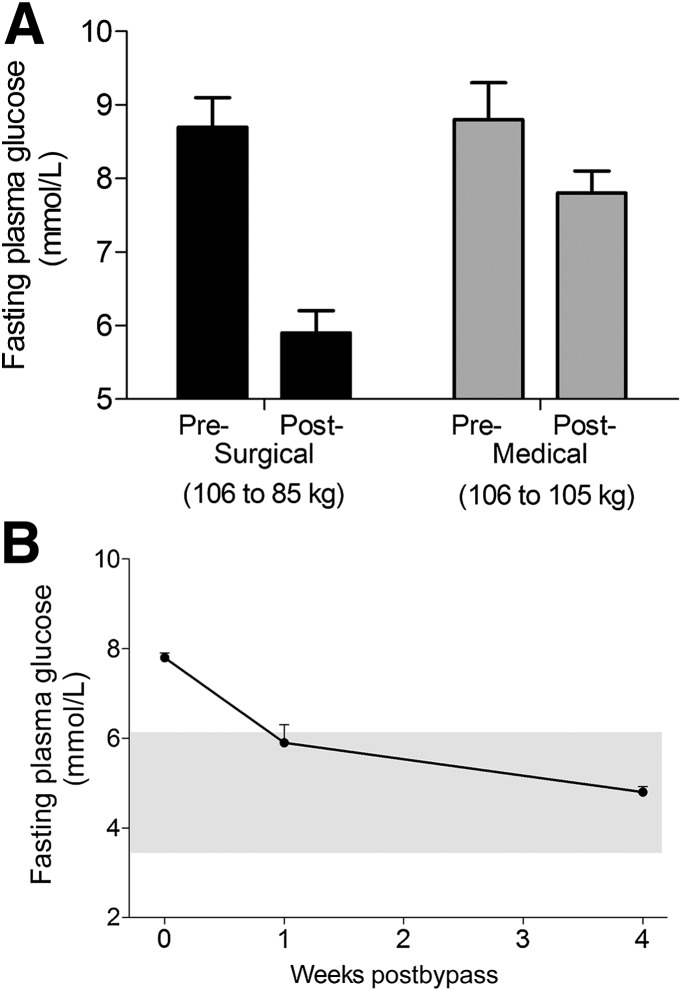
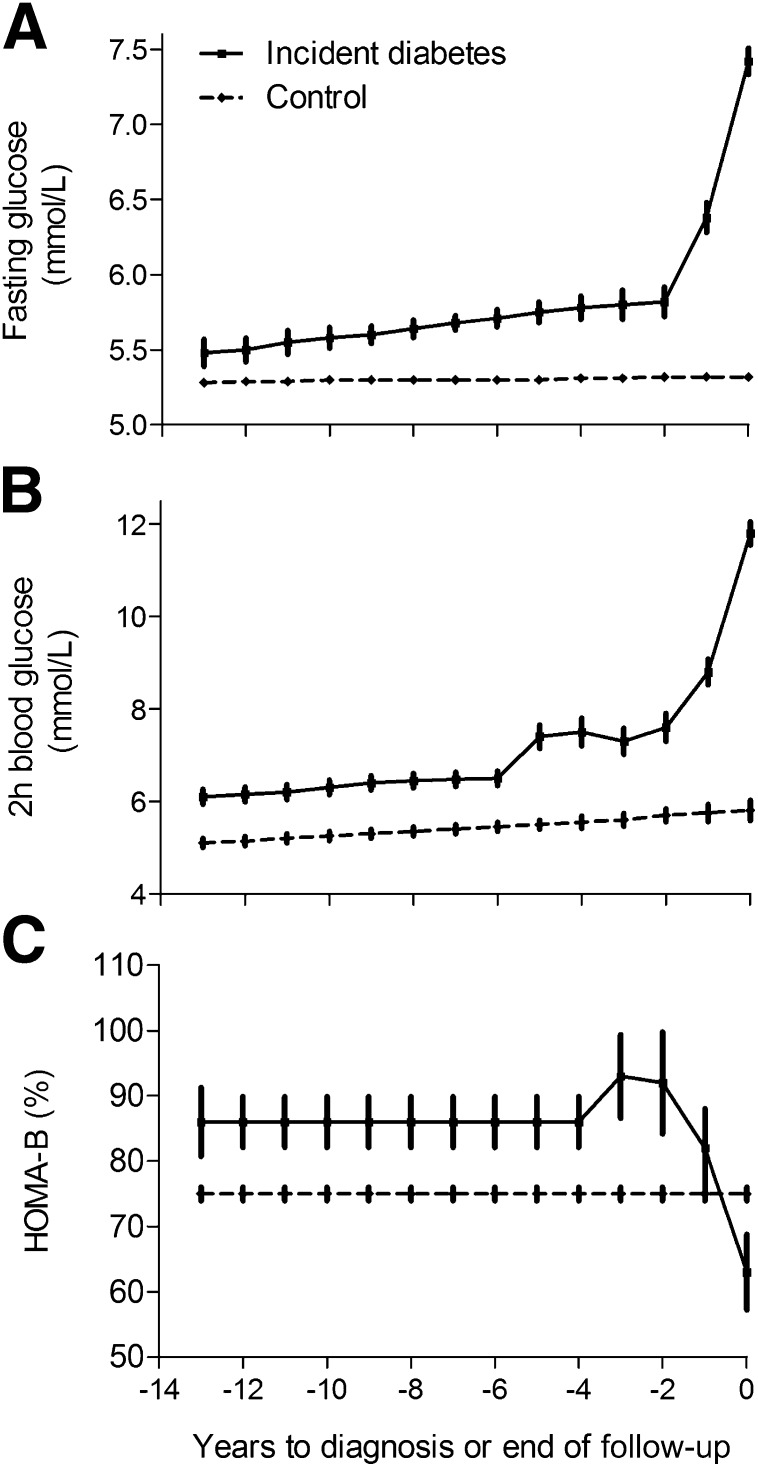
Reversal of type 2 diabetes to normal metabolic control by either bariatric surgery or hypocaloric diet allows for the time sequence of underlying pathophysiologic mechanisms to be observed. In reverse order, the same mechanisms are likely to determine the events leading to the onset of hyperglycemia and permit insight into the etiology of type 2 diabetes. Within 7 days of instituting a substantial negative calorie balance by either dietary intervention or bariatric surgery, fasting plasma glucose levels can normalize. This rapid change relates to a substantial fall in liver fat content and return of normal hepatic insulin sensitivity. Over 8 weeks, first phase and maximal rates of insulin secretion steadily return to normal, and this change is in step with steadily decreasing pancreatic fat content. The difference in time course of these two processes is striking. Recent information on the intracellular effects of excess lipid intermediaries explains the likely biochemical basis, which simplifies both the basic understanding of the condition and the concepts used to determine appropriate management. Recent large, long-duration population studies on time course of plasma glucose and insulin secretion before the diagnosis of diabetes are consistent with this new understanding. Type 2 diabetes has long been regarded as inevitably progressive, requiring increasing numbers of oral hypoglycemic agents and eventually insulin, but it is now certain that the disease process can be halted with restoration of normal carbohydrate and fat metabolism. Type 2 diabetes can be understood as a potentially reversible metabolic state precipitated by the single cause of chronic excess intraorgan fat. Type 2 diabetes has long been known to progress despite glucose-lowering treatment, with 50% of individuals requiring insulin therapy within 10 years (1). This seemingly inexorable deterioration in control has been interpreted to mean that the condition is treatable but not curable. Clinical guidelines recognize …
Overview
The claims and statistics of this paper haven’t been checked yet.
Free: it reads the open-access text and checks the first 5 claims that cite a source we can check. Create a free account to check every claim.
Integrity signals
Registry
Cites
Statistics
Figures



Verification
Claims the paper makes
The claims and statistics of this paper haven’t been checked yet.
Free: it reads the open-access text and checks the first 5 claims that cite a source we can check. Create a free account to check every claim.
Claims other papers make about this one
Each is checked against this paper’s own text: does it say what the citing paper says it does?
The source backs part of the claim, not all of it — or backs it for a different population, condition or comparison.
In the citing paper
“The three approaches show a similar time-course with glycemic control preceding weight loss by weeks or months, suggesting potential overlap of mechanisms (11, 12).”
From Long-Term Effects of a Novel Continuous Remote Care Intervention Including Nutritional Ketosis for the Management of Type 2 Diabetes: A 2-Year Non-randomized Clinical Trial (2019) · cites this paper as [12]
Experimental — accuracy not yet measuredThe source backs part of the claim, not all of it — or backs it for a different population, condition or comparison.
In the citing paper
“In controlled clinical trials, each approach has demonstrated improved glycemic control and CVD risk factors, reduced pharmaceutical dependence, and weight loss.”
From Long-Term Effects of a Novel Continuous Remote Care Intervention Including Nutritional Ketosis for the Management of Type 2 Diabetes: A 2-Year Non-randomized Clinical Trial (2019) · cites this paper as [12]
Experimental — accuracy not yet measuredIn the citing paper
“It has been estimated that 50% of patients require insulin therapy within 10 years of T2D diagnosis.245”
From A review of current trends with type 2 diabetes epidemiology, aetiology, pathogenesis, treatments and future perspectives (2021) · cites this paper as [245]
Self-check
Percentages, sums and reported differences re-computed from the paper’s own numbers.
The self-check needs the paper’s full text.
Citations
Cites
Lifestyle, diabetes, and cardiovascular risk factors 10 years after bariatric surgery
Sjöström, L., Lindroos, A.-K., Peltonen, M., Torgerson, J., Bouchard, C., Carlsson, B., Dahlgren, S., Larsson, B., Narbro, K., Sjöström, C. D., et al. (2004) · New England Journal of Medicine · doi:10.1056/nejmoa035622 · Cited by 4,457
Economic Costs of Diabetes in the U.S. in 2002
American Diabetes Association (2003) · Diabetes Care · doi:10.2337/diacare.26.3.917 · Cited by 4,147
β-Cell Deficit and Increased β-Cell Apoptosis in Humans With Type 2 Diabetes
Butler, A. E., Janson, J., Bonner-Weir, S., Ritzel, R., Rizza, R. A., & Butler, P. C. (2003) · Diabetes · doi:10.2337/diabetes.52.1.102 · Cited by 4,011
Genetic variation in PNPLA3 confers susceptibility to nonalcoholic fatty liver disease
Romeo, S., Kozlitina, J., Xing, C., Pertsemlidis, A., Cox, D., Pennacchio, L. A., Boerwinkle, E., Cohen, J. C., & Hobbs, H. H. (2008) · Nature Genetics · doi:10.1038/ng.257 · Cited by 3,416 · cited 1×
“When a variant of PNPLA3was described as determining increased hepatic fat levels, it appeared that a major factor underlying nonalcoholic fatty liver disease and insulin resistance was identified (55).”
Mechanisms for Insulin Resistance: Common Threads and Missing Links
Samuel, V. T., & Shulman, G. I. (2012) · Cell · doi:10.1016/j.cell.2012.02.017 · Cited by 2,294
Impaired Mitochondrial Activity in the Insulin-Resistant Offspring of Patients with Type 2 Diabetes
Petersen, K. F., Dufour, S., Befroy, D., Garcia, R., & Shulman, G. I. (2004) · New England Journal of Medicine · doi:10.1056/nejmoa031314 · Cited by 2,193 · cited 1×
“Although a defect in mitochondrial function is associated with extremes of insulin resistance in skeletal muscle (30), this does not appear to be relevant to the etiology of type 2 diabetes.”
Colberg, S. R., Sigal, R. J., Fernhall, B., Regensteiner, J. G., Blissmer, B. J., Rubin, R. R., Chasan-Taber, L., Albright, A. L., & Braun, B. (2010) · Diabetes Care · doi:10.2337/dc10-9990 · Cited by 1,955
Long-term weight loss maintenance
Wing, R. R., & Phelan, S. (2005) · The American Journal of Clinical Nutrition · doi:10.1093/ajcn/82.1.222s · Cited by 1,941
A placebo-controlled trial of pioglitazone in subjects with nonalcoholic steatohepatitis
Belfort, R., Harrison, S. A., Brown, K., Darland, C., Finch, J., Hardies, J., Balas, B., Gastaldelli, A., Tio, F., Pulcini, J., et al. (2006) · New England Journal of Medicine · doi:10.1056/nejmoa060326 · Cited by 1,827 · cited 1×
“Hypocaloric diet (42), physical activity (43), or thiazolidinedione use (23,44) each reduces insulin secretion and decreases liver fat content.”
Cited by
Items 201–300 of 487
Low-calorie diets for people with isolated impaired fasting glucose
Sathish, T., Taylor, R., Khunti, K., Tapp, R. J., Raben, A., Zhu, R., Kapoor, N., Narayan, K. M. V., Ali, M. K., & Shaw, J. E. (2024) · Communications Medicine · doi:10.1038/s43856-024-00466-2 · Cited by 10
Self-citationYao, J., Yao, W., Zhu, J., Liu, Y., Liu, J., Ji, Y., Ni, X., Mu, W., & Yan, B. (2024) · Advanced Science · doi:10.1002/advs.202411042 · Cited by 14
Zhu, Y. G., Yao, T., Li, T. X., Zhang, Y., & Ke, Q. (2025) · Cardiovascular Diabetology · doi:10.1186/s12933-025-02652-5 · Cited by 14
Endocan, a Potential Biomarker of Endothelial Dysfunction: A Brief Overview
Bidlan, M., Kumar, M., Bhargava, A., Goel, V., & Kumar, V. (2025) · Angiology · doi:10.1177/00033197251356576 · Cited by 13
Childhood type 2 diabetes: Risks and complications
Xue, Y., Gao, M., & Gao, Y. (2016) · Experimental and Therapeutic Medicine · doi:10.3892/etm.2016.3654 · Cited by 16
Li, D., Zou, H., Yin, P., Li, W., He, J., Wang, S., Huang, L., Shao, S., Chen, Y., Yang, Y., et al. (2020) · Diabetes Obesity and Metabolism · doi:10.1111/dom.14217 · Cited by 11
“A significant reversal of beta-cell function might occur even with mild loss of weight because of a preferential reduction in ectopic fat such as in the pancreas during weight loss.(54,55) We found that DPP4i and SGLT2i yielded better durability among current antidiabetic therapies, even compared with bariatric surger…”
BackgroundMohammed, H., & Salloom, D. F. (2020) · Meta Gene · doi:10.1016/j.mgene.2020.100845 · Cited by 14
Kashiwagi-Takayama, R., Kozawa, J., Hosokawa, Y., Kato, S., Kawata, S., Ozawa, H., Mineo, R., Ishibashi, C., Baden, M. Y., Iwamoto, R., et al. (2023) · Cardiovascular Diabetology · doi:10.1186/s12933-023-01782-y · Cited by 12
O'Keeffe, M. (2016) · Practical Diabetes · doi:10.1002/pdi.2046 · Cited by 10
Qigong for the Management of Type 2 Diabetes Mellitus
Sun, G., Osgood, C., & Lilly, H. R. (2017) · InTech eBooks · doi:10.5772/67065 · Cited by 9
Donazar-Ezcurra, M., del Burgo, C. L., Martínez‐González, M. Á., Dominguez, L. J., Basterra-Gortari, F. J., de Irala, J., & Bes‐Rastrollo, M. (2019) · British Journal Of Nutrition · doi:10.1017/s0007114519001521 · Cited by 10
Huang, S., Chen, Z., Li, H.-M., Zou, Y., Wang, B., Zhao, W., Zheng, L., Zhou, Z., Peng, X., & Tang, C. (2025) · Nutrients · doi:10.3390/nu17132209 · Cited by 9
“These metabolic alterations closely mirror early-stage T2DM features observed in humans [29].”
Koufakis, T., Kokkinos, A. D., & le Roux, C. W. (2026) · Diabetes Obesity and Metabolism · doi:10.1111/dom.70723 · Cited by 9
Quantifying Remission Probability in Type 2 Diabetes Mellitus
Kalra, S., Bantwal, G., Kapoor, N., Sahay, R. K., Bhattacharya, S., Anne, B., Gopal, R. A., Kota, S. K., Kumar, A., Joshi, A. S., et al. (2021) · Clinics and Practice · doi:10.3390/clinpract11040100 · Cited by 11
“About 90% of the study population remained free of diabetes after 10 years [13,14].”
BackgroundLi, H., Luo, D., Wei, R., Sun, M., Zhang, X., Deng, H., Bian, W., Wei, H., & Huang, Y.-Q. (2022) · BioMed Research International · doi:10.1155/2022/7978258 · Cited by 8
Cai, X., Xu, M., Chen, J., Mao, Y., Hu, J., Li, L., Pan, J., Jin, M., & Chen, L. (2024) · Diabetes Metabolic Syndrome and Obesity · doi:10.2147/dmso.s481578 · Cited by 8
Polhuis, K. C. M. M., Bouwman, L. I., Vaandrager, L., Soedamah‐Muthu, S. S., & Koelen, M. A. (2019) · Patient Education and Counseling · doi:10.1016/j.pec.2019.10.017 · Cited by 11
Genome-wide association study of pancreatic fat: The Multiethnic Cohort Adiposity Phenotype Study
Streicher, S. A., Lim, U., Park, S. L., Li, Y., Sheng, X., Hom, V., Xia, L. Y., Pooler, L., Shepherd, J., Loo, L. W. M., et al. (2021) · PLoS ONE · doi:10.1371/journal.pone.0249615 · Cited by 7
Polhuis, K. C. M. M., van Bennekom, E., Bot, M., Nefs, G., Vaandrager, L., Habibović, M., Geleijnse, J. M., Pouwer, F., & Soedamah‐Muthu, S. S. (2022) · Journal of Psychosomatic Research · doi:10.1016/j.jpsychores.2022.110950 · Cited by 10
Very-low-energy diets for weight loss in patients with kidney disease
Brown, A. C., & Taheri, S. (2018) · Journal of Kidney Care · doi:10.12968/jokc.2018.3.1.14 · Cited by 9
Feng, W., Chen, W., Jiang, S., Du, L., & Zhu, D. (2021) · Diabetes Obesity and Metabolism · doi:10.1111/dom.14392 · Cited by 9
“Type 2 diabetes (T2D) is a progressive disease characterized by deterioration and eventual loss of pancreatic β-cell function, resulting in inadequate production of insulin and chronic hyperglycaemia.(1,2) The International Diabetes Federation estimated that the number of people worldwide with diabetes in 2019 was 463…”
BackgroundKui, L., Dong, C., Wu, J., Zhuo, F., Yan, B., Wang, Z., Yang, M., Xiong, C., & Qiu, P. (2024) · Frontiers in Endocrinology · doi:10.3389/fendo.2024.1407503 · Cited by 9
“T2DM is characterized by hyperglycemia, insulin resistance, and insulin secretion disorders (18, 19).”
BackgroundThe association of platelet to white blood cell ratio with diabetes: a nationwide survey in China
Liu, F., Wang, T., Wang, S., Zhao, X., & Hua, Y. (2024) · Frontiers in Endocrinology · doi:10.3389/fendo.2024.1418583 · Cited by 11
Gong, W., Zhang, N., Sun, X., Zhang, Y., Wang, Y., Lv, D., Luo, H., Liu, Y., Chen, Z., Lei, Q., et al. (2024) · Phytomedicine · doi:10.1016/j.phymed.2024.156055 · Cited by 7
FNDC5/Irisin mitigates high glucose-induced neurotoxicity in HT22 cell via ferroptosis
Yang, L., Zhou, X., Tian, H., Zhu, Y., Gong, L., Liu, N., Yao, X., & Luo, Y. (2024) · BioScience Trends · doi:10.5582/bst.2024.01249 · Cited by 9
Tian, X., Wang, W., Zhang, L., Wang, L., Zhang, K., Ge, X., Luo, Z., Zhao, Y., Zhai, X., & Li, C. (2024) · Diabetes Metabolic Syndrome and Obesity · doi:10.2147/dmso.s492626 · Cited by 8
Aetiology of type 2 diabetes: an experimental medicine odyssey
Taylor, R. (2025) · Diabetologia · doi:10.1007/s00125-025-06428-0 · Cited by 10
Self-citationAtabaki, N. N., Coral, D., Pomares‐Millan, H., Smith, K., Behjat, H., Koivula, R. W., Tura, A., Miller, H., Pinnick, K. E., Agudelo, L. Z., et al. (2026) · Metabolism · doi:10.1016/j.metabol.2026.156552 · Cited by 8
Decreased serum levels of 25-OH vitamin D and vitamin K in patients with type 2 diabetes mellitus
Yang, L. (2024) · Frontiers in Endocrinology · doi:10.3389/fendo.2024.1412228 · Cited by 8
“Chronic hyperglycemia in T2DM is an important cause of long-term damage to different organs and is a disease that seriously harms humans (6).”
BackgroundDe la dysfonction du tissu adipeux blanc aux phénotypes anatomocliniques de l’obésité
Ziegler, O., Böhme, P., & Valet, P. (2017) · Obésité · doi:10.1007/s11690-017-0555-z · Cited by 10
(2012) · BENTHAM SCIENCE PUBLISHERS eBooks · doi:10.2174/978160805361211201010039 · Cited by 8
Vargas‐Uricoechea, H., & Cáceres-Acosta, M. F. (2018) · Clínica e Investigación en Arteriosclerosis (English Edition) · doi:10.1016/j.artere.2018.12.001 · Cited by 13
Ronaldson, A., Freestone, M. C., Zhang, H., Marsh, W., & Bhui, K. S. (2020) · JMIRx Med · doi:10.2196/22912 · Cited by 6
Protein Kinases Signaling in Pancreatic Beta-cells Death and Type 2 Diabetes
Engin, A. B., & Engin, A. (2021) · Advances in experimental medicine and biology · doi:10.1007/978-3-030-49844-3_8 · Cited by 9
Lin, C., Kong, Y., Wang, F., Rong, R., Li, X., Xiao, R., Wu, Z., Zhang, Q., & Wang, L. (2022) · Bioorganic Chemistry · doi:10.1016/j.bioorg.2022.105767 · Cited by 7
Feng, J., Zhou, Y., Liao, L., Yu, L., Yuan, P., & Zhang, J. (2022) · Journal of Diabetes Research · doi:10.1155/2022/2736504 · Cited by 8
Chaiyasoot, K., Sakai, N. S., Zakeri, R., Makaronidis, J., Crisóstomo, L., Alves, M. G., Gan, W., Firman, C., Jassil, F. C., Hall-Craggs, M. A., et al. (2023) · Obesity Surgery · doi:10.1007/s11695-023-06905-8 · Cited by 8
Optogenetic therapeutic strategies for diabetes mellitus
Deng, X., Peng, D., Yao, Y., Huang, K., Wang, J., Ma, Z., Fu, J., & Xu, Y. (2024) · Journal of Diabetes · doi:10.1111/1753-0407.13557 · Cited by 8
Kwan, B. S., Kim, S. C., Jo, H. C., Baek, J., & Park, J. E. (2022) · Healthcare · doi:10.3390/healthcare10040649 · Cited by 9
Zhyzhneuskaya, S. V., & Taylor, R. (2017) · Endocrinology · doi:10.1007/978-3-319-47685-8_21-1 · Cited by 8
Self-citationReassessing type 2 diabetes in adolescents and its management strategies based on insulin resistance
Jia, Q.-Y., Zhang, Y., Zhang, B., & An, X. (2024) · Frontiers in Endocrinology · doi:10.3389/fendo.2024.1377918 · Cited by 11
“Therefore, weight loss and subsequent reduction in visceral fat are key to diabetes remission (115).”
BackgroundLakhani, H. A., Biswas, D., Kuruvila, M., Chava, M. S., Raj, K., Varghese, J. T., & Swathi, N. (2025) · Primary care diabetes · doi:10.1016/j.pcd.2025.02.006 · Cited by 7
Fu, J., Liu, C., Yang, L., Zhang, B., Zhou, R., Deng, C., Zhang, H., Kong, J., Li, J., & Shi, J. (2025) · European Journal of Gastroenterology & Hepatology · doi:10.1097/meg.0000000000002964 · Cited by 10
“This is clinically important because IHL plays an important pathogenic role in metabolic diseases [36,37].”
Jang, W. B., Rethineswaran, V. K., & Kwon, S. (2025) · International Journal of Molecular Sciences · doi:10.3390/ijms26104603 · Cited by 9
Sun, C., Xiao, K., He, Y., & Li, X. (2024) · Medicine · doi:10.1097/md.0000000000037094 · Cited by 9
“[4] UC is frequently diagnosed in Chinese young adults, peaking between the ages of 20 and 49.”
BackgroundA simplified longitudinal model for the development of Type 2 Diabetes Mellitus
Gaetano, A. D., Nagy, I., Kiss, D. K., Romanovski, V. G., & Hardy, T. A. (2024) · Journal of Theoretical Biology · doi:10.1016/j.jtbi.2024.111822 · Cited by 7
Xiong, W.-Y., Liu, Y., Fan, Y.-B., Zhu, X., Zhou, K., & Li, H. (2024) · Nutrition & Metabolism · doi:10.1186/s12986-024-00848-2 · Cited by 6
Association between hypothyroidism and metabolic syndrome in Qinghai, China
Fan, X., Yao, Y., Chai, S., Wang, B., Xie, Y., Jiang, Y., Lin, L., Li, Y., Fan, P., Luo, W., et al. (2024) · Frontiers in Endocrinology · doi:10.3389/fendo.2024.1407996 · Cited by 11
The impact of site-specific DNA methylation in KCNJ11 promoter on type 2 diabetes
Zhu, M., Huang, Q., Li, H., Zhao, Y., Guo, H., Wang, T., Liu, X., Huang, Y. L., Hu, J., Fang, C., et al. (2024) · Heliyon · doi:10.1016/j.heliyon.2024.e39934 · Cited by 10
State of patients' knowledge about treatment and proceedings in type 2 diabetes.
Filip, R., Lewandowska, A., Szczepankiewicz, M., & Majda, B. (2014) · Annals of Agricultural and Environmental Medicine · doi:10.5604/1232-1966.1108605 · Cited by 6
Putting insulin resistance into context by dietary reversal of type 2 diabetes
Taylor, R. W. (2017) · The Journal of the Royal College of Physicians of Edinburgh · doi:10.4997/jrcpe.2017.216 · Cited by 8
Self-citationZhang, F., chen, J., Han, A., Li, D., & Zhu, W. (2023) · Journal of Exposure Science & Environmental Epidemiology · doi:10.1038/s41370-023-00551-z · Cited by 8
Targeting Hyperglycaemia with Anti-Obesity Drugs: Time for a Paradigm Shift?
Krentz, A. J., & Hompesch, M. (2013) · Drugs · doi:10.1007/s40265-013-0123-2 · Cited by 6
Moxley, M. A., Vinnakota, K. C., Bazil, J. N., Qi, N., & Beard, D. A. (2018) · PLoS Computational Biology · doi:10.1371/journal.pcbi.1005982 · Cited by 7
Gotfredsen, D. R., VINTHER, S. M., Petersen, T. S., Cortes, R., Jensen, T. B., Jimenez‐Solem, E., & Christensen, M. (2020) · Scientific Reports · doi:10.1038/s41598-020-60818-5 · Cited by 6
Liu, T., Sun, P., Zou, J., Wang, L., Wang, G., Liu, N., Liu, Y., Ding, X., Zhang, B., Liang, R., et al. (2021) · BMC Endocrine Disorders · doi:10.1186/s12902-021-00708-7 · Cited by 6
Wei, W., Jiang, W., Gu, W., Wu, H., Jiang, H., Li, G., Song, Q., Huang, J., Wang, X., Wang, L., et al. (2021) · Aging · doi:10.18632/aging.202485 · Cited by 6
Polhuis, K. C. M. M., Vaandrager, L., Koelen, M. A., Geleijnse, J. M., & Soedamah‐Muthu, S. S. (2023) · JMIR Research Protocols · doi:10.2196/40490 · Cited by 8
Protective Effects of Carotenoids in Cardiovascular Disease and Diabetes
Emanuelli, T., Augusti, P. R., & Roehrs, M. (2017) · Wiley eBooks · doi:10.1002/9781119158042.ch16 · Cited by 8
Genetic architecture of 11 abdominal organ traits derived from abdominal MRI using deep learningPreprint
Liu, Y., Basty, N., Whitcher, B. J., Bell, J. D., Sorokin, E. P., van Bruggen, N., Thomas, E. L., & Cule, M. (2020) · bioRxiv (Cold Spring Harbor Laboratory) · doi:10.1101/2020.07.14.187070 · Cited by 6
Dried fruit intake and lower risk of type 2 diabetes: a two-sample mendelian randomization study
Guan, J., Liu, T., Yang, K., & Chen, H. H. (2024) · Nutrition & Metabolism · doi:10.1186/s12986-024-00813-z · Cited by 6
Tea drinking effectively improves symptoms of diabetes and prevents hepatorenal damage in mice
Zhao, G., Yang, L., Ge, Y., Qiu, Z., Tang, D., Fang, Y., Ban, Q., Yang, C. S., & Zhang, J. (2025) · Food Research International · doi:10.1016/j.foodres.2025.116502 · Cited by 5
Manshi, Dash, D., & Koiri, R. K. (2026) · Endocrine · doi:10.1007/s12020-026-04561-3 · Cited by 7
Constantin, C. (2016) · Journal of Nutritional Disorders & Therapy · doi:10.4172/2161-0509.1000182 · Cited by 5
Wang, D., Zhang, Y., Xu, M., Sun, X., Cui, X., Wang, X., & Liu, D. (2022) · PLoS ONE · doi:10.1371/journal.pone.0271177 · Cited by 5
“The current therapies for T2DM only control blood glucose levels; thus, patients always develop tolerance requiring higher medicine doses with more side effects [1, 2].”
BackgroundPark, Y. H., Lee, H. S., Yang, J., Lim, L. R., Kwon, Y., & Lee, J. (2024) · Clinical Nutrition · doi:10.1016/j.clnu.2024.03.024 · Cited by 5
Ducote, M. P., Cothern, C. R., Batdorf, H. M., Fontenot, M. S., Martin, T. M., Iftesum, M., Gartia, M. R., Noland, R. C., Burk, D. H., Ghosh, S., et al. (2025) · Journal of Biological Chemistry · doi:10.1016/j.jbc.2025.108187 · Cited by 6
Is Type 2 Diabetes One of Such Aging Phenomena That Lack an Irreversible Structural Change?
Chen, Q. J. X. (2015) · Journal of Diabetes & Metabolism · doi:10.4172/2155-6156.1000543 · Cited by 5
Nielen, J. T. H., Dagnelie, P. C., Boonen, A. E. R. C. H., Klungel, O. H., van den Bemt, B. J. F., & de Vries, F. (2019) · Diabetes Research and Clinical Practice · doi:10.1016/j.diabres.2019.01.021 · Cited by 5
Arabshahi, V., Amiri, R., Ghalishourani, S. S., Hasaniani, N., Nozarian, S., Tavasolian, R., Khiabani, A., & Rahimlou, M. (2023) · BMC Nutrition · doi:10.1186/s40795-023-00803-z · Cited by 8
Baseline ALT levels as a marker of glycemic response to treatment with GLP-1 receptor agonists
Gimeno-Orna, J. A., Sanz, G. V., Borau-Maorad, L., Campos-Fernández, J., Lardiés‐Sánchez, B., & Villanueva, M. M. (2016) · Endocrinología y Nutrición (English Edition) · doi:10.1016/j.endoen.2016.04.005 · Cited by 4
Niveles de ALT y respuesta hipoglucemiante al tratamiento con agonistas del receptor de GLP-1
Gimeno-Orna, J. A., Sanz, G. V., Borau-Maorad, L., Campos-Fernández, J., Lardiés‐Sánchez, B., & Villanueva, M. M. (2016) · Endocrinología y Nutrición · doi:10.1016/j.endonu.2015.11.009 · Cited by 5
Haslacher, H., Fallmann, H., Waldhäusl, C., Hartmann, E., Wagner, O. F., & Waldhäusl, W. K. (2019) · Diabetes Metabolic Syndrome and Obesity · doi:10.2147/dmso.s197495 · Cited by 4
Kratuloek, K., Kumam, P., Nikam, V., Gopal, D., & Seangwattana, T. (2025) · Mathematical and Computer Modelling of Dynamical Systems · doi:10.1080/13873954.2025.2488182 · Cited by 5
“The variables influencing the reversal of diabetes mellitus or NIDD were examined by Taylor (2013).”
Liu, H.-Y., Xiang, J., Xie, Q., & Xiang, H. (2025) · Journal of Affective Disorders · doi:10.1016/j.jad.2025.119879 · Cited by 5
Zhang, Z., Li, Y., Gu, H. F., & Li, N. (2025) · Biomedicine & Pharmacotherapy · doi:10.1016/j.biopha.2025.118837 · Cited by 5
Lim, H. J., Park, J. E., & Han, J.-S. (2023) · Fitoterapia · doi:10.1016/j.fitote.2023.105512 · Cited by 4
Glycogenic hepatopathy associated with hepatic steatosis in type 1 diabetes
Teasdale, S., Dong, X., Griffin, A., Clark, P. J., Nisbet, J. C., Morton, A., Phillips, L. K., Sullivan, M. A., & Galloway, G. J. (2024) · Journal of Diabetes and its Complications · doi:10.1016/j.jdiacomp.2024.108870 · Cited by 4
Impact of cumulative exposure to a high TG to HDL-C ratio on type 2 diabetes risk in young adults
Heo, J., Kim, B., Han, K., Lee, J.-H., Sohn, S.-Y., Ahn, J., Kwon, W., Kim, M. J., Doo, E.-Y., & Lee, M.-K. (2024) · Journal of clinical lipidology · doi:10.1016/j.jacl.2024.12.004 · Cited by 4
Rathore, V., Gaikwad, K., & Mahat, R. K. (2025) · Cureus · doi:10.7759/cureus.80785 · Cited by 9
Popoviciu, M. S., Salmen, T., Reurean‐Pintilei, D., Voiculescu, V. M., & Stoian, A. P. (2025) · Medicina · doi:10.3390/medicina61030548 · Cited by 5
“Typically, in patients with longer DM duration, insulin resistance (IR) [17–22] is more prevalent, negatively influencing responses to therapy and accelerating the development of chronic complications [23–29].”
Gupta, R., & Kumar, S. (2021) · International Journal of Applied and Computational Mathematics · doi:10.1007/s40819-021-01001-w · Cited by 4
A 5-year assessment of the epidemiology and natural history of possible diabetes in remission
Gillani, S. M. R., Raghavan, R., & Singh, B. M. (2021) · Primary care diabetes · doi:10.1016/j.pcd.2021.04.007 · Cited by 7
Abed, E., Jarrar, Y. B., Alhawari, H. H., Abdullah, S., & Zihlif, M. A. (2021) · Drug Metabolism and Personalized Therapy · doi:10.1515/dmpt-2021-0164 · Cited by 4
Methods for Quantifying Insulin Sensitivity and Determining Insulin Time-Action Profiles
Krentz, A. J., Heinemann, L., & Hompesch, M. (2014) · Springer eBooks · doi:10.1007/978-1-4471-4920-0_1 · Cited by 6
“Improving insulin sensitivity through weight reduction and physical exercise remains the cornerstone of management of type 2 diabetes [47].”
BackgroundWang, L., Li, X., Kong, Y., Wang, F., Zhang, Q., Lin, C., & Rong, R. (2022) · European Journal of Pharmaceutical Sciences · doi:10.1016/j.ejps.2022.106162 · Cited by 4
Type 2 Diabetes Mellitus in Tanzania. A Narrative Review of Epidemiology and Disease Trend
Chillo, O., Mzokolo, I. C., Peter, E. G., MALINDISA, E. K., Haji, H. T., Tungu, A. M., Njelekela, M. A., & Balandya, E. (2024) · Current Diabetes Reviews · doi:10.2174/0115733998267513231208100124 · Cited by 5
Vargas‐Uricoechea, H., & Cáceres-Acosta, M. F. (2018) · Clínica e Investigación en Arteriosclerosis · doi:10.1016/j.arteri.2018.07.001 · Cited by 10
Ortaglia, A., McDonald, S. M., Supino, C., Wirth, M. D., Sui, X., & Bottai, M. (2020) · Preventive Medicine Reports · doi:10.1016/j.pmedr.2020.101083 · Cited by 5
“T2DM is a chronic disease characterized by central and/or peripheral insulin resistance and eventually leading to deficient secretion of insulin by the pancreatic β-cells (Taylor, 2013).”
BackgroundThe long-run effects of adolescent athletic participation on women’s health
Callison, K., & Lowen, A. M. (2021) · Economics & Human Biology · doi:10.1016/j.ehb.2021.101087 · Cited by 7
Vascular disease and type 2 diabetes: the science policy case for early cardiometabolic intervention
Taylor, D. G. (2019) · Cardiovascular Endocrinology & Metabolism · doi:10.1097/xce.0000000000000171 · Cited by 4
Zhao, T., Sun, Y., Popović‐Djordjević, J. B., Kim, W., & Li, H. (2025) · Chemico-Biological Interactions · doi:10.1016/j.cbi.2025.111636 · Cited by 4
Xu, Y., Yu, Y., Ding, X., Yuan, J., Yu, L., Dai, X. D., Ling, R., Wang, Y., & Zhang, J. (2025) · Cardiovascular Diabetology · doi:10.1186/s12933-025-02934-y · Cited by 4
“The metabolic disturbances associated with DM play a crucial role in the accelerated progression of atherosclerosis, a condition characterized by plaque accumulation in the arterial walls [4].”
Intelligent neural framework for modeling the lifestyle-induced remission in the type 2 diabetes
Qasim, M., Ali, H., Farooq, A., Kamran, M., Ahmad, H., Awwad, F. A. A., & Ismail, E. A. A. (2026) · Chaos Solitons & Fractals · doi:10.1016/j.chaos.2025.117841 · Cited by 3
IRTKS promotes osteogenic differentiation by inhibiting PTEN phosphorylation
Zhang, H., Wang, Z., Li, Q., Cao, C., Guo, Y., & Chen, Y. (2024) · Biomedicine & Pharmacotherapy · doi:10.1016/j.biopha.2024.116872 · Cited by 4
Tang, X.-Q., Bai, Y., Wu, Y., Yang, Y., Yu, X., Chen, J., Xue, X., & Kang, J. (2024) · Food Science and Human Wellness · doi:10.26599/fshw.2024.9250162 · Cited by 3
Nomura, S., Taniura, T., Ichikawa, J., Iwama, A., & Ito, T. (2024) · Clinical and Applied Thrombosis/Hemostasis · doi:10.1177/10760296241302082 · Cited by 3
Understanding Diabetes Remission
Velayutham, K., Panneerselvam, G., & Ramanathan, B. (2025) · Apollo Medicine · doi:10.1177/09760016251323727 · Cited by 4
Nazarov, A. V., Ledenev, O. V., Petrov, G. V., Levitskaya, O. V., & Syroeshkin, A. V. (2025) · Journal of Drug Delivery and Therapeutics · doi:10.22270/jddt.v15i6.7189 · Cited by 3
Zhou, Y., Zhu, J., Wu, H., Deng, Y., & Ji, Q. (2021) · Diabetes Therapy · doi:10.1007/s13300-021-01139-2 · Cited by 4
Metadata
- Authors
- Taylor, R.
- Affiliations
- Newcastle University (GB)
- Corresponding author
- Taylor, Roy
- ORCID
- Taylor, Roy
- Venue
- Diabetes Care
- Publisher
- American Diabetes Association
- Published
- 2013-03-14
- Volume
- 36
- Issue
- 4
- Pages
- 1047-1055
- ISSN
- 0149-5992 (ISSN-L)
- 1935-5548
- PMC
- PMC3609491
- OpenAlex
- W2051587831
- Cited by
- 485
- References
- 104
- Citations by year
- 2026: 39 · 2025: 63 · 2024: 67 · 2023: 35 · 2022: 35 · 2021: 65 · 2020: 33 · 2019: 28 · 2018: 25 · 2017: 24 · 2016: 26 · 2015: 16 · 2014: 22 · 2013: 4
- FWCI
- 4.01
- Type
- journal article
- Language
- en
- Open access
- hybrid
- doi.org
- Licence
- Locations
- Diabetes Care (publishedVersion, cc-by-nc-nd)
- Europe PMC (PubMed Central) (publishedVersion, cc-by-nc-nd)
- PubMed Central (publishedVersion, cc-by-nc-nd)
- PubMed (publishedVersion)
- Newcastle University ePrints (Newcastle Univesity)
- Topics
- Health Sciences › Medicine › Endocrinology, Diabetes and Metabolism › Pancreatic function and diabetes
- Health Sciences › Medicine › Endocrinology, Diabetes and Metabolism › Diabetes Treatment and Management
- Health Sciences › Medicine › Endocrinology, Diabetes and Metabolism › Diabetes, Cardiovascular Risks, and Lipoproteins
- Keywords
- type 2 diabetes, diabetes remission, bariatric surgery, hypocaloric diet, hepatic insulin sensitivity, liver fat, pancreatic fat content, insulin secretion, disease progression, insulin resistance
- MeSH terms
- Diabetes Mellitus, Type 2, Humans, Insulin Resistance, Bariatric Surgery
About these checks
Registry, retraction, Cites and statistics results are computed, not judged, with one exception: a printed reference that no index lists is read once by a model before it counts as a citation error. Claims are extracted by a model and kept only when their quote appears verbatim in the text; each cited source is then checked, with a model’s help, for whether it says what the claim relies on. Those verdicts can be wrong — read the claim’s quote and the cited source before relying on one.
Statistics and arithmetic are recomputed, not judged.
Confidence bands are shown only for fields calibrated on our annotated test set. None is calibrated yet, so no band is shown.
What counts as a claim ›How we measure confidence ›How we check this ›
Are you an author, or do you see a problem with this page? Request a review
Data sources
Bibliographic data: Semantic Scholar, OpenAlex, Crossref.
Contains information from the Semantic Scholar Academic Graph Datasets, made available under the ODC Attribution License (ODC-BY 1.0).
Semantic Scholar’s data is described in: Kinney, R., et al. (2023). The Semantic Scholar Open Data Platform. arXiv:2301.10140.
