

The DOI matches its Crossref record; 67 of the 68 references it cites were found in a registry or an index.
Cx3cr1- deficient microglia exhibit a premature aging transcriptome
Open accessAbstract
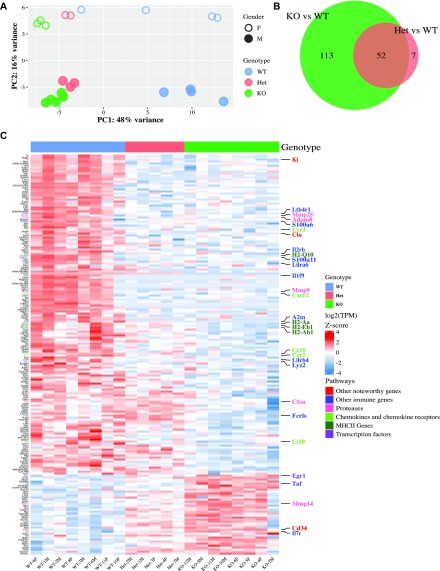
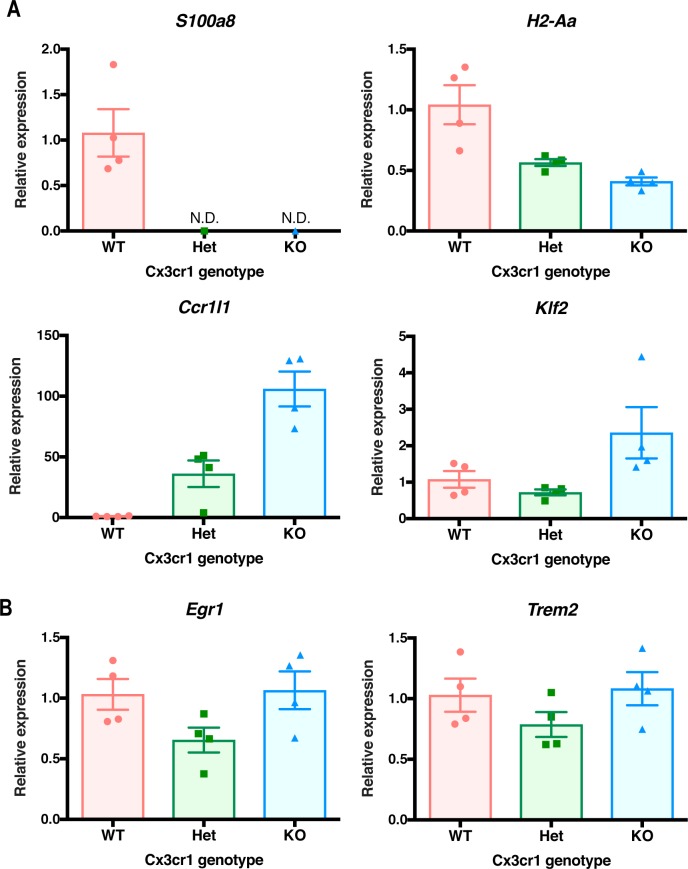
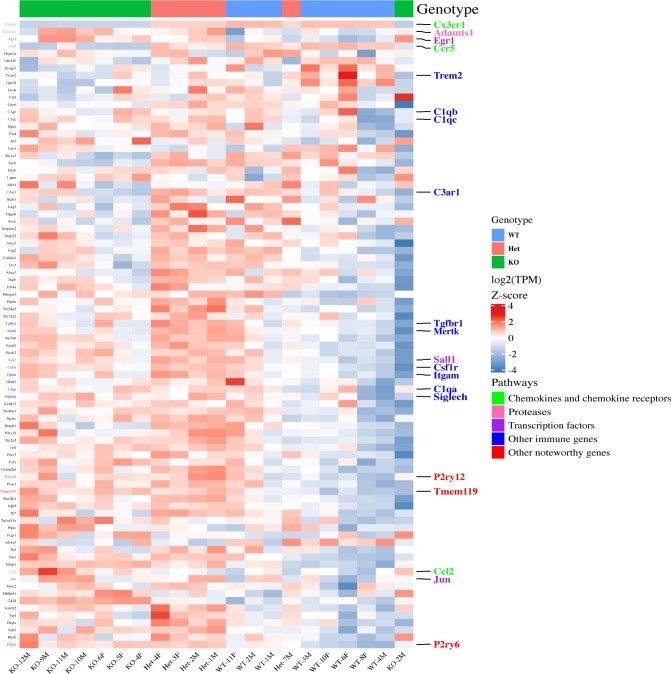
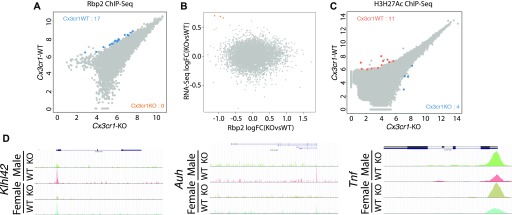
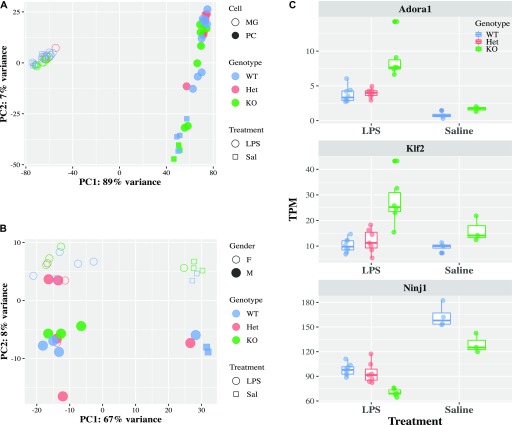
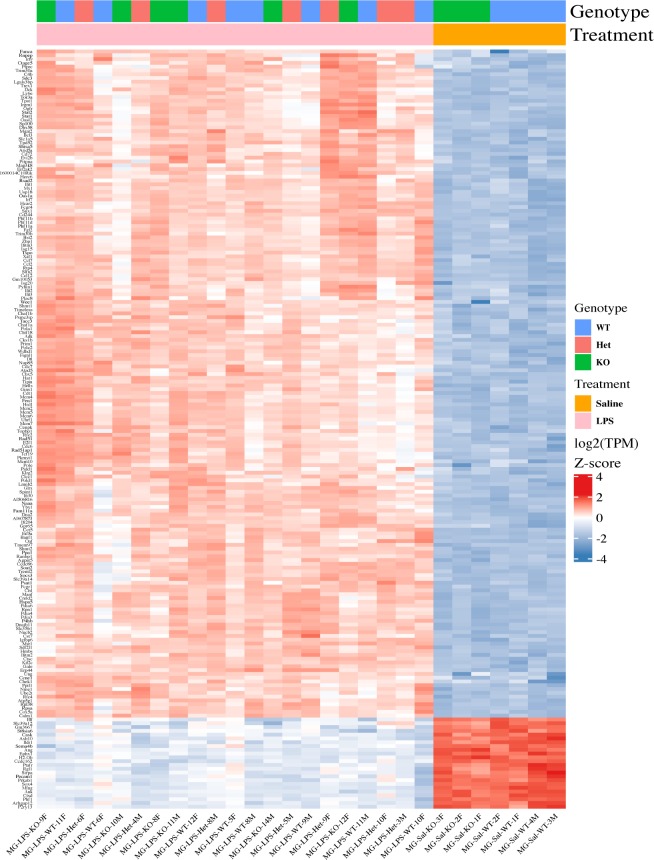
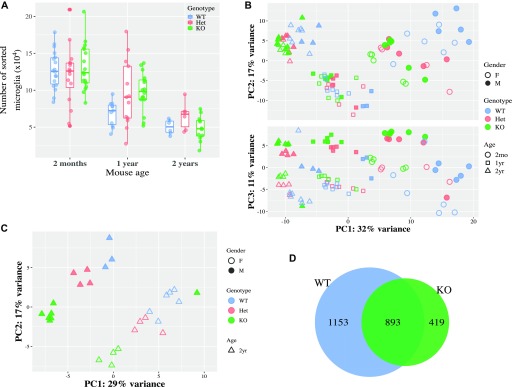
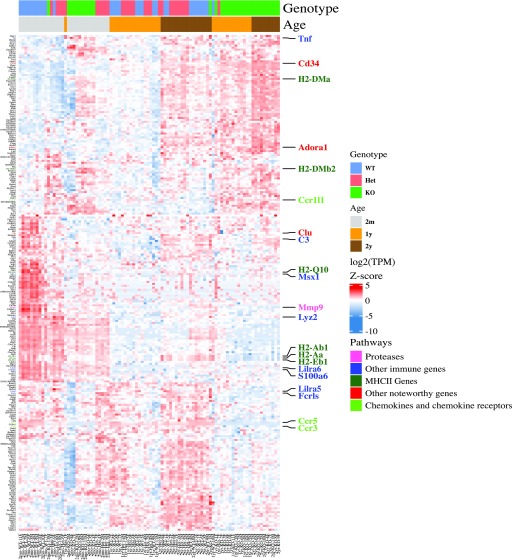
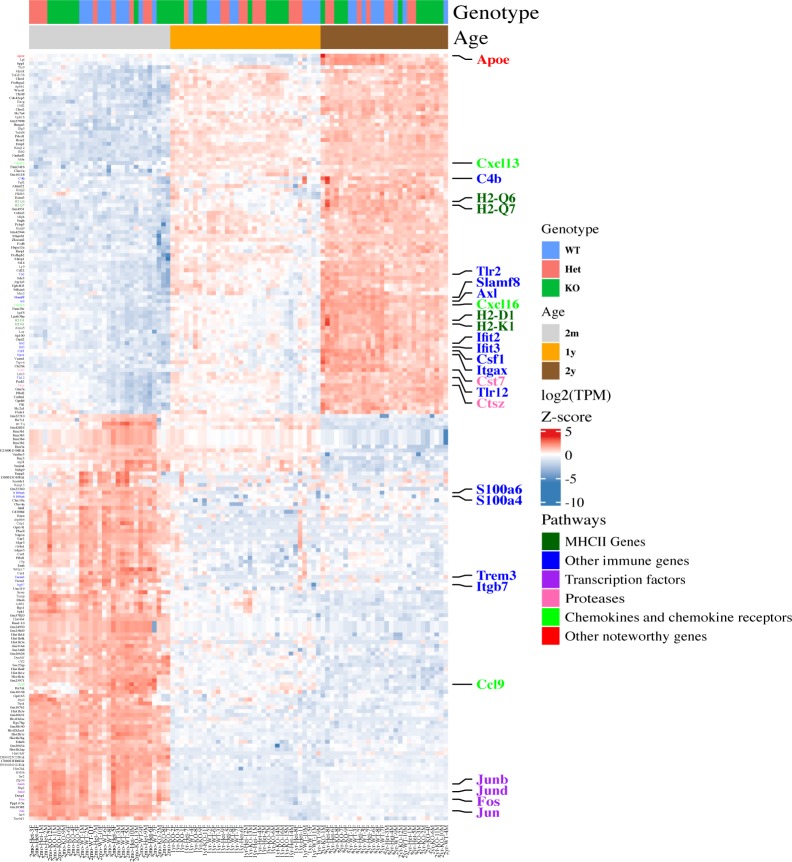
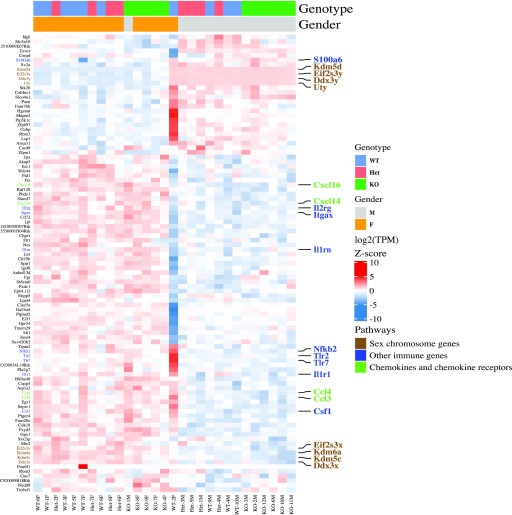
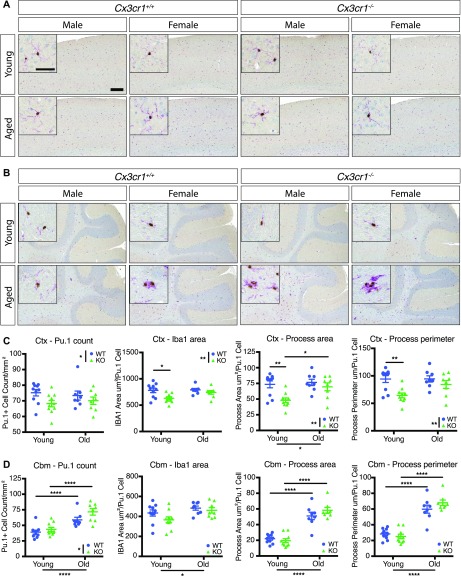
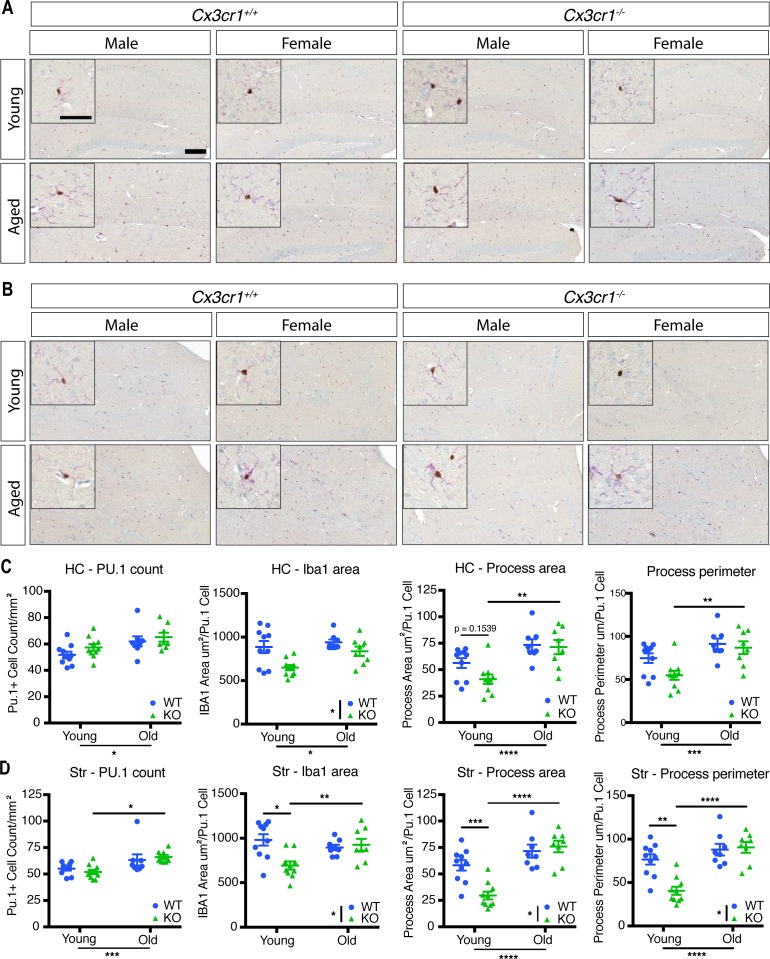
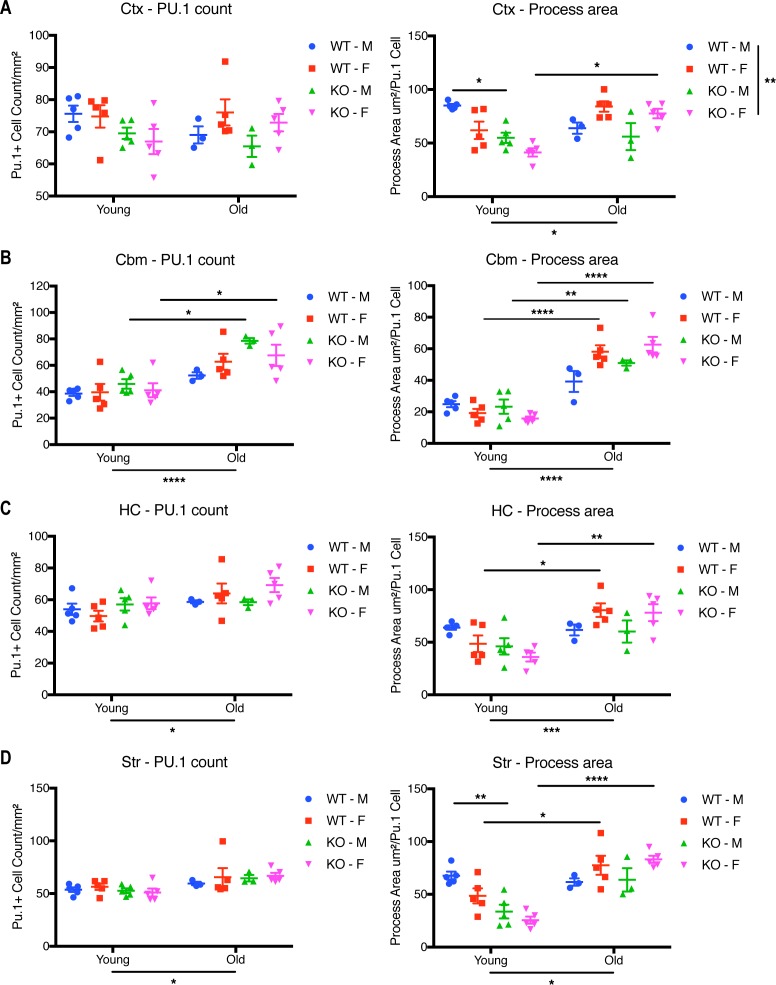
CX3CR1, one of the highest expressed genes in microglia in mice and humans, is implicated in numerous microglial functions. However, the molecular mechanisms underlying Cx3cr1 signaling are not well understood. Here, we analyzed transcriptomes of Cx3cr1- deficient microglia under varying conditions by RNA-sequencing (RNA-seq). In 2-mo-old mice, Cx3cr1 deletion resulted in the down-regulation of a subset of immune-related genes, without substantial epigenetic changes in markers of active chromatin. Surprisingly, Cx3cr1- deficient microglia from young mice exhibited a transcriptome consistent with that of aged Cx3cr1- sufficient animals, suggesting a premature aging transcriptomic signature. Immunohistochemical analysis of microglia in young and aged mice revealed that loss of Cx3cr1 modulates microglial morphology in a comparable fashion. Our results suggest that CX3CR1 may regulate microglial function in part by modulating the expression levels of a subset of inflammatory genes during chronological aging, making Cx3cr1 -deficient mice useful for studying aged microglia.
Overview
The claims and statistics of this paper haven’t been checked yet.
Run the check — free, no account needed. It reads the open-access text and checks the sources it cites.
Integrity signals
Registry
Cites
Statistics
Figures
Verification
Claims the paper makes
The claims and statistics of this paper haven’t been checked yet.
Run the check — free, no account needed. It reads the open-access text and checks the sources it cites.
Claims other papers make about this one
Each is checked against this paper’s own text: does it say what the citing paper says it does?
In the citing paper
“NOX1 expression may be an artefact of the Cx3cr1-EGFP reporter line, since Cx3cr1 is a signature microglial gene and haploinsufficiency has wide-reaching effects on gene expression of microglia, specifically encouraging a prematurely aged transcriptome [78,79,80].”
From ROS Generation in Microglia: Understanding Oxidative Stress and Inflammation in Neurodegenerative Disease (2020) · cites this paper as [78]
In the citing paper
“This expression profile concurs with other studies of DAM [10,37,78,124,194].”
From ROS Generation in Microglia: Understanding Oxidative Stress and Inflammation in Neurodegenerative Disease (2020) · cites this paper as [78]
Self-check
Percentages, sums and reported differences re-computed from the paper’s own numbers.
The self-check needs the paper’s full text.
Citations
Cites
Moderated estimation of fold change and dispersion for RNA-seq data with DESeq2
Love, M. I., Huber, W., & Anders, S. (2014) · Genome Biology · doi:10.1186/s13059-014-0550-8 · Cited by 95,106 · cited 3×
“DESeq2 (Love et al, 2014) was used to identify differential chromatin binding between Cx3cr1 -KO and -WT mice.”
Fast gapped-read alignment with Bowtie 2
Langmead, B., & Salzberg, S. L. (2012) · Nature Methods · doi:10.1038/nmeth.1923 · Cited by 56,400 · cited 1×
“The raw Rbp2 or H3K27Ac ChIP sequences were mapped to mm10 genome by Bowtie 2 (Langmead & Salzberg, 2013).”
STAR: ultrafast universal RNA-seq aligner
Dobin, A., Davis, C. A., Schlesinger, F., Drenkow, J., Zaleski, C., Jha, S., Batut, P., Chaisson, M., & Gingeras, T. R. (2013) · Bioinformatics · doi:10.1093/bioinformatics/bts635 · Cited by 51,709 · cited 2×
“Raw count fi les were aligned to mouse genome build mm10 using STAR and transcripts quanti fi ed with RSEM; in general, the uniquemappingratewas>80%.”
RSEM: accurate transcript quantification from RNA-Seq data with or without a reference genome
Li, B., & Dewey, C. N. (2011) · BMC Bioinformatics · doi:10.1186/1471-2105-12-323 · Cited by 22,179
Heinz, S., Benner, C., Spann, N., Bertolino, E., Lin, Y. C., Laslo, P., Cheng, J. X., Murre, C., Singh, H., & Glass, C. K. (2010) · Molecular Cell · doi:10.1016/j.molcel.2010.05.004 · Cited by 13,382 · cited 2×
“ChIP-seq library preparation, sequencing, and data analysis ChIP-seq libraries were prepared from recovered DNA by blunting, A-tailing, and adapter ligation using barcoded adapters (NextFlex; Bioo Scienti fi c) as previously described (Heinz et al, 2010; Gosselin et al, 2014).”
Self-citationComplex heatmaps reveal patterns and correlations in multidimensional genomic data
Gu, Z., Eils, R., & Schlesner, M. (2016) · Bioinformatics · doi:10.1093/bioinformatics/btw313 · Cited by 10,037 · cited 1×
“Heatmap visualizations of the DEGs were made by using custom R scripts based on ComplexHeatmap (Gu et al, 2016).”
A Unique Microglia Type Associated with Restricting Development of Alzheimer’s Disease
Keren-Shaul, H., Spinrad, A., Weiner, A., Matcovitch-Natan, O., Dvir-Szternfeld, R., Ulland, T. K., David, E., Baruch, K., Lara-Astaiso, D., Toth, B., et al. (2017) · Cell · doi:10.1016/j.cell.2017.05.018 · Cited by 5,493 · cited 1×
“In multiple conditions, mouse microglia demonstrate a core conserved reactive-state transcriptome, which is extensively modi fi ed to yield disease-speci fi c transcriptomes (Chiu et al, 2013; Keren-Shaul et al, 2017; Friedman et al, 2018).”
Zhang, Y., Chen, K., Sloan, S. A., Bennett, M. L., Scholze, A. R., O'Keeffe, S., Phatnani, H. P., Guarnieri, P., Caneda, C., Ruderisch, N., et al. (2014) · The Journal of Neuroscience · doi:10.1523/jneurosci.1860-14.2014 · Cited by 4,875 · cited 1×
“In WT mice, the microglial expression pro fi le obtained here is consistent with the published microglial transcriptomes (Table S1) (Hickman et al, 2013; Butovsky et al, 2014; Zhang et al, 2014).”
Synaptic Pruning by Microglia Is Necessary for Normal Brain Development
Paolicelli, R. C., Bolasco, G., Pagani, F., Maggi, L., Scianni, M., Panzanelli, P., Giustetto, M., Ferreira, T. A., Guiducci, E., Dumas, L., et al. (2011) · Science · doi:10.1126/science.1202529 · Cited by 4,244 · cited 1×
“…Cx3cr1 expression show altered brain development during embryogenesis, dysregulated neuronal fi ring in the fi rst few weeks after birth, and abnormal results in tests designed to mimic sociopsychological behaviors (Paolicelli et al, 2011; Rogers et al, 2011; Zhan et al, 2014; Bolós et al, 2017).”
Mutation of the mouse klotho gene leads to a syndrome resembling ageing
Kuro-o, M., Matsumura, Y., Aizawa, H., Kawaguchi, H., Suga, T., Utsugi, T., Ohyama, Y., Kurabayashi, M., Kaname, T., Kume, E., et al. (1997) · Nature · doi:10.1038/36285 · Cited by 3,837 · cited 1×
“Indeed, Kl (Klotho) is down-regulated in Cx3cr1 -de fi cient microglia, and Klotho protein has been linked to aging and homeostatic support of brain function (Kuro-o et al, 1997).”
Cited by
Sorted by citations
Simpson, D. S. A., & Oliver, P. L. (2020) · Antioxidants · doi:10.3390/antiox9080743 · Cited by 1,044
“This expression profile concurs with other studies of DAM [10,37,78,124,194].”
BackgroundResultMicroglia regulation of synaptic plasticity and learning and memory
Zhou, M., Cornell, J., Salinas, S., & Huang, H.-Y. (2022) · Neural Regeneration Research · doi:10.4103/1673-5374.322423 · Cited by 548
“CX3CR1/CX3CL1 signaling contributes to changes in microglia morphology and expression of immune proteins such as chemokines and chemokine receptors (Gyoneva et al., 2019).”
BackgroundMicroglia Phenotypes in Aging and Neurodegenerative Diseases
Wendimu, M. Y., & Hooks, S. B. (2022) · Cells · doi:10.3390/cells11132091 · Cited by 336
Graves, J. S., Krysko, K. M., Hua, L. H., Absinta, M., Franklin, R. J. M., & Segal, B. M. (2023) · The Lancet Neurology · doi:10.1016/s1474-4422(22)00184-3 · Cited by 260
Microglia in Alzheimer’s Disease in the Context of Tau Pathology
Perea, J. R., Bolós, M., & Ávila, J. (2020) · Biomolecules · doi:10.3390/biom10101439 · Cited by 134
“The first one determined that Cx3cr1−/− microglia present a lower phagocytic and migratory capacity per se [242], while the second revealed that Cx3cr1−/− microglia of young animals are very similar to the wild type (WT) microglia of older animals [243].”
Result
Metadata
- Authors
- Gyoneva, S., Hosur, R., Gosselin, D., Zhang, B., Ouyang, Z., Cotleur, A. C., Peterson, M., Allaire, N., Challa, R., Cullen, P., Roberts, C., Miao, K., Reynolds, T. L., Glass, C. K., Burkly, L., & Ransohoff, R. M.
- Affiliations
- Biogen (United States) (US)
- University of California San Diego (US)
- Corresponding author
- Gyoneva, Stefka
- Ransohoff, Richard M
- ORCID
- Venue
- Life Science Alliance
- Publisher
- Life Science Alliance, LLC
- Published
- 2019-12
- Volume
- 2
- Issue
- 6
- Pages
- e201900453
- ISSN
- 2575-1077 (ISSN-L)
- PMC
- PMC6892408
- OpenAlex
- W2994105471
- Cited by
- 103
- References
- 68
- Citations by year
- 2026: 13 · 2025: 12 · 2024: 11 · 2023: 12 · 2022: 23 · 2021: 25 · 2020: 7
- FWCI
- 6.06
- Type
- journal article
- Language
- en
- Open access
- gold
- doi.org
- Licence
- Locations
- Life Science Alliance (publishedVersion, cc-by)
- PubMed Central (publishedVersion, cc-by)
- PubMed (publishedVersion)
- DOAJ (DOAJ: Directory of Open Access Journals) (submittedVersion, cc-by-sa)
- eScholarship (California Digital Library) (submittedVersion)
- eScholarship (California Digital Library) (submittedVersion, cc-by)
- Funders
- National Institute of Neurological Disorders and Stroke (R01NS096170)
- Topics
- Life Sciences › Neuroscience › Neurology › Neuroinflammation and Neurodegeneration Mechanisms
- Life Sciences › Biochemistry, Genetics and Molecular Biology › Aging › Genetics, Aging, and Longevity in Model Organisms
- Life Sciences › Neuroscience › Developmental Neuroscience › Neurogenesis and neuroplasticity mechanisms
- Keywords
- CX3CR1, microglia, premature aging, transcriptome, microglial aging, microglial morphology, inflammatory gene expression, active chromatin, neuroinflammation
- MeSH terms
- CX3C Chemokine Receptor 1, Genetic Profile, Animals, Disease Models, Animal, Female, Inflammation, Lipopolysaccharides, Male, Mice, Inbred C57BL, Mice, Transgenic, Neurons, Signal Transduction, Gene Deletion, Microglia, Mice, Knockout, Aging, Premature, Receptors, Chemokine, Mice, Transcriptome
About these checks
Registry, retraction, Cites and statistics results are computed, not judged, with one exception: a printed reference that no index lists is read once by a model before it counts as a citation error. Claims are extracted by a model and kept only when their quote appears verbatim in the text; each cited source is then checked, with a model’s help, for whether it says what the claim relies on. Those verdicts can be wrong — read the claim’s quote and the cited source before relying on one.
Statistics and arithmetic are recomputed, not judged.
Confidence bands are shown only for fields calibrated on our annotated test set. None is calibrated yet, so no band is shown.
What counts as a claim ›How we measure confidence ›How we check this ›
Are you an author, or do you see a problem with this page? Request a review
