

The DOI matches its Crossref record; 14 of the 14 references it cites were found in a registry or an index.
Early transmissibility assessment of the N501Y mutant strains of SARS-CoV-2 in the United Kingdom, October to November 2020
Open accessPublished version of a preprint
Abstract
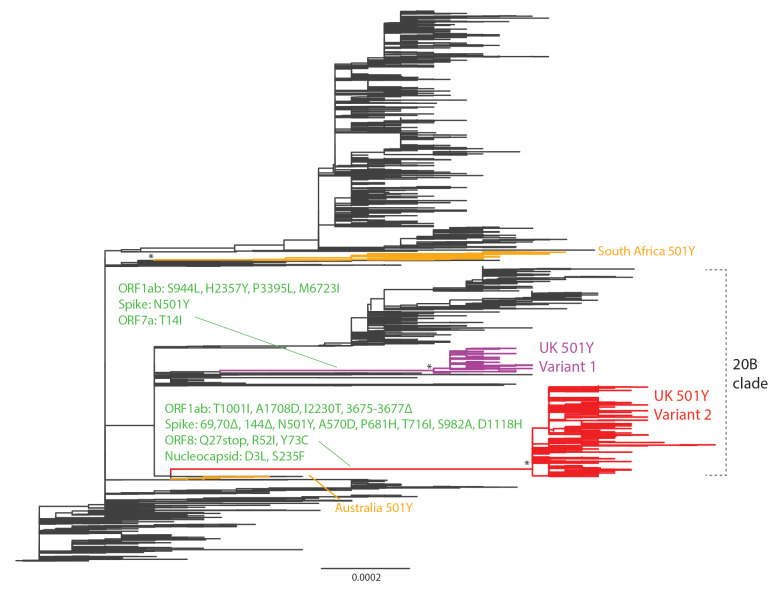
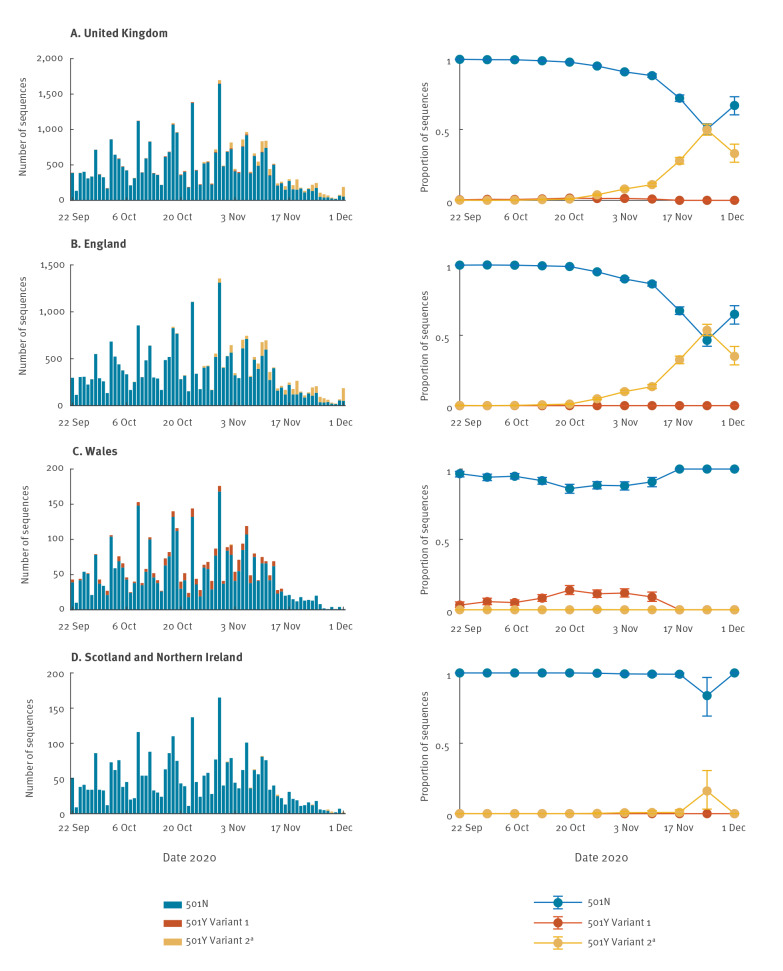
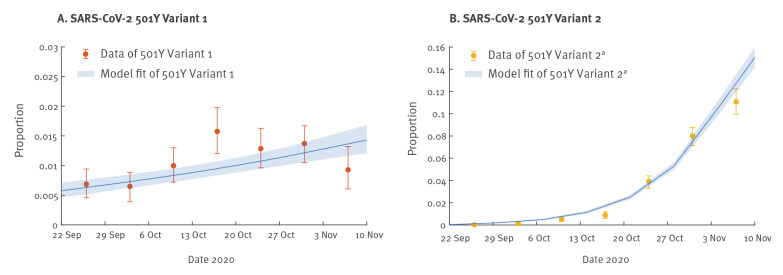
Two new SARS-CoV-2 lineages with the N501Y mutation in the receptor-binding domain of the spike protein spread rapidly in the United Kingdom. We estimated that the earlier 501Y lineage without amino acid deletion Δ69/Δ70, circulating mainly between early September and mid-November, was 10% (6–13%) more transmissible than the 501N lineage, and the 501Y lineage with amino acid deletion Δ69/Δ70, circulating since late September, was 75% (70–80%) more transmissible than the 501N lineage.
Overview
The claims and statistics of this paper haven’t been checked yet.
Run the check — free, no account needed. It reads the open-access text and checks the sources it cites.
Integrity signals
Registry
Cites
Statistics
Figures
Verification
Claims the paper makes
The claims and statistics of this paper haven’t been checked yet.
Run the check — free, no account needed. It reads the open-access text and checks the sources it cites.
Claims other papers make about this one
Each is checked against this paper’s own text: does it say what the citing paper says it does?
In the citing paper
“A B.1.1.7 isolate had signature changes in the spike gene14 including the 69–70 and 144–145 deletions, and N501Y, A570D, D614G, and P681H substitutions.”
From Resistance of SARS-CoV-2 variants to neutralization by monoclonal and serum-derived polyclonal antibodies (2021) · cites this paper as [14]
In the citing paper
“Epidemiological studies suggest that it was approximately 50% more transmissible than previously circulating UK variants 191,197,198 .”
From The biological and clinical significance of emerging SARS-CoV-2 variants (2021) · cites this paper as [197]
Self-check
Percentages, sums and reported differences re-computed from the paper’s own numbers.
The self-check needs the paper’s full text.
Citations
Cites
FastTree 2 – Approximately Maximum-Likelihood Trees for Large Alignments
Price, M. N., Dehal, P. S., & Arkin, A. P. (2010) · PLoS ONE · doi:10.1371/journal.pone.0009490 · Cited by 14,894
An interactive web-based dashboard to track COVID-19 in real time
Dong, E., Du, H., & Gardner, L. (2020) · The Lancet Infectious Diseases · doi:10.1016/s1473-3099(20)30120-1 · Cited by 10,048
A dynamic nomenclature proposal for SARS-CoV-2 lineages to assist genomic epidemiology
Rambaut, A., Holmes, E. C., O’Toole, Á., Hill, V., McCrone, J. T., Ruis, C., du Plessis, L., & Pybus, O. G. (2020) · Nature Microbiology · doi:10.1038/s41564-020-0770-5 · Cited by 2,543
Tegally, H., Wilkinson, E., Giovanetti, M., Iranzadeh, A., Fonseca, V., Giandhari, J., Doolabh, D., Pillay, S., San, E. J., Msomi, N., et al. (2020) · doi:10.1101/2020.12.21.20248640 · Cited by 2,535
Starr, T. N., Greaney, A. J., Hilton, S. K., Ellis, D., Crawford, K. H. D., Dingens, A. S., Navarro, M. J., Bowen, J. E., Tortorici, M. A., Walls, A. C., et al. (2020) · Cell · doi:10.1016/j.cell.2020.08.012 · Cited by 1,956
SARS-CoV-2 evolution during treatment of chronic infection
Kemp, S. A., Collier, D. A., Datir, R. P., Ferreira, I. A. T. M., Gayed, S., Jahun, A., Hosmillo, M., Rees-Spear, C., Mlcochova, P., Lumb, I. U., et al. (2021) · Nature · doi:10.1038/s41586-021-03291-y · Cited by 1,097
Evaluating the Effects of SARS-CoV-2 Spike Mutation D614G on Transmissibility and Pathogenicity
Volz, E., Hill, V., McCrone, J. T., Price, A., Jorgensen, D., O’Toole, Á., Southgate, J., Johnson, R., Jackson, B., Nascimento, F. F., et al. (2021) · Cell · doi:10.1016/j.cell.2020.11.020 · Cited by 1,006
Leung, K. S. M., Wu, J. T. K., Liu, D., & Leung, G. M. (2020) · The Lancet · doi:10.1016/s0140-6736(20)30746-7 · Cited by 840
Self-citationNeutralising antibodies in Spike mediated SARS-CoV-2 adaptationPreprint
Kemp, S. A., Collier, D. A., Datir, R. P., et al. (2020) · medRxiv · doi:10.1101/2020.12.05.20241927 · Cited by 180
Nasal ACE2 Levels and COVID-19 in Children
Patel, A. B., & Verma, A. (2020) · JAMA · doi:10.1001/jama.2020.8946 · Cited by 143
Research works printed but not linked: 1
- Kemp, 2020, Recurrent emergence and transmission of a SARS-CoV-2 Spike deletion ΔH69/ΔV70, bioRxiv
Cited by
Sorted by citations
Items 301–400 of 691
Tsuchiya, K., Yamamoto, N., Hosaka, Y., Wakita, M., Hiki, M., Matsushita, Y., Mori, H., Hori, S., Misawa, S., Miida, T., et al. (2022) · Frontiers in Microbiology · doi:10.3389/fmicb.2022.912061 · Cited by 15
Rondinone, V., Pace, L., Fasanella, A., Manzulli, V., Parisi, A., Capobianchi, M. R., Ostuni, A., Chironna, M., Caprioli, E., Labonia, M., et al. (2021) · Viruses · doi:10.3390/v13020276 · Cited by 15
Ma, C., & Gong, C. (2021) · Journal of Medical Virology · doi:10.1002/jmv.26953 · Cited by 14
Cellular senescence as a source of SARS‐CoV‐2 quasispecies
Karakasiliοtis, I., Lаgopati, N., Evangelou, K., & Gorgoulis, V. G. (2021) · FEBS Journal · doi:10.1111/febs.16230 · Cited by 15
SARS-CoV-2 Variants: Mutations and Effective Changes
Park, G., & Hwang, B. H. (2021) · Biotechnology and Bioprocess Engineering · doi:10.1007/s12257-021-0327-3 · Cited by 17
Advanced Molecular Tweezers with Lipid Anchors against SARS-CoV-2 and Other Respiratory Viruses
Weil, T., Kirupakaran, A., Le, M., Rebmann, P., Mieres‐Pérez, J., Issmail, L., Conzelmann, C., Müller, J. A., Rauch‐Wirth, L., Gilg, A., et al. (2022) · JACS Au · doi:10.1021/jacsau.2c00220 · Cited by 15
Emergence and competition of virus variants in respiratory viral infections
Bessonov, N., Neverova, D., Попов, В. А., & Volpert, V. A. (2023) · Frontiers in Immunology · doi:10.3389/fimmu.2022.945228 · Cited by 15
Challenges in Emerging Vaccines and Future Promising Candidates against SARS‐CoV‐2 Variants
Ghildiyal, T., Rai, N., Rawat, J. M., Singh, M., Anand, J., Pant, G., Kumar, G., & Shidiki, A. (2024) · Journal of Immunology Research · doi:10.1155/2024/9125398 · Cited by 16
“…in November 2020 in the United Kingdom, which rapidly spread globally, exhibited 50 % transmissibility and proved fatal to be fatal in the severely hospitalized cases [36], while another study had reported 70 % – 80 % transmis-sibility in the United Kingdom between October and November 2020 [37].”
BackgroundLi, Z., & Zhang, J. Z. H. (2021) · Physical Chemistry Chemical Physics · doi:10.1039/d1cp01075a · Cited by 15
Zamai, L., & Rocchi, M. (2021) · British Journal of Pharmacology · doi:10.1111/bph.15620 · Cited by 14
“…proportion of the Alpha variant has increased from 0.1% in early October to 49.7% in late November among sequences available at 19 December 2020 (Leung et al., 2021), suggesting a cause–effect relationship between expansion of the Alpha variant and a possible decrease of efficacy of ChAdOx1…”
BackgroundInfluentialMitze, T., & Rode, J. (2022) · Scientific Reports · doi:10.1038/s41598-021-04573-1 · Cited by 15
Functional analysis of polymorphisms at the S1/S2 site of SARS-CoV-2 spike protein
Arora, P., Sidarovich, A., Graichen, L., Hörnich, B. F., Hahn, A. S., Hoffmann, M., & Pöhlmann, S. (2022) · PLoS ONE · doi:10.1371/journal.pone.0265453 · Cited by 14
Mathematical Modeling of SARS-CoV-2 Omicron Wave under Vaccination Effects
González‐Parra, G., & Arenas, A. J. (2023) · Computation · doi:10.3390/computation11020036 · Cited by 16
“New SARS-CoV-2 strains also play a major role in the evolution of the COVID-19 pandemic and have generated different spatial-temporal waves in different countries [12,38–44].”
BackgroundPeptides and peptidomimetics as therapeutic agents for Covid‐19
Dahal, A., Sonju, J. J., Kousoulas, K. G., & Jois, S. D. S. (2021) · Peptide Science · doi:10.1002/pep2.24245 · Cited by 14
Targeting the Fusion Process of SARS-CoV-2 Infection by Small Molecule Inhibitors
Park, S. B., Irvin, P., Hu, Z., Khan, M., Hu, X., Zeng, Q., Chen, C., Xu, M., Leek, M., Zang, R., et al. (2022) · mBio · doi:10.1128/mbio.03238-21 · Cited by 15
Evolution of Sequence and Structure of SARS-CoV-2 Spike Protein: A Dynamic Perspective
Sinha, A., Sangeet, S., & Roy, S. (2023) · ACS Omega · doi:10.1021/acsomega.3c00944 · Cited by 14
Bedotto, M., Fournier, P., Houhamdi, L., Colson, P., & Raoult, D. (2021) · Journal of Clinical Virology · doi:10.1016/j.jcv.2021.104868 · Cited by 14
Maritz, L., Woudberg, N. J., Bennett, A. C., Soares, A. P., Lapierre, F., Devine, J., Kimberg, M., & Bouic, P. J. (2021) · Bioanalysis · doi:10.4155/bio-2021-0065 · Cited by 14
“As the disease landscape continues to rapidly evolve, including the rise of new mutant strains [11] and the massive rollout of vaccines, the need to monitor disease progression, humoral immunity and vaccine effectiveness is paramount.”
BackgroundChen, H., Kang, Y. M., Duan, M., & Hou, T. (2021) · The Journal of Physical Chemistry Letters · doi:10.1021/acs.jpclett.1c01548 · Cited by 14
Franceschi, V. B., Caldana, G. D., Perin, C., Horn, A., Peter, C., Cybis, G. B., Ferrareze, P. A. G., Rotta, L. N., Cadegiani, F., Zimerman, R. A., et al. (2021) · Pathogens · doi:10.3390/pathogens10080988 · Cited by 14
SARS-CoV-2 integral membrane proteins shape the serological responses of patients with COVID-19
Martin, S., Heslan, C., Jégou, G., Eriksson, L. A., Gallo, M. L., Thibault, V., Chevet, É., Godey, F., & Avril, T. (2021) · iScience · doi:10.1016/j.isci.2021.103185 · Cited by 21
Rosin Soap Exhibits Virucidal Activity
Bell, S. H., Fairley, D., Kettunen, H., Vuorenmaa, J., Orte, J., Bamford, C., & McGrath, J. W. (2021) · Microbiology Spectrum · doi:10.1128/spectrum.01091-21 · Cited by 14
Lekana-Douki, S. E., N’dilimabaka, N., Levasseur, A., Colson, P., Andeko, J. C., Minko, O. Z., Mve-Ella, O. B., Fournier, P., Devaux, C. A., Mvé-Ondo, B., et al. (2022) · Frontiers in Medicine · doi:10.3389/fmed.2022.877391 · Cited by 14
Chakraborty, C., Sharma, A. R., Bhattacharya, M., Agoramoorthy, G., & Lee, S. (2022) · Aging and Disease · doi:10.14336/ad.2021.1117 · Cited by 14
Feng, Y., Zhang, Y., Ding, X., Fan, Y., & Ge, J. (2023) · Building and Environment · doi:10.1016/j.buildenv.2023.110489 · Cited by 15
Transmission characteristics of SARS-CoV-2 variants of concern Rapid Scoping ReviewPreprint
Curran, J., Dol, J., Boulos, L., Somerville, M., McCulloch, H., Macdonald, M., LeBlanc, J. J., Barrett, L. L., Hatchette, T. F., Comeau, J. L., et al. (2021) · medRxiv · doi:10.1101/2021.04.23.21255515 · Cited by 16
Evaluation and Mechanistic Investigation of Human Milk Oligosaccharide against SARS-CoV-2.
Yu, W., Li, Y., Liu, D., Wang, Y., Li, J.-J., Du, Y., Gao, G., Li, Z.-M., Xu, Y.-Q., & Wei, J. (2023) · Journal of Agricultural and Food Chemistry · doi:10.1021/acs.jafc.3c04275 · Cited by 13
Charkiewicz, R., Nikliński, J., Biecek, P., Kiśluk, J., Pancewicz, S. A., Moniuszko-Malinowska, A. M., Flisiak, R., Kretowski, A. J., Dzięcioł, J. B., Moniuszko, M., et al. (2021) · Advances in Medical Sciences · doi:10.1016/j.advms.2021.03.005 · Cited by 13
Notable and Emerging Variants of SARS-CoV-2 Virus: A Quick Glance
Dholariya, S. J., Parchwani, D. N., Singh, R., Sonagra, A. D., Motiani, A., & Patel, D. D. (2021) · Indian Journal of Clinical Biochemistry · doi:10.1007/s12291-021-00991-0 · Cited by 13
Performance Evaluation of Lateral Flow Assays for Coronavirus Disease-19 Serology
Ochola, L. B., Ogongo, P., Mbugua, S. M., Gitaka, J., & Suliman, S. (2021) · Clinics in Laboratory Medicine · doi:10.1016/j.cll.2021.10.005 · Cited by 13
Ray, D., Quijano, R. N., & Andricioaei, I. (2022) · Chemical Science · doi:10.1039/d2sc00534d · Cited by 13
Mu, S., Song, S., Hao, Y., Luo, F., Wu, R., Wang, Y., Han, X., Li, T., Hu, C., Li, S., et al. (2022) · Frontiers in Medicine · doi:10.3389/fmed.2022.952697 · Cited by 12
Farès, W., Ghedira, K., Gdoura, M., Chouikha, A., Boubaker, S., Khedhiri, M., Ayouni, K., Lamari, A., Touzi, H., Hammemi, W., et al. (2021) · Microbiology Spectrum · doi:10.1128/spectrum.00639-21 · Cited by 13
Islam, S. R., Prusty, D., & Manna, S. K. (2021) · medRxiv · doi:10.1101/2021.01.28.21250666 · Cited by 13
Bhatia, S., Wardle, J., Nash, R. K., Nouvellet, P., & Cori, A. (2023) · Epidemics · doi:10.1016/j.epidem.2023.100692 · Cited by 15
COVID‐19: An Overview of SARS‐CoV‐2 Variants—The Current Vaccines and Drug Development
Bostanghadiri, N., Ziaeefar, P., Mofrad, M. G., Yousefzadeh, P., Hashemi, A., & Darban‐Sarokhalil, D. (2023) · BioMed Research International · doi:10.1155/2023/1879554 · Cited by 17
“According to preliminary evidence, the N501Y mutation (a change from asparagine (N) to tyrosine (Y) in amino-acid position 501) may increase transmissibility [59, 60].”
BackgroundZhan, Y., Ye, L., Ouyang, Q., Yin, J., Cui, J., Liu, K., Guo, C., Zhang, H., Zhai, J., Zheng, C., et al. (2023) · Journal of Medical Virology · doi:10.1002/jmv.29113 · Cited by 12
Sultana, N., Nagesha, S. N., Reddy, C. N. L., Ramesh, B. N., Shyamalamma, S., Shashidhara, K. S., Satish, K. M., Pradeep, C., & Vidyadhar, G. D. (2024) · Virology Journal · doi:10.1186/s12985-024-02365-3 · Cited by 12
“The alteration introduced in the Alpha variant increased its binding capacity by 7.9% compared to the wild type (WT) [25], potentially contributing to the higher reported cases of COVID-19 associated with the Alpha variant.”
BackgroundInfluentialVolkan, E. (2021) · Molecular Biotechnology · doi:10.1007/s12033-021-00353-4 · Cited by 12
Insights into the structure and dynamics of SARS-CoV-2 spike glycoprotein double mutant L452R-E484Q
Ahamad, S., Hema, K., Ahmad, S., Kumar, V., & Gupta, D. K. (2022) · 3 Biotech · doi:10.1007/s13205-022-03151-0 · Cited by 14
“variants have the N501Y mutation, and its presence has been associated with increased transmissibility (Leung et al. 2021; Zhao et al. 2021).”
BackgroundBurak, D. (2022) · Child Indicators Research · doi:10.1007/s12187-022-09971-z · Cited by 17
“The new information that COVID-19, which mutated in the process, could affect children and adults (Figueiredo et al., 2021; Leung et al., 2021) caused children to experience fear and anxiety for their health.”
BackgroundSARS-CoV-2 Variant Pathogenesis Following Primary Infection and Reinfection in Syrian Hamsters
Plunkard, J. C. M., Mulka, K. R., Zhou, R., Tarwater, P. M., Zhong, W., Lowman, M., Wong, A., Pekosz, A. S., & Villano, J. (2023) · mBio · doi:10.1128/mbio.00078-23 · Cited by 11
Saunders, K. O., Lee, E., Parks, R., Martinez, D. R., Li, D., Chen, H., Edwards, R. J., Gobeil, S., Barr, M., Mansouri, K., et al. (2021) · bioRxiv (Cold Spring Harbor Laboratory) · doi:10.1101/2021.02.17.431492 · Cited by 14
Structural Analysis of Spike Protein Mutations in the SARS-CoV-2 P.3 Variant
Bascos, N. A. D., Mirano-Bascos, D., & Saloma, C. P. (2021) · doi:10.1101/2021.03.06.434059 · Cited by 11
Kinikar, A. A., Vartak, S., Dawre, R. M., Valvi, C., Kamath, P., Sonkawade, N., Pawar, S., Bhagat, V., Kiruthiga, A., Nawale, K., et al. (2022) · Cureus · doi:10.7759/cureus.24629 · Cited by 11
“In combination with the H69/V70 deletion, it might be increasing the transmissibility further [9].”
BackgroundWithin‐host dynamics of SARS‐CoV‐2 infection: A systematic review and meta‐analysis
Du, Z., Wang, S., Bai, Y., Gao, C., Lau, E. H. Y., & Cowling, B. J. (2022) · Transboundary and Emerging Diseases · doi:10.1111/tbed.14673 · Cited by 11
Schwertner, A., McMenamy, J., & Naeger, D. M. (2021) · Journal of the American College of Radiology · doi:10.1016/j.jacr.2021.09.045 · Cited by 11
“2), which became the dominant strain in the latter half of 2021 [6].”
BackgroundAntigenicity of the Mu (B.1.621) and A.2.5 SARS-CoV-2 Spikes
Chatterjee, D., Tauzin, A., Laumaea, A., Gong, S. Y., Bo, Y., Guilbault, A., Goyette, G., Bourassa, C., Gendron‐Lepage, G., Medjahed, H., et al. (2022) · Viruses · doi:10.3390/v14010144 · Cited by 10
Yu, Y., Liu, Y., Zhao, S., & He, D. (2022) · Mathematical Biosciences & Engineering · doi:10.3934/mbe.2022485 · Cited by 11
Devaux, C. A., & Fantini, J. (2023) · Frontiers in Microbiology · doi:10.3389/fmicb.2023.1199561 · Cited by 10
“7) in October 2020 in England which rapidly became dominant (Leung et al., 2021; Hill et al., 2022; Liu et al., 2022).”
BackgroundInfluentialNonlinear Dynamics of the Introduction of a New SARS-CoV-2 Variant with Different Infectiousness
González‐Parra, G., & Arenas, A. J. (2021) · Mathematics · doi:10.3390/math9131564 · Cited by 11
Mi, T., Wang, T., Xu, H., Sun, P., Hou, X., Zhang, X., Ke, Q., Liu, J., Hu, S., Wu, J., et al. (2022) · Virology · doi:10.1016/j.virol.2022.03.001 · Cited by 11
Self-citationDang, S., Ren, L., & Wang, J. (2022) · Chinese Medical Journal · doi:10.1097/cm9.0000000000002158 · Cited by 10
“7 viral strain quickly became the dominant epidemic strain in Europe in the second half of 2020.([55,56])”
BackgroundA SARS-CoV-2: Companion Animal Transmission and Variants Classification
Pandit, R., & Matthews, Q. L. (2023) · Pathogens · doi:10.3390/pathogens12060775 · Cited by 11
Human organoid systems reveal in vitro correlates of fitness for SARS-CoV-2 B.1.1.7Preprint
Lamers, M. M., Breugem, T. I., Mykytyn, A. Z., Wang, Y., Gröen, N., Knoops, K., Schipper, D., van der Vaart, J., Koopman, C. D., Zhang, J., et al. (2021) · bioRxiv (Cold Spring Harbor Laboratory) · doi:10.1101/2021.05.03.441080 · Cited by 11
“Epidemiological data suggest that this variant is 35-100% more transmissible than the 49 ancestral lineage and associated with higher viral loads (3-6).”
BackgroundStatistical Challenges in Tracking the Evolution of SARS-CoV-2
Cappello, L., Kim, J., Liu, S., & Palacios, J. A. (2022) · Statistical Science · doi:10.1214/22-sts853 · Cited by 8
Zhao, S., Wang, K., Chong, K. C., Musa, S. S., He, M., Han, L., He, D., & Wang, M. H. (2022) · Journal of Theoretical Biology · doi:10.1016/j.jtbi.2022.111105 · Cited by 10
Chan, F. H. M., Ataíde, R., Richards, J. S., & Narh, C. A. (2022) · Viruses · doi:10.3390/v14071434 · Cited by 10
Lim, H. T., Kok, B. H., Lim, C. P., Majeed, A. B. A., Leow, C. Y., & Leow, C. Y. (2022) · Biomedical Engineering Advances · doi:10.1016/j.bea.2022.100054 · Cited by 10
Variable routes to genomic and host adaptation among coronaviruses
Montoya, V., McLaughlin, A., Mordecai, G. J., Miller, R. L., & Joy, J. B. (2021) · Journal of Evolutionary Biology · doi:10.1111/jeb.13771 · Cited by 12
“V2 (Ali et al., 2021; Leung et al., 2021) from South Africa, B.1.1.28 (Naveca et al., 2021) from Brazil, B.1.1.7 (also known as VOC202012/01) (Rambaut et al., 2020) from the United Kingdom, have all evolved the same mutations in the receptor binding domain of the spike gene in parallel in disparate…”
BackgroundInfluentialRapid, inexpensive methods for exploring SARS CoV-2 D614G mutation
Al-Jaf, S. M. A., Niranji, S. S., & Mahmood, Z. H. (2021) · Meta Gene · doi:10.1016/j.mgene.2021.100950 · Cited by 9
Januszewski, M., Ziuzia-Januszewska, L., Santor-Zaczyńska, M., Jakimiuk, A. A., Oleksik, T., Pokulniewicz, M., Pluta, K., Wierzba, W., & Jakimiuk, A. J. (2021) · Journal of Clinical Medicine · doi:10.3390/jcm10163724 · Cited by 10
Patel, R. S., & Agrawal, B. (2022) · Frontiers in Immunology · doi:10.3389/fimmu.2022.952229 · Cited by 10
Genomic landscape of alpha-variant of SARS-CoV-2 circulated in Pakistan
Fiaz, N., Zahoor, I., Saima, S., & Basheer, A. (2022) · PLoS ONE · doi:10.1371/journal.pone.0276171 · Cited by 11
“The mutations in RBD region are reported to affect the antibody recognition and a 5–10 times increase in the ACE2 binding affinity [1, 32, 33], which subsequently enhance viral transmissibility, contagiousness, and infectivity [34].”
BackgroundClinical drug therapies and biologicals currently used or in clinical trial to treat COVID-19
Malek, R. J., Bill, C. A., & Vines, C. M. (2021) · Biomedicine & Pharmacotherapy · doi:10.1016/j.biopha.2021.112276 · Cited by 10
Lemieux, J. E., & Li, J. Z. (2021) · The Journal of Infectious Diseases · doi:10.1093/infdis/jiab083 · Cited by 10
Quantification of the spread of SARS-CoV-2 variant B.1.1.7 in SwitzerlandPreprint
Chen, C., Nadeau, S., Topolsky, I., Manceau, M., Huisman, J. S., Jablonski, K. P., Fuhrmann, L., Dreifuss, D., Jahn, K., Beckmann, C., et al. (2021) · medRxiv · doi:10.1101/2021.03.05.21252520 · Cited by 10
Smyth, D. S., Trujillo, M., Cheung, K., Gao, A., Hoxie, I., Kannoly, S., Kubota, N., Markman, M., San, K. M., Sompanya, G., et al. (2021) · medRxiv · doi:10.1101/2021.03.21.21253978 · Cited by 10
Impact of temperature on the affinity of SARS-CoV-2 Spike for ACE2Preprint
Prévost, J., Richard, J., Gasser, R., Ding, S., Fage, C., Anand, S. P., Adam, D., Vergara, N. G., Tauzin, A., Benlarbi, M., et al. (2021) · bioRxiv (Cold Spring Harbor Laboratory) · doi:10.1101/2021.07.09.451812 · Cited by 10
Reiner, R. C., Collins, J. K., COVID-19 Forecasting Team, & Murray, C. J. L. (2023) · medRxiv · doi:10.1101/2023.03.07.23286952 · Cited by 10
Multi-strain COVID-19 dynamics with vaccination strategies: Mathematical modeling and case study
Ambalarajan, V., Rao, M. A., Dhandapani, P. B., Sivakumar, V., Leiva, V., & Castro, C. (2025) · Alexandria Engineering Journal · doi:10.1016/j.aej.2025.01.105 · Cited by 9
Giovacchini, N., Coppi, M., Aiezza, N., Baccani, I., Malentacchi, F., Pollini, S., Antonelli, A., & Rossolini, G. M. (2021) · International Journal of Infectious Diseases · doi:10.1016/j.ijid.2021.10.005 · Cited by 9
Wang, S., Zou, X., Li, Z., Fu, J., Fan, H., Yu, H., Dèng, F., Huang, H., Peng, J., Zhao, K., et al. (2021) · Frontiers in Public Health · doi:10.3389/fpubh.2021.791600 · Cited by 8
Fung, K.-M., Lai, S.-J., Lin, T.-L., & Tseng, T. (2022) · Frontiers in Molecular Biosciences · doi:10.3389/fmolb.2022.797132 · Cited by 9
“Contraction of the highly infectious and potentially lethal variant N501Y leads to a high chance of hospitalization (Leung et al., 2021), with this variant identified in the lineages of C.37, P.1, B1.”
BackgroundA Vaccine of SARS-CoV-2 S Protein RBD Induces Protective Immunity
Qu, Q., Hao, P., Xu, W., Li, L., Jiang, Y., Xu, Z., Chen, J., Gao, Z., Pang, Z., Jin, N., et al. (2022) · International Journal of Molecular Sciences · doi:10.3390/ijms232213716 · Cited by 9
Genome Structure, Life Cycle, and Taxonomy of Coronaviruses and the Evolution of SARS-CoV-2
Lamkiewicz, K., Gomez, L. R. E., Kühnert, D., & Marz, M. (2023) · Current topics in microbiology and immunology · doi:10.1007/978-3-031-15640-3_9 · Cited by 11
Kobayashi, Y., Arashiro, T., Otsuka, M., Tsuchihashi, Y., Takahashi, T., Arima, Y., Ko, Y., Otani, K., Yamauchi, M., Kamigaki, T., et al. (2022) · Western Pacific surveillance response journal · doi:10.5365/wpsar.2022.13.3.943 · Cited by 9
Ramaiah, A., Khubbar, M. K., Akinyemi, K., Bauer, A., Carranza, F., Weiner, J., Bhattacharyya, S., Payne, D. J., & Balakrishnan, N. (2023) · Viruses · doi:10.3390/v15091940 · Cited by 9
Mohebbi, F., Zelikovsky, A., Mangul, S., Chowell, G., & Skums, P. (2024) · Nature Communications · doi:10.1038/s41467-024-47304-6 · Cited by 11
HAPIN Investigators, Simkovich, S. M., Thompson, L. M., Clark, M. L., Balakrishnan, K., Bussalleu, A., Checkley, W., Clasen, T., Dávila‐Román, V. G., Díaz-Artiga, A., et al. (2021) · BMC Medical Research Methodology · doi:10.1186/s12874-021-01232-x · Cited by 10
Müller, K., Girl, P., Giebl, A., von Buttlar, H., Dobler, G., Bugert, J. J., Grützner, S., & Wölfel, R. (2021) · Journal of Clinical Virology · doi:10.1016/j.jcv.2021.104912 · Cited by 9
Host Response to SARS-CoV2 and Emerging Variants in Pre-Existing Liver and Gastrointestinal Diseases
Nayak, B., Lal, G., Kumar, S., Das, C. J., Saraya, A., & Shalimar, S. (2021) · Frontiers in Cellular and Infection Microbiology · doi:10.3389/fcimb.2021.753249 · Cited by 9
“This variant of B.1.1.7 lineage harbors receptorbinding domain (RBD) N501Y mutation and other mutations including 69/70 deletion, spike P681H, and ORF8 stop codon (Q27stop) mutation (Leung et al., 2021).”
BackgroundInfluentialVassallo, M., Clement, N., Lotte, L., Manni, S., Sindt, A., Bertrand, P. M., & Durant, J. (2022) · Frontiers in Medicine · doi:10.3389/fmed.2022.809154 · Cited by 10
Tablizo, F. A., Saloma, C. P., Castro, M. J. R., Kim, K. M., Yangzon, M. S. L., Lapid, C. M., Maralit, B. A., Ayes, M. E. C., Yap, J. M. C., Llames, J.-H. S., et al. (2021) · Microbiology Resource Announcements · doi:10.1128/mra.00219-21 · Cited by 8
Proton-Binding Motifs of Membrane-Bound Proteins: From Bacteriorhodopsin to Spike Protein S
Bondar, A. (2021) · Frontiers in Chemistry · doi:10.3389/fchem.2021.685761 · Cited by 8
“, 2020), which is mutated to Tyr in the United Kingdom virus variant (Leung et al., 2021).”
BackgroundLou, J., Zheng, H., Zhao, S., Cao, L., Wong, E. L., Chen, Z., Chan, R. W. Y., Chong, K. C., Zee, B. C.-Y., Chan, P. K. S., et al. (2022) · Journal of Infection and Public Health · doi:10.1016/j.jiph.2022.01.020 · Cited by 7
Chauhan, D., Chakravarty, N., Jeyachandran, A. V., Jayakarunakaran, A., Sinha, S., Mishra, R. K., Arumugaswami, V., & Ramaiah, A. (2022) · Viruses · doi:10.3390/v14112461 · Cited by 8
Guest, P. C., Kesharwani, P., Butler, A. E., & Sahebkar, A. (2023) · Advances in experimental medicine and biology · doi:10.1007/978-3-031-28012-2_1 · Cited by 8
The Role of Extracellular Vesicles in SARS-CoV-2-Induced Acute Kidney Injury: An Overview
Bernal, C., How-Volkman, C., Spencer, M., El‐Shamy, A., & Mohieldin, A. M. (2024) · Life · doi:10.3390/life14020163 · Cited by 8
“Successful transmission between those infected and their surrounding peers has been thought to be correlated with ACE2 receptor binding and docking [23,24].”
BackgroundRain, rain, go away, come again another day: do climate variations enhance the spread of COVID-19?
Menhat, M., Ariffin, E. H., Dong, W. S., Zakaria, J., Ismailluddin, A., Shaffril, H. A. M., Muhammad, M., Othman, A. R., Kanesan, T., Ramli, S. P., et al. (2024) · Globalization and Health · doi:10.1186/s12992-024-01044-w · Cited by 9
“As of November 2020, approximately six new coronavirus strains have been detected, each displaying different transmission behaviours [100].”
BackgroundLong-term serial passaging of SARS-CoV-2 reveals signatures of convergent evolution
Foster, C. S. P., Walker, G. J., Jean, T., Wong, M., Brassil, L., Isaacs, S. R., Lyu, Y., Turville, S. G., Kelleher, A. D., & Rawlinson, W. D. (2025) · Journal of Virology · doi:10.1128/jvi.00363-25 · Cited by 11
“…sequencing efforts between countries, with few data from low-and middle-income countries (1), (ii) when data sharing in online repositories is not consistent among jurisdictions, (iii) by multiple uncontrolled processes such as natural selection, genetic drift, host immunity, and…”
Colson, P., & Raoult, D. (2021) · Viruses · doi:10.3390/v13050775 · Cited by 8
Dimeglio, C., Milhes, M., Loubes, J., Ranger, N., Mansuy, J., Trémeaux, P., Jeanne, N., Latour, J., Nicot, F., Donnadieu, C., et al. (2021) · Viruses · doi:10.3390/v13050898 · Cited by 8
Jumping a Moving Train: SARS-CoV-2 Evolution in Real Time
Moustafa, A. M., & Planet, P. J. (2021) · Journal of the Pediatric Infectious Diseases Society · doi:10.1093/jpids/piab051 · Cited by 8
Genetic Diversity of SARS-CoV-2 among Travelers Arriving in Hong Kong
Gu, H., Chu, D. K. W., Chang, L. D. J., Cheuk, S. S. Y., Gurung, S., Krishnan, P., Ng, D. Y. M., Liu, G. Y. Z., Wan, C. K. C., Xie, R., et al. (2021) · Emerging infectious diseases · doi:10.3201/eid2710.211028 · Cited by 8
Association between human coronaviruses’ epidemic and environmental factors on a global scale
Yan, X., Wang, Z., Wang, X., Zhang, X., Wang, L., Lu, Z., & Jia, Z. (2021) · Environmental Science and Pollution Research · doi:10.1007/s11356-021-16500-y · Cited by 8
The Analyses of High Infectivity Mechanism of SARS-CoV-2 and Its Variants
Lu, Y., Zhao, T., Lu, M. C., Zhang, Y., Yao, X., Wu, G., Dai, F., Zhang, F., & Zhang, G. (2021) · COVID · doi:10.3390/covid1040054 · Cited by 8
Yamamoto, R., Asano, H., Umazume, T., Takaoka, M., Noshiro, K., Saito, Y., Nakagawa, K., Chiba, K., Nakakubo, S., Nasuhara, Y., et al. (2022) · Journal of obstetrics and gynaecology research · doi:10.1111/jog.15181 · Cited by 8
“It has been reported that almost all SARS-CoV2 infections in the fourth spike were caused by the N501Y mutant, which is more contagious than the previous serotype.(2) The effects of viral mutations also made the difference that CRP did not predict medical intervention in the third wave but could predict it in the four…”
BackgroundEpidemic model with strain-dependent transmission rate
Banerjee, M., Lipniacki, T., d’Onofrio, A., & Volpert, V. A. (2022) · Communications in Nonlinear Science and Numerical Simulation · doi:10.1016/j.cnsns.2022.106641 · Cited by 8
Mahmoudi, S., Pourakbari, B., Benvari, S., Sadeghi, R. H., Abdolsalehi, M. R., Shahbabaie, M. A., Jalali, F., Safari, F., Navaeian, A., & Mamishi, S. (2023) · BMC Pediatrics · doi:10.1186/s12887-023-04042-w · Cited by 8
Metadata
- Authors
- Leung, K., Shum, M. H., Leung, G. M., Lam, T. T., & Wu, J. T.
- Affiliations
- Laboratory of Data Discovery for Health (HK)
- Joint Institute of Virology (Shantou University and The University of Hong Kong), Guangdong-Hongkong Joint Laboratory of Emerging Infectious Diseases, Shantou University, Shantou, China
- Laboratory of Data Discovery for Health (D24H), Hong Kong Science Park, New Territories, Hong Kong SAR, China
- Corresponding author
- Wu, Joseph T
- Venue
- Eurosurveillance
- Published
- 2021-01-07
- Volume
- 26
- Issue
- 1
- ISSN
- 1025-496X (ISSN-L)
- 1560-7917
- PMC
- PMC7791602
- OpenAlex
- W3120079728
- Cited by
- 694
- References
- 12
- Citations by year
- 2026: 3 · 2025: 14 · 2024: 24 · 2023: 90 · 2022: 176 · 2021: 385
- FWCI
- 53.29
- Type
- journal article
- Language
- en
- Update notices
- addendum (2021-01-21)
- Open access
- diamond
- doi.org
- Locations
- Eurosurveillance (publishedVersion, cc-by)
- medRxiv (acceptedVersion, cc-by-nc-nd)
- Europe PMC (PubMed Central) (publishedVersion, cc-by)
- PubMed Central (publishedVersion, cc-by)
- PubMed (publishedVersion)
- Funders
- National Natural Science Foundation of China (31922087)
- Hong Kong Government
- Health and Medical Research Fund
- Young Scientists Fund
- Topics
- Health Sciences › Medicine › Infectious Diseases › SARS-CoV-2 and COVID-19 Research
- Physical Sciences › Mathematics › Modeling and Simulation › COVID-19 epidemiological studies
- Health Sciences › Medicine › Infectious Diseases › COVID-19 Clinical Research Studies
- Keywords
- SARS-CoV-2, N501Y mutation, spike protein receptor-binding domain, viral transmissibility, United Kingdom, COVID-19 pandemic
- MeSH terms
- COVID-19, SARS-CoV-2, Genetic Markers, United Kingdom, Humans, Mutation, Phylogeny, Genetic Variation, Genome, Viral, Spike Glycoprotein, Coronavirus
About these checks
Registry, retraction, Cites and statistics results are computed, not judged, with one exception: a printed reference that no index lists is read once by a model before it counts as a citation error. Claims are extracted by a model and kept only when their quote appears verbatim in the text; each cited source is then checked, with a model’s help, for whether it says what the claim relies on. Those verdicts can be wrong — read the claim’s quote and the cited source before relying on one.
Statistics and arithmetic are recomputed, not judged.
Confidence bands are shown only for fields calibrated on our annotated test set. None is calibrated yet, so no band is shown.
What counts as a claim ›How we measure confidence ›How we check this ›
Are you an author, or do you see a problem with this page? Request a review
