

The DOI matches its Crossref record; 14 of the 14 references it cites were found in a registry or an index.
Early transmissibility assessment of the N501Y mutant strains of SARS-CoV-2 in the United Kingdom, October to November 2020
Open accessPublished version of a preprint
Abstract
Two new SARS-CoV-2 lineages with the N501Y mutation in the receptor-binding domain of the spike protein spread rapidly in the United Kingdom. We estimated that the earlier 501Y lineage without amino acid deletion Δ69/Δ70, circulating mainly between early September and mid-November, was 10% (6–13%) more transmissible than the 501N lineage, and the 501Y lineage with amino acid deletion Δ69/Δ70, circulating since late September, was 75% (70–80%) more transmissible than the 501N lineage.
Overview
The claims and statistics of this paper haven’t been checked yet.
Run the check — free, no account needed. It reads the open-access text and checks the sources it cites.
Integrity signals
Registry
Cites
Statistics
Figures
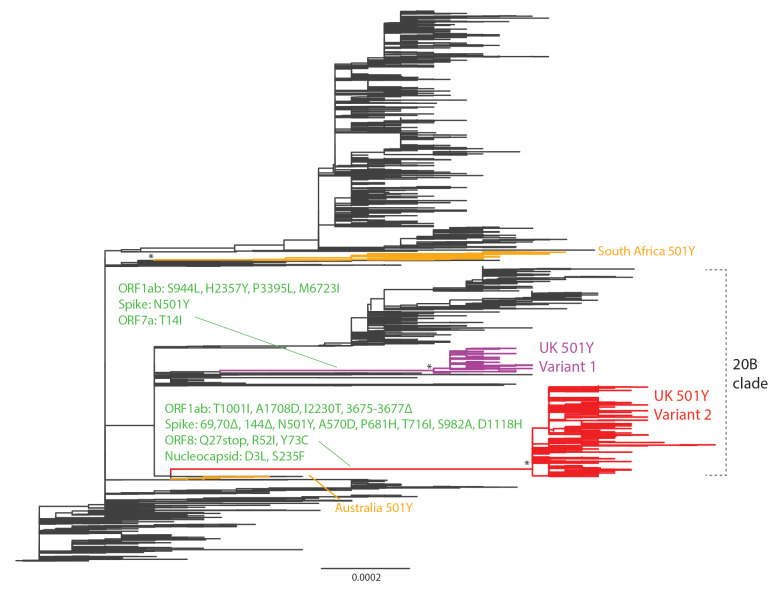
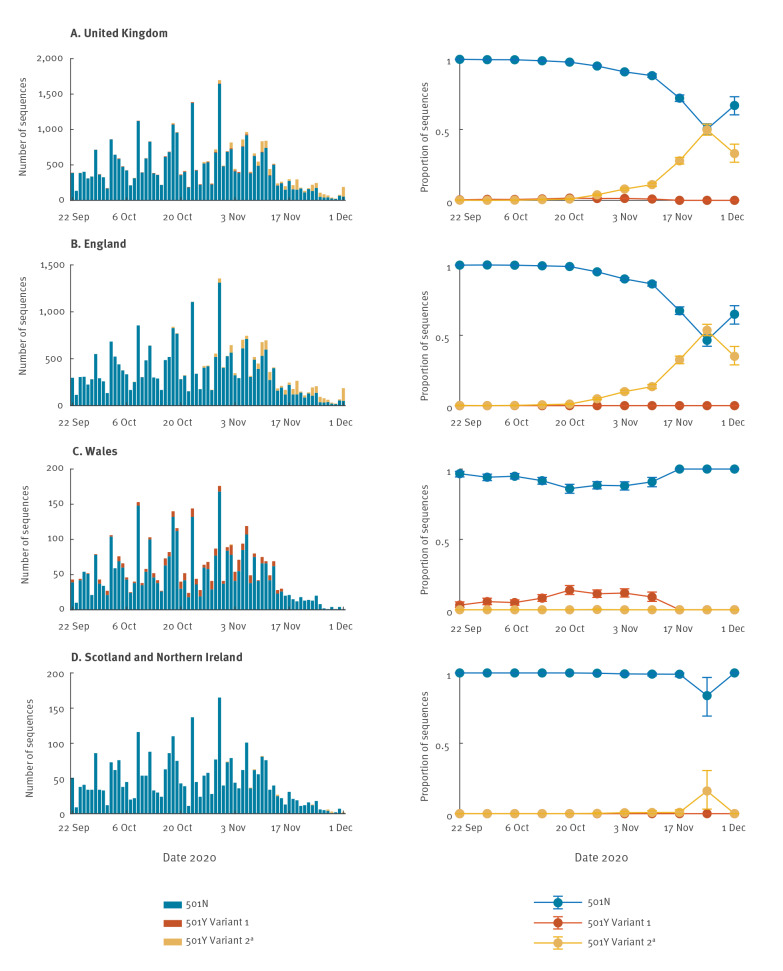
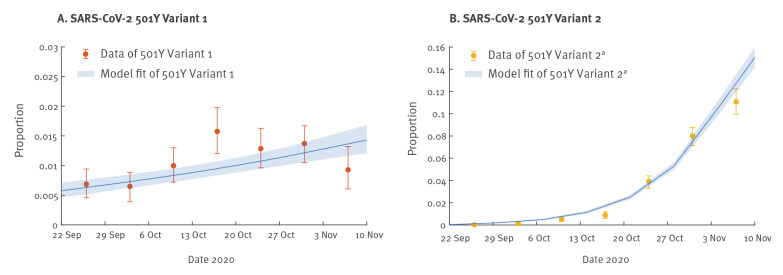
Verification
Claims the paper makes
The claims and statistics of this paper haven’t been checked yet.
Run the check — free, no account needed. It reads the open-access text and checks the sources it cites.
Claims other papers make about this one
Each is checked against this paper’s own text: does it say what the citing paper says it does?
In the citing paper
“A B.1.1.7 isolate had signature changes in the spike gene14 including the 69–70 and 144–145 deletions, and N501Y, A570D, D614G, and P681H substitutions.”
From Resistance of SARS-CoV-2 variants to neutralization by monoclonal and serum-derived polyclonal antibodies (2021) · cites this paper as [14]
In the citing paper
“Epidemiological studies suggest that it was approximately 50% more transmissible than previously circulating UK variants 191,197,198 .”
From The biological and clinical significance of emerging SARS-CoV-2 variants (2021) · cites this paper as [197]
Self-check
Percentages, sums and reported differences re-computed from the paper’s own numbers.
The self-check needs the paper’s full text.
Citations
Cites
FastTree 2 – Approximately Maximum-Likelihood Trees for Large Alignments
Price, M. N., Dehal, P. S., & Arkin, A. P. (2010) · PLoS ONE · doi:10.1371/journal.pone.0009490 · Cited by 14,894
An interactive web-based dashboard to track COVID-19 in real time
Dong, E., Du, H., & Gardner, L. (2020) · The Lancet Infectious Diseases · doi:10.1016/s1473-3099(20)30120-1 · Cited by 10,048
A dynamic nomenclature proposal for SARS-CoV-2 lineages to assist genomic epidemiology
Rambaut, A., Holmes, E. C., O’Toole, Á., Hill, V., McCrone, J. T., Ruis, C., du Plessis, L., & Pybus, O. G. (2020) · Nature Microbiology · doi:10.1038/s41564-020-0770-5 · Cited by 2,543
Tegally, H., Wilkinson, E., Giovanetti, M., Iranzadeh, A., Fonseca, V., Giandhari, J., Doolabh, D., Pillay, S., San, E. J., Msomi, N., et al. (2020) · doi:10.1101/2020.12.21.20248640 · Cited by 2,535
Starr, T. N., Greaney, A. J., Hilton, S. K., Ellis, D., Crawford, K. H. D., Dingens, A. S., Navarro, M. J., Bowen, J. E., Tortorici, M. A., Walls, A. C., et al. (2020) · Cell · doi:10.1016/j.cell.2020.08.012 · Cited by 1,956
SARS-CoV-2 evolution during treatment of chronic infection
Kemp, S. A., Collier, D. A., Datir, R. P., Ferreira, I. A. T. M., Gayed, S., Jahun, A., Hosmillo, M., Rees-Spear, C., Mlcochova, P., Lumb, I. U., et al. (2021) · Nature · doi:10.1038/s41586-021-03291-y · Cited by 1,097
Evaluating the Effects of SARS-CoV-2 Spike Mutation D614G on Transmissibility and Pathogenicity
Volz, E., Hill, V., McCrone, J. T., Price, A., Jorgensen, D., O’Toole, Á., Southgate, J., Johnson, R., Jackson, B., Nascimento, F. F., et al. (2021) · Cell · doi:10.1016/j.cell.2020.11.020 · Cited by 1,006
Leung, K. S. M., Wu, J. T. K., Liu, D., & Leung, G. M. (2020) · The Lancet · doi:10.1016/s0140-6736(20)30746-7 · Cited by 840
Self-citationNeutralising antibodies in Spike mediated SARS-CoV-2 adaptationPreprint
Kemp, S. A., Collier, D. A., Datir, R. P., et al. (2020) · medRxiv · doi:10.1101/2020.12.05.20241927 · Cited by 180
Nasal ACE2 Levels and COVID-19 in Children
Patel, A. B., & Verma, A. (2020) · JAMA · doi:10.1001/jama.2020.8946 · Cited by 143
Research works printed but not linked: 1
- Kemp, 2020, Recurrent emergence and transmission of a SARS-CoV-2 Spike deletion ΔH69/ΔV70, bioRxiv
Cited by
Sorted by citations
Items 401–500 of 691
Proliferation of SARS-CoV-2 B.1.1.7 Variant in Pakistan-A Short Surveillance Account
Umair, M., Salman, M., Rehman, Z., Badar, N., Ali, Q., Ahad, A., & Ikram, A. (2021) · Frontiers in Public Health · doi:10.3389/fpubh.2021.683378 · Cited by 7
“The N501Ymutation can lead to enhanced viral binding efficiency with hACE2 thus rendering the virus more transmissible (6, 7).”
BackgroundCross‐neutralization of RBD mutant strains of SARS‐CoV‐2 by convalescent patient derived antibodies
Lou, Y., Zhao, W., Wei, H., Chu, M. G., Chao, R., Yao, H., Su, J., Li, Y., Li, X., Cao, Y., et al. (2021) · Biotechnology Journal · doi:10.1002/biot.202100207 · Cited by 17
Zhao, S., Ran, J., & Han, L. (2021) · American Journal of Tropical Medicine and Hygiene · doi:10.4269/ajtmh.21-0412 · Cited by 7
“, South Africa,(9) Brazil,(10) the United States,(11) and the United Kingdom).(12,13) In Brazil, the 501Y variants, as well as other amino acid changes, were clustered into the B.”
BackgroundAssessing the impacts of vaccination and viral evolution in contact networks
Blanco‐Rodríguez, R., Tetteh, J. N. A., & Hernandez-Vargas, E. A. (2024) · Scientific Reports · doi:10.1038/s41598-024-66070-5 · Cited by 7
Yang, H., Zhang, L., Kang, X., Si, Y., Song, P., & Su, X. (2025) · Advanced Science · doi:10.1002/advs.202412680 · Cited by 7
Vaccination for COVID-19 control and considerations for Australia
MacIntyre, C. R. (2021) · Microbiology Australia · doi:10.1071/ma21009 · Cited by 7
Emergence of the First Strains of SARS-CoV-2 Lineage B.1.1.7 in Romania: Genomic Analysis
Lobiuc, A., Dimian, M., Căliman-Sturdza, O. A., Filip, R., & Covașă, M. (2021) · JMIRx Med · doi:10.2196/28049 · Cited by 7
Subramanian, S., Schnell, G., di Iulio, J., Gupta, A. K., Shapiro, A. E., Sarkis, E. H., Lopuski, A., Peppercorn, A., Aldinger, M., Hebner, C. M., et al. (2023) · Future Virology · doi:10.2217/fvl-2023-0146 · Cited by 7
“Key single amino acid substitutions of interest due to potential effects on immune evasion and viral fitness [31–36] that were evaluated in this study included K417N, L452R, S477N, E484K, S494P or N501Y.”
BackgroundZahoor, A. F., Munawar, S., Ahmad, S., Iram, F., Anjum, M. N., Khan, S. G., Javid, J., Nazeer, U., & Bhat, M. A. (2024) · International Journal of Molecular Sciences · doi:10.3390/ijms252312708 · Cited by 7
“Since its emergence, the coronavirus has evolved into several strains known as alpha, beta, eta, gamma, omicron, and delta [17–19].”
The challenge of screening SARS-CoV-2 variants of concern with RT-qPCR: One variant can hide another
Blairon, L., Cupaiolo, R., Piteüs, S., Beukinga, I., & Tré‐Hardy, M. (2021) · Journal of Virological Methods · doi:10.1016/j.jviromet.2021.114248 · Cited by 7
“Indeed, mutations found in some VOCs have been associated sometimes with either a decrease in antibody neutralization or greater contagiousness (Jangra et al., 2021; Leung et al., 2021; Wang et al., 2021).”
Zhou, Z., Zhang, X., Li, Q., Fu, L., Wang, M., Liu, S., Wu, J., Nie, J., Zhang, L., Zhao, C., et al. (2021) · Vaccine · doi:10.1016/j.vaccine.2021.08.103 · Cited by 7
Self-citationDurand, M., Thibault, P., Lévesque, S., Brault, A., Carignan, A., Valiquette, L., Martin, P., & Labbé, S. (2021) · Microbial Cell · doi:10.15698/mic2022.01.767 · Cited by 7
Li, T., Cui, Z., Jia, Y., Liang, Z., Nie, J., Zhang, L., Wang, M., Li, Q., Wu, J., Xu, N., et al. (2022) · Journal of Medical Virology · doi:10.1002/jmv.27596 · Cited by 8
“The amino acid change N501Y enhances the affinity of the RBD to ACE2 and is more transmissible than other mutant variants.(10,11) Another important amino acid mutant is E484K,”
BackgroundSelf-citationShrivastava, S., Mhaske, S. T., Modak, M. S., Virkar, R., Pisal, S. S., Mishra, A. C., & Arankalle, V. A. (2022) · Archives of Virology · doi:10.1007/s00705-021-05320-7 · Cited by 7
Li, T., Yu, L., Sun, J., Liu, J., & He, X. D. (2022) · The Journal of Physical Chemistry B · doi:10.1021/acs.jpcb.2c02365 · Cited by 6
Human endeavor for anti-SARS-CoV-2 pharmacotherapy: A major strategy to fight the pandemic
Wang, R., Stephen, P., Tao, Y., Zhang, W., & Lin, S. (2021) · Biomedicine & Pharmacotherapy · doi:10.1016/j.biopha.2021.111232 · Cited by 7
Xu, L., Zhang, H., Xu, H., Yang, H., Zhang, L., Zhang, W., Gu, F., & Lan, X. (2021) · Nonlinear Dynamics · doi:10.1007/s11071-021-06705-8 · Cited by 7
Yan, D. D., Hyuk, O. H. S., & Yan, B. (2021) · Animal Diseases · doi:10.1186/s44149-021-00017-5 · Cited by 8
Ruiz-Rodríguez, P., Francés-Gómez, C., Chiner‐Oms, Á., López, M. G., Jiménez-Serrano, S., Cancino‐Muñoz, I., Ruiz-Hueso, P., Torres‐Puente, M., Bracho, M. A., D’Auria, G., et al. (2021) · mBio · doi:10.1128/mbio.02315-21 · Cited by 8
Zhao, S., Musa, S. S., Chong, K. C., Ran, J., Javanbakht, M., Han, L., Wang, K., Hussaini, N., Habib, A. G., Wang, M. H., et al. (2021) · Journal of Global Health · doi:10.7189/jogh.11.05028 · Cited by 7
The SARS-CoV-2 Variants and their Impacts
Shukri, A. M. A., Wang, S. M., Chia, S. L., & Nawi, S. F. A. M. (2022) · Journal of Pure and Applied Microbiology · doi:10.22207/jpam.16.3.45 · Cited by 8
Efficacy of the combination of monoclonal antibodies against the SARS-CoV-2 Beta and Delta variants
Boonkrai, C., Cotrone, T. S., Chaisuriyong, W., Tantawichien, T., Thisyakorn, U., Fernandez, S., Hunsawong, T., Reed, M., Wongtangprasert, T., Audomsun, T., et al. (2023) · PLoS ONE · doi:10.1371/journal.pone.0284173 · Cited by 7
SARS-CoV2 Envelop Proteins Reshape the Serological Responses of COVID-19 PatientsPreprint
Martin, S., Heslan, C., Jégou, G., Eriksson, L. A., Gallo, M. L., Thibault, V., Chevet, É., Godey, F., & Avril, T. (2021) · bioRxiv (Cold Spring Harbor Laboratory) · doi:10.1101/2021.02.15.431237 · Cited by 7
“as observed for variants from Brazil, United-Kingdom and South-Africa) with increased infectivity (28-31).”
BackgroundSchepens, B., van Schie, L., Nerinckx, W., Roose, K., Breedam, W. V., Fijałkowska, D., Devos, S., Weyts, W., Cae, S. D., Vanmarcke, S., et al. (2021) · bioRxiv (Cold Spring Harbor Laboratory) · doi:10.1101/2021.03.08.433449 · Cited by 7
Yu, B., Xu, C., Huang, S., Ni, J., Zhou, J., Zhang, Y., Wu, M., Zhang, J., & Fang, L. (2023) · Frontiers in Microbiology · doi:10.3389/fmicb.2023.1181097 · Cited by 6
Banada, P. P., Green, R., Streck, D. L., Kurvathi, R., Reiss, R., Banik, S., Daivaa, N., Montalvan, I., Jones, R., Marras, S. A. E., et al. (2023) · Scientific Reports · doi:10.1038/s41598-023-48647-8 · Cited by 7
“…have developed additional variant defining mutations and cannot be identified by our original assay; however, each of these VOCs along with Omicron subvariants can be specifically detected by identifying a relatively small number of mutations in the SARS-CoV-2 spike protein 13, 21, 31, 32 .”
Ali, N., Khan, R., Alasmari, A. F., & Kumar, V. (2022) · Process Biochemistry · doi:10.1016/j.procbio.2022.02.012 · Cited by 6
Krylova, O., Kazmi, O., Wang, H., Lim, K., Logar‐Henderson, C., & Gapanenko, K. (2022) · International Journal for Population Data Science · doi:10.23889/ijpds.v5i4.1710 · Cited by 6
Novel Lateral Flow-Based Assay for Simple and Visual Detection of SARS-CoV-2 Mutations
Gomez-Martinez, J., Henry, S., Tuaillon, É., de Perre, P. V., Fournier‐Wirth, C., Foulongne, V., & Brès, J.-C. (2022) · Frontiers in Cellular and Infection Microbiology · doi:10.3389/fcimb.2022.902914 · Cited by 6
Clinical Added Value of SARS-CoV-2 Antigen Detection in Blood Samples
Oueslati, S., Bouokazi, M. M., Ramdhani, I., Escaut, L., Pham, T. O., Ouzani, S., Anguel, N., Bulifon, S., Vauloup‐Fellous, C., Coilly, A., et al. (2022) · Diagnostics · doi:10.3390/diagnostics12102427 · Cited by 6
“7 identified in the United Kingdom) [24], the variant 501Y.”
BackgroundInfluentialCapturing SARS-CoV-2 from patient samples with low viral abundance: a comparative analysis
da Fonseca, J. P., Kornobis, É., Turc, É., Enouf, V., Lemée, L., Cokelaer, T., & Monot, M. (2022) · Scientific Reports · doi:10.1038/s41598-022-23422-3 · Cited by 6
A Protein Co-Conservation Network Model Characterizes Mutation Effects on SARS-CoV-2 Spike Protein
Zeng, L., Lu, Y., Yan, W., & Yang, Y. (2023) · International Journal of Molecular Sciences · doi:10.3390/ijms24043255 · Cited by 6
Temporal dynamics and fatality of SARS‐CoV‐2 variants in Bangladesh
Rahman, M. S., Hoque, M. N., Chowdhury, S. R., Siddique, M. M., Islam, O. K., Galib, S. M., Islam, M. T., & Hossain, M. A. (2023) · Health Science Reports · doi:10.1002/hsr2.1209 · Cited by 6
“The Alpha variant was first reported in late December 2020 in the United Kingdom.19 SARS‐CoV‐2 Beta variant, first detected in December 2020 in South Africa,20 is the most dreadful and prevalent lineage in 115 countries.13 The Gamma variant of SARS‐CoV‐2 was reported in early January 2021 in Brazil21 whereas the Delta…”
BackgroundInfluentialBasheer, A., Zahoor, I., & Yaqub, T. (2023) · PLoS ONE · doi:10.1371/journal.pone.0281159 · Cited by 6
“However, the N501Y is present in alpha, beta, gamma, and all variant of Omicron SARS-CoV-2 and reported to mediate the viral entry by enhancing the binding ability of spike protein with ACE-2 receptors [27].”
BackgroundFerdous, N., Reza, M. N., Islam, M. S., Emon, M. T. H., Mohiuddin, A. K. M., & Hossain, M. U. (2021) · RSC Advances · doi:10.1039/d1ra04107j · Cited by 6
Impouma, B., Mboussou, F., Wolfe, C. M., Farham, B. L., Williams, G. S., Ogundiran, O., Ngom, R., Mouhembe, M. W. N., Flahault, A., Codeço, C. T., et al. (2021) · Epidemiology and Infection · doi:10.1017/s0950268821001126 · Cited by 6
“All individuals should reduce their social contacts, and some activities may need to close while allowing for essential services, and in particular schools, to remain open Level 4 Situation of uncontrolled epidemic with limited or no additional response capacity requiring strong measures for control to avoid large exc…”
BackgroundInfluentialOshiro, S., Tabe, Y., Funatogawa, K., Saito, K., Tada, T., Hishinuma, T., Mizutani, N., Akiwa, M., Sekiguchi, J., Miida, T., et al. (2021) · Journal of Virological Methods · doi:10.1016/j.jviromet.2021.114183 · Cited by 6
Shirato, K., Matsuyama, S., & Takeda, M. (2021) · Japanese Journal of Infectious Diseases · doi:10.7883/yoken.jjid.2021.213 · Cited by 6
“characterized by N to Y amino acid substitution at position 501 in the S protein, which may promote increased transmission (8).”
BackgroundRe-positive PCR of SARS-CoV-2 in health care persons during COVID-19 pandemic
Alebouyeh, M., Aavani, P., Abdulrahman, N., Haleem, A. A., Karimi, A., Armin, S., Fallah, F., Amirali, A., Sadr, S., Ghandchi, G., et al. (2022) · Cellular and Molecular Biology · doi:10.14715/cmb/2021.67.5.19 · Cited by 6
“transmissible, raised higher concerns about reinfection (10).”
BackgroundRecombinant human interferon-α1b inhibits SARS-CoV-2 better than interferon-α2b in vitro
Shi, D., Chen, K., Lu, X., Cheng, L., Weng, T.-H., Liu, F., Wu, N., Li, L., & Yao, H. (2022) · Virologica Sinica · doi:10.1016/j.virs.2022.01.031 · Cited by 6
Waning COVID-19 vaccine effectiveness in Japan
Kurita, J., Sugawara, T., & Ohkusa, Y. (2022) · Drug Discoveries & Therapeutics · doi:10.5582/ddt.2022.01000 · Cited by 6
Age-Dependent Risks of COVID-19 Putatively Caused by Variant Alpha in Japan
Kayano, T., Hayashi, K., Kobayashi, T., & Nishiura, H. (2022) · Frontiers in Public Health · doi:10.3389/fpubh.2022.837970 · Cited by 6
SARS-CoV-2 Mutations, Diagnosis and Their Concern
Artik, Y., Cesur, N. P., & Laçin, N. T. (2022) · Archives of Molecular Biology and Genetics · doi:10.33696/genetics.1.008 · Cited by 6
Predicting the Trajectory of Replacements of SARS-CoV-2 Variants Using Relative Reproduction Numbers
Piantham, C., & Ito, K. (2022) · Viruses · doi:10.3390/v14112556 · Cited by 6
“75 times higher than that of previously circulating variants in England using a renewalequation-based model [4].”
BackgroundRapid detection of SARS-CoV-2 variants by molecular-clamping technology-based RT-qPCR
Shen, S., Fu, A. Y., Jamba, M., Li, J. Z., Cui, Z., Pastor, L., Cataldi, D., Sun, Q., Pathakamuri, J. A., Kuebler, D., et al. (2024) · Microbiology Spectrum · doi:10.1128/spectrum.04248-23 · Cited by 6
Yu, J., Azzam, E. I., Jadhav, A. B., & Wang, Y. (2021) · Cells · doi:10.3390/cells10092212 · Cited by 6
Introductions and evolutions of SARS-CoV-2 strains in JapanPreprint
Tokumasu, R., Weeraratne, D., Snowdon, J. L., Parida, L., Kudo, M., & Koyama, T. (2021) · medRxiv · doi:10.1101/2021.02.26.21252555 · Cited by 6
“7 carrying H69_V70del in addition to N501Y possess a higher infectivity rate of 75%(10).”
BackgroundPreliminary report on SARS-CoV-2 Spike mutation T478KPreprint
Giacomo, S. D., Mercatelli, D., Rakhimov, A., & Giorgi, F. M. (2021) · bioRxiv (Cold Spring Harbor Laboratory) · doi:10.1101/2021.03.28.437369 · Cited by 6
“in the host, and it is a molecular mechanism directly connected with host specificity, early transmissibility [7] and higher viral infectivity [8].”
BackgroundThe first familial cluster of the B.1.1.7 variant of SARS-CoV-2 in the northeast of Italy
Menzo, S. L., Marinello, S., Biasin, M., Terregino, C., Franchin, E., Crisanti, A., & Cattelan, A. M. (2021) · Infection · doi:10.1007/s15010-021-01609-6 · Cited by 5
AutoVEM2: A flexible automated tool to analyze candidate key mutations and epidemic trends for virus
Xi, B., Chen, Z., Li, S., Liu, W. Y., Jiang, D., Bai, Y., Qu, Y., Lon, J. R., Huang, L., & Du, H. (2021) · Computational and Structural Biotechnology Journal · doi:10.1016/j.csbj.2021.09.002 · Cited by 5
Viral vector-based vaccines against SARS-CoV-2
Lundstrom, K. H. (2021) · Exploration of Immunology · doi:10.37349/ei.2021.00020 · Cited by 5
van Beek, J., Teesing, G. R., Munnink, B. B. O., Meima, A., Vriend, H. J., Elzakkers, J., de Graaf, M., Langeveld, J., Medema, G. J., Molenkamp, R., et al. (2022) · PLoS ONE · doi:10.1371/journal.pone.0276696 · Cited by 5
Zeng, Z., Wu, T. T., Lin, Z., Luo, L., Lin, Z., Guan, W., Liang, J., Yu, M., Guan, P., He, W., et al. (2022) · Scientific Reports · doi:10.1038/s41598-022-21674-7 · Cited by 5
Rapid and Technically Simple Detection of SARS-CoV-2 Variants Using CRISPR Cas12 and Cas13
Lamothe, G., Carbonneau, J., Beauparlant, C. J., Vincent, T., Quessy, P., Guedon, A., Kobinger, G., Lemay, J.-F., Boivin, G., Droit, A., et al. (2023) · The CRISPR Journal · doi:10.1089/crispr.2023.0007 · Cited by 5
“…to affect the stability of the spike protein, 4,5 N501Y is believed to increase immune evasion and increase the affinity of the receptor binding domain with the angiotensin-converting–enzyme 2 receptor, 6,7 and mutations at E484 that result in greatly reduced recognition by convalescent sera.”
Homen, R., Carbó, A. V., Álvarez, A. G., Cabello, N., Ortega, I., Orviz, E., Foncubierta, C., Martínez, M., & Estrada, V. (2023) · Frontiers in Immunology · doi:10.3389/fimmu.2023.1267991 · Cited by 5
“…variant, changes in the genetic code were identi fi ed, which lead to structural changes (9, 10) and are associated with increased cellular infectivity (11, 12), decreased neutralizing capacity of vaccine-induced antibodies (13 – 15), and failure in the detection of some diagnostic tests (16, 17).”
BackgroundRomano-Bertrand, S., Carré, Y., Aho, S., & Lepelletier, D. (2021) · Infectious Diseases Now · doi:10.1016/j.idnow.2021.05.005 · Cited by 6
“Since the first report of SARS-CoV-2, its genome as evolved and displayed mutations leading to the emergence f numerous variants, some of them “of concern” (VOC) due to ignificant mutations conferring selective advantage to their transission, virulence and/or immune escape [2].”
A multi-layer model for the early detection of COVID-19
Shmueli, E., Mansuri, R., Porcilan, M., Amir, T., Yosha, L., Yechezkel, M., Patalon, T., Handelman-Gotlib, S., Gazit, S., & Yamin, D. (2021) · Journal of The Royal Society Interface · doi:10.1098/rsif.2021.0284 · Cited by 5
“These include the emergence of highly transmissible mutant strains [2,3], the non-optimal efficacy of the developed vaccines and the current disapproval of their administration to certain populations [4], the limited supply and distribution capacities of the vaccines [5], as well as the potential risk of vaccine-wanin…”
BackgroundJi, C., Han, N., Cheng, Y., Shang, J., Weng, S., Yang, R., Zhou, H., & Wu, A. (2022) · Viruses · doi:10.3390/v14051087 · Cited by 5
Changing Dynamics of SARS-CoV-2: A Global Challenge
Chugh, A., Khurana, N., Verma, K., Sehgal, I., Rolta, R., Vats, P., Phartyal, R., Salaria, D., Kaushik, N., Choi, E. H., et al. (2022) · Applied Sciences · doi:10.3390/app12115546 · Cited by 5
Detection of SARS-CoV-2 variants in India from UK returnees
Potdar, V. A., Vipat, V., Jadhav, S. T., Saha, U. B., Jadhav, S. Y., Bhardwaj, S. D., Choudhary, M. L., Cherian, S., & Abraham, P. (2021) · Infection · doi:10.1007/s15010-021-01617-6 · Cited by 5
Zhuang, L., Gong, J., Ma, M., Ji, Y., Tian, P., Mei, X., Gu, N., & Zhang, Y. (2021) · The Analyst · doi:10.1039/d1an00858g · Cited by 5
A Genomic Snapshot of the SARS-CoV-2 Pandemic in the Balearic Islands
López-Causapé, C., Fraile-Ribot, P. A., Jiménez-Serrano, S., Cabot, G., del Barrio-Tofiño, E., Prado, M. C., Linares, J. M., López, A., Hurtado, A., Riera, E., et al. (2022) · Frontiers in Microbiology · doi:10.3389/fmicb.2021.803827 · Cited by 5
Saras, M. A. M., Patro, L. P. P., Uttamrao, P. P., & Rathinavelan, T. (2022) · Zoonoses and Public Health · doi:10.1111/zph.12971 · Cited by 6
Urgent need to strengthen school health in Asia and the Pacific islands
Kobayashi, J., Takeuchi, R., Toyama, Y., Gregorio, E. R., Kadriyan, H., Estrada, C. A. M., Motomura, M., Wake, N., Yamada, K., Ishikawa, R., et al. (2021) · Pediatrics International · doi:10.1111/ped.14921 · Cited by 5
Emergence of SARS-CoV-2 variants of concern in the pediatric population of the United StatesPreprint
Bard, J. D., Bootwalla, M., Leber, A. L., Planet, P. J., Moustafa, A. M., Harris, R. M., Chen, P. Y., Shen, L., Ostrow, D. G., Maglinte, D. T., et al. (2021) · medRxiv · doi:10.1101/2021.05.22.21257660 · Cited by 5
Sun, Y., Dong, W., Tian, L., Rao, Y., Qin, C., Jaramillo, S. A., Settles, E. W., Ma, S., Zhang, J., Kang, Y., et al. (2021) · bioRxiv (Cold Spring Harbor Laboratory) · doi:10.1101/2021.06.07.447286 · Cited by 5
Hassan, S., West, K. A., Conry-Cantilena, K., & Giorgi, V. D. (2021) · Transfusion · doi:10.1111/trf.16751 · Cited by 4
“1 in Brazil posed new challenges but were downgraded from WHO category “variants of concern” to the category “variants being monitored,” on September 21, 2021.(58) A study compared the viral neutralization of patients infected during the first wave of the pandemic in South Africa with the viral neutralization of patie…”
BackgroundFei, Z., Chen, Z., Du, X., Cao, H., & Li, C. (2022) · Transfusion Medicine and Hemotherapy · doi:10.1159/000524125 · Cited by 4
SARS-CoV-2 molecular epidemiology in Slovenia, January to September 2021
Janežič, S., Mahnič, A., Kuhar, U., Kovač, J., Bizjan, B. J., Koritnik, T., Tesovnik, T., Šket, R., Krapež, U., Slavec, B., et al. (2023) · Eurosurveillance · doi:10.2807/1560-7917.es.2023.28.8.2200451 · Cited by 4
“The observed higher infectivity of the Alpha and Delta variants, as evident from their spread described in the present study and numerous reports worldwide [13-15], is supported by their higher replication rates in Vero E6 cells observed in this study.”
Päll, T., Abroi, A., Avi, R., Niglas, H., Shablinskaja, A., Pauskar, M., Jõgeda, E., Soeorg, H., Kallas, E., Lahesaare, A., et al. (2024) · PLoS ONE · doi:10.1371/journal.pone.0303176 · Cited by 4
“The next waves were driven by the emergence of Alpha, Delta, and Omicron variants of concern (VOC) [1–5], with three peaks of hospitalisation of between fifty and sixty COVID-19 patients per 100,000 people per day in March 2021, November 2021, and February 2022 respectively…”
BackgroundAnalysis of the immune response in COVID-19
Hromić‐Jahjefendić, A., & Aljabali, A. A. A. (2025) · Progress in molecular biology and translational science · doi:10.1016/bs.pmbts.2024.10.004 · Cited by 4
Influence of age on the spread of SARS-CoV-2 variant B.1.1.7
Dimeglio, C., Nicot, F., Miédougé, M., Chappert, J.-L., Donnadieu, C., & Izopet, J. (2021) · Journal of Clinical Virology · doi:10.1016/j.jcv.2021.104872 · Cited by 4
Immunological Biomarkers in Blood to Monitor the Course and Therapeutic Outcomes of COVID-19
Wieland, E. (2021) · Therapeutic Drug Monitoring · doi:10.1097/ftd.0000000000000945 · Cited by 4
Tuli, H. S., Sak, K., Aggarwal, P., Iqubal, A., Upadhaya, S. K., Kaur, J., Kaur, G., & Aggarwal, D. (2021) · Frontiers in Cellular and Infection Microbiology · doi:10.3389/fcimb.2021.763687 · Cited by 4
“Various recombinations were detected across the genome majorly in ORF1a and in the region marking the Nterminus of the S protein (Li et al., 2003; Li, 2016; Hoffmann et al., 2020; Wan et al., 2020).”
BackgroundPeng, M., Dou, X., Zhang, X., Yan, M., Xiong, D., Jiang, R., Ou, T., Tang, A., Yu, X., Zhu, F., et al. (2022) · Frontiers in Immunology · doi:10.3389/fimmu.2022.938378 · Cited by 4
Dentists' Stress During the COVID-19 Pandemic: A Repeated Cross-Sectional Study
Praditpapha, A., Mattheos, N., Pisarnturakit, P. P., Pimkhaokham, A., & Subbalekha, K. (2023) · International Dental Journal · doi:10.1016/j.identj.2023.09.006 · Cited by 4
Report of SARS-CoV-2 B1.1.7 Lineage in Morocco
Ouadghiri, M., Aanniz, T., Essabbar, A., Seffar, M., Kabbaj, H., Amin, G. E., Zouaki, A., Amzazi, S., Belyamani, L., & Ibrahimi, A. (2021) · Microbiology Resource Announcements · doi:10.1128/mra.00240-21 · Cited by 4
Exploring SARS-CoV-2 Spikes Glycoproteins for Designing Potential Antiviral Targets
Kamel, N. A., Wakeel, L. M. E., & Aboshanab, K. M. (2021) · Viral Immunology · doi:10.1089/vim.2021.0023 · Cited by 4
“Unfortunately, such a mutation had tendency to increase overall interaction between ACE2 and RBD (26,53).”
Liu, J., Yang, X., Zhu, Y., Zhu, Y., Liu, J., Zeng, X., & Li, H. (2021) · Infectious Diseases of Poverty · doi:10.1186/s40249-021-00910-8 · Cited by 4
Caracterización genómica y variantes del virus SARS-CoV-2
Wong‐Chew, R. M., Ramírez, J. B. D., Velázquez, X. V., Maldonado, L. A. C., Osorno, Z. R. G., Medina, L. Á. P., Velázquez, I. O. R., Vilchis, H. J., Bautista, D. G., Martínez, E. E. M., et al. (2021) · Acta Médica Grupo Ángeles · doi:10.35366/101743 · Cited by 7
Plummer, J., Contreras, D. A., Zhang, W., Binek, A., Zhang, R., Dezem, F. S., Chen, S. S., Davis, B. D., Martínez, J., Stotland, A. B., et al. (2022) · Clinical Infectious Diseases · doi:10.1093/cid/ciac295 · Cited by 3
Trujillo, C. H. S. (2021) · Infectio · doi:10.22354/in.v25i4.973 · Cited by 4
Lon, J. R., Xi, B., Zhong, B., Zheng, Y., Chen, Z., Qiu, R., Zhang, S., Guo, P., & Du, H. (2021) · bioRxiv (Cold Spring Harbor Laboratory) · doi:10.1101/2021.02.03.429495 · Cited by 4
Bhatia, S., Wardle, J., Nash, R. K., Nouvellet, P., & Cori, A. (2021) · medRxiv · doi:10.1101/2021.11.26.21266899 · Cited by 4
Ramasamy, R. (2025) · Pathogens · doi:10.3390/pathogens14121197 · Cited by 3
“More severe than ancestral strain [60–62].”
Thommana, A., Shakya, M., Gandhi, J., Fung, C. K., Chain, P., Berry, I. M., & Conte, M. A. (2022) · Viruses · doi:10.3390/v14102128 · Cited by 3
Rationale for combined therapies in severe-to-critical COVID-19 patients
Gonzaga, A., Andreu, E., Blasco, L., Meseguer, R., Al‐Akioui‐Sanz, K., Soria-Juan, B., Sanjuan-Gimenez, J. C., Ferreras, C., Tejedo, J. R., López‐Lluch, G., et al. (2023) · Frontiers in Immunology · doi:10.3389/fimmu.2023.1232472 · Cited by 3
“1), discovered in Manaus, Brazil; and Delta, first discovered in India and became dominant in July 2021 (31, 32).”
BackgroundDevaux, C. A., & Fantini, J. (2023) · Frontiers in Immunology · doi:10.3389/fimmu.2023.1252367 · Cited by 3
SARS-CoV-2 HaploGraph: visualization of SARS-CoV-2 haplotype spread in Japan
Nakagawa, S., Katayama, T., Jin, L., Wu, J., Kryukov, K. A., Oyachi, R., Takeuchi, J. S., Fujisawa, T., Asano, S., Komatsu, M., et al. (2023) · Genes & Genetic Systems · doi:10.1266/ggs.23-00085 · Cited by 3
Self-citationCrispín, F. V. S., Tovar, M. T. B., Condori, F. R. H., Pelaiza, L. E. M., & Cajahuanca, J. E. V. (2021) · Boletín de Malariología y Salud Ambiental · doi:10.52808/bmsa.7e5.613.018 · Cited by 3
Yu, M., Huang, P., Li, Y., Song, Y., Liu, X., Feng, N., Jin, H., Bai, Y., Zhang, H., Li, Y., et al. (2022) · Frontiers in Microbiology · doi:10.3389/fmicb.2022.932698 · Cited by 3
“Compared with the original SARS-CoV-2, many nucleotides have been replaced in these variants, leading to amino acid mutations, and most of these mutations were located in the S protein (Faria et al., 2021; Leung et al., 2021; Rambaut et al., 2021).”
MethodNeutralizing monoclonal antibody in patients with coronavirus disease 2019: an observational study
Liao, X., Li, D., Liu, J., Liu, Z., Ma, Z., Dong, J., Yang, X., Shu, D., Yuan, J., Liu, L., et al. (2022) · Virology Journal · doi:10.1186/s12985-022-01944-6 · Cited by 3
The mechanism shaping the logistic growth of mutation proportion in epidemics at population scale
Zhao, S., Hu, I., Lou, J., Chong, K. C., Cao, L., He, D., Zee, B. C.-Y., & Wang, M. H. (2022) · Infectious Disease Modelling · doi:10.1016/j.idm.2022.12.006 · Cited by 4
Hamad, A., Elgaali, M. A., Ghonimi, T. A. L., Elshirbeny, M. F., Ali, M. A., Ibrahim, R., Othman, M. A., Abuhelaiqa, E. A., Ezzat, H., Boubaker, K., et al. (2023) · PLoS ONE · doi:10.1371/journal.pone.0291266 · Cited by 3
Monitoring and tracking the spread of SARS-CoV-2 in Asturias, Spain
González‐Alba, J. M., Rojo‐Alba, S., Pérez-Martínez, Z., Boga, J. A., Álvarez‐Argüelles, M. E., Gómez, J., Herrero, P., Costales, I., Alba, L. M., Martín, G., et al. (2023) · Access Microbiology · doi:10.1099/acmi.0.000573.v4 · Cited by 3
“The mutations from June to October 2020 did not endure so had little functional impact on SARS- CoV-2 infection [28–31].”
Meng, J., Mei, S., Chen, L., Wu, C., Fang, S., Peng, B., Kong, D., Zhang, X., Xiong, L., Huang, Y., et al. (2021) · China CDC Weekly · doi:10.46234/ccdcw2021.051 · Cited by 3
Jian, M., Chung, H., Chang, C.-K., Hsieh, S., Lin, J., Yeh, K., Chen, C., Chang, F., Hung, K., Liu, M., et al. (2021) · PeerJ · doi:10.7717/peerj.11991 · Cited by 3
Glaß, M., Misiak, D., Misiak, C., Müller, S., Rausch, A., Angermann, K., Hoyer, M., Zabel, R., Kehlen, A., Möbius, B., et al. (2021) · Journal of Laboratory Medicine · doi:10.1515/labmed-2021-0092 · Cited by 3
“Another mutation of the spike protein that severely increased the infectivity is the N501Y substitution, prevalent in variants of concern like B.1.1.7 and B.1.351 [7].”
BackgroundInfluentialKang, K., Yang, Y., Guan, X., Kang, Y. M., Zhao, M., Yu, J., Zeng, X., Xie, F., Chen, G., & Yu, K. (2021) · PLoS ONE · doi:10.1371/journal.pone.0261437 · Cited by 3
“Coronavirus disease 2019 (COVID-19) is wreaking havoc around the world, with the mutations of severe acute respiratory syndrome coronavirus type 2 (SARS-CoV-2) aggravating the current situation even more [1, 2].”
BackgroundRetractedDavidson, S. M., Lukhna, K., Gorog, D. A., Salama, A. D., Castillo, A. R., Giesz, S., Golforoush, P. A., Kalkhoran, S. B., Lecour, S., Imamdin, A., et al. (2021) · Cardiovascular Drugs and Therapy · doi:10.1007/s10557-021-07221-y · Cited by 3
Metadata
- Authors
- Leung, K., Shum, M. H., Leung, G. M., Lam, T. T., & Wu, J. T.
- Affiliations
- Laboratory of Data Discovery for Health (HK)
- Joint Institute of Virology (Shantou University and The University of Hong Kong), Guangdong-Hongkong Joint Laboratory of Emerging Infectious Diseases, Shantou University, Shantou, China
- Laboratory of Data Discovery for Health (D24H), Hong Kong Science Park, New Territories, Hong Kong SAR, China
- Corresponding author
- Wu, Joseph T
- Venue
- Eurosurveillance
- Published
- 2021-01-07
- Volume
- 26
- Issue
- 1
- ISSN
- 1025-496X (ISSN-L)
- 1560-7917
- PMC
- PMC7791602
- OpenAlex
- W3120079728
- Cited by
- 694
- References
- 12
- Citations by year
- 2026: 3 · 2025: 14 · 2024: 24 · 2023: 90 · 2022: 176 · 2021: 385
- FWCI
- 53.29
- Type
- journal article
- Language
- en
- Update notices
- addendum (2021-01-21)
- Open access
- diamond
- doi.org
- Locations
- Eurosurveillance (publishedVersion, cc-by)
- medRxiv (acceptedVersion, cc-by-nc-nd)
- Europe PMC (PubMed Central) (publishedVersion, cc-by)
- PubMed Central (publishedVersion, cc-by)
- PubMed (publishedVersion)
- Funders
- National Natural Science Foundation of China (31922087)
- Hong Kong Government
- Health and Medical Research Fund
- Young Scientists Fund
- Topics
- Health Sciences › Medicine › Infectious Diseases › SARS-CoV-2 and COVID-19 Research
- Physical Sciences › Mathematics › Modeling and Simulation › COVID-19 epidemiological studies
- Health Sciences › Medicine › Infectious Diseases › COVID-19 Clinical Research Studies
- Keywords
- SARS-CoV-2, N501Y mutation, spike protein receptor-binding domain, viral transmissibility, United Kingdom, COVID-19 pandemic
- MeSH terms
- COVID-19, SARS-CoV-2, Genetic Markers, United Kingdom, Humans, Mutation, Phylogeny, Genetic Variation, Genome, Viral, Spike Glycoprotein, Coronavirus
About these checks
Registry, retraction, Cites and statistics results are computed, not judged, with one exception: a printed reference that no index lists is read once by a model before it counts as a citation error. Claims are extracted by a model and kept only when their quote appears verbatim in the text; each cited source is then checked, with a model’s help, for whether it says what the claim relies on. Those verdicts can be wrong — read the claim’s quote and the cited source before relying on one.
Statistics and arithmetic are recomputed, not judged.
Confidence bands are shown only for fields calibrated on our annotated test set. None is calibrated yet, so no band is shown.
What counts as a claim ›How we measure confidence ›How we check this ›
Are you an author, or do you see a problem with this page? Request a review
