

The DOI matches its Crossref record; 14 of the 14 references it cites were found in a registry or an index.
Early transmissibility assessment of the N501Y mutant strains of SARS-CoV-2 in the United Kingdom, October to November 2020
Open accessPublished version of a preprint
Abstract
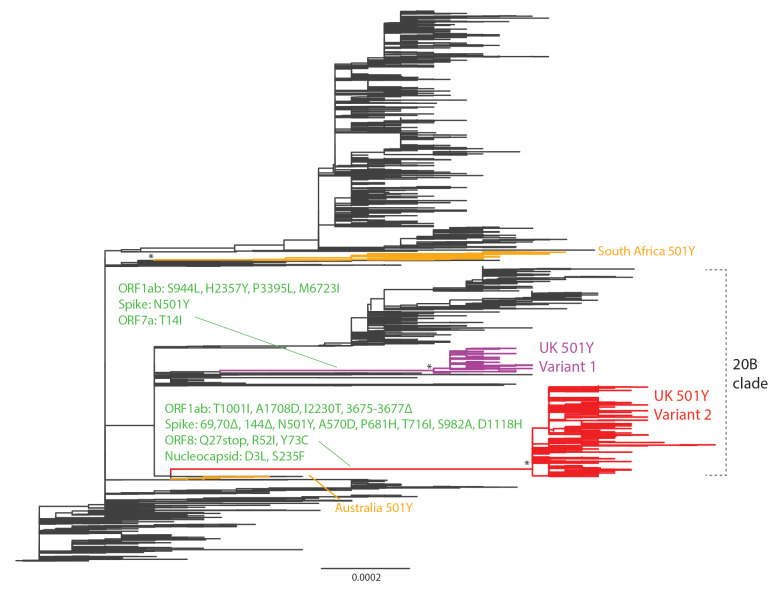
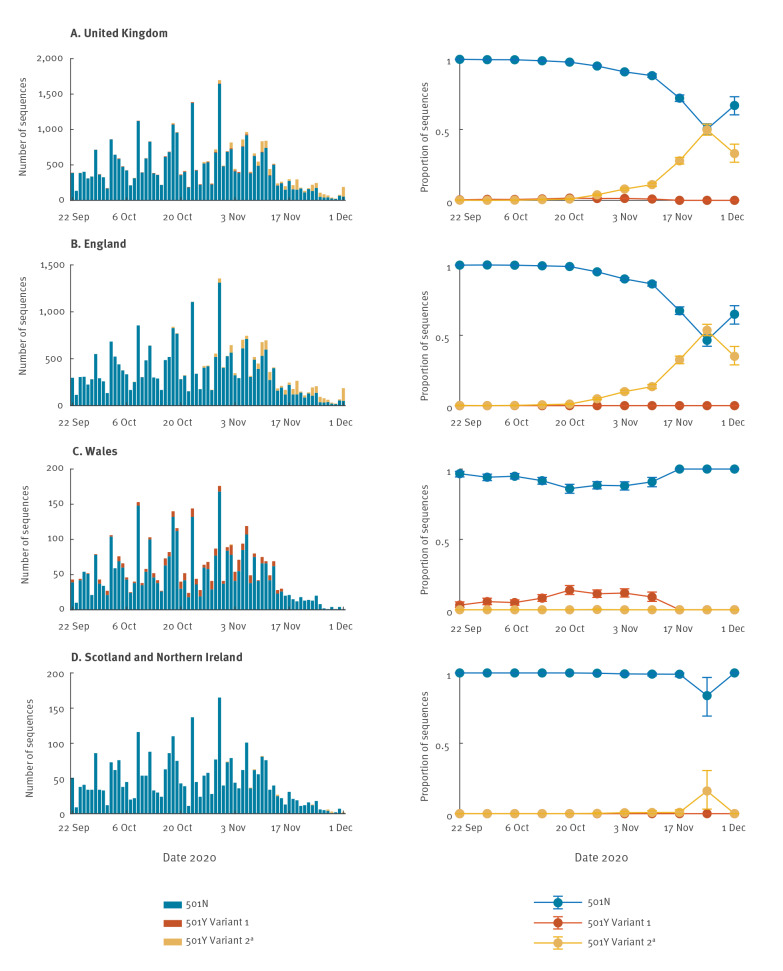
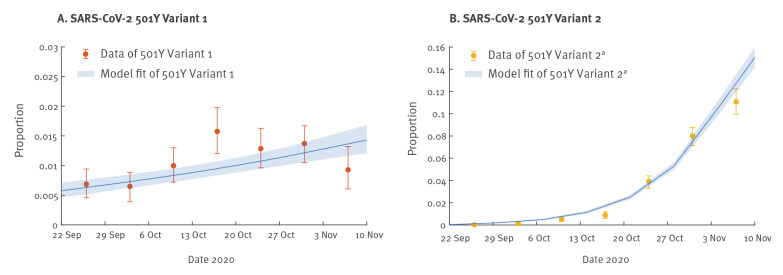
Two new SARS-CoV-2 lineages with the N501Y mutation in the receptor-binding domain of the spike protein spread rapidly in the United Kingdom. We estimated that the earlier 501Y lineage without amino acid deletion Δ69/Δ70, circulating mainly between early September and mid-November, was 10% (6–13%) more transmissible than the 501N lineage, and the 501Y lineage with amino acid deletion Δ69/Δ70, circulating since late September, was 75% (70–80%) more transmissible than the 501N lineage.
Overview
The claims and statistics of this paper haven’t been checked yet.
Run the check — free, no account needed. It reads the open-access text and checks the sources it cites.
Integrity signals
Registry
Cites
Statistics
Figures
Verification
Claims the paper makes
The claims and statistics of this paper haven’t been checked yet.
Run the check — free, no account needed. It reads the open-access text and checks the sources it cites.
Claims other papers make about this one
Each is checked against this paper’s own text: does it say what the citing paper says it does?
In the citing paper
“A B.1.1.7 isolate had signature changes in the spike gene14 including the 69–70 and 144–145 deletions, and N501Y, A570D, D614G, and P681H substitutions.”
From Resistance of SARS-CoV-2 variants to neutralization by monoclonal and serum-derived polyclonal antibodies (2021) · cites this paper as [14]
In the citing paper
“Epidemiological studies suggest that it was approximately 50% more transmissible than previously circulating UK variants 191,197,198 .”
From The biological and clinical significance of emerging SARS-CoV-2 variants (2021) · cites this paper as [197]
Self-check
Percentages, sums and reported differences re-computed from the paper’s own numbers.
The self-check needs the paper’s full text.
Citations
Cites
FastTree 2 – Approximately Maximum-Likelihood Trees for Large Alignments
Price, M. N., Dehal, P. S., & Arkin, A. P. (2010) · PLoS ONE · doi:10.1371/journal.pone.0009490 · Cited by 14,894
An interactive web-based dashboard to track COVID-19 in real time
Dong, E., Du, H., & Gardner, L. (2020) · The Lancet Infectious Diseases · doi:10.1016/s1473-3099(20)30120-1 · Cited by 10,048
A dynamic nomenclature proposal for SARS-CoV-2 lineages to assist genomic epidemiology
Rambaut, A., Holmes, E. C., O’Toole, Á., Hill, V., McCrone, J. T., Ruis, C., du Plessis, L., & Pybus, O. G. (2020) · Nature Microbiology · doi:10.1038/s41564-020-0770-5 · Cited by 2,543
Tegally, H., Wilkinson, E., Giovanetti, M., Iranzadeh, A., Fonseca, V., Giandhari, J., Doolabh, D., Pillay, S., San, E. J., Msomi, N., et al. (2020) · doi:10.1101/2020.12.21.20248640 · Cited by 2,535
Starr, T. N., Greaney, A. J., Hilton, S. K., Ellis, D., Crawford, K. H. D., Dingens, A. S., Navarro, M. J., Bowen, J. E., Tortorici, M. A., Walls, A. C., et al. (2020) · Cell · doi:10.1016/j.cell.2020.08.012 · Cited by 1,956
SARS-CoV-2 evolution during treatment of chronic infection
Kemp, S. A., Collier, D. A., Datir, R. P., Ferreira, I. A. T. M., Gayed, S., Jahun, A., Hosmillo, M., Rees-Spear, C., Mlcochova, P., Lumb, I. U., et al. (2021) · Nature · doi:10.1038/s41586-021-03291-y · Cited by 1,097
Evaluating the Effects of SARS-CoV-2 Spike Mutation D614G on Transmissibility and Pathogenicity
Volz, E., Hill, V., McCrone, J. T., Price, A., Jorgensen, D., O’Toole, Á., Southgate, J., Johnson, R., Jackson, B., Nascimento, F. F., et al. (2021) · Cell · doi:10.1016/j.cell.2020.11.020 · Cited by 1,006
Leung, K. S. M., Wu, J. T. K., Liu, D., & Leung, G. M. (2020) · The Lancet · doi:10.1016/s0140-6736(20)30746-7 · Cited by 840
Self-citationNeutralising antibodies in Spike mediated SARS-CoV-2 adaptationPreprint
Kemp, S. A., Collier, D. A., Datir, R. P., et al. (2020) · medRxiv · doi:10.1101/2020.12.05.20241927 · Cited by 180
Nasal ACE2 Levels and COVID-19 in Children
Patel, A. B., & Verma, A. (2020) · JAMA · doi:10.1001/jama.2020.8946 · Cited by 143
Research works printed but not linked: 1
- Kemp, 2020, Recurrent emergence and transmission of a SARS-CoV-2 Spike deletion ΔH69/ΔV70, bioRxiv
Cited by
Sorted by citations
Items 201–300 of 691
Adaptation of the endemic coronaviruses HCoV-OC43 and HCoV-229E to the human host
Forni, D., Cagliani, R., Arrigoni, F., Benvenuti, M., Mozzi, A., Pozzoli, U., Clerici, M., GIOIA, L. D., & Sironi, M. (2021) · Virus Evolution · doi:10.1093/ve/veab061 · Cited by 30
Kaku, Y., Kuwata, T., Zahid, H. M., Hashiguchi, T., Noda, T., Kuramoto, N., Biswas, S., Matsumoto, K., Shimizu, M., Kawanami, Y., et al. (2021) · Cell Reports · doi:10.1016/j.celrep.2021.109385 · Cited by 26
“V2), have emerged in the UK and South Africa, respectively, and have since been detected in other countries (Leung et al., 2021; Tegally et al., 2021).”
The virological impacts of SARS-CoV-2 D614G mutation
Wang, C., Zheng, Y. Y., Niu, Z., Jiang, X., & Sun, Q. (2021) · Journal of Molecular Cell Biology · doi:10.1093/jmcb/mjab045 · Cited by 29
Jian, M., Perng, C., Chung, H., Chang, C.-K., Lin, J., Yeh, K., Chen, C., Hsieh, S., Pan, P.-C., Chang, H.-T., et al. (2021) · International Journal of Infectious Diseases · doi:10.1016/j.ijid.2021.11.034 · Cited by 28
Abeywardhana, S., Premathilaka, M. B., Bandaranayake, U., Perera, D., & Peiris, L. (2022) · Journal of Medical Virology · doi:10.1002/jmv.28406 · Cited by 24
“9% binding capacity than WT, which could have led to increased coronavirus cases reported with the Alpha compared to theWT.(32) The Lys478 residue formed a salt bridge”
BackgroundDecreased Interfacial Dynamics Caused by the N501Y Mutation in the SARS-CoV-2 S1 Spike:ACE2 Complex
Ahmed, W. S., Philip, A. M., & Biswas, K. H. (2022) · Frontiers in Molecular Biosciences · doi:10.3389/fmolb.2022.846996 · Cited by 28
Shooting at a Moving Target—Effectiveness and Emerging Challenges for SARS-CoV-2 Vaccine Development
Günl, F., Mecate-Zambrano, A., Rehländer, S., Hinse, S., Ludwig, S., & Brunotte, L. (2021) · Vaccines · doi:10.3390/vaccines9101052 · Cited by 27
Ortega, J. T., Pujol, F. H., Jastrzębska, B., & Rangel, H. R. (2021) · EXCLI journal · doi:10.17179/excli2021-3471 · Cited by 26
Emerging antibody-based products for infectious diseases: Planning for metric ton manufacturing
Whaley, K. J., & Zeitlin, L. (2021) · Human Vaccines & Immunotherapeutics · doi:10.1080/21645515.2021.1930847 · Cited by 28
Diagnostic Performance of Rapid Antigen Testing for SARS-CoV-2: The COVid-19 AntiGen (COVAG) study
Wertenauer, C., Michael, G. B., Dressel, A., Pfeifer, C., Hauser, U., Wieland, E., Mayer, C., Mutschmann, C., Roskos, M., Wertenauer, H.-J., et al. (2022) · Frontiers in Medicine · doi:10.3389/fmed.2022.774550 · Cited by 26
Identifying COVID-19 Severity-Related SARS-CoV-2 Mutation Using a Machine Learning Method
Huang, F., Chen, L., Guo, W., Zhou, X., Feng, K., Huang, T., & Cai, Y. (2022) · Life · doi:10.3390/life12060806 · Cited by 29
Ratcliff, J., Nguyen, D. V., Fish, M., Rynne, J., Jennings, A., Williams, S. V., Al-Beidh, F., Bonsall, D., Evans, A. L., Golubchik, T., et al. (2021) · The Journal of Infectious Diseases · doi:10.1093/infdis/jiab283 · Cited by 27
“…spike protein has been described [12, 13], along with more recent mutants such as B.1.1.7 in the UK, B.1.351 in South Africa [14], and P.1 in Brazil [15], all potentially more trans-missible [16–18]; furthermore, B.1.1.7 may result in a higher mortality than the original pandemic strain [19, 20].”
InfluentialThe first three waves of the Covid-19 pandemic hint at a limited genetic repertoire for SARS-CoV-2
Wassenaar, T. M., Wanchai, V., Buzard, G. S., & Ussery, D. W. (2022) · FEMS Microbiology Reviews · doi:10.1093/femsre/fuac003 · Cited by 29
Fassy, J., Lacoux, C., Leroy, S., Noussair, L., Hubac, S., Degoutte, A., Vassaux, G., Leclercq, V., Rouquié, D., Marquette, C., et al. (2021) · PLoS ONE · doi:10.1371/journal.pone.0243333 · Cited by 27
Lind, A., Barlinn, R., Landaas, E. T., Andresen, L. L., Jakobsen, K., Fladeby, C., Nilsen, M., Bjørnstad, P. M., Sundaram, A. Y. M., Ribarska, T., et al. (2021) · Journal of Clinical Virology · doi:10.1016/j.jcv.2021.104906 · Cited by 26
Fougère, Y., Schwob, J.-M., Miauton, A., Hoegger, F., Opota, O., Jaton, K., Brouillet, R., Greub, G., Genton, B., Gehri, M., et al. (2021) · The Pediatric Infectious Disease Journal · doi:10.1097/inf.0000000000003198 · Cited by 26
Oba, M., Wen, R., Saito, A., Okabayashi, T., Yokota, T., Yasuoka, J., Sato, Y., Nishifuji, K., Wake, H., Nibu, Y., et al. (2021) · Biochemical and Biophysical Research Communications · doi:10.1016/j.bbrc.2021.07.034 · Cited by 26
Chen, X., Zhou, Z., Huang, C., Zhou, Z., Kang, S., Huang, Z., Jiang, G., Hong, Z., Chen, Q., Yang, M., et al. (2021) · Frontiers in Immunology · doi:10.3389/fimmu.2021.807134 · Cited by 27
Shimizu, J., Sasaki, T., Yamanaka, A., Ichihara, Y., Koketsu, R., Samune, Y., Cruz, P., Sato, K., Tanga, N., Yoshimura, Y., et al. (2021) · Scientific Reports · doi:10.1038/s41598-021-03273-0 · Cited by 27
Identification of Entry Inhibitors against Delta and Omicron Variants of SARS-CoV-2
Lee, R. K., Li, T., Chang, S., Chao, T., Kuo, C.-H., Pan, M. Y.-C., Chiou, Y.-T., Liao, K.-J., Yang, Y., Wu, Y., et al. (2022) · International Journal of Molecular Sciences · doi:10.3390/ijms23074050 · Cited by 26
Reverse genetics systems for SARS-CoV-2: Development and applications
Cai, H.-L., & Huang, Y. (2023) · Virologica Sinica · doi:10.1016/j.virs.2023.10.001 · Cited by 28
“The Alpha variant (B.1.1.7 lineage) that originated in the United Kingdom in September 2020 contained 8 mutations or deletions in the S protein (including the D614G substitution), and spread worldwide with high transmissibility (Leung et al., 2021).”
BackgroundInfluentialSAÚDE PÚBLICA: NOVAS TECNOLOGIAS PARA AÇÃO E INOVAÇÃO
dos Santos, S. L., Ferreira, P. L. A., & de Gois, L. C. (2023) · Paulo Sérgio da Paz Silva Filho eBooks · doi:10.56161/sci.ed.20230420 · Cited by 24
Inagaki, H., Saito, A., Kaneko, C., Sugiyama, H., Okabayashi, T., & Fujimoto, S. (2021) · Pathogens · doi:10.3390/pathogens10060754 · Cited by 26
Modak, C., Jha, A., Sharma, N., & Kumar, A. (2021) · International Journal of Biological Macromolecules · doi:10.1016/j.ijbiomac.2021.07.144 · Cited by 26
“7 variant, which contributes to the latest rise in cases by 40-80% and became one of the dominant variants [36,37], although several other mutations have occurred in the overall spike glycoprotein.”
Houchi, S., & Messasma, Z. (2022) · Journal of Molecular Structure · doi:10.1016/j.molstruc.2022.133032 · Cited by 28
Liu, L., Tsai, J., Chang, K., Chen, C., Lin, P., Tsai, C., Tsai, Y., Hsu, M., Chuang, W., Chang, J., et al. (2022) · Frontiers in Medicine · doi:10.3389/fmed.2022.869818 · Cited by 25
A model for pH coupling of the SARS-CoV-2 spike protein open/closed equilibrium
Warwicker, J. (2021) · Briefings in Bioinformatics · doi:10.1093/bib/bbab056 · Cited by 24
“mutations in this variant may alter receptor binding or possibly interaction with antibodies [28].”
BackgroundThe challenge of emerging SARS-CoV-2 mutants to vaccine development
Li, R., Liu, J., & Zhang, H. (2021) · Journal of genetics and genomics/Journal of Genetics and Genomics · doi:10.1016/j.jgg.2021.03.001 · Cited by 25
“7 could be due to the mutation (N501Y) on a significant site Asn(501) that participates in the interaction between RBD and ACE2 and the additional deletion at positions 69 and 70 that could increase the capability (Leung et al., 2020).”
Zhao, S., Lou, J., Chong, K. C., Cao, L., Zheng, H., Chen, Z., Chan, R. W. Y., Zee, B. C.-Y., Chan, P. K. S., & Wang, M. H. (2021) · Viruses · doi:10.3390/v13040638 · Cited by 23
Galindo, R. A. R., Chow, H., & Rongkavilit, C. (2021) · Pediatric Clinics of North America · doi:10.1016/j.pcl.2021.05.004 · Cited by 24
Binding affinity and mechanisms of SARS-CoV-2 variants
Han, Y., Wang, Z., Wei, Z., Schapiro, I., & Li, J. (2021) · Computational and Structural Biotechnology Journal · doi:10.1016/j.csbj.2021.07.026 · Cited by 23
Sunohara, S., Asakura, T., Kimura, T., Ozawa, S., Oshima, S., Yamauchi, D., & Tamakoshi, A. (2021) · PLoS ONE · doi:10.1371/journal.pone.0257107 · Cited by 23
Uncovering a conserved vulnerability site in SARS‐CoV‐2 by a human antibody
Li, T., Cai, H., Zhao, Y., Li, Y., Lai, Y., Yao, H., Liu, L. D., Sun, Z., van Vlissingen, M. F., Kuiken, T., et al. (2021) · EMBO Molecular Medicine · doi:10.15252/emmm.202114544 · Cited by 23
Mechanistic insights into the effects of key mutations on SARS-CoV-2 RBD–ACE2 binding
Aggarwal, A., Naskar, S., Maroli, N., Gorai, B., Dixit, N. M., & Maiti, P. K. (2021) · Physical Chemistry Chemical Physics · doi:10.1039/d1cp04005g · Cited by 24
Prüβ, B. M. (2022) · Frontiers in Bioscience-Landmark · doi:10.31083/j.fbl2702065 · Cited by 26
“The variant carries the N501Y mutation, which was associated with increased affinity of the mutated S protein to ACE-2 on the human host cells [55].”
BackgroundYan, Y., Fan, T.-Y., Zheng, Y., Yang, H., Li, T., Wang, H.-T., Gu, Y.-F., Xiao, X., Du, Z., & Sun, X.-M. (2022) · BMC Health Services Research · doi:10.1186/s12913-022-07770-4 · Cited by 24
Morris, C. P., Luo, C. H., Amadi, A., Schwartz, M. C., Gallagher, N., Ray, S. C., Pekosz, A. S., & Mostafa, H. H. (2021) · Clinical Infectious Diseases · doi:10.1093/cid/ciab636 · Cited by 25
SARS-CoV-2 and COVID-19: A Narrative Review
Blann, A. D., & Heitmar, R. (2022) · British Journal of Biomedical Science · doi:10.3389/bjbs.2022.10426 · Cited by 25
Development of a genotyping platform for SARS-CoV-2 variants using high-resolution melting analysis
Aoki, A., Mori, Y., Okamoto, Y., & Jinno, H. (2021) · Journal of Infection and Chemotherapy · doi:10.1016/j.jiac.2021.06.007 · Cited by 23
“Based on the WHO’s report, VOC-202012/01 seems to be 75% more transmissible than the previous circulating viruses, implying its future rapid transmission outside the UK [28].”
An optimized and robust SARS-CoV-2 pseudovirus system for viral entry research
Yang, P., Yang, Y., Wu, Y., Huang, C., Ding, Y., Wang, X., & Wang, S. (2021) · Journal of Virological Methods · doi:10.1016/j.jviromet.2021.114221 · Cited by 23
“, 2020), N501Y (Leung et al., 2021), and E484 K (Houriiyah Tegally et al.”
Jawalagatti, V., Kirthika, P., Park, J.-Y., Hewawaduge, C., & Lee, J. H. (2021) · Journal of Advanced Research · doi:10.1016/j.jare.2021.07.007 · Cited by 23
“Alarmingly, the variant was found to be more transmissible (75%) than the parent strain [3] with a higher risk of mortality and longer duration of acute infection [4,5].”
Colson, P., Devaux, C. A., Lagier, J., Gautret, P., & Raoult, D. (2021) · Journal of Clinical Medicine · doi:10.3390/jcm10153276 · Cited by 22
Jian, M., Chung, H., Chang, C.-K., Lin, J., Yeh, K., Chen, C., Li, S.-Y., Hsieh, S., Liu, M., Yang, J., et al. (2021) · Infection and Drug Resistance · doi:10.2147/idr.s328327 · Cited by 23
Assessment of the COVID-19 epidemiological situation in St. Petersburg
Акимкин, В. Г., Кузин, С. Н., Николаевна, К. Е., Kudryavtseva, E. N., Семененко, Т. А., Плоскирева, А. А., Васильевич, Д. Д., Tivanova, E. V., Pshenichnaya, N. Y., Kalenskaya, A. V., et al. (2021) · Journal of microbiology epidemiology immunobiology · doi:10.36233/0372-9311-154 · Cited by 23
An overview of the ongoing challenges in SARS-CoV-2 global control
Shehata, A. A., Parvin, R., Nagy, A., Wang, Y., Azhar, T. M., Attia, Y. A., Azhar, E. I., Paul, A. K., & Rahmatullah, M. (2021) · German Journal of Microbiology · doi:10.51585/gjm.2021.2.0006 · Cited by 24
Agent-based simulations for protecting nursing homes with prevention and vaccination strategies
Lasser, J., Zuber, J. A., Sorger, J., Dervić, E., Ledebur, K., Lindner, S. D., Klager, E., Kletečka-Pulker, M., Willschke, H., Stangl, K., et al. (2021) · Journal of The Royal Society Interface · doi:10.1098/rsif.2021.0608 · Cited by 22
Research progress in spike mutations of SARS‐CoV‐2 variants and vaccine development
He, X., He, C., Hong, W., Yang, H. J., & Wei, X. (2023) · Medicinal Research Reviews · doi:10.1002/med.21941 · Cited by 25
Science's Response to CoVID‐19
Long, M. J. C., & Aye, Y. (2021) · ChemMedChem · doi:10.1002/cmdc.202100079 · Cited by 22
Previous SARS-CoV-2 Infection Increases B.1.1.7 Cross-Neutralization by Vaccinated Individuals
Trinité, B., Pradenas, E., Marfil, S., Rovirosa, C., Urrea, V., Tarrés-Freixas, F., Ortiz, R., Rodon, J., Vergara‐Alert, J., Segalés, J., et al. (2021) · Viruses · doi:10.3390/v13061135 · Cited by 20
“V1, variant [1], first reported in the UK, casts doubts on the”
Backgroundde Souza, G. A. P., Bideau, M. L., Boschi, C., Ferreira, L., Wurtz, N., Devaux, C. A., Colson, P., & Scola, B. L. (2021) · Viruses · doi:10.3390/v14010023 · Cited by 21
SARS-CoV-2 Variants and Vaccination
Liu, Y., Liu, J., & Shi, P. (2022) · Zoonoses · doi:10.15212/zoonoses-2022-0001 · Cited by 22
Fast detection of SARS-CoV-2 variants including Omicron using one-step RT-PCR and Sanger sequencing
Bloemen, M., Rector, A., Swinnen, J., Ranst, M. A. V., Maes, P., Vanmechelen, B., & Wollants, E. (2022) · Journal of Virological Methods · doi:10.1016/j.jviromet.2022.114512 · Cited by 20
Chen, Y., Mason, G. H., Scourfield, D. O., Greenshields‐Watson, A., Haigh, T. A., Sewell, A. K., Long, H. M., Gallimore, A., Rizkallah, P. J., MacLachlan, B. J., et al. (2023) · Cell Reports · doi:10.1016/j.celrep.2023.112827 · Cited by 23
Mallon, P. W. G., Crispie, F., Gonzalez, G., Tinago, W., Leon, A. A. G., McCabe, M. S., de Barra, E., Yousif, O., Lambert, J. S., Walsh, C. J., et al. (2021) · medRxiv · doi:10.1101/2021.02.09.21251402 · Cited by 19
Fast and cost-effective screening for SARS-CoV-2 variants in a routine diagnostic setting
Durner, J., Burggraf, S., Czibere, L., Tehrani, A., Watts, D. C., & Becker, M. (2021) · Dental Materials · doi:10.1016/j.dental.2021.01.015 · Cited by 20
Drug discovery and development targeting the life cycle of SARS-CoV-2
Su, H., Xu, Y., & Jiang, H. (2021) · Fundamental Research · doi:10.1016/j.fmre.2021.01.013 · Cited by 21
COVID-19 Pandemic: What about the Safety of Anti-Coronavirus Nanoparticles?
Mosselhy, D. A., Virtanen, J., Kant, R., He, W. D., Elbahri, M., & Sironen, T. A. (2021) · Nanomaterials · doi:10.3390/nano11030796 · Cited by 20
Cai, Y., Xu, W., Tang, J., Cao, N., Lan, Q., Lu, L., & Jiang, S. (2021) · Cell & Bioscience · doi:10.1186/s13578-021-00638-w · Cited by 21
Martínez-García, L., Ruíz, M. A. E., Abreu, M., González‐Alba, J. M., Gijón-Cordero, D., Laso, A. M., Cantón, R., Galán, J. C., & Andrés, J. M. A. (2021) · Microorganisms · doi:10.3390/microorganisms9071517 · Cited by 18
González‐Parra, G., & Arenas, A. J. (2021) · Computational and Applied Mathematics · doi:10.1007/s40314-021-01592-6 · Cited by 20
Arévalo, S. J., Sifuentes, D. Z., Huallpa, C. J., Bianchi, G. L., Chávez, A. C., Casas, R. G.-S., Calampa, C. S. U., Uceda-Campos, G., & Pineda, R. (2021) · Scientific Reports · doi:10.1038/s41598-021-97267-7 · Cited by 22
COVID-19 vaccination strategies depend on the underlying network of social interactions
Herrmann, H. A., & Schwartz, J. (2021) · Scientific Reports · doi:10.1038/s41598-021-03167-1 · Cited by 21
“We assessed changes in these parameters against the following four outputs: (1) the maximum percentage of a population that is infected at one time, (2) the percentage of the population that is infected 2 years after the initial onset of the disease, (3) the maximum number of reinfection that occur to a single individ…”
MethodSinha, S., Tam, B., & Wang, S. M. (2021) · Viruses · doi:10.3390/v14010001 · Cited by 22
Zhao, N., Zhou, N., Fan, H., Ding, J., Xu, X., Dong, X., Dong, X., Xu, D., Min, X., Yu, Y., et al. (2022) · Frontiers in Microbiology · doi:10.3389/fmicb.2022.851323 · Cited by 20
Parker, M. D., Stewart, H., Shehata, O. M., Lindsey, B. B., Shah, D. R., Hsu, S. N., Keeley, A. J., Partridge, D. G., Leary, S., Cope, A., et al. (2022) · Communications Biology · doi:10.1038/s42003-022-03565-9 · Cited by 49
Tian, D., Nie, W., Sun, Y., & Ye, Q. (2022) · Vaccines · doi:10.3390/vaccines10101699 · Cited by 20
“All Omicron lineages have at least 50 mutations accumulated throughout the genome [5] and are the most highly mutated variant containing 31–37 mutations in the spike protein compared to the previous VOCs (Alpha [6], Beta [7], Gamma [8], and Delta [9,10]).”
BackgroundKurmangali, A., Dukenbayev, K., & Kanayeva, D. A. (2022) · International Journal of Molecular Sciences · doi:10.3390/ijms232113138 · Cited by 20
Sallam, M., & Mahafzah, A. M. (2021) · Pathogens · doi:10.3390/pathogens10030302 · Cited by 23
“7 lineage, several studies reported on the rapid dissemination of this lineage in UK among several other countries [6,16,36,37].”
BackgroundSingle-domain antibodies make a difference
Saelens, X., & Schepens, B. (2021) · Science · doi:10.1126/science.abg2294 · Cited by 19
Fort, H. (2021) · Virus Research · doi:10.1016/j.virusres.2021.198531 · Cited by 19
COVID-19 Pandemic and Trends in Clinical Trials: A Multi-Region and Global Perspective
Nishiwaki, S., & Ando, Y. (2021) · Frontiers in Medicine · doi:10.3389/fmed.2021.812370 · Cited by 19
Voigt, A., Omholt, S. W., & Almaas, E. (2022) · PLoS ONE · doi:10.1371/journal.pone.0263155 · Cited by 19
MacGowan, S. A., Barton, M. I., Kutuzov, M. A., Dushek, O., van der Merwe, P. A., & Barton, G. J. (2022) · PLoS Computational Biology · doi:10.1371/journal.pcbi.1009922 · Cited by 18
“Similarly, the Spike N501Y mutation causes greatly enhanced ACE2 affinity [28] and is also associated with increased transmissibility [36].”
Geographical prevalence of SARS-CoV-2 variants, August 2020 to July 2021
Chan, W. S., Lam, Y. M., Law, J. H. Y., Chan, T. L., Ma, E. S. K., & Tang, B. S. F. (2022) · Scientific Reports · doi:10.1038/s41598-022-08684-1 · Cited by 20
Delta Variant of SARS-CoV-2 Replacement in Brazil: A National Epidemiologic Surveillance Program
Silva, J. D. P., de Lima, A. B., Alvim, L. B., Malta, F. S. V., Mendonça, C. P., Fonseca, P. L. C., Moreira, F. R. R., Queiroz, D. C., Ferreira, J. G. G., Ferreira, A. C. D. S., et al. (2022) · Viruses · doi:10.3390/v14050847 · Cited by 20
Deep Mutational Scanning of Viral Glycoproteins and Their Host Receptors
Narayanan, K. K., & Procko, E. (2021) · Frontiers in Molecular Biosciences · doi:10.3389/fmolb.2021.636660 · Cited by 18
Chakravarty, N., Senthilnathan, T., Paiola, S. G., Gyani, P., Cario, S. C., Urena, E., Jeysankar, A., Jeysankar, P., Irudayam, J. I., Subramanian, S. N., et al. (2021) · FEBS Letters · doi:10.1002/1873-3468.14227 · Cited by 19
L18F substrain of SARS-CoV-2 VOC-202012/01 is rapidly spreading in EnglandPreprint
Grabowski, F., Kochańczyk, M., & Lipniacki, T. (2021) · medRxiv · doi:10.1101/2021.02.07.21251262 · Cited by 19
Vassallo, M., Manni, S., Klotz, C., Fabre, R., Pini, P., Blanchouin, E., Sindt, A., Lotte, L., Dubertrand, J. M., Liguori, S., et al. (2021) · Journal of Clinical Medicine · doi:10.3390/jcm10163550 · Cited by 18
The evaluation of potential global impact of the N501Y mutation in SARS‐COV‐2 positive patients
Komurcu, S. Z. M., Artik, Y., Cesur, N. P., Tanrıverdi, A., Erdoğan, D., Çelik, Ş., & Güleç, E. Y. (2021) · Journal of Medical Virology · doi:10.1002/jmv.27413 · Cited by 18
“75 times higher than 501N, meaning it is 75% more transmissible compared with the 501 N strain.(14) In the female population, positivity is higher than males throughout all ages.”
BackgroundInfluentialWang, B., Goh, Y. S., Prince, T., Ngoh, E. Z. X., Salleh, S. N. M., Hor, P. X., Loh, C. Y., Fong, S., Hartley, C. S., Tan, S. Y., et al. (2021) · npj Vaccines · doi:10.1038/s41541-021-00389-2 · Cited by 19
Aruffo, E., Yuan, P., Tan, Y., Gatov, E., Moyles, I. R., Bélair, J., Watmough, J., Collier, S., Arino, J., & Zhu, H. (2022) · BMC Public Health · doi:10.1186/s12889-022-13597-9 · Cited by 20
Whole genome sequencing analysis of SARS-CoV-2 from Malaysia: From alpha to Omicron
Yu, C. Y., Wong, S. Y., Liew, N. W. C., Joseph, N. M. S., Zakaria, Z., Isa, N. M., Soe, H. J., Kairon, R., Nordin, S. A., & Chee, H. (2022) · Frontiers in Medicine · doi:10.3389/fmed.2022.1001022 · Cited by 19
“Although 69/70 deletion alone is not associated with increased transmissibility, its occurrence with N501Y that augments transmissibility by 70–80% is highly suggestive of epistasis (57, 58).”
BackgroundBiophysical principles predict fitness of SARS-CoV-2 variants
Wang, D., Huot, M., Mohanty, V., & Shakhnovich, E. I. (2024) · Proceedings of the National Academy of Sciences · doi:10.1073/pnas.2314518121 · Cited by 19
“They have been linked to enhanced transmissibility [1, 2], augmented binding to 28 host cell receptors, and heightened resistance to antibody neutralization.”
BackgroundDavies, M., Bramwell, L. R., Jeffery, N. M., Bunce, B., Lee, B. P., Knight, B., Auckland, C., Masoli, J. A. H., & Harries, L. W. (2021) · International Journal of Infectious Diseases · doi:10.1016/j.ijid.2021.12.312 · Cited by 16
Li, H., Guo, L., Zheng, H., Li, J., Zhao, X., Li, J., Liang, Y., Yang, F., Zhao, Y., Yang, J., et al. (2021) · Bioconjugate Chemistry · doi:10.1021/acs.bioconjchem.1c00424 · Cited by 17
Sánchez-Calvo, J. M., Alados, J. C., Vidal, L. R., de Francisco, J. L., & Prieto, M. D. L. (2021) · Diagnostic Microbiology and Infectious Disease · doi:10.1016/j.diagmicrobio.2021.115491 · Cited by 17
“Leung et al. used the combination of N501Y and H69/V70 as surrogate markers of VOC B.1.1.7 (Leung et al., 2021).”
InfluentialFonseca, P. L. C., Moreira, F. R. R., de Souza, R. M., Guimarães, N. R., Carvalho, N. D. O., Adelino, T., Alves, H. J., Alvim, L. B., Cândido, D. D. S., Coelho, H. P., et al. (2022) · Virus Evolution · doi:10.1093/ve/veac064 · Cited by 16
Chi, X., Xia, L., Zhang, G., Chi, X., Huang, B., Zhang, Y., Chen, Z., Han, J., Wu, L., Li, Z., et al. (2023) · Cell Discovery · doi:10.1038/s41421-023-00535-1 · Cited by 16
COVID-19 mutations: An overview
Sarkar, M. S., & Madabhavi, I. (2024) · World Journal of Methodology · doi:10.5662/wjm.v14.i3.89761 · Cited by 22
Dental care during COVID‐19 pandemic: Follow‐up survey of experts' opinion
Brunello, G., Gurzawska, K., Becker, K., Becker, J., Sivolella, S., Schwarz, F., & Klinge, B. (2021) · Clinical Oral Implants Research · doi:10.1111/clr.13783 · Cited by 17
“Another limitation of the present survey is that most experts responded before the widespread dissemination of mutants of SARSCoV-2, which were reported to have a much higher infectivity (Galloway et al., 2021; Leung et al., 2021), and also the start of mass vaccination programs.”
BackgroundImmunisation, asymptomatic infection, herd immunity and the new variants of COVID 19Preprint
Grant, A., & Hunter, P. R. (2021) · medRxiv · doi:10.1101/2021.01.16.21249946 · Cited by 18
Murayama, H., Kayano, T., & Nishiura, H. (2021) · Theoretical Biology and Medical Modelling · doi:10.1186/s12976-021-00146-x · Cited by 16
Courjon, J., Contenti, J., Demonchy, É., Levraut, J., Barbry, P., Rios, G., Dellamonica, J., Chirio, D., Bonnefoy, C., Giordanengo, V., et al. (2021) · Scientific Reports · doi:10.1038/s41598-021-95067-7 · Cited by 19
Delshad, M., Sanaei, M., Pourbagheri‐Sigaroodi, A., & Bashash, D. (2022) · International Immunopharmacology · doi:10.1016/j.intimp.2022.109128 · Cited by 18
Hsu, Y., Frank, M., Mukherjee, D., Shchurik, V., Makarov, A. A., & Mann, B. F. (2022) · Glycobiology · doi:10.1093/glycob/cwac077 · Cited by 17
SARS-CoV-2 Infection and Disease Modelling Using Stem Cell Technology and Organoids
Trevisan, M., Riccetti, S., Sinigaglia, A., & Barzon, L. (2021) · International Journal of Molecular Sciences · doi:10.3390/ijms22052356 · Cited by 16
“This variant was characterized by increased transmissibility, but no statistically significant differences in hospitalization, 28-day case fatality, and re-infection rates compared with the wild-type virus [66,67].”
ResultCan Yogic Breathing Techniques Like Simha Kriya and Isha Kriya Regulate COVID-19-Related Stress?
Rain, M., Subramaniam, B., Avti, P., Mahajan, P., & Anand, A. (2021) · Frontiers in Psychology · doi:10.3389/fpsyg.2021.635816 · Cited by 16
Evolutionary insights into the furin cleavage sites of SARS-CoV-2 variants from humans and animals
Nagy, A., Basiouni, S., Parvin, R., Hafez, H. M., & Shehata, A. A. (2021) · Archives of Virology · doi:10.1007/s00705-021-05166-z · Cited by 16
Peptide Platform as a Powerful Tool in the Fight against COVID-19
Murdocca, M., Citro, G., Romeo, I., Lupia, A., Miersch, S., Amadio, B., Bonomo, A., Rossi, A., Sidhu, S. S., Pandolfi, P. P., et al. (2021) · Viruses · doi:10.3390/v13081667 · Cited by 16
Metadata
- Authors
- Leung, K., Shum, M. H., Leung, G. M., Lam, T. T., & Wu, J. T.
- Affiliations
- Laboratory of Data Discovery for Health (HK)
- Joint Institute of Virology (Shantou University and The University of Hong Kong), Guangdong-Hongkong Joint Laboratory of Emerging Infectious Diseases, Shantou University, Shantou, China
- Laboratory of Data Discovery for Health (D24H), Hong Kong Science Park, New Territories, Hong Kong SAR, China
- Corresponding author
- Wu, Joseph T
- Venue
- Eurosurveillance
- Published
- 2021-01-07
- Volume
- 26
- Issue
- 1
- ISSN
- 1025-496X (ISSN-L)
- 1560-7917
- PMC
- PMC7791602
- OpenAlex
- W3120079728
- Cited by
- 694
- References
- 12
- Citations by year
- 2026: 3 · 2025: 14 · 2024: 24 · 2023: 90 · 2022: 176 · 2021: 385
- FWCI
- 53.29
- Type
- journal article
- Language
- en
- Update notices
- addendum (2021-01-21)
- Open access
- diamond
- doi.org
- Locations
- Eurosurveillance (publishedVersion, cc-by)
- medRxiv (acceptedVersion, cc-by-nc-nd)
- Europe PMC (PubMed Central) (publishedVersion, cc-by)
- PubMed Central (publishedVersion, cc-by)
- PubMed (publishedVersion)
- Funders
- National Natural Science Foundation of China (31922087)
- Hong Kong Government
- Health and Medical Research Fund
- Young Scientists Fund
- Topics
- Health Sciences › Medicine › Infectious Diseases › SARS-CoV-2 and COVID-19 Research
- Physical Sciences › Mathematics › Modeling and Simulation › COVID-19 epidemiological studies
- Health Sciences › Medicine › Infectious Diseases › COVID-19 Clinical Research Studies
- Keywords
- SARS-CoV-2, N501Y mutation, spike protein receptor-binding domain, viral transmissibility, United Kingdom, COVID-19 pandemic
- MeSH terms
- COVID-19, SARS-CoV-2, Genetic Markers, United Kingdom, Humans, Mutation, Phylogeny, Genetic Variation, Genome, Viral, Spike Glycoprotein, Coronavirus
About these checks
Registry, retraction, Cites and statistics results are computed, not judged, with one exception: a printed reference that no index lists is read once by a model before it counts as a citation error. Claims are extracted by a model and kept only when their quote appears verbatim in the text; each cited source is then checked, with a model’s help, for whether it says what the claim relies on. Those verdicts can be wrong — read the claim’s quote and the cited source before relying on one.
Statistics and arithmetic are recomputed, not judged.
Confidence bands are shown only for fields calibrated on our annotated test set. None is calibrated yet, so no band is shown.
What counts as a claim ›How we measure confidence ›How we check this ›
Are you an author, or do you see a problem with this page? Request a review
